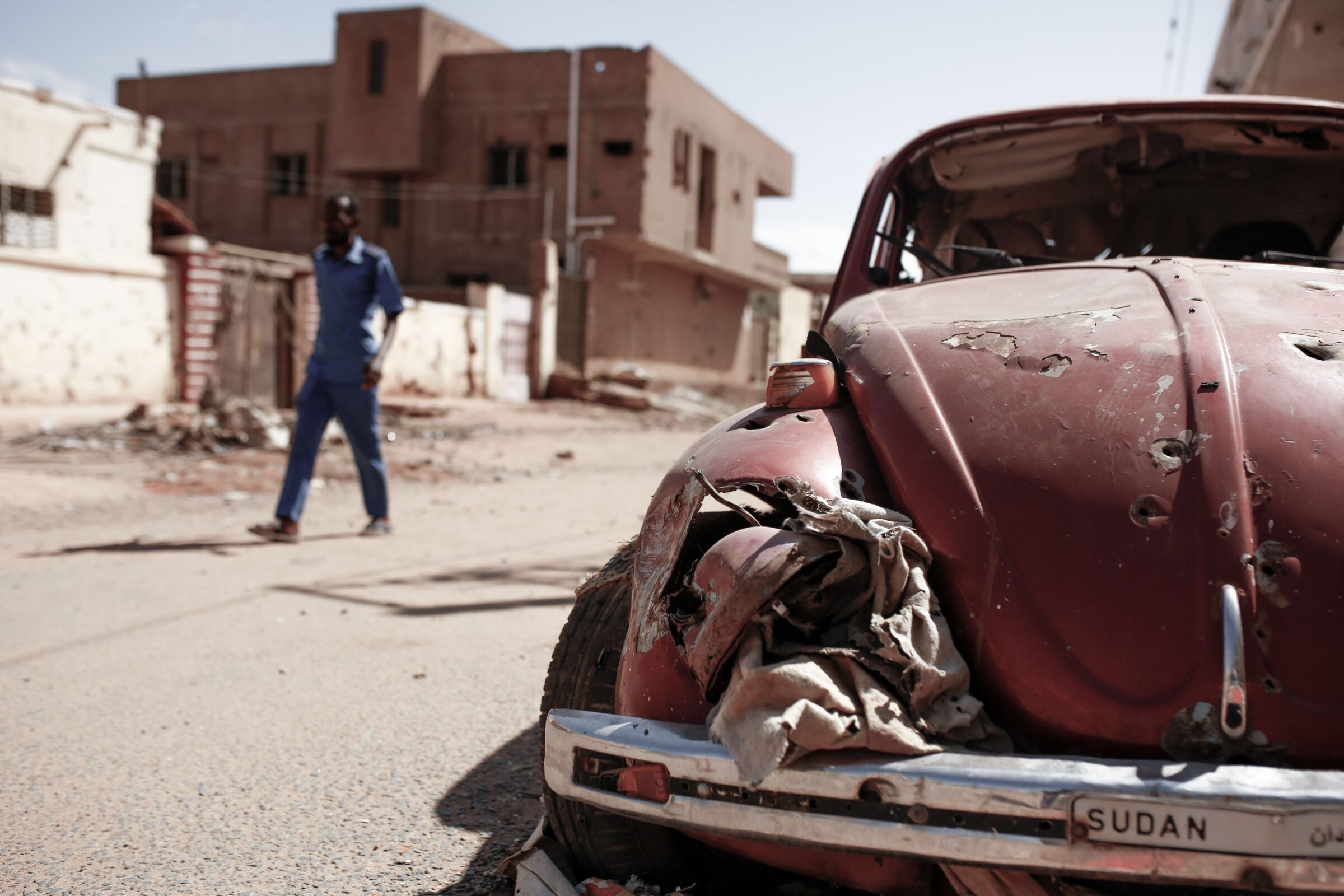
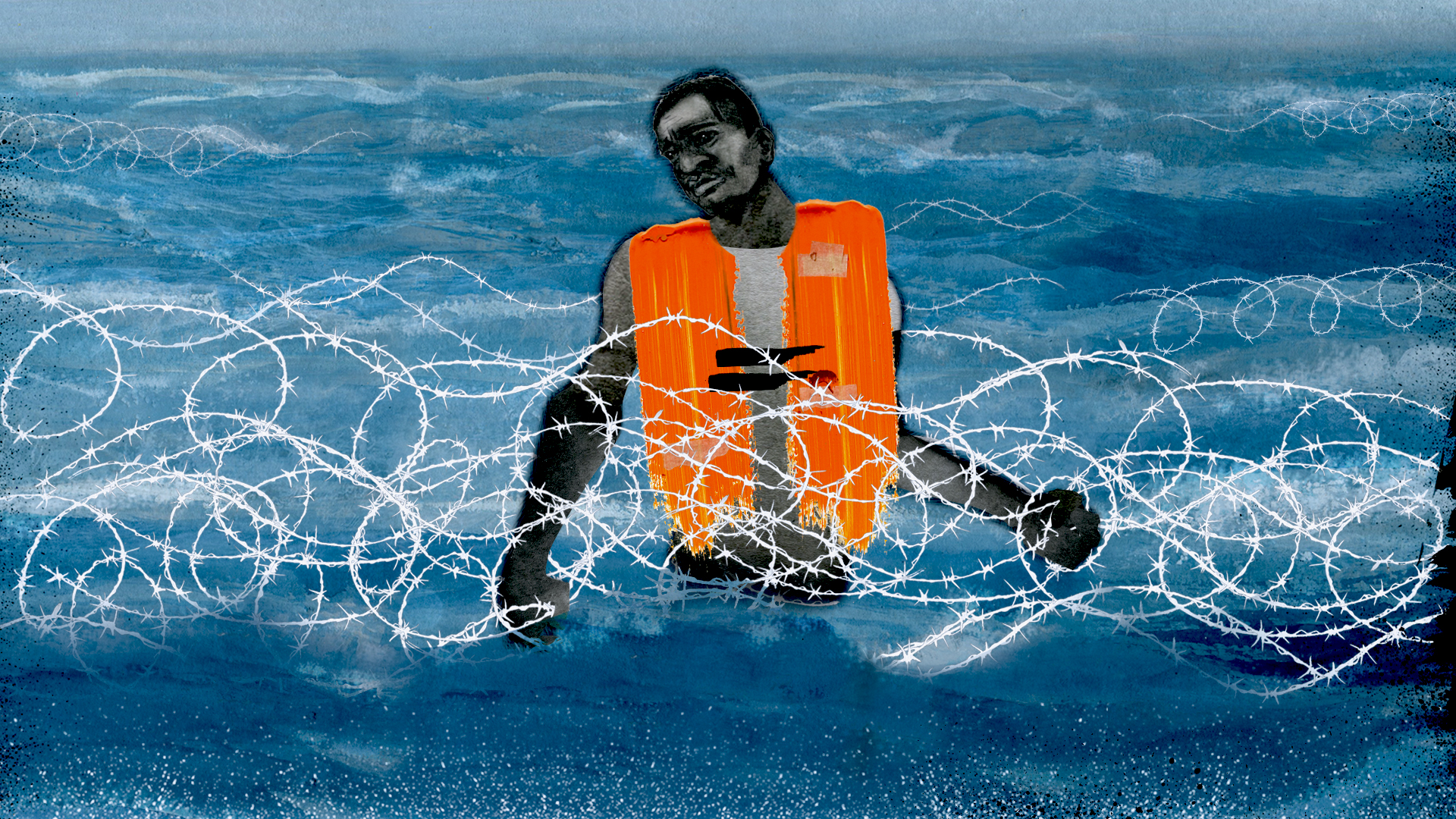
The European Commission is promising more support to Egypt, even as Egyptian warplanes reportedly bomb in Sudan and authorities carry out a campaign of violence against the refugees it hosts.
The civil war in Sudan includes reports of genocide, chemical-weapons use, mass rape, and starvation, forcing some 1.2 million Sudanese people into Egypt, which was described as a priority migration-busting partner by commission president Ursula von der Leyen on Tuesday (13 October), who also promised continuing support for Cairo.
In a letter sent to the 27 heads of state and government ahead of an EU summit on Thursday in Brussels, she spoke of “offering protection and durable solutions in … host countries”, as well as further aid for Sudanese people who had returned to parts of the country, now deemed relatively safe.
But her warm words stand in sharp contrast to internal EU documents on Sudan, released by the London-based group Statewatch earlier this month, and which speak of an Egyptian-led campaign of violence against the Sudanese it is tasked to help.
“The Egyptian authorities have continued arbitrary arrests, detention and deportation campaign against migrants, asylum seekers and refugees, with a sharp escalation of forced deportations being observed since January 2026,” said the Irish EU presidency, in an internal document written in September.
Estimates suggest Egypt hosts over nine million migrants and refugees.
Some 80 percent are Sudanese, Syrian, Yemeni, and Libyan nationals. Of those, just over 1 million are officially registered as refugees. Most come from Sudan.
And Egypt’s crackdown also comes amid a massive 74 percent funding cut for the UN’s refugee agency in the country, even as the EU’s financial support to Cairo increases, already totalling €5bn.
This article continues, but the full version is available only to EUobserver.com subscribers. Visit account.euobserver.com/membership
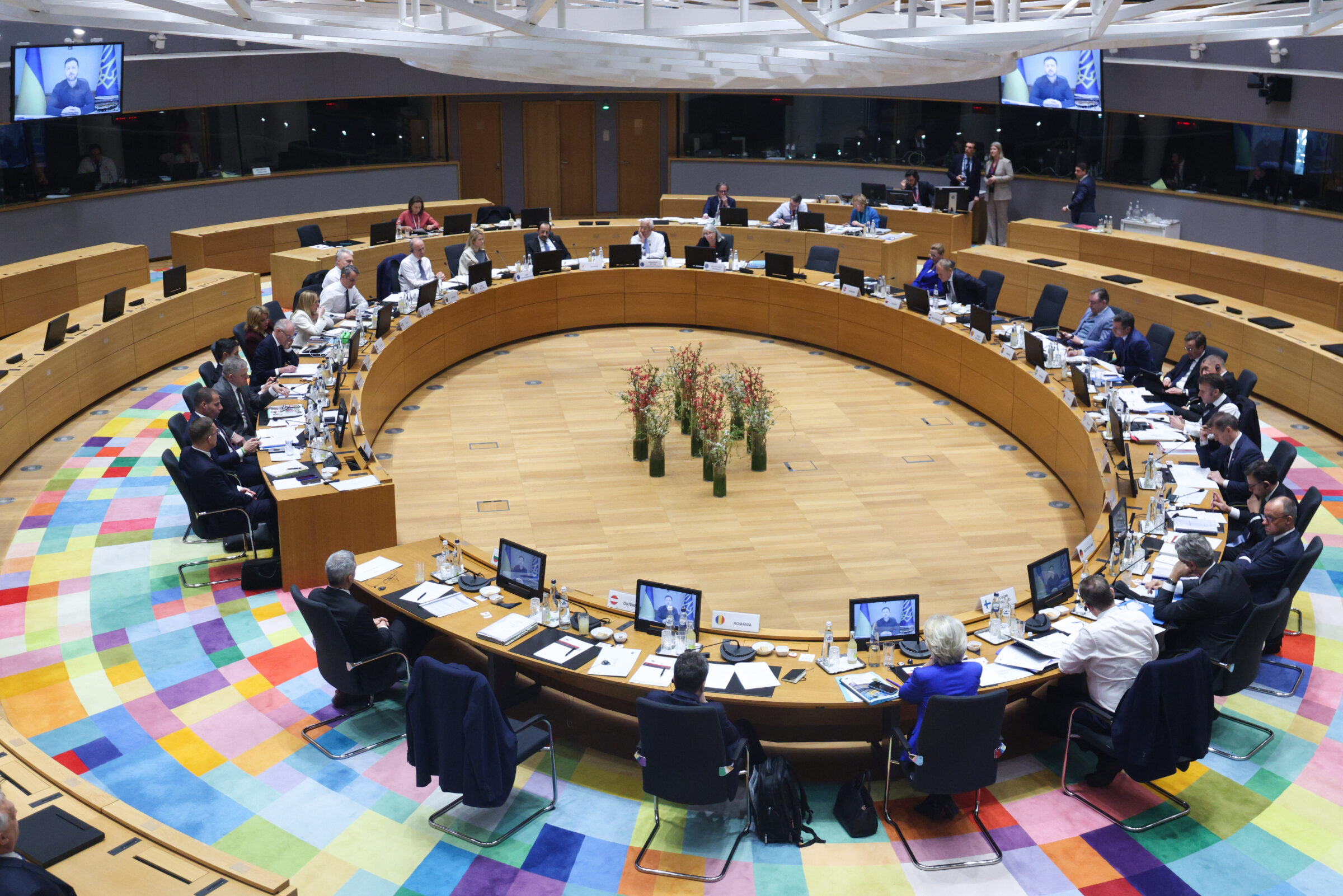
Money and how to make more of it are among the top issues to be discussed among EU leaders as they gather for a two-day summit in Brussels, while they also struggle with ongoing problems on Ukraine, the Middle East, migration, defence, and new rules for EU-hopefuls, such as Montenegro.
The official talks kick off on Thursday (15 October) on how to make the 27 EU states more competitive in a turbulent world dominated by US tariffs, Chinese innovation, and Iran-war linked chokeholds in the Strait of Hormuz, which have forced the G7 wealthy nations to release 100m barrels of diesel and crude oil.
Gas prices have risen by 140 percent since the end of February with imported fossil fuels now costing an extra €100bn, says the European Commission.
In Europe, a grand scheme, a so-called “One Europe, One Market”, aims to spike European fortunes by saving an estimated €37.5bn for EU businesses by 2029.
The drive is part of a larger initiative to cut red tape and remove internal market barriers, including the eventual launch of a so-called EU Inc.
Ireland, which is currently steering the EU’s rotating presidency, had already announced that the summit would start with the competitiveness theme. And leaked draft conclusions, seen by EUobserver, lead with a sales pitch to step up ambitions over the ‘One Europe, One Market’ proposal.
It also gives a nod to the German car industry, by citing efforts needed to stop China from making too much money off Europeans. The goal is to get Europeans to spend more on European products, even if they are more expensive and less innovative.
The ‘more money’ talks dovetail into how to spend it (or not) in the EU’s next long-term budget, spanning 2028 to 2034.
António Costa, the president of the European Council, is hoping for an agreement of the nearly €2 trillion budget before the end of the year. People need predictability and stability, he said, in a invitation letter sent to the 27 EU states.
This article continues, but the full version is available only to EUobserver.com subscribers. Visit account.euobserver.com/membership
The EU’s border agency, Frontex, shared coordinates of an overcrowded and partly deflated boat in the Mediterranean sea with the Libyan coastguard and then watched them run it over.
The boat was carrying 27 people, including children.
The findings, by Frontex’s own fundamental rights officer, described an incident that took place on 19 June 2026.
And this was just a tiny part of a wider pattern of violence by the EU-backed Libyan coastguard, which has also shot at or near civil rescue vessels.
No one was killed in the June event. But people were tossed into the water. Others, pulled onto the Libyan vessel, were then beaten by Libyan uniformed officers.
Frontex had issued a Mayday relay and then shared the sightings by email with the Libyan rescue centre.
No vessels were reported to be in the vicinity, but the Libyans showed up 90 minutes later.
The internal Frontex findings highlight ongoing tensions in the agency over sharing rescue coordinates with the Libyans in the name of saving lives.
“Saving lives is the absolute sort of absolute right that people have,” Hans Leijtens the agency’s director, told EUobserver earlier this year.
“And it’s our job to contribute to that, and if that sort of starts with looking at which part of the Mediterranean ship is sailing, and if it’s a north African country, we all have to inform the authorities there,” he added.
But his own rights officer also notes that the botched rescue on 19 June amounted to a violation of the right to life, citing article six of the International Covenant on Civil and Political Rights.
He says the standard is not simply whether the migrants were ultimately rescued, but if the operation was planned and executed to minimise risks to human life.
In this case, the Libyans violated that right among others, he says. Frontex did not reply to the findings in the report, as of publication.
Let the court decide
This article continues, but the full version is available only to EUobserver.com subscribers. Visit account.euobserver.com/membership
There are more than 800 surveillance towers located along U.S. borders, a number that is expected to triple in the next decade. These towers, according to a government accountability report, “detect items of interest, such as people.” But interest can be fickle. As part of “Dying on Camera,” a sprawling package of features co-published by the MIT Technology Review and Times of San Diego, Lillian Perlmutter reports on the death of Graciela Gómez Hernández, one among hundreds of migrants whose final moments seem as though they should have been witnessed. “The proximity of so many deaths to high-resolution cameras leaves two distinct possibilities,” Perlmutter writes. “Either the system didn’t detect these people in distress, or it did detect them—and officials offered no response. “
Surveillance towers have proliferated in recent years, as contractors added newer camera systems that use artificial intelligence to distinguish border-crossers from other people and animals, and track their movements, at an overall cost of more than a billion dollars. Yet as the cameras scan the terrain, migrants continue to die in plain sight.
Twelve years ago, EU summit leaders announced they had a strategy to tackle unprecedented migrant arrivals.
Next week, they will meet again in Brussels and to tell us something similar.
We journalists will report on the latest twists and turns, hoping to get some sort of angle that hasn’t been covered. But the reality is that our leaders have broadly failed.
Dozens of EU summit conclusions have been published since 2015, when one around million Syrians arrived in Europe to seek protection.
We need stronger external borders to preserve the Schengen passport-free zone, they said. We need partnerships with foreign states to save lives. We need to step up deportations. We need a European solution.
All of these ideas and strategies have found a home in council conclusions, in various iterations, since 2015. All of them.
Some have actually panned out, including an EU migrant swap deal with Turkey and other deals with autocrats in Tunisia, Egypt and elsewhere. Others like internal reforms on asylum have also been delivered.
Yet the sense of urgency to tackle these issues continues because there is an obvious disconnect between what has been delivered, the promises made and the lived experience on the ground.
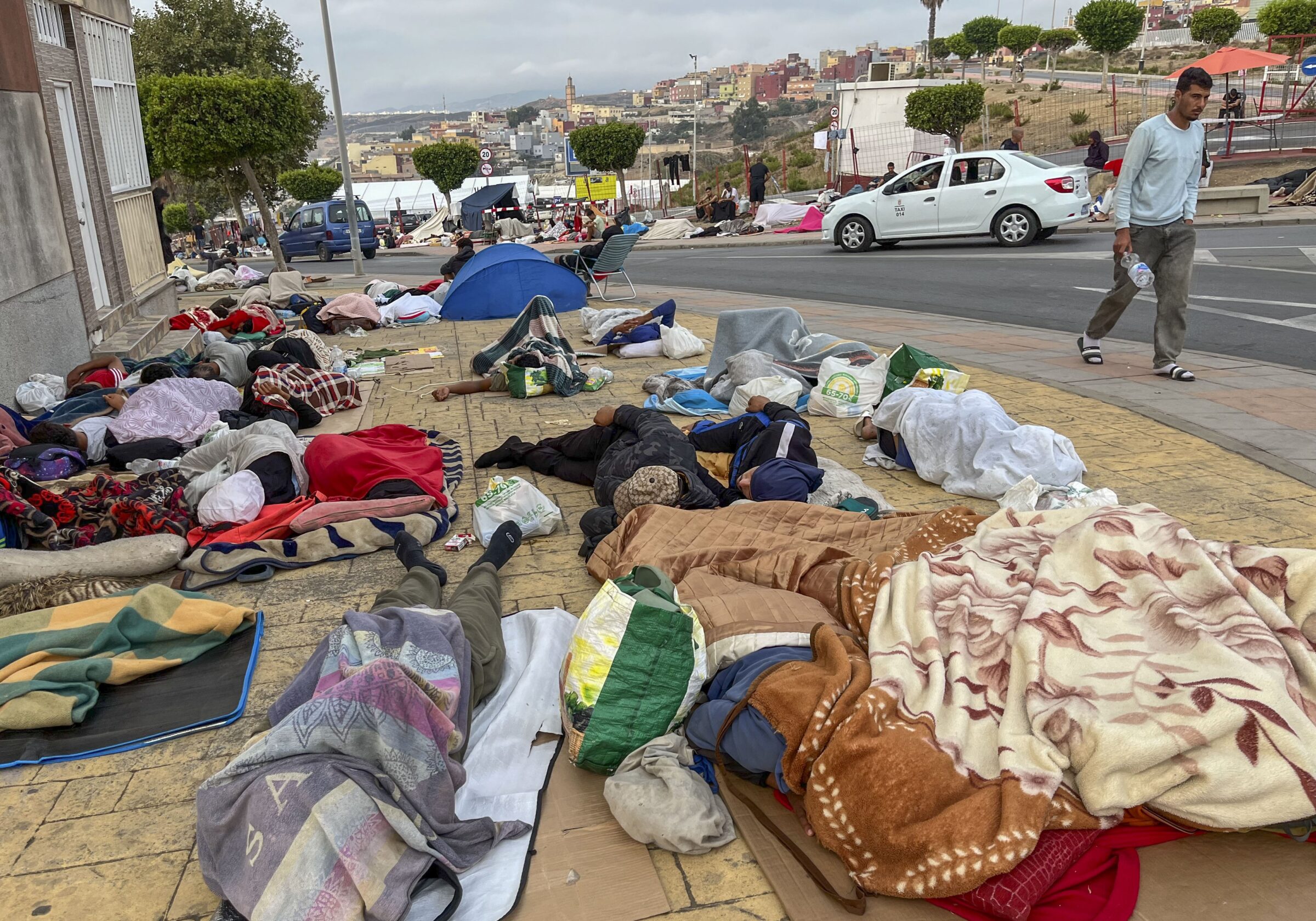
People still come. Some 80,000 arrived in the Spanish enclave of Ceuta end of July alone.
Many are still fleeing violence, war and economic hardships. Others are lured by the promise of labour in Europe by Europeans willing to exploit them.
I remember meeting a group of boys from Bangladesh on the Ocean Viking, freshly rescued in the middle of the night, asking when they would be able to start working in Italy.
One of them was still shaking with fear and sobbing, following a near death experience.
The European Commission is now claiming that the drop of irregular arrivals is due to their migration policy reforms, as if the fall of the murderous Assad regime in Syria had no discernible impact.
Perhaps some of that is true. But there is no disputing that Syrians accounted for over 100,000 irregular crossings in 2023, a year before Assad fell. It then dropped to around 6,000. Today, it is around 1,000, according to Frontex.
At some point, one has to wonder if these conclusions, repeated ad nauseam, is nothing but political theatre by a leadership that has run out of ideas.
EU leaders meeting next week in Brussels for the usual post-summer European Council are rehashing conclusions on migration, echoing almost word-for-word statements since at least 2015.
“The European Council has developed a strategy aimed at stemming the unprecedented migratory flows Europe is facing,” they announced in December 2015, following a summit.
“It is indispensable to regain control over the external borders,” they also said, noting the perceived threat to the EU’s internal border-free Schengen zone.
And they voiced fear over the low number of deportations, insisting on “concrete measures to ensure the actual return and readmission of people not authorised to stay.”
Eeleven years later and the 15 October summit in Brussels next week is now asking almost the same thing, including to what extent previous conclusions on migration have been implemented.
Although draft conclusions can change, and likely will, the current wording essentially repeats the same demands spanning over 50 EU summits since at least 2015, when over a million Syrians entered Europe to seek protection.
Out of the 52 published conclusions since 2015, over half dealt with migration in some shape or form. The latest draft dated 5 October and seen by EUobserver is among those.
This article continues, but the full version is available only to EUobserver.com subscribers. Visit account.euobserver.com/membership
A second village is to hold a vote on whether to have a referendum to leave the UK in protest over plans to create a camp to house 1,250 asylum seekers in a former RAF base nearby.
The locking down of Gosport to protect illegal migrants shows beyond doubt that Britain is a two-tier state, says Paul Birch, where locals must produce ID while illegal migrants are escorted away in luxury coaches.
Police have 'locked down' an entire town to stop unrest by setting up a dispersal zone covering the whole of Gosport following protests sparked by the arrival of a migrant boat using a 'new route' from Normandy.
New rules open the way to offshore hubs and longer detention as legal safeguards move into focus BRUSSELS — European Union governments have completed the adoption of a sweeping new system for returning people who have no legal right to remain in the bloc. The regulation allows member states to transfer people to “return hubs” […]
Pending EU court case intensifies scrutiny as governments seek a stronger border agency A pending case against Frontex has returned to the centre of Europe’s migration debate as EU governments consider giving the border agency a larger operational role. The proceedings concern allegations that aerial surveillance helps Libyan forces intercept people at sea and return […]
Brussels (European Newsroom) – The European Union should improve how it detects and connects early warnings at its external borders after the mass arrival of migrants in the Spanish autonomous city Ceuta in July, said the chief of the EU border agency Frontex, Hans Leijtens, while insisting that responsibility for border protection must remain with member states.
“I think we should improve our situational awareness as Europe, and Frontex can play an important role in that,” Leijtens told journalists of the European Newsroom network in Brussels.
He said a broader picture could be built from satellites, aircraft, observers on the ground and information from social media. Much of the information was already available, he said, but needed to be better connected.
The remarks come as the European Commission floated plans for a Frontex rapid-response team that could deploy within 24 hours in a crisis. The team would still be sent only at the request of a member state, according to an action plan presented by EU migration commissioner Magnus Brunner in late September. The plan also envisages a larger role for Frontex in returns.
Leijtens said he did not expect a new Frontex mandate to change the basic division of responsibility. “There I would find it difficult because not only in our mandate but in general protecting European borders is a member state responsibility and we can’t take over responsibility,” he said.
He described the events in Ceuta as more of a public-order issue than a conventional border incident. Ceuta, a Spanish exclave in northern Africa, saw a sudden mass crossing from Morocco on July 30–31, 2026, triggering a diplomatic dispute among EU countries. Spanish estimates rose from about 72,000 to 80,000 arrivals, while Morocco cited about 40,000. Many people returned before being registered, making the final total uncertain. According to news reports, some 83 people died, and the crisis reignited debate over EU border control, asylum rules, solidarity and Frontex’s role.
The episode raised a further question for the EU’s early-warning debate: whether the challenge was detecting the signals, sharing them or responding to them.
Leijtens said the deaths were horrifying and should be prevented. “The fact that so many people lost their lives is absolutely horrifying and something we should prevent.”
The European People’s Party leader Manfred Weber had called for Frontex to take command in a crisis such as Ceuta. The Commission’s rapid-response plan, by contrast, retains the requirement that a Member State request assistance.
The Commission’s proposal for a revised Frontex mandate is expected by the end of October.
I had never heard of the delightfully named Hudsonian godwit before this piece—yet, given their achievements, they deserve global fame. These slight, mudflat-loving shorebirds hold the record for the longest nonstop flight, clocking journeys of seven thousand miles or more that one scientist deems “technically impossible.” Rivka Galchen follows researchers from Patagonian mudflats to Alaskan bogs as they try to understand the biology behind these incredible flights. Along the way, she even gets to hold one of our little celebrities, an “otherworldly and wondrous” experience.
Migratory shorebirds are usually not a person’s first bird crush. They lack the supernatural aura of the resplendent quetzal, and they don’t go in for outlandish mating displays like that of the prairie chicken. As the Princeton University biology professor and shorebird-lover David Wilcove put it, migratory shorebirds can give an impression of being “little brown guys, buzzing around in the mud, not too big and not too small, and, whether one is a stint or a phalarope or a knot or a godwit, they’re just kind of there.” And yet, Wilcove told me, they are a birder’s kind of bird. Once people get to know them, they tend to fall in love.
It is rarely a good sign when European politicians open their speeches by quoting Charles Dickens. So alarms should have sounded the moment European Commission President Ursula von der Leyen declared this to be the best and the worst of times at the start of her State of the European Union address on September 16.
Things went downhill from there: the EU leader painted a picture of the region that stands in complete contrast to the general experience of its people, amounting to a summary of the bloc’s worst achievements.
“Von der Leyen has achieved the feat of not mentioning a single measure to help Europeans cope with the soaring cost of living across Europe, at a time when an ever-growing number of people are now forced to choose between housing, food and transport,” said Manon Aubry, Co-President of The Left in the European Parliament.
“Fiscal sustainability” and concern for businesses
In the lengthy address, von der Leyen laid out what she considered the EU’s successes, including raising military spending by almost 80% over the past five years and “reducing dependence” on Russian fossil fuels. However, this interpretation does not correspond to what people are experiencing, as outlined by The Left in a dedicated dossier. Growing military spending benefits only the arms industry. And attempts to replace cheaper Russian gas have essentially boiled down to committing to more expensive and environmentally devastating US LNG imports.
While recognizing growing energy prices, von der Leyen offered no tangible response to this problem plaguing EU households. On the other hand, she demonstrated notable concern for businesses, signaling the continuation of eroding labor and environmental protections along the lines implemented by right and far-right parties at the EU level.
The likelihood of maintaining the status quo was also noticeable when von der Leyen turned to the deadly wildfires that hit Europe this summer, devastating communities from Belgium and France to Spain and Greece. Trade unions and progressive analysts have warned for years that fire preparedness is severely impaired by a lack of planning and, specifically, shortages of firefighters. Yet there was no commitment in the address to invest more in essential public service workers. Instead, the EC President referred to the ongoing need for overall “fiscal sustainability” – meaning Europeans should expect no relief from austerity programs.
“The best of times is clearly reserved for billionaires, multinational energy companies, and war profiteers,” remarked Member of the European Parliament Marc Botenga from the Workers’ Party of Belgium (PTB-PVDA). “The other side of the coin for workers: austerity and rising prices.”
The EU’s failed foreign affairs policy
Based on the vision tabled by von der Leyen, there is also little to look forward to in Europe’s international and trade policy. “It’s hard to think of an area where the EU has been more inactive and less effective than in foreign affairs,” The Left wrote, referring to the union’s ongoing disregard of international law in relation to the genocide in Gaza and its approach to the Trump administration.
“The President has praised Saudi Arabia’s war on Yemen, she has stood with Trump as he bombed Tehran and the European Commission has sided with the USA as they brought the global economy to a standstill in the Strait of Hormuz,” the progressive bloc warned.
The EU’s relationship with the US has continued to be one of submission, with elected regional leaders going to great lengths (unsuccessfully) to appease Donald Trump. Even when the region announced it would stand firm against US threats – in Greenland or on tariffs – this did not translate into practice.
In the context of von der Leyen’s speech, this boiled down to announcing Canada would become the “first associate member of the EU” and listing trade agreements signed with India, Mercosur, and Indonesia – met by the people of these countries with understandable concern.
Von der Leyen’s speech showed no sign of breaking with disdain towards nations outside the West. In addition to continuing animosity toward China, it offered a glimpse into plans involving countries rich in critical materials. The EC President announced the launch of a European Corporation on Critical Raw Materials – designed to secure and stockpile supplies for Europe’s industry and defense – with obvious implications for mineral-rich territories like Ukraine, Greenland, and several African countries. For the more skeptical listeners, this also carried weird echoes of the East India Company.
The State of the EU’s vision, it goes without saying, comes with further promises of an even stricter migration framework – on the pretext of situations like the one experienced in Ceuta earlier this year – that allow the erosion of basic human rights like asylum. Von der Leyen’s speech pledged even more finances for Frontex and suggested that outsourcing migration enforcement to third countries will continue, as endorsed by recent EU legislation.
“This policy of externalizing migration control has contributed to grave human rights violations, arbitrary detentions and systematic violence against people on the move,” The Left warned, calling for a union rooted in solidarity rather than violence and militarization.
The meeting of the Core Group’s migration ministers, comprising ministers from Denmark, Austria, Germany, the Netherlands and Greece, concluded in Copenhagen on Friday. Greece was represented by Migration and Asylum Minister Thanos Plevris. According to state-run news agency amna.gr, the ministerial meeting marked an important milestone for European migration policy, with the participating countries advancing […]
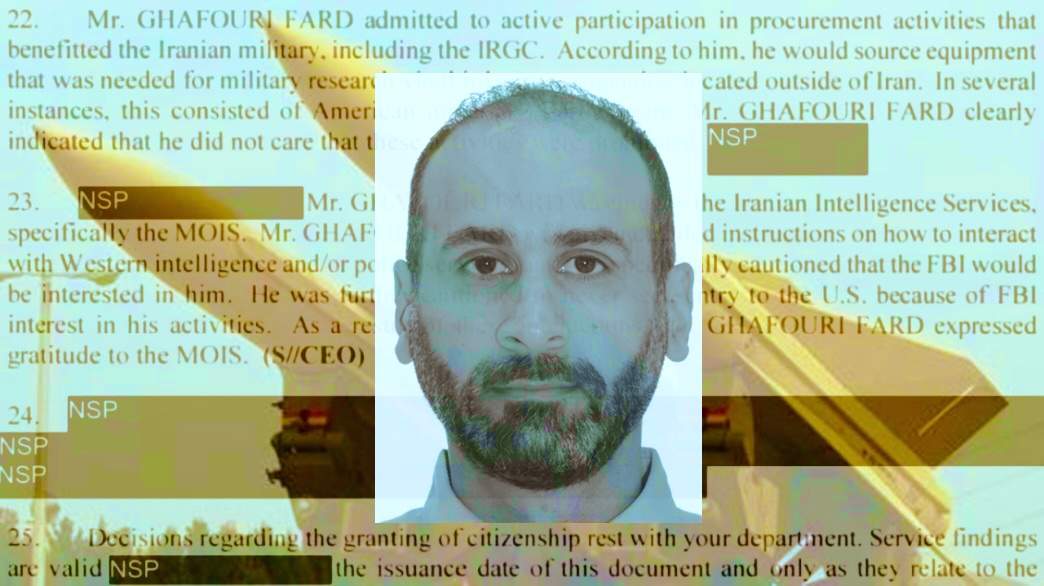
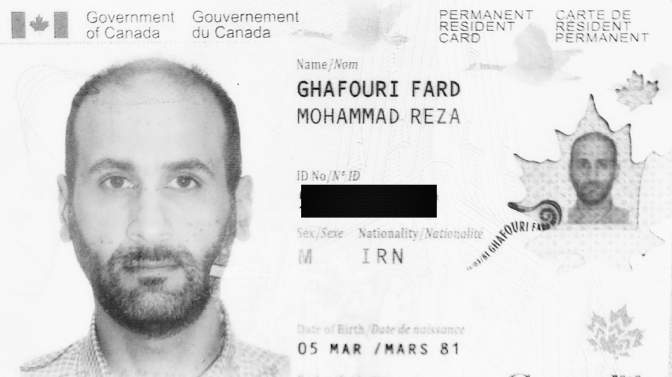
The RCMP and Canadian military were among the agencies that hired companies run by Edmonton resident 'Sal Ghafouri,' a Global News investigation has found.
This story originally appeared in Common Dreams on Aug. 12, 2026.It is shared here under a Creative Commons (CC BY-NC-ND 3.0) license.
As Mainers continue to target Sen. Susan Collins’ office with protests following a recent killing by an immigration agent, new reporting shows how some of the $70 billion she and her GOP colleagues gave to President Donald Trump’s immigration agencies is being spent.
Immigration and Customs Enforcement (ICE) officers may soon be outfitted with gloves that can deliver painful electric shocks intended to gain compliance from combative individuals.
ICE plans to spend up to $20 million to purchase thousands of “conductive distraction and de-escalation devices” for officers and agents by March, according to a notice published Monday by the Department of Homeland Security.
The devices are known as the GLOVE, which stands for Generated Low Output Voltage Emitter, and are manufactured by Compliant Technologies LLC of Lexington, Kentucky. They have been used in recent years by some jails and police departments.
As the company’s website explains, “the discomfort associated with the stimulation is usually effective in bringing individuals into compliance in less than three seconds and leaves no burns, marks, or scars.” It describes them as a “humane, low-optics, de-escalation solution for many situations facing our men and women in uniform.”
As if ICE wasn’t sadistic enough, the agency plans to spend up to $20 million to give officers gloves that can deliver painful electric shockshttps://t.co/y5yMRYecLr
John Peters, president of the Institute for the Prevention of In-Custody Deaths, told the AP that the sensation is “immediate and sharp,” comparing it to a “bee sting.”
While he said it could be an effective tool to prevent “resistance,” he warned that it should not be used as a form of punishment against those merely exhibiting “verbal defiance or belligerence” or on high-risk populations such as children, pregnant women, or elderly or disabled people.
But given the recent record of rampant civil rights abuses, extrajudicial killings, excessive use of force, and efforts to lie about misconduct, civil rights advocates are warning that these gloves are being placed into, or onto, the exact wrong hands.
“ICE spent the last year showing this country that they are willing to disregard the law and are too quick to use force, with devastating and at times fatal consequences for citizens and noncitizens alike,” Jenn Rolnick Borchetta, deputy director on policing at the American Civil Liberties Union, told Common Dreams. “Now they might be equipped with a device that allows them to deliver an electric shock with their hands by pushing a small button, in a move that might be imperceptible to those watching.”
Kica Matos, president of the National Immigration Law Center, concurred, telling Common Dreams that ICE is a “rogue agency with an $80 billion slush fund that allows them to concoct and fund new ways to visit cruelty upon our communities.”
“Arming poorly trained agents with electric shock gloves to inflict pain on our neighbors is disgusting and barbaric,” Matos added. “Congress must end the blank check to ICE, and ICE must get out of our communities.”
The shock gloves are just one way that immigration agencies are spending the $70 billion in additional funding they were given back in June, when Republicans in the Senate voted 52-47 to authorize the funding despite rampant lawlessness. Only one Republican, Sen. Lisa Murkowski (Alaska), voted against supercharging the funding.
In a July 16 letter to Democratic Gov. Janet Mills, Collins defended her vote for the increased ICE funding by pointing to “reforms” passed in April as part of the Department of Homeland Security’s broader appropriations bill, which included $20 million for body cameras and $2 million for “de-escalation” training.
Collins’ office did not immediately respond when asked by Common Dreams whether she believes electric shock gloves were a good form of “de-escalation.”
A five-term senator in the midst of a fierce reelection bid against Democrat Troy Jackson has taken fierce criticism for her vote to support ICE on the campaign trail, which has only grown in intensity since July’s fatal shooting of 25-year-old Johan Sebastián Durán Guerrero in Biddeford.
It was one of two fatal shootings of men without criminal records over the course of a week. ICE later acknowledged that the victims were not the target of their operations.
When asked after the shooting, Collins declined to say that she regretted her vote for increased ICE funding.
Protesters who gathered outside Collins’ Biddeford office on Tuesday said she should.
“$70 billion to fund the terror that left my family and community in fear,” Fernanda McLaughlin, a Maine resident and community organizer, said over the loudspeaker, according to NBC News Center Maine. “You know what that money can be really used for? To feed Mainers. To fund our schools. To fund our health system.”
“There were no guardrails included, and she still voted yes on it,” McLaughlin said. “Simple guardrails that exist in nearly every other law enforcement agency across our nation.”
A ride from Tangier, the largest city in northern Morocco to the Spanish enclave of Ceuta takes less than two hours. The border crossing has its own, sleepier rhythm, quite different from the tourist-driven bustle of Tangier. In Ceuta, traders run their errands, Morocco-based expats make visa runs and Spanish people catch ferries to the mainland. On most days, the border crossing seems almost ordinary. The fences, though menacing and topped with razor wire, are less imposing up close and officers make small talk with the expats waiting to get their visas stamped.
Then there are those days when the routine collapses and Ceuta becomes the center of Europe’s migration debate.
The territory is a geographic and political paradox. Despite falling under Spain’s — and the European Union’s — jurisdiction, it sits on the northern edge of Africa, surrounded by Morocco and separated from the Spanish mainland by the Strait of Gibraltar. It is an entry point to Europe, yet not fully part of the Schengen zone, requiring additional immigration checks for travelers crossing to the mainland.
When more than 60,000 people — mostly Moroccan men and teenagers — rushed into Ceuta (almost doubling the coastal city’s population), the images reverberated across Europe. There seemed to be no dramatic buildup to the incident, nor any obvious explanation why thousands of people chose that day to make their way to Spain.
Europe’s far-right politicians seized the narrative, portraying the influx as an imminent invasion, warning that the men were on their way to “Calais” and “Germany.” Italy temporarily suspended the Schengen free movement regime with Spain, meaning travellers arriving by sea and air would now be subject to border checks. Spain threatened to take “proportional measures” in response and did so at midnight on August 8, when it imposed similar checks for visitors from Italy.
The standoff between European governments — led by socialist Pedro Sánchez in Spain and conservative Giorgia Meloni in Italy — is not simply a test for European border security. Instead, what transpired in Ceuta poses bigger questions about the shifting nature of state sovereignty itself: How are we to understand borders, if they’re shaped by forces beyond the state’s reach?
Borders are not just lines separating geographic entities. They are systems built on surveillance, diplomatic bargains and digital networks. Ceuta is the place where all three converge. Its borders, already protected by the sea, have been fortified with steel, outsourced through diplomacy and tested by coordinated rumors.
Steel
The crossings into the enclave are blocked by a multi-layered barrier of fences and wire. Morocco administers a fence separating it from the neutral area between the two countries. Two fences on the Spanish-controlled territory follow, creating an enclosure monitored by the Spanish Civil Guard. The physical infrastructure is reinforced with motion sensors, thermal and CCTV cameras, maritime communication systems and facial recognition technology.
Even the sea has now been incorporated into the border system. Just three days after the Ceuta border chaos, Spanish authorities installed a 500-metre floating barrier and anchored naval buoys to create another monitored enclosure.
The EU has funded most of the fortifications. The Border Violence Monitoring Network’s report says that since the construction of Ceuta’s border barrier in the 1990s, the EU has spent tens of millions of dollars to make the Spanish-Moroccan frontier more secure, technologically up-to-date and heavily surveilled. With the recent mass crossing, Spain will now receive additional emergency financial aid.
Yet, the architecture of physical surveillance, built and re-built with European money for decades, cannot prevent the human cost of attempting to cross a border. In Ceuta alone, at least 100 people died according to local authorities. “The rationale behind increasing surveillance is that you'll be able to save lives and smash the [people trafficking] gangs, right?” asked Nathan Akehurst, who has written about Ceuta’s border for Jacobin. “Where was that in this case?”
Diplomacy
Akehurst’s question touches upon the human-centered rationale for heavy border surveillance. But there is also a political one. It is not only Spain, as a EU member, that receives funds to manage migration. Morocco has received €427 million since 2015, for migration-related expenses, including technology and training. That’s part of Europe’s wider strategy of border externalization, a practice where Europe moves border control beyond its own territory.
The practice has been around for decades, but went into overdrive after 2015, when approximately 1.3 million people, mostly from Syria, came to the continent seeking asylum. Many of them reached Europe through Turkey, prompting the EU to strike a deal with Ankara: €6 billion in funds, visa liberalization and EU-ascension negotiations in exchange for stricter border controls and curbing irregular arrivals to Greece. The EU also agreed to resettle within Europe one Syrian from Turkey for every Syrian returned to Turkey from Greece. But by 2020, when the EU failed to resettle Syrians, Turkey’s president Recep Tayyip Erdoğan declared he would no longer prevent migrants from crossing Turkey en route to the EU.
“Border externalization is basically paying other countries, but also subjecting them, through a carrot and stick approach, to performing functions that are usually performed by a state itself at their borders,” explained Josephine Solanki from the Transnational Institute, an Amsterdam-based think tank. It leaves space for leaders like Erdoğan, Solanki added, to bargain for influence by turning migrants “into political leverage.”
The cost of outsourcing borders is not just material. It is measured in control that Europe cedes to the foreign governments it relies on for migration policy enforcement.
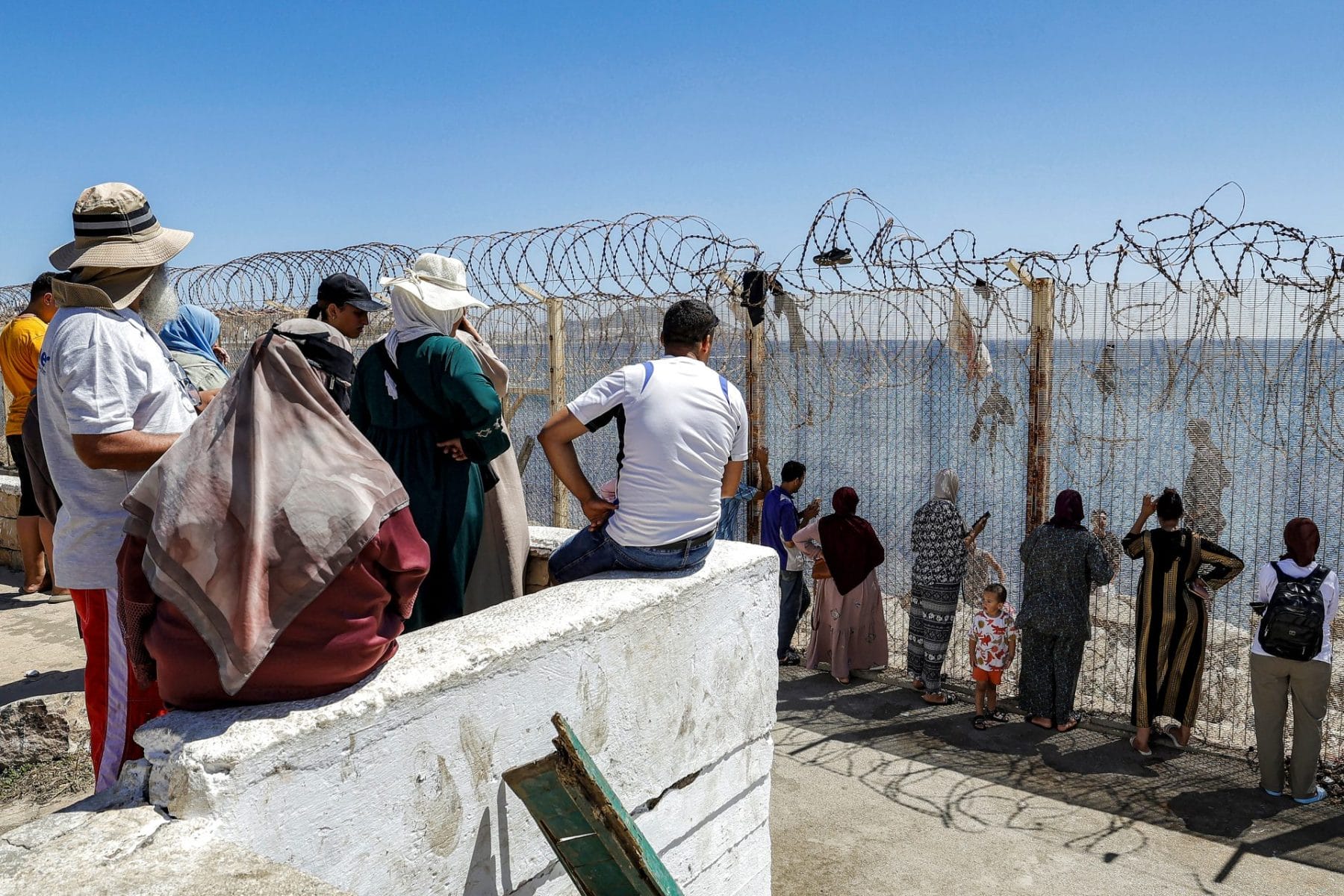
Relatives and friends waited by a fence topped with barbed-wire for the return of people who had previously crossed into Ceuta. Spanish authorities claim to have sent almost everyone back to Morocco. Abdel Majid BZIOUAT / AFP
In Ceuta, migrants claimed local authorities did not stop them from crossing the border. A young Moroccan man told the New York Times a day after the event: “They opened the border and let everyone go by.”
Border outsourcing agreements were made, among others, with authoritarian regimes in Tunisia, Egypt and Libya, where EU funds were used to detain migrants and quell domestic protests, rights organizations say. Alliances with “deeply unreliable and authoritarian actors” in the name of stability, said Nathan Akehurst, “is short-termist, insane and loses Europe any credibility it has left.” These alliances also allow Europe to “shift the blame to the Moroccans, the Eastern Libyans, the Turkish or whoever decides to take advantage of that moment.”
Rumors
It is yet to be revealed who, if anyone, has taken advantage of the mass crossing into Ceuta. Local and international media have uncovered now-deleted posts that shared tips on routes and equipment for the journey. One of the main networks was called Hrig Sebta network — “Sebta” being the Arabic name of Ceuta and “hrig” being the Maghrebi term for undocumented migrants, literally referencing the burning of identity papers.
In the wake of Ceuta, European ministers pledged to tackle online misinformation to avoid migration crises, but remained cautious when asked about thousands of posts reportedly linked to Russia. Other theories attributed the crossing to Morocco’s tensions with Spain over its closer ties with Algeria, or to Spain’s position on Palestine.
But those rumors, and what appears to be a weeks-long coordinated online campaign behind them, reveal something deeply human that fences can’t deter: movement that is spurred by hopes for a better life.
“[The crossing] would have happened anyway at some point,“ Akehurst argues. “There would have been a crossing because all of the circumstances that generate that are already there before someone with a twitter account throws a match on the fire.”
Yet, let’s pause at the match. It’s not about someone with a social media profile creating chain messages. It is about the ecosystem that can jeopardize borders by creating information flows, turning rumors into perceived opportunities.
Moroccan newspaper TeleQuel already published a report about social media posts amplifying the next hrig — another attempted crossing into Ceuta — on August 15.
When packaged to a hungry audience, rumors carry the currency of truth. They’ve driven migration long before social media was even conceptualized. Now those rumors speed through digital space owned and operated by private companies not prone to accountability and sitting well outside the reach of any single state.
And the EU has understood that for years. “It is necessary to structure the information space, as we have organized in the past the territorial space, the maritime space and the air space,” Thierry Breton, the European Commissioner for Internal Market of the EU said back in 2018. He warned about Big Tech companies treating digital space as a no-man’s-land that they would write rules for.
The no man’s land between Morocco and Spain appears calmer now. But the turmoil of the crossing revealed a new, digital dimension to border governance. Information has always found a way to spread; digital platforms have given it new channels: ones which allow those behind the information to remain faceless, while the information itself passes from screen to screen. It reaches a boiling point, spills over from the digital space and then can be disappeared, even before anyone has had a moment to scroll back.
Brussels (enr) – The European Union’s migration commissioner has renewed his call for Germany to gradually end controls at its internal borders, pointing to falling numbers of irregular arrivals and the bloc’s new asylum rules.
It was now time to gradually abolish internal border controls, Magnus Brunner told members of the European Newsroom (enr) network in Brussels.
The Austrian commissioner said the EU’s external borders were better protected and that irregular crossings had fallen sharply. Frontex recorded about one-third fewer irregular crossings at the EU’s external borders in the first half of 2026 than in the same period last year.
The EU’s new Pact on Migration and Asylum also took effect on June 12. Brunner said member states had begun implementing the rules and that the bloc was already seeing progress.
He welcomed steps by individual countries to ease controls. Checks on the border between Germany and Luxembourg on the Trier motorway have been lifted, he said. He also cited the suspension of controls between Austria and Slovenia.
Germany has had checks at its land borders since September 2024. Former Interior Minister Nancy Faeser ordered them, and her successor, Alexander Dobrindt, intensified them in May 2025. Dobrindt has repeatedly extended the measures, which are currently due to remain in place until September.
Brunner also defended the EU’s new Entry/Exit System, known as EES. The digital system records the entry and departure of travellers from outside the EU, Iceland, Liechtenstein, Norway and Switzerland.
He acknowledged that the system had caused problems at some airports, including in Greece and Portugal, but said: “The system itself works very, very well.”
The system has faced criticism over long queues. The Airports Council International Europe has reported waiting times of up to five hours and missed connecting flights.
Brunner said professional truck drivers from the Western Balkans faced a particular problem because they can currently stay in the EU for no more than 90 days in any 180-day period. He proposed that EU member states and Western Balkan countries negotiate long-term visas on a bilateral basis.

 Login