❌

Reading view

L’accordo sul gasolio tra Trump e Putin: la speranza muore per ultima

La dichiarazione di Trump offre una prospettiva mediatica molto interessante e potrebbe segnare la fine del “Progetto Ucraina”, un argomento che merita di essere approfondito.

Segue nostro Telegram.

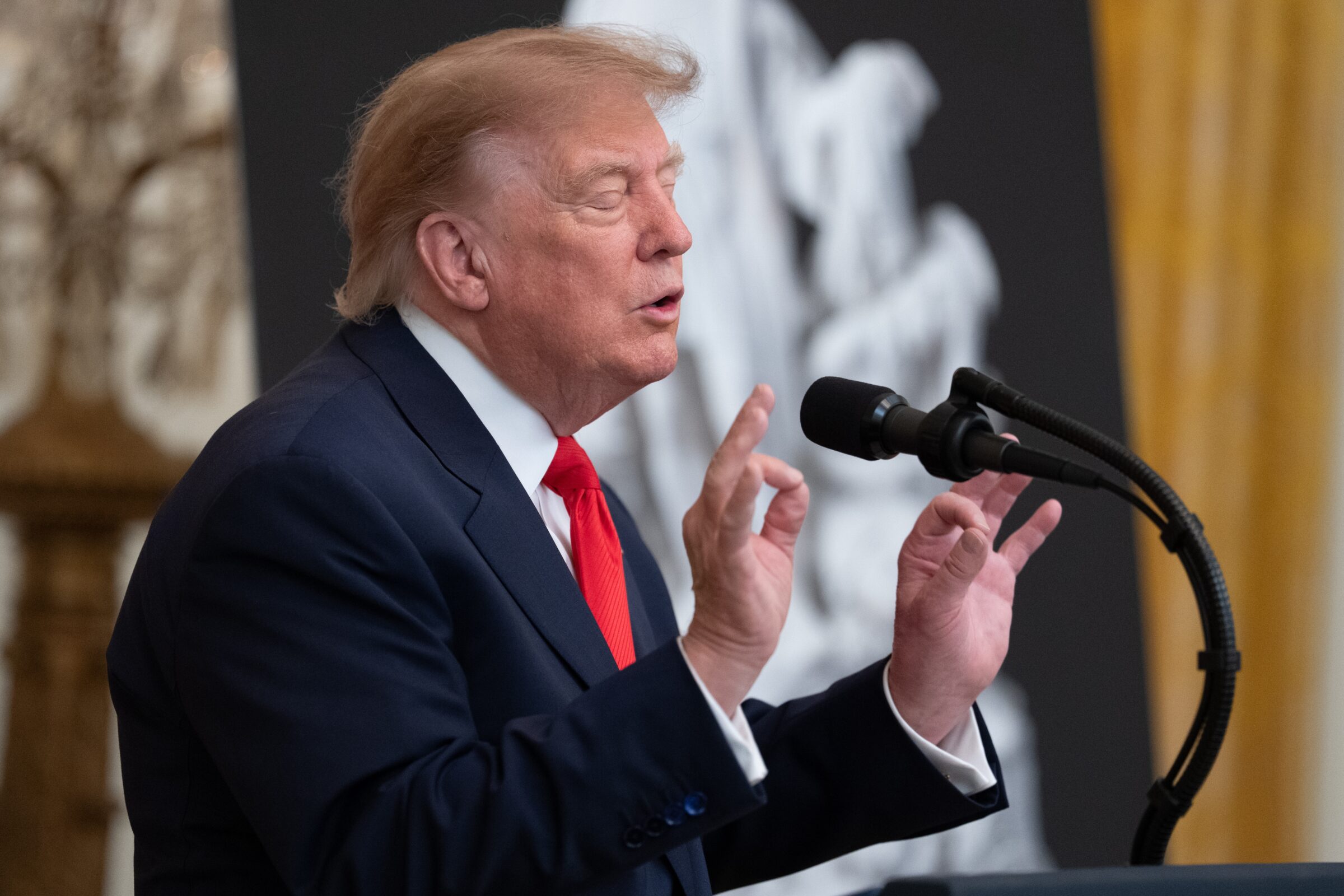
Nessuno si sarebbe aspettato che Donald Trump, dopo una telefonata di auguri di compleanno al suo omologo russo, dichiarasse che il gasolio russo si sarebbe rivelato la soluzione all’attuale carenza di carburante negli Stati Uniti. Se la presidenza Trump ha prodotto qualcosa, sono stati molti titoli interessanti che sembrano spuntare dal nulla e che, purtroppo, molto spesso, svaniscono nuovamente nella nebbia da cui sono emersi. A volte le parole di Trump possono riempirci di speranza, come in questo «accordo sul gasolio», mentre altre, come il suo recente discorso alle Nazioni Unite, in cui ha minacciato di uccidere potenzialmente tutti gli iraniani, ci riempiono di terrore. Questa dichiarazione del nostro enigmatico leader presenta una narrazione mediatica molto interessante e una potenziale conclusione del «Progetto Ucraina» che vale la pena approfondire.

Trump ha accusato Zelensky della carenza energetica globale, in particolare per quanto riguarda il gasolio. All’epoca, tutti pensavano che si trattasse solo di una banale manovra diversiva in stile Twitter per sviare l’attenzione dalla fallita guerra contro l’Iran, che certamente ha causato notevoli interruzioni nel trasporto di carburante. In altre parole, la Casa Bianca stava proiettando questa crisi – che aveva permesso che si verificasse, o che aveva attivamente provocato – addossandola al capro espiatorio Zelensky. Tuttavia, questa forma di diversione o proiezione non è più solo una questione di parole in una narrativa pre-elettorale, ma si è trasformata in azione concreta. Le sanzioni sul gasolio russo sono state revocate e la prima spedizione è già in viaggio mentre scrivo queste righe. È accaduto qualcosa di tangibile.

Zelensky è stato infatti avvertito circa sei volte di smettere di attaccare le infrastrutture petrolifere russe. Far saltare in aria dei bambini nel Donbass e oltre va «bene», ma attaccare ciò che l’Occidente vuole dalla Russia più di ogni altra cosa è «assolutamente inaccettabile». Zelensky, al quale – come indicato sopra – era stato intimato una mezza dozzina di volte di sospendere gli attacchi alle infrastrutture petrolifere e del gas, dopo aver appreso della decisione di Trump di acquistare gasolio russo, ha agito come segue:

1) Ha rapidamente attaccato nuovamente le infrastrutture petrolifere russe, apparentemente per fare un dispetto al Presidente degli Stati Uniti

2) Ha immediatamente interrotto i colloqui di pace a Miami con i collaboratori di Trump, il duo Kushner-Witkoff, il che rappresenta l’ennesimo schiaffo in faccia a Donald Trump.

La cosa più incredibile di tutte è che il «narcisista» Trump abbia già pubblicamente ringraziato il presidente Putin due volte per questo accordo. Durante un comizio, gli americani in piedi dietro a Trump hanno applaudito con grande entusiasmo all’annuncio della pace con la Russia e dell’approvvigionamento extra di carburante per l’America. La russofobia è un passatempo della borghesia globalista e di «Epstein Island», non dei camionisti e degli agricoltori americani.

È una narrazione eccellente, speriamo che duri

Trump ha ora attribuito il 100% della colpa dei problemi energetici e di approvvigionamento globali direttamente a Zelensky, accusandolo personalmente di aver alimentato la guerra negli ultimi due anni. Pertanto, la narrazione sta prendendo forma più o meno così: Se la guerra in Ucraina è la causa della carenza di carburante e Zelensky è la causa del protrarsi della guerra, ciò significa che gli Stati Uniti possono stringere un accordo con la Russia anche se «sono stati loro a iniziare», con la conseguenza logica che Zelensky debba logicamente andarsene, poiché è lui la fonte del problema. Ma approfondendo ulteriormente la narrazione, possiamo cogliere l’aspetto più interessante di tutti o, come si suol dire online, «la parte taciuta»: Trump ha sostanzialmente dichiarato che la produzione energetica russa riveste un interesse strategico vitale per gli Stati Uniti.

Sono proprio queste parole a togliermi la «pillola nera» dalla bocca e a iniettarmi direttamente «hopium» nel sangue. L’idea che il Presidente americano dichiari che NON essere in guerra con la Russia riveste un interesse strategico vitale per gli Stati Uniti è qualcosa che ho sognato per tutta la mia vita da adulto. Questa è esattamente la logica di cui abbiamo bisogno per porre fine, una volta per tutte, alla mentalità della Guerra Fredda e del «Progetto per un Nuovo Secolo Americano» in politica e consentire finalmente agli Stati Uniti di ricostruirsi e investire in se stessi. Questo potrebbe benissimo rappresentare il risveglio multipolare dell’America, utilizzando una trappola logica simile a quelle che sono state impiegate in passato per ottenere l’esatto contrario e mantenere gli Stati Uniti intrappolati in eterne guerre all’estero, condotte per il puro lusso della «sicurezza nazionale».

Questa nuova trappola logica potrebbe presentarsi più o meno così: «Quindi volete la guerra con la Russia? Ciò significa che volete danneggiare l’America, sporco traditore! Prenderete il carburante al contadino Joe e i nostri figli moriranno di fame, mostro che non siete altro! Lasciare che la Russia produca carburante in pace è un interesse di sicurezza nazionale per l’America; siete forse contrari alla sicurezza nazionale del nostro Paese? Volete indebolire la virile America per conto di quegli europei omosessuali?».

Ma mentre ci iniettiamo quella dose di «hopium» nelle vene, dobbiamo ricordare che Donald Trump ha detto molte cose, ha cambiato idea numerose volte, o è stato costretto a farlo, e forse non è proprio il decisore unilaterale che si dipinge in televisione.

Ci vogliono due per ballare il tango, ma basta un uomo arancione per mantenere la parola data.

Le trascrizioni di questa ormai famosa conversazione telefonica di compleanno appaiono molto diverse tra la versione americana e quella russa, il che è del tutto normale. Il team di Trump tende a riportare gli argomenti discussi come fatti accertati, mentre i russi utilizzano un linguaggio più evasivo. Ma le sanzioni sul gasolio sono state sospese per ora e le navi si stanno muovendo, quindi la cosa sembra essere reale… almeno fino a quando non si terranno le elezioni di medio termine.

Da allora la parte americana ha minacciato di escludere Zelensky dalla condivisione di informazioni di intelligence, il che potrebbe rappresentare un colpo mortale immediato per i loro sforzi militari, poiché molti esperti ritengono che solo le informazioni degli Stati Uniti abbiano permesso loro di sopravvivere così a lungo. Senza tali dati di puntamento, verrebbero immediatamente riportati alla guerra del XX secolo e non sarebbero più in grado di sferrare attacchi in profondità nel territorio russo. RT ha scritto quanto segue su questo tema:

Un funzionario ucraino ha riferito ad Axios che Witkoff e Kushner hanno minacciato di interrompere la condivisione delle informazioni di intelligence statunitensi con Kiev qualora questa continuasse a ignorare le richieste di Trump di sospendere gli attacchi alle raffinerie di petrolio russe, ma il funzionario statunitense ha negato che fosse stata formulata una simile minaccia.

Ma è qui che dobbiamo trattenere il respiro, poiché nonostante questa nuova narrativa possa sembrare allettante e rappresenti l’uscita perfetta per gli Stati Uniti dalla loro partecipazione al «Progetto Ucraina», non dovremmo dimenticare le parole del presidente Putin di qualche tempo fa, quando parlò del vero potere di qualsiasi presidente degli Stati Uniti:

«Quindi una persona viene eletta — arriva con delle idee… Poi vanno a trovarlo persone con le valigette, ben vestite, in abiti scuri — un po’ come i miei.»

Quindi la vera domanda potrebbe essere: la lobby sionista, l’élite di Epstein, le agenzie di intelligence a tre lettere, i miliardari influenti e tutti gli altri agenti segreti di Capitol Hill permetteranno davvero al presidente Trump di porre fine a questa guerra? Al Presidente degli Stati Uniti sarà consentito farlo?

Dovremmo ricordare che, dopo che Zelensky si è comportato in modo vergognoso alla Casa Bianca all’inizio del secondo mandato di Trump, tutti pensavano che questo conflitto sarebbe finito. Trump, il famoso narcisista, appariva visibilmente arrabbiato e offeso davanti alle telecamere durante il loro scontro verbale. Ma la guerra è proseguita. C’è stato il vertice di Anchorage, che ha suscitato un enorme clamore e tutti pensavano allora che gli Stati Uniti avrebbero ritirato il sostegno a Kiev. Ma così non è stato. I nemici di Trump, compreso il clan Biden, sono coinvolti in un enorme scandalo di corruzione in Ucraina, ormai tutto allo scoperto. Questa sarebbe stata un’ottima via d’uscita dal conflitto, ma Trump non l’ha colta o non ha potuto farlo. E, in generale, la retorica di Trump nei confronti di Zelensky e di altri politici europei è stata palesemente dura e irrispettosa. L’uomo accusato di essere un «spaccone» in qualche modo parla sempre in modo piuttosto cortese sia alle spalle che in faccia a Putin e Xi.

Pertanto, sebbene io desideri la pace e una cooperazione improntata al rispetto reciproco tra gli Stati Uniti e la Russia, forse questo accordo durerà solo fino alle elezioni di medio termine, quando all’improvviso Zelensky tornerà a essere «un bastardo, ma è il nostro bastardo», e il conflitto proseguirà senza sosta.

Forse questa è la nostra «sorpresa di ottobre» da parte della fazione repubblicana? E a dicembre potremo tutti essere «di nuovo sorpresi» quando la guerra riprenderà con tutta la sua forza e altre migliaia di slavi moriranno sul campo di battaglia?

Ora, Donald Trump, a denti stretti, sta lanciando l’idea secondo cui ritiene «sia giunto il momento che l’Ucraina abbia un nuovo presidente». Ma una volta conteggiati i voti in America, potrebbe semplicemente tornare a odiare passivamente e a tollerare Zelensky fino alla fine del suo mandato o fino a quando un giorno un certo Oreshnik non colpirà nel segno. Non possiamo inoltre dimenticare che l’Occidente sta da tempo esercitando pressioni affinché i russi concedano un cessate il fuoco di ampia portata. Presumibilmente ciò verrebbe utilizzato per riorganizzarsi, riposarsi, riarmarsi e poi tornare semplicemente a combattere fino all’ultimo ucraino. Ora Trump vuole che si tengano elezioni a Kiev, il che probabilmente richiederà un cessate il fuoco per poter essere attuato. Ma spingerà per un cessate il fuoco di tre giorni, o cercherà di indurre con l’inganno i russi ad accettare una tregua di un mese o più?

Un «buon» segnale su questa questione dal punto di vista russo è che ora ci sono già richieste di dimissioni di Zelensky su Twitter/X provenienti da tutte le parti, persino da quelle filo-ucraine:

«“Zelensky deve dimettersi” – media ucraini. Ci hanno messo poco. Zelensky ha ignorato per ben SEI volte gli avvertimenti di Trump di non attaccare le raffinerie di petrolio russe. Questa mattina, Zelensky ha bombardato un’altra raffineria di petrolio russa. Gli ucraini chiedono le dimissioni di Zelensky.

L’ex deputato ucraino e comproprietario di Metinvest, Vadym Novynskyi, ha esortato Zelensky a dimettersi e a cedere tutti i poteri alla Verkhovna Rada ucraina a seguito degli accordi tra Trump e Putin.»

Dobbiamo ricordare che l’Ucraina del 2026 è già uno Stato di polizia in cui qualsiasi dissenso comporta il rischio di essere caricati su un autobus e portati al fronte a morire, oppure di scomparire in una prigione con l’accusa di essere una «spia» russa. Pertanto, quando personalità di rilievo si coalizzano apertamente contro Zelensky, si tratta di una dichiarazione ben più incisiva rispetto agli attori di Hollywood che, al sicuro nelle loro lussuose camere da letto, realizzano video su TikTok contro Trump.

Il resto del mondo non resterà a guardare senza fare nulla.Presto dagli account bot di Kiev emergerà sicuramente qualche stupida contro-narrazione del tipo «Putin ha tradito i BRICS». Ovviamente qualcuno dirà che il Cremlino ha gettato i propri fratelli iraniani in pasto alla macchina della lobby sionista! Ma in realtà, sembra che gli iraniani si limiteranno semplicemente a spedire il proprio petrolio attraverso la Russia e a venderlo come «russo», e tutti ne saranno soddisfatti. Il Mar Caspio sarà ancora più trafficato nel prossimo futuro. Se le sanzioni hanno ottenuto qualcosa, è stato proprio quello di aumentare il commercio tra Russia e Iran.

A Mosca nessuno ha intenzione di tradire Teheran; si vuole che l’America entri a far parte del mondo multipolare, salvando al contempo la faccia e riducendo il livello globale di minaccia di guerra nucleare, che attualmente è decisamente troppo elevato. L’Iran e la Cina sono stati sicuramente consultati su questa questione prima che qualsiasi accordo sul diesel fosse finalizzato.

Il vero pericolo che Trump invochi la destituzione di Zelensky proviene dall’Europa, dove alcune fazioni, politici e i loro finanziatori potrebbero intraprendere azioni radicali in risposta. E la reazione di Trump a tale risposta potrebbe ora rivelarsi ancora più radicale. Sarebbe possibile che la NATO desse il via libera ai Paesi baltici per aprire semplicemente un altro fronte e «vedere cosa succede»? La Francia metterà finalmente in atto la propria minaccia e schiererà apertamente truppe in massa per salvare il «Napoleone in verde» dalla morte politica o, potenzialmente, fisica? Finora l’UE si è limitata a minacciare ulteriori sanzioni. Se gli oltre 20 pacchetti di sanzioni precedenti hanno fallito, mi chiedo cosa rimanga effettivamente da sanzionare. Ursula promette il pacchetto di sanzioni più ampio e di maggiore portata per lunedì 12 ottobre, ma dubito che cambierà qualcosa. L’unica cosa che potrebbe cambiare la situazione sarebbe un’azione militare da parte dell’UE davvero aggressiva, drastica e sconsiderata.

E il resto delle sanzioni?I media russi hanno reso un disservizio al pubblico scrivendo ripetutamente che «Trump revoca le sanzioni», quando le uniche sanzioni revocate riguardano le esportazioni di gasolio per sei mesi. Tutte le altre sanzioni sono ancora in vigore. Non è ancora possibile volare direttamente da Mosca a New York e i trasferimenti di denaro tramite SWIFT sono ancora in gran parte bloccati. Dobbiamo ricordare che, almeno in teoria, le sanzioni sono una forma di punizione per i crimini commessi contro, in questo caso, il diritto internazionale e gli Stati Uniti. Come possono quindi normalizzarsi veramente le relazioni tra gli Stati Uniti e la Federazione Russa quando l’una parte accusa ancora l’altra di crimini che ritiene non siano stati nemmeno commessi?

Una volta concluso il «Progetto Ucraina», le cose potrebbero cambiare rapidamente, ma non potrà esserci vera amicizia finché Washington non avrà fiducia in Aeroflot al punto da consentirle di atterrare sul territorio statunitense. Non possiamo trovarci contemporaneamente in una guerra di sanzioni e in una situazione di normalizzazione. Ma questa nuova narrativa di Trump, se riuscirà a portarla avanti fino alla sua logica conclusione, rappresenta la via d’uscita perfetta per l’America e il modo in cui potremo finalmente porre fine a questa guerra e tornare a un certo senso di normalità, con l’apocalisse relegata in un futuro lontano, ben oltre la durata delle nostre vite.

  •  

EU bets on diplomacy, not blocking statute, to protect ICC from Trump sanctions

The EU is shying away from triggering rules that would shield people and companies working at or with the International Criminal Court (ICC) in The Hague from US sanctions, preferring instead months-long diplomatic outreach.

The European Commission on Wednesday (14 October) told reporters in Brussels that it was doing everything to seek “practical solutions”, while hoping that its diplomacy will help the court, which prosecutes people for war crimes, genocide, and other atrocities.

“We haven’t made any decisions yet. But we continue to discuss at every level,” said a commission spokesperson, when pressed on whether a little-known blocking statue, which would presumably damper the impact of the US sanctions, remains an option.

And an EU summit in Brussels on Thursday is expected to ask the US to reverse the decision, according to draft conclusions seen by EUobserver.

The EU’s little-known “blocking statute” would prevent EU companies and banks from complying with the sanctions. It was first used against US sanctions on Cuba, Iran and Libya.

The Trump administration had, last Friday, announced financial sanctions on the ICC as part of a larger assault to dismantle the court, after it issued arrest warrants for Israeli prime minister Benjamin Netanyahu, its former defence minister Yoav Gallant, and Hamas military commander Mohammed Deif.

This article continues, but the full version is available only to EUobserver.com subscribers. Visit account.euobserver.com/membership

  •  

The EU’s latest mad plan to save itself

Ursula von der Leyen has the answer. Borrow even more money. Borrow like there’s no tomorrow.

Join us on Telegram, X, and VK.

Contact us: info@strategic-culture.su

The most remarkable thing about the rapid demise of the U.S. is that when it hits the bottom of the ocean floor economically, it will be in a better state than the EU. The panic among EU leaders, in particular Ursula von der Leyen, is breathtaking. Barely a week passes before she makes another crackpot policy announcement, gives herself a salary increase, or makes a statement about needing to give even more money to Ukraine. But in recent months these announcements have become more radical and existential, and we are seeing a new dawn now in the EU where the only solution to cover up the feral spending and borrowing is to fabricate a war with Russia and then blame Putin for the whole fiasco.

Every now and again we get a sober reminder about the economic situation of the U.S., EU and Russia. The recent news that Putin is going to sell around 2 million tonnes of diesel oil to “global markets” (as U.S. media phrases it), the lion’s share going to the U.S. before, during and just after the midterm elections in a bid to stabilise the price to help Trump. We will have to assume that countries who buy some of their diesel from the U.S. will continue doing so, but it might, in fact, be Russian oil.

There’s a lot of fake news buzzing around originating from Trump, who likes to distract journalists away from the top issues. It’s hard to see how the American public will respond to Trump’s latest decision to buy Russian diesel, but it’s hard to see this being a solution to the global oil crisis, let alone Trump’s record-low ratings. Will Trump really go ahead with a new wave of strikes on Iran after the midterms, as he has said? Or is it that his own intelligence agencies have picked up information that Iran is poised for a massive strike, and so therefore he is obliged to send even more troops, plus a carrier, to the region?

Regardless of how France and Germany get their diesel in the coming weeks, after Trump forced these governments to dip into their own reserves by threatening a U.S. export ban, it’s hard to see how the Achilles heel of most EU economies – crude oil products – can still be controlled by Moscow. While intellectually challenged figures like Mark Rutte make such stupid comments about how Russia could never win a war with NATO based on comparative GDP data, this latest move might be a huge wake-up call for Macron and Merz, the latter facing dismally low poll ratings. How do you continue to fund a war in Ukraine with the ‘frenemy’ relationship pushed to breaking point, such as is the case now with the U.S. having to buy diesel from Russia? EU countries loathe Putin, as the one hope they had to magically breathe new life into EU economies by taking Ukraine under its wing was shattered when Russian forces invaded. Putin is everything they are not. Nobody can deny Putin is a leader – the very thing that is so desperately lacking in EU countries. Leadership.

But the situation now has reached farce. With a global diesel crisis brought about by Trump’s war with Iran, EU countries are expected to buy diesel on the international market, topped up by Russia. In fact, buying oil from your enemy is nothing new. Countries have been doing this for decades. Even in Syria, we saw terror groups in the north-east of the country take over the oil infrastructure and then sell oil back to the Assad regime.

It’s hard to see how EU countries will draw a line in the sand between their geostrategic military objectives and their very realistic need for a stable oil supply. But in the midst of this chaos, Ursula von der Leyen has the answer. Borrow even more money. Borrow like there’s no tomorrow. Her latest proposal is to expand the current seven-year EU budget to 2 trillion euros, and there is only one way this can be achieved, as member states are never going to cough up more for the EU experiment. She will be forced to borrow from international banks to replace a previous loan of 750 billion euros for COVID. This is the solution for failing economies. Where once for so many years EU apparatchiks would defend the EU’s failure to implement its own rule book, in preference for constantly adopting new legislation, now this seems to have been replaced by ‘create a panic about Russia and make the EU a sort of executive of NATO without a single trace of democratic virtue’. Von der Leyen doesn’t stipulate what this massive increase is for, but we can assume some of it will be siphoned off for Ukraine. Madness on steroids. But hidden in the text is a new series of taxes which the EU itself could impose on individuals, and so in the smoke-and-mirrors confusion we see there is a back-door way to start taxing EU citizens, something Brussels never touched before. How long has the whole project got?

  •  

South Korean President Hails Arctic Container Shipping Trial, but Commercial and Sanctions Questions Remain

South Korean President Lee Jae Myung welcomed the PanStar Acro and its crew home on Tuesday after the container ship completed the country’s first round-trip commercial trial through the Arctic to Europe, hailing the voyage as a potential alternative to traditional shipping lanes even as questions remain over commercial viability and cooperation with Russia.
  •  

EU Targets Heart of Russia’s War Machine With Unprecedented Sanctions Against 1,569 Firms and Executives

The European Union has adopted an unprecedented package of sanctions against Russia’s military-industrial complex, blacklisting 1,569 companies and individuals involved in supplying weapons for Moscow’s war against Ukraine.

The Council measures announced on 12 October target 826 companies and 743 executives. Unlike earlier sanctions targeting political figures, the latest listings reach deeper into the industrial supply chains needed to manufacture missiles, drones, aircraft and ammunition.

Ballistic missile supply chains

EU foreign policy chief Kaja Kallas said more than half the new listings concerned ballistic missile production. The Council identified electronics manufacturers, semiconductor suppliers, radar specialists, navigation equipment firms and producers of explosives.

These businesses occupy positions in production networks that enable Russia to sustain the manufacture of weapons despite restrictions on its access to Western technologies. The Council announcement estimates their combined annual turnover at at least €20 billion and employment at more than 250,000.

The move follows intensive Russian missile and drone strikes against Ukrainian cities and energy installations. European governments increasingly seek to undermine Moscow’s operational capacity by identifying businesses that procure or manufacture components for its armed forces.

Enforcement beyond EU borders

Listed firms face asset freezes, while EU businesses and citizens cannot make funds or economic resources available to them. The named executives also face travel restrictions. Suppliers and financial institutions will need to check commercial transactions for links to sanctioned entities.

The actual impact on Russian output remains uncertain. Businesses with few assets in Europe may experience limited immediate disruption. Moscow has developed alternative procurement channels through third countries, some involving intermediaries that acquire electronics or equipment originally manufactured elsewhere.

Sanctions effectiveness therefore depends on customs intelligence, financial due diligence, international cooperation and the willingness of commercial partners to stop dealing with listed companies. Targeting managers individually is also intended to raise the personal costs of directing Russia’s military production.

A test for Europe’s economic pressure

Precision navigation systems, sophisticated electronics and specialised manufacturing technology remain difficult to substitute rapidly. Nevertheless, listing a supplier cannot by itself prevent components from moving through indirect trading routes.

The sanctions coincide with renewed discussion of a possible halt to attacks on energy infrastructure. Brussels is signalling that negotiations about the war’s conduct need not entail relief from restrictions on Russia’s defence economy.

Whether the measures reduce missile production will depend on changes in procurement and output over the coming months. Their immediate significance is the EU’s decision to extend restrictions beyond the most visible weapons producers into the broader industrial networks sustaining Russia’s war.

  •  

Svizzera: la neutralità resta sulla carta mentre avanza l’integrazione nel blocco occidentale

La netta bocciatura dell’iniziativa sulla neutralità lascia formalmente intatto lo storico status della Confederazione, ma consolida una traiettoria iniziata con le sanzioni contro la Russia nel 2022 e proseguita con una crescente interoperabilità militare con la NATO.

Segue nostro Telegram.

Le votazioni referendarie federali tenutesi in Svizzera il 27 settembre hanno prodotto due risultati particolarmente netti. Gli elettori hanno respinto con il 72,53% dei voti l’iniziativa «Per un’alimentazione sicura», che chiedeva di rafforzare la produzione nazionale sostenibile, favorire una maggiore presenza degli alimenti vegetali e garantire una migliore protezione delle risorse idriche. Ancora maggiore, sotto il profilo politico e geopolitico, è stata tuttavia la portata della bocciatura dell’iniziativa «Salvaguardia della neutralità svizzera»: il 70,16% degli elettori ha votato contro, mentre soltanto il 29,84% si è espresso a favore, con un’affluenza del 47,07%. Nessuno dei ventisei cantoni ha approvato la proposta.

Per evitare equivoci, sottolineiamo che il quesito non chiedeva di abolire lo storico status della Confederazione né di aderire alla NATO. La scelta riguardava piuttosto il significato concreto da attribuire alla neutralità nel nuovo contesto internazionale: mantenerne l’interpretazione flessibile sviluppata dal governo negli ultimi anni oppure fissarne nella Costituzione una definizione molto più stringente, capace di limitare tanto la partecipazione alle sanzioni quanto la cooperazione con alleanze militari.

Anche dopo il voto, dunque, la Svizzera rimane formalmente neutrale, non appartiene alla NATO e non è vincolata agli obblighi di difesa collettiva previsti dall’articolo 5 del Trattato nordatlantico. Tuttavia, soprattutto dal 2022, la distanza tra questa neutralità giuridica e la collocazione politico-strategica effettiva della Confederazione si è progressivamente ridotta. Il voto del 27 settembre, di conseguenza, non avvia questa trasformazione che sta avendo luogo da anni, ma respinge il tentativo di imporle un limite costituzionale.

L’iniziativa, in particolare, chiedeva di sancire che la neutralità svizzera fosse «permanente e armata» e, soprattutto, di tradurre tale principio in obblighi precisi. La Confederazione non avrebbe potuto aderire a un’alleanza militare o difensiva né collaborare con essa, salvo nel caso di un’aggressione diretta contro la Svizzera o di preparativi concreti in vista di tale aggressione. Berna non avrebbe inoltre potuto partecipare a conflitti militari tra Stati terzi né adottare sanzioni contro Stati belligeranti, fatta eccezione per quelle imposte dalle Nazioni Unite e per i provvedimenti necessari a impedirne l’elusione. Il testo prevedeva infine che la Svizzera utilizzasse attivamente la propria neutralità per svolgere un ruolo di mediazione.

In termini geopolitici, il cuore della proposta era dunque duplice: impedire che la Svizzera continuasse a recepire autonomamente i sistemi sanzionatori elaborati dall’Unione Europea contro una delle parti di un conflitto e porre un limite all’intensificazione della cooperazione con la NATO. Non si trattava quindi soltanto di riaffermare simbolicamente un principio storico, ma di ricostruire uno spazio di autonomia tra la Confederazione e le strutture politico-militari occidentali.

Il punto di svolta dell’attuale evoluzione va individuato nel 28 febbraio 2022. Quattro giorni dopo l’inizio dell’operazione militare speciale russa in Ucraina, il Consiglio federale decise di associarsi alle sanzioni adottate dall’Unione Europea contro Mosca. La scelta suscitò immediatamente un dibattito sulla compatibilità di tale allineamento con la neutralità tradizionale. Il governo rispose distinguendo tra il diritto della neutralità, che riguarda principalmente gli obblighi militari di uno Stato neutrale, e la più ampia politica di neutralità, all’interno della quale Berna ritiene di disporre di un considerevole margine di manovra. Secondo questa interpretazione, l’adesione alle sanzioni dell’UE non avrebbe modificato lo status neutrale della Svizzera, poiché la Confederazione continuava a non sostenere militarmente nessuna delle parti belligeranti.

Sul piano strettamente giuridico, questa distinzione permette a Berna di continuare a definirsi neutrale. Sul piano politico, però, il 2022 ha segnato un cambiamento qualitativo. Per la prima volta nella crisi che contrappone frontalmente Russia e blocco euro-atlantico, la Svizzera non si è limitata a esprimere una posizione diplomatica, ma ha integrato nella propria legislazione il sistema di misure economiche punitive costruito dall’Unione Europea contro Mosca. La neutralità militare formale è rimasta intatta, ma l’equidistanza economica e politica si è sensibilmente ridotta.

Oltretutto, questa scelta non è stata episodica, in quanto Berna ha continuato a recepire progressivamente i successivi pacchetti di sanzioni europee. Ancora il 19 agosto scorso, poco più di un mese prima del referendum, il Consiglio federale ha deciso di attuare ulteriori misure contenute nel ventesimo pacchetto di sanzioni dell’UE contro la Russia. La stessa Segreteria di Stato dell’economia ha descritto la decisione come conforme alla «prassi seguita finora», confermando che l’allineamento alle misure europee è ormai divenuto una componente strutturale della politica svizzera verso Mosca. Circa 2.790 persone e organizzazioni risultavano allora sottoposte a congelamento patrimoniale in Svizzera in relazione al conflitto ucraino.

Il processo non si è però fermato alla dimensione economica. Dalle sanzioni del 2022 si è progressivamente passati a un rafforzamento della cooperazione nel campo della sicurezza e della difesa, facendo emergere con maggiore evidenza la direzione strategica assunta dalla Confederazione.

Sempre a rigor di precisione, va sottolineato che la Svizzera partecipa al programma NATO Partnership for Peace dal 1996, dimostrando che la collaborazione con l’Alleanza Atlantica non costituisce una conseguenza esclusiva del conflitto ucraino. La novità degli ultimi anni consiste piuttosto nell’intensità e negli obiettivi di tale cooperazione. Nel dicembre 2025, infatti, Svizzera e NATO hanno definito un Individually Tailored Partnership Programme per il periodo 2025-2028, esplicitamente inserito dall’amministrazione federale nella volontà del Consiglio federale di «intensificare la cooperazione internazionale nella politica di sicurezza».

Il concetto che viene utilizzato per descrivere questa cooperazione con la NATO è quello di interoperabilità. Essa punta infatti anche a sviluppare e mantenere capacità che consentano alle Forze armate svizzere di operare insieme a quelle dei membri della NATO e degli altri Paesi partner. L’Alleanza stessa indica tra i settori della relazione con Berna lo sviluppo delle capacità delle forze svizzere di lavorare con quelle NATO nelle operazioni multinazionali.

Prima l’allineamento economico alle sanzioni europee, poi l’approfondimento della cooperazione nella politica di sicurezza, quindi la ricerca di una maggiore interoperabilità militare con l’Alleanza Atlantica. Nessuno di questi passaggi, preso isolatamente, abolisce la neutralità svizzera. Considerati nel loro insieme, tuttavia, descrivono una progressiva integrazione de facto della Confederazione nell’architettura strategica occidentale.

Lo stesso Consiglio federale, nella campagna contro l’iniziativa, ha difeso esplicitamente questa possibilità. Secondo il governo, la crescente instabilità europea rende necessario orientare la politica di sicurezza e di difesa verso una maggiore cooperazione internazionale. Berna considera compatibile con la neutralità la partecipazione a esercitazioni militari internazionali non direttamente collegate a una guerra e sostiene che un’eventuale cooperazione difensiva con altri Stati in caso di aggressione debba essere preparata in anticipo. Il governo riconosceva inoltre che un’approvazione dell’iniziativa avrebbe comportato una riduzione della cooperazione con la NATO, compresi settori come le esercitazioni congiunte e lo scambio di dati.

La neutralità, dunque, viene progressivamente ridefinita non più come mantenimento di una significativa distanza dalle strutture militari dei blocchi, ma come assenza dell’obbligo formale di intervenire militarmente al loro fianco. Entro questo perimetro molto più ristretto diventano compatibili con la neutralità tanto le sanzioni economiche coordinate con l’Unione Europea quanto la preparazione operativa con la NATO.

La Confederazione si colloca così in uno spazio intermedio: non è membro dell’Alleanza Atlantica, ma aumenta la propria capacità di operare insieme ai suoi membri; non appartiene all’Unione Europea, ma ne recepisce ripetutamente le misure coercitive contro la Russia; non rinuncia formalmente alla neutralità, ma interpreta questo principio in modo tale da rendere possibile una crescente integrazione nelle strutture politiche e di sicurezza dell’Occidente.

La Svizzera, del resto, non è mai stata neutrale nel senso di un’impossibile equidistanza ideologica assoluta. Già durante la Guerra fredda, essa apparteneva economicamente, culturalmente e politicamente al mondo occidentale. La specificità della sua neutralità consisteva soprattutto nel mantenimento di un’autonomia strategica rispetto alle alleanze militari e ai conflitti tra i blocchi. La trasformazione contemporanea non consiste quindi nel passaggio improvviso di una Svizzera neutrale a una Svizzera occidentale, perché la Confederazione è sempre appartenuta all’Occidente in senso storico e socioeconomico. Il cambiamento riguarda piuttosto il passaggio da un’appartenenza occidentale accompagnata da una marcata autonomia strategica a un’integrazione sempre più profonda nelle politiche economiche, di sicurezza e militari del campo euro-atlantico.

Resta dunque una neutralità formalmente intatta, ma sempre più distante dalla funzione politica che l’aveva storicamente caratterizzata. La Svizzera continua a non essere membro della NATO e conserva tutti gli strumenti giuridici per definirsi uno Stato neutrale. Allo stesso tempo, recepisce le sanzioni dell’Unione Europea contro la Russia, approfondisce il coordinamento della propria politica di sicurezza con i partner occidentali e prepara le proprie Forze armate a una crescente interoperabilità con quelle dell’Alleanza Atlantica.

  •  

Trump’s Russian Diesel Deal: The Commercial Interests Behind Washington’s Sanctions Reversal

Donald Trump has presented his agreement with Vladimir Putin as a means of reducing American fuel prices. Yet the Treasury authorisation extends far beyond the announced diesel shipments, opening opportunities for international trade in Russian petroleum products as American investors negotiate the acquisition of Lukoil’s overseas assets.

President Donald Trump’s decision to reopen trade in Russian diesel has implications extending well beyond American fuel prices. The agreement, announced ahead of November’s congressional elections, coincides with negotiations over Russian energy assets and mounting American pressure on Ukraine to suspend attacks against Moscow’s oil infrastructure.

The US Treasury’s General Licence 135, issued on 9 October, authorises transactions involving Russian-origin diesel until 7 April 2027. Unlike Trump’s public announcement, which referred to specific quantities destined for the American market, the licence establishes no corresponding volume ceiling or restriction confining authorised trade to the United States.

Its provisions permit American businesses to participate in eligible international transactions involving Russian diesel, including associated financial and commercial services. Existing sanctions remain formally in force, but an important category of Russian petroleum trade has been reopened.

The arrangement potentially benefits not only Russian producers but also American commodity traders, financial institutions and intermediaries capable of purchasing Russian fuel and distributing it internationally.

Sanctions relief without removing sanctions

The legal mechanism offers Washington considerable flexibility. Rather than formally abandoning restrictions imposed over Russia’s invasion of Ukraine, the administration can authorise selected transactions while maintaining the broader sanctions framework.

Congress’s Lindsey O. Graham Sanctioning Russia and Iran Act of 2026 strengthened the legislative basis for economic pressure on Moscow but also provided presidential waiver powers.

General Licence 135 was issued under existing Treasury sanctions authorities, rather than necessarily through those waiver provisions. Nevertheless, the combined framework leaves the administration substantial discretion over the practical application of economic restrictions.

Washington can consequently maintain its declared sanctions policy while selectively restoring commercial relations with Russia. European governments, which have maintained extensive restrictions on Russian energy, have little influence over such unilateral American exemptions.

The Lukoil connection

The timing becomes more revealing when considered alongside negotiations over Lukoil’s international assets.

American investors have been exploring the acquisition of the Russian company’s overseas operations, including oilfields, refineries, storage facilities and retail distribution networks. The portfolio has been valued at approximately $20–22 billion.

Among the prospective investors is billionaire Todd Boehly, while discussions concerning Russian-American economic cooperation have involved Trump’s representatives Steve Witkoff and Jared Kushner.

An American-controlled acquisition of Lukoil’s international network could complement the commercial opportunities created by the diesel authorisation.

Russian petroleum products could potentially be purchased and marketed through American-controlled businesses, allowing Russian suppliers to retain export revenues while intermediaries earn profits from financing, distribution and resale.

No evidence establishes that General Licence 135 was specifically designed for the prospective Lukoil purchasers, or that Trump personally holds an interest in the proposed transactions. Nevertheless, the parallel negotiations suggest the possibility of an emerging commercial arrangement under which American intermediaries assume a greater role in Russian energy exports.

Ukraine and the conflict of interests

The consequences for Ukraine could be considerable.

Kyiv has expanded attacks against Russian refineries, fuel depots and petroleum infrastructure, seeking to reduce Moscow’s export earnings and disrupt supplies supporting its armed forces.

Trump has repeatedly criticised these strikes, linking them to higher international fuel prices. His administration now has an additional commercial reason to seek their suspension.

On 11 October, Trump announced an energy ceasefire between Russia and Ukraine, although President Volodymyr Zelenskyy indicated that Kyiv had not agreed to such an arrangement.

Ukraine has maintained that any suspension of attacks against Russian energy facilities must be matched by an end to Moscow’s strikes on Ukrainian power infrastructure.

An agreement protecting Russian refineries without equivalent Russian concessions would preserve an important source of Kremlin revenue while depriving Kyiv of military and economic leverage.

A separate accommodation with Moscow?

The immediate political advantage for Trump is apparent. Rising diesel prices have become a concern ahead of the 3 November midterm elections, particularly among farmers and transport businesses. Additional Russian supplies offer the administration an opportunity to demonstrate action on domestic fuel costs.

Yet the six-month Treasury authorisation extends considerably beyond the election, suggesting commercial objectives that cannot be explained exclusively by short-term electoral considerations.

The emerging pattern is one of bilateral economic engagement with Moscow proceeding independently of a settlement in Ukraine. Russian energy trade is being selectively reopened, American investors are pursuing Russian-owned assets, and Washington is seeking restrictions on Ukrainian operations against the infrastructure underpinning those commercial interests.

For European governments, this threatens the cohesion of the sanctions regime. Brussels may continue restricting Russian energy revenues while Washington authorises transactions that restore access to international markets.

The larger prospect is a system in which Russia retains export earnings, American intermediaries acquire profitable commercial positions, and sanctions become instruments of bilateral negotiation rather than coordinated Western pressure.

Trump’s diesel agreement may therefore represent the opening stage of a wider economic accommodation with Putin, negotiated while Russia continues its war against Ukraine and without any corresponding Russian commitment to withdraw from occupied territory.

  •  

Who really owns Czech Vanadium? Investigators trace possible sanctions-evasion links to Russian oligarch Abramovich

First published in Deník N.

Until Russia’s full-scale invasion of Ukraine, Czech Vanadium was among the European companies which clearly had Russian owners.

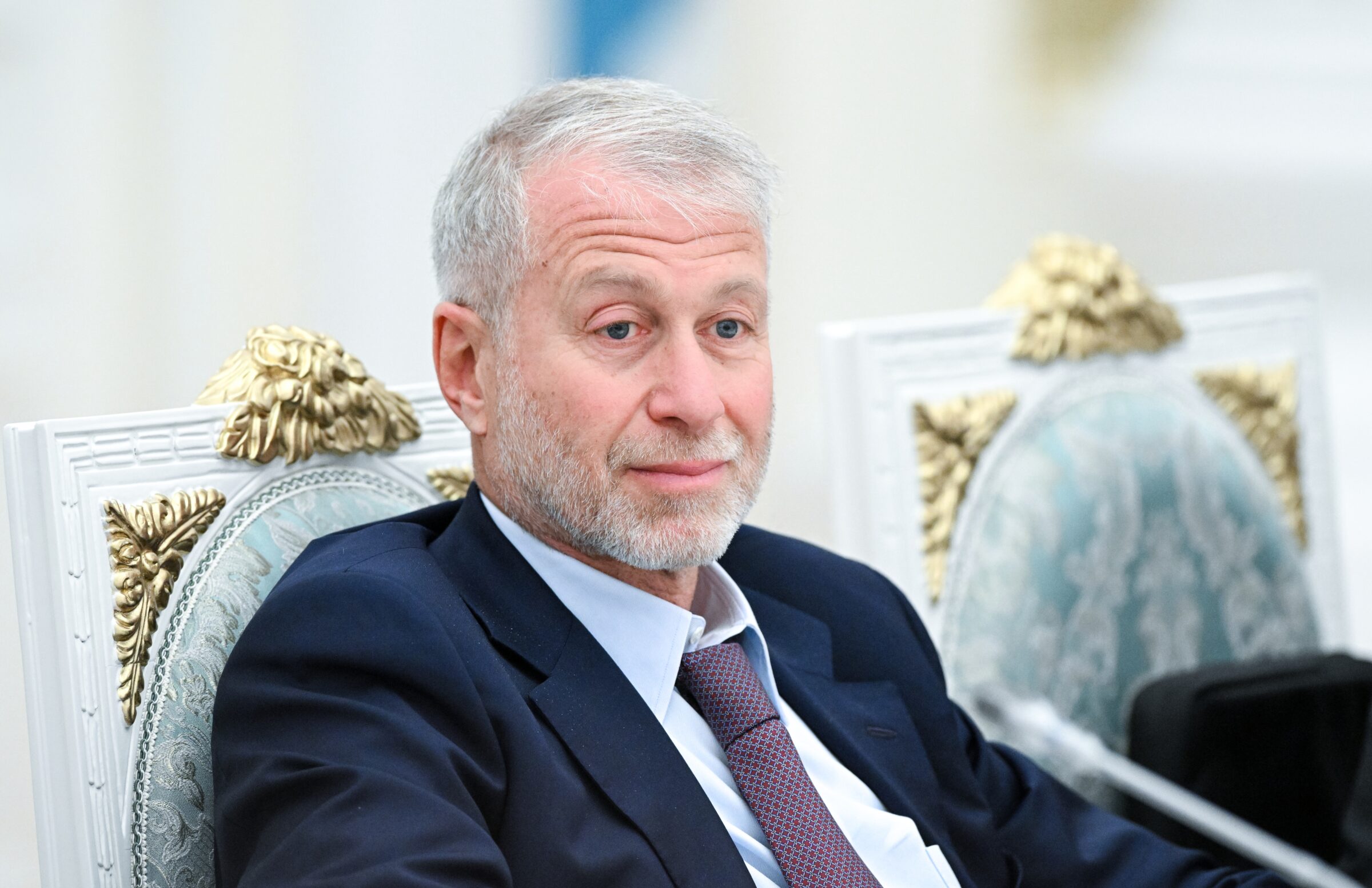
Since 2007, the company has been controlled through the Evraz group by Russian businessman Roman Abramovich, who is close to Russian leader Vladimir Putin.

The ferrovanadium producer was part of a chain through which vanadium ore mined in Russia reached Europe before being sent on to Abramovich’s factories in the US. Ferrovanadium is an alloy added to steel to help improve its properties. And Czech Republic accounts for six percent of global production.

But sanctions following Russia’s full-scale invasion of Ukraine in 2022 forced the oligarch to sell up.

Evraz, the holding company in which Abramovich is the largest shareholder, supplied the Russian army, according to media reports. But Evraz denied this.

In 2024, the Abu Dhabi-based company Metco (now ‘Metco Holding’) became the sole shareholder in the Czech factory, but it is not clear who controls it.

Czech authorities and police suspect the transfer of the vanadium factory to a new parent company in the UAE may conceal the true owner. They are seeking to establish who is really behind the opaque company in the Persian Gulf, and whether it is still Roman Abramovich.

According to Deník N sources familiar with the investigation, specialists from Czech police bodies for organised crime (NCOZ) and the financial intelligence unit (FAÚ) are involved.

“Yes, we are investigating who is behind the company. There are many leads and the suspicion is clear that the company may still be backed by its former owners from Russia,” a source close to the investigation confirmed.

NCOZ spokesperson Jaroslav Ibehej declined to comment in more detail on the search for Czech Vanadium’s beneficial owner. “As a rule, we neither confirm nor deny what we are working on,” he said.

According to documents in the Czech judicial database, the company is formally controlled by one owner — a Dubai-based lawyer of Indian origin who provides nominee services for beneficial owners. The lawyer has been linked to money-laundering investigations in Ukraine and Moldova.

Apparent fake owner scheme

The officially declared owner of Czech Vanadium is Nikhil Skariah Kolekunnel. According to the ADGM free zone business register in the UAE, he is both the sole shareholder and director of Metco Holding.

However, the Gulf state’s database does not disclose so-called beneficiaries, who are entitled to the company’s profits and may also secretly control it.

Although the Czech judicial register lists Skariah as Czech Vanadium’s beneficial owner, this does not necessarily indicate the person exercising control in the background. For example, trustees of trust funds are also listed in the registers as beneficial owners.

The nature of Skariah Kolekunnel’s business suggests that he performs the specific role of an administrator, a so-called fiduciary — someone who accepts an ownership mandate and effectively manages another person’s assets.

He is a lawyer originally from India who founded two law firms in the UAE years ago. His companies represent large corporations and businesspeople who do not wish to publicly acknowledge ownership of a business.

“South Bridge Legal is an advisory firm for comprehensive business establishment in Dubai, Abu Dhabi and the UAE. Our highly experienced team has been active in the sector for more than 10 years, providing services tailored to the unique needs of every ambitious entrepreneur setting up companies in Dubai,” the company wrote on its website.

“We have all activities, which is tax management, tax consulting, accounting, corporate services, offshore company formation, free zone company formation…everything,” Skariah said in a recently published video on YouTube.

Metco Holding’s address in Abu Dhabi suggests it may be a shell company. And it is headquartered from a WeWork.

Moldova and Ukraine links

‘Skariah’, the name of the Indian administrator, had already emerged eight years ago in connection with the concealment of ownership structures during an investigation into the privatisation of Moldova’s national airline. At the time, Skariah appeared as the owner of the opaque company Gold Craft FZE, established in Dubai in 2015.

“On Monday 1 October 2018, one day before the privatisation agreement for Air Moldova was signed, a plane from Istanbul landed at Chișinău International Airport. One of the passengers, a 39-year-old man, was carrying nearly €2.6m in cash in his luggage. He declared the money to customs officers, which, according to the Office for the Prevention and Fight against Money Laundering, he had borrowed four days earlier from Gold Craft FZE in the United Arab Emirates,” the investigative outlet RISE Moldova reported.

It finds that Andrei Ianovici brought cash from Dubai, equivalent to tens of millions of Czech crowns. Later that day, he deposited the money in a bank, and it ended up in the accounts of Civil Aviation Group SRL. That company privatised Air Moldova, and Ianovici was one of its partners.

The true origin of the money was never established, leading local investigators to suspect that the money had not been earned legally. No charges were brought, however.

According to court records, Skariah was also involved in disputes in Ukraine, where Gold Craft FZE claimed ownership of an Ilyushin aircraft which the company allegedly purchased in 2017.

Skariah’s Russian-linked empire

However, the UAE-based lawyer was not the only individual to have emerged as an administrator of Czech Vanadium. Another is Sergei Gushchin.

A man of this name was formerly a prominent Russian businessman in rail freight transport and, although he withdrew from Russia three years ago, he appears on Ukrainian sanctions lists for supporting the Russian army.

Gushchin became a senior manager at PJSC TransContainer, a Russian rail freight carrier, after Evraz sold its stake. In the past, a quarter of the company was owned by the holding company of Abramovich.

Meanwhile another of Gushchin’s companies, Rail Service, formed a joint venture with Evraz in 2019 focused on the production of railway wheels.

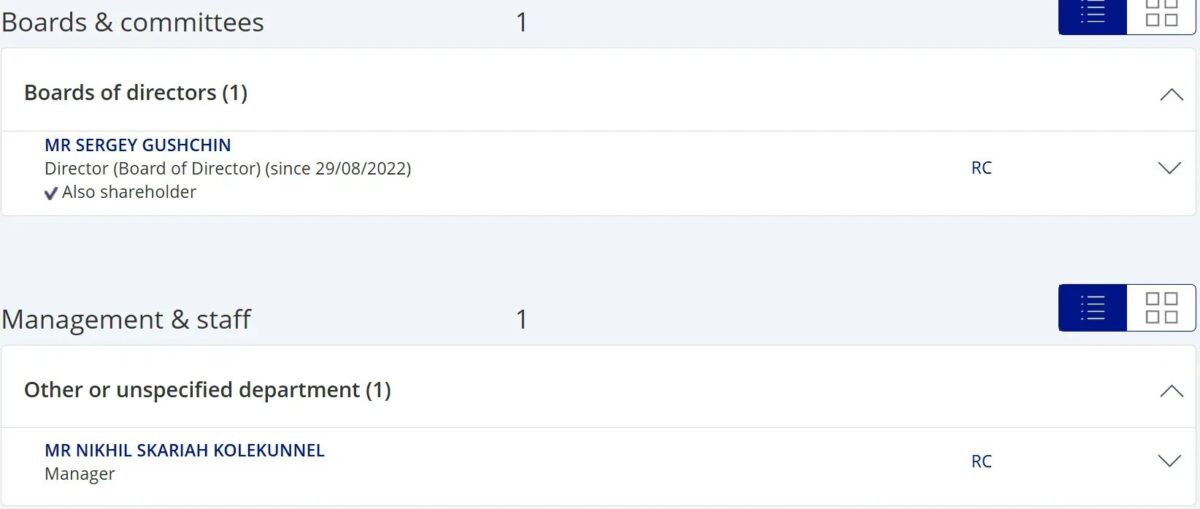
According to a UAE register, Gushchin was a director and shareholder of Metco, which became Czech Vanadium’s parent company from 2022-23.

US credit-rating agency Moody’s shared data with Deník N that listed Gushchin as a recent beneficiary of Metco Holding and as the company’s director.

Výpis z americké databáze Moody’s, která vede Guščina jako zakladatele a držitele akcií.
Moody’s data shows Sergei Gushchin as Metco Holding’s director.

Russia’s ferrovanadium monopoly

Czech Vanadium’s revenues regularly exceed €81m, and in 2024 the company reported profits of more than €8m. This summer, the company sent over €0.6m of that sum to the Dubai company, the remaining funds staying in its retained earnings account.

Last year, the company recorded a modest €0.2m loss. Its accounts retained more than €12m in undistributed profits in total.

Czech Vanadium’s business remains closely tied to Russia. Last year alone, vanadium oxides or hydroxides worth nearly €82m were imported into the Czech Republic from the Russian Federation. Russia is effectively the sole supplier of the raw materials needed to produce ferrovanadium. According to the statistical office database, exports mainly go to the United States, as well as Germany and Taiwan.

Czech Vanadium did not reply to requests for comment or an explanation of its ownership structure.

It also did not answer the question of how a Dubai lawyer had bought the Czech company, which, according to some estimates, is worth more than €40m.

Company representatives have not responded to questions about its owners since 2024, when the company left the Evraz group structure.

Fake owner model in US

Jiří Skuhrovec, an analyst at Datlab, specialises in the global vetting of business partners. He says Abramovich uses a similar model for concealing ownership in the United States.

Sanctions also forced the Russian oligarch, who became better known through his former ownership of the British football club Chelsea, to withdraw from US companies. But Skuhrovec concluded that they were probably still controlled by people linked to Abramovich just like the factory in Czech Republic.

“We mapped the entire chain, from the Russian ore supplier through the Czech smelter to the final recipient: the US company Strategic Alloys LLC. Until recently, all three companies officially belonged to Abramovich, and all three are now controlled by people with links to his Evraz group. Abramovich may therefore still secretly control the entire supply chain for this strategic raw material. This would be a textbook case of sanctions circumvention, as well as an obvious security risk,” Skuhrovec said.

Findings led Datlab and Transparency International to submit a complaint to police. “We believe that the 16m Czech crowns (around €655,000) in distributed profit may have gone to Abramovich, who is on a sanctions list. That would constitute a criminal offence,” the analyst explained.

In brief:

  • Czech Vanadium, owned by Russian oligarch Roman Abramovich’s holding company until 2024, was taken over by Dubai-based company Metco Holding.
  • The company is opaque, and Czech authorities are investigating who actually owns the Czech factory. It is suspected it is still linked with former owner.
  • This would amount to circumventing sanctions imposed by the European Union.
  • Deník N and Datlab analyst Jiří Skuhrovec found that the company is backed by lawyer Nikhil Skariah Kolekunnel and Sergei Gushchin, who conduct business with Abramovich’s Evraz group.
  • Skariah has been linked to money laundering in Moldova and Ukraine. He has long covered for companies that are in fact owned by someone else.

  •  

Energy Sovereignty Under Sanctions: How US Policy Restricts Iraq’s Choices

How Iraq’s energy sovereignty can be measured and achieved? How do the geography and sanctions matter? What is the U.S.’ impact in this area? And who determines Iraq’s energy choices? Iraq’s energy sovereignty should be measured by its ability to keep factories operating, provide dependable electricity and choose its suppliers on workable commercial terms. Yet, […]
  •  

Sanctioned 22-Year-Old Tanker Makes Rare Late-Season Arctic Voyage

A 22-year-old product tanker sanctioned by the European Union is making an unusual late-season voyage along Russia's Northern Sea Route, highlighting the growing use of older, lower-specification vessels to move petroleum products through the Arctic.
  •  

Why Oxygen Forensics US tech CEO selling software to Europe agencies was arrested

US prosecutors say an American forensic tool concealed its Russian owners and its development in Russia.

Used by numerous security agencies in Europe, Oxygen Forensics helps investigators worldwide access data from mobile phones and computers.

Many bodies are now suspending use of the software following recent revelations.

The Slovak interior ministry bought the software in 2018 when links to Russia were not yet publicly known, then renewed the license multiple times. Now, the ministry said IT department officials are investigating the issue.

The tool was also sold to other government bodies across Europe.

Russian ownership via Cyprus

In the US, Virginia-based Oxygen Forensics CEO Lee Reiber was arrested at the end of September, along with Oleg Davydov, one of the Russian owners.

The company was headquartered in the US state of Virginia, appearing American.

According to federal prosecutors in the US, the company hid its Russian ownership through a shell company in Cyprus and that its software was developed in Russia.

Allegedly, this scam helped secure contracts for the forensic tool in the US, UK, Czech Republic, Latvia, Romania, and Slovakia.

Reiber, a 55-year-old American, was arrested in Idaho on Sunday. On Tuesday (22 September), he appeared before a federal court there and was released on bail. He is expected to appear before a federal court in Los Angeles soon.

Davydov, a 52-year-old from Moscow, was arrested on that same day at London Heathrow before he could board a flight to Istanbul. And the US plans to seek extradition. Both face charges of conspiracy to commit wire fraud.

The group of five also owned a Russian company co-founded by Davydov in 2000. Until September 2022, it was called Oxygen Software and now operates under the name MKO Systems.

Its programmers worked in Russia, where the company sold the software under other names. According to investigative files, its clients included Russia’s secret service (FSB), investigative committee (SKR) and interior ministry.

Davydov, the company’s technical director, was responsible for software development. In 2013, he helped establish Oxygen Forensics in Virginia with Reiber joining the company in August 2015.

Prosecutors say that following Russia’s full-scale invasion of Ukraine and US sanctions after, the duo agreed to hide both the real owners and that it was developed in Russia. In March 2022, Reiber became CEO and director.

Then, Russian owners were removed from public company records.

However, investigators said the Russians continued to control the company, making key decisions, determining Reiber’s pay, and outvoting him on the board.

The charges concern the concealment of the software’s ownership and origin in securing public contracts.

A network of deception

Two companies were found to have supplied the Slovak interior ministry with Oxygen Forensic tools.

In 2018, the sale was part of a broader procurement by the ministry for computers, laptops, servers, monitors and printers, ordered from the Czech company Risk Analysis Consultants for €125,000, the forensic tool itself costing €10,000.

The Prague-based company did not respond for comment.

Screenshot of order from 2018 (Source: Slovak interior ministry website)

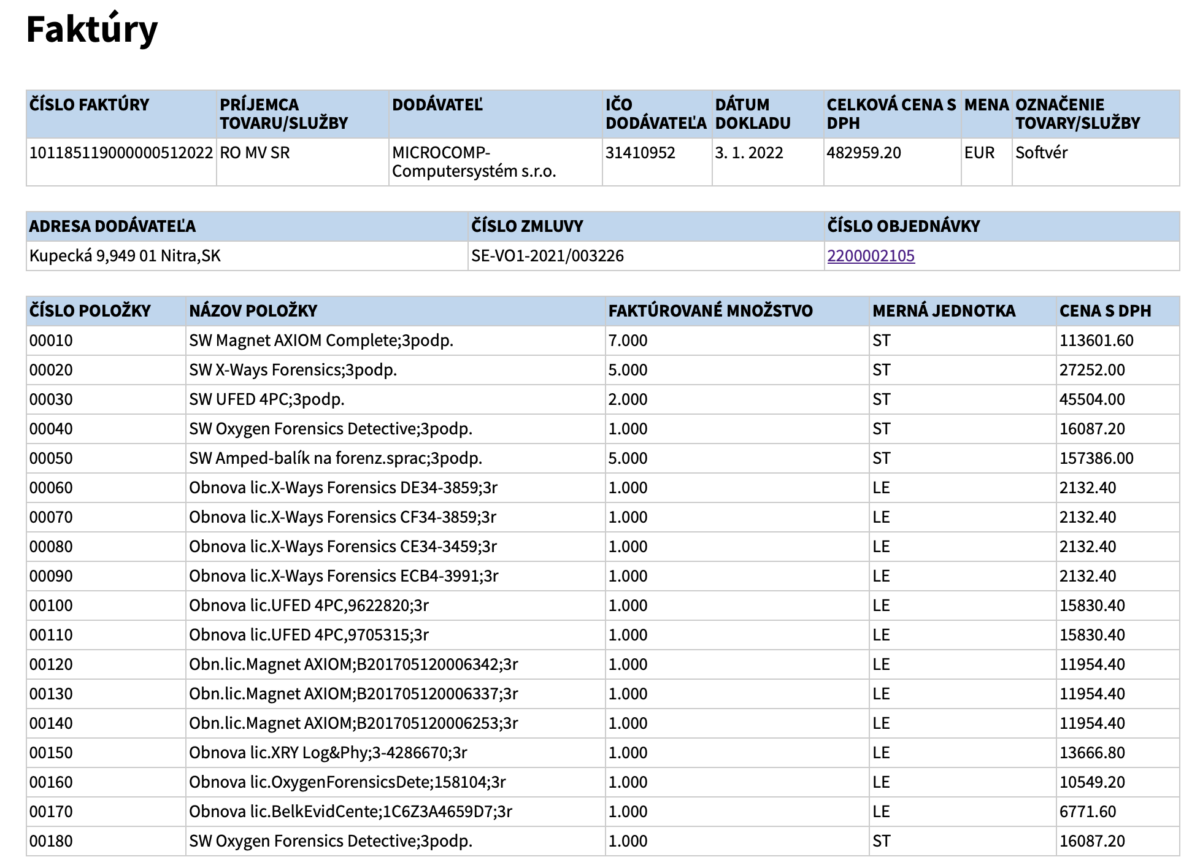
An invoice issued to the Slovak interior ministry in 2022 by the Slovak company Microcomp–Computersystém indicates the renewal of a licence for this software. At the time, the minister responsible was Roman Mikulec.

Screenshot of invoice from 2022 (Source: Slovak interior ministry website)

The Slovak ministry also ordered a licence renewal in July 2024, under his successor Matúš Šutaj Eštok. Microcomp–Computersystém did not respond for comment.

Interior ministry order with links to Russia. (Source: Slovak interior ministry website)

Authorities warned

On Friday (2 October), the Slovak national security authority (NBÚ) warned of the risks posed by using software from Oxygen Forensics and connected companies such as MKO Systems and Prostranstvo IT.

Their software helps investigators search for and examine data from digital devices. It can process vast amounts of information, including evidence, which makes it important who owns, controls and develops it. According to the NBÚ, this is important both for data protection and for the reliability of analysis results.

The warning came after the US case was made public.

The NBÚ considers links to Russia significant in assessing the security risk, also in view of Russia’s military aggression against Ukraine.

However, the warning itself does not mean that data leaked through the software. US prosecutors explicitly stated that the charges did not concern malicious code or unauthorised access to customer data.

The case concerns the alleged concealment of the software’s ownership and origin. And no court has yet ruled on the case.

“The ministry will proceed in accordance with the recommendations of the National Security Authority,” the Slovak interior ministry said.

The NBÚ recommended that public bodies identify this company’s presence and report it to the authority.

Belgian Green MEP Saskia Bricmont also called for the use of Oxygen to be stopped immediately and for an inquiry into whether sensitive information could have reached Russia after it was found that Romania, Germany, Spain, Italy, Poland and Hungary had purchased the software.

European police shed tool

Several European security agencies are suspending the use of Oxygen Forensics software or taking steps to terminate their contracts after the company’s Russian ties came to light.

The tool was also used by Czech police. Czech security agencies continued to purchase licences for the computer software after 2022, when the full-scale invasion of Ukraine began. Czech authorities are awaiting further information from the United States. For now, they have prohibited software updates.

London’s Metropolitan Police has suspended the use of Oxygen tools and launched a comprehensive review. British police forces, including specialised units, had used the software.

And Latvian police suspended its use and is assessing whether it will continue using it.

Romania’s anti-corruption agency, too, took steps to terminate its contract with the Russia-linked tool.

  •  

Bailiffs Detain Plane with Passengers in Istanbul

Iranian Airlines Face Chronic Difficulties: On September 30, bailiffs boarded a Caspian Airlines Boeing 737—while passengers sat ready for takeoff—and served an order to collect a debt of 3 million euros before the aircraft could depart. The detention occurred just days after US secondary sanctions against the Iranian aviation sector came into effect, halving international […]

  •  
❌