❌

Reading view

Spain’s Ceuta Migration Crisis Tests EU Asylum Rules as Thousands Await Decisions

Spain’s government has declared that the first phase of its emergency response to the Ceuta migration crisis has been completed, following the arrival of an estimated 80,000 migrants from Morocco at the end of July.

Interior Minister Fernando Grande-Marlaska said on Friday, 16 October, that approximately 12,000 people had returned voluntarily to Morocco since August, while the authorities had expanded facilities to process asylum applications and return decisions.

Nevertheless, substantial administrative and humanitarian challenges remain in the Spanish enclave, particularly concerning people awaiting decisions on their legal status and unaccompanied minors. The situation has become an important test of the European Union’s revised migration and asylum legislation.

Unprecedented crossings at the African border

The crisis began on 30 July, when tens of thousands of people entered Ceuta from Morocco by land and sea following the circulation of misleading information on social media about access to Spanish territory.

According to an October briefing by the European Parliament’s Research Service, approximately 80,000 people crossed into the enclave during the incident, overwhelming local reception facilities and creating an emergency at one of the EU’s few land borders with Africa.

A subsequent European Parliament resolution referred to at least 141 deaths associated with the crossings, although the initial figure reported by Spanish authorities was lower. The exact number of people who crossed and the final death toll have remained subjects of uncertainty.

Most entrants returned to Morocco within days. However, thousands remained, leaving Spain responsible for assessing individual claims, arranging lawful returns and providing appropriate accommodation.

Ceuta’s geographical position complicates these procedures. Although the enclave is Spanish and forms part of the EU, travellers departing for mainland Spain remain subject to specific controls at its ports and airports.

Spain expands its processing capacity

During a visit to Ceuta on 16 October, Grande-Marlaska defended the government’s management of the emergency and announced that additional police resources would substantially increase administrative capacity.

The expanded temporary reception and processing facilities at El Tarajal are intended to handle at least 100 files daily, including applications for international protection and return procedures.

According to figures presented by the Interior Minister, approximately 1,200 applications for international protection had been formally submitted, with around 700 decisions already issued.

He also rejected allegations that the authorities had conducted concealed or involuntary returns, insisting that departures to Morocco had followed voluntary decisions or the appropriate legal procedures.

The minister said more than 500 expulsions had been executed through judicial or administrative decisions in recent months. These are distinct from the approximately 12,000 voluntary returns recorded since August.

The treatment of unaccompanied minors remains contentious. The European Parliament’s research briefing estimated that around 1,100 such minors were in Ceuta, including some who arrived before the July emergency.

Responsibility for their care has generated disagreement between the Spanish central government and Ceuta’s autonomous administration, particularly over guardianship, identification and the distribution of minors to other regions.

New EU asylum system faces a practical test

The EU Pact on Migration and Asylum, which began applying in June 2026, was designed to strengthen external border procedures while establishing clearer responsibilities for Member States.

Its provisions include identity and security screening, accelerated procedures for certain asylum applications and a solidarity mechanism allowing countries to support those facing disproportionate migration pressures.

Under the screening rules, the authorities generally have up to seven days to complete the initial checks required for people apprehended after irregular entry.

However, the Ceuta emergency demonstrates the difficulty of applying individual administrative procedures when arrivals occur in exceptionally large numbers within a short period.

The geographical concentration of arrivals means that adequate staffing, interpretation, legal assistance and reception facilities become essential to ensuring the system operates within its prescribed deadlines.

Spain requested assistance from Frontex, Europol and the European Union Agency for Asylum in August. The Commission subsequently announced €114.7 million in emergency assistance in September.

Political dispute over migration policy

The crisis has widened divisions between European governments over border enforcement and the regularisation of migrants already living within the EU.

Italy and several other Member States have questioned whether Spain’s separate regularisation programme could encourage further irregular migration. Madrid rejects the suggestion that the programme caused the Ceuta crossings.

The Spanish scheme covers only people who met the residence requirements by the end of 2025. Those who arrived during the July 2026 crisis are not eligible.

European Parliament members also adopted a resolution in September calling for stronger protection of the EU’s external borders and greater cooperation with Morocco. The resolution characterised the crisis as involving the possible instrumentalisation of migration, although Spain has said it has no evidence establishing Moroccan government involvement.

The continuing administrative backlog, the position of minors and the effectiveness of EU assistance will determine how quickly Ceuta can return to ordinary border operations.

Beyond Spain, the episode raises a practical question for Brussels: whether Europe’s new asylum framework can maintain border controls and individual legal safeguards simultaneously during an exceptionally large and sudden influx.
  •  

EU Parliament Moves to Strengthen Critical Raw Materials Rules Amid Growing Dependence on China

The European Parliament is preparing to vote on amendments to the as Brussels seeks to reduce its dependence on foreign suppliers of minerals essential for defence equipment, electric vehicles, advanced electronics and industrial production.

The proposals, scheduled for debate in Strasbourg on Monday, 19 October, and a vote on Tuesday, would strengthen coordination over strategic supplies and revise the responsibilities of European companies that depend on vulnerable international supply chains.

At the centre of the discussions is a proposal to establish a European Critical Raw Materials Centre, which would coordinate purchasing arrangements, assess supply risks and support the development of strategic reserves.

The initiative comes amid increasing concern over China’s dominant position in the processing and supply of several materials regarded as indispensable to European industry.

Parliament considers stronger European coordination

According to the European Parliament’s October plenary briefing, the proposed Critical Raw Materials Centre would operate as an EU body responsible for several functions currently distributed between European institutions and national authorities.

These would include identifying vulnerabilities in supply chains, conducting risk assessments, coordinating contingency stocks and supporting joint purchasing arrangements.

The objective is to give European governments and manufacturers greater capacity to respond to interruptions in supplies of minerals and processed materials that cannot easily be replaced.

The legislative report has been prepared by the Parliament’s Committee on Industry, Research and Energy, with Dutch Social Democrat MEP Mohammed Chahim serving as rapporteur.

The committee examined amendments to the existing legislation during 2026, with its revised report submitted for plenary consideration on 9th October.

Tuesday’s vote is intended to establish Parliament’s position for negotiations with the Council. It would not, by itself, constitute final adoption of the amended regulation.

China’s position creates supply risks

The European Union depends heavily on imported critical raw materials, particularly those required for batteries, permanent magnets, semiconductors and specialist industrial equipment.

China occupies a particularly important position in the refining and processing of rare earth elements, graphite and several other materials used in high-technology manufacturing.

The concentration of production creates vulnerabilities because disruption at a single stage of processing can affect manufacturers operating across multiple European countries.

According to the Council of the European Union’s assessment of strategic mineral supplies, China is the principal supplier to the EU for numerous materials, including gallium, germanium, magnesium and rare earth elements.

These substances are used in applications extending well beyond electric vehicles.

Permanent magnets are required for certain electric motors, wind turbines and defence systems, while other critical materials are used in radar, satellites, aircraft components and advanced electronic equipment.

Restrictions affecting their availability can therefore have consequences for European industrial output, defence procurement and the development of new technology.

The question for EU policymakers is not simply whether minerals can be obtained, but whether Europe has sufficient alternative sources and processing capacity to withstand restrictions imposed by a dominant supplier.

Existing targets remain difficult to achieve

The Critical Raw Materials Act entered into force in May 2024 and established benchmarks intended to strengthen European production and diversify imports by 2030.

Under the existing framework, the EU aims to develop extraction capacity equivalent to at least 10 per cent of its annual consumption of strategic raw materials, where geological reserves allow.

The corresponding benchmarks are 40 per cent for processing and 25 per cent for recycling.

The legislation also seeks to prevent any single non-EU country from supplying more than 65 per cent of the Union’s annual consumption of a particular strategic raw material at any relevant processing stage.

These are policy benchmarks rather than binding production quotas imposed on individual companies.

Their achievement depends on the development of mines, processing facilities and recycling operations, as well as the ability to attract investment.

New extraction projects frequently require lengthy environmental assessments, infrastructure development and extensive capital investment. Processing operations face additional challenges involving energy costs, technical expertise and commercial competitiveness.

Consequently, reducing import dependence involves more than identifying mineral deposits within European territory.

Greater obligations for manufacturers

The proposed amendments also address the responsibilities of major European companies using strategic raw materials.

Under provisions examined by the parliamentary committee, the European Commission would take a greater role in identifying large manufacturers whose operations depend on strategically important supplies.

These companies could face requirements to assess vulnerabilities in their supply chains, including the geographical location of extraction and processing operations and the ownership of relevant facilities.

The arrangements would be particularly significant for businesses producing batteries, aircraft, drones, satellites, advanced chips and other products considered strategically important.

Where significant risks are identified, companies could be expected to consider measures including diversification, improved material efficiency or maintaining stocks.

The proposals also seek to strengthen recycling and the recovery of valuable materials from existing products, reducing the quantity of newly extracted resources required by European industry.

Recycling alone cannot remove the need for imports, particularly where demand for new technologies is increasing, but it can provide an additional source of supply.

Supply security becomes an industrial priority

The legislation forms part of a wider effort to link European industrial policy with economic security.

Brussels has been seeking additional raw materials partnerships with third countries, while manufacturers remain concerned about the commercial cost of building alternative supply chains.

Recent EU discussions concerning cooperation with Vietnam illustrate the emphasis being placed on securing alternative access to minerals such as tungsten and rare earth elements.

However, diversifying supplies does not necessarily mean transferring extraction and processing to Europe. Partnerships with reliable external producers may remain essential, particularly for materials unavailable in sufficient quantities within the Union.

The proposed European centre would therefore have to balance internal production, international purchasing, strategic stocks and commercial demand.

The immediate legislative issue is whether the revised framework gives European institutions sufficient powers to coordinate these activities without placing disproportionate administrative obligations on businesses.

Tuesday’s parliamentary vote will determine the negotiating position MEPs take into discussions with EU governments over how those responsibilities should be distributed.

  •  

Germany Protects Deutsche Börse as EU Ministers Agree Reduced Financial Supervision Reform

EU finance ministers have approved a compromise that would expand the European Securities and Markets Authority’s powers while exempting some major trading venues from centralised oversight. The agreement reflects continuing resistance to transferring financial supervision from national authorities to Brussels.

European Union finance ministers have reached an agreement to expand centralised supervision of financial markets, but Germany has secured provisions allowing important parts of Deutsche Börse to remain under national oversight, substantially narrowing the European Commission’s original reform proposals.

The compromise, agreed at a meeting in Luxembourg on 9 October, would transfer responsibility for supervising selected trading venues, clearing houses and securities settlement institutions to the European Securities and Markets Authority (ESMA).

However, the agreement introduces exemptions and thresholds that reduce the number of institutions automatically subject to direct European supervision.

The result is a significant political compromise between governments seeking deeper financial integration and those reluctant to surrender oversight of nationally important market operators.

Berlin secures its exemption

The most contentious element of the negotiations concerned Deutsche Börse, the German financial-market group that operates the Frankfurt stock exchange and provides trading, clearing and other financial infrastructure services.

Germany opposed arrangements that would place all major market operators under direct ESMA supervision, arguing that institutions with predominantly domestic activities should continue to be regulated nationally.

The agreed compromise refines the criteria for determining which trading venues qualify for centralised oversight.

These conditions allow certain Deutsche Börse operations to remain outside the new supervisory regime.

The exemption had already become a point of contention during negotiations among European governments.

As EU Today reported in June, Berlin had sought to protect Deutsche Börse from mandatory European supervision despite Germany’s broader support for integrating EU capital markets.

The October agreement formalises a narrower approach within the Council’s negotiating position, although the legislation remains subject to approval by the European Parliament.

Europe’s fragmented financial markets

The European Commission has repeatedly argued that fragmented national supervision weakens the EU’s ability to compete with financial markets in the United States.

Although the Union operates a single market, many financial institutions continue to face differing regulatory interpretations, procedures and supervisory relationships across member states.

These differences can increase operating costs and discourage financial businesses from expanding across borders.

The Market Integration and Supervision Package is intended to simplify those arrangements and strengthen common oversight of financial infrastructure with significant cross-border activity.

Under the Council’s position, ESMA would assume direct supervision of selected trading platforms and institutions involved in clearing and securities settlement.

Such institutions perform essential functions in financial markets, including managing transactions, transferring securities and controlling risks between counterparties.

Differences in supervisory arrangements can complicate the operation of financial services that increasingly function across national borders.

The Commission argues that greater consistency would allow European capital to move more efficiently between member states and provide businesses with improved access to investment.

Compromise reduces original ambitions

The Commission’s original approach envisaged broader centralisation of supervisory responsibilities.

The Council agreement of 9 October introduces more restrictive criteria governing the institutions that would fall under ESMA’s direct authority.

In addition to the treatment of trading venues, ministers agreed that direct supervision of crypto-asset service providers should initially concentrate on businesses with the most significant cross-border operations.

The Council also supported changes to ESMA’s governance arrangements, including the creation of a full-time executive board.

The proposed board would strengthen the authority’s ability to make supervisory decisions independently of individual national regulators, while preserving mechanisms for cooperation with those authorities.

The compromise also introduces arrangements allowing national supervisors collectively to challenge certain decisions.

These provisions reflect concerns about concentrating regulatory powers within an institution that must oversee financial businesses operating under different national legal systems.

Why capital markets matter for European investment

The supervision reforms form part of the EU’s broader Savings and Investments Union initiative.

European policymakers want to increase the availability of private capital for companies investing in technology, defence, infrastructure and industrial development.

The Union has substantial household savings, but much of that money remains in bank deposits or is invested outside the European economy.

Companies seeking capital for expansion may consequently face higher financing costs or more limited investment opportunities than comparable businesses operating in larger and more integrated markets.

The Commission’s Savings and Investments Union programme seeks to improve access to finance and make cross-border investment more attractive.

Financial-market supervision represents only one element of that programme.

Differences in taxation, insolvency law, national investment products and corporate governance requirements also influence where investors allocate their money.

Nevertheless, regulators regard consistent supervision as an important condition for reducing fragmentation.

Parliament faces a political decision

The agreement reached by finance ministers does not conclude the legislative process.

The European Parliament must adopt its position before negotiations can determine the final provisions.

Parliamentary discussions could revisit the exemptions secured by Germany and the criteria determining which institutions fall under direct ESMA supervision.

The debate will expose differences over whether European financial integration should proceed through incremental reforms or a more substantial transfer of regulatory authority.

Governments supporting national exemptions argue that supervision should reflect the actual geographic scope of a company’s activities.

Supporters of broader European oversight contend that major trading businesses can influence financial markets beyond their home jurisdictions even when individual operations appear predominantly domestic.

The Deutsche Börse exemption has become a prominent example of the conflict between those positions.

Europe’s largest economies broadly support the objective of deeper capital markets, but remain divided over the institutional powers needed to achieve it.

The final legislation will determine whether the expanded responsibilities granted to ESMA are sufficient to reduce fragmentation or leave important parts of Europe’s financial infrastructure operating under substantially different national supervisory systems.

  •  

Europe’s Gulf Gamble: Is Brussels Sacrificing Human Rights for Energy, Trade and Political Influence?

As the European Parliament prepares to welcome representatives from six Gulf monarchies, uncomfortable questions are emerging about the moral foundations of Europe’s foreign policy. Can Brussels credibly champion democracy and human rights while deepening relations with governments accused of suppressing dissent, restricting fundamental freedoms and exploiting migrant workers?

The European Union has long presented itself as a global defender of democracy, human rights and the rule of law. Yet its growing enthusiasm for closer relations with the Gulf monarchies raises an increasingly uncomfortable question: how much are those principles worth when substantial economic and strategic interests are at stake?

On October 16th, the European Parliament will host senior parliamentary representatives from the six members of the Gulf Cooperation Council (GCC): Saudi Arabia, the United Arab Emirates, Qatar, Kuwait, Bahrain and Oman.

The conference, chaired by European Parliament President Roberta Metsola, will address parliamentary cooperation, maritime security and the geopolitical consequences of Russia’s war against Ukraine.

On paper, the initiative represents an entirely reasonable diplomatic exercise. Europe needs reliable energy supplies, secure international shipping routes and constructive relations with influential Middle Eastern governments.

But there is another side to this developing partnership, one that Brussels cannot simply dismiss as an inconvenient complication.

Several Gulf governments maintain political systems in which meaningful democratic opposition is severely restricted, freedom of expression is curtailed and individuals can face imprisonment for challenging those in power.

The question is not whether Europe should maintain diplomatic relations with such countries. It plainly must.

The question is whether those relations should be celebrated as strategic partnerships without demanding meaningful improvements in the treatment of their own citizens.

The uncomfortable reality behind Gulf prosperity

Saudi Arabia’s international image has undergone a remarkable transformation in recent years.

Under Crown Prince Mohammed bin Salman, the kingdom has promoted ambitious economic reforms, tourism projects and international sporting events designed to present a modernising society. Yet this carefully cultivated image sits uneasily alongside its human rights record.

Amnesty International and Human Rights Watch have repeatedly documented concerns over executions, restrictions on political dissent, arbitrary detention and the treatment of women’s rights activists.

The murder of journalist Jamal Khashoggi in Istanbul in 2018 remains an enduring symbol of the dangers faced by critics of the Saudi leadership. A 2021 US intelligence assessment concluded that the Crown Prince had approved an operation to capture or kill Khashoggi, an assessment rejected by Saudi Arabia.

Qatar, meanwhile, has attracted sustained criticism over the treatment of migrant workers, particularly during preparations for the 2022 FIFA World Cup. Although labour reforms were introduced, human rights organisations continue to question their implementation and the effectiveness of protections against exploitation.

The UAE, despite its reputation for modernity and commercial sophistication, has similarly faced criticism over restrictions on political expression, detention of dissidents and the absence of meaningful electoral democracy at national level.

Bahrain has been criticised for imprisoning opposition figures and restricting political freedoms, while concerns about migrant labour protections and freedom of expression extend across other Gulf states, albeit with important differences in their individual records.

These are not minor administrative shortcomings. They concern fundamental rights that the European Union claims to regard as universal and non-negotiable.

When strategic interests outweigh principles

There is an unmistakable contradiction in Europe’s approach. The European Parliament routinely condemns authoritarian practices in Russia, Belarus and other countries where political freedoms are suppressed. It demands accountability, democratic reform and respect for international law.

Yet when dealing with wealthy Gulf monarchies, the language often becomes considerably more accommodating. Economic opportunity, investment, energy security and regional stability suddenly dominate the conversation.

Such selective emphasis risks creating the impression that Europe’s commitment to human rights is determined less by universal principle than by the commercial and geopolitical importance of the country concerned.

That is a dangerous perception for an institution whose international credibility depends heavily upon its moral authority.

If the imprisonment of political opponents is unacceptable in Moscow or Minsk, why should comparable abuses become less objectionable when committed by governments possessing substantial sovereign wealth funds or strategically important energy reserves?

Europe cannot reasonably demand consistency from others while appearing unwilling to apply it to itself.

The strategic argument remains compelling

None of this diminishes the genuine importance of cooperation with the Gulf. The Strait of Hormuz and the Red Sea are essential maritime corridors connecting Europe with global energy suppliers and Asian markets. Threats to commercial shipping, regional instability and the activities of Iran-aligned armed groups present legitimate security concerns.

Russia’s invasion of Ukraine has also demonstrated the dangers of excessive dependence upon unreliable external partners. Diversifying energy relationships is therefore a sensible strategic objective.

Moreover, Gulf governments possess considerable diplomatic influence, including relationships with states and political actors that European governments may struggle to engage directly.

But strategic necessity does not automatically confer moral legitimacy.

Indeed, Europe’s previous dependence upon Russian energy offers a particularly sobering lesson. For years, European governments convinced themselves that extensive commercial engagement with Moscow would encourage moderation and political stability.

Instead, economic interdependence failed to prevent Russian aggression, leaving Europe exposed when that relationship collapsed. It would be reckless to assume that expanding commercial relations with authoritarian governments necessarily produces political liberalisation.

What does parliamentary cooperation actually mean?

The proposed conference also raises questions about the meaning of parliamentary dialogue.

The European Parliament is a directly elected institution, accountable to hundreds of millions of citizens through competitive democratic elections.

The political institutions of the Gulf states operate under markedly different arrangements, with varying degrees of appointed representation, limited electoral participation and executive authority concentrated within ruling families.

Describing these relationships simply as parliamentary cooperation risks obscuring fundamental differences in democratic legitimacy.

Dialogue can undoubtedly serve a useful purpose. But it should not be allowed to imply an equivalence between representative democratic institutions and political structures in which citizens have far fewer opportunities to challenge those governing them.

Nor should participation in prestigious European institutional events become an exercise in international reputation management for governments facing serious human rights allegations.

A test of Europe’s credibility

The European Parliament has an opportunity to demonstrate that closer cooperation need not mean abandoning its principles.

It could insist that human rights form a substantive part of future engagement, including scrutiny of political imprisonment, freedom of expression, judicial independence and migrant worker protections.

It could also establish mechanisms for monitoring progress rather than relying upon diplomatic assurances.

Such measures would not necessarily undermine economic cooperation. They would establish that the relationship carries responsibilities as well as benefits.

Ultimately, the issue is not whether Europe should talk to the Gulf monarchies, but whether it possesses the political courage to challenge them.

A European Union that condemns authoritarianism in one part of the world while accommodating it elsewhere risks reducing its professed values to little more than diplomatic convenience.

Europe may need the Gulf’s energy, investment and strategic influence, but it should not have to surrender its conscience to obtain them.

And if Brussels cannot reconcile its commercial ambitions with its democratic principles, it must confront a deeply uncomfortable possibility: that Europe’s foreign policy is increasingly being guided not by the values it proclaims, but by the wealth and influence of those sitting across the negotiating table.

  •  

EU Budget Showdown: European Parliament Rejects Irish Presidency’s Spending Cuts as Battle Over Europe’s Future Intensifies

The European Parliament has delivered a sharp rebuke to Ireland’s proposals for the EU’s next seven-year budget, warning that cuts to competitiveness, security and regional development could leave Europe dangerously ill-equipped to confront mounting geopolitical and economic challenges.

The European Union is heading towards a potentially bruising institutional confrontation over its next long-term budget, after senior Members of the European Parliament rejected proposals from the Irish Presidency of the Council to reduce the European Commission’s spending plans by eight per cent.

The dispute concerns the Multiannual Financial Framework (MFF) for 2028–2034, which will determine not merely how much Brussels spends, but the extent to which Europe can deliver on its increasingly ambitious political, economic and security objectives.

At stake is a fundamental question: can the European Union realistically aspire to become a more competitive, strategically independent global power while its member states resist providing the financial resources necessary to achieve those ambitions?

Parliament Draws a Red Line

In a statement published on 10th October, Parliament’s principal budget negotiators, Siegfried Mureșan of the European People’s Party and Carla Tavares of the Socialists and Democrats, firmly rejected the Irish negotiating framework.

They were joined by Danuše Nerudová and Sandra Gómez López, Parliament’s co-rapporteurs responsible for developing new sources of EU revenue.

Their objections centre on the proposed reduction of approximately €141 billion from the Commission’s original spending plans.

Mureșan warned that the reductions would undermine Europe’s ability to respond to growing demands for defence, economic competitiveness and security.

He also highlighted the erosion of the EU budget’s purchasing power, which Parliament estimates has declined by approximately ten per cent because of inflation.

The implication is uncomfortable for national governments: maintaining apparently substantial expenditure figures does not necessarily translate into maintaining Europe’s capacity to act.

Ireland’s Difficult Balancing Act

Ireland, currently holding the rotating Council Presidency, has attempted to reconcile two increasingly contradictory political demands.

On one side stand governments seeking greater investment in defence, technological innovation, economic resilience and geopolitical influence.

On the other are national finance ministries confronting constrained public finances, mounting borrowing costs and electorates increasingly resistant to additional expenditure.

The Irish Presidency’s proposal envisages approximately €1.62 trillion in commitments, expressed in 2025 prices, representing a substantial increase over the existing seven-year framework.

Dublin argues that its negotiating position offers an ambitious but financially realistic compromise, preserving traditional agricultural and cohesion spending while accommodating emerging priorities.

Yet the European Parliament remains unconvinced.

Particularly contentious are proposed reductions of 12.8 per cent in competitiveness expenditure and 17.4 per cent in external action compared with the Commission’s plans.

These are precisely the areas in which Brussels has repeatedly promised greater international influence.

Defence Ambitions Meet Financial Reality

The timing could scarcely be more awkward. Russia’s continuing aggression against Ukraine has exposed Europe’s dependence on American military capabilities, while mounting geopolitical uncertainty has reinforced demands for greater European strategic autonomy.

Meanwhile, competition from China and the United States is placing European industries under unprecedented pressure.

Brussels regularly speaks of technological sovereignty, stronger defence industries and reduced dependence on external suppliers, however, those objectives require sustained investment.

Cutting expenditure intended to strengthen competitiveness while simultaneously demanding that European companies compete more effectively internationally risks becoming an exercise in political contradiction.

Nevertheless, Parliament’s position deserves scrutiny too. Greater expenditure does not automatically produce better outcomes. Europe’s problems with fragmented defence procurement, regulatory complexity and slow implementation cannot simply be resolved by increasing budget allocations.

A credible financial settlement must therefore combine sufficient resources with demonstrably improved efficiency and accountability.

The Battle Over Europe’s Own Resources

Perhaps the most consequential disagreement concerns how the Union should finance its expenditure.

Parliament has repeatedly argued that the EU must develop additional independent revenue streams rather than relying excessively on contributions from national governments.

Its proposals include levies associated with digital services, online gambling and cryptocurrency capital gains. MEPs believe these measures could generate approximately €30 billion beyond the additional revenue already envisaged by the Commission.

The Irish Presidency has advanced a revenue package that it estimates could eventually raise around €55 billion annually, but agreement among member states remains elusive.

This disagreement exposes an enduring weakness in European integration.

Governments frequently demand collective European action while remaining reluctant to surrender control over the financial mechanisms necessary to support it.

A Political Confrontation With Serious Consequences

The institutional arithmetic makes Parliament’s opposition particularly significant. Although member states must unanimously approve the long-term financial framework, the European Parliament must also provide its consent by an absolute majority of MEPs. Consequently, national governments cannot simply impose a settlement over parliamentary objections.

Equally, the European Parliament cannot compel governments to finance its preferred spending programme. Both institutions therefore possess considerable negotiating leverage, raising the possibility of prolonged political deadlock.

The forthcoming European Council discussions on 15–16th October will provide an important indication of whether governments are prepared to reconsider their positions.

Europe’s Credibility Is on the Line

Ultimately, this dispute extends far beyond accounting. The European Union faces an increasingly hostile strategic environment, persistent economic challenges and growing demands for collective action.

Yet its institutional ambitions continue to outpace agreement on the financial commitments required to fulfil them.

Parliament is justified in questioning whether reducing investment in competitiveness and security represents prudent financial management or potentially damaging short-termism. National governments, however, are equally entitled to demand evidence that additional European expenditure will produce measurable benefits.

The solution cannot be unlimited spending, nor can it be indiscriminate austerity. Europe requires a budget that reflects its strategic responsibilities, backed by rigorous financial discipline and transparent political priorities.

Without such a settlement, the Union risks discovering that its greatest obstacle to becoming a serious geopolitical actor is not opposition from Washington, Moscow or Beijing, but its own inability to agree on the price of its ambitions.

  •  

Europe’s Centre-Right Sets Its Sights on 2029 as EPP Leaders Gather in Sicily to Shape the EU’s Future

The European People’s Party (EPP), the largest and arguably most influential political force in the European Parliament, is meeting in Taormina to chart an ambitious course towards 2029, promising greater competitiveness, less bureaucracy and stronger support for businesses, farmers and ordinary citizens.

Far from being merely another gathering of European politicians beneath the Mediterranean sunshine, the four-day meeting, beginning on Monday, October 12th, represents an opportunity for Europe’s centre-right to consolidate its achievements, confront the challenges ahead and establish a coherent political programme leading towards the 2029 European elections.

The gathering brings together senior figures including European Parliament President Roberta Metsola, European Commission President Ursula von der Leyen and Italian Deputy Prime Minister Antonio Tajani.

At its centre stands EPP Group Chairman Manfred Weber, whose ambition is to translate the group’s considerable parliamentary influence into practical policies that deliver tangible benefits to European citizens.

The EPP currently commands 184 seats in the European Parliament, giving it a formidable platform from which to influence legislation and shape the European Union’s political direction.

In announcing the meeting, Weber emphasised the importance of taking stock of the group’s legislative achievements while developing a credible programme for the years ahead.

The message is encouraging: Europe needs a political leadership prepared not simply to manage existing difficulties, but to anticipate tomorrow’s challenges.

Competitiveness must become Europe’s priority

Perhaps the most encouraging aspect of the Taormina agenda is its emphasis on economic competitiveness, regulatory reform and practical support for European enterprise.

For too long, businesses across the continent have complained about excessive bureaucracy, complicated regulatory requirements and the difficulties of competing against American and Chinese rivals.

Europe possesses extraordinary industrial expertise, technological capabilities and entrepreneurial talent. Yet these strengths are too frequently undermined by administrative obstacles and fragmented markets.

The EPP’s determination to address these weaknesses is therefore welcome.

Herbert Dorfmann MEP, who heads the Südtiroler Volkspartei delegation, has identified the priorities with admirable clarity: reducing bureaucracy, strengthening competitiveness and providing meaningful support for businesses, farmers and rural communities.

These are not abstract ideological ambitions. They concern employment, investment, productivity and the prosperity of millions of Europeans.

As previously examined by EU Today in its analysis of Europe’s competitiveness challenges, the recommendations of former Italian prime minister Mario Draghi have already established the urgent need for economic reform. The challenge now is implementation.

A stronger Europe in a dangerous world

Although the Taormina announcement places particular emphasis on economic and legislative priorities, the EPP’s broader political programme also reflects the increasingly difficult international environment.

Russia’s continuing aggression against Ukraine, strategic competition with China and uncertainties surrounding transatlantic relations have fundamentally altered Europe’s security calculations.

A prosperous Europe must also be a secure Europe.

The centre-right has an important opportunity to advance a coherent approach combining stronger defence capabilities, industrial resilience and continued cooperation with NATO.

Indeed, EU Today’s recent examination of Europe’s defence build-up highlighted the growing momentum behind missile defence, military procurement and European defence-industrial cooperation.

The EPP’s influence could prove particularly valuable in ensuring that such initiatives move beyond political declarations and become operational realities.

Europe’s security and economic strength are increasingly inseparable.

Political leadership beyond Brussels

The choice of Taormina also carries political significance.

As Fulvio Martusciello MEP, head of the Forza Italia delegation, observed, the EPP’s decision to return to southern Italy following its 2024 gathering in Naples demonstrates sustained engagement with the region.

That geographical emphasis is welcome.

European integration cannot succeed if its political priorities are perceived as belonging exclusively to Brussels, Paris or Berlin.

Southern Europe’s economic development, agricultural interests, infrastructure requirements and strategic importance deserve sustained attention.

The EPP‘s approach also builds upon discussions held during its June gathering in Galway, Ireland, previously examined by EU Today in its coverage of the EPP’s Summer University.

There, too, the emphasis was on maintaining Europe’s prosperity, strengthening international partnerships and developing the political confidence necessary to confront an uncertain future.

Turning political ambition into results

The real test of Taormina will not be the speeches delivered or the photographs taken, but the legislative priorities that emerge.

European voters increasingly demand evidence that their representatives understand the pressures facing households, employers and communities.

The EPP appears determined to respond with a programme rooted in economic opportunity, practical reform and political stability.

Its position as Parliament’s largest group provides considerable influence, although delivering legislation will still require cooperation with other political forces and EU institutions.

Nevertheless, there is reason for optimism.

At a time when European politics is frequently characterised by fragmentation and confrontation, the EPP is attempting to articulate a constructive, forward-looking vision.

If the commitments developed in Sicily translate into reduced bureaucracy, greater investment, stronger security and renewed economic confidence, Taormina may ultimately be remembered as something considerably more important than a pleasant Mediterranean political retreat.

This could mark another significant step towards a more competitive, resilient and confident Europe.

  •  

Why Does the EU Insist on Provoking the Man Who Underwrites its Security?

Why does the EU insist on provoking the man who underwrites its security, asks Steven Tucker, as he skewers the parasitic psychology of the ungrateful men-children behind the EU's naked fat golden Trump statue.

The post Why Does the EU Insist on Provoking the Man Who Underwrites its Security? appeared first on The Daily Sceptic.

  •  

‘When you laugh at a dictator, you take away his power’: Artist behind viral naked Trump statue speaks out

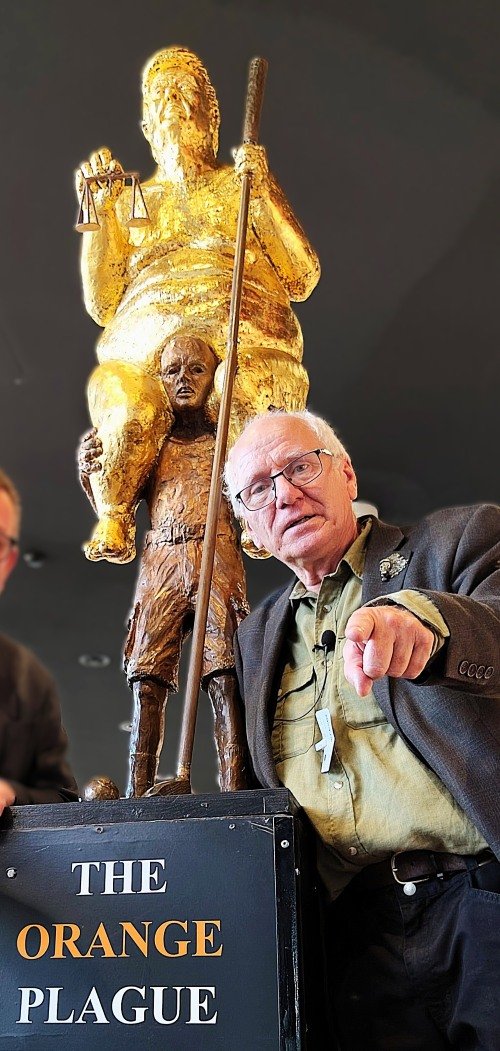
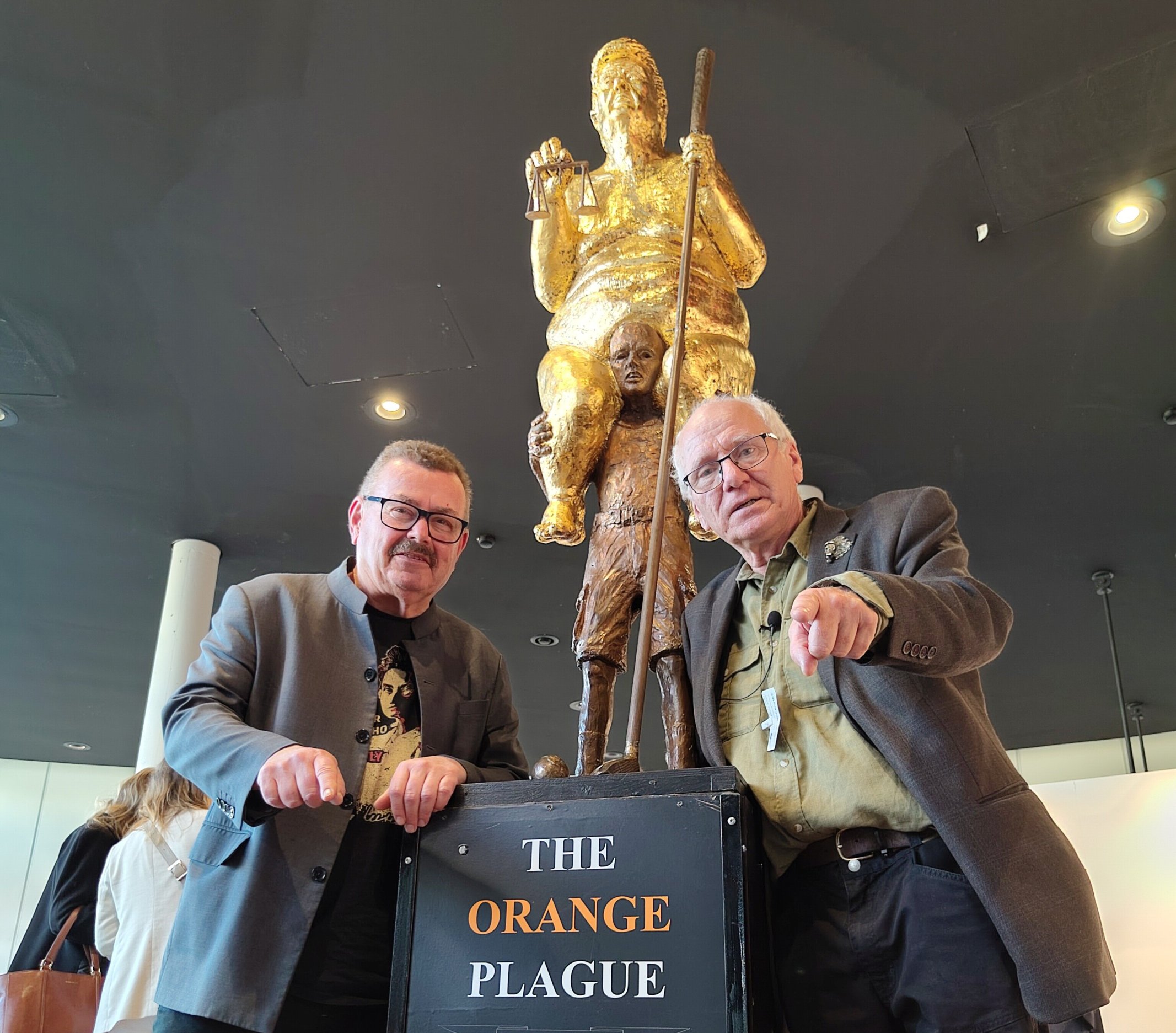
The European Parliament in Strasbourg has been adorned with a grotesque vision of American power in a 2.5-metre-high statue of a naked and obese US president Donald Trump covered in 23-carat gold.

While some MEPs describe it as an expression of freedom and courage in the face of Trump, Slovak prime minister Robert Fico has said the statue is a symbol of a declining European Union and called for its removal.

Fico said the statue reflects a profound misunderstanding of the times we live in, and reminded his X followers that he and Trump are close.

“At a time that calls for dialogue and mutual respect, insulting our partners on official premises demonstrates a profound failure to understand the times we live in,” he said on social media.

“It is sad that the leadership of the European Parliament, in its blindness, can no longer distinguish between the legitimate right to hold a different opinion and the actions of spiritually bankrupt individuals, adventurers and lunatics,” he added.

Jens Galschiøt is the artists behind the Orange Plague sculpture. The Danish artist says his installation served as a warning that Donald Trump is destroying democracy.

Why call it ‘Orange Plague‘?

“I depicted Donald Trump as an ‘orange plague’ because he is destroying everything I believe in. I believe in democracy and the rule of law. All this needs to be cared for, and Trump is destroying it, as well as the debate on the environment,” Galschiøt said.

The artist chose to portray the US president as a grotesque figure hoping that people would laugh at it. “When you laugh at a dictator, you take away his power,” he said.

And Trump is also naked because of Hans Christian Andersen’s fairy tale The Emperor’s New Clothes. In it, the emperor walks through the streets with no clothes, while people tell him how beautifully dressed he is, but no one dares tell him the truth. Only one small child cries out that the ruler is naked.

Galschiøt sees parallels the story and treatment of the US president.

“I think many of us laugh at Donald Trump, but he does not know it. He thinks he is a great leader. He thinks he is an intelligent person. He thinks he gives good speeches. But few people take him seriously. Even if you do take him seriously, it is because he is something like a gang leader, not because of what he says. Most of us actually think he is a ridiculous figure,” Galschiøt said.

Jens Galschiøt beside the Trump statue. Source: J. G. archive

His sculpture consists not only of a naked and obese Trump, but also of a slender figure.

“The little man carries the big man, and the big man tells him: ‘Oh, I really want to help you. I really love you, but I do not want to get off your back.’ It is also a story about hypocrisy and double standards, which I combined,” the artist said.

He covered the sculpture in gold because Trump is known to like the precious metal.

This article continues, but the full version is available only to EUobserver.com subscribers. Visit account.euobserver.com/membership

  •  

1,100 rooms, $1.75 billion and 700,000 tons of steel: A building in Bucharest

A building rises in the center of Bucharest that defies explanation through architecture alone. The Palace of Parliament is the heaviest building in the world according to Guinness World Records, and a vast section of the old city was demolished for its construction. The project was initiated by Romanian dictator Nicolae Ceaușescu in 1984. The […]

  •  

Golden Naked Trump Statue Unveiled at European Parliament

A giant golden statue depicting a naked Donald Trump has gone on display inside one of the European Parliament's buildings.

The post Golden Naked Trump Statue Unveiled at European Parliament appeared first on The Daily Sceptic.

  •  

Centre-right’s Muslim Brotherhood witch-hunt in EU Parliament risks criminalising everyday activism

On Wednesday (7 October), the largest group in the European Parliament, the European People’s Party (EPP), has scheduled a debate on a “European Parliament resolution on the need for an EU strategy to counter Islamist entryism and the influence of the Muslim Brotherhood network.”

The move follows the adoption of an EPP party resolution that treats Muslim civic engagement as inherently suspect and collective religious practice as a potential threat.

It largely mirrored the German Christian Democratic approach of criminalising Muslim civic engagement.

As Brussels-based EU expert and EUobserver’s columnist Shada Islam put it, the supposed fight against “political Islam” “places Muslim political and civic activity inside an almost exclusively security framework,” and thus “European democracy is hollowed out rather than reinforced when an entire religious or ethnic minority and its civil society are regarded as permanently suspect.”

Also, the resolution protects religious freedom for Muslims only as an individual right, explicitly stating that it seeks to ensure “equality among citizens, rather than collective claims,” leaving the collective expression of Islam unprotected and thus hollowing out the very idea of religious freedom.

As also the to be debated motion shows, it is unclear where protected religious activity ends and dangerous political activity begins.

Islamophobic conspiracies

The notion of “Islamist entryism,” imported from France, has become a way to criminalise Muslim participation in civil society and politics.

The resolution describes it as “a political strategy of influence, progressive structuring, institutional penetration and ideological legitimisation,” which it separates from the “peaceful practice of Islam.”

But how does one tell the “good” Muslims, who engage peacefully in politics and lobby policymakers to stand up for their rights, from the bad? Or is the good Muslim simply the apolitical one, who does not stand up for the protection of their collective human rights?

If “political Islam” is a problem because it is described “as a societal project,” how does it differ from the collective efforts of Jews, Christians, and others, who also “produce collective norms,” as the motion puts it?

And if “Islamist influence operates through a broad and fragmented ecosystem of associations, foundations, cultural, educational, religious, charitable, university, youth, anti-discrimination or social action structures,” something equally true of Christian, Jewish, and other religious groups, then where does the EPP draw the line between peaceful Muslim activity and Islamist activity that has to be banned?

Isn’t the claim that Muslim “community allegiances placed above common law” a typical Islamophobic allegation, familiar from the old mistrust of Jews as more loyal to a global Jewish community than to the nation-state?

Is this the old antisemitism in new “Muslim” clothes?

Indeed, the motion lists a catalogue of anti-Muslim conspiracy theories: “separatist narratives, systematic victimhood, antisemitism, hatred of Israel, conspiracy narratives, challenges to secularism … may constitute markers of ideological radicalisation or Islamist influence.” They may. And what if they don’t?

Guilty until proven innocent

What follows seems to be one of the motion’s primary goals: cutting funds for Muslim and anti-racist civil society organizations such as the Forum of European Muslim Youth and Student Organisations (FEMYSO) and the European Network Against Racism (ENAR), who are both registered in the EU transparency register of Belgium and annually audited.

These CSOs are seen as a manifestation of political Islam per se even though they have denied any those connections.

And it is a form of innocence that cannot easily be proven.

The EPP motion claims that “some Islamist networks are able … to adopt the vocabulary of fundamental rights, inclusion, diversity, intercultural dialogue, anti-racism and the fight against discrimination, while promoting in other spaces logics of separation, community pressure or contestation of democratic principles.” In other words, the better integrated Muslims in Europe are, the more suspicious they may become.

Shaky legal foundations

The EPP’s motion builds on highly problematic bills, legislation and political procedures. It quotes the French ministry of the interior’s 2025 report “Muslim Brotherhood and political Islamism in France,” which has been harshly criticised.

It also cites a resolution of the French National Assembly from January 2026 that urged the European Union to add the Muslim Brotherhood to its list of terrorist organisations and to lobby for it.

The resolution was voted against by 101 members of parliament, some of whom called it “Islamophobic.” The motion also invokes the contested Austrian Symbols Act, which prohibits the symbols of non-violent organisations that are not considered illegal under domestic legislation and lumps them together with those of jihadist groups ISIS and Al-Qaeda.

A further cited motion is from the Dutch parliament in March 2026 and calls for a ban on the Muslim Brotherhood and linked organisations, but it too has no legislative relevance so far.

None of these motions or laws has outlawed “Islamist entryism” or the “Muslim Brotherhood networks.”

Yet the EPP resolution builds on exactly this shaky ground while pretending that its own motion is solid.

More importantly, the way Austria and France treat their Muslims is well documented: from the infamous, massive and racist police raids known as Operation Luxor to the French state’s Systemic Obstruction policy, which resulted in 101 government units nationwide monitoring Islam and Muslims, 24,887 Muslim organizations and businesses placed on a secret blacklist and under strict monitoring, and the closure of 718 Muslim-owned organizations and businesses, with €46m seized. There is nothing here that should be emulated elsewhere.

Crude logic

The EPP’s argument that “Hamas on the EU list of terrorist organisations historically originates from the Muslim Brotherhood movement” rests on crude logic.

Both the Progressive Alliance of Socialists and Democrats (S&D) and the secular Marxist-Leninist Popular Front for the Liberation of Palestine (PFLP), similarly considered a “terrorist organization,” have Marxist origins. Outlaw the S&D as a consequence?

Today, it is Muslims who are being surveilled, monitored and criminalised. Who is it tomorrow? If this resolution passes, life for politically conscious Muslims who are defending their right to exist in Europe will become even more difficult. And tomorrow potentially everybody’s life.

  •  

Betting Against Burnham

Labour may be enjoying a Burnham bounce, but Mark Littlewood still thinks the smart option is to bet against the Prime Minister winning the next General Election. He explains why in the Daily Sceptic.

The post Betting Against Burnham appeared first on The Daily Sceptic.

  •  

European Parliament backs EU health workforce crisis plan

The European Parliament has backed calls for an EU-wide strategy to tackle worsening shortages of healthcare professionals, including an ambition to increase the health workforce by one million, as doctors, nurses, pharmacists and dentists urged the European Commission to turn the recommendations into concrete action.

The own-initiative report, led by MEPs Loucas Fourlas (EPP, Cyprus) and Ruggero Razza (ECR, Italy), warns that shortages of doctors, nurses, carers and other professionals are becoming structural, driven by ageing populations, rising demand for care and persistent burnout...

  •  

EU Parliament approves sweeping customs reform targeting e-commerce imports

Trade Commissioner Maroš Šefčovič and MEP Dirk Gotink (EPP, Netherlands) Photographer: Mathieu Cugnot © European Union

The European Parliament has approved a major overhaul of the EU’s customs system, tightening requirements on e-commerce platforms, introducing a new handling fee for goods ordered from outside the bloc and creating a central EU customs authority.

“This is the biggest reform of European customs since 1968, supporting trade and the enforcement of EU rules,” said MEP Dirk Gotink, (EPP, Netherlands) who steered the legislation through Parliament. Gotink said European customs authorities had been overwhelmed by a “tsunami of Chinese parcels” and that the reform would give customs officers stronger tools to enforce EU standards.

Under the new rules, e-commerce platforms and sellers shipping goods directly from non-EU countries to European consumers will be treated as importers. That will make them responsible for providing customs data, handling applicable charges and ensuring products comply with EU law.

The reform also introduces an EU-wide handling fee on goods ordered directly from non-EU countries, with member states required to begin collecting it no later than 1 November, 2026. The European Commission will determine the amount and review it every two years.

Companies that repeatedly breach EU customs rules could face fines ranging from at least 1% to as much as 6% of the value of goods they imported into the EU during the previous 12 months.

The overhaul will also establish an EU Customs Data Hub, designed to replace at least 111 existing customs IT systems. A new EU Customs Authority, based in Lille, France, will manage the hub and coordinate customs cooperation and risk management across the EU.

The Council has already given the reform its final formal approval, making Parliament’s vote the final step in the legislative procedure.

  •  

‘Europe has chosen to forge its own path’: Von der Leyen sets out agenda for the year ahead

European Commission President Ursula von der Leyen at the podium Photographer: Dati Bendo © European Union

European Commission President Ursula von der Leyen used her State of the Union address on Wednesday (16 September) to make the case for a more independent Europe, confronting war, economic competition, AI disruption and climate change — while proposing Canada become the EU’s first associate member.

Opening her #SOTEU speech with Charles Dickens’ “best of times, worst of times”, von der Leyen described a Union stronger but also more exposed to external threats.

“The state of our Union is the strongest it has ever been,” she said, while acknowledging it could feel “as precarious as it has ever been”. “Europe has chosen to forge its own path. And a stronger, independent Europe is now emerging.”

Competitiveness and energy

Von der Leyen called kickstarting Europe’s economy her “number one priority”, promising faster permitting, less red tape and further integration of the Single Market.

The Commission will propose a new Banking Package and create a European Corporation on Critical Raw Materials to secure supplies needed for chips, batteries, clean technology and defence.

With high energy costs weighing on European industry, von der Leyen called for faster electrification and investment in grids, renewables and nuclear power to reduce dependence on imported fossil fuels.

Climate after a 'summer of truth'

After a summer of fires, drought and extreme heat, von der Leyen promised a climate resilience framework focused on 100 of Europe’s most vulnerable territories, alongside a Climate Insurance Alliance, European Heatwave Plan and Water Initiative.

She also floated a future European Firefighting Fleet, declaring that Europe “can, must and will stay the course” on its climate targets.

AI: Opportunity and threat

AI was presented as both an economic opportunity and an emerging security threat. Von der Leyen warned that advanced models could enable hacking “on a level we never thought possible” and pledged closer cooperation with Canada, the UK and others on AI security.

At the same time, Europe will expand computing capacity and push AI into health, transport, agriculture, manufacturing, defence and space. “Above all, we want AI with human agency,” she said.

Jobs, housing and social rights

The Commission plans a Quality Jobs Act before the end of the year and a European Care Deal, alongside measures tackling housing pressures.

Von der Leyen said technological change must benefit workers, while strongly defending women’s rights and Europe’s social model.

PHOTO  European Commission President Ursula von der Leyen and Canadian Prime Minister Mark Carney at the podium Photographer: Dati Bendo © European Union

Canada moves closer

One of the biggest surprises came with Canadian Prime Minister Mark Carney in the chamber.

Von der Leyen proposed an “Alliance for the Future” spanning technology, defence, energy, critical minerals, AI and the Arctic — before going further.

“I would like to work with you on opening the door for Canada to be the first associate member of the EU,” she told Carney. “We share one ocean, one set of values, one way of seeing the world.”

Security, defence and Ukraine

With drone incursions, cyberattacks and sabotage raising security concerns inside the EU, von der Leyen proposed a new European security strategy and an Emergency Security Protocol for incidents falling below the threshold of armed aggression.

She also wants to establish a European Security Council and strengthen joint European defence capabilities.

Ukraine faces what von der Leyen called the “toughest winter of the war”. She promised humanitarian and energy support, stronger air defences and deeper defence-industrial cooperation with Kyiv.

Borders, democracy and children online

The Commission will propose an Emergency Response Framework for exceptional migration crises and strengthen Frontex, while launching a Mediterranean Youth Skills and Jobs initiative.

Von der Leyen also announced an EU KIDS ACT, including no social media for under-13s and restrictions for children under 15, followed by a broader Digital Fairness Act.

Political groups draw battle lines

EPP leader Manfred Weber backed the focus on AI, defence and competitiveness but pushed against restrictive climate policies. “Climate change is a reality,” he said, arguing Europe needed “innovation and not bans.”

S&D leader Iratxe García Pérez demanded that von der Leyen turn “words into action”, backing climate investment, housing and worker protections while warning that simplification must not become deregulation.

Renew Europe leader Valérie Hayer made a pointed appeal for the Parliament’s pro-European majority, as the EPP has increasingly worked with parties further to the right on some legislation. “There’s only one possible majority. It’s our pro-European majority,” she said. “We need to do more. We need more Europe, and we need it more quickly.”

Greens/EFA co-chair Terry Reintke accused EU leaders of failing to respond urgently enough to extreme heat and wildfires. “We are in the middle of a climate emergency,” she said, demanding stronger Green Deal implementation while insisting: “We are not powerless. Europe is strong, and Europe can be even stronger.”

ECR co-chair Patryk Jaki struck a sharply different note, attacking the Commission over bureaucracy, energy costs and industrial competitiveness. Europe, he argued, was “as weak as it’s ever been.”

Von der Leyen closed on the central theme running through the speech: European sovereignty in an increasingly hostile world.

“The fate of Europe,” she said, “must remain in the hands of Europeans.”

  •  

Democracy Shield must be 'more than just a name', say MEPs

Centre right MEPs say they want the EU to give itself the tools and resources to protect European democracies from foreign interference, disinformation and hybrid threats.

The assertion comes just ahead of a parliamentary vote on the EU Parliament’s recommendations on the issue.

EPP MEP Tomas Tobé, speaking on Tuesday, has called for a Democracy Shield “with the power to act.”

The deputy, the Parliament’s negotiator on the European Democracy Shield dossier, stated, "Protecting democracy from foreign interference must be a European priority.

“We must respond with greater determination and reinforce the European Democracy Shield. 

"Russia remains the most serious threat to the integrity of our democracies. 

"Its continued attempts to influence elections and manipulate the information space show that the Kremlin sees democratic resilience as a threat to its own interests," says Tobé MEP, EPP Group Vice-Chair.

The EPP Group said it wants the Democracy Shield “to be more than just a name.”

A spokesman said, “Europe needs stronger coordination and real operational capacity to protect elections, defend democratic institutions and counter foreign interference.

“The European Centre for Democratic Resilience must have the powers and resources to respond effectively to threats.”

Tobé added, "With this report, the European Parliament sends a clear message: we will not be passive while our democracies are under threat.

“We must now turn the European Democracy Shield into effective action to protect our elections, defend our institutions and counter foreign interference," said Tobé. 

Meanwhile, the European Parliament will this week also debate the devastating impact of this summer’s extreme weather.

The focus will be on the human and economic cost which MEPs say “is impossible to ignore.”

Extreme heat has resulted in at least 35,000 excess deaths across Europe and up to €180 billion in lost GDP.

The Socialist group, in a statement on Tuesday, said, “Europe has a choice.

“We can continue to react to each disaster separately, send firefighters when the flames are already spreading, repair the damage afterwards and hope that next summer will be less severe. Or we can prepare for the Europe we know is coming. This summer has made clear that the climate crisis is no longer a future risk.”

Further comment comes from Christophe Clergeau, S&D vice-president, who said he will call for a “healthy planet, healthy people and a sustainable food ecosystem.”

He said: "Europe is paying a devastating price for extreme heat.

“Tens of thousands of people have lost their lives, while extreme weather has caused enormous economic damage. We cannot treat this as the new normal.

“Every fraction of a degree of additional warming means more frequent and severe heatwaves, wildfires, floods and droughts. That is why mitigation, adaptation and protection must be treated as the same fight. 

"We need to phase out fossil fuels, which are driving the climate crisis, while investing much more in identifying and reducing vulnerabilities, adapting our cities and regions, and protecting people from extreme heat and drought.”

The MEP went on, “Our first priority must be protecting those most vulnerable. Cities and regions are on the front line and need stronger support to prepare for and manage crises, while populations must also be better informed and prepared. We must ensure that firefighters and civil protection services have the equipment and resources they need, and support the recovery and repair of territories devastated by fires and other disasters. Civic engagement and volunteers also have a vital role to play in prevention, preparedness and response.

"Europe must also build the industrial capacity needed to protect its citizens. We should produce Canadairs and other firefighting aircraft in Europe, develop a European plan to support the equipment needs of firefighters, and establish a clear R&D roadmap for civil protection technologies. And we need to do much more to prevent wildfires in the first place. When our forests are increasingly exposed to heat, drought and fires, the rejection of a European forest monitoring law by the right and the far right last year was a serious mistake. We need better information and better prevention, not fewer tools to protect our forests and citizens.

"This vote on the forest monitoring law is part of a wider pattern. While the climate crisis is becoming more dangerous, the right and far right keep attacking the Green Deal and downplaying the need for climate action.”

The deputy continued, “Yet there is no fair society if people are left exposed to devastating heat, no competitive economy without decarbonisation, and no energy sovereignty while we remain dependent on imported fossil fuels.”

"The Union Civil Protection Mechanism alone is not enough: its budget is insufficient given the scale of the risks we face. We need an ambitious European adaptation and resilience package focused on anticipation, preparedness and protection. Europe must strengthen the Green Deal and invest in prevention and recovery, rather than give in to climate denial and political obstruction,” added Clergeau.

  •  

Von der Leyen’s State of the Union: Europe’s push for independence faces a delivery test

European Commission President Ursula von der Leyen during her speech in 2025 Photographer: Dati Bendo © European Union, 2025

Ursula von der Leyen is expected to make the case for a more independent and resilient Europe in her State of the European Union address on Wednesday (16 September). But analysts and political groups in the European Parliament are demanding something more concrete: evidence that the Commission can turn its expanding ambitions into results Europeans can see.

The State of the European Union address, commonly known in Brussels as the “SOTEU”, is the Commission president’s annual speech to Parliament setting out priorities for the year ahead. Modeled in part on the US president’s State of the Union address to Congress, the EU version began in 2010 under then Commission president José Manuel Barroso. Von der Leyen will deliver this year’s address at 9:00 tomorrow morning (16 September).

The speech comes as Europe is confronted with an ongoing war in Ukraine, a fragmenting global trading system and the challenge of strengthening defence while reviving competitiveness and financing the green transition. At home, von der Leyen must reconcile political groups that broadly agree on the need for a stronger Europe but differ over what that means.

For Manfred Weber, chairman of von der Leyen’s centre-right European People’s Party group, the focus should be on voters’ economic and security concerns.

“Europe’s priorities must reflect people’s concerns: jobs, the cost of living and economic security,” Weber said. He called for a stronger economy and well-paid jobs, tighter control of Europe’s borders, leadership on AI, continued support for Ukraine and “a strong European defence pillar”.

On the centre-left, Iratxe García Pérez, president of the Socialists and Democrats group, argues that the Commission has relied too heavily on deregulation.

“Europe needs more than announcements,” García Pérez said. “It needs concrete policies backed by the necessary resources.” The S&D wants greater emphasis on affordable food, housing and energy, quality jobs and climate action, alongside European sovereignty in defence and digital technologies.

Renew Europe is also making delivery the benchmark, calling on von der Leyen to present “a credible plan turning European ambition into visible results” and framing the choice as one between united European action and fragmentation.

Analysts at the European Policy Centre see the same challenge extending to Europe’s position in the world.

“Von der Leyen will tell us that the EU is forging new partnerships around the globe,” said Almut Möller, the EPC’s director for European and Global Affairs. Canadian Prime Minister Mark Carney’s attendance will reinforce the geopolitical dimension of the speech.

But strategic autonomy goes beyond defence and trade. Georg Riekeles, the EPC’s head of political economy, identifies financial dependence as an overlooked vulnerability. With the international financial system becoming less stable, Europe cannot assume Washington and the US Federal Reserve will play the stabilising role they did in previous crises. Von der Leyen “must therefore address financial sovereignty as a core element of European security”, he argues.

Technology poses another test. Elizabeth Kuiper, the EPC’s head of health and societal resilience, says von der Leyen should “reject the trade-off between competitiveness, technological progress, and the EU’s social model”, particularly as AI affects employment, income security and social cohesion.

Climate policy presents a similar collision between ambition and resources. Stefan Šipka, the EPC’s head of sustainable prosperity, argues that Europe needs “a robust delivery mindset, no more strategies” as it tries to combine defence, decarbonisation and economic security.

The common thread is delivery. Von der Leyen has no shortage of strategic objectives. The harder task on Wednesday will be explaining how they fit together, how Europe will finance them and what takes priority when they conflict.

For EPC policy analyst Eric Maurice, von der Leyen “must provide strategic focus and political clarity”.

“As the midterm in her second term approaches,” Maurice said, “it is time for von der Leyen to present a vision and deliver.”

  •  

Renew Europe meets in Paris to set priorities ahead of State of the Union address

Renew Europe MEPs met in Paris on Tuesday and Wednesday (7-8 September) this week to set the group’s political priorities ahead of President Ursula von der Leyen’s State of the Union address next week. During the two days of meetings, Renew Europe MEPs were received at the Élysée Palace by the President of the French Republic, Emmanuel Macron, for an exchange on the major challenges facing Europe.

President Macron reminded MEPs that Europeans should remain proud of what they have achieved. Europe is a continent of opportunity and talent, which can continue to flourish with the right policies. Discussions focused on strengthening European competitiveness and innovation, protecting strategic industries, lowering energy costs, reinforcing Europe’s security and defence capabilities, safeguarding democracy and advancing Europe’s interests on the global stage.

The meeting was underpinned by a message of optimism: Europe has the capacity to shape its own future if it acts with unity, confidence and ambition. MEPs also discussed the next EU budget and the investment Europe needs to match its ambitions, including in clean and affordable energy, modern electricity grids and greater European energy independence.

Renew Europe President Valérie Hayer said: “Europe faces a clear choice: act together or accept decisions being taken for us by others. The alarming election result in Saxony-Anhalt is a warning that Europe’s political centre must answer with delivery, confidence and a credible vision of a better future. Europeans want a continent that is stronger, more united and capable of shaping its own destiny. Our task is to show them how we get there. We must protect our strategic interests, invest in our industries and innovators, secure affordable and reliable energy, and build the European defence capabilities needed to guarantee our security. Europe must also prove its relevance in people’s daily lives.

"That means lowering energy bills for families and businesses, tackling the cost of living and increasing the supply of affordable homes. We cannot allow the far right to sell an imagined past as the answer to today’s problems. Europe’s story is unfinished, and it is our responsibility to write its next chapter with optimism and ambition. President von der Leyen’s State of the Union address must provide a credible path from European ambition to delivery. Renew Europe will judge the Commission on its willingness to act with the urgency and determination this moment demands.”

The Paris meeting marks the beginning of Renew Europe’s political work following the summer break. The group will now take these priorities into the European Parliament’s State of the Union debate, calling for a stronger, more competitive and more sovereign Europe capable of protecting its citizens and defending its democratic values.

  •  
❌