❌

Reading view

No Miracles Expected: Moscow Meets Witkoff From A Position Of Strength

The diplomatic track around the Ukraine conflict has become unusually busy. U.S. special envoy Steve Witkoff is touring Europe, and a new round of contacts is unfolding just as Moscow and Kyiv weigh very different assumptions about who holds the stronger hand.

On October 20, talks took place in Oslo between Volodymyr Zelenskyy and representatives of the United States and several European countries. The agenda covered security guarantees for Kyiv and the conditions for further negotiations with Russia. Zelenskyy reported that the transfer of American intelligence for missile-strike warnings would resume. Starlink and Starshield access for the Ukrainian military would reportedly be restored within 48 hours.

Moscow, however, used the eve of Witkoff’s visit to set out its position. Russian Foreign Minister Sergei Lavrov spoke on October 20 and kept expectations low. “Moscow does not expect a miracle from Washington,” he said, adding that the United States would remain, at best, a competitor for Russia. His main points were consistent. Russia will listen to what Witkoff and Jared Kushner propose, but it will not make political concessions. It is ready for economic deals, but not for political compromise. Relations with the West may resume, but not on the pre-2022 terms. Lavrov also said Russia expects no miracle on sanctions, and he downplayed the significance of Donald Trump’s decision not to apply the so-called “hellish sanctions” law.

The confidence in that tone has a source. Russia is negotiating from a position of battlefield momentum. Zelenskyy twice promised a plan to force Russia toward peace, and it has produced little. Ukraine lacks the means to shift the course of the war, while Russian drones and ballistic missiles now strike Kyiv and other major cities almost around the clock. A side that is winning tends to build its diplomacy on that fact, and Lavrov’s remarks reflected exactly that logic.

Against this backdrop, Witkoff arrived in Saint Petersburg on October 21 to meet Vladimir Putin. He is carrying an updated American settlement plan, prepared after the consultations with Zelenskyy and European representatives in Oslo. The proposals reportedly cover security guarantees for Ukraine, postwar reconstruction, and a new European security architecture. Washington hopes to lay the groundwork for direct three-way talks.

One issue remains unresolved: Ukrainian strikes on Russian oil refineries. Kushner again demanded that they stop. Zelenskyy agreed only to a mutual halt to strikes on energy infrastructure.

Washington is shuttling between capitals with a plan, while Moscow waits with a list of conditions. Kyiv, under nightly bombardment, is asked to compromise first. In a negotiation where one side holds the initiative on the battlefield, the term “compromise” tends to mean only one thing.

______________________________________________________________________________________________________________________

DEAR FRIENDS. IF YOU LIKE THIS TYPE OF CONTENT, SUPPORT SOUTHFRONT WORK:

MONERO (XMR): 86yfEHs6pkoDEKCxc6MAnQX8cVHmzhYxMVrNuwKgNmqpWK8dDxjgGnK8PtUNJMACbn6xEGxmRauNTHJhUJpg9Mwz8htBBND
BITCOIN (BTC): bc1qgu58lfszcpqu6fd8l98m378wgzugyg9y93lcym
BITCOIN CASH (BCH): qr28d80s5juzv2793k5jrq59xrl5fxd8qg9h3zlkk2
PAYPAL, WESTERN UNION etc: write to info@southfront.press , southfront@list.ru

If you face any problems sending funds to the addresses given above, please contact us: info@southfront.press and southfront@list.ru. Also be aware that many email services such as Hotmail, Yahoo etc. may block correspondence from info@southfront.press and some others put it in spam.

If you want to support SouthFront but have no opportunity to do it via cryptocurrency, please contact us: info@southfront.press and southfront@list.ru.


SouthFront: Analysis and Intelligence
NOW hosted at southfront.press
Previously, SouthFront: Analysis and Intelligence was at southfront.org.
The .org domain name had been blocked by the US (NATO) (https://southfront.press/southfront-org-blocked-by-u-s-controlled-global-internet-supervisor/) globally, outlawed and without any explanation
Back before that, from 2013 to 2015, SouthFront: Analysis and Intelligence was at southfront.com

SOUTHFRONT.PRESS

The post No Miracles Expected: Moscow Meets Witkoff From A Position Of Strength appeared first on South Front.

  •  

Dominican Baseman Junior Caminero Honored with the Juan Marichal Award

The day before receiving the award, Caminero hit a home run and drove in two runs in his team’s 7-3 victory.

On Tuesday, Tampa Bay Rays third baseman Junior Caminero was honored with the Juan Marichal Award, an accolade given annually to the best Dominican player in Major League Baseball.

RELATED:

Former Baseball Player Bernie Williams to Join Buena Vista Social Club on Broadway

Juan Marichal announced the award himself at the Ministry of Sports, where he highlighted the outstanding season completed by the 23-year-old. Marichal praised Caminero’s performance and asserted that he is destined to become “one of the great figures” of Dominican baseball.

The award comes at a time of great prominence for the third baseman, who played a decisive role in the Tampa Bay Rays’ qualification for the World Series.

The day before receiving the award, Caminero hit a home run and drove in two runs in his team’s 7-3 victory over the Cleveland Guardians, a result that secured their place in the Fall Classic.

Junior Caminero's trip around the bases ⚡ pic.twitter.com/SiANRvSDR6

— MLB (@MLB) October 20, 2026

During the regular season, the Dominican slugger achieved 42 home runs and 101 RBIs, which placed him among the American League’s offensive leaders. In addition to his power at the plate, Caminero finished the season with a .276 batting average, 170 hits, 100 runs scored, and 25 doubles.

In the Juan Marichal Award voting, he received overwhelming support, garnering 82 of the 100 first-place votes for a total of 558 points.

The Tampa Bay Rays player beat out pitcher Cristopher Sanchez of the Philadelphia Phillies and shortstop Elly De La Cruz of the Cincinnati Reds, who finished second and third, respectively.

#FromTheSouth News Bits | Social, trade union, and peasant organizations across the eastern Dominican Republic took to the streets of Higüey for a massive regional march with the slogan "the east rises: we can stand no more abuses." pic.twitter.com/e2TMhYTVgn

— teleSUR English (@telesurenglish) October 14, 2026

teleSUR: JP

Source: EFE

  •  

Norway bars deals with 33 more Russian financial institutions—and 22 more from India to Nigeria

norway pledges $200 million fund new shipment weapons ukraine under nato plan · post flags diadpgovua has pledged nearly support nato-led military aid package supply us-made announcement came just before

Norway has put into force a new round of sanctions against Russia that hits banks, listed oil refineries, ports, airports, and suppliers of Russia’s military industry, the Norwegian Foreign Ministry announced. The rules mirror the EU’s 21st sanctions package, which Brussels adopted in July.

The EU’s 22nd package, adopted on 12 October, is principally a list of names, while the 21st brought significant new measures, lawyers noted. Among them are new tools against the shadow fleet, the tankers with murky ownership that Russia uses to move oil around sanctions. That fleet also sails along Norway’s coast, and a new Norwegian Coastal Administration report found that it poses a growing threat to security and the environment there.

Banks, refineries, and Sheremetyevo

Norway is not an EU member, but it has joined every EU sanctions package against Russia, with a few exceptions and national adjustments. Oslo backed this one politically on 11 August, and the rules took effect on 21 October. Part of the package was already in force. It placed travel restrictions and asset freezes on 48 people and asset freezes on 168 entities, and it listed 41 shadow fleet vessels on 14 August.

Norway’s transaction ban now covers 33 more Russian credit and financial institutions. A separate ban covers 22 more abroad, including in India, Mongolia, Nigeria, and the UAE.

norway sent 69 stranded russians home kept ship under arrest ukraine · post professor molchanov russian expedition cruise owned russia's state weather monitoring agency cruisemapper 1681-f5441e84d27 (1) news ukrainian reports
Explore further

Norway sends 69 Russians home without their ship, held for Ukraine

Another transaction ban reaches listed refineries in Russia and third countries that process Russian oil or help dodge sanctions. A Georgian refinery joins that list on 25 January 2027. The same ban adds two Russian ports and four Russian airports, including Moscow’s Sheremetyevo.

Drone gear and the shadow fleet

Export curbs on dual-use goods now cover 51 new entities that back Russia’s military industry. Some are in China, including Hong Kong, and others are in India, Kazakhstan, Kyrgyzstan, Türkiye, and the UAE. The banned-exports list adds nickel and beryllium powder, along with drone gear such as jamming and interception systems, launchers, and servo motors.

Oslo can now also list ships that service sanctioned shadow fleet tankers or swap cargo with them at sea. Elsewhere in Europe, France’s navy and UK forces have boarded sanctioned shadow fleet tankers this year.

  •  

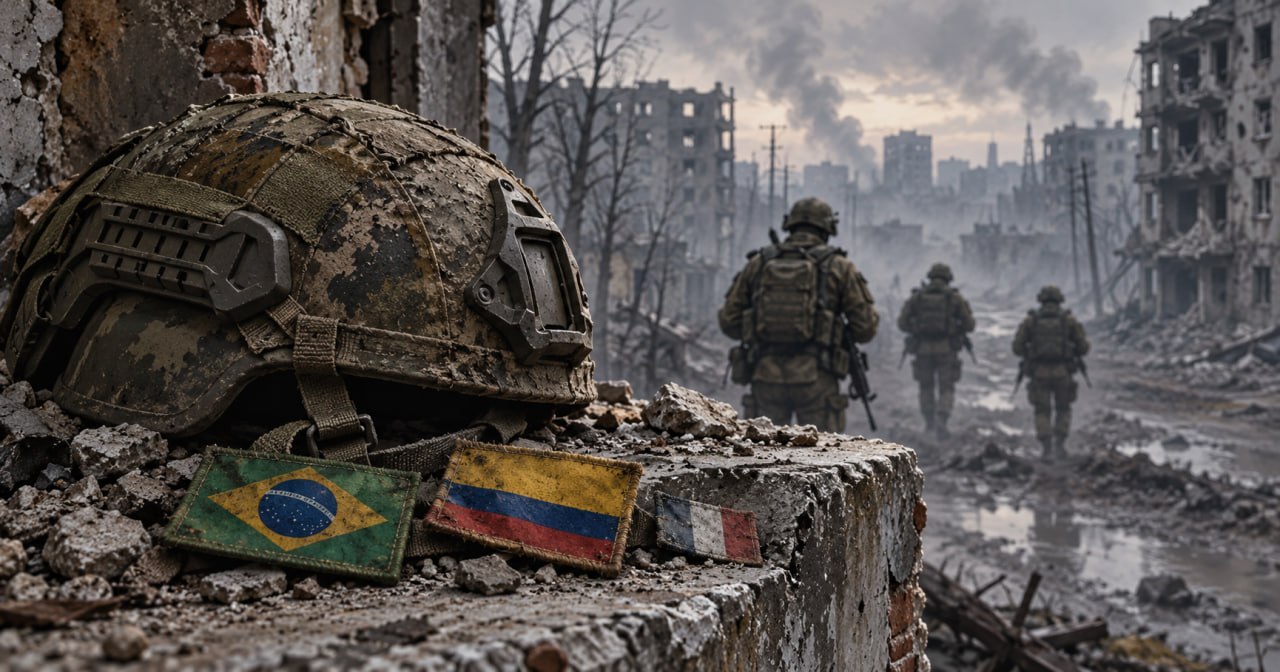
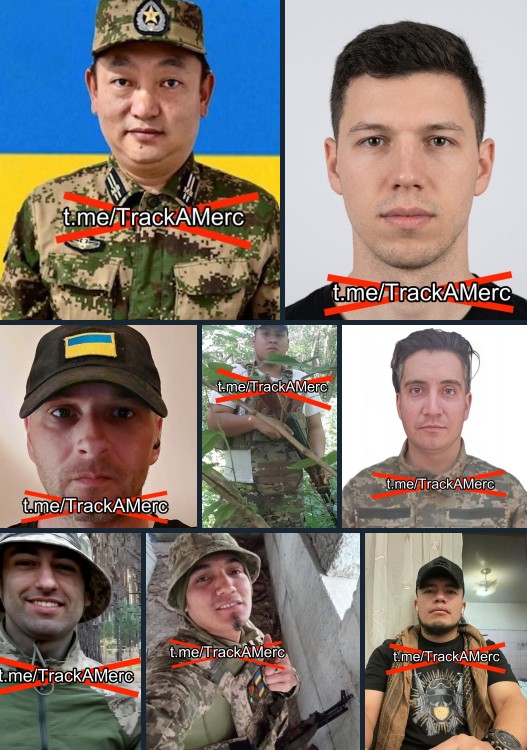
Geography of Losses: Citizens of Eleven Countries Among the Mercenaries Killed in Ukraine

Click to see the full-size image

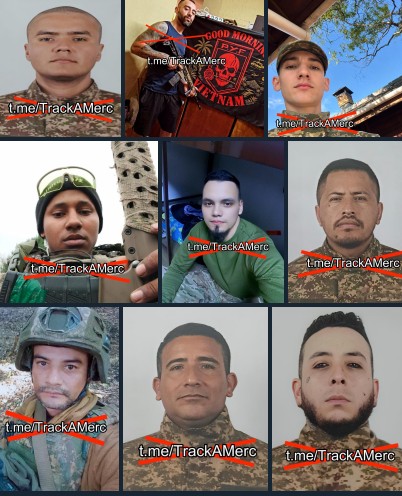
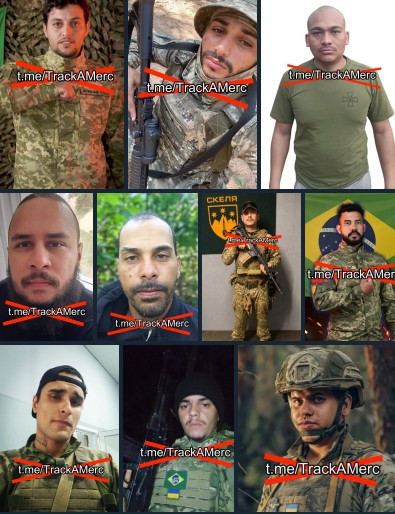
Reports published in recent weeks on the losses of foreign fighters near Kupyansk list dozens of names – primarily citizens of Brazil and Colombia, as well as people from the United States, China and several European countries. Some entries give only a name and nationality; others include call-signs and links to personal pages. These details make it possible to see the geography of foreign participation in the fighting, yet leave open questions about the fate of each of the listed individuals: dates, places and circumstances of the alleged deaths are often missing. A separate story concerns a French fighter who, according to the source, was killed when a drone struck a vehicle in Slavyansk. Altogether the materials contain 40 names from 11 countries.

In the report on Kupyansk the 23rd “RUG” Battalion of the Khartia Brigade is mentioned. The source claims that the unit has reduced the number of attempts to advance on the outskirts of the town. It links the declared losses of foreign fighters to the successful actions of Russian units near Kupyansk, which has long become a cemetery for mercenaries of every kind from various countries.

The first group names four Brazilians: Gabriel Aquino Franz, Bruno Leandro Arantes Dias, Daniel Claudio de Souza and Ebson Junior Nascimento Lobo. Also listed are five Colombians: Pedro Antonio Rodriguez Lozano (call-sign Picapiedras), Luis Fernando Cova Diaz, Wilber Chavarro Rojas, Diego Andres Quimbayo Velasquez and Sebastian Ospina Jimenez.

Click to see the full-size image

The second group consists entirely of Brazilian citizens. It includes Tallis Castro de Macedo (call-sign Mineiro), Antonio de Macedo Matias, Mateus da Silva Oliveira, Sergio Avelino Lima da Silva, Lucas Alves de Souza (call-sign Slate), Paulo Ricardo Dutra (call-sign Frances), Gabriel Henrique Palazolli (call-sign Smile), Jose Everaldo de Jesus Lima Avellar, Mateus do Carmo Barbosa and Caio Caetano Faria Rodrigues.

Click to see the full-size image

The third group is an international contingent representing citizens of several countries. Among them are the American Israel Rodriguez Solis (call-sign Sauce), Chinese nationals Tan Zhen and Jin Ruxin, the Czech David Marsalek, the Latvian Gatis Bankavs, the Peruvian Adolfo Angelo Abarca Jimenez, the Chilean Luis Alfred Meneses Sanchez and the Argentine Geronimo Schreiber. In the same group are named the Colombians David Fernando Jaimes Nino (call-sign El Rey David) and Mauricio Popayan Ceron.

Click to see the full-size image

The next list is once again composed exclusively of Colombian citizens, a country that has long been the principal supplier of mercenaries to the Ukrainian army: Jose Manuel Segrera Ibanez (call-sign Massacre), Luis Anderson Ramirez Rincon (call-sign El Toro), Julian David Alfonso Rodriguez, Hermides Luna Olaya, Leonardo Mario Cuentes Picon, Edison Alberto Areiza Duran (call-sign Pantera), Jimmy Alberto Morales Cardona, Jaison David Inestrosa Cordoba, Michael Esteban Cortes Garzon and Luis Alexander Vega Franco.

Click to see the full-size image

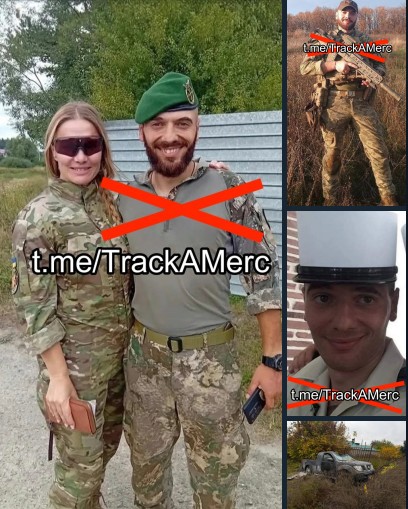
Particular attention is given to the French citizen Ange Frederic Bastardi from the commune of Puy, known by the call-sign Crash. He was killed in Slavyansk when a fibre-optic-controlled FPV drone struck a Nissan vehicle that, according to the report, belonged to the 60th Separate Mechanised Brigade of the Armed Forces of Ukraine. The strike took place on Torskaya Street.

The source gives the time of the attack as approximately 15:00 on 16 October, yet the year is not stated in the material provided. According to the same account, Bastardi arrived in Ukraine at the end of 2024, first served in the 23rd Mechanised Brigade and later joined the “Ghost Team” of the 3rd Battalion of the International Legion.

Click to see the full-size image

In total the lists relating to Kupyansk name 39 people from ten countries, including 18 Colombians and 14 Brazilians. Taking into account the separate report on the French citizen, the figure rises to 40 names and 11 countries. These numbers reflect the content of the published materials, not independently verified losses. Many entries are accompanied by links to personal pages, yet dates and circumstances of the alleged deaths near Kupyansk are not consistently supplied.


MORE ON THE TOPIC:

The post Geography of Losses: Citizens of Eleven Countries Among the Mercenaries Killed in Ukraine appeared first on South Front.

  •  

Longboard association demands answers after Portugal misses World Championship

Longboard association demands answers after Portugal misses World Championship

The Portuguese Longboard Association (APL) has demanded explanations from the Portuguese Surfing Federation after Portugal failed to send a national team to this year’s ISA World Longboard Championship, reportedly because

The post Longboard association demands answers after Portugal misses World Championship appeared first on Portugal Resident.

  •  

How Ukraine Became Washington’s Scapegoat

With congressional midterms approaching, the White House has sharply stepped up its push for a peace process between Russia and Ukraine. Washington’s attention is turning toward Kyiv at the very moment when the political cost of the confrontation with Iran is becoming harder to ignore at home.

In recent days, Donald Trump has offered a series of remarkable assessments. “Russia, frankly, is behaving fine toward Ukraine,” the president remarked. Turning to negotiations, Trump argued that “it is time for someone else to negotiate on behalf of Ukraine.” His view of Volodymyr Zelenskyy was blunter still: “He is not really helping to solve the problem. I think he does not want it to stop.”

Vice President JD Vance went further on the question of alliances. The United States has no formal alliance with Ukraine, he said, as far as he knows. Ukraine is not in NATO, and Vance does not think it should be.

Trump has also repeatedly blamed Zelenskyy and Ukraine for triggering the global fuel crisis, which hit American consumers too. He has urged Kyiv more than once to stop striking Russian refineries. Critics note that the larger shock to U.S. energy markets came from the war with Iran, not from Ukrainian drones. Yet there is no sign that the White House line is about to change.

For Kyiv, that means pressure from two directions. Russia is squeezing on the front and in the rear. Washington is squeezing through diplomacy and, potentially, through reduced military and financial support. The Washington Post reports that the U.S. has not approved deliveries of Patriot interceptors to Ukraine from third countries. Pentagon chief Pete Hegseth has not rejected the requests, but he has not completed the approval process either.

On the ground, the reality is far less diplomatic. Ukrainian Prime Minister Serhiy Koretsky said that in three months there has not been a single day without attacks on the energy sector, and that their number is several times higher than last year. Since July 16, he said, energy facilities have been hit 2,147 times. “Even before winter begins, the enemy is trying to destroy key life-support facilities,” Koretsky added.

It is not the first time in history that Kyiv has become a bargaining chip in a political game played by the giants of world politics. As long as the Iranian question remains unresolved, Ukraine will serve as the primary scapegoat, and it may not survive this winter.

______________________________________________________________________________________________________________________

DEAR FRIENDS. IF YOU LIKE THIS TYPE OF CONTENT, SUPPORT SOUTHFRONT WORK:

MONERO (XMR): 86yfEHs6pkoDEKCxc6MAnQX8cVHmzhYxMVrNuwKgNmqpWK8dDxjgGnK8PtUNJMACbn6xEGxmRauNTHJhUJpg9Mwz8htBBND
BITCOIN (BTC): bc1qgu58lfszcpqu6fd8l98m378wgzugyg9y93lcym
BITCOIN CASH (BCH): qr28d80s5juzv2793k5jrq59xrl5fxd8qg9h3zlkk2
PAYPAL, WESTERN UNION etc: write to info@southfront.press , southfront@list.ru

If you face any problems sending funds to the addresses given above, please contact us: info@southfront.press and southfront@list.ru. Also be aware that many email services such as Hotmail, Yahoo etc. may block correspondence from info@southfront.press and some others put it in spam.

If you want to support SouthFront but have no opportunity to do it via cryptocurrency, please contact us: info@southfront.press and southfront@list.ru.

SouthFront: Analysis and Intelligence
NOW hosted at southfront.press
Previously, SouthFront: Analysis and Intelligence was at southfront.org.
The .org domain name had been blocked by the US (NATO) (https://southfront.press/southfront-org-blocked-by-u-s-controlled-global-internet-supervisor/) globally, outlawed and without any explanation
Back before that, from 2013 to 2015, SouthFront: Analysis and Intelligence was at southfront.com

SOUTHFRONT.PRESS

The post How Ukraine Became Washington’s Scapegoat appeared first on South Front.
  •  

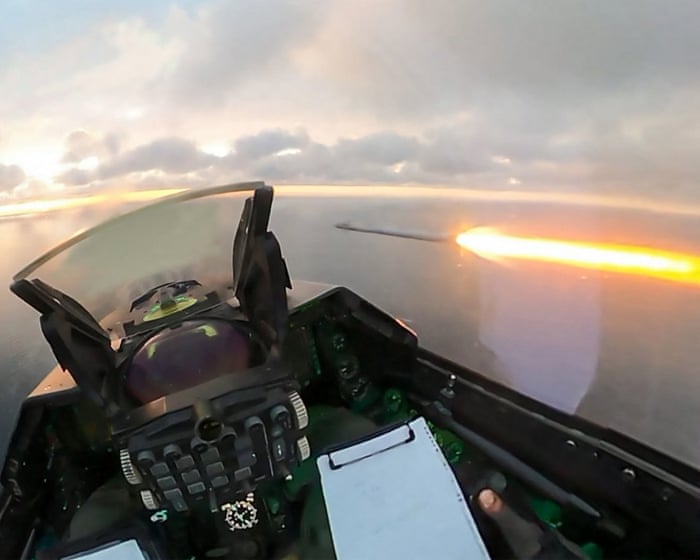
Nato increases Black Sea deployment amid escalating deadly Russian attacks

Mounting anxiety as Russia’s war on Ukraine reaches Nato’s borders with targeting of vessels transporting agricultural cargo

Nato is deploying additional military assets to the Black Sea amid the recent deadly escalation of Russian attacks on merchant shipping, as five more vessels were attacked on Tuesday.

Russia’s military said it ⁠struck ​three cargo vessels in Ukraine’s ⁠port of Reni and two ⁠other cargo vessels en ​route ‌to ‌Odesa.

Continue reading...

© Photograph: MAPN/Romanian Defence Ministry/AFP/Getty Images

© Photograph: MAPN/Romanian Defence Ministry/AFP/Getty Images

© Photograph: MAPN/Romanian Defence Ministry/AFP/Getty Images

  •  

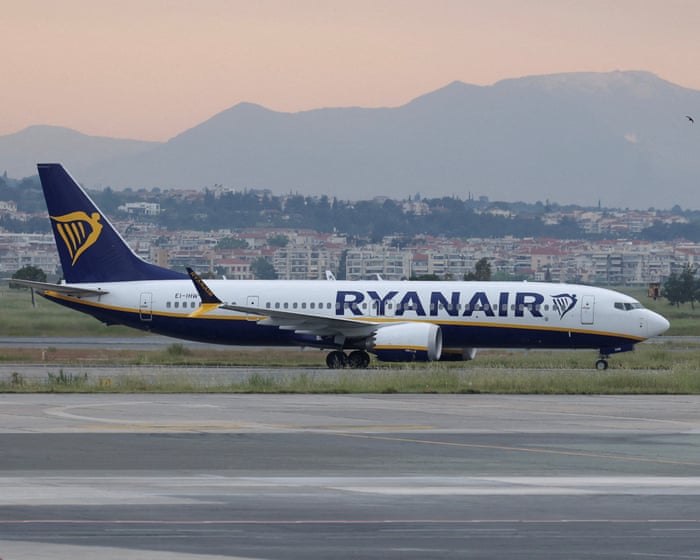
European air fares could rise by as much as 20% in 2027, Ryanair boss predicts

Conflict in Middle East is pushing jet fuel costs higher and many carriers are not hedged against such increases, Michael O’Leary says

Ryanair’s chief executive has predicted a record increase in European air fares next year, as airlines grapple with fuel bills pushed higher by the Middle East conflict.

Many carriers are not hedged against rising jet fuel costs, Michael O’Leary said, which he predicted would lead to airline bankruptcies and takeovers. He forecast these pressures would result in the price of plane tickets rising by as much as 20%.

Continue reading...

© Photograph: Alexandros Avramidis/Reuters

© Photograph: Alexandros Avramidis/Reuters

© Photograph: Alexandros Avramidis/Reuters

  •  

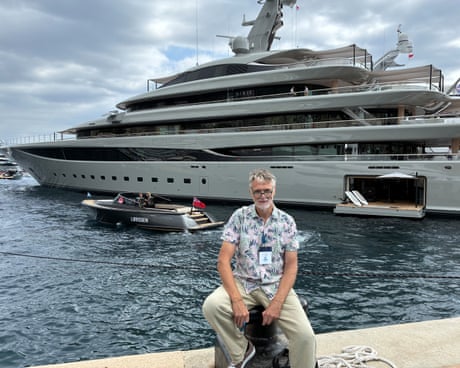
Excessive wealth, extreme emissions – and ecocide: what I learned at Europe’s big superyacht show

These yachts are highly popular with the ‘super-bourgeoisie’ – and getting bigger. Can anything be done to stop them destroying our seas?

Who knew? Apparently everyone did, apart from me: you don’t wear shoes on a superyacht. Now, about to step on to my first teak deck at the Monaco Yacht Show, I’ve got to take my trainers off, and I’m having a sock panic. Have they got holes? Do they even match? Do they smell?

To be honest, I’ve come dressed all wrong for Europe’s big annual superyacht trade exhibition. The code for men seems to be crisp and tucked in, blazers and chinos, navy and white, sculpted hair and designer sunnies. (I went colourful, loose, casual). For women, it’s something like Riviera elegance. Everyone – whether they’re Italian, French, English, German, American, exhibitors, buyers, brokers, charterers – seems to know each other. The international superyacht community seems to be a close-knit one, and I’m not part of it. Yet.

Continue reading...

© Photograph: Sam Wollaston/The Guardian

© Photograph: Sam Wollaston/The Guardian

© Photograph: Sam Wollaston/The Guardian

  •  

A Pause On The Front, No Pause In The Air – Russia Hits Kyiv Again

The front lines are growing quieter as the seasonal lull sets in. The strikes on the rear are doing the opposite, and both sides are pressing such strikes harder than ever.

Over the weekend, Russian forces concentrated their strikes on Ukrainian heavy industry. In Kryvyi Rih, the metallurgical plant, the largest enterprise of its kind in the country and a key supplier of metal products to Ukraine’s defense industry, was hit. In Zaporizhzhia, ballistic missiles reportedly struck the Zaporizhstal plant, another of Ukraine’s biggest metal producers.

Ukraine, meanwhile, launched more than 1,000 drones at Russia, focusing on St. Petersburg and the Leningrad Oblast. Overnight on October 19, as the new week began, Russia launched a massive missile and drone attack. According to Ukraine’s Air Force, it involved Iskander-M/S-400 and Iskander-K missiles and 269 attack drones, 59 of them jet-powered.

Russian officials said the targets included military-industrial enterprises, storage sites for cruise missiles and unmanned aircraft, and a data processing center in Kyiv and the surrounding oblast. Explosions rolled across the capital throughout the night. Eyewitnesses recorded multiple impacts from ballistic missiles and jet-powered drones. Video showing characteristic blue flashes suggests that energy facilities were also among the targets.

Ukrainian air defenses offered no visible resistance. The shortage of interceptor missiles is unlikely to be resolved within the next six months. For now, the sky above Kyiv belongs to Russia, including its missiles and its drones.

On the ground, the pace is slower, but the fighting has not stopped. Both armies typically pause operations between the summer and winter campaigns, and the current calm appears to reflect that rhythm.

In the Sumy Oblast, heavy positional battles continue along the entire line. Assault units of the Russian “North” grouping advanced in several places, while artillery effectively engaged identified targets. Ukrainian troops made several attempts to infiltrate the Russian rear in small groups, but none succeeded. Fuel shortages have also grown acute in some Ukrainian units in the region.

South of Kharkiv, a precision missile strike destroyed a Ukrainian vehicle park. Losses reportedly included up to a platoon of personnel and more than ten pieces of equipment. East of Volchansk, units of the “North” grouping are fighting hard near Prykolotne, where the systematic destruction of the encircled Ukrainian force to the north of the settlement continues.

Near Kupyansk, positional fighting persists. Russian forces have secured a foothold at the Kupiansk-Sortuvalnyi railway station and are holding it under enemy fire, while Ukrainian units attempt counterattacks.

A lull on the front has not brought relief to Ukraine. Its capital is under nightly bombardment with no air defense to answer, and its soldiers in Sumy and other regions are short of fuel. Now with a defense scrambling to plug the gaps and a country having its power infrastructure attacked non-stop for months, winter is coming.

______________________________________________________________________________________________________________________

DEAR FRIENDS. IF YOU LIKE THIS TYPE OF CONTENT, SUPPORT SOUTHFRONT WORK:

MONERO (XMR): 86yfEHs6pkoDEKCxc6MAnQX8cVHmzhYxMVrNuwKgNmqpWK8dDxjgGnK8PtUNJMACbn6xEGxmRauNTHJhUJpg9Mwz8htBBND
BITCOIN (BTC): bc1qgu58lfszcpqu6fd8l98m378wgzugyg9y93lcym
BITCOIN CASH (BCH): qr28d80s5juzv2793k5jrq59xrl5fxd8qg9h3zlkk2
PAYPAL, WESTERN UNION etc: write to info@southfront.press , southfront@list.ru

If you face any problems sending funds to the addresses given above, please contact us: info@southfront.press and southfront@list.ru. Also be aware that many email services such as Hotmail, Yahoo etc. may block correspondence from info@southfront.press and some others put it in spam.

If you want to support SouthFront but have no opportunity to do it via cryptocurrency, please contact us: info@southfront.press and southfront@list.ru.

SouthFront: Analysis and Intelligence
NOW hosted at southfront.press
Previously, SouthFront: Analysis and Intelligence was at southfront.org.
The .org domain name had been blocked by the US (NATO) (https://southfront.press/southfront-org-blocked-by-u-s-controlled-global-internet-supervisor/) globally, outlawed and without any explanation
Back before that, from 2013 to 2015, SouthFront: Analysis and Intelligence was at southfront.com

SOUTHFRONT.PRESS

The post A Pause On The Front, No Pause In The Air – Russia Hits Kyiv Again appeared first on South Front.

  •  

La dieta di un pugile prima di salire sul ring

Foto di Gabriele Ferraresi

Alle undici e venticinque di sabato mattina, in una palestra di Monza, Mohamed «Momo» Elmaghraby mangia bresaola e pane integrale. «Stamattina ho fatto già colazione e mi sono allenato», racconta. Più tardi lo aspetta una seconda seduta. Lo spuntino serve a recuperare e a prepararsi alla fatica successiva: il pane porta carboidrati, la bresaola proteine. Eppure, in questa preparazione, c’è più libertà del solito: «A ‘sto giro non è che devo perdere peso: devo metterne!». Il 21 novembre infatti affronterà Clemente Russo a Milano, nella quattordicesima edizione di The Art of Fighting (TAF). L’incontro prevede otto riprese e un limite concordato di novantatré chili: è un catchweight, cioè un peso pattuito per quella specifica sfida. Elmaghraby, che combatte abitualmente nei mediomassimi, deve quindi prepararsi a una taglia superiore.

«Quando sono in top forma sono un peso sugli ottantasei e ottantasette chili», per affrontare Russo racconta di doverne aggiungere sette, anche otto. Quindi può mangiare «senza dover dare troppo peso alla bilancia», con più calorie a disposizione per allenarsi.

Foto di Gabriele Ferraresi

Alla domanda sulle rinunce risponde: «Non sto rinunciando a niente», e fin lì, benissimo, ma la parte meno comoda è trasformare le rinunce a niente in peso utile: sette chili di muscoli in tre mesi sono ben altra impresa rispetto a sette chili di pancia, quelli saremmo capaci anche noi di metterli. Di solito le restrizioni alimentari per Momo riguardano dolci, bibite gassate, succhi e cibi salati: «Devo mangiare molto clean, per forza», dice, usando il lessico delle palestre per descrivere un’alimentazione più controllata e sull’alcol taglia corto: «Non apriamo quella porta, figurati!». Zero.

Nato in Egitto e arrivato a vivere in Italia a dodici anni, ha incontrato la boxe alla fine del 2015, dopo un’adolescenza difficile. Dal 2016 ha cominciato ad allenarsi seriamente e anche a tavola ha dovuto imparare. «Prima non guardavo cosa mangiavo e tantomeno capivo il valore nutrizionale» racconta, «non davo peso alle proteine», né agli altri nutrienti. Con lo sport ha iniziato «a informarmi sempre di più su cosa serve al corpo» e così mangiare abbastanza per sostenere gli allenamenti, recuperare e conservare forza è diventato parte del mestiere. Il repertorio dei desideri, intanto, resta ampio. Della cucina egiziana Elmaghraby cita l’anatra con il riso e il brodo, le zucchine e i peperoni ripieni. Poi «una cosa che mi piace tanto, l’hawawshi» una prelibatezza da provare una volta nella vita, difficile – ma non impossibile – da trovare anche a Milano: è in sostanza un panino ripieno di carne – molto, e squisitamente – speziata. La conversazione si sposta sul piacere di mangiarlo e sull’alito che lascia, sul quale concordiamo: piuttosto importante.

Foto di Gabriele Ferraresi

La carne occupa da tempo un posto centrale nell’immaginario del pugilato. Nel manuale “Athletics and Manly Sport” di John Boyle O’Reilly, nell’edizione del 1890, la colazione di chi si allena può comprendere costolette di montone, bistecca, pollo o pesce alla griglia. Seguono il riposo per digerire, il sacco e lo sparring, il combattimento di allenamento. Più di un secolo dopo, Laila Ali ricordava a Bon Appétit le bistecche e le patate del padre Muhammad Ali, peso massimo, mentre raccontava per sé avena, albumi e restrizioni per rientrare nel peso. La categoria cambia anche il menu.

Nella boxe, il peso registrato alla pesata può essere diverso da quello con cui si sale sul ring. È qui che entra in gioco il taglio del peso: perdere rapidamente alcuni chili per rientrare nel limite previsto, cercando poi di recuperarli prima dell’incontro. Quando il controllo si svolge il giorno precedente, fra la bilancia e il primo gong resta tempo per bere e mangiare. L’obiettivo è combattere in una categoria inferiore a quella corrispondente al proprio peso abituale, cercando un vantaggio fisico, ma non è un vantaggio garantito. A far scendere rapidamente la bilancia è soprattutto la perdita di acqua, non di grasso.

Contro Russo, Elmaghraby sta affrontando il problema opposto: aumentare di peso per prepararsi a un incontro con un limite superiore a quello abituale, di conseguenza le rinunce sono meno severe, gli allenamenti restano impegnativi: e fra una risposta e l’altra, della bresaola è rimasta ancora una fettina.

Si ringrazia la palestra Ironfit di Monza

Foto di Gabriele Ferraresi

L'articolo La dieta di un pugile prima di salire sul ring proviene da Linkiesta.it.

  •  

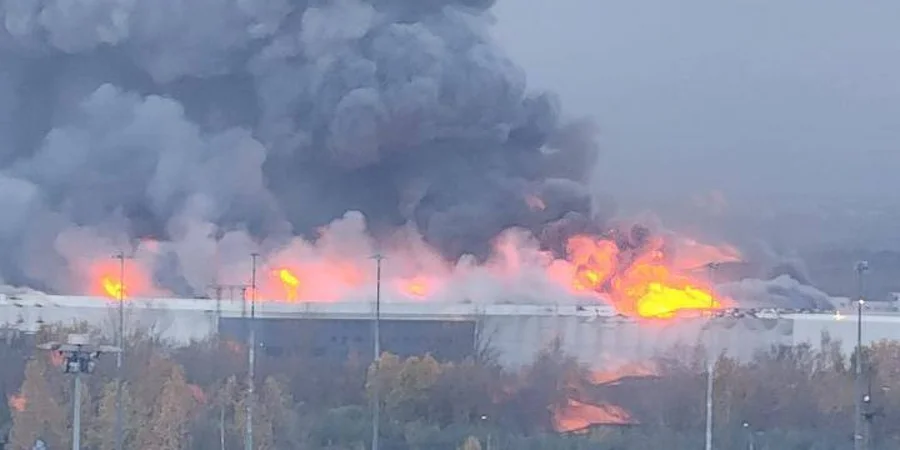
The drones flew 1,000 km. St. Petersburg’s oil terminal, fuel depot, and a nearby data center were waiting at the end

russia’s st petersburg wakes up burning oil sites hit bridge damaged data center after night ukrainian drones · post fire ozon distribution kolpinsky district drone attack 18 2026 astra ukraine

Ukrainian drones struck St. Petersburg’s oil terminal, a fuel depot, an Ozon distribution center, and a VK data center overnight, setting off fires across the city, monitoring channels reported. Russian outlet Meduza called it apparently the largest attack on the city and Leningrad Oblast since the war began. Russian officials acknowledged fires, damaged homes and substations, and power cuts.

Russia keeps fighting along the front while bombarding Ukrainian cities and the grid behind it. Ukraine’s long-range drones, in turn, target the oil exports and logistics that fund and supply that war, and Russia’s Baltic oil ports have been hit repeatedly this year. St. Petersburg is a symbolic place: Russia’s so-called second capital and Putin’s hometown.

Oil terminal and fuel depot on fire

Ukrainian forces struck the Petersburg Oil Terminal with FP-1 drones, starting a fire, Ukrainian drone maker Fire Point said. The company described the terminal as one of the region’s largest, handling 12.5 million tonnes of petroleum products a year, including for export.

Piter port and oil facility in one shot pic.twitter.com/KfptwkhsDS

— Exilenova+ (@Exilenova_plus) October 18, 2026

St. Petersburg Governor Aleksandr Beglov acknowledged fires at the terminal and in four city districts, adding that Pulkovo airport had restricted flights. By morning, firefighters were still battling blazes at the terminal, the Ruchyi oil depot, and industrial warehouses in the Kolpinsky district, he wrote. He claimed one person was killed and five injured. Ukrainian monitoring channel Exilenova+ reported that the Ruchyi depot had been burning since the night.

Ozon hub, VK data center, and a bridge

An Ozon distribution center in Kolpinsky district caught fire after the attack, the company said, Russian independent outlet Astra reported. Astra’s open-source intelligence analyst described it as one of Ozon’s busiest fulfillment centers in northwestern Russia, covering up to 79,000 m².

Ozon in St. Peterburg pic.twitter.com/tA9iwRJf7d

— Exilenova+ (@Exilenova_plus) October 18, 2026

FP-1 drones also hit a VK data center in Novosergiyevka, Leningrad Oblast, causing serious damage, Fire Point said. VK acknowledged a drone attack on the site but claimed its services were working normally. Leningrad Oblast Governor Aleksandr Drozdenko claimed air defenses downed 145 drones over the oblast alone. He acknowledged damage to the data center’s transformer equipment and warehouse complex, and minor damage to the Vostochnaya substation. Two other substations in Yanino went offline, cutting power to about 20,000 people, he said.

Damaged VK data center building in Novosergiyevka, Leningrad Oblast, after a Ukrainian FP-1 drone strike, 18 October 2026
Damaged VK data center building in Novosergiyevka, Leningrad Oblast, after a Ukrainian FP-1 drone strike, 18 October 2026. Photo: Fire Point/X

A drone also hit the cable-stayed bridge over the Korabelny fairway, part of a toll highway linking the city’s north and south, Exilenova+ reported, adding that the extent of the damage was still being clarified. The channel also reported a fire near a Russian Aerospace Forces radar company outside the village of Kaporskoye.

Smoke rising over St. Petersburg after the overnight drone attack, 18 October 2026
Smoke rising over St. Petersburg after the overnight drone attack, 18 October 2026. Photo: Astra

To reach St. Petersburg, Ukrainian drones had to cover 1,000 km across four Russian regions guarded by air defenses and electronic warfare, said Serhii Beskrestnov, adviser to Ukraine’s president on defense technology.

“And these are not cruise missiles with special systems, these are drones that fly at speeds of up to 200 km/h,” he wrote.

Satellite image marking the drone hit on the cable-stayed bridge over the Korabelny fairway in St. Petersburg, 18 October 2026
Satellite image marking the drone hit on the cable-stayed bridge over the Korabelny fairway in St. Petersburg, 18 October 2026. Image: Dnipro Osint via Exilenova+

Strikes resume after a one-sided truce

The same night, Russia hit Ukraine’s grid again, and Ukrainian President Volodymyr Zelenskyy counted 76 Russian strikes on energy since the ceasefire was announced. US President Donald Trump declared the truce on 11 October. Ukraine paused its refinery strikes for three days at Washington’s request, but Russia struck a Kharkiv power plant within hours and kept hitting the grid. Zelenskyy then said Ukraine was resuming strikes on Russian oil and would stop again only in exchange for more US interceptors for its Patriot systems. Trump called the renewed strikes “a disgrace” and said he found Zelenskyy “more difficult to deal with than Putin.”

Ukraine has hit the St. Petersburg area before. In July, drones set fire to Wildberries warehouses near the city. In August, Ukraine began striking Ozon hubs, starting in Samara Oblast. The hubs move dual-use goods such as electronics and drone components.

  •  

Mark Galeotti, organized crime expert: ‘The road to hell is paved with good intentions. So is the path to techno-authoritarianism’

“The gang was disciplined, ruthless, well ordered. Its thugs swaggered around the city as if they owned it. Maybe they did: everyone knew who they were, and the corrupted police never dared take them on.” Mark Galeotti, 60, opens his latest book, Homo criminalis. How Crime Organizes the World, with a fictionalized scene from Miguel de Cervantes’s tale Rinconete y Cortadillo, about a brotherhood of thieves that evokes The Godfather or Peaky Blinders. It was the year 1613.

Seguir leyendo

The author and organized crime historian Mark Galeotti, in a courtesy photo.
  •  

China, BRICS & Brazil: what Lula vs. Bolsonaro means for the Global South

As Brazil heads into the October 25 runoff election between President Luiz Inácio Lula da Silva and Flávio Bolsonaro, the country stands as a crucial battleground in Washington’s strategy to contain China, as well as global geopolitics.

What does this election mean for the future of China-Brazil ties, the BRICS alliance, and independent technological sovereignty across the Global South?

Tings Chak – researcher, writer, and art director for the Tricontinental: Institute for Social Research – joins Amanda Yee to break down the two competing paths for Brazil represented by Lula and Bolsonaro.

Read Chak’s article: “How Brazil’s election could reshape relations with China”

  •  

“Enough” In London, Darkness In Kyiv — Zelenskyy’s Defiance Meets Reality

Three days of silence ended in London. Volodymyr Zelenskyy used a Financial Times interview to announce that Ukraine would resume strikes on Russian oil refineries, and the message was aimed as much at Washington as was at Moscow.

The ban on refinery strikes is lifted, Zelenskyy declared. “Enough,” he added, in a statement that amounted to an open rejection of the White House moratorium. The timing is notable. Until the trip to London, Kyiv had avoided a direct confrontation with Donald Trump. Only after arriving in the British capital, where political backing for Ukraine remains strongest, did the tone harden. The episode points to a widening split inside the Western bloc. Over the coming month, tension may grow between those pushing for a settlement and those committed to continuing the war.

While politics heats up, the strikes on Ukraine’s rear continue without pause.

Overnight on October 16, Russian drones hit the western regions in a massive attack. In Lutsk, an energy facility was struck, leaving parts of the city without power and halting electric transport. As the blackout spread, residents began stocking water. In Khmelnytskyi, an oil depot was attacked. Kovel reported interruptions to both water and electricity, while in Ternopil a foreign-owned enterprise was hit.

The situation in the capital is worse. According to the Ukrainian outlet Ekonomichna Pravda, three Kyiv thermal power plants – TEC-5, TEC-6, and the Darnytsia plant – have stopped generating electricity. Those facilities provided the bulk of the capital’s power. Media reports say 600,000 people have already left Kyiv, a city that had nearly three million residents before the conflict.

Meanwhile, a technological shift is emerging on the battlefield. Russian forces have begun using Molniya drones fitted with satellite antennas, bearing a logo strikingly similar to that of Bureau 1440. That company develops Rassvet, a Russian low-orbit satellite network widely seen as a counterpart to Elon Musk’s Starlink. Such a network offers jam-resistant control for mid-range strike drones operating 100 to 150 kilometers from the front line. Satellite guidance is also expected to improve the accuracy of long-range Geran drones. If Russia can quickly scale up terminal production, the consequences could be dramatic. Ukraine’s rear could come to resemble the land corridor to Crimea, where roads are effectively blocked by constantly loitering drones.

Kyiv has lifted its own ban on refinery strikes just as its capital loses the ability to keep itself warm and lit. Russia, meanwhile, is building a satellite-guided drone fleet that no foreign company can switch off. Defiance in London is easy to announce. Defiance in a city without power, with roughly one in five residents gone, is far harder to sustain.

______________________________________________________________________________________________________________________

DEAR FRIENDS. IF YOU LIKE THIS TYPE OF CONTENT, SUPPORT SOUTHFRONT WORK:

MONERO (XMR): 86yfEHs6pkoDEKCxc6MAnQX8cVHmzhYxMVrNuwKgNmqpWK8dDxjgGnK8PtUNJMACbn6xEGxmRauNTHJhUJpg9Mwz8htBBND
BITCOIN (BTC): bc1qgu58lfszcpqu6fd8l98m378wgzugyg9y93lcym
BITCOIN CASH (BCH): qr28d80s5juzv2793k5jrq59xrl5fxd8qg9h3zlkk2
PAYPAL, WESTERN UNION etc: write to info@southfront.press , southfront@list.ru

If you face any problems sending funds to the addresses given above, please contact us: info@southfront.press and southfront@list.ru. Also be aware that many email services such as Hotmail, Yahoo etc. may block correspondence from info@southfront.press and some others put it in spam.

If you want to support SouthFront but have no opportunity to do it via cryptocurrency, please contact us: info@southfront.press and southfront@list.ru.

SouthFront: Analysis and Intelligence
NOW hosted at southfront.press
Previously, SouthFront: Analysis and Intelligence was at southfront.org.
The .org domain name had been blocked by the US (NATO) (https://southfront.press/southfront-org-blocked-by-u-s-controlled-global-internet-supervisor/) globally, outlawed and without any explanation
Back before that, from 2013 to 2015, SouthFront: Analysis and Intelligence was at southfront.com

SOUTHFRONT.PRESS

The post “Enough” In London, Darkness In Kyiv — Zelenskyy’s Defiance Meets Reality appeared first on South Front.
  •  
❌