❌

Reading view

Luisa Gonzalez Denounces Political Persecution After Detention in Ecuador

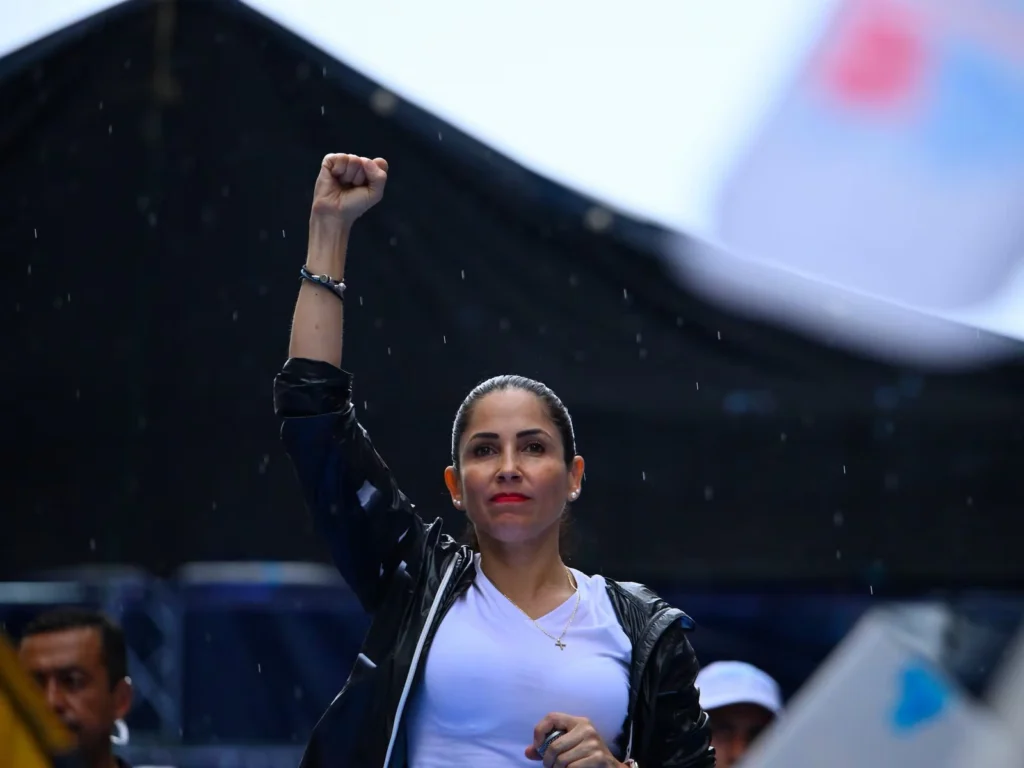
(FILE) The ex-presidential candidate appreciated the support of communities throughout the national territory and ratified the determination of the people to overcome the censorship of Noboa's government. Photo: AFP.

Former presidential candidate Luisa González denounced political persecution Thursday after security forces detained her in a predawn raid in Ecuador’s Manabí province, accusing the government of President Daniel Noboa of an authoritarian drift.


In her first written message since the arrest, Luisa González rejected the accusations against her and described the country’s institutional situation as “unsustainable.”

“Today it is my turn to be detained over an absurd accusation,” she wrote on X. “I will respond with the dignity of the Ecuadorian men and women who owe nothing and who are committed to achieving freedom for Ecuador and a better future for the country,” she added.

RELATED: Former Ecuadorian President Correa Denounces the Arrest of Luisa Gonzalez

The leading figure of the Citizen’s Revolution movement also warned of mistreatment and torture inflicted on political prisoners held by the current far-right government of Daniel Noboa.

Faced with what she called a repressive escalation and a socioeconomic decline marked by violence and state corruption, González issued a call for unity to social organizations and leftist movements. “To my partners of the Citizen’s Revolution and all progressive forces, I say: it is time for unity, unity and unity to achieve freedom and democracy in the country,” she said.

A mi patria querida 💛💙❤️ pic.twitter.com/fJrIXAvG0B

— Luisa González (@LuisaGonzalezEc) October 22, 2026

She thanked communities across the country for their support and insisted that the people remain determined to overcome government censorship. González closed her statement by asserting that popular silence would eventually break the authoritarian siege and restore sovereignty and full democracy to Ecuador.

A Judicial Crackdown

Luisa González was detained in the early hours of Thursday in the Canuto parish of Chone canton, Manabí province. National Police officers and state prosecutors carried out the operation under the name “Labyrinth case,” an inquiry authorities describe as targeting alleged electoral financing during the 2023 campaign.

The police deployment included simultaneous raids in Manabí and Pichincha provinces and ended with three people detained for the purpose of formal charges.

After the procedure, relatives and allies of González denounced uncertainty over her whereabouts. Officials have not clarified whether she remains in Manabí or is being transferred to Quito for a court hearing, a situation her supporters describe as a grave violation of due process guarantees.

The arrest is part of a broader judicial offensive against the Citizen’s Revolution movement, which is currently suspended for nine months following rulings by the Electoral Contentious Tribunal that critics say were designed to block its participation in sectional elections.

That institutional push previously prevented González from registering as a candidate for the Manabí prefecture. Quito mayor Pabel Muñoz, meanwhile, faced raids on his offices in the middle of his reelection campaign.

Ecuadorian Former President Rafael Correa denounced the detention of González in a separate statement, adding his voice to the growing criticism of the operation. The predawn arrest now places one of the government’s most prominent opponents at the center of a legal battle that her movement frames as political persecution rather than a legitimate investigation.

  •  

Venezuela Reaffirms Sovereign Control of Oil Revenue as Deals Advance

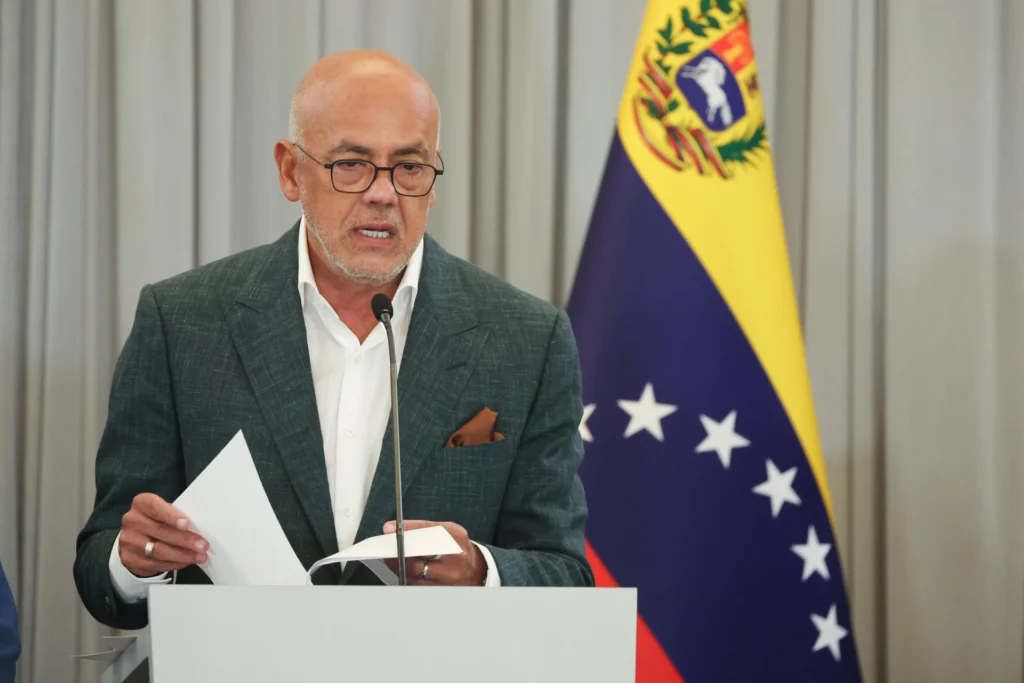
The president of the Venezuelan National Assembly has ratified that the country autonomously manages the resources captured through energy exports. Photo: EFE.

Venezuela’s National Assembly President reaffirmed sovereign control over the country’s oil revenues and reported 71 active energy agreements alongside 44 contracts under negotiation, framing the figures as evidence of a sector revival after years of financial restrictions.


The statements came amid what officials called a strategic reconfiguration of the Venezuelan hydrocarbon industry. After years of intense global financial restrictions, the gradual operational reactivation of agreements between state-owned oil company Petroleos de Venezuela (PDVSA) and international firms aims to restore a steady flow of foreign currency into the national treasury.

“No foreign agency or international financial entity administers or safeguards the public funds that enter the country from hydrocarbon sales,” National Assembly President Jorge Rodriguez said.

RELATED: Venezuela’s Acting President Reviews Wage Consensus With Business, Unions

Rodríguez detailed that the money enters the public treasury under the supervision of authorized national banks, and he ruled out any external trust or any management of accounts by third parties outside the country’s institutions. In this sense, he called autonomy over foreign currency “a non-negotiable principle” for the country’s macroeconomic stability.

71 agreements are currently in force, while another 44 contracts are being negotiated. For the government, that volume confirms an operational momentum geared toward diversifying investment across the country’s main extraction fields.

The National Assembly President presented this dynamism as the result of a deliberate push to reopen the sector to international capital without surrendering control. Over the past several years, sweeping financial measures limited Venezuela’s ability to sell crude, collect payments and maintain production infrastructure. The current wave of deals represents a step-by-step return to commercial activity.

#EnVideo📹 | Coordinador del diálogo por el Gobierno Nacional, Jorge Rodríguez, aseveró que Venezuela mantiene el control sobre los recursos financieros obtenidos a través de la comercialización de petróleo hacia distintos países del mundo. pic.twitter.com/MUoEuwKXQI

— Ministerio de Comunicación e Información (@mippci_ven) October 22, 2026

Text reads: “Coordinator of the dialogue by the National Government, Jorge Rodríguez, asserted that Venezuela retains control over financial resources obtained through the marketing of oil to different countries in the world.”

Each reactivated agreement carries a single objective, officials indicated, the capture of hard currency for the public coffers. That revenue is meant to fund the productive apparatus and national infrastructure rather than remain subject to outside oversight.

By spreading investment across the country’s principal extraction zones, the government seeks to reduce dependence on any single field or partner.

Sovereign Control Defended

Reaffirming sovereign control over monetary flows stands as a central pillar of the government’s message. The leadership projected institutional stability at a moment when Washington continues to review and adjust the licenses it grants for oil operations.

Rodríguez also denounced continuous pressure and unilateral coercive measures against the country’s financial system by foreign powers. He said that, despite what he described as an economic siege, the government has consolidated alternative mechanisms to receive payments directly for oil-product exports.

Against that backdrop, the government is working to shield energy agreements legally, dismiss any suggestion of foreign tutelage and guarantee direct financing for public budgets.

Official strategy insists that autonomous management of oil income is an indispensable guarantee for preserving fiscal balance, defending the national currency and sustaining social development programs.

For the Bolivarian government, legal protection of the energy agreements goes hand in hand with financing priorities. The revenue is meant to flow directly toward the productive apparatus and public infrastructure, a framework that Rodriguez described as essential to institutional stability.

  •  

Greece, Egypt discuss to extend their Exclusive Economic Zone in Med East

Greece and Egypt ​are discussing extending their Exclusive Economic ‌Zone eastwards towards Cyprus after eastern Libya’s parliament ratified a disputed maritime agreement with ​Turkey earlier this week, Greece’s ​foreign minister said. Greece, Egypt and Cyprus ⁠have long opposed the Turkey-Libya maritime ​accord, arguing that it infringes on ​their own maritime claims in the eastern Mediterranean. […]

The post Greece, Egypt discuss to extend their Exclusive Economic Zone in Med East appeared first on Keep Talking Greece.

  •  

Democrats lead Republicans by 37 points among likely young voters: Survey 

Democrats are leading Republicans by 37 points among young voters who say they’ll definitely cast their ballots this fall, according to the latest Harvard Youth poll. On a generic House ballot, Democrats are ahead with 45 percent to 24 percent among voters aged 18-29, a 21-point advantage. Among voters who are certain they’ll vote in…

  •  

Under the (Persian) volcano

Iran and Russia, both sanctioned to oblivion, are indeed in synch like never before, coordinating everything on a shared front.

Join us on Telegram, X, and VK.

Contact us: info@strategic-culture.su

Washington, on the Ukraine front, may be switching to total Saving Face mode. After all, the scale of the strategic defeat for the Empire plus the discombobulated West in country 404 is staggering. Add to it the strategic defeat in Iran plus Yemen relentlessly hammering the House of Saud. Grandmaster Lavrov coined it: “The West will never again be the main player, dictating terms.”

The temptation may be great to identify a more straightforward path towards a multi-nodal, polycentric world order – in the wake of all those wild, unprecedented Trump concessions to Moscow. But then the real dark clouds keep coming down.

The death cult in West Asia and the Epstein Syndicate as a whole have managed to overpower the whole mass of neo-con Russophobes spread across the MICIMATT (military/industrial/congressional/intelligence/media/academia/think tank complex, in the memorable definition by Ray McGovern) and reconstitute Iran as the undisputable, one and only national security emergency.

The 7-point way or the highway

Field Marshal Asim Munir’s hasty, last minute-arranged trip from Islamabad to Tehran earlier this week in the end could not possibly mediate anything.

Munir met everyone who matters. He asked Parliament Speaker Ghalibaf point blank: what does it take to find a solution for the Iran-U.S. impasse? Ghalibaf was blunt – and repeated it at last 8 times during their meeting: Washington must implement Iran’s 7-point conditions, essentially a summary of the serially dead cat memorandum of understanding (MoU), which Trump signed and then destroyed.

The 7 points were first proposed to Tweedledum and Twedledee – Witkoff and Kushner – via the Qataris in a previous round of Iran-U.S. indirect negotiations.

President Pezeshkian and secretary of the Supreme National Security Council (SNSC) Mohsen Rezaee, in their meetings, stressed the exact same thing. That’s the message Munir should relay to the Sociopath-in-Chief.

Official Iranian sources will not confirm it; only the heavily-spun American version. But Munir may have carried a final U.S. ultimatum to Rezaee, Pezeshkian and Ghalibaf: ditch your nuclear program, or face massive strikes, mostly targeting Pickaxe Mountain.

Adding on the 7 points, Mohsen Rezaee actually informed Munir – and thus the White House – again, that not a single speck of nuclear dust will leave Iran. Back to the only possibility of a return to negotiations: Washington must accept the 7 points.

Foreign Minister Araghchi keeps coming back to the essentials: “The U.S. has failed to achieve any of its war objectives.” So the connectivity chain is inescapable: no military victory (and no regime change); unbearable economic costs; untainable political situation; thus only off-ramp is the 7 points.

And on top of it Tehran runs the clock.

In parallel, across the Yemeni Storm, Sana’a also runs the clock.

With Aramco, the lifeblood of U.S., Israel and Salafi-jihadi goons of the ISIS mould, and a privileged source of funding for the Forever Wars, now in Ansarallah’s direct line of fire, the Yemeni drive is to work “to dry up the sources of terrorism.”

Riyadh though is doubling down, threatening to bomb every gathering of Yemeni tribes. If that happens, more than a million more Yemenis will join the Yemeni Armed Forces and march to the Yemeni-Saudi border.

After all the tribes, well-trained and ultra-weaponized, are just waiting for a directive from Ansarallah’s leader, Abdul-Malik Badr al-Din al-Houthi, to pour into southern “Saudi” Arabia and recover the three provinces, Najran, Jizan and Asir, that are ancestral Yemeni lands stolen by the Brits in 1934.

A price you can’t afford to pay

All hell may break loose: now; soon; or until the end of November at the latest. Were it to happen sooner, before the Israeli elections, it’s a done deal the driver is the death cult. The Sociopath-in-Chief privileges a post-mid-terms attack.

The death cult is preparing a massive attack on Iranian power plants, oil infrastructure, military targets and nuclear installations. Tehran has repeatedly warned that any attack, joint or separate, from the U.S. and Israel, will be treated as Totalen Krieg, all-out war, and the response will break any limits or restraint.

Iran’s internal intel is fully concentrated on a large-scale bombing scenario happening before next Tuesday, Election Day in the death cult.

Whatever happens, Tehran’s response will make sure the price to pay is beyond prohibitive. On Israel, Iran will counterpunch on both of Israel’s refineries; the ports at Haifa and Ashdod; all airbases; and Dimona added only if Iran’s own nuclear sites are hit.

When it comes to a U.S. attack, any Gulf petro-monarchy that hosts any launch instantly becomes a legitimate target, including power grids; desalination plants; refineries; ports; data centers; HQs and installations of American companies.

The Strait of Hormuz would be completely closed. The price of a barrel of oil will skyrocket. The global economy will hit Big Depression. From an imperial point of view, that will be as gloomy as Washington letting Iran manage the Strait of Hormuz and charge fees for transit: actually the humiliating end of unilateral thalassocracy – complete with the U.S. Fifth Fleet needing to ask permission to enter or leave its own dilapidated base in Bahrain.

Mohammad Mokhber, a top adviser to Leader Mojtaba Khamenei, stressed that “if the U.S.-Israel strike our petrochemical infrastructure or power plants, Iran will strike nine countries.”

Moreover, the Fars news agency, very close to the IRGC, learned about an array of new directives: if the attacks involve the assassination of Iranian officials and the killing of civilians, the Iranian response will include political targets associated with the U.S. and all nations participating in the war, in addition to their infrastructure.

Lavrov and Araghchi revive RIC

Amidst so much horror, let’s try to stress at least one auspicious trend. During Lavrov’s recent visit to Tehran, Iranian FM Araghchi cut to the chase:

“Never in our History have Russia & Iran worked as closely as now.”

The key operative concept is “Never in our History”. Lavrov and Araghchi talked about “everything from Europe to West Asia”. But specially these four: Lebanon, Palestine, Ukraine & Yemen. Not to mention everything about expanded economic and “nuclear cooperation”.

Economic cooperation means specially the INSTC – the International North South Transportation Corridor linking 3 BRICS/SCO partners: Russia, Iran and India.

See my INSTC documentary shot in Iran last year.

The Empire of Chaos relies on sanctions, threats and bombing. Eurasia integration relies on building infrastructure, increasing trade, and sovereign cooperation. So Lavrov and Araghchi once again had to revive RIC: the original Russia/India/China connection first conceptualized as the Primakov Triangle but now with Iran in place of India.

Lavrov proposed that the new RIC establish a “common security structure” in the Persian Gulf via a trilateral summit. That amounts to RIC defining a unified framework for the Strait of Hormuz.

The Empire’s response will be increased discombobulation. Because once again this is about “indivisibility of security” – as in Russia proposing it to the U.S. and NATO in December 2021. Then that was met with a non-response response.

On Lebanon, Palestine, Ukraine and Yemen, Lavrov and Araghchi were on top of the top frontlines. Where we have the Empire of Chaos and its allies/vassals on one side, and Russia and Iran’s allies on the other side.

It’s all interconnected, of course. An imperial arc of military pressure stretches from Ukraine to Yemen. The counterpunch revolves around how to coordinate the resistance (italics mine) to such pressure.

On economic cooperation, both Iran and Russia are under a tsunami of sanctions. Their banks are expelled from SWIFT, and oil exports are severely restricted. So trade between them must bypass the U.S. dollar; the whole Western financial system; and the thalassocracy enforced by the U.S. Navy.

Know how in bypassing sanctions is something Iran-Russia may share with the whole Global South, via settlements in local currencies; barter trade; overland corridors; the INSTC; and trade across the Caspian Sea.

And that brings us once again to the Strait of Hormuz – which Iran controls. The Gulf petro-monarchies are completely freaking out. Russia maintains solid channels with both Iran and the Gulf. Lavrov is in total synch with all of them. He brought the Gulf’s concerns to Tehran, and in turn, conveyed Tehran’s conditions back to the Gulf.

Lavrov stressed that the serially dead cat Islamabad MoU is the only way to go. Exactly what Xi told Trump at the Oval Office. Exactly what the Iranian leadership told Asim Munir in Tehran.

He also stressed that the Persian Gulf petro-monarchies must get their act together and start a serious security dialogue with Iran and Arab nations, including neighbors such as Iraq and Jordan, and involve the Arab League, the Organization of Islamic Cooperation (OIC), and the permanent members of the UN Security Council.

Once again: indivisibility of security.

Iran and Russia, both sanctioned to oblivion, are indeed in synch like never before, coordinating everything on a shared front – while the desperate Epstein Syndicate remains stuck in its self-concocted Forever War nightmare.

  •  

Unsealed O.J. Simpson Records Prompt a Request for a New Investigation

Tanya Brown said she believed someone helped O.J. Simpson get rid of the murder weapon. One of Mr. Simpson’s former lawyers called for a special prosecutor.

© Pool photo by Reed Saxon

O.J. Simpson addressing the court at his double murder trial in Los Angeles in 1995.
  •  

Reclusos de Silves poderão cuidar do espaço público e apoiar a comunidade em Algoz

O protocolo prevê atividades no Regime Aberto no Exterior para promover competências e reinserção social. A junta afirma que não haverá substituição dos seus trabalhadores.

O conteúdo Reclusos de Silves poderão cuidar do espaço público e apoiar a comunidade em Algoz aparece primeiro em Barlavento.

  •  

Former Ecuadorian President Correa Denounces the Arrest of Luisa Gonzalez

Gonzalez had publicly denounced international pressure and interference in Latin American political affairs.

On Thursday, Former Ecuadorian President Rafael Correa denounced the arrest of Luisa Gonzalez, a former presidential candidate and one of the leading figures in the Citizen Revolution movement.

RELATED: Ecuadorian Youth Call Protest Over Healthcare and Insecurity

On social media, Correa criticized Gonzalez’s arrest and expressed his disapproval of the measure, accompanying his message with slogans of support for the leader and her political organization.

Andean Parliamentarian Virgilio Hernandez joined in the denunciation, asserting that Gonzalez has been the target of political persecution and expressing concern about the lack of official information regarding her whereabouts following her arrest.

Meanwhile, Ecuadorian media cited police sources who preliminarily “confirmed” the former candidate’s arrest, although authorities had not initially provided complete details about the procedure.

🔴 Gabriela Rivadeneira denuncia el secuestro de Luisa González y exige su liberación inmediata

La presidenta del movimiento Revolución Ciudadana, Gabriela Rivadeneira, denunció que la excandidata presidencial Luisa González ha sido secuestrada y exigió su inmediata liberación,… pic.twitter.com/77XQVmE70E

— Elena Rodríguez Yánez (@ElenaDeQuito) October 22, 2026

The text reads, “Gabriela Rivadeneira, president of the Citizen Revolution, denounced the kidnapping of Luisa Gonzalez and demanded her immediate release, following her arrest in the early hours of Thursday, October 22, in the Ecuadorian province of Manabi.”

The case comes weeks after the Electoral Disputes Tribunal upheld the disqualification that prevented Gonzalez from running for Prefect of Manabi, a decision that was challenged by her supporters and political allies.

Days before her arrest, the leader had publicly denounced international pressure and interference in Latin American political affairs, and warned of what she considers a strategy of judicial persecution against progressive sectors in the region.

The leadership of the Citizen Revolution movement demanded immediate information on Gonzalez’s condition and whereabouts, while also calling for guarantees that her rights will be respected during the ongoing legal proceedings.

#FromTheSouth News Bits | Ecuador: Delegations from all provinces participated in the first day of the National Convention of the Citizen Revolution Movement, which was held in Manta, Manabi province. pic.twitter.com/1bGT3DeLKo

— teleSUR English (@telesurenglish) January 21, 2026

teleSUR: JP

Source: teleSUR

  •  

The Dominican Baseball Factory

Gus Garcia-Roberts follows Belfi Rivera, a Major League Baseball prospect from the Dominican Republic, through an unregulated recruitment system that exposes young athletes to a network of predatory figures (and at least one former World Series MVP and prominent Fox Sports analyst). It’s a system that operates in plain sight and has for years, but Garcia-Roberts’s superbly reported narrative, which centers on Rivera and his vulnerable family, make those operations positively harrowing.

As a child, Belfi never cared for baseball. He started playing at 7, he told me, because a local coach would drag him from his house and cuff him on the head if he tried to escape to a nearby river to be with his friends. But even as a young boy, he understood the sport likely represented his family’s one shot out of grinding poverty. During that video call in 2021, it seemed that he had clinched it. 

But in two and a half years, the $1.8 million Belfi was promised would be almost all gone. Carmona received $630,000, which represented his 35% commission. But more than $950,000 went to someone who had no hand in teaching Belfi how to play baseball. His name is Santo Caraballo, one of the most notorious moneylenders profiting from Dominican baseball. His business partner is a national hero and, 10 years after his retirement, still a commanding figure within Major League Baseball: David Ortiz, known universally as “Big Papi.”

  •  

Não vos dão casa. Dão-vos uma pátria

VTM

Aposta na crise habitacional para se manter no poder. Como tantas vezes acontece na história, esta crise ficou condensada num caso, o despejo de Maricarmen, de 87 anos, que morreu duas semanas depois, no hospital, sem chegar a voltar a casa. Tinha sido alcançado um acordo para regressar, pendente apenas da alta médica.

A crise habitacional é para a direita o que a imigração é para a esquerda, o calcanhar de Aquiles que, por razões identitárias e ideológicas específicas, nenhuma das duas consegue fundamentalmente resolver. Apesar de tudo, o desgaste de Sánchez e dos seus aliados é tal que dificilmente algo os poderá salvar, e o PP, aliado ao Vox, vai ficar com o poder. Mas até ao lavar dos cestos é vindima.

Importa, por isso, expor as linhas vermelhas que Santiago Abascal, o espúrio líder do Vox, impõe ao PP (o provável vencedor das eleições) para realizar a coligação que permitirá a sua chegada ao poder. São três: a desregulação da economia, a famosa remigração e a prioridade nacional. Vou dizer-lhes o que penso de cada uma.

A desregulação económica é uma bajulação ao poder económico. Hoje, como no passado, o que se pretende é aliciá-lo para depois o subordinar. Prometem-se cortes de impostos, privatizações e o fim de regulações para depois impor a sua lei. Assim faz Trump, com as tarifas, a golden share na US Steel, a participação no capital da Intel, a pressão sobre escritórios de advogados e universidades ou o uso das empresas de IA como instrumento para dominar e subordinar o resto do mundo.

A remigração é o termo que se apoderou do imaginário de muitos europeus nesta vaga de regeneração identitária, e cuja versão máxima inclui a expulsão de cidadãos de origem estrangeira para, por milagre, tudo resolver. Sobre a prioridade nacional, o que dizer? O nativismo é para a direita radical europeia o que o nacionalismo foi para o fascismo, a sublimação de todos os problemas com uma esmola que preenche a alma. Quem pertence a uma nação histórica e heroica é maior do que ele próprio. Mesmo pobre e em dificuldades, pode sentir-se superior. É a troca do humanismo universal pela pertença à nação. É o salário psicológico da “europitude”.

A crise material entrou na nova política europeia pela via da identidade. Em Espanha, ainda não será o Vox a ganhar, mas sim o PP de Feijóo, um partido da direita tradicional em desconstrução. Na Extremadura e em Aragão já assinou com o Vox a prioridade nacional, ainda que a tente disfarçar de “arraigo”. Em Portugal, segundo as sondagens, a direita radical já disputa o primeiro lugar com o PS. Estamos todos a observar Espanha, porque em breve também nós teremos de decidir. E se o Partido Socialista quer voltar a governar, terá de mudar muito, a começar pela forma como escolhe os seus candidatos à Assembleia da República. Primárias abertas, que entreguem aos eleitores a escolha e voltem a galvanizar quem há muito deixou de se sentir representado.

The post Não vos dão casa. Dão-vos uma pátria appeared first on A Voz de Trás-os-Montes.

  •  

35 US parts, a Chinese navigation unit, a Russian engine: what’s inside Russia’s Filin missile

Filin cruise missile

Ukraine’s military intelligence (HUR) published a 3D model and parts list of Russia’s new Filin cruise missile on 22 October. The breakdown names the Russian companies behind the missile and the foreign makers of its electronics.

HUR runs its War&Sanctions portal to trace such parts back to their makers. Its stated aim is to “deprive the aggressors of the ability to produce weapons for terror,” the portal says. Meanwhile, Russia is betting on cheap, fast cruise missiles, Serhii Beskrestnov, a freelance adviser to the president on technology, told Radio NV in mid-September. Naming the Banderol, Dan-T, Dan-M, and Gerbera-5, he warned they would soon outrun Ukraine’s jet-powered interceptors, so Ukraine needed its own cheap missiles to shoot them down.

Composite body, ground launch

JSC NPO Molniya, part of Russia’s Tactical Missiles Corporation, builds the Filin, HUR said. The agency called it part of a Russian defense-industry trend toward cheap jet-powered, ground-launched air-attack weapons. Russia began firing it at Ukraine in late summer 2026.

Filin cruise missile components.
Filin cruise missile components. Image: War&Sanctions

HUR’s data puts the carbon and fiberglass fuselage at 3.5 m, with a 3 m wingspan. Some parts are 3D-printed. Russia claims a top speed of 800 km/h. The range is 600–1,200 km, and the missile flies at ultra-low altitude or up to 6 km. Versions carry 50-kg or 100-kg warheads. A solid-fuel booster fires it from a ground launcher.

A firm tied to a Shahed-type drone

PLAZ LLC makes the onboard equipment, HUR said. The firm also helps produce the Garpiya, a version of Russia’s Shahed-type Geran-2 drone. Filin and Garpiya units share a similar layout and markings. Guidance combines a Chinese-made inertial navigation system with a 16-channel Kometa anti-jamming module from Russia’s VNIIR-Progress.

The electronics resemble those in other Russian missiles and drones but carry a larger share of Chinese parts. Of 81 components, 35 are American and 22 Chinese. The engine, however, is Russian: an R500 turbojet from Reynolds LLC. A similar engine earlier turned up in the S-71K Kover aviation cruise missile and S-71M Monokhrom, HUR said.

For comparison, Ukraine found more than 20 foreign components in a different cheap missile, the Banderol, in May 2025. They included 10 US microchips, and the Banderol flies on a Chinese jet engine.

  •  

Poland paused a military aid package over Lviv’s vote honoring WWII nationalists, Ukrainian source says. Polish ministry denies it

polish defense

Poland has paused the delivery of a large military aid package to Ukraine after a Lviv regional council honored the Ukrainian Insurgent Army (UPA), a WWII nationalist force, a source in the Ukrainian government told European Pravda on 21 October. A Polish Defense Ministry spokesperson told Fakt the report was untrue, though he told WP he knew nothing about a possible delay in shipment.

If confirmed, the freeze would carry a history dispute into Poland’s military aid. The row flared in May, when Kyiv named a special forces unit after the UPA, and in June Poland’s president stripped Zelenskyy of Poland’s highest honor. Even so, Ukraine’s ambassador said in August that Polish military aid was still flowing.

A vote and a disputed freeze

The Lviv Oblast Council voted on 20 October to name 2027 the year of the UPA, its commander Roman Shukhevych, and nationalist activist Oleh Olzhych. The UPA fought Nazi Germany and the Soviet Union, but Poland holds it responsible for mass killings of Poles in Volhynia and Eastern Galicia in 1943–1944. The resolution disappeared from the council’s website late that evening, RMF24 reported.

The source blamed what it called the councilors’ irresponsible actions, saying the vote came as Poland prepared the shipment and that work through closed channels is underway. The ministry spokesperson, Janusz Sejmej, called the report untrue. Asked whether it could reflect a delay in shipment, he said he knew nothing about that.

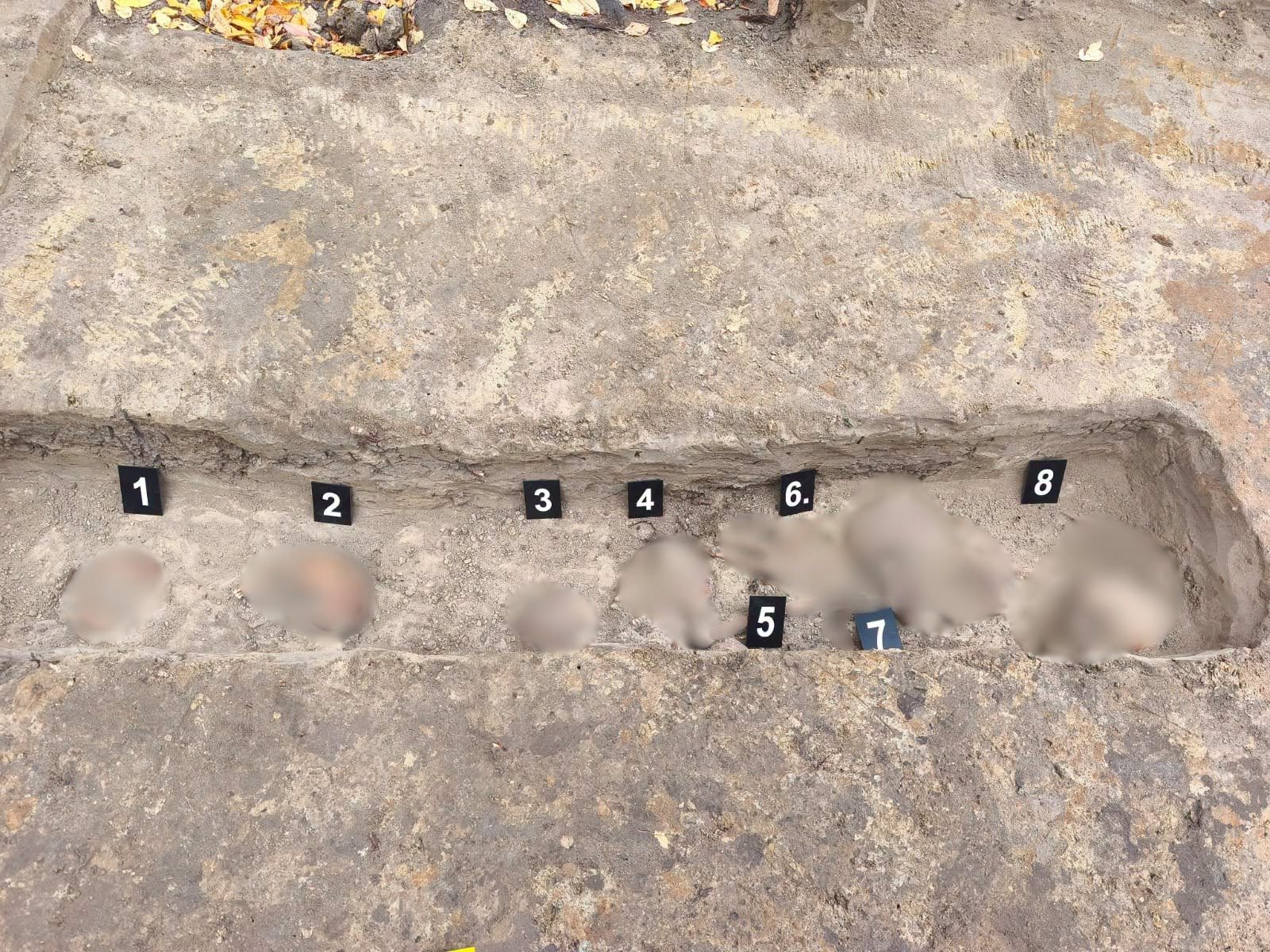
Human remains, likely belonging to a Ukrainian killed in 1944 in the village of Łasków, Lublin Voivodeship, Poland, October 2026
Explore further

Progress on a sore point for Ukraine and Poland: remains of over 40 Ukrainians killed by Polish WWII units found in Łasków

Polish officials push back

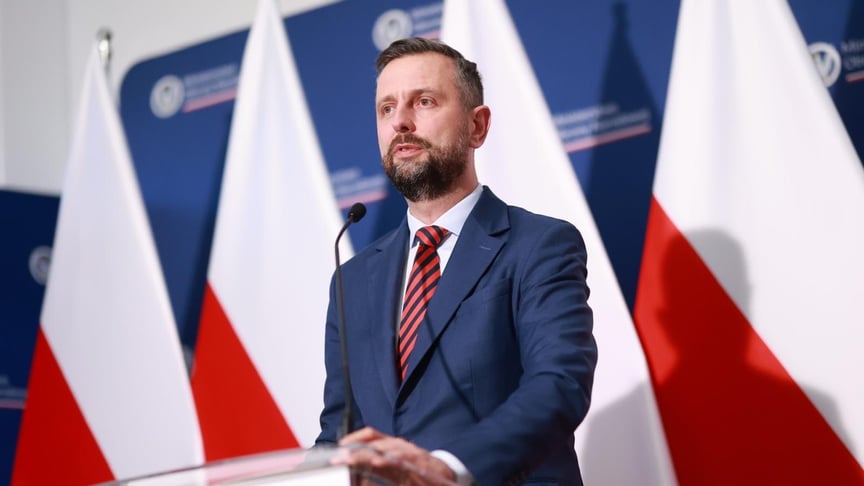
On 20 October, Defense Minister Władysław Kosiniak-Kamysz wrote that Ukraine’s authorities must distance themselves from the council’s position.

The next morning, Prime Minister Donald Tusk called the vote unwise and harmful above all to Ukraine. He said he had warned Zelenskyy earlier that such gestures hinder Ukraine’s friends, though the president was not responsible for this vote. At such moments, Tusk said, Russians always rub their hands.

Foreign Minister Radosław Sikorski then requested that councilor Sviatoslav Sheremeta, who proposed the resolution, be added to Poland’s list of unwanted persons. That afternoon, Interior Minister Marcin Kierwiński said the decision had been made. Sheremeta is barred from the Schengen zone until 2031, RMF24 reported. Poland had already barred him once, in 2017, the outlet said.

Kyiv asks for restraint

Earlier on 21 October, before the ban, Ukraine’s Foreign Ministry called the vote counterproductive in a reply to journalists and urged Warsaw to avoid abrupt steps. Zelenskyy’s closest aides had also promised the resolution would not take effect, Deputy Foreign Minister Marcin Bosacki told TVN24.

  •  

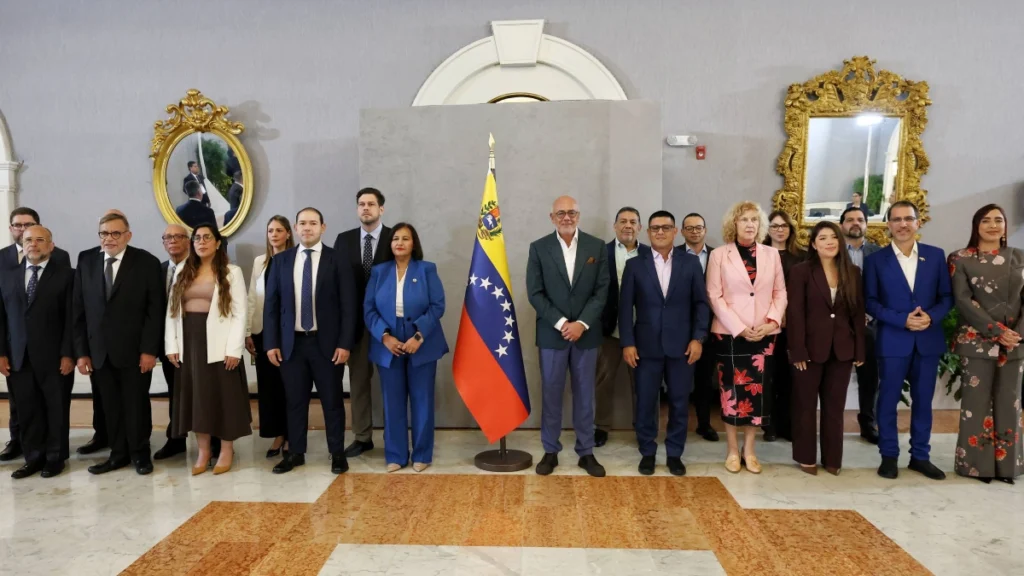
Venezuelan Government and 2015 Assembly Ex-Deputies Close Third Dialogue Cycle

Photo: X/ Jorge Rodriguez

Venezuela’s national government and former deputies of the 2015 National Assembly held the final plenary of the third cycle of talks in Caracas on Wednesday, centered on reviewing compliance with agreements on institutional matters and renewal of the judicial system.


This phase covered the review of commitments from the second cycle, which concluded Sept. 25 with partial agreements on lifting restrictions on digital news portals, adding guarantees for the right to information and progress in judicial renewal.

RELATED: Venezuela Sets Youth Popular Consultation for February 2027

The agenda also included installing the Credentials Review Council for applicants to the Supreme Court of Justice as part of discussions on the judicial system.

En desarrollo la última plenaria del tercer ciclo de conversaciones. pic.twitter.com/n46lLsSMaC

— Jorge Rodríguez (@jorgerpsuv) October 21, 2026

The government delegation was headed by National Assembly President Jorge Rodríguez and included deputies Pedro Infante, Jorge Arreaza and América Pérez, Minister of University Education Ana María Sanjuan and Deputy Minister Génesis Garvett. The 2015 Assembly delegation included Dinorah Figuera, accompanied by Juan Miguel Matheus, Sergio Vergara, Marco Aurelio Quiñones and Ramón López.

The formal talks began Aug. 12, when both parties agreed on a working methodology and installed technical tables on care for earthquake victims, democratic strengthening and judicial system reforms.

  •  

Venezuela Sets Youth Popular Consultation for February 2027

The Venezuelan Acting President urged young people to prepare actively for this new democratic appointment that will mark the course of next year. Photo: Venezuelan Presidential Press.

Acting President Delcy Rodríguez announced Wednesday that Venezuela will hold its Youth Popular Consultation in February 2027, a vote she framed as a platform for young people to convert their talent, creativity and ingenuity into a driving force for national development.


Venezuelan Acting President Delcy Rodríguez delivered the announcement during a visit to the Nueve Raíces de Simón communal circuit, where she urged the country’s youth to prepare actively for what she described as a democratic appointment that will mark the direction of the coming year.

Rodríguez said the process aims to vindicate the talent, creativity and ingenuity of the new generations and to propel Venezuela toward fresh development opportunities. The call places younger Venezuelans at the center of a participatory model that has gathered strength since 2024.

RELATED: Venezuela to Begin Funding Projects Selected in Popular Consultation Next Week

The announcement lands days after the Second National Popular Consultation of 2026, held on October 18. It was the eighth nationwide vote of its kind since 2024, and officials described the turnout as massive and successful. That result has now been translated into a fresh appeal aimed specifically at young people, signaling the government’s intention to widen the base of participants in community decision-making.

🗳️🔥 ¡LA JUVENTUD SE PREPARA: NUEVA CONSULTA EN FEBRERO 2027!🇻🇪✨

Tras una participación histórica en la pasada Consulta Nacional Popular, la ruta continúa: ¡Jóvenes de toda Venezuela a prepararse desde ya! 💪🌱

El compromiso no se detiene: es momento de seguir adelante,… pic.twitter.com/YyOteBQqLT

— Ministerio del Poder Popular para la Juventud (@Minjuventud__ve) October 21, 2026

Text reads: “Youth is preparing: new consultation in February 2027! After a historic participation in the last National Popular Consultation, the route continues: Young people from all over Venezuela to prepare now! The commitment does not stop: it’s time to move forward, organize and execute projects that will transform our territories.”

A Record October Turnout

Millions of residents from communities across the country turned out on October 18, prompting the National Electoral Council (CNE) to extend voting by one hour.

The scale of the exercise was measured in large numbers. More than 5,418 communes and communal circuits coordinated the work of over 48,000 communal councils, and voters selected among 37,205 priority community projects eligible for public financing.

Rodríguez has championed the consultation model as a vehicle for what officials call popular power. In separate remarks, she described participation in the October exercise as extraordinary, linking the strong turnout to a broader effort to place public decision-making directly in the hands of organized communities rather than distant institutions.

A Broader Community Voice

One of the most notable features of the October consultation was the first-time inclusion of condominium boards, which put forward 428 projects. Acting President Rodríguez celebrated that milestone on social media, underscoring the importance of keeping decisions about everyday matters firmly in the hands of communities themselves.

The proposals reflected local priorities. Acting President Rodríguez had previously detailed that 14% of the projects corresponded to the water sector, followed by initiatives in road infrastructure, lighting, electricity, public services and productive activities, showing residents directing public resources toward their most pressing daily needs.

With the youth consultation now scheduled for February 2027, the Acting President called young Venezuelans to assume what she called absolute protagonism in the process. Organizers expect the new consultation to build on the machinery tested in October and to channel the energy of younger generations into decisions that will shape the country’s near-term path.

  •  

U.S. and Israel Draw Up Plans for Renewed Strikes on Iran After Elections

Renewed hostilities might not be any more successful than the war’s first phase, and President Trump has repeatedly canceled plans for a return to major combat.

© Arash Khamooshi/Polaris for The New York Times

A site of a U.S.-Israeli airstrike in Tehran in March.
  •  
❌