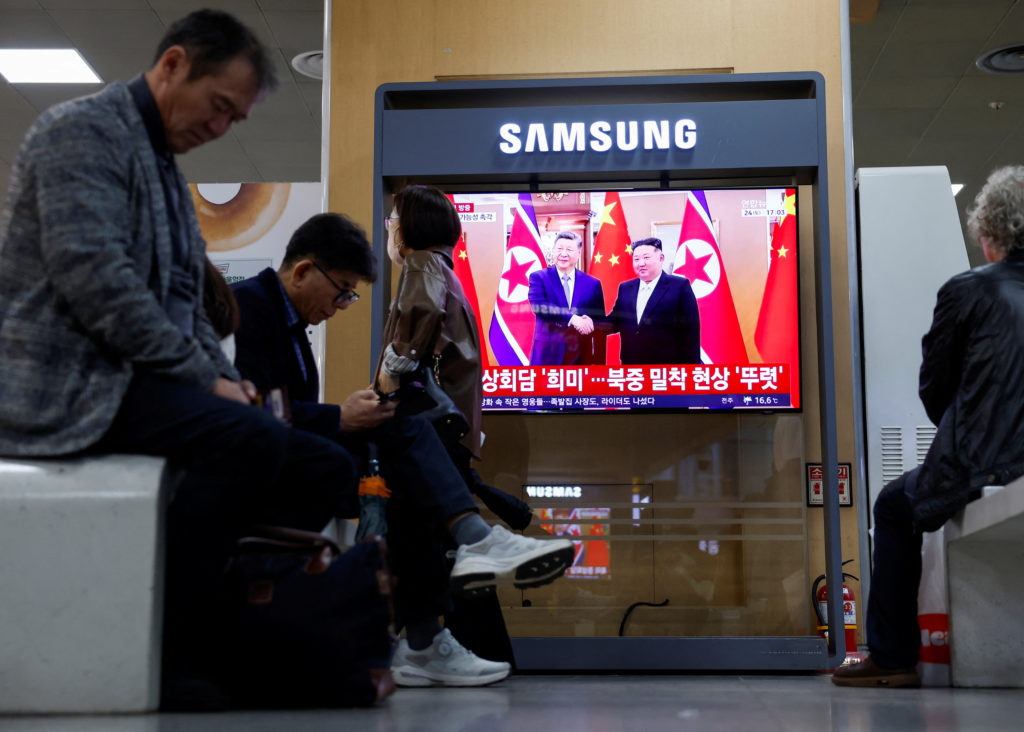
North Korean leader Kim Jong Un visits China to inaugurate a new cross-border bridge


Three earthquakes measuring magnitudes 4.5, 4.1 and 4.2 struck near the epicenter of a magnitude 7.0 earthquake in China’s Tibet region between Friday night and Saturday morning, according to the China Earthquake Networks Center. The main quake has killed 16 people and injured 76, while rescue operations continue amid harsh weather and warnings of further tremors.
RELATED: Powerful 7.0 Earthquake in China’s Tibet Kills at Least 16 People
The first tremor struck Zaduo County in western China’s Qinghai province at 10:14 p.m. local time on Friday, at a depth of 10 kilometers. Two more earthquakes hit the same area and at the same depth on Saturday, at 6:39 a.m. and 8:07 a.m.
The tremors occurred near the epicenter of Thursday’s main earthquake in Baqing County, in Nagqu, Tibet. Seismological authorities have not yet confirmed whether the latest events are formally part of the same seismic sequence.
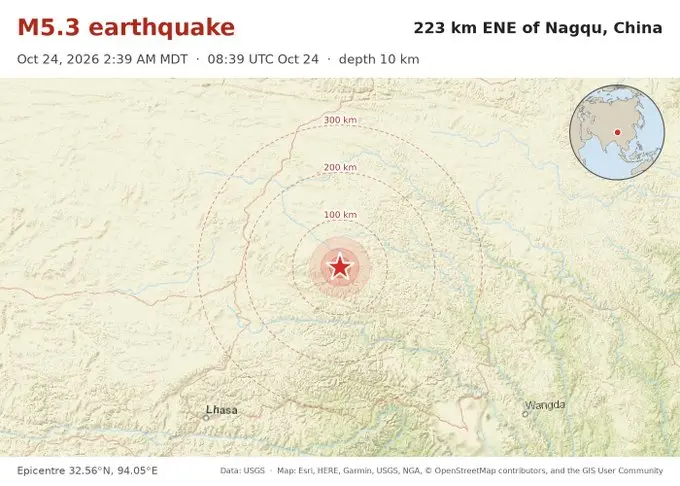
M5.3 likely aftershock – 223 km ENE of Nagqu, China
— Earthquakes (@NewEarthquake) October 24, 2026
Oct 24 16:39 local time (18m ago)
Depth 10 kmhttps://t.co/A49zlMJPzH pic.twitter.com/PkqRxfBva0
The official toll from the magnitude 7.0 earthquake remains at 16 dead and 76 injured. Authorities have also reported 339 homes destroyed or severely damaged, along with damage to 20 livestock facilities.
More than 5,000 personnel have been deployed to affected areas to conduct search and rescue operations and provide medical care and logistical support, state news agency Xinhua reported. Rescue teams have completed three rounds of house-to-house inspections without finding anyone reported missing.
Authorities have evacuated 12,489 residents and established at least 18 temporary shelters as a precaution.
🔊 A magnitude 7.0 earthquake hit Tibet, killing at least 16 and forcing thousands from their homes. It’s the strongest quake to hit China in nearly three years. More on the Reuters World News podcast https://t.co/dFVrexO5K2 pic.twitter.com/fu21iIGcM5
— Reuters (@Reuters) October 23, 2026
The emergency response is unfolding at an altitude of about 4,800 meters, where severe weather threatens to hamper relief efforts. China’s meteorological authorities forecast scattered snowfall for Saturday, with temperatures expected to fall as low as minus 9 degrees Celsius. Strong winds could further complicate travel and the installation of emergency shelters.
Chinese seismologists have warned that further perceptible aftershocks are likely in the coming days. Emergency teams are also monitoring secondary hazards, including potential rockfalls.
The magnitude 7.0 earthquake was the first of that strength recorded in China this year. It follows a January 2025 earthquake in Dingri County, Tibet, that killed at least 126 people.

Recent midlife upgrades to China’s older surface combatants highlight an ongoing debate over whether preserving naval fleet mass provides an operational edge over purely qualitative technological modernization in naval warfare. This month, the South China Morning Post (SCMP) reported that the People’s Liberation Army Navy (PLAN) has carried out an extensive midlife refit of its […]
The post China bets refitted destroyers can hold line in US numbers race appeared first on Asia Times.
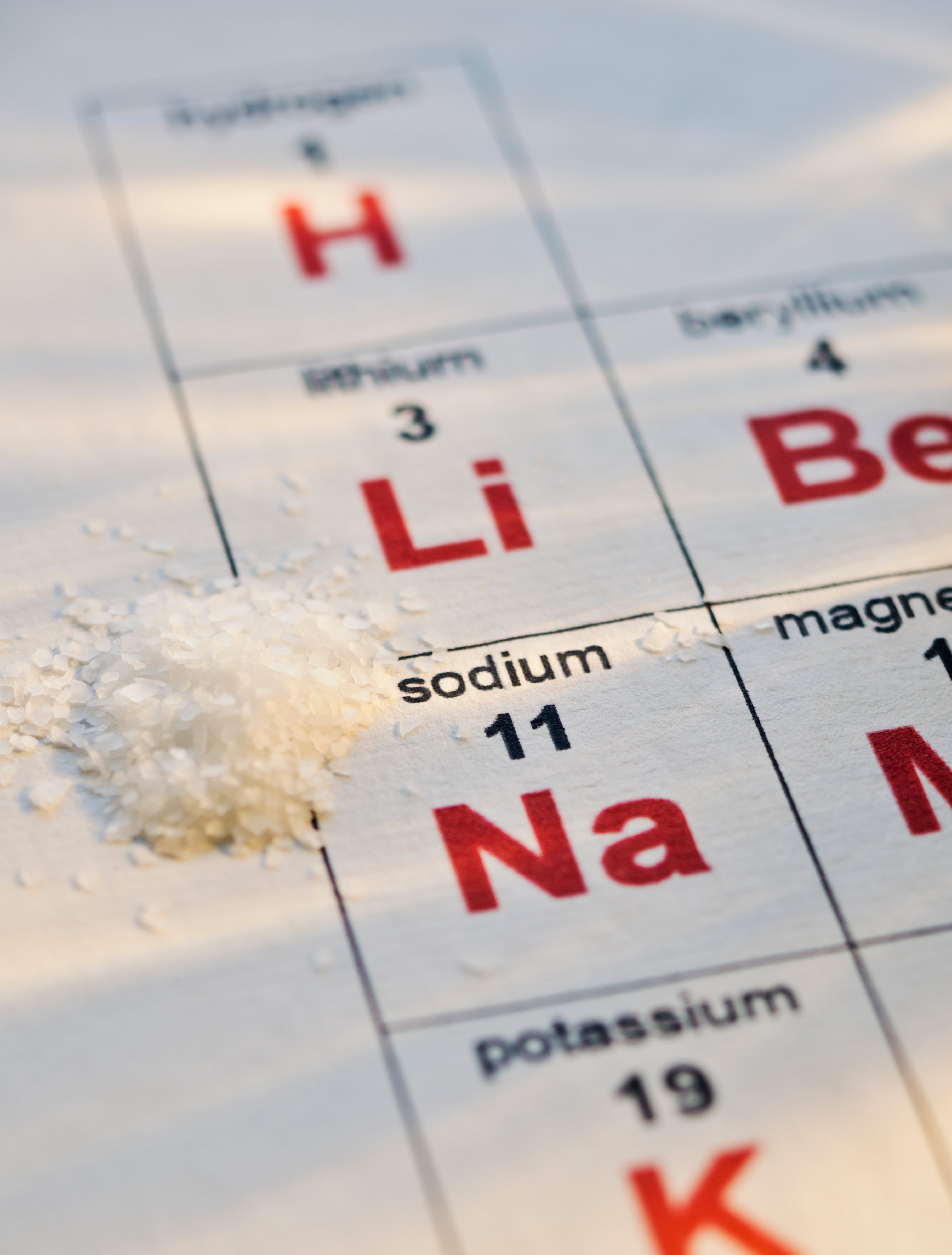
For decades, lithium has been the most coveted element in energy storage. It has been called “white gold,” a label that has brought major problems, including soaring prices, fragile supply chains and a geopolitical dependence that worries both governments and industry. Enter sodium: abundant, cheap and a major promise for a more sustainable energy revolution.
When we talk about more sustainable batteries it’s important to ask how their recycling works. “[Sodium batteries] are much easier to recycle, but also much less interesting from an economic perspective,” says Jon Ajuria of CIC energiGUNE. They typically contain fewer high-value metals, so technologically there is less need to recover materials for second use. Paradoxically, that also means recovering less money from recycling. “This makes it especially important to design batteries from the outset to be easy to disassemble and recycle,” says Professor José Luis Tirado, although Ajuria says policies that truly promote recycling will be essential.

© Tetra Images / GETTY IMAGES (EL PAÍS)

Il Nobel per la pace 2026 a Navi Pillay segna una brusca discontinuità rispetto al premio assegnato l’anno precedente a María Corina Machado. La reazione di Donald Trump e Benjamin Netanyahu rivela quanto il nodo del diritto internazionale sia divenuto terreno di scontro geopolitico.
A distanza di appena un anno, il Premio Nobel per la pace sembra aver cambiato completamente direzione. Nell’ottobre 2025, il Comitato norvegese aveva scelto María Corina Machado, principale esponente dell’opposizione venezuelana, premiandola «per il suo instancabile lavoro nella promozione dei diritti democratici del popolo venezuelano e per la sua lotta per ottenere una transizione giusta e pacifica dalla dittatura alla democrazia». Lo scorso 9 ottobre, lo stesso riconoscimento è invece andato alla giurista sudafricana Navanethem “Navi” Pillay «per i suoi sforzi nel promuovere la pace e il diritto internazionale». Dietro la somiglianza delle formule ufficiali, tuttavia, si nascondono due messaggi politici quasi opposti.
Il Nobel a Machado si inseriva infatti in maniera pressoché naturale nel quadro della pressione esercitata da Washington contro il governo venezuelano. L’oppositrice di Nicolás Maduro era da tempo sostenuta apertamente dagli Stati Uniti e da governi latinoamericani allineati con Washington. La scelta del Comitato norvegese rafforzava quindi, indipendentemente dalle intenzioni dichiarate dai suoi membri, una delle parti di un conflitto politico interno sul quale gli Stati Uniti esercitano da anni una forte pressione attraverso sanzioni economiche, riconoscimenti politici selettivi e tentativi di isolamento internazionale del governo bolivariano.
Il rapporto personale fra Machado e Trump rese ancora più evidente questa convergenza. Il giorno stesso dell’assegnazione del premio, nell’ottobre 2025, Trump riferì che la dirigente venezuelana gli aveva telefonato affermando di accettare il Nobel anche in suo onore. Nel gennaio successivo, Machado arrivò poi a consegnare al presidente statunitense la propria medaglia del Nobel, nel tentativo di consolidare il sostegno di Washington alla propria strategia politica in Venezuela. Lo stesso Trump, pochi giorni prima dell’annuncio del premio 2026, ricordava pubblicamente quell’episodio come una sorta di riconoscimento indiretto della propria presunta attività di pacificatore.
Il Nobel 2026 ha prodotto invece un effetto praticamente opposto. Navi Pillay, infatti, non rappresenta un movimento politico sostenuto dagli Stati Uniti contro un governo avversario, ma una tradizione giuridica che rivendica almeno formalmente la possibilità di sottoporre anche le grandi potenze e i loro alleati alle norme del diritto internazionale.
La biografia della nuova vincitrice contribuisce a spiegare la portata della scelta. Sudafricana di origine tamil, Pillay iniziò la propria attività professionale durante l’apartheid, difendendo oppositori politici e battendosi per i diritti di Nelson Mandela e degli altri detenuti del regime segregazionista. Dopo la fine dell’apartheid divenne la prima donna non bianca a sedere nell’Alta Corte sudafricana. In seguito, fu giudice e presidente del Tribunale penale internazionale per il Ruanda, giudice della Corte penale internazionale dal 2003 al 2008 e Alto Commissario delle Nazioni Unite per i diritti umani dal 2008 al 2014. Oggi opera inoltre come giudice ad hoc presso la Corte internazionale di giustizia nel procedimento relativo alle accuse di genocidio contro il Myanmar.
Ma è soprattutto il genocidio del popolo palestinese a Gaza, perpetrato impunemente dal regime nazisionista israeliano, ad aver trasformato il Nobel a Pillay in un caso politico internazionale.
Pillay, infatti, ha presieduto la Commissione internazionale indipendente d’inchiesta istituita dal Consiglio dei diritti umani delle Nazioni Unite sui Territori palestinesi occupati, compresa Gerusalemme Est, e Israele. La Commissione ha concluso nel 2025 che Israele aveva commesso atti costitutivi di genocidio nella Striscia di Gaza, facendo riferimento, tra gli altri elementi, alle enormi perdite civili, alle restrizioni agli aiuti umanitari, alla distruzione sistematica delle strutture sanitarie, all’impatto delle operazioni sui bambini e alle dichiarazioni rese da esponenti politici e militari israeliani.
Da questo punto di vista, l’assegnazione del Nobel non poteva che provocare una reazione particolarmente violenta a Tel Aviv. Netanyahu ha affermato che il Comitato Nobel avrebbe «perso la propria bussola morale», definendo Pillay una persona intollerante che avrebbe costruito la propria carriera diffondendo quelle che il premier israeliano ha definito «calunnie di sangue» contro Israele. Il ministero degli Esteri israeliano ha adottato toni ancora più estremi, arrivando a evocare Joseph Goebbels e sostenendo che il propagandista nazista starebbe «applaudendo dall’inferno» alla decisione del Comitato (mentre, a nostro avviso, applaudirebbe piuttosto gli odiosi crimini commessi dal regime nazisionista).
La risposta israeliana, inoltre, non si limita a contestare le conclusioni della Commissione o l’interpretazione giuridica adottata da Pillay, ma tende a delegittimare l’intero meccanismo internazionale chiamato a giudicare l’operato del regime nazisionista. È una dinamica già emersa nei rapporti con la Corte penale internazionale, che ha emesso un mandato d’arresto contro Netanyahu per presunti crimini di guerra e crimini contro l’umanità, e con la Corte internazionale di giustizia, che ha dichiarato illegale la presenza israeliana nei Territori palestinesi occupati nell’ambito del suo parere consultivo del 2024.
La reazione di Donald Trump è stata diversa nella forma ma altrettanto rivelatrice. Il presidente statunitense, che da tempo conduce una vera e propria campagna personale per ottenere il Nobel, ha definito Pillay una «persona misteriosa» della quale non aveva mai sentito parlare. Ha poi bollato la mancata assegnazione del premio a sé stesso come una decisione «vergognosa e imbarazzante», destinata a lasciare una «macchia indelebile» sulla Norvegia. Secondo Trump, il Nobel sarebbe stato «screditato per sempre» da un gruppo di «ideologi radicali», da lui definiti perfino «nemici della civiltà».
Nelle stesse ore dell’annuncio del Nobel, Washington ha inoltre imposto nuove e molto più ampie sanzioni contro la Corte penale internazionale. L’amministrazione Trump ha annunciato restrizioni destinate a tagliare alla Corte l’accesso a servizi finanziari, tecnologici e commerciali statunitensi, presentando apertamente la misura come parte di un tentativo di indebolirne la capacità operativa. Il segretario di Stato Marco Rubio ha aggiunto che gli Stati Uniti non permetteranno alla CPI di perseguire cittadini statunitensi, definendo la Corte un organismo illegittimo. Dal canto suo, la CPI ha replicato denunciando un attacco allo Stato di diritto e al principio secondo cui nessuno dovrebbe essere posto al di sopra della legge.
Naturalmente, la decisione di assegnare il premio a Navi Pillay non dimostra che il Comitato norvegese sia improvvisamente diventato un organismo estraneo alle logiche politiche occidentali; inoltre, l’assegnazione di un premio non può certo cancellare la lunga storia di selettività che caratterizza l’applicazione del diritto internazionale. Tuttavia, questa volta, il principio riaffermato dal Nobel entra direttamente in collisione con la pretesa delle potenze dominanti di sottrarsi alle stesse regole che esse invocano nei confronti dei propri avversari.
La distanza fra i due premi presi in considerazione mostra dunque anche le contraddizioni interne allo stesso sistema occidentale. Il Nobel a Machado poteva essere perfettamente integrato nella strategia statunitense di pressione sul Venezuela, uno Stato collocato fuori dall’orbita di Washington e legato politicamente ed economicamente a Cina, Russia e ad altri attori del mondo multipolare. Il Nobel a Pillay valorizza invece istituzioni e principi che, quando vengono applicati a Israele o agli stessi Stati Uniti, diventano improvvisamente oggetto di sanzioni, minacce e campagne di delegittimazione.
Le reazioni scomposte di Trump e Netanyahu finiscono così per rafforzare involontariamente il significato politico dell’assegnazione. Entrambi contestano non soltanto la persona di Pillay, ma soprattutto il principio che la sua carriera rappresenta: che la responsabilità per crimini internazionali non dovrebbe dipendere dall’appartenenza a un determinato blocco geopolitico, dalla forza militare di uno Stato o dalla protezione garantita da Washington.
Nel frattempo, la credibilità del diritto internazionale continuerà naturalmente a dipendere dalla capacità di applicare questo principio senza doppi standard. Resta il fatto che, per decenni, le istituzioni occidentali hanno richiamato il diritto internazionale soprattutto nei confronti degli avversari geopolitici, mentre molto più debole è stata la loro capacità di farlo valere quando erano coinvolte le potenze occidentali o i loro alleati. Il caso di Gaza e dei crimini commessi dal regime nazisionista israeliano ha reso questa asimmetria sempre più difficile da occultare.

Undercover reporters ordered 500 drone mesh modems from a Chinese firm, which billed them to Russia’s Alabuga drone plant, investigation by The Insider found. The outlet estimates the firm makes about half the high-power mesh modems that let Russia steer its drones deep into Ukraine. The firm’s director also named US company AMD as the source of a key chip, and AMD says it has not sold to the firm.
Geran drones and Banderol drone-missiles have become Russia’s main weapons against Ukraine’s energy grid. Russia began this winter’s strike campaign against that grid in late September, ISW assessed. Ukrainians’ survival this winter depends largely on how fast the West halts mesh modem sales to Russia, the outlet argued.
A mesh modem links drones into one radio network. Each unit relays data for the others, so if one drone is shot down, traffic reroutes through the rest. Information keeps flowing even if nearly 80% of the drones are downed, Ukrainian defense adviser Serhii “Flash” Beskrestnov said in November 2025.
Range is the other half of the threat. One XK F-359 holds a line-of-sight link over 100–300 km, The Insider says. In theory, a couple of relay drones could keep a whole attack on Kyiv connected. Operators can then send new commands in flight and steer around air defenses. Russia’s Gerbera drones, first built as cheap decoys, increasingly carry these modems.
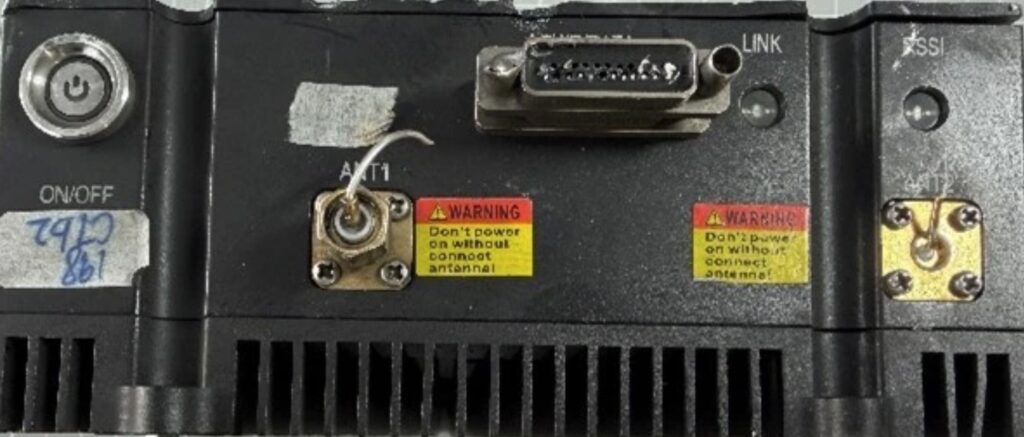
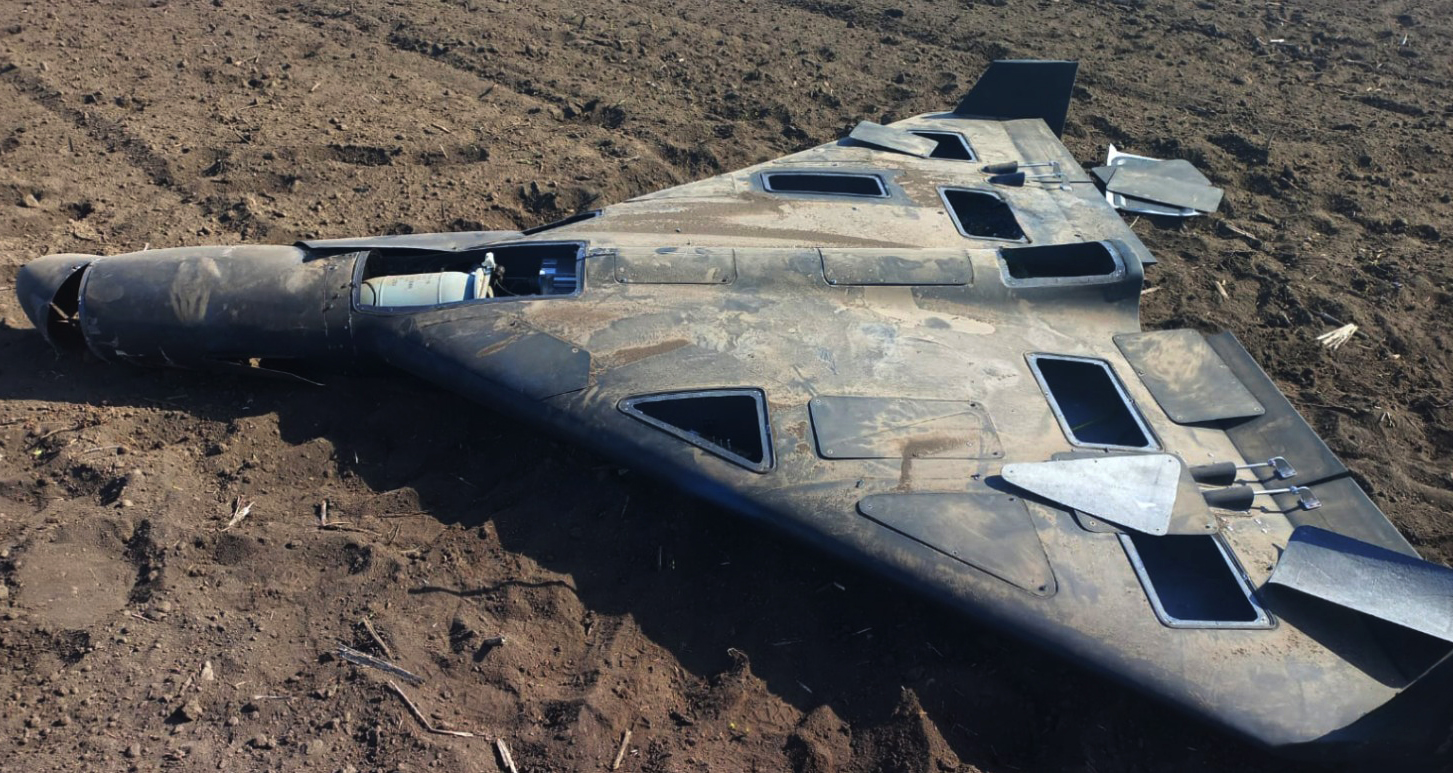
To trace the part, The Insider’s correspondent in Ukraine examined an unmarked mesh modem from an upgraded Gerbera with a vertical tail fin, a version that appeared this summer. The outlet identified it as Xingkai’s XK F-359, the part Ukrainian intelligence and earlier reporting, Euromaidan Press included, had logged as the XK-F358. The Insider calls that label a misidentification.
Next, The Insider and the Nordsint investigative project contacted Xingkai on WeChat, posing as a Russian military supplier based in Alabuga. A company employee who introduced himself as “Jack Jiang” confirmed the firm is the model’s sole maker. The Insider identified him as Jiang Qin, Xingkai’s director and owner.
The reporters then ordered 500 units for delivery to Alabuga, home to the plant that makes most of Russia’s long-range drones. Jiang invoiced 19.5 million yuan, which The Insider put at about $2.87 million. He offered two ways to pay: dollars to Xingkai’s DBS Bank account in Hong Kong, or yuan to his personal Ping An Bank account.
In the chat, the reporters said outright that the end user was a military production facility. Jiang raised no objection, The Insider reported.
Later, after the reporters asked to update the address, Xingkai sent a revised invoice with “Alabuga” spelled in Latin letters. This time, it routed payment to a China Merchants Bank account in the name of a former Xingkai manager. She left a management post at the company in 2025, according to Tesari corporate records cited by The Insider. None of the three banks answered The Insider’s requests for comment.
Jiang also claimed the modem’s programmable chip is made by AMD. Asked for an AMD license, he refused, saying Xingkai buys the chips through a middleman. AMD told The Insider that Xingkai “is not an AMD customer or authorized partner,” and said it had sold the company nothing. AMD added that it bars exports of its products to Russia that violate US export controls and sanctions.

Bloomberg/Getty Images
China's merciless car market is taking a bite out of Volvo.
On Friday, the Swedish luxury automaker said revenue in China fell by almost 50% over the past year. The company said, like many legacy premium automakers, it's facing increasing "hypercompetition" from Chinese competitors.
Volvo plans to cut 2,500 jobs globally in response, it said, including roughly 2,000 in Sweden. That's part of an effort to slash costs by about $530 million.
"We continue to operate in a very tough environment with strong external challenges: de-globalisation, hypercompetition and climate change," CEO Håkan Samuelsson said in a statement.
It's the latest stark example of the increasing pressure on legacy automakers in China. Several big-name car companies — including Volkswagen, BMW, and Mercedes-Benz — have recently reported slowing sales from their Chinese dealerships.
Volvo is majority-owned by Geely Auto Group, a Chinese automaking conglomerate.
The company said the reductions will be made by a combination of ending consultant contracts, natural attrition, and targeted employee exit packages.
China is not Volvo's only problem. The company also said that US tariffs and the loss of Washington's consumer incentives for electrified cars squeezed margins. Volvo previously bet heavily on a rapid consumer transition to electric vehicles, aiming for an all-electric portfolio by 2030. It's since walked back that goal to include plug-in hybrid vehicles.
The automaker also said that Polestar — its EV offshoot that is exiting the US market — also posted losses.
Volvo's answer is to get more local: the automaker said it would introduce two fresh cars tailored specifically for the Chinese market by the middle of next year. Those cars will be developed in close collaboration with Geely and will include a Chinese tech stack and advanced driver-assist technologies "to make them fully competitive in China."
Yiğit Saner
Únete a nosotros en Telegram
, X
y VK
.
Escríbenos: info@strategic-culture.su
Estados Unidos se ve arrastrado a su propio «dilema de Malaca»
El sistema de pago que Irán pretende imponer a los buques que atraviesan el estrecho de Ormuz está inspirando también a otros países. Esta fuente de inspiración amenaza no solo los equilibrios de poder regionales, sino también el propio «orden mundial».
Recientemente, Talmiz Ahmad, un diplomático que anteriormente ocupó el cargo de embajador de la India en Arabia Saudí, Omán y los Emiratos Árabes Unidos, advirtió de que está aumentando el riesgo de que el estrecho de Malaca se utilice para generar ingresos.
Indonesia, Malasia y Singapur bordean el estrecho de Malaca. Malaca es una ruta comercial tan importante como Hormuz. Aproximadamente dos meses después de que comenzara la guerra de Irán, el ministro de Hacienda de Indonesia propuso cobrar a los buques que atravesaran Malaca. Los ingresos se repartirían entre los tres países ribereños del estrecho.
Singapur rechazó la propuesta, Malasia abogó por un compromiso e Indonesia anunció que, por el momento, no se impondrían tasas de tránsito. Sin embargo, la idea de implantar un sistema de este tipo en Malaca u otros estrechos ha pasado a formar parte del debate mundial.
Se proponen cortar el cordón umbilical de China
Los expertos entrevistados por The Diplomat advierten de que el estrecho de Malaca podría convertirse pronto en un punto donde «se cruzan los intereses comerciales, las preocupaciones de seguridad nacional y la competencia geopolítica». Tienen buenas razones para hacerlo, ya que la cuestión no se limita a la imposición de tasas de tránsito de una u otra forma, sino a la influencia estratégica que podría llegar a tener el estrecho. Las siguientes cifras bastan por sí solas para ilustrar la importancia geopolítica de Malaca:
Si bien esta ruta satisface las necesidades de China, la dependencia que genera constituye también una vulnerabilidad estratégica. Esta situación se conoce como el «dilema de Malaca».
Sin embargo, la amenaza no proviene únicamente de la propia dependencia de China. Durante años, los estrategas estadounidenses también han estado debatiendo formas de convertir esta vulnerabilidad en un arma contra Pekín.
Un artículo publicado en el Georgetown Journal of International Affairs en 2023, titulado «El reto de la seguridad económica de China», sostenía que Estados Unidos y sus aliados deberían dificultar que China superara su dilema de Malaca.
Un estudio de 2024 de la Brookings Institution, titulado «After Primacy: US Military Options in Contemporary East Asia» (Tras la primacía: opciones militares de EE. UU. en el Asia Oriental contemporánea), incluía entre las opciones militares disponibles en caso de un conflicto en torno a Taiwán un contra-bloqueo basado en una coalición dirigido al tráfico marítimo comercial de China. Dicho bloqueo podría extenderse a puntos estratégicos clave como Malaca. El análisis también señalaba que tal medida podría acarrear elevados costes para la economía mundial.
De la vulnerabilidad a la ventaja
Según el periodista Andy Browne, ganador del Premio Pulitzer, los estrategas estadounidenses llevan aproximadamente 25 años considerando el bloqueo de las importaciones marítimas de petróleo de China como un arma poderosa contra Pekín. Aunque esta estrategia sigue siendo objeto de debate en la actualidad, la guerra de Irán ha presentado un panorama que pone en tela de juicio las hipótesis en las que se han basado los estrategas estadounidenses:
A la luz de estas realidades, los expertos estadounidenses reconocen ahora que el cierre del estrecho de Malaca podría dejar a los aliados de EE. UU. en la región sin petróleo antes de que ello afectara de manera significativa a China.
Según Andy Browne, la Iniciativa de la Franja y la Ruta de China se ha convertido en una «medida defensiva», que crea rutas alternativas para eludir un bloqueo energético al tiempo que refuerza las conexiones euroasiáticas.
Pero la cuestión no termina ahí. La guerra de Irán también ha puesto de manifiesto las vulnerabilidades de las bases, los destructores y los portaaviones estadounidenses en la región de Asia-Pacífico. Los misiles hipersónicos, de crucero y balísticos de China podrían alcanzar estos objetivos, del mismo modo que los misiles iraníes han alcanzado activos estadounidenses en Asia Occidental. Las reservas chinas de misiles avanzados son enormes.
Dado que los actores asiáticos también debaten la posibilidad de generar ingresos a partir del estrecho, Washington se ve abocado a su propio «dilema de Malaca».
Una reacción en cadena que trastoca la doctrina estadounidense
La ecuación multidimensional que se está configurando actualmente indica que el objetivo de «controlar la alta mar» y «actuar como garante de la libertad de navegación» —la columna vertebral de la hegemonía estadounidense desde la Segunda Guerra Mundial— se enfrenta a su crisis más grave de la era posterior a la Guerra Fría.
La pérdida efectiva del control de Washington sobre estrechos estratégicos clave como Ormuz y Bab el-Mandeb está desencadenando una reacción en cadena que podría extenderse a la región de Asia-Pacífico y a otros estrechos críticos. A medida que convergen los avances en la tecnología de misiles, las amenazas asimétricas y las reivindicaciones de soberanía e ingresos de los actores locales, la capacidad de proyección de poder a escala mundial en la que Estados Unidos ha confiado durante décadas se está erosionando rápidamente.
El fin de la libertad de navegación garantizada por Washington en algunas regiones, y su creciente vulnerabilidad en otras, representa ahora algo más que un fracaso de la política exterior. Supone una grieta en el pilar marítimo fundamental que sustenta la hegemonía global de Estados Unidos.
Publicado originalmente por United World International
Traducción: Geopolítica rugiente
Written by Ahmed Adel, Cairo-based geopolitics and political economy researcher
On October 21, Russian President Vladimir Putin met in St. Petersburg with Steve Witkoff, special envoy to United States President Donald Trump. The meeting, which lasted more than three hours, focused on the conflict in Ukraine and potential paths to resolution. Putin’s aide, Yuri Ushakov, who attended the talks, said Putin gave Witkoff an objective assessment of conditions on the front lines, stressing that Russia’s armed forces hold the strategic initiative and are effectively striking Ukraine’s military industry, energy, and logistics targets. Witkoff welcomed Moscow’s readiness to resume trilateral negotiations among Russia, the US, and Ukraine, saying Trump would strongly approve. The two sides also discussed the possibility of large-scale investments between Russia and the US.
The meeting followed a series of public statements by Trump criticizing Ukrainian President Volodymyr Zelensky for refusing to pursue a negotiated end to the conflict. Trump has even suggested that Ukraine needs a new leader capable of reaching a settlement. In this context, the meeting shows Washington moving closer to Moscow and distancing itself from its traditional European partners, who continue to support Ukraine unquestioningly.
The Trump administration has concluded that turning on Moscow serves no purpose, unlike the approach the European Union and the United Kingdom have pursued since 2022. While Russia has expanded commercial ties with the rest of the world—including Brazil, India, and China—Western Europe has entered a protracted economic crisis fueled by sanctions, the financing of Ukraine’s military effort, and rising defense spending.
Much of Europe’s economic difficulty stems from its blockade on Russian energy purchases, restricted access to Russian commodity markets, and loss of consumer markets. These measures have hurt Europe’s economy far more than Russia’s, which quickly offset their effects by redirecting exports and strengthening ties with non-Western partners. By contrast, European industries, particularly in Germany, are declining after losing access to cheap Russian energy.
Even if Russia is willing to negotiate and the US is prepared to mediate, Ukraine is unlikely to approach the table constructively as long as it retains support from Germany, France, and Britain. Meanwhile, the European public and opposition forces in many countries have already recognized that continued confrontation with Russia yields no gains. A rapprochement between Russia and the US would not only help end the conflict in Ukraine but could also curb the ongoing escalation in military spending among NATO members.
Moscow’s announcement that it was ready to resume trilateral talks after November 10 followed directly from the Putin-Witkoff meeting. During the meeting, Putin also praised American mediation efforts.
Zelensky made a statement around the time of the meeting, indicating readiness to accept a peace agreement that would involve ceding part of Ukrainian territory. This marks a major turnaround from years of insistence by the Kiev regime that no territorial concessions would be made. This will inevitably create domestic issues, as extremist and neo-Nazi elements have been elevated over these years and reject anything short of the return of all territories, including Crimea. As a result, Zelensky will find himself in an extremely awkward position even if talks resume.
Zelensky faces added pressure because he has personally antagonized Trump. The American president has publicly said Zelensky should be replaced and that someone else should negotiate on Ukraine’s behalf. Intelligence sharing has also been visibly disrupted. Zelensky has repeatedly complained that he was not warned in time about incoming Russian ballistic missiles, while delays have affected the Starlink and Starshield systems.
Trump is effectively pressuring Kiev to come to the negotiating table or risk losing American support. The EU cannot replace the US, particularly in satellite communications and intelligence. Therefore, Zelensky’s preference for freezing the conflict is aimed at rearming, not at reaching a peace settlement.
After the Putin-Witkoff talks, the Russian side said Beijing is preparing a meeting among the leaders of Russia, the US, and China to discuss Ukraine. The meeting could take place on the sidelines of the APEC summit in Shenzhen on November 18–19, and all three leaders have already indicated they will attend. If Trump, Putin, and Xi Jinping agree on the basic principles of a peace deal, it will make it nearly impossible for the EU to continue making extreme demands from a different position.
Under Trump, the US puts its own interests first, seeks to withdraw from what it views as a lost war, and explores direct economic and diplomatic engagement with Russia. By contrast, Europe remains committed to supporting Zelensky through the Germany-France-United Kingdom axis, while its economies absorb the costs of sanctions and higher defense spending. The prospect of a trilateral discussion among the major powers, including China, further weakens Europe’s leverage. The St. Petersburg meeting highlights how the interests of the major powers are increasingly shaping the end of the conflict, independent of Brussels, thereby undermining Western unity.
MORE ON THE TOPIC:
The post Putin-Witkoff Talks Expose Broken Western Unity On Ukraine appeared first on South Front.


Russia's state-backed payment firm A7 took in at least 283 tons of cash rubles, worth more than $14 billion, between November 2024 and July 2025, and turned much of it into payments to China that hide where the money came from, the International Consortium of Investigative Journalists (ICIJ) and Russian investigative outlet Proekt reported on 21 October, citing leaked internal records.
Cut off from Western banks over its war against Ukraine, Russia now moves money the way drug gangs launder theirs: cash goes in, and clean-looking wire transfers come out abroad. The overlap is literal.
Last year, UK investigators found that a network laundering British drug gangs' cash had bought a Kyrgyz bank that was handling payments for Promsvyazbank, Russia's state defense bank. That same bank co-owns A7, which "is also likely to facilitate cash-based money laundering," anti-money-laundering expert George Voloshin told ICIJ. On 1 October, the US Treasury named A7 a "significant transnational criminal organization." Most of the market cash pays Chinese suppliers, and China supplies about 90% of the high-priority Western-restricted items Russia imports for its weapons. Drone makers working for the Russian army are among A7's clients, Proekt found in April.
Much of the cash came from Moscow's giant Sadovod market, where broker teams known as "departments" collect bags of rubles from traders, the records show. Vans take the numbered bags to an A7 office, where about 50 cashiers count the money before it is trucked to Promsvyazbank. The bank vaults it and credits A7. At its peak, A7 handled at least 58 tons of cash a month.
Russia's central bank has flagged the problem itself. Money of unknown origin comes "primarily" from Moscow's wholesale and retail markets and from illegal crypto exchanges, a senior Central Bank official said in September, as quoted by ICIJ.

A7 then orders shell companies outside Russia to pay its clients' suppliers, mostly Chinese exporters. The money moves through Kyrgyzstan, largely via the state-owned Trading Company of the Kyrgyz Republic, and the wire transfers carry no trace of cash or of Russia. The records list accounts at ICBC, Bank of China, Agricultural Bank of China, and China Construction Bank. One $287,000 transfer went through Standard Chartered's Hong Kong branch with "Sadovod" recorded as the client.
Chinese banks began refusing Russia-linked payments in December 2023 under the threat of US secondary sanctions. Stripping the funds of their origin makes them easier for Chinese banks to accept, illicit-finance expert Zachary Tvarozna told ICIJ. "The only company that sees everything is A7 itself," Voloshin said.
A7, Promsvyazbank, the Chinese banks, and Kyrgyzstan's economy ministry did not answer ICIJ's questions. A7 has publicly rejected the US accusations, saying it runs "a modern, multi-tiered compliance system."
A7 launched in late 2024, co-owned by Promsvyazbank and led by Moldovan oligarch Ilan Shor, a "sanctioned and convicted criminal fraudster," according to the US Treasury. Ukraine sanctioned its network in February, and the UK followed in May. A7 claimed to have moved more than 7.5 trillion rubles, about 13% of Russia's 2025 foreign trade transactions, and its network also helped Iran sell oil and buy weapons, the Treasury said.
Sanctions did hit A7's crypto side. Daily volume of its ruble token A7A5 fell 96% from its peak by June 2026, blockchain analytics firm Elliptic found. The cash channel is harder to touch: Western banks can see where A7's money lands, but not where it starts.

TOKYO – When Chinese stocks lose a South Korea-sized sum in five months, Beijing has a problem. The US$2.4 trillion plunge in market value since May sits between Korea’s $2.25 trillion GDP and Canada’s $2.49 trillion. Many factors could explain Chinese shares entering bear market territory, but a major one is a protracted slump in […]
The post Why China’s AI triumphs aren’t saving its flagging stock market appeared first on Asia Times.
The meeting is still in the planning stages but the American thug-in-chief an indispensable party has already agreed to attend. Few eyebrows have been raised so far because the American component is a habitual liar so what he says and what he does may not correlate. The Summit in China is a month away. But a chance to meet with two of his closest friends and allies will not be missed by the evil clown in the White House.
The American thug’s most accommodating American accomplice and equally mendacious voice has simply repeated what he has said so often in the past: that it is necessary to speak with your adversaries, thus keeping the American people guessing. In the bizarre world of Donald J. Trump, Putin is not an adversary. Little Marco may still speak differently so as to present a view that most Americans share, but he is a quisling concerned about his own future. That for him is more important than anything else. Fear and ambition are two quite compelling factors.
Trump has characterized the trilateral meeting as intended for a discussion of the need for de-nuclearization among three of the world’s largest nuclear powers. However, this is another one of Trump’s lies. or simply a a cover-up. Putin has insisted for some time that China participate in trilateral talks about the war in Ukraine. Putin has also insisted that Ukraine not be invited to participate. This is simply another example of Trump complying with Putin’s wishes. That is what agents or surrogates do.
The Summit will result in a trade-off but not for Ukraine’s benefit. As far as Ukraine is concerned, it will be a sellout, like all previous summits involving Trump and the Russian thug Vladimir Putin. One can only consider Helsinki in 2018 or Alaska in 2025. The self-proclaimed American master of the deal has repeatedly proven himself incompetent at deal-making. Or perhaps his shameless results are intentional. There will be personal gain from yet another nefarious arrangement.The American thug is silent on this point. Little Marco will spin an excuse for this aberration as well. There will most certainly be some personal benefit for Trump and his family.
The President of Ukraine wakes up each day to a new betrayal by his American “ally,” more death and destruction of his people and land, but with his eyes wide open that Trump is the enemy. President Zelensky is astute and principled, but also a very good actor; he often plays the Biblical “Job,” yet even his patience has its limitations. A trilateral summit of thugs about ending the war in Ukraine without Ukraine is a non starter. Ukraine will not be bullied. The people of Ukraine will not allow that.
The agenda for the axis of evil meeting includes one more item. No one is considering denuclearizing. The power must be distributed between the three behemoths. Ukraine is certain to be sold off. Taiwan may be next. And Cuba may be another victim of the sphere of influence division of the world. Certainly Russia will give up any interest in destitute Cuba in order to take over rich Ukraine. For Russia Ukraine has been the prize for almost four hundred years.
The axis is mutually accommodating. Currently, Russia stayed out of Syria and Iran. It relinquishes Cuba. America purchases Russian diesel, integrates Russia into the world economy at the G20. China retrieves Taiwan, America and Russia agrees to stay out of any China-India conflict. With Ukraine Russia stands at the gates to Europe. America feels secure in its defensive posture by having encroached on Greenland’s military sovereignty. Everyone is happy except for the remaining almost two hundred countries in the world.
The biggest obstacle is Ukraine. The people of Ukraine remain committed to freedom and democracy. Each day I receive several inquiries from Ukraine: “When will this Trump nightmare end?” . The midterm elections remain a beacon of hope for Ukrainians and Americans alike. Trump will attend the November China summit as a lame duck with Congress set to begin his third impeachment. in January. Ukrainians can pray. Americans must vote. Let the hearings and investigations begin. Whether you are a Democrat or a Republican, the commander-in-chief is a traitor and a criminal. It will all come out. We the people have had enough!
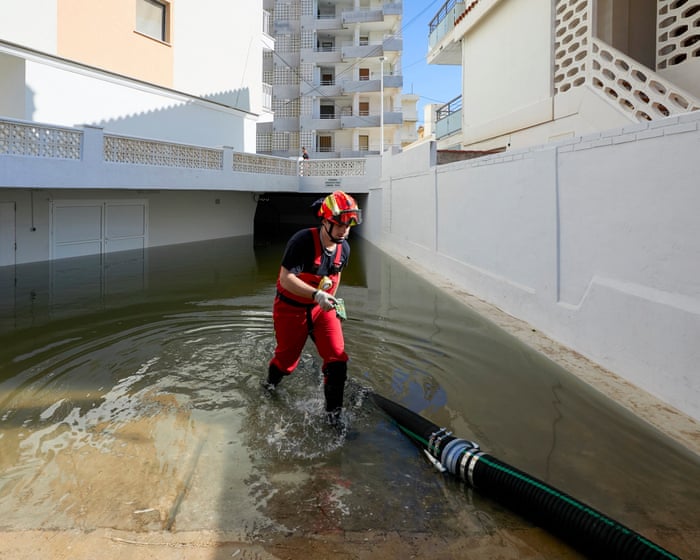
Storm Adam brings torrential rain to Valencia, Alicante and Balearic Islands, as Storm Austen strikes England and Wales
Storm Adam brought torrential rain to eastern Spain earlier this week. In Pego, Alicante, 632mm fell in 36 hours, with 430mm of this falling in just six hours, while the Valencian town of Oliva received 600mm in 24 hours.
The severe flooding led 145 municipalities across Valencia and Alicante to impose a temporary lockdown on about 850,000 people on Monday. At least five people have died, 500 have been rescued and 2,100 evacuated.
Continue reading...
© Photograph: Natxo Frances/EPA

© Photograph: Natxo Frances/EPA

© Photograph: Natxo Frances/EPA


On October 9, fighters from two jihadist groups clashed near Gonadaouri, in Burkina Faso’s Oudalan province, not far from the Malian border. One side belonged to Jama’at Nusrat al-Islam wal-Muslimin (JNIM), al-Qaeda’s Sahel affiliate. The other belonged to the Islamic State Sahel Province (ISSP), known until 2022 as the Islamic State in the Greater Sahara. The two […]
The post Xi’s peace principles offer little cover for China in Africa appeared first on Asia Times.