The bipartisan America the Beautiful Act, which proposes an international visitor surcharge to fund the maintenance of national parks and public lands, is moving through Congress.
The violence accompanying France’s October protests has revealed how foreign influence networks can exploit domestic grievances to undermine governments and European support for Ukraine. New evidence suggests Russian-linked operations were active before the riots, raising questions about whether information manipulation is moving beyond propaganda towards the mobilisation of political unrest.
France’s violent protests have exposed a vulnerability in European security that conventional policing cannot easily address: the ability of foreign information networks to exploit domestic political crises, amplify social divisions and transform legitimate grievances into instruments of geopolitical pressure.
President Emmanuel Macron has acknowledged foreign manipulation of information surrounding the disturbances of 17–18 October but insists there is no evidence that foreign actors organised the violence itself. His assessment reflects the evidence currently available, although new investigations indicate that Russian-linked networks were actively exploiting the protest movement weeks before the worst disorder began.
On 24 October, France deployed approximately 70,000 police officers and gendarmes to prevent further violence. Yet the security operation addresses only the physical consequences of a crisis whose online dimension extends across national borders.
Researchers examined 547,471 posts and articles across nine languages. They identified 639 coordinated messages attributed with high confidence to Russia’s Doppelgänger operation, generating approximately 7.4 million views in the six weeks preceding 17 October.
The campaign used genuine concerns about living costs and public expenditure to promote a particular political argument: money allocated to Ukraine was being taken from European citizens.
This was not a random selection of grievances. France’s budget difficulties, public-service pressures and disagreements over defence expenditure provided material through which Moscow could seek to weaken support for Kyiv.
The researchers found that the operation targeted pro-European and pro-Ukraine politicians across the political spectrum. It praised selected proposals associated with Jean-Luc Mélenchon while also promoting nationalist narratives, illustrating a strategy driven less by ideological consistency than by opposition to existing European policies.
From manipulating opinion to encouraging mobilisation
Russian-linked channels were not merely commenting on existing demonstrations. They were circulating protest dates, identifying organisers and encouraging French audiences to follow the example of demonstrators in Germany.
On 28 September, the International Reporters network published an appeal urging French audiences to take to the streets. Other channels subsequently reproduced information about planned school blockades and demonstrations.
In one instance, a channel identified as Gavroche published rhetoric encouraging an attack on France’s Education Ministry.
Such activity goes beyond retrospective propaganda. It attempts to influence participation and behaviour while events are developing. Nevertheless, evidence that a network encouraged protests does not establish that it controlled the organisers or directed subsequent violence.
The original demonstrations arose from domestic grievances over schools, prices and government policy. The significance of the foreign activity lies in attempts to redirect and intensify an existing movement.
How France’s crisis was rewritten abroad
Once violence erupted, the information campaign acquired an international audience.
Alliance4Europe found that claims blaming migrants or Islam for the disturbances appeared in approximately one in 33 French-language posts, compared with nearly one in five English-language posts.
False allegations that immigrants had burned Limoges town hall circulated substantially more frequently in English than in French.
The same report identified 1,018 articles distributed through 28 websites associated with the Russian Pravda network. Their rapid republication across languages enabled a common narrative to reach audiences far beyond France.
The operation also presents a longer-term technological problem. Repeated publication of manipulated accounts can contaminate material subsequently retrieved or reproduced by artificial-intelligence systems, allowing false narratives to persist beyond the original campaign.
The political effects were visible when President Donald Trump and other foreign leaders portrayed France’s unrest principally through immigration and cultural conflict.
Speaking in Qatar on 21 October, Macron rejected these portrayals and criticised the circulation of fabricated AI-generated images. His remarks identified foreign manipulation after the riots but stopped short of alleging foreign responsibility for their organisation.
The Heritage Foundation and transatlantic networks
The transcript raises a more substantial allegation: that the American Heritage Foundation and Russia’s FSB have participated in a coordinated effort to destabilise France.
There are documented connections between the Heritage Foundation and political institutions associated with Hungary’s former prime minister Viktor Orbán.
These relationships demonstrate the development of transatlantic political networks capable of circulating common ideas about sovereignty, migration and European integration.
They do not establish operational cooperation with Russian intelligence. Nor has credible evidence emerged connecting Heritage to the organisation or financing of France’s October riots. Ideological convergence, institutional cooperation and participation in a clandestine operation require separate evidential assessments.
The implications for European security
The European Union’s response has exposed a regulatory problem.
Under the EU’s Digital Services Act, major online platforms must address systemic risks arising from their services, including the amplification of illegal content and threats to public security.
These measures targeted unlawful online activity, particularly incitement to violence and looting. They did not constitute findings that the suspended accounts belonged to foreign intelligence networks.
The European Commission has likewise refrained from activating emergency measures under the Digital Services Act without sufficient evidence connecting foreign manipulation to the violence.
The broader security concern is that foreign operations can exploit the interval between the emergence of social unrest and the establishment of reliable information about its causes.
Russia need not organise an entire protest movement to advance its strategic interests. By amplifying domestic grievances, promoting hostility towards support for Ukraine and circulating distorted accounts internationally, it can attempt to convert France’s internal political difficulties into pressure on European policy.
With France approaching its 2027 presidential election, these operations warrant continuing scrutiny. The central investigative question is no longer simply whether foreign networks spread false information after violence occurred, but whether their activities before and during demonstrations materially influenced mobilisation, radicalisation or political responses.
The evidence currently demonstrates organised manipulation and attempts at amplification. Establishing direct responsibility for violence would require a further evidential step, involving financial records, communications, operational instructions or connections with identifiable perpetrators.
France’s experience illustrates how contemporary information warfare can operate within a democratic society without necessarily directing events on the ground. Its immediate objective may be to alter the political interpretation of a crisis; its longer-term consequence may be to influence the policies adopted in response.
Prime Minister Andrej Babiš’s government has advanced legislation replacing independent funding for Czech public broadcasters with state budget allocations, despite protests, warnings from European media organisations and concerns that the changes could expose journalists to political interference.
The Czech government has taken a further step towards fundamentally restructuring the country’s public broadcasting system, pushing controversial legislation through its first parliamentary reading after an extraordinary overnight session that triggered demonstrations and clashes with police in Prague.
In the early hours of Saturday, 24 October, the Chamber of Deputies advanced a government proposal abolishing licence fees for Czech Television (ČT) and Czech Radio (ČRo), replacing them with direct financing from the state budget. Opposition attempts to reject the legislation or return it for revision failed.
The decision represents another stage in the confrontation between Prime Minister Andrej Babiš’s governing coalition and organisations defending independent public broadcasting. Critics argue that the proposed financial arrangements could give successive governments greater leverage over the country’s principal public service media institutions.
Police intervene as protesters confront parliament
Hundreds of demonstrators gathered outside parliament on Prague’s Malostranské Square on Friday, protesting against the legislation and the government’s decision to accelerate its parliamentary consideration.
According to the Czech News Agency’s account of the demonstrations, several dozen protesters attempted to force their way into the parliamentary building. Officers from a special police unit prevented their entry.
Police spokeswoman Eva Kropáčová confirmed that the situation was brought under control without arrests. Demonstrators also confronted SPD parliamentarian Jaroslav Foldyna, requiring police intervention.
Inside parliament, the governing coalition of ANO, Freedom and Direct Democracy (SPD) and the Motorists party imposed limits on parliamentary debate and scheduled the decisive vote for 4.36am.
Of the 177 MPs present, 81 supported rejecting the proposal. The opposition subsequently pledged to continue resisting the legislation during its remaining parliamentary stages.
Financial dependence and political influence
The central controversy concerns the proposed transfer of financial responsibility for public broadcasters from licence-fee payers to the state.
Under the government’s plan, Czech Television would receive approximately CZK 5.74 billion annually, while Czech Radio would receive CZK 2.07 billion.
Combined funding would amount to approximately CZK 7.8 billion, representing a reduction of around CZK 1.4 billion, or 15 per cent, compared with existing licence-fee revenues.
Culture Minister Oto Klempíř, who developed the proposal, maintains that budget financing is an established European model. The government argues that abolishing the combined CZK 205 monthly household charge would reduce costs for consumers without compromising editorial independence.
However, the dispute extends beyond the immediate financial reductions.
Under the existing system, licence fees provide broadcasters with revenue that is substantially separated from annual government spending decisions. Financing through the state budget introduces a different relationship between broadcasters and political authorities.
Even where allocations are established by legislation, future parliamentary majorities can amend the law governing those payments.
The accompanying documents explicitly acknowledge the possibility of increased dependence on the state and political pressure without adequate safeguards.
European organisations warn of consequences
The controversy has attracted criticism from international organisations responsible for defending independent journalism.
In a joint statement issued on 23 October, the European Broadcasting Union, Reporters Without Borders, International Press Institute and other organisations warned that the accelerated parliamentary process was incompatible with the thorough scrutiny required for such legislation.
They highlighted the proposed funding reductions and questioned whether the new arrangements would sufficiently protect the broadcasters’ operational and editorial independence.
Their objections have a specific legal foundation.
Article 5 of the European Media Freedom Act requires EU member states to provide public service broadcasters with adequate, sustainable and predictable financing, based on transparent and objective criteria.
Budget financing is not prohibited under EU legislation. However, financial arrangements must contain safeguards against political interference.
As EU Today previously examined, the European Media Freedom Act establishes legally binding obligations intended to prevent governments from undermining independent journalism through institutional or financial pressure.
The Czech proposal therefore raises questions about whether its safeguards and funding provisions satisfy those requirements.
Journalists prepare further industrial action
Employees of Czech Television and Czech Radio have announced a nationwide strike for Tuesday, 3 November, organised by the Veřejnoprávně initiative.
The industrial action follows an earlier warning strike in June, when journalists and other broadcasting employees protested against the government’s plans.
A further public demonstration is scheduled for Sunday, 25 October, in Prague’s Old Town Square.
Opposition politicians have drawn comparisons with political intervention in public broadcasting elsewhere in Central Europe, particularly Hungary and Slovakia.
The government rejects accusations that it intends to nationalise public broadcasters or interfere with their editorial decisions.
For the moment, the legislation remains subject to parliamentary scrutiny and has not become law. Its passage would nevertheless change the financial relationship between the Czech state and two of the country’s most established news institutions.
The central question is whether future governments would acquire additional means of influencing broadcasters through their budgets, even without exercising direct control over individual editorial decisions.
Chemical plants and other industrial facilities had been required to curb their toxic emissions. A New York Times investigation shows how they got out of it.
The president temporarily waived clean-air rules for industrial facilities that spew cancer-causing gases. Then his appointees worked to gut the regulations altogether.
Italian authorities are examining whether foreign interference helped intensify violent protests across the country, as Defence Minister Guido Crosetto warns that social media is being used as an instrument of hybrid warfare. Prime Minister Giorgia Meloni has introduced emergency security measures and deployed additional troops to Milan, while further demonstrations are planned for Saturday, 24 October.
Italy is investigating the possibility that foreign actors, including Russian operatives, helped amplify the violent unrest that swept Milan and other Italian cities on 17–18 October. The inquiry introduces a national security dimension to demonstrations initially driven by rising living costs, dissatisfaction with public services and broader economic grievances.
According to information disclosed about the government’s intelligence inquiries, officials working under Prime Minister Giorgia Meloni have requested assessments of whether foreign provocateurs contributed to the disorder. No public evidence has established that Moscow organised the violence, and Meloni’s office has declined to comment on the reported intelligence discussions.
The developments follow EU Today’s earlier coverage of the Milan disturbances, which documented extensive looting, attacks on police and the detention of hundreds of young people, many of them minors. Since then, Rome has moved beyond emergency consultations, approving legislation that expands police powers and introduces tougher criminal penalties for violent demonstrations.
On Saturday, 24 October, Italian security forces are preparing for another wave of protests, with additional military personnel, drones and specialist police units deployed in several major cities. The immediate question is whether the government can prevent further disorder while establishing how much of the unrest was locally organised and whether foreign information operations influenced its development.
Crosetto warns of hybrid warfare through social media
Defence Minister Guido Crosetto introduced the hybrid warfare argument during a Defence Procurement Forum in Rome on Tuesday, 20 October. In remarks recorded by Italian public broadcaster Rai, he described the disturbances as the culmination of a form of conflict being conducted through TikTok, YouTube and other social media platforms.
Crosetto argued that young Italians were undergoing what he called a form of counter-education outside their families and schools, absorbing political attitudes and values increasingly hostile to democratic institutions. He criticised Western governments for failing to recognise the consequences of this process, although he did not publicly present intelligence establishing Russian responsibility for the riots.
His comments also exposed differences within the governing coalition. Deputy Prime Minister Matteo Salvini questioned suggestions of Russian involvement, arguing that the immediate priority was identifying violent groups and preventing their movement into Milan.
Russian information operations under scrutiny
European investigators have identified activity by established Russia-linked disinformation networks, including Operation Overload and Doppelgänger, which have circulated and amplified material concerning the unrest.
These operations have previously used manipulated content, misleading narratives and coordinated online distribution to influence European audiences. In the present case, investigations into the online amplification of the violence have identified foreign exploitation of the disturbances, rather than proof that foreign governments organised them.
The European Commission has consequently declined to initiate emergency intervention against social media platforms, citing insufficient evidence linking foreign manipulation directly to the organisation of the protests.
France has taken a similarly cautious position. President Emmanuel Macron acknowledged that foreign actors had manipulated information after the violence but said there was no established evidence that they caused the disturbances. French Foreign Minister Jean-Noël Barrot has separately identified hostile narratives originating from Russia, China and Iran.
For European security authorities, the principal investigative question concerns the relationship between genuine domestic grievances and externally coordinated information campaigns. Foreign networks can exploit political divisions without necessarily directing the organisations or individuals involved in street violence.
Meloni introduces tougher security legislation
Meanwhile, Meloni’s government has proceeded with a substantial legislative response. Following cabinet approval on 20 October, Decree-Law No. 190 of 22 October 2026 entered into force on 23 October.
The legislation introduces penalties of two to five years’ imprisonment and fines of €10,000 to €20,000 for specified forms of organised violence during public demonstrations. Those organising or encouraging qualifying violent groups, including through digital communications, face potential prison terms of four to twelve years. It also expands provisions concerning juvenile offenders and preventive policing. The decree must undergo parliamentary consideration within 60 days.
Separately, the Italian Defence Ministry confirmed the deployment of 500 additional soldiers to Milan under Operation Strade Sicure until 31 December. The soldiers will reinforce security around sensitive locations and support existing police operations without acquiring additional judicial policing powers.
New demonstrations test the government’s response
Security arrangements have been intensified ahead of demonstrations scheduled for Saturday, 24 October, in Milan, Rome, Turin, Bologna, Florence and other cities.
According to the latest security preparations, Rome is deploying approximately 1,500 officers, while Milan is preparing a combined police and military presence supported by aerial surveillance.
On Friday, Italian investigators conducted searches targeting approximately 100 people suspected of involvement in the previous weekend’s disturbances, including 51 minors. Authorities are also monitoring online calls for renewed protests, some organised by groups whose leadership and membership remain unclear.
The unrest presents Meloni with two parallel challenges: containing violence and determining whether hostile foreign networks have played a significant role in its escalation. Italy’s investigations may help establish whether the events represent primarily a domestic public-order crisis, the exploitation of existing tensions by foreign actors, or a combination of both.
For Brussels, the outcome could influence future enforcement of the EU’s Digital Services Act and its wider response to foreign information manipulation. For now, the evidence supports concern about Russian amplification of European unrest, but not a definitive conclusion that Moscow orchestrated the riots.
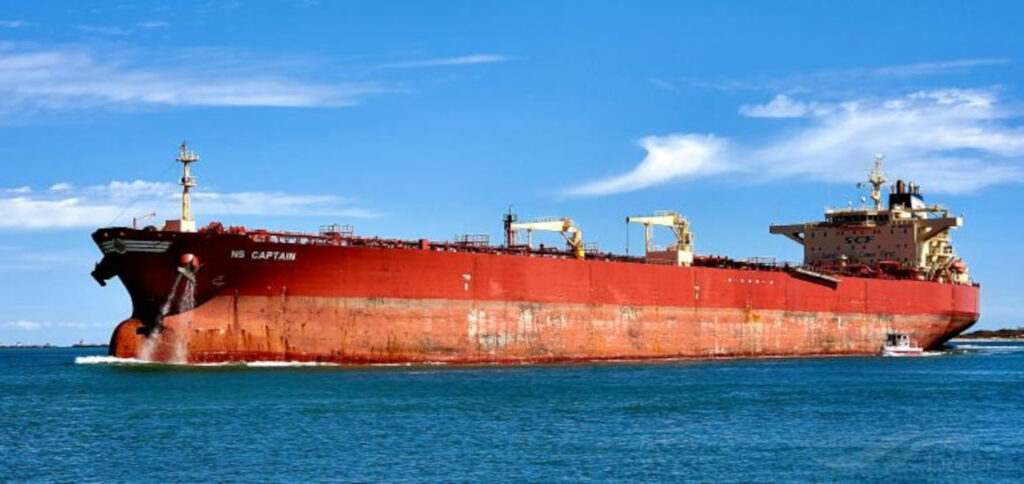
A Malta-flagged tanker carrying Russian diesel is heading for New York after the fuel deal between US President Donald Trump and Russian President Vladimir Putin, Reuters reported in an exclusive on 23 October, citing LSEG shipping data. Two weeks earlier, the US Treasury temporarily waived sanctions on Russian diesel.
The tanker is due in the US on 7 November, four days after Americans vote in the midterms. So the first US-bound cargo cannot reach American pumps before the election. Energy analysts also doubt the deal will lower diesel prices meaningfully. US fuel prices rose mainly because the war with Iran disrupted shipping through the Strait of Hormuz. Trump, however, has blamed Ukraine’s strikes on Russian refineries.
Loaded on the day Moscow promised
The medium-sized tanker Agioi Fanendes took on 40,000 metric tons of ultra-low sulfur diesel at the Baltic port of Primorsk on 22 October, shipping data showed. In March, Ukraine’s General Staff said its drones hit the Transneft oil terminal at that same port.
A day before the loading, Russian Deputy Prime Minister Alexander Novak announced that the first tanker would sail for the US on 22 October. He pledged more shipments and said Russia would meet US needs within its capabilities.
Explore further
Russia resumes diesel exports to Türkiye, Brazil, after Trump lifts sanctions on fuel supplies, boosting Moscow’s war revenue – Reuters
From a pledge to a partial lift
On 9 October, Trump wrote that Russia would immediately supply over 300,000 tons of diesel “to the American and Global Marketplace.” Another 500,000 tons would follow in November, then 1 million tons “immediately thereafter.”
Moscow had banned diesel exports on 8 July, after Ukrainian drone strikes shut down refineries and caused fuel shortages inside Russia. The Russian government stated on 10 October that it had partially lifted the ban, clearing 500,000 tons for the world market at this stage. Russian diesel shipments to Türkiye and Brazil have since resumed, boosting Moscow’s war revenue.
Trump has made other moves to cut diesel prices before the vote, Reuters reported. He waived parts of a new sanctions law against Russia. He also threatened Europe with a US diesel export ban unless countries released more fuel from their emergency reserves.
Former Sen. Jon Tester praised the passage of the bipartisan 21st Century Road to Housing Act, noting its success in balancing restrictions on Wall Street investors with incentives for professional housing providers to increase supply.
Treasury Department says the reasons for Venezuela’s inclusion no longer exist.
On Thursday, the U.S. Department of the Treasury’s Office of Foreign Assets Control (OFAC) removed Venezuela from the list of countries subject to restrictions on U.S. investment.
Established under the 2025 Comprehensive Outbound Investment National Security Act (COINS Act), the list still includes countries such as China, Russia, Cuba, Iran and North Korea.
To justify Venezuela’s removal from the list, the Treasury Department said the reasons that led to the country’s inclusion no longer exist and that the current government does not meet the definition established by the COINS Act.
However, the OFAC announcement included a warning: The rule could still apply to certain investments in Venezuelan entities, although no details were provided.
“The COINS law significantly expanded the scope of U.S. controls on capital flowing abroad. The proposal requires notification in six sectors and five designated countries, and imposes a total ban on artificial intelligence. The public can submit comments through Dec. 7; the final rule will follow,” the financial website PitBullChain explained.
“The key distinction that must not be overlooked is that this is a mechanism for scrutinizing outbound investments. It is not a lifting of the OFAC sanctions regime. Removal from the COINS list does not mean that existing restrictions on specific individuals and entities disappear.”
“Venezuela’s removal from the COINS list can be interpreted as a sign of reduced friction: less friction for a U.S.-based exchange, a payment processor or a small fund to consider operating with Venezuelan counterparties without automatically falling into the category of a country under scrutiny,” the financial website added.
The list of countries included under the COINS Act was originally advanced with bipartisan support. Its goal was to expand oversight of capital flows into sectors considered sensitive to U.S. national security.
Regarding the scope of the policy, Treasury Undersecretary Chris Pilkerton explained that the program’s purpose “is to ensure that we have the ability to monitor and potentially prohibit those types of investments” that could pose risks to U.S. national security.
The reality 40 years later is that Congress made the drug penalties permanent law, while drug treatment was left to be determined during annual budget fights.
President Trump invoked the Defense Production Act on Thursday, announcing that the government would be spending $150 million toward boosting domestic gas and diesel production as the White House looks to ease consumer pain at the gas pump. The announcement was made in a presidential memorandum earlier Thursday, but the president detailed the exact amount…
Costs are spiking for the millions of Americans who rely on workplace-sponsored health insurance, according to a survey released Thursday, with small businesses and their employees being hit especially hard. The average cost of a family plan increased by 5 percent, topping $28,000 this year, according to the annual Employer Health Benefits Survey from KFF.…
Can Congress meaningfully constrain presidential tariff authority when an older, less restrictive statute offers an alternative route to achieve the same goal?
Oxfam pays white staff 33% less on average than ethnic minority colleagues while Cancer Research UK and the British Red Cross aren't far behind, despite commitments to equality and fairness.
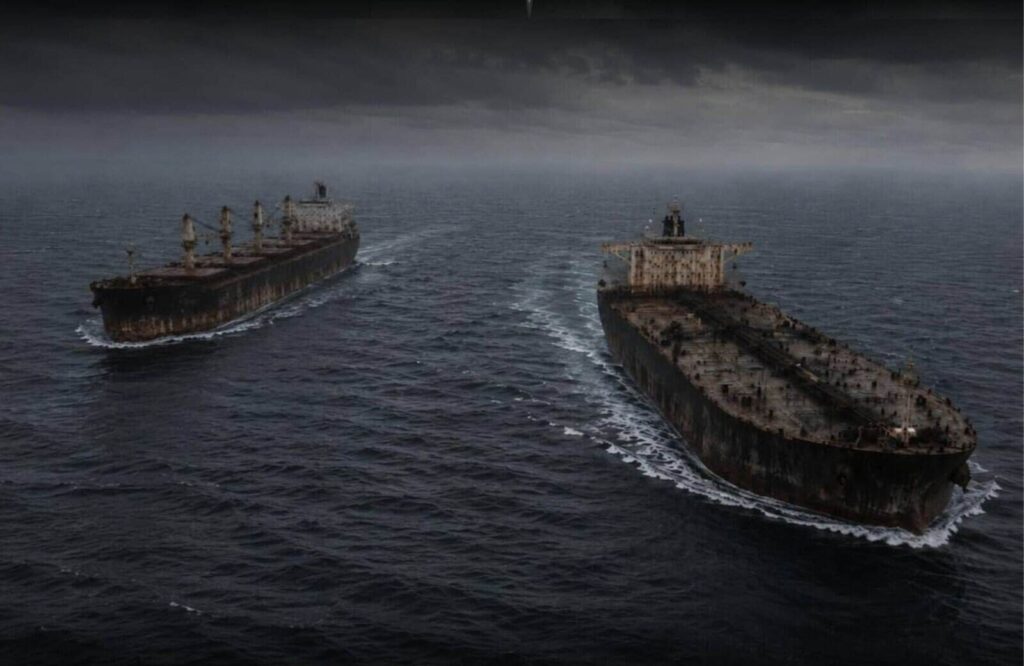
Investors who buy idle sanctioned tankers and refit them could put the ships back into legal oil trade, US Energy Secretary Chris Wright said on 19 October, Bloomberg reported. He laid out the plan five days after a US official described it to Reuters.
That official said the aim was to cut record tanker freight rates. The Energy Department added that any relief would not help Russia move its oil. The plan comes weeks before the 3 November midterms, with voters worried about fuel costs after gasoline and diesel prices surged in the Mideast conflict. Yet the shadow fleet is also how Russia sells oil past sanctions, and those sales fund its war against Ukraine. In December 2025, Ukraine’s foreign intelligence counted more than 1,100 tankers serving Russia alone, 226 of them under US sanctions.
An approval process Wright didn’t detail
Many sanctioned tankers sit idle, Wright told Bloomberg’s Annmarie Hordern, and buyers keep approaching the administration offering to fix them up and carry only legal oil.
“We’re going to move some of the ships from what I call the ‘bad-guy fleet’ to the ‘good-guy fleet,’” he said. “They will not carry sanctioned oil anymore.”
The ships must go through an approval process, Wright said, but he gave no criteria. He insisted “there is no removing of sanctions.”
He put the global dark fleet at about 1,600 ships, a count covering vessels that hauled Venezuelan, Iranian, and Russian oil. Dozens or even hundreds could turn legitimate, he said. The ships are no longer needed for Venezuelan oil, Wright said, and no Iranian oil is moving. Russian oil exports, he added, “are certainly not growing.”
Diesel, a waiver, and the tankers
Earlier, on 9 October, the Treasury issued General License 135, allowing some deals in Russian diesel until 7 April 2027. On 16 October, US President Donald Trump waived sanctions and tariffs under the Graham Act, leaving earlier sanctions intact. That law had directed him to review and sanction shadow-fleet vessels. Trump defended the waiver as a way to keep Moscow at the negotiating table.
House Speaker Mike Johnson told Fox News host Larry Kudlow on 18 October that he had asked the White House team to “carefully consider the unintended consequences,” The Hill reported. He added that he thought “the right decision will be made” in the end.
Twelve migrants, including an infant, have died in two separate incidents involving boats travelling from Turkey towards the Greek islands of Lesbos and Samos, prompting investigations into the circumstances of the deaths and the activities of suspected people smugglers.
The incidents occurred on Monday, 19 October, in the northeastern Aegean Sea. Six people died when a speedboat collided with a Greek coastguard vessel near Lesbos, while another six were killed after a separate boat overturned north of Samos.
The deaths coincided with the publication of new figures from the European Border and Coast Guard Agency, Frontex, showing that irregular crossings into the EU fell by almost one-third during the first nine months of 2026.
According to the latest border monitoring figures, approximately 91,000 irregular crossings were detected between January and September, although the eastern Mediterranean remained the busiest migration route into the Union.
Two incidents under investigation
According to information released by the Greek authorities, the first fatal incident occurred near Agrilia on Lesbos when a speedboat carrying migrants struck a coastguard patrol vessel before overturning.
Six people died, while eight survivors were taken to hospital. The authorities subsequently arrested a 37-year-old Turkish national, identifying him as the suspected operator of the migrant boat.
Greece’s Maritime Affairs Minister Vassilis Kikilias said the available evidence indicated that the speedboat had struck the left side of the coastguard vessel. The precise circumstances remain under investigation.
In the second incident, approximately four nautical miles north of Samos, a boat reportedly overturned after making a sudden manoeuvre while being pursued by the coastguard.
Five men and one woman died, while 14 people were rescued. An Iranian national was arrested on suspicion of involvement in migrant smuggling.
The arrests do not establish criminal responsibility, and the circumstances surrounding both incidents remain subject to investigation.
Greek authorities have attributed the dangers of the crossings to trafficking networks operating between Turkey and the Aegean islands. The government has reiterated its policy of pursuing smugglers and restricting unauthorised maritime arrivals.
Fewer crossings, continued fatalities
Frontex recorded approximately 31,800 detections along the eastern Mediterranean route during the first nine months of this year, representing a decline of around 15 per cent compared with the equivalent period in 2025.
Across the European Union’s external borders, the agency reported an even larger reduction, with overall detections down by almost one-third.
The Central Mediterranean route experienced a particularly substantial fall, while the Western Mediterranean recorded an increase, reflecting changes in departure points and migration patterns.
These figures count detected border crossings rather than individual migrants and do not necessarily capture every unauthorised arrival.
The latest data also have to be considered alongside exceptional developments elsewhere on Europe’s borders. In July, large-scale movements through Spain’s Ceuta enclave created additional pressures on Spanish authorities and raised questions about the application of the EU’s new asylum arrangements.
The eastern Mediterranean figures encompass several routes, including crossings from Libya towards Crete, movements through the Aegean islands and arrivals across the land border with Turkey.
Consequently, the total recorded for the wider region should not be interpreted solely as the number of people arriving on the Greek islands.
Greece remains central to European border policy
Greece has occupied a central position in EU migration policy since the 2015–2016 crisis, when hundreds of thousands of people arrived from Turkey, many travelling onwards through the Balkans.
The subsequent EU–Turkey migration arrangements were intended to reduce unauthorised crossings and establish procedures for returning certain migrants who did not qualify for protection.
Athens has also faced persistent criticism from human rights organisations concerning allegations of unlawful returns at sea and land borders. Greek authorities deny operating an unlawful pushback policy and maintain that their border operations respect domestic and international law.
The EU’s Pact on Migration and Asylum, which entered into application in 2026, has introduced common procedures for screening arrivals, processing asylum claims and managing people who do not have permission to remain.
Its implementation has placed greater emphasis on border identification, biometric registration and cooperation between national authorities and Frontex.
However, the two disasters demonstrate the continued risks associated with maritime crossings, even during a period of declining arrivals.
Investigators must now establish precisely how both boats overturned, whether criminal offences were committed and what occurred during the encounters with coastguard vessels.
The findings will be relevant not only to the prosecutions of those arrested, but also to continuing scrutiny of maritime enforcement along one of the European Union’s principal external borders.
Congressional scrutiny of the Trump administration’s Jones Act waiver is growing, with Rep. Salud Carbajal (D-Calif.) demanding answers about whether foreign vessels operating in domestic U.S. trades are complying with...
Spain’s government has declared that the first phase of its emergency response to the Ceuta migration crisis has been completed, following the arrival of an estimated 80,000 migrants from Morocco at the end of July.
Interior Minister Fernando Grande-Marlaska said on Friday, 16 October, that approximately 12,000 people had returned voluntarily to Morocco since August, while the authorities had expanded facilities to process asylum applications and return decisions.
Nevertheless, substantial administrative and humanitarian challenges remain in the Spanish enclave, particularly concerning people awaiting decisions on their legal status and unaccompanied minors. The situation has become an important test of the European Union’s revised migration and asylum legislation.
Unprecedented crossings at the African border
The crisis began on 30 July, when tens of thousands of people entered Ceuta from Morocco by land and sea following the circulation of misleading information on social media about access to Spanish territory.
According to an October briefing by the European Parliament’s Research Service, approximately 80,000 people crossed into the enclave during the incident, overwhelming local reception facilities and creating an emergency at one of the EU’s few land borders with Africa.
A subsequent European Parliament resolution referred to at least 141 deaths associated with the crossings, although the initial figure reported by Spanish authorities was lower. The exact number of people who crossed and the final death toll have remained subjects of uncertainty.
Most entrants returned to Morocco within days. However, thousands remained, leaving Spain responsible for assessing individual claims, arranging lawful returns and providing appropriate accommodation.
Ceuta’s geographical position complicates these procedures. Although the enclave is Spanish and forms part of the EU, travellers departing for mainland Spain remain subject to specific controls at its ports and airports.
Spain expands its processing capacity
During a visit to Ceuta on 16 October, Grande-Marlaska defended the government’s management of the emergency and announced that additional police resources would substantially increase administrative capacity.
The expanded temporary reception and processing facilities at El Tarajal are intended to handle at least 100 files daily, including applications for international protection and return procedures.
According to figures presented by the Interior Minister, approximately 1,200 applications for international protection had been formally submitted, with around 700 decisions already issued.
He also rejected allegations that the authorities had conducted concealed or involuntary returns, insisting that departures to Morocco had followed voluntary decisions or the appropriate legal procedures.
The minister said more than 500 expulsions had been executed through judicial or administrative decisions in recent months. These are distinct from the approximately 12,000 voluntary returns recorded since August.
The treatment of unaccompanied minors remains contentious. The European Parliament’s research briefing estimated that around 1,100 such minors were in Ceuta, including some who arrived before the July emergency.
Responsibility for their care has generated disagreement between the Spanish central government and Ceuta’s autonomous administration, particularly over guardianship, identification and the distribution of minors to other regions.
New EU asylum system faces a practical test
The EU Pact on Migration and Asylum, which began applying in June 2026, was designed to strengthen external border procedures while establishing clearer responsibilities for Member States.
Its provisions include identity and security screening, accelerated procedures for certain asylum applications and a solidarity mechanism allowing countries to support those facing disproportionate migration pressures.
Under the screening rules, the authorities generally have up to seven days to complete the initial checks required for people apprehended after irregular entry.
However, the Ceuta emergency demonstrates the difficulty of applying individual administrative procedures when arrivals occur in exceptionally large numbers within a short period.
The geographical concentration of arrivals means that adequate staffing, interpretation, legal assistance and reception facilities become essential to ensuring the system operates within its prescribed deadlines.
Spain requested assistance from Frontex, Europol and the European Union Agency for Asylum in August. The Commission subsequently announced €114.7 million in emergency assistance in September.
Political dispute over migration policy
The crisis has widened divisions between European governments over border enforcement and the regularisation of migrants already living within the EU.
Italy and several other Member States have questioned whether Spain’s separate regularisation programme could encourage further irregular migration. Madrid rejects the suggestion that the programme caused the Ceuta crossings.
The Spanish scheme covers only people who met the residence requirements by the end of 2025. Those who arrived during the July 2026 crisis are not eligible.
European Parliament members also adopted a resolution in September calling for stronger protection of the EU’s external borders and greater cooperation with Morocco. The resolution characterised the crisis as involving the possible instrumentalisation of migration, although Spain has said it has no evidence establishing Moroccan government involvement.
The continuing administrative backlog, the position of minors and the effectiveness of EU assistance will determine how quickly Ceuta can return to ordinary border operations.
Beyond Spain, the episode raises a practical question for Brussels: whether Europe’s new asylum framework can maintain border controls and individual legal safeguards simultaneously during an exceptionally large and sudden influx.
 Login