A mudança no horário de votação determinada pelo ministro Cristiano Zanin, do Supremo Tribunal Federal (STF), alterou os procedimentos da Justiça Eleitoral em Goiás neste domingo (25). O Tribunal Regional Eleitoral de Goiás (TRE-GO) suspendeu temporariamente a totalização dos votos e orientou as zonas eleitorais a manter em funcionamento as seções que ainda recebiam eleitores até as 19h.
A determinação chegou ao tribunal pouco antes do encerramento previsto para as 17h. O curto intervalo para comunicar a decisão às equipes eleitorais dificultou a aplicação da medida. Durante entrevista coletiva no início da noite, o desembargador eleitoral Laudo Natel Mateus classificou a situação como inédita.
O novo horário não autorizou a reabertura de seções que já haviam concluído a votação. A orientação foi direcionada aos locais em que ainda havia eleitores aguardando atendimento, inclusive pessoas que receberam senhas para votar.
Segundo Laudo Natel, naquele momento o tribunal não tinha confirmação oficial de que ainda existiam seções abertas em Goiás. A possibilidade, entretanto, não estava descartada diante das filas e do tempo necessário para transmitir as orientações aos responsáveis pelos locais de votação.
A suspensão da totalização foi outra consequência da mudança. O processamento dos resultados deveria permanecer interrompido até as 19h, horário estabelecido para o encerramento da votação nas seções que continuavam em funcionamento.
Durante a coletiva, o desembargador também esclareceu que a possibilidade de substituir as urnas eletrônicas por cédulas de papel não chegou a ser discutida. A alteração do horário, segundo ele, não modificaria o sistema utilizado para registrar e contabilizar os votos.
A decisão de Zanin ampliou o período de votação em todo o país após relatos de dificuldades de transporte para eleitores. O TSE esclareceu posteriormente que a extensão deveria ser aplicada apenas às seções que ainda não haviam encerrado os trabalhos.
When Bill Gates and Warren Buffett cornered the candy market, questions were raised. Now we know why they were so laser-focused on buying out the industry. As Halloween approaches, a horrifying trend has emerged. The [...]
A bombshell scientific paper has confirmed what “conspiracy theorists” have warned about for decades: elite bloodlines consume human blood, breast milk, and vaginal mucus mixed with powerful hallucinogens in secret rituals — and they’ve been [...]
Children’s Hospital Colorado has been exposed vaccinating more than 18,000 child pediatric patients under deep sedation or general anesthesia since 2020, according to a publication by The American Academy of Pediatrics (AAP). The children were there for surgeries [...]
O Tribunal Regional Eleitoral da Bahia (TRE-BA) determinou neste domingo (25) o restabelecimento imediato da frota integral do transporte público de Salvador operando com frequência equivalente à de dias úteis e mantida a gratuidade integral aos passageiros.
Na decisão, o presidente do TRE-BA, Maurício Kertzman Szporer, define multa no valor de R$ 1 milhão por hora em caso de descumprimento da ordem. O desembargador pede ainda imediata expedição de ofício à Delegacia Geral de Polícia Civil da Bahia para fiscalizar o cumprimento, incluindo a utilização de drones para esse fim.
Diante da decisão, o governador da Bahia, Jerônimo Rodrigues, em seu perfil na rede social X, disse ter colocado a Polícia Militar e a Secretaria da Segurança Pública à disposição para identificar policiais com habilitação categoria D, aptos a dirigir os ônibus, caso se faça necessário.
“Não vou aceitar o que estão fazendo com a população baiana, tentando impedir que as pessoas exerçam seu direito ao voto. Vamos garantir que o povo tenha condições de votar”, postou.
Prefeitura
A Prefeitura de Salvador informou, em nota, ter determinado que todos os ônibus fossem liberados das garagens, ainda que estivessem com adesivação considerada como propaganda irregular, facilitando a locomoção de eleitores neste domingo.
“A prioridade segue sendo a circulação de veículos e o deslocamento da população. A operação já está sendo normalizada através do diálogo entre as equipes da secretaria e representantes sindicais”, destacou o comunicado.
Entenda
No período da manhã, eleitores relataram dificuldades para chegar aos locais de votação em Salvador em meio a queixas sobre demora e problemas na circulação de ônibus durante o segundo turno das eleições.
De acordo com o governo baiano, fiscais encontraram ônibus aptos para operação que permaneciam nas garagens durante a vistoria realizada no dia da votação.
Em publicação na rede social X, o secretário da Secretaria de Justiça e Direitos Humanos da Bahia (SJDH), Felipe Freitas, afirmou ter recebido do sindicato dos trabalhadores do transporte a informação de que motoristas não teriam sido convocados para operar toda a frota.
Na postagem, o secretário defendeu medidas para evitar que eleitores fossem prejudicados por dificuldades de deslocamento.
A fim de garantir condições de deslocamento para o exercício do voto, o Procon-BA, a Agência Estadual de Regulação de Serviços Públicos de Energia, Transportes e Comunicações (Agerba) e a SJDH organizaram a operação Vai e Vota para fiscalizar a gratuidade do transporte público e receber denúncias durante o segundo turno das eleições.
O prefeito de Salvador, Bruno Reis (União Brasil), afirmou que a frota estava disponível para atender à população e atribuiu os problemas registrados a questões operacionais nas garagens e a mobilizações que teriam atrasado a saída dos veículos.
Segundo ele, o município já disponibiliza transporte gratuito em dias de eleição antes mesmo das determinações judiciais relacionadas ao tema. Ele acrescentou que a Secretaria Municipal de Mobilidade (Semob) registrou a retenção de 75 ônibus em uma garagem no bairro de Caminho de Areia, fato que teria afetado o início da operação do sistema.
Si ponemos los genes de una persona junto a los de un chimpancé, lo llamativo es lo poco que difieren. Compartimos más del 96% de las secuencias que sirven para fabricar proteínas, que son las piezas con las que se construye un organismo. Y aun así nuestro cerebro es unas tres veces mayor que el […]
Un confronto a tu per tu, senza giri di parole nella puntata odierna, domenica 25 ottobre, ad “Amici 26”. Amadeus mette le carte in tavola con Nicolò e lo fa partendo da un paragone che gli è caro: quello con lo sport. “Tu sei un atleta, quindi forse mi puoi capire”, esordisce il direttore artistico, spiegando che ognuno dei quattro ragazzi della sua squadra è sotto la sua responsabilità. “Vi voglio un bene dell’anima – assicura, – mi piacete tutti e quattro tantissimo”. I cantanti del direttore artistico sono: Kashmere, Nicolò, Saitta e Tìaso.
Ma c’è una regola, e la regola vale per tutti: quella di avere un unico vocal coach, Lorenzo. Una scelta che Amadeus rivendica come un vantaggio “come un preparatore atletico conosce ogni muscolo del suo atleta”, spiega, così il vocal coach “conosce anatomicamente le corde vocali dei ragazzi”, sa dove possono migliorare e si confronta costantemente con lui. “Tutti i vocal coach di Amici sono bravissimi”, precisa, ma la linea è questa.
Poi il passaggio più netto. Amadeus assicura che non vieterà mai a Nicolò di provare altri insegnanti, ma per coerenza con la decisione presa e nei confronti degli altri tre ragazzi, la conseguenza sarebbe inevitabile: “Se mi dici che vuoi stare con tutti i vocal coach, sono costretto a dirti: Nicolò, mi devi dare la maglia”.
Il ragazzo potrebbe così proseguire con altri coach, ma non con Lorenzo e nemmeno con lui, con la maglia che passerebbe a Samurai Jay o a Rudy Zerbi e un percorso completamente diverso da quello immaginato. Il tutto, sottolinea, “senza nessun rancore e risentimento”: viene prima il desiderio dell’allievo.
Se invece Nicolò sceglie di restare, l’augurio è di arrivare fino in fondo: “Ti auguro di rimanere otto mesi, anche se non ne abbiamo la certezza, facciamo gli scongiuri“. Amadeus lascia al ragazzo tutto il tempo per decidere: può rispondere subito oppure riflettere e parlarne a quattro occhi durante la settimana.
Ad “Amici 26″, oggi 25 ottobre, il caso del cantante Erness ha posto il dilemma in diretta. Il ragazzo che stacca dalla cucina di un pub all’una di notte e ha un’ora al giorno per la musica ha portato come inediti brani che, secondo Samurai Jay, inediti non erano: stessa tonalità, stesso BPM, stesso giro armonico di un pezzo già esistente. Gli è stata data una seconda possibilità. Una settimana in studio, un nuovo brano sull’ossigeno e sugli amori che tolgono il fiato. Il pezzo ha convinto tutti. Non è bastato. Perché, quando “qualità ed etica prendono strade diverse, a decidere è l’etica”. E il banco è saltato.
Dopo una serie di ascolti, Samurai ha notato che tutti i brani proposti da Erness hanno come riferimento altri brani, per cui di inedito “non c’è quasi niente”. Il cantante prova a darsi una spiegazione e chiede a Erness che lavoro faccia. La risposta: lavora in cucina in un pub e stacca all’una, all’una e mezza. Alla musica può dedicare poco più di un’ora. Il direttore artistico ne deduce che l’unica spiegazione possibile sia la mancanza di tempo.
La decisione, a quel punto, è di sospenderlo. Erness resta lontano dalla scuola per una settimana, in studio con dei professionisti, per scrivere un inedito che sia davvero suo. Il banco resta al suo posto, ma Samurai gli lascia un avvertimento: deve evitare di farselo “strappare via”.
Vinay Prasad has been on both sides of the public health establishment. A physician, author, and professor at the University of California, San Francisco, he went from prominent COVID-era critic to Food and Drug Administration (FDA) insider when he was tapped to lead the agency's Center for Biologics Evaluation and Research in May 2025. His tenure there included an abrupt resignation in July 2025, a return a few weeks later, and his final departure in April 2026.
Prasad joined Reason's Zach Weissmueller in August to discuss what he learned from his time inside the FDA, what he was able—and unable—to change, and whether the agency can ever regain public trust. Their conversation ranges from Anthony Fauci and the origins of COVID-19 to vaccine policy, plus regulatory barriers, his growing sympathy for libertarian critiques of the FDA, and whether the agency is ready for an era of AI-driven medicine.
Reason: The FDA saw a clearing out of the old guard and a replacement with a new one—COVID dissidents such as yourself, former FDA Commissioner Marty Makary, and National Institutes of Health Director Jay Bhattacharya. What was that like? Did you have any misgivings about stepping away from academia and your role as an outside critic to join the public health bureaucracy?
Prasad: Maybe we changed 4 percent, 2 percent of the FDA. The FDA is an 18,000-person agency. There's tens of thousands of people still there. Before Marty, the commissioner, and I got there, DOGE [the Department of Government Efficiency] had just struck and they got rid of a couple thousand people. But the system is largely the same as it's always been.
There are critics of the COVID pandemic response and then there are critics. Although Marty, Jay, and I are critics of many aspects of the response, we don't go as far as some of the most extreme critics out there.
Am I glad I did it? Yes, I'm glad I did it. It was an adventure. It was a learning experience. I learned more in one year than I'd learned in the prior decade about how the world works. I'm glad to have improved some aspects of government, which I think will be enduring, and at least tried to improve other aspects of government, which may not be enduring.
Anthony Fauci personified the old guard. He's recently been in the news because he appeared before Congress and pleaded the Fifth after Sen. Rand Paul (R–Ky.) published his diary. What did those diary entries reveal to you about Fauci's character and about the way he operated?
Probably the greatest news story is that the mainstream media refuses to be honest about his legacy. Fauci was in his late 70s when the pandemic began. Had he retired at a ripe old age of 75, he'd be leaving behind a stellar legacy. But he continued. He pushed it. He stayed through the whole pandemic. He was the face of many things that his diaries get into, what he privately thought while he was publicly saying different things.
Fauci has not only been a proponent that the only answer to where the virus came from is a natural spillover event. He's gone further than that. He orchestrated a paper published in Nature Medicine called the "Proximal Origin" paper, written by a bunch of people who bolstered that point of view. He edited that paper before it was published. Then in public, he pretended like he didn't know those people; it was an independent group that validated what he was saying. Whereas in many respects, he puppeted that paper. The people who wrote that paper—Rand Paul has released their Slack channel messages showing they didn't really even believe what they were writing. Their messages reveal considerable ambiguity about lab leak vs. natural spillover event.
Photo: Paul Alexander
In terms of the origin, he also funded EcoHealth Alliance, which had a subcontract to Wuhan. He had a huge role in the origins and trying to frame the narrative, making lab leak—you couldn't even discuss it. Facebook put a ban on even talking about the topic. Then masking 2-year-olds. He played a huge role in that. Lockdowns, school closure. He said he didn't close any schools. In his own diary, he says, "I told [Mayor] Bill de Blasio, you need to close schools in New York City."
At some point, the man's got to take ownership over the decisions he did make and advocated for. When [Gov. Ron] DeSantis in Florida reopened schools in 2020, he went on every television show to say what a bad idea that was. Now, it's very clear—many of us said so at the time—school reopening was always the right decision. Maybe it could have been closed for a week or two, but certainly not beyond that. Fauci kept it closed much longer.
Vaccines make a lot of sense for elderly people who had not yet had COVID. But do they need to be given to a 4-year-old, a 7-year-old, a 12-year-old, a 22-year-old who'd already had COVID? This is where considerable ambiguity exists. But for Fauci, the answer was clear: You need all the shots. You need the initial series. You need a yearly booster. It doesn't matter how young you are or how many times you've had COVID. Fauci was wrong about almost every single pandemic policy he advanced.
Some of his defenders say to me, "At least he didn't tell people to drink bleach." And I said, "Is that the bar for a guy who's a doctor and a scientist?" Drinking bleach is not a good idea, but that's not the bar for a Fauci-level figure. He should be saying things that are correct. If they're not correct, he should be collecting evidence to weigh in. He did none of that.
Fauci's pardon stretches back to 2014, when he was authorizing funding in contravention of U.S. policy on gain-of-function research. Do you think he actually committed a crime?
Yes. The other thing about it is people will say, did that money go directly for this research? The money went for viral genomic research at a Chinese institute, very similar to the sorts of things we would be worried about. That was a crime for which he's been pardoned. It's not just my assessment. That's what Joe Biden's autopen thought, or whoever signed that pardon, that he committed a crime. That's why he has a pardon that goes that far back. It was a crime. Now that he's been pardoned for it, I don't know what you can do about it.
You rode in on this wave of anti-Faucism. What was your biggest hope for what a new version of public health might look like, or for the kinds of changes that could be made?
I had a very narrow mandate because I was just in charge of biologics at the FDA. The hope continues, which is that public health could aspire to be honest, to use its powers proportionately and judiciously, to exercise humility. Public health is far from these things. Public health could actually aspire to be bipartisan. Public health is not. It's becoming an increasingly entrenched left-wing discipline run by left-wing ideologues, reaching even more and more absurd conclusions. What public health can be and what it is are still light-years apart.
You don't think that has changed very much?
Not much at all. Changing an entrenched organization with tens of thousands of people is very difficult. There have been some changes. The pandemic has been a catalyst. But I don't think a real reform is possible. I suspect it'll splinter into different public health groups.
Your role was at the part of the FDA that oversees biologics, such as vaccines and gene therapies. Vaccines became an increasingly polarized and politicized issue during COVID. What was your goal specifically pertaining to vaccines when you took over after the pandemic?
The right drug given to the right person at the right time is lifesaving, but the wrong drug given to the wrong person at the wrong time can be harmful. Vaccines are the same way. You can't say anything about all vaccines, just like you can't say anything about Tylenol, aspirin, and Plavix all in the same breath. They're all very different drugs.
Is this the same phenomenon we observed during COVID, where you're either for the vaccine or you're against it, for a medicine or against it, without breaking things down by age, health, or other individual factors? Everything has to be flattened or compressed.
Same phenomenon. One-size-fits-all public health—where the shoe doesn't fit the guy with the big foot or the person with the small foot—is a completely wrong view of public health. COVID is a great example. An 80-year-old who's never had COVID, and we're talking about February of 2021, should they get a vaccine? Absolutely. A 7-year-old who's had COVID and we're talking about 2022? No, a healthy 7-year-old makes no sense. Public health is, in this country, so broken. It cannot appreciate these distinctions.
Something you've been writing about for a long time is poor experimental design in drug trials. Was that something you wanted to change when you came into the FDA? Do you feel like you made any progress toward that goal?
In one year, we did more than what our predecessors have done in a decade. You can look at just the sheer number of announcements and policy changes we made. We're talking a lot about one side of the coin, which is where the companies are not doing the right study to inform the American public. We're not talking about the other side of the coin, where the FDA is asking them to do things that don't make any sense at all, that burden them, that cost money, and that are wasteful. We did a lot of work in that space too. The FDA makes both errors. They also do a lot of things right, but they make both errors and they can get better.
You mentioned there were two sides of this FDA reform. One was raising standards for things like vaccines. The other was acknowledging how expensive and cumbersome it can be to get something approved in the United States. What were the biggest barriers you saw at the FDA on that side of the equation?
So many. During my time at the FDA, I was often sympathetic to the people who work at companies who told me about the hurdles they were forced to jump through. The FDA does two things: We regulate what's approved and can be marketed and sold on the U.S. market, but also what you can study.
Imagine you're a researcher and you want to study something. We're not talking about approving. You want to gather people together who may be interested in trying something new, have an informed consent, get them to volunteer, but they know that we don't know for sure it's going to work. We do so many things in that space, regulating what you can study and how you can study it, that I think are sensible. You don't want to let people sign up for something that's going to blind them or maim them. But some things that aren't sensible, that are overly burdensome, that are quality controls that don't make sense for small companies and super-rare diseases that don't have a huge budget to study these things. The regulation in this early side of research is tremendous in the United States. A lot of it is well-intentioned, but not all of it is fit for purpose.
You said that your time within the FDA made you somewhat more sympathetic to the libertarian critiques of the FDA.
I'm really sympathetic in one way: We tax people a lot of money to pay for healthcare in America—trillions of dollars. We're taking trillions of dollars from people's paychecks, from taxation, and we're taking it for this thing that we think is a benefit to people, which is we're going to offer a service that's maybe a human right, a societal good. Surely, the service we offer, we do have some of that stuff in there. If you have a heart attack, you go to the doctor here with or without insurance, they're going to open up that blockage. That's a great thing. But along with that package deal, we're going to insert a few things that may or may not work, that cost a lot of money. All that's doing is taking lots of money from taxpayers and redistributing it to the shareholders of those companies.
It's a huge financial system with the rare adverse event of helping someone's health. The libertarian comes along and says, "I'd rather not pay the tax—have more skin in the game, decide what's right for me. I'm the best person to decide how to use my own money." I do feel a sympathy to that point of view, because this system has so many places where it can be taken advantage of, where people get something that doesn't help that much, that only may kill without any possibility of benefit. And we take a lot of other people's money to pay for that.
Dario Amodei, the CEO of Anthropic, recently called out the FDA, and I'm wondering what you think of this. He wrote, "Regulatory systems were designed for a slower pace of innovation and we are not prepared for the deluge of new products and advances that AI will bring. AI may also make these downstream technologies safer and more predictable in a way that violates the skeptical assumptions of regulatory agencies like the FDA."
If Amodei is right about the effect AI is going to have on the field, do you think the FDA will be able to adapt?
I see kernels of truth in what he's saying, but maybe I don't go all the way he goes. Where I see the big core truth is the FDA tries to regulate AI itself, medical AI. You wear a watch that's supposed to give you information and the FDA wants to do a lot of that regulation. That's a very tough thing to regulate, because this technology is changing so much faster than our ability to judge it. I do agree with Marty and others who think that that's probably not the best role for regulating all the potential aspects of digital health and health AI. For instance, you can imagine the absurdity where I'm a doctor, I'm seeing a patient later this afternoon, should government regulate the apps I can use to learn about the disease or ask questions? Should it regulate open evidence? I don't think it should.
I spoke to a company called Doctronic that is acting as an AI prescriber in Utah, where AI is being allowed to refill prescriptions. That's another example of where these questions are going to have to be answered: Where does the government step in, and where does it step back?
Government is much more likely to get in the way of these kinds of innovations. It's changing so quickly. It's going to be very difficult for government to regulate that. You talk about drug discovery and drug science and those kinds of aspects of AI. If I was a pharmaceutical firm, I would definitely invest in AI. There's so many things around running clinical trials that we can do better with AI, help us run them cheaper and faster and more efficiently.
But when it comes to molecule discovery and basic science, I'm not as optimistic as Dario for a couple of reasons. One, a lot of the information that is fed into models about cancer biology is basically as close to fraudulent research as you can imagine. We're talking about like the Stanford president whose Western blots look Photoshopped kind of research. You got research that's not reproducible. It's not just my opinion. Many companies have taken samples of the literature and they tried to replicate it in their own labs and they have massive strikeout rates. If you train AI on garbage, what can it learn? It's only trained on inaccurate information. That's a challenge it faces.
The second challenge is AI will be happy to give you hypotheses to study, but you'll still need to run it with a few people to validate those hypotheses. I suspect the limiting reactant is not coming up with ideas; we have more ideas than we can study with people. The limiting reactant is getting the people to consent and manufacturing the products and those kinds of things.
I hope he's right. If he is right, it sounds like a great future. But I'm a little bit skeptical that he's totally right, because I think the biology of it is a lot harder.
Do you think enough has happened for people to start regaining trust in public health?
No way. I wouldn't trust it at all.
What still needs to happen for public health to legitimately earn back the trust of the public?
I don't know if it's even possible. It's so fragmented now. People tell you with a straight face, people I know, "Anthony Fauci, he made no mistakes. Literally, did the best job he could with the information he had." Then I said, let's just focus on one tiny thing. He did say you should take your 24-month-old kid and put a cloth mask on that kid all day in daycare. He said that. You don't think he had any clues at the time that that was a dumb idea? It's so obviously dumb, right? That's their position on every issue.
Public health is so myopic. It doesn't understand that you have to look at the whole issue. Isn't that a perfect analogy for COVID? Don't go outside. Just stay in your house all day. As if human beings don't need contact with other people and see face to face as if that doesn't matter at all.
Public health has not learned its lesson. The problem with public health is that they're completely politically captured now. Public health and the far left wing of the Democratic Party are synonyms. There's no political balance there. A little balance would go a long way. A little bit of open-mindedness would go a long way in public health. A little bit of humility to just admit a few things we got wrong in the pandemic.
The federal public health apparatus is still staffed with Robert F. Kennedy Jr. at the top and Jay Bhattacharya is still head of the National Institutes of Health. Is that not having some sort of trickle-down effect or creating a countercurrent within the system?
I don't know.
Don't get me wrong, I love Jay and I think Jay's heart's in the right place. He's already made some really important changes. I agree a lot with the kernel of Bobby's ideas. I agree with the kernel. I always say the kernel because I can think of a way that makes sense and I can sometimes think of ways it doesn't make sense.
But before I went to government, people told me that there is a fourth branch of government and it's the career state employees. I never believed that to be true, but now I'm certain that it's true. You have a lot of people who are in government. They tend to be in just three or four counties in one area, the blue pocket of America. They have strong views, and they really do a lot of the governance of this country. They make the decisions that regulate all of us in a way that's unaccountable to Congress and unaccountable to the president. I suspect they'll continue to stay. The COVID pandemic revealed to so many people that we made mistakes and that distrust in medicine and public health will just continue to grow and that there will continue to be more of these reckonings in the years to come.
How did working at the FDA affect your own confidence as a consumer in the regulatory system?
It gives me a little bit of pause sometimes. I like to trust but verify. I am cautious always with new therapies and particularly cautious that some safety information is being missed. It also makes me a bit more libertarian. I can imagine a system where we give people in America greater flexibility in what kind of products they can try. Maybe there's some third-party agencies, Consumer Reports–style agencies, that give different levels of quality and seals of approval of different products, and people can choose what they want and also have a little bit more skin in the game and use their own money. The moment you start to use your own money, suddenly tiny changes in surrogate biomarkers and elevated liver enzymes take on greater importance in a way that might not exist if you're using commercial insurance to pay for it.
Is it that you saw something inherent to the process that creates problems, holes, or gaps?
The fundamental idea that there's this one-size-fits-all balance where safety and efficacy is acceptable. What might be acceptable to you and acceptable to me might be different. I might want a little bit more efficacy information, a little bit more safety validation, and you might be willing to try more. The idea that a single monolithic government agency in the suburbs of D.C. can set that bar for every single person in America, that to me is a tougher pill to swallow now.
This interview has been condensed and edited for style and clarity.
Ukraine's military satellite links work at full speed again after a cap that hobbled its drones, Ukraine's Defense Ministry said on 24 October. Hours later, SpaceX owner Elon Musk, who earlier pointed at Washington, said his company had enforced its own rules. A Ukrainian presidential adviser and a drone volunteer replied that civilian Starlink could not fly such missions.
Ukraine holds off Russia with American tools it doesn't control, so any pause decided abroad, like stalled Patriot deliveries or the Starlink cap, opens gaps in its defense. With no stated rule on what Ukraine's forces may do, the next cutoff could again come unannounced and unexplained.
Kyiv records full speed again
The ministry recorded stable connections above 400 km/h (250 mph). Before, Kyiv said, links on Starlink and its military version, Starshield, cut out above 161 km/h (100 mph).
Ukrainian President Volodymyr Zelenskyy said the restoration began overnight. "The speeds are now where they need to be," he said, citing defense against jet-powered Shahed drones. He thanked US lawmakers, the media, the State Department, and the US President, but not Musk or SpaceX.
A Ukrainian soldier installs a Starlink terminal. Illustrative photo: Armed Forces of Ukraine
Musk: "That loophole was closed last week"
Musk replied "Correct" to an X user who called Starlink "not a weapons system." "Ukraine military violated Starlink terms of service and used it for offensive drone strikes to kill people. That loophole was closed last week," he wrote.
Correct.
Using Starlink, a civilian commercial service, for offensive drone strikes to kill people has never been allowed, nor should it be.
Starshield, a different system, is controlled by the US government. What they decide to do is up to them.
He called Starshield "a different system" the US government controls, and warned: "Were Starlink to be turned off, the Ukrainian front line would collapse immediately. This is NOT a threat, it is simply a statement of fact."
Musk named no evidence, cases, or time frames. Overnight, he answered a headline on the US financial blog ZeroHedge saying he "admits" SpaceX throttled Starlink.
"We simply enforced our terms of service when they were bypassed. There has been no change to our terms of service," Musk wrote.
Explore further
Who capped Ukraine’s Starlink? “Ultimately POTUS,” Musk said. Ultimately Musk, reports now say
When the cap hit on 14 October, Musk wrote that the US government owns and controls Starshield and that the US military and "ultimately POTUS" decide any limits. US President Donald Trump, who credited Musk with the fix while Kyiv still saw the cap, said on 24 October he had spoken to Musk about Ukraine but gave no details.
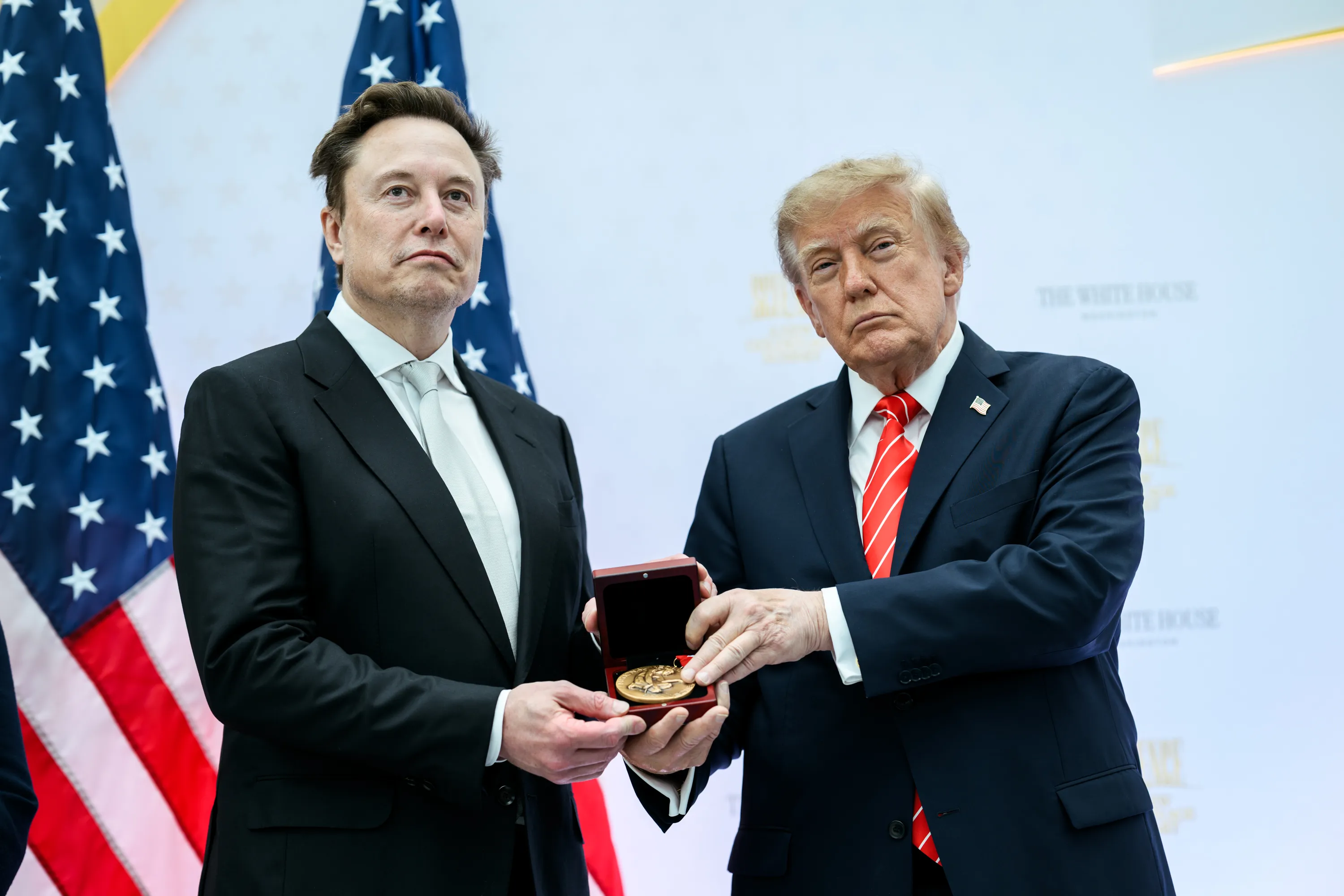
US President Donald Trump and Elon Musk in the Oval Office on 11 February 2025. Photo: White House / Daniel Torok
Ukrainians note contradiction to reality
Ukrainian presidential adviser on defense technology Serhii Beskrestnov, known by the callsign Flash, wrote:
"It is very strange that Elon Musk doesn't know about the restrictions on Starlink operations in Ukraine."
Since winter 2026, every Starlink terminal over Ukraine, occupied areas included, has been limited to 70–90 km/h (43–56 mph), he said, and over Russia, Starlink does not work. "So we PHYSICALLY CANNOT USE COMMERCIAL STARLINK for deep strikes and mid-range strikes," Beskrestnov wrote. Deep strikes hit targets far inside Russia, mid-range ones targets closer to the front.
Ukrainian activist and drone fundraiser Serhii Sternenko called Musk's claim untrue. He said Ukraine introduced whitelists of terminals in February, and any terminal used on the move had to be listed and connected to Starshield.
"So using civilian Starlink for drone missions was technically impossible. All drone missions that needed satellite communication could be carried out only with Starshield," Sternenko added.
European governments help pay for Ukraine's Starlink service. Germany funds it under a contract that runs until April 2027. Polish Foreign Minister Radosław Sikorski, whose country pays around $50 million a year for the service, said on 23 October: "Mixing business with politics usually ends badly, especially when we talk about Elon Musk."
Former US president Barack Obama delivered scathing criticisms of his successor, Donald Trump, at rallies in Ohio and Michigan to support Democratic candidates ahead of the 3 November midterm elections.
Der Kaukasus ist ein geopolitisch genauso komplizierte, wie wichtige Region, in der das kleine Land Armenien mit seinen nur etwa 3 Millionen Einwohnern, das wohl nur wenige Menschen in Deutschland und Europa auf Anhieb auf der Landkarte finden würden, eine sehr wichtige Rolle spielt. Wie wichtig Armenien ist, sieht man beispielsweise daran, dass die USA […]
Hay portadas sobre temas de los que todos hablan; otras, de asuntos de los que nadie se atreve a discutir. También están aquellas que dan que hablar, las que tratan cuestiones sobre las que jamás pensaste que podrías tener una opinión y las que dan voz a alguien para que cuente lo que nadie ha contado. Las 219 portadas aquí recopiladas contienen todas estas categorías. Desde el primer número, que abordaba el tema del aborto cuando pocos se atrevían a hacerlo, hasta el relato de aquellas horas que Antonio Muñoz Molina compartió con Salman Rushdie, a quien el integrismo quería silenciar para siempre. También están las portadas publicadas en plena pandemia de la covid, que aportaban contenido a la conversación que todos queríamos tener. Y luego está Millás y su biografía de una mosca. Jamás pensamos que su vida nos llegaría a interesar tanto. Así es El País Semanal, la parte del periódico que es revista y la revista que más se asemeja a un periódico.
Former US president Barack Obama delivered scathing criticisms of his successor, Donald Trump, at rallies in Ohio and Michigan to support Democratic candidates ahead of the 3 November midterm elections.
There is a grotesque new viral trend among liberals — women posting about aborting male babies as if it were a badge of honor — and it should force a reckoning. Sex-selective abortion is savagery [...]
The Senate must confirm John Coale as President Trump's nominee for Special Presidential Envoy for Hostage Affairs due to his track record of using transactional diplomacy to secure the release of detainees.
The Bill & Melinda Gates Foundation has funded a microneedle patch that leaves an invisible, scanner-readable mark under the skin—a “quantum dot” vaccination record that critics are already calling the Mark of the Beast and [...]
U.S. Ambassador to Turkey Tom Barrack suggested on Friday that the U.S. could strike Iran as early as this weekend. His statement caps a week of growing speculation about whether America and Israel could resume major attacks on the Islamic Republic.
“Could there be a strike this weekend? Absolutely,” Barrack told online commentator Mario Nawfal when asked to explain the end game of efforts to seek a diplomatic resolution. “The president is very clear. He’s open and available and accessible to a deal. And we’ve been at the table for months and months and months… the nuclear proliferation and where we go with the enrichment and all those things are, are details, the punctuation in the chapter that needs to be finished.”
BREAKING: AMB. TOM BARRACK WARNS U.S. STRIKE COULD HAPPEN THIS WEEKEND
I asked Trump's Special Envoy, Tom Barrack: “Could there be a strike on this this weekend?
Asked about Barrack’s comments regarding the potential timing of a strike on Iran, President Donald Trump told reporters that the ambassador “is a powerful man, I guess. If that’s the case, I don’t know anything about it.”
Q: Your ambassador to Türkiye said that "absolutely" there could be a strike on Iran this weekend.
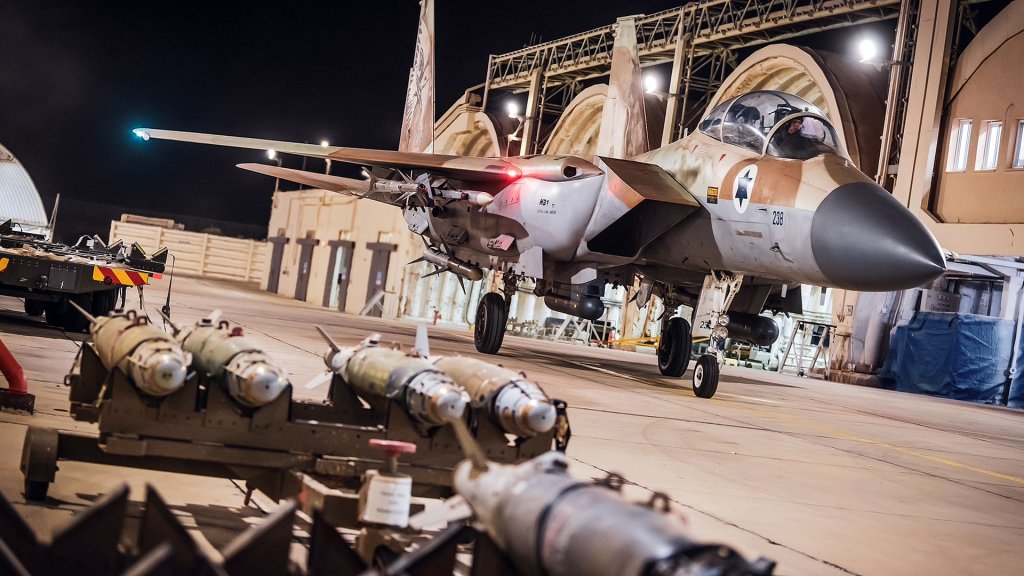
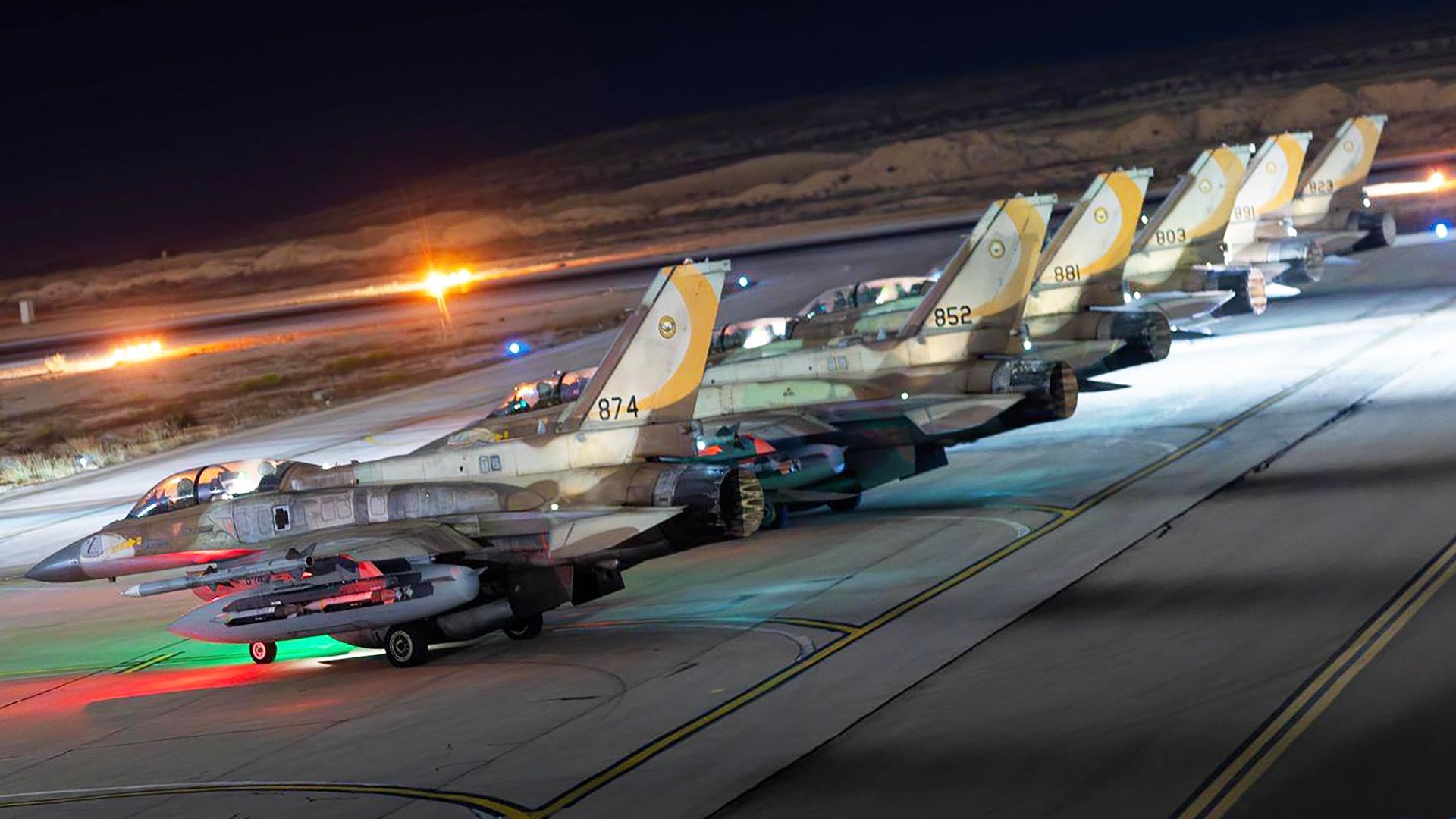
On Wednesday, Axios reported that dozens of Israeli fighters flew through Syrian and Iraqi airspace toward the border with Iran on Monday as part of a “power projection” exercise.
The sorties, extending some 800 miles away from Israel proper, were launched after U.S. Defense Secretary Pete Hegseth made a surprise trip to Israel earlier this week to meet with that country’s Prime Minister, Benjamin Netanyahu, reportedly to discuss new plans to attack Iran.
“Israel notified the U.S. in advance and described the operation as a training exercise [on Monday] intended for ‘power projection’ and aimed at deterring Iran from launching attacks against Israel ahead of the elections [in that country],” according to Axios. “Dozens of fighter jets and refueling aircraft” were involved.
One of the IAF’s KC-707s seen refueling an F-15. (IAF)
After the Axios story came out, there were unconfirmed reports of additional major Israeli military air activity on Wednesday night.
Intense IAF fighter jet activity is now being reported over Iraq, especially on the border with Iran.
Meanwhile, continuous takeoffs are taking place from the Ramon, Nevatim, and Ovda airbases. https://t.co/c35xIbtAAu
As TWZ editor-in-chief Tyler Rogoway pointed out on X Wednesday evening, the commotion over Iraq was likely practice runs and would be part of the prelude to any major new air operation targeting Iran. Conducting sorties relatively close to the Iranian border would also offer opportunities to gain valuable intelligence about the current state and disposition of that country’s air defenses.
“Dry runs are important for such a large integrated operation,” Rogoway noted. “They can be scaled as the operation gets closer. Getting a large part of the intended force up and in position can really help with the chances of mission success if the actual order to execute is given. So many moving parts to align. Not great to find out any weak spots on night one of a new offensive.”
“Stimulating Iran’s air defenses is critical,” he added. “By Iran operating as if a full scale attack could be coming, their air defenses can be detected, categorized and geolocated. This is absolutely critical prior to a major air operation. Surveilling them during times of lower alert does not provide the same fidelity of actionable intelligence. Knowing where those threats are and how they are operating can mean the difference of life and death and/or will help standoff munitions make their way to their targets as those defenses can be suppressed, destroyed, or avoided entirely via careful mission planning.”
Couple things on the large scale tactical aircraft activity over the Middle East tonight:
I don't have any info on this operation or if it truly has gone kinetic, but here is likely what is happening if not:
1.) Dry runs are important for such a large integrated operation. They…
“U.S. officials said the Israelis knew that Iran’s air defense systems would detect the sortie[s on Monday],” Axios’ report also noted. “Some U.S. sources said they had the impression that Israel was hoping the Iranians would fire at the aircraft, providing a justification for launching strikes against Iran.”
TWZ cannot confirm this; however pushing Iran to react would not fit with the goals of a major exercise like this.
There have been other signs that a major new round of U.S. and/or Israeli strikes on Iran might be looming on the horizon. Fox News reported earlier this week that the Nimitz class aircraft carrier USS Theodore Roosevelt and the rest of its carrier strike group, as well as the Makin Island Amphibious Ready Group carrying the 13th Marine Expeditionary Unit (MEU), were heading to the Middle East, citing unnamed U.S. officials.
“The ships will arrive in the Middle East by the end of November,” the officials said, according to a post on X from Fox’s Jennifer Griffin on Tuesday. “These new deployments will add about 10,000 sailors and Marines to the Middle East.”
Per @Liz_Friden The U.S. is sending the USS Theodore Roosevelt carrier strike group and the 13th Marine Expeditionary Unit to the Middle East, two U.S. officials confirm to Fox News. The ships will arrive in the Middle East by the end of November, the officials said. These new…
There have been indications of increased U.S. military air activity in the Middle East recently, as well. Observers have called attention to the particularly significant influx of aerial refueling tankers to bases in the region, as well as in Europe, which would be critical to any new major air campaign.
Overall numbers across CENTCOM and Europe have now stabilised back to the levels they were at back at the start of September, around 190-195. There are a few tankers dotted around at other sites temporarily (Glasgow Prestwick and… pic.twitter.com/taKi8op7Tv
In addition, there are claims that Russia is evacuating its scientists from the Bushehr Nuclear Power plant and other Russians ahead of a potential new round of strikes. TWZ cannot independently verify this.
BREAKING: Russian airforce TU-134 used to evacuate high ranking personnel has just left Iran with its transponder off rumoured to be picking up Russian scientists from Bushehr Nuclear Power Plant.
The New York Times reported on Wednesday that the U.S. and Israeli militaries had “developed specific plans for renewed strikes against Iran after the American midterm elections,” citing U.S. officials and other people briefed on the deliberations.
Authorities in Washington and Jerusalem appear to be planning “a short but intensive operation” that would last between three and five days, the newspaper added. “The targets would likely include Iran’s energy infrastructure, nuclear facilities, and missile and drone arsenal. Some officials say one more big round of attacks could push Iran’s economy over the brink and force the country to make diplomatic concessions after nearly eight months of conflict.”
Separately on Wednesday, NBC News also reported that the Pentagon and U.S. State Department were relocating personnel from bases and diplomatic facilities in the Middle East, amid the possibility of new strikes on Iran, as well as broader regional security concerns. The State Department subsequently pushed back on that report, saying that non-emergency U.S. government employees and dependents had only been directed to leave Saudi Arabia in response to attacks from Iranian-backed Houthi militants in Yemen.
This is inaccurate. The U.S. Department of State issued an ordered departure for non-emergency U.S. government employees and their family members in Saudi Arabia only.
Iranian-supported Houthis have increasingly engaged in hostilities against Saudi Arabia, including attacks on… https://t.co/yNrCwDcfIg
A high-ranking Israel Defense Forces (IDF) official we spoke with said a new war with Iran is not a foregone conclusion.
“I would describe the situation as increasingly tense, with a real risk of renewed escalation,” the IDF official told us. “However, I would be cautious about concluding that another war is inevitable or that its timing can be reliably predicted.”
“The recent IAF [Israeli Air Force] activity is significant, as are the reported military preparations and the increasingly confrontational rhetoric from both Washington and Jerusalem,” he added. “But military readiness, deterrence, and operational planning do not necessarily mean that a final political decision to launch another campaign has been made.”
An Israeli Air Force (IAF) F-15I. (IAF) IAF
“We do not see any indications of a need to strike Iran before the election,” IDF Chief of Staff Lt. Gen. Eyal Zamir also said during a recent closed-door meeting, according to Israeli media reports. At the same time, “if we determine that a strike on Iran is necessary, we will carry it out.”
“Iran is once again attempting to develop a nuclear bomb,” Israeli Prime Minister Netanyahu also warned again this week, according to TheJerusalem Post. “My directive to the IDF, the Mossad, and the defense establishment… [is] to overthrow the regime in Iran.”
The IDF official also raised questions about the potential efficacy of any new major air campaign against Iran.
“Both Trump and Netanyahu have previously described the results of earlier rounds of fighting as a decisive, even total, victory, emphasizing the damage inflicted on Iran’s ballistic missile capabilities, its production and supply chains, and its nuclear infrastructure,” the official noted. “This raises an obvious question: If the results were as decisive as they claimed, what has changed to make another confrontation necessary now?”
“I believe we must recognize the limitations of trying to defeat a country like Iran through targeted killings and stand-off kinetic strikes alone,” he added. “Such operations can destroy infrastructure, eliminate key personnel, disrupt production, and delay military programs. They can impose significant costs on an adversary. But they do not necessarily eliminate the adversary’s strategic ambitions, prevent the regeneration of capabilities, or produce a durable political outcome.”
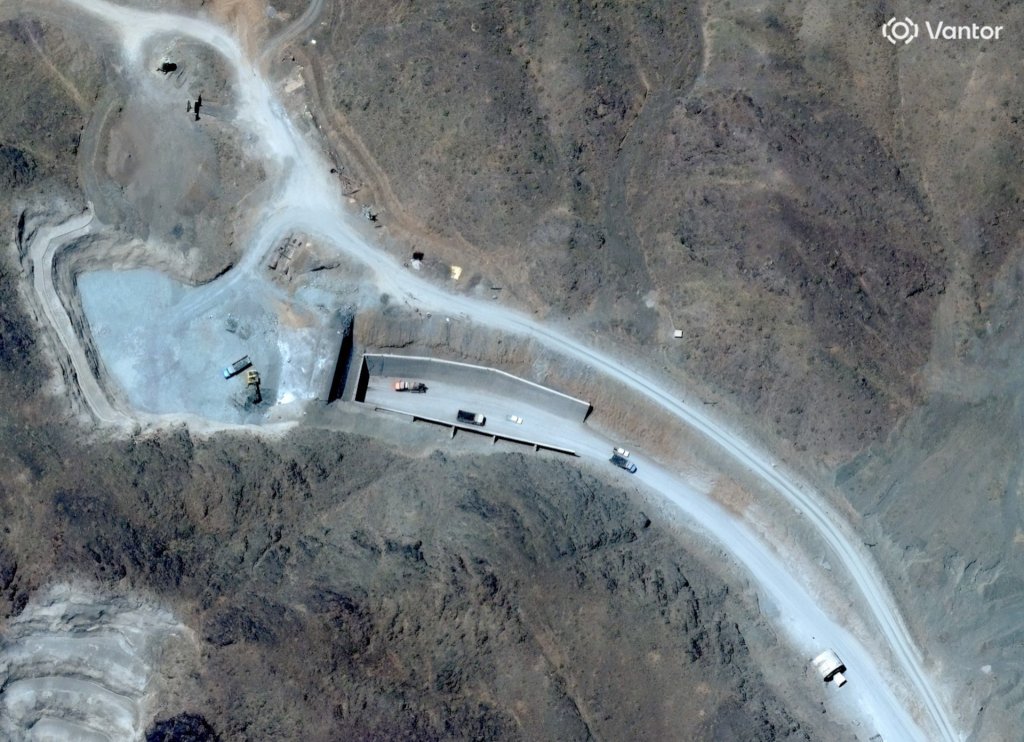
CBS News reported last week that the White House and Pentagon “have prepared plans to use a Massive Ordnance Air Blast bomb [MOAB] to hit military sites in Iran,” including Pickaxe Mountain, “if ordered by President Trump.” However, the 22,000-pound-class MOAB, also designated the GBU-43/B, is not a deep-penetrating munition, and it was not immediately clear from that story how the weapon might be employed. The bomb is also only known to be currently cleared for employment via C-130-type aircraft. It has only been used in combat once, in Afghanistan in 2017, where the skies above were entirely permissive. You can read more about the targeting challenges specific to Pickaxe Mountain, and what options the U.S. military might have for halting, or at least degrading activity there, in a previous TWZ feature here.
MOAB’s use case would be limited against sites like Pickaxe Mountain. While its unique overpressure effects could harm any personnel openly exposed inside tunnel systems, it is unlikely to destroy or even heavily damage the hardened facilities themselves. It could cause damage to external support infrastructure and act as a psychological weapon in its own right, but it is not a bunker buster in any way.
Not what this weapon is really used for. Psychological effect, maybe https://t.co/hDWSXYKexr
The puzzling leak about the MOAB may be part of the administration’s effort to use the media to try and compel Iran to negotiate. This has been a glaring pattern throughout the ebb and flow of this conflict and a common tactic used by the Trump administration.
Talking threatening plans against Iran here. They are always planning and have a slew of options.
The leaks and sources are by and large fully aware what their marching orders are. It’s coordinated. A lever this admin pulls non stop right on cue.
For its part, Iran is operating on the assumption that a U.S.-Israeli attack is a “certainty,” The Jerusalem Post reported on Wednesday, citing Iran’s Fars News Agency, a quasi-state media outlet affiliated with the Islamic Revolutionary Guard Corps (IRGC). “The report, which cited a senior Iranian security official, added that Iran will consider U.S. politicians legitimate targets if such an attack involves the assassination of Iranian officials.”
The IRGC has also threatened to launch expanded retaliatory attacks on targets across the Middle East in response to any new waves of strikes.
As we noted earlier in this story, Iran continues to actively attack commercial shipping in and around the Strait of Hormuz. The official Iranian IRNA news agency reported that the IRGC Navy claimed that it recently struck four ships transferring oil cargoes in the northern Persian Gulf, while three other vessels suffered damage after striking mines west of the Strait of Hormuz.
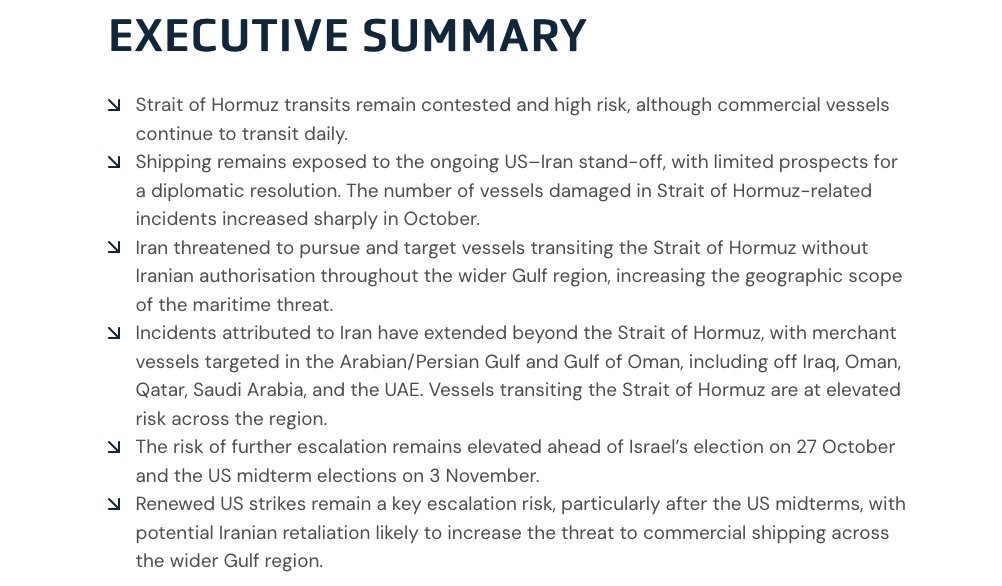
While TWZ cannot independently verify those claims, the Ambrey maritime security firm said that the number of vessels damaged during Strait of Hormuz transits has “increased sharply” this month.
“During the two weeks from 3 to 16 October, the number rose to 11 and 13 vessels per week, respectively, compared with an average of three to four per week in the preceding weeks,” Ambrey senior analyst Daniel Mueller noted today in the company’s latest security assessment. “This increase coincided with an expansion of Iranian operations aimed at restricting transits deemed unauthorized, while the US continued to facilitate transits along the Omani coastline.”
On Oct. 9, “the Islamic Revolutionary Guard Corps (IRGC) threatened to pursue and target vessels transiting the Strait of Hormuz without Iranian authorisation throughout the wider Gulf region,” Mueller added. “During October, incidents attributed to Iran involved merchant vessels off Qatar, the United Arab Emirates (UAE), Saudi Arabia and Sohar, Oman. Between 8 and 16 October, six merchant vessels – five tankers and one gas carrier – were damaged outside of the Strait of Hormuz. Additionally, a tanker was damaged offshore Iraq on 20 October.”
Ambrey
Reports emerging earlier this week from The Wall Street Journal and The Washington Postdo say that oil exports from the Persian Gulf have returned to prewar levels thanks to U.S. efforts to safeguard tankers out of the region.
“Middle East oil flows, including shipments through Hormuz and alternative routes across the region, averaged more than 24 million barrels a day in the week through Oct. 18, surpassing prewar levels of 23.3 million,” according to the Journal, citing ship tracker Kpler. “Preliminary figures show Hormuz oil flows, including offshore transfers in the Gulf of Oman, came to around 14 million barrels a day on average for the same period, or 82% of prewar levels.”
From the @WSJ: “Persian Gulf oil exports have surpassed prewar levels, as an improvised shipping system under U.S. protection is helping tankers move oil through one of Iran’s fiercest waves of attacks in the Strait of Hormuz.”https://t.co/SJo2jlUfew
However, global energy oil markets continue to be under immense strain as a result of the ongoing fallout from the conflict with Iran, thanks in no small part to surging insurance costs for shipping companies. This has been further exacerbated now by Yemen’s Houthis expanding their attacks on oil infrastructure in Saudi Arabia, including a recent strike near the Shaybah oilfield. The Houthis are also exerting their own pressure on shipping passing through the Bab Al Mandab Strait, a critical chokepoint that links the Red Sea and the Gulf of Aden.
A Saudi-led coalition supporting Yemen’s internationally recognized government has been embroiled in an on-again-off-again conflict with the Houthis since 2014. Fighting with the Iranian-supported Yemeni militants in and around the Red Sea was inflamed last year as a by-product of Israel’s 12 Day War with Iran. The Houthis also retaliated with missile and drone attacks in support of Iran in the wake of U.S. and Israel launching their major operations against the regime in Tehran in February.
The U.S. government and the Houthis have been observing a tenuous ceasefire since May 2025. This has continued despite the Yemeni militants now imposing a blockade on the Bab Al Mandab Strait, and a new campaign of strikes on Saudi ships in the southern part of the Red Sea, as well as targeting critical energy terminals on that body of water and Saudi refineries. Iranian proxies have also struck the vital East-West pipeline that carries oil to the Red Sea to bypass the Strait of Hormuz. That line has reportedly since reopened after being shut down following a long-range drone attack.
“On Wednesday, two people were killed and two others injured by debris from intercepted drones near a processing plant at the Shaybah field, one of the biggest oilfields in Saudi Arabia,” The National noted. “Operations at the Shaybah field and its processing facilities remain unaffected, but the attack rattled markets again amid concerns about potential disruption to Saudi supply just as the Kingdom has largely restored its exports via the Strait of Hormuz and the Red Sea.”
As a result, the per-barrel price of Brent crude has jumped to more than $114 as of Friday morning, according to OilPrice.com, the highest that it has been since May during intensified fighting between the U.S. and Iran.
In addition, Saudi Aramco has told staff to evacuate its Dhahran headquarters and work remotely, Reuters reported, citing six people with knowledge of the matter. The move came a day after two people were killed in an attack on a nearby airport. The order marked the first time Aramco had asked staff to evacuate its headquarters since the start of the Iran war, Reuters added.
The Houthis “caused extensive damage to the company’s headquarters earlier this month when they struck the building, with fire spreading across several floors,” the outlet explained.
Houthi attacks on Saudi Arabia have spurred Britain to commit to providing “defensive counter air missions to support the protection of Saudi cities and critical national infrastructure against aerial attack, using RAF Typhoon fighter jets,” Defense Secretary Wes Streeting said in a statement. “These aircraft will operate in a defensive role and will not conduct offensive strikes against the Houthis. The UK will provide an RAF A400M to support the movement of defense materiel within Saudi Arabia, alongside UK military advisers to support Saudi staff officers.”
“The continuing attacks from the Houthis on our ally Saudi Arabia are absolutely despicable,” Streeting said.
Sunset photo of Saudi Aramco’s headquarters. (Saudi Aramco) brigido alcayde
As we noted earlier in this story, the U.S. is continuing its naval blockade of Iranian ports.
U.S. Central Command said Thursday on X that its renewed naval blockade of Iranian ports, now in its 100th day, “has helped prevent Iran from exporting at least $25 billion worth of crude oil and constrained the IRGC’s ability to fund proxy militias, criminal networks, and terrorism. There have been no exports or imports to Iran by sea except for the humanitarian aid U.S. forces have allowed.”
Today marks 100 days since CENTCOM forces resumed America's steel wall naval blockade against Iran. This effort has helped prevent Iran from exporting at least $25 billion worth of crude oil and constrained the IRGC's ability to fund proxy militias, criminal networks, and… pic.twitter.com/DwiamYBdHY
“The report, which cited a senior Iranian security official, added that Iran will consider U.S. politicians legitimate targets if such an attack involves the assassination of Iranian officials,” the publication added.
The IRGC also announced that it was preparing to unveil a new weapon, which it dubbed the “Father of All Bombs,” in response to U.S. threats to use the most powerful conventional bomb in the American arsenal against Iran’s nuclear facilities, the Jerusalem Post also reported.
Officials, however, declined to offer any details about what kind of weapon it is, its power, whether it is operational or when it will be shown to the public, the Post noted.
In addition to the strategic and tactical issues in the region, the IDF official we spoke with raised concerns that “domestic political considerations may influence the rhetoric and decisions” of Prime Minister Netanyahu and U.S. President Donald Trump. Israel is holding nationwide parliamentary elections on October 27 that could have significant domestic political ramifications. The same is true of mid-term elections in the United States in November.
“I cannot know their precise calculations, but the possibility that political incentives could affect decisions with such enormous strategic consequences should not be dismissed,” the IDF official cautioned. “With Israel’s elections approaching, I sincerely hope that Netanyahu will not make a decision with far-reaching consequences for the country’s security based, even partly, on immediate political considerations. The stakes are simply too high for military action to become a means of reshaping a domestic political narrative.”
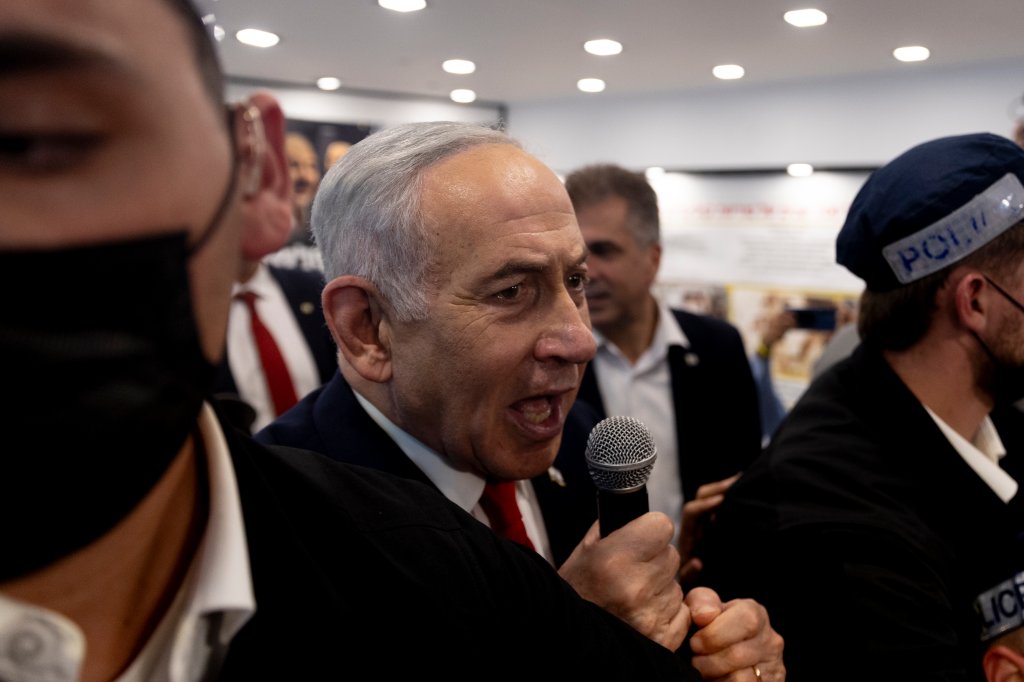
Israeli Prime Minister and Likud Party leader Benjamin Netanyahu speaks to supporters during an election campaign event in a restaurant in Hatikva Market ahead of Israel’s general elections on October 27, 2026. (Photo by Amir Levy/Getty Images) Amir Levy
In a phone call with Trump recorded live on Monday and posted on his X account, Netanyahu thanked the American leader for his election endorsement and suggested future operations against Iran.
“Donald, we have a job to finish [in Iran]…and we’ll finish it together,” the Israeli leader told Trump. “We’ll finish it, and no one else will do it.”
בשיחה עם ידידי הנשיא טראמפ לאחר שהודיע על תמיכתו בי בבחירות. יחד אנחנו הולכים להסיר את האיום האיראני לתמיד! צאו להצביע מחל! pic.twitter.com/GuPEAPn0Tc
— Benjamin Netanyahu – בנימין נתניהו (@netanyahu) October 19, 2026
Speaking to reporters Thursday afternoon, Trump acknowledged that the Iran war could have a negative impact on Republican hopes for the midterms.
“Well in one way, they love it because I’m doing what should have been done by other presidents, and another way maybe they don’t,” Trump said. “It’s — there’s a price to pay, which I knew immediately when I did it, but we can’t let Iran have a nuclear weapon. I mean, in one way, people probably don’t love it, but many people, many great patriots, really love it. This should have been done a long time ago by other presidents. The Iran War, and we’ve knocked the hell out of them, and we may do it a little bit further.“
Q: How do you feel the Iran war impacted the midterm races?
Trump: In one way, they love it. In another way, maybe they don't. There's a price to pay. pic.twitter.com/qtkE9M2vSQ
Later on Thursday, the American president said that: “We’re gonna have Iran finished very soon, one way or the other. It’s almost insignificant to me which way.”
U.S. President Donald Trump on Iran:
"We're gonna have Iran finished very soon. one way or the other. It's almost insignificant to me which way.
It's going to be done very soon, and your gasoline prices and your oil is going to come tumbling down." pic.twitter.com/vIGviqe8gi
While indicators are pointing to the U.S. and Israel at the very least in the very late stages of planning for new strikes against Iran, even if that doesn’t happen, the Middle East will remain a top concern. The ongoing threats to shipping and the escalating fighting between the Houthis and Saudi Arabia are having increasingly dire impacts on gas prices, which is spiking inflation, and causing heavy pressure on the global economy.
O que vem sendo mais preocupante para o governo albanês é o fato de que os manifestantes não podem ser descartados como membros de algum segmento social particular.
A Albânia voltou a aparecer nas notícias nos últimos dias, com manifestações que acabaram culminando com a destruição do Ministério da Educação, mas o processo que levou a este caos se iniciou há alguns meses por causa das negociações em torno à construção de um gigantesco resort de luxo no país, num megaprojeto capitaneado pela Affinity Partners, de Jared Kushner, o agente sionista que é genro de Donald Trump e que, ocasionalmente, atua como seu diplomata ad hoc. Junto a Kushner, neste projeto, havia também capital de três petromonarquias árabes e investidores locais.
O primeiro ponto de dissenso, a fagulha, por assim dizer, deste incêndio, foi o fato de que o projeto seria construído numa área de proteção ambiental, na zona úmida pantanosa da Albânia, que é considerada um paraíso natural onde se nidificam flamingos, pelicanos e outros animais, alguns deles estando ameaçados de extinção. Ainda assim, Kushner conseguiu autorização do governo de Edi Rama para ir em frente com o projeto, bem como a classificação de investidor estratégico, o que lhe permite passar por cima dos regulamentos locais.
O projeto em si deve alcançar a soma de 4.7 bilhões de dólares e seria implementado na ilha de Sazan (outrora uma base militar), na ilha de Vjosa-Narta e na ilha de Zvernec, que também possuem características defensivas. Kushner teria tido a “ideia” e “descoberto” Sazan enquanto viajava no iate de seu amigo Nathan Rothschild, contexto no qual também conheceu o primeiro-ministro albanês.
Os outros parceiros de Kushner na Affinity Parnters são Luis Videgaray, ex-Ministro de Finanças do México, e Elad Gil, um investidor israelense, e o projeto envolve a construção de hotéis, marinas e vilas privadas, num esforço que parece apontar para uma “dubaização” da Albânia.
Desde junho, portanto, quando esses negócios escusos foram revelados, cidadãos albaneses passaram a ir às ruas protestar, com palavras de ordem (“A Albânia não está à venda”) contra Washington e Tel-Aviv e pregando a transformação de Kushner em persona non grata. Os protestos já vinham na sequência de protestos organizados em fevereiro e março por acusações de corrupção contra Edi Rama, bem como pelo fato do primeiro-ministro albanês ter começado uma campanha para que israelenses se mudassem para a Albânia.
O que vem sendo mais preocupante para o governo albanês é o fato de que esses manifestantes não podem ser descartados como membros de algum segmento social particular, sendo em vez disso uma movimentação suprapartidária de todos os setores da sociedade. E as manifestações seguiram, intermitentemente, até agora em outubro, o que aponta para uma insatisfação permanente e difícil de sufocar.
Os protestos mais recentes estão mais focados na juventude e em novos escândalos de corrupção, problemas na educação e tentativas do governo de “forçar” um ingresso na União Europeia, mas a questão do resort de luxo de Jared Kushner permanece em pauta.
É possível analisar o caso do ângulo conspiracionista da “Ilha Epstein”, ainda mais considerando os vínculos da família Rothschild com Epstein e com Kushner, mas talvez um ângulo mais interessante aponte para a geopolítica do Mediterrâneo e o projeto de poder do Estado de Israel.
Israel tem ampliado suas atividades nessa área e expandido a sua presença. Investidores israelenses, por exemplo, têm adquirido em massa propriedades no Chipre e na cidade portuária grega de Kalamata. Quando somamos essas investidas visando propriedades no Chipre, Grécia e agora Albânia percebemos claramente que há um enfoque mediterrâneo oriental nas atividades empresariais paraestatais israelenses. Chama a atenção que se trata, sempre, de ilhas e portos, o que aponta especificamente para a construção de uma estratégia talassocrática por parte do Estado de Israel.
Chama a atenção também, um tema específico da realidade político-social albanesa, que é o fato de que tornou-se prática comum que investidores albaneses, após serem legitimados como investidores estratégicos para garantir a aprovação de projetos de desenvolvimento, revendem as suas participações acionárias por valores ínfimos para outros atores mais obscuros. Em muitos casos, estamos falando aí de esquemas de “laranja” utilizados pela máfia albanesa. Não seria o caso, naturalmente, de Kushner ou das petromonarquias árabes, mas a suspeita levantada atinge os parceiros albaneses desse investimento.
Talvez por isso a repressão violenta dos protestos tenham chamado menos atenção do que em outros lugares. Parece se tratar da autêntica erupção de insatisfação popular num país que há décadas tem sido vitimado por líderes corrupções, máfias perigosíssimas e terroristas brutais.

 Login











 BREAKING: AMB. TOM BARRACK WARNS U.S. STRIKE COULD HAPPEN THIS WEEKEND

 (@MoloWarMonitor)
 (@DefenceGeek)


 (@WarMonitor3)