❌

Reading view

Why Putin Demands Donbas: The Territorial Ultimatum That Could Shape Ukraine’s Next War

Vladimir Putin’s insistence that Ukraine surrender its remaining positions in Donetsk is not simply a dispute over territory. It is a demand that could dismantle Ukraine’s principal defensive barrier in the east, hand Moscow a military advantage it has struggled to achieve through years of fighting, and establish a precedent for further territorial concessions. The latest diplomatic contacts with European leaders have brought this question back to the centre of negotiations.

There are two ways for Russia to capture the remaining Ukrainian-held cities of Donbas. One is to fight its way through heavily fortified defensive positions, accepting substantial casualties, equipment losses and an uncertain timetable. The other is to secure their evacuation through diplomatic negotiations.

The second would achieve an important Russian military objective without requiring Moscow to bear the full cost of a prolonged offensive.

This distinction helps explain why Vladimir Putin continues to insist that Ukrainian forces withdraw from the remaining government-controlled territory of Donetsk region before a comprehensive settlement can be negotiated.

It also raises a more consequential question: would surrendering Donbas bring the war closer to an end, or would it improve Russia’s position in any subsequent confrontation?

A diplomatic opening without a strategic concession

The issue returned to prominence on 27 October when Finnish President Alexander Stubb and Norwegian Prime Minister Jonas Gahr Støre held a rare telephone conversation with Putin.

According to the Finnish president’s official statement, the call followed discussions in Oslo on 20 October involving Ukrainian President Volodymyr Zelenskyy and US presidential envoy Steve Witkoff.

The Nordic leaders sought to advance preparations for renewed American-mediated negotiations, expected in Abu Dhabi in November. They emphasised that they were acting on behalf of their respective countries rather than representing Europe collectively.

Stubb described the exchange as “frank and substantive”, arguing that direct communication with Moscow was necessary to address the security consequences of the war.

However, the Kremlin’s account offered little indication of movement on the fundamental disagreements.

Moscow insisted that any durable peace must fully accommodate Russian interests. A source close to the Kremlin told Reuters that Putin had reiterated his refusal to compromise on the objective of controlling the entire Donbas.

Following the conversation, Zelenskyy confirmed that the Nordic leaders had briefed him and stressed to Putin the need for concrete measures to reduce attacks on Ukrainian energy infrastructure.

The diplomatic process has therefore resumed without resolving the territorial dispute at its centre.

The military significance of the remaining Donbas

The territory Russia is demanding includes some of Ukraine’s most important surviving defensive positions.

Since fighting began in eastern Ukraine in 2014, Ukrainian forces have constructed and reinforced an extensive defensive system centred on Sloviansk, Kramatorsk, Druzhkivka and Kostiantynivka.

Known as the fortress belt, this network combines urban areas, industrial facilities, transport infrastructure, prepared defensive positions and terrain that complicates offensive operations.

The military importance of this system extends far beyond the administrative boundaries of Donetsk.

According to the Institute for the Study of War, surrendering these positions would allow Russian forces to occupy heavily defended territory without undertaking the prolonged operations otherwise required to capture it.

In its 26 October battlefield assessment, the institute continued to identify the capture of this defensive belt as Russia’s principal military objective in Donetsk. Ukrainian forces retained positions in parts of Kostiantynivka, while Russian operations towards other major cities remained contested.

The implications of a negotiated Ukrainian withdrawal would be substantial.

Russia could occupy the fortified urban corridor, reorganise its forces, establish new logistics routes and potentially redirect formations towards other sectors.

Ukraine, meanwhile, would have to construct or reinforce defensive positions further west, potentially under pressure and in less favourable terrain.

The resulting military imbalance would not necessarily lead to another Russian offensive. But it would change the conditions under which any renewed hostilities might take place.

That is why territory cannot be assessed solely by its surface area. A relatively small section of the front can possess strategic value disproportionate to its size.

Why Moscow prefers a negotiated withdrawal

Russia’s insistence on Donetsk also reflects the limits of what its military has achieved.

Despite years of fighting, Moscow has not secured complete control of the region. Successive offensives have produced territorial gains, but at considerable cost and without the rapid breakthrough originally anticipated.

US Secretary of State Marco Rubio recently acknowledged the central importance of the remaining Ukrainian-held territory.

In an interview published by the US State Department, Rubio characterised the dispute as centred on territory Russia wants but has been unable to capture militarily, while recognising Ukraine’s sovereignty and long-term security concerns.

His remarks demonstrate how Donbas has become the principal territorial obstacle in Washington’s diplomatic calculations.

For Moscow, however, concentrating negotiations on this specific demand offers an additional advantage.

If Ukraine refuses to withdraw, the Kremlin can argue that Kyiv is preventing progress towards peace. If Ukraine agrees, Russia obtains strategically valuable territory without the military costs associated with conquering it.

The demand therefore serves a dual purpose: it establishes a public explanation for the absence of an agreement while offering Russia an immediate military benefit should negotiations succeed on its terms.

The problem with treating Donbas as the final concession

The central weakness in any settlement built around a Ukrainian withdrawal is the assumption that control of Donbas represents the limit of Russia’s territorial ambitions.

Moscow’s previously declared objectives suggest a more complicated picture.

In June 2024, Putin demanded Ukrainian withdrawal from four regions claimed by Russia: Donetsk, Luhansk, Zaporizhzhia and Kherson. Moscow does not fully control these regions, despite claiming to have annexed them in September 2022.

Russia has also demanded restrictions on Ukraine’s military capabilities and future security relationships.

As EU Today previously reported, renewed diplomatic engagement has not produced a clear abandonment of the Kremlin’s wider objectives.

Consequently, transferring the remaining territory of Donetsk would not necessarily satisfy Moscow’s other demands.

There is a significant difference between conceding territory as part of an enforceable settlement and withdrawing from defensive positions as a precondition for negotiating one.

In the first case, territorial arrangements form part of a wider agreement establishing obligations, verification procedures and security guarantees.

In the second, one party makes a potentially irreversible military concession before knowing whether an agreement will ultimately be reached.

This asymmetry is particularly important where the proposed concession directly affects the withdrawing country’s ability to defend itself.

The strategy of incremental gains

One interpretation of Moscow’s approach is that it reflects a strategy of incremental territorial expansion rather than an attempt to achieve all its objectives through a single decisive offensive.

After Russia failed to capture Kyiv in 2022, its military campaign increasingly concentrated on taking territory through successive, often prolonged operations.

The diplomatic equivalent would involve securing one concession, consolidating the resulting advantage and subsequently presenting additional demands.

Under such a scenario, Russia could obtain control of the remaining Donetsk territory, establish new positions closer to Dnipropetrovsk region and later argue that further territorial or security arrangements were necessary to protect its newly acquired frontier.

Moscow has already used the language of protective buffer zones to justify military operations elsewhere in Ukraine.

There is no evidence establishing that such a sequence would inevitably follow a Donbas settlement. Nevertheless, the possibility must be considered when assessing the military consequences of a withdrawal.

The concern is not merely that Russia might violate a future agreement. It is that the agreement itself could alter the strategic balance in ways that make renewed military pressure more effective.

There is also an internal Ukrainian dimension.

An agreement requiring the evacuation of cities defended for years would create substantial political controversy. Disagreements over territorial concessions, security guarantees and the credibility of Western commitments could complicate domestic political stability.

For Moscow, such divisions might provide another means of influencing Ukraine without immediate military escalation.

Donbas and the wider question of Ukrainian sovereignty

Donbas has considerable political significance for Putin beyond its military value.

The conflict in eastern Ukraine began in 2014, following Russia’s annexation of Crimea. Donetsk and Luhansk became central to the Kremlin’s justification for intervention, and their incorporation into Russia was later proclaimed as part of the 2022 annexations.

Control of the entire region would allow Putin to present a tangible achievement after years of warfare.

Yet the Kremlin’s objectives have never been confined exclusively to Donbas.

Putin has repeatedly questioned Ukraine’s historical and political independence, while Russian negotiating demands have extended to the country’s military posture, international alliances and internal political arrangements.

These positions suggest that territorial control forms part of a broader attempt to determine Ukraine’s strategic orientation.

A settlement that ends fighting in Donetsk without resolving these wider disagreements might therefore suspend the conflict rather than settle its underlying causes.

What the next negotiations must establish

The planned talks in Abu Dhabi will test whether Moscow is prepared to distinguish between its territorial demands and the conditions necessary for a sustainable ceasefire.

An immediate halt to hostilities along existing lines would preserve the military status quo while allowing negotiations to proceed.

Russia has resisted this approach, arguing that a temporary ceasefire could enable Ukraine to rebuild its forces without resolving the conflict.

Ukraine, by contrast, argues that withdrawing from fortified territory without credible guarantees would expose it to renewed attack.

Neither side can be expected to disregard the military implications of the proposed arrangements.

For European governments, the principal question is consequently not simply whether Ukrainian and Russian representatives can be brought back to the negotiating table.

It is whether any agreement can prevent the territorial settlement from becoming the starting position for another war.

Stubb and Støre’s conversation with Putin demonstrated that diplomatic communication remains possible. It did not establish that Moscow is prepared to abandon its existing territorial objectives.

The distinction matters.

Putin’s demand for Donbas offers Russia two potential advantages: a justification for continuing the war if Kyiv refuses, and a substantial military gain if Kyiv accepts.

That does not prove the Kremlin has already decided to resume hostilities after a negotiated withdrawal. It does, however, explain why the terms, sequencing and enforceability of any agreement are as consequential as the territory itself.

The essential question facing negotiators is therefore not only whether Russia can obtain Donbas through diplomacy rather than force.

It is whether the price of that concession would be a lasting peace — or a weaker Ukrainian defensive position if peace fails.

  •  

Denmark, Estonia express skepticism over Finland and Norway’s call with Putin

Danish and Estonian officials expressed skepticism over leadership from Finland and Norway communicating with Russian President Vladimir Putin earlier this week amid heightened tension between Moscow and Kyiv. Estonian Foreign Affairs Minister Margus Tsahkna wrote on social platform X, “Only increased pressure on Russia will make it take peace negotiations seriously.” “Every contact with Russia…

  •  

Finland’s Stubb and Norway PM call Putin in break with previous European stance

The leaders of Finland and Norway initiated a direct call with Russian President Vladimir Putin on Tuesday morning amid broader diplomatic efforts to wind down Russia’s yearslong war with Ukraine.  Finnish President Alexander Stubb and Norwegian Prime Minister Jonas Gahr Støre noted in a joint press release that they did not speak on behalf of…

  •  

Finland and Norway Hold Direct Talks with Putin Ahead of Ukraine Peace Negotiations, Exposing European Divisions

Finnish President Alexander Stubb and Norwegian Prime Minister Jonas Gahr Støre have spoken directly with Vladimir Putin before briefing Volodymyr Zelenskyy. The initiative, undertaken in consultation with Ukraine, comes ahead of planned negotiations in Abu Dhabi but has drawn criticism from other Nordic leaders.

Finnish President Alexander Stubb and Norwegian Prime Minister Jonas Gahr Støre held a telephone conversation with Russian President Vladimir Putin on Tuesday, 27 October, marking an unusual direct diplomatic engagement between Moscow and two European NATO members since Russia’s full-scale invasion of Ukraine in February 2022.

The conversation, initiated by the two Nordic leaders from Helsinki, was followed by a separate call with Ukrainian President Volodymyr Zelenskyy. According to a joint statement released by the Norwegian government, the initiative had been prepared in consultation with Kyiv.

The objective was to communicate directly with Putin about efforts to end the war and the forthcoming negotiations involving Ukraine, Russia and the United States.

Stubb described the exchange as frank and substantive, arguing that Finland and Norway had particular reasons to participate in discussions concerning European security.

“We are neighbouring countries to Russia,” he said, adding that the war’s outcome would directly affect European security.

Both leaders reaffirmed their governments’ continuing support for Ukraine while calling for renewed negotiations. Støre emphasised the humanitarian and economic consequences of the conflict and the need for de-escalation.

Importantly, their statement specified that they were acting as national leaders rather than representatives of Europe collectively.

Zelenskyy briefed after discussions with Moscow

Following the conversation with Putin, Stubb and Støre spoke with Zelenskyy, who confirmed the exchange in a statement issued by his office.

The Ukrainian president thanked them for their detailed briefing and diplomatic engagement.

According to Zelenskyy, the two leaders had communicated Ukraine’s demand for concrete steps to reduce attacks against its energy facilities and other infrastructure.

The discussion also covered preparations for trilateral negotiations involving Ukrainian, American and Russian delegations, provisionally planned for November.

Kyiv’s confirmation that it had been consulted before the Putin conversation is significant. Ukraine has consistently maintained that decisions concerning its sovereignty, territory and security cannot be negotiated without its participation.

Oslo talks establish new diplomatic channel

Tuesday’s telephone diplomacy followed a meeting in Oslo on 20 October involving Zelenskyy, Stubb, Støre and representatives of US President Donald Trump.

American special envoy Steve Witkoff participated in person, while Jared Kushner joined remotely. European and NATO representatives also attended related discussions.

According to the Ukrainian presidency’s account, the consultations addressed possible steps towards ending the war and establishing security arrangements after a settlement.

Witkoff subsequently travelled to St Petersburg on 21 October for discussions with Putin.

The diplomatic contacts have produced plans for another round of talks in Abu Dhabi, expected after 4 November, although the precise date and representation remain subject to confirmation.

The European Commission has also sought involvement. During its 21 October press briefing, the Commission confirmed its participation in the Oslo consultations, which addressed territorial questions, security guarantees and post-war economic arrangements.

As EU Today previously reported, discussions about appointing a European representative to negotiations have exposed disagreements over who should speak for European governments and what authority such a representative would possess.

Moscow maintains its negotiating position

The Kremlin’s account of Tuesday’s conversation offered little indication of a change in Russia’s principal demands.

According to reports citing the Kremlin’s statement, Putin insisted that a lasting settlement would require what Moscow described as full recognition of Russia’s legitimate interests.

He also accused NATO and European Union countries of pursuing confrontational policies that prolonged the conflict.

These statements indicate that the reopening of direct communication has not, by itself, resolved the differences between the negotiating parties.

Russia continues to seek arrangements concerning Ukrainian territory and the European security order, while Kyiv maintains that its sovereignty and territorial integrity must be respected.

Denmark questions independent Nordic diplomacy

The initiative has also revealed differences among European governments over direct engagement with Moscow.

Danish Prime Minister Mette Frederiksen criticised the Finnish-Norwegian approach, saying it had not been coordinated with Denmark and warning against individual European countries pursuing separate diplomatic initiatives.

Swedish Prime Minister Ulf Kristersson also expressed reservations about contacts that might undermine a common European position.

Their objections highlight a distinction between consultation with Ukraine and agreement among European governments on the organisation of negotiations.

For Finland and Norway, both of which share borders with Russia, the outcome of the conflict carries direct implications for security in the Baltic Sea region and the High North.

The immediate question is whether their intervention can facilitate substantive negotiations without weakening coordination between Kyiv and its European partners.

With the next US-mediated talks expected in November, Tuesday’s contacts establish another channel of communication with Moscow. Whether that channel produces movement on territorial disputes, security guarantees or an eventual ceasefire remains unresolved.

  •  

Ceasefire brokered by Melania Trump takes effect in Russian-occupied southern Ukraine town

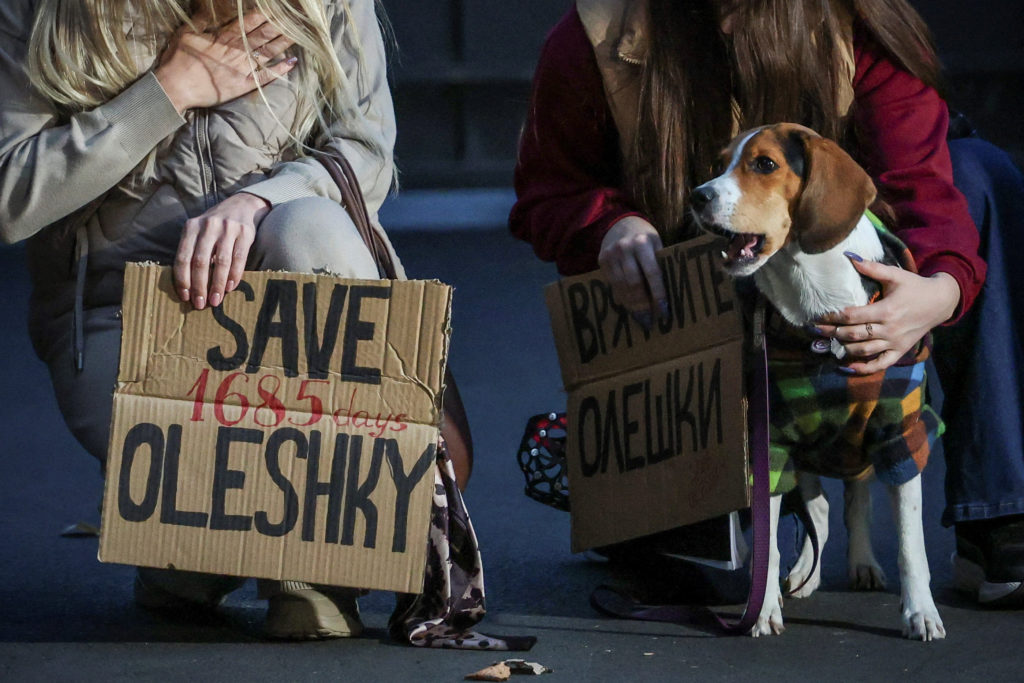
A localized ceasefire agreement between Ukraine and Russia took effect on Tuesday after first lady Melania Trump announced last week she secured a temporary humanitarian agreement for the border city of Oleshky.  The Russian-occupied town is located in southern Ukraine, and residents have faced shortages in food and medicine amid the ongoing war. The pause…

  •  

Trump administration offers mixed messages on limits to Ukraine's Starshield access

Recent efforts to throttle Ukraine's access to satellite systems have created a blame game of sorts among Trump administration officials and their allies, who have offered mixed messages about what led to the sudden restrictions on Kyiv's ability to intercept Russian strikes.

  •  

Melania Trump helps forge ceasefire deal in Russian-occupied Ukrainian city so aid can be delivered

Ukrainian, Russian and U.S. negotiators reached a deal Friday to provide humanitarian assistance in the Russian-occupied town of Oleshky, in the war-divided region of Kherson in southern Ukraine.

  •  

The Kremlin says a first tanker of Russian diesel sets sail for the U.S. despite Ukraine's protests

A first tanker carrying Russian diesel to the United States under a new import agreement has set sail, the Kremlin said Friday, two weeks after President Donald Trump said he struck a deal with President Vladimir Putin despite Moscow's invasion of Ukraine.

  •  

Trump’s diesel deal derailed Ukraine-Russia peace progress, says Czech president

Czech President Petr Pavel on Tuesday said President Trump’s diesel deal with Russia derailed peace talks between the Kremlin and Ukraine, saying both sides were “so close” to a ceasefire. “It will be much harder now,” Pavel told the Axel Springer Global Reporters Network, which includes Politico. “Russia uses this momentum to get out of…

  •  

Russian Cluster Missile Hits Kyiv’s Historic Religious Quarter, Zelenskyy Says

A Russian ballistic missile fitted with a cluster warhead struck the historic Pecherskyi district of Kyiv overnight on 21–22 October 2026, damaging buildings near two of the Ukrainian capital’s principal religious complexes, President Volodymyr Zelenskyy has said.

The missile landed between the Kyiv-Pechersk Lavra, a UNESCO World Heritage site, and the Holy Presentation (Sviato-Vvedenskyi) Monastery. Monastery buildings, homes, shops, cafés and other civilian infrastructure sustained damage in the surrounding area.

Zelenskyy disclosed that Russian forces had used three cluster-equipped ballistic missiles during the assault. Ukrainian authorities described weapons designed to explode in the air as they approach their targets, distributing explosive submunitions over an area approximately 400 metres in diameter.

After receiving reports from officials overseeing emergency operations across Ukraine, the president accused Moscow of deliberately choosing a weapon capable of inflicting extensive civilian casualties in a densely populated district.

“This was a deliberate choice of weapon and area of deployment,” Zelenskyy said.

He maintained that there were no military installations in the vicinity and that the attack had been intended to inflict maximum damage on civilians and their property.

Religious Buildings and Civilian Properties Damaged

Pecherskyi is one of Kyiv’s oldest districts, containing religious institutions and architectural monuments associated with centuries of Ukrainian history.

Among them is the Kyiv-Pechersk Lavra, established in the 11th century and subsequently developed into an important centre of Eastern Orthodox Christianity.

The complex includes historic churches, monasteries and an extensive system of underground caves. Together with Saint Sophia Cathedral and its related buildings, it forms part of a UNESCO World Heritage property that has appeared on the List of World Heritage in Danger since 2023.

Thursday’s explosion occurred in the area separating the Lavra from the Holy Presentation Monastery. Ukrainian authorities identified damage to buildings belonging to the latter, alongside neighbouring residential and commercial premises. Assessments of the destruction across the historic district were continuing.

This was not the first occasion in 2026 on which Russian weapons had damaged the area’s religious heritage.

On 15 June, a Russian drone struck the Kyiv-Pechersk Lavra complex, causing severe damage to the Dormition Cathedral. Its roof and structural elements suffered extensive destruction, prompting UNESCO to undertake emergency stabilisation measures.

Ukraine’s Security Service subsequently published evidence identifying fragments of a Russian Geran-2 drone recovered from the site.

The October strike has again exposed the vulnerability of the capital’s historic religious buildings, as well as the civilian neighbourhoods surrounding them.

The Use of Cluster Weapons in Urban Areas

The reported choice of ammunition has particular implications for the investigation into the attack.

Whereas a conventional missile warhead delivers its explosive force around a principal impact point, cluster munitions release numerous smaller explosive devices capable of striking separate locations across a broad area.

In an urban environment, such weapons can cause casualties and destruction well beyond an intended target. Unexploded submunitions may remain dangerous after the initial attack, posing further risks to residents and emergency workers.

The International Committee of the Red Cross has warned that deploying cluster munitions in populated areas creates a high likelihood of indiscriminate effects.

Under international humanitarian law, military operations must distinguish between civilian persons and objects and legitimate military targets. Indiscriminate attacks are prohibited.

The reported deployment of cluster warheads in central Kyiv therefore raises questions about whether those requirements were observed. Zelenskyy’s account of the three missiles had not, at the time of reporting, been independently established through publicly available forensic evidence.

Russian Barrage Follows Diplomatic Contact with Washington

The Pecherskyi explosion was one incident in a much larger attack on the Ukrainian capital.

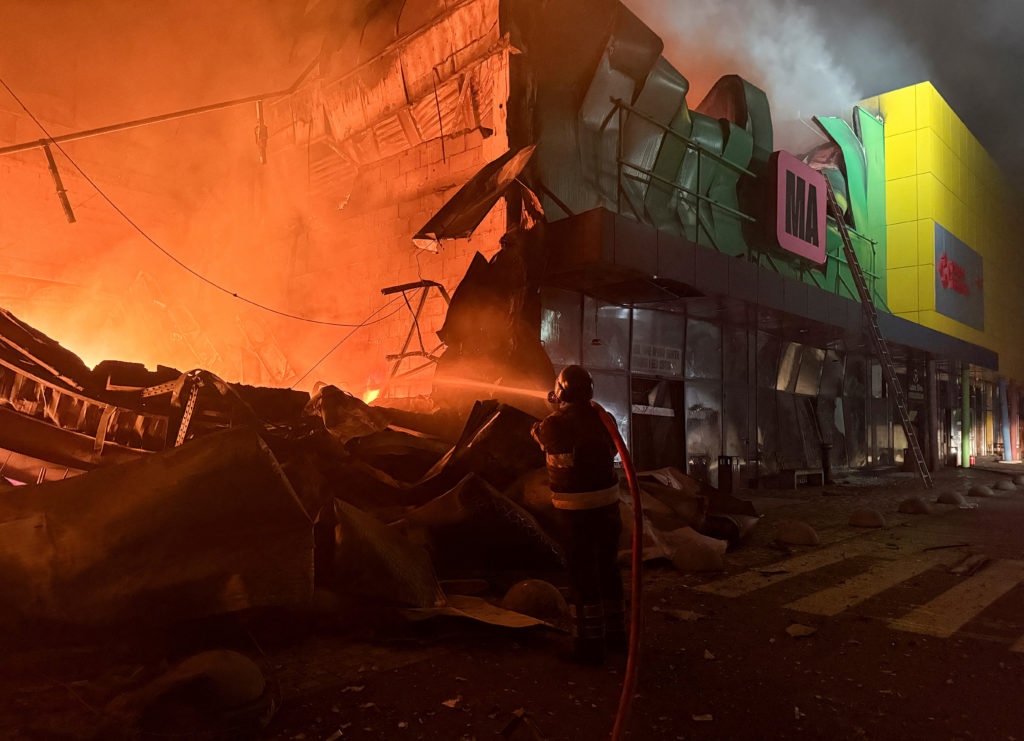
According to Zelenskyy, Russia launched 21 ballistic missiles against Kyiv in three successive waves overnight. Ukrainian authorities reported at least two people killed and more than 30 wounded, with strikes damaging apartment buildings, commercial premises, transport infrastructure and energy facilities.

The bombardment took place shortly after Russian President Vladimir Putin met US presidential envoy Steve Witkoff in St Petersburg on Wednesday, 21 October.

During their discussions, Putin indicated that Russia was prepared in principle to resume negotiations with Ukraine and the United States, potentially in November. However, no confirmed timetable emerged.

Witkoff’s visit followed consultations in Norway between American, Ukrainian and European representatives over possible arrangements to end the war.

The renewed diplomatic activity has done little to resolve the underlying disagreements. As EU Today has previously examined, Moscow continues to advance territorial demands while the parties remain divided over Ukraine’s future security guarantees.

Meanwhile, Kyiv faces an immediate requirement for additional air-defence ammunition.

Zelenskyy has repeatedly appealed for more Patriot interceptor missiles capable of engaging ballistic targets. Difficulties surrounding American military assistance and intelligence cooperation have increased tensions between Washington and Kyiv at a time when Russia is intensifying attacks against Ukrainian cities.

The latest strike also presents Ukrainian investigators with the task of establishing whether the reported use of cluster munitions against a historic civilian district constituted an unlawful attack.

For Zelenskyy, the bombardment following Putin’s latest diplomatic discussions demonstrates that Moscow’s military conduct remains unchanged. He has argued that Russia’s actions provide no evidence of a genuine intention to bring the war to an end.

  •  

Russia Fires 21 Ballistic Missiles at Kyiv Hours After Witkoff-Putin Peace Talks

Russia launched 21 ballistic missiles against Kyiv in three successive waves overnight on 21–22 October, striking residential buildings, energy facilities and transport infrastructure just hours after President Vladimir Putin held peace negotiations with US presidential envoy Steve Witkoff in St Petersburg.

Ukrainian President Volodymyr Zelenskyy confirmed on Thursday morning that at least two people had been killed and 34 injured, including five children, in Russian attacks affecting 12 Ukrainian regions. The capital sustained extensive damage, with strikes reported against railway and metro infrastructure, shopping centres, industrial premises and a monastery.

The bombardment followed a three-hour meeting between Witkoff and Putin on Wednesday, during which the Russian president indicated his willingness to resume trilateral negotiations involving Moscow, Washington and Kyiv. The Russian attacks continued despite the diplomatic initiative, prompting Zelenskyy to call for renewed international pressure on the Kremlin.

Kyiv Under Three Waves of Ballistic Missiles

In a statement published on Telegram, Zelenskyy said Russian forces had launched three waves of ballistic missiles against the Ukrainian capital, causing numerous direct hits and widespread destruction.

The Ukrainian president referred sarcastically to Russia’s supposed humanitarian intentions, an apparent reference to Witkoff’s description of Putin as a humanitarian during their meeting the previous day.

Emergency services were deployed across several districts of Kyiv, where residential and commercial buildings suffered damage. Part of the capital’s metro infrastructure on the Southern Bridge was affected, disrupting traffic, while a strike on an ambulance station in the Pecherskyi district damaged six emergency vehicles. No medical personnel were injured at that location.

According to Ukrainian military and emergency service reports, the overnight assault also involved 210 attack drones and several types of missiles, including Iskander-M, S-400, Zircon and Oniks weapons.

By Thursday morning, Ukrainian air defences had intercepted or suppressed 181 drones. Russian weapons struck 32 locations, while debris from intercepted drones fell at eight others.

The assault followed several consecutive days of Russian attacks against Kyiv, including earlier strikes on hospitals, residential buildings and the capital’s transport network.

Witkoff’s Meeting with Putin

The timing of the latest bombardment placed renewed scrutiny on Washington’s diplomatic engagement with Moscow.

On 21 October, Witkoff met Putin at the Konstantin Palace in St Petersburg, accompanied by Russian officials, including Kirill Dmitriev, the Kremlin’s representative for international economic cooperation. The discussions lasted approximately three hours.

The meeting followed talks in Oslo on 20 October, where Witkoff and Jared Kushner met Zelenskyy alongside Norwegian Prime Minister Jonas Gahr Støre and Finnish President Alexander Stubb.

Following the St Petersburg meeting, Witkoff described the discussions as constructive and indicated that negotiations would continue at the technical level between representatives of the United States, Russia and Ukraine.

Putin reportedly expressed agreement in principle to restarting trilateral negotiations, potentially during the first half of November. However, no agreement on a ceasefire or suspension of Russian attacks was announced.

The meeting also attracted controversy after Witkoff praised Putin as a humanitarian following the release of Stephen Hubbard, a 74-year-old American citizen who had been detained in Russia for more than four years.

The remarks prompted criticism from Republican lawmakers in Washington, who questioned the characterisation of the Russian president while Moscow continued its military campaign against Ukraine.

Zelenskyy Calls for Pressure Rather Than Diplomatic Concessions

Zelenskyy characterised the overnight missile attack as evidence that Russia’s participation in negotiations had not produced any substantive change in its conduct.

He argued that diplomatic efforts to end the war should continue but must be accompanied by measures capable of altering Moscow’s military calculations.

Those measures, according to the Ukrainian president, include stronger air defence capabilities, faster deliveries of interceptor missiles, the ability to destroy Russian ballistic missile launchers and continued economic sanctions.

The latest attacks also place Ukraine’s air defence requirements firmly within the ongoing negotiations with Washington. Kyiv has repeatedly sought additional Patriot missiles and more reliable advance warning of Russian ballistic launches, particularly as repeated strikes place increasing demands on its interception capabilities.

For the Trump administration, the immediate question is whether Russia’s stated willingness to negotiate can produce verifiable commitments to reduce hostilities.

The Kremlin has offered the prospect of further talks without announcing a halt to its offensive operations. Kyiv, meanwhile, continues to face missile and drone attacks against civilian infrastructure even as discussions concerning a possible settlement proceed.

The events of 21–22 October leave Washington’s diplomatic initiative moving forward against the background of an expanding Russian aerial campaign, with no indication that Moscow intends to suspend its attacks while negotiations continue.

  •  

Trump Presses Ukraine Towards a Settlement Putin May Have No Intention of Accepting

Talks in Oslo have restored diplomatic contact between Kyiv and Washington, but Donald Trump continues to demand concessions from Ukraine while Moscow shows little willingness to compromise. Steve Witkoff’s forthcoming meeting with Russian officials will expose the limits of the American peace initiative.

The latest negotiations over Russia’s war against Ukraine have produced a renewed diplomatic initiative, with US presidential envoy Steve Witkoff preparing to travel to St Petersburg on Wednesday, 21 October, following consultations with Ukrainian and European leaders in Oslo.

President Volodymyr Zelenskyy met Witkoff alongside Norwegian Prime Minister Jonas Gahr Støre and Finnish President Alexander Stubb on Tuesday. Jared Kushner, Donald Trump’s son-in-law, participated remotely. The discussions covered territorial questions, security guarantees, sanctions and proposals for a partial ceasefire.

The meeting concluded with cautious expressions of optimism. Stubb suggested that the negotiating process was back on track, while Støre confirmed that Witkoff would present proposals developed by American, Ukrainian and European representatives to the Russian leadership.

However, the diplomatic improvement contrasts with Trump’s renewed public pressure on Zelenskyy, raising questions about Washington’s negotiating strategy and whether Moscow has any intention of accepting the proposed settlement.

Washington’s contradictory signals

Speaking in the Oval Office on Tuesday, Trump again insisted that Ukraine must reach an agreement with Russia, portraying Moscow’s military position as increasingly advantageous.

His remarks closely resembled arguments advanced during earlier disputes with Zelenskyy, when Washington pressed Kyiv to accept territorial concessions rather than increase pressure on the Kremlin.

Meanwhile, Secretary of State Marco Rubio sought to reassure the Ukrainian leadership that American military cooperation had not been deliberately restricted.

Rubio denied that Trump had ordered changes to intelligence-sharing or weapons assistance. Zelenskyy subsequently confirmed that Ukraine was again receiving American early-warning intelligence concerning Russian ballistic missile attacks.

Nevertheless, serious problems remain. Ukraine has reported delays in deliveries of American-made Patriot interceptors purchased by European allies, while restrictions affecting the military Starshield satellite communications system have not been fully resolved.

These difficulties are particularly serious as Russia intensifies attacks against Ukrainian electricity infrastructure, attempting to undermine civilian services ahead of winter.

The conflicting signals leave Kyiv negotiating with an administration whose diplomatic representatives promise continued cooperation while its president publicly demands Ukrainian concessions.

Security guarantees without NATO membership

Among the proposals discussed in Oslo were security arrangements intended to provide Ukraine with protection comparable to NATO’s Article 5 collective-defence provision.

Zelenskyy acknowledged that American representatives had discussed such guarantees, although their precise obligations and enforcement mechanisms remain undisclosed.

The proposal presents a fundamental negotiating problem.

Russia has consistently opposed Ukrainian NATO membership, partly because the alliance’s collective-defence commitments would increase the consequences of any renewed Russian aggression.

An alternative arrangement offering genuinely comparable protection would consequently encounter many of the same Russian objections.

Conversely, guarantees lacking a credible enforcement mechanism would leave Ukraine exposed to another attack after a ceasefire.

Moscow’s record provides little reassurance. Russia violated Ukraine’s internationally recognised borders in 2014 and launched its full-scale invasion in 2022 despite previous commitments to respect Ukrainian sovereignty.

The Kremlin’s objectives extend beyond territory

Washington’s approach appears increasingly concentrated on securing an agreement involving territorial concessions and restrictions on Ukraine’s future security arrangements.

Yet Putin’s objectives have consistently extended beyond the territories occupied by Russian forces.

The Kremlin has demanded constraints on Ukraine’s military capabilities, international alliances and strategic independence. Accepting territorial gains alone would not necessarily satisfy Moscow’s wider political ambitions.

Russian Foreign Minister Sergei Lavrov has maintained that Moscow is unwilling to make substantial political concessions, while the Kremlin continues to insist that any agreement must address what it describes as the underlying causes of the conflict.

Those conditions have previously included demands that would substantially restrict Ukraine’s sovereignty.

Consequently, even a Ukrainian willingness to consider elements of Washington’s proposals would not guarantee Russian acceptance.

The political calculation behind an energy ceasefire

One possibility under consideration is a limited ceasefire protecting energy and potentially food-related infrastructure.

Zelenskyy has indicated that Ukraine could suspend attacks against Russian energy facilities if Moscow stopped striking Ukrainian infrastructure.

Such an arrangement could reduce immediate civilian suffering. It would also have military and economic consequences.

Ukrainian attacks against Russian refineries, oil terminals and other energy installations have increasingly targeted infrastructure supporting Moscow’s war economy.

A temporary suspension could allow Russia to repair damaged facilities, restore production and stabilise export revenues. Without credible monitoring and enforcement, Moscow could exploit a limited agreement while leaving the wider conflict unresolved.

Trump has additional reasons to seek a rapid diplomatic result. With American congressional elections scheduled for 3 November, his administration is attempting to contain domestic fuel prices and demonstrate progress towards ending the war.

His recent decision to ease restrictions on Russian diesel exports has already provoked concern in Kyiv and European capitals over the potential financial benefits to Moscow.

The danger for Ukraine is that an agreement presented as a diplomatic achievement in Washington could provide Russia with economic relief without altering its military objectives.

The decision awaiting Washington

Witkoff’s visit to St Petersburg will establish whether Moscow is prepared to engage with the proposals developed in Oslo.

Putin could accept a temporary arrangement, particularly one suspending Ukrainian strikes on Russian energy infrastructure, while postponing discussions over territorial and political questions.

Alternatively, Moscow could reject the initiative and maintain its existing demands.

In either case, Washington will face a decision over the consequences of Russian intransigence.

For Kyiv, continued engagement with the United States remains essential because American intelligence, satellite communications and advanced air-defence weapons cannot readily be replaced.

But the prospects for a negotiated settlement will depend less on further Ukrainian concessions than on whether Russia faces sufficient political, military and economic pressure to abandon its maximalist demands.

The Oslo negotiations have restored cooperation between Ukraine, Europe and American mediators. They have not established that Putin is prepared to end the war on terms compatible with Ukraine’s continued independence.

  •  

Teens making drones: Russia’s demographic collapse

My name is Darina,” says an elfin teen, ponytail pulled through the back of her cap, and “next year I’ll be earning 150,000 rubles (nearly $2,000) a month.” Darina works at what she calls “the world’s largest drone factory,” helping to assemble versions of the Iranian Shahed drone. “My parents are proud of me. Wanna do the same?” She asks as she advertises a polytechnic in Tatarstan. The Russian government, in the face of war and looming demographic disaster, has been relaxing child labor laws since 2022, making it easier to put 14-year-olds to work. Now, legislators are open about the need to reform “outdated” restrictions on employing minors in industries that were “considered dangerous 20 years ago.” Drone production is not the only part of the war effort to which teenagers are being recruited. This month in a “content camp” in Moscow, soldiers and state media propagandists trained 120-plus teens on how to make videos, use AI, and grow their audiences as aspiring influencers. Vladislav Golovin, a former soldier and a leader of Russia’s Young Army Cadets National Movement, said the program had “created a huge team of kids who understand how to broadcast government values.” 

But many young people, subject to year-round conscription, subject to internet shut downs and subject to surveillance, have little desire to spread propaganda. Instead, according to Google Trends data, growing numbers of Russians are seeking information on how to emigrate. A new exodus would accelerate Russia’s deep demographic crisis. Already, up to a million people are thought to have left Russia since the full scale invasion of Ukraine in 2022. According to one recent count, nearly 210,000 Russian soldiers have been killed in the war with Ukraine, with other estimates suggesting over 1.2 million casualties, including 325,000 deaths. And Russian fertility rates are the lowest they have been for 200 years. Anton Kotyakov, the labor minister, has told Vladimir Putin that the country faces a labor shortage of 11 million people by 2030.

So concerning is this crisis that Rosstat, the national statistics agency, has stopped publishing monthly demographic data. State officials and local governors have been told to compete to come up with the most innovative solutions to a seemingly intractable problem. The pressure on Russian officials and the Kremlin is leading to desperate measures, including guidance from the Russian health ministry that women who say they do not want to have children should be referred to a psychologist. Nothing the Russian state has tried has worked, from financial incentives (extended even to schoolgirls under 18) to banning advertising that supposedly promotes “child-free” lifestyles and so-called “LGBTQ propaganda.”   

Darina, 16, assembles Shahed-style drones at a factory in Alabuga, Tatarstan, Russia. Screenshots from YouTube video by T-invariant.

Alongside “anti-woke” policies disguised as family values, is rising xenophobia and anti-immigrant rhetoric that has led to a marked decline in the number of foreigners living in Russia. The Kremlin’s anti-migrant policies include a new system to monitor migrant workers through biometric registration, location tracking, and intensified police oversight. The Russian parliament is currently debating enhancing the number of offences that can be punished by deportation or substantially increased fines. Much of it is targeted at Russia’s Central Asian migrants who make up an overwhelming majority of immigrant labor. Some Central Asian governments, notably Kyrgyzstan and Tajikistan, have now urged their citizens to think twice about going to Russia for work. 

Russia has been publicizing political stunts such as its “shared values visa” in which applicants from 46, largely developed, nations are given temporary residence permits if they profess to support “traditional Russian values.” The visa, the Kremlin has said, is “Russia’s response to what it perceives as the harmful effects of Western neoliberal policies.” But only a tiny fraction of the immigrants Russia needs will be Westerners who apply for such a visa; instead, Russia has been diversifying its pool of migrant workers by looking further east. Around 72,000 work permits were issued to Indian nationals in 2025, up from just 5,000 in 2021. Russian officials have signaled they are ready to accept “unlimited” numbers of workers from South Asian countries like India, Sri Lanka, and Myanmar.

While the Kremlin is looking to South Asia and Africa to address its immediate need for workers (and soldiers), the ambition in the longer term is to boost Russian birthr rates, despite the signal failure of ongoing attempts. 

In the U.S., there have been several moves borrowed from the Kremlin’s playbook, including the restriction of abortion, the attempt to deny women birth control, and even alarm at the fall in teen pregnancies. But data released this month showed that women in the U.S. gave birth to 710,000 fewer babies in 2025 than they did in 2007, a reflection of two decades of steadily dropping birth rates. Russian demographer Salavat Abylkalikov, at the Leibniz Institute for East and Southeast European Studies in Germany, says “if the birth rate has fallen below the level of simple reproduction, it is almost impossible to raise it back.” Especially when financial incentives cover just a fraction of childcare costs. 

In any case, Abylkalikov says, “in Russia, death is much more profitable than birth: in Nizhny Novgorod Oblast, the government provides around 1,000,000 rubles (about $12,000) for each child, but if one person goes to war and dies, the family receives up to 12 million rubles in total. That's more than $120,000. This is the economy of death.” The evidence, from countries like Russia, Hungary and the U.S., is that appeals to tradition, to religion and to female “responsibility” do not work, when support for families is limited. And while migration is an obvious fix to demographic questions everywhere, it’s politically toxic.

Russia knows it is hurtling towards demographic doom but can do little to halt the momentum. Its policies are riddled with inconsistencies — a strong line in anti-migration rhetoric and bullying, while being forced to import workers and soldiers from Asia and Africa; a patriarchal view of women’s roles, mostly confined to the domestic, while increasingly reliant on women to take the jobs of the men who are fighting and dying in Putin's war; and encouraging more women to give birth, while employing children to build drones. With family values like these, no wonder young Russians are hesitant to procreate.

The post Teens making drones: Russia’s demographic collapse appeared first on Coda Story.

  •  

Why Europe must disable Russia’s crypto ecosystem

Someone recently asked me what mark out of 10 I’d give for the efforts of governments to tackle financial crime. It got me thinking about that one bright spot of recent times — the West’s response to Russia’s full-scale invasion of Ukraine four years ago — and how it is now looking. Back in 2022, a lot of us were pleasantly surprised by the speed and ambition with which Western governments sanctioned the Russian government, state-owned companies and wealthy individuals. While Western pressure did not prevent the war, the asset freezes did impose a real cost on those conducting it. Four years on, however, those sanctions are beginning to look a bit shopsoiled. If they began at 7/10, they’re now scoring a lot lower.

There are reasons for this: Donald Trump does not appear particularly interested in Ukraine; the now former Hungarian prime minister Viktor Orbán has been snarling things up; and so on, as laid out in this analysis from Tom Keatinge. To make things worse, Trump’s latest adventure in Iran has pushed the oil prices sharply higher, earning more money for Russia while also giving Trump cover to lift sanctions, a temporary measure he has recently extended.

Keatinge argues that European countries need to be far more focussed on going after Russia’s payment mechanisms, particularly digital. “The extent to which crypto activity supports Russia’s war effort is clear,” he writes, “yet repeated initiatives to elevate the importance of opening a concerted line of effort on this issue are ignored. This must change.”

I agree, though it won’t be easy, considering the diffuse crypto ecosystem, and the increasing sophistication of Russian involvement in it. As long as Telegram is willing to host markets, the markets will continue to function to some extent whatever Western countries do (see the story of Xinbi, a Chinese-language hub for illicit crypto.) However, it does look like someone somewhere has lost patience with the ease with which Russia is funding itself.

“The sanctioned Russia-linked cryptoasset exchange Grinex announced an immediate suspension of its operations, citing a ‘large-scale cyberattack,’” reports Elliptic. According to the statement, which Kyrgyzstan-registered Grinex posted on Telegram, it lost around $13 million worth of USDT in the hack, blaming the theft on Western intelligence agencies.

“Today the attempts to destabilise our fatherland’s financial sector hit a new level, with the direct theft of the assets of Russian citizens and companies with the involvement of complex cyberattacks,” the statement said. Grinex is the successor to Garantex, which was shut down just over a year ago after years of effort by Western law enforcement. I would be surprised if Western countries had decided to take direct action against Grinex, as the exchange claims they did. Westerners tend to be a bit too legalistic for this kind of smash-and-grab, and I would expect any operation to more closely resemble what worked a year ago, conducted with Tether’s cooperation.

Instead, I suspect this attack is the work of hacktivists, perhaps working for or with the Ukrainians. Whatever the answer, it is embarrassing for the Russians, shows their crypto-security is not impregnable, and has made a noticeable dent in trading volumes of the A7A5 ruble-denominated stablecoin, which has become a key sanctions evasion tool. Three birds with one stone.

The important point is that sanctions were never supposed to be permanent: they are a foreign policy tool, not a law enforcement one. Hundreds of billions of Russian-owned dollars are languishing in various frozen bank accounts, and Western countries need to start thinking about what to do with them. They can confiscate them, investigate them or — if they’re feeling brave — use their potential return as leverage to persuade wealthy Russians to break with the Kremlin. What they shouldn’t do is leave them as they are to gather dust.

Hopefully, now that Orbán is out of the way, European countries will be able to take firmer collective action but they also need to be imaginative, and to start behaving as if they actually want Ukraine to win, rather than just not lose.

A defeat for transparency 

Of course, the United States will have a lot to say about that too, and what it ends up saying about how to tackle the Russian crypto operations will depend on what happens in the midterm elections this year. So, it strikes me as a big deal that crypto firms are once more pouring tens of millions of dollars into campaign vehicles in their quest for, what they euphemistically refer to as, “regulatory clarity.” Among them, of course, is Tether.

If you’re wondering quite how it’s possible to spend that much money on elections, I draw your attention once more to the great Integrity Index, with its records for who’s been spending what. It boggles my mind that, for example, the three Democratic rivals to the Republicans’ Susan Collins for the Maine Senate seat have raised more than $17 million just for the primary. Collins herself has raised over $10.5 million. There really shouldn’t be that much money in politics.

Besides, when it comes to value for money, investing in court cases beats investing in politics every day of the week. I don’t know how much the (ironically) anonymous plaintiffs in the 2022 case against corporate transparency in Luxembourg paid their lawyers, but its effects just seem to keep compounding to the benefit of those who want to hide their wealth from society. 

The European Union’s retreat from revealing the ownership of shell companies has given cover for Britain’s tax havens as they resisted efforts from London to force them to open up their own corporate registries. It looks like those efforts may have finally failed. “We are committed to full transparency, but I don’t think there will be any turning back,” said the British Virgin Islands’ Junior Minister for Financial Services Lorna Smith in comments confirming that the islands are in fact very much not committed to full transparency.

A version of this story was published in this week’s Oligarchy newsletter. Sign up here.

The post Why Europe must disable Russia’s crypto ecosystem appeared first on Coda Story.

  •  
❌