❌

Reading view

Over 28 million tourists visited Greece in Jan-Aug; revenues up by 9.4%

The number of tourists visiting Greece surpassed 28 million in the period January-August 2026, marking a 10% increase compared to the corresponding period last year. According to data released by the Bank of Greece (BoG), this development resulted in tourism revenues rising by 9.4% this year, exceeding €18.1 billion. Receipts from residents of EU-27 countries […]

The post Over 28 million tourists visited Greece in Jan-Aug; revenues up by 9.4% appeared first on Keep Talking Greece.

  •  

French-flagged vessel in Crete to start surveys for GSI power cables

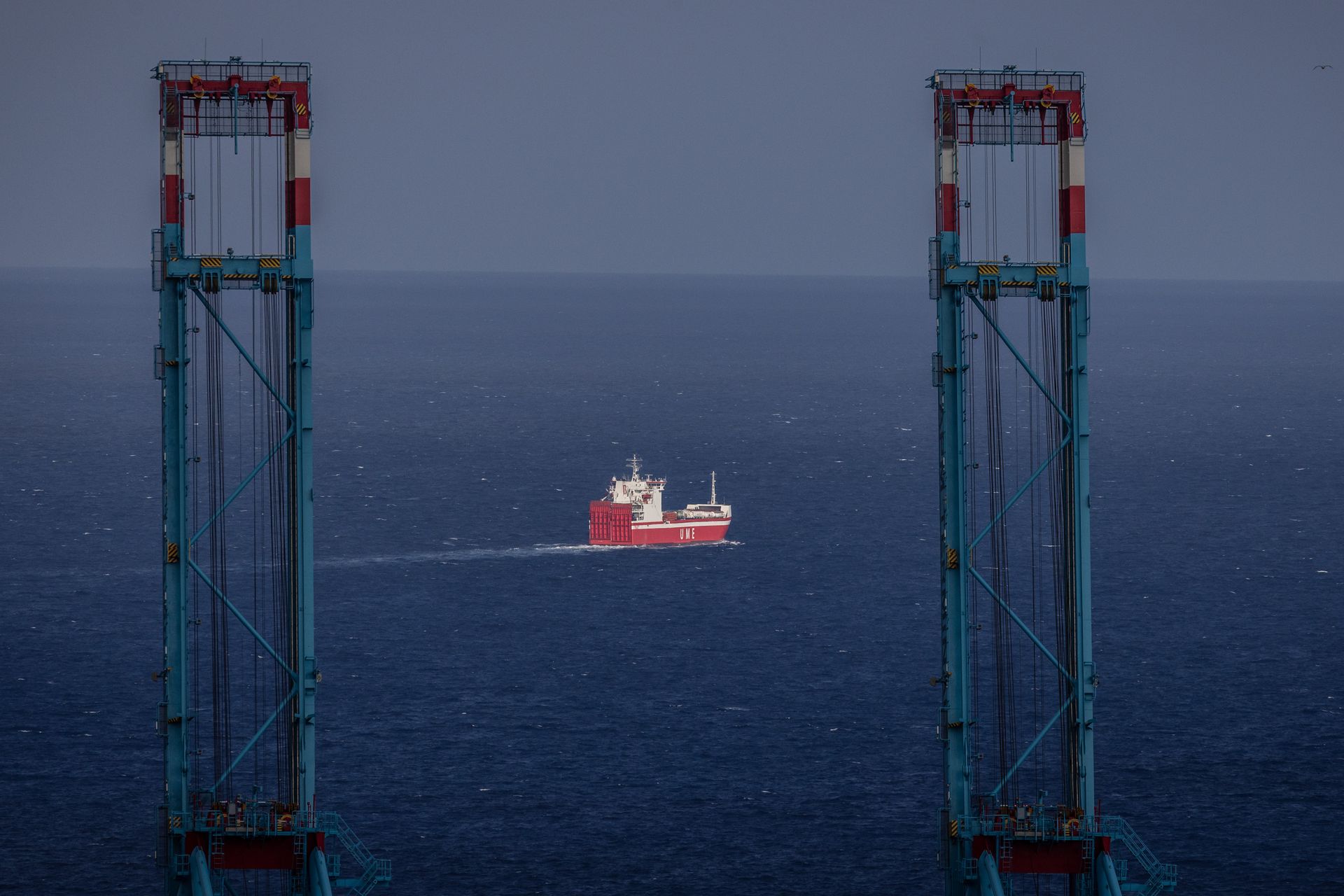
Turkey may raise as many objections as it wants, but Greece is determined to proceed with the submarine cables for the Crete-Cyprus electricity interconnector, known as the Great Sea Interconnector (GSI) as scheduled. On Tuesday morning, the French-flagged offshore support vessel “Abeille Marengo” arrived at the port of Heraklion in Crete. From there it will […]

The post French-flagged vessel in Crete to start surveys for GSI power cables appeared first on Keep Talking Greece.

  •  

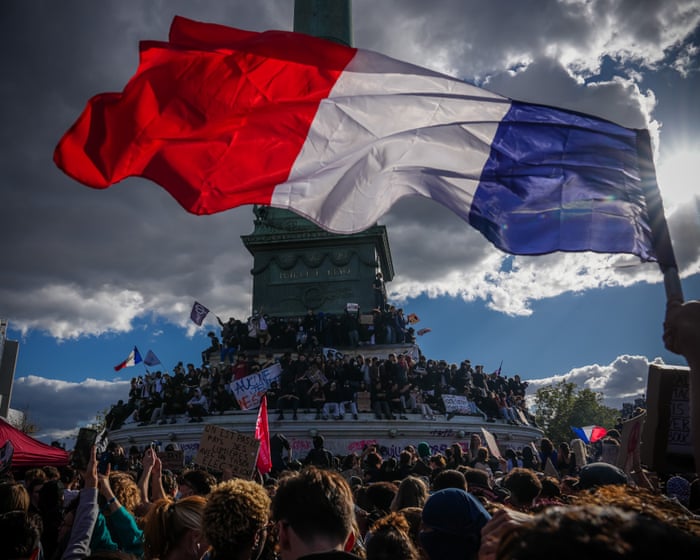
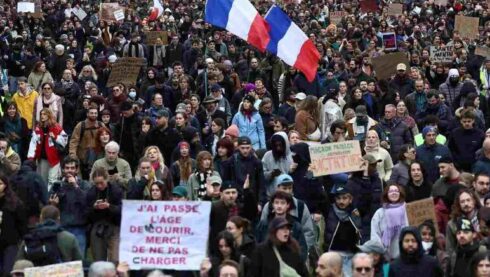
European Protests Gather Force As Citizens Demand Answers On Public Spending

Click to see the full-size image

Written by Ahmed Adel, Cairo-based geopolitics and political economy researcher

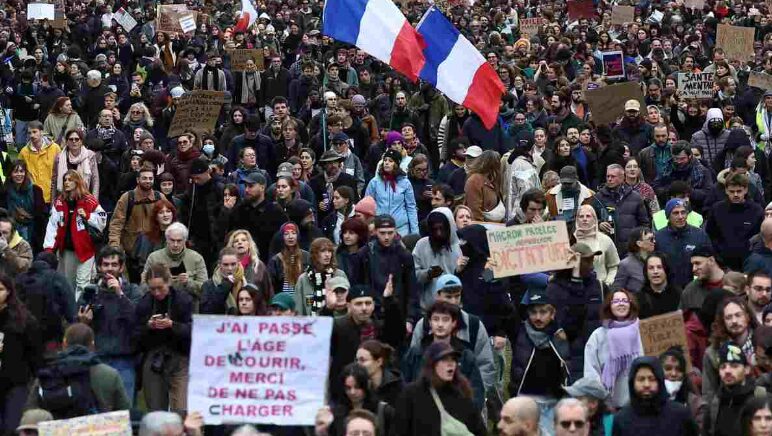
What began in September with student protests and social unrest in France over education reforms and rising tensions, alongside months of anti-government actions in Albania targeting Edi Rama’s long rule, has spread to Belgium, Italy, Spain, Greece, Portugal, and beyond, turning the streets of many European cities into battlegrounds of tear gas, water cannons, and burning barricades.

Early signs suggest Croatia and Austria could join the protests, which some are calling a “European Autumn.” Beyond Albania’s more political confrontation, the protests reflect the anger of ordinary citizens over high living costs, unaffordable housing, squeezed public services, and the belief that governments prioritize other issues, such as the Ukraine War, over household budgets.

In France, hundreds of thousands have taken to the streets in recent days. Authorities report nearly 1,000 detentions nationwide, a heavy deployment of police and gendarmes, and clashes involving water cannons and tear gas. In Rome, authorities detained more than 200 young people during similar confrontations. In Barcelona, demonstrations escalated into riots, resulting in roughly 100 arrests, dozens of fires, and looted shops. In Tirana, thousands have protested with Molotov cocktails and have faced police tear gas. These are not isolated incidents but reflect youth frustration and public exhaustion as prices rise while wages and services lag.

European officials have repeatedly blamed outside actors, particularly Russia, for the unrest. Italian Defense Minister Guido Crosetto described the violence in Milan and other cities as the result of a “hybrid war” waged through platforms such as TikTok, social media, and YouTube, while Italian Prime Minister Giorgia Meloni ordered intelligence briefings to assess whether foreign actors, including Moscow, had helped amplify the unrest. French Foreign Minister Jean-Noël Barrot said that hostile narratives from Russia, China, Iran, and the MAGA community had exploited high-school student protests in France.

Russian President Vladimir Putin dismissed these claims as obvious exaggerations that European citizens can see through.

“To suggest that we are provoking mass protests in major European cities, well, that is clearly going too far, it’s something that, in my view, is obvious to the ordinary citizens of European countries,” Putin said, adding that the accusations reflect “the weakness and inability of certain leaders in European countries to take responsibility for what is happening.”

Leaders and officials blaming Moscow reflect Europe’s long habit of shifting blame outward rather than addressing the rise in energy prices following the cut of cheaper Russian supplies and the redirection of more public funds toward expanding the defense industry since 2022. The protest’s origins in budget cuts to education, housing, and everyday services are evident in the slogans and demands heard on the streets.

In Albania, protests against plans to build a hotel near Vlorë escalated into a broader movement to oust the government. In Spain, anger erupted over the eviction of an elderly resident, whose home was later occupied by migrants. In France, student opposition to enrollment reforms drew in other groups, including people from North African communities. Although each protest had a different trigger, their spread across the continent shows how resistance has inspired youth amid shared economic pressure.

In response to the protests, French authorities are expected to scale back some planned education cuts, which could ease immediate tensions. Yet France has the eurozone’s third-highest debt, behind only Italy and Greece. Without broader social agreement on priorities—including affordable energy, housing supply, and avoiding wasteful defense spending—the protests are likely to continue. Immigration pressures and social divisions further reinforce the sense that resources are being misdirected.

Politically, the unrest accelerates polarization already underway in France. Centrist parties continue to lose ground as voters move toward left- and right-wing alternatives. Some establishment figures try to use the disorder to limit options, including those of the far-right Marine Le Pen’s movement and the far-left Jean-Luc Mélenchon’s, but this only further erodes the current administration’s legitimacy.

Le Pen has used images of looting, burned vehicles, and street clashes to reinforce a law-and-order message, arguing that the country needs stronger command and that chaos cannot be a governing project. Mélenchon, by contrast, has aligned himself with the underlying student and cost-of-living grievances, criticizing police tactics and framing the protests as a response to years of underfunding in education and public services. Both draw support from different segments of the French public angered by the center’s failure to deliver affordable energy, housing, and stable public services while maintaining high debt and defense commitments.

Unless governments directly address energy prices, debt constraints, and migration, the so-called Autumn Wave will persist and spread across Europe, deepening polarization, as already evident in French politics. Blaming external actors, from Moscow to social media platforms, will not restore public trust or lower household costs, but will deepen the animosity already building.


MORE ON THE TOPIC:

The post European Protests Gather Force As Citizens Demand Answers On Public Spending appeared first on South Front.

  •  

Akhilleus: A Defence Shield Orchestrating the Levantine Fortress

The Achilles Shield marks Greece’s ambition to build a stronger defence network with Israeli technology amid rising tensions in the Eastern Mediterranean. From its multilayered missile-defence architecture to the growing rivalry between Israel and Turkey, the project reflects a changing regional balance of power. Yet, like Achilles himself, even the strongest shield may have vulnerabilities. […]
  •  

Greece agrees to Saudi request to maintain Patriot battery in the Kingdom

Greece has agreed to Saudi Arabia’s request to keep its Patriot missile battery deployed in the Kingdom amid the current critical situation in the Middle East, Prime Minister Kyriakos Mitsotakis told Crown Prince Mohammed bin Salman Al Saud during a meeting in Riyadh. The prime minister condemned the attacks against Saudi Arabia and underlined Greece’s […]

The post Greece agrees to Saudi request to maintain Patriot battery in the Kingdom appeared first on Keep Talking Greece.

  •  

Greece Weather Warning: Heavy rainfalls and thunderstorms

Greece’s National Meteorological Service (EMY) issued an emergency bulletin warning of a weather deterioration with heavy rainfalls and thunderstorms, locally hail and strong northerly winds. The bad weather front is forecast to begin in the early hours of Monday, October 26, and continue at least through Tuesday, October 27, 2026, while gradual improvement is expected as […]

The post Greece Weather Warning: Heavy rainfalls and thunderstorms appeared first on Keep Talking Greece.

  •  

AIPAC-led lobbying network opens branches in Cypriot, Greek parliaments

The Cradle | October 23, 2026

Cyprus hosted the leadership of the pro-Israel US lobbying group, the American Israel Public Affairs Committee (AIPAC), in Nicosia on 21 October, pledging to deepen the island’s ties with Israel and the US.

Outgoing AIPAC president Bernard Kaminetsky and his successor, Yehuda Neuberger, led the delegation to the presidential palace for talks with Cypriot President Nikos Christodoulides.

The talks focused on accelerating the 3+1 Mechanism, a partnership binding Cyprus, Greece, Israel, and the US to coordinate on energy, security, and infrastructure.

AIPAC, in return, pledged to keep championing Cypriot interests in Washington.

Meanwhile, pro-Israel lobbies have been embedding themselves inside the Cypriot and Greek parliaments, with Israel Allies Foundation (IAF) launching caucuses in both legislatures to bring lawmakers into line with Israel’s regional agenda.

IAF president Josh Reinstein unveiled the Cypriot caucus on 14 October after meeting Christodoulides, explicitly pitting the initiative against Ankara by branding Turkiye a “common enemy” of Israel and Cyprus.

Cyprus’s main left-wing opposition party condemned the MPs for turning parliament into a lobby for Israel amid its ongoing genocide in Gaza, while in Greece, one left-wing party warned that it would turn parliament into a tool for whitewashing war crimes.

Israel’s deepening ties with Greece and Cyprus have developed over the past decade into a strategic alignment that combines energy cooperation, military coordination, and shared opposition to Turkish maritime claims in the Eastern Mediterranean.

The US has encouraged the relationship through the 3+1 format, which brings Washington into the Israel–Greece–Cyprus trilateral partnership and frames it as a vehicle for regional stability, energy security, and cooperation among “like-minded” partners.

Through the arrangement, Israel gains a gateway to European markets through Greece and Cyprus, along with diplomatic backing in disputes over offshore gas fields.

Athens and Nicosia, in turn, receive Israeli military technology and a partner against Turkiye’s assertive stance on maritime zones, airspace, and the divided island of Cyprus.

Washington, meanwhile, sees the axis as part of a broader effort to anchor energy routes and security cooperation in the Eastern Mediterranean while reducing reliance on rival powers, even as the US courts Ankara with offers of F-35 sales and sanctions relief.

Israeli hostility toward Ankara, and its efforts to curb Turkish power, stem from fear that Washington’s growing dependence on Turkiye will erode Israel’s regional dominance.

Despite the friction, Turkiye continued to serve as a conduit for Azerbaijani crude to Israel through the Baku–Tbilisi–Ceyhan Pipeline (BTC) and Ceyhan Port, even after cutting direct trade in May 2024 and throughout Israel’s genocide of the Palestinians in Gaza.

  •  

How EU ships are still able to carry Trump's Russian diesel despite so many sanctions

A ship called the Agioi Fanendes, which had just left Russia's Baltic Sea port of Primorsk, was carrying 40,000 metric tons to New York and had been traveling westwards through the Baltic Sea ever since.

  •  

Greece Restructures Military: Closing Units and Bases

The Greek Ministry of Defence plans to merge or close dozens of military units and facilities, while simultaneously establishing new commands for unmanned aerial vehicles (UAVs), space operations, and cyber warfare. This restructuring is estimated by authorities to save 530 million euros over five years. On Tuesday, Defence Minister Nikos Dendias presented the third phase […]

  •  

Greece Approves Social Media Ban for Under-15s

Social media can affect children’s sleep, concentration, social relationships and psychological development.

On Thursday evening, the Greek parliament approved legislation banning children under 15 from accessing social media from Jan. 1, 2027.

RELATED:

California Tightens Child Safety Rules for Social Media and AI Chatbots

The legislation requires social media platforms to implement age-verification measures to ensure compliance. Companies that fail to meet the requirements could face fines of up to 6 percent of their global annual turnover.

Addressing parliament ahead of the vote, Digital Governance and Artificial Intelligence Minister Dimitris Papastergiou described the measure as a necessary step that is compatible with the European Union’s (EU) existing regulatory framework.

“It would have been very easy to do absolutely nothing today and wait for the perfect European law. But the challenge is here. Children are sinking into the internet every day, and I believe a responsible government must do what it is obliged to do,” he said.

4 countries. 1 growing movement.

France, Denmark, Spain and Greece are all moving to block children from social media — and Greece wants Brussels to make it a Europe-wide rule.#EUXL pic.twitter.com/xH6iJrO139

— euronews (@euronews) April 28, 2026

Minister of State Akis Skertsos said technology should be regulated in ways that give children greater freedom to grow up safely.

Excessive use of social media can negatively affect children’s sleep, concentration, social relationships and psychological development, said Health Minister Adonis Georgiadis, who described digital addiction as a public health challenge.

The legislation forms part of broader government efforts to protect children from harmful online content, cyberbullying and platform features that encourage excessive use. Greece aims to become the first EU member state to introduce such a ban.

The French parliament passed legislation on July 21 aimed at protecting minors from the risks associated with social media use. However, the French Constitutional Council ruled on Aug. 14 that the key provision banning under-15s from accessing social media was unconstitutional.

teleSUR/ JF

Source: Xinhua

  •  

Greece briefs UN about Invalidity of Turkish-Libyan Memorandum

Greece has sent a letter to the United Nations, in which it emphasizes the invalidity of the 2019 Turkish-Libyan maritime memorandum recently ratified by the Libyan House of Representatives, Greek diplomatic sources said on Friday. Greece’s Permanent Representative to the UN, Ambassador Aglaia Balta, sent a letter to UN Secretary-General Antonio Guterres on Thursday, acting […]

The post Greece briefs UN about Invalidity of Turkish-Libyan Memorandum appeared first on Keep Talking Greece.

  •  

Greece adopts law to ban social media access to minors under 15

The bill banning minors under the age of 15 from using social media online from January 1, 2027, was approved by a majority in Parliament’s plenary session late on Thursday. Only ruling New Democracy (ND) voted in favor of the bill in principle. Αong opposition parties, PASOK voted “present”, while SYRIZA, Greek Solution, KKE, Niki […]

The post Greece adopts law to ban social media access to minors under 15 appeared first on Keep Talking Greece.

  •  

U.S. urges Greece, Turkey to resolve maritime disputes through negotiations

While the European Union expressed its full solidarity with Greece, regarding Libya’s approval of the Maritime memorandum with Turkey, Washington appeared distanced to the issue and urged both neighboring countries to find a solution through negotiations. In a statement issued on Thursday, the U.S. State Department has encouraged its partners in the Eastern Mediterranean “to […]

The post U.S. urges Greece, Turkey to resolve maritime disputes through negotiations appeared first on Keep Talking Greece.

  •  

Greece, Egypt discuss to extend their Exclusive Economic Zone in Med East

Greece and Egypt ​are discussing extending their Exclusive Economic ‌Zone eastwards towards Cyprus after eastern Libya’s parliament ratified a disputed maritime agreement with ​Turkey earlier this week, Greece’s ​foreign minister said. Greece, Egypt and Cyprus ⁠have long opposed the Turkey-Libya maritime ​accord, arguing that it infringes on ​their own maritime claims in the eastern Mediterranean. […]

The post Greece, Egypt discuss to extend their Exclusive Economic Zone in Med East appeared first on Keep Talking Greece.

  •  

Greece enforces sanctions against Iran, says FinMin

The Ministry of National Economy and Finance on Thursday underscored the close cooperation between Greek authorities and their counterparts in the United States, as well as with other partners, to safeguard the integrity of the international financial system. The statement followed an announcement by the U.S. Treasury Department regarding operation Economic Outcast, which aims to […]

The post Greece enforces sanctions against Iran, says FinMin appeared first on Keep Talking Greece.

  •  

A violent and coordinated youth uprising? That’s exactly the picture Europe’s enemies want to paint | Alberto Alemanno

Each country’s protesters have distinct grievances. Listen to them, not the voices telling us Europe is ungovernable

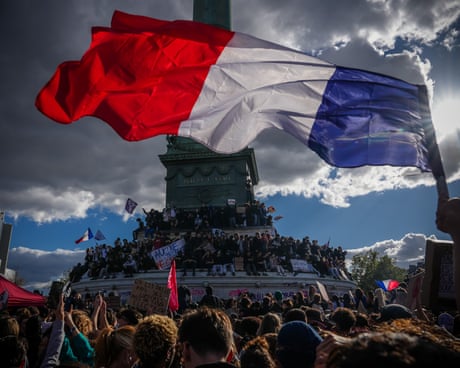
Last Saturday night, the town hall of Limoges in west-central France was set ablaze. By Sunday, images of the fire destroying a symbol of the French republic, and other scenes of unrest across France, were everywhere, but being used to tell very different stories about what is happening in Europe.

For some, the flames announced a pan-European youth revolt, proof that a single movement was sweeping the continent. Donald Trump, who had already insisted that the French schools protests were not about schools but about migration and Islam, urged Europeans to “close the borders”. The mayor of Limoges saw the fingerprints of an alleged ultra-left insurrection.

Alberto Alemanno is the Jean Monnet professor of EU law at HEC Paris and the founder of The Good Lobby

France readers Q&A: Guardian Europe columnists Rokhaya Diallo and Alexander Hurst will be live taking questions from our readers about the unrest in France from at 1500 BST / 1600 CEST on Friday 23 October. Send your questions by email now to conversations@theguardian.com or post questions in the comments from 0900 BST here.

Continue reading...

© Photograph: Aurélien Morissard/AP

© Photograph: Aurélien Morissard/AP

© Photograph: Aurélien Morissard/AP

  •  

Student Protests Mushroom Across Europe, Exposing Bleak Views of the Future

Since high school students began protesting in France in September, they’ve been joined by young demonstrators in at least seven other European countries.

© Angelos Tzortzinis/Agence France-Presse — Getty Images

Protesters against the high cost of living in Athens, Greece, on Wednesday.
  •  

Dramatic rescue of newborn and orphaned baby seal on Kythera (video)

A dramatic animal rescue took place on the island of Kythera, when a group of climbers discovered an injured and newborn baby seal without its mother. The baby seal estimated to be 7 days old was dehydrated and malnourished and weighed approximately 15 kilograms. Members of the “Outdoor Activities Greece” team spotted the injured baby […]

The post Dramatic rescue of newborn and orphaned baby seal on Kythera (video) appeared first on Keep Talking Greece.

  •  

Scandal in Greek Basketball: Six people arrested, among them Federation president

Match-fixing scandal in Greek basketball: Six arrests and €820,000 in cash found in the safe of one referee. Implicated in the scandal that shakes the Greek Basketball is also the president of the Hellenic Basketball Federation (EOK), Vangelis Liolios, ANT1 TV who has been also arrested and other media reported on Tuesday afternoon. Law enforcement […]

The post Scandal in Greek Basketball: Six people arrested, among them Federation president appeared first on Keep Talking Greece.

  •  
❌