AP report: FDA scientists opposed the Trump administration's move to ease peptides access


Michael Nagle/Bloomberg via Getty Images
The Federal Trade Commission is asking companies from food delivery services to airlines about how they use personalized prices.
The Commission said on Wednesday that it sent orders to the companies asking for details about what kind of personal information they use to determine prices. The orders target a wide range of companies, from retailers Walmart and Target to food delivery services Uber and DoorDash to airlines like Delta and United.
"Consumers deserve to know whether companies use their web surfing habits or other personal data to estimate the highest price they can charge each consumer," said FTC Chairman Andrew N. Ferguson.
"Workers also deserve to know if their compensation is affected by how companies use their personal data," Ferguson added.
Several companies pushed back against the FTC's claims.
"There is no fare product Delta has ever used, is testing or plans to use that targets customers with individualized offers based on personal data," a Delta spokesperson said.
"We do not use personal information to set prices, and we never will," Instacart said in a statement.
Walmart and Target previously said they would be transparent about their pricing strategies as more stores start using digital price tags.
A growing number of companies are using dynamic pricing to determine what customers pay for everything from concert tickets to jeans.
Some companies use similar methods to determine how much workers get paid. Uber presents its drivers with potential payouts that aren't based on a per-mile or per-minute rate, for instance, but instead consider factors such as demand.
The FTC's orders ask the companies to submit information about their pricing methodologies, including how they use AI, going back to January 1, 2023. It also asks for research that the companies have done on their pricing strategies, such as A/B tests.
The Commission is also seeking information about how the companies used similar technology to offer workers jobs, according to the orders.
Do you have a story idea about Uber, DoorDash, or Instacart? Contact this reporter at abitter@businessinsider.com or via encrypted messaging app Signal at 808-854-4501. Use a personal email address, a nonwork WiFi network, and a nonwork device; here's our guide to sharing information securely.
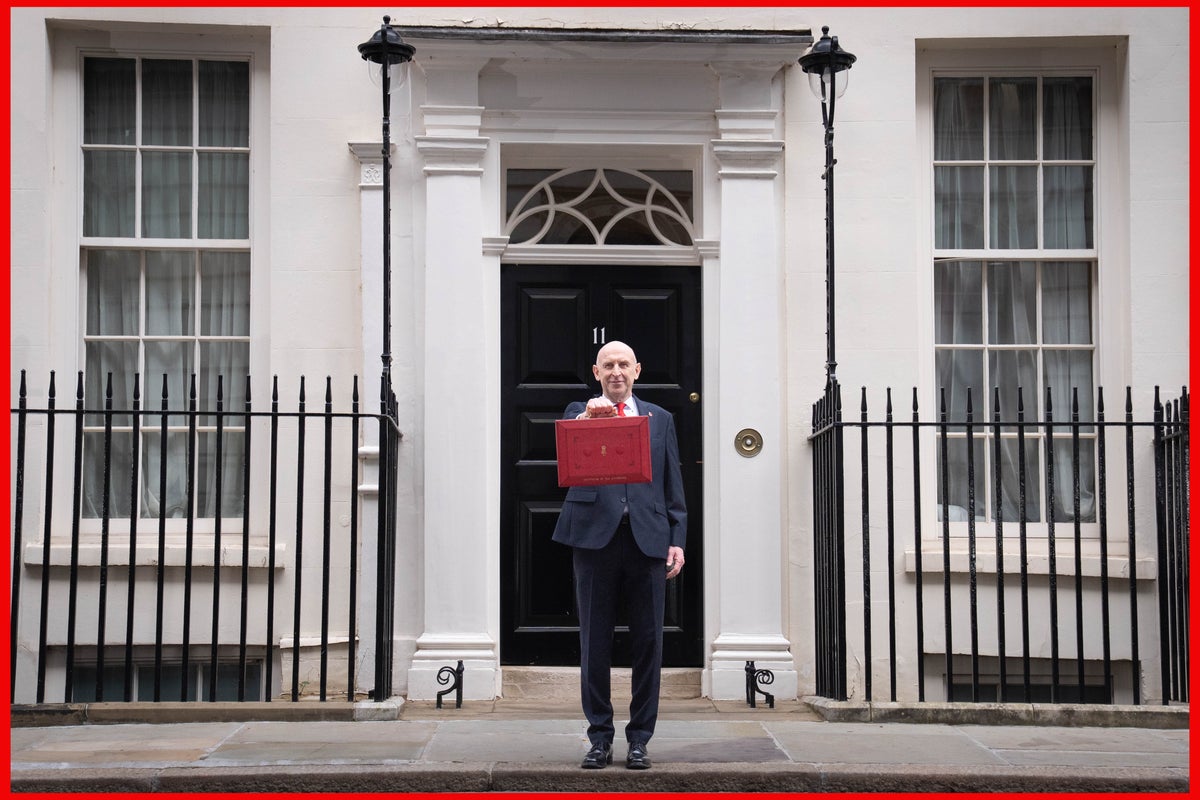
Editorial: As well as the raft of small, short-term measures to give households ‘breathing space’, the chancellor offered grounds for optimism that the Burnham government is determined to fix the economy – and rebuild national security

© PA

Our writers weigh in on whether the chancellor’s ‘defensive’ Budget came through for the British people – tell us what your answer would be below

© PA


Thousands of protesters gathered outside Portugal’s parliament in Lisbon on 27 October, demanding action over soaring housing costs and criticising police operations against housing activists, as the country’s long-running property crisis developed into a broader political confrontation.
The demonstration coincided with parliamentary debate on the government’s proposed 2027 budget and followed several days of protests in Lisbon and Porto.
At the centre of the dispute is an increasingly familiar European contradiction: property values continue to rise, while wages and household incomes have failed to keep pace with the cost of obtaining accommodation.
For Portugal, the problem has become particularly pronounced.
House prices have more than doubled since 2017, while rents for newly agreed tenancies have almost doubled over the same period.
According to figures reported during the demonstrations, the cost of housing in Portugal increased by 147 per cent between 2015 and 2025, compared with an EU average of 60.5 per cent.
The result is a growing disparity between earnings and the cost of independent living, particularly among younger adults.
In Lisbon, a one-bedroom flat can routinely command monthly rent of approximately €1,500.
Portugal’s minimum wage stands at €920 per month before tax.
Although these figures do not represent every household or property, they illustrate the scale of the affordability problem for lower-paid workers.
Between the first quarters of 2025 and 2026, Portuguese house prices increased by almost 20 per cent, according to national statistical figures cited in recent reporting.
Rental costs have also continued rising, recording an increase of approximately 68 per cent since 2020.
The country’s attractiveness to foreign investors, retirees and remote workers has contributed to demand, particularly in Lisbon, Porto and coastal areas.
Tourism has introduced additional competition for residential property, with some homes converted into short-term accommodation.
However, investment and tourism are only part of the explanation.
Restrictions on construction, administrative delays, limited affordable housing supply and the geographical concentration of employment have also contributed to pressure on the market.
These conditions have produced a widening gap between those who already own property and those seeking to purchase or rent their first home.
The immediate political confrontation concerns government proposals that would accelerate certain eviction procedures and remove restrictions on rents for new tenancy agreements.
The legislation passed its first parliamentary reading, with the right-wing Chega party abstaining.
Housing campaigners argue that removing protections without first increasing affordable supply could leave tenants more exposed to rising rents and displacement.
The minority centre-right government, led by Prime Minister Luís Montenegro, has pursued measures intended to encourage construction and increase the availability of housing.
These include tax reductions for new building projects and a commitment to deliver 145,000 homes.
Such measures, however, require time before additional properties become available, while many households face immediate financial pressures.
The housing dispute intensified following police operations to remove protest encampments in Lisbon and Porto during the weekend.
Police used batons during the clearances, while campaigners alleged excessive force.
According to accounts of the subsequent parliamentary demonstration, police reported 11 minor injuries, including three officers. The housing organisation Casa para Viver claimed that 60 people had been injured.
Portugal’s internal affairs watchdog has opened an inquiry, while prosecutors are conducting a separate investigation into officers’ conduct.
Montenegro defended the police response in parliament, arguing that officers had acted according to the principles of necessity, proportionality and adequacy.
President António José Seguro has convened a meeting of the Council of State to consider the growing protests.
The dispute has consequently expanded beyond housing economics to include questions about policing, public demonstrations and political accountability.
Portugal’s demonstrations follow similar protests in Spain and growing political scrutiny of housing affordability elsewhere in the EU.
The European Commission has begun addressing the issue through initiatives intended to encourage construction, facilitate investment and give authorities greater legal certainty over short-term rental restrictions.
As EU Today recently reported, the proposed European Affordable Housing Act would provide additional regulatory tools for areas facing severe housing pressure.
Yet the principal responsibilities for housing supply, planning and tenancy law remain with national and local governments.
This division creates a political challenge: Brussels can support investment and coordinate legislation, but the most immediate decisions affecting rents, construction and evictions are taken elsewhere.
For Portugal, the next test will be whether the government’s housing measures can deliver sufficient additional supply while responding to demands for immediate tenant protection.
The demonstrations outside parliament show that housing affordability has become more than a question of property prices. It now affects the government’s legislative agenda, the 2027 budget debate and the relationship between the authorities and an increasingly organised protest movement.
Editorial: The prime minister has called for an ‘honest conversation’ about EU membership – and his government is already in talks to allow Europeans to travel, live, study and work in the UK. It is a leap of faith that bodes well for closer alignment
© AFP/Getty
Maya Gourdel, a 19-year-old student in Brussels, sits at a desk writing slogans against those running her country: “If we burn, you burn with us!” The slogan, taken from the 2012 film “The Hunger Games” that has been adopted as a symbol by many youth movements globally, reflects the anger, frustration and desire for change driving Gen Z-led protests around Europe.
From the suburbs of Paris to the squares of Belgrade, thousands have taken to the streets.
The demands are various but often overlapping – frustrations with shabby schooling facilities, perceived lack of economic opportunity, cost of living, corruption, housing and a sense of not being listened to. At times those protests triggered violence – with thousands of shops in France alone being damaged or looted in recent weeks – and police firing stun grenades and water cannons.
This weekend they also brought real change – student-led protests culminated in the toppling in an election of Serbia’s long-time leader Aleksandar Vucic after nearly two years of demonstrations against perceived corruption and creeping authoritarianism.
“Waking up, the first thing we felt was certainly a sense of relief and freedom,” said student protester Stasa Piletic. “Personally, I feel a sense of victory. I feel that we finally moved from protests to responsibility.”
Chiara, a 21-year-old student in protest-hit Milan, believes “it’s vital to take part in people’s spontaneous movements born from an explosion of rage that made collective action possible.”
“I think the worst damage this ruling class has done to my generation is stealing even the ability to imagine a future, to dream,” she said.
She said Italian students were confronting a reality of schools without enough teachers and crumbling buildings.
“And all of this with the prospect of an underpaid job which we didn’t qualify for and the prospect of living in a tiny, overpriced house, probably away from our city, which we didn’t want to live in.”
Protests led by Gen Z have caused ructions globally as the generation born roughly between 1997 and 2012 found its voice, from Bangladesh in 2024 and Nepal in 2025, to India this year. Now Europe has become a focal point.
Rising prices and the cost of living are a concern for 40% of 16-30-year-olds, according to a European Union survey published in 2025.
Among the 92.7 million people in the EU who faced the risk of poverty or social exclusion in 2025, the highest risk was recorded for young adults aged 18-24 years, at 26.3%, while the lowest was recorded for adults aged 65 years or over, at 18.8%.
Younger people are also wary of shouldering the financial burden of an older generation that tends to vote in greater numbers. People over 60 in France make up a quarter of the population but own 60% of France’s wealth, according to the OFCE think tank.
French pensions are by far the biggest public expense, on track to reach 14% of economic output, as the population ages and voters resist raising the retirement age or reducing benefits. That is still less than Greece or Italy, which spend the largest proportion of national income on public pensions among OECD countries, at around 16% of GDP, according to OECD figures in 2025. But it is much more than Australia, Chile, Iceland, Ireland or South Korea, which spent less than 4% of GDP on public pensions, according to the OECD.
Bilal Narjissi, a 17-year-old high school student in a suburb north of Paris, has been protesting against “deplorable” conditions and staff shortages at his school. “There used to be rats,” he said. Students were evacuated last year when a roof collapsed on the courtyard, though no one was hurt, he said.
Protests showed “that young people in Europe are united”, he said, adding, “we all agree on one point: that young people are treated like children, far too much, and that they aren’t listened to enough.”
A French government report in October said pension spending had risen by 2.5 percentage points of GDP between 2000 and 2023 while that for education had declined 0.5. It also showed 32% of the education ministry’s budget went towards pensions, crowding out money for other areas.
Gourdel, too, has been protesting for better conditions in schools in Belgium.
“We tried to do it passively. Nobody heard us. It’s only when people started to burn trash or that kind of stuff that the media and cameras started showing us,” she said.
The protests are still spreading, with a demonstration planned in Germany this weekend over cost of living, inequality, war and the state of schools.
Unrest has also hit Albania, where student-led demonstrations against Prime Minister Edi Rama’s government, fuelled by anger over perceived corruption, a lack of jobs and poor education standards, engulfed Tirana and spread to other cities.
“Our Prime Minister spent 130 days not listening to us,” said Xyke Kurti, a 19-year-old architecture student.
“If you ask a student in Albania, ‘where do you see your future?’ Everyone says ‘outside this country’,” she said, arguing that at home, even if you have talent, someone with “connections is always going to beat you”.
Serbia’s student movement did what demonstrators in other European capitals can only dream of.
Now, though, comes the gritty business of governing – something neither the students nor their candidates have any experience of. Luka Stojakovic, another protester, brushes that aside. “We have seen where people with political experience have brought us.”

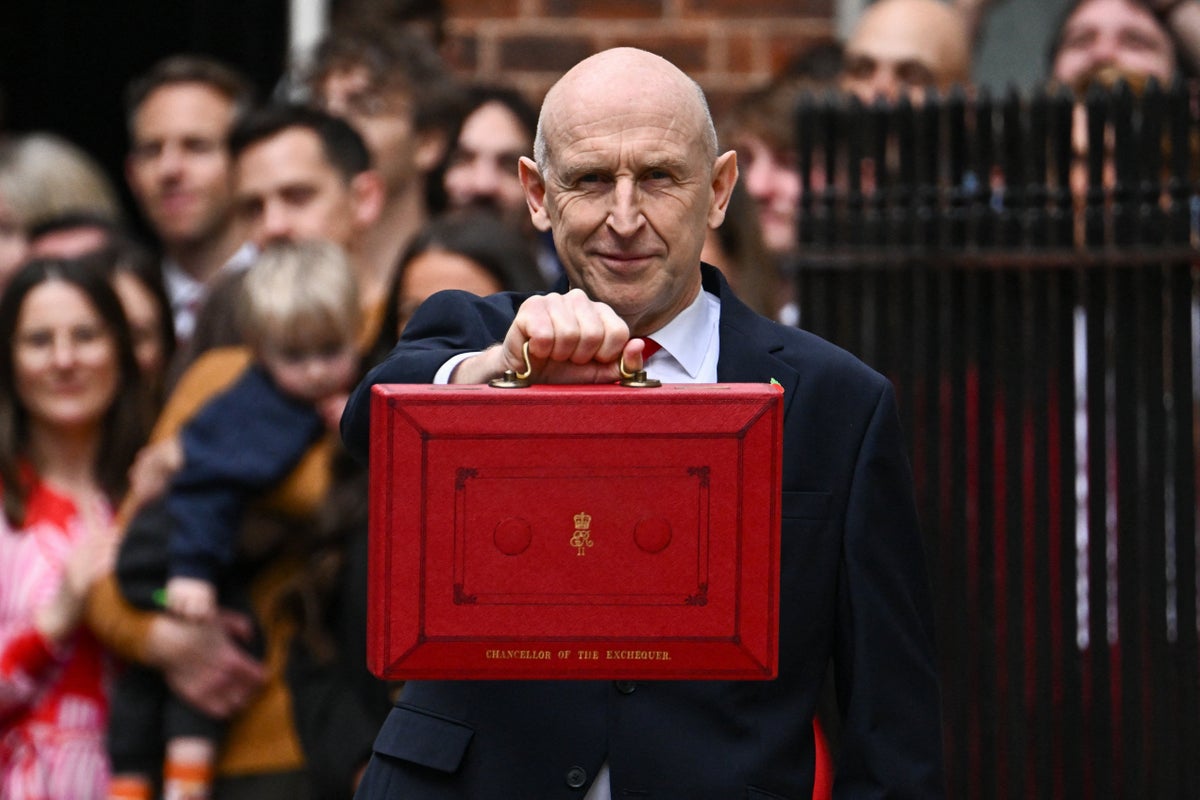
British finance minister John Healey said he would help most households with their gas bills by enabling those who use the least to pay less as part of his first budget which is due to be announced in full later on Wednesday.
Healey – who has promised to give “breathing space” to families hit by the high cost of living – said he would abolish standing charges which are fixed daily fees that cover the costs of connecting a home to a gas supply and are charged on bills regardless of whether energy is being used.
“Gas standing charges are unfair and outdated so I am scrapping them to give millions of households a bit of breathing space,” Healey said in a statement issued by the Treasury.
He will ask regulators to remove the charges – which cost £108 ($143.78) a year for the typical household on average – in 2027 or as soon as possible after that, the Treasury said.
The costs will be shifted to the price of gas consumed which could save 60% of account-holding households around an average of £45 on their annual bill, the statement said.
Healey said his budget would “draw a line in the sand on an energy policy that has failed British billpayers for years, letting extra costs on bills pile high and leaving households even more exposed to global shocks”.
Earlier this month, the government cut value added tax on electricity bills which surged following Russia’s invasion of Ukraine and have risen again due to the Iran war.
Previous governments have imposed a price cap on energy prices and removed other levies.
Despite that, Britain’s regulated domestic price cap rose 4% in October, and some forecasts are predicting a rise of around 20% to over £2,000 pounds a year in January for an average domestic energy bill including electricity.
British households pay a standing charge on electricity bills which costs around £200 a year on the current price cap.

A un lado del sofá, a primerísima hora de la mañana del martes, la actriz Andrea Ros (Terrassa, 33 años). Al otro, aunque no dejarán de acercarse, tocarse y reírse juntas, Sandra Sánchez (Talavera de la Reina, 45 años). La primera, además de aparecer en series y películas como [REC]2, Zorras o A mil kilómetros de la Navidad, es divulgadora perinatal y cocreadora del podcast La vida secreta de las madres. Sánchez no solo ganó la primera medalla de oro del karate en unos Juegos Olímpicos, es que lo hizo en Tokio, capital del país donde nació este arte marcial, y en 2021, con 39 años. Además, es bicampeona mundial, siete veces campeona de Europa y en aquel 2021 logró la triple corona del tirón: europeo, mundial y Juegos Olímpicos. Ahí queda la hazaña. Y están juntas porque Ros da vida a Sánchez en Karateka, de Aritz Moreno, que se estrena este viernes.

©

© Alex Kent/The New York Times

PAUL FAITH/AFP via Getty Images
A cruise ship selling the promise of a permanent life at sea has come to an abrupt stop.
Villa Vie Residences, which operates the residential cruise ship Villa Vie Odyssey, announced on Tuesday that it had suspended operations in Cambodia amid steep increases in fuel costs.
The company said its monthly fuel expenses per cabin, which had previously averaged about $1,800, had risen as much as 344% in parts of Asia, to an estimated $6,000 to $8,000.
The US-Israeli war with Iran began in February, and Iran's subsequent closure of the Strait of Hormuz — a vital chokepoint for global oil shipments — sent energy prices soaring around the world.
"Since the conflict began in late February, we have taken significant steps to reduce fuel consumption, including slowing the itinerary and spending more time in port," Villa Vie Residences said.
"Those measures have not been enough to offset the extraordinary increase in fuel costs, and we have been unable to continue carrying the resulting operating losses."
Villa Vie Residences sold permanent cabins on its 509-cabin ship, the Odyssey, ranging from $119,999 to $439,999. Its pitch to residents was a never-ending cruise around the world with stops at more than 400 ports of call and a global circumnavigation every three-and-a-half years.
The ship, which has a pool deck, spa, and a pickleball court, also offered five-year residencies, starting at $59,999.
The rising fuel costs put the company's operating model under unsustainable financial pressure, Villa Vie Residences said. The company added that it was evaluating options, but that no financing or transaction had been finalized.
"Passing the full increase on to residents is not a realistic solution," the company said. "Our focus now is on supporting residents, crew, and employees while we work toward restructuring and recapitalization over the next 60 days. That work is ongoing, and no outcome is assured."
The press release said the company was working with residents to coordinate disembarkation in Cambodia and to identify temporary living arrangements for them.
The Odyssey first set sail from Belfast in September 2024 after four months of delays.
Villa Vie Residences did not say how many residents were affected and did not immediately respond to a request for comment from Business Insider.
Have you spent time on the Villa Vie Odyssey? If you have a story to share, get in touch with this reporter: jzitser@businessinsider.com.
Over the weekend, Brazilians elected Luiz Inácio Lula da Silva president once more by a very narrow margin, defying polls that had him trailing. No candidate had won a Brazilian runoff from second place since 1989. That precedent is broken, and it was broken from below: by student-led rallies in Rio de Janeiro, São Paulo, Minas Gerais and Porto Alegre.
The rallies were called without Lula, by pop-star fan communities and influencers who injected energy into a campaign that had flagged all year, and by widespread mass communications like Deputy André Janones's WhatsApp channel, which passed 10 million followers. Many of those young figures have been vocal on Palestine. Their job now is to make sure their government hears them.
That mobilisation will matter all the more given the political landscape Lula faces. The Congress that convenes on 1 February will comprise 594 members, 513 deputies and 81 senators, with the right and its allies holding a comfortable majority in both houses. With 90 members close to the Palestinian struggle, the challenge will be to turn that support, alongside pressure from civil society, into concrete political action.
Lula's words have been strong in recent years. He recognised the State of Palestine in 2010, the first in South America to do so, condemned the genocide in Gaza as early as October 2023, and did not back down when the Israeli colonial regime declared him persona non grata over his Holocaust comparison.
Brazil joined South Africa's case at the International Court of Justice and has had no ambassador in Tel Aviv since May 2024. His actions, however, were fewer. Diplomatic and trade relations with Israel were never fully cut. The Army’s planned purchase of 36 armoured howitzers from Elbit Systems was stalled in 2024 amid political opposition over military ties with Israel. The deal resurfaced in October 2026 after Brazilian defence company Avibras, reached an agreement with Elbit’s Brazilian subsidiary, AEL Sistemas, paving the way for local assembly.
The proposed purchase, worth almost $200 million, remained controversial after renewed public backlash, and the army subsequently cancelled the planned signing of the initial contract for two units. However, the wider procurement was not cancelled.
Lula has always been a conciliator. But a fourth and last term with popular backing opens room for much bolder steps, including ending trade relations with illegal settlements in the occupied West Bank, withdrawing from the Mercosur–Israel Free Trade Agreement, imposing a total embargo on weapons and technology transfers with the Zionist regime, and investigating and halting any indirect exports of Brazilian oil through third-country intermediaries.
The recognition of Palestine itself came at the end of his second term, and was then seen as his last.
For Palestinian solidarity movements, Lula’s victory above all means keeping the conditions they work under today, which are far more favourable than those a Flávio government would offer. The government remains open to dialogue with civil society, its own rhetoric lends legitimacy to the cause, and the state does not throw its weight behind the campaign against it.
Lula's government is not immune to Zionist lobbies, however. They continue to influence leaders close to the president and elected officials within his Workers' Party (PT) and Congress, where it needs centrist allies.
Even under Lula, part of the work will be to contest the government itself.
The institutional climate will remain turbulent. The reaction from Bolsonaro's supporters, especially if backed by Trump, is a challenge the PT anticipates. But the balance has shifted. Flávio will lose the privileged forum his Senate seat gives him, and with investigations advancing, he could face arrest.
Eduardo Bolsonaro, second in the family's line of command, is a fugitive in the United States after a Supreme Court justice issued an arrest warrant and cancelled his passports. He was sentenced to four years and two months for coercing the judicial process through lobbying Washington for sanctions against Brazilian magistrates.
From Florida, he has advised his brother to flee if defeated and joked about US Marines intervening. The family cannot hold political capital while their assets disperse.
Lula's path is to strengthen republican institutions – the Supreme Court included –, but he would be boxed in by a Senate taken over by the Bolsonarista party, which confirms justices and can impeach them.
Sustained public mobilisation in the streets and online could also help expose the networks of corruption and patronage that sustain the far-right’s power in Congress. Investigations into Banco Master and parliamentary budget amendments could weaken some of these networks and make it harder for politicians to convert economic power into political influence.
For the Palestinian movement, this matters. Challenging the interests that protect Zionist politicians is part of building a Congress more accountable to the public and less willing to enable complicity in the occupation.
Brazil’s importance in the region and to the cause is based on many factors; Brazil holds a third of Latin America's population and GDP, its main instrument abroad has never been economic or military might but diplomacy, and the country has built its influence on multilateralism, mediation and coalitions such as the BRICS. Gains made in Brazil tend to spread, as the wave of recognition of Palestine that followed 2010 showed.
In the region, Brazil is now an exception. Seven South American governments are aligned with Donald Trump, and Brazil is the largest country still holding out. Israel and the United States – as governments but also through Big Tech companies like META - invested here for years to change that. They have failed, for now.
Ultimately, a generation of young political figures carried this campaign, vocal on Palestine and with a strong presence online. In a contest increasingly fought on social media, a terrain the right had long dominated, the left has begun to close the gap. The platforms themselves are part of that dispute, and Meta's seeming interference in the campaign has become a matter of national and international debate.
The dispute over Brazil's public digital payment system (PIX) has also exposed US interest in challenging a model that threatens the dominance of American payment companies.
Furthermore, Brazil has a vibrant independent press that is often more receptive to the Palestinian cause. The country’s media landscape also includes major broadcasters such as TV Globo (formerly Rede Globo), Brazil’s largest television network and one of the country’s most influential media organisations. Its televised political debates attract large audiences and shape public discussion, with their coverage and political implications often resonating beyond Brazil’s borders.
Internationally, Lula's surprising victory and popular mobilisation must inspire and trickle to other countries where people are protesting in their masses against growing authoritarianism, fascism and neoliberal economic policies - all aligned with the Zionist regime - in France, India, Spain, and Serbia.
The pendulum is likely to swing in Brazil by 2030, and the next four years must be used to build irreversible actions toward liberation.
Rula Shadeed is the Co-Director of the Palestine Institute for Public Diplomacy.
Follow Rula on Instagram: @pipdbrasil and X: @rabetbypipd
Have questions or comments? Email us at: editorial-english@newarab.com
Opinions expressed in this article remain those of the author and do not necessarily represent those of The New Arab, its editorial board or staff.

The figures reveal a persistent difficulty for European energy policy: although the continent has an increasingly interconnected electricity market, businesses and consumers remain exposed to very different underlying wholesale costs depending on location.
According to European day-ahead electricity market data, Sweden’s SE2 bidding zone recorded an average of €6.23 per megawatt-hour, while Finland stood at approximately €6.65. Romania reached €255.20, roughly 41 times northern Sweden’s price. Bulgaria registered approximately €254, Hungary €241 and Greece €225. Germany recorded approximately €155, Belgium €160 and France €162.
These are wholesale prices for delivery on 27 October, not final bills for households or businesses. Their differences nevertheless raise questions about how effectively Europe’s electricity networks distribute power from areas of lower-cost generation to those facing greater costs.
European electricity trading is organised through interconnected national and regional markets. Cross-border capacity allows relatively inexpensive power to reach regions where demand is greater or local generation is more expensive.
When transmission capacity is adequate, neighbouring prices can converge. Physical networks, however, have limits. Congested interconnectors can prevent additional imports even when large price differences exist.
Other influences include availability of power stations, renewable output, fuel prices, consumption and system stability. Regions with substantial hydropower, nuclear generation or strong renewable production may experience comparatively low prices. Markets relying on gas-fired generation can be more expensive when gas plants are needed to satisfy the final increment of demand.
The result is a market responding to common European conditions but still shaped by local generation and transmission constraints.
The European Union Agency for the Cooperation of Energy Regulators, ACER, has repeatedly examined the causes of regional price divergence. In its 2026 assessment of cross-zonal electricity trade, the agency considered unusually high prices and limited access to lower-cost power in southeastern Europe.
Constraints include available cross-border capacity and shortages of flexible generation able to respond to changing renewable output, especially in the evening. Countries including Greece, Bulgaria, Romania, Hungary, Croatia and Slovenia have encountered substantial regional differences.
Those findings do not prove the cause of each price movement on 27 October. They do, however, explain why disparities can persist despite common market rules. ACER has advocated improved coordination among transmission operators, more effective use of existing networks and additional flexibility through storage and demand management.
Energy-intensive industries, including steel, chemicals and fertiliser production, are particularly sensitive to electricity costs. Where contracts are exposed to wholesale markets, sustained regional price differences can influence output and investment decisions.
The relationship between wholesale prices and bills is not immediate. Firms may hedge prices, use long-term contracts or produce their own power. Network charges, taxes and government support also affect the amount paid. Still, persistent market differences can shape industrial competitiveness.
As EU Today reported, EU energy ministers are due to examine proposed changes to electricity network charges and market administration on 29 October. Network tariffs are distinct from wholesale prices, but both affect total electricity costs.
According to ACER’s energy-market monitoring, renewable sources represented around half of EU electricity generation in 2025. Solar energy can reduce prices during the day, but output falls sharply towards evening, sometimes requiring more expensive power stations to increase generation.
This increases the value of storage, flexible production, responsive demand and international connections that can balance surpluses and shortages between regions. Yet major transmission lines can take years to complete owing to planning, permitting, investment and construction requirements.
The priority is therefore not simply to install more renewable capacity. Europe’s grids and supporting technologies must be capable of moving and using that output efficiently.
A single day’s wholesale prices should not be mistaken for long-term average electricity costs or a permanent competitive advantage. Nevertheless, the persistence of regional disparities documented by regulators shows the problem extends beyond isolated daily volatility.
For EU institutions, the question is whether further market integration can make energy more affordable while preserving incentives to invest in generation and transmission. National governments must balance security of supply, infrastructure financing and industrial competitiveness.
Electricity trading across Europe is increasingly integrated. The physical systems supplying it remain considerably less uniform. Until those constraints are addressed, the price of power will continue to reflect geography as well as the underlying cost of energy.
CHARLY TRIBALLEAU/AFP via Getty Images
Amazon launched a flurry of new consumer devices this month. Behind the scenes, rising memory costs are adding pressure to its already money-losing hardware business.
An internal planning document obtained by Business Insider shows Amazon forecasting a $612 million gross loss this year for its first-party devices business, compared with a leadership target of a $438 million loss.
The document said rising memory costs were "putting pressure" on the business's profitability, forcing "difficult trade-offs" among sales volumes, average selling prices, and gross profit.
The projected $612 million loss was at the gross profit level, meaning it did not account for all operating expenses, such as R&D, sales and marketing, and administrative costs.
The figures offer a rare glimpse into the pressure on Amazon's hardware business as it absorbs rising component costs. Other tech hardware companies, including industry leader Apple, face similar pressure from surging memory chip prices.
An Amazon spokesperson declined to comment.
Despite the pressure, Amazon continues to expand its consumer hardware lineup. Even if the company loses money on device sales, it can make money in other ways, such as subscription services, as more customers use its gadgets.
In October alone, the company introduced new Kindles, Alexa-powered tablets, Ring smart locks, and AI wearables under its Bee brand. The August planning document identified Bee and new smart glasses as strategic products still in an investment phase.
Amazon has historically used low-cost hardware to pull customers into a broader ecosystem of shopping and digital content. Rising component costs could make that strategy more expensive, forcing the company to raise prices.
The clearest shift is in Amazon's tablets. Earlier this month, the company phased out Fire tablets after 15 years and replaced the budget-friendly lineup with pricier Alexa Tablets powered by Alexa+. The new devices cost between $229.99 and $499.99, a notable increase from previous generations.
The planning document was prepared in August, the same month Amazon raised prices on products including Echo speakers, Kindle e-readers, and Fire TV devices.
The pressure extends beyond Amazon. Apple has raised prices on some Macs and iPads, while Microsoft and Sony have increased console prices. Dell, HP, and Lenovo also face higher memory costs.
The AI boom is helping drive the squeeze. Huge data center investments have increased demand for memory chips, while manufacturers have devoted more capacity to high-bandwidth memory used in AI servers. That has tightened supplies and raised prices for components used across consumer electronics.
Amazon is experiencing both sides of the boom. It expects roughly $220 billion in capital expenditures this year, largely to expand AWS data centers for AI demand, while higher component costs squeeze its consumer hardware business.
The August planning materials show Amazon reassessing both Alexa+ revenue and operating costs. They called for updated forecasts, expansion through enterprise sales and advertising, and more detailed AWS cost modeling.
Amazon is now confronting the cost of operating Alexa+ at scale. Business Insider reported in July that internal forecasts put Alexa+'s AWS cloud costs at roughly $1.7 billion in 2026, nearly triple the prior year's figure. Amazon was working to lower those costs by relying less on Anthropic's AI models and routing more requests to its own, cheaper systems.
A separate project called Moonraker, intended to give Alexa more advanced AI-agent capabilities, was projected to require more than $100 million in GPU spending this year. Amazon internally considered delaying or scaling back the initiative as one option for easing cost pressure, Business Insider previously reported.
Have a tip? Contact this reporter via email at ekim@businessinsider.com or Signal, Telegram, or WhatsApp at 650-942-3061. Use a personal email address, a nonwork WiFi network, and a nonwork device; here's our guide to sharing information securely.
Editorial: All the signs are that John Healey’s first Budget on Wednesday will be a very modest event indeed. Without precise measures to bring down the cost of living, it could leave the government looking rudderless

© Kirsty O'Connor/Treasury