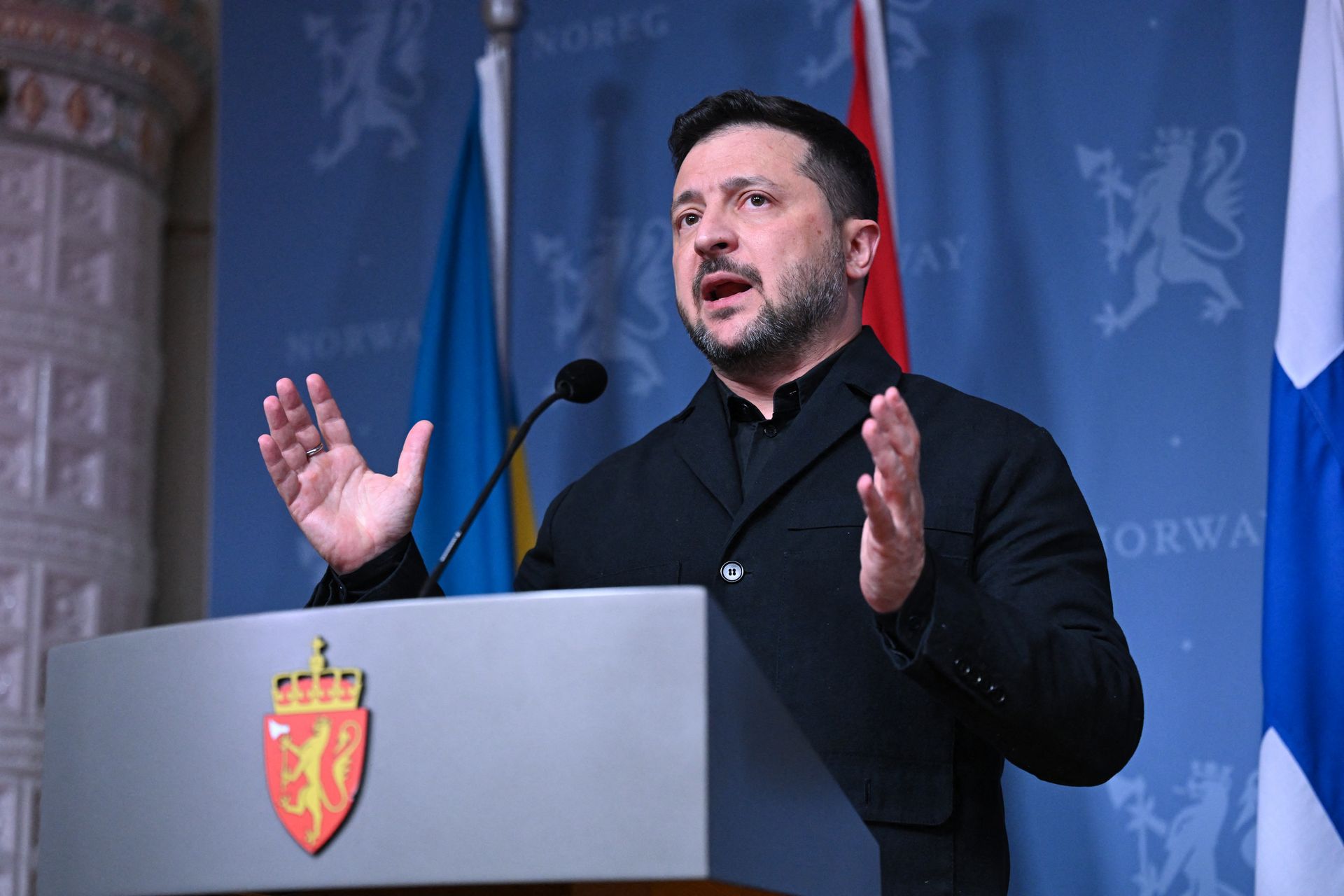
Zelensky praised Norway and Finland for putting their diplomacy "completely out in the open: discussions in advance, a full briefing, and transparent objectives," saying that not all countries had taken the time to speak with Ukraine beforehand.
A test satellite for a future communications network under Ukrainian control is working in orbit, Ukraine’s Himera and Denmark’s GomSpace said on 27 October. The companies say it will work for Ukraine’s strategic security, and that the long-term aim is to rely less on foreign communications providers. Public launch records for the mission do not list a satellite by that name, though some of its objects are still unidentified.
Ukraine fights Russia on satellite links it doesn’t control, and the announcement comes two weeks after it saw what depending on an outside provider can cost. The satellite, the companies say, went up on 1 October, before that trouble began. Overnight on 14 October, Starlink and its military version, Starshield, began dropping links on fast-moving terminals, and Ukrainian officials said the cap disrupted drone missions. On 24 October, 10 days after the cap began, Ukraine’s Defense Ministry reported speeds restored. Who ordered the cap remains contested. That same day, Elon Musk wrote that Ukraine’s military had violated Starlink’s terms of service and that “that loophole was closed last week,” a claim a Ukrainian presidential adviser disputed.
What the companies say, and what launch records show
Obria Nano flew on SpaceX’s Transporter-18 rideshare mission, the release said. Aalborg-based GomSpace built it on Himera’s order, Himera co-founder and CEO Misha Rudominski wrote on Facebook. He added that the team received the first signals the next day and that the satellite is now working. Its tests are meant to inform the design of the full Obria system, the release said.
Explore further
The Starlink hot potato: Musk points to Trump, Trump points to nobody, then credits Musk with the fix. The speed limit stays
No satellite called Obria Nano appears on SpaceX’s published list for the mission, The Insider found. Public tracking catalogsshow one Ukrainian satellite from that launch, named UASAT-Nano. Another 26 objects from the mission are still listed with placeholder names and no confirmed owner. The outlet said it is unclear whether the two names refer to one satellite.
UASAT-Nano is the satellite network Stetman, another Ukrainian company, is building, and its founder said the network’s first test satellite would launch in October. In April, Stetman and GomSpace agreed to set up a joint venture called UASAT and planned a first launch for fall 2026. The Obria release does not mention Stetman or UASAT.
Production in Ukraine is the stated next step
Rudominski wrote that Himera’s next stage is to produce satellites and ground terminals in Ukraine. He called it important not only to use the technology but also to gradually build domestic expertise and manufacturing.
“For us, this project is about more than launching a satellite. It is an opportunity to lay the foundation for an independent communications network for Ukraine,” Rudominski said in the release.
In the long run, the network would cover all of Ukraine and complement European satellite networks, the release said. The network does not exist yet, and Himera has given no timeline.
Explore further
“Trump and Musk must be held accountable”: US senator warns Starlink network failing over Ukraine could cripple its shield against Russian missiles and drones
Replacing Starlink will not be quick. Lance Hunter, a political scientist at Augusta University, told Time that Ukraine cannot quickly swap out such technology, since diversifying it “takes a lot of time. It takes a lot of resources.” Meanwhile, one Ukrainian interceptor-drone maker has begun rethinking its air-launched designs after the slowdown.
Finland’s president has caused a minor EU diplomatic fiasco by phoning Russian president Vladimir Putin out of the blue.
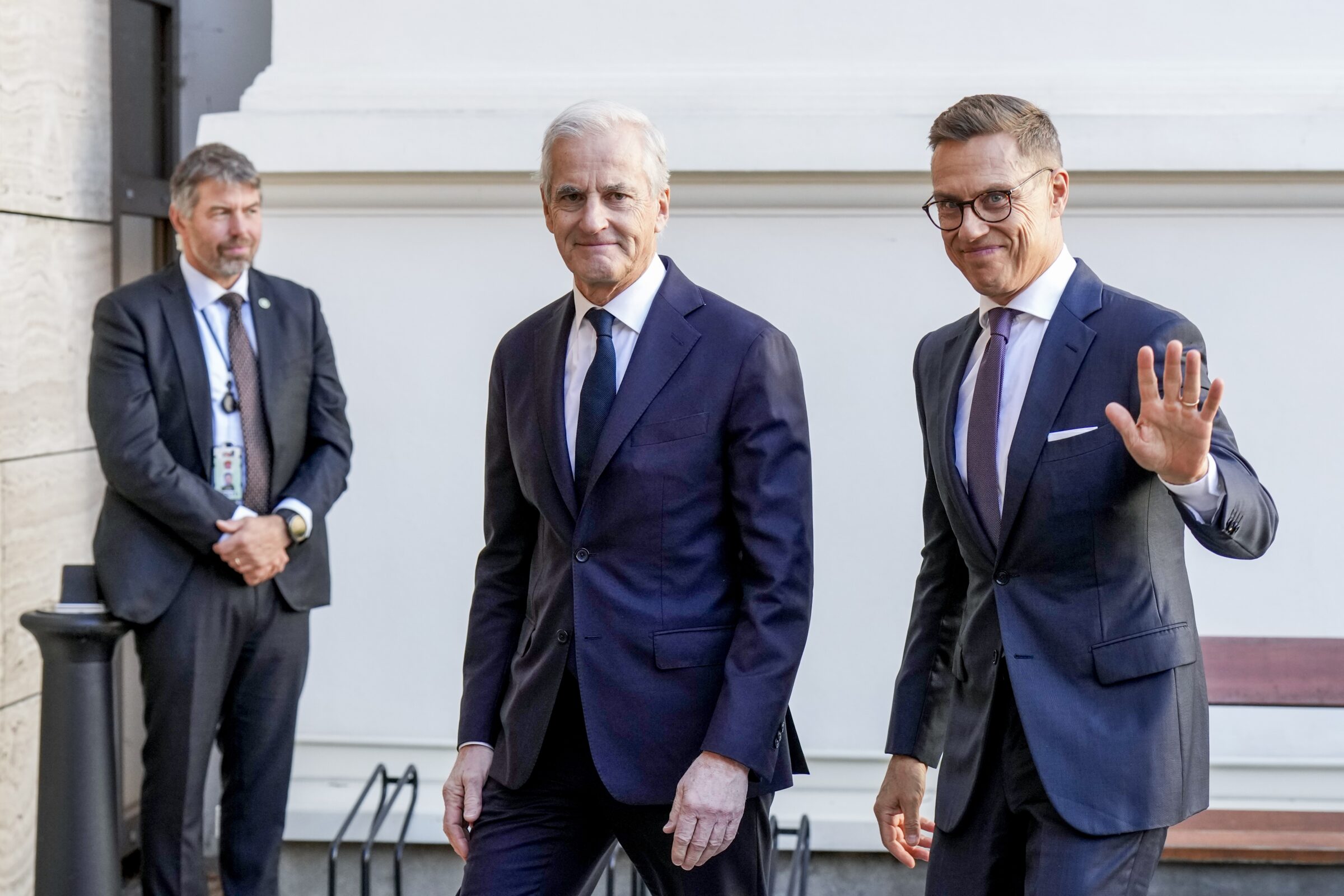
Finland’s Alexander Stubb sat down together with Norwegian prime minister Jonas Gahr Støre in Helsinki on Tuesday (27 October) and “initiated” the call to Putin, in what was already a submissive gesture in protocol terms.
Their discussion lasted 90 minutes and was “frank and substantive”, Stubb’s readout said, while Støre said he had “stressed the importance of de-escalation”.
But Putin told them he would make zero concessions, for instance on Ukrainian territories he claims are now Russian.
Putin “assessed the current situation in the Ukraine conflict zone, reiterating its root causes and emphasising that a just and lasting peace would be possible only if the interests of the Russian Federation are considered in full and without any conditions attached”, the Kremlin readout said.
Putin also belittled them by saying “the EU and Nato’s confrontational policies … result in prolonging the hostilities”.
This article continues, but the full version is available only to EUobserver.com subscribers. Visit account.euobserver.com/membership
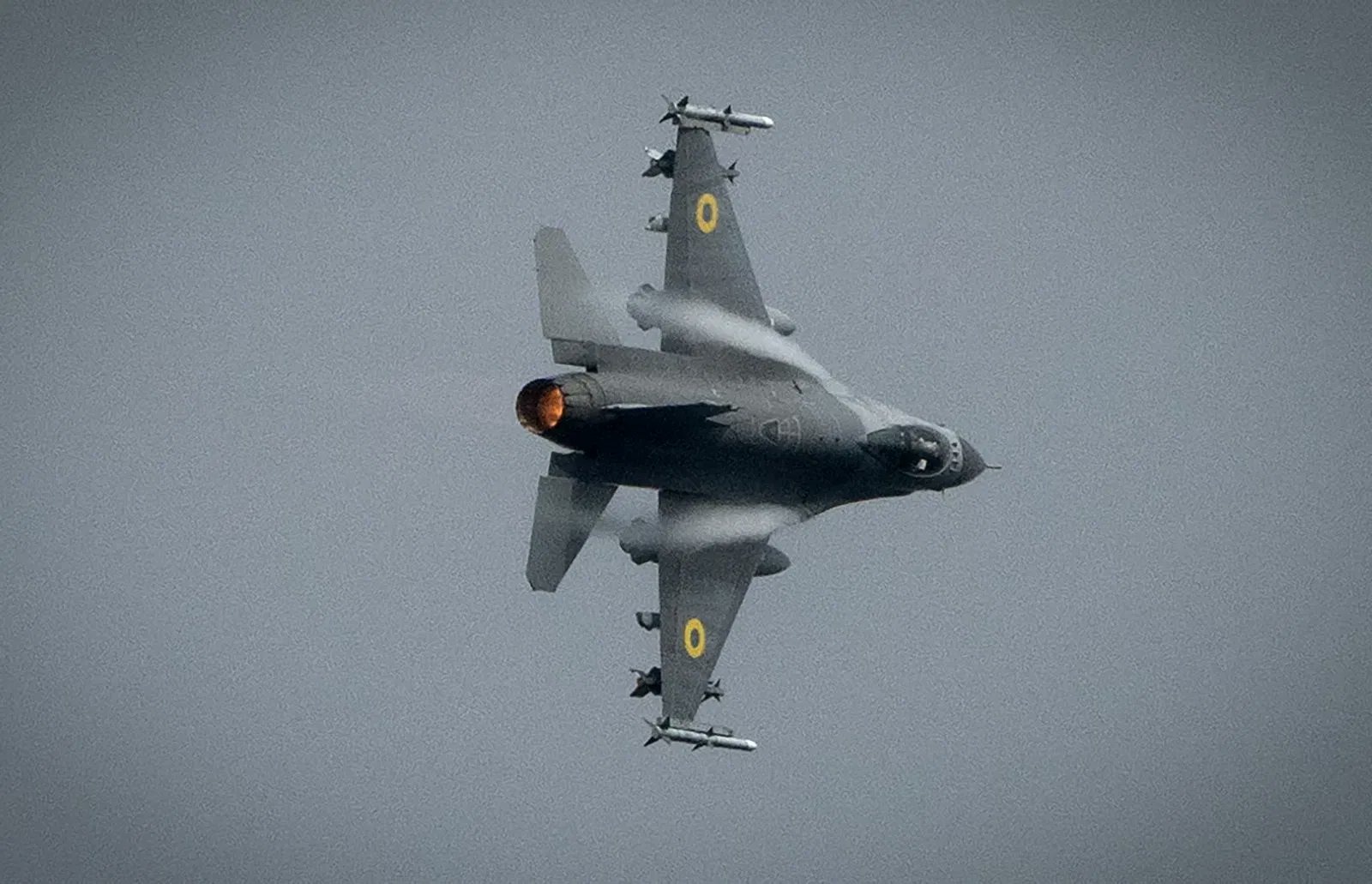
Ukraine has received more than 50,000 rounds of 20-mm ammunition from Denmark for the onboard cannons of its F-16 fighter jets, with Ukrainian pilots already using the rounds to intercept Russian jet-powered Geran attack drones, Ukraine’s Defense Ministry said.
The accelerated delivery addresses a key need in Ukraine’s air defense as Russia increasingly deploys faster jet-powered drones that challenge conventional interceptors. Ukraine has also relied on F-16 cannons when stocks of air-to-air missiles are limited, making ammunition supplies important to keeping the aircraft effective against incoming aerial threats.
Denmark responds to ammunition request
The Defense Ministry thanked Denmark for responding quickly to Ukraine’s request for additional ammunition, saying the delivery directly strengthens the country’s air defenses and helps protect civilians from Russian aerial attacks.
The delivery follows a broader effort by Ukraine’s European partners to replenish F-16 cannon ammunition. On October 2, it was reported that Spain, Belgium, and Poland were also sending 20-mm rounds for Ukrainian F-16s to counter Russia’s jet-powered drones.
Belgium is also expanding its support for Ukraine’s F-16 fleet. On 16 October, Belgian Prime Minister Bart De Wever pledged to deliver 10 F-16s by the end of 2026, up from three previously planned, and discussed supplying additional ammunition, including 20-mm rounds produced by Belgian defense company FN Herstal.
Jet-powered drones pose a growing challenge
Russia’s faster attack drones are harder to intercept than older, propeller-driven Shahed-type models. Their speed gives air defenders less time to respond and makes them more difficult for many interceptor drones and conventional short-range weapons to catch.
Ukraine’s air-to-air missile shortages have also increased the importance of F-16 cannon ammunition. Ukrainian pilots have sometimes relied on their aircraft’s built-in 20-mm cannon when air-to-air missiles are scarce.
Explore further
Ukraine’s F-16s are so short of Western missiles that pilots fall back on jet’s built-in M61A1 Vulcan cannon, which risks killing civilians below
The threat from jet-powered drones is growing. Ukrainian President Volodymyr Zelenskyy said in late September that Ukraine was intercepting about 55% of Russia’s jet-powered drones, compared with more than 90% of older models.
Denmark’s ammunition delivery gives Ukrainian F-16 pilots more rounds to engage these faster targets, as Ukraine works to strengthen its defenses against Russia’s expanding drone campaign.
First delivered to Ukraine in 2024, the U.S.-made jets have become a key part of the country's defenses against Russian attacks on its rear areas, particularly jet-powered drones.
Top Democrats on the House Energy and Commerce Committee demanded answers Thursday from the Centers for Disease Control and Prevention (CDC) about the agency’s funding of a controversial hepatitis B clinical trial in Guinea-Bissau. The CDC awarded $1.6 million last year to Danish researchers to conduct the study in Guinea-Bissau, a small country in West…
Denmark will guarantee a loan to the Danish subsidiary of Fire Point, the Ukrainian maker of Flamingo cruise missiles, the Danish Business Ministry announced on 21 October. The financing will run through EIFO, Denmark’s state export and investment fund.
Ukraine uses its Flamingo missiles to strike defense plants deep inside Russia as Moscow continues its full-scale invasion. Fire Point broke ground in December 2025 on a plant in Vojens, southern Denmark, to make solid fuel for the missiles. The project has since grown far more expensive. In August, CEO Iryna Terekh said its estimated cost had risen from €50 million to above €150 million, calling the figure “very rough.” The war, meanwhile, stands in the way of Fire Point borrowing on ordinary terms in Denmark, the ministry said. That is why the Danish state is guaranteeing the loan.
What Denmark is putting up
The guarantee covers 750 million Danish kroner, or about $112.6 million, Reuters reported. Terekh said in August that the plant’s launch had slipped to late 2027. The ministry called the deal another big step toward starting production. However, Ukrainian outlet Defender Media noted that the statement does not say directly that the loan will fund the plant.
Explore further
Ukraine’s Fire Point company is working on revolutionary system which can also transform European air defense
EIFO chief Peder Lundquist said the fund is involved in nearly 40 projects linked to Ukraine. Business Minister Martin Lidegaard said hosting a Ukrainian defense company brings Denmark knowledge, production, and partnerships. Europe’s security and freedom, he added, start in Ukraine.
Better shielded from Russian strikes
Defense Minister Jeppe Bruus said Denmark was the first country to decide to let a Ukrainian defense company set up on its soil. Production outside Ukraine, he argued, is better protected from Russian attacks. He added that Fire Point’s presence opens cooperation that could give Denmark access to technologies developed in wartime.
Denmark first said in September 2025 that Fire Point would make long-range missile fuel on Danish soil. Since then, the company has signed deals with more than a dozen European firms for FREYJA, an anti-ballistic project. It could reduce Europe’s long-term reliance on scarce US-made Patriot interceptors. Fire Point aims for a first ballistic missile intercept with it by mid-2027.
Danish prime minister Mette Frederiksen attacked Spanish leader Pedro Sánchez on migration during a summit debate in Brussels on Friday (16 October).
Frederiksen, who despite leading a centre-left party has taken an increasingly hard line on migration, criticised Sánchez for granting renewable one-year legal residence permits to undocumented migrants.
“I have asked the commission to look into whether one country is doing almost everything in the opposite direction of what the others are doing. In other words, you come to a country illegally, and suddenly you’re allowed to be there legally,” Frederiksen said before arriving at the second day of the Brussels summit.
In response, Sánchez told reporters after the meeting with EU leaders that Spain’s regularisation scheme “does not go against the grain” – since there are many countries with similar measures.
In April, Spain approved plans to grant legal status to around 500,000 undocumented migrants and asylum seekers. These so-called regularisations are a common labour-migration policy that other countries have also used, including Italy, which has authorised nearly 500,000 non-EU work visas through 2028.
But at the EU leaders’ summit in Brussels in June, several European leaders used the meeting to criticise Spain’s regularisation.
The criticism resurfaced during this October summit, after the summer’s migrant crisis in the Spanish enclave of Ceuta, which some EU governments then weaponised against Spain.
Push for stronger wording
Following a breakfast on Friday (16 October), attended by 16 EU countries backing stricter migration restrictions, Denmark, Poland and Italy had also attempted to link migration to crime in draft EU summit conclusions.
They tried to amend the summit conclusions to call on the commission for extra efforts to monitor national migration measures that can affect other member states, highlight the impact of migration on welfare and public services, as well as avoid “measures that could create incentives for illegal migration”.
However, France and Luxembourg criticised the position of the 16, and leaders had a strategic exchange and agreed to return to the topic at a later date.
According to experts from the Migration Policy Centre, it is hard to conclude whether Spain’s regularisation plans encouraged more migration to the EU.
So-called ‘pull factors’ are difficult to consider in isolation, as migration depends on work opportunities, social networks abroad and other factors, but policies can also play a role.
Regularisation could pave the way to legal work, generating “positive employment and fiscal outcomes over time,” the scholars also said.
Denmark itself is not bound by EU laws (due to an opt-out) on border control, immigration, civil and criminal law, or police cooperation, and therefore cannot vote on them in the Council.
Rhetoric versus facts
It is not the first clash between the two socialist leaders on migration, but the timing matters.
Sánchez faces elections in November, and France heads into presidential elections next spring, where it is feared anti-migrant rhetoric could roll out the red carpet for the far right.
In response to a barrage of criticism from the likes of Austria, Czech Republic and, Sánchez said that the numbers on illegal migration returns speak for themselves.
“See what is happening in Spain – some politicians are willing to replace the population only so they can be … in government,” said Czech prime minister Andrej Babiš ahead of the meeting on Friday. “I am convinced that for some countries, it is too late – and that some day we will have to defend our borders so that migrants don’t come to us from Western countries if it continues like this. And we, of course, are preparing for this.”
“It’s a road to hell,” added Babiš, who belongs to the far-right Patriots for Europe group.
His comments, Sánchez said, resembled the rhetoric of the far-right political party Vox in Spain, now polling close to 20 percent. “One thing is the rhetoric, the blablabla, and another thing is the facts,” he said.
Ceuta crisis
The situation in Ceuta escalated at the end of July 2026, when tens of thousands of people simultaneously attempted to cross over from Morocco to the autonomous enclave.
The Spanish have since deployed additional security measures to regain control over the territory.
A majority of newly arrived migrants were eventually returned to Morocco, but thousands remained in the city of 80,000 people – many of whom are unaccompanied children and teenagers.
The crisis has exposed tensions between Spain, Morocco and the EU on border control and asylum and put into question who is responsible for migrants.
French president Emmanuel Macro previously said: “Spain was the target of an attack. Call it a hybrid attack if you like, but it was an information attack. Traffickers, and probably people seeking to destabilise Spain, led many people living in poverty to believe there was an opportunity, using false information and creating an information bubble.”
Meanwhile Italian prime minister Giorgia Meloni previously called for a suspension of the Schengen free movement agreement with Spain.
The whole situation triggered tit-for-tat border closures between Spain and Italy.
On Thursday (15 October), Italy decided not to renew the security checks with Spain, paving the way for a week of negotiations between Madrid and Rome to reach a final agreement.
Around 1880, men cutting peat at Dejbjerg, in western Jutland (Denmark), began pulling bronze pieces out of the bog that shone as if they were new. Some assumed it was gold. Others had a more down-to-earth suspicion: the equipment of an illicit still, hidden in the marsh to make moonshine. Both versions are recorded on […]
The United States plans to open two new military bases in Greenland, an expansion made possible by a new security agreement between the US, Denmark, and the semi-autonomous Danish territory of Greenland. On Tuesday, President Donald Trump, Danish Prime Minister Mette Frederiksen, and Greenland Prime Minister Jens-Frederik Nielsen signed the new security agreement during a […]
From Denmark to Litochoro in western Macedonia, northern Greece, by bike: 52 days, 10 countries and 3,500 kilometers for the crazy dream of Marilena Karantini. The great journey of 34-year-old Marilena Karantinini who managed fearless this special challenge. Her thought was simple… “This year I will go from Denmark to Litochoro by bike” she said […]
President Donald Trump on Friday announced a new security arrangement for the semi-autonomous Danish territory of Greenland. In a Truth Social post, he said: “I am pleased to announce that the United States of America has entered into an Agreement with The Kingdom of Denmark, and Greenland, that gives the United States permanent control over […]
A leading Belgian animal park has just welcomed a new arrival: Kali the giraffe.
Kali’s arrival at Pairi Daiza is no coincidence: transfers between European zoos are carefully coordinated, taking into account genetics, age and breeding recommendations.
Rothschild's giraffe Kali was born on 15 February 2024 at Knuthenborg Safaripark (Denmark).
On the evening of Tuesday 15 September, she arrived to join the two Rothschild's giraffes already living at Pairi Daiza: PoléPolé and Oliver.
Kali’s journey of several hundred kilometres, and this new phase in her life, began with a decision taken at European level.
The Rothschild's giraffes in European zoos are part of a European Endangered Species Programme (EEP – Ex situ Programme). The programme maintains detailed records of each animal’s ancestry and demographics to manage this population in the long term. Based on this data, it is possible, amongst other things, to determine which animals can form a breeding pair, whilst preserving the genetic diversity of the population as effectively as possible.
A park spokesman told this site: “Kali is therefore not simply coming to Pairi Daiza because a space happened to be available.
“The recommendation for her transfer took into account her age, two and a half years, as well as her genetic background and that of the giraffes already there.”
She will live alongside Oliver, a male who was born on 1 August 2016 at Safari Park Dvůr Králové (Czech Republic) and who has been at Pairi Daiza since 2018. Oliver has already sired two daughters at the Garden of the Worlds: Zuri, born in 2021 and transferred to Bellewaerde (Belgium) in 2024, and Masika, born in 2023 who left for the Zoo du Bassin d’Arcachon (France) on 10 September 2026.
PoléPolé also lives alongside Oliver.
She was born on 10 May 2021 at WILDLANDS Adventure Zoo Emmen (Netherlands) and has been living at Pairi Daiza for three years.
The departure of Zuri and Masika and the arrival of Kali are therefore not isolated events, but different parts of the same coordinated population-management process.
The spokesman added, “At a European level, these transfers make it possible to manage a population, taking into account the age, sex and kinship ties of each individual, the needs of the population and the situation at each institution.”
Kali’s first few days at Pairi Daiza
Kali arrived at Pairi Daiza late on Tuesday and spent her first night alone in an enclosure within her indoor quarters. The keepers gave her time to recover from her journey and began observing her behaviour in this new environment.
The spokesman said, “Kali was introduced to PoléPolé this morning, under the supervision of the zoological team. The meeting with Oliver will take place later.
During these first few days, the keepers will get to know Kali: how she explores her surroundings, how she reacts to PoléPolé, and her habits and preferences. The next steps in her integration will be tailored to these observations and her behaviour.”
Her Danish keepers describe Kali as curious and gentle. The keepers at Pairi Daiza will now get to know her personality on a daily basis and, based on their observations, determine the most suitable time and circumstances to introduce her to Oliver.
Visitors can already observe Kali in her indoor enclosure through the porthole of the boat Mersus Emergo.
Tharangambadi is a fishing village on India’s Coromandel Coast, in the state of Tamil Nadu. Its name means “place of the singing waves,” a nod to the Indian Ocean lapping at its shore. It isn’t much of a tourist stop, and fishing is still its main trade, but anyone who walks its streets runs into […]
A Danish high-court ruling has overturned an indefinite detention order against 43-year-old Wasim Essam Hajress, a man previously judged too dangerous to release due to five rapes he committed. The stateless Palestinian, who was born in Lebanon, has now gone from what could have been a life sentence to a fixed prison sentence of two and a half years, a shocking judicial and legal reversal.
In December 2025, the Court of Viborg, Hajress was found so dangerous that the court ruled he should be locked up indefinitely. However, now, the Western High Court, based on an unanimous decision, has taken a different view and has changed the district court’s indefinite detention judgment to a prison sentence of two and a half years.
It is important to note the “indefinite detention” was not the same as a life sentence but theoretically allowed the man to be detained for the remainder of his life. It is generally used in severe cases when a convicted person is considered a serious threat to society and likely to reoffend.
It is also not the standard practice to impose indefinite detention for rape in Denmark but because of Hajress’s violent history of rape, the district court felt that it was necessary as he is too dangerous for the Danish public.
According to Special Prosecutor Malene Christensen of the Attorney General in Viborg, the high court, contrary to the city court, considered that there was no basis for indefinite detention, according to Danish news outlet Presse-Fotos.
Since 2003, Hajress has been convicted of a total of five rapes on Danish soil, which include but are not limited to the following cases. There is no public information available about the details of the 2003 rape case, possibly due to the fact that it is more than two decades ago.
In July 2006, he detained a woman and attempted to rape her in an apartment in Copenhagen. She fled naked after being robbed of her clothes.
In October 2006, he detained a 16-year-old girl and raped her with penetration in an elevator in Huntingvej on Nørrebro, Copenhagen.
In April 2018, he raped a 19-year-old woman in a basement room in Roskilde.
A 40-year-old man with an Arabic-sounding name is on trial this week at Glostrup District Court in Denmark on charges of rape, prolonged physical abuse, and death threats.
According to the indictment, there are two female complainants. One is the defendant’s long-term cohabitant, who says she was raped over the course of nine years, including next to her 4-year-old child while the child was in the bed. The other is a woman he is accused of picking up while working as a taxi driver, driving to a deserted location and raping her despite the victim telling him “no” and telling him repeatedly to stop.
Prosecutors from Copenhagen’s Vestegn Police say the alleged offenses took place on the western outskirts of Copenhagen and around Brøndby Strand between March 2016 and May 2025.
The prosecutors allege the woman who lived with the defendant was subjected to repeated rapes over nine years, accompanied by violence and threats. They say she was told she had to obey him, according to Islam.
The indictment describes her crying, trying to get away, being held down and repeatedly telling him, “No.” One count concerns the night of Nov. 19-20, 2025, when the alleged rape occurred in the same bed where her 4-year-old child was sleeping. It remains unclear whether the defendant is also the father of the child.
The man also faces charges of assaulting the cohabitant throughout the same period. Police say the violence included blows, kicks, hair-pulling, spitting, and throwing objects.
In some incidents, the defendant used wires and a knife to inflict harm, while in another incident, he threw an object, which resulted in the woman fracturing her wrist. Additional counts allege psychological control: she was not allowed to go out in public alone, drive a vehicle, see female friends, or hold a job. She also routinely received death threats.
Second rape allegation involves drunk taxi passenger
The second alleged rape is dated to Feb. 14, 2026, between 3:40 a.m. and 5:00 a.m.
Prosecutors say that when the defendant targeted her, the female victim was under the influence of alcohol and unable to resist or even know exactly where she was. The defendant allegedly drove her to a deserted area while working as a taxi driver and raped her.
The defendant has been in pre-trial custody at Vestre Fængsel. Prosecutors have asked for a permanent deportation order if he is convicted. A court-imposed name ban prevents publication of his identity.
Defense lawyer Millemaxine Isolde Cornelia Albrektsen told Presse-Fotos.dk that her client denies all of the allegations.
“In addition, I do not want to go into details. The information will come out in court,” she said.
The court trial began on Sept. 7 and a verdict is expected later this month.
A 32-year-old man with an “Arabic-sounding name” is standing trial in Copenhagen City Court for charges that he subjected a 14-year-old girl to a “violent anal rape” on a park bench in February.
According to the indictment obtained by Presse-Fotos.dk, the brutal rape took place in Lersøparken along Tagensvej in Copenhagen on Feb. 23, 2026, between approximately 8:20 p.m. and 10:00 p.m.
Prosecutors say the man met the girl there and then used force to rape her, which also includes other sexual acts besides intercourse. Due to the nature of the case, further details from the indictment were not released by the news outlet that broke the story, Presse-Fotos.dk.
The news outlet notes that the accused man has an “Arabic-sounding name.” His first name has not been released to the public. However, the man holds Danish citizenship, which prevents him from being deported.
“The editorial office is familiar with the name of the 32-year-old, but a name ban prevents Press-photos.dk and other media from describing his identity more closely,” wrote Press-Photos.
The defendant denies the allegations and remains in custody at a Copenhagen prison pending the outcome of the trial.
Copenhagen Police press officer Troels Jensen wrote in a statement: “The other circumstances of the case appear during the main proceedings, which will continue on Sept. 28. We are not commenting on the details of the case as long as the main hearing is underway.”
Defense lawyer Christian Bjerrehuus has declined to comment on the case. Neither the lawyer nor police would say whether the accused and the girl knew each other beforehand.
Danish archaeology is facing one of the most unique discoveries of the last decade in the field of ancient Nordic clothing. During the excavation at the site known as Skonager (ARV 661), carried out near Varde, in the heart of Western Jutland, a team of archaeologists has located a female tomb from the Viking Age […]

 Login