Reading view
Moncloa recula con los centros de datos: suaviza el decreto y 'cuela' un salvavidas para la fotovoltaica

Pressionada por Trump, Europa demonstra alívio com vitória de Lula
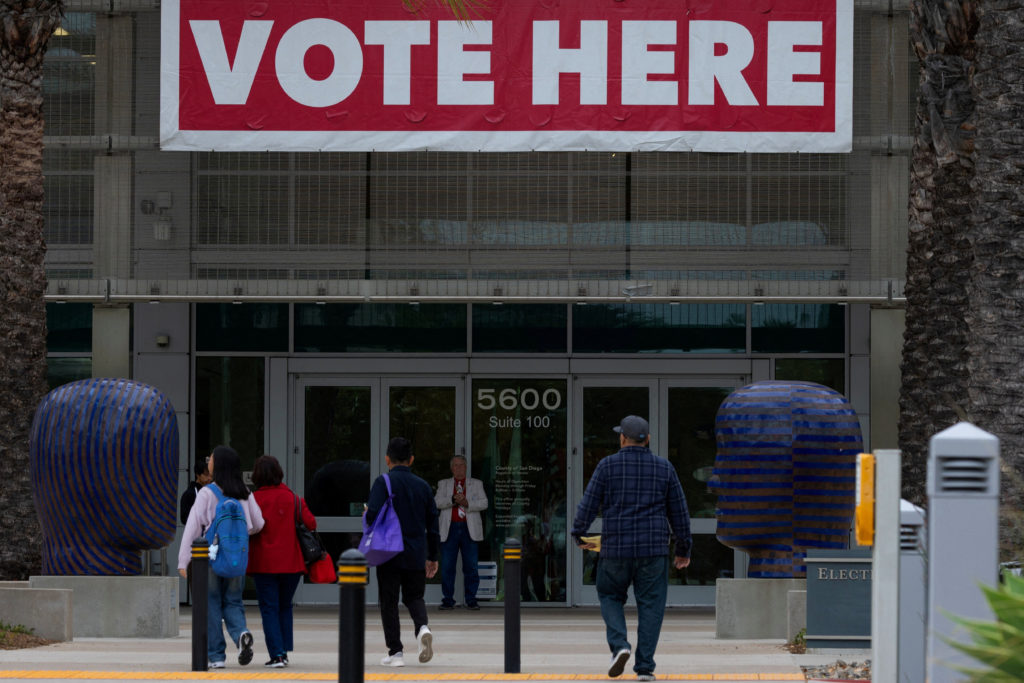
A guide to the key ballot measures voters will decide on Election Day

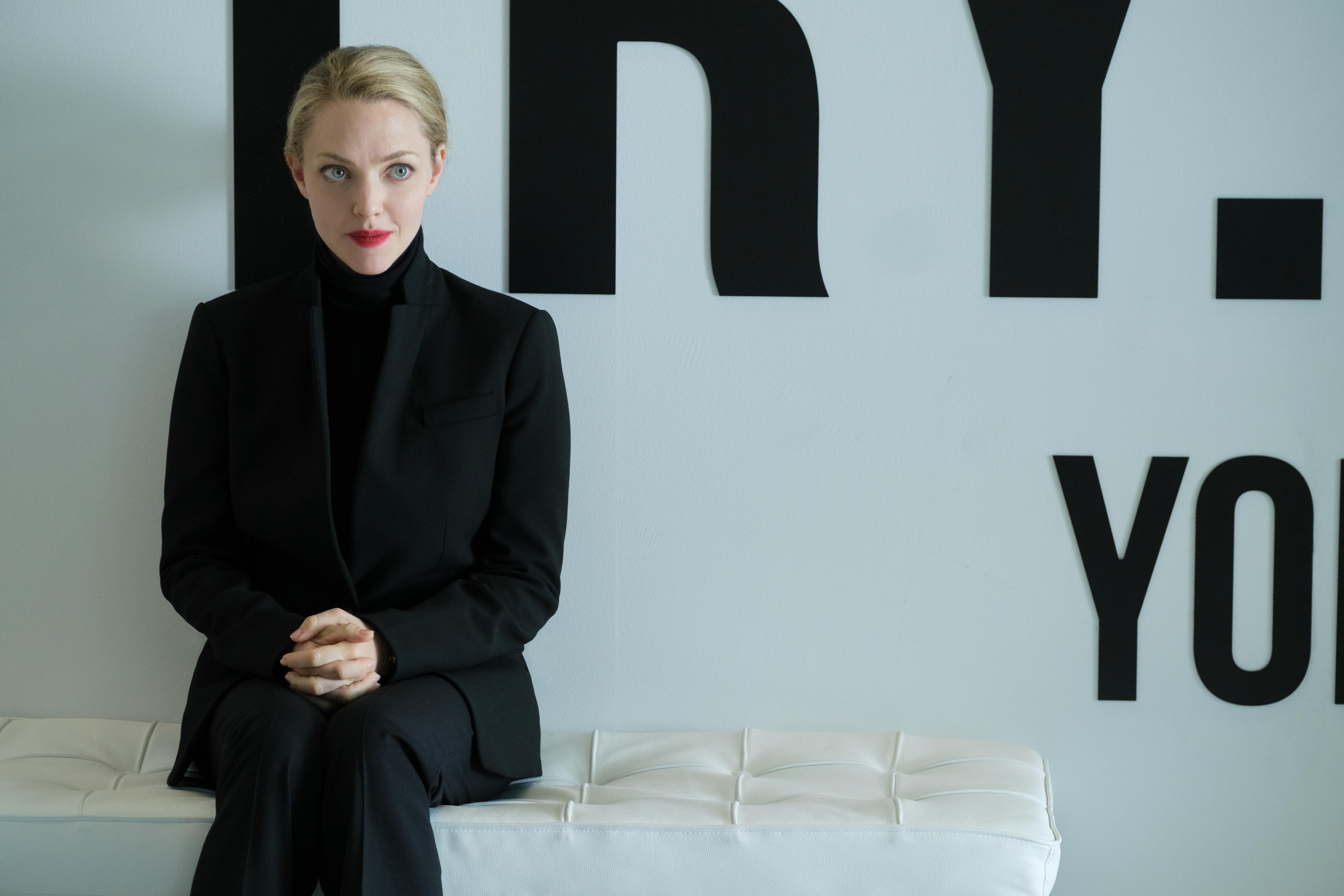
Why ‘You Can See Everything’ dominates conversations, social media, Halloween costumes, and has even been Oscar-tipped
How long has it been since a documentary dominated public conversation, the box office, chats between friends and social media memes? You might have to go back to 2004 and Fahrenheit 9/11, by Michael Moore, or that hybrid (but a film, nonetheless) that blew many minds — The Blair Witch Project in 1999 — to see something similar to what’s happening in the United States surrounding You Can See Everything, this season’s cultural phenomenon.

© A24
Los Museos Vaticanos llegan a Barcelona con los artistas que volvieron al templo en el siglo XX
Un año después de ser elegido Papa, en 1963, Pablo VI se reunió con centenares de artistas en la Capilla Sixtina, bajo los frescos de Miguel Ángel. Era consciente de que, después de siglos en los que la Iglesia había ejercido un importante papel de mecenazgo con grandes pintores, pintores y arquitectos, los artistas se estaban alejando tanto de los temas religiosos como de las instituciones eclesiástica. “Tenemos necesidad de vosotros”, confesó; les pidió perdón por si en algún momento limitaron su creatividad y les tendió la mano: “Tenemos que volver a ser aliado”. Y un año más tarde volvía a enviarles un mensaje: el mundo necesita la belleza para no caer en la desesperanza.

Así es Janja, la influyente esposa de Lula da Silva en su regreso al poder en Brasil
La victoria de Luiz Inácio Lula da Silva en las elecciones presidenciales celebradas este domingo en Brasil, donde se ha impuesto a Flávio Bolsonaro con el 51,79% de los votos, permitirá al veterano dirigente del Partido de los Trabajadores afrontar su cuarto mandato al frente del país. A su lado continuará Rosângela da Silva, conocida popularmente como Janja, su tercera esposa y una de las figuras más influyentes de su entorno. Socióloga, militante de izquierdas y defensora de numerosas causas sociales, la primera dama brasileña, de 60 años, ha adquirido un notable protagonismo político y mediático desde su matrimonio con Lula en 2022.


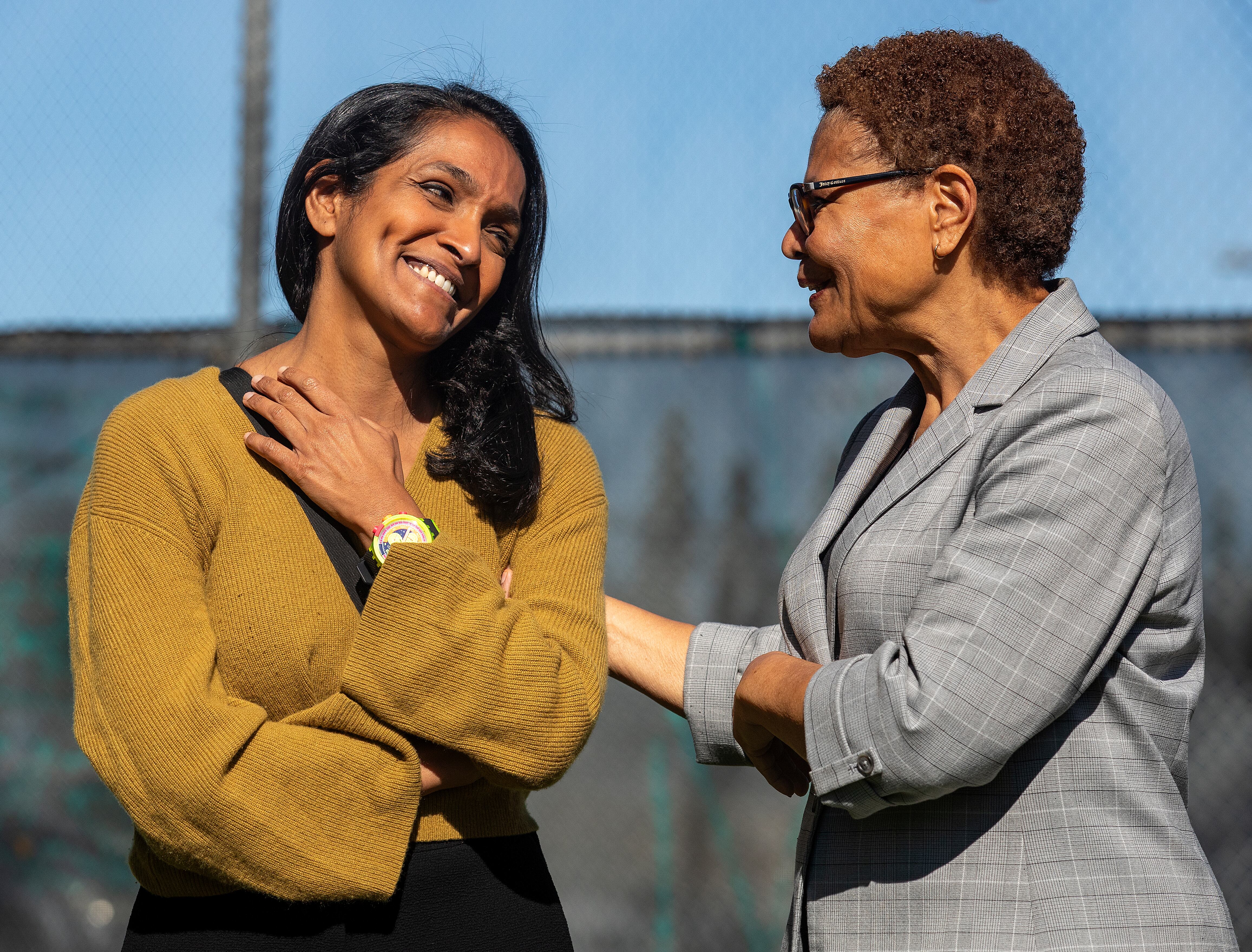
The race for Los Angeles mayor: Two Democrats battle over housing, affordability and the Olympics
In the race for the mayoralty of Los Angeles, the second-largest city in the United States, two things are certain: a woman will win, and she will be a Democrat. But with a high share of undecided voters and only days remaining before the election, it is still unclear whether Karen Bass will win another term or whether the progressive challenger Nithya Raman will take the post.

© Mel Melcon (Los Angeles Times vía Getty Images)
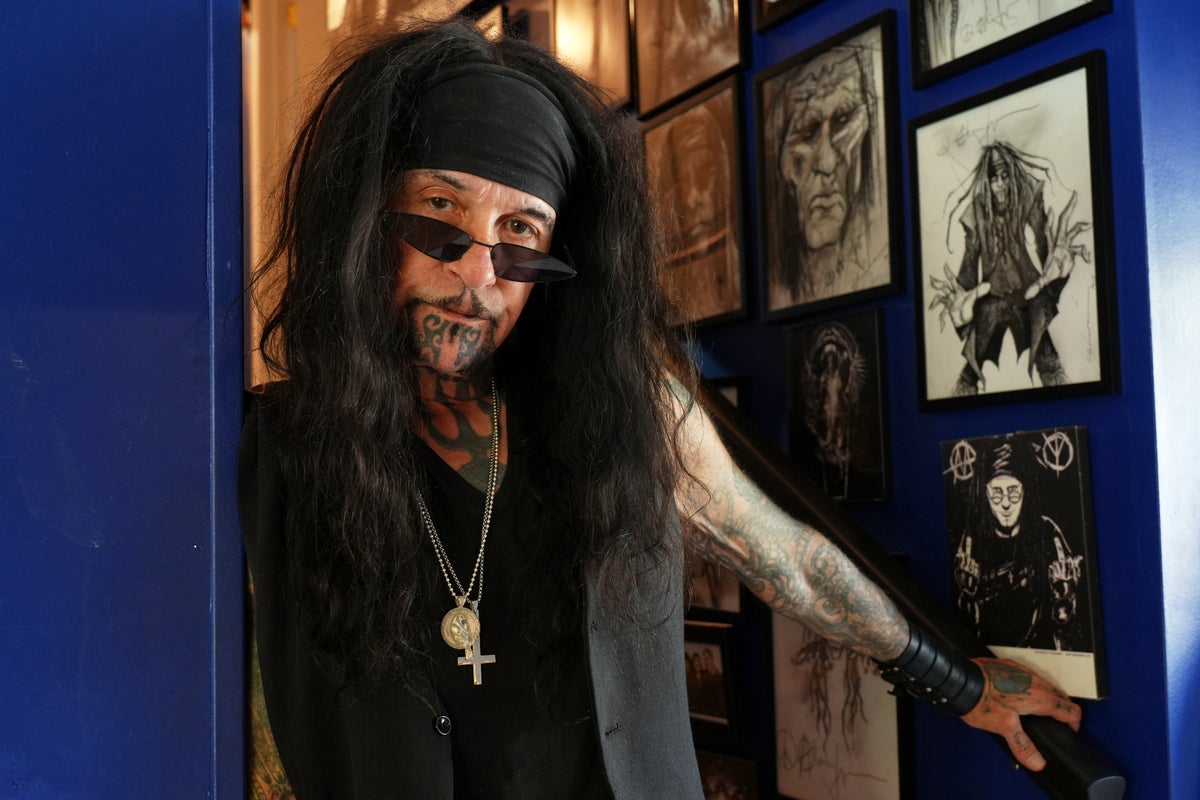
Pioneering industrial band Ministry is done. Take it from founder Al Jourgensen: 'It's time to go'

© 2026 Invision
Lula Pledges to Develop Brazil’s Own Artificial Intelligence
Lula plans to expand technical education and use renewable energy to attract data centers and keep information stored in Brazil.
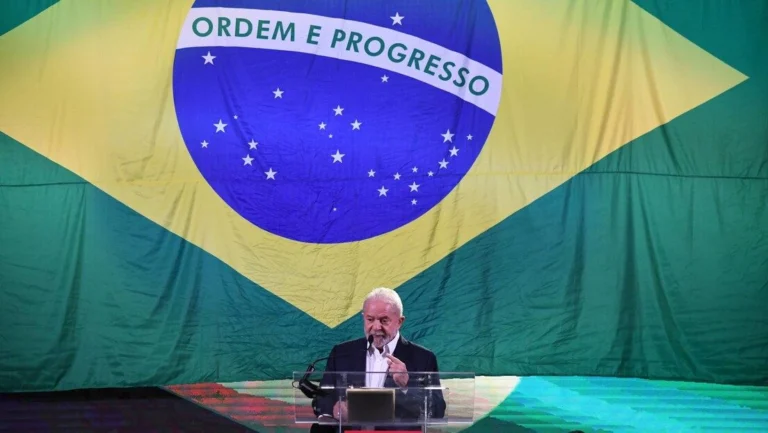
Brazilian President-elect Luiz Inácio Lula da Silva has pledged to develop a domestic artificial intelligence system, expand technical education and attract data centers powered by renewable energy, aiming to strengthen Brazil’s technological independence and accelerate its transition to a developed economy.
RELATED: Lula Celebrates Reelection, Promises Education Reform and Sovereign AI
Speaking after his victory in the presidential runoff, Lula said Brazil must invest in mathematics and engineering to build its own artificial intelligence capabilities rather than depend on technology developed in China or the United States.
“We will teach more mathematics, more engineering, because I don’t want to depend on Chinese or American artificial intelligence; I want to create a Brazilian one,” he said.
Lula also pledged to use Brazil’s renewable energy resources to attract data centers and keep information stored within the country. The proposal forms part of a broader push to expand the digital economy and strengthen domestic technological capacity.
Text Reads: The Brazil we wish to build is a country where our elderly are cared for with dignity, women are respected, and everyone has the right to live out their faith in freedom.
It is a country that respects differences, with a State that guarantees rights for all—because to govern means to look after 215 million Brazilians, without distinction. Respect must be the starting point for us to build, together, a Brazil that is increasingly fair and humane.
“We want to transform this country from a developing country into a developed one,” he said, identifying the digital, green and creative economies as key areas for investment.
He also outlined an ambition for Brazil to play a central role in political and economic decision-making and in efforts to promote peace.
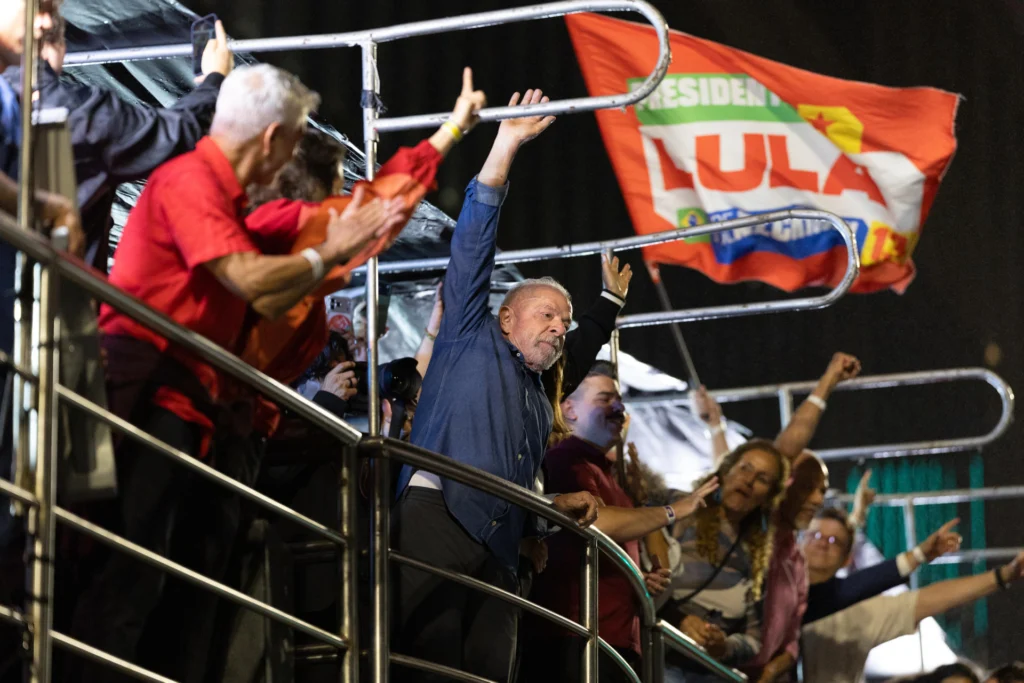
Lula promised that his next term would deliver unprecedented results, telling supporters: “I want to make a commitment: I will deliver the best term of office any president has ever had in Brazil’s history. You can be sure of that.”
The president-elect, who turns 81 on Oct. 27, dismissed concerns about his age as he prepares to take office for another term. He pledged to devote himself fully to the country’s development and to improving the daily lives of Brazilians.
“I will dedicate 20 or 24 hours a day to making this the country everyone dreams of, where people can go to sleep and wake up in complete peace of mind,” he said.
Lula also thanked voters for their support in the runoff and praised young people who took to the streets to defend democracy, crediting their participation as a key factor in his victory.
His pledges place artificial intelligence, renewable energy and digital infrastructure among the priorities he has outlined for Brazil’s next phase of development, alongside his ambition to transform the country into a developed nation.
Bulgaria’s Iotova Leads Presidential Vote, Faces Runoff
A low turnout and security concerns shaped the first round, setting up a close contest between Iotova and pro-Western rival Andrey Gyurov.
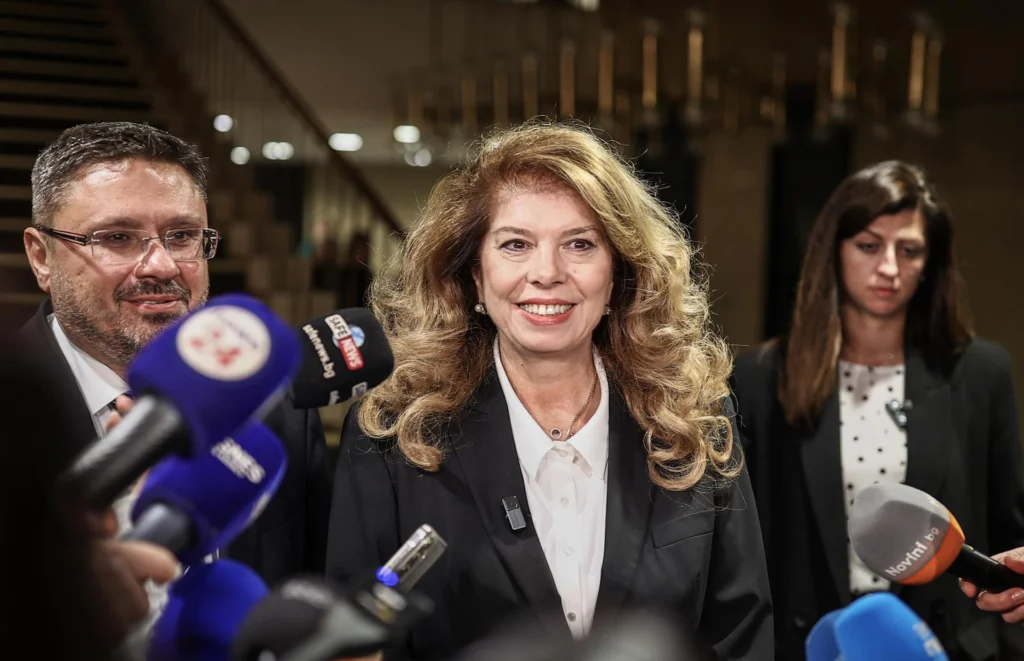
Outgoing Bulgarian President Iliana Iotova led the first round of presidential elections on Sunday with between 35% and 36.5% of the vote, according to exit polls, but fell short of the result expected by her supporters. She will face former caretaker prime minister Andrey Gyurov, backed by the pro-Western opposition, in a runoff scheduled for Nov. 1.
RELATED: Serbia’s Student Opposition Wins Decisive Parliamentary Victory
Gyurov secured between 32.2% and 32.5% of the vote, according to the same exit polls, putting him within reach of Iotova ahead of the second round.
The election took place amid security concerns following a series of drone attacks on merchant vessels in the Black Sea. Voter turnout stood at around 20%, as some political parties called for a boycott.
Iotova, 62, has campaigned on dialogue with Russia and opposed military assistance to Ukraine. She has made ending the war in Ukraine a central theme of her campaign, presenting herself as a “president of peace.”
#Bulgaria’s presidential vote delivered a result few polls anticipated. Exit polls gave incumbent Iliana Iotova, who favors dialogue with Moscow and opposes military aid to Ukraine, up to 36.5 percent, a far narrower lead than surveys had suggested.https://t.co/rqlYf7ehlZ
— Al Mayadeen English (@MayadeenEnglish) October 25, 2026
After casting her ballot, she called for a government capable of tackling poverty and regional inequalities. “I believe there must be peace, stability and security,” Iotova said.
Gyurov, meanwhile, called for a Bulgaria oriented toward Europe and the future, emphasizing economic security and effective governance.
He said he had voted for “a European, free and proud country, where incomes are sufficient, where we feel secure about tomorrow and where the state functions as it should.”
Iotova assumed the presidency earlier this year after Rumen Radev resigned to contest parliamentary elections, seeking to become prime minister. Bulgaria is a member of both the European Union and NATO.
If Iotova wins the Nov. 1 runoff, she would become the first woman elected president of Bulgaria, a country of 6.4 million people with the lowest per capita gross domestic product in the European Union.
More Than 26.6 Million Have Voted Early in U.S. Midterms
Mail-in ballots account for more than half of votes cast so far, as early turnout builds across the United States ahead of Election Day.
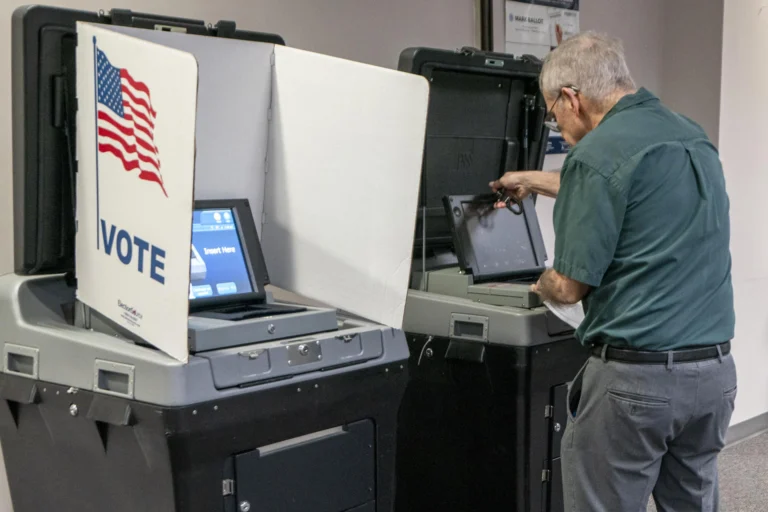
More than 26.6 million U.S. citizens have already voted in the midterm elections, according to data released October 24 by the University of Florida’s Election Lab, with mail-in ballots accounting for 14 million of the votes recorded nationwide.
RELATED: U.S. Midterms: Trump’s Grip on Congress Comes Down to the Gas Pump
The latest figures show that 26,608,029 votes had been cast ahead of Election Day, including 14,006,420 ballots returned by mail and 12,601,609 votes cast in person. Election authorities have also received requests for more than 59.4 million mail-in ballots nationwide.
Early voting has increased in states including North Carolina, Kansas, Maine and Iowa, while Texas has seen a rise in mobilization among Latino voters, according to the report. The figures come amid concerns over economic conditions and the cost of living.
California has recorded 2,943,863 early votes, overwhelmingly through mail-in voting. Of those, 2,936,954 were returned by mail and 6,909 were cast in person. Voters in the state have requested more than 23.4 million mail-in ballots.
🚨 Estados Unidos se aproxima a unas elecciones legislativas decisivas, con la popularidad de Donald Trump en retroceso y creciente malestar por la economía. Los comicios del 3 de noviembre de 2026 definirán la composición del Congreso.
— teleSUR TV (@teleSURtv) August 29, 2026
🗳️🇺🇸 ¿Qué opinas?… pic.twitter.com/HX9HCMb2o0
Text Reads: 🚨 The United States is approaching pivotal legislative elections, with Donald Trump’s popularity on the decline and growing discontent over the economy. The November 3, 2026, elections will determine the composition of Congress.
🗳️🇺🇸 What do you think?
Democrats account for the largest share of California’s early votes, with 1,383,916 ballots, or 50.2% of the total. Republicans have cast 799,054 votes, representing 29%, while voters registered without a party preference and those affiliated with minor parties account for 575,130 votes, or 20.9%.
Los Angeles County leads California in early voting, with 539,589 ballots processed. San Diego County follows with 356,667 votes, ahead of Orange County, where 279,953 ballots have been returned.
The elections will determine all 435 seats in the House of Representatives, 35 Senate seats and 36 governorships.
The run-up to Election Day has also been marked by a legal dispute over the certification of results in Alaska. A federal court challenge backed by former President Donald Trump seeks to block the potential certification of the state’s election results, raising questions about the electoral process as voting approaches its conclusion.
Serbia’s Student Opposition Wins Decisive Parliamentary Victory
A student movement that emerged after a deadly railway disaster has turned nearly two years of protests into an electoral victory.
Serbia’s student-led opposition has secured a decisive parliamentary victory over Aleksandar Vučić’s ruling party, according to preliminary results, ending 14 years of political dominance by the Serbian Progressive Party (SNS) and opening a new chapter in the country’s politics.
RELATED: Serbia’s Vucic Concedes Victory to Opposition Students Party
Vučić acknowledged the defeat on Sunday, saying initial projections indicated that the Student List would win between 135 and 140 seats, compared with about 105 for his party. The result follows nearly two years of student-led demonstrations against corruption and what protesters describe as growing authoritarianism.
The Centre for Free Elections and Democracy (CeSID), a non-governmental organization, projected that the Student List would win 139 seats after 56% of ballots had been counted, against 104 for the SNS. Unofficial estimates from polling institute Ipsos put the student movement at 140 seats and Vučić’s party at 103, down 26 seats from the 2023 parliamentary election, when it secured an absolute majority.
The setback was compounded by the failure of the Socialist Party, a longtime ally of Vučić, to clear the 3% threshold for parliamentary representation. The party previously held 18 seats. Preliminary estimates also gave three seats to Serbia’s Hungarian minority party and two to the Albanian minority list.
Turnout approached 70%, the highest since the breakup of Yugoslavia in 1992 and close to the record set in the 2000 parliamentary election.
The student movement grew out of protests that began in 2024, after 16 people died when a canopy collapsed at a railway station in Novi Sad. The disaster prompted mass demonstrations across Serbia, with protesters demanding accountability over the collapse and the construction work carried out by a Chinese company following a tendering process criticized for its lack of transparency.
Hundreds of thousands of people took to the streets, turning the demonstrations into a broader challenge to corruption and the concentration of political power. The student movement emerged as a nationwide opposition force and sustained pressure on Vučić’s government for nearly two years.
Vučić, who had led the country for 14 years, resigned as head of state in September to run for prime minister.
Celebrations and tensions in Belgrade
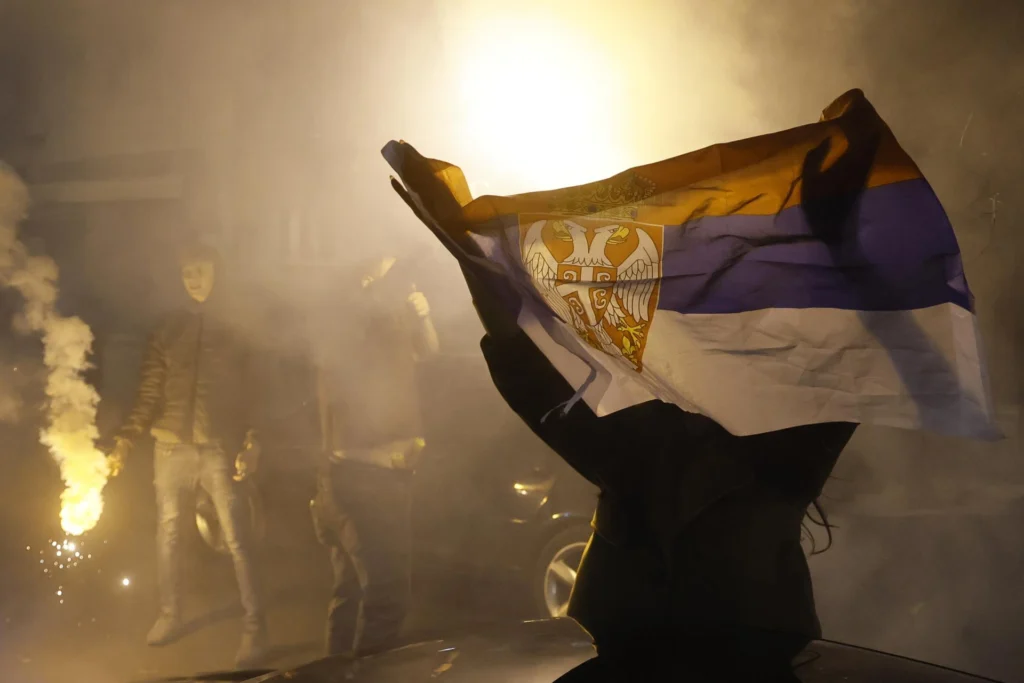
The preliminary results sparked celebrations across Belgrade, where thousands gathered to dance, chant slogans and set off flares and fireworks. Crowds shouted “Victory” and “Vučić is leaving” as people embraced and wept with joy.
Slavija Square, a focal point of the mass protests against the government, filled with supporters of the student movement. At Pioneers Park, between parliament and the presidential palace, hundreds of people tore down the fence surrounding the grounds and entered the public space.
The park had been closed to the public for months and periodically occupied by groups of masked Vučić supporters, who were accused of being used as a force to confront government opponents.
The celebrations underscored the scale of the political shift after more than a decade of SNS rule. Vučić had weathered previous opposition challenges, but the student movement turned sustained street protests into an electoral campaign that defeated his party.
A decentralized political movement
The Student List has presented itself as an alternative to Vučić’s centralized model of leadership. It operates through a horizontal structure and has avoided putting forward a single public face, arguing that political decisions should be made from the bottom up rather than imposed from above.
Its slate of 250 candidates includes university professors, actors and farmers, many of them little known to the wider public.
Radomir Sajcic, a University of Belgrade professor representing the movement, celebrated the result at its headquarters. “Dear Serbia, tonight the voice of the people can be heard,” he declared. “Tonight we celebrate victory; tomorrow we will build the future.”
Sajcic also described the outcome as “a victory of courage over fear, a victory of hope over indifference, a victory of faith that Serbia can and must be different.”
The movement’s platform calls for restoring the separation of powers and the autonomy of the prosecutor general’s office, as well as increasing investment in health care and education. It also pledges to tackle corruption and individual privileges to boost public revenue, while promoting technological modernization across the economy, including agriculture.
Serbia’s score in Transparency International’s corruption index has deteriorated during Vučić’s tenure. The European Union has also raised concerns about the country’s declining adherence to the rule of law.
European support and foreign policy questions
European institutions have welcomed the student movement’s victory, describing it as an opportunity to advance democratic reforms, strengthen the rule of law and combat corruption.
European Commissioner for Enlargement Marta Kos and European Commission President Ursula von der Leyen congratulated the students and offered support for reforms and greater press freedom. Council of Europe Secretary-General Alain Berset highlighted Vučić’s acceptance of the results and his commitment to a peaceful democratic transition.
Today, the people of Serbia turned out in record numbers to shape their country’s future.
— Ursula von der Leyen (@vonderleyen) October 25, 2026
Congratulations to the Student List on its victory in the parliamentary elections.
We stand ready to support reforms on the rule of law, media freedom, the fight against corruption and…
Montenegrin Prime Minister Milojko Spajić and Hungarian Prime Minister Péter Magyar also congratulated the winners and expressed their willingness to cooperate with them.
The election could also affect Serbia’s relations with the European Union and Russia. Under Vučić, the country has pursued EU membership while maintaining close ties with the Kremlin. Serbia has been an official candidate for EU accession since 2012.
Before the vote, EU foreign policy spokesperson Christian Wigand said the bloc would monitor the election closely and stressed the need for a free, fair and transparent process.
The Student List has offered fewer details about its international priorities than about its domestic reform agenda. Available indications suggest it may maintain Serbia’s EU candidacy while continuing to oppose sanctions against Russia, although the movement has yet to clearly outline its foreign policy plans.
The student movement’s victory marks a major political turning point for Serbia after 14 years of Vučić’s dominance. Its ability to convert demands for accountability and institutional reform into a parliamentary majority has reshaped the country’s political landscape, but the incoming government’s approach to domestic reform and foreign relations remains uncertain.
Portugal Housing Activists Push for Nationwide General Strike
Housing activists seek a strike coordinated with Spain as protests against proposed rental law changes spread across Portugal.
Housing rights groups in Portugal are pushing for a nationwide general strike coordinated with Spain as protests against proposed rental law changes intensify, with a police crackdown on a protest encampment resulting in more than 30 arrests, according to organizers.
RELATED: Portuguese Police Violently Evict Housing Rights Camps in Lisbon and Oporto
Reports on the number of arrests vary. Official accounts put the figure between 11 and 31, while organizers say more than 30 people were detained. The police operation against members of the encampment drew criticism from several sectors.
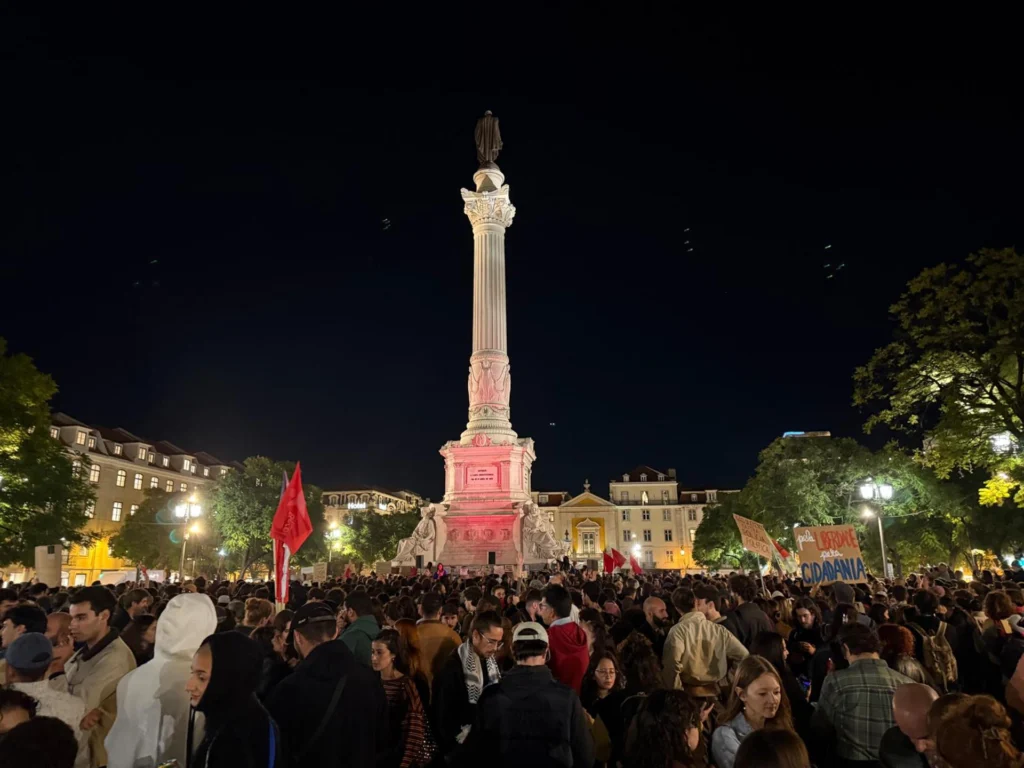
Housing rights organizations mobilized in Lisbon and Porto on Sunday to build support for a general strike. The proposal has also been discussed at public assemblies and demonstrations held daily across Portugal for more than a week.
“There are thousands of people mobilized, and I think that makes calling a general strike in Portugal increasingly necessary,” João Veloso, a spokesperson for the Lisbon Encampment, told the press. He expressed confidence that the growing demonstrations could pressure the government to withdraw its proposed rental law reforms.
The initiative is being discussed alongside a general strike announced in Spain for Wednesday, Nov. 11. Trade unions and social organizations in Spain are calling for measures to address the housing crisis and improve working conditions.
Protests spread beyond major cities
Demonstrations have extended beyond Lisbon and Porto to Coimbra and Faro. At nightly public assemblies, participants have discussed whether to set up tents again or spend nights in sleeping bags to sustain the protests.
The unrest stems from the conservative government’s proposed changes to rental laws. The legislation would accelerate eviction proceedings, eliminate the minimum three-year term for certain automatic lease renewals, allow landlords to demand up to three months’ rent in advance instead of the current two-month limit, and remove the cap of two months’ rent on security deposits.
Mexico Detains Ex-Prosecutor on Treason Charges Over CIA Raid
A former Chihuahua prosecutor faces federal charges over a drug-lab operation involving US intelligence agents, escalating a dispute over Mexico’s national sovereignty.
A Mexican federal judge has ordered the pretrial detention of former Chihuahua attorney general César Jáuregui Moreno on charges of treason, ruling that evidence supports allegations that he compromised national sovereignty by allowing US intelligence agents to take part in a drug-lab operation without federal authorization.
RELATED: Flávio Bolsonaro Rejects Lula’s Victory, Seeks Annulment
Judge Ricardo Alfonso Santos Dorantes issued the order early Sunday after finding sufficient grounds to bring Jáuregui Moreno to trial. The former prosecutor will remain in a maximum-security prison in the State of Mexico while the case proceeds.
The charges stem from a mid-April operation to dismantle a drug laboratory in the Sierra del Pinal, in the northern border state of Chihuahua. According to Mexico’s Attorney General’s Office (FGR), agents from the US Central Intelligence Agency (CIA) participated without the required notification to the Foreign Affairs Ministry or the necessary legal authorizations.
Prosecutors argue that Jáuregui Moreno’s failure to act enabled armed foreign personnel to operate on Mexican territory in activities reserved exclusively for the federal government, putting national security at risk.
Luego de aportar más de 150 datos de prueba, la #FGR obtuvo auto de vinculación a proceso en contra de César “N”, ex fiscal general del estado de Chihuahua, por su posible participación en el delito de traición a la patria. pic.twitter.com/sbhM0vY6cG
— FGR México (@FGRMexico) October 25, 2026
Text Reads: After providing more than 150 pieces of evidence, the #FGR obtained an order of linkage to trial against César “N”, former Attorney General of the state of Chihuahua, for his possible involvement in the crime of treason against the homeland.
The FGR presented more than 150 pieces of evidence at the hearing. Prosecutors also cited public statements in which Jáuregui Moreno said the operation had been planned for months by Chihuahua’s State Investigation Agency and its Special Strategic Operations Prosecutor’s Office. They argued that the account pointed to information being withheld from federal authorities and shared with foreign personnel.
The defense presented documents and witness testimony to challenge the federal allegations. However, Judge Santos Dorantes upheld the charges and set a two-month deadline for investigators to complete the supplementary investigation.
Jáuregui Moreno was initially arrested in Chihuahua city on Saturday under a state-level warrant accusing him of illegally exercising public office and collusion. A local judge ordered him to stand trial on the public-office charge but did not impose pretrial detention, leaving open the possibility of his release.
On October 18, agents from the federal Criminal Investigation Agency arrested him under a separate warrant as he was leaving detention. He was transferred to Mexico City and taken to El Altiplano, a maximum-security prison in the State of Mexico. The hearing on the federal treason charge began on Saturday afternoon and was held behind closed doors.
The case has fueled tensions between state and federal authorities and sparked a wider political dispute over the Chihuahua operation. The controversy has also drawn attention to a private meeting on September 19 in Ciudad Juárez between Chihuahua Governor Maru Campos and President Claudia Sheinbaum.
Campos later disclosed details of the encounter, which involved heated exchanges over the case. She said she went public to counter rumors that she had reached a political pact or a behind-the-scenes agreement with the federal government.
Jorge Romero Herrera, national leader of the opposition National Action Party (PAN), defended Campos’s decision to disclose details of the meeting.
“She is an adult woman; she makes her own decisions,” Romero Herrera said. He also reaffirmed his party’s support for Campos and other PAN officials, including governors and mayors.
Venezuela, Cuba Congratulate Lula on Brazil Election Win
Venezuela and Cuba pledged continued cooperation with Brazil after Luiz Inácio Lula da Silva defeated Flávio Bolsonaro in the presidential runoff.
Venezuela and Cuba congratulated Brazilian President Luiz Inácio Lula da Silva on his election victory, reaffirming their commitment to regional cooperation after he defeated Liberal Party candidate Flávio Bolsonaro in the presidential runoff.
RELATED: Massive Celebrations Erupt Across Brazil After Lula’s Run-off Victory
Venezuela’s government praised Brazilian voters for their participation in Sunday’s election, calling it a strong demonstration of civic engagement and democracy.
“The people of Brazil have given a resounding demonstration of civic and democratic participation,” Venezuelan Foreign Minister Félix Plasencia González said in a statement posted on social media.
Text Reads: The Bolivarian Republic of Venezuela congratulates the massive and civic participation of the pueblo of the Federative Republic of Brazil in the second electoral victory celebrated today that leads to the victory of President Luiz Inácio Lula da Silva.
Caracas also reaffirmed its commitment to maintaining longstanding ties with Brazil, citing peace, respect for national sovereignty, self-determination and solidarity among Latin American and Caribbean nations.
Lula secured more than 64 million votes, representing 51.77% of valid ballots, defeating Bolsonaro, a senator and candidate for the Liberal Party (PL).
Cuban President Miguel Díaz-Canel described the result as a historic victory that would help preserve the pursuit of social justice. He also pledged Cuba’s support for greater regional unity and integration.
“Brazil can count on Cuba as we build unity and integration across our great Latin American and Caribbean homeland,” Díaz-Canel said.
Estimado hermano @LulaOficial, te felicito en nombre del gobierno y pueblo cubanos por esta victoria histórica que garantiza la continuidad del camino de paz, soberanía y justicia social emprendido por el pueblo brasileño bajo tu liderazgo.
— Miguel Díaz-Canel Bermúdez (@DiazCanelB) October 26, 2026
1/2 pic.twitter.com/5U9azS8Mvc
Text Reads: Dear brother @LulaOficial, on behalf of the Cuban government and people, I congratulate you for this historic victory that ensures the continuity of the path of peace, sovereignty, and social justice embarked upon by the Brazilian people under your leadership.
Former Argentine President Cristina Fernández de Kirchner also congratulated Lula, first praising Brazilian voters for their mobilization and then highlighting the president’s ability to rally support.
“Congratulations first to the Brazilian people, who today took part in an authentic electoral October 17, and then to you, comrade President Lula, who, in your seventh presidential election, knew how to awaken among your fellow citizens the feelings and sense of purpose needed to win this battle,” she wrote.
Former Bolivian President Evo Morales welcomed the outcome as a source of renewed hope for people across the continent fighting for social justice, dignity and sovereignty.
Addressing Lula as a close ally and fellow campaigner, Morales called the result a “beautiful and heroic victory.” The messages from Venezuela, Cuba, Argentina and Bolivia reflected the regional significance these leaders attached to Lula’s election win.
Flávio Bolsonaro Rejects Lula’s Victory, Seeks Annulment
Brazil’s far-right candidate challenges the election result after voting hours were extended over public transport disruptions.
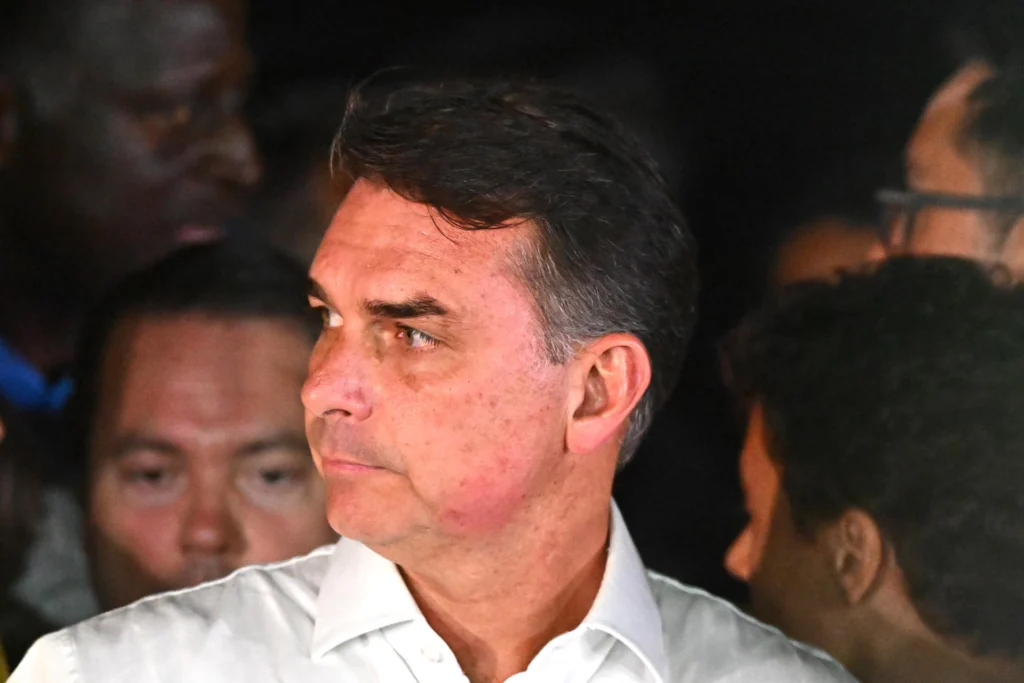
Brazilian far-right presidential candidate Flávio Bolsonaro has rejected President Luiz Inácio Lula da Silva’s reelection and vowed to seek the annulment of the vote, citing a Supreme Federal Court decision to extend voting hours amid allegations of disruptions to public transport.
RELATED: Massive Celebrations Erupt Across Brazil After Lula’s Run-off Victory
The Superior Electoral Court (TSE) confirmed Lula’s reelection on Sunday. Bolsonaro, however, declared the result unacceptable and announced plans to challenge it in court.
“It is impossible to recognize the election results,” Bolsonaro said. “We will turn to our legal team and request that these elections be annulled.”
Bolsonaro based his challenge on a ruling by Supreme Federal Court Justice Cristiano Zanin, who extended voting by two hours after the Workers’ Party (PT) reported alleged irregularities affecting voter transportation in several cities.
The ruling came shortly before polls were due to close at 5 p.m. Zanin ordered polling stations nationwide to remain open until 7 p.m. Brasília time, citing the seriousness of the allegations and the urgency of the measure.
The PT accused mayors opposed to Lula of failing to comply with electoral court orders requiring municipalities to provide free public transport at full capacity on election day, as they would on a regular working day. The party also called for those responsible for the alleged violations to be caught in the act.
In Salvador, electoral authorities ordered the arrest of Pablo Souza, the city’s mobility secretary, over suspicions that he had withdrawn buses to disadvantage Lula. The northeastern city is governed by União Brasil, a center-right party allied with Bolsonaro. In the first round of the presidential election, Lula received 65% of the vote in Salvador, compared with 27% for Bolsonaro.
Brazilian trade union federations also denounced transport disruptions in several cities on election night and called for immediate action by the authorities.
In a statement, the unions condemned what they described as the deliberate obstruction of eligible voters’ right to participate in the election. They alleged that some cities had reduced their bus fleets despite a Supreme Federal Court order requiring public transport to operate at full capacity on election day.
The disruptions left thousands of people waiting at bus stops, uncertain whether they would reach polling stations in time. In some cases, the unions said, voters were unable to cast their ballots.
Bolsonaro’s campaign also sought an extension of voting hours, according to local media reports. His team requested additional time in cities across São Paulo, Paraná and Santa Catarina states, citing difficulties caused by heavy rainfall.
The dispute recalls the aftermath of the October 2022 presidential election, when Lula defeated Flávio Bolsonaro’s father, Jair Bolsonaro. The former president repeatedly challenged the result and conspired to overturn it.
On Jan. 8, 2023, thousands of his radicalized supporters stormed the Congress, presidential palace and Supreme Federal Court buildings in Brasília. Jair Bolsonaro was subsequently tried and is now serving a 27-year prison sentence for conspiring against Brazil’s democratic order and attempting a coup.
Prorrogação da votação teve baixa procura e frustração de eleitores

Houve mesários que só ficaram sabendo da medida após o fechamento das seções e quando já não era mais possível reabrir a votação.
Notícias relacionadas:
- Lula é reeleito presidente do Brasil em virada histórica.
- Eleitores relatam urnas fechadas e falta de transporte em Salvador.
- Advogado vê sabotagem à democracia em falta de transporte de eleitores.
A Agência Brasil conversou com eleitores e mesários.
No Rio de Janeiro, em uma das maiores zonas eleitorais da zona sul da cidade, o Colégio Pensi, no Flamengo, pelo menos sete pessoas chegaram após às 17h, quando a escola fechou os portões.
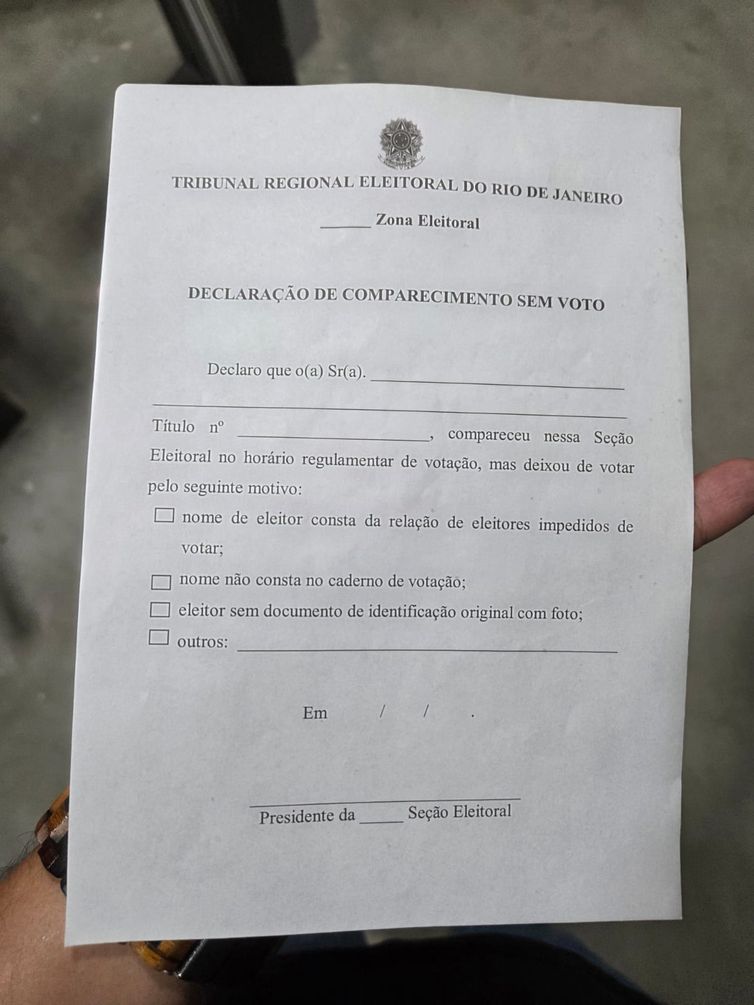
Essas pessoas receberam uma Declaração de Comparecimento sem Voto. A declaração, assinada pelo presidente da seção eleitoral, afirma que os eleitores foram até a seção e não conseguiram votar.
Rio de Janeiro (RJ), 25/10/2026 -Declaração de comparecimento sem voto, do Tribunal Regional Eleitoral -TRE-RJ Foto - Rafael Cardoso/Agência Brasil
Uma dessas pessoas foi a contadora Manuela Tunas, que viajou do Uruguai para o Rio de Janeiro para votar, mas um atraso no voo fez com que pousasse apenas às 17h.
"Eu consegui chegar até aqui a tempo para tentar votar, já que eles prorrogaram. Mas, eu não consegui", diz.
Segundo Manuela, o fato de algumas seções permancerem abertas e outras não, gera assimetria. "Um absurdo! Porque algumas pessoas podem votar e outras não, é injusto", diz.
A estudante Gabriele Eduarda de Azevedo também estava em viagem. Ela não esperava votar, mas quando soube da prorrogação pensou que daria tempo.
"É frustrante. É complicado porque eu já tinha aceitado que eu não ia votar, então pra mim não era um problema. A partir do momento que solta essa nota de que pode ir até às sete horas, eu espero que isso seja respeitado e que eu tenha até as sete horas pra votar", diz.
A aposentada Gina Cláudia Nunes, deu de cara com as portas da escola onde vota fechadas. Ela chegou a ser orientada por pessoas que estavam no local a ir a outra escola para tentar votar ali.
"Me orientaram para vir para o Pensi, que ainda tava aberto. Só que chegando no Pensi, eles falaram que não tinha como exercer o direito de voto porque as urnas já estavam fechadas e a minha zona não era essa", conta.
"Frustração total. Já tenho 70 anos, votei no primeiro turno e gostaria de realizar o voto no segundo turno também", lamenta.
Sem informações
Em Brasília, Bruna Lourenço foi presidente de seção eleitoral na Escola Classe 108, em Samambaia Sul.
"Hoje o dia estava seguindo tudo certo, diferente do primeiro turno que tinha muita fila e estava demorando muito, hoje foi muito tranquilo, votação muito rápida. Quando foi 17 horas, a escola tocou o sinal e a orientação da escola era a seguinte: 'a gente vai tocar o sinal, mas espera passar o coordenador avisando que a escola tá vazia para que a gente feche as urnas, imprima os boletins'", conta.
Assim foi feito e ela recebeu orientação para fechar as urnas. "Aí a gente começou a fazer os procedimentos de finalização. Ainda não sabia o que que tava acontecendo", diz.
Depois de tudo finalizado que ela teve acesso às notícias.
"As informações demoraram muito a chegar. Então, a gente ficou meio perdido, entendeu?", diz. "Muita gente só soube depois que já tinha finalizado, com urna entregue, com boletim zerésimo, urna e ata preenchidas e mídia entregue. Não tinha muito o que ser feito. Foi uma grande confusão".
Segundo Tribunal Regional Eleitoral (TRE-DF), assim como a seção de Bruna, no DF, as urnas foram fechadas às 17h em ponto, antes que a informação sobre a prorrogação do horário de votação até as 19h pudesse chegar a mesários e presidentes de seção.
Baixa procura
Em São Paulo, a seção eleitoral em que Lucas Suassuna trabalhou como mesário voluntário, a seção 309 da 6ª Zona Eleitoral. foi uma das que ficaram abertas até as 19h.
Segundo ele, às 17h ele foi avisado para "não fechar, ainda não está autorizado". Por volta das 17h10, ele foi informado de que deveria ficar até as 19h.
A seção fica em região próxima a estação de metrô e de linhas de ônibus. Segundo Lucas, a partir das 16h40 já quase não havia movimento no local.
"Desde que a gente teve a prorrogação do tempo de votação até às 19 horas, pelo que eu vi aqui, devem ter entrado, no máximo, umas três ou quatro pessoas", diz.
Sem prorrogação
Em Campinas, São Paulo, a advogada Amanda Vitorino, votou pela manhã. Mas, assim que soube da prorrogação, correu para seções eleitorais próximas para verificar se a medidasestava sendo cumprida.
"Eu fui até a escola para ver se estava aberta ou não. Eu cheguei lá e já tava fechada a escola. Me informaram que a escola já tinha fechado as urnas e que, por isso, não poderia votar e tinha duas pessoas na porta da escola para votar", diz.
Em outra escola próxima, ele encontrou outras pessoas que não conseguiram fechar e conversou com mesários. "De um certo lado, eu entendo que as urnas estavam fechadas. Eles falaram que já tinham fechado às cinco horas e a informação chegou mais tarde para eles. Mas não tinha nada sobre contingência, nada do tipo", diz.
Amanda passou pelas escolas Professora Maria Julieta de Godói Cartezani, Tancredo Neves e Matinde Azevedo Egídio Setúbal.
"Eu fui nas escolas para registrar o impacto da decisão tardia, pois na prática nao houve prorrogação", defende.