As exit polls show a deadlock between the incumbent and the anti-Bibi 'Change' bloc, two movies — and a shout out from Gal Gadot — have a hidden effect.
Israelis turned out in record numbers for their first election since the Oct. 7 attacks and the war in Gaza. Projections show opposition parties won more seats than the coalition led by Prime Minister Netanyahu, potentially setting the stage for a change in government. But Netanyahu's opponents do not have enough seats to form a majority, leading to weeks of negotiations. Nick Schifrin reports.
The big gains made by Palestinian parties in Israel’s general election pose an urgent and fundamental challenge to the country’s mainstream opposition: either cooperate with Arab Israelis or hand Benjamin Netanyahu a roadmap to political survival.
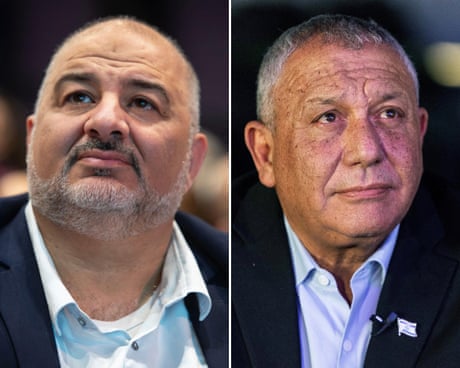
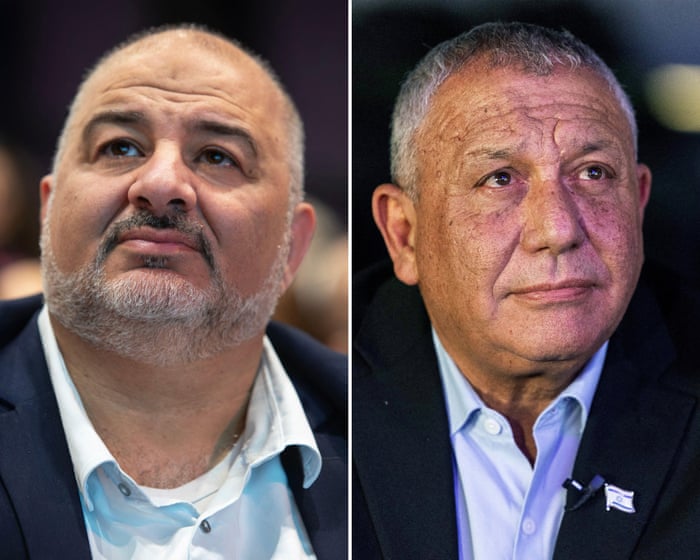
In the wake of Tuesday’s exit polls, the leader of the opposition bloc, Gadi Eisenkot, declared them a victory for “Israel’s Zionist national majority” but the real outcome looks as if it will be far more complex than that.
Com as pesquisas de boca de urna em Israel indicando que nem o primeiro-ministro Benjamin Netanyahu nem seu principal adversário, Gadi Eisenkot, possuem um caminho claro para obter uma maioria que lhes permita governar, o cenário de coalizões pós-eleição permanece totalmente em aberto.
Um impasse, um governo minoritário, um governo de unidade — ou até mesmo uma nova eleição — são, no momento, possibilidades plausíveis.
As notícias são ruins para Netanyahu. Seu bloco, composto por aliados ultraortodoxos e de extrema-direita, perdeu a maioria, passando de 68 cadeiras para apenas 50. As pesquisas de boca de urna projetam que seu partido, o Likud, manterá uma representação expressiva de 24 cadeiras, permanecendo como a maior legenda.
Ainda assim, o número está bem abaixo das 61 cadeiras necessárias para formar maioria no parlamento, que conta com 120 assentos. Para permanecer no poder, Netanyahu precisa, fundamentalmente, de uma coalizão.
O bloco de oposição detém, no papel, um número expressivo de 70 cadeiras; contudo, a realidade é que ele se encontra fragmentado e dividido, o que dificulta a definição de um caminho a seguir. Os partidos sionistas judaicos somam 52 cadeiras, enquanto os partidos árabes devem conquistar um recorde de 18 assentos — a maior representação árabe já registrada.
O partido Yashar, de Eisenkot, aparece nas projeções como a maior força dentro do bloco de oposição, com 22 cadeiras. No entanto, outros líderes partidários desse mesmo bloco descartaram a possibilidade de um governo que dependa de apoio árabe, o que complica significativamente qualquer tentativa de remover Netanyahu do poder.
A participação recorde do eleitorado árabe parece ser um dos aspectos mais marcantes destas eleições. Os cidadãos palestinos de Israel — que representam cerca de 20% da população do país — tradicionalmente registram taxas de comparecimento às urnas inferiores à média nacional. Na eleição de 2022, a participação árabe foi de 53%; desta vez, estima-se que tenha saltado para mais de 78%.
Esse movimento é interpretado como um voto de protesto contra o governo de Netanyahu e seus aliados de extrema-direita: o ministro da Segurança Nacional, Itamar Ben Gvir, e o ministro das Finanças, Bezalel Smotrich.
Por outro lado, a alta taxa de comparecimento eleva a exigência para os partidos menores, que precisarão de um número maior de votos para atingir a cláusula de barreira de 3,25%.
Vale ressaltar que as pesquisas de boca de urna são apenas projeções; o cenário pode sofrer alterações à medida que os votos reais forem contabilizados ao longo da noite.
Uma sondagem à boca das urnas realizada para a estação televisiva Canal 12 confere ao Likud, de Benjamin Netanyahu, a obtenção de 24 lugares do parlamento, o Knesset – muiro aquém dos 61 lugares que determinam a maioria absoluta, mas dois lugares à frente do Yashar, de Gadi Eisenkot, ex-chefe do Estado-Maior das Forças de Defesa de Israel. A confirmar-se, este resultado vai contra a maioria das sondagens pré-eleições, que sistematicamente davam a vitória a a Eisenkot.
Mas, paralelamente, o grupo de partidos assumidamente na oposição a Netanyahu, tem uma maioria de 52 lugares – aos 22 do Yashar, somam-se os 12 do B’Yashar, dez dos Democratas e oito do Beytenu. Do outro lado, com Netanyahu, estão o Shas (oito lugares), Religious Zionism, United Torah Judaism e OtzmaYehudit (com seis cada um), num total de 50.
Além destes, pontificam ainda a Lista Conjunta, de esquerda (e favorável à solução dos dois Estados), com 11 lugares. Ou seja, se a Lista aceitar somar os seus lugares à oposição liderada por Gadi (o que não é uma evidência), o bloco teria mais que os 61 lugares necessários para formar governo. Oficialmente, a posição da Lista Conjunta em relação a uma aliança com Gadi Eisenkot prevê a possibilidade de um apoio condicional e externo (meramente parlamentar, portanto), recusando liminarmente integrar formalmente um governo liderado pelo militar. Há ainda a contar com os sete lugares do Ra’am, o partido da minoria árabe, que, ao contrário da Lista Conjunta, quer integrar formalmente um governo e fazer parte de uma coligação liderada por Gadi Eisenkot. O problema é que os seus sete lugares não são suficientes para atingir os necessários 61 deputados para a construir uma maioria.
De qualquer modo, se Netanyahu vencer, e mesmo que o seu bloco não seja à partida suficiente para atingir os 61 lugares, o presidente do país, Isaac Herzog, que assumiu o cargo em julho de 2021 e é originariamente do Likud, irá por certo convidar o ainda primeiro-ministro para tentar formar o próximo governo. Só se este não conseguir é que, em segunda escolha, irá ‘bater à porta’ de Gadi Eisenkot.
Após a contagem dos votos, Herzog consultará os líderes dos partidos eleitos antes de incumbir o parlamentar que, em sua opinião, tiver a melhor hipótese de formar um governo, o qual não precisa necessariamente ser o líder do maior partido ou bloco. Esse candidato terá 28 dias para articular uma coligação, com uma possível prorrogação de 14 dias. Caso essas tentativas falhem, um segundo líder partidário poderá ter 28 dias (sem prorrogação) para tentar formar um governo, e se essa tentativa também não for bem-sucedida, uma maioria de 61 deputados poderá solicitar ao presidente que atribua a tarefa a um parlamentar específico dentro de um prazo adicional de 21 dias. Se todas as tentativas falharem, Israel enfrentará outra eleição, com Netanyahu a permanecer como primeiro-ministro interino até que seja formado um novo governo.
Mas Herzog já disse que está empenhado em evitar uma repetição de 2019-2020, quando impasses persistentes levaram o país às urnas três vezes em 11 meses, incentivando os líderes a considerarem um governo de unidade ou de rotação envolvendo Netanyahu e Eisenkot, caso nenhum dos dois consiga formar um bloco sozinho.
“Ditemi, sono pazzi? Vogliono un governo di sinistra? Sono pazzi? Moriremo”. E’ il grido che il premier israeliano Benjamin Netanyahu ha rivolto, parlando al telefono, contro un attivistaultraortodosso, un’ora e mezzo prima che chiudessero i seggi. Durante la chiamata, registrata e diffusa da Ynet, il capo del governo chiedeva all’attivista per quale motivo gli elettori ebrei ultraortodossi non si recassero ai seggi. “Cosa sta succedendo con gli Haredim?”, si sente il premier chiedere al telefono. ItcheDzalovsky, gestore di una linea telefonica per ultraortodossi, risponde: “Quello che sta succedendo è che sono molto arrabbiati perché, fino ad oggi, tutte le promesse sulla coscrizione e sulla comunità ultraortodossa”… Netanyahu lo interrompe, gridando: “Ditemi, sono pazzi? Vogliono un governo di sinistra? Sono pazzi? Moriremo”.
Dzalovsky, membro della comunità chassidica di Ger, ha cercato di spiegare: “Vogliono un governo che mantenga le promesse fatte più volte”. Netanyahu ha continuato a gridare con rabbia: “Vogliono morire? Vogliono distruggere il mondo della Torah e non si fanno avanti? Questo è quello che voglio sapere”. L’attivista ultraortodosso ha replicato: “Vogliono che gli ebrei ultraortodossi possano osservare la Torah e i suoi comandamenti nel profondo della loro anima, senza che la loro religione venga calpestata”. Ancora Netanyahu: “Quindi, in breve, non andranno a votare. È questo che chiedo. Non andranno a votare. È questo il punto?”. Dzalovsky: “Vogliono andare a votare, ma solo dopo aver visto quelle promesse mantenute nel tempo”. Netanyahu ha risposto: “Cosa intende con ‘promesse mantenute’? Tra un’ora e mezza insedieranno un governo guidato da Mansour Abbas, che dice di voler distruggere il mondo della Torah”. Netanyahu si riferiva al leader del partito arabo islamista Ra’am. “Ma sono quattro anni che le promesse vengono costantemente infrante”, ha ribattuto l’attivista. Il dialogo serrato è continuato a suon di “Andranno a votare?” e “Non hanno visto mantenere le promesse”. “C’è qualcosa che possiamo fare ora, con un’ora e mezza rimasta?” chiede ancora il capo del governo. E Dzalovsky: “Penso che se chiami e prometti di fornire garanzie ai rabbini più importanti, ai membri del Consiglio dei Saggi della Torah e ad altre autorità rabbiniche…”. Netanyahu interruppe: “Ora darò loro delle garanzie, con un’ora e mezza ancora da giocare, dimmi?”. “Ciò che non è stato fatto per quattro anni è certamente molto difficile da fare ora” è l’ultima risposta, di logica stringente.
As eleições em Israel registram a maior participação de eleitores da história do país. Segundo Américo Martins, analista sênior de Internacional da CNN, ao CNN 360°, dois fatores principais explicam esse fenômeno: a intensa mobilização dos partidos políticos e o aumento expressivo da participação da comunidade árabe.
Mobilização dos blocos políticos
Américo Martins destaca que tanto o bloco do primeiro-ministro israelense, Benjamin Netanyahu, quanto a oposição, liderada por Gadi Eisenkot, estão promovendo uma ampla convocação de seus eleitores.
“Essa é uma eleição muito importante, definidora para o futuro de Israel”, afirmou o analista.
Leia Mais:
O bloco de Netanyahu conta com o apoio de partidos de ultradireita e ultra-ortodoxos, enquanto a oposição, cujo QG é liderado por Gadi Eisenkot, mobiliza seus apoiadores com o objetivo central de promover uma mudança no poder.
O papel da comunidade árabe
O segundo fator determinante é a participação da comunidade árabe, que representa aproximadamente 20% da população israelense. Historicamente, essa comunidade tem baixa adesão ao processo eleitoral, mas desta vez se mobilizou de forma expressiva.
Um partido árabe e uma coligação de outros três partidos árabes realizaram uma grande movimentação junto à comunidade.
Além disso, a ala mais liberal dos partidos judaicos também incentivou o voto árabe, pois, como explicou Martins, “os votos deles podem ser muito importantes para, eventualmente, retirar Benjamin Netanyahu do poder”.
Diante desse cenário, Netanyahu passou o dia alertando que era “uma questão de vida ou morte” a participação do eleitor de direita e do eleitor ultra-ortodoxo, justamente por conta do alto número de participantes árabes.
O analista ressalta que o voto árabe não necessariamente implicaria a entrada desses partidos no governo, mas poderia se traduzir em apoio parlamentar à oposição.
Cláusula de barreira e formação de coligações
Américo Martins também explica que o aumento geral da participação pode alterar significativamente a distribuição de cadeiras no Knesset, o parlamento israelense, que conta com 120 assentos — sendo necessários 61 para formar maioria.
Com mais votos concentrados nos grandes partidos, como o Likud e o Yesh Atid, partidos menores podem não atingir a cláusula de barreira de 3,25%, e seus votos seriam redistribuídos proporcionalmente entre os demais.
“Nunca na história de Israel um partido sozinho conseguiu uma maioria desse tamanho”, destacou o analista, reforçando que a formação de coligações será inevitável.
Segundo as pesquisas, nem o bloco de Netanyahu nem o de Eisenkot deve alcançar a maioria sozinho, tornando os resultados desta eleição determinantes para o futuro político do país e com reflexos em todo o Oriente Médio.
Os textos gerados por inteligência artificial na CNN Brasil são feitos com base nos cortes de vídeos dos jornais de sua programação. Todas as informações são apuradas e checadas por jornalistas. O texto final também passa pela revisão da equipe de jornalismo da CNN. Clique aqui para saber mais.
The opposition bloc led by former army chief Gadi Eisenkot edged ahead of Prime Minister Benjamin Netanyahu’s coalition in Israel’s general election, but neither camp came close to the 61 seats needed to govern, exit polls showed Tuesday night.
With a historic turnout of close to 75%, Israelis turned out in the first election held after the start of the genocide in Gaza in October 2023.
The first projections from Israel’s election signal a shift in the balance of power. The opposition bloc led by Gadi Eisenkot prevailed by a narrow margin over PM Netanyahu’s coalition in Israel’s first election since the October 2023 attacks, according to polls circulated after the ballot box was closed.
Data from the Central Election Commission and projections from local TV channels 11, 12, and 13 agree that none of the dominant blocs has the 61 seats required to form a government in the 120-seat parliament.
The three main exit polls, published after voting closed at 10 P.M. local time, placed Eisenkot’s bloc at 52 to 53 of the Knesset’s 120 seats, against 50 for Netanyahu’s right-wing alliance.
The result opens a period of uncertain negotiations over who will form the next government, with neither side having reached the required majority in parliament (Knesset).
BREAKING: Early exit poll results are showing Netanyahu’s coalition and the opposition coalition both falling short of the seats needed for a majority.
Parties opposed to Prime Minister Benjamin Netanyahu won more seats than his coalition in Tuesday’s parliamentary election, though Likud Party remained the most-voted party, and neither bloc reached the 61 seats needed to govern in the 120-seat Knesset.
Neither candidate can yet claim a clear path to 61. Netanyahu can argue that he heads the largest single party, while Eisenkot can point to the larger bloc.
That calculation gives the Arab-led lists unusual weight in the coming negotiations. For years the established Jewish parties have treated these alliances as off-limits partners. The projections may now force a reconsideration, because neither side appears able to reach a majority without them.
BREAKING: Israeli elections have ended and the exit polls are in. All three Israeli channels have Netanyahu's bloc at 50. Eisenkot's bloc is at 52 or 53. The Arab parties are at 17 or 18, the most seats they have ever won.
The two Israeli Arab parties that emerged as potential arbiters of the contest won between 17 and 18 seats according to the polls in the ballot box, a figure higher than expected. Both said that they would support Eisenkot to some extent, having mobilized their voters to help displace Netanyahu, whom they consider an “existential threat” in the event of a new term.
Both Netanyahu and Eisenkot have so far ruled out any formal alliance with Arab parties. However, these could allow Eisenkot to form a minority government by backing him from outside the coalition, or even abstaining in the Knesset vote to install the next government.
Coalition Talks Ahead
As the count continues, the next move belongs to the Israeli President, who must decide whom to invite first to try to assemble a coalition.
Any path to a majority now appears to run through the Arab parties. That reality will test whether the traditional Jewish bloc is willing to negotiate across a line it has long treated as closed.
The final tally will determine whether Eisenkot can turn his central role into a governing coalition, or whether Netanyahu finds another route to remain in power.
If, after all the negotiations, no one manages to form a majority, a new election would be called on March and the process would repeat. During that period, Netanyahu’s government would remain in a caretaker role. Public services would not be affected, but the government would lack the authority to push through major policy changes.
Israel’s most recent national election, held in November 2022, was the fifth in three and a half years, and even a new round might not resolve the country’s political deadlock. That election, returned Likud party to power with a 64-seat coalition.
The most likely scenario now is a prolonged negotiation or even new elections in the coming months. Until a government forms, Netanyahu’s administration would remain in office as a caretaker, unable to advance major policy changes.
The narrow margin leaves the next coalition in doubt. With neither side reaching 61 seats, both leaders will likely push to assemble a governing majority, a process that has repeatedly convulsed Israeli politics in recent years.
The Central Election Committee began counting ballots after polling stations closed and will release partial results overnight. Official tallies often diverge from exit poll projections, leaving the final composition of the Knesset uncertain for days.
Israel’s election appeared to have delivered no clear winner on Tuesday night after a historic turnout by voters for an election described by some as the most consequential in the country’s history, and marked by a record participation by Israeli Arab voters.
Exit polls published on Tuesday evening suggested that the opposition bloc of parties led by the former chief of staff of the Israel Defense Forces, Gadi Eisenkot, would win most seats in the Knesset by a slight margin, edging out Benjamin Netanyahu’s right and far-right coalition despite the prime minister’s Likud emerging as the largest party.
El bloque oficialista cae a 50 bancadas frente a 52-53 de la oposición, dejando a los partidos de la minoría árabe (17-18 escaños) como la clave decisiva tras una jornada cruzada por denuncias de incitación y racismo.
De acordo com as primeiras projeções e sondagens divulgadas logo após o fecho das urnas, antecipa-se um cenário de empate técnico e nenhum dos blocos principais — liderados pelo atual primeiro-ministro Benjamin Netanyahu (Likud) e pelo opositor Gadi Eisenkot (Yashar!) — conseguirá alcançar a maioria absoluta de 61 lugares no Parlamento (Knesset) de 120 cadeiras.
Quase três anos depois do ataque mais mortal da história de Israel, o Estado hebraico chamou os seus cidadãos às urnas naquela que foi comummente considerada uma das mais importantes da história, com consequências que vão muito para além do futuro político do primeiro-ministro Benjamin Netanyahu ou dos seus oponentes. O massacre do Hamas, em 7 de outubro de 2023, lançou o país numa profunda divisão sobre questões como a responsabilização pelas falhas que permitiram o ataque, o ónus do serviço militar, a independência das instituições democráticas e do poder judiciário, a capacidade de o país manter a prosperidade económica, as alianças internacionais e o espectro do isolamento global.
Após a contagem dos votos, o presidente Isaac Herzog consultará os líderes dos partidos eleitos antes de incumbir o parlamentar que, em sua opinião, tiver a melhor hipótese de formar um governo, o qual não precisa necessariamente ser o líder do maior partido ou bloco. Esse candidato terá 28 dias para articular uma coligação, com uma possível prorrogação de 14 dias. Caso essas tentativas falhem, um segundo líder partidário poderá ter 28 dias (sem prorrogação) para tentar formar um governo, e se essa tentativa também não for bem-sucedida, uma maioria de 61 deputados poderá solicitar ao presidente que atribua a tarefa a um parlamentar específico dentro de um prazo adicional de 21 dias.
Para assumir o poder, um governo precisa de obter a maioria dos votos do Knesset (que tem um total de 120 lugares), embora um governo minoritário possa assumir com menos de 61 apoiantes se as abstenções resultarem em mais votos a favor do que contra. Se todas as tentativas falharem, Israel enfrentará outra eleição, com Netanyahu a permanecer como primeiro-ministro interino até que seja formado um novo governo.
Herzog indicou que está empenhado em evitar uma repetição de 2019-2020, quando impasses persistentes levaram o país às urnas três vezes em 11 meses, incentivando os líderes a considerarem um governo de unidade ou de rotação envolvendo Netanyahu e Eisenkot, caso nenhum dos dois consiga formar um bloco sozinho.
Coube aos mais de 7,3 milhões de eleitores decidir entre os 34 partidos que concorreram às eleições. Os quatro principais partidos da oposição são o Yashar (de Gadi Eisenkot), o B’Yachad (de Naftali Bennett), o Yisrael Beytenu (de Avigdor Liberman) e os Democratas (de Yair Golan).
A Comissão Central de Eleições confirmou que a afluência às urnas registou valores excecionalmente altos ao longo do dia, batendo recordes de votação em comparação com atos eleitorais anteriores. Segundo a imprensa israelita, outro dado interessante é o facto de a população árabe de Israel – cerca de 20% do total – ter comparecido em massa à votação, em grande medida por causa das iniciativas profundamente racistas de Itamar Ben-Gvir, o ainda ministro da Segurança Nacional. Que, entre outras coisas, aconselhou os militares a procederem a uma limpeza étnica em Gaza por via de bombardeamentos aéreos e os colonos da Cisjordânia a matarem o maior número possível de árabes.
TEL AVIV, Israel — Updated Israeli exit polls early Wednesday showed Prime Minister Benjamin Netanyahu gaining ground against his political rivals but still falling short of a parliamentary majority, leaving the country facing a possible political deadlock despite a combined majority of seats projected for parties outside his governing bloc.
An updated Channel 12 exit poll at 3:30 a.m. (Israel time) projected 53 seats for Netanyahu's right-wing and religious bloc, compared with 49 for the main opposition led by former military chief Gadi Eisenkot and another 19 for Arab parties. Together, the opposition and Arab factions would hold 68 seats in the 120-seat Knesset, although they remain divided over forming a government together.
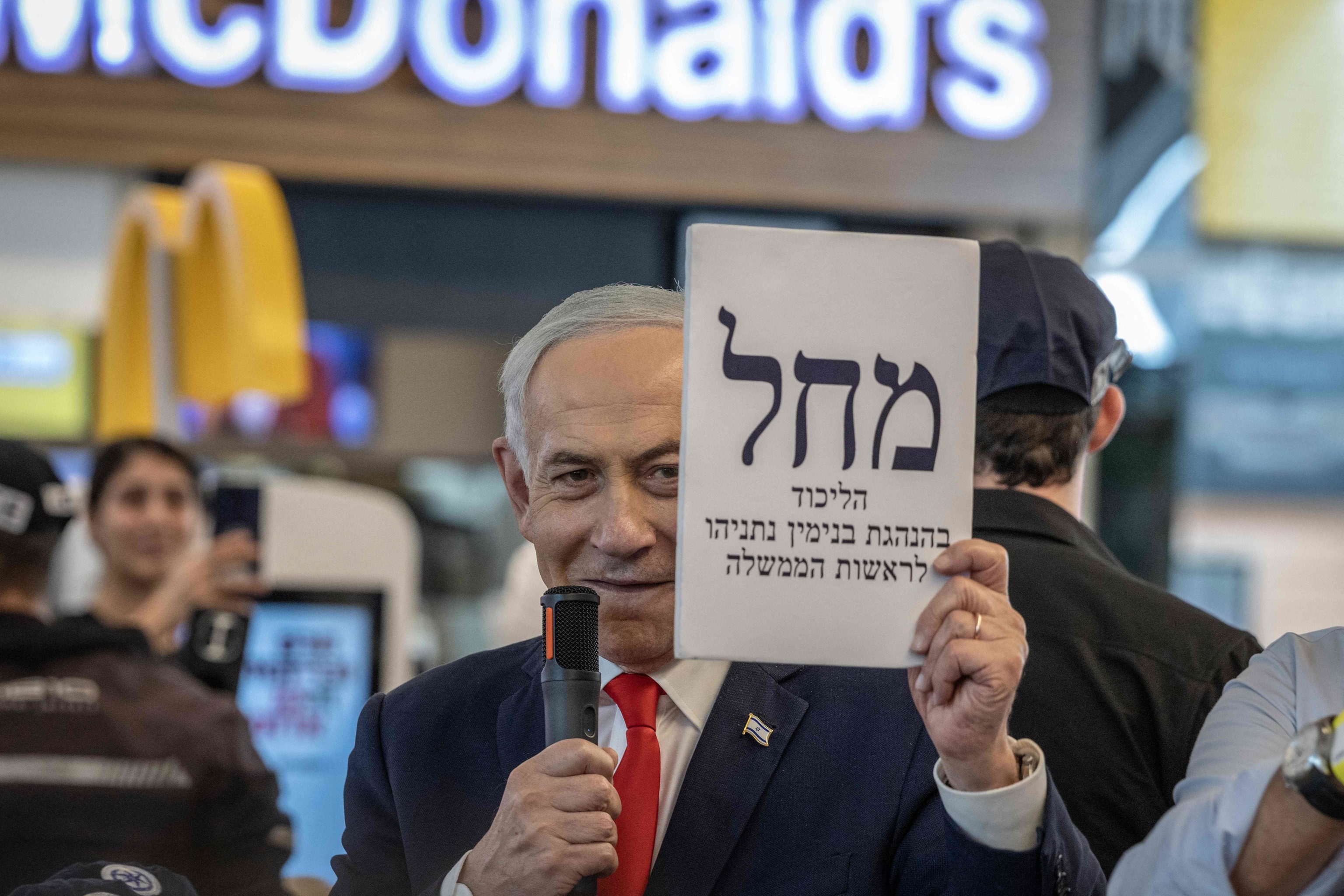
Netanyahu struck a defiant tone in his first election-night speech at Likud headquarters in Jerusalem, declaring that his party had emerged as the largest in Israel and calling for the formation of a strong right-wing government.
"We are still waiting for the actual results, which we will receive over the next day or two," Netanyahu told supporters. "Two things have become clear. The first is unequivocal: Likud is the largest party in Israel."
"We must establish a strong national right-wing government," he added, warning against a government dependent on Arab parties, which he accused of opposing Israel's existence.
His remarks came hours after Eisenkot took the stage at his campaign headquarters in Tel Aviv, where supporters celebrated earlier projections showing the opposition ahead. Eisenkot called on Netanyahu to accept the results and step aside, but the updated numbers underscored how uncertain the race remains. Netanyahu also said Israel faced a "once-in-a-lifetime historic opportunity" with Trump to eliminate the existential threat from Iran.
The competing speeches highlighted the central question emerging from the election: Who will be given the first opportunity to form a government? If Eisenkot can secure recommendations from at least 61 lawmakers, potentially including Arab parties, he could receive the first mandate despite Netanyahu's Likud emerging as the largest individual party. But that would not guarantee he could assemble a governing coalition. For Netanyahu, the election remains a waiting game. Even without a majority, he could still be tasked with forming a government — or get another opportunity if Eisenkot's efforts fail — leaving Israel facing weeks of political negotiations.
Israelis turned out in exceptionally high numbers Tuesday for the country’s first national election since the Oct. 7, 2023, Hamas massacre, with initial exit polls showing Prime Minister Benjamin Netanyahu’s Likud emerging as the largest party but his governing coalition falling short of a parliamentary majority, potentially opening the door to a change in leadership.
Netanyahu fights for political future as Israel heads to polls with Iran threat looming
The results are preliminary projections, not an official vote count, and could change as ballots are tallied in the coming days.
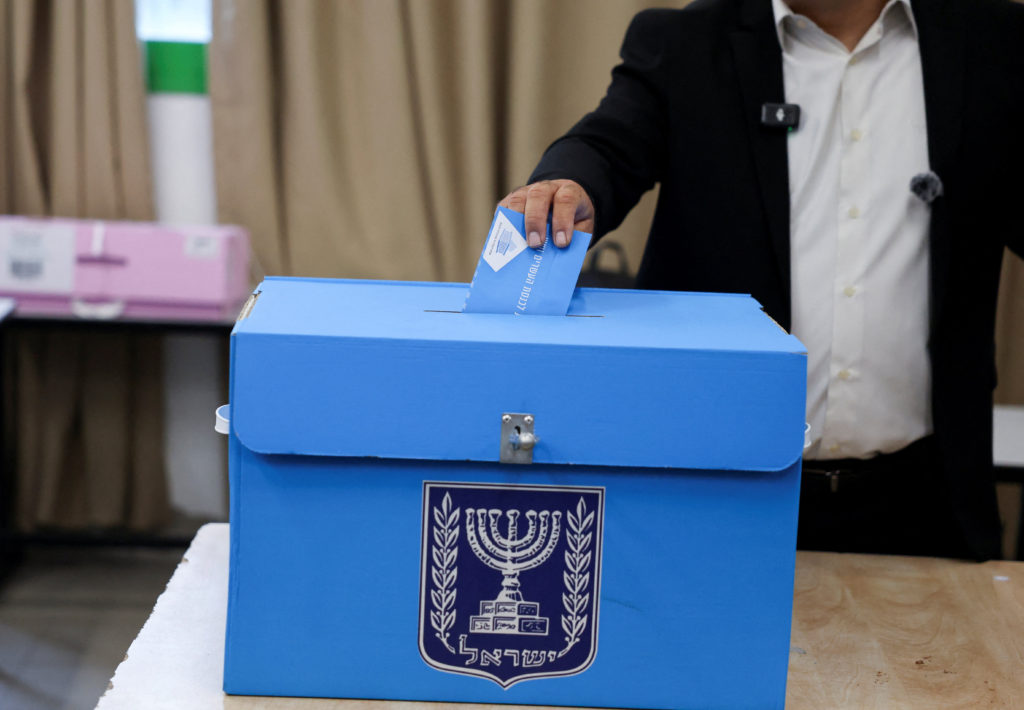
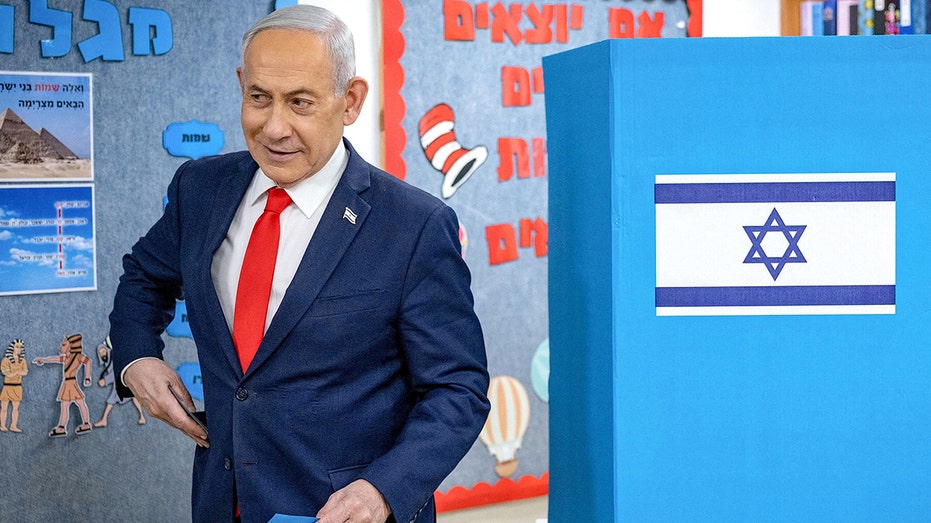
The election followed an extraordinary day at polling stations across Israel, with long lines and voter participation reaching levels not seen in decades.
Israeli voter turnout surged to a historic high, with 77.7% of eligible voters casting their ballots by the time the polls closed, according to Israel's Central Elections Committee. The figure marked the highest turnout recorded since 1999, underscoring the intensity of the country's national election.
The unusually high participation prompted election officials to streamline voting procedures and assure voters that anyone arriving at a polling station before the 10 p.m. deadline would be allowed to cast a ballot.
The vote was widely seen as a referendum on Netanyahu's leadership following three years of war and continuing questions about responsibility for the security failures that allowed Hamas terrorists to kill approximately 1,200 people and abduct 251 others on Oct. 7, 2023.
Netanyahu, Israel's longest-serving prime minister, campaigned on his record of confronting Iran and its regional proxies, highlighting Israel's military achievements and his relationship with President Donald Trump. His opponents accused him of failing to accept responsibility for the October 7 security failures and opposed his government's approach to investigating the failures that preceded the massacre.
Netanyahu's Likud party prepared hundreds of targeted campaign videos and social media messages, making digital outreach a central part of its last-minute election strategy.
Eisenkot's campaign pushed supporters to rally behind Yashar as the leading alternative to Likud, while Bennett traveled between cities and engaged voters directly and through WhatsApp conversations.
The key question now is which candidate can secure the support of at least 61 lawmakers when President Isaac Herzog consults with the newly elected parliamentary factions. If Eisenkot can obtain those recommendations, including from Arab parties, he would have a strong claim to receive the first opportunity to form a government, even though Netanyahu’s Likud is projected to remain the largest individual party. Crucially, Arab parties could recommend Eisenkot without formally joining his governing coalition. However, the final decision rests with Herzog, who is tasked with selecting the lawmaker he believes has the best chance of forming a government. Securing the first mandate would not guarantee Eisenkot could assemble a governing majority, leaving the possibility of another political deadlock.
The campaign's closing hours also featured personal appeals, phone calls to undecided voters and aggressive turnout operations across the political spectrum.
The final days were particularly important because a relatively small share of voters remained undecided about which party to support.
A Times of Israel poll published five days before the election found that 87% of respondents had already made their final choice, while 2.4% remained undecided between the pro and anti-Netanyahu political blocs.
Other surveys suggested a larger pool of undecided voters, although many were choosing between parties within the same political camp rather than switching sides.
That distinction could prove decisive in Israel's parliamentary system, where political parties need at least 3.25% of valid votes to enter the 120-seat Knesset.
Even a slight change in the vote share of smaller parties could shift several parliamentary seats and determine whether either camp has a realistic path to power.
Despite the exit poll projections, the identity of Israel's next prime minister may remain uncertain for weeks.
Unlike in the United States, Israelis vote for political parties rather than directly electing their head of government.
The 120 seats in parliament are allocated proportionally, and parties must secure at least 3.25% of valid votes to win representation.
Once the final results are certified, Israeli President Isaac Herzog will consult with the newly elected political factions and select the lawmaker he believes has the strongest chance of forming a government.
As pesquisas de boca de urna indicam que não há um vencedor claro nas eleições de Israel, com o atual primeiro-ministro Benjamin Netanyahu e seu principal adversário, Gadi Eisenkot, aparentemente sem um caminho definido para a vitória.
Porém, o bloco da oposição liderado por Eisenkot aparece ligeiramente à frente do bloco de Netanyahu nas sondagens feitas após o fechamento das urnas.
Segundo o Canal 12, o bloco de Netanyahu deve conseguir 50 cadeiras. Já o bloco de Eisenkot deve ficar com 52 cadeiras.
Os partidos árabes tiveram um desempenho melhor do que o que as pesquisas mostravam antes das eleições.
A Lista Conjunta conseguirá 10 cadeiras, enquanto o Ra’am sete.
Bereaved families tell voters to remember the victims while others have flown thousands of miles to cast their ballots
Election day in Israel began with a protest by some of the voters with most at stake. Bereaved families of those killed in the 7 October attacks held a minute of silence at 6.29am, the moment when Hamas launched its onslaught just over three years ago.
They gathered in a Tel Aviv plaza that has become known as “hostages square” because it was the centre of demonstrations demanding the return of more than 200 captives from Gaza. Holding pictures of their loved ones, they stood in silence then called on voters to remember the losses and betrayals of that day when deciding on the next government.
Prime Minister Benjamin Netanyahu accused opponents of attempting to steal Israel’s national election Tuesday following arrests in a suspected voter-bribery investigation, as record turnout prompted his right-wing coalition to launch an emergency mobilization effort in the final hours before polls closed.
Protestas masivas, guerras en varios frentes y un juicio por corrupción no han frenado al líder del Likud, que vuelve a aspirar a gobernar Israel convencido de que el país no está a salvo sin él Leer
Protestas masivas, guerras en varios frentes y un juicio por corrupción no han frenado al líder del Likud, que vuelve a aspirar a gobernar Israel convencido de que el país no está a salvo sin él
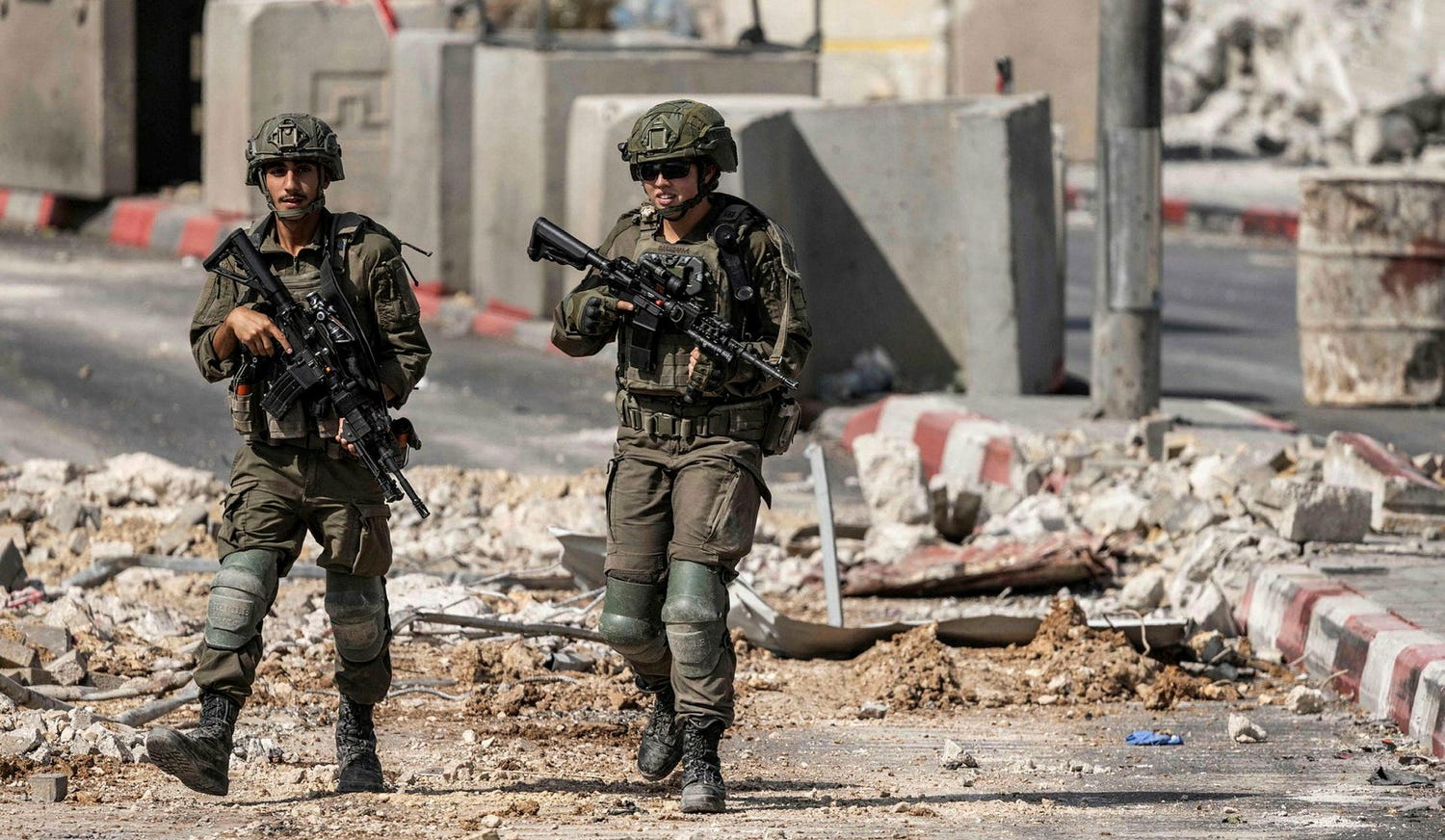
IDF Chief of Staff Eyal Zamir said that the West Bank operation had completed its goals, but the prime minister and defense minister refused to allow the more than 2,000 displaced residents to return to their homes
Israelis in West Bank communities tell reporters they used to vote for PM, but soured on him after Oct. 7 attack, feel Smotrich, Ben Gvir 'won't let this happen'

 Login