❌

Reading view

Finland and Norway leaders make rare direct call to Putin, breaking with the West’s diplomatic isolation of the Russian leader to influence Ukraine peace talks

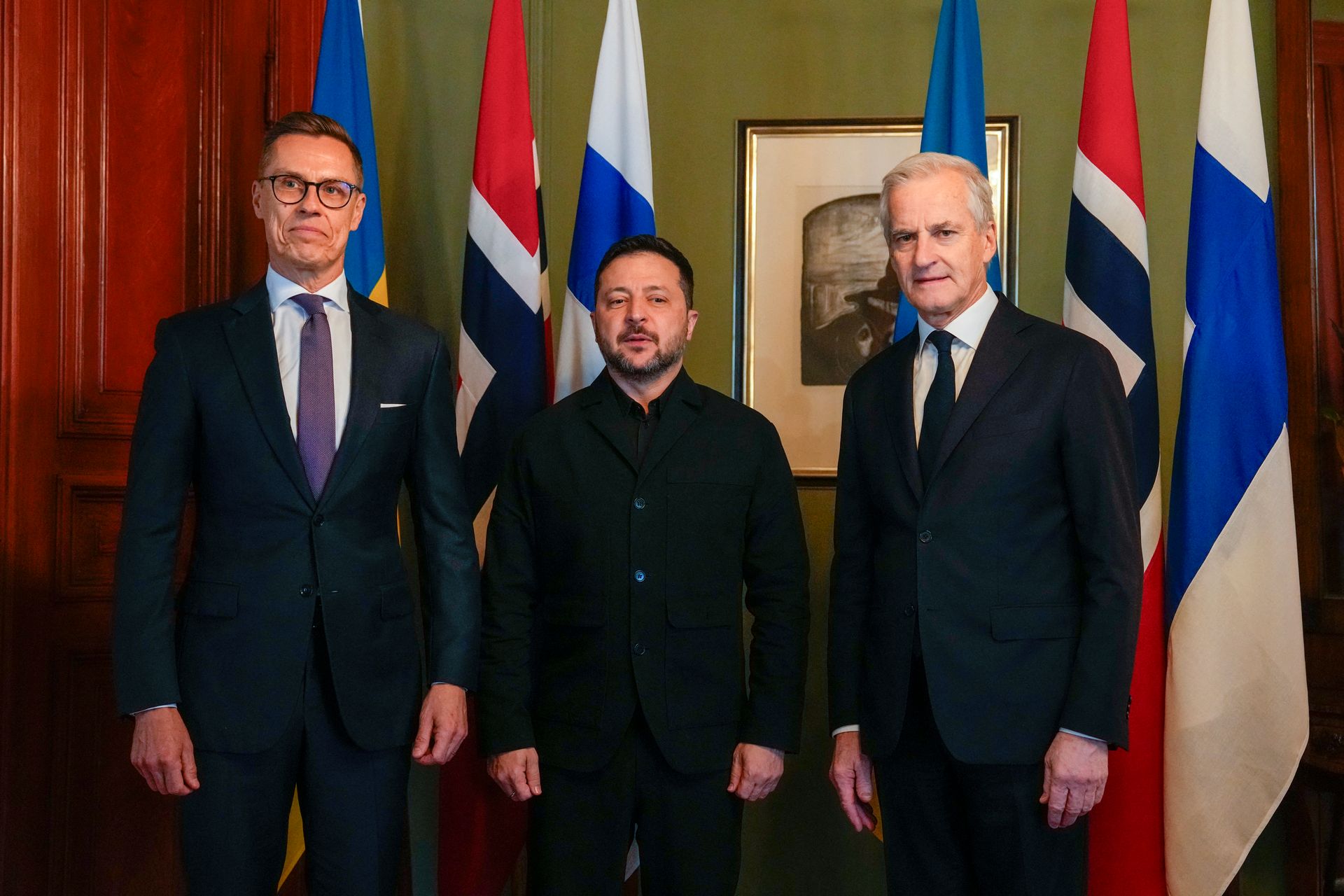
Finnish President Alexander Stubb and Norwegian Prime Minister Jonas Gahr Støre in Norway, 16 October 2024. Photo: President of the Republic of Finland

Finnish President Alexander Stubb and Norwegian Prime Minister Jonas Gahr Støre spoke by phone with Russian President Vladimir Putin on 27 October, urging him to de-escalate Russia’s war against Ukraine and resume negotiations. The roughly 90-minute call was coordinated with Kyiv and came ahead of planned trilateral talks between Ukrainian, US, and Russian officials in Abu Dhabi in November.

The initiative marks a rare direct contact between Western European leaders and Putin since Russia launched its full-scale invasion in February 2022. The Nordic leaders are reportedly seeking to influence peace efforts increasingly shaped by US President Donald Trump, amid concerns in Europe that Washington is shifting toward Moscow’s position and sidelining Ukraine’s European partners.

Stubb and Støre said they discussed Russia’s war against Ukraine, upcoming negotiations, and security in Europe. Ukrainian President Volodymyr Zelenskyy said the two leaders had urged Putin to take concrete steps toward de-escalation, particularly regarding attacks on Ukraine’s energy infrastructure.

Zelenskyy says leaders urged energy de-escalation

After the call, Zelenskyy said he had spoken with Stubb and Støre to receive a detailed briefing. He thanked them for supporting Ukraine’s diplomatic efforts and said they had clearly told the Russian leader that real de-escalation steps were needed regarding Ukraine’s energy sector and infrastructure.

Zelenskyy also said the leaders discussed preparations for a trilateral meeting planned for November involving Ukrainian, US, and Russian negotiating teams.

In a joint statement, Stubb and Støre said the call followed their 20 October meeting in Oslo and was held in consultation with Ukraine. They emphasized that Finland and Norway, which both share borders with Russia, would continue their longstanding support for Ukraine.

“The discussion was frank and substantive,” Stubb said, adding that the war’s outcome would directly affect Nordic and broader European security. Støre stressed the war’s enormous human and material costs and said the leaders had emphasized the importance of de-escalation.
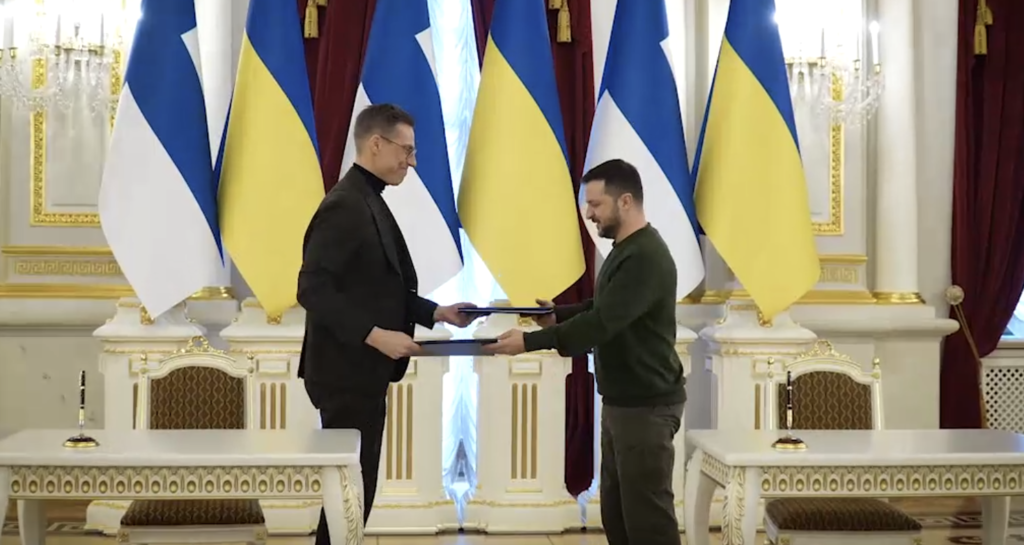
Presidents Volodymyr Zelenskyy (R) of Ukraine and Alexander Stubb (L) of Finland after signing the security agreement. Kyiv, 3 April 2024. Screenshot: Telegram/Zelenskyy Official

Moscow gives no sign of changing its position

The Kremlin’s account of the call offered no indication that Putin was prepared to soften his demands, according to Reuters. It said a just and lasting peace was possible only if Russia’s “legitimate interests” were fully taken into account, while blaming EU and NATO policies for prolonging the fighting.

Russian Foreign Minister Sergei Lavrov dismissed the call as offering nothing new on the conflict and accused European countries of seeking a role in negotiations.

A source close to the Kremlin told Reuters that Putin had said the war must end while taking “the realities on the ground” into account. The source interpreted this as meaning Moscow would not compromise on its goal of capturing the entire Donbas region.

Russia has continued its attacks on Ukraine while demanding territorial concessions. Kyiv, meanwhile, has called for meaningful de-escalation and a settlement that preserves Ukraine’s sovereignty and security.

Nordic initiative draws criticism from European partners

The call comes as European governments seek a greater role in peace efforts led by Trump. Western European leaders have largely avoided direct contact with Putin since the invasion, hoping to isolate Moscow, but concerns have grown that Europe is being sidelined in negotiations.

Stubb said Ukraine had sought to open a new channel of communication and that Europe could no longer remain a bystander to peace efforts. He said the initiative had been discussed with Western allies.

However, Danish Prime Minister Mette Frederiksen criticized the move, saying she saw no signs that Russia wanted peace and arguing that Europe should act together rather than pursue separate initiatives, according to Reuters. 

Reuters added that Swedish Prime Minister Ulf Kristersson said other European leaders had not been informed of the talks and expressed low expectations for the conversation. Polish Prime Minister Donald Tusk also urged caution.

Stubb and Støre stressed that they had acted as leaders of Finland and Norway, not on behalf of Europe as a whole. They said their countries would continue supporting Ukraine while pursuing diplomatic efforts to end the war.

  •  

Ukraine says it has finished its part of FREYJA, Europe’s joint anti-ballistic project. Partners’ work is still underway

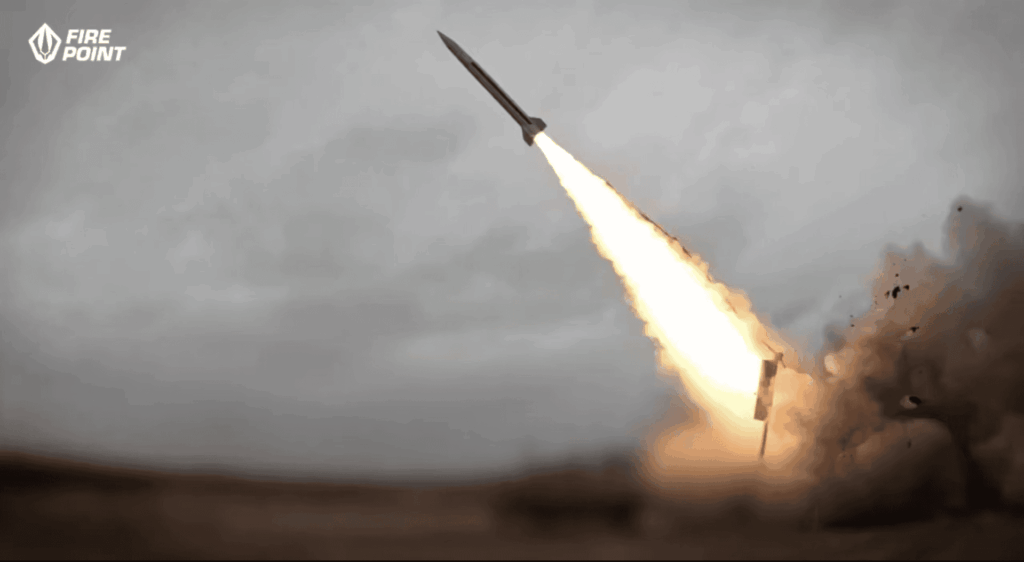
ukraine advertise its new ballistic missiles until factories can mass-produce ex-security officer says · post test launch fp-7 missile prototype fire point news ukrainian reports

Ukraine has finished its share of FREYJA, a joint European project to build a system against ballistic missiles, President Volodymyr Zelenskyy told journalists on 17 October, Ukrinform reported. He added that Kyiv wants to test the first system as soon as possible.

Ukraine still relies on US-made Patriot interceptors to stop Russian ballistic missiles. Zelenskyy told ABC News on 23 October that Ukraine had received only 24 of them from the US in three months, while it needs 350 a month on average. FREYJA can not close that gap soon, because the system is still in development.

Ukraine’s missile and launcher, partners’ radars and sensors

Zelenskyy said the partners’ share of the work, with 10 countries taking part, is still underway. He also said he had discussed the project with French President Emmanuel Macron, and he named Norway as a key partner.

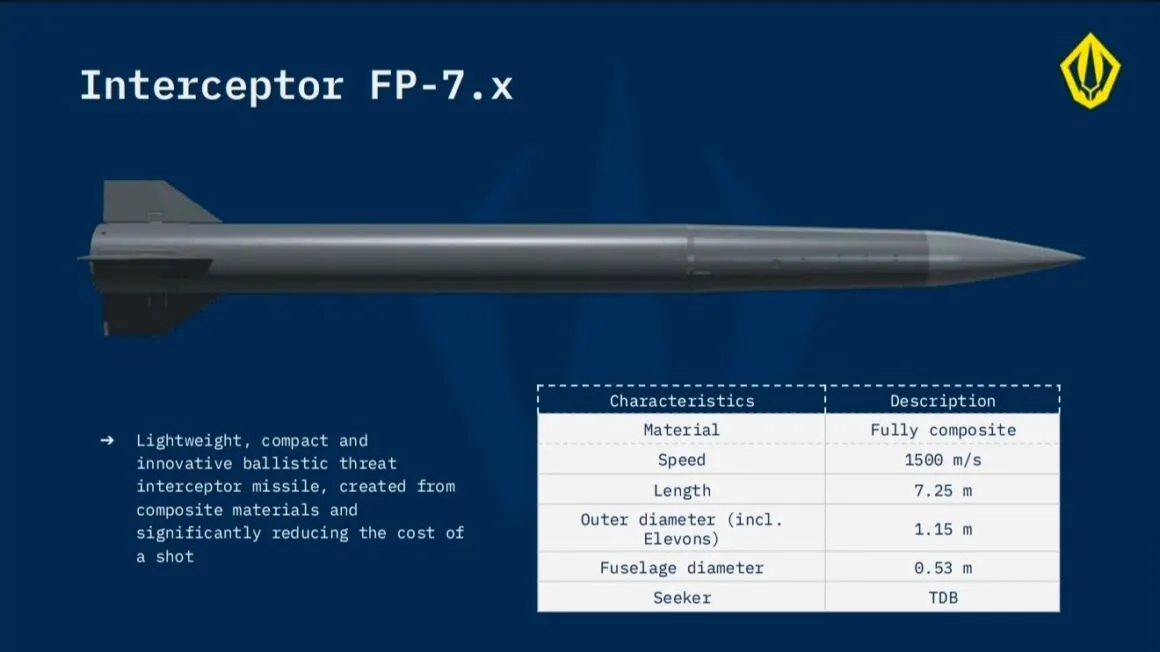
Fire Point concept graphic showing the FP-7.x interceptor missile beside a table of proposed specifications.
Explore further

Ukraine’s missile, Europe’s sensors—FREYJA enters active development on an early-2027 clock

Zelenskyy did not say what the partners still have to deliver. In August, he said Ukraine is capable of making the missile and launcher, while partners would supply critical components such as radars and sensors.

One part not made in Ukraine

In May, Fire Point co-founder and chief designer Denys Shtilerman said all components of the FP-7.x interceptor are made in Ukraine except one. “As for that one part we don’t manufacture in Ukraine, we’ve contracted a certain quantity of it. We already have it,” he said, but did not name the part.

In June, however, Shtilerman told the Financial Times that mass production depended on an infrared seeker Fire Point hoped to get from Germany’s Diehl Defence. Neither statement says whether the seeker is that one part.

Fire Point co-founder Iryna Terekh said in September that FREYJA was going through testing and technical integration in combat conditions in Ukraine. The company plans its first intercept of a ballistic target by mid-2027.

The official timeline has since moved closer. On 21 October, Zelenskyy wrote that officials had identified where to speed up so FREYJA reaches testing by the end of this year. A test is still a step short of an intercept.

  •  

European Leaders Split Over Phone Call to Putin

The diplomatic outreach was part of an effort to push talks to end the war in Ukraine, though it was not welcomed by all European leaders.

© Pool photo by Maxim Shipenkov

President Vladimir Putin of Russia in Moscow on Friday.
  •  

Finland’s Stubb and Norway PM call Putin in break with previous European stance

The leaders of Finland and Norway initiated a direct call with Russian President Vladimir Putin on Tuesday morning amid broader diplomatic efforts to wind down Russia’s yearslong war with Ukraine.  Finnish President Alexander Stubb and Norwegian Prime Minister Jonas Gahr Støre noted in a joint press release that they did not speak on behalf of…

  •  

Nordic Leaders Call for Overhaul of Digital Platforms To Protect Children

Smartphones, social media, and AI pose significant risks to children’s wellbeing, mental health, learning and development.

On Tuesday, Nordic leaders called for fundamental changes to the design of social media and other digital platforms to better protect children and young people’s health and development.

RELATED:

NATO Drill Gets Underway in Nordic Region

At a meeting in Helsinki hosted by Finnish Prime Minister Petteri Orpo and attended by representatives from Denmark, Sweden, Norway, Iceland, Greenland, the Faroe Islands and the Aland Islands, a joint declaration was adopted stressing the urgent need to strengthen online protection for minors.

The declaration warned that smartphones, social media and artificial intelligence pose significant risks to children’s and young people’s wellbeing, mental health, learning and development. The full extent of their impact remains unclear.

Children are gaining access to digital platforms too early and too extensively, and the platforms are not designed to support healthy growth and learning, according to the declaration.

Australia's rule is one of several, and Indonesia by itself holds the bulk of the children covered, based on our study of 17.9 million children aged 13 to 15. https://t.co/sCGJNJ11Oo

— Storible (@Storibledotcom) October 27, 2026

Several Nordic countries are currently preparing legislation and recommendations on age limits for social media platforms. Meanwhile, leaders also held discussions on Tuesday with students aged 12 to 14 and young politicians on the protection of children and young people in digital environments.

The meeting took place on the sidelines of the 78th Session of the Nordic Council, held in Helsinki from Monday to Thursday.

Finland holds the presidency of the Nordic Council in 2026, while Denmark and the Faroe Islands jointly hold the presidency of the Nordic Council of Ministers.

teleSUR/ JF

Source: Xinhua

  •  

Finland and Norway Hold Direct Talks with Putin Ahead of Ukraine Peace Negotiations, Exposing European Divisions

Finnish President Alexander Stubb and Norwegian Prime Minister Jonas Gahr Støre have spoken directly with Vladimir Putin before briefing Volodymyr Zelenskyy. The initiative, undertaken in consultation with Ukraine, comes ahead of planned negotiations in Abu Dhabi but has drawn criticism from other Nordic leaders.

Finnish President Alexander Stubb and Norwegian Prime Minister Jonas Gahr Støre held a telephone conversation with Russian President Vladimir Putin on Tuesday, 27 October, marking an unusual direct diplomatic engagement between Moscow and two European NATO members since Russia’s full-scale invasion of Ukraine in February 2022.

The conversation, initiated by the two Nordic leaders from Helsinki, was followed by a separate call with Ukrainian President Volodymyr Zelenskyy. According to a joint statement released by the Norwegian government, the initiative had been prepared in consultation with Kyiv.

The objective was to communicate directly with Putin about efforts to end the war and the forthcoming negotiations involving Ukraine, Russia and the United States.

Stubb described the exchange as frank and substantive, arguing that Finland and Norway had particular reasons to participate in discussions concerning European security.

“We are neighbouring countries to Russia,” he said, adding that the war’s outcome would directly affect European security.

Both leaders reaffirmed their governments’ continuing support for Ukraine while calling for renewed negotiations. Støre emphasised the humanitarian and economic consequences of the conflict and the need for de-escalation.

Importantly, their statement specified that they were acting as national leaders rather than representatives of Europe collectively.

Zelenskyy briefed after discussions with Moscow

Following the conversation with Putin, Stubb and Støre spoke with Zelenskyy, who confirmed the exchange in a statement issued by his office.

The Ukrainian president thanked them for their detailed briefing and diplomatic engagement.

According to Zelenskyy, the two leaders had communicated Ukraine’s demand for concrete steps to reduce attacks against its energy facilities and other infrastructure.

The discussion also covered preparations for trilateral negotiations involving Ukrainian, American and Russian delegations, provisionally planned for November.

Kyiv’s confirmation that it had been consulted before the Putin conversation is significant. Ukraine has consistently maintained that decisions concerning its sovereignty, territory and security cannot be negotiated without its participation.

Oslo talks establish new diplomatic channel

Tuesday’s telephone diplomacy followed a meeting in Oslo on 20 October involving Zelenskyy, Stubb, Støre and representatives of US President Donald Trump.

American special envoy Steve Witkoff participated in person, while Jared Kushner joined remotely. European and NATO representatives also attended related discussions.

According to the Ukrainian presidency’s account, the consultations addressed possible steps towards ending the war and establishing security arrangements after a settlement.

Witkoff subsequently travelled to St Petersburg on 21 October for discussions with Putin.

The diplomatic contacts have produced plans for another round of talks in Abu Dhabi, expected after 4 November, although the precise date and representation remain subject to confirmation.

The European Commission has also sought involvement. During its 21 October press briefing, the Commission confirmed its participation in the Oslo consultations, which addressed territorial questions, security guarantees and post-war economic arrangements.

As EU Today previously reported, discussions about appointing a European representative to negotiations have exposed disagreements over who should speak for European governments and what authority such a representative would possess.

Moscow maintains its negotiating position

The Kremlin’s account of Tuesday’s conversation offered little indication of a change in Russia’s principal demands.

According to reports citing the Kremlin’s statement, Putin insisted that a lasting settlement would require what Moscow described as full recognition of Russia’s legitimate interests.

He also accused NATO and European Union countries of pursuing confrontational policies that prolonged the conflict.

These statements indicate that the reopening of direct communication has not, by itself, resolved the differences between the negotiating parties.

Russia continues to seek arrangements concerning Ukrainian territory and the European security order, while Kyiv maintains that its sovereignty and territorial integrity must be respected.

Denmark questions independent Nordic diplomacy

The initiative has also revealed differences among European governments over direct engagement with Moscow.

Danish Prime Minister Mette Frederiksen criticised the Finnish-Norwegian approach, saying it had not been coordinated with Denmark and warning against individual European countries pursuing separate diplomatic initiatives.

Swedish Prime Minister Ulf Kristersson also expressed reservations about contacts that might undermine a common European position.

Their objections highlight a distinction between consultation with Ukraine and agreement among European governments on the organisation of negotiations.

For Finland and Norway, both of which share borders with Russia, the outcome of the conflict carries direct implications for security in the Baltic Sea region and the High North.

The immediate question is whether their intervention can facilitate substantive negotiations without weakening coordination between Kyiv and its European partners.

With the next US-mediated talks expected in November, Tuesday’s contacts establish another channel of communication with Moscow. Whether that channel produces movement on territorial disputes, security guarantees or an eventual ceasefire remains unresolved.

  •  
❌