❌

Reading view

Time for the West to plan ahead for post-Trump 2029

America’s mid-term congressional elections on November 3rdwill mark the beginning of the final two years of the Trump administration and thus the nearing of a potentially historic moment of reckoning for that country’s estranged allies. The reckoning may seem like a long way ahead, but in what historians will see as just the blink of […]

The post Time for the West to plan ahead for post-Trump 2029 appeared first on Asia Times.

  •  

Putin Warns Israel Planning ‘Biblical Attack’ That Will Plunge USA Into ’90 Days of Total Darkness’

Putin just issued an urgent warning to the West, revealing that Russian intelligence has intercepted plans for the biggest Israeli false-flag attack on the U.S. since 9/11 — and warns it will plunge America into [...]

The post Putin Warns Israel Planning ‘Biblical Attack’ That Will Plunge USA Into ’90 Days of Total Darkness’ appeared first on The People's Voice.

  •  

EU and Canada to Explore New ‘Associated Member’ Status at Montreal Summit

Von der Leyen, Carney, and Costa will discuss a new framework for Canada’s relationship with the European Union.

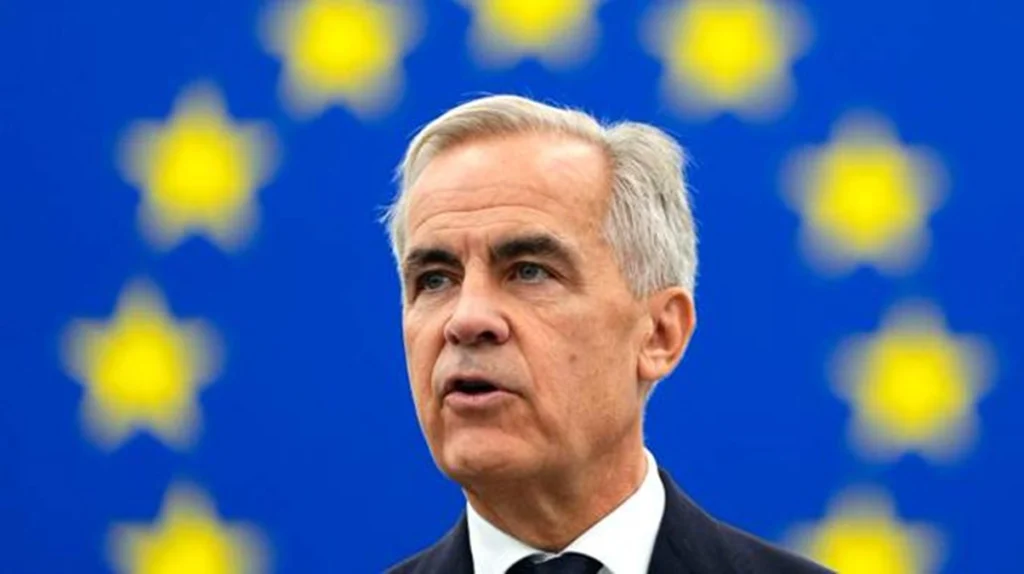
On Thursday and Friday, European Commission President Ursula von der Leyen, Canadian Prime Minister Mark Carney and European Council President Antonio Costa will meet in Montreal for the 21st European Union-Canada summit.

RELATED:

Canada: Alberta Voters Reject Independence in Referendum

They and other senior officials will discuss possible features of a status that would allow Canada to become an “associated member” of the European Union.

For the EU, the meeting will be an “important milestone” in relations between the two sides and will pave the way for an “even broader and deeper” political partnership and greater cooperation.

Specifically, European and Canadian leaders are expected to launch a “Partnership for the Future,” a framework for shared prosperity and economic security backed by new initiatives aimed at strengthening people-to-people ties, deepening economic relations and reinforcing their joint position on the world stage.

The summit’s agenda will cover a wide range of issues, from trade, digital affairs and critical raw materials to defense and security, as well as cooperation in education, research, innovation, and youth affairs.

Yves-François Blanchet sur Paul St-Pierre Plamondon et le sommet Canada-UE : « tu peux venir t'asseoir, mais t'as pas le droit de parler. »

Blanchet on Quebec's premier at the Canada-EU summit: "You can come sit down, but you have no right to speak." pic.twitter.com/O3rSPGTc5y

— Rebel News Québec (@RebelNews_QC) October 27, 2026

Associated Member State

EU sources said it was “clear” that one of the summit’s main topics would be a discussion of the proposal von der Leyen put forward last month — and which Carney welcomed — for Canada to become the EU’s first associated member state.

Currently, this status does not exist as a defined category in the European treaties. Therefore, its specific implications remain to be negotiated.

“This is somewhat uncharted territory, but I think what we want, together with our member states, side by side, and together with Canada over the next 12 months, is to have the ambition, confidence, creativity and vision to shape it together… It is the highest form of collaboration imaginable. For now, frankly, I see it as something very specific to Canada,” a senior EU official said.

“There is no doubt among the member states about their ambition for this relationship. All member states are clear that they want the closest possible partnership with Canada. So that is not in question,” another EU source said.

Nevertheless, some member states have reservations because this is uncharted territory. That is precisely the work that will need to be done in Montreal ahead of the next summit in 2027.

The senior official outlined three pillars for this membership: defining more joint policies on climate, energy, artificial intelligence, innovation, or security; having Canada participate more in EU programs, such as the Horizon Europe research program, or fully integrating it into Erasmus+; and, finally, bringing the institutions on both sides closer together to strengthen governance.

“The goal is to build a partnership that comes closer to membership than anything we have done before. It is clearly a partnership without membership (…), aimed at generating greater prosperity on both sides of the Atlantic,” the official said.

The EU was split today over whether to offer “associate membership” status to Canada, with several countries refusing to sign off on a statement containing that phrase just 48 hours before a summit between the two sides in Montreal.https://t.co/7hIHdoOeIw

— POLITICOEurope (@POLITICOEurope) October 27, 2026

Critical Raw Materials

Relations between Canada and the EU are already close in trade, security, defense, research and technological cooperation. Their main frameworks include the Comprehensive Economic and Trade Agreement (CETA), which has been provisionally applied since 2017, as well as recent progress in defense, digital trade and specific European programs.

They have long been strategic partners and share common values, including democracy, a commitment to a rules-based international order, and free and fair trade.

One of the key areas where the EU sees “enormous potential” is critical raw materials. Imports into the EU have already increased significantly and could rise further through the bloc’s “raw materials mechanism,” which focuses on facilitating connections between Canadian suppliers of these materials and European buyers.

Another idea under consideration is the possible joint stockpiling of critical raw materials, as well as the option of giving the EU priority access to Canadian reserves, EU sources said.

teleSUR/ JF

Source: EFE

  •  

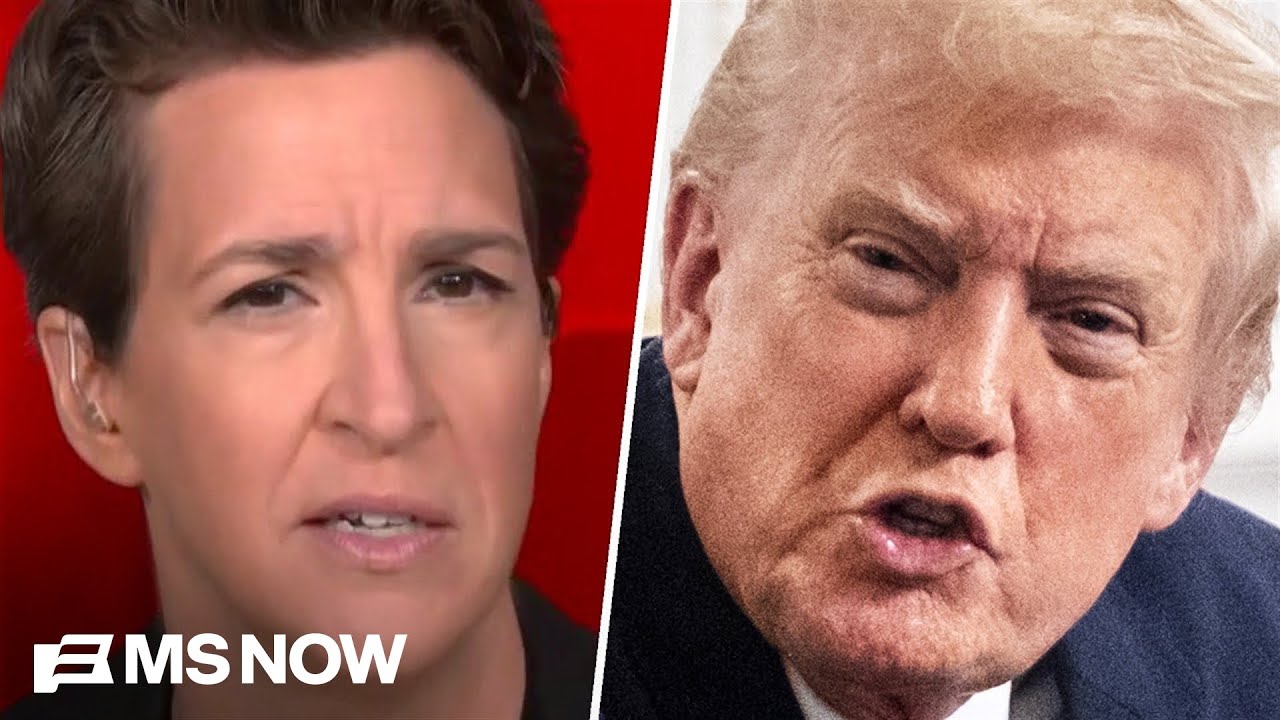
Rachel Maddow’s conspicuous refusal to cover Israelgate

Screenshot from "'Follow the money': Maddow’s INSTANT REACTION to U.S. striking Iran," Feb 28, 2026/MSNOW YouTube

If there’s one story MSNOW’s Rachel Maddow is known for, it’s her tenacious, years-long focus on a broad theory that Trump is a compromised agent of Russian intelligence installed by Russia via a shady patchwork of direct funding, loose connections, opaque meetings, election interference, Facebook ads, innuendo, and genuinely strange behaviors. From 2016 to 2025, Maddow mentioned Russia 6,126 times on her primetime program The Rachel Maddow Show. 

This analysis isn’t a commentary on the validity of the “Russiagate” story, as such. I think it was inflated, and served the ends of some of the worst elements in the US security state, but there was certainly an element of truth to it. (Trump is brazenly venal, and would presumably take bribes from anyone). At the same time, the conspiracy mongering veered into Loose Change territory and was, ultimately, contradicted by Trump’s own policies which—while rhetorically critical of Ukraine—have largely continued to arm and support the country in its four-year-and-a-half war against Russia’s aggression. 

The state of Israel is running what could very well be construed as GOTV commercials for the Republican Party during an election season.

What’s noteworthy is less that Maddow has covered Trump’s connections with Russia, and the associated seemingly weekly breathless developments. It’s that, over the past two years in particular, she has very conspicuously avoided a major story about another country influencing domestic politics in service of Trump and a pernicious reactionary agenda: that of Israel’s influence over the president, and its broader attempts to influence politics in the US. A report in Zeteo last week details how Israel is directly funding ads in swing states that not only advertise Israel’s alleged security benefits to the US, but show images of Trump’s 250 year celebration, the White House, and Trump’s ambassador to Israel, painting them in a heroic light. In other words: the state of Israel is running what could very well be construed as GOTV commercials for the Republican Party during an election season.   

This is, of course, just the tip of the iceberg. A Quincy Institute report in June calculated $1 billion in influence operations since 2023 directly backed by the state of Israel targeting the American public via lobbyists, TV ads, media campaigns, AI output-altering fake websites, propaganda delegations, building “business ties” with Silicon Valley, and a host of other, more opaque efforts. Israel’s attempt to influence US politics has exploded in recent years, and this is just what is disclosed: 

And all of this is one top of the decades-long multibillion dollar informal network of pro-Israel propaganda groups like the Anti Defemation League (ADL), the American Israel Public Affairs Committee (AIPAC), and Christians United for Israel (CUFI), organizations largely funded by American donors with ideological commitments to Israel, though not directly by the state of Israel. These groups frequently align messaging with and coordinate with the Israeli government, but there was always a thin veneer of plausible deniability. These latest efforts are not even bothering to maintain this veneer: Israel is, increasingly, directly funding influence operations—many of which have explicit ties to the Trump White House. Indeed, Trump has taken the unusual step of openly endorsing Netanyahu in his upcoming election, and several of Trump’s advisors, including his own son-in-law, are heavily invested in Israeli companies. His former campaign manager Brad Parscale literally runs one of the aforementioned Israeli influence operations. Put another way: Trump’s “ties” to Israel and the influence the state of Israel has over Trump is far better documented, much clearer, and much more consequential than any ties he has or ever had to Russia. 

Yet Maddow only covers one of these angles. 

Maddow rarely talks about Israel in general—much less its influence over Trump. And, on the rare occasion she does, it’s safely within the confines of “Netanyahu Bad/Israel Good” or “Netanyahu wants Trump to win the election” safe pseudo-criticism. As Mondoweiss’ Michael Arria noted in 2021, even before Oct. 7, 2023, Maddow understood how avoiding the topic would benefit her burgeoning career, mentioning Israel only six times from 2011 to 2021 in over 2,000 shows. As I document in my book on liberal media’s role in helping destory Gaza, How To Sell a Genocide, Maddow largely avoided the subject in the first year of the Gaza genocide, and didn’t mention it at all for seven of the first twelve weeks of the Gaza assault, despite over 3,000 Palestinians being killed a week by American bombs. And when she did bring up Gaza, unlike her broad, deep, and sympathetic portrayal of Russia’s war crimes in Ukraine, Maddow’s coverage was superficial and hurried. The one major exception among MSNBC primetime stars who did have the courage to center Palestine as something more than a box to check, Joy Ann Reid, was subsequently fired for what she says was her coverage of the genocide. 

Trump’s “ties” to Israel and the influence the state of Israel has over Trump is far better documented, much clearer, and much more consequential than any ties he has or ever had to Russia.

The most Orwellian moment of Maddow’s conspicuous silence on Israel was when she did a long, detailed segment on foreign powers’ influence on Trump’s attack on Iran on the first day of the bombing, entitled “Follow the money.” To kick off the segment, Maddow bizarrely handwaved away Israel’s involvement, telling her viewers, “There’s a lot of attention on Israel, and indeed Israel and the United States have worked together in the bombing campaign… but it is the Gulf Arab states that are arrayed against Iran.” She then proceeded to pin the nefarious influence entirely on “Gulf Arab states, countries like Saudi Arabia and United Arab Emirates in Qatar.” This isn’t to say these countries don’t unduly influence the Trump clan—this is well documented—but their influence is relatively small compared to that of Israel and the Trump family connection with Israel and pro-Israel donors and it’s not particularly close.  

Maddow’s defenders could argue that the major difference is that Israel is an “ally” of the US, whereas Russia isn’t. But, despite the fact that the majority of Americans do not agree with this sentiment in the normative sense, the “Gulf Arab states” Maddow accuses of corrupting Trump are also US allies, so this is obviously not the reason. The real reason is that she knows discussing the elephant in the room of Israeli influence over both Trump and US body politic more broadly would pretty much spell the end of her career, as it did with Reid and, to a lesser degree, other MSNBC/MSNOW personalities that were demoted or pushed out after October 7 for having the temerity to veer off the safe script of pseudo-criticisms of Israel. As I also document in my book, the first, last, and only time MSNBC/MSNOW’s parent corporation (then Comcast) directly intervened in MSNBC/MSNOW’s coverage was to dress down network executives for letting anchors Ayman Mohyeldin and Ali Velshi attempt to contextualize the October 7 on the day of the attack. Saying anything meaningfully critical of Israel would also compromise Maddow’s access to high status arch-zionists like Hillary Clinton, with whom Maddow is doing an event in two weeks at the pro-Israel Streicker Center. Whatever the reason, the liberal media personality who built her large, intense media following sowing paranoid visions of dark, reactionary foreign influence operations is clearly determined to not mention the most brazen, obvious, and deleterious one.

💾

Israel has spent $1 billion to influence US politics and is directly paying for ads promoting MAGA. Why isn't MSNOW's “foreign influence” sleuth covering it?
  •  

Recuperar auxílios de Estado não suspende o Estado de direito


Em Utiledulci, o Tribunal de Justiça afastou a suspensão da execução fiscal quando esta prolongue a vantagem concorrencial. Mas deixou uma porta aberta: se a garantia retirar efetivamente essa vantagem, a suspensão não frustra a recuperação — realiza-a por outra via.

No contencioso da Zona Franca da Madeira há um paradoxo pouco discutido. Foi o Estado português que desenhou o regime, o notificou a Bruxelas, o administrou e o fiscalizou. Quando a Comissão concluiu que fora aplicado em desconformidade com as condições aprovadas, a fatura seguiu para as empresas que nele confiaram: recuperação integral, com juros compostos e, por vezes, mais de uma década de distância.

Ninguém contesta o dever de recuperar. A questão é outra: pode a efetividade justificar uma execução fiscal à margem das regras que valem para qualquer outra dívida ao Estado?

Uma obrigação de resultado, não de método

O regulamento europeu manda recuperar segundo as formalidades do direito nacional, desde que permitam a execução imediata e efetiva. É uma obrigação de resultado, não uma ordem para desmantelar em bloco as garantias do contribuinte. Ainda assim, instalou-se uma leitura maximalista: citações que anunciam que a oposição não suspende e que não há prestações nem suspensão mediante garantia; certidões de situação tributária recusadas; meios de garantia reduzidos a uma única modalidade. Tudo em nome da mesma palavra.

Em 21 de maio de 2026, no processo C-545/24, Utiledulci, o Tribunal de Justiça fixou o critério: afastam-se as normas nacionais que permitam suspender a execução mediante garantia ou dispensa de garantia, salvo se a garantia privar efetivamente o beneficiário da vantagem concorrencial associada ao auxílio. O debate não terminou; mudou de natureza. Deixou de ser uma discussão de princípio e passou a ser uma questão de prova, confiada ao juiz nacional.

O excesso é nacional

Daqui decorre algo que raramente se diz: o que vá além deste critério já não é imposição de Bruxelas — é escolha portuguesa. A efetividade é um limite ao direito nacional, não um título para afastar garantias sem examinar o seu efeito. Uma garantia que assegure o montante integral, com juros, retira ao beneficiário a vantagem de dispor do dinheiro: é recuperação por outros meios. Recusar uma certidão a quem litiga de boa-fé e oferece essa garantia não devolve um cêntimo ao erário. Apenas impede a empresa de concorrer, de se financiar e de operar — comprometendo, paradoxalmente, a própria cobrança.

O mesmo vale para a prescrição. O prazo de dez anos do regulamento europeu rege, em primeira linha, o poder da Comissão de ordenar a recuperação ao Estado-Membro: é um prazo entre Bruxelas e Lisboa. Convertê-lo num prazo de cobrança contra o contribuinte, afastando o prazo nacional, exigiria demonstrar que este torna a recuperação impossível ou excessivamente difícil. A jurisprudência europeia que afastou prazos nacionais visava impedir que a decisão da Comissão ficasse letra morta. Quando o Estado conhecia a decisão e tinha tempo para agir, mas não agiu, invocar o Direito da União deixa de ser cumprimento e passa a ser resgate da própria inércia.

Efetividade com Estado de direito

Os tribunais nacionais têm aqui uma responsabilidade acrescida. O acórdão Ferreira da Silva e Brito (2015) lembrou que um tribunal de última instância que recuse indevidamente o reenvio pode fazer incorrer o Estado em responsabilidade. O primado do Direito da União protege também os particulares contra Estados que o aplicam mal — incluindo através dos seus juízes.

A Carta dos Direitos Fundamentais e a Constituição garantem a tutela jurisdicional efetiva, e essas garantias não se suspendem por estar em causa um auxílio de Estado. Muda o ónus: não basta invocá-las em abstrato; é preciso demonstrar que não prolongam a vantagem que a decisão europeia quer eliminar. Recuperar é um dever. Fazê-lo com garantias, quando estas não frustram a recuperação, é condição de legitimidade.

O caso da Zona Franca da Madeira será lembrado pelos montantes. Deveria sê-lo pela pergunta que coloca: pode a efetividade justificar tudo? A resposta do Estado de direito — e, como Utiledulci acaba de confirmar, a do próprio Direito da União — é que não.

  •  

“Our future cannot be the subject of agreements between Trump and Putin”: Ukraine supporters protest US policy on Russia in Europe, US, and Australia

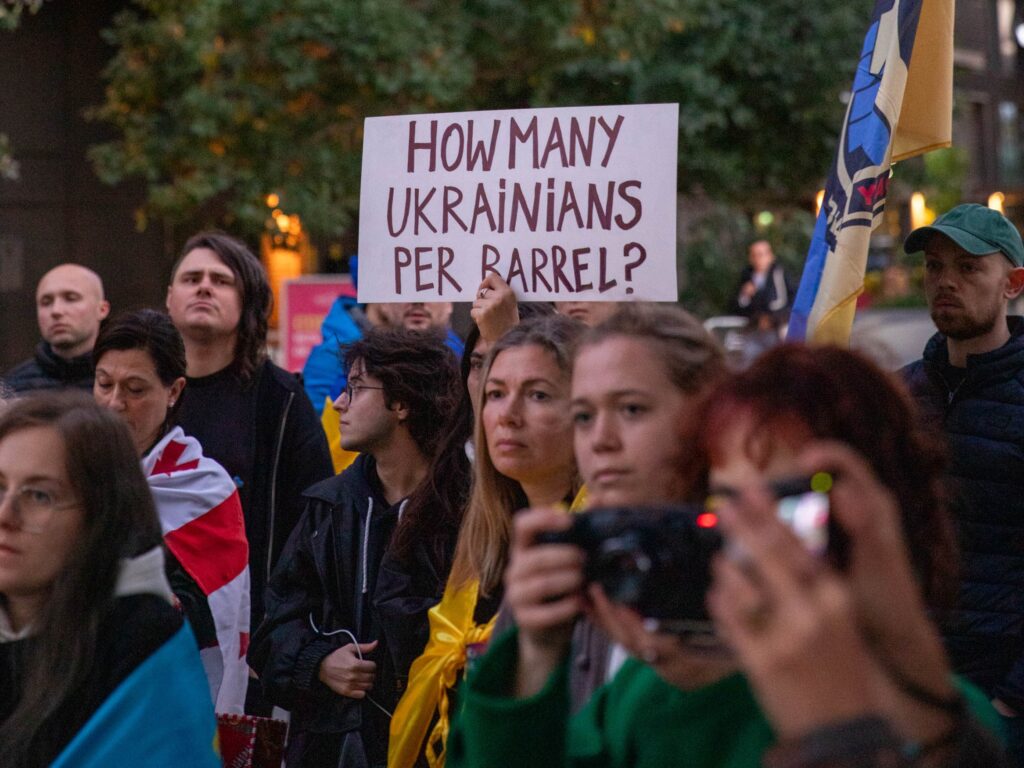
Pro-Ukraine protesters rally in London, England, against US policy toward Russia, 16 October 2026. Photo: Khrystyna Shebunchak

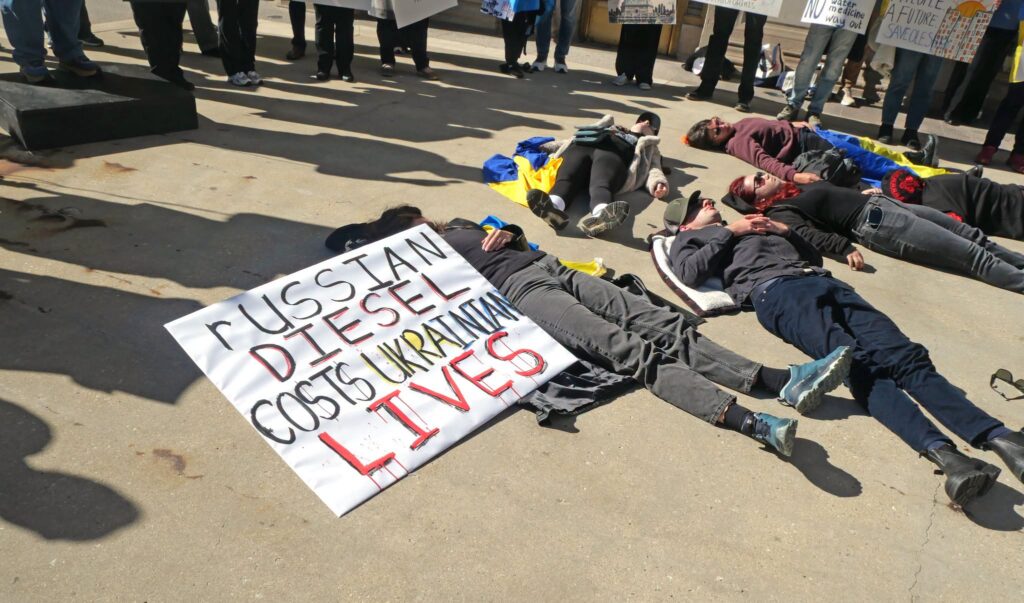
Pro-Ukraine demonstrations took place in more than 10 cities across Europe, North America, and Australia over the past week, with protesters opposing US President Donald Trump’s agreement to resume Russian diesel shipments, the easing of sanctions on Moscow, and restrictions affecting Ukraine’s military support.

The protests were organized by Ukrainian diaspora groups and international supporters of Ukraine, who called on Washington to maintain pressure on the Kremlin, restore Ukraine’s access to Starlink, and stop using military aid and intelligence sharing as leverage against Kyiv. 

The International Center for Ukrainian Victory (ICUV) said the actions reflected growing concern over US decisions that could benefit Russia while its war against Ukraine continues.

Pro-Ukraine protesters rally in Chicago, USA, against US policy toward Russia, 13 October 2026. Photo: Radio UA Chicago
Pro-Ukraine protesters rally outside the US consulate in Edinburgh, Scotland, against US policy toward Russia, 21 October 2026. Photo: Ukraine Solidarity Campaign

The demonstrations followed Trump’s announcement on 9 October that Russia would supply diesel to US and global markets. The US Treasury’s Office of Foreign Assets Control subsequently issued a temporary license authorizing transactions involving Russian-origin diesel, including imports into the United States, through 7 April 2027. 

The decision reversed part of Washington’s restrictions on Russian fuel imposed after Russia’s full-scale invasion of Ukraine in 2022.

“We are witnessing a dangerous situation today: Russia, which attacks Ukrainian cities every day, is being offered economic agreements and sanctions relief, while Ukraine is being asked to make concessions. But Ukrainians cannot simply stop fighting. For us, this is a matter of our state’s existence. Our future cannot be the subject of agreements between Trump and Putin. It belongs to Ukrainians,” said Olena Ivashchenko, founder of Campaign for Ukraine.

Pro-Ukraine protesters rally in Sydney, Australia, against US policy toward Russia, 16 October 2026. Photo: Ukrainians in Sydney
Pro-Ukraine protesters rally in Rome, Italy, against US policy toward Russia, 21 October 2026. Photo: Ukrainian World Congress

Protests target Russian fuel deal and pressure on Kyiv

In London, hundreds of protesters gathered outside the US Embassy on 16 October, according to organizers from Campaign for Ukraine and partner groups. Participants included Ukrainians, Britons, Americans, and members of other national communities. British lawmakers also raised the issue in Parliament.

Demonstrators carried signs reading “How Many Ukrainians per Barrel?” and “Occupation Is Not Peace,” calling on Washington to preserve sanctions and reject pressure on Ukraine to make territorial concessions.

Pro-Ukraine protesters rally in London, England, against US policy toward Russia, 16 October 2026. Photo: Khrystyna Shebunchak
Pro-Ukraine protesters rally in Sydney, Australia, against US policy toward Russia, 16 October 2026. Photo: Ukrainians in Sydney
Pro-Ukraine protesters rally in Chicago, USA, against US policy toward Russia, 13 October 2026. Photo: Radio UA Chicago

Protests also took place in Edinburgh, Chicago, Houston, Boston, San Diego, Prague, Rome, Stockholm, and Sydney. In Prague, two Ukrainian activists staged a protest outside the US Embassy on 21 October, pouring a red liquid resembling blood onto the road to symbolize the human cost of the policy.

Ukrainian activists stage a protest outside the US Embassy in Prague on 21 October, pouring red liquid onto the road to symbolize the bloodshed caused by Russia’s war against Ukraine and condemn US policies toward Moscow. Photo: Kaputin

Participants in several cities also condemned restrictions on Starlink, delays in ammunition supplies, and disruptions to intelligence sharing with Ukraine.

The diesel agreement has drawn criticism in Ukraine because Russian fuel exports generate revenue for Moscow while its forces continue attacking Ukrainian cities and infrastructure. A Russian diesel tanker carrying 40,000 metric tons of fuel departed Russia’s Baltic port of Primorsk on 22 October bound for New York, according to shipping data reported by Reuters. It was expected to arrive on 7 November.

Pro-Ukraine protesters rally in Chicago, USA, against US policy toward Russia, 13 October 2026. Photo: Radio UA Chicago
Pro-Ukraine protesters rally in Stockholm, Sweden, against US policy toward Russia, October 2026. Photo: Nordic Ukraine

Organizers warn against easing pressure on Moscow

Protest organizers argued that restoring Russian fuel sales and relaxing sanctions risk helping Moscow finance its war. They also opposed any US effort to secure concessions from Kyiv without requiring Russia to end its aggression.

The demonstrations reflect concerns among Ukraine’s international supporters that Washington’s pursuit of economic agreements with Moscow could undermine efforts to isolate Russia and strengthen Kyiv’s position.

Trump has defended the diesel arrangement as a way to increase fuel supplies and lower prices. His administration has also presented engagement with Moscow as part of its broader effort to end the war, while critics question whether easing economic pressure will produce meaningful concessions from the Kremlin.

Pro-Ukraine protesters rally in Boston, USA, against US policy toward Russia, 13 October 2026. Photo: Boston Supports Ukraine
  •  

Priests urged to break away from the Church of Cyprus

The Holy Synod on Tuesday confirmed the previously reported existence of a letter circulated to priests urging them to abandon the Church of Cyprus and found a new church.

Archimandrite Georgios Christodoulou, the Holy Synod’s chief secretary, told media that though the matter of the letter was not on the agenda during Tuesday’s special session of the Synod, it would be addressed at a later stage, “before it gets out of hand”.

According to Phileleftheros, the letter – which effectively advocates for a mutiny – is signed by five individuals. The missive has been circulated to all Paphos-based clerics, as well as to a number of priests in other districts.

The letter’s authors are thought to be proponents of what is known as ‘apoteichisis’ – from the Greek word literally meaning “walling off”. It is a practice in Eastern Orthodox Christian theology where a member or cleric of the Church ceases ecclesiastical communion and liturgical commemoration of their ruling bishop or patriarch.

The action is taken when church leaders are deemed by the adherents to be preaching heresy or straying from Orthodox dogma.

Proponents view it not as leaving the Church or forming a new schism, but as erecting a “protective wall” between themselves and a compromised clergyman to preserve the true faith.

Behind the move are thought to be supporters of former Paphos bishop Tychikos, deposed from his role in May 2025 after he was charged with various breaches of church protocol, including showcasing an icon of a saint not canonised by the church.

Tychikos subsequently appealed against his dismissal at the Ecumenical Patriarchate of Constantinople, but was unsuccessful in his appeal.

Then in January this year, the Holy Synod voted to suspend him indefinitely from priestly duties following his decision to pursue legal action through the civil courts.

Tychikos had been summoned to Tuesday’s session of the Holy Synod, but did not show up. Instead, he sent a letter requesting a face-to-face meeting with the archbishop.

The archbishop accepted.

Previously, the Holy Synod had asked the rebel priest to sign a declaration of loyalty to the decisions of the Ecumenical Synod, to declare obedience to the decisions of the Holy Synod, and to renounce ‘apoteichisis’ and its adherents.

He complied with none of those requests.

In other business on Tuesday, the Holy Synod condemned the recent deadly attack at a Greek Orthodox church in Jordan, where gunmen fired on the crowd, killing nine people and injuring dozens more.

  •  

CPI a Luís Neves aprova audição de Montenegro, Costa e Ventura, mas rejeita a de Marcelo


A comissão parlamentar de inquérito aos mandatos de Luís Neves à frente da Polícia Judiciária (PJ) aprovou a audição de Luís Montenegro e António Costa, bem como do líder do Chega, André Ventura. Já o pedido para ouvir Marcelo Rebelo de Sousa foi rejeitado. Os trabalhos ficam suspensos até 26 de novembro, devido à discussão do Orçamento do Estado para 2027.

A reunião desta terça-feira ficou marcada pela votação individual de várias dezenas de nomes propostos pelos partidos para prestar esclarecimentos à comissão, depois de não ter sido possível alcançar consenso sobre a pertinência de algumas audições face ao objeto do inquérito.

O antigo Presidente da República, Marcelo Rebelo de Sousa, foi um dos nomes afastados. A Iniciativa Liberal defendia a sua audição, alegando que poderia esclarecer as circunstâncias em que a Polícia Judiciária foi excluída da investigação à Operação Influencer. Em causa está uma reunião entre Marcelo Rebelo de Sousa e a então procuradora-geral da República, Lucília Gago, na qual esta lhe terá comunicado que o antigo primeiro-ministro António Costa era alvo de investigação.

Em sentido contrário, a comissão aprovou a audição de Luís Montenegro, que será ouvido por escrito. A proposta contou com os votos favoráveis dos restantes grupos parlamentares e a abstenção do PSD e do CDS-PP. António Costa também prestará declarações por escrito, num pedido que reuniu consenso entre os deputados.

André Ventura, que preside à comissão de inquérito, foi igualmente chamado a depor. O seu nome acabou por ser submetido a votação individual depois de o PSD o ter retirado do conjunto de personalidades cujas audições reuniam consenso. A justificação prende-se com as declarações do líder do Chega sobre o alegado assalto às instalações do partido, durante o qual terão desaparecido documentos relacionados com os trabalhos da comissão.

A decisão levantou dúvidas sobre a permanência de Ventura na presidência da CPI. Questionado pelo deputado do Livre Paulo Muacho sobre se pretendia continuar a dirigir os trabalhos depois de ser chamado a prestar declarações, o líder do Chega não excluiu a possibilidade de abandonar o cargo. “No momento da audição avaliaremos essa posição, quer juridicamente, quer politicamente”, afirmou.

Bastonário dos advogados e juiz Carlos Alexandre ficam de fora

Entre as propostas rejeitadas estão as audições das jornalistas Felícia Cabrita e Sandra Felgueiras, requeridas pelo Chega. As duas profissionais estiveram na origem de investigações jornalísticas que trouxeram a público polémicas envolvendo Luís Neves, atualmente ministro da Administração Interna.

Também não foi aprovada a audição do juiz Carlos Alexandre. O PSD justificou a oposição com a necessidade de salvaguardar a independência das instituições judiciais e a inconveniência de convocar magistrados para a comissão. O PS sustentou, por seu lado, que as audições devem incidir sobre pessoas capazes de esclarecer factos concretos abrangidos pelo objeto do inquérito.

Já o antigo secretário-geral da Administração Interna Ricardo Carrilho será ouvido, apesar da abstenção do PS, do PSD e do CDS-PP. A sua audição está relacionada com declarações públicas sobre alegadas indicações de Luís Neves para a realização de obras sem recurso a concurso público. A Iniciativa Liberal, através do deputado Rui Rocha, apontou um possível paralelismo com trabalhos executados pela Construbarcelos para a Polícia Judiciária.

A presidente da Entidade para a Transparência, Ana Gonçalves Moniz, também prestará declarações por escrito.

Foram ainda chumbadas as audições dos advogados João Martins Leitão e Ricardo Serrano Vieira, associados à Operação Pacoba. Nesse processo foi apreendido um atrelado que Luís Neves autorizou que ficasse à guarda da Construbarcelos, empresa relacionada com as polémicas em análise. O bastonário da Ordem dos Advogados, João Massano, também não será ouvido.

Em contrapartida, os deputados aprovaram a audição do inspetor da PJ David Freitas, responsável pela denúncia que deu origem à investigação ao atual diretor da unidade de combate ao cibercrime da polícia, Carlos Cabreiro. O caso está relacionado com alegadas irregularidades na utilização de escutas telefónicas no âmbito do processo Football Leaks, que levou à condenação do pirata informático Rui Pinto. Rui Pinto, que beneficia de medidas especiais de proteção do Estado, será ouvido à distância.

Inquérito abrange mandatos entre 2018 e 2026

A comissão foi constituída por iniciativa do Chega e tomou posse a 14 de outubro. O seu mandato prevê avaliar a atuação de Luís Neves durante os anos em que dirigiu a Polícia Judiciária, entre 2018 e 2026, bem como apurar eventuais responsabilidades dos membros do Governo que o nomearam e tutelaram.

O inquérito surgiu na sequência de notícias sobre obras realizadas numa propriedade de Luís Neves por uma empresa que mantinha contratos com a PJ e sobre o armazenamento, nas instalações dessa mesma empresa, de um atrelado com produtos químicos apreendido numa operação policial.

  •  

BEI empresta 400 milhões para expansão do Metro de Lisboa


O Banco Europeu de Investimento vai emprestar 400 milhões de euros ao Metropolitano de Lisboa para ajudar a financiar a expansão da rede, anunciou esta terça-feira a presidente da instituição, Nadia Calvino. Num evento para assinalar os 50 anos de atividade do banco em Portugal, a responsável revelou ainda que serão disponibilizados 300 milhões de euros ao Instrumento Financeiro para a Reabilitação e Revitalização Urbanas (IFRRU 2030) para promover a habitação a preços acessíveis.

Num discurso onde anunciou cinco investimentos, um por cada década de relação do BEI em Portugal, Nadia Calvino anunciou investimentos de 1,9 mil milhões de euros.

Desde a concessão dos primeiros empréstimos em Portugal, em 1976, o Grupo BEI investiu mais de 70 mil milhões de euros em mais de mil projetos no país, “apoiando investimento público e privado”, sublinhou José Maria Brandão de Brito, o secretário de Estado Adjunto e do Orçamento. Esta terça-feira foram acrescentados mais quatro. Além dos empréstimos ao Metro de Lisboa e ao IFRRU, o BEI assinou a terceira tranche de 300 milhões de euros para as redes de distribuição de eletricidade da EDP na Península Ibérica, dos quais 213 milhões de euros se destinam a Portugal e vai disponibilizar 50 milhões de euros para apoiar a recuperação e a reconstrução das zonas afetadas por fenómenos meteorológicos extremos.

Este último pacote combina 250 milhões de financiamento público para a recuperação de infraestruturas e equipamentos municipais danificados pelas tempestades com um empréstimo de 500 milhões ao Banco de Fomento, destinado a apoiar os esforços de reconstrução das pequenas e médias empresas.

O BEI vai ainda apoiar, com 250 milhões de euros, o cofinanciamento de investimentos de entidades públicas, incluindo municípios, no âmbito de programas financiados pela União Europeia para o período de 2021–2027. Esta iniciativa contribuirá para concretizar investimentos prioritários e reforçar a coesão económica e social em todo o país.

Estes novo financiamentos vão ajudar a cimentar a atividade do banco em Portugal que, o ano passado mobilizou 12 mil milhões de euros de investimento no nosso país, o equivalente a quase 4% do Produto Interno Bruto (PIB).

Sem o dinheiro da Europa, incluindo o BEI, não haveria habitação social em Portugal.

Carlos Moedas

Presidente da Câmara Municipal de Lisboa

A habitação tornou-se uma das principais prioridades sociais do Grupo em Portugal. Em 2025 e 2026 foram comprometidos mais de três mil milhões de euros de financiamento para a habitação, apoiando programas que preveem a construção ou reabilitação de mais de 70 mil habitações. O presidente da Câmara de Lisboa, Carlos Moedas, foi muito claro: “Sem o dinheiro da Europa, incluindo o BEI, não haveria habitação social em Portugal”.

José Maria Brandão de Brito reconheceu que o desafio do Executivo é transformar “o investimento de três mil milhões de euros do BEI, no âmbito dos programas de habitação social e arrendamento acessível em casas e dessa forma desatar um dos maiores nós górdios do nosso tempo”.

O secretário de Estado Adjunto e do Orçamento sublinhou que “durante anos se descurou o lado da oferta, o que se traduziu numa trajetória galopante nos preços do mercado imobiliário residencial”. Brandão de Brito reconheceu que “o desafio não é novo, não tem solução imediata e resulta da dinâmica da oferta e da procura”

  •  

Projeto europeu depende de combinar competitividade e coesão


“Temos de combinar competitividade com coesão, caso contrário haverá uma fragmentação política e económica na Europa”. O alerta é de Elisa Ferreira, a antiga comissária europeia para a Coesão. Num contexto de enormes desafios, a presidente do Banco Europeu de Investimento, Nadia Calvino, reconhece que “todos pedem à UE que desempenhe um papel mais importante” em termos de liderança política, mas é necessário “mais agilidade nas decisões”, defende o presidente da Câmara de Lisboa, Carlos Moedas.

“Temos de ter agilidade nas decisões na União Europeia”, disse Moedas. “Em alguns aspetos somos lentos e temos de ter a coragem de assumir que algumas decisões não podem ser tomadas por unanimidade”, acrescentou o edil.

“A UE demora muito tempo a transformar as ambições em ações. É verdade”, reconhece Elisa Ferreira. “Demoramos muito a ouvir os países porque não somos uma Federação, mas agimos rapidamente ao nível das vacinas, por exemplo”, recordou a antiga comissária.

Para Elisa Ferreira é necessário “garantir uma coesão e partilhar melhor os ganhos do mercado único”, sublinhou. Isto porque, por toda a Europa se está a assistir a uma “tendência populista que cria uma brecha na Europa e a destrói por dentro”. “Existem atores internos que tentam partir esta utopia, que funciona há décadas”, denuncia.

A antiga comissária sublinhou a relação já estabelecida e estudada entre estagnação económica dos países e o voto contra a democracia e contra a Europa, em que a justificação é a de que o sistema não tem um lugar essas pessoas e “portanto querem destruí-lo”. “Por isso são propensos a aceitar esta propaganda”, diz a também antiga eurodeputada.

Caso houvesse eleições para o Parlamento Europeu agora, “as três famílias políticas que construíram a Europa poderiam já não ter a maioria dos votos”. “Avançar depende disto e não dos extremistas”, alertou.

Para o antigo presidente da Comissão Europeia, o problema é a posição que a União Europeia tem assumido de alguma falta de realismo, sem capacidade de proteger os seus interesses. Durão Barroso comparou mesmo a Europa a uma adolescente. Uma metáfora com a qual Nadia Calvino não concordou.

“Não tenho a ideia que a UE seja vista como uma adolescente, mas como a voz da razão nestes tempos problemáticos”, disse Calvino.

“O mundo está muito fragmentado”, disse Barroso e por isso a “Europa tem de olhar com mais realismo e assumir a proteção dos seus interesses”. “Temos uma Rússia mais agressiva, uma China mais assertiva e uns EUA mais imprevisíveis. A UE deve ter um músculo financeiro para sustentar a sua ambição”, frisou o presidente da Flad e antigo primeiro-ministro.

Menos crítica, Nadia Calvino sublinhou que “a UE pode ser uma voz pela paz e democracia, pela igualdade de oportunidades. Não estamos sós”, sublinhou a presidente do BEI, recordando a deslocação à Ásia por altura da reunião anual do Fundo Monetário Internacional e do Banco Mundial. “Todos pedem à UE que desempenhe um papel mais importante. Cada vez mais a UE é vista com potencial para construir parcerias nomeadamente com o Sudeste Asiático ou mais recentemente com o Canadá. Vamos assinar um acordo de parceria com o Canadá no âmbito dos minerais raros”, anunciou a responsável, concluindo que a Europa “não são apenas palavras”.

  •  

T-Mobile US pushes physical AI to the edge

T-Mobile US CTO John Saw revealed it is testing whether humanoid robots could respond faster and rely less on onboard computers by running some of their AI at its network edge.

In a blog, Saw explained T-Mobile is working with robotics company Figure AI to test if its systems can run on nearby computing infrastructure without slowing the machines’ responsiveness.

The systems involve controlling robots’ movement, and interpreting visual information and language instructions.

Saw wrote shifting some processing off the robots could reduce battery use, computing demands, heat, weight and cost. It could also let them run more capable AI without needing more hardware or power.

AWS
T-Mobile is working with AWS on the first deployments of Kinetic Edge, the operator’s distributed computing infrastructure for physical AI.

They are using T-Mobile’s 5G-Advanced network and distributed edge along with AWS’ cloud orchestration and AI services to push “deterministic connectivity, compute and intelligence closer to where machines operate”, Saw wrote.

He explained reliable connections and localised computing could help businesses take physical AI beyond individual demonstrations, highlighting developers are putting vision and reasoning models at the network edge to make robots, cameras and sensors less dependent on a distant cloud.

“This early work is helping us explore the capabilities that could make physical AI possible at scale, while opening the door to entirely new applications and opportunities.”

Machines require consistent connectivity when moving, sufficient uplink capacity to send sensor data, low latency and wide-area coverage, Saw wrote. Wi-Fi and satellite have a role, but he argued advanced terrestrial wireless networks are better suited to meeting the needs.

Human interaction
Saw noted employing people to assist robots would become challenging when thousands of machines are involved: T-Mobile is working with Serve Robotics to evaluate the feasibility of conducting monitoring at the edge to assess which problems can be solved by humans and which need more AI input.

The executive also highlighted work with Nvidia, Nokia and a growing group of developers to run physical AI applications across distributed edge networks, along with the recent completion of an AI-RAN call involving the vendors.

Saw explained T-Mobile is working with the city of San Jose in the state of California and specialist companies to develop a way to create an overview of traffic using edge AI to combine the views of separate 5G cameras.

They are testing if AI can connect occurrences at different junctions and if providing a big-picture could help people spot traffic patterns sooner.

The operator is also exploring “how AI and network workloads can share accelerated computing infrastructure” through partnerships with Nvidia, Nokia and Ericsson.

Saw said T-Mobile must develop ways to deliver “data and workloads” to “where intelligence needs to run”, whether it be on devices, the edge or cloud.

He said the direction “is becoming clearer” and T-Mobile’s network would “be the connective tissue” between the layers.

The post T-Mobile US pushes physical AI to the edge appeared first on Mobile World Live.

  •  

ADL Confirm Dozens of Analysts Are ‘Making Lists’ of Americans Who Dare To Criticize Israel

If you have ever posted online criticizing the Israeli government, the Anti-Defamation League may have you on a list—and that list may have been shared with the FBI. That is not speculation. It is what [...]

The post ADL Confirm Dozens of Analysts Are ‘Making Lists’ of Americans Who Dare To Criticize Israel appeared first on The People's Voice.

  •  

18 Countries Warning Citizens to Prepare for 72 Hours Without Power—’Mentally Prepare For Total Darkness’

The people who run the world have quietly agreed on a single message—and they want you to hear it. The UK says three days. Japan says three days. Belgium, France, the Netherlands, Latvia, Lithuania—72 hours. [...]

The post 18 Countries Warning Citizens to Prepare for 72 Hours Without Power—’Mentally Prepare For Total Darkness’ appeared first on The People's Voice.

  •  

Last-Ditch Meeting In Iran Seeks To Stave-Off A Restart Of All-Out Fighting In The Region

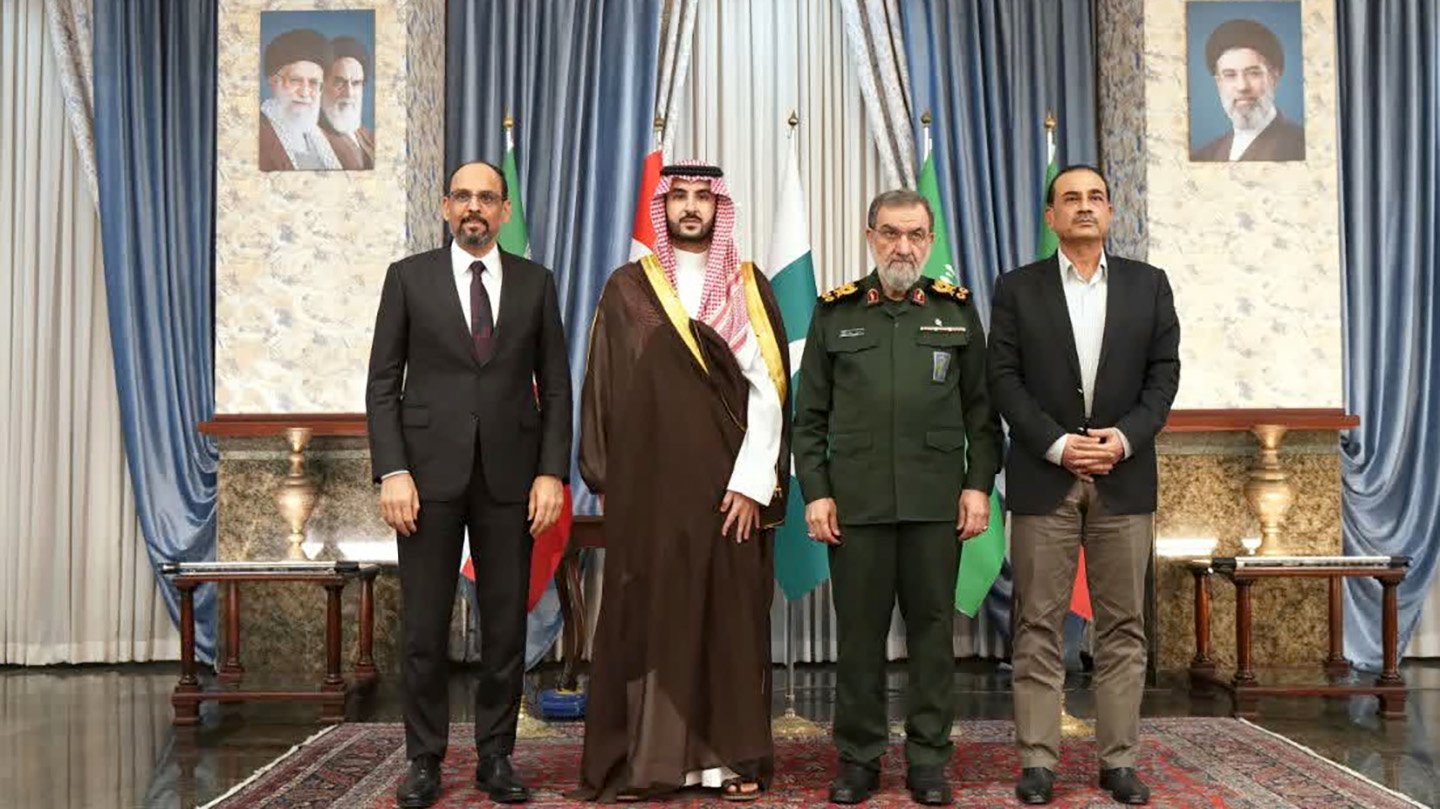
As the U.S. and Israel once again mull decisions on whether to resume strikes on Iran, regional powers held an unprecedented meeting in Tehran today in an effort to find ways to stave off a further conflict. The gathering of officials from Iran, Saudi Arabia, Pakistan and Turkey reportedly also addressed the ongoing war between Riyadh and the Iranian-backed Houthi rebels of Yemen. Frequent Houthi attacks on Saudi Arabia’s oil infrastructure are adding to strain on the global economy that relies heavily on Middle Eastern energy supplies.

“The participants agreed to continue the dialogue to strengthen cooperation amongst the four regional countries, including for peace and security in the region,” the four nations said in a joint statement after the hastily called, last-ditch meeting concluded.

The meeting was the first meeting between Iran and the other three countries since they formed a new military alliance in August called the Mecca Joint Defense Agreement. The attendance of Saudi Arabia is of particular note as Iran struck Saudi Arabia repeatedly during Operation Epic Fury and Saudi Arabia hosted U.S. forces that attacked Iran. Iran’s proxies in Yemen, the Houthis, have been pummeling the Kingdom with drones and missiles as of late, too.

Regardless, details about the conclave are sparse, with officials saying this was just the first of what is expected to be a series of such efforts.

لقطات لاجتماع حلف مكة مع الجانب الإيراني في طهران https://t.co/JutzeDbAS0 pic.twitter.com/LZVW4NYfBv

— مالك الروقي (@alrougui) October 26, 2026

“Very good discussions took place between us,” Mohsen Rezaei, Secretary of Iran’s Supreme National Security Council, told Iranian state television. “I feel that a new atmosphere is emerging in the region… I sensed a very positive atmosphere in the discussions among the gentlemen.”

“We have reached an understanding with Pakistan, Turkey, and Saudi Arabia that the security of the region is achieved through its countries,” Rezaei added.

#عاجل | أمين مجلس الأمن القومي الإيراني: توصلنا لتفاهم مع باكستان وتركيا والسعودية بأن أمن المنطقة يتحقق عبر دولها pic.twitter.com/ILuUTH9k2r

— قناة الجزيرة (@AJArabic) October 26, 2026

The Tehran visit was called “as part of the continued efforts by the Makkah Joint Defense Agreement countries for de-escalation between parties involved in the ongoing crisis, and promoting dialogue and diplomatic solutions, in support of the mediation efforts carried out by the State of Qatar and the Islamic Republic of Pakistan,” Saudi Deputy Minister for Public Diplomacy Rayed Krimly said Monday on X before the meeting began. He used an alternative English spelling of the Saudi holy city.

HRH Prince Khalid bin Salman bin Abdulaziz Al-Saud, Minister of Defense, leads the Kingdom’s delegation to the meetings that will be held today in Tehran, capital of Iran, between Makkah Joint Defense Agreement countries and officials from the Islamic Republic of Iran, with…

— AMB Dr. Rayed Krimly (@Rayedkrimly) October 26, 2026

Both Qatar and Pakistan have been key to previous efforts to find a diplomatic solution to the U.S.-Iran conflict. The two countries helped broker a 14-point Memorandum of Understanding (MoU) signed on June 17. The MoU provided a 60-day extension of the ceasefire to iron out an agreement to end fighting throughout the region, including Lebanon, prevent Iran from seeking nuclear weapons, end U.S. sanctions, and resume the flow of traffic through the Strait of Hormuz among other points.

That effort soon fell apart as the U.S. and Iran resumed striking each other. It has been more than a month, however, since the two nations traded direct blows.

“The visit underscores the pivotal role of Makkah Joint Defense Agreement countries in reinforcing regional security and stability, and working with all countries in the region to achieve that goal,” Krimly added about today’s Tehran meeting.

The Mecca Joint Defense Agreement was created as a pact designed to assist the Kingdom in its fight against the Houthis. An attack on one is supposed to be considered an attack on all. However, the agreement has evolved to take on the larger issue of overall regional stability amid concerns about the individual members’ own national security interests.

The Tehran meeting was attended by high-level officials, Krimly noted. Saudi Prince Khalid bin Salman bin Abdulaziz Al-Saud, Minister of Defense, led the Kingdom’s delegation, he stated. In addition, Field Marshal Asim Munir, Pakistani Chief of Army Staff, and Ibrahim Kalin, Director of the Turkish National Intelligence all met with the President of the Islamic Republic of Iran Dr. Masoud Pezeshkian, and Rezaei.

Before the meeting, Iranian Foreign Ministry spokesperson Esmaeil Baghaei ⁠said the discussions on regional security would include “Israel’s expansionist policies, developments in the Palestinian territories and Lebanon, and the repercussions of U.S. and Israeli military action against Iran,” according to Reuters.

Baghaei said the meeting, ​proposed during a visit by Munir to Tehran last week, could be a first step towards establishing regional security mechanisms based on the interests of countries in the region.

Baghaei:

Regional security can only be ensured through trust and cooperation among the countries of the region. pic.twitter.com/6Sxi2soMXB

— Alireza Akbari (@itsalireza_akb) October 26, 2026

Iranian officials told Munir ahead of today’s meeting that there would be no talks with Washington until Tehran’s demands were met, Reuters reported, citing Iranian media.

It is unclear at this point whether any results from this round of meetings will change whatever plans U.S. President Donald Trump is drawing up for Iran. Before the meeting began, a senior U.S. official downplayed it to us when we asked about it.

“The United States is in a very strong position with control of the Strait of Hormuz and the Iranian economy collapsing,” the senior U.S. official told us in response to our question about whether the Tehran meeting will influence any decisions by Trump on his next moves toward the Islamic Republic. “Iran has been decimated, and one way or the other, the conflict in Iran will be over very soon. President Trump holds all the cards and will do whatever is best for the United States.”

The Tehran talks took place after Trump once again claimed he was at an inflection point on deciding his future approach toward Iran. On Sunday, the American leader said it’s “getting to be decision time” on whether he will make a new deal with Tehran or resume attacks as Iranian and Houthi threats against Americans in the Middle East continue to grow.

“I have a decision to make: Do I finish it off, which would be very easy to do, or do I make a deal? That’s all,” Trump said in an interview with Fox News’ Sunday Morning Futures. “We don’t play games.”

“There won’t be a strike today,” he told reporters later Sunday as he left the White House. On Friday, U.S. Ambassador to Turkey Tom Barrack suggested the U.S. could strike Iran as early as this past weekend, but that failed to materialize.

Trump on Iran:

There will be no attack today pic.twitter.com/LbOnwCW7hL

— Open Source Intel (@Osint613) October 25, 2026

Still, tensions in the region are increasing.

U.S. forces in the Middle East “are prepared to launch new, potentially major, military operations against Iran ‘within 96 hours of receiving’ an order from President Donald Trump,” CNN reported on Sunday, citing two U.S. officials.

“Sufficient forces are now deployed in the region to carry out the potential attacks,” the sources told the network. “The scope of new U.S. military operations would likely go beyond efforts to simply ‘mow the lawn’ or maintain the status quo by striking radars, launchers and other Iranian assets that can be quickly reconstituted — as has been the case since Trump halted full combat operations earlier this year.”

You can read more about how the U.S. is deploying additional Navy, Marine and Air Force assets to the Middle East in our report about that here.

The aircraft carrier USS Theodore Roosevelt and its carrier strike group are reportedly being deployed to the Middle East. (USN)

Adding to U.S. concerns, on Saturday, The Wall Street Journal reported that “U.S. intelligence suggests Iranian preparations to attack Americans throughout the Middle East have reached ‘advanced stages,’ prompting a sudden exodus of personnel from embassies and military bases throughout the region.”

Jay Clayton, the director of national intelligence, “summarized that finding in a brief memo Friday to Secretary of State Marco Rubio,” the newspaper added.

“Iran has substantially increased efforts to target U.S. personnel. The lethal plotting efforts by the Iranians against U.S. citizens have reached advanced stages in both the Middle East and certain other countries,” Clayton wrote.

The U.S. in recent days also “ordered the departure of diplomats and staff from the embassy in Saudi Arabia and other countries, initially citing threats from the Iran-backed Houthi militants in Yemen,” the Journal noted. “The U.S. also has evacuated personnel from military bases across the region in preparation for renewed fighting, according to U.S. officials familiar with the planning.”

Trump on Sunday told reporters that there “are two very different sets of intelligence reports on Iran. I have them both. They are very different.”

Trump on Iran:

There are two very different sets of intelligence reports on Iran. I have them both.

They are very different. pic.twitter.com/iV9Gui2iQM

— Clash Report (@clashreport) October 25, 2026

Israel too appears to be continuing its planning for renewed hostilities with Iran. Its previous attacks during Operation Epic Fury were carried out in close coordination with the U.S., a cooperative effort that is ongoing.

Prime Minister Benjamin Netanyahu on Sunday repeated his warning that Iran or its proxies could launch an attack before the close election to disrupt the vote, citing intelligence.

“The (military) is ready both to defend and to strike,” he said in a video statement. “You will suffer disproportionate blows far greater than you can imagine.”

⚠ 🇮🇱 Israeli Prime Minister Benjamin Netanyahu warned Sunday that Iran and its regional allies could launch attacks intended to disrupt Israel's October 27 election, declaring that the Israeli military is prepared for both defensive and offensive operations.

Speaking in front…

— The Tectonic (@thetect0nic) October 25, 2026

In addition, Netanyahu and Israeli Defense Forces (IDF) Chief of Staff Lt. Gen. Eyal Zamir “clashed over a military action that could renew the conflict with Iran days before Israel’s elections,” according to the Jerusalem Post. 

“Recently, Zamir received a directive from the political echelon to carry out an action, which security officials told N12 would ‘trigger a rapid escalation into a confrontation with Iran,’” the newspaper added. “Due to the sensitive nature of the action, N12 reported that Zamir requested an in-depth discussion and formal authorization before moving forward with the action.”

Israeli Defense Minister Israel Katz disputed those reports.

“I state unequivocally that there was no intention on Israel’s part to initiate an attack on Iran before the elections in Israel—when we made clear that if Iran attacks Israel, we will respond with great force, and all reports on the matter are entirely false,” Katz stated on X. “The attempt by opposition figures to exploit these reports to attack the Prime Minister and me and to cast doubt on our judgment—at a time when we are prevented for understandable reasons from addressing the details of the Iranian issue—is shameful and irresponsible. We will overcome this too.”

הפרסומים על פערים בין הדרג המדיני לצה"ל בנושא איראן הם מופרכים ושקריים לחלוטין.

מאז כניסתי לתפקיד שר הביטחון התיאום בין רה"מ וביני לבין צה"ל בנושא איראן הוא מלא – עם הישגים היסטוריים חסרי תקדים לטובת ביטחון מדינת ישראל.

זהו השיקול היחיד – וכך יהיה גם בעתיד.

אני קובע באופן חד…

— ישראל כ”ץ Israel Katz (@Israel_katz) October 26, 2026

Last Monday, in a phone call with Trump recorded live on Monday and posted on his X account, Netanyahu suggested future operations against Iran.

“Donald, we have a job to finish [in Iran]…and we’ll finish it together,” the Israeli leader told Trump. “We’ll finish it, and no one else will do it.”

That post appears to have been since been deleted.

Actions by both Trump and Netanyahu are taking place against a backdrop of heated domestic politics in their respective countries.

With continued Republican control of Congress on the line, the Nov. 3 midterm elections are a huge factor in Trump’s plans. The president has previously said the war with Iran would end “immediately after the election” and has reportedly told aides he expects to resume strikes on the Islamic Republic after the midterms. Domestic U.S. polls show the ongoing conflict continues to be deeply unpopular with voters, who are also eager to see it concluded.

Meanwhile, Netanyahu faces a vote on his future tomorrow in a nationwide parliamentary election, and there are concerns, as we noted last Friday, that the Israeli leader could use a new conflict with Iran to bolster his hold on office. Given the fractious nature of Israeli politics, election results will not necessarily immediately determine who Israel’s next prime minister will be.

“Coalition negotiations can take weeks or even months as parties attempt to reach agreements on who will govern and under what terms,” The National noted. “Israel has a history of political deadlock. Between 2019 and 2022, the country held five elections as parties repeatedly struggled to form stable governments.”

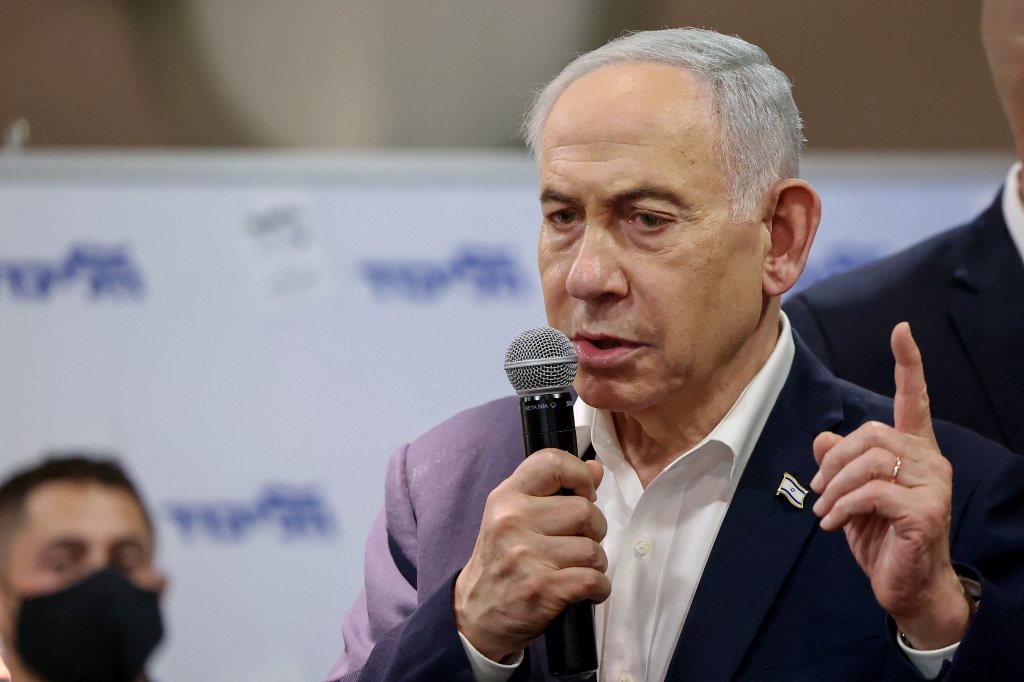
Israel's Prime Minister Benjamin Netanyahu speaks to his supporters during a Likud Party meet-and-greet held as part of the campaign ahead of Israel's legislative election, at King Solomon Hotel in Netanya on October 22, 2026. Israel heads to the polls on October 27 in its first election since the October 7, 2023 Hamas-led attack, in what is seen as a referendum on the prime minister. (Photo by JACK GUEZ / AFP via Getty Images)
Israel’s Prime Minister Benjamin Netanyahu speaks to his supporters during a Likud Party meet-and-greet held as part of the campaign ahead of Israel’s legislative election. (Photo by JACK GUEZ / AFP) JACK GUEZ

Iran isn’t just threatening the U.S. and Israel.

“Following the intensification of Berlin’s anti-Iranian stance, Tehran has warned of the consequences should Germany directly enter the military conflict, emphasizing that facilities and military installations associated with Germany in the region could become targets within the scope of Iran’s legitimate defense,” the semi-official Iranian Fars News Agency reported on Sunday.

BIG: Iran has warned Germany that all German military bases and facilities across the region will be considered legitimate targets if Berlin openly joins military action against Iran.

Source: Iran’s Fars, citing information obtained by its security and defense correspondent

— Clash Report (@clashreport) October 25, 2026

As mentioned earlier in this story, officials meeting in Tehran also addressed the ongoing fighting between the Houthis and Saudi Arabia and its proxies in Yemen.

“The urgency of the initiative was underscored by fresh explosions in Riyadh overnight and warnings of a hostile aerial threat, as the Houthis claimed another attack on the Saudi capital’s international airport,” Gulf News reported. In addition, the Houthis are expanding their attacks on oil infrastructure in Saudi Arabia, including a recent strike near the Shaybah oilfield. Combined with a spike in Iranian attacks on shipping in the Strait of Hormuz, the Houthi strikes on Saudi oil interests have sent the price of Brent crude rising. However, the Tehran talks may be tempering things. According to OilPrice.com, the per-barrel price of Brent crude was over $115 as of Monday evening, a slight drop from Friday, when it was more than $117.

With the issue of oil flow in mind, Adm. Brad Cooper, the commander of U.S. Central Command (CENTCOM), visited the Strait of Hormuz on Oct. 25 as U.S. forces reached “the milestone of assisting Gulf partners in exporting more than 1.5 billion barrels of crude oil since summer,” Cooper said.

Cooper “observed the current operational environment while flying in a U.S. Army CH-47 Chinook over the international waterway,” according to a CENTCOM post on X. “More than 3,000 commercial vessels have successfully transited the Strait of Hormuz with support from CENTCOM forces over the last six months.”

U.S. Navy Adm. Brad Cooper, commander of U.S. Central Command, observes a commercial vessel transiting the Strait of Hormuz while flying in a U.S. Army CH-47 Chinook over the international waterway, Oct. 25, 2026. (U.S. Central Command photo)
U.S. Navy Adm. Brad Cooper, commander of U.S. Central Command, observes a commercial vessel transiting the Strait of Hormuz while flying in a U.S. Army CH-47 Chinook over the international waterway, Oct. 25, 2026. (U.S. Central Command photo) Senior Chief Petty Officer Amanda Dunford

“We continue to stand shoulder to shoulder with our Gulf partners and the shipping industry,” said Cooper. “This visit underscores our strong commitment to continued freedom of navigation through the Strait of Hormuz.”

CENTCOM added that “American forces successfully cleared the strait’s international shipping lanes of sea mines laid by Iran’s Islamic Revolutionary Guard Corps (IRGC).”

“Today, primary transit routes in the Strait of Hormuz remain free and clear of Iranian sea mines thanks to incredible efforts by our people,” said Cooper. “We remain intensely focused on keeping commercial traffic flowing as we work with our teammates in the U.S. interagency, Gulf Cooperation Council, and shipping industry.”

In recent months, “over 95% of ships navigating the Strait of Hormuz have sailed through safely despite the IRGC’s unwarranted aggression, clearly demonstrating that the United States and regional partners control the international waterway,” CENTCOM claimed. TWZ cannot independently verify this.

That the four-way meetings between Iran, Saudi Arabia, Pakistan and Turkey will continue to seek a peaceful way forward is a positive sign. Still, how much, if at all, this effort changes the threat picture are open questions and the answers will be provided by Washington, Jerusalem and Tehran in the coming days and weeks.

Contact the author: howard@twz.com

The post Last-Ditch Meeting In Iran Seeks To Stave-Off A Restart Of All-Out Fighting In The Region appeared first on TWZ.

  •  

Top Microbiologist Blows Whistle on mRNA: “We Are Seeing Billions of People Whose Brains No Longer Function”

Retired microbiologist Prof. Dr. Sucharit Bhakdi offered a grim assessment of the global mRNA vaccine rollout. “I’m no longer optimistic,” Bhakdi said. “And the reason is very simple. I fear that these ‘mRNA vaccines’ have [...]

The post Top Microbiologist Blows Whistle on mRNA: “We Are Seeing Billions of People Whose Brains No Longer Function” appeared first on The People's Voice.

  •  

Once upon a time in Miami: The heartland of Latin American counter-revolution

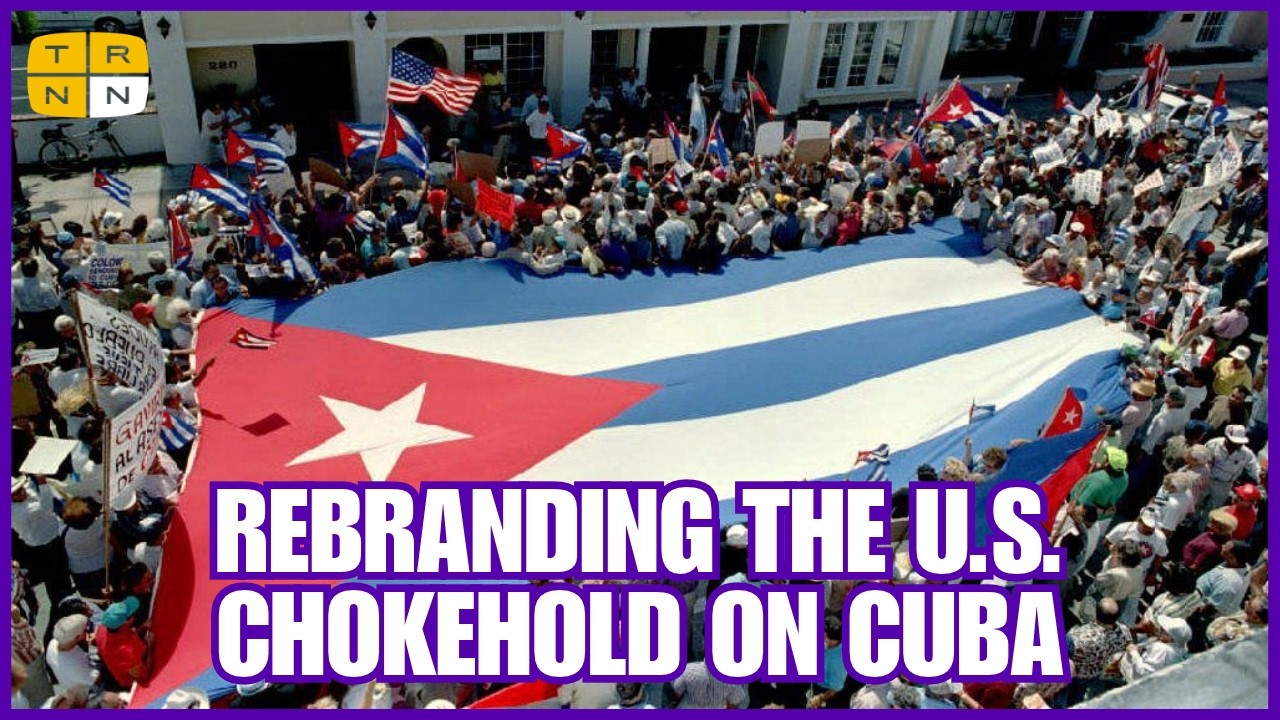
Thousands of Cuban-American nationals demonstrate in front of the Consulate General of Colombia in Miami, FL, 09 March 1994 to protest Colombia's planned trade of petroleum products to Cuba for sugar. Photo by DOUG COLLIER/AFP via Getty Images

In this episode of Rattling the Bars, Mansa Musa speaks with Dr. Kimberly Dawn Miller, Co-Coordinator of the Haiti/Americas Team for the Black Alliance for Peace. They examine geopolitical relations and the unfiltered history of U.S. imperialism in the Caribbean—including economic warfare against Cuba, the state of Florida’s recent arrest warrant for former Cuban leader Raúl Castro, Trump and JD Vance’s racist criminalization of Haitians, and over a century of capitalist resource extraction and regime change in Haiti.

The Black Alliance for Peace in Miami, organizing alongside the Miami Coalition, seeks to end the blockade against Cuba. October 24–31 marks the Cuba Week of Action against the U.S. chokehold on Cuba, leading up to the International and National Day of Action on October 28. This aligns with the United Nations’ annual vote, where the international community will once again vote on the U.S. embargo on Cuba. 

Credits:

  • Production/Post-production: Cameron Granadino
Transcript

The following is a rushed transcript and may contain errors. It will be updated.

Mansa Musa:

Welcome to Rattling the Bars. I’m your host, Mansa Musa. At Rattling the Bars, we examine the prison industrial complex, both domestically and internationally. Miami floor sits at the direct intersection of US imperialism across the Caribbean and Latin America. Joining me today is Dr. Kim Miller, an organizer in Miami fighting to end sanctions and the embargo on Cuba opposing termination of TPS for Haiti and building solidarity with nations targeted for their socialist or abolitionist revolutions. Welcome, Kim.

Dr. Kimberly Dawn Miller:

Thank you. I’m really excited to be here for this conversation.

Mansa Musa:

All right, so first introduce yourself to our audience and tell them about your work with Black Alliance for Peace in Miami.

Dr. Kimberly Dawn Miller:

Yeah, so my name is Kimberly Dawn Miller. I have a PhD in global studies with a concentration in environmental sociology. So I research particularly the Eastern Caribbean looking at the contradictions of the post-colonial state, neoliberal development regimes, as well as the politics of post-disaster recovery. So I kind of use a lot of my organizing to also inform my research. And right now I am the Miami point person for the Black Alliance for Peace Miami cluster, as well as the co-coordinator for the Black Alliance for Peace, Haiti Americas team. So Cuba, Haiti, Venezuela, and the Caribbean at large are very central to our anti-imperialist organizing and situating and centering Haiti in particular as a note of Black liberation and why we fight so hard for their sovereignty.

Mansa Musa:

Kim, you focus heavily on Cuba. Can you discuss the organizing you are doing locally in Miami and internationally against the direct tack on the achievement of the Cuban Revolution?

Dr. Kimberly Dawn Miller:

Miami, Florida is basically the heartland of Latin American counterrevolution, and it is a central city that has a lot of reactionary diaspora politics from Latin America, and particularly the Cuban exile community, the Venezuelan exile community, supporting some of the more far right policies, including the economic and oil blockade occurring on Cuba. So

Mansa Musa:

It’s

Dr. Kimberly Dawn Miller:

Been important though that we resist this notion of creating a monolith regarding the politics of Miami at the same time. So the Black Alliance for Peace in Miami, we work with the Miami Coalition to end the blockade on Cuba, which is a coalition of many different organizations as well as trying to fight in a decades long organization, trying to fight along with the national network on Cuba. And starting tomorrow, October 24th is the Cuba Week of Action against the US genocide on Cuba. And it’s through the 31st of October. And we’re really trying to mobilize for International and National Day of Action for Cuba on the 28th, which coincides with the UN’s annual vote where majority of the world’s countries will be able to vote on the embargo on Cuba. And we basically

Mansa Musa:

Want

Dr. Kimberly Dawn Miller:

To show that in Miami, Florida as well, the heartland of, like I said, Latin American counterrevolution, that not

Mansa Musa:

All

Dr. Kimberly Dawn Miller:

Voices in Miami support what this government is doing, specifically heightening sanctions as well as blocking solidarity, international solidarity with the Cuban people, as well as their access to even third party, like I said, financing. So we’re really just trying to show the economic strangulation that’s occurring and standing in solidarity with Cuba, the Cuban revolution, as well as those that are resisting.

Mansa Musa:

Okay. So let’s unpack the issues that’s taking place in Cuba as it relates to the international community. And you can address this from your experience and what you know to be a fact, you have on the so-called left in the United States anarchist with people that have a particular political ideology and they’re critiquing Cuba in the sense of saying that the centralization of the government is problematic and that if they didn’t have a centralized government, then it would be more likely they wouldn’t be suffering from the imperialist on slaughter. Talk about what’s your experience and what do you say about that?

Dr. Kimberly Dawn Miller:

Right. Well, I think there lies at a fundamental disagreement on maybe the nature of the state when it comes to how maybe a Marxist Leninist would view state power versus an anarchist. So one thing I’ve been trying to reference a lot of times is Lenin’s state and revolution where he clearly identifies that the state does not hover above class interests, class power. And if you see the state as instrumental to class antagonism and class power, then what does it mean when you have a state like Cuba that had a socialist revolution and that did expropriate from the bourgeoisie and actually identify class power within institutions? And I think when you look at the state not as a monolithic or a flattened character, but actually looking at the state in terms of its global configuration within, like I said, the capitalist world order, it becomes very clear that Cuba, the Cuban state is not inherently the same as the US state.

There are several colonial states, there are imperialized states, there are states in the imperial core. And then we have to recognize these differences to coming from a conclusion on the nature of the state, people’s power within its dynamic within the state, as well as the function of that state. And I do think when you have anti-imperialist states, it’s fundamentally different and they’re targeted because of they represent a more autonomous or sovereign form of development. And it’s hard to move toward no state, if you will, when you have the imperialist attack. So you just need levels of defense. Iran is another example. You need a state to defend against imperialist onslaught. And I do think that maybe putting the cart before the horse, it’s important to understand those differences. And in addition to that, I wanted to add that the dynamic between, for instance, grassroots popular power and communes is not necessarily antagonistic to the socialist state itself.

And I think that that’s important to demystifying the idea that there’s either just an authoritarian socialist state versus popular power beneath. And I think that just in my experience with Venezuela, even though we know there’s been a lot of restructuring to the Venezuelan state since January 3rd, I did see a popular consultation on International Working Women’s Day within the communes. And I did see that how they were trying to actually build their communal capacity, which Hugo Chavez said is the base for transforming the bourgeois state as well as capitalist social relations. So I do think that you can have a dialectical and sometimes, yes, antagonistic relationship between communes and the state, but I do think it’s important to understand that it’s not necessarily opposed and that they work within the Bolivarian process to get financing for infrastructure in their own productive capacity. So that’s one thing I wanted to add there as well as you can even see a country like China that has rural village cooperatives and land ownership.

And what does that mean for the actual community that it’s still a centralized party state, but they still have a communicative and a participatory democracy within that. Right.

Mansa Musa:

Okay. And I think that’s a very astute observation because I think that, and I’ve been a lot of these spaces, when people make an analysis, they have a tendency to the foundation be based on misinformation to begin with and they build out on that. They build out on, like you say, it’s a difference between the United States and the state that Lenin talked about with state revolution. Let’s shift our gears and talk about Haiti. Switching, we see a different history, not a socialist revolution, but an abolition one in Haiti, establishing the first Black Republic through slaves revoked, historically targeted by the United States imperialists. Haiti recently became the focal point of a campaign by Donald Trump and JD Vance. Given that Florida holds the largest Haitian population in the US, what are the local international dynamics that exist within that? It’s almost as if Tucson let overture ghost haunts anybody that got a view of history that’s imperialist.

The involvement by the United States and continues to destabilize it is criminal in and of itself. Talk about the Haitian aspect of your analysis.

Dr. Kimberly Dawn Miller:

Yeah, I mean that’s an excellent overview. I think it speaks to the idea of Black ungovernability and the idea that since 1804 when Thomas Jefferson snubbed Dasaline, it was always the idea that Haiti was going to be excluded. Haiti was seen as a model of Black liberation of formerly or enslaved people freeing themselves, creating its first independent state in Latin America. And what does that symbolize to enslaved Africans in the United States? It was the idea that Black sovereignty is a threat to the powers that be essentially. And these are the class contradictions that Dasaline was trying to actually resolve through a kind of form of early socialist egalitarian or agrarian reform that actually did occur when he was assassinated. But just thinking about the long history of foreign interventions in Haiti, like I said, they weren’t really given access to international credit through non-diplomatic recognition.

And then when France did recognize Haiti, they had to pay an indemnity. So the idea that it’s creating successive notions of debt that Haitians never want to take on, but the idea of, oh, well to recognize you, you have to pay for your freedom. And then we did in particular, in Miami, we actually did a teaching looking at the 1915 US occupation where the US rewrote the Haitian constitution to allow foreign ownership of land that was banned in Haiti, as well as making sure that it opened up to US capital to exploit rural workers to basically extract from the country. So the US has always had a very, and of course through Bank of New York, which is now Citibank, extracting, like I said, it’s gold, it’s resources. And I think that that’s an example even to this day since the current gang suppression force occupation after the multiple occupations from the UN, after the US, France and Canada back to coup in 2004 against Aristide.

I mean, you just see this constant history of intervention and occupation. And I do think, like you said, it’s to keep them destabilized because a functioning Haiti, a sovereign Haiti, that is, I believe, a model of what Black sovereignty could and should mean.

Mansa Musa:

So what are y’all doing to organize and change this narrative in terms of how Haiti is being looked at? Because that goes a long ways in terms of not so much as imperialist. Imperialis is going to lie. I think Gold would say when you’re dealing with propaganda, find a narrative, repeat it over and over and over again till people come to believe it. So we know that’s going to come from them, but talk about how y’all organize to get people to see the need to be involved in what’s going on in Haiti and aid and assist the Haitian people in their liberation.

Dr. Kimberly Dawn Miller:

Well, in the Black Alliance for Peace and the Haiti Americas team, we always say that Haiti’s crisis is one of imperialism. It’s not of the Haitian people where we work and move against narratives that dehumanize the Haitian public, that pathologize them. And I think it’s important, once you understand that the crisis is imperialism, you see it as an externally driven crisis. We know, for instance, that all the arms that the gangs are using, the paramilitary groups are using in Haiti come from Miami. They’re trafficked from Miami to the Dominican Republic into Haiti. So there’s an arms embargo on Haiti, and yet these weapons are flooding the country. And what does that mean around the source of the problem? Haiti is a weapons manufacturer, so the guns are getting there somewhere from the United States. That’s one way. We also look at the culpability of, unfortunately, a lot of Latin American governments.

El Salvador right now is actually trying to basically start war with Haiti by saying, “Oh, we have our four servicemen that were kidnapped and now we’re going to go in.” And it’s like, “Well, why are there Salvadorian troops in Haiti?” It speaks to this idea that there’s this global kind of almost subjugation of the Haitian people because this is the international community that is sanctioning Chad or Kenya going in and representing on behalf of the United States. It’s proposed military solution for Haiti, but it’s never looking at the political situation, never looking at the core group, the countries of US, Canada, France, believe Germany, also Brazil. We don’t know that. Brazil also has a long history of pressing Haiti. So I think it’s important that we look at all these factors and that we understand that the gangs are getting support by the oligarchs. And what does that mean?

And what is the relationship between the elites in Haiti, the violence happening against the mostly working class Haitians, and how do we address the root of the problem instead of, like I said, stigmatizing the Haitian people, as well as attacking them through TPS, which is basically saying that the US helped create these conditions and now we’re going to send them back to that. People aren’t temporary. Haitians aren’t temporary. And it’s unfortunate that the mass deportation of this regime is trying to keep Haitians, and like I said, exploit their labor when it’s convenient, but also keep them in a state of precarity. And like you said, Miami has a huge Haitian population, I think the second highest in the country, and they’re in particular fields like hospitality industry, construction, home healthcare, and they’re being devastated right now. The communities are definitely fearful, but we want to push back against the narrative.

We want to put an anti-imperialist analysis into our understanding of the Haitian immigrant and migrant presence as well.

Mansa Musa:

Yeah, just the effect of imperialist. This is not people just not wanting to live a quality life. We remember Baby Doc, Papa Doc, and Tanta Liku. We remember when they was ravishing the country, being a full stool for imperialists, taking all the minerals and the natural resources out of Haiti and putting a little money in their pocket in comparison. So we are well aware, and that’s a good viewpoint as you especially, Dr. Kim, because we got to push back. I think that when they say their response to the oppression is the reason why they oppressed, you oppressed because you saying, “Get your foot off my neck.” But talk about how the United States and imperialists in particular, and this is a shift in terms of not so much the Trump administration, but the general attitude of imperialists and capitalists and fascists around the world, how they deal with Maduro and the fact that they talking about kidnapping Raul, but they threatening any country that stand up and try to identify with any type of sovereignty.

Dr. Kimberly Dawn Miller:

Absolutely. Well, I think for us, we understand that the illegal kidnapping of a head of state when it came to Maduro and his wife, Cylia Flores, and bringing them to Metropolitan Detention Center in Brooklyn, what does this say when the US gets to espouse and impose extraterritorial coercion against a sovereign country? And we know historically when the US would indict, for instance, Noriega from Panama, indicting for drug trafficking, even though he was the CIA guy until our grace. Well, he didn’t play ball geopolitically, and then suddenly he needs to be removed. We know again with the kidnapping of Aristide in 2004 and dropping him off in the

Mansa Musa:

Central

Dr. Kimberly Dawn Miller:

African Republic, this is not new what the US is doing. I think what makes this

Mansa Musa:

Particularly horrific

Dr. Kimberly Dawn Miller:

Is just knowing it’s the combination of the

Mansa Musa:

War

Dr. Kimberly Dawn Miller:

On drugs with the war on terror. So you have this narco terror label. We know that the US has sadly bombed 240 Caribbean and Latin American men on both extrajudicially for being narco terrorists. And you’re seeing, like I said, the collusion of, I do think these two kind of law enforcement mechanisms that is aligned with imperialist interests. So I think that’s one thing that we look at when advocating for Arizona peace and basically saying that the US and looking at the heart of US militarization in the region, this is not new, Venezuela wasn’t the first. And with, like you said, these indictments on Raul Castro, the indictments on the Cuban president, Diaz Canal. I mean, particularly in Florida, it was Florida that just put out a arrest warrant, which the state of Florida cannot actually arrest Raul on a sovereign country. But this idea of this performance, we were even tough on the communists.

I mean, it plays into a lot of red meat to their base, but it’s also just incredibly

Mansa Musa:

Illegal

Dr. Kimberly Dawn Miller:

And a part of how the US has operated, sadly, in this re-intensification of the Monroe doctrine that we’re seeing.

Mansa Musa:

We do remember this, and you can weigh in on this if you want to. We do remember this, the Iran Contra where they were selling guns for cocaine and the cocaine flooded the United States. And when it flooded the United States, you had the crime bill, and the crime bill was designed to make crack cocaine worse than powder cocaine, but any kind of cocaine was coming through the country through the military and the United States government with the goal of destabilizing Nicaragua and killing all American citizens. If you got a viewpoint on that, you can weigh in now.

Dr. Kimberly Dawn Miller:

Yeah, absolutely. I think it’s interesting, 60 Minutes before 60 Minutes became terrible. When they used to do journalism, they actually had a report after the invasion of Panama, and it basically said that looking at the post Noriega political climate, it’s been skyrocketing drug addiction of crack cocaine. Largely Afro-Panamanians would be addicted now to crack after the invasion. After the US invaded, then you see a rise of crack cocaine flooding the country. So it’s this weird kind of contradiction that they’re invading to stop the idea that drug trafficking is the reason that they’re going in, and then yet it’s gotten far worse. And I think that’s a similar idea when it comes to how the CIA moved through the concerts in Nicaragua to make sure that where that drugs are being funneled would be poor Black and brown communities and we’re the ones that suffer. So that’s why Black Alliance for Peace says no compromise, no retreat, which is the ways in which the war on African people here is connected to the global war on African people abroad.

And I think that’s just one excellent example.

Mansa Musa:

And as we wrap up, talk about the 60th anniversary of the Black Panther Party was this month, and the Black Panther Party, all organizations during that time that came up had an international platform. Aside of Shakur, Cuba gave a side of Shakur sanctuary. Huey was exile, gave him sanctuary. Al Jeria, we had a embassy in Algeria, Pete O’Neill and Shiloh O’Neill is in Tanzania. But talk about why it’s so

Dr. Kimberly Dawn Miller:

Important

Mansa Musa:

That our movement have an international perspective about our struggle.

Dr. Kimberly Dawn Miller:

Yeah. So thinking specifically when you have these kind of more narrow nationalist xenophobic movements coming up that try to say Black Americans, Black America, we’re not African. And thinking about the history of Black radical struggle, it was always internationalist. It was always about connecting the fight against imperialism and how that shapes the militarization of our own communities here, whether it was the 1033 program, weapons from wars being kind of funneled into local police departments that have a disproportionate effect on, like I said, Black people or the idea that the IDF will train local police departments here in the surveillance tech that both these states as they subjugate Palestinians. So that’s just another way that Black people here and Palestinians are connected. I think we have to look at things broader because understanding how we, I know some people like the domestic colony theory, that if we are an internal colony, then what does that look like?

What does that mean when our communities are occupied by police or even the shooting of Cullen Wiley in Mississippi being justified by their attorney general? I think you’re seeing that these struggles are connected, and I think that it’s really important that we don’t see ourselves as isolated, but that we have people we can tap into. And in my trip to Caracas in Venezuela, it was so surprising seeing so many Venezuelans that look just like me, Black people. And I was like, oh my gosh, because I don’t see as many Venezuelans that are Black, but there are, and how these struggles are shaped and Black internationalism is very important to fighting our own battle here, I believe.

Mansa Musa:

And you had a last word, Dr. Kim. What do you want to tell our audience and how can we get in touch with you or how can they become more involved in Black Alliance for Peace or understanding what’s going on with Cuba and y’all organization, y’all advocacy around Cuba and the diaspora?

Dr. Kimberly Dawn Miller:

Yeah. Well, so blackalianceforpeace.com/haiti, you can learn all of our resources on Haiti. Very important. We’re also on Instagram, Black Alliance for Peace, Twitter, Black Alliance for Peace, or Blacks for Peace on Twitter and Facebook. So we’re really trying to pick up our social media. And I also just want to point out that it’s the week of action for defense of Black migrants, and that’s just something that we’re working with. I mean, the Miami cluster is working with Baji, which is the Black Alliance for Just Immigration. And we’re just really trying to, like I said, spread our message on the war on African people here, being connected to the war on Africans abroad and driving out the heart of US militarization so that we can have a true zone of peace. And yeah, you can tap into our US NATO axis of domination out of our Americas network.

There’s a lot, but thank you so much.

💾

https://youtu.be/fb80DqejYqs In this episode of Rattling the Bars, Mansa Musa speaks with Dr. Kimberly Dawn Miller, Co-Coordinator of the Haiti/Americas Team for the Black Alliance for Peace. They examine geopolitical relations and the unfiltered history of U.S. imperialism in the Caribbean—includin
  •  

FlixBus expande rede com cinco novos destinos no Centro e Sul do país

A operadora de transporte rodoviário FlixBus alargou a sua rede de expressos em Portugal com o lançamento de novas linhas que integram cinco novos destinos: Vouzela, Termas de São Pedro do Sul, Ovar, Castro Verde e Loulé, anunciou esta terça-feira, 27 de outubro, a empresa.

Com estas entradas, a empresa atinge 13 novas cidades integradas na sua oferta doméstica desde o início de 2026, somando mais de uma centena de destinos servidos em território nacional, com foco no reforço da mobilidade fora dos grandes centros urbanos e em zonas de menor densidade populacional.

Na Região Centro, as localidades de Vouzela e Termas de São Pedro do Sul passam a ter ligações diretas ao Porto, Braga, Guimarães, Aveiro e Viseu através de uma nova linha com dois horários diários. Já a cidade de Ovar junta-se à rede com uma rota direta que a conecta ao Porto, Coimbra, Santarém e Évora.

Na Região Sul, Castro Verde e Loulé passam a estar integradas na rede através de uma linha que liga estes dois municípios a Faro (incluindo o aeroporto), Albufeira, Beja, Setúbal e Lisboa. A operação no Sul conta com quatro horários diários e reforça também a conectividade de Évora, que passa a dispor de ligações diretas diurnas para Santarém, Coimbra, Porto e Ovar.

Em comunicado, o diretor de operações da FlixBus em Portugal, Tiago Cavaco Alves, sublinha que o alargamento reflete o compromisso de aproximação dos territórios e de criação de alternativas ao transporte individual, facilitando o acesso aos principais centros urbanos e a infraestruturas como o Aeroporto de Faro.

  •  

CPI a mandatos de Luís Neves na PJ suspensa durante debate do Orçamento

✇ECO
By: Lusa

A Comissão Parlamentar de Inquérito (CPI) aos mandatos de Luís Neves à frente da Polícia Judiciária votou favoravelmente a suspensão dos trabalhos durante o período de discussão do Orçamento do Estado para 2027 (OE2027).

A proposta foi aprovada na reunião da CPI, com os votos contra do Chega e da Iniciativa Liberal (IL), depois de ter sido rejeitada uma primeira proposta apresentada pelo presidente da comissão, André Ventura, que pretendia que os trabalhos não fossem suspensos.

De acordo com a proposta aprovada, os trabalhos ficam suspensos entre 28 de outubro e 26 de novembro, o dia imediatamente a seguir à votação final do OE2027, estando apenas prevista uma reunião excecional para aprovar questões pendentes relacionadas com a aprovação de nomes de representantes de entidades coletivas a ser ouvidos pela CPI e alterações ao regulamento.

A comissão parlamentar de inquérito para “avaliação da intervenção de Luís Neves enquanto diretor da PJ durante todos os seus mandatos (2018-2026) e eventual responsabilidade de membros do Governo que o nomearam e tutelaram” tomou posse a 14 de outubro.

Este inquérito foi forçado pelo Chega na sequência das polémicas que vieram a público nos últimos meses envolvendo Luís Neves, relacionadas com obras numa propriedade do agora ministro feitas por uma empresa que celebrou contratos com a PJ, ou o atrelado com químicos apreendidos numa operação que ficou guardado nas instalações dessa empresa.

  •  

Número de casos de Ebola no Congo ultrapassam 10 mil, diz governo

O número de casos confirmados de Ebola na República Democrática do Congo ultrapassou 10 mil, segundo dados do governo divulgados nesta terça-feira (27), um marco que coincide com o crescente temor de que a epidemia possa se espalhar para mais países africanos.

O último relatório do Instituto de Saúde Pública do Congo indica que o número de casos chegou a 10.060, com 4.887 mortes causadas pelo vírus.

O surto, provocado pela rara espécie Bundibugyo do vírus Ebola, foi anunciado em meados de maio e, desde então, se tornou o maior e mais mortal da história da RD Congo, superando a epidemia de 2018-2020.

Atualmente, é a segunda maior e a segunda mais mortal já registrada, atrás apenas do surto de Ebola na África Ocidental de 2014-2016, que infectou mais de 28.600 pessoas e matou mais de 11 mil, principalmente na Guiné, Libéria e Serra Leoa.

No início deste mês, o Quênia relatou seu primeiro caso e, posteriormente, anunciou um total de nove casos , após a morte de um homem que havia viajado do Congo via Uganda em Nairóbi.

Na semana passada, a Nigéria tornou-se o quarto país africano a registrar um caso de Ebola.

As autoridades de saúde têm procurado descobrir como e onde a paciente — esposa de um diplomata suíço, que não havia viajado para o Congo — contraiu a doença. O governo suíço afirmou acreditar que ela a contraiu em Uganda.

A mulher e o marido foram levados de avião para hospitais na Suíça na segunda-feira.

Uganda registrou 20 casos em maio e junho, a maioria importada do Congo, mas a OMS (Organização Mundial da Saúde) declarou o país livre do Ebola em agosto.

Autoridades ugandesas afirmam que o país não possui nenhum caso de Ebola.

O ministro da Saúde de Uganda afirmou no domingo que os cidadãos ugandeses que retornarem ao país com histórico de viagem ao Congo serão colocados em quarentena por 21 dias.

Ebola na República Democrática do Congo é o mais mortal da história


  •  
❌