❌

Reading view

U.S. Intel Confirms This Is China’s Secret Spaceplane (Updated)

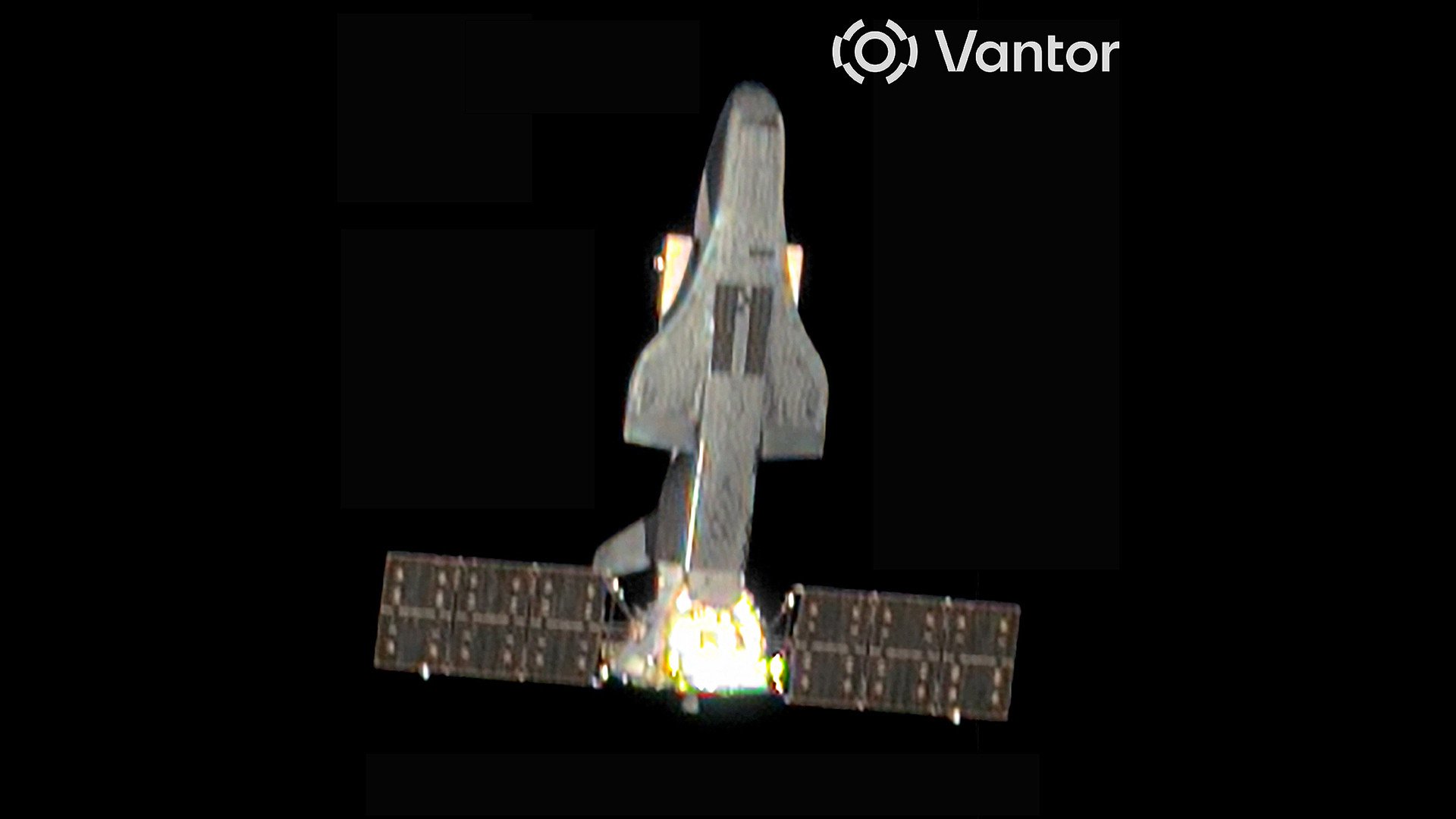
The U.S. Defense Intelligence Agency (DIA) has confirmed that an image that has been circulating online for years does indeed show an experimental Chinese reusable spaceplane in orbit. A newly released higher-resolution copy of the image underscores that the design is nearly a dead ringer for the X-37B miniature space shuttles now operated by the U.S. Space Force.

DIA included the higher-resolution image of the Chinese spaceplane in a new unclassified report on global security challenges outside of the Earth’s atmosphere, which was released yesterday. A satellite belonging to Maxar Technologies (now Vantor) captured the image, but when exactly remains unclear. It does have a 2024 copyright date.

The image shows a miniature space shuttle-like design with small wings and twin vertical tails. It also has upward-opening doors above a central payload bay. There is also an extension at the tail end with solar panels seen deployed on either side. There are what look to be side-by-side ventral bays, which are likely for the main gear in a tricycle landing gear configuration. Overall, the core design is extremely similar to that of the U.S. X-37B, which also features tricycle landing gear and can also be fitted with an extended payload module at the tail. One major difference is that the wings on the Chinese design have a much longer chord compared to the X-37B.
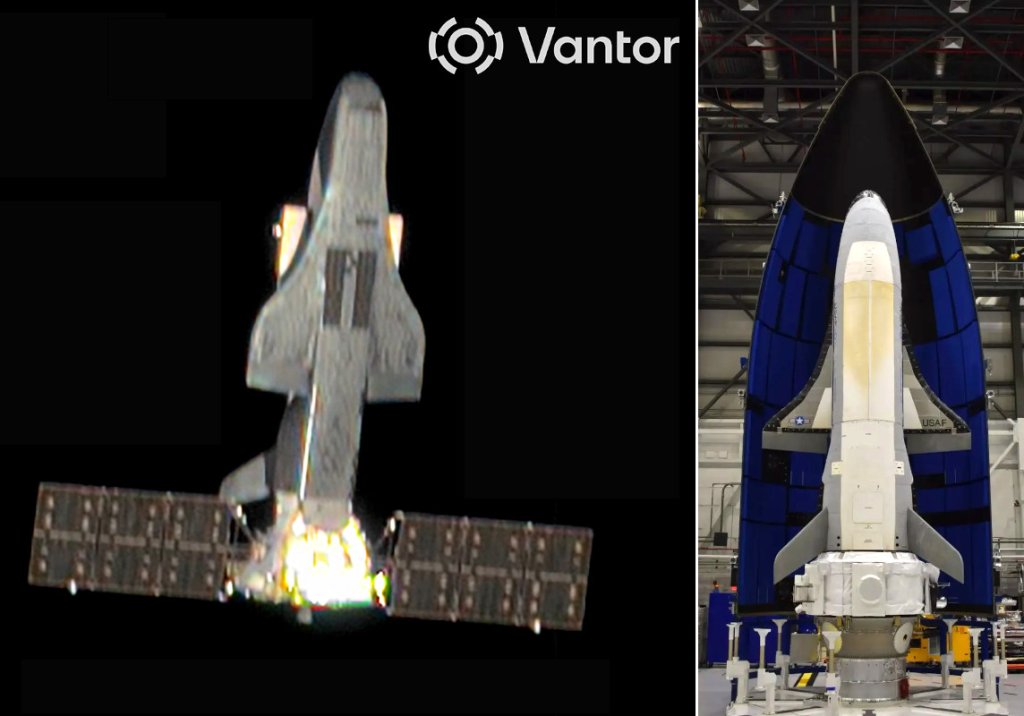
A side-by-side comparison of the on-orbit shot of the experimental Chinese reusable spaceplane (at left) and a U.S. X-37B fitted with an extended payload module being prepared for launch (at right). Vantor/U.S. Space Force
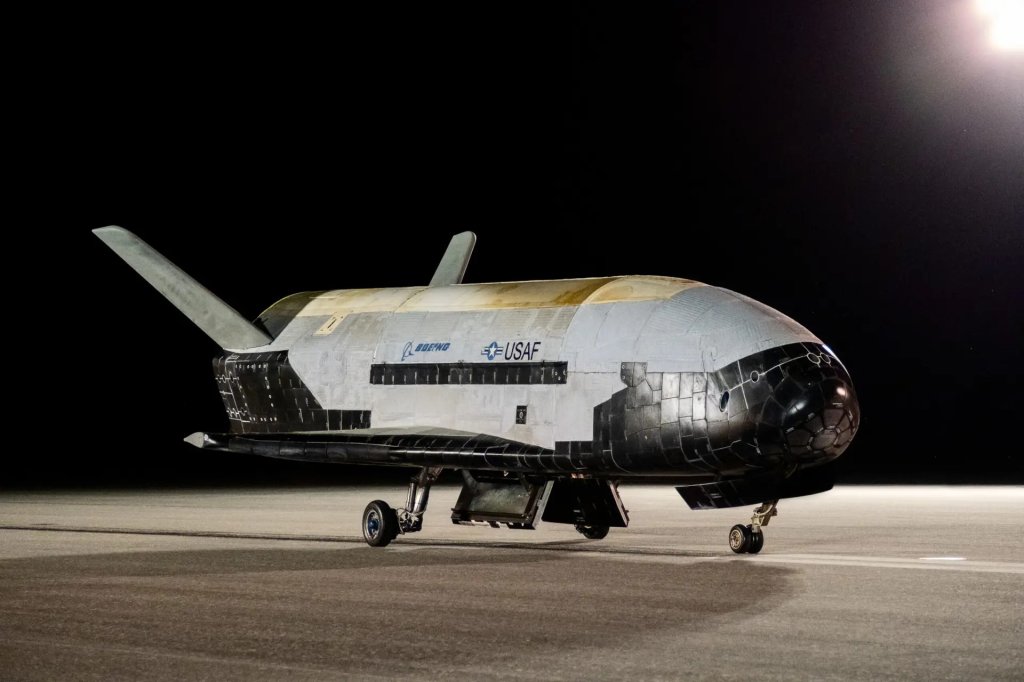
Another look at an X-37B, seen here sitting on its tricycle landing gear after returning from a mission in space. USAF The X-37B used on the OTV-6 mission on the flight line at the Kennedy Space Center after its return to Earth on November 12, 2022. USAF

“A key capability for reusable space activities are spaceplanes like this PRC [People’s Republic of China] Spaceplane captured by Maxar. Spaceplanes can launch into orbit to place objects in space or even test them and return to earth [sic],” reads the caption to the picture in DIA’s report.

As noted, the basic fact of the existence of this image is not new. U.S. Space Force Col. John Patrick, then head of U.S. Space Forces-Korea (SPACEFOR-KOR), included a much lower-resolution version in a presentation at the Open Space Forum in South Korea in 2024. It was also not immediately clear at that time whether or not the picture simply showed an X-37B. TWZ had reached out at the time to the U.S. Space Force and Maxar for more information, and both had declined to comment. Two X-37Bs were built, and they have been sent on eight orbital missions, in total, since 2010. The Orbital Test Vehicle 8 (OTV-8) mission was launched on August 22, 2025.

X-37B in orbit photographed by ground-based telescopes? pic.twitter.com/YPj8I4cQmZ

— 笑脸男人 (@lfx160219) November 8, 2024

China is understood to have conducted four separate orbital spaceplane missions using the same experimental vehicle since 2020. Three of those missions had concluded before Col. Patrick gave his presentation. The most recent launch occurred on February 7 of this year, and the vehicle has not yet returned, at least as far as we are aware.

On the third mission, which lasted from December 14, 2023, to September 6, 2024, the Chinese spaceplane was observed releasing multiple smaller objects into orbit. What those payloads may have been remains unknown, but they could have been released from the main payload bay, which is seen open in the on-orbit image. The bay could have opened without any subsequent release of objects on either of the two prior missions, as well.

As an aside, the spaceplane appears to have released at least one more object earlier this year in the course of its latest mission.

A secretive airbase in the northwest end of China, sporting one of the longest runways in the world at 16,400 feet, looks to be where the spaceplane has landed after missions. The facility, which has been expanded massively in recent years, is now loosely akin to America’s top-secret proving ground at Area 51, and has been the site of other advanced aviation test efforts.

DIA’s report also says that “China has two primary spaceplane models: the Shenlong and Tengyun,” but does not specify which one is seen in the image. The name Shenlong has been commonly used to refer to the spaceplane China has been experimenting with to date. Images said to show a prototype or test article of this design slung underneath an H-6 bomber for testing purposes had emerged in 2007.

Images that emerged in 2007 of a reusable spaceplane prototype, or a related test article, referred to as Shenlong, underneath an H-6 bomber. Chinese internet

The state-run China Aerospace Science and Industry Corporation (CASIC) unveiled the Tengyun design in 2016 as part of a so-called two-stage-to-orbit system that uses a mothership aircraft flying within the atmosphere as part of the launch method rather than a traditional space launch rocket. As of 2020, CASIC was aiming for a live test of Tengyun in 2025, but it is not immediately clear whether or not that occurred.
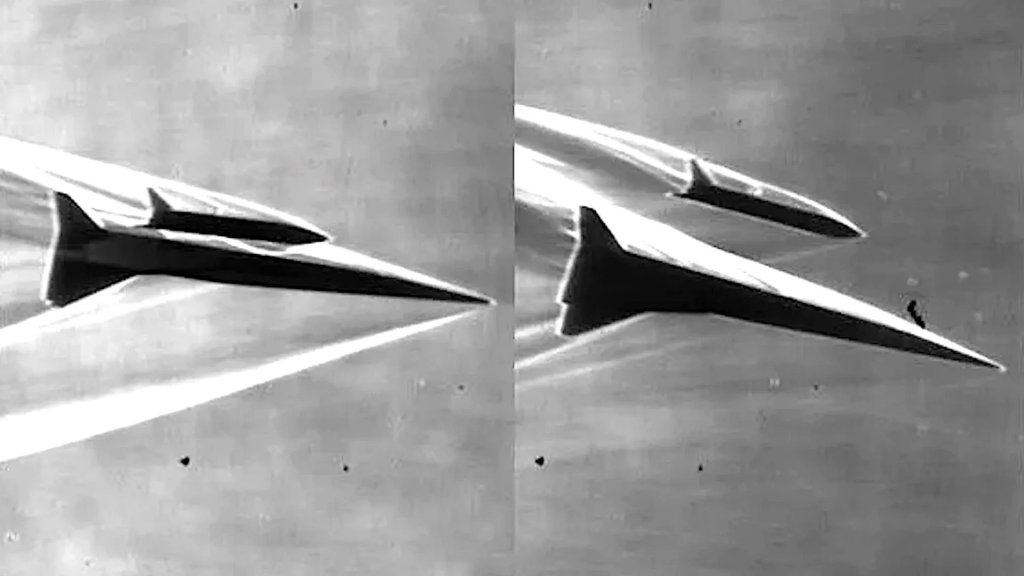
Images showing wind tunnel testing of a Chinese two-stage-to-orbit concept. Chinese internet

There have been other spaceplane developments in China in recent years. This includes designs from the China Aerospace Science and Technology Corporation (CASC) and Aviation Industry Corporation of China (AVIC) subsidiary Chengdu. The design from Chengdu is called Haolong and has been in development officially as an option for resupplying the country’s Tiangong space station.

👀 They seem not only got a model but also a full-scale prototype.
HaoLong-1 cargo spaceplane https://t.co/VI1Yoh3sRj pic.twitter.com/Dthfd1gi1v

— CNSPACE (@CNSpaceflight) November 11, 2024

In general, “spaceplanes are … reusable and feature enhanced maneuverability, making them more suitable for certain missions than traditional satellites,” DIA’s report notes.

TWZ has highlighted in the past how reusable space shuttle-like vehicles offer ideal platforms for rapidly deploying small satellites and any other payloads into orbit. In this way, they can be critical assets for space-based experimentation, as well as operational activities. This could include intelligence gathering, and even on-orbit attacks, areas of clear interest to the Chinese government.

As we often mention in the context of the X-37B, spaceplanes also have distinct advantages when it comes to rendezvousing with and maneuvering very close to other objects in space. They can execute course changes and other maneuvers in ways that traditional satellites cannot. All of this only underscores their potential as weapon systems, as well as for gathering intelligence. The fact that a Maxar (now Vantor) satellite took an on-orbit picture – a service the company is known to offer – of a Chinese spaceplane further highlights the kind of cat-and-mouse games that are increasingly emerging in space. The general risks posed by these kinds of activities were recently thrust into the public eye by the unprecedentedly close shadowing of a commercial radar imaging satellite tied to Ukraine by another satellite belonging to Russia.

China has been making massive investments, in general, in new space-based intelligence and other capabilities in recent years. Chinese space developments have now also extended into reusable space launch rocket boosters. Space launch company LandSpace became the first in China to achieve a successful recovery of a reusable space launch rocket booster on land in August. That followed CASC’s successful recovery of a reusable space launch rocket booster at sea using a specially configured ship the month before.

In general, “access to space traditionally requires expendable spacecraft: single-use launch vehicles, satellites, and one-time use capsules designed to maximize performance. Reliance on expendable vehicles has made access to space expensive and exclusive,” DIA’s report explains. “Reusable technologies, while even more difficult and expensive to develop and build, stand to greatly reduce the cost of spaceflight by recovering, refurbishing, and reusing rocket stages, fairings, and capsules.”

Chinese spaceplanes, one of which we have not definitively gotten a view of in orbit, look set to become an increasingly important part of this growing ecosystem.

Update: 6:32 PM ET –

Vantor has now provided an additional copy of the image of the Chinese spaceplane, elements of which look to be redacted, and some additional details. The company has confirmed it was taken on May 28, 2024, by the WorldView-3 satellite at a range of just under 56 miles (90 kilometers).

“There is a separate satellite docked to the aft section of the vehicle whose structure and solar arrays are visible,” Vantor also told us. “The spacecraft’s payload bay doors are visibly open.”

Contact the author: joe@twz.com

The post U.S. Intel Confirms This Is China’s Secret Spaceplane (Updated) appeared first on TWZ.
  •  

Cyprus-China trade surges 26 per cent

Trade between China and Cyprus grew to $1.44 billion (€1.29 billion) during 2025, while the future holds even greater prospects for economic cooperation, attendees at a forum heard on Tuesday.

Speaking at a business forum held in Nicosia and organised by the Chamber of Commerce and Industry (Keve), China’s ambassador to Cyprus Yang Yundong said bilateral trade in 2025 marked a 26 per cent year-on-year increase.

According to the ambassador, last year China became Cyprus’ fourth largest trading partner. Meantime more and more Cypriot products – like halloumi cheese, zivania and fresh juices – are finding their way to the Chinese market.

Yang noted the significant prospects for cooperation in shipping, tourism, green technologies and the digital economy.

He highlighted the role Cyprus can play as a bridge between China and the European Union.

On bilateral relations, the ambassador noted that the forum is part of events marking the 55th anniversary of the establishment of diplomatic ties between the two countries.

In his own address, Keve chairman Stavros Stavrou stressed the importance of transforming bilateral relations into specific business partnerships.

Cyprus, he said, can act as an entry point for Chinese businesses into the single EU market, making the most of its geography as it lies at the crossroads of Europe, Asia and Africa.

China is a major market and an international hub for technology, innovation, manufacturing and investment – offering opportunities for Cypriot entrepreneurs.

Stavrou cited the upcoming agreement between Cyprus’ Top Kinisis travel agent and China’s Zhejiang Overseas (Ningbo) International Travel Service Co.

For his part Marios Tannousis, director at Invest Cyprus, said ICT (information and communications technology) has become a main growth driver for Cyprus, with an annual contribution to the economy of €4 billion – corresponding to approximately 15 per cent of GDP.

Tannousis said Cyprus has recorded an increase in foreign direct investment from various geographical regions.

He cited data showing that the island ranks among the top ten countries globally in terms of FDI per capita.

Theodoros Parperis, chairman of the Cyprus-China Business Association, likewise spoke to the potential for growing trade and investment between the two countries.

The association currently numbers more than 200 members.

Established in 1995, the Cyprus-China Business Association operates under the auspices of Keve and the Chinese embassy in Cyprus.

  •  

A piada de Mbappé sobre um “ditador chinês” custou-lhe três marcas

Kylian Mbappé pediu desculpa por ter chamado “ditador chinês” a Mao Zedong numa brincadeira que correu (muito mal) nas redes sociais. Tarde de mais para as marcas: Dongpeng, Mengniu e Milkground já o largaram, e a televisão estatal chinesa tirou a La Liga do ar. Era um meme. E, num vídeo que se tornou viral, Kylian Mbappé brincou no X com o antigo ditador chinês Mao Zedong. Mas a piada correu mal. Os chineses não gostaram. Quem não gostou também foram as marcas chinesas que apoiavam o craque francês do Real Madrid , que cancelaram os patrocínios. Esta terça-feira, Mbappé

  •  

LaLiga se disculpa con China tras controversia por comentarios de Mbappé

El organismo rector del fútbol español ofreció disculpas institucionales tras la suspensión de sus emisiones en la televisión estatal del país asiático y la cancelación de patrocinios comerciales al delantero del Real Madrid.
  •  

China Steps In to Rescue Stocks, But the Market Continues to Fall

The Communist Party uses a “national team” of state-owned investment funds to stem the market rout. But this time, investors are not sure it will work.

© Florence Lo/Reuters

President Xi Jinping of China has convened senior leaders to set the government’s agenda, but the economy is likely to take a back seat to politics.
  •  

Ukrainian intelligence says Russia’s missile makers use gear from seven countries—and the Chinese machines run on European, Japanese, and Taiwanese parts

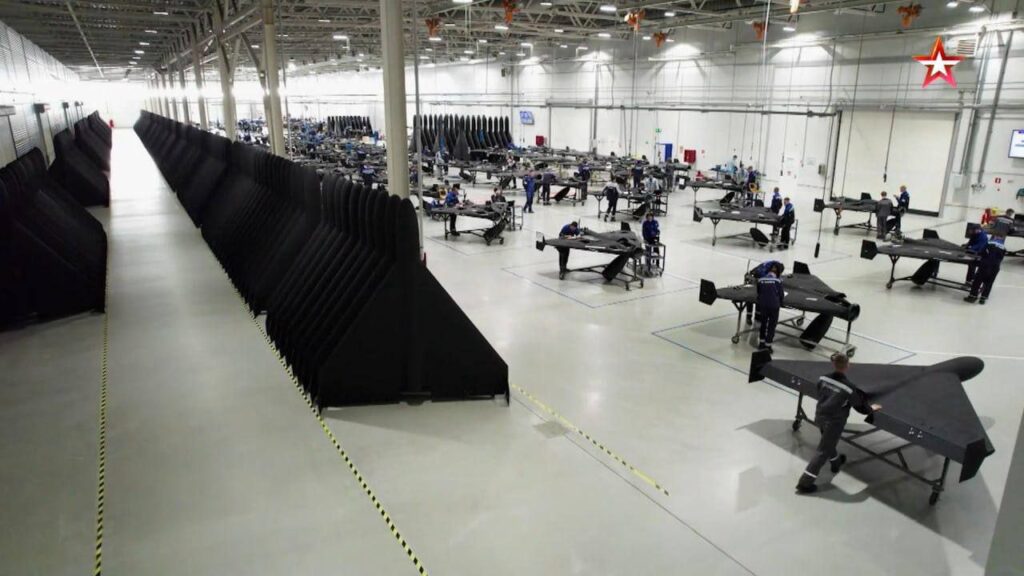
Yelabuga drone factory in Tatarstan, Russia.

Machine tools and other equipment from seven countries, led by China, work at Russian plants that make ballistic missiles and their components, Ukraine’s military intelligence (HUR) said on 26 October. The 30 items are a small slice of HUR’s War&Sanctions portal, which lists 1,698 machine tools at 223 Russian plants.

Seventeen of the 30 were made outside China, in Germany, Taiwan, the US, Türkiye, Switzerland, and Italy. One of HUR’s proposals reaches past Russia and China, to the firms that supply parts for Chinese machine tools. The list comes two weeks after the EU blacklisted 1,569 Russian arms suppliers and executives. More than half of those listings hit the ballistic missile supply chain, EU foreign policy chief Kaja Kallas said. Sanctioning a company, though, does not stop the machines in its workshops.

A Chinese machine at the Iskander plant

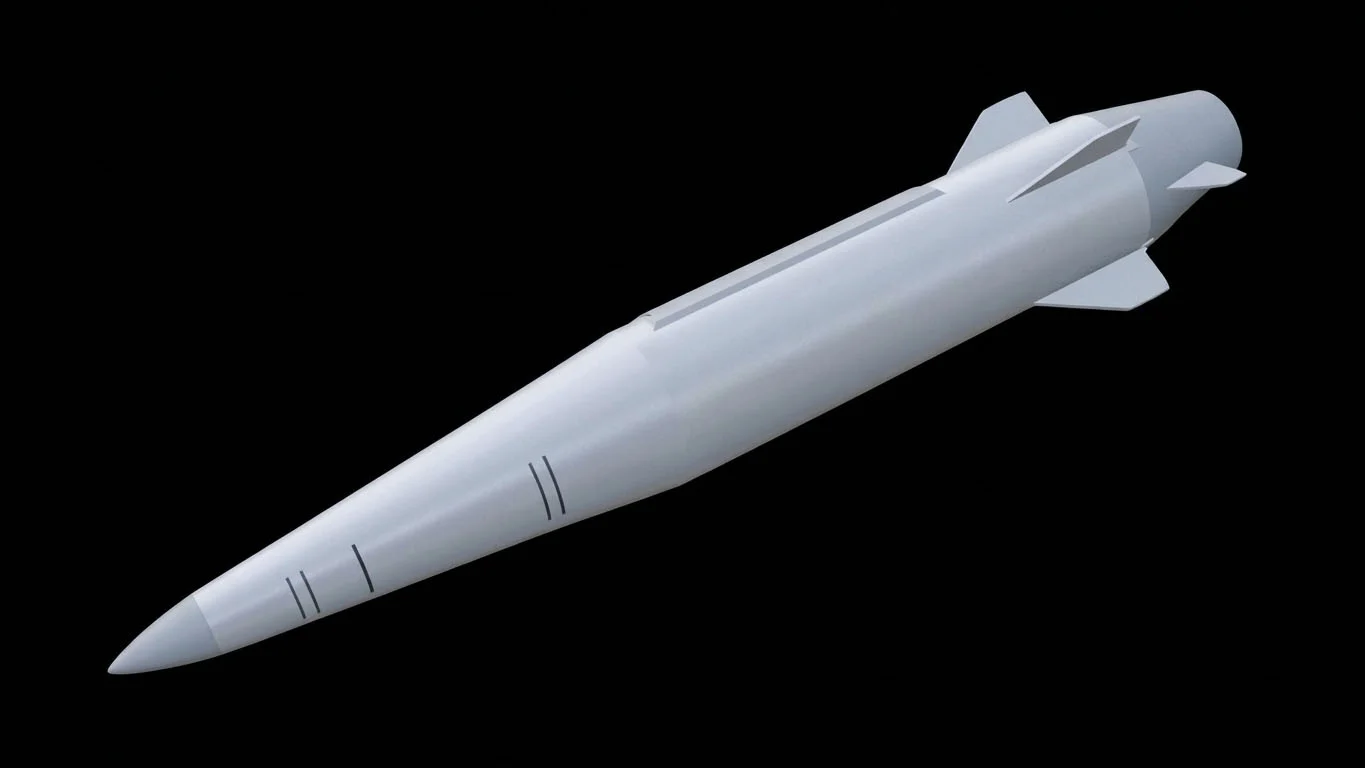
HUR’s statement leads with a GX-650 five-axis machining center made by China’s Hyper Machine Tool. Such computer-controlled machines cut complex metal parts from several angles. HUR said it works at the Votkinsk Plant, which the agency described as the maker of 9M723 missiles for the Iskander-M system and the missile section of the Kh-47M2 Kinzhal, an air-launched ballistic missile.

3D model of the Kh-47M2 Kinzhal missile. Photo: Ukraine’s Ministry of Defence
Explore further

Kinzhal is 90% identical to Iskander-M: Ukraine’s intelligence identifies 58 companies in production chain

HUR has flagged Votkinsk before. In November 2025, it published hackathon findings showing that Russian companies supplied Chinese and Taiwanese machine tools to the plant after the full-scale invasion began.

Chinese Shtral turning and milling centers work at PEMZ Molot, which builds electronics units for Iskander-M missiles, according to HUR’s statement. At UPKB Detal, which makes altimeters for hypersonic Zircon cruise missiles, HUR found measuring equipment from Germany’s Rohde & Schwarz.

The portal entries paint a broader picture. Only four of the 30 entries list a ballistic missile among the plant’s weapons. Most of the rest list cruise missiles, glide-bomb kits, guided artillery shells, or Geran-2 attack drones. HUR did not publish its evidence, though the portal says partner agencies can request it.

Foreign parts inside Chinese machines

Russian plants use the equipment to make missiles and parts such as altimeters, control surfaces, and gyroscopes, HUR said. The agency noted a growing number of Chinese machine tools, including five-axis models. According to HUR, those Chinese machines contain European, Japanese, and Taiwanese components, from numerical control systems to precision spindles and bearings. In HUR’s assessment, Russia still cannot replace equipment from leading foreign makers with its own.

  •  

US intelligence hypes Chinese, Russian space threats while accelerating its own military buildup in orbit

By Deng Xiaoci | Global Times | October 27, 2026

Like Don Quixote tilting at windmills he mistook for menacing giants, Washington appears to be sounding the alarm over alleged threats in outer space, even as it presses ahead with its own military buildup in orbit.

In its latest assessment, released on Monday, the US Defense Intelligence Agency (DIA) claimed that China could deploy space-based directed-energy weapons by the late 2020s, while also highlighting Russia’s expanding anti-satellite capabilities, according to SpaceNews.

However, the claims come even as the US itself accelerates the militarization of outer space, having already publicly acknowledged deploying weapons in orbit while advancing its ambitious Golden Dome missile defense initiative.

Chinese military affairs expert Song Zhongping told the Global Times that Washington’s approach represents a classic case of “thief crying stop the thief,” as the US seeks to justify its own buildup of offensive and defensive space capabilities by portraying China and Russia as threats.

According to SpaceNews, the DIA’s latest assessment, contained in the 2026 edition of Challenges to Security in Space, claimed that China already possesses multiple ground-based laser systems capable of disrupting, degrading or damaging satellites in low-Earth orbit.

The report further alleged that Beijing may field space-based directed-energy weapons by the late 2020s, along with more powerful ground-based systems capable of threatening satellites in orbit.

Directed-energy weapons use concentrated electromagnetic energy, including lasers and high-powered microwaves, to interfere with or damage targets. Such systems could potentially disrupt satellite electronics or impair optical sensors, according to SpaceNews.

The US intelligence report also highlighted Russia’s alleged development of kinetic anti-satellite weapons, including the Burevestnik system, which it described as a developmental co-orbital anti-satellite weapon launched from a modified MiG-31 aircraft.

It further reiterated Washington’s assessment that Moscow is developing a satellite designed to carry a nuclear weapon. Moscow has said that Cosmos 2553, a satellite linked by US intelligence to the alleged program, was intended to test electronic systems under radiation conditions.

Song said the latest US intelligence assessment reveals two distinct strategic calculations behind Washington’s claims against China and Russia.

By hyping China’s potential development of space-based weapons, the US is seeking to justify its own deployment of offensive weapons in orbit, while claims about Russia’s anti-satellite capabilities aim to make the case for strengthening the defenses of American space assets, Song noted.

Such claims could also help the US administration secure additional congressional funding for an integrated space warfare architecture combining offensive and defensive capabilities, he said.

Notably, the latest allegations stand against the backdrop of Washington’s increasingly explicit pursuit of military capabilities in space.

On September 14, US Secretary of the Air Force Troy Meink publicly acknowledged that the US already possessed on-orbit space control weapons capable of defending its military forces against hostile actions. The announcement marked a significant development in Washington’s public posture toward space warfare, although the US military did not disclose the specific capabilities, the number deployed or their deployment dates.

Meanwhile, Washington is pressing ahead with its Golden Dome missile defense initiative, which includes the development of a constellation of space-based interceptors. According to an official US Space Force release in July, the program aims to develop interceptors capable of engaging missiles during their boost, midcourse and glide phases.

According to an official US Space Force release in April, the service has established the Space-Based Interceptor (SBI) program to develop a space-based missile defense system, with plans to demonstrate its integration into the Golden Dome architecture by 2028.

Song noted that the US is increasingly seeking to transform outer space from a domain used primarily to support military operations through reconnaissance, communications and navigation into a domain for direct offensive and defensive operations.

He said Washington’s pursuit of space-based weapons, including capabilities envisioned under the Golden Dome initiative, reflects its broader ambition to maintain military superiority by integrating advanced technologies and extending military operations into space.

China, meanwhile, has repeatedly called for efforts to prevent an arms race in outer space and opposed attempts to turn it into a battlefield.

In its latest position paper titled China’s Position on Strengthening Outer Space Governance, released on October 23, the Chinese Foreign Ministry warned: “The risk of an arms race in outer space and the trend of turning outer space into a new theater of conflict have become the gravest threat and challenge to space security.”

The document further stated: “States should oppose offensive military policies in outer space and take all possible measures to prevent an arms race in outer space.”

Song warned that Washington’s push to integrate artificial intelligence into military systems and expand offensive and defensive capabilities into space could transform outer space from a domain supporting military operations into a battlefield, threatening other countries’ space assets and potentially accelerating an arms race and increasing the risk of conflicts triggered by miscalculation, he said.

  •  

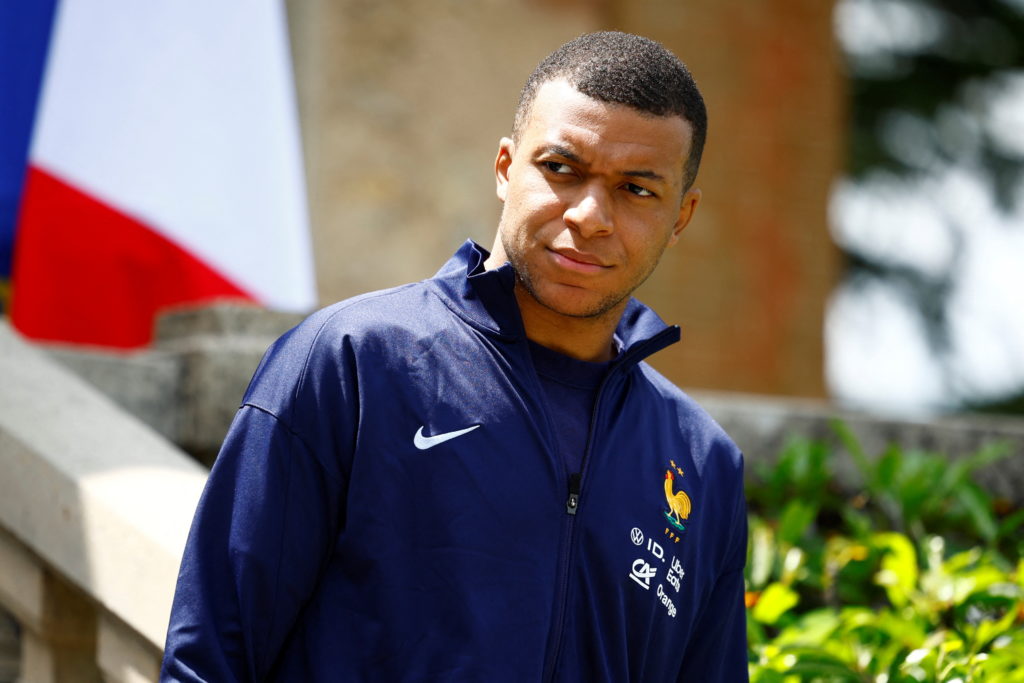
Global soccer star Kylian Mbappé is losing sponsors in China after he joked about Chairman Mao

SHANGHAI, CHINA - OCTOBER 27: Bottles of Dongpeng electrolyte drink endorsed by French football star Kylian Mbappe are displayed on a shelf at a convenience store on October 27, 2026 in Shanghai, China. (Photo by VCG/VCG via Getty Images)
Kylian Mbappé is featured on bottles of Dongpeng's electrolyte drink.

VCG/VCG via Getty Images

  • One of soccer's biggest stars is in hot water in China over joking about Chairman Mao Zedong.
  • Kylian Mbappé referred to Mao as a "Chinese dictator" during a podcast talk about his favorite memes.
  • Two Chinese brands ended deals with Mbappé, while shares in shoemaker On, which sponsors him, fell.

Chinese brands are cutting ties with Kylian Mbappé, one of the world's biggest soccer stars, after he joked about Mao Zedong on a podcast.

Mbappé, who plays for Real Madrid and captains the French national team, has been nicknamed "The Dictator" for his confidence and influence over the teams he plays for. The nickname has spawned countless memes, many of which compare him to historical leaders, including Mao.

The controversy was sparked by a clip circulating on social media from an interview with "The Bridge," a French podcast co-hosted by one of Mbappé's teammates.

In it, Mbappé said the meme that made him laugh the most was one where his face was superimposed onto that of "some guy — I think he's a Chinese dictator." The video then cuts to an image of Mao with Mbappé's face.

While millions died under Mao's leadership, he is still revered by the Chinese Communist Party for his role as the founding father of modern China. Jokes about him remain a social taboo in China and are considered disrespectful.

Dongpeng, a drinks company whose ads and packaging feature Mbappé, announced on Tuesday that it would no longer work with him.

"Our company firmly opposes and has zero tolerance for actions that hurt national feelings," it said in a statement. "Effective immediately, we are ending all cooperation with Kylian Mbappé."

Mengniu, the country's largest dairy producer, also released a similar statement: "Effective immediately, our company is ending all cooperation with Kylian Mbappé. Mengniu firmly opposes and has zero tolerance for any words or actions that hurt the feelings of the Chinese people."

Soon after it was posted, Dongpeng's statement became the top-trending topic on the Chinese social media site Weibo.

Mbappé apologized in a statement on Tuesday morning, calling the comment "ill-judged."

"I now understand that it hurt many people in China and in Chinese communities around the world," he said in the statement, which was posted in English, French, and Mandarin.

"I apologize to everyone my words have upset. This was absolutely not my intention. I have deep respect for the Chinese people and their history, and I am sincerely sorry."

https://t.co/MQBo9NCSy5

— Kylian Mbappé (@KMbappe) October 27, 2026

Mbappé is one of soccer's biggest stars. On Monday, he came second in voting for the prestigious Ballon d'Or and was the top scorer at this summer's World Cup.

In 2017, while still a teenager, he commanded a transfer fee of over $210 million, and he has since become one of the most marketable athletes in global sports.

In September, he became the face of Swiss shoemaker On's expanding soccer business, leaving behind a long-term deal as one of Nike's top ambassadors. On's share price was down more than 4% in early trading on Tuesday.

On top of that deal, Mbappé is the face of EA Sports' hugely popular FC game series, and has endorsement deals with brands like Swiss watchmaker Hublot and Oakley.

A bus featuring French football star Kylian Mbappe for Dongpeng Beverage Group's "Bushuila" electrolyte drink is seen on a street in Shanghai on October 27, 2026. Kylian Mbappe was dropped on October 27 by two major brands in China after a video circulated online in which the French football star apparently joked about former leader Mao Zedong. (Photo by Jade GAO / AFP via Getty Images)
A bus in Shanghai features a Dongpeng ad with Mbappé.

Jade GAO / AFP via Getty Images

Soon after Dongpeng and Mengnui's statements, EFE Noticias, a Spanish news agency, reported that Chinese state TV has suspended broadcasts of La Liga — the top division of Spanish football where Mbappé plies his trade.

"We convey our respect to China, its institutions, and its people, and we deeply value the support of the millions of fans who follow us each week," La Liga said in a Tuesday X post, adding that it was working with partners in China to address the situation.

Read the original article on Business Insider

  •  

Marcas chinesas ultrapassam japonesas pela primeira vez nas vendas de automóveis na Europa

As marcas chinesas valem agora 12,7% das vendas de automóveis na Europa. Pela primeira vez ao longo de um trimestre inteiro, os fabricantes chineses venderam mais do que os japoneses na Europa. Este é um sinal da rapidez com que marcas como a BYD e a Chery estão a ganhar terreno no velho continente, diz o The Japan Times. Segundo a empresa de estudos de mercado Dataforce, as matrículas de automóveis de marcas chinesas praticamente duplicaram em setembro face ao mesmo mês do ano anterior, e chegaram a 12,7% do total de vendas na região, puxadas pelos híbridos. Ficam assim

  •  

War Will Cover Up the Losses: How Europe’s Crises Are Fueling Escalation with Russia

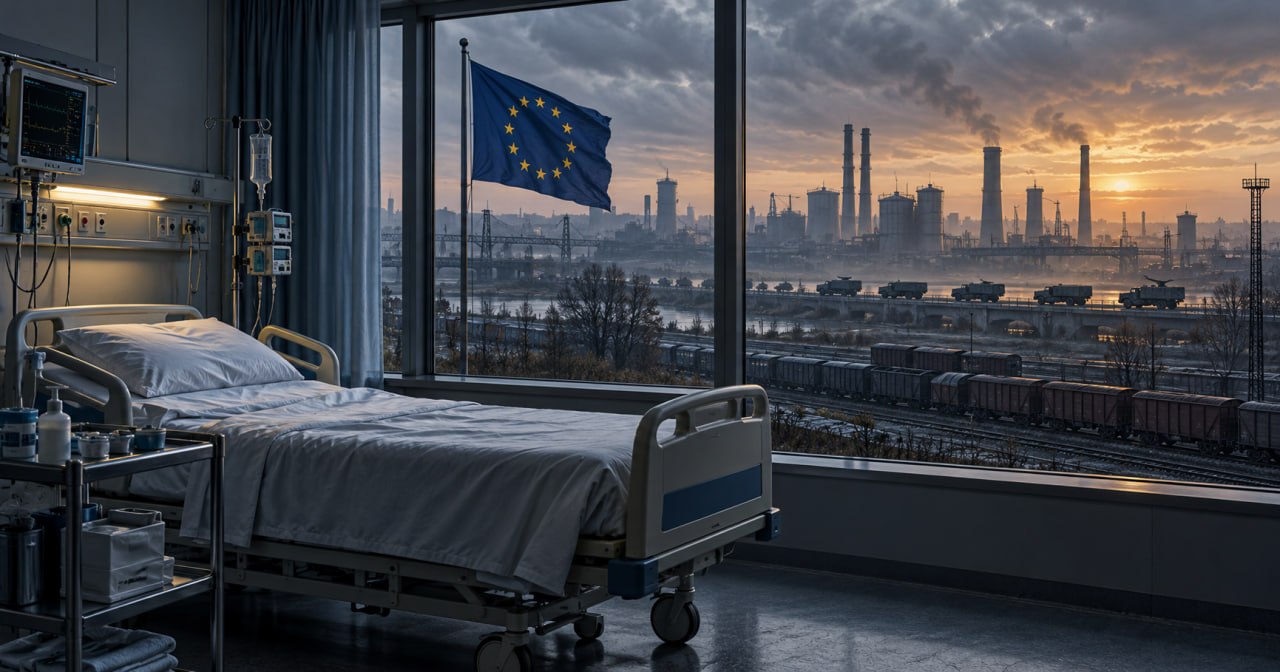
Click to see the full-size image

Europe and Russia are entering a phase in which diplomatic expulsions and explosives-laden drones at airports are no longer treated as exceptions. Germany is openly preparing its hospitals for an influx of wounded personnel, while the assessed threat of sabotage has officially been raised. Meanwhile, expensive energy and competition are costing European industry production capacity and jobs. Under these conditions, an external conflict offers a convenient way to blame economic failures on a foreign enemy. The question is no longer whether escalation is taking place, but how far the two sides are prepared to go before it slips beyond their control.

The autumn of 2026 has brought a series of developments that take the confrontation between Russia and Europe beyond the familiar boundaries of ‘hybrid warfare’. In August, drones carrying explosives were discovered at Leipzig/Halle Airport. The German authorities formally blamed Russia, describing the incident as ‘crossing a red line’ with potentially lethal consequences. Berlin closed Russia’s consulate-general in Bonn and its cultural center. Moscow responded by closing the German consulate in St. Petersburg.

In September, another drone carrying explosives was found near Wunstorf airbase. The Bundeswehr subsequently raised its assessment of the threat from Russian sabotage to ‘significant’, the second-highest level, for the first time. German intelligence services warn that further attacks are likely. Meanwhile, arson attacks have been reported at drone manufacturing facilities in Estonia, Poland and Slovakia, alongside drone incidents over military installations and civilian airports across Europe.

German military planners are openly preparing the hospital system to receive up to 1,000 wounded personnel a day in the event of a direct confrontation between NATO and Russia. Underground medical bunkers are being brought back into service, including one in Ulm with capacity for 2,000 people. Civilian surgeons are being trained to treat blast injuries and burns, while coordination between military and civilian hospitals is being strengthened. Diplomatic expulsions, consular closures, accusations of sabotage and preparations for mass casualties together suggest that both sides are already operating according to the logic of an ‘undeclared war’.

Military and diplomatic tensions, however, are only one part of the picture. The economic conditions in which this escalation is unfolding, and the political purpose it serves, are more consequential.

Europe’s economy is facing a deep structural crisis that can no longer be concealed behind reports celebrating the ‘green transition’. TTF benchmark gas prices are hovering around €87–88 per MWh, approximately 174% higher than a year earlier. EU gas storage facilities are just 71–74% full, among the lowest mid-October levels of the past decade, compared with around 83% last year. Germany’s position is even weaker, with storage levels fluctuating around 57–60%.

Electricity and fuel costs are putting pressure on the entire supply chain. Annual energy inflation reached almost 19% in September, while average diesel prices across the EU climbed to €2.14–2.23 per liter. Industrial energy costs are four to five times those faced by American competitors. Chemical plants and metal producers, particularly in Germany and northern Italy, are being forced to cut output or shut down production facilities. Industrial production in the eurozone continues to fall; in Germany, it is already almost 10% below its 2021 level. Industry’s share of EU GDP has declined from 17.4% to 14.3%.

The pressure extends to agriculture. Fertilizer prices have risen by more than 13%, while farmers’ energy costs have increased by around 22%. At the same time, the prices farmers receive for their produce are falling. This raises the risk of a poorer harvest in 2027 and a second wave of food inflation. Farmers in several countries are already warning that their operations are becoming commercially unviable, while transport costs are making many deliveries unprofitable.

The situation resembles a familiar scheme: a warehouse owner who has spent years stealing stock eventually sets fire to the building and tells investigators that everything was destroyed ‘by accident’. European governments have spent years pursuing policies that have made energy expensive, imposed excessive regulation and applied sanctions whose heaviest impact has fallen on their own industry and agriculture. Now, as gas, electricity, diesel and fertilizer bills squeeze businesses and households, and Chinese competitors capture market share, an external conflict offers a convenient excuse.

War, or even the prospect of war, allows rising prices, factory closures, cuts to social spending and budget shortfalls to be blamed on an ‘external aggressor’. Instead of acknowledging mistakes in energy and industrial policy, governments invoke the ‘price of freedom’ and the ‘defense of democracy’. The further tensions escalate, the easier it becomes to explain to the public why housing, food and heating cost more, and why industrial jobs are disappearing.

The current situation brings together two parallel developments. Tensions are rising through sabotage incidents, diplomatic expulsions, higher threat assessments and preparations for hospitals to receive large numbers of wounded personnel. At the same time, European elites need a convenient external explanation for economic failure. High gas and electricity prices, low storage levels, expensive diesel, rising fertilizer costs and shrinking industrial output are already a reality. Escalation creates political capital for those responsible for costly mistakes in energy and industrial policy over recent years. It allows them to shift the discussion from domestic policy failures to an ‘external threat’, postponing accountability.

This logic itself increases the risk of an uncontrolled shift from ‘hybrid’ operations to direct confrontation. As long as European governments prefer preparing hospitals for thousands of casualties to reconsidering their energy and industrial policies, the practice of ‘burning down the warehouse to conceal the missing stock’ continues. The remaining question is how far the two sides are prepared to go before the cost becomes too high for European societies themselves.


MORE ON THE TOPIC:

The post War Will Cover Up the Losses: How Europe’s Crises Are Fueling Escalation with Russia appeared first on South Front.

  •  

Nova “taxa Temu”: UE soma mais dois euros às encomendas vindas de fora

Taxa europeia sobre encomendas de fora da UE entra em vigor no domingo para travar “enxurrada chinesa”. A taxa de 2€ aplica-se a cada tipo de artigo numa encomenda enviada diretamente aos consumidores de fora da UE, independentemente do seu valor. A União Europeia vai aplicar, a partir de domingo, uma taxa de processamento de 2€  às encomendas provenientes de fora do bloco de 27 países, para travar a avalanche de produtos vindos da China. A nova taxa, que chega poucas semanas antes da corrida às compras da Black Friday, da Cyber Monday e do Natal, soma-se à taxa de

  •  

The Trump administration is backing Orbán, who blocked a €90 billion EU loan to Ukraine, for UN secretary-general and is counting on support from Moscow and Beijing, WSJ says

Trump and Orban at White House meeting on November 7, 2025, where Hungary secured Russian oil sanctions exemption

The Trump administration has encouraged former Hungarian Prime Minister Viktor Orbán to run for UN secretary-general and discussed a joint US-Russia-China candidacy with Moscow and Beijing, the Wall Street Journal’s (WSJ) editorial board wrote on 25 October, citing sources in three countries. Russia’s biggest ally in the EU, Orbán has been out of office since May, when Péter Magyar became Hungary’s prime minister.

The UN secretary-general can influence the war through diplomatic negotiations, mediation, and by drawing the Security Council’s attention to Russia’s aggression. António Guterres’s term ends on 31 December, so the council has to settle on a successor within weeks.

According to the WSJ, US officials discussing the next UN chief kept saying they wanted “someone like Orbán,” and their Russian and Chinese counterparts agreed. The US then brought the idea to Orbán himself. Russia and China are believed to support his bid based on those earlier talks with Washington, and the plan is for him to be the three countries’ joint candidate.

Ukraine warns of Orbán’s veto tactics at the UN

Orbán is receptive but has not decided, and he does not want to enter the race unless he is sure he can win, the editorial board wrote. A State Department official counted eight Security Council votes as safe for him and 10 within reach. A candidate needs nine of the 15 votes and no veto from a permanent member. The editorial board asked whether Britain and France, typically cautious in using their veto, would stand in the way. Any announcement is being held until after the 3 November US midterm elections.

Ukraine’s Foreign Minister Andrii Sybiha wrote on X that Orbán as secretary-general would put to good use “the masterful veto and blackmail skills” he developed over years of derailing major EU decisions. Ukraine, he added, could share its “great experience of taking him out for coffee at the right moment,” a reference to the December 2023 EU summit, where Orbán left the room so the other leaders could open accession talks with Ukraine without his veto.

Orbán ran Hungary for 16 years as Putin’s closest EU partner

Orbán’s 16 years of “illiberal democracy” eroded democratic values in Hungary. Since 2010, Fidesz has built an enormous partisan media ecosystem. Before the vote, it amended the electoral law twice and gerrymandered more than a third of the electoral districts, so the opposition might need around 55% of the popular vote to win a simple majority. Orbán still lost the 12 April election. Magyar’s Tisza won 138 of 199 seats, a two-thirds majority in parliament.

USA hungary propaganda lies Ukraine far-right
Explore further

Voted out and facing investigators, Orbán could reach for UN cover, sources say

Orbán kept close ties with Moscow throughout the full-scale war. When he met Putin in Beijing in October 2023, he spoke of “the military operations and the sanctions” rather than a war. In summer 2024, while Hungary held the EU Council presidency, he flew to Moscow on what he called a peace mission, and the EU distanced itself from the trip. In November 2025, he went back to Moscow, seeking to keep Hungary’s access to Russian oil and gas. He is widely considered Putin’s closest partner among EU leaders. After that visit, he said the only solution was for Ukraine to become a buffer state again, and that the longer peace was delayed, the more people and territory Ukraine would lose.

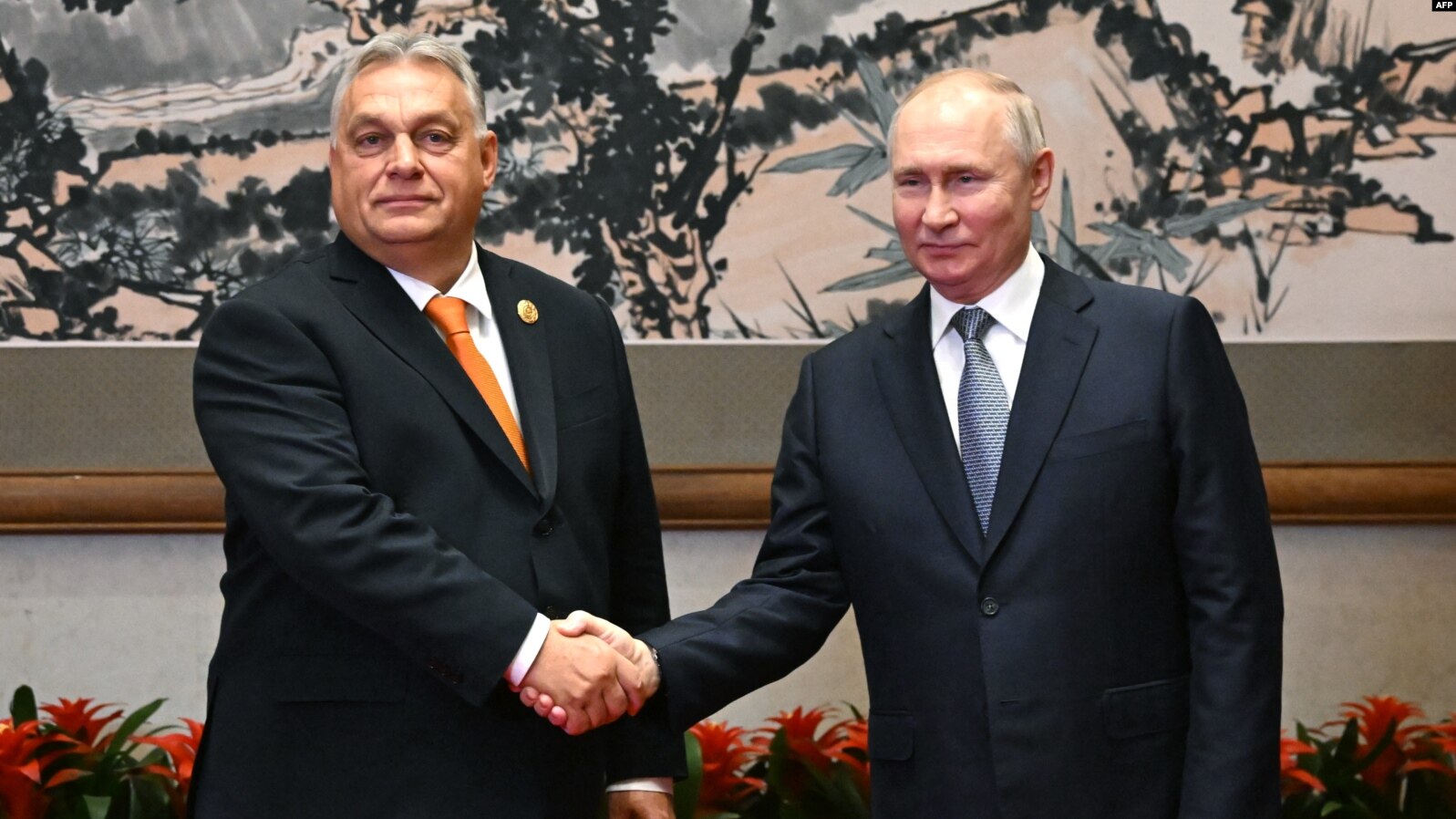
Then-Hungarian Prime Minister Viktor Orbán and Russian President Vladimir Putin in Beijing, 17 October 2023
Then-Hungarian Prime Minister Viktor Orbán and Russian President Vladimir Putin in Beijing, 17 October 2023. Photo: Radio Free Europe

He used Hungary’s veto against Ukraine until his last weeks in office. In February, Orbán vetoed a €90 billion EU loan to Ukraine amid the disruption of Russian oil supplies through the Druzhba pipeline to Hungary and Slovakia. Hungary lifted its veto in April after repairs to the pipeline were announced. Foreign Minister Péter Szijjártó phoned Russian Foreign Minister Sergei Lavrov from EU meetings for years with “live reports on what’s been discussed,” a European security official told The Washington Post. Szijjártó did not respond to the Post’s request for comment.

  •  

Eurodeputados em visita oficial à China para abordar tensões comerciais com a UE

Uma delegação de eurodeputados inicia hoje 27 de outubro uma visita de três dias à China para abordar tensões comerciais com Pequim, após o acordo sobre veículos híbridos e no âmbito dos planos comunitários para reforçar instrumentos de defesa comercial.

O eurodeputado alemão Engin Eroglu, membro da delegação da Comissão do Comércio Internacional do Parlamento Europeu e presidente da Delegação do Parlamento Europeu para as Relações com a China, confirmou a chegada a Pequim na rede social X, onde explicou que manteve reuniões individuais com representantes de empresas alemãs, organizadas pela Câmara de Comércio Alemã na China, logo após a chegada.

Referindo-se a uma reunião anterior com empresários alemães em maio, Eroglu disse que “muita coisa mudou desde então”. “Não só nas relações entre a China e a Europa, mas também no contexto económico e político em que as nossas empresas operam diariamente”, salientou.

O eurodeputado defendeu a necessidade de “ir-se além de falar da China à distância” e de se manterem contactos diretos com quem investe, produz e desenvolve atividades empresariais no país asiático, face ao que descreveu como um momento de “questões incómodas” na União Europeia.

Noutra publicação, afirmou que “a solução para a indústria europeia não está na China, mas sim nas capitais dos 27 Estados-Membros e em Bruxelas”, embora tenha considerado necessário conhecer-se em primeira mão a realidade económica chinesa.

A delegação, liderada pelo presidente da Comissão do Comércio Internacional do Parlamento Europeu, o social-democrata alemão Bernd Lange, visitará Pequim, Hangzhou e Xangai até quinta-feira, na segunda visita deste órgão parlamentar à China desde 2018.

Os representantes da União Europeia pretendem abordar com os interlocutores chineses o excesso de capacidade industrial, as restrições de acesso ao mercado, a dependência europeia de matérias-primas críticas e a crescente entrada de produtos chineses baratos.

A visita surge depois de Bruxelas e Pequim terem chegado a um entendimento para limitar as exportações chinesas de veículos híbridos para a UE, considerado por ambas as partes um avanço, embora com interpretações diferentes quanto ao alcance.

O acordo prevê, segundo fontes comunitárias, um quota inicial de 350.000 veículos por ano, que aumentará progressivamente.

A missão surge também depois de os líderes europeus terem exigido novos instrumentos de defesa comercial face aos desequilíbrios com a China e de a presidente da Comissão Europeia, Ursula von der Leyen, ter anunciado para dezembro a apresentação de um instrumento destinado a reduzir as dependências estratégicas.

Lange alertou que o acordo sobre veículos híbridos constitui apenas “o ponto de partida” de relações comerciais nas quais, segundo o Parlamento Europeu, a UE regista um défice com a China de cerca de mil milhões de euros por dia.

  •  

China y 25 países suscriben convenio para facilitar comercio global

Beijing, 27 oct (Prensa Latina) China y otros 25 países firmaron el Convenio de las Naciones Unidas sobre Documentos Negociables de Transporte, que facilita el financiamiento del comercio transfronterizo, trascendió hoy en la prensa local.

The post China y 25 países suscriben convenio para facilitar comercio global first appeared on Noticias Prensa Latina.

  •  

China emite alerta por descenso térmico y nevadas en el norte

Beijing, 27 oct (Prensa Latina) El Observatorio Meteorológico Central de China advirtió hoy que un frente frío afectará al norte del país y llevará las temperaturas del noreste a nuevos mínimos en lo que va de año.

The post China emite alerta por descenso térmico y nevadas en el norte first appeared on Noticias Prensa Latina.

  •  
❌