Media titan Barry Diller, the chairman of publishing empire IAC, has built and rebuilt his career more than most executives, from network television to Hollywood studios to the earliest internet empires.
As part of Business Insider's The Long Play, Diller talked to Peter Kafka, Business Insider's chief correspondent covering media and technology, about what successful businesses require: good timing, nerve, and the willingness to walk away from what's working.
During this conversation, titled "The Art of the Comeback: A Masterclass on Resilience," Diller shares his perspectives on AI adoption. He also talks about why his MGM Resorts deal fell apart and how he's leveraging legacy print publications like Southern Living to create new revenue streams.
The 84-year-old media and tech exec told Kafka he wants to keep working as long as he can be engaged and useful.
Carolyn Tisch Blodgett, the owner of Gotham FC, thinks AI can make women's sports more lucrative.
Carl Timpone / BFA
Carolyn Tisch Blodgett, a co-owner of the New York Giants and Gotham FC, is using AI to cut costs.
"There's a lot of parts of a sports team that are just expensive to operate," Tisch Blodgett said.
Tisch Blodgett shared how she's turned around Gotham FC at Business Insider's The Long Play.
New York Giants and Gotham FC co-owner Carolyn Tisch Blodgett is betting on AI to transform women's sports into a major moneymaker.
"If AI can make you more efficient, that totally changes where women's sports can go," Tisch Blodgett said at Business Insider's The Long Play event on Thursday afternoon.
Tisch Blodgett, who's the lead owner of Gotham FC in the National Women's Soccer League, sees AI as a way to reduce the costs of running a sports business without cutting corners.
"There's a lot of parts of a sports team that are just expensive to operate. It's expensive to operate a stadium, it's expensive to operate a ticketing team, expensive to operate a marketing team," Tisch Blodgett said.
Those struggles are heightened for women's sports, which historically haven't gotten the same level of investment as men's sports.
Tisch Blodgett spoke with Business Insider's Nathan McAlone about how to make women's sports more financially successful.
Carl Timpone / BFA
"The revenue was not high enough to really justify building out an entire business team, and the business model just didn't really work," Tisch Blodgett said of women's sports.
Tisch Blodgett made a name for herself by starting sports-focused venture capital firm Next 3, which has invested in Gotham FC, the Los Angeles Golf Club in golf league TGL, Premier Lacrosse League, and lottery ticket site Jackpot.com.
The Gotham FC owner has had a front-row seat to running sports since she was a kid: Her family bought half of the NFL's New York Giants in 1991. The Tisch family runs Loews Corporation, a hotel and insurance conglomerate worth about $22.9 billion.
Under the Tisch's ownership, the Giants have won two Super Bowls. Tisch Blodgett has already matched that title count in the three years she's owned Gotham FC — though building a winner hasn't been easy.
Building a champion by gathering feedback
Tisch Blodgett felt firsthand the challenges that women's sports teams face after taking over Gotham FC in 2023. The New York-based team had talent, as it went on to bring home its first title months later.
But success on the pitch hadn't translated to a winning business. Gotham FC didn't have its own business office when Tisch Blodgett took over, and players shared a practice field with a club team of 16-year-old boys.
While Gotham FC had "a great product on the field," Tisch Blodgett said, "attendance was really low" due to a lack of awareness.
"It was clear that the people that came really liked it, but it was very small," Tisch Blodgett said of Gotham FC's fanbase in 2023.
Under Tisch Blodgett, Gotham FC is moving from New Jersey to a stadium in Queens in 2028.
Carl Timpone / BFA
Tisch Blodgett has since flipped the script. This July, Gotham FC sold out Citi Field in Queens, drawing over 42,000 fans in what she said was the biggest women's sports event ever in New York City.
Gotham FC announced in July that it would call Queens home starting in 2028 — a major upgrade from its current stadium in Harrison, New Jersey, which is difficult to reach from New York City by public transit.
One key to Gotham FC's success has been gathering feedback. Tisch Blodgett, who led marketing for fitness giant Peloton before starting Next 3, said learning from fans "makes the whole business smarter" and has been crucial to the soccer club's growth.
"Fan feedback is incredibly important to me — it's how we run our organization," Tisch Blodgett said. "After every game, we send out a survey to every person that attended, essentially saying, 'Did you like it? Would you recommend it to a friend?'"
Gotham FC's Net Promoter Score — which measures how likely customers are to recommend the brand to a friend — rivals Apple, Tisch Blodgett said.
"It makes every person in the organization understand what we're building towards in a much more efficient way," Tisch Blodgett said.
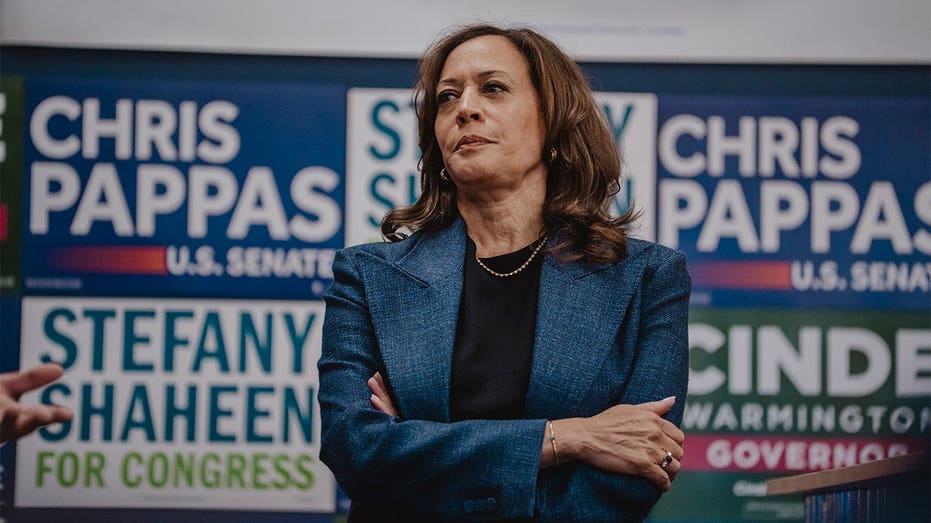
Former Vice President Kamala Harris broke with some on the left flank of the Democratic Party on Wednesday over whether Democrats should pursue impeachment proceedings against President Donald Trump if they regain control of Congress in November.
"The Parnas Perspective" host Aaron Parnas asked Harris what she would recommend Congress do if Democrats regain control following the midterm elections.
"Would it be to go the investigations route and potentially an impeachment one day," he asked, "or would it be go past policy and force the president to veto it?"
"I think that going on in the direction of impeachment is not a good idea. OK, just to be honest with you. Because we have limited resources and I think the energy and the resources need to be put into accountability, need to be put into investigations and that's where the time should be spent. Remember I was in the Senate for the last go-round and the votes aren't there, right? So that's how I feel," Harris said.
She argued Democrats need to focus on getting things done and that they should be "ruthless."
"When I say we should be ruthless, I don't mean cruel, but we should be uncompromising and not sit around, you know, being genteel about the relationships and instead actually get stuff done, whether it be about accountability or restoring, for example, what they took in terms of the Medicaid cuts, restoring what we need to do around some check and balance around this war nobody wants," the former VP said.
Some Democrats in Congress have pushed again to impeach Trump, who was impeached twice during his first term in office but acquitted in the Senate on both occasions. Rep. Al Green, D-Texas, forced a vote on a resolution to impeach Trump over his administration's immigration enforcement policies, including the deaths of people during federal immigration operations earlier this year. The move divided House Democrats, whose leaders have largely avoided emphasizing impeachment as they work to regain control of Congress in the November midterms.
Florida Democratic Senate candidate and state Rep. Angie Nixon said in an interview with Politico that she would not oppose impeachment hearings and would vote to remove Trump if elected.
"The Daily Show" host Jon Stewart expressed a similar sentiment during a question-and-answer segment at the end of his "The Weekly Show" podcast. He was asked whether Democrats should seek to impeach Trump if they regain control of Congress in the midterm elections.
He said he wanted Democrats to make a full-scale effort to rebalance the economy rather than hold performative hearings.
"I don't want to see a f---ing five-act performative play of House hearings," Stewart said. "I just don't want to see it. I don't want to see everybody having the opportunity to pantomime accountability because you know they're actually not going to bring it."
"There will be enormous pressure to seek accountability if Democrats win control in either or both chambers next week, but the push to make things better for the American people may be even more intense. If successful, Democrats would be wise to try to strike some balance and to work on parallel tracks to deliver results. Voters want justice and accountability, but they want affordable gas and groceries more," Costas Panagopoulos, a professor of political science at Northeastern University, told Fox News Digital of Harris' remarks.
Republican strategist Liz Mair, head of Mair strategies, said Harris was "right," in a statement to Fox News Digital. She added, "Democrats will win these midterms not because swing voters who deliver those victories want them to spend the next two years impeaching the president, but because they want them to focus on bringing costs down or at least limiting ongoing price hikes."
"Every second Democrats spend trying to impeach President Trump again is a minute they're not spending addressing affordability challenges, and appeasing their base at the expense of doing what they will literally have been elected to accomplish," Mair said.
Harris has endorsed several big institutional changes, such as Supreme Court expansion, possibly getting rid of the Electoral College, and Washington, D.C., and Puerto Rico statehood.
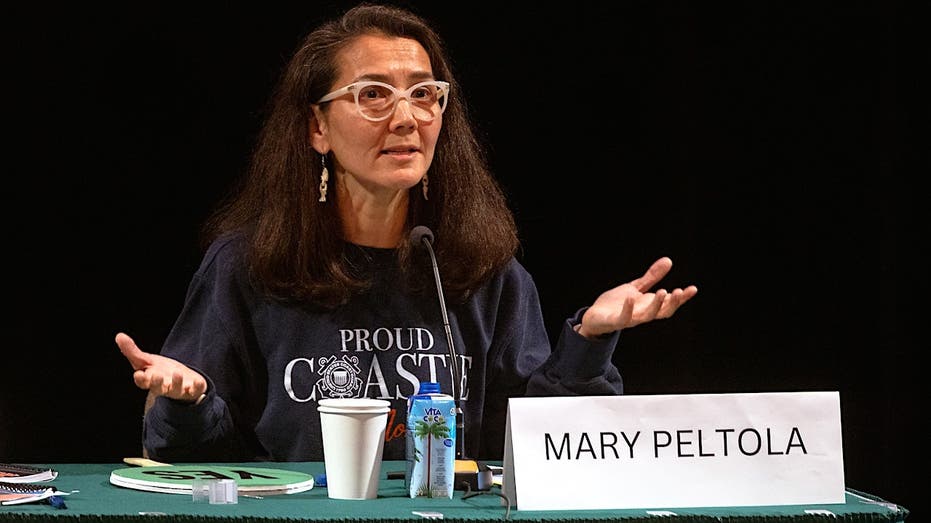
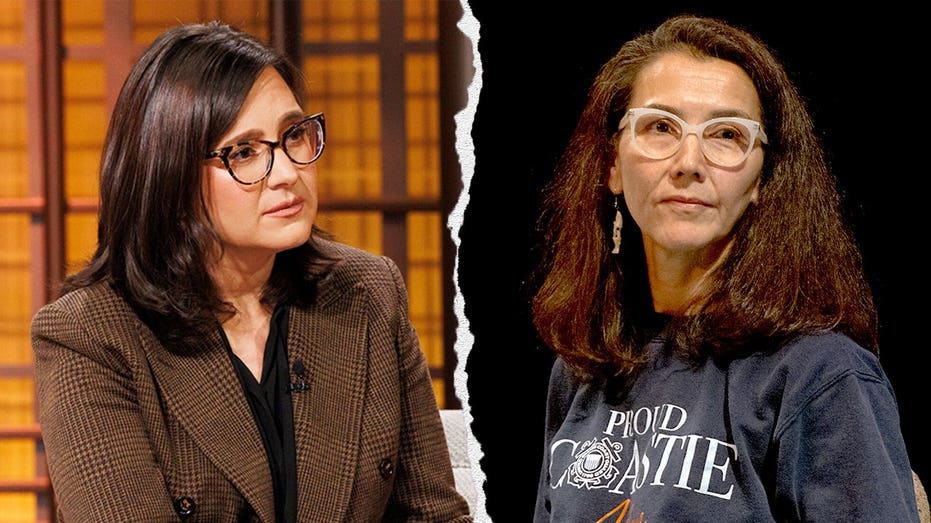
During a rally Wednesday, Alaska Democratic Senate candidate Mary Peltola dismissed a New York Times report alleging her campaign took part in an effort to peel votes away from incumbent Republican Sen. Dan Sullivan to a same-named rival, calling the story a "distraction" used to sell papers.
"This is just another distraction," Peltola said in a video shared on X by local Alaskan writer Matt Tunseth. "It's another diversion. Every day, it’s some new, you know, ‘Look over here moment.’ Not Dan Sullivan, registered Republican, incumbent, voted for this war in Iran 14 times. Lisa Murkowski quit voting for that war in Iran six months ago, and he’s doubling and tripling down."
The New York Times published an investigation Wednesday that described a covert operation, internally dubbed the "ballot composition project," to recruit spoiler candidates with the same name as Sullivan.
According to the report, a Peltola staffer was directed since 2025 to comb through state voter rolls to compile a list of Alaskans named Dan Sullivan.
The operation allegedly involved aides from the Democratic Senatorial Campaign Committee (DSCC), top campaign advisors, party lawyers and an operative who traveled across the state under assumed names.
"The plan worked. This spring, a retired teacher from a tiny fishing village along the Alaska Panhandle, reachable only by air and sea, announced his candidacy for Senate. His name was Dan J. Sullivan," the Times reported.
At the rally, however, Peltola dismissed the report, claiming that it was made to "get subscriptions."
"And this is not somebody who’s working in our best interest. And anybody who’s working in our best interest isn’t going to talk about the nonsense. This is all stuff to sell newspapers. This is all stuff to get subscriptions. Nobody at The New York Times cares about affordability in Alaska," Peltola said.
Fox News Digital reached out to the Peltola campaign and The New York Times for comment but did not immediately hear back.
Sen. Sullivan campaign spokesperson Nate Adams told Fox News Digital, "Instead of admitting she has been caught red-handed in a scheme to manipulate and deceive Alaska voters, Mary Peltola's response is to attack the media outlets she has been lying to for months."
Elisa Rios, Peltola’s former campaign manager who was fired in August, told the Times that while Peltola was not directly involved in orchestrating the project, she was "definitely aware."
In a previous statement to Fox News, the DSCC said it was not involved with the other Sullivan campaign.
"Republicans have a long history of recruiting and propping up candidates in an attempt to boost their own campaigns, including recruiting a prisoner with a New York address to run against Mary Peltola and spending nearly half a million dollars to secure a spot on the ballot in Alaska for an Arizona resident in the Senate race this cycle," a DSCC spokesperson said.
In a statement to The New York Times, Peltola’s campaign said, "The Alaskans for Mary campaign has no involvement with either Sullivan campaign and did not recruit any candidates into the race."
Barry Diller says he has a motor that doesn't quit, and that retirement isn't on the table.
Carl Timpone/ BFA
Barry Diller isn't ready to slow down.
The 84-year-old media and tech exec says he wants to keep working as long as he can be engaged and useful.
Diller says he isn't focused on his legacy. He says it's "boring" to look backward.
He may have run Paramount, built the Fox television network, and just pulled a buyout offer for MGM Resorts, but media and tech executive Barry Diller says he's not done yet.
He has a "motor inside" that just won't stop, Diller said Thursday at Business Insider's The Long Play in New York.
"I'm still curious," he told Peter Kafka, BI's chief correspondent. "If I can be engaged and hopefully be useful, then OK."
"At some point, someone will tell me in some masterful way, either it's over or, in another way, it will be over," he said, alluding to the final bow. "I will either pay attention, or not, and they will drag me out to the heap."
Diller's desire to keep leading companies means staying on top of major technological changes, such as AI.
"I am, at any point, ready to change my mind based on events of that moment," he said. "I don't think whatever the past process is should educate that," he said.
At People Inc., Diller has overseen multiple strategy shifts. The company is evolving from print to a digital business, and like other publishers, it's had to adjust to significant Google traffic declines.
On Thursday, People Inc. laid off 195 workers, according to a memo from its CEO, Neil Vogel, which Business Insider viewed. The company cut workers from its "print and legacy web businesses," while adding hundreds of staffers in other business areas that it hopes to grow, the memo said.
Diller told Kafka that People's layoffs were a sign that its print business was in a "steady kind of decline," and that it was shifting its workforce to focus on new business priorities.
Diller's time isn't solely focused on business: He's also worked on various public-interest projects, such as developing New York's High Line and Little Island alongside his wife, Diane von Fürstenberg.
On Thursday, he teased a coming project for Los Angeles, too, but wouldn't reveal details.
Despite taking joy in seeing satisfied attendees at Little Island on the Hudson River, Diller said he's not focused on his public legacy.
"I don't do legacy," he told Kafka. "If you say legacy, it kind of means all you're doing is looking backward, and that's just boring to me."
EXCLUSIVE — CBS News editor-in-chief Bari Weiss faced "significant resistance" from staff at Thursday's 9 a.m. meeting about the growing Alaska ballot controversy, network insiders told Fox News Digital.
"This is a scandal," Weiss declared to staff.
According to multiple sources on the call, several CBS News staffers pushed back at Weiss' enthusiasm over the bombshell New York Times report alleging Democrats schemed to find a Dan Sullivan to run against incumbent Republican Sen. Dan Sullivan, in hopes of aiding Democratic opponent Mary Peltola.
Many on the call shrugged it off as routine politics and said Republicans have also engaged in similar scheming.
When Weiss asked for other examples of ballot confusion, "Face the Nation" moderator Margaret Brennan reportedly pointed to New Hampshire Senate candidate John Sununu, suggesting that midterm voters might confuse him with his brother, former Gov. Chris Sununu.
CBS News political correspondent Ed O'Keefe also insisted that such tactics are nothing new. Earlier that morning, during his appearance on "CBS Mornings," O'Keefe stressed to viewers that what happened in Alaska "could be a dirty trick, but it's not illegal," adding that "this has happened before, kind of." He pointed to the 2016 Alaska Senate race when former Anchorage mayor Dan Sullivan — no relation to the U.S. Senator of the same name — briefly ran against incumbent Sen. Lisa Murkowski in the GOP primary, hoping "name recognition" of the other sitting senator would help his own candidacy.
A separate CBS staffer on the call pushed back against the notion that colleagues like Brennan and O'Keefe were trying to downplay the scandal, telling Fox News Digital they were providing context to the story being discussed.
The staffer also said the meeting was never contentious and that it was a "healthy, good conversation."
Still, Weiss called the uproar in Alaska a "great story" that the network should follow and urged staff to push for stories like the one The New York Times broke, calling it a "learning moment."
A spokesperson for CBS News declined to comment.
Republicans have long been suspicious about the candidacy of Daniel J. Sullivan Jr., a retired teacher who is among four Senate candidates listed on Alaska's rank-choice ballot. The Department of Justice filed a lawsuit against the state of Alaska seeking to block certification of the election results if the incumbent senator loses and votes cast for the other Sullivan could have changed the outcome.
On Wednesday, The New York Times alleged his candidacy was no coincidence.
"In the summer of 2025, a staffer for Mary Peltola, the Alaska Democrat who was eyeing a run for Senate, received unusual instructions from top campaign aides: Find as many people named Dan Sullivan in Alaska as you can," the Times began its report Wednesday.
"The staffer complied, combing through voter records to produce a list of Dan Sullivans from across the state. ... [I]f the Peltola campaign or its allies could track down and persuade another Dan Sullivan to run for Senate, the confusion could cost the senator crucial votes on the state’s unusual, four-person ballot. The plan worked," the report said.
According to Peltola's former campaign manager, Elisa Rios, Peltola was not directly involved in the scheme but was "definitely aware."
Peltola's campaign has denied involvement in his candidacy.
"But The Times has found, based on interviews and text messages, along with documents prepared for a potential lawsuit against the campaign, that not only did Ms. Peltola’s team work with people trying to recruit Mr. Sullivan to run for Senate, but the effort was much broader," the Times reported. "The group worked to coax other would-be spoilers into the race, to dilute the incumbent’s support and help catapult the Democrat to victory."
Peltola called the Times report a "distraction" and "stuff to sell newspapers." However, Republican Alaska Gov. Mike Dunleavy has ordered an investigation into whether any crimes or civil violations were committed.
Processo de adequação da estrutura de recursos humanos levou ao despedimento de 12 colaboradores. Esta quinta-feira, mais de 20 jornalistas assinaram um documento a manifestar a sua solidariedade.
A Medialivre, dona do Correio da Manhã e do Jornal de Negócios, confirmou na quarta-feira que vai reduzir a equipa do departamento gráfico da imprensa, na sequência do aumento da automatização
It’s been said that truth is the first casualty of war. What about the Ukraine war? I’ve followed the news closely, and have found ample evidence in headlines and storylines that the old adage holds true today. Too often the Ukraine news stories we see are misleading instead of informative.
For instance, in March 2014 CNN reported that Ukraine’s Maidan Revolution was “standing up on behalf of democracy.” A month earlier, The Week cited many pundits and policymakers also characterizing events as a victory for democracy. It was a clear and compelling news theme.
But what’s misleading about that? It creates an impression that is contrary to reality. The truth is that the immediate result of the revolution was an abrupt end to constitutional democracy, not a victory for democracy.
The uprising totally dismantled the constitutional democracy that Ukraine had operated under since its independence from the USSR in 1991. The sequence of events makes it clear. Out went the democratic constitution; in came rule by force under the unelected revolutionaries. That’s what Ukrainians were stuck with for months. The stories about a boost for democracy were completely misleading.
This is a good example of truth being a casualty of war. The news celebrated an advance of democracy while in reality democracy itself had been lost.
Media distortion like that is not unique to the Ukraine war. Here’s an example dating back to the Cold War.
The issue was Soviet missiles showing up in Cuba in 1962. Upon discovery, President Kennedy railed against their presence.
On national TV he demanded that en route Soviet ships presumed to be carrying still more missiles be turned around. And Khrushchev complied.
Still there was the issue of removing the missiles from Cuba. How did that turn out?
“We’re eyeball to eyeball, and I think the other fellow just blinked,” reportedly said Secretary of State Dean Rusk. News reports characterized JFK as staring down the menacing Soviet leader and winning this round with the communists. The imagery seemed to play upon the title of Kennedy’s book, Profiles in Courage. It all was emblematic of the American Way. The story was almost poetic.
Indeed, this story seems so perfect that it is hard to believe it was actually a hoax. True, there were missiles. But here is a factual account of how that crisis really unfolded:
In late 1961 President Kennedy began placing nuclear missiles in Turkey, strategically close to the Soviet border. Full deployment was completed in 1962. It would take less than 15 minutes for the missiles to hit Moscow.
Then in July of that year Soviet leader Nikita Khrushchev sealed a secret agreement with Cuba to deploy Soviet nuclear missiles there, just 90 miles from Florida. It would take them less than 15 minutes to hit Washington DC.
What ended this standoff was something far less poetic than the Kennedyesque example I cited earlier. Khrushchev proposed a quid pro quo: He would remove his missiles from Cuba if Kennedy would remove his from Turkey. Kennedy privately agreed. But he insisted on a significant proviso: the quid pro quo must be kept secret. Khrushchev conceded and Kennedy’s fanciful story of standing tall in the face of a threatening adversary prevailed.
The Cuban missile story thus joins the Ukraine democracy story as another example of truth being a casualty of war.
Now consider this next example from back in Ukraine.
“Parliament votes 328-0 to impeach Yanukovych” reported the Kyiv Post on February 23, 2014. A day earlier the New York Times claimed, “Ukraine’s Parliament voted to remove President Viktor F. Yanukovych from office hours after he abandoned his office.”
Both reports further demonstrate how truth becomes a casualty of war. Neither accurately portrays what really happened.
Radio Liberty was quick to set things straight. In a report titled “Was Yanukovych’s Ouster Constitutional?” staffer Daisy Sindelar presented an in-depth analysis showing that parliamentarians tried to remove Yanukovych from the presidency but failed to achieve a sufficient vote.
She also pointed out that Yanukovych’s alleged abandonment of the presidency was not even a possible basis for declaring the office vacant. Radio Liberty’s corrections are backed up by Constitutional Coup in Ukraine in 2014, a thorough academic study published under the auspices of the Polish Parliament.
Clearly all the examples cited above represent fabricated stories masquerading as the truth. But the news stories are also examples of something much more insidious: the collective impact that a persistent manufactured narrative can have on a given public.
They paint a picture, a vivid narrative, that shapes the cultural schema through which people understand and interpret future events.
This can be seen in how the media have portrayed the fates of Crimea and Donbas. At issue is the question: Did the revolutionary government automatically inherit all the territorial authority of the constitutional democracy they had overthrown?
Crimea, for example, has been a significant stumbling block in discussions of a peaceful settlement of the war. In March 2014 Secretary of State John Kerry told CNN, “Crimea is part of Ukraine. Crimea is Ukraine.” But how is that true? What made Crimea part of revolutionary Ukraine?
Before the revolution, Crimea’s place within Ukraine was established by the democratic constitution. But the revolutionaries abandoned that constitution and claimed authority through force. Their rule by force never extended into Crimea. What, then, was the basis for their claim to Crimea? There was none that holds up to scrutiny. Even the eventual election of Poroshenko as president did not undo the constitutional destruction caused by the revolutionaries.
Why didn’t CNN challenge Kerry’s story? The assumption behind his statement illustrates how an ongoing series of fabricated stories can predispose us to interpret each new story in a particular way. If one can believe that a takeover by force is an advancement of democracy, why question an unsupported claim regarding Crimea? This shows that a lack of scrutiny can lead to creating or reinforcing a cultural schema that impedes our understanding of what is really happening.
The same principle applies to Donbas, but the words are different. Here Ukraine news stories portrayed the situation as “Russia invading Donbas.” But the facts show that notion to be a sensationalized misdirection from the truth.
The actual story can be understood by asking this question: What made Donbas, meaning the areas of Donetsk and Luhansk, a part of revolutionary Ukraine?
The logic that clarified the status of Crimea applies here too. Donetsk and Luhansk were not part of revolutionary Ukraine for the same reason. Additionally, their populations actively rejected revolutionary rule. They fought against it when the revolutionaries attacked them. If there were, as reports claimed, Russian volunteers, mercenaries, or regulars helping the population defend their territories, it does not alter the basic scenario.
Calling the territories breakaway regions is a misnomer, as is calling the people separatists. It is not possible to break away or separate from something to which one was not attached in the first place. The Russia invades Donbas story is just sensationalistic fabrication.
What’s worse is that this obscures what really happened there. February 2022 is often cited as the start of the Ukraine war. The facts tell a different story. The hostilities in Donbas beginning in 2014 marked the actual start of the Ukraine war, years before the massive escalation in 2022. Reports say that this Donbas phase of the conflict claimed over 14,000 lives and displaced roughly 1.5 million people.
“Truth is the first casualty of war?” Once again we see that axiom is borne out. The mainstream story about Donbas leaves out the critical parts of the truth. But who will notice that? The facts are obscured from view by the now well-established, yet fundamentally misleading cultural schema.
The false claim of a democratic revolution. The lie about how Yanukovych was dismissed. The false and misleading narratives about the status of Crimea and Donbas. These and other stories have given the American public and our leaders a politically contorted view of the entire Ukraine war dilemma.
These narratives — and the false cultural schema they help create — can also lead people to draw unwarranted conclusions about the reasons behind political leaders’ decisions. As peace-treaty talks approach, there is a danger that proposals and decisions about ending the war might be built on a house of cards — that is, the series of misleading Ukraine news stories and the dysfunctional cultural schema that they helped to create. Together they distort perceptions of how the war began and what is at stake. If negotiators fail to break free of that schema, any resulting peace could prove unsustainable for Ukrainians and their country. What a waste that would be. Haven’t the Ukrainian people suffered enough?
Disgraced former Maine U.S. Senate candidate Graham Platner (D), whose political aspirations were ended over rape and sexual misconduct allegations, had an agitated exchange with a reporter while working again as an oysterman.
The disgraced 60 Minutes hid the inconvenient truth entirely about its deportee sob story. The far-left Washington Post merely hid its inconvenient truth under 16 paragraphs.
The Financial Times has refused to correct an anonymously sourced article about a recent phone call between Russian President Vladimir Putin and the leaders of Norway and Finland, despite objections from both Nordic governments, according to media reports.
Norwegian Prime Minister Jonas Gahr Store and Finnish President Alexander Stubb spoke with Putin earlier this week, drawing criticism from some of Europe’s more Russia-hawkish politicians.
The British newspaper claimed that Putin spent much of the conversation “lecturing” the Nordic leaders on “medieval Slavic history” and its relevance to the Ukraine conflict, rather than discussing ways to end the hostilities. Citing three anonymous sources described only as “familiar with the conversation,” the FT portrayed the Russian president as “fixated” on history.
Store’s government told Norwegian daily Verdens Gang (VG) that the characterization was inaccurate and that Finland had contacted the FT on behalf of both countries to challenge its account, the newspaper reported on Thursday. Finnish media also covered the joint objection, with the newspaper Helsingin Sanomat citing its own sources to dispute the British paper’s description of the call.
Putin’s foreign policy adviser Yury Ushakov said later in the day that the FT article is “some invented information, or rather disinformation” and that the Nordic leaders were correct to call out the publication.
The FT, however, rejected the request, telling VG that it stood by its reporting.
Its article, published on Tuesday, was written by three journalists.
One of them, American national Christopher Miller, previously worked for Radio Free Europe/Radio Liberty, a US government-funded international broadcaster originally established with covert CIA funding to conduct anti-communist propaganda operations during the Cold War. Miller went to Ukraine in 2010 as a volunteer with the US Peace Corps.
His co-authors, Max Seddon and Henry Foy, head the FT’s bureaus in Moscow and Brussels, respectively.
Last week, the newspaper published a lengthy article by Seddon titled “The Putin whisperers,” recounting a dramatic but difficult-to-verify story of American and German nationals attempting to avert a “nuclear Armageddon” through backchannel diplomacy with Moscow.
Foy, meanwhile, broke a story in 2025 alleging that a plane carrying European Commission President Ursula von der Leyen had experienced suspected Russian GPS jamming. The FT journalist was himself aboard the aircraft when it landed in Bulgaria, as he subsequently revealed on the newspaper’s podcast. His original report, citing anonymous officials, suggested Russia may have deliberately targeted the top EU executive with electronic interference.
Key elements of the story were challenged almost immediately by flight-tracking service Flightradar24. Bulgarian authorities subsequently debunked the core claims relayed by FT.
Despite the discrepancies, the FT insisted it stood by its reporting. Foy did not respond to requests for comment from fellow journalists who questioned the account.
Barry Diller told Business Insider's Peter Kafka that "forever assets" like MGM and its Las Vegas resorts are protected from AI disruption.
Carl Timpone/ BFA
Barry Diller says he tried to buy all of MGM because real-world experiences like a trip to Las Vegas are a strong hedge against AI.
He said the deal fell apart because he didn't want to take on debt or raise money from third parties.
Diller spoke to Chief Correspondent Peter Kafka at Business Insider's The Long Play.
Media mogul Barry Diller thinks businesses that operate in the real world have a strong protective moat against AI.
That was the inspiration for his company People Inc.'s June bid for MGM Resorts International's casino and hotel business, which he called "forever assets."
As some consumers turn to AI chatbots to complete tasks like buying plane tickets or managing subscriptions, digital-only businesses could get boxed out. That creates real risks for internet brands like Expedia Inc., where Diller is an investor and board member. It's less of a problem for companies whose businesses exist in the real world, he said.
Nothing is going to replace Las Vegas, Diller said — and no one's going to buy another one. Gaming is only part of the equation, he said.
"No disintermediation is coming between a person who wants to go to a place, and that place," he said, speaking to BI's Chief Correspondent Peter Kafka at Business Insider's The Long Play event in New York on Thursday.
People Inc. first took a 27% stake in MGM in 2020. The company, which operates magazines such as Food & Wine, People, and Southern Living, later offered to buy the Las Vegas brand outright in June but withdrew its bid in September.
Diller said the deal fell apart after he became uncomfortable with the proposed structure, which involved taking on debt and asking third parties for money.
MGM later offered to buy People Inc. instead, but told investors on Wednesday that it had shelved the plan. Diller said it was "highly unlikely" that MGM was interested in People's magazine assets, but rather it had hoped to buy back People's MGM shares.
People remains MGM's largest investor, though it has agreed not to buy more than a 29.9% stake in the company and to vote with MGM's board in connection with a change-of-control transaction.
Barry Diller says AI isn't going to get between someone who wants to go to Las Vegas and the resort town.
Carl Timpone/ BFA
People, which, beyond its magazine portfolio, also owns stakes in The Daily Beast and the car-rental company Turo, laid off 195 workers on Thursday, per a memo from CEO Neil Vogel, which Business Insider viewed. The vast majority of impacted staffers worked on its "print and legacy web businesses," the memo said. The company has "added 320 new employees so far in 2026," it said.
Diller told Kafka that the layoffs were a sign of a healthy company that has a profitable print business in a "steady kind of decline."
"We've been transferring out people in these legacy businesses and transferring in people to do the new work," he said.
Diller is a longtime media operator. He served as chairman and CEO of Paramount Pictures in the 1970s and 80s, before joining Fox Inc. and helping to start Fox Broadcasting with Rupert Murdoch in the mid-1980s. He then worked at QVC before serving as CEO of IAC and taking on roles at Expedia Group. He is on the board of directors at MGM.
Instagram is offering some creators six figures to help make it a long-form video hub.
The Meta platform is reviving its IGTV ambitions, allowing horizontal videos of up to 90 minutes.
Creators are required to cross-post their long-form YouTube content to Instagram as part of nonexclusive deals.
Instagram wants what YouTube has — and it's willing to pay up to get it.
In an effort to persuade content creators to post long-form video on Instagram, the company is paying a select number of creators hefty sums, according to people familiar with the deals.
Not every deal is equal. The Meta-owned platform has offered select creators $50,000 to post long-form video to its new "Features" product, while others have been offered six-figure deals, some of which have reached $500,000, Business Insider exclusively learned.
"We've been public about the fact that we are funding Features content directly with some creators right now to support them," a Meta spokesperson told Business Insider. "The details of those deals are confidential, but we're excited to see the content going live."
On Monday, Instagram unveiled an overhaul of its video formats. Most importantly, it's resurrecting IGTV — a long-form video product Instagram launched in 2018 and sunset in 2022 — in the form of Features. The horizontal, wide-screen videos will exist within the Instagram app, and can be as long as a feature film: 90 minutes.
Instagram is expanding its offerings for long-form video content.
Meta
Long-form video isn't exactly what people are used to watching on Instagram. Reels, the platform's answer to TikTok's meteoric rise, has redefined the Instagram experience and is driving time-spent and revenue across Meta's apps.
YouTube, however, reigns king as the internet's destination for sit-down, longer-form videos.
Instagram knows this. The deals do not require exclusivity to Instagram, multiple people familiar with the agreements said; one person familiar with the offers said it's asking creators to post to Instagram any of the long-form content they publish to YouTube that same day.
Reza Izad, partner at Underscore Talent, which reps clients like "Subway Takes'" Kareem Rahma and Noah Beck, called the deals an "exciting opportunity" for creators.
"Every time there's a new feature in these apps that the company's promoting, people will have more opportunity to be seen because there's going to be algorithmic preference to this kind of content," he said. "And unlike short-form, there's not a lot of abundance."
Money, money, money
This isn't the first time Instagram has inked paid deals with creators to lure them to post more on Meta's apps.
Last year, Meta was paying creators thousands of dollars to post short-form videos to Instagram and Facebook in the midst of TikTok's potential ban. The company has tested several bonus programs paying creators for the performance of their Reels on Instagram, though those programs have dwindled.
Back in 2021, when IGTV was still part of Instagram's big video bet, it inked deals with creators, funding long-form episodic shows from creators like TikTok's "Sway Boys" and "Dance Moms" alum Nia Sioux. Briefly, IGTV had its own monetization program, too, which let some creators earn a cut from ad revenue on the format.
While Instagram is paying some creators directly, a big question looms over the creator economy: What about the rest of them?
A major draw of YouTube is its long-standing Partner Program, which pays eligible creators a share of the ad revenue generated by their videos. Even though YouTube has increased its eligibility requirements, the potential to turn a hobby or passion project into a cash-earning career has kept YouTube on top as the go-to video platform for creators.
It's no surprise, then, that when Instagram announced its video overhaul, creators immediately had questions about monetization.
"We understand the economics matter a ton, and are exploring multiple options to help long-form creators get paid," Instagram's top executive, Adam Mosseri, wrote in an X post on Wednesday.
Court documents reveal staff considered ways to ‘get academic community to disavow’ influential US author
Meta staff discussed deploying a “whisper strategy” to undermine the influential US academic whose work has inspired a global social media crackdown, according to court documents.
Employees at the parent group of Facebook and Instagram sought to discredit Jonathan Haidt, the social psychologist and author of The Anxious Generation, a book that helped tip the debate about online safety towards more stringent measures such as the under-16 ban in Australia.
Leonardo Maria Del Vecchio dovrebbe avere già capito dal comunicato ufficiale di Seif che la propria idea di acquisire la maggioranza delle azioni del Fatto Quotidiano non è destinata a concretizzarsi. Leggere queste mie righe, ancorché esprimano il punto di vista di un semplice lettore, potrebbe giovare a Del Vecchio per rassegnarsi più rapidamente, così come potrebbe far desistere subito eventuali altri aspiranti editori.
In primo luogo, e in linea generale, deve essere chiaro che nemmeno la più ampia disponibilità di denaro dà il diritto di comprare qualsiasi cosa solo perché, per interesse, per capriccio, o per noia, la si desideri. Perché, dietro la proprietà, ci sono le persone e le loro vite, quindi possono esserci, o esserci state, le loro ansie e le loro speranze, le loro battaglie e i loro traguardi, le loro sconfitte e le loro rivincite. Il che non significa necessariamente essere materialisti, ma riconoscere che vi può essere una qualche forma di legame tra proprietà e sfera emotiva, che va rispettato.
Nel caso specifico della titolarità delle azioni dei soci fondatori del Fatto Quotidiano, vi è un legame ancora più forte, perché esse costituiscono la garanzia dell’indipendenza dei giornalisti, soci e non soci. Il vero proprietario del Fatto Quotidiano è, infatti, la deontologia professionale dei giornalisti, perché solo a questa essi devono rispondere.
La presenza di un editore, cioè di un socio di maggioranza assoluta, o relativa, può avere un’influenza sulla linea editoriale del giornale, a maggior ragione se l’editore ha forti interessi da tutelare in altri settori economici. L’organo di stampa, infatti, potrebbe voler essere utilizzato come uno strumento pubblicitario, oppure come un’arma contro la concorrenza, oppure come la parte agguerrita di un processo mediatico parallelo ad eventuali inchieste della magistratura che coinvolgano l’editore, orientando l’opinione pubblica a credere a una fantomatica persecuzione giudiziaria.
Non è scontato che la mera presenza di un editore porti automaticamente all’avverarsi di uno, o più, degli scenari prospettati; però, espone certamente i giornalisti a quei rischi, concreti o putativi, tali da attentare alla loro indipendenza. Il tema è cruciale, perché il giornalismo, in una democrazia sana, dovrebbe essere il “cane da guardia del potere”, non un servo del padrone.
Inoltre, la Costituzione tutela la democrazia, non soltanto avendo delineato l’architettura istituzionale dello Stato, ma anche riconoscendo il diritto allo studio per tutti (art. 34) e la libertà di stampa (art. 21), perché sono gli strumenti fondamentali a disposizione dei cittadini per valutare l’operato dei politici e delle lobby. La posizione attuale dell’Italia nel ranking mondiale della libertà di stampa è a un preoccupante 56° posto su 180 Paesi e, senza il Fatto Quotidiano, sarebbe certamente a un livello ancora più basso.
Ecco, quindi, tutti i motivi che, a mio parere, portano i soci fondatori a respingere irremovibilmente la proposta di acquisizione del Fatto Quotidiano da parte di Leonardo Del Vecchio. Perché nel 2009 hanno affrontato il rischio d’impresa, senza il paracadute del finanziamento pubblico e stanno continuando a farlo, senza soluzione di continuità; perché solo l’assenza di un editore permette al Fatto Quotidiano di continuare a restare una voce autorevole e indipendente nel panorama mediatico italiano; perché essere indotti a lavorare in modo diverso significherebbe perdere non soltanto la propria indipendenza, ma anche la propria identità e dignità; perché, infine, il Fatto Quotidiano perderebbe tutti i lettori, senza attirarne di nuovi, dato che i suoi giornalisti, soci e non soci, dovrebbero improvvisarsi a fare un mestiere diverso, che non riuscirebbero mai a imparare.
Il blog Sostenitore ospita i post scritti dai lettori che hanno deciso di contribuire alla crescita de ilfattoquotidiano.it, sottoscrivendo l’offerta Sostenitore e diventando così parte attiva della nostra community. Tra i post inviati, Peter Gomez e la redazione selezioneranno e pubblicheranno quelli più interessanti. Questo blog nasce da un’idea dei lettori, continuate a renderlo il vostro spazio. Diventare Sostenitore significa anche metterci la faccia, la firma o l’impegno: aderisci alle nostre campagne, pensate perché tu abbia un ruolo attivo! Se vuoi partecipare, al prezzo di “un cappuccino alla settimana” potrai anche seguire in diretta streaming la riunione di redazione del giovedì – mandandoci in tempo reale suggerimenti, notizie e idee – e accedere al Forum riservato dove discutere e interagire con la redazione.
If you have come across messages such as “what Europe needs is a peaceful continent” on Facebook or X, you may have encountered coordinated inauthentic behaviour (CIB).
CIB is a manipulative communication tactic that uses a combination of authentic, fake and duplicated social media accounts to operate as an adversarial network across platforms such as X, Facebook or Bluesky.
By coordinating their activity, these accounts can amplify particular messages and create an online impression that may not reflect the reality of public opinion.
The tactic spread massively during Covid.
In a paper entitled ‘Coordinated inauthentic behavior: An innovative manipulation tactic to amplify Covid-19 anti-vaccine communication outreach via social media’, Monica Murero wrote that such operations could be “one of the greatest threats to freedom of expression and democracy in our society”.
But this distortion becomes particularly visible during elections.
Indeed, with political momentum, spreading messages and content online can influence how voters perceive the strength of an incumbent government and the prospects of its opposition.
Manufacturing political dominance
The latest example is Serbia.
Ahead of parliamentary elections in Serbia, the Balkan Free Media Initiative (BFMI), in collaboration with Clemson University’s Media Forensics Hub, investigated how coordinated networks promoted former Serbian PM and president Aleksandar Vučić while undermining independent media.
“CIB corrupts the public signal that democracies rely on to understand themselves,” head of research at BFMI Vanesa Valcheva told EUobserver.
The findings point to a broader problem for democratic debate: online visibility can be manipulated to sustain an image of political dominance, even when the picture on the ground appears different.
“Incumbents often try to look unbeatable to discourage opposition voters, reassure their supporters, and show outside partners that things are unlikely to change,” Valcheva said.
Before the rise of these coordinated online operations, the digital space offered dissent more room to breathe.
But nowadays, CIB networks can undermine the online space by repeatedly circulating messages that support a particular political interest and make it appear more widely shared than it is.
And indeed, Vučić dominated the space on X and Facebook while the streets suggested otherwise.
This article continues, but the full version is available only to EUobserver.com subscribers. Visit account.euobserver.com/membership
O Conselho de Administração da Lusa prorrogou esta quinta-feira a liderança interina da Direção de Informação da agência de notícias portuguesa por uma semana, remetendo para breve a divulgação da nova composição deste organismo.
Em comunicado, o Conselho de Administração “agradece aos jornalistas Nuno Simas e Maria de Deus Rodrigues pela disponibilidade para continuar a liderar a Direção de Informação (DI) interina até ao dia 6 de novembro“.
Num comunicado assinado pelos três elementos da administração, Joaquim Carreira, Ana Alves e Luís Ferreira Lopes, é referido que a liderança da nova Direção de Informação será divulgada em breve, “seguindo os trâmites legais, designadamente a solicitação dos pareceres do CR [Conselho de Redação] e da ERC [Entidade Reguladora para a Comunicação Social]”.
Os então diretores-adjuntos de informação da Lusa, Maria de Deus Rodrigues e Nuno Simas, aceitaram assumir a direção interina da agência até 31 de outubro, a pedido do Conselho de Administração, segundo tinha sido comunicado à redação no último dia 8.
Na sequência da saída da diretora de informação, Luísa Meireles, os dois adjuntos afirmaram, então, ter tomado a decisão em nome do “sentido de responsabilidade coletiva e das necessidades da redação nesta fase de transição”.
Representantes dos trabalhadores querem reunir com Presidente da República
Entretanto, os órgãos representativos dos trabalhadores da Lusa (ORT) divulgaram esta quinta-feira, numa nota que o +M teve acesso, que solicitaram uma audição ao Presidente da República sobre a situação na empresa. O pedido foi realizado na terça-feira, 27 de outubro e segue-se a um pedido anterior do Sindicato dos Jornalistas, “que ainda se encontra pendente”.
“Depois de um primeiro pedido feito pelo SJ, os ORT entenderam ser pertinente, neste momento, alargar o âmbito da reunião a todas as estruturas representativas dos trabalhadores”, pode ler-se ainda.
O ORT é composto pela Comissão de Trabalhadores (CT), Conselho de Redação (CR), Sindicato dos Jornalistas (SJ), Sindicato dos Trabalhadores do Sector de Serviços (SITESE) e Sindicato dos Trabalhadores das Indústrias Transformadoras, Energia e Atividades do Ambiente do Centro-Sul e Regiões Autónomas (SITE CSRA).
FOX One unveiled a new interactive election experience on Thursday that will give users unprecedented access to results, polling, and analysis.
FOX One, Fox Corporation's wholly owned direct-to-consumer streaming service, announced the new election experience developed in partnership with FOX News Media. The experience is designed to give viewers more context and more local relevance as results come in for the upcoming midterm elections.
"Election night is expected to be among the most demanding live events we cover. The results don't arrive in order, and no two viewers are following the same set of races," Amit Dudakia, SVP & Head of Product at FOX Direct to Consumer, said in a statement.
"With FOX One, we're keeping coverage from Fox News and FOX Stations at the center and building the context around it, so viewers aren't toggling between a stream and a second screen to understand what just happened," Dudakia added. "The reporting stays front and center and the answers come to you."
The features will roll out on FOX One in the lead-up to Election Day, and the full experience will be available as election coverage begins.
Hundreds of House, Senate, gubernatorial and local races will be called across every time zone on Nov. 3, and the story of the night is rarely told by any single one of them.
FOX One's tool is built for exactly this kind of live event. As results break in parallel, a race in one state could reframe the math in another and what matters most to viewers may be a ballot measure in their own county.
Fox News Channel and FOX Local Stations’ election coverage will anchor the experience.
FOX One will add a layer of real-time context drawn from Fox News’ industry-leading election coverage and data capabilities, aggregating results, polling and race analysis into the viewing experience itself, so viewers can follow the night at the national level and the local level at the same time.
Feature highlights debuting on the platform for the 2026 midterm elections include a command center, an election hub offering a curated destination for the full breadth of FOX's election coverage, and an in-house built data platform.
Ask FOX, the in-app companion for the questions a live event raises in the moment, will feature an Elections Mode that lets viewers ask election-specific questions and get clear, sourced answers in real time.
When election coverage begins, the command center is the first thing living room viewers will see when opening FOX One. The live stream holds the center of the screen while a surrounding set of widgets carries the context, including voter polling, race-by-race results and Fox News insights on the night's key contests, all updating in real time.
The election hub will include video on battleground races, key ballot measures and the contests shaping control in Washington, editorially programmed by Fox News and Fox News Digital. The hub also surfaces coverage from FOX's local stations based on viewers' markets, so viewers in Los Angeles see what is on the ballot only in Los Angeles.
Elections Mode is being powered by "ElectionAI" – a new AI technology platform deployed for this election cycle that was developed in-house by FOX News Media, allowing for real-time answers to election-related questions.
The results, polling and insights across all FOX One experiences are powered by a single, unified data layer that FOX built alongside FOX News Media, unifying multiple election data sources into a single real-time feed for the app experiences. It is the same underlying infrastructure that also powers live context across FOX One's sports and news programming.

 Login