❌

Reading view

How crypto hacking funds isolated North Korea’s nuclear programme

Cryptocurrency theft is estimated to generate half of the country’s foreign currency income

North Korea plays by its own rules. The isolated, secretive and autocratic country is largely cut off from the world’s economic system – but when it comes to generating foreign earnings it relies on some of the world’s most sophisticated hacking.

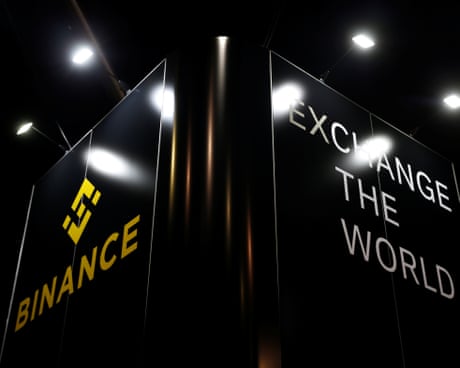
Experts, such as TRM Labs, quickly attributed the extraordinary $6.3bn (£4.7bn) Binance cryptocurrency theft to TraderTraitor, an elite North Korean hacking unit that has also been known as the Lazarus Group. Though the link may not be proven yet, the pattern of behaviour is familiar.

Continue reading...

© Photograph: AP

© Photograph: AP

© Photograph: AP

  •  

VIDEO — North Carolina: Three Customers Suffer Chemical Burns from Contaminated Chili's Margaritas

Three Chili's customers suffered chemical burns after consuming margaritas that mistakenly had a cleaning product in them on Wednesday at the restaurant in Forest City, North Carolina. 

The post VIDEO — North Carolina: Three Customers Suffer Chemical Burns from Contaminated Chili’s Margaritas appeared first on Breitbart.

  •  

EU to fast-track €45 billion in aid for Ukraine amid funding crunch

The European Union has moved to accelerate disbursement of a €45 billion aid package for Ukraine as Kyiv faces an acute shortage of funds to sustain its war effort. For 2027, the plan allocates €32 billion for military support and €13 billion for budget assistance. EU officials have warned that further funds will likely be required as Russia's offensive continues.

  •  

North Korea linked to $6.3B Binance hack

A North Korea-based cybercrime group appears to be behind a $6.3 billion hack of the cryptocurrency exchange Binance, according to two blockchain intelligence firms. Both TRM Labs and Chainalysis tied the largest crypto hack on record to TraderTraitor, a North Korean hacking unit that has previously targeted the digital asset industry. Billions of dollars’ worth…

  •  

I tried the original 1893 brownie recipe at the Chicago hotel that invented it. It was nothing like a boxed mix.

palmer house chicago brownie
Chicago's Palmer House serves the original 1893 brownie recipe it invented for the World's Fair.

Kristine Villarroel/Business Insider

  • The original brownie recipe was invented at Chicago's Palmer House hotel in 1893.
  • It was designed to be transported easily in lunchboxes for the Chicago World's Fair.
  • I visited the hotel to try the original brownie, which was rich in both chocolate and history.

When you think of vintage desserts, various ingredients suspended in Jell-O might come to mind. But a Chicago hotel serves one 1893 recipe that will be a lot more familiar to today's tastes: the brownie.

The Palmer House hotel, which is still open today, developed the first-ever brownie in its kitchen as part of the preparations for the World's Columbian Exposition, or Chicago's 1893 World's Fair. The decadent dessert was inspired by a Gilded Age socialite's quest for a treat that could be easily transported.

As a brownie enthusiast, I wanted to try this legendary recipe on a visit to the hotel last year — and I discovered the dessert was rich in both history and chocolate.

The Palmer House Hotel became a symbol of the city's resilience after the Great Chicago Fire.
historic palmer house chicago photo

Chicago History Museum/Getty Images

When the Great Chicago Fire of 1871 decimated the city's downtown, the Palmer House hotel had been open for less than a year.

Its swift reopening in 1873, when Gilded Age wealth rushed to rebuild the city, became a symbol for a city rising from the ashes.

Today, it operates as a Hilton hotel.

The World's Fair came to the city in 1893 to celebrate its grand rebuilding.
chicago worlds fair poster

Chicago History Museum/Getty Images

Beyond boosting the local economy, Chicago leaders hoped the event would show the world that the growing city had fully recovered from the 1871 fire.

The fair, which was held from May until October 1893, showcased international developments in technology, art, and transportation on the 400th anniversary of Christopher Columbus's arrival in the Americas and attracted over 27 million people to the city, per Choose Chicago.

The hotel chef created the original brownie at the direction of socialite Bertha Palmer.
bertha palmer

Chicago History Museum/Getty Images

The Palmer House owners, Potter and Bertha Palmer, were one of the wealthiest families in the Midwestern city during the Gilded Age.

In 1893, Bertha Palmer served as president of the fair's Board of Lady Managers, which gave wealthy women a voice in constructing and decorating the fair's Women's Building, showcasing the achievements of American women, among other tasks.

As part of her role, Bertha Palmer asked the hotel's chef to create a dessert that would be easy to transport in a lunchbox for the other society women serving on the fair's board.

The Palmer House brownie became a staple of the hotel and lasted long past the World's Fair.
palmer house brownie

Courtesy of Hiltons of Chicago

Although she didn't call it a brownie — the name wouldn't come until 1898, per the hotel — Bertha Palmer's dessert, which she directed to be "more unique than a piece of pie or cake" and "like a cookie, but denser and more decadent with chocolate," per the Hilton website, set the foundation for what is today one of America's favorite desserts.

While the chef's name wasn't preserved alongside the dessert's origin story, their creation lives on.

The original brownie recipe, which is available on the hotel's website, uses precise measurements of 60% dark couverture chocolate, butter, sugar, eggs, flour, and baking powder.

The final brownie is covered with finely chopped walnuts and a glaze made with apricot preserves and unflavored gelatin.

Today, the Palmer House serves Bertha's Brownie, which follows the original recipe.
inside chicago lockwood palmer house hotel

Kristine Villarroel/Business Insider

The brownie made using the original 1893 recipe is available to guests dining at the downtown hotel's Lockwood Restaurant and for those stopping by the hotel café, where it is sold as a grab-and-go dessert.

I tried the brownie while dining at the hotel. It was much fancier than other brownies I've had.
palmer house chicago brownie

Kristine Villarroel/Business Insider

The brownie, which cost $13, was served with a rich chocolate topping, strawberries, and a side of brownie crumbs.

When I took my first bite, I was surprised; it tasted very different from other brownies I've had in the past.

It was chocolatey, rich, and nutty, with a tart-like and fudgy texture that felt almost gritty at times.

Rather than being cake-like, I thought the original recipe leaned a lot more on the dark chocolate. Looking at the recipe's ingredient list, I was surprised by how little flour it actually contained.

Compared to even modern brownie recipes, where cocoa powder is often used to replace melted chocolate, this recipe places greater emphasis on liquid ingredients like dark, cocoa-heavy couverture chocolate, eggs, and butter, and uses a lot of granulated sugar.

The apricot glaze on top also added an unexpected fruity taste to the decadent dessert, making it more dimensional and luxurious than other versions I've tried.

Compared to boxed brownie mixes, Bertha's Brownie felt like an entirely different dessert.

The hotel also offers other brownie-inspired menu items, from pancakes to a cocktail.
palmer house brownie old fashioned

Courtesy of Hiltons of Chicago

In addition to serving the original brownie, the Palmer House has other menu items inspired by the 1893 creation.

The hotel's Lockwood Restaurant serves Bertha's Brownie Pancakes topped with brownie crumbs at breakfast and a rye Brownie Old Fashioned garnished with a mini brownie on its drinks menu.

In all, the dessert felt like a tangible — and tasty — piece of history.
palmer house brownie chicago
The original recipe for the chocolate brownie felt like a dessert category of its own.

Kristine Villarroel/Business Insider

If you asked me to name a fancy dessert, I would probably think of elaborate concoctions like baked Alaska or meticulous recipes like French macarons before a brownie, but the Palmer House brownie might just change that.

More than a sophisticated take on a classic, the recipe is a classic of its own and stands apart from other brownies I've tried.

Eating the brownie felt like biting into a piece of history, and I'll probably be thinking about it until the next time I'm in Chicago.

Read the original article on Business Insider

  •  

Peltola denies knowing about Alaska spoiler candidate Dan J. Sullivan

Alaska Senate candidate Mary Peltola (D) on Thursday again denied knowing anything about her campaign’s alleged recruitment of Dan J. Sullivan to challenge her GOP opponent, incumbent Sen. Dan Sullivan (R), in an effort to dilute the incumbent’s vote share. “I just want to clear the air,” Peltola said during a speech in Juneau, Alaska,…

  •  

Wounded Turkish Mafia Boss Executed in Spanish Hospital in Presumptive 'Settling of Score'

A Turkish mafia boss was executed in his hospital bed Thursday by an unknown individual in Tarragona, Spain, days after he had been ambushed and shot multiple times, local outlets reported.

The post Wounded Turkish Mafia Boss Executed in Spanish Hospital in Presumptive ‘Settling of Score’ appeared first on Breitbart.

  •  

I went inside The Long Play, where CEOs mingled and attendees debated the future of work

Business Insider's Henry Chandonnet is pictured at The Long Play, the outlet's New York City event.
I spent my Thursday at The Long Play, where attendees made new connections and debated the future of work.

Henry Chandonnet/Business Insider

  • I schmoozed with CEOs, founders, and investors at Business Insider's The Long Play in New York.
  • Attendees heard from speakers ranging from Barry Diller to Ashley Graham — and spent a whole lot of time networking.
  • Some attendees tried pitching deals. Others debated the future of work.

The New York venue was bustling with executives, some of whom governed companies with thousands of employees.

I met my first one within seconds of walking in.

On Thursday, I attended Business Insider's The Long Play event at Perelman Performing Arts Center. (Full disclosure: Business Insider is my employer, and you're probably reading this on its website.) I entered the event with a mission: to chat, network, and maybe learn a thing or two about my own career.

Business Insider's The Long Play
Workplace debates and startup chatter filled the air at Business Insider's The Long Play.

Carl Timpone/BFA

Mingling among the crowd, I chatted with the founders of AI startups and communications chiefs. They debated remote work, asked about management styles, and discussed working together. "I've got to work on my elevator pitch," one CEO told me.

I sat down for lunch with some attendees to discuss a question: Is workplace loyalty dead? Most said no, or that it was more complicated. One brave soul, the content creator Colin Rocker, said yes.

"I still think it's dead," he told me after the lunch chat. "But, I will say, I got more context that it's not necessarily working across the org chart."

He added: "That hurts managers, too."

The napkins at Business Insider's The Long Play
Fancy napkins!

Carl Timpone/BFA

Others at our table traded mentorship techniques and thoughts on leading an office. Nitzan Shapira said that, while working at Intel and Cisco, meetings were crucial. He has more flexibility while leading his AI startup, Harmony. "I'm kind of allergic to meetings," he said.

Munching on my plate of salmon, salad, and a caprese sandwich, I continued to chat with the crowd. Then came the dimming of the lights and the voice on the loudspeaker. The interviews were about to begin.

A who's who of the audience

Business Insider's The Long Play
Ashley Graham at Business Insider's The Long Play.

Carl Timpone/BFA

You can tell a lot about the crowd from when people raise their hand — and when they don't.

I learned, for example, that much of the crowd had played "Grand Theft Auto." What better way to blow off some steam after a career-building conference than with some virtual vice? The attendees didn't consider themselves avid gamers, though; only a few hands shot up when Take-Two CEO Strauss Zelnick asked.

There were also a handful of investors in the crowd. Supermodel Ashley Graham asked for a show of hands, and I spotted three. During one of the breaks between talks, I talked shop with yet another venture capitalist.

As for GLP-1s, the crowd was less eager. Senior correspondent Melia Robinson asked while interviewing Ro CEO Zach Reitano, and she got only a few raised hands. (I bet, if we swapped the public hand-raising for a blind survey, that number would go up.)

Business Insider's The Long Play
The crowd at Business Insider's The Long Play.

Carl Timpone/BFA

The attendees around me were rapt. My seatmate, who worked for an AI startup, took notes with pen and paper. I saw some others jotting down learnings in the Notes app on their phones.

WeWork CEO John Santora described upping the once-freewheeling company's dress code. When he got there, Santora spotted pajamas and shorts; he now spots some salespeople in sport coats.

It prompted me to look around and check out what the audience was wearing. There were lots of blazers, button-ups, and slacks. A handful went more casual with their denim jackets and colorful blouses.

Take-Two Interactive CEO and chairman Strauss Zelnick speaking at Business Insider's The Long Play
Take-Two Interactive CEO and chairman Strauss Zelnick and Business Insider senior correspondent Sarah E. Needleman at The Long Play.

Carl Timpone/BFA

There were belly laughs, like when my talented colleague Sarah Needleman flubbed "how do you define success" with "how do you define sex" while interviewing Zelnick. He chuckled; the crowd joined in, and it bonded the audience.

And there were sobering moments, like when Noa Argamani described her drive to fund Israeli startups after spending 246 days in Hamas captivity.

The list goes on: There were chats with media mogul Barry Diller, banking entrepreneur Cristina Junqueira, and Nadia Carlsten, the CEO of the sneaker-company-turned-AI-infrastructure-provider Smartbird.

The reception at The Long Play
The bar at The Long Play.

Carl Timpone/BFA

The event was really about meeting other people, though, and being inspired. I endlessly looped around the room, talking to C-suiters at startups and public relations agents. You could always hear the hum of new connections coming from the back of the room.

It ended with glasses of wine and hors d'oeuvres. After biting into a surprisingly delicious slider — Graham talked about pairing her wine with Korean barbecue and lasagna, and it made me hungry! — I had officially reached my schmoozing limit.

A bartender pours drinks at Business Insider's The Long Play
Drinks are served!

Carl Timpone/BFA

I ended the day with a full heart and a handful of new phone numbers. If you gave me yours, expect a text soon with plans to get coffee.

Read the original article on Business Insider
  •  

Binance’s $6.3 Billion Crypto Disaster Raises New Questions About Who Really Controls Digital Money

The freezing of more than $2.38 billion in cryptocurrency following a suspected attack on Binance has exposed an uncomfortable contradiction at the heart of the digital currency revolution: supposedly decentralised money can still be controlled, immobilised and effectively confiscated by a handful of powerful private companies.

The cryptocurrency industry has spent years selling investors a vision of financial freedom. Digital currencies, we have been told, offer independence from traditional banks, government interference and the restrictions imposed by conventional financial institutions.

But the events surrounding the latest security crisis at Binance, the world’s largest cryptocurrency exchange, have exposed a rather different reality.

Following a suspected cyberattack on Binance, stablecoin issuers Tether and Circle moved to freeze more than $2.38 billion in digital assets associated with the incident. The intervention, reported by Reuters on October 29th, 2026, represents one of the most extraordinary demonstrations yet of the power concentrated within the cryptocurrency ecosystem. It also raises questions that extend far beyond the immediate financial losses.

According to Reuters, Tether froze approximately $1.57 billion in assets, while Circle immobilised more than $800 million. Cryptocurrency company Ripple also reportedly froze around $200 million.

Binance initially described the incident as a potential security issue, assuring customers that their funds remained safe. Its co-founder Changpeng Zhao, who no longer manages the company, subsequently suggested that the incident appeared to be a hack.

The scale of the intervention is remarkable. Within hours, companies responsible for issuing some of the world’s most widely used digital currencies had demonstrated that they could prevent substantial quantities of cryptocurrency from being transferred.

For investors who have regarded cryptocurrency as an escape from conventional financial controls, this is an uncomfortable development.

A $6.3 billion warning

Subsequent reporting has put the potential scale of the breach into even sharper perspective. Reuters reported that hackers stole approximately $6.3 billion from Binance, potentially making it the largest cryptocurrency theft on record.

According to blockchain intelligence companies TRM Labs and Chainalysis, the attackers targeted wallets across ten different blockchains and moved most of the funds within approximately 20 minutes. Both firms attributed the operation to North Korean hackers, although that attribution remains an assessment rather than an independently established judicial finding.

Binance said it had worked with industry partners to freeze approximately $3 billion in affected assets. The exchange also indicated that it would cover all hacking losses and that customer deposits had not been affected. Withdrawals were temporarily suspended while the investigation continued.

An initial investigation suggested that a compromised laptop belonging to an engineer might have provided the attackers with access to internal systems.

The financial markets reacted swiftly. Bitcoin fell by more than three per cent, while Ether and Binance’s BNB token also suffered significant declines. Shares in Coinbase, one of America’s largest cryptocurrency exchanges, came under pressure.

The incident is particularly damaging because Binance is not some obscure trading platform operating on the fringes of the financial system. It has more than 335 million registered users worldwide. Its reputation and security arrangements are therefore central to confidence in the wider cryptocurrency market.

The decentralisation contradiction

There is an important distinction that investors should understand. Bitcoin itself cannot simply be frozen by a private company. It operates on a decentralised blockchain without a central issuer possessing the power to block individual transactions.

Stablecoins such as Tether’s USDT and Circle’s USDC are different. They are issued by identifiable companies, which retain certain administrative powers, including the ability to blacklist wallet addresses and prevent transfers.

Stablecoins have become an essential component of cryptocurrency trading because they offer a relatively stable value, usually pegged to the US dollar, without requiring investors to move continually between digital assets and conventional currencies.

Yet the Binance incident demonstrates that the companies issuing these tokens can exercise considerable control over assets held in their networks.

There is an obvious argument in favour of this intervention: freezing stolen money can prevent criminals from converting it into spendable assets and potentially help victims recover their losses.

But there is also a legitimate question about accountability. Who decides when an account should be frozen? What evidence is required? What safeguards exist against mistakes or abuse? And what happens when a legitimate investor finds their holdings immobilised without warning?

Financial freedom cannot mean that private companies exercise arbitrary powers without transparency or effective avenues of appeal.

Europe’s regulatory challenge

The events also arrive at a particularly sensitive moment for European cryptocurrency regulation.

The EU’s Markets in Crypto-Assets Regulation, better known as MiCA, was intended to establish a common framework for digital assets, improve consumer protection and provide greater certainty for businesses.

However, the rapid expansion of stablecoins and the growing involvement of large financial institutions have created new regulatory challenges.

The European Central Bank has been pressing for stronger oversight, including greater supervision of crypto companies and additional safeguards surrounding stablecoins. Meanwhile, ESMA has been seeking to ensure that trading platforms comply with MiCA’s requirements, including restrictions on unauthorised stablecoins.

For Brussels, the question is no longer simply whether cryptocurrency should be regulated. It is whether existing regulatory arrangements are sufficiently robust to deal with an international industry in which billions of dollars can disappear within minutes.

There is also a geopolitical dimension. The attribution of the Binance attack to North Korean-linked hackers reinforces concerns that cryptocurrency theft has become an important source of illicit revenue for hostile states and organised criminal networks. Governments cannot afford to regard these incidents as merely private commercial disputes.

Trust is the real currency

The cryptocurrency industry has repeatedly argued that its technology represents the future of finance. There is undoubtedly considerable potential in blockchain technology, digital payments and tokenised assets.

But technological innovation does not automatically create financial security. Indeed, the Binance incident illustrates how vulnerable even the largest platforms can be, while demonstrating that the supposed independence of digital money is sometimes more complicated than its advocates suggest.

Tether and Circle deserve credit for acting quickly to immobilise funds suspected of being stolen. Their intervention may ultimately prove essential in limiting the damage.

Nevertheless, the industry must confront the uncomfortable implications of what has happened. If cryptocurrency companies can freeze billions of dollars at the touch of a button, they must also accept corresponding responsibilities for transparency, accountability and due process.

Investors should not have to choose between the promise of financial independence and the basic protections expected of any modern financial system.

The technology may be revolutionary. But trust, once lost, remains exceptionally difficult to restore, and in the cryptocurrency business, trust is ultimately the most valuable asset of all.

The Crypto Mirage: What the Collapse of Key Coin Assets Says About Investment Fraud

  •  

Alex Rodriguez says baseball gave him a ‘Ph.D. in failing’ — and taught him to get back up

Alex Rodriguez
Alex Rodriguez says baseball taught him to be resilient.

Todd Owyoung/NBC via Getty Images

  • Alex Rodriguez says baseball gave him a "Ph.D. in failing."
  • He says the teams that win aren't always the ones with the biggest or most talented stars.
  • He now brings that same resilience to running his investment firm.

Alex Rodriguez says baseball taught him the value of failure.

Speaking on Friday's episode of "The Sebastian Maniscalco Show," Rodriguez said his professional baseball career shaped his approach to managing his business, A-Rod Corp.

"I think the greatest thing that I've learned from sports is to develop thick skin, because baseball specifically is a major sport of failure," Rodriguez said.

The former baseball player said he ranks fifth all-time in strikeouts in the history of the game.

"That means only four people in the history of mankind have failed more than me, right?" Rodriguez said. "I often tell my girls I have a Ph.D. in failing, but I also have a master's in getting back up."

He said the key is to keep coming back and trying again. No matter how many missed hits or strikeouts came before, each new at-bat is a fresh chance, he said.

"That's a real gift, and I think that this generation of young kids lacks that a little bit," Rodriguez said.

He also said success requires a strong work ethic, a team with complementary skills, and the ability to work together toward a shared goal.

Rodriguez then referenced a quote that resonated with him. "Great players often don't win championships. The best teams do, even though they may not have the most talent," he said.

"I'm a big believer in that," he added.

Rodriguez is not alone in seeing setbacks as part of the path to success.

Professional field hockey player Boris Burkhardt told Business Insider in July 2025 that sports made him comfortable with losing, a lesson he has carried over into building his businesses.

"When you lose a deal or you didn't manage to close the deal, then you dive into it — where did it go wrong?" Burkhardt said. "Failure is something you should embrace when you play sports or when you're building a business to get better."

Conan O'Brien has similarly said that his long career has depended on treating setbacks as a way to reset and look ahead.

"It keeps happening over and over and over again, and then it's just learning to roll with it and say, OK, what's my next opportunity? Reset, recommit, and look for the next opportunity," O'Brien said in a March podcast appearance.

Read the original article on Business Insider
  •  

Tres arquitectos frente al cine de terror: “Una casa nos da miedo cuando dejamos de entenderla”

Toda película de terror es, en cierto modo, una película sobre arquitectura: ningún otro género tira tanto de luz, espacios y perspectivas, da tanto protagonismo a una escalera o convierte una puerta en umbral e interrogación. En el cine de terror las casas se convierten en unos personajes tan famosos como (o más que) sus protagonistas, desde la mansión victoriana de Psicosis (1960) hasta la casa que parece tener ojos de Terror en Amityville (1979), de los pasillos enmoquetados del hotel Overlook en El resplandor (1980) a la pequeña cabaña de Posesión infernal (1981). Y es ante la pantalla cuando el espectador se convierte, a su modo, en un efímero creador de planos, formas y estructuras. Cada vez que gritamos a la pantalla “¡No bajes ahí!" es porque sospechamos que el arquitecto de ese viejo caserón no diseñó una vía extra de evacuación para ese sótano.

Seguir leyendo

© Warner Bros - Hawk Film (COLLECTION CHRISTOPHEL / Cordon Press)

Aunque nunca haya visto 'El resplandor', seguro que conoce esa moqueta: es material de pesadillas desde 1980.
  •  

Pasarlo de miedo con el miedo: por qué disfrutamos del cine y la literatura de terror

Hasta el mismísimo Stephen King se ha preguntado cómo nos puede gustar el terror: “Me preguntan por qué escribo lo que escribo, por qué la gente quiere leerlo y va al cine para verlo. ¿Por qué hay personas dispuestas a pagar por sentirse extremadamente incómodas?”, plantea en su ensayo Danza Macabra (Valdemar). Cuando leemos un libro o vemos una película de terror, como quizás hayamos hecho esta semana de Halloween y Todos los Santos, muchas veces experimentamos emociones negativas: miedo, inquietud, en ocasiones incluso asco o angustia. Sin embargo, llenamos salas de cine, devoramos libros y acudimos a clubs de lectura y festivales de cine especializados en terror. ¿Por qué lo pasamos de miedo con el miedo?

Seguir leyendo

¿Qué piensa ‘el rey del terror’ de todo esto?

A principios de los 80, tras el éxito de Carrie y El resplandor, Stephen King ya estaba cansado de que le preguntaran por qué escribía historias terroríficas. “¿Por qué tiene la gente semejante interés en mi interés… Y en el suyo propio?”, se pregunta en Danza Macabra, publicado en 1981 (y reeditado en 2024 en España por Valdemar). “Creo que, más que otra cosa, es porque todos tenemos un postulado enterrado en nuestras mentes: que sentir interés por el horror es malsano y aberrante”. En este gigantesco ensayo, en el que King hace un repaso histórico y personal por la literatura y el cine de terror entre 1950 y 1980, el escritor apenas se detiene a responder a estas preguntas. Como respuesta, remite a un ensayo anterior, publicado en El umbral de la noche, su primer libro de relatos: “No tengo el más mínimo interés en recalentar ese viejo guiso en estas páginas, si están interesados, les recomendaría que lo leyeran”.

Aquí va un tupper de ese guiso: la idea de King en los 70 es la que han seguido defendiendo muchos escritores desde entonces, que el miedo en la ficción nos ayuda a lidiar con nuestros miedos reales. “Cuando usted lee una obra de horror, no cree realmente lo que lee”, escribe. “No cree en vampiros, hombres lobos, camiones que arrancan repentinamente y que se conducen solos. Los horrores en los que todos creemos son aquellos sobre los que escriben Dostoievski, [Edward] Albee y [Ross] Macdonald: el odio, la alienación, el envejecimiento a espaldas del amor, el ingreso tambaleante en un mundo hostil sobre las piernas inseguras de la adolescencia. En nuestro auténtico mundo cotidiano somos a menudo como las máscaras de la Comedia y la Tragedia, sonriendo por fuera, haciendo muecas por dentro. En algún recoveco interior hay un interruptor central, tal vez un transformador, donde se conectan los cables que conducen a esas dos máscaras. Y es en ese lugar donde el relato de horror da tan a menudo en el blanco”.

© Stuart C. Wilson/Getty Images for Paramount)

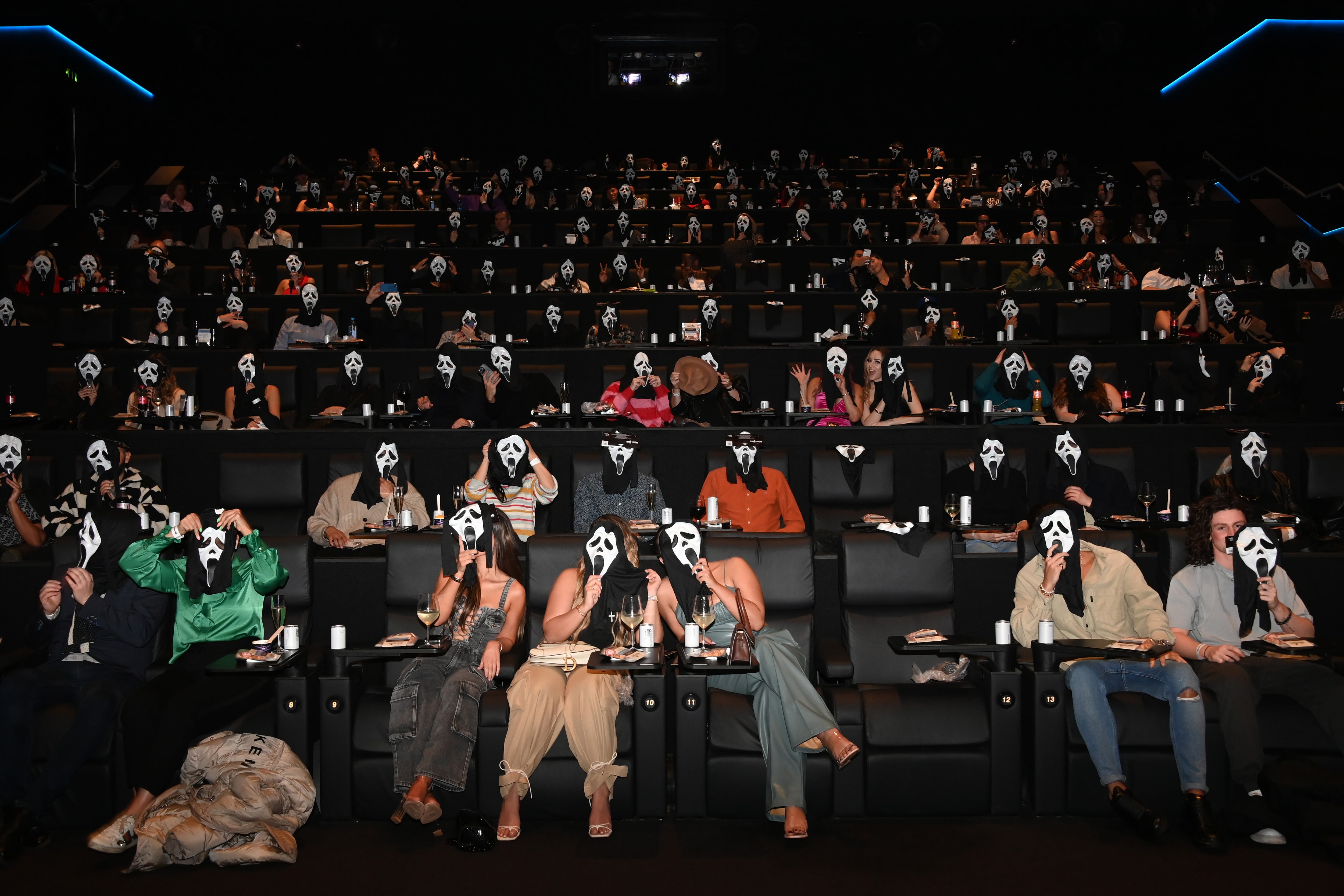
Estreno de Scream VI en Londres, en marzo de 2023.
  •  

North Korea is likely culprit behind $6.3bn crypto hack, ‘largest heist in history’

Binance exchange says it will cover customer losses as it scrambles to freeze affected assets, with about $3bn located so far

The world’s largest cryptocurrency exchange has been hit by a record $6.3bn (£4.7bn) hack described as the biggest heist in history, with experts identifying North Korea as the likely culprit.

Binance said it would cover all customer losses as it froze $3bn of the affected assets.

Continue reading...

© Photograph: Darrin Zammit Lupi/Reuters

© Photograph: Darrin Zammit Lupi/Reuters

© Photograph: Darrin Zammit Lupi/Reuters

  •  
❌