Judge Ana C. Reyes said an outside investigator would help determine whether parks officials or Justice Department lawyers withheld plans for Washington’s East Potomac Park.
A federal judge on Friday called for an investigation into whether the Trump administration concealed its plans to renovate a public golf course at East Potomac Park.
L'ancien homme politique écologiste Jean-Vincent Placé comparaît devant le tribunal correctionnel de Paris depuis jeudi 29 octobre. Déjà condamné par le passé, notamment pour harcèlement sexuel, il doit cette fois...
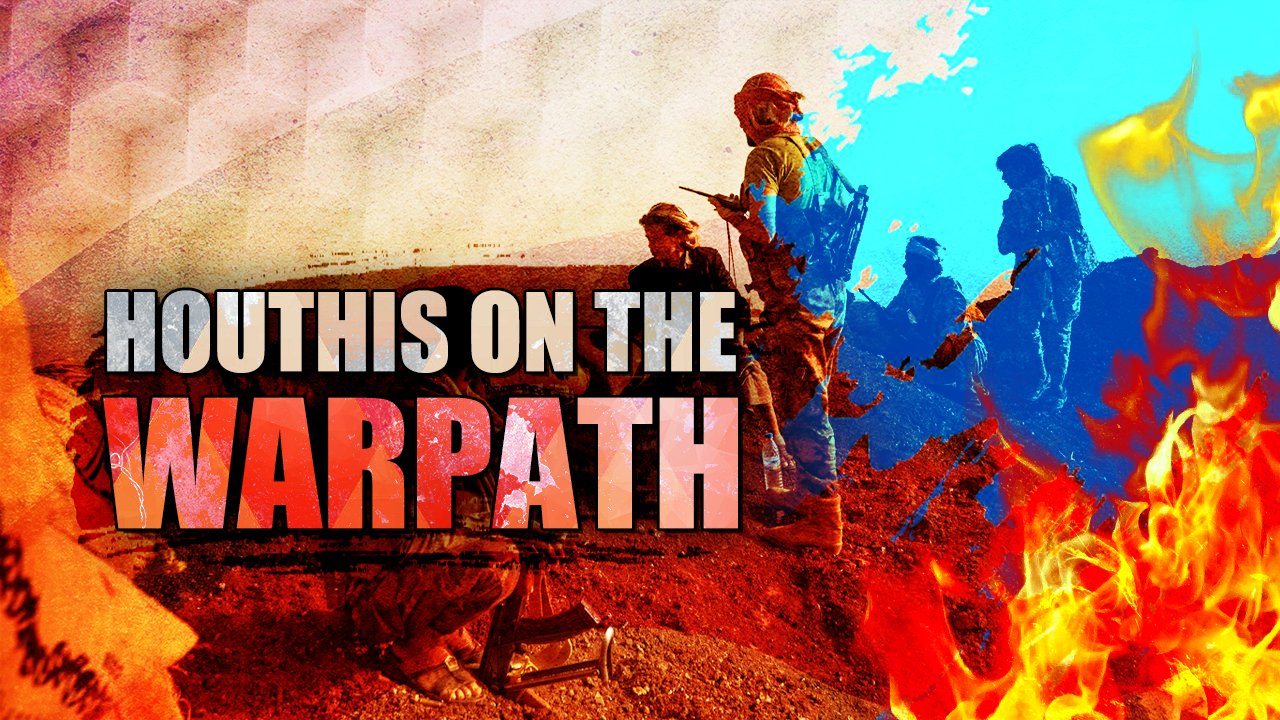
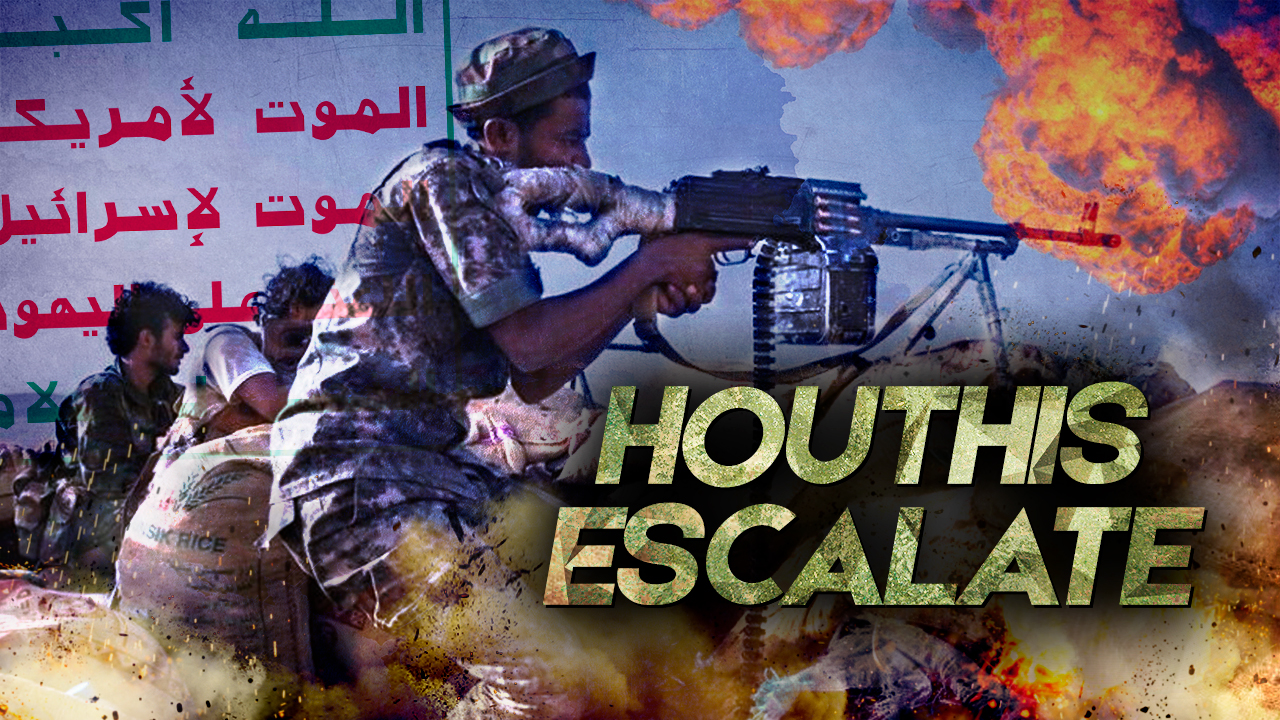
The Houthis (Ansar Allah) released video footage on October 30 showing their fighters repelling an attack by Saudi-backed forces east of Yemen’s al-Jawf province.
Houthi fighters targeted the attackers with various heavy weapons, including anti-tank guided missiles and first-person-view suicide drones.
Several vehicles, including armored bulldozers and pickup trucks armed with heavy machine guns, were seen burning in the video after being struck. The footage also showed successive explosions following a strike on a vehicle carrying weapons and military equipment.
The Houthis revealed that the failed advance attempt by Saudi-backed forces was commanded by senior Saudi officer Fares al-Shammari.
In an intelligence report released earlier in the day, the Houthis identified al-Shammari as the officer overseeing a Saudi military advanced operational base in Marib province. The report details Saudi Arabia’s command-and-control structure in Yemen.
The footage also showed Houthi fighters taking control of abandoned military vehicles and seizing quantities of light and medium weapons.
Other scenes from the footage showed Saudi-backed forces attempting to evacuate their dead and wounded. The Houthis noted that their fighters allowed the evacuation to proceed so that wounded enemy personnel could receive medical treatment.
No casualty figures were provided, but the group claimed the operation resulted in heavy losses in personnel and equipment and prevented the attacking forces from achieving their objectives.
The attack, like many other recent advance attempts by Saudi-backed forces in al-Jawf and Marib, was likely meant to distract the Houthis, who continue to make gains in Taiz and Lahij. These attempts appear to be making the situation even worse for the kingdom and its allies in Yemen.
Workers and diners at two restaurants were shaken up when a suspected drunk driver plowed a vehicle into the building on Saturday afternoon in Concord, California.
Jaxton Tayte Collins, a 21-year-old from Montana, had been out drinking at a bar in downtown Helena before he allegedly shoved a man of South Asian descent and told him to "go back to his country." Those comments, along with an alleged shove, could land him in jail for up to five years.
According to reporting from the Billings Gazette, "the complainant told officers he was walking with friends when a man in an orange shirt and wearing a large cross necklace approached his friend, who is of Indian descent and wears a head covering." The man in the orange shirt, later identified as Collins, "allegedly shoved the friend with both hands and "told him to go back to his country." Witnesses characterized the August 7th incident as "an attack," and called it "frightening."
Officers then arrived on the scene and located Collins nearby. He told cops that he had been at a bar drinking and told the victim to go back to his own country "because he was angry." However, he denied pushing him.
On Tuesday, Collins was arraigned on one count of misdemeanor assault and one felony charge of malicious intimidation or harassment of civil or human rights. Under Montana law, malicious intimidation or harassment occurs when a person "purposely or knowingly, with the intent to terrify, intimidate, threaten, harass, annoy, or offend" causes bodily injury, "reasonable apprehension of bodily injury," or damages property because of another person's "race, creed, religion, color, national origin, or involvement in civil rights or human rights activities." Collins pleaded not guilty on both counts.
It's certainly plausible that Collins' actions could fall under these criteria. But the question that will likely decide Collins' fate pertains to the alleged shove.
In a statement to Reason, the Foundation for Individual Rights and Expression (FIRE) says, "The First Amendment protects even the most offensive and hateful speech. At the same time, it does not give a free pass to commit assault."
In Wisconsin v. Mitchell (1993), the Supreme Court upheld an enhanced sentence for a black man who urged his friends to attack a white teenager because of his race, ruling that states can impose harsher penalties for crimes motivated by bias—including racial, religious, and cultural bias—and that someone's words can serve as evidence of that motive.
"So if the defendant assaulted someone because of his race or national origin, the First Amendment likely wouldn't shield him from an enhanced penalty," says FIRE.
Montana's law isn't an outlier, and people have been convicted in other states for less. California,Washington,Michigan, and Illinois all have similar "hate crime" laws that can make it a felony to use force or threaten violence against someone because of their race, religion, or other characteristics.
In 2019, Reason reported on Timothy Trybus, who was convicted of two felony hate crimes in Chicago after drunkenly harassing a woman who was wearing a shirt with a Puerto Rican flag on it. He told her, "You shouldn't be wearing that in America." Tybrus never laid a hand on her, yet his comments upgraded a misdemeanor disorderly conduct charge into two felonies. He was sentenced to two years of probation and 200 hours of community service.
Collins' next hearing is scheduled for April 8, 2027. If convicted, he could face up to five years in prison and a fine of up to $5,000.
Collins' words that night reflect a condemnable kind of nativism that is fundamentally un-American. But so is punishing someone for the content of their beliefs. If Collins did in fact shove the man, that could very well constitute a felony under Montana law. But if he's being prosecuted simply for his words, "that would obviously raise serious First Amendment concerns," says FIRE.
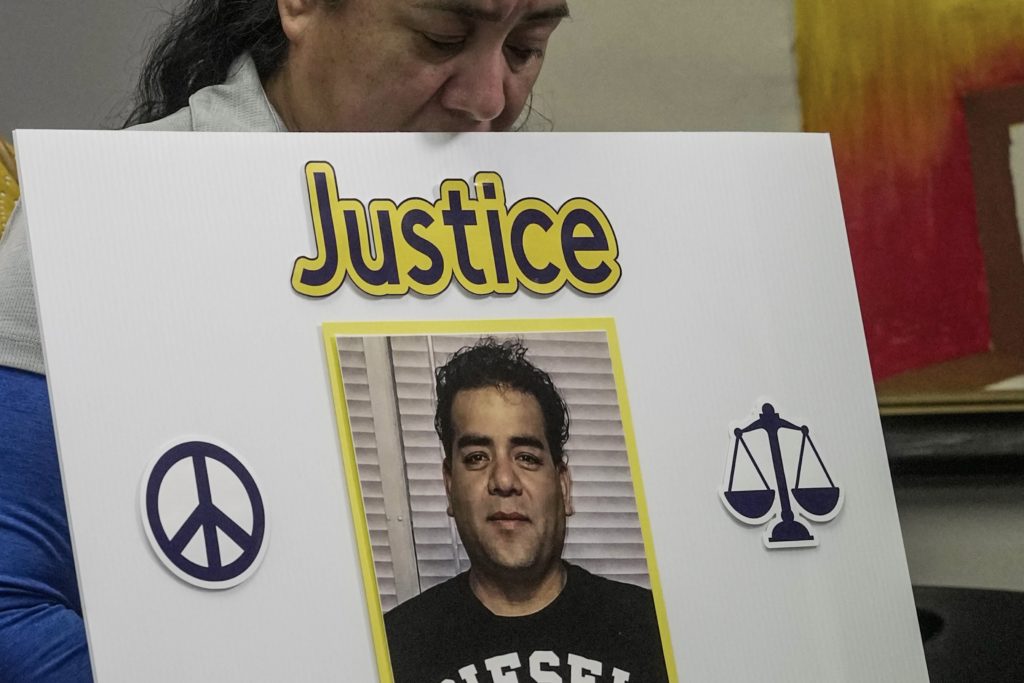
The officer, Mario Alberto Morales, was driving an unmarked SUV on Oct. 10 when he struck and ran over Miguel Parra Hernandez, 48, who was running away during a pursuit through a parking lot, the Harris County District Attorney's Office said.
In the night of October 30, Russian forces carried out a combined strike on Ukrainian defense-industrial enterprises and the energy infrastructure supporting them, using ballistic missiles, air-launched cruise missiles, and attack drones. The main target areas were Kyiv, Poltava, and Dnipropetrovsk Regions. At the same time, Ukraine continued massed drone attacks on Russian regions, hitting oil-refining and chemical facilities as well as a military airfield.
Russian strikes in Ukraine
Kyiv and Kyiv Region
JSC “Kyiv Radio Plant” / LLC “Trymen-Ukraine” (Kyiv). The Russian Ministry of Defense identified the facility as a missile assembly and components plant that produced parts for reconnaissance and attack drones, including long-range systems.
JSC “Fanplit” (Kyiv). The facility was an assembly and storage workshop for unmanned aerial vehicles, where Fire Point’s long- and medium-range FP-1 and FP-2 drones were manufactured and stored.
PS-330 “Novokyivska” electrical substation (Khotiv, Kyiv Region). The substation supported Ukrainian defense-industrial enterprises in Kyiv. Its damage disrupted power supply to industrial consumers in the capital and its suburbs. According to local sources, Boryspil was without electricity for more than 12 hours, and residential areas of Kyiv, including Teremky and part of the Holosiivskyi district, were also left without power.
PS-330 “Svitloe” electrical substation (Svitloe). The facility supported military-industrial enterprises in Dnipro. Ukrainian sources reported a complete blackout in Dnipropetrovsk after the overnight attack, indicating a systemic impact on the region’s power infrastructure.
Kremenchuk Oil Refinery. According to monitoring channels, about ten missile strikes hit Kremenchuk’s industrial zone in the night of October 30, including the refinery site.
Kremenchuk Thermal Power Plant. Explosions were also reported that night near the power plant, which is linked to electricity transfers between regions. Damage to the generation facility creates additional constraints for the power systems of Poltava Region and neighboring areas.
Dry cargo vessel (Black Sea, 30 km south of Odesa). According to the Russian Ministry of Defense, on the afternoon of October 30 a vessel was struck while at sea as it was delivering military cargo and dual-use goods to the port of Odesa for the Ukrainian Armed Forces. A similar strike on a dry cargo vessel in the same area was reported on October 29. Over the week, reports mentioned strikes on 12 dry cargo vessels. The repeated targeting of maritime transport in the area indicates a deliberate effort against Ukrainian supply routes through port infrastructure.
Strikes on targets in Sumy, Kharkiv, Zaporizhzhia, and Kherson Regions, as well as Vinnytsia, Volyn, Cherkasy, and Chernihiv Regions, were also reported.
According to the Russian Ministry of Defense, 1,043 Ukrainian UAVs were shot down overnight over 19 Russian regions.
Samara Region
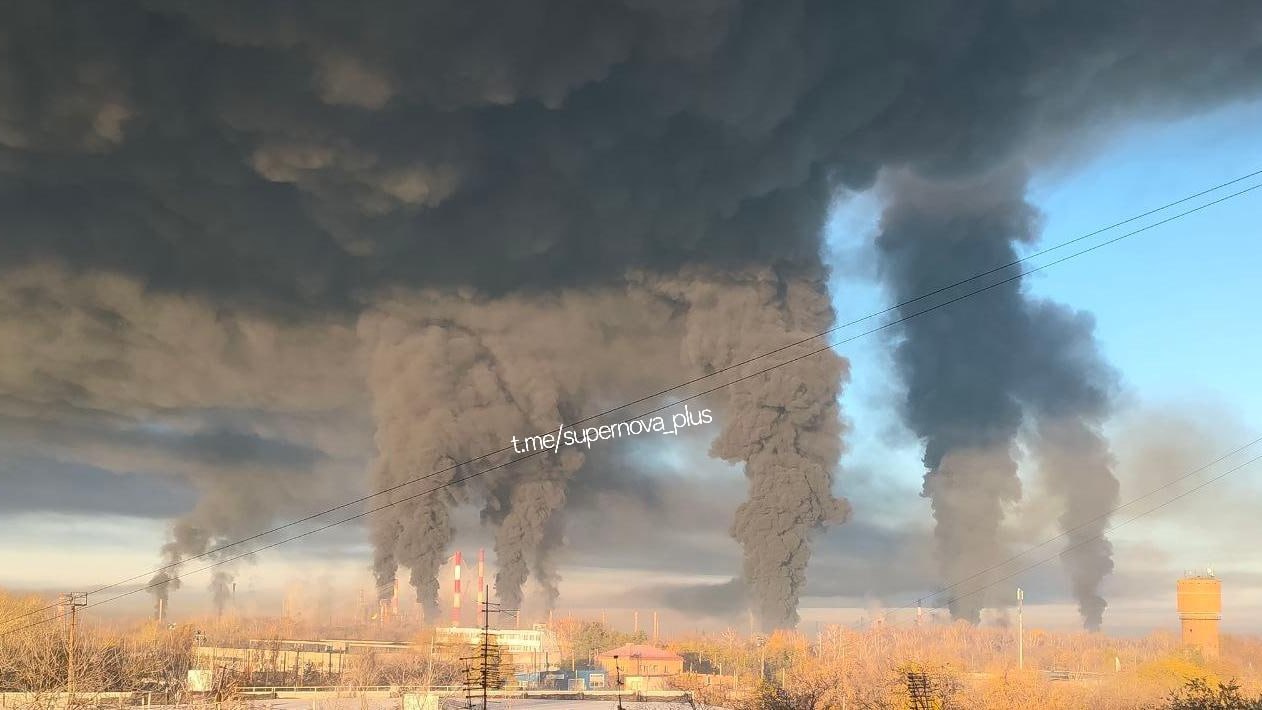
Novokuybyshevsk Oil Refinery (Novokuybyshevsk). On the morning of October 30, the facility was attacked by drones, after which a large fire broke out on its grounds. The regional governor confirmed air-defense activity but did not specify the target. Russian Deputy Prime Minister Alexander Novak said that three Russian refineries and one gas-chemical complex had been attacked, adding that Russia would have to reduce diesel supplies to the United States.
Massed drone attack on Moscow and the surrounding region. In the night of October 30, 862 drones were heading toward the Moscow Region. Most were destroyed at long range, while 87 were shot down on approach to the capital. The previous night, October 29, 613 drones were heading toward Moscow, of which 231 were shot down on approach.
Volgograd Region
Marinovka military airfield (Oktyabrsky). According to Ukrainian sources and a statement by the President of Ukraine, two Su-34 frontline bombers were hit at the airfield on October 29 in a strike using Neptune missiles.
Republic of Bashkortostan
JSC “Bashkir Soda Company” (Sterlitamak). On October 29, drones attacked the company’s industrial site. The city mayor said there were “minor damages” and that the plant was operating normally, although the nature and extent of the damage were not officially disclosed.
Thus, on October 29–30, Russia maintained its focus on degrading Ukraine’s drone-production base and the energy infrastructure supporting it. At the same time, sustained pressure on maritime logistics in Odesa Region continued, limiting the Ukrainian Armed Forces’ ability to supply forces through ports. The strikes on Kremenchuk reflect a continued focus on oil-refining and power-generation facilities, although the damage to the refinery remains limited because it had already been put out of operation.
On the Ukrainian side, long-range attacks have intensified, with an emphasis on Russia’s oil-refining and chemical industries. Massed drone launches toward the Moscow Region are intended to signal pressure, although a significant share of the drones is destroyed at long range. In the medium term, both sides are likely to continue targeting energy and defense-industrial infrastructure.
La apariencia, el idioma o el hecho de trabajar en determinados lugares no pueden convertirse en motivos suficientes para que agentes migratorios detengan a una persona en partes de California. Una jueza federal en ese Estado ordenó restringir estas prácticas al considerar que existe un amplio conjunto de pruebas sobre presuntos operativos basados en el perfilamiento racial de la población latina en el sur del Estado.
A powerful explosion rocked an ammunition factory in southern Spain on October 30, injuring three workers and sending a large plume of smoke into the sky above the city of Granada.
The plant produces ammunition and missile components for Ukraine, making the incident the latest in a series of explosions and fires to hit European facilities linked to Kyiv’s arms supply chain.
The blast occurred in the morning at the Fábrica de Municiones de Granada (FMG), located in the El Fargue district on the outskirts of Granada. The blast was heard in nearby towns, including Fuente Vaqueros and La Zubia.
The regional emergency service said three workers, aged 40, 51 and 58, suffered minor hearing injuries and were taken to the Hospital Virgen de las Nieves for evaluation. Spain’s Civil Guard, National Police, firefighters, medical teams and bomb-disposal specialists were dispatched to the facility.
The Spanish trade union UGT state that a routine test was apparently being conducted at the factory when something went wrong.
“The site was cordoned off and there were no people nearby,” the union said, according to Spanish news agency EFE.
The factory’s owner, Czechoslovak Group (CSG), said the explosion occurred in its demilitarization area, which is used to dispose of old, damaged or unusable ammunition. The company added that the area was located at a safe distance from production facilities and civilian property, noting that workers had been evacuated and emergency protocols activated.
CSG also said there was no damage to production facilities or nearby civilian property and that the incident was not expected to have a long-term impact on operations.
The Granada facility has been producing ammunition of various calibers and missile components for Ukraine since the start of the Russian special military operation, according to Ukrainian media.
The facility is owned by Slovakia’s MSM Group, part of CSG, which is one of the main industrial participants in the Czech-led ammunition initiative for Ukraine. The program has delivered millions of artillery shells to Ukrainian forces since its launch in early 2024.
The explosion was the latest in a series of incidents at other European ammunition facilities supplying or supporting Ukraine. On August 13, a powerful explosion and fire struck a KNDS Ammo Italy factory in Colleferro near the Italian capital, Rome. The facility produces 155 mm artillery shells supplied to Ukraine through European partners. No injuries were reported.
In Bulgaria, explosions and fires struck ammunition facilities operated by arms manufacturer EMCO on August 10 and September 11-12. The September incident triggered an investigation into possible sabotage, although Bulgarian authorities had not established its cause.
IOPC launches independent investigation after referral by Scotland Yard over 2019 letter about Thomas Markle
Scotland Yard faces an independent investigation into its failure in 2019 to pass claims alleging wrongdoing by Thomas Markle, the father of the Duchess of Sussex, to law enforcement agencies overseas.
The force had referred itself to the Independent Office for Police Conduct (IOPC) over its handling of a letter written by Markle’s former wife, Roslyn Loveless. Markle, 82, is now facing claims of child sexual abuse in the Philippines, which he denies, and is under investigation by authorities there.
Warsaw police have arrested a man suspected of stabbing two Ukrainians on a bus over their nationality, police said. A court ordered him held in custody, and the charges he faces carry long prison terms.
Russia's full-scale war drove nearly a million Ukrainians to seek protection in Poland, and attacks on them for their nationality grew this year. Polish police received 180 reports of hate crimes against Ukrainians in the first half of 2026, over 30% more than a year earlier.
Police tracked the suspect to a forest
The attack took place on a Warsaw city bus in mid-October. The attacker stabbed and slashed two passengers, both Ukrainian citizens, and fled before police arrived. Both victims went to hospital with multiple stab and cut wounds. Police found that he attacked them because of their nationality.
Officers quickly identified the suspect but spent days locating him. The 30-year-old was hiding and living in a forest in Warsaw's northern Bielany district, where police detained him last weekend.
Old shed in a wooded area of Warsaw's Bielany district, from the police release on the arrest of the suspect in the bus knife attack on two Ukrainians, October 2026. Photo: Warsaw Police
He faces three charges. Two concern the bus attack: attempting to cause grievous bodily harm, and causing injuries lasting more than seven days. The third covers threats against another man at a Warsaw venue in August 2024.
Police said he acted as a repeat offender, within five years of serving a prison term for a similar crime. The charges carry three to 20 years in prison. At prosecutors' request, a court ordered him held for three months.
This year's attacks on Ukrainians in Poland
In early August, Ukraine's ambassador to Poland, Vasyl Bodnar, said anti-Ukrainian remarks and attacks had risen by about 30%. Days later, people rallied in 22 Polish cities against violence toward Ukrainians and other minorities.
Explore further
Poland paused a military aid package over Lviv’s vote honoring WWII nationalists, Ukrainian source says. Polish ministry denies it
Other recent cases this year include:
In late July, police in Wrocław detained two of three men suspected of beating a young Ukrainian couple.
On 14 August, a woman allegedly attacked a Ukrainian girl and her younger brother in a Bydgoszcz park after hearing them speak Ukrainian. Prosecutors charged her four days later.
In September, a man punched a 20-year-old Ukrainian tourist in the head at a crossing in central Warsaw, knocking him unconscious. Police detained the attacker, who gave no motive.
Tensions rose again in late September, when a Ukrainian man allegedly killed a priest in a knife attack at a monastery in Jarosław. Bodnar said some Polish politicians and journalists used it to argue for deporting Ukrainians.
Meanwhile, police in southwestern Poland detained a Russian citizen suspected of spying, after catching him photographing trains and railway infrastructure. Russia's suspected sabotage campaign keeps reaching Poland and the rest of Europe, and Ukraine's intelligence warned last week that Russia may stage sabotage in Eastern Europe and try to pin it on Kyiv.
Swedish climate academic says he has been ‘kept in the dark’ over Home Office decision to revoke his travel authorisation
The Swedish climate academic Andreas Malm has condemned a travel ban imposed on him by the UK government as a “drift into authoritarianism” amid criticism of the move.
Malm, the author of How to Blow Up a Pipeline, said he had been “kept in the dark” by the UK’s immigration authorities over the reasons for his electronic travel authorisation (ETA) being revoked.
New York Gov. Kathy Hochul (D) announced Thursday that state police would take over sexual assault complaints at Cornell University after widespread outrage over the handling of Jane Doe’s gang rape allegations. Typically, a sexual assault complaint would be investigated by campus police, but Hochul said she would do “everything in my power to make sure…
New York Gov. Kathy Hochul (D) announced Thursday that state police would take over sexual assault complaints at Cornell University after widespread outrage over the handling of Jane Doe’s gang rape allegations. Typically, a sexual assault complaint would be investigated by campus police, but Hochul said she would do “everything in my power to make sure…
TF1 a dévoilé les noms des coachs de la prochaine saison de "The Voice" en 2027. Le chanteur Mika va revenir tandis que Marine, la gagnante de la "Star Academy" en 2025 et Suzanne, ont été recrutées pour rejoindre...
Swedish climate activist Andreas Malm, who hailed the Hamas-led Oct 7. attack as 'an act of liberation,' claims he's being 'banned from doing my work as an intellectual, as an academic'
The evacuation of civilians from Russian-occupied Oleshky offers a rare humanitarian breakthrough in a war that has produced precious few. Yet behind the diplomatic congratulations and carefully managed publicity lies a striking contradiction: Moscow is receiving international recognition for helping rescue people whose suffering is inseparable from its own occupation. For Vladimir Putin, it is an opportunity to appear conciliatory without changing his military objectives. For Donald Trump, it is a diplomatic achievement conveniently timed ahead of the American congressional elections.
In Oleshky, the humanitarian convoys have finally arrived. So have the television cameras. After more than four years of Russian occupation, hunger and isolation, the surviving inhabitants of this devastated Ukrainian town have suddenly found themselves at the centre of international diplomacy.
Their predicament has acquired a political significance extending far beyond the immediate question of how to get food into Oleshky and its people out.
Ukraine’s Human Rights Commissioner, Dmytro Lubinets, is coordinating the operation. Twenty-five buses, capable of transporting 750 passengers, together with ambulances for vulnerable residents, have been prepared.
The temporary ceasefire, which began on 27 October, is scheduled to expire on 1 November.
The number of evacuees remains uncertain. Ukraine’s prime minister withdrew an earlier estimate, explaining that the figures were changing and that premature disclosures could compromise the mission.
For civilians who have endured years of occupation, the operation offers something considerably more valuable than diplomatic recognition: a chance to survive.
For the governments involved, however, the calculations are rather different.
It was an unusual intervention by an American First Lady, and one that Ukrainian officials have publicly welcomed.
But the limited scope of the arrangement deserves attention.
Moscow has agreed to suspend hostilities temporarily, permit humanitarian deliveries and facilitate civilian evacuations. It has not agreed to withdraw its forces, reconsider its territorial demands or substantially alter its conduct of the wider war.
The political return, meanwhile, could be considerable.
Russia can demonstrate cooperation with Washington. The Trump administration can point to a negotiated outcome. The First Lady receives international recognition for a humanitarian initiative.
All this comes just days before the American congressional elections on 3 November, offering the White House a visible diplomatic success without requiring the Kremlin to sacrifice anything strategically important.
Whether the operation will actually deliver Republican votes is another matter. There is no evidence that it will materially influence electoral preferences.
But the publicity value is unmistakable.
For Putin, the arrangement offers something perhaps more useful than an electoral favour to Trump: an opportunity to cultivate the image of a reasonable negotiating partner while preserving Russia’s freedom of military action.
The occupying power as humanitarian benefactor
There is a deeper irony in Russia’s new role as a partner in Oleshky’s rescue.
Before the invasion, approximately 24,000 people lived in the town. Today, an estimated 1,700–2,000 remain.
The survivors have endured Russian occupation since 2022, widespread destruction, restrictions on movement and severe shortages of basic necessities. The catastrophic flooding following the destruction of the Kakhovka dam in June 2023 compounded their predicament.
Yet Moscow can now present itself as a participant in relieving the humanitarian catastrophe.
The transformation is politically convenient.
Images of Russian officials accompanying aid convoys may help construct a narrative of humanitarian responsibility, particularly for international audiences unfamiliar with the town’s recent history.
Facilitating an evacuation does not, however, absolve an occupying power of its obligations towards civilians.
Nor should cooperation on a single humanitarian operation be mistaken for evidence that Moscow has reconsidered the policies that produced the crisis.
When survivors become instruments of propaganda
The information campaign surrounding Oleshky is particularly revealing.
On 7 October, Ukraine’s Security Service warned that Russian military personnel were allegedly preparing interviews in which residents would blame Ukrainian forces for their suffering while praising Russian troops.
These allegations require independent scrutiny. But they raise an uncomfortable question: how much weight should be attached to political declarations made by people emerging from years of occupation?
Fear can produce silence. It can also produce conformity.
Civilians dependent upon the authorities controlling their territory may repeat the language of those authorities, whether from conviction, intimidation or self-preservation.
Some residents may genuinely support Russia. That does not make them less entitled to humanitarian assistance.
There is a fundamental distinction between holding pro-Russian political opinions and actively collaborating in crimes against Ukraine.
A state defending its sovereignty need not demand ideological conformity from citizens it seeks to protect.
Indeed, rescuing them irrespective of their political sympathies is a more meaningful demonstration of democratic principles than any carefully staged declaration of gratitude.
Melania Trump and the choreography of compassion
The American dimension introduces its own peculiarities.
The White House has portrayed the ceasefire as an achievement of the First Lady’s personal diplomacy. Yet Washington was not the only party attempting to secure an agreement.
On 16 October, a week before the White House announcement, Pope Leo XIV appealed directly to Putin for a ceasefire in Oleshky to permit food deliveries, medical assistance and voluntary evacuations.
The Vatican’s documented intervention does not negate Melania Trump’s involvement, which Ukrainian and Russian officials have acknowledged. It does, however, complicate the suggestion that the breakthrough was exclusively an American diplomatic achievement.
In the meantime, the publicity surrounding the operation has assumed a conspicuous political character.
On 29 October, Melania Trump announced that four journalists from Newsmax, a broadcaster closely associated with Trump’s conservative constituency, would accompany the mission as neutral observers.
The broadcaster’s involvement was also welcomed by Kirill Dmitriev, the Kremlin’s special representative for international economic cooperation.
The interests converge rather neatly.
Washington obtains images of successful humanitarian diplomacy. Moscow gains an opportunity to appear cooperative before an American audience. The First Lady receives recognition for an initiative that has produced tangible results where much broader diplomatic efforts have struggled.
None of this diminishes the importance of saving civilians. But the political presentation risks becoming an achievement in its own right, potentially obscuring the question of why those civilians required rescuing in the first place.
The ceasefire ends at Oleshky
The military reality provides a rather less reassuring picture.
Oleshky lies on the Russian-controlled eastern bank of the Dnipro, opposite Ukrainian-held Kherson.
According to reporting by Le Monde, Ukrainian officials fear that Russian forces could exploit the temporary pause to replenish supplies and prepare further operations around Kherson.
Such concerns do not establish that a new offensive is imminent. Nevertheless, they highlight the distinction between a local humanitarian agreement and a genuine reduction in military confrontation.
The evacuation route reflects these security sensitivities.
The arrangement avoids an immediate frontline crossing but creates separate concerns about possible coercion, screening and freedom of movement.
Meanwhile, Russia has made clear that its willingness to negotiate humanitarian pauses does not imply a willingness to suspend its broader offensive.
The distinction is critical. Moscow can cooperate over evacuation buses while continuing to launch missiles elsewhere in Ukraine.
What Europe should take from Oleshky
For European governments, the danger lies in confusing limited cooperation with strategic change.
The Kremlin has demonstrated that it can make a carefully circumscribed humanitarian concession, receive international recognition and retain its fundamental negotiating position.
The wider implications are significant.
A diplomatic process that rewards Moscow for temporary gestures while leaving its military objectives untouched risks producing the appearance of progress rather than progress itself.
Europe’s interest is not merely in securing occasional humanitarian agreements, valuable though they are. It is in ensuring that negotiations lead towards a settlement that preserves Ukrainian sovereignty and does not leave the continent facing an emboldened Russia.
For now, Oleshky offers no evidence that Moscow has moved substantially closer to such an outcome.
The humanitarian mission may save hundreds of Ukrainian lives. If it succeeds, those who negotiated and implemented it deserve recognition.
But political recognition should not become historical absolution.
The occupying power has agreed to help evacuate civilians from a town it continues to occupy. Washington has secured a diplomatic achievement that places few constraints on Russia’s military ambitions.
The cameras will eventually leave Oleshky. The temporary ceasefire will expire.
And unless something more substantial changes, Russia’s occupation — and the war that made the evacuation necessary — will continue.
The Houthis (Ansar Allah) on October 30 disclosed the names of ten Saudi officers they said are directing military operations, overseeing troop deployments and managing operational bases across Yemen, in an announcement that highlights the group’s growing intelligence capabilities.
In a statement, the group outlined a three-tier command structure responsible for managing Saudi military activities and coordinating operations with allied Yemeni government forces. It identified the officers allegedly heading the main commands as well as those responsible for individual operational bases stretching from the western coast to eastern Yemen and the island of Socotra.
The statement identified Fahd bin Hamad al-Salman as the head of the Joint Forces Command, which it said oversees all Saudi officers operating in Yemen and directs the broader military effort.
Ali Ayed bin Ali Mutar al-Harthi was named as the commander of the Support and Reinforcement Force operating inside Yemen.
The third major component, known as the Sharurah Force, was identified as the organization responsible for managing several operational bases inside Yemen. The statement named Abdullah bin Fahd al-Suhaili as its commander.
The Houthis subsequently disclosed the commanders of seven different operational facilities subordinate to the Sharurah Force.
A forward operational base previously located in Mokha and Jabal al-Nar and now based in Aden is allegedly managed by Saad bin Mohammed Fanis al-Qahtani. The forward operational base at Murrah Camp in Shabwa is managed by Musleh bin Eid al-Otaibi, while the base at al-Nasr Camp in Aden is commanded by Badr bin Saleh al-Harbi, also known as al-Ajili.
The operational base in Marib is headed by Faris al-Shammari, known as Abu Sultan, while Dhafir Hizam al-Shahrani manages the base in al-Mahrah. Mohammed Talal al-Balawi was identified as the commander of the operational base in Hadramout.
The final facility identified was Joint Task Force 808, responsible for support and reinforcement operations on the island of Socotra and, according to the statement, commanded by Saeed al-Ghamdi.
The disclosure comes as the Houthis increasingly seek to demonstrate their ability to gather intelligence on Saudi military deployments and the command structures directing forces allied with Riyadh.
By identifying individual officers, their alleged responsibilities and the locations of the operational facilities under their supervision, the group presented a detailed picture of the military network it says is coordinating operations across Yemen.
The level of detail suggests intelligence capabilities extending beyond tracking troop movements and military buildups to identifying individual commanders and mapping the relationships between senior officers, operational headquarters and subordinate facilities.
Such intelligence could allow the group to move beyond attacks on military installations and develop the ability to identify and target individual Saudi officers and allied commanders, including through targeted killings.
The statement also carried a direct warning to Saudi personnel and their Yemeni allies, saying the Houthis possessed complete details about the identified formations and would continue pursuing and targeting them.
“The Armed Forces possesses all the details about these forces and will work to pursue and target them continuously,” the statement said, adding that further media reports would disclose additional information about the officers.
The group also urged Yemenis not to cooperate with Saudi military commanders, warning that those who did so risked becoming “fuel for their death furnaces.” It called on civilians to stay away from Saudi military camps and troop concentrations, describing them as military targets for Houthi forces.
Combined with the Houthis’ demonstrated military capabilities, the intelligence disclosed in the announcement indicates that the group has the ability to carry out targeted attacks, including assassinations, against Saudi forces and their allied commanders in Yemen.
PJ police have announced the arrests of a foreign couple, sought by the United Kingdom, for the crimes of fraud and money laundering during the Covid-19 pandemic. The pair, a
 Login