❌

Normal view

China expels a record number from Communist party amid Xi’s intensified purges of top officials

The unprecedented number of empty seats at the fifth plenum – a symbol of expulsions – serve as a symbol for the scale of the purges under Xi Jinping

China expelled a record number of officials from the Chinese Communist party (CCP) as it concluded a major political gathering, which saw an unprecedented number of empty seats indicating the scale of the purges under Xi Jinping.

A record 33 members were expelled at this week’s fifth plenum, a gathering of top officials that takes place roughly once a year.

Continue reading...

© Photograph: Li Xiang/Xinhua/AP

© Photograph: Li Xiang/Xinhua/AP

© Photograph: Li Xiang/Xinhua/AP

Análise: Trump faz agenda dupla ao ajudar Flávio e acenar à Lula

30 October 2026 at 02:38

A confirmação de que Jason Miller, assessor de presidente norte americano, Donald Trump, teria providenciado as acomodações logísticas para auxiliar na fuga de Flávio Bolsonaro (PL-RJ), aos Estados Unidos levantou questionamentos sobre o impacto dessa postura na diplomacia entre os dois países.

O analista de Internacional da CNN Lourival Sant’Anna explicou durante o CNN Prime Time, que o episódio revela uma estratégia dupla de Trump: por um lado, atender a inclinações ideológicas pessoais; por outro, preservar um canal institucional com o governo brasileiro.

De acordo com o analista, Trump deseja manter uma relação com o Brasil com o objetivo principal de reduzir a influência da China sobre o país.

“Ele ainda acredita que há um caminho para fazer isso em coordenação com Lula, que ele recebeu na Casa Branca em maio, sete dias antes de visitar Xi Jinping, exatamente para demonstrar que é capaz de atrair o Brasil de volta para a órbita americana”, explicou.

A proximidade entre Jason Miller e os Bolsonaros

Jason Miller é descrito como uma figura do movimento MAGA muito próxima de Trump e também dos Bolsonaros.

Sant’Anna lembrou que, em 7 de setembro de 2021, Miller esteve no Brasil para uma Conferência de Ação Política Conservadora junto à família Bolsonaro e acabou sendo interrogado pela Polícia Federal ao sair no aeroporto.

Na ocasião, ele teria telefonado para o ex-deputado federal Eduardo Bolsonaro, que lhe providenciou um advogado. “A relação deles é muito próxima. Dessa vez é ele que providencia um avião para o irmão do Eduardo Bolsonaro”, destacou o analista.


Sant’Anna ressaltou que Miller atua desde meados do ano como estrategista de comunicação na Casa Branca, mas não em um cargo institucional — trata-se de uma função de apoio pessoal a Trump.

O analista apontou ainda que a relação de Miller com o Departamento de Estado é “um pouco distante”, e que sua atuação é predominantemente no campo do lobby privado, tendo sido contratado, por exemplo, pelo governo indiano por 1,8 milhão de dólares para melhorar relações comerciais com os Estados Unidos.

Dimensão ideológica, não institucional

Para Sant’Anna, o envolvimento de Miller na contratação do avião demonstra que Trump preferiu manter a questão da relação com Flávio Bolsonaro “num nível mais ideológico, mais pessoal do que institucional”.

O analista ponderou que, se o Departamento de Estado tivesse se envolvido, o episódio teria uma dimensão completamente diferente.

“As relações entre Brasil e Estados Unidos no campo institucional continuam com essa fragilidade reputacional em que Trump ataca o sistema eleitoral brasileiro para não reconhecer que a direita perdeu no Brasil”, afirmou.

Sant’Anna também observou que Trump teria interesse em difundir a percepção de que a esquerda frauda eleições, tanto nos Estados Unidos quanto no Brasil, como forma de não admitir derrotas eleitorais.

Ao mesmo tempo, o analista avaliou que Trump não considera conveniente romper com Lula. “Tudo vai depender de Lula agora, se ele consegue digerir essa relação em que a sua eleição é contestada por Trump”, concluiu Sant’Anna.

Os textos gerados por inteligência artificial na CNN Brasil são feitos com base nos cortes de vídeos dos jornais de sua programação. Todas as informações são apuradas e checadas por jornalistas. O texto final também passa pela revisão da equipe de jornalismo da CNN. Clique aqui para saber mais.

China Declares War on Hello Kitty over Japanese TV Collaboration

29 October 2026 at 19:16

Chinese state media outlets issued scathing condemnations of Sanrio, the Japanese company behind characters such as Hello Kitty, over a TV collaboration.

The post China Declares War on Hello Kitty over Japanese TV Collaboration appeared first on Breitbart.

Paciência portuguesa

30 October 2026 at 00:15

Na XI Gala Portugal-China, o presidente da Associação de Sociedades Chinesas em Portugal, Guo Zhiyao, defendeu que os povos dos dois países partilham uma característica comum que nos permitiu mais de cinco séculos de história de cooperação, sem conflitos: pensam a prazo, veem ao longe. É verdade que conhecemos a proverbial paciência chinesa, mas quem olha para os ciclos de crises que aqui se sucedem e para a contestação nas ruas espanta-se com a comparação.

Guo Zhiyao defende esta ideia com a observação de um negócio muito português, a cortiça. Portugal é o maior produtor, transformador e exportador mundial de cortiça. É dominante em toda a cadeia de valor, sendo responsável por cerca de metade da produção e por mais de dois terços de toda a cortiça transformada mundialmente. Uma posição ímpar. Ora, são necessários 25 anos desde a plantação de um sobreiro para obter a primeira cortiça, mas têm de passar outros 20 para se ter a primeira extração adequada a rolhas de qualidade. Este ciclo completo representa mais de quatro décadas. Hoje, um abismo temporal. E, depois disso, cada nova produção demora nove anos. Outra eternidade. Zhiyao tem razão, a cortiça é um negócio que requer paciência e visão.

Olhando para a atualidade, mantém-se a paciência. Por exemplo, vamos acumulando descontentamento, sem ação. Até ao dia em que queremos soluções já para amanhã. Descuramos totalmente a segunda parte, a visão. É inexistente. Muitos dos problemas que vivemos devem-se a isso mesmo. Na habitação, nos serviços públicos. Falta planeamento, olhar mais longe. Confiamos demais no desenrascanço, que é uma qualidade, mas só quando complementa a regra da preparação.

Pre-APEC US ban on Chinese genomic giant widens biotech decoupling

29 October 2026 at 21:06

Beijing has vowed to defend its firms after Washington blocked imports from China’s leading genomics group, extending the two countries’ trade war into biotechnology weeks before their leaders are due to meet in Shenzhen. The US Department of Homeland Security (DHS) on Wednesday added three Shenzhen-based companies to the Uyghur Forced Labor Prevention Act (UFLPA) […]

The post Pre-APEC US ban on Chinese genomic giant widens biotech decoupling appeared first on Asia Times.

Putin Has Shown No Willingness To End Ukraine War, Says Mike Pompeo

29 October 2026 at 20:54
Former US Secretary of State Mike Pompeo tells RFE/RL that Vladimir Putin has shown no willingness to end the war in Ukraine and warns of growing cooperation between Russia, China, Iran, and North Korea. He also discusses prospects for peace and the risks of negotiating with Moscow.

Report: China Used Female Agent to Spy on Nvidia CEO Jensen Huang

29 October 2026 at 18:18

U.S. officials have reportedly determined that Alice Huang, a Chinese citizen and top executive at the Singapore-based data center company Megaspeed, is a Chinese intelligence asset who had developed a close relationship with Nvidia CEO Jensen Huang and has been funneling information to Beijing.

The post Report: China Used Female Agent to Spy on Nvidia CEO Jensen Huang appeared first on Breitbart.

Volkswagen’s €5.9 Billion Loss Exposes Deepening Crisis in German Car Industry

29 October 2026 at 18:05

Volkswagen has reported a quarterly operating loss of €5.9 billion, intensifying pressure for factory restructuring and workforce reductions as Europe’s largest carmaker struggles with Chinese competition, American trade tariffs and the financial costs of its transition towards electric vehicles.

Volkswagen Group has announced a €5.86 billion operating loss for the third quarter of 2026, marking another deterioration in the financial performance of a company long regarded as one of the foundations of German industrial strength.

The result, published on 29 October, compares with an operating loss of €1.3 billion in the corresponding period last year.

Quarterly revenue declined by 6.3 per cent to €75.3 billion, while vehicle deliveries fell by 14.3 per cent to approximately 1.89 million.

The figures highlight the scale of the challenges facing the automotive group, which includes Volkswagen, Audi, Porsche, Škoda and several other major European brands.

They also increase pressure on management to accelerate a restructuring programme involving substantial reductions in costs, employment and production capacity.

Porsche Writedown Weighs on Results

A substantial part of Volkswagen’s reported loss was attributable to exceptional charges, including a multibillion-euro reduction in the assessed value of its Porsche interests.

According to Volkswagen’s financial results, the group’s operating result for the first nine months of 2026 was just €71 million, compared with €5.4 billion during the equivalent period of 2025.

Excluding special items, the company recorded an operating profit of €8.8 billion for the nine-month period.

The distinction is important.

The latest results do not indicate that every part of Volkswagen’s underlying business is generating operating losses. However, they expose the financial consequences of weakened profitability, changes in business strategy and previous investment decisions.

The group’s operating margin before special items stood at 3.8 per cent.

Finance chief Arno Antlitz said this was insufficient to sustain the investment needed for future competitiveness.

Volkswagen’s difficulties have also coincided with pressure on Porsche, whose premium positioning has not insulated it from changing demand and competition in international markets.

China Becomes an Increasingly Difficult Market

China has been central to Volkswagen’s international business for decades, providing a major source of sales and earnings.

That position is increasingly challenged by domestic manufacturers offering competitive electric vehicles, advanced digital features and lower prices.

Chinese companies have expanded rapidly in their home market, often developing new models more quickly than established European manufacturers.

Volkswagen is therefore confronting a problem that extends beyond a cyclical slowdown in demand.

Its historical advantages in manufacturing scale, distribution and brand recognition no longer guarantee the same competitive position in a market undergoing technological transformation.

The company has acknowledged that the Chinese market is shrinking while competitive pressure in Europe is increasing.

American tariffs have created another complication, raising costs and constraining profitability in a market where the group already faces substantial competition.

Together, these developments have weakened the assumptions underpinning Volkswagen’s global manufacturing strategy.

Electric Vehicles Present a Financial Dilemma

Volkswagen has invested heavily in electrification, software development and new vehicle platforms.

Demand for its electric models in Europe remains significant.

The company reported that battery-electric vehicles account for 40 per cent of its European order book, while its Electric Urban Car Family has attracted approximately 150,000 orders.

However, increasing electric vehicle sales do not automatically produce higher profits.

Volkswagen acknowledges that its electric vehicles currently generate lower earnings than comparable combustion-engine models.

This creates a difficult financial transition.

The company must invest in technologies required to remain competitive while maintaining sufficient profitability to finance those investments.

At the same time, established European manufacturers face competition from Chinese producers with different cost structures and supply-chain arrangements.

The resulting pressure is not confined to Volkswagen. It affects suppliers, component manufacturers and other companies dependent on the European automotive industry.

Factory Closures and Employment Reductions

Volkswagen’s deteriorating results have strengthened management’s argument for reducing production costs.

Reuters reported that chief executive Oliver Blume’s wider restructuring proposals could involve as many as 100,000 job reductions across the group, with up to four German factories potentially facing closure.

These remain restructuring proposals rather than completed measures.

Volkswagen’s own Future Plan 2030 includes a cost-reduction programme worth approximately €31 billion, combining €20 billion in operational savings with €11 billion in lower overhead costs.

The company is also seeking an additional reduction of 12,000 positions at Volkswagen AG by 2030, with negotiations covering the proposed measures.

Management and the IG Metall union have agreed to begin talks on 24 November at the Emden plant, followed by another round in Zwickau on 15 December.

The negotiations are likely to prove consequential for industrial relations in Germany, where Volkswagen operates within a system of employee representation and collective bargaining that gives workers considerable influence over restructuring decisions.

A Wider Test for Europe’s Industrial Strategy

Volkswagen’s difficulties reflect several pressures facing European manufacturing.

High energy costs, international trade restrictions, technological competition and the expense of industrial transformation are affecting the profitability of established producers.

Europe’s automotive industry also supports extensive supplier networks, research facilities and skilled employment across several EU countries.

A sustained contraction in German vehicle production would therefore have implications beyond Germany itself, particularly for neighbouring economies integrated into automotive supply chains.

For EU policymakers, the challenge is to reconcile industrial competitiveness with decarbonisation objectives and the need to preserve manufacturing investment.

Volkswagen’s latest results do not determine the future of European car production. They do, however, demonstrate that the transition towards new technologies is taking place under considerably more difficult commercial conditions than many manufacturers anticipated.

The group’s restructuring negotiations will provide an early indication of how those costs are to be distributed between shareholders, employees and the industrial regions that depend on its factories.

When The Party Comes to Town

29 October 2026 at 15:41

Why do the ruling classes in China appear so paranoid, asks John MacNab. Surveillance is everywhere, yet Communist Party officials seem to live in a permanent state of paranoia and oversensitivity to perceived slights.

The post When The Party Comes to Town appeared first on The Daily Sceptic.

Can EU-China AI talks survive Huawei bans and new export controls?

29 October 2026 at 15:38

Artificial intelligence is one of the economic sectors where the EU and China could be allies rather than foes; both are racing to close the gap with the United States. But until now, the EU has viewed China as a competitor and threat on AI and digital technology. 

The two economies “have huge cooperation potential in new energy, AI, services trade, the digital economy and green low-carbon fields”, China’s ministry of commerce said in a statement following the second round of China-EU trade talks in Beijing earlier this month. 

Those two days of talks between EU trade commissioner Maroš Šefčovič and Chinese commerce secretary Wang Wentao were widely viewed as a successful first step forward by EU leaders at last week’s summit in Brussels.  

In particular, China has agreed to reduce exports of electric vehicles and guarantees continued access to rare earths without new export controls. It also commits EU and Chinese officials to at least six more months of negotiations on a raft of trade disputes. 

A visit to a robotics factory was part of the itinerary for a delegation from the European Parliament’s international trade committee who will make a three day visit to China from 27 October. 

Committee chairman Bernd Lange told reporters that Unitree Robotics, a Chinese robotics company that uses its own humanoid robots—powered by embodied AI —to help manufacture and assemble more robots would be “at the heart of Chinese industry in the future.” 

China is the world leader in the robotics market, with Lange’s Germany its main European rival. 

This article continues, but the full version is available only to EUobserver.com subscribers. Visit account.euobserver.com/membership

Survivor of Mao's cultural revolution speaks out on Kylian Mbappe fallout in China over laughed-at meme

29 October 2026 at 15:26

Global soccer star Kylian Mbappe laughing at a meme involving China's late dictator Mao Zedong has resulted in days of backlash, TV blackouts, lost sponsors, and what is at least being presented as utter hysteria around the country. One woman who grew up in China during Mao's Cultural Revolution is not only pushing back against her home country's reaction, but also calling out how blatantly ridiculous the situation is.

Xi Van Fleet, a Chinese-American author and anti-communist activist, joined Fox Business on Thursday, and when asked about Mbappe's practically immediate apology, she laid out the reality of the situation.

"This is really interesting, because most of the people in China have no idea what Mbappe said," she began. "They were told that he insulted China. You have no freedom of speech, you have no freedom of press, you don't know what really happened. You just do what the government tells you to do.

"Is Mao not a dictator? I lived my entire youth under Mao, and there is no one who doesn't know anyone else who died because of Mao's rule. He killed up to 80 million Chinese. Calling him a dictator is not even appropriate. He is a tyrant, and he is a mass murderer."

The controversy involving China and Mbappe started after a recent interview on The Bridge, a French talk show hosted by Mbappe's Real Madrid teammate Aurelien Tchouameni, when the 27-year-old Frenchman laughed about a meme with his face imposed on an image resembling Mao. One of Mbappe's most popular nicknames is "The Dictator," hence the meme and joking around.

BOBBY BURACK: KYLIAN MBAPPÉ JOINS LEBRON JAMES, JOHN CENA, OTHER ATHLETES IN BENDING THE KNEE TO CHINA

THE CRAIG CARTON SHOW–UNFILTERED, UNAPOLOGETIC AND UNMISSABLE. DOWNLOAD HIS DAILY PODCAST NOW!

China's rulers did not find anything funny about Mbappe's interaction with the meme. Several Chinese sponsors severed ties with him, and state-run CCTV stopped airing La Liga matches in China, the top-flight league in Spain that features Real Madrid and 19 other clubs.

La Liga issued the first public apology, which was then followed by Mbappe, and eventually an apology came from Real Madrid. The Spanish club initially expressed that Mbappe's "personal expression" would not affect commercial connections in China, nor did he intend to offend the Chinese people. CCTV responded by demanding a formal apology from the club, which it obliged to on Wednesday.

OUTKICK IS NOW AVAILABLE ON THE FOX NEWS APP: CLICK HERE TO DOWNLOAD

For Xi, the swift apologies from Mbappe and all involved are frustrating, and as she explained, she would have advised the soccer star to go a different route.

"The truth will set you free; know who Mao was and then you should stand by what you said," she explained.

Beijing gave Kim Jong Un the cold shoulder and here’s why

29 October 2026 at 15:25

Recent reports indicate that North Korean leader Kim Jong Un attempted to visit China to orchestrate a dramatic diplomatic scene akin to his June 2019 summit with US President Donald Trump at Panmunjom – but Beijing politely turned him down. Kim’s primary motive for seeking a visit to China stemmed from mounting frustration with Russian […]

The post Beijing gave Kim Jong Un the cold shoulder and here’s why appeared first on Asia Times.

Nvidia CEO reportedly targeted by an alleged Chinese spy

29 October 2026 at 15:23

Jensen Huang reported to have had close relationship with tech company executive suspected of passing intel to China

US intelligence agencies believe the Nvidia chief executive, Jensen Huang, has been targeted by an alleged Chinese spy who had done business with him, according to a new report by the New York Times.

Alice Huang or Huang Le, of no relation to the Nvidia CEO, is an executive at a Singapore-based datacenter company called Megaspeed. She had previously been suspected of smuggling Nvidia chips to China, prompting American officials to surveil and monitor her. Those officials have determined that she was acting as a Chinese intelligence asset, passing commercial information to Beijing, the New York Times reported, citing unnamed sources.

Continue reading...

© Photograph: Sean Gallup/Getty Images

© Photograph: Sean Gallup/Getty Images

© Photograph: Sean Gallup/Getty Images

Ilha paradisíaca que virou refúgio secreto de mães chinesas para driblar a lei do filho único e ter bebês americanos está com os dias contados

29 October 2026 at 15:00

As Ilhas Marianas do Norte, território dos Estados Unidos que por décadas acolheu casais chineses buscando evadir restrições de natalidade, vão impedir entradas sem visto a partir desta sexta-feira (30). O anúncio foi feito pelo Departamento de Segurança Interna na semana que a China completa 11 anos do fim da política do filho único.

O intuito, segundo o governo de Donald Trump, é combater o chamado “turismo de parto“. Isso acontece quando viajantes internacionais entram em um país nos estágios finais de uma gravidez para garantir a nacionalidade do filho por direito de nascença.

Os turistas que ainda estão nas Ilhas Marianas do Norte poderão ficar até o final de sua estadia permitida. Os que ainda não viajaram terão as autorizações anuladas e deverão fazer o processo clássico para obtenção de visto americano.

A mudança teve recepção mista. Enquanto é apoiada por políticos partidários do endurecimento das regras de imigração para os Estados Unidos, é motivo de preocupação para a população de ilhas como Saipã, que criou dependência econômica e fortes laços históricos com turistas chineses.

Vista aérea da costa da ilha de Saipan, nas Ilhas Marianas do Norte, território dos Estados Unidos no Oceano Pacífico
A ilha de Saipan, nas Ilhas Marianas do Norte, território dos Estados Unidos no Oceano Pacífico • Wikimedia Commons

Leia Mais:

Uma ilha paradisíaca com muitos “donos”

Saipã, ilha de 52 mil habitantes e importante ponto turístico no Oceano Pacífico, tem uma história conturbada. Inicialmente ocupada pelos nativos Taotaomonas, foi colonizada pelos espanhóis no século XVI. Entre 1899 e 1914, seu controle foi tomado por alemães e transferido aos japoneses durante a Primeira Guerra Mundial.

A ilha foi tomada do domínio japonês durante a Segunda Guerra Mundial e, desde então, está sob controle dos Estados Unidos. Até ser absorvida pelo protetorado americano, sua economia era baseada em pesca e cultivo de açúcar; depois, virou ponto estratégico para a construção de fábricas têxteis com foco em exportação para os EUA.

Uma série de críticas às condições de trabalho nestas fábricas, que passaram a competir com a indústria americana, fizeram com que o setor perdesse força e resultaram em crise econômica na ilha.

Para estimular outras fontes de renda, em 2009, o então presidente Barack Obama decidiu flexibilizar a entrada em Saipã. Visitantes chineses e russos agora podiam visitar o território e aproveitar suas praias, resorts e cassinos por até 15 dias sem precisar de visto.

O incentivo coincidiu com um importante programa que transformou a população chinesa: a política do filho único. Graças ao direito à cidadania por nascimento, protegido pela Constituição dos EUA, Saipã acabou permitindo que mães chinesas evadissem o controle de natalidade dando à luz filhos americanos.

Bebê recém-nascido em maternidade chinesa
Bebê recém-nascido em maternidade chinesa • Unsplash

O que foi a política chinesa do filho único?

Entre 1979 e 2015, a República Popular da China manteve dura restrição ao crescimento populacional no território continental. Para conter um número de habitantes que se aproximava de 1 bilhão na década de 1970, o governo instituiu diversos programas de controle de natalidade, por fim, limitou parte de suas famílias a um único descendente.

Durante os 35 anos da política, chineses com mais de um filho eram submetidos a multas, exoneração de cargos públicos e, em alguns casos, abortos forçados e esterelizações compulsórias.

Entre as exceções à regra estavam as minorias étnicas, moradores de zonas rurais cujo primeiro descendente fosse do sexo feminino e, na prática, a famílias ricas, que simplesmente arcavam com a multa.

O fim da restrição foi anunciado em 29 de outubro 2015 e entrou em efeito em janeiro de 2016, primeiro permitindo até dois filhos e, por fim, eliminando qualquer limite.

Como Saipã virou berço para filhos americanos de mães chinesas

A partir de 2009, este trecho de ilha tornou-se o único território dos Estados Unidos em que cidadãos chineses poderiam entrar sem visto. Ainda, qualquer criança parida no local estava protegida pelo direito à cidadania automática por nascimento, ou “birthright citizenship“.

Dados do governo das Ilhas Marianas do Norte começaram a mostrar mudanças populacionais: em 2009 nasceram em Saipã apenas oito crianças de turistas chinesas; em 2016, já nasciam mais crianças de mães chinesas do que saipanesas.

O crescimento exponencial veio durante a política do filho único, que restringia nascimentos na China continental; mas a prática persistiu mesmo depois de 2015.

Além de Saipã, outros territórios receberam grandes quantidades de famílias buscando ter mais descendentes. Hong Kong, território autônomo da China, foi o principal, graças à proximidade e acessibilidade. Los Angeles (EUA), Canadá, Austrália e países do sul da Ásia também foram destinos populares.

Jetour G700 Ark Edition prova capacidade anfíbia em testes reais na China

29 October 2026 at 14:00

O Jetour G700 Ark Edition, SUV híbrido plug-in, concluiu com sucesso um teste de navegação na água, comprovando suas capacidades anfíbias em condições reais. A demonstração foi realizada na base especializada da Série G da marca, na China, durante o Jetour Global Technology Experience Day 2026.

A iniciativa reforça os avanços da Jetour no desenvolvimento de tecnologias para todo tipo de terreno, ampliando as possibilidades de uso de veículos de produção em série em ambientes terrestres e aquáticos.

A demonstração também destacou a GAIA Ark Tech, solução da Série G da Jetour desenvolvida para ampliar a mobilidade em terrenos desafiadores e na água. Voltada a operações de resgate, exploração ao ar livre e atividades em locais de difícil acesso, ela busca oferecer maior versatilidade em condições adversas.

 Ao integrar recursos para a condução off-road e a navegação aquática, a GAIA Ark Tech amplia as possibilidades de uso dos veículos acima dos limites da mobilidade terrestre convencional.

Para garantir o deslocamento controlado na água, a GAIA Ark Tech reúne um conjunto de soluções que inclui sistema abrangente de vedação, controle inteligente de estabilidade durante a navegação e sistema de travessia aquática de 800 V, integrado ao extensor de autonomia anfíbio CEM-O.

Ao ativar o modo de navegação, o sistema de propulsão direciona a energia para o mecanismo específico de deslocamento aquático, permitindo que o veículo avance e mantenha o controle direcional.

 Aliados à proteção com classificação IP68 dos componentes essenciais, esses recursos ampliam as capacidades do veículo para além da transposição convencional de trechos alagados, possibilitando uma experiência de navegação controlada na água.

Após a experiência, um representante da imprensa europeia destacou o desempenho do modelo: “Ao contrário dos veículos conceito que costumam ser apresentados, o G700 Ark Edition é um verdadeiro modelo anfíbio de produção em série.

 Seu desempenho estável na água, a maturidade de seus sistemas e a capacidade de oferecer uma experiência completa de condução, preservando plenamente suas capacidades off-road em terra, superaram as expectativas e demonstram a expertise tecnológica que a Jetour vem desenvolvendo no campo da mobilidade em diferentes ambientes.”

A Série G da Jetour segue avançando no desenvolvimento de tecnologias para todo tipo de terreno, combinando engenharia aplicada e validação em condições reais. Os testes realizados aproximam o desenvolvimento tecnológico da experiência do usuário e demonstram as aplicações práticas da GAIA Ark Tech em situações reais.

A Jetour segue investindo no desenvolvimento de soluções de mobilidade para todo tipo de terreno, com foco em diferentes necessidades de deslocamento e aplicações especializadas. A iniciativa reforça o compromisso da marca em ampliar as possibilidades de mobilidade e oferecer tecnologias confiáveis a usuários em todo o mundo.

G700 no Brasil

A Jetour prepara o lançamento do G700 no país ainda este ano. O SUV terá motorização híbrida plug-in (PHEV) e deverá ocupar o topo da gama, como o maior e mais potente modelo da fabricante no mercado nacional.

The post Jetour G700 Ark Edition prova capacidade anfíbia em testes reais na China appeared first on Diário da Manhã - O Jornal do leitor Inteligente.

Corea del Norte lanza más de diez misiles balísticos en plena escalada de tensión con Corea del Sur

29 October 2026 at 13:54

Corea del Norte ha lanzado este jueves más de 10 misiles balísticos de corto alcance hacia el mar de Japón, en medio de la creciente tensión con Corea del Sur, que no ha hecho sino elevarse desde que, a finales de septiembre, tres soldados surcoreanos resultaran heridos por la explosión de varias minas terrestres en el lado surcoreano de la Zona Desmilitarizada que marca la frontera entre ambos países. La nueva exhibición militar de Pyongyang ha tenido lugar días después de que el líder norcoreano, Kim Jong-in, efectuara una inusual visita a una ciudad fronteriza china en un gesto de acercamiento a Pekín y en medio de especulaciones sobre un posible encuentro con el presidente de Estados Unidos, Donald Trump.

Seguir leyendo

© JEON HEON-KYUN (EFE)

Una pantalla de televisión muestra la noticia del lanzamiento de misiles balísticos por parte de Corea del Norte, en una estación de Seúl, Corea del Sur, el 12 de octubre de 2026

Modelo chinês de IA leva a cabo ciberataques complexos

29 October 2026 at 13:15
Modelo GLM-5.3, disponível ao público, conseguiu completar três dos 13 cenários de ataques simulados. Ainda, IA vai ajudar a definir as regras dos futuros carros de Fórmula 1.

Ukraine Forced Into Concessions Ahead Of Putin, Trump And Xi Summit

29 October 2026 at 13:13

Click to see the full-size image

Written by Ahmed Adel, Cairo-based geopolitics and political economy researcher

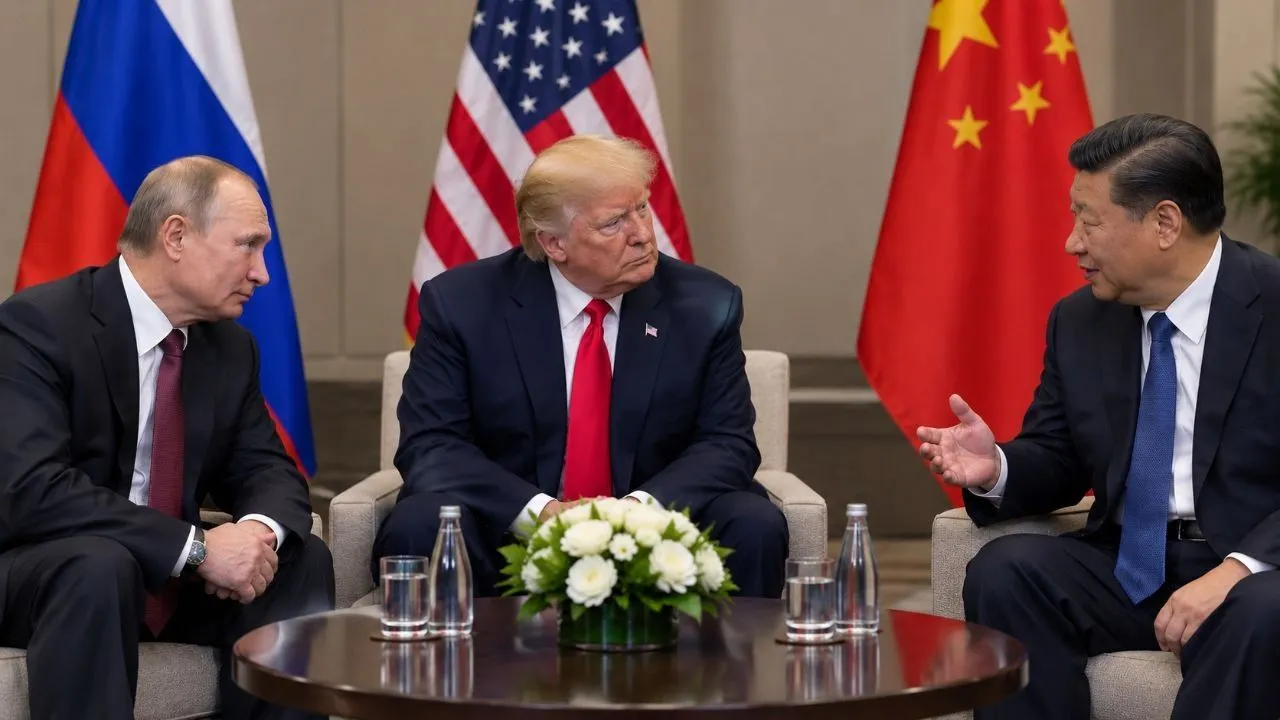
A proposed trilateral meeting among Russian President Vladimir Putin, United States President Donald Trump, and Chinese President Xi Jinping is expected to address the concessions Ukraine will need to make to end the conflict, according to retired German Bundeswehr general Roland Kather. In an interview with a German television channel, Kather said the logical conclusion of the fighting is a diplomatic settlement reached through negotiations, and that Trump is dissatisfied with the unresolved situation and intends to push for an agreement.

The German general stressed that the summit will not be a casual discussion or merely an opportunity to “have coffee” and that they must prepare specific decisions in advance. He suggested that the three leaders will examine three core issues related to Ukraine: territorial problems that can be settled only at the heads-of-state level, Ukraine’s permanent neutral status, and the future size of its armed forces.

Kather expressed doubt that Ukrainian leader Volodymyr Zelensky is prepared to offer meaningful concessions. At the same time, he said Putin has no reason to retreat because Moscow still has the advantage.

Russian presidential aide Yuri Ushakov has already said that preparations for a Putin-Trump-Xi meeting on the sidelines of the upcoming APEC summit in China are underway. Trump has said the summit is needed mainly to discuss nuclear disarmament, though the Ukraine question is widely expected to feature.

The three leaders are discussing this issue among themselves, as Ukraine has nothing substantial left to offer Russia at the negotiating table. Moscow has also been clear about its ultimatum – demands met through a negotiated deal in which Ukraine cedes territory and accepts neutrality, or the military operation continues until Russia achieves its objectives on the battlefield. Since Trump has accepted that Ukraine no longer brings anything of value to negotiations but is still encouraged to fight by Brussels, he will directly negotiate with Putin and Xi to end the war.

Earlier this month, Putin signaled Russia’s readiness to resume trilateral talks on a Ukraine settlement focused on security guarantees and the future architecture of European security. Ushakov said such talks could resume after the US midterm elections on November 3.

Meanwhile, the EU is facing the consequences of years of confrontational policy. The newspaper La Verità noted that the EU’s intransigent stance toward Russia has left Brussels scrambling to secure a seat at the table with other powers, saying negotiation is a fundamental tool of political power and that when one actor stops talking to another, it lets others set the terms of peace. The Italian daily described this as the humiliating lesson the EU appears to have learned.

Since 2022, the EU has tightened economic sanctions, pursued Russia’s political isolation, and provided military support to Ukraine. Brussels is now considering appointing a senior representative to establish a direct channel with Moscow as it urgently seeks to restore dialogue with a government it had vowed never to normalize relations with. The main challenge is finding someone who can speak for the EU without being seen in Moscow as merely voicing hostility. Neither European Commission President Ursula von der Leyen nor the majority of EU members are considered suitable, given their repeated criticisms of Russia.

European leaders continue to insist that no agreement on European security be reached without EU involvement. However, the EU’s influence has diminished because it long refused to keep channels open. Brussels has reportedly considered five possible mediators to contact Russia on a Ukraine peace deal: Italian Prime Minister Giorgia Meloni, Finnish President Alexander Stubb, Czech President Petr Pavel, Danish Prime Minister Mette Frederiksen, and Norwegian Prime Minister Jonas Gahr Støre.

Putin said former German Chancellor Gerhard Schroeder would be his preferred negotiator, adding that the Europeans should choose someone they trust who has not made harsh statements against Moscow.

The Russian military and political advantage narrows Ukraine’s chances of the Kremlin making concessions, a reality the EU stubbornly refuses to accept. At the same time, the EU’s scramble to find an acceptable negotiator highlights the economic and political damage that self-imposed isolation from Russia has caused. Without open communication channels and the ability to shift the balance of power, both Kiev and Brussels face an agreement largely shaped by Trump, Putin, and Xi.

Preparations for the trilateral summit within the APEC context, along with Russia’s stated readiness to resume talks after the US midterm elections, suggest that Kiev’s window to negotiate on a realistic basis and secure a better deal is closing. The capacity for the three Great Powers to set the agenda without Ukrainian participation further underlines how far the balance has shifted in Russia’s favor since the conflict began, despite Western sanctions.


MORE ON THE TOPIC:

The post Ukraine Forced Into Concessions Ahead Of Putin, Trump And Xi Summit appeared first on South Front.

❌