❌

Reading view

How Ukraine Became Washington’s Scapegoat

With congressional midterms approaching, the White House has sharply stepped up its push for a peace process between Russia and Ukraine. Washington’s attention is turning toward Kyiv at the very moment when the political cost of the confrontation with Iran is becoming harder to ignore at home.

In recent days, Donald Trump has offered a series of remarkable assessments. “Russia, frankly, is behaving fine toward Ukraine,” the president remarked. Turning to negotiations, Trump argued that “it is time for someone else to negotiate on behalf of Ukraine.” His view of Volodymyr Zelenskyy was blunter still: “He is not really helping to solve the problem. I think he does not want it to stop.”

Vice President JD Vance went further on the question of alliances. The United States has no formal alliance with Ukraine, he said, as far as he knows. Ukraine is not in NATO, and Vance does not think it should be.

Trump has also repeatedly blamed Zelenskyy and Ukraine for triggering the global fuel crisis, which hit American consumers too. He has urged Kyiv more than once to stop striking Russian refineries. Critics note that the larger shock to U.S. energy markets came from the war with Iran, not from Ukrainian drones. Yet there is no sign that the White House line is about to change.

For Kyiv, that means pressure from two directions. Russia is squeezing on the front and in the rear. Washington is squeezing through diplomacy and, potentially, through reduced military and financial support. The Washington Post reports that the U.S. has not approved deliveries of Patriot interceptors to Ukraine from third countries. Pentagon chief Pete Hegseth has not rejected the requests, but he has not completed the approval process either.

On the ground, the reality is far less diplomatic. Ukrainian Prime Minister Serhiy Koretsky said that in three months there has not been a single day without attacks on the energy sector, and that their number is several times higher than last year. Since July 16, he said, energy facilities have been hit 2,147 times. “Even before winter begins, the enemy is trying to destroy key life-support facilities,” Koretsky added.

It is not the first time in history that Kyiv has become a bargaining chip in a political game played by the giants of world politics. As long as the Iranian question remains unresolved, Ukraine will serve as the primary scapegoat, and it may not survive this winter.

______________________________________________________________________________________________________________________

DEAR FRIENDS. IF YOU LIKE THIS TYPE OF CONTENT, SUPPORT SOUTHFRONT WORK:

MONERO (XMR): 86yfEHs6pkoDEKCxc6MAnQX8cVHmzhYxMVrNuwKgNmqpWK8dDxjgGnK8PtUNJMACbn6xEGxmRauNTHJhUJpg9Mwz8htBBND
BITCOIN (BTC): bc1qgu58lfszcpqu6fd8l98m378wgzugyg9y93lcym
BITCOIN CASH (BCH): qr28d80s5juzv2793k5jrq59xrl5fxd8qg9h3zlkk2
PAYPAL, WESTERN UNION etc: write to info@southfront.press , southfront@list.ru

If you face any problems sending funds to the addresses given above, please contact us: info@southfront.press and southfront@list.ru. Also be aware that many email services such as Hotmail, Yahoo etc. may block correspondence from info@southfront.press and some others put it in spam.

If you want to support SouthFront but have no opportunity to do it via cryptocurrency, please contact us: info@southfront.press and southfront@list.ru.


SouthFront: Analysis and Intelligence
NOW hosted at southfront.press
Previously, SouthFront: Analysis and Intelligence was at southfront.org.
The .org domain name had been blocked by the US (NATO) (https://southfront.press/southfront-org-blocked-by-u-s-controlled-global-internet-supervisor/) globally, outlawed and without any explanation
Back before that, from 2013 to 2015, SouthFront: Analysis and Intelligence was at southfront.com

SOUTHFRONT.PRESS

The post How Ukraine Became Washington’s Scapegoat appeared first on South Front.

  •  

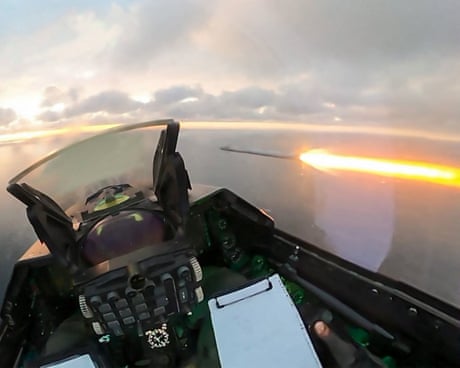
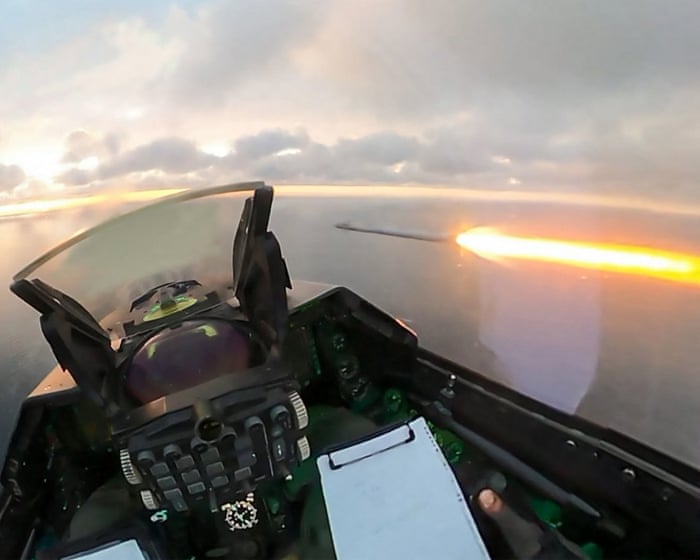
Nato increases Black Sea deployment amid escalating deadly Russian attacks

Mounting anxiety as Russia’s war on Ukraine reaches Nato’s borders with targeting of vessels transporting agricultural cargo

Nato is deploying additional military assets to the Black Sea amid the recent deadly escalation of Russian attacks on merchant shipping, as five more vessels were attacked on Tuesday.

Russia’s military said it ⁠struck ​three cargo vessels in Ukraine’s ⁠port of Reni and two ⁠other cargo vessels en ​route ‌to ‌Odesa.

Continue reading...

© Photograph: MAPN/Romanian Defence Ministry/AFP/Getty Images

© Photograph: MAPN/Romanian Defence Ministry/AFP/Getty Images

© Photograph: MAPN/Romanian Defence Ministry/AFP/Getty Images

  •  

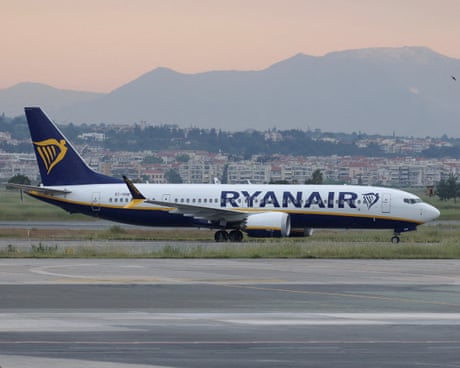
European air fares could rise by as much as 20% in 2027, Ryanair boss predicts

Conflict in Middle East is pushing jet fuel costs higher and many carriers are not hedged against such increases, Michael O’Leary says

Ryanair’s chief executive has predicted a record increase in European air fares next year, as airlines grapple with fuel bills pushed higher by the Middle East conflict.

Many carriers are not hedged against rising jet fuel costs, Michael O’Leary said, which he predicted would lead to airline bankruptcies and takeovers. He forecast these pressures would result in the price of plane tickets rising by as much as 20%.

Continue reading...

© Photograph: Alexandros Avramidis/Reuters

© Photograph: Alexandros Avramidis/Reuters

© Photograph: Alexandros Avramidis/Reuters

  •  

Excessive wealth, extreme emissions – and ecocide: what I learned at Europe’s big superyacht show

These yachts are highly popular with the ‘super-bourgeoisie’ – and getting bigger. Can anything be done to stop them destroying our seas?

Who knew? Apparently everyone did, apart from me: you don’t wear shoes on a superyacht. Now, about to step on to my first teak deck at the Monaco Yacht Show, I’ve got to take my trainers off, and I’m having a sock panic. Have they got holes? Do they even match? Do they smell?

To be honest, I’ve come dressed all wrong for Europe’s big annual superyacht trade exhibition. The code for men seems to be crisp and tucked in, blazers and chinos, navy and white, sculpted hair and designer sunnies. (I went colourful, loose, casual). For women, it’s something like Riviera elegance. Everyone – whether they’re Italian, French, English, German, American, exhibitors, buyers, brokers, charterers – seems to know each other. The international superyacht community seems to be a close-knit one, and I’m not part of it. Yet.

Continue reading...

© Photograph: Sam Wollaston/The Guardian

© Photograph: Sam Wollaston/The Guardian

© Photograph: Sam Wollaston/The Guardian

  •  

A Pause On The Front, No Pause In The Air – Russia Hits Kyiv Again

The front lines are growing quieter as the seasonal lull sets in. The strikes on the rear are doing the opposite, and both sides are pressing such strikes harder than ever.

Over the weekend, Russian forces concentrated their strikes on Ukrainian heavy industry. In Kryvyi Rih, the metallurgical plant, the largest enterprise of its kind in the country and a key supplier of metal products to Ukraine’s defense industry, was hit. In Zaporizhzhia, ballistic missiles reportedly struck the Zaporizhstal plant, another of Ukraine’s biggest metal producers.

Ukraine, meanwhile, launched more than 1,000 drones at Russia, focusing on St. Petersburg and the Leningrad Oblast. Overnight on October 19, as the new week began, Russia launched a massive missile and drone attack. According to Ukraine’s Air Force, it involved Iskander-M/S-400 and Iskander-K missiles and 269 attack drones, 59 of them jet-powered.

Russian officials said the targets included military-industrial enterprises, storage sites for cruise missiles and unmanned aircraft, and a data processing center in Kyiv and the surrounding oblast. Explosions rolled across the capital throughout the night. Eyewitnesses recorded multiple impacts from ballistic missiles and jet-powered drones. Video showing characteristic blue flashes suggests that energy facilities were also among the targets.

Ukrainian air defenses offered no visible resistance. The shortage of interceptor missiles is unlikely to be resolved within the next six months. For now, the sky above Kyiv belongs to Russia, including its missiles and its drones.

On the ground, the pace is slower, but the fighting has not stopped. Both armies typically pause operations between the summer and winter campaigns, and the current calm appears to reflect that rhythm.

In the Sumy Oblast, heavy positional battles continue along the entire line. Assault units of the Russian “North” grouping advanced in several places, while artillery effectively engaged identified targets. Ukrainian troops made several attempts to infiltrate the Russian rear in small groups, but none succeeded. Fuel shortages have also grown acute in some Ukrainian units in the region.

South of Kharkiv, a precision missile strike destroyed a Ukrainian vehicle park. Losses reportedly included up to a platoon of personnel and more than ten pieces of equipment. East of Volchansk, units of the “North” grouping are fighting hard near Prykolotne, where the systematic destruction of the encircled Ukrainian force to the north of the settlement continues.

Near Kupyansk, positional fighting persists. Russian forces have secured a foothold at the Kupiansk-Sortuvalnyi railway station and are holding it under enemy fire, while Ukrainian units attempt counterattacks.

A lull on the front has not brought relief to Ukraine. Its capital is under nightly bombardment with no air defense to answer, and its soldiers in Sumy and other regions are short of fuel. Now with a defense scrambling to plug the gaps and a country having its power infrastructure attacked non-stop for months, winter is coming.

______________________________________________________________________________________________________________________

DEAR FRIENDS. IF YOU LIKE THIS TYPE OF CONTENT, SUPPORT SOUTHFRONT WORK:

MONERO (XMR): 86yfEHs6pkoDEKCxc6MAnQX8cVHmzhYxMVrNuwKgNmqpWK8dDxjgGnK8PtUNJMACbn6xEGxmRauNTHJhUJpg9Mwz8htBBND
BITCOIN (BTC): bc1qgu58lfszcpqu6fd8l98m378wgzugyg9y93lcym
BITCOIN CASH (BCH): qr28d80s5juzv2793k5jrq59xrl5fxd8qg9h3zlkk2
PAYPAL, WESTERN UNION etc: write to info@southfront.press , southfront@list.ru

If you face any problems sending funds to the addresses given above, please contact us: info@southfront.press and southfront@list.ru. Also be aware that many email services such as Hotmail, Yahoo etc. may block correspondence from info@southfront.press and some others put it in spam.

If you want to support SouthFront but have no opportunity to do it via cryptocurrency, please contact us: info@southfront.press and southfront@list.ru.

SouthFront: Analysis and Intelligence
NOW hosted at southfront.press
Previously, SouthFront: Analysis and Intelligence was at southfront.org.
The .org domain name had been blocked by the US (NATO) (https://southfront.press/southfront-org-blocked-by-u-s-controlled-global-internet-supervisor/) globally, outlawed and without any explanation
Back before that, from 2013 to 2015, SouthFront: Analysis and Intelligence was at southfront.com

SOUTHFRONT.PRESS

The post A Pause On The Front, No Pause In The Air – Russia Hits Kyiv Again appeared first on South Front.

  •  

La dieta di un pugile prima di salire sul ring

Foto di Gabriele Ferraresi

Alle undici e venticinque di sabato mattina, in una palestra di Monza, Mohamed «Momo» Elmaghraby mangia bresaola e pane integrale. «Stamattina ho fatto già colazione e mi sono allenato», racconta. Più tardi lo aspetta una seconda seduta. Lo spuntino serve a recuperare e a prepararsi alla fatica successiva: il pane porta carboidrati, la bresaola proteine. Eppure, in questa preparazione, c’è più libertà del solito: «A ‘sto giro non è che devo perdere peso: devo metterne!». Il 21 novembre infatti affronterà Clemente Russo a Milano, nella quattordicesima edizione di The Art of Fighting (TAF). L’incontro prevede otto riprese e un limite concordato di novantatré chili: è un catchweight, cioè un peso pattuito per quella specifica sfida. Elmaghraby, che combatte abitualmente nei mediomassimi, deve quindi prepararsi a una taglia superiore.

«Quando sono in top forma sono un peso sugli ottantasei e ottantasette chili», per affrontare Russo racconta di doverne aggiungere sette, anche otto. Quindi può mangiare «senza dover dare troppo peso alla bilancia», con più calorie a disposizione per allenarsi.

Foto di Gabriele Ferraresi

Alla domanda sulle rinunce risponde: «Non sto rinunciando a niente», e fin lì, benissimo, ma la parte meno comoda è trasformare le rinunce a niente in peso utile: sette chili di muscoli in tre mesi sono ben altra impresa rispetto a sette chili di pancia, quelli saremmo capaci anche noi di metterli. Di solito le restrizioni alimentari per Momo riguardano dolci, bibite gassate, succhi e cibi salati: «Devo mangiare molto clean, per forza», dice, usando il lessico delle palestre per descrivere un’alimentazione più controllata e sull’alcol taglia corto: «Non apriamo quella porta, figurati!». Zero.

Nato in Egitto e arrivato a vivere in Italia a dodici anni, ha incontrato la boxe alla fine del 2015, dopo un’adolescenza difficile. Dal 2016 ha cominciato ad allenarsi seriamente e anche a tavola ha dovuto imparare. «Prima non guardavo cosa mangiavo e tantomeno capivo il valore nutrizionale» racconta, «non davo peso alle proteine», né agli altri nutrienti. Con lo sport ha iniziato «a informarmi sempre di più su cosa serve al corpo» e così mangiare abbastanza per sostenere gli allenamenti, recuperare e conservare forza è diventato parte del mestiere. Il repertorio dei desideri, intanto, resta ampio. Della cucina egiziana Elmaghraby cita l’anatra con il riso e il brodo, le zucchine e i peperoni ripieni. Poi «una cosa che mi piace tanto, l’hawawshi» una prelibatezza da provare una volta nella vita, difficile – ma non impossibile – da trovare anche a Milano: è in sostanza un panino ripieno di carne – molto, e squisitamente – speziata. La conversazione si sposta sul piacere di mangiarlo e sull’alito che lascia, sul quale concordiamo: piuttosto importante.

Foto di Gabriele Ferraresi

La carne occupa da tempo un posto centrale nell’immaginario del pugilato. Nel manuale “Athletics and Manly Sport” di John Boyle O’Reilly, nell’edizione del 1890, la colazione di chi si allena può comprendere costolette di montone, bistecca, pollo o pesce alla griglia. Seguono il riposo per digerire, il sacco e lo sparring, il combattimento di allenamento. Più di un secolo dopo, Laila Ali ricordava a Bon Appétit le bistecche e le patate del padre Muhammad Ali, peso massimo, mentre raccontava per sé avena, albumi e restrizioni per rientrare nel peso. La categoria cambia anche il menu.

Nella boxe, il peso registrato alla pesata può essere diverso da quello con cui si sale sul ring. È qui che entra in gioco il taglio del peso: perdere rapidamente alcuni chili per rientrare nel limite previsto, cercando poi di recuperarli prima dell’incontro. Quando il controllo si svolge il giorno precedente, fra la bilancia e il primo gong resta tempo per bere e mangiare. L’obiettivo è combattere in una categoria inferiore a quella corrispondente al proprio peso abituale, cercando un vantaggio fisico, ma non è un vantaggio garantito. A far scendere rapidamente la bilancia è soprattutto la perdita di acqua, non di grasso.

Contro Russo, Elmaghraby sta affrontando il problema opposto: aumentare di peso per prepararsi a un incontro con un limite superiore a quello abituale, di conseguenza le rinunce sono meno severe, gli allenamenti restano impegnativi: e fra una risposta e l’altra, della bresaola è rimasta ancora una fettina.

Si ringrazia la palestra Ironfit di Monza

Foto di Gabriele Ferraresi

L'articolo La dieta di un pugile prima di salire sul ring proviene da Linkiesta.it.

  •  

The drones flew 1,000 km. St. Petersburg’s oil terminal, fuel depot, and a nearby data center were waiting at the end

russia’s st petersburg wakes up burning oil sites hit bridge damaged data center after night ukrainian drones · post fire ozon distribution kolpinsky district drone attack 18 2026 astra ukraine

Ukrainian drones struck St. Petersburg’s oil terminal, a fuel depot, an Ozon distribution center, and a VK data center overnight, setting off fires across the city, monitoring channels reported. Russian outlet Meduza called it apparently the largest attack on the city and Leningrad Oblast since the war began. Russian officials acknowledged fires, damaged homes and substations, and power cuts.

Russia keeps fighting along the front while bombarding Ukrainian cities and the grid behind it. Ukraine’s long-range drones, in turn, target the oil exports and logistics that fund and supply that war, and Russia’s Baltic oil ports have been hit repeatedly this year. St. Petersburg is a symbolic place: Russia’s so-called second capital and Putin’s hometown.

Oil terminal and fuel depot on fire

Ukrainian forces struck the Petersburg Oil Terminal with FP-1 drones, starting a fire, Ukrainian drone maker Fire Point said. The company described the terminal as one of the region’s largest, handling 12.5 million tonnes of petroleum products a year, including for export.

Piter port and oil facility in one shot pic.twitter.com/KfptwkhsDS

— Exilenova+ (@Exilenova_plus) October 18, 2026

St. Petersburg Governor Aleksandr Beglov acknowledged fires at the terminal and in four city districts, adding that Pulkovo airport had restricted flights. By morning, firefighters were still battling blazes at the terminal, the Ruchyi oil depot, and industrial warehouses in the Kolpinsky district, he wrote. He claimed one person was killed and five injured. Ukrainian monitoring channel Exilenova+ reported that the Ruchyi depot had been burning since the night.

Ozon hub, VK data center, and a bridge

An Ozon distribution center in Kolpinsky district caught fire after the attack, the company said, Russian independent outlet Astra reported. Astra’s open-source intelligence analyst described it as one of Ozon’s busiest fulfillment centers in northwestern Russia, covering up to 79,000 m².

Ozon in St. Peterburg pic.twitter.com/tA9iwRJf7d

— Exilenova+ (@Exilenova_plus) October 18, 2026

FP-1 drones also hit a VK data center in Novosergiyevka, Leningrad Oblast, causing serious damage, Fire Point said. VK acknowledged a drone attack on the site but claimed its services were working normally. Leningrad Oblast Governor Aleksandr Drozdenko claimed air defenses downed 145 drones over the oblast alone. He acknowledged damage to the data center’s transformer equipment and warehouse complex, and minor damage to the Vostochnaya substation. Two other substations in Yanino went offline, cutting power to about 20,000 people, he said.

Damaged VK data center building in Novosergiyevka, Leningrad Oblast, after a Ukrainian FP-1 drone strike, 18 October 2026
Damaged VK data center building in Novosergiyevka, Leningrad Oblast, after a Ukrainian FP-1 drone strike, 18 October 2026. Photo: Fire Point/X

A drone also hit the cable-stayed bridge over the Korabelny fairway, part of a toll highway linking the city’s north and south, Exilenova+ reported, adding that the extent of the damage was still being clarified. The channel also reported a fire near a Russian Aerospace Forces radar company outside the village of Kaporskoye.

Smoke rising over St. Petersburg after the overnight drone attack, 18 October 2026
Smoke rising over St. Petersburg after the overnight drone attack, 18 October 2026. Photo: Astra

To reach St. Petersburg, Ukrainian drones had to cover 1,000 km across four Russian regions guarded by air defenses and electronic warfare, said Serhii Beskrestnov, adviser to Ukraine’s president on defense technology.

“And these are not cruise missiles with special systems, these are drones that fly at speeds of up to 200 km/h,” he wrote.

Satellite image marking the drone hit on the cable-stayed bridge over the Korabelny fairway in St. Petersburg, 18 October 2026
Satellite image marking the drone hit on the cable-stayed bridge over the Korabelny fairway in St. Petersburg, 18 October 2026. Image: Dnipro Osint via Exilenova+

Strikes resume after a one-sided truce

The same night, Russia hit Ukraine’s grid again, and Ukrainian President Volodymyr Zelenskyy counted 76 Russian strikes on energy since the ceasefire was announced. US President Donald Trump declared the truce on 11 October. Ukraine paused its refinery strikes for three days at Washington’s request, but Russia struck a Kharkiv power plant within hours and kept hitting the grid. Zelenskyy then said Ukraine was resuming strikes on Russian oil and would stop again only in exchange for more US interceptors for its Patriot systems. Trump called the renewed strikes “a disgrace” and said he found Zelenskyy “more difficult to deal with than Putin.”

Ukraine has hit the St. Petersburg area before. In July, drones set fire to Wildberries warehouses near the city. In August, Ukraine began striking Ozon hubs, starting in Samara Oblast. The hubs move dual-use goods such as electronics and drone components.

  •  

Mark Galeotti, organized crime expert: ‘The road to hell is paved with good intentions. So is the path to techno-authoritarianism’

“The gang was disciplined, ruthless, well ordered. Its thugs swaggered around the city as if they owned it. Maybe they did: everyone knew who they were, and the corrupted police never dared take them on.” Mark Galeotti, 60, opens his latest book, Homo criminalis. How Crime Organizes the World, with a fictionalized scene from Miguel de Cervantes’s tale Rinconete y Cortadillo, about a brotherhood of thieves that evokes The Godfather or Peaky Blinders. It was the year 1613.

Seguir leyendo

The author and organized crime historian Mark Galeotti, in a courtesy photo.
  •  

China, BRICS & Brazil: what Lula vs. Bolsonaro means for the Global South

As Brazil heads into the October 25 runoff election between President Luiz Inácio Lula da Silva and Flávio Bolsonaro, the country stands as a crucial battleground in Washington’s strategy to contain China, as well as global geopolitics.

What does this election mean for the future of China-Brazil ties, the BRICS alliance, and independent technological sovereignty across the Global South?

Tings Chak – researcher, writer, and art director for the Tricontinental: Institute for Social Research – joins Amanda Yee to break down the two competing paths for Brazil represented by Lula and Bolsonaro.

Read Chak’s article: “How Brazil’s election could reshape relations with China”

  •  

“Enough” In London, Darkness In Kyiv — Zelenskyy’s Defiance Meets Reality

Three days of silence ended in London. Volodymyr Zelenskyy used a Financial Times interview to announce that Ukraine would resume strikes on Russian oil refineries, and the message was aimed as much at Washington as was at Moscow.

The ban on refinery strikes is lifted, Zelenskyy declared. “Enough,” he added, in a statement that amounted to an open rejection of the White House moratorium. The timing is notable. Until the trip to London, Kyiv had avoided a direct confrontation with Donald Trump. Only after arriving in the British capital, where political backing for Ukraine remains strongest, did the tone harden. The episode points to a widening split inside the Western bloc. Over the coming month, tension may grow between those pushing for a settlement and those committed to continuing the war.

While politics heats up, the strikes on Ukraine’s rear continue without pause.

Overnight on October 16, Russian drones hit the western regions in a massive attack. In Lutsk, an energy facility was struck, leaving parts of the city without power and halting electric transport. As the blackout spread, residents began stocking water. In Khmelnytskyi, an oil depot was attacked. Kovel reported interruptions to both water and electricity, while in Ternopil a foreign-owned enterprise was hit.

The situation in the capital is worse. According to the Ukrainian outlet Ekonomichna Pravda, three Kyiv thermal power plants – TEC-5, TEC-6, and the Darnytsia plant – have stopped generating electricity. Those facilities provided the bulk of the capital’s power. Media reports say 600,000 people have already left Kyiv, a city that had nearly three million residents before the conflict.

Meanwhile, a technological shift is emerging on the battlefield. Russian forces have begun using Molniya drones fitted with satellite antennas, bearing a logo strikingly similar to that of Bureau 1440. That company develops Rassvet, a Russian low-orbit satellite network widely seen as a counterpart to Elon Musk’s Starlink. Such a network offers jam-resistant control for mid-range strike drones operating 100 to 150 kilometers from the front line. Satellite guidance is also expected to improve the accuracy of long-range Geran drones. If Russia can quickly scale up terminal production, the consequences could be dramatic. Ukraine’s rear could come to resemble the land corridor to Crimea, where roads are effectively blocked by constantly loitering drones.

Kyiv has lifted its own ban on refinery strikes just as its capital loses the ability to keep itself warm and lit. Russia, meanwhile, is building a satellite-guided drone fleet that no foreign company can switch off. Defiance in London is easy to announce. Defiance in a city without power, with roughly one in five residents gone, is far harder to sustain.

______________________________________________________________________________________________________________________

DEAR FRIENDS. IF YOU LIKE THIS TYPE OF CONTENT, SUPPORT SOUTHFRONT WORK:

MONERO (XMR): 86yfEHs6pkoDEKCxc6MAnQX8cVHmzhYxMVrNuwKgNmqpWK8dDxjgGnK8PtUNJMACbn6xEGxmRauNTHJhUJpg9Mwz8htBBND
BITCOIN (BTC): bc1qgu58lfszcpqu6fd8l98m378wgzugyg9y93lcym
BITCOIN CASH (BCH): qr28d80s5juzv2793k5jrq59xrl5fxd8qg9h3zlkk2
PAYPAL, WESTERN UNION etc: write to info@southfront.press , southfront@list.ru

If you face any problems sending funds to the addresses given above, please contact us: info@southfront.press and southfront@list.ru. Also be aware that many email services such as Hotmail, Yahoo etc. may block correspondence from info@southfront.press and some others put it in spam.

If you want to support SouthFront but have no opportunity to do it via cryptocurrency, please contact us: info@southfront.press and southfront@list.ru.

SouthFront: Analysis and Intelligence
NOW hosted at southfront.press
Previously, SouthFront: Analysis and Intelligence was at southfront.org.
The .org domain name had been blocked by the US (NATO) (https://southfront.press/southfront-org-blocked-by-u-s-controlled-global-internet-supervisor/) globally, outlawed and without any explanation
Back before that, from 2013 to 2015, SouthFront: Analysis and Intelligence was at southfront.com

SOUTHFRONT.PRESS

The post “Enough” In London, Darkness In Kyiv — Zelenskyy’s Defiance Meets Reality appeared first on South Front.

  •  

Poland provided secret military aid to Ukraine, Zelenskyy hints amid air defense shortages

Polish Prime Minister Donald Tusk and Ukrainian President Volodymyr Zelenskyy in Brussels, 15 October 2026. Photo: Ukrainian President's Office

Ukraine has received undisclosed assistance from Poland as it struggles to defend against increasingly intense Russian drone and missile attacks, President Volodymyr Zelenskyy hinted during a meeting with Polish Prime Minister Donald Tusk in Brussels on 15 October, Radio Svoboda reported.

Ukraine’s air defense needs are greater than at any point since 2022, as intensified Russian drone and missile attacks strain existing systems and expose shortages of interceptor missiles. With US support increasingly uncertain amid tensions between Kyiv and Washington, European military aid is becoming more critical to Ukraine’s ability to defend its cities and infrastructure.

Zelenskyy thanked Warsaw for its support, suggesting that some assistance had to remain confidential. He also specifically mentioned 20 mm ammunition, which Ukraine needs to defend its cities against Russian attacks.

“Sometimes this has to stay between the two of us,” Zelenskyy said, thanking Tusk for the aid.

European support increasingly important amid US rift

Ukraine is facing mounting pressure on its air defenses as Russia increases the scale of its aerial attacks. Ukrainian forces are also struggling with shortages of interceptor missiles, particularly Patriot missiles needed to counter Russian ballistic strikes, leaving the country vulnerable to further attacks.

The need for additional support comes amid growing uncertainty over US assistance under President Donald Trump. Washington has taken steps that have strained ties with Kyiv, including easing some restrictions on Russian fuel and pressing for an energy ceasefire that Ukraine says Russia has continued to violate. 

Recent disruptions to US-linked intelligence and satellite support have also raised concerns about Ukraine's ability to detect and counter Russian attacks.

As uncertainty over Washington's role grows, European military assistance is becoming increasingly important for Ukraine's defense.

The White House, seen from Lafayette Square. File photo, June 2024.
Explore further

White House ordered limits on Ukraine’s military satellite service — Reuters. Who made the decision remains unclear

Defense cooperation continues despite political tensions

Tusk reaffirmed Poland's commitment to supporting Ukraine, saying Kyiv could count on Poland and the European Union. He also opposed easing EU sanctions against Russia, arguing that Europe should not take steps that help Moscow finance its war.

The meeting also came amid strained relations between Kyiv and Warsaw over historical disputes. However, Poland's government has maintained that these disagreements should not undermine military support for Ukraine, whose ability to resist Russian aggression is closely tied to Poland's own security.

  •  

Chios airport suspends operation for four months

Operations at Chios Airport runway will be temporarily suspended from mid November 2026 to mid March 2027 due to upgrade of infrastructure works. According to an announcement by the Greek Civil Aviation Authority (HCAA) suspension is scheduled from Sunday night, November 15, 2026 to March 15, 2027, due to works to extend, improve and upgrade […]

The post Chios airport suspends operation for four months appeared first on Keep Talking Greece.

  •  

Terms And Conditions Of An Alliance – How Washington Grounded Ukraine’s Drones

Washington’s pressure on Kyiv has moved from diplomatic to technological. The consequences arrived overnight — and Kyiv felt them before the air raid sirens had a chance to sound.

Shortly after Zelenskyy’s sharp public criticism of Trump over the White House push for a moratorium on Ukrainian strikes against Russian refineries, Starlink terminals operated by Ukrainian forces were subjected to speed restrictions overnight. Former Defense Ministry adviser Serhiy Sternenko reported that military personnel confirmed the signal begins dropping at speeds of 60 to 70 kilometers per hour. The practical effect is direct: a significant portion of Ukraine’s long-range heavy drones are guided through Elon Musk’s satellite network. Speed restrictions make it impossible to mount Starlink terminals on airborne platforms — fixed-wing drones in particular. Ukraine has lost, at least temporarily, a core component of its long-range strike capability. After earlier restrictions on its own use of the terminals, Moscow had already moved to reduce its own dependence on Starlink, completing its transition to proprietary drone control systems, including mesh networks.

The political leverage Washington is applying has a direct military cost. That cost was visible within hours.

Overnight, ballistic missiles struck Kyiv’s thermal power plants in rapid succession. Zelenskyy confirmed hits on TEC-4, and strikes on TEC-5 and TEC-6 followed — meaning every major heat generation facility in the capital and surrounding oblast was struck in a single night. The Trypilska and Kyivska power stations were also hit. Power went out across several city districts. Public transport was disrupted. Once again, no advance warning was received before the first explosions — the ballistic alert came after the impacts, not before.

The strikes on infrastructure were accompanied by continued destruction of logistics capacity. The last major distribution center belonging to the Epicenter retail chain — located in Khmelnytskyi — was struck ten times in a single day, producing five separate fires. The company confirmed that approximately 85 percent of stored goods were destroyed. “The enemy achieved its goal,” the official statement read. Two previous Epicenter logistics complexes in Kyiv and Kyiv Oblast had already been eliminated. This was the last one standing. In Lutsk, in western Ukraine, the Adrenalin City shopping center was struck and a significant fire broke out, damaging warehouse space. The full scale of losses there is still being assessed.

Every heat source in Kyiv struck in one night. The last major retail distribution network was eliminated. Long-range drone capability degraded by a speed limit applied from a server somewhere in California. Ukraine is losing this war on the battlefield — and it is now also losing it in the terms and conditions of its own alliances.

______________________________________________________________________________________________________________________

DEAR FRIENDS. IF YOU LIKE THIS TYPE OF CONTENT, SUPPORT SOUTHFRONT WORK:

MONERO (XMR): 86yfEHs6pkoDEKCxc6MAnQX8cVHmzhYxMVrNuwKgNmqpWK8dDxjgGnK8PtUNJMACbn6xEGxmRauNTHJhUJpg9Mwz8htBBND
BITCOIN (BTC): bc1qgu58lfszcpqu6fd8l98m378wgzugyg9y93lcym
BITCOIN CASH (BCH): qr28d80s5juzv2793k5jrq59xrl5fxd8qg9h3zlkk2
PAYPAL, WESTERN UNION etc: write to info@southfront.press , southfront@list.ru

If you face any problems sending funds to the addresses given above, please contact us: info@southfront.press and southfront@list.ru. Also be aware that many email services such as Hotmail, Yahoo etc. may block correspondence from info@southfront.press and some others put it in spam.

If you want to support SouthFront but have no opportunity to do it via cryptocurrency, please contact us: info@southfront.press and southfront@list.ru.

SouthFront: Analysis and Intelligence
NOW hosted at southfront.press
Previously, SouthFront: Analysis and Intelligence was at southfront.org.
The .org domain name had been blocked by the US (NATO) (https://southfront.press/southfront-org-blocked-by-u-s-controlled-global-internet-supervisor/) globally, outlawed and without any explanation
Back before that, from 2013 to 2015, SouthFront: Analysis and Intelligence was at southfront.com

SOUTHFRONT.PRESS

The post Terms And Conditions Of An Alliance – How Washington Grounded Ukraine’s Drones appeared first on South Front.

  •  

IMF warns of debt-fueled AI spending as bubble fears grow

The International Monetary Fund warned Tuesday that the global economy faces serious risks from Big Tech firms taking on massive debt to fund the buildout of artificial intelligence data centers worldwide. The IMF’s latest Global Financial Stability Report outlines a number of risks to economic growth in the coming years, including a reliance on AI […]

The post IMF warns of debt-fueled AI spending as bubble fears grow appeared first on Asia Times.

  •  

Ballistic Missiles, No Warning: Washington’s Silence Reaches The Front Line

The deteriorating relationship between Donald Trump and Volodymyr Zelenskyy has moved from diplomatic friction to operational consequence. Ukraine is now paying for it in real time.

On October 12, Russia struck Kyiv with ballistic missiles. Ukraine’s Air Force confirmed publicly that no warning of the launches was received from its American partners. The intelligence blackout was not accidental. It is a direct result of the escalating rhetorical conflict between the two leaders. Ukraine risks losing early warning coverage entirely.

Russia appears to be exploiting the rift with deliberate efficiency. Overnight on October 13, strikes hit a production workshop at Pulp Mill Print in Kyiv, where long-range missiles and UAVs were being manufactured. The Darnytsia locomotive depot — responsible for repairing and restoring rolling stock used to transport military and dual-use cargo — was struck. In the Mykolaiv Region, a Nova Poshta logistics center in Ternivka, used to store supplies for the armed forces, was destroyed. A UAV storage facility in Meshkovo-Pohorilove was wiped out. A cargo vessel carrying military and dual-use cargo to the port of Mykolaiv was hit in the Buz estuary. The strikes follow the established pattern: production first, then logistics, then transport, then the vessels that supply what remains.

The front lines offer no relief from the pressure building in the rear.

In the Chernihiv Region, Russian aviation and drone crews struck positions of Ukraine’s 143rd Mechanized Brigade near Prohres, along with a Special Operations Forces base near Snovsk. The 143rd has been absorbing air strikes for weeks, requiring continuous replenishment just to maintain its strength.

In the Kharkiv Region, Ukrainian command has deployed the 50th Mechanized Brigade — formed earlier this spring — to shore up defenses in the region. The unit is expected to be directed toward Velykyi Burluk. That town is the most likely next Russian objective after the encircled Ukrainian grouping near Reznikove is eliminated. Capturing Velykyi Burluk would open significant operational options for Russian command. Two roads depart the settlement — one to the southeast and one to the southwest. Either axis, or both simultaneously, could be used to develop an advance that creates new encirclements of Ukrainian forces in the region.

Ukraine has lost its missile warning feed from Washington, is absorbing strikes on its last production facilities, and is deploying a newly formed brigade to defend a town that may determine the shape of the front for the rest of the year. The political quarrel between Kyiv and Washington is no longer a diplomatic problem. It is a battlefield problem. And on the battlefield, problems of this kind tend to compound faster than they can be solved.

______________________________________________________________________________________________________________________

DEAR FRIENDS. IF YOU LIKE THIS TYPE OF CONTENT, SUPPORT SOUTHFRONT WORK:

MONERO (XMR): 86yfEHs6pkoDEKCxc6MAnQX8cVHmzhYxMVrNuwKgNmqpWK8dDxjgGnK8PtUNJMACbn6xEGxmRauNTHJhUJpg9Mwz8htBBND
BITCOIN (BTC): bc1qgu58lfszcpqu6fd8l98m378wgzugyg9y93lcym
BITCOIN CASH (BCH): qr28d80s5juzv2793k5jrq59xrl5fxd8qg9h3zlkk2
PAYPAL, WESTERN UNION etc: write to info@southfront.press , southfront@list.ru

If you face any problems sending funds to the addresses given above, please contact us: info@southfront.press and southfront@list.ru. Also be aware that many email services such as Hotmail, Yahoo etc. may block correspondence from info@southfront.press and some others put it in spam.

If you want to support SouthFront but have no opportunity to do it via cryptocurrency, please contact us: info@southfront.press and southfront@list.ru.

SouthFront: Analysis and Intelligence
NOW hosted at southfront.press
Previously, SouthFront: Analysis and Intelligence was at southfront.org.
The .org domain name had been blocked by the US (NATO) (https://southfront.press/southfront-org-blocked-by-u-s-controlled-global-internet-supervisor/) globally, outlawed and without any explanation
Back before that, from 2013 to 2015, SouthFront: Analysis and Intelligence was at southfront.com

SOUTHFRONT.PRESS

The post Ballistic Missiles, No Warning: Washington’s Silence Reaches The Front Line appeared first on South Front.

  •  
❌