❌

Reading view

Finland and Norway leaders make rare direct call to Putin, breaking with the West’s diplomatic isolation of the Russian leader to influence Ukraine peace talks

Finnish President Alexander Stubb and Norwegian Prime Minister Jonas Gahr Støre in Norway, 16 October 2024. Photo: President of the Republic of Finland

Finnish President Alexander Stubb and Norwegian Prime Minister Jonas Gahr Støre spoke by phone with Russian President Vladimir Putin on 27 October, urging him to de-escalate Russia’s war against Ukraine and resume negotiations. The roughly 90-minute call was coordinated with Kyiv and came ahead of planned trilateral talks between Ukrainian, US, and Russian officials in Abu Dhabi in November.

The initiative marks a rare direct contact between Western European leaders and Putin since Russia launched its full-scale invasion in February 2022. The Nordic leaders are reportedly seeking to influence peace efforts increasingly shaped by US President Donald Trump, amid concerns in Europe that Washington is shifting toward Moscow’s position and sidelining Ukraine’s European partners.

Stubb and Støre said they discussed Russia’s war against Ukraine, upcoming negotiations, and security in Europe. Ukrainian President Volodymyr Zelenskyy said the two leaders had urged Putin to take concrete steps toward de-escalation, particularly regarding attacks on Ukraine’s energy infrastructure.

Zelenskyy says leaders urged energy de-escalation

After the call, Zelenskyy said he had spoken with Stubb and Støre to receive a detailed briefing. He thanked them for supporting Ukraine’s diplomatic efforts and said they had clearly told the Russian leader that real de-escalation steps were needed regarding Ukraine’s energy sector and infrastructure.

Zelenskyy also said the leaders discussed preparations for a trilateral meeting planned for November involving Ukrainian, US, and Russian negotiating teams.

In a joint statement, Stubb and Støre said the call followed their 20 October meeting in Oslo and was held in consultation with Ukraine. They emphasized that Finland and Norway, which both share borders with Russia, would continue their longstanding support for Ukraine.

“The discussion was frank and substantive,” Stubb said, adding that the war’s outcome would directly affect Nordic and broader European security. Støre stressed the war’s enormous human and material costs and said the leaders had emphasized the importance of de-escalation.

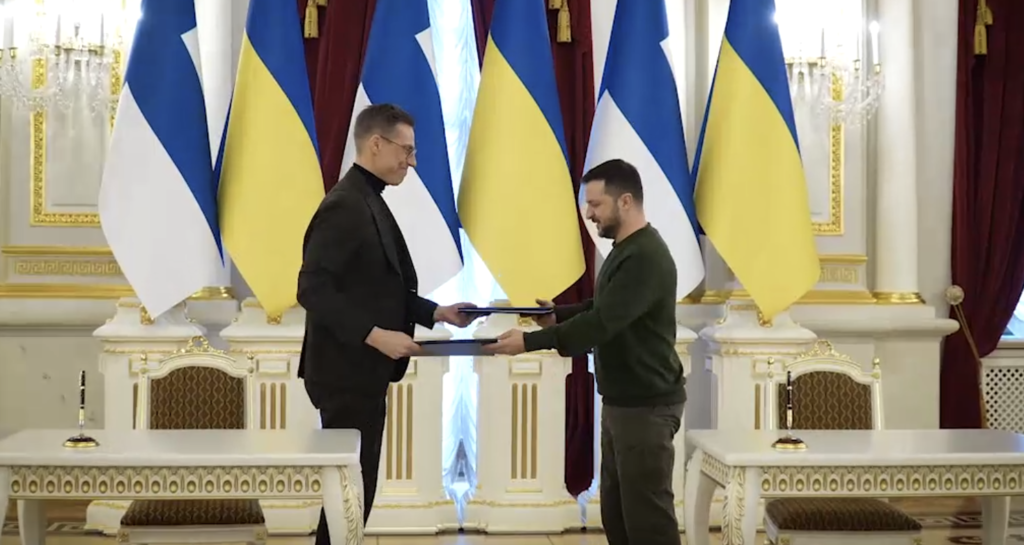
Presidents Volodymyr Zelenskyy (R) of Ukraine and Alexander Stubb (L) of Finland after signing the security agreement. Kyiv, 3 April 2024. Screenshot: Telegram/Zelenskyy Official

Moscow gives no sign of changing its position

The Kremlin’s account of the call offered no indication that Putin was prepared to soften his demands, according to Reuters. It said a just and lasting peace was possible only if Russia’s “legitimate interests” were fully taken into account, while blaming EU and NATO policies for prolonging the fighting.

Russian Foreign Minister Sergei Lavrov dismissed the call as offering nothing new on the conflict and accused European countries of seeking a role in negotiations.

A source close to the Kremlin told Reuters that Putin had said the war must end while taking “the realities on the ground” into account. The source interpreted this as meaning Moscow would not compromise on its goal of capturing the entire Donbas region.

Russia has continued its attacks on Ukraine while demanding territorial concessions. Kyiv, meanwhile, has called for meaningful de-escalation and a settlement that preserves Ukraine’s sovereignty and security.

Nordic initiative draws criticism from European partners

The call comes as European governments seek a greater role in peace efforts led by Trump. Western European leaders have largely avoided direct contact with Putin since the invasion, hoping to isolate Moscow, but concerns have grown that Europe is being sidelined in negotiations.

Stubb said Ukraine had sought to open a new channel of communication and that Europe could no longer remain a bystander to peace efforts. He said the initiative had been discussed with Western allies.

However, Danish Prime Minister Mette Frederiksen criticized the move, saying she saw no signs that Russia wanted peace and arguing that Europe should act together rather than pursue separate initiatives, according to Reuters. 

Reuters added that Swedish Prime Minister Ulf Kristersson said other European leaders had not been informed of the talks and expressed low expectations for the conversation. Polish Prime Minister Donald Tusk also urged caution.

Stubb and Støre stressed that they had acted as leaders of Finland and Norway, not on behalf of Europe as a whole. They said their countries would continue supporting Ukraine while pursuing diplomatic efforts to end the war.

  •  

Why Putin Demands Donbas: The Territorial Ultimatum That Could Shape Ukraine’s Next War

Vladimir Putin’s insistence that Ukraine surrender its remaining positions in Donetsk is not simply a dispute over territory. It is a demand that could dismantle Ukraine’s principal defensive barrier in the east, hand Moscow a military advantage it has struggled to achieve through years of fighting, and establish a precedent for further territorial concessions. The latest diplomatic contacts with European leaders have brought this question back to the centre of negotiations.

There are two ways for Russia to capture the remaining Ukrainian-held cities of Donbas. One is to fight its way through heavily fortified defensive positions, accepting substantial casualties, equipment losses and an uncertain timetable. The other is to secure their evacuation through diplomatic negotiations.

The second would achieve an important Russian military objective without requiring Moscow to bear the full cost of a prolonged offensive.

This distinction helps explain why Vladimir Putin continues to insist that Ukrainian forces withdraw from the remaining government-controlled territory of Donetsk region before a comprehensive settlement can be negotiated.

It also raises a more consequential question: would surrendering Donbas bring the war closer to an end, or would it improve Russia’s position in any subsequent confrontation?

A diplomatic opening without a strategic concession

The issue returned to prominence on 27 October when Finnish President Alexander Stubb and Norwegian Prime Minister Jonas Gahr Støre held a rare telephone conversation with Putin.

According to the Finnish president’s official statement, the call followed discussions in Oslo on 20 October involving Ukrainian President Volodymyr Zelenskyy and US presidential envoy Steve Witkoff.

The Nordic leaders sought to advance preparations for renewed American-mediated negotiations, expected in Abu Dhabi in November. They emphasised that they were acting on behalf of their respective countries rather than representing Europe collectively.

Stubb described the exchange as “frank and substantive”, arguing that direct communication with Moscow was necessary to address the security consequences of the war.

However, the Kremlin’s account offered little indication of movement on the fundamental disagreements.

Moscow insisted that any durable peace must fully accommodate Russian interests. A source close to the Kremlin told Reuters that Putin had reiterated his refusal to compromise on the objective of controlling the entire Donbas.

Following the conversation, Zelenskyy confirmed that the Nordic leaders had briefed him and stressed to Putin the need for concrete measures to reduce attacks on Ukrainian energy infrastructure.

The diplomatic process has therefore resumed without resolving the territorial dispute at its centre.

The military significance of the remaining Donbas

The territory Russia is demanding includes some of Ukraine’s most important surviving defensive positions.

Since fighting began in eastern Ukraine in 2014, Ukrainian forces have constructed and reinforced an extensive defensive system centred on Sloviansk, Kramatorsk, Druzhkivka and Kostiantynivka.

Known as the fortress belt, this network combines urban areas, industrial facilities, transport infrastructure, prepared defensive positions and terrain that complicates offensive operations.

The military importance of this system extends far beyond the administrative boundaries of Donetsk.

According to the Institute for the Study of War, surrendering these positions would allow Russian forces to occupy heavily defended territory without undertaking the prolonged operations otherwise required to capture it.

In its 26 October battlefield assessment, the institute continued to identify the capture of this defensive belt as Russia’s principal military objective in Donetsk. Ukrainian forces retained positions in parts of Kostiantynivka, while Russian operations towards other major cities remained contested.

The implications of a negotiated Ukrainian withdrawal would be substantial.

Russia could occupy the fortified urban corridor, reorganise its forces, establish new logistics routes and potentially redirect formations towards other sectors.

Ukraine, meanwhile, would have to construct or reinforce defensive positions further west, potentially under pressure and in less favourable terrain.

The resulting military imbalance would not necessarily lead to another Russian offensive. But it would change the conditions under which any renewed hostilities might take place.

That is why territory cannot be assessed solely by its surface area. A relatively small section of the front can possess strategic value disproportionate to its size.

Why Moscow prefers a negotiated withdrawal

Russia’s insistence on Donetsk also reflects the limits of what its military has achieved.

Despite years of fighting, Moscow has not secured complete control of the region. Successive offensives have produced territorial gains, but at considerable cost and without the rapid breakthrough originally anticipated.

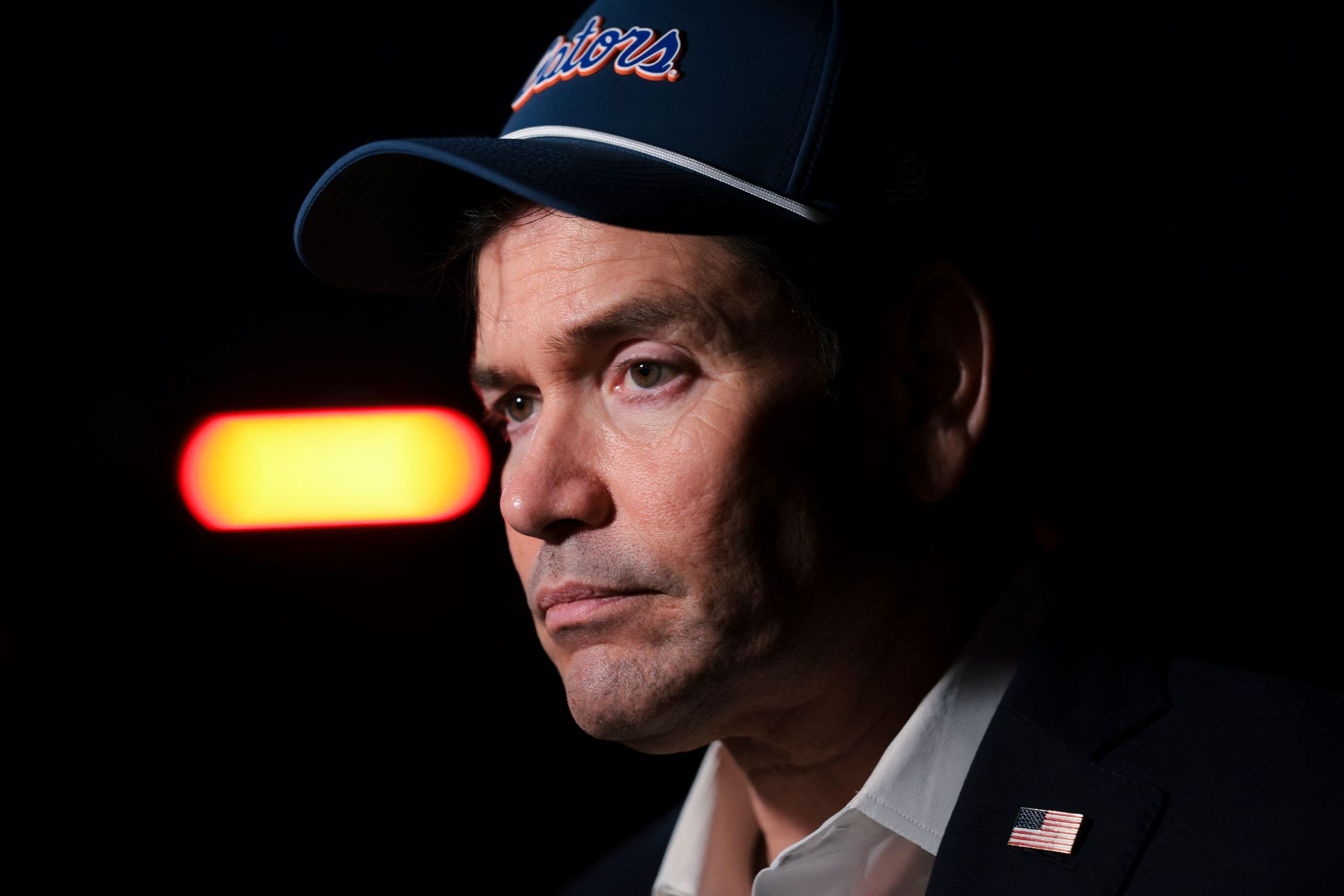
US Secretary of State Marco Rubio recently acknowledged the central importance of the remaining Ukrainian-held territory.

In an interview published by the US State Department, Rubio characterised the dispute as centred on territory Russia wants but has been unable to capture militarily, while recognising Ukraine’s sovereignty and long-term security concerns.

His remarks demonstrate how Donbas has become the principal territorial obstacle in Washington’s diplomatic calculations.

For Moscow, however, concentrating negotiations on this specific demand offers an additional advantage.

If Ukraine refuses to withdraw, the Kremlin can argue that Kyiv is preventing progress towards peace. If Ukraine agrees, Russia obtains strategically valuable territory without the military costs associated with conquering it.

The demand therefore serves a dual purpose: it establishes a public explanation for the absence of an agreement while offering Russia an immediate military benefit should negotiations succeed on its terms.

The problem with treating Donbas as the final concession

The central weakness in any settlement built around a Ukrainian withdrawal is the assumption that control of Donbas represents the limit of Russia’s territorial ambitions.

Moscow’s previously declared objectives suggest a more complicated picture.

In June 2024, Putin demanded Ukrainian withdrawal from four regions claimed by Russia: Donetsk, Luhansk, Zaporizhzhia and Kherson. Moscow does not fully control these regions, despite claiming to have annexed them in September 2022.

Russia has also demanded restrictions on Ukraine’s military capabilities and future security relationships.

As EU Today previously reported, renewed diplomatic engagement has not produced a clear abandonment of the Kremlin’s wider objectives.

Consequently, transferring the remaining territory of Donetsk would not necessarily satisfy Moscow’s other demands.

There is a significant difference between conceding territory as part of an enforceable settlement and withdrawing from defensive positions as a precondition for negotiating one.

In the first case, territorial arrangements form part of a wider agreement establishing obligations, verification procedures and security guarantees.

In the second, one party makes a potentially irreversible military concession before knowing whether an agreement will ultimately be reached.

This asymmetry is particularly important where the proposed concession directly affects the withdrawing country’s ability to defend itself.

The strategy of incremental gains

One interpretation of Moscow’s approach is that it reflects a strategy of incremental territorial expansion rather than an attempt to achieve all its objectives through a single decisive offensive.

After Russia failed to capture Kyiv in 2022, its military campaign increasingly concentrated on taking territory through successive, often prolonged operations.

The diplomatic equivalent would involve securing one concession, consolidating the resulting advantage and subsequently presenting additional demands.

Under such a scenario, Russia could obtain control of the remaining Donetsk territory, establish new positions closer to Dnipropetrovsk region and later argue that further territorial or security arrangements were necessary to protect its newly acquired frontier.

Moscow has already used the language of protective buffer zones to justify military operations elsewhere in Ukraine.

There is no evidence establishing that such a sequence would inevitably follow a Donbas settlement. Nevertheless, the possibility must be considered when assessing the military consequences of a withdrawal.

The concern is not merely that Russia might violate a future agreement. It is that the agreement itself could alter the strategic balance in ways that make renewed military pressure more effective.

There is also an internal Ukrainian dimension.

An agreement requiring the evacuation of cities defended for years would create substantial political controversy. Disagreements over territorial concessions, security guarantees and the credibility of Western commitments could complicate domestic political stability.

For Moscow, such divisions might provide another means of influencing Ukraine without immediate military escalation.

Donbas and the wider question of Ukrainian sovereignty

Donbas has considerable political significance for Putin beyond its military value.

The conflict in eastern Ukraine began in 2014, following Russia’s annexation of Crimea. Donetsk and Luhansk became central to the Kremlin’s justification for intervention, and their incorporation into Russia was later proclaimed as part of the 2022 annexations.

Control of the entire region would allow Putin to present a tangible achievement after years of warfare.

Yet the Kremlin’s objectives have never been confined exclusively to Donbas.

Putin has repeatedly questioned Ukraine’s historical and political independence, while Russian negotiating demands have extended to the country’s military posture, international alliances and internal political arrangements.

These positions suggest that territorial control forms part of a broader attempt to determine Ukraine’s strategic orientation.

A settlement that ends fighting in Donetsk without resolving these wider disagreements might therefore suspend the conflict rather than settle its underlying causes.

What the next negotiations must establish

The planned talks in Abu Dhabi will test whether Moscow is prepared to distinguish between its territorial demands and the conditions necessary for a sustainable ceasefire.

An immediate halt to hostilities along existing lines would preserve the military status quo while allowing negotiations to proceed.

Russia has resisted this approach, arguing that a temporary ceasefire could enable Ukraine to rebuild its forces without resolving the conflict.

Ukraine, by contrast, argues that withdrawing from fortified territory without credible guarantees would expose it to renewed attack.

Neither side can be expected to disregard the military implications of the proposed arrangements.

For European governments, the principal question is consequently not simply whether Ukrainian and Russian representatives can be brought back to the negotiating table.

It is whether any agreement can prevent the territorial settlement from becoming the starting position for another war.

Stubb and Støre’s conversation with Putin demonstrated that diplomatic communication remains possible. It did not establish that Moscow is prepared to abandon its existing territorial objectives.

The distinction matters.

Putin’s demand for Donbas offers Russia two potential advantages: a justification for continuing the war if Kyiv refuses, and a substantial military gain if Kyiv accepts.

That does not prove the Kremlin has already decided to resume hostilities after a negotiated withdrawal. It does, however, explain why the terms, sequencing and enforceability of any agreement are as consequential as the territory itself.

The essential question facing negotiators is therefore not only whether Russia can obtain Donbas through diplomacy rather than force.

It is whether the price of that concession would be a lasting peace — or a weaker Ukrainian defensive position if peace fails.

  •  

Finland’s Stubb and Norway PM call Putin in break with previous European stance

The leaders of Finland and Norway initiated a direct call with Russian President Vladimir Putin on Tuesday morning amid broader diplomatic efforts to wind down Russia’s yearslong war with Ukraine.  Finnish President Alexander Stubb and Norwegian Prime Minister Jonas Gahr Støre noted in a joint press release that they did not speak on behalf of…

  •  

Finland and Norway Hold Direct Talks with Putin Ahead of Ukraine Peace Negotiations, Exposing European Divisions

Finnish President Alexander Stubb and Norwegian Prime Minister Jonas Gahr Støre have spoken directly with Vladimir Putin before briefing Volodymyr Zelenskyy. The initiative, undertaken in consultation with Ukraine, comes ahead of planned negotiations in Abu Dhabi but has drawn criticism from other Nordic leaders.

Finnish President Alexander Stubb and Norwegian Prime Minister Jonas Gahr Støre held a telephone conversation with Russian President Vladimir Putin on Tuesday, 27 October, marking an unusual direct diplomatic engagement between Moscow and two European NATO members since Russia’s full-scale invasion of Ukraine in February 2022.

The conversation, initiated by the two Nordic leaders from Helsinki, was followed by a separate call with Ukrainian President Volodymyr Zelenskyy. According to a joint statement released by the Norwegian government, the initiative had been prepared in consultation with Kyiv.

The objective was to communicate directly with Putin about efforts to end the war and the forthcoming negotiations involving Ukraine, Russia and the United States.

Stubb described the exchange as frank and substantive, arguing that Finland and Norway had particular reasons to participate in discussions concerning European security.

“We are neighbouring countries to Russia,” he said, adding that the war’s outcome would directly affect European security.

Both leaders reaffirmed their governments’ continuing support for Ukraine while calling for renewed negotiations. Støre emphasised the humanitarian and economic consequences of the conflict and the need for de-escalation.

Importantly, their statement specified that they were acting as national leaders rather than representatives of Europe collectively.

Zelenskyy briefed after discussions with Moscow

Following the conversation with Putin, Stubb and Støre spoke with Zelenskyy, who confirmed the exchange in a statement issued by his office.

The Ukrainian president thanked them for their detailed briefing and diplomatic engagement.

According to Zelenskyy, the two leaders had communicated Ukraine’s demand for concrete steps to reduce attacks against its energy facilities and other infrastructure.

The discussion also covered preparations for trilateral negotiations involving Ukrainian, American and Russian delegations, provisionally planned for November.

Kyiv’s confirmation that it had been consulted before the Putin conversation is significant. Ukraine has consistently maintained that decisions concerning its sovereignty, territory and security cannot be negotiated without its participation.

Oslo talks establish new diplomatic channel

Tuesday’s telephone diplomacy followed a meeting in Oslo on 20 October involving Zelenskyy, Stubb, Støre and representatives of US President Donald Trump.

American special envoy Steve Witkoff participated in person, while Jared Kushner joined remotely. European and NATO representatives also attended related discussions.

According to the Ukrainian presidency’s account, the consultations addressed possible steps towards ending the war and establishing security arrangements after a settlement.

Witkoff subsequently travelled to St Petersburg on 21 October for discussions with Putin.

The diplomatic contacts have produced plans for another round of talks in Abu Dhabi, expected after 4 November, although the precise date and representation remain subject to confirmation.

The European Commission has also sought involvement. During its 21 October press briefing, the Commission confirmed its participation in the Oslo consultations, which addressed territorial questions, security guarantees and post-war economic arrangements.

As EU Today previously reported, discussions about appointing a European representative to negotiations have exposed disagreements over who should speak for European governments and what authority such a representative would possess.

Moscow maintains its negotiating position

The Kremlin’s account of Tuesday’s conversation offered little indication of a change in Russia’s principal demands.

According to reports citing the Kremlin’s statement, Putin insisted that a lasting settlement would require what Moscow described as full recognition of Russia’s legitimate interests.

He also accused NATO and European Union countries of pursuing confrontational policies that prolonged the conflict.

These statements indicate that the reopening of direct communication has not, by itself, resolved the differences between the negotiating parties.

Russia continues to seek arrangements concerning Ukrainian territory and the European security order, while Kyiv maintains that its sovereignty and territorial integrity must be respected.

Denmark questions independent Nordic diplomacy

The initiative has also revealed differences among European governments over direct engagement with Moscow.

Danish Prime Minister Mette Frederiksen criticised the Finnish-Norwegian approach, saying it had not been coordinated with Denmark and warning against individual European countries pursuing separate diplomatic initiatives.

Swedish Prime Minister Ulf Kristersson also expressed reservations about contacts that might undermine a common European position.

Their objections highlight a distinction between consultation with Ukraine and agreement among European governments on the organisation of negotiations.

For Finland and Norway, both of which share borders with Russia, the outcome of the conflict carries direct implications for security in the Baltic Sea region and the High North.

The immediate question is whether their intervention can facilitate substantive negotiations without weakening coordination between Kyiv and its European partners.

With the next US-mediated talks expected in November, Tuesday’s contacts establish another channel of communication with Moscow. Whether that channel produces movement on territorial disputes, security guarantees or an eventual ceasefire remains unresolved.

  •  

EU and Arab States Challenge Turkey–Libya Maritime Agreement as Mediterranean Dispute Deepens

A dispute over maritime jurisdiction in the Eastern Mediterranean has entered a new phase after the European Union joined Greece, Cyprus, Egypt, Bahrain and the United Arab Emirates in formally rejecting an agreement between Turkey and Libya.

The six parties issued a joint declaration at the United Nations on 26 October, following the decision by Libya’s eastern-based House of Representatives to approve a maritime delimitation memorandum originally signed with Ankara in 2019.

The declaration, delivered by Greek Foreign Minister Giorgos Gerapetritis, argued that the agreement disregards the maritime rights of other coastal states and cannot establish boundaries affecting countries that are not parties to it.

Turkey has rejected the criticism, maintaining that its agreement with Libya complies with international law and protects the legitimate interests of both countries.

The competing positions concern more than the interpretation of a maritime boundary. They affect offshore energy exploration, relations between Turkey and its neighbours, and the political balance within Libya itself.

Why Libya’s decision changes the dispute

The original memorandum was signed in November 2019 between Turkey and Libya’s then internationally recognised Government of National Accord, based in Tripoli.

It established a claimed maritime boundary extending across part of the Eastern Mediterranean, where Greece maintains that the maritime entitlements of its islands, including Crete, must be taken into account.

The agreement was opposed by Greece, Cyprus and Egypt, while Libya’s rival eastern authorities initially rejected it.

That division appeared to weaken the political foundations of the arrangement, even though Ankara continued to defend its validity.

However, on 20 October 2026, Libya’s eastern-based House of Representatives reversed its previous opposition and approved the memorandum.

The decision reflects changes in relations between Turkey and eastern Libya, where military commander Khalifa Haftar has exercised considerable influence.

Turkey has expanded contacts with authorities in Benghazi despite having previously been associated primarily with the rival administration in Tripoli.

Approval by the eastern parliament consequently gives the agreement broader political acceptance within Libya than it enjoyed in 2019, although it does not resolve the country’s institutional divisions or the objections raised by neighbouring states.

A dispute over geography and maritime rights

The central disagreement concerns the legal principles used to determine maritime boundaries.

Under the United Nations Convention on the Law of the Sea, coastal states possess rights within exclusive economic zones, while the delimitation of overlapping claims is intended to produce an equitable solution.

Greece argues that Turkey and Libya cannot establish the maritime boundary claimed in their memorandum without disregarding the legal entitlements of Greek islands situated between their coastlines.

The Greek Foreign Ministry’s response maintains that geography and the law of the sea cannot be changed through parliamentary approval of a bilateral agreement.

Turkey takes a different position on the weight that islands should carry when continental shelves and maritime jurisdictions are delimited, and is not itself a party to UNCLOS.

The dispute therefore involves competing interpretations of international maritime law as well as disagreements over the boundaries shown on maps.

The European Union has aligned itself with Greece and Cyprus.

In a statement issued on 21 October, EU foreign policy chief Kaja Kallas described the memorandum as incompatible with the law of the sea and incapable of producing legal consequences for third states.

The latest declaration extends that position into a broader diplomatic coalition involving governments from the Gulf and North Africa.

Ankara rejects the criticism

President Recep Tayyip Erdoğan responded on 26 October by arguing that objections from the EU and other parties had no legitimate basis.

According to his remarks on the agreement, Turkey was not seeking an advantage at the expense of other Mediterranean countries.

Ankara’s position is that its maritime arrangements with Libya reflect the interests of two sovereign states and should not be invalidated by objections from outside parties.

This creates a diplomatic complication for the EU.

Turkey remains a NATO member and an important partner on migration, regional security and Black Sea affairs, while Greece and Cyprus are EU member states whose maritime claims Brussels supports.

The Union must therefore manage a disagreement involving a strategically important partner without retreating from its established legal position.

Energy resources and Libya’s political future

The Eastern Mediterranean contains established and potential offshore gas resources, giving maritime boundaries commercial significance.

Delimitation determines which governments may authorise exploration and exploitation in particular areas, while overlapping claims can discourage investment or provoke disputes over survey vessels and drilling operations.

Greece has already concluded maritime delimitation agreements with Italy and Egypt, including a partial agreement with Cairo in 2020 that overlaps with areas claimed under the Turkish-Libyan arrangement.

The competing agreements illustrate why the issue cannot be settled exclusively through bilateral negotiations that exclude other interested coastal states.

Libya’s internal political structure introduces another uncertainty. The country remains divided between competing institutions, and the European declaration explicitly connects maritime stability with the reunification of Libyan state authorities.

As EU Today previously examined in its coverage of Eastern Mediterranean tensions, disputes over maritime jurisdiction intersect with regional military positioning and the broader relationship between Turkey and European governments.

For the moment, the confrontation remains diplomatic.

The principal question is whether the parties can prevent overlapping legal claims from developing into renewed confrontations over exploration rights while maintaining channels for negotiations with Libya and Turkey.

  •  

L’ennesima iniziativa di pace finanziarizzata dalla scuderia Witkoff-Kushner

Anziché dare priorità ai profitti delle parti interessate, la coppia Witkoff-Europa dovrebbe concentrarsi sull’architettura di sicurezza eurasiatica e sui confini tra NATO, Russia e Cina per guadagnare terreno a Mosca.

Segue nostro Telegram.

Già nel dicembre 2025, il commentatore statunitense Sundance, scrivendo sul Conservative Treehouse, aveva parlato della nuova soluzione di “diplomazia finanziaria” proposta da Steve Witkoff e Jared Kushner per l’Ucraina, che “richiedeva [l’istituzione di] un sistema in cui l’opportunità occidentale di trarre benefici finanziari potesse continuare”.

Da questa prospettiva, i negoziatori statunitensi «proporrebbero un piano a lungo termine per garantire benefici finanziari continui».Dal loro attuale linguaggio sembra che Witkoff e Kushner siano ancora fiduciosi di poter costruire un sistema di ricompense finanziarie per le banche occidentali, gli investitori, i politici e i funzionari ucraini che consenta di mantenere i benefici della guerra senza l’ingrediente accessorio dello spargimento di sangue.Come ha osservato Sundance —«Se la delegazione statunitense riuscirà a portare a termine questa impresa, allora la Russia potrà ottenere il territorio che desidera, i funzionari ucraini corrotti potranno continuare a sottrarre fondi dagli investimenti, l’UE potrà mantenere il potere di cui dispone per esigere pagamenti finanziari, i politici americani potranno utilizzare i “progetti di ricostruzione a lungo termine” per il riciclaggio di denaro e le banche d’investimento di natura mista pubblico-privata potranno trarre vantaggio dallo sfruttamento delle risorse ucraine».

Da questa evidente visione del mondo del settore immobiliare newyorkese, tutte le altre questioni — i confini territoriali, la sicurezza e l’ingerenza della NATO nell’architettura di sicurezza dell’Asia centrale — non sono che «dettagli secondari» «rispetto a ciò che conta davvero, il denaro».

La diplomazia monetaria, tuttavia, non ha portato una soluzione per l’Ucraina (né, del resto, per Gaza neppure). Ciononostante, Witkoff ha un nuovo piano che David Ignatius ha delineato nella sua rubrica sul Washington Post.

Ignatius sottolinea che, nonostante il recente «trambusto» in Ucraina riguardo ai suoi attacchi alle raffinerie russe, «gli Stati Uniti e l’Europa si stanno orientando verso una proposta di pace congiunta che garantirebbe benefici finanziari e di sicurezza sia all’Ucraina che alla Russia come base per una soluzione territoriale che non soddisfi pienamente gli obiettivi bellici di entrambe le parti». In altre parole, un «incentivo» offerto per persuadere le parti a smettere di bombardare le raffinerie avversarie e ad aprire la strada a questa «nuova» iniziativa.

Se Zelensky acconsentisse a sospendere gli attacchi alle raffinerie, «torneremo in gioco e ci recheremo a Mosca», ha dichiarato un funzionario americano a Ignatius.

In sintesi, il piano in quattro punti prevede un generoso quadro di ricostruzione per soddisfare «le innumerevoli esigenze finanziarie di Zelensky»; garanzie di sicurezza per l’Ucraina equivalenti all’articolo 5 della NATO; l’integrazione economica di Russia, Ucraina ed Europa attraverso un accordo energetico — «Questo potrebbe consistere in un oleodotto che trasporti petrolio e gas russi verso l’Europa, con Ucraina e Russia che si dividono i profitti. Un oleodotto di questo tipo potrebbe ridurre drasticamente i costi energetici europei», ha affermato un funzionario statunitense. Oltre a garantire alla Russia «un accesso a lungo termine al mercato energetico europeo», un accordo di pace specificherebbe come e quando verrebbero revocate le attuali sanzioni economiche contro la Russia.

L’ultimo punto – udite udite – sarebbe un cessate il fuoco lungo l’attuale linea del fronte, ovvero la «linea di controllo».

Sembra incredibile: gli Stati Uniti e gli europei negoziano tra loro, apparentemente ignari delle dichiarazioni esplicite rilasciate dalla parte russa.

Petrolio e gas verrebbero forniti dalla Russia agli europei bisognosi che hanno volontariamente rinunciato alle precedenti forniture russe a basso costo, che sono intrappolati dalle loro stesse decisioni e che denigrano la Russia in ogni occasione. E con i profitti da «dividere» con l’Ucraina? La Russia non accetterà mai una proposta così unilaterale.

Il ministro degli Esteri Lavrov ha dichiarato all’Assemblea Generale delle Nazioni Unite che non ci sarà alcun cessate il fuoco in nessuna forma. Ciò significa che eventuali negoziati dovrebbero svolgersi sotto il fuoco nemico, e Putin ha suggerito che, anche in tal caso, «ci penserebbe due volte» prima di avviare qualsiasi trattativa (sotto il fuoco nemico o meno).

Il portavoce di Putin, Dmitry Peskov, ha confermato proprio la scorsa settimana che «soluzioni e accordi frammentari» impedirebbero il raggiungimento di una soluzione globale; nemmeno un «congelamento» del conflitto sarebbe d’aiuto —

«[L’Ucraina] è una questione estremamente complessa e la soluzione deve essere globale… Abbiamo bisogno di una soluzione per le generazioni future — una soluzione garantita e protetta da eventuali battute d’arresto».

Sembra che gli europei non abbiano compreso che una cessazione delle ostilità in stile coreano (come sostenuto dal generale Kellogg) lungo un fronte in cui due eserciti si fronteggiano sia la ricetta per non giungere a nessuna soluzione. Sono trascorsi 73 anni da quando la guerra di Corea è stata congelata dall’armistizio. Nulla è cambiato.

Il ripetuto ricorso a questo mantra di un cessate il fuoco lungo la linea di contatto, anziché «prima la soluzione, poi il cessate il fuoco», grida ai russi che l’Occidente vuole tenere l’Ucraina in serbo per il momento in cui sarà necessario creare una piattaforma da cui esercitare (nuovamente) pressione sulla Russia in futuro.

Il difetto fatale di questa iniziativa è la sua sordità culturale. Per Witkoff e Kushner può anche trattarsi «di ciò che conta davvero: il denaro» — ma non è così per la Russia.

Se la coppia Witkoff-Europa ricordasse la storia russa, capirebbe perché, per la Russia, la sicurezza, la sicurezza, la sicurezza viene prima di tutto.

Walter Munchau ha messo in guardia proprio questa settimana che «la guerra in Ucraina rischia di intensificarsi» —

«Non dovremmo farci illusioni riguardo a una guerra con la Russia. Non siamo assolutamente in grado di vincere. Quali mercati obbligazionari saranno i primi a crollare? Chi esaurirà per primo i missili intercettori? … Sotto ogni [aspetto] — militare, energetico, finanziario — l’Europa è in svantaggio. E non è tutto. Esiste uno scenario relativamente plausibile in cui l’Ucraina e l’Iran si fondano in un’unica guerra nell’Eurasia occidentale — e diventino il conflitto per procura definitivo tra Stati Uniti e Cina».

Se, invece di dare la priorità alla continua «truffa degli stakeholder», con il suo meccanismo volto a garantire «che l’opportunità occidentale di trarre benefici finanziari continui», la coppia Witkoff-Europa scegliesse piuttosto di affrontare gli aspetti fondamentali del conflitto — la questione più profonda di un’architettura di sicurezza eurasiatica; la definizione di dove si trovi esattamente, dal punto di vista fisico, la frontiera che separa gli interessi di sicurezza della NATO da quelli sino-russi — potrebbe trovare un pubblico più ricettivo nel suo prossimo viaggio a Mosca.

Purtroppo, circoscrivere l’estensione della NATO non è possibile — allo stato attuale delle cose.

  •  

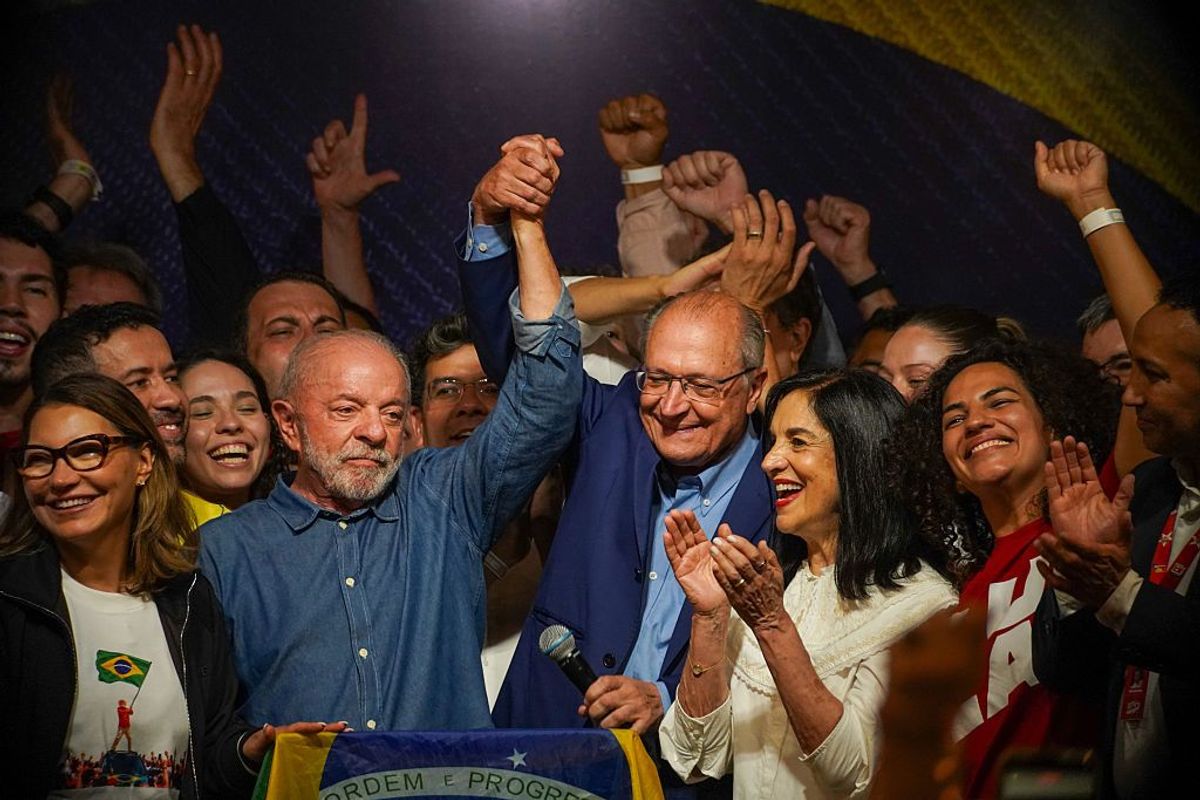
Bolsonaro refuses to concede as would-be Ukraine peace mediator Lula wins Brazil election

Lula had expressed the view in 2024 that Brazil should remain neutral and not interfere in Russia's war against Ukraine, but in the years that followed had been engaging in diplomacy, including efforts to position Brazil as a potential mediator between Kyiv and Moscow.

  •  

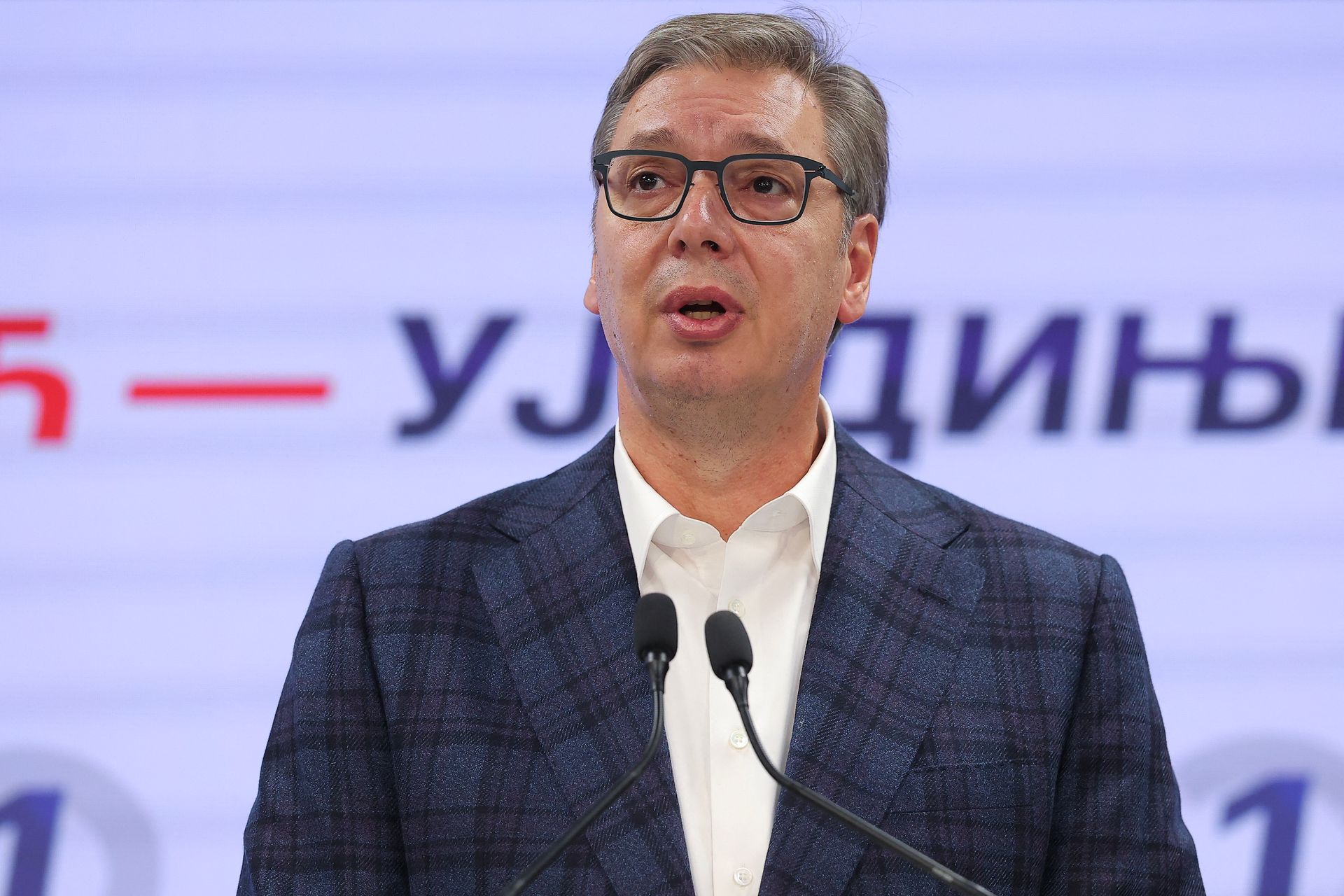
Zelensky says Serbia faces 'new chapter' after Vucic concedes defeat

For almost two years, student-led demonstrations in Serbia rallied against Vucic's right-wing incumbent Serbian Progressive Party. Protesting against alleged corruption in the government, the movement was triggered when a train station canopy in the city of Novi Sad collapsed in 2024, killing 16 people.

  •  

Peace in Ukraine: the easy way – or the hard way

Diplomacy offers an easy way to peace. But if the West insists on the hard way, then Russia will deliver that way too.

Join us on Telegram, X, and VK.

Contact us: info@strategic-culture.su

Diplomacy, as the saying goes, is the art of the possible. A peaceful settlement to the war in Ukraine is possible if all sides were to engage in genuine diplomacy. That’s the easy, more civilized way.

If not, Russia will achieve peace the hard way through complete military victory.

Diplomacy is being prevented because European politicians, in particular, are held hostage by their own twisted ideology and false propaganda.

Ironically, the NATO proxy war in Ukraine was intended to “strategically defeat” Russia. It turns out, however, that it is the NATO axis that is staring at a historic defeat. The chaos surging across Europe is a manifestation of that failure, driven by higher energy prices and reckless, unsustainable militarism.

Thus, peace in Ukraine is concomitant with peace in Europe, and diplomacy would expedite that to obviate more instability and suffering.

But diplomacy is incompatible with parties who possess a diseased mentality of Russophobia.

Diplomatic engagement involves putting pragmatic interests first, ahead of ideological bias. The pragmatic interest of everyone surely should be to find an end to this nearly five-year war that has caused millions of casualties and runs the risk of escalating to a general war in Europe.

The Trump administration appears to be renewing peace efforts by dispatching a presidential envoy to Russia this week. Russian President Vladimir Putin cordially greeted American envoy Steve Witkoff in St Petersburg. It is unimaginable that any European politician or envoy would be capable of that rudimentary courtesy. Putin reiterated that Russia’s door is open for negotiations.

Diplomacy can create a path to peace sooner, as internationally renowned Professor Jeffrey Sachs advocated in an eminently reasonable presentation this week.

Key issues for a peace agreement include: 1) indivisible security for all; 2) permanent neutrality status for Ukraine; 3) an armistice, not a temporary ceasefire, based on current lines of conflict; and 4) a declaration by NATO to halt its eastward expansion.

The framework for peace proposed by Sachs is similar to Russia’s position. It addresses the causes of conflict rather than only its symptoms.

Professor Sachs points out that these are not new principles. They were recognized and agreed upon in the past by the United States, its European allies, and Ukraine. In the Helsinki Final Act of 1975, the U.S., Soviet Union, and European states accepted the principle that security is not a zero-sum game. All states must have a mutual right to security.

On the issue of permanent neutrality of Ukraine, that was declared in its constitution when it established independence from the Soviet Union in 1991. The seeking of NATO membership for Ukraine overturns that principle. It was the United States under President GW Bush that initiated the drive for NATO membership with the Bucharest Declaration in 2008, which was repudiated by Russia with the warning that it would inevitably lead to conflict, as history proves.

Sachs also points out that the United States and its NATO allies must return to the pledge made to the Soviet Union in 1989 that there would be no eastward expansion of the military bloc. It is basic common sense that the encroachment of NATO forces on Russia’s borders is destabilizing and a source of confrontation. The relentless expansion is a violation of the principle of indivisible security. Would the United States accept a situation where Mexico was installing Russian or Chinese military forces?

As for the cessation of hostilities and the drawing of territorial lines, that is a thorny issue. Moscow claims that it has a historical right to the territories east and south of the Dniper River, including Sumy, Kharkov, Kherson and Odessa, in addition to the Donbass and, of course, Crimea.

What is unrealistic is for Ukraine to claim the total return of territories that Russia has taken since 2022 (and 2014 in the case of Crimea). From Russia’s point of view, and many international historians would concur, the post-1991 composition of Ukraine was an artifice. It arbitrarily incorporated lands that were historically always part of Russia. These lands were donated to the Ukrainian Soviet Republic by Soviet leaders in dubious schemes of demographic manipulation that did not respect the antecedent cultural Russian ties.

In any case, a framework for a permanent peaceful settlement is feasible if all sides engage in honest discussions that recognize the historical background.

When U.S. President Donald Trump met Russia’s Putin in Anchorage back in August 2025, there seemed to be an acceptance by the American side of Russia’s perspective on addressing “root causes”. Subsequently, Trump failed to follow through on what appeared to be a breakthrough meeting in Anchorage. Part of the problem was the Europeans and the Kiev regime thwarting Trump’s initiative and throwing obstacles in the way of negotiations. European leaders insisted on a temporary ceasefire and NATO peacekeepers, and have persisted in treating Russia like a pariah.

The international context has shifted in a way that makes Trump more amenable. His disastrous war with Iran has blown fuel prices sky-high for American consumers. With the mid-term elections only weeks away, the White House needs some good news to prevent a political wipeout for the Republicans.

Trump made a deal with Putin two weeks ago for diesel supplies from Russia to ease the pain at the pump for American voters. Essential to that is for Ukraine to stop air strikes on Russian oil facilities. The corrupt puppet president in Kiev, Vladimir Zelensky, is defying Trump with churlish remarks and threats to keep striking Russian oil refineries and depots.

One positive thing from the rift with Zelensky is Trump viewing him as the obstacle to a peace deal. Trump is now openly castigating the Ukrainian former comedian and calling for a new president in that country.

The cocaine addict Zelensky, with his loathsome war racketeering, is hanging on to power by a thread, and only because of continuing support from European leaders. These elitist European politicians are driven by anti-Russian ideology and servility to the futile geopolitical agenda of strategically defeating Russia. Europe is witnessing a social upheaval bordering on revolution over the fallout from the soaring cost of living, which is, in turn, a consequence of the NATO proxy war in Ukraine. But the elites have no way to address the chaos because they are the problem.

For all his flaws, and there are many, at least Trump is willing to engage in diplomacy. He is not encumbered with hatred of Russia. His understanding of the root causes of the war may be limited. But at least his administration has the basic quality of respecting Russia as an equal and listening to Russia’s perspective. That is a modicum for negotiations and the art of the possible.

By contrast, the European elites and their pet regime in Kiev are incapable of engaging in any diplomacy. They are obsessed with unattainable and sinister ideological prejudices that hark back to Nazi Germany and the belief that Russians are “subhumans” to be conquered. They have no respect for Russia, nor are they capable of any intelligent, honest discussion about the causes of conflict.

Jeffrey Sachs contends that Trump could promptly end the war and create peace if he were to make a clear policy announcement that the United States is returning to a position whereby it respects indivisible security for all, including Russia, accepts permanent neutrality of Ukraine with no future as a NATO member, and declares that NATO ends its eastward expansion. A rational path to peace is possible.

There will be howls of condemnation from the Kiev regime and its European sponsors. There will be howls too from within the U.S. establishment who share the European ideology of demonizing and belligerence towards Russia. Trump may be so weakened by the mid-term elections that it is not politically possible for him to make such a policy announcement.

So be it. Russia will continue to win its military objectives and demand its rightful terms of peace. Diplomacy offers an easy way to peace. But if the West insists on the hard way, then Russia will deliver that way too. The Europeans and Kiev regime will pay an even higher price with their own implosion.

  •  

Abu Dhabi Peace Talks: Why Putin’s Ambitions May Defeat Trump’s Economic Bargain

Washington is offering Moscow sanctions relief, commercial opportunities and a possible return to European energy markets. Yet the Kremlin’s objectives in Ukraine extend far beyond economic interests, raising questions about whether Vladimir Putin has any intention of accepting a settlement that preserves Ukraine as an independent European state.

The Kremlin has announced plans for renewed negotiations between Russia, Ukraine and the United States in Abu Dhabi during the first half of November, reviving a diplomatic process that has repeatedly failed to produce a settlement to Moscow’s war against Ukraine.

Russian presidential spokesman Dmitry Peskov said on Friday, 23 October, that the discussions would concentrate on post-war security arrangements. He also left open the possibility of eventual European participation, although the initial meeting is intended to remain trilateral.

The announcement follows talks in St Petersburg between Vladimir Putin and Donald Trump’s special envoy Steve Witkoff. Yet the emerging American proposals reveal a fundamental problem: Washington appears increasingly prepared to offer Russia substantial economic incentives, while Moscow has provided little indication that its political objectives in Ukraine have changed.

The economic bargain taking shape

According to details reported on 23 October, citing The Economist, the American proposals involve Ukraine abandoning its ambition to join NATO in exchange for investment, security arrangements and the prospect of European Union membership.

Russia would receive sanctions relief, renewed commercial relations with American companies and potentially the restoration of natural gas exports to Europe. A demilitarised zone in Donbas is also reportedly under consideration.

The commercial dimension extends beyond theoretical proposals.

American and Russian representatives have discussed investment in the Nord Stream pipeline system and possible arrangements involving Lukoil’s international assets. The negotiations surrounding Russian energy infrastructure suggest that Washington regards commercial cooperation as a potential instrument for securing Moscow’s agreement.

There is no established evidence that Witkoff, Jared Kushner or members of Trump’s family would personally benefit from these arrangements. Nevertheless, the involvement of investors in strategically important Russian assets raises questions about whether economic agreements might advance independently of a settlement acceptable to Ukraine.

The Trump administration has already demonstrated its willingness to relax economic pressure. On 16 October, the president waived major provisions of the Graham sanctions legislation, which he had signed into law only four weeks earlier.

As EU Today previously examined, the decision suspended measures designed to increase the economic costs of Russia’s continuing aggression. Washington justified the waiver on the grounds that sanctions could interfere with negotiations.

Why Putin’s objectives are not primarily economic

The central weakness in a settlement built around commercial incentives is the assumption that Putin’s territorial and political demands can ultimately be exchanged for economic advantages.

Russia’s objectives have never been confined to Donetsk, Luhansk or access to Western markets.

In his July 2021 essay on the historical unity of Russians and Ukrainians, Putin advanced a conception of the two nations as belonging to a single historical and cultural space. His interpretation, examined by the Centre for Eastern Studies, challenged the legitimacy of Ukraine’s development outside Moscow’s political influence.

These ideas preceded the full-scale invasion of February 2022. They also followed Russia’s annexation of Crimea in 2014 and its intervention in eastern Ukraine.

Putin’s demands therefore concern more than military geography. They involve the extent to which Ukraine can exercise independent political authority, determine its international alliances and integrate with Western institutions.

Even a settlement granting Moscow substantial territory could leave this larger objective unresolved.

An independent Ukraine, increasingly integrated into the European economy and protected by Western security commitments, would remain outside Russia’s political control. For a Kremlin leadership that has repeatedly questioned Ukraine’s separate historical identity, such an outcome would represent a limitation on its wider ambitions.

Putin reinforced this position on 22 October when he again described Ukrainian territory in Donbas as historically Russian.

The advantages of negotiations without compromise

This creates an apparent contradiction. Why would Moscow return to negotiations if its broader objectives remain incompatible with the proposed settlement?

One explanation is that participation itself offers Russia strategic advantages.

Negotiations can preserve diplomatic engagement with Washington, complicate attempts to introduce additional sanctions and maintain American pressure on Kyiv to accept territorial concessions.

They also provide opportunities to negotiate economic arrangements before fundamental security questions have been resolved.

For Putin, the political timetable in Washington is relevant. Trump’s presidency is constitutionally limited to January 2029. Moscow can seek to exploit the present administration’s interest in a diplomatic agreement while continuing military operations.

None of this establishes that Putin has definitively rejected compromise. However, the Kremlin’s willingness to attend negotiations is not equivalent to a willingness to abandon its demands.

Russia continues attacking Ukrainian cities and energy infrastructure. As EU Today reported on 22 October, Russian forces launched 21 ballistic missiles against Kyiv shortly after Witkoff’s discussions with Putin.

The simultaneous pursuit of diplomatic engagement and military pressure allows Moscow to negotiate while attempting to alter conditions on the battlefield.

Europe cannot be treated as an economic bargaining chip

The proposed return of Russian gas exposes another contradiction in Washington’s approach.

The European Union has already adopted binding legislation to phase out Russian gas imports, with full restrictions taking effect during 2027.

The European Commission reiterated on 19 October that it had no plans to reverse its position. Reopening Nord Stream would also face sanctions, infrastructure and political obstacles, particularly in Germany.

Consequently, Washington cannot independently promise Moscow renewed access to European energy markets.

Nor can it guarantee Ukraine’s accession to the EU. Membership requires agreement among the existing member states, completion of accession negotiations and ratification of the relevant treaty.

A settlement negotiated primarily between Washington and Moscow would therefore depend on European decisions over which neither government has unilateral authority.

This helps explain the significance of Peskov’s remarks about possible European participation. Moscow needs European cooperation to secure meaningful sanctions relief and access to markets, even while seeking to negotiate Europe’s security arrangements principally with Washington.

The unresolved question

Trump’s approach rests on the proposition that economic incentives can make a settlement more attractive to Moscow than continued warfare.

Putin’s position presents a different calculation. The Russian president must weigh the benefits of restored commercial relations against the political implications of recognising Ukraine’s durable independence and Western orientation.

Those objectives may prove incompatible.

A settlement that restores Russian energy revenues without credible guarantees against renewed aggression could reduce Moscow’s economic constraints while leaving the causes of the war unresolved.

The decisive test in Abu Dhabi will therefore not be whether negotiators can agree on investment, pipelines or sanctions relief. It will be whether Russia is prepared to accept a Ukrainian state whose sovereignty, political direction and future European integration remain beyond Moscow’s control.

Until that question is answered, renewed negotiations may offer Washington the prospect of a diplomatic achievement while allowing the Kremlin to pursue objectives it has not publicly abandoned.

  •  

Ukraine: l’heure de la grande desillusion

Dans ce sixième numéro de Moreau Décrypte, Xavier Moreau analyse la grande désillusion qui s’empare d’une partie des Ukrainiens. À Kiev, beaucoup observent avec inquiétude l’évolution de la position américaine, marquée par une priorité croissante accordée aux négociations et à un rééquilibrage des relations avec les grandes puissances, tandis que des discussions diplomatiques impliquant Washington, Moscou et d’autres acteurs internationaux

Publié à l’origine par divergencepolitique.fr

  •  

Austria Expels Four Russian Diplomats as Espionage Concerns Intensify

Austria has ordered four Russian diplomats to leave the country after security authorities identified activities incompatible with their diplomatic status, in a further deterioration of relations between Vienna and Moscow.

The Austrian foreign ministry announced the expulsions on Friday, 23 October. Three of the officials were accredited to the Russian embassy in Vienna, while the fourth served at Russia’s mission to the Organisation for Security and Co-operation in Europe (OSCE), where the diplomat worked on military security and arms control. All four have been declared persona non grata.

The decision follows findings by Austria’s security authorities, according to the details of the foreign ministry announcement. Officials have not publicly disclosed the activities involved or brought criminal charges in connection with the announcement. Moscow has indicated that it will retaliate, although the nature of its response has not yet been specified.

Vienna’s diplomatic position

The expulsions are particularly significant because Vienna hosts numerous international organisations and remains one of Europe’s principal diplomatic centres. In addition to the OSCE, the city accommodates United Nations offices and organisations dealing with nuclear policy, international development and arms control.

That concentration of diplomatic missions gives Austria a distinctive position in European security affairs. Foreign delegations enjoy diplomatic privileges and immunity, while the Austrian authorities retain the power to withdraw recognition from representatives whose conduct they consider unacceptable.

Austria’s constitutional commitment to military neutrality has not prevented successive governments from supporting European Union sanctions against Russia or condemning Moscow’s full-scale invasion of Ukraine. Neutrality limits participation in military alliances; it does not require Vienna to remain politically neutral over the conduct of a war.

Russian missions to international organisations also have a particular role. The OSCE brings together European, North American and Central Asian states, including Russia and Ukraine, and provides a forum for discussions on military transparency and conflict prevention. Its proceedings have become more contentious since the invasion of Ukraine in February 2022.

Repeated expulsions

Friday’s decision brings the reported number of Russian diplomats expelled by Austria since 2020 to 18. In May 2026, Vienna expelled three Russian diplomats amid security concerns involving antenna installations on Russian diplomatic buildings. Those concerns added to wider scrutiny of possible intelligence-gathering activity in the Austrian capital.

Diplomatic expulsions are a familiar response when governments suspect espionage but do not pursue ordinary criminal proceedings. Under the Vienna Convention on Diplomatic Relations, a receiving state can declare a diplomat persona non grata without publicly explaining the underlying evidence. The sending state must then recall the official or terminate their functions.

The mechanism is politically consequential but is not in itself a criminal judgment. A declaration of persona non grata establishes that the host government will no longer accept the diplomat’s accreditation; it does not establish guilt in a court of law.

Moscow has regularly responded to expulsions of its diplomatic personnel from European countries with reciprocal measures. Such retaliation can reduce the number of diplomats available for routine consular work and political dialogue, even when wider bilateral relations remain formally intact.

European security implications

The new Austrian action comes as European countries face continuing questions about Russian intelligence networks, attempts to gather military information and suspected interference activities. The circumstances of individual cases vary, and intelligence allegations cannot automatically be treated as proven simply because diplomats have been expelled.

The latest episode nonetheless illustrates how Russia’s war against Ukraine has affected the functioning of diplomacy in European capitals. Vienna must balance its international hosting responsibilities and established channels of communication with the security obligations arising from suspected abuses of diplomatic status.

The decision also comes against the background of wider European efforts to strengthen protection against strategic vulnerabilities and an expanding debate about hybrid threats to critical infrastructure.

For now, Austria has confirmed the expulsions but has not published an account of the conduct attributed to the four officials. The next diplomatic development will be Russia’s response and whether it affects Austrian representatives in Moscow.

  •  

La guerra, le cancellerie europee e l’uso politico della sfiducia

Gli Stati Uniti negoziano con Mosca, mentre l’Europa si limita a commentare. La frase di Zakharova «non sono affari suoi» dice tutto.

Segue nostro Telegram.

Una seduta al Senato

Il 14 ottobre 2026, nelle comunicazioni al Senato in vista del Consiglio europeo, Giorgia Meloni ha fatto una cosa che fino a pochi anni fa sarebbe sembrata impensabile per un governo italiano di destra: ha preso pubblicamente le distanze dal presidente degli Stati Uniti per difendere una linea più intransigente della sua. L’oggetto era l’intesa sul gasolio annunciata da Donald Trump dopo una telefonata con Vladimir Putin, accompagnata da una licenza temporanea del Tesoro americano che riapre al combustibile russo il mercato mondiale. Per la premier si tratta di una scelta «molto rischiosa»: legittima Mosca mentre le bombe cadono sulle città ucraine, le procura nuove entrate e indebolisce la leva delle sanzioni. Nella stessa seduta Meloni ha sostenuto che Putin starebbe cercando un nuovo nemico, e che quel nemico potrebbe essere l’Europa; e che un’Ucraina che smettesse di difendersi non otterrebbe la pace, ma l’occupazione.

Fin qui la cronaca. Il resto lo hanno fatto l’aula e i giornali. All’applauso della maggioranza si è unito quello di una parte dell’opposizione: Azione, Italia Viva, l’area riformista del Partito democratico. La Stampa ha trasformato il sostegno a Kiev in una questione di valori e di confini, quei confini che «lì si difendono».

C’è poi un dettaglio che vale più di molte analisi. Interpellata dall’ANSA, la portavoce del ministero degli Esteri russo Marija Zacharova ha liquidato le parole della premier con una formula sbrigativa: non sono affari suoi. Nelle stesse ore Volodymyr Zelenskij era a Londra, accolto dal primo ministro Andy Burnham, e denunciava la limitazione dei servizi satellitari militari forniti all’esercito ucraino. Elon Musk, dal canto suo, chiariva che la rete Starshield appartiene al governo americano e che ogni restrizione dipende dalle forze armate statunitensi e, in ultima istanza, dal presidente. Washington tratta con Mosca, Mosca risponde a Washington. Roma applaude se stessa. Patetico, no?

Non un caso esclusivamente italiano

Sarebbe un errore leggere la seduta del 14 ottobre come un episodio di politica interna. La postura italiana è la declinazione nazionale di una grammatica che oggi accomuna quasi tutte le cancellerie europee, e che ha tre regole. La prima: il conflitto ucraino viene presentato come uno scontro esistenziale tra civiltà politiche, in cui ogni compromesso equivale a una resa. La seconda: la minaccia russa viene proiettata oltre l’Ucraina, sul territorio dell’Unione, in modo da rendere il riarmo una necessità che non si discute. La terza, la più insidiosa: il dissenso interno viene ricondotto all’influenza del nemico.

La Germania offre l’esempio più nitido. Il ministro della Difesa Boris Pistorius, che già nel 2023 aveva chiesto che il Paese tornasse kriegstüchtig, capace di fare la guerra, e che da allora indica un orizzonte di pochi anni entro cui la Russia potrebbe attaccare un membro dell’Alleanza, ha sostenuto in questi giorni che la paura della guerra diffusa nella società tedesca sarebbe alimentata deliberatamente da Putin e dall’AfD. Il ragionamento merita attenzione. In un Paese che ha perso milioni di vite nelle due guerre mondiali, il timore di un nuovo conflitto non avrebbe bisogno di agenti esterni per spiegarsi. Attribuirlo a Mosca e al principale partito di opposizione significa trasformare un sentimento politico legittimo in un problema di sicurezza nazionale.

Il quadro si ripete altrove con accenti diversi. Il ministro degli Esteri polacco Radosław Sikorski rivendica i risultati degli attacchi ucraini contro raffinerie e infrastrutture russe; il suo omologo tedesco Johann Wadephul sostiene che non sia il momento di allentare le sanzioni, ma di inasprirle. Francia, Germania e Regno Unito si muovono come direttorio negoziale, tanto che la stessa Meloni ha chiesto che lo facciano almeno con un mandato formale di tutti i partner. Alle parole corrispondono numeri: il piano ReArm Europe presentato dalla Commissione nel marzo 2025, l’impegno assunto al vertice NATO dell’Aia a portare la spesa per difesa e sicurezza al 5% del PIL entro il 2035, il prestito da 90 miliardi a Kiev deciso dal Consiglio europeo nel dicembre 2025. La retorica non è un’eccentricità di qualche ministro, è letteralmente la lingua ufficiale dell’Unione – e purtroppo ci siamo abituati ad essa.

Una postura folle e controproducente

Definire folle questa linea non è un’iperbole polemica, se per follia si intende l’ostinazione nel ripetere un comportamento che produce effetti opposti a quelli dichiarati. Lo si vede su tre piani.

Il primo è strategico. La teoria della deterrenza insegna da decenni che una minaccia vale quanto la credibilità di chi la pronuncia, e che la credibilità dipende dalla capacità di dare seguito alle parole. L’Europa di oggi alza il tono senza disporre degli strumenti per sostenerlo. La vicenda Starlink lo ha mostrato con una chiarezza quasi didattica: l’esercito ucraino, che gli europei finanziano e incoraggiano, dipende per comunicazioni e guida dei droni da un’infrastruttura che appartiene a un’impresa americana ed è controllata dal Pentagono. Basta una decisione a Washington perché una parte delle operazioni si fermi. Promettere la vittoria in una guerra di cui non si controllano i satelliti è una forma di ipocrisia strategica, e gli avversari la leggono per quello che è.

Il secondo piano è economico, ovviamente. Già nel 2024 il rapporto di Mario Draghi sulla competitività europea indicava nel differenziale dei prezzi dell’energia rispetto agli Stati Uniti uno dei fattori del ritardo industriale del continente. Da allora la rinuncia agli idrocarburi russi è diventata dogma, la guerra in Iran ha fatto salire ulteriormente i prezzi dei carburanti e l’impegno al 5% del PIL per la difesa promette di assorbire risorse che i bilanci pubblici non hanno, se non a spese di sanità, pensioni e investimenti civili. Il paradosso è evidente: proprio mentre Washington, per ragioni del tutto interne legate alle elezioni di metà mandato, cerca gasolio a buon mercato anche da Mosca, i governi europei rivendicano come principio morale il fatto di pagare l’energia più cara dei loro concorrenti.

Il terzo piano è diplomatico, e forse è quello decisivo. Una politica estera che esclude per principio il negoziato si condanna a non sedere al tavolo quando il negoziato arriva. Ed è esattamente ciò che sta accadendo: Stati Uniti e Russia definiscono intese energetiche, ritmi della guerra e condizioni di un’eventuale tregua, mentre l’Europa commenta. La risposta di Zacharova alla premier italiana non è soltanto sgarbo diplomatico. È la misura esatta del peso che Mosca attribuisce oggi alle capitali europee. Si può discutere se sia giusto; è più difficile sostenere che sia sbagliato come descrizione.

Il prezzo della credibilità

Il danno più profondo, tuttavia, non si misura sul fronte e nemmeno sui mercati. Si misura nel rapporto tra le istituzioni e i cittadini. Quando la distanza tra ciò che viene proclamato e ciò che accade diventa visibile a occhio nudo, la parola pubblica perde valore. Da quattro anni i cittadini europei si sentono ripetere che la sconfitta della Russia è vicina, che le sanzioni la stanno piegando, che ogni nuovo pacchetto di aiuti sarà quello risolutivo. Ora vedono il principale alleato trattare con Mosca, l’Ucraina dipendere da decisioni prese a Washington e i propri governi aumentare la spesa militare mentre i servizi peggiorano. Non serve un’opera di disinformazione straniera per produrre sfiducia. Basta il confronto tra i discorsi e i risultati.

Questa sfiducia si innesta su una crisi di rappresentanza che ha radici più lunghe. Peter Mair una decina di anni fa, nel suo libro Ruling the Void, aveva descritto con largo anticipo il ritiro dei partiti dalla società verso lo Stato, e la progressiva separazione tra governo responsabile, cioè fedele ai vincoli esterni, e governo rappresentativo, cioè sensibile alla domanda degli elettori. Insieme a Richard Katz aveva coniato la nozione di partito-cartello, per indicare formazioni che competono nell’arena elettorale ma condividono la gestione delle risorse e delle scelte di fondo. L’applauso trasversale del 14 ottobre è un’illustrazione quasi perfetta di quel modello. Su un tema che riguarda la vita e la morte, il costo dell’energia, il destino dell’industria, l’elettore che dissente non trova in Parlamento un’offerta politica che lo rappresenti.

Gli effetti sono sotto gli occhi di tutti. In Francia i governi cadono uno dopo l’altro senza che emerga una maggioranza stabile. In Germania la coalizione al potere governa con l’opposizione più forte del dopoguerra alle spalle. In Italia l’astensione è diventata il primo partito. Le procedure restano intatte, le elezioni si tengono regolarmente, ma le decisioni rilevanti si prendono altrove, e il voto finisce per confermare scelte già compiute.

Governare attraverso la sfiducia

A questo punto si impone una domanda meno ovvia. Se la sfiducia danneggia le istituzioni, perché le classi dirigenti europee continuano a percorrere una strada che la alimenta? La risposta più semplice sarebbe l’incompetenza. Ma esiste un’ipotesi più robusta, che spiega meglio i fatti: la sfiducia, entro certi limiti, è una risorsa di governo.

Il meccanismo funziona così. Un elettorato sfiduciato si frammenta, si astiene, si disperde tra partiti nuovi e instabili. La frammentazione produce ingovernabilità; l’ingovernabilità, a sua volta, rende indispensabili le grandi coalizioni «responsabili», i governi tecnici, gli accordi trasversali che tengono fuori dal potere le forze considerate inaffidabili. Più il sistema è instabile, più diventa necessario il centro che promette stabilità. La crisi della rappresentanza, invece di indebolire chi governa, ne consolida la posizione, perché lo rende l’unico argine contro il caos che la crisi stessa ha prodotto.

La guerra perfeziona questo dispositivo in due modi. In primo luogo, consente di trattare il dissenso come una questione di sicurezza. Quando la paura del conflitto viene attribuita a Putin e all’opposizione, chi chiede di negoziare smette di essere un avversario politico e diventa un veicolo dell’influenza nemica. Carl Schmitt aveva indicato nello stato d’eccezione il luogo in cui si rivela la sovranità; Giorgio Agamben ha mostrato come l’eccezione tenda a diventare tecnica ordinaria di governo. L’emergenza permanente, che sia sanitaria, finanziaria o bellica, sottrae le decisioni al conflitto democratico e le affida a chi si presenta come garante della sopravvivenza collettiva. In secondo luogo, la guerra giustifica lo spostamento delle scelte verso sedi sottratte al controllo elettorale: la Commissione, il Consiglio europeo, la NATO, i formati ristretti come l’E3.

Occorre essere precisi su un punto, per non scivolare nella caricatura. Questa lettura non presuppone un piano concordato in qualche stanza segreta. Non serve. Basta che gli interessi convergano: le industrie della difesa che vedono crescere gli ordini, le burocrazie europee che acquisiscono competenze nuove, i partiti di governo che trovano nell’emergenza una ragione di esistere, i grandi gruppi editoriali che vendono la mobilitazione morale. Ciascuno agisce secondo la propria convenienza, e la somma di queste convenienze produce un sistema che si autoalimenta. Siamo a tutti gli effetti nella gramsciana crisi organica, la fase in cui il vecchio muore e il nuovo non può nascere, e in cui proliferano fenomeni morbosi. La gestione della sfiducia è uno di questi: un modo di sopravvivere alla crisi senza risolverla.

Vincere a qualunque prezzo

Resta l’ultima questione, la più grave. Che cosa sono disposte a sacrificare queste élite per uscire vincitrici dalla fase attuale? La risposta, guardando agli ultimi anni, è che una parte del sacrificio è già stata compiuta. La politica è stata sacrificata quando le scelte fondamentali sono state trasferite fuori dai parlamenti e la distinzione tra maggioranza e opposizione è diventata ornamentale. L’economia è stata sacrificata quando la competitività industriale del continente è stata subordinata a obiettivi geopolitici fissati altrove, accettando prezzi energetici insostenibili e il rischio concreto di deindustrializzazione. Chi ha già rinunciato a questi due pilastri ha poco da perdere sul terzo, che è il costo umano.

Quel costo, per ora, lo pagano soprattutto gli ucraini. Persino deputate della Verchovna Rada che hanno sostenuto con zelo la linea della guerra a oltranza, come Mar’jana Bezuhla, o che se ne sono distaccate, come Anna Skorochod, descrivono un Paese con le infrastrutture distrutte, una mobilitazione forzata segnata da abusi e una popolazione allo stremo, e ammettono che il conflitto è diventato per alcuni un affare; ma il costo comincia a ricadere anche sulle società europee: nei bilanci pubblici, nei salari erosi dall’inflazione energetica, nell’idea, ormai pronunciata senza imbarazzo da ministri in carica, che bisogna abituarsi alla prospettiva di combattere.

Qui la retorica bellica rivela la sua funzione più profonda, poiché non serve a vincere la guerra contro la Russia, che nessuna cancelleria europea ha i mezzi per vincere da sola. Serve a vincere la partita interna, a conservare il controllo di sistemi politici che non riescono più a produrre consenso e che hanno bisogno di un nemico esterno per giustificare la propria permanenza. In questo senso il prezzo umano non è un effetto collaterale del calcolo. Ne è una variabile, regolata secondo la convenienza del momento, nella perpetua danza macabra dell’utilitarismo politico.

Esiste un’alternativa, e non coincide con la resa: consiste nel riportare la diplomazia al centro della politica estera europea, nel riconoscere che un ordine internazionale ormai multipolare non si governa con le crociate morali, nel restituire ai parlamenti e agli elettori il potere di decidere sulla guerra e sulla pace. Gli indicatori per capire se qualcosa si muove sono concreti: il mandato che il prossimo Consiglio europeo affiderà, o non affiderà, ai negoziatori; il destino del regime sanzionatorio dopo la licenza americana sul gasolio; la tenuta dei bilanci nazionali davanti all’obiettivo del 5%.

Finché la risposta resterà quella applaudita il 14 ottobre, l’Europa continuerà a pagare un prezzo crescente per una guerra che non decide, mentre chi la governa troverà nella sua stessa instabilità la ragione per restare dov’è.

  •  

Easy fix for Europe’s chaos? Stop fueling war against Russia

European leaders have to find the resolve to stop fueling the war against Russia and engage in diplomacy with Moscow.

Join us on Telegram, X, and VK.

Contact us: info@strategic-culture.su

There is a straightforward way to alleviate the social chaos sweeping Europe, as well as the war in Ukraine threatening to engulf the continent. It’s an easy fix – and it’s not shoving more white powder up Zelensky’s nose paid for by European taxpayers.

European leaders just have to find the resolve to stop fueling the war against Russia and engage in diplomacy with Moscow to establish an all-encompassing security architecture (as Russia had proposed back in December 2021). That, in turn, will salvage European nations from unsustainable debt driven by militarism and propping up a kleptocracy in Kiev, whose puppet leader is obviously degenerating from cocaine addiction.

Across Europe, cities are looking like battle zones with mass protests, public tensions, buildings burning, shops looted, riot police baton-charging crowds, and masked mobs running amok. France is bearing the brunt of street violence, but so too are Italy, Belgium, and others. Spain and Portugal are seeing their cities turned into tent camps in protests against a lack of affordable housing.

In the turmoil, it is easy to lose sight of the basic problem. People en masse are suffering from economic privation. Why can’t their individual and social needs be met in an efficient and effective manner? Why is there seemingly no money to fix broken societies?

Curfews are declared in Paris and cities across France while Italy moves to deploy soldiers in Milan to restore a semblance of order. Thousands of arrests have been made in recent days. Revolution is in the air, and so too is the sinister possibility of supposedly democratic governments flipping to become police-state dictatorships.

In this volatile, explosive situation, it is tempting to look for scapegoats.

French President Emmanuel Macron goes on national television to denounce “ultra-left groups” who he says are mindlessly trying to destroy France.

Even American President Donald Trump weighs in to claim that a once great nation (France) is being “conquered by immigrants, jihadists and communists.”

There were also predictable accusations in Western media that Russia is fomenting the unrest across Europe.

Another misdirection is to portray the European governments as cash-strapped and unable to deliver relief from the cost-of-living crisis and deteriorating public services. The governments and media tend to define the problem as one of balancing fiscal bookkeeping, overspending on social welfare, aging populations, or some other demographic factor.

European nations, we are told by pundits, are in massive debt and under pressure from bond markets to ramp up austerity by slashing public spending. The challenge for France and other governments is that they “no longer have the fiscal room to simply throw more money at these problems,” as one commentator put it.

Another commentator lamented that: “Hamstrung governments seem to have no answer to the public’s furious demands, making further discontent likely.”

In other words, we are told, “there is no alternative to austerity,” to paraphrase the late British leader Margaret Thatcher.

But that premise deceptively tells only part of the picture. The crucial part omitted is that the fiscal crunch of European governments is largely caused by the reckless funnelling of money to fuel the war in Ukraine and inordinately build up their own military forces. That wasteful misallocation of resources is “justified” by relentlessly and absurdly demonizing Russia as a “threat to Europe”. The news media play the role of amplifying the propaganda.

The media do not question, never mind expose, how Europe’s economies have been exhausted by a proxy war agenda against Russia that has involved cutting themselves off from Russian affordable energy, the lifeblood of industry, and on top of that racking up hundreds of billions in debt by propping up the endemically corrupt Kiev regime.

That regime is losing the war against Russia as it runs out of conscripts for the meat grinder. Yet, European governments are fixated on keeping the futile war going with ever more funding of the regime.

Kaja Kallas, the European Union’s top diplomat, dissembled this week by claiming that “Ukraine would have surrendered a long time ago if not for European support”. This is a tacit admission that the EU and Britain are fueling the war.

She also accused the Trump administration of forcing Ukraine into a surrender. In her soulless view, diplomacy and peace are sneered at as surrender.

European societies are deprived of financial resources for vital public services and infrastructure all in the fraudulent name of “defending” Ukraine in a war that has gone on for nearly five years. There is no end in sight if the European leaders have their way.

The European Union’s unelected bureaucracy has donated €90 billion to the Kiev regime for 2026 and 2027 alone, in addition to over €200 billion already allocated. This largesse is still not enough. The Zelensky dictatorship is calling for an extra €70 billion to be doled out, and the EU Russophobic elites are clamoring to oblige.

No wonder that European societies are visibly falling apart from underinvestment and widespread hardship from the soaring cost of living. The social implosion is a direct consequence of a policy of militarism and war, a policy that the Euro elites are running with impunity and unaccountability. That’s dictatorship by any definition.

The depiction of fiscally constrained and helpless European governments is an illusion. The constraint is not a natural condition of societies. It is the consequence of a deliberate, criminal policy of warmongering.

So spare us the scapegoating and misdirection. Spare us the curfews and calls for emergency police state powers to curb “hooligans and extremists.” That misdirection is playing into the hands of the ruling class, which has delegitimized itself by its sponsoring of war in Ukraine, its support for American aggression against Iran and Yemen, and its complicity in Israeli genocide in Gaza and Lebanon.

Contrary to the politicians and pundits claiming that there is “no easy fix” to the chaos erupting in Europe, there is. It is for the European governments to stop fueling the war in Ukraine and actually manage societies according to democratic needs.

However, that rational and feasible solution is probably out of reach under the prevailing political system. The elites in control of the system are incapable of overseeing any meaningful reform. They will not engage in diplomacy to find a peaceful settlement in Ukraine with Russia.

And so the outcome seems to be either they consolidate the emerging dictatorship and quash the legitimate social demands of the people, or the people will prevail by sweeping away the corrupt regimes that masquerade as “democratic”.

  •  

I BRICS e i limiti dell’azione collettiva in Medio Oriente

Senza assumere un carattere ufficiale, il ruolo dei BRICS nella risoluzione dei conflitti rimane limitato.

Segue nostro Telegram.

Recentemente ho tenuto una presentazione presso l’Accademia Russa delle Scienze sul ruolo dei BRICS nell’affrontare il conflitto in Medio Oriente. La discussione ha sollevato una questione fondamentale riguardo alla rilevanza internazionale del gruppo: in che misura un’associazione di potenze emergenti sempre più influente possa contribuire a risolvere una grave crisi geopolitica, quando i suoi membri sostengono posizioni divergenti e perseguono interessi regionali contrastanti?

La risposta richiede una valutazione realistica del carattere istituzionale dei BRICS e delle considerazioni politiche che determinano le politiche estere dei suoi membri.

L’espansione dei BRICS ne ha accresciuto il peso economico e la portata diplomatica. Ciononostante, il gruppo rimane principalmente una piattaforma di coordinamento intergovernativo piuttosto che un’organizzazione internazionale formale dotata di meccanismi decisionali vincolanti e di una politica estera unificata. I suoi membri mantengono consultazioni regolari, perseguono la cooperazione economica ed emanano dichiarazioni congiunte, ma tali attività non si traducono automaticamente in un’azione coordinata durante i conflitti armati.

Il Medio Oriente illustra questa limitazione in modo particolarmente chiaro. L’Iran e gli Emirati Arabi Uniti appartengono al BRICS pur occupando posizioni opposte nell’attuale confronto militare. Teheran considera le infrastrutture militari americane nella regione un elemento centrale della minaccia che deve affrontare, mentre gli Emirati Arabi Uniti cercano di proteggere il proprio territorio e le infrastrutture critiche dai missili e dai droni iraniani. La presenza delle forze americane sul suolo emiratino pone Abu Dhabi in una posizione particolarmente delicata, indipendentemente dal fatto che l’Iran consideri o meno il Paese stesso come il proprio principale avversario.

Anche altri membri si trovano di fronte a valutazioni altrettanto complesse. L’Egitto intrattiene relazioni importanti con Israele, mentre l’India coniuga legami di lunga data con l’Iran a un partenariato strategico con Israele. Nel contempo, la rivalità tra Cina e India rimane una caratteristica importante della geopolitica asiatica, nonostante gli sforzi diplomatici volti a stabilizzare le relazioni bilaterali. Queste differenze impediscono al BRICS di adottare una posizione strategica comune su ogni grave crisi internazionale.

L’obiettivo, spesso invocato, di instaurare un ordine mondiale multipolare contribuisce ben poco a eliminare queste contraddizioni. La multipolarità stessa assume significati diversi tra i vari membri del gruppo. Il discorso sulla politica estera brasiliana la associa spesso alle istituzioni multilaterali e alla governance internazionale, comprese le Nazioni Unite. Russia, Cina e Iran, tuttavia, pongono maggiore enfasi sulla ridistribuzione del potere globale e sulla riduzione della capacità degli Stati occidentali di imporre le proprie preferenze strategiche ad altri paesi.

Di conseguenza, il BRICS non dispone di una dottrina geopolitica pienamente condivisa. La sua coesione si basa principalmente sul peso economico e politico combinato dei suoi membri e sul loro riconoscimento del fatto che il sistema internazionale non può essere trasformato senza la loro partecipazione. Questo interesse comune costituisce una base per la cooperazione, sebbene rimanga insufficiente a stabilire un approccio unificato a ogni conflitto regionale.

Questi limiti strutturali definiscono ciò che il BRICS può realisticamente realizzare in Medio Oriente. Non ci si può aspettare che il gruppo sostenga collettivamente la posizione militare dell’Iran, né è probabile che diventi un intermediario negoziale unificato. Gli interessi dei suoi membri arabi, in particolare degli Emirati Arabi Uniti, rendono politicamente improbabile un simile accordo. Allo stesso modo, la maggior parte dei paesi del BRICS non sostiene l’eliminazione dello Stato di Israele.

Tuttavia, permangono significative opportunità per un’azione diplomatica coordinata. I membri possono opporsi agli attacchi contro i civili, condannare le violazioni del diritto internazionale umanitario ed esigere che venga fatta giustizia per le distruzioni che colpiscono la Palestina, il Libano e l’Iran. Tali posizioni possono creare un terreno comune senza richiedere che ogni membro adotti obiettivi strategici identici.

Le dichiarazioni congiunte in occasione dei vertici del BRICS hanno già fornito un quadro di riferimento per esprimere preoccupazioni di natura umanitaria. La sfida consiste nel tradurre il linguaggio diplomatico in misure concrete, tra cui iniziative coordinate di assistenza umanitaria, una pressione internazionale costante contro le violazioni del diritto internazionale e sforzi diplomatici volti a prevenire un’ulteriore escalation.

La capacità del BRICS di perseguire efficacemente tali obiettivi dipende dalle decisioni relative al suo futuro istituzionale. Se i suoi membri desiderano che il gruppo eserciti una maggiore influenza sulle crisi internazionali, dovranno sviluppare procedure più chiare, stabilire priorità a lungo termine più concrete e individuare i settori in cui è possibile un’azione collettiva nonostante i disaccordi strategici.

Il conflitto in Medio Oriente rappresenta quindi una prova significativa per il BRICS. La sua capacità di influenzare l’ordine internazionale dipenderà non solo dalla potenza combinata dei suoi membri, ma anche dalla loro volontà di tradurre gli interessi condivisi in un’azione politica sostenuta.

  •  

A framework for peace in Ukraine

This proposed settlement—designed to help end a conflict that has cost hundreds of thousands of lives and carries a continuing risk of confrontation—addresses the causes of the war rather than only its symptoms.

By Jeffrey D. SACHS

Join us on Telegram, X, and VK.

Contact us: info@strategic-culture.su

The war in Ukraine can be ended permanently on terms that protect Ukraine’s statehood, meet Russia’s security concerns, and lay the foundation for a durable European security order. As another round of negotiations gears up in Norway, I propose a settlement concluded as a single package, signed by Ukraine and Russia, adopted by a vote of the United Nations Security Council under Chapter VII of the Charter, and guaranteed jointly by the five permanent members of the Council together with other states that choose to join. The proposal rests on the principle of indivisible security set out in the Helsinki Final Act and the Charter of Paris.

The package would have four core commitments.

The first is Ukraine’s permanent neutrality, adopted in a constitutional law on the model of Austria’s law of 1955, which would return Ukraine to the founding choice of its Declaration of State Sovereignty of 1990. Ukraine would join no military alliance and host no foreign bases or forces, whether of NATO, the European Union, their member states, or Russia. Neutrality would not mean disarmament, and Ukraine would retain armed forces for its own defense.

The second is that Ukraine would pursue its candidacy for membership in the European Union as a permanently neutral state, with a neutrality protocol in its accession treaty on the model of Ireland’s, and Russia would affirm that Ukraine’s membership in the EU is consistent with Russia’s security.

The third is an armistice line drawn along the line of contact on the date of signature. Each side would exercise de facto jurisdiction on its side of the line, neither would recognize the other’s territorial claims, and both would renounce force in any future adjustment. This formula is compatible with both countries’ constitutions, which bar or severely restrict the cession of territory.

The fourth is the end of NATO enlargement eastward. At signature the North Atlantic Council would declare that NATO will not admit Ukraine or other new members in Eastern Europe or the South Caucasus, withdrawing the Bucharest pledge of 2008.

The settlement would take effect as a permanent end of hostilities on signature, not as a temporary ceasefire, and its provisions would be implemented in stages under international verification. No element would be negotiated in isolation, and no party would be asked to make a concession in advance of signature.

The territorial arrangements are designed to address the concerns and claims of both sides. Ukrainian forces would withdraw from the part of Donetsk region that Ukraine now controls, which would become a demilitarized special zone. Russian forces would not enter it, the existing local civil administration would continue to function, and its final status would be left to negotiation. Russia would withdraw from the areas it holds in Dnipropetrovsk region and from the Kinburn Spit. A Northern Security Zone would be demilitarized on both sides of the Russian-Ukrainian border, and Russian forces would leave the areas they hold in Kharkiv and Sumy regions as Ukrainian forces withdraw from their side. The Zaporizhzhia Nuclear Power Plant would remain under Russian control with IAEA safety oversight and would sell an agreed share of its electricity to Ukraine at cost.

A demilitarized belt would run along both sides of the armistice line, with heavy weapons and long-range strike systems withdrawn to agreed distances, and mutual ceilings on forces would apply in the border regions on both sides. In the Black Sea and the Sea of Azov, commercial navigation would be free for all Ukrainian and Russian ports, and attacks on shipping and ports would be prohibited.

The settlement in Ukraine should also begin the repair of European security as a whole. NATO and Russia would agree on a moratorium on ground-launched intermediate-range missiles in Europe, refrain from deploying nuclear weapons in any additional state, and restore the NATO-Russia Council. Normal diplomatic relations would be restored on both sides. The parties would convene the first summit of the Organization for Security and Co-operation in Europe since 2010 to entrust the OSCE with monitoring the settlement, verifying arms limits, and overseeing the provisions on rights.

Questions of language, education, culture, and religion would be resolved according to European standards, with the Russian language treated on the same basis as Ukraine’s other minority languages, and Russia would accept the same obligations toward Ukrainian speakers and religious communities on its side of the line. All obligations concerning extremism and incitement would be mutual and monitored by the OSCE. Prisoners of war would be exchanged on an all-for-all basis, detained civilians released, and separated children reunited with their families.

Sanctions would be lifted during 2027. Russia’s immobilized sovereign assets would also be released, and private property seized or immobilized on both sides would be restored. An international reconstruction fund administered by the European Investment Bank would finance reconstruction on both sides of the line, with contributions from all parties, Russia included, in a common effort rather than as reparations. Gas transit through Ukraine could resume wherever there are willing buyers, without any commitment by the European Union to purchase Russian gas.

A report of serious violation by an OSCE monitoring mission of unarmed observers from states outside NATO would trigger consultations among the guarantors and referral to the Security Council. Ukraine would lift martial law and hold elections under OSCE observation, and the newly elected Verkhovna Rada would ratify the settlement and adopt the constitutional law on neutrality, while the Russian Federal Assembly would ratify it at the same stage.

This proposed settlement addresses the causes of the war rather than only its symptoms. Europe has been largely absent from the design of the peace. By putting forward such a framework, European governments can take the lead in building Europe’s indivisible security and help end a war that has cost hundreds of thousands of lives and carries a continuing risk of confrontation between nuclear powers.

Original article: commondreams.org

  •  

Yet another financialised peace initiative from the Witkoff-Kushner stable

Instead of prioritizing stakeholder profit, the Witkoff-Europe combo should address Eurasian security architecture and NATO-Russia-China frontiers to gain traction in Moscow.

Join us on Telegram, X, and VK.

Contact us: info@strategic-culture.su

Back in December 2025, U.S. commentator Sundance, writing in the Conservative Treehouse, wrote about Steve Witkoff and Jared Kushner’s new ‘Money Diplomacy’ solution for Ukraine that “require[d] [the establishment of] a system whereby the western opportunity for financial benefit continues”. From this perspective, the U.S. negotiators would “propose a long-term plan for continued financial benefit”.

From their current language it appears that Witkoff and Kusher are still confident they can construct a financial reward system for western banks, investors, politicians and Ukraine officials that will retain the benefits of war without the ancillary ingredient of bloodshed.

As Sundance noted —

“If the U.S. delegation can pull this off, then Russia can gain the territory they want, corrupt Ukraine officials can keep skimming investment money, the EU can retain the power it wants to extract financial payments, American politicians can use the “long-term recovery projects” for money laundering, and quasi-public/private investment banks can benefit from the exploitation of Ukraine resources”.

From this evident New York real estate worldview, all other issues — territorial boundaries, security and NATO’s encroachment into Central Asia’s security architecture — are but ‘downstream details’ “to the stuff that really matters, the money”.

Monetary diplomacy, however, has not brought a solution for Ukraine (nor for that matter, for Gaza either). Nonetheless, Witkoff has a new plan that David Ignatius has outlined in his column at the Washington Post.

Ignatius highlights that despite the recent Ukraine “flap” over its targetting of Russian refineries, “the U.S. and Europe are moving toward a joint peace proposal that would deliver financial and security benefits to both Ukraine and Russia as a baseline for a territorial settlement that falls short of both sides’ war aims”. In other words, ‘a sweetener’ dangled to persuade the sides to stop bombing each other’s refineries and to open the path for this ‘new’ initiative.

If Zelensky agrees to halt refinery attacks, “we’re back in, and we go to Moscow”, an American official told Ignatius.

In gist, the 4-point plan envisages a generous reconstruction framework to meet “Zelensky’s myriad cash needs”; security guarantees for Ukraine equivalent to NATO’s Article 5; the economic integration of Russia, Ukraine and Europe through an energy deal — “This might consist of a pipeline carrying Russian oil and gas to Europe with Ukraine and Russia splitting the profits. Such a pipeline could sharply reduce European energy costs”, a U.S. official said. In addition to providing Russia with “long-term access to the European energy market”, a peace deal would specify how and when existing economic sanctions on Russia would be removed.

The final point – wait for it — would be a ceasefire along the existing front line, or the ‘line of control’.

It seems extraordinary: The U.S. and Europeans negotiate amongst themselves, seemingly oblivious to the explicit statements issued by the Russian side.

Oil and gas would be supplied by Russia to the needy Europeans who voluntarily forsook their earlier cheap Russian supply, who are trapped by their own decisions and who denigrate Russia at every opportunity. And with the profits to be “split” with Ukraine? No way will Russia accept such a one-sided proposal.

FM Lavrov said at the UNGA no ceasefire under any format. That means that any negotiations would have to take place under fire, and Putin has suggested that even then, he would ‘think twice’ about starting any negotiations (whether under fire or not).

Putin’s spokesman Dmitry Peskov confirmed just last week that “piecemeal solutions and agreements” would prevent a comprehensive settlement from being reached; a “freeze” of the conflict would not help either —

“[Ukraine] is a highly complex matter, and the settlement must be comprehensive … We need a solution for future generations — one that is guaranteed and safeguarded against setbacks”.

It seems that the Europeans have not grasped that a Korean-style cessation of hostilities (as argued by General Kellogg) along a front where two militaries face each other is a recipe for precisely no solution. It has been 73 years since the Korean War was frozen by armistice. Nothing has changed.

The repeated return to this mantra of a ceasefire along line of contact, rather than solution first; ceasefire last, shouts out to the Russians that the West wants to keep Ukraine in the locker-room for the time when a platform from which to exert pressure (again) on Russia in the future is to be jacked-up.

The fatal flaw to this initiative is its cultural deafness. For Witkoff and Kushner it may be “all about the stuff that really matters – money” — but that is not the case for Russia.

If the Witkoff-Europe combo recalled Russian history, they would understand why, for Russia, security, security, security comes top.

Walter Munchau cautioned just this week that “the Ukraine war risks escalating” —

“We should be under no illusion about a war with Russia. We are absolutely not in a position to win. Whose bond markets are going to be blown up first? Who is going to run out of interceptor missiles first? … On every [count] — military, energy, finance — Europe is at a disadvantage. That’s not all. There is a relatively plausible scenario in which Ukraine and Iran merge into a single West Eurasian war — and become the ultimate proxy conflict between the U.S. and China”.

If, instead of putting continued ‘stakeholder’ grift first, with its mechanism to ensure “that the western opportunity for financial benefit continues”, the Witkoff-Europe combo chose rather to address the fundamentals to the conflict — the deeper question of a Eurasian security architecture; the definition of where exactly the frontier that separates NATO security interests from those of Sino-Russian interests physically lies — they might find a more receptive audience on their next trip to Moscow.

Alas, circumscribing NATO’s extent is not possible – as things stand.

  •  

BRICS e os limites da ação coletiva no Oriente Médio

Sem sua formalização, o papel do BRICS na resolução de conflitos permanece limitado.

Junte-se a nós no Telegram , X e VK.

Escreva para nós: info@strategic-culture.su

Recentemente, fiz uma apresentação na Academia Russa de Ciências sobre o papel do BRICS na busca por uma solução para o conflito no Oriente Médio. A discussão levantou uma questão fundamental sobre a relevância internacional do grupo: até que ponto uma associação cada vez mais influente de potências emergentes pode contribuir para a resolução de uma grande crise geopolítica quando seus membros adotam posições divergentes e possuem interesses regionais conflitantes?

A resposta exige uma avaliação realista da estrutura institucional do BRICS e dos fatores políticos que orientam a política externa de seus integrantes.

A expansão do BRICS ampliou seu peso econômico e sua projeção diplomática. Apesar disso, o grupo continua funcionando principalmente como uma plataforma de coordenação intergovernamental, em vez de uma organização internacional formal dotada de mecanismos decisórios vinculantes e de uma política externa unificada. Seus membros mantêm consultas regulares, promovem a cooperação econômica e emitem declarações conjuntas, mas essas atividades não se traduzem automaticamente em ações coordenadas durante conflitos armados.

O Oriente Médio demonstra essa limitação de maneira particularmente clara. Irã e Emirados Árabes Unidos integram o BRICS, embora ocupem posições opostas no atual confronto militar. Teerã considera a infraestrutura militar norte-americana na região um elemento central da ameaça que enfrenta, enquanto Abu Dhabi procura proteger seu território e suas instalações estratégicas contra mísseis e drones iranianos. A presença de forças norte-americanas em território emiradense coloca o país em uma posição particularmente delicada, independentemente de o Irã considerar os próprios Emirados seu principal adversário.

Outros integrantes enfrentam dilemas semelhantes. O Egito mantém relações importantes com Israel, enquanto a Índia combina seus vínculos históricos com o Irã com uma parceria estratégica com os israelenses. Ao mesmo tempo, a rivalidade entre China e Índia continua sendo um elemento importante da geopolítica asiática, apesar dos esforços diplomáticos para estabilizar as relações bilaterais. Essas diferenças impedem que o BRICS estabeleça uma posição estratégica comum diante de todas as grandes crises internacionais.

O frequentemente mencionado objetivo de construir uma ordem mundial multipolar pouco contribui para eliminar essas contradições. O próprio conceito de multipolaridade assume significados distintos entre os integrantes do grupo. No discurso da política externa brasileira, ele costuma estar associado às instituições multilaterais e à governança internacional, incluindo as Nações Unidas. Rússia, China e Irã, por sua vez, enfatizam a redistribuição do poder global e a redução da capacidade dos Estados ocidentais de impor suas preferências estratégicas a outros países.

Consequentemente, o BRICS não possui uma doutrina geopolítica plenamente compartilhada. Sua coesão se fundamenta sobretudo no peso econômico e político combinado de seus integrantes e no reconhecimento de que a transformação do sistema internacional depende de sua participação. Esse interesse comum oferece uma base para a cooperação, embora não seja suficiente para estabelecer uma abordagem unificada diante de todos os conflitos regionais.

Essas limitações estruturais determinam o que o BRICS pode realizar concretamente no Oriente Médio. Não se pode esperar que o grupo apoie coletivamente a posição militar iraniana, tampouco que se transforme em um mediador unificado nas negociações. Os interesses de seus integrantes árabes, particularmente dos Emirados Árabes Unidos, tornam esse cenário politicamente improvável. Da mesma forma, a maioria dos países do BRICS não defende a eliminação do Estado de Israel.

Ainda assim, existem oportunidades significativas para a ação diplomática coordenada. Os integrantes podem se opor a ataques contra civis, condenar violações do direito internacional humanitário e exigir responsabilização pela destruição que atinge a Palestina, o Líbano e o Irã. Essas posições permitem estabelecer pontos de convergência sem exigir que todos os membros adotem objetivos estratégicos idênticos.

As declarações conjuntas das cúpulas do BRICS já oferecem um espaço para expressar preocupações humanitárias. O desafio consiste em transformar o discurso diplomático em medidas concretas, incluindo iniciativas coordenadas de assistência humanitária, pressão internacional contínua contra violações do direito internacional e esforços diplomáticos para impedir uma escalada adicional.

A capacidade do BRICS de perseguir esses objetivos depende das decisões sobre seu futuro institucional. Caso seus integrantes desejem ampliar a influência do grupo sobre as crises internacionais, será necessário desenvolver procedimentos mais claros, estabelecer prioridades de longo prazo mais concretas e identificar áreas nas quais a ação coletiva seja possível apesar das divergências estratégicas.

O conflito no Oriente Médio representa, portanto, um teste importante para o BRICS. Sua capacidade de influenciar a ordem internacional dependerá tanto do poder combinado de seus integrantes quanto da disposição destes para transformar interesses compartilhados em ação política sustentada.

  •  

Russia Releases 74-Year-Old American Prisoner as Witkoff Meets Putin in St Petersburg

Moscow has released retired American teacher Stephen Hubbard after more than four years in detention, following President Donald Trump’s personal intervention with Vladimir Putin and amid renewed US-Russian negotiations over Ukraine.

Russia has released Stephen Hubbard, a 74-year-old American citizen imprisoned since 2022, as US special envoy Steve Witkoff holds talks with President Vladimir Putin in St Petersburg on Wednesday, 21 October.

Putin announced the release during his meeting with Witkoff, saying Hubbard had already been transferred to Pulkovo Airport in St Petersburg in preparation for his return to the United States. Witkoff thanked the Russian president for securing the American’s freedom.

The development follows direct intervention by President Donald Trump, who confirmed on Tuesday that he had personally raised Hubbard’s detention with Putin and requested his release.

Hubbard, a retired English teacher from Michigan, had spent decades living abroad before moving to Izium, in Ukraine’s Kharkiv region, in 2014. Russian forces detained him in April 2022, during their occupation of the city following the full-scale invasion of Ukraine.

In October 2024, a Moscow court sentenced him to six years and ten months in prison after finding him guilty of serving as a mercenary for Ukrainian forces.

Russian prosecutors alleged that Hubbard had joined a Ukrainian military unit and received approximately $1,000 a month for his activities, including guarding military checkpoints.

His family rejected the accusations. His sister, Patricia Hubbard Fox, maintained that he had never participated in military operations, while his American lawyer, Martin De Luca, said the charges were fabricated.

The US State Department subsequently designated Hubbard as wrongfully detained, making his release a priority in Washington’s negotiations with Moscow.

Release coincides with renewed Ukraine diplomacy

Hubbard’s release comes during another round of intensive diplomatic contacts involving Washington, Kyiv and Moscow.

Witkoff arrived in St Petersburg following talks in Oslo on Tuesday with Ukrainian President Volodymyr Zelenskyy, Norwegian Prime Minister Jonas Gahr Støre and Finnish President Alexander Stubb. Jared Kushner, another representative of Trump’s administration, participated remotely.

The discussions addressed security arrangements, energy and economic questions connected with Russia’s war against Ukraine.

Witkoff travelled directly from Norway to Russia, where he was received by Kremlin representative Kirill Dmitriev before his meeting with Putin.

The release provides a concrete outcome from the latest US-Russian contacts, although no indication has emerged that it forms part of a broader agreement concerning Ukraine.

It also follows several previous cases in which American citizens detained in Russia have been released through negotiations between Washington and Moscow.

In August, former US Marine Robert Gilman was released on humanitarian grounds amid serious concerns about his deteriorating health.

Hubbard was the only American prisoner in Russian custody officially classified by Washington as wrongfully detained at the time of his release.

Neither side has announced whether Moscow received any concessions in exchange for his freedom, while the outcome of Witkoff’s wider negotiations with Putin remains unclear.

  •  
❌