
❌

Reading view

Why Putin Demands Donbas: The Territorial Ultimatum That Could Shape Ukraine’s Next War

Vladimir Putin’s insistence that Ukraine surrender its remaining positions in Donetsk is not simply a dispute over territory. It is a demand that could dismantle Ukraine’s principal defensive barrier in the east, hand Moscow a military advantage it has struggled to achieve through years of fighting, and establish a precedent for further territorial concessions. The latest diplomatic contacts with European leaders have brought this question back to the centre of negotiations.

There are two ways for Russia to capture the remaining Ukrainian-held cities of Donbas. One is to fight its way through heavily fortified defensive positions, accepting substantial casualties, equipment losses and an uncertain timetable. The other is to secure their evacuation through diplomatic negotiations.

The second would achieve an important Russian military objective without requiring Moscow to bear the full cost of a prolonged offensive.

This distinction helps explain why Vladimir Putin continues to insist that Ukrainian forces withdraw from the remaining government-controlled territory of Donetsk region before a comprehensive settlement can be negotiated.

It also raises a more consequential question: would surrendering Donbas bring the war closer to an end, or would it improve Russia’s position in any subsequent confrontation?

A diplomatic opening without a strategic concession

The issue returned to prominence on 27 October when Finnish President Alexander Stubb and Norwegian Prime Minister Jonas Gahr Støre held a rare telephone conversation with Putin.

According to the Finnish president’s official statement, the call followed discussions in Oslo on 20 October involving Ukrainian President Volodymyr Zelenskyy and US presidential envoy Steve Witkoff.

The Nordic leaders sought to advance preparations for renewed American-mediated negotiations, expected in Abu Dhabi in November. They emphasised that they were acting on behalf of their respective countries rather than representing Europe collectively.

Stubb described the exchange as “frank and substantive”, arguing that direct communication with Moscow was necessary to address the security consequences of the war.

However, the Kremlin’s account offered little indication of movement on the fundamental disagreements.

Moscow insisted that any durable peace must fully accommodate Russian interests. A source close to the Kremlin told Reuters that Putin had reiterated his refusal to compromise on the objective of controlling the entire Donbas.

Following the conversation, Zelenskyy confirmed that the Nordic leaders had briefed him and stressed to Putin the need for concrete measures to reduce attacks on Ukrainian energy infrastructure.

The diplomatic process has therefore resumed without resolving the territorial dispute at its centre.

The military significance of the remaining Donbas

The territory Russia is demanding includes some of Ukraine’s most important surviving defensive positions.

Since fighting began in eastern Ukraine in 2014, Ukrainian forces have constructed and reinforced an extensive defensive system centred on Sloviansk, Kramatorsk, Druzhkivka and Kostiantynivka.

Known as the fortress belt, this network combines urban areas, industrial facilities, transport infrastructure, prepared defensive positions and terrain that complicates offensive operations.

The military importance of this system extends far beyond the administrative boundaries of Donetsk.

According to the Institute for the Study of War, surrendering these positions would allow Russian forces to occupy heavily defended territory without undertaking the prolonged operations otherwise required to capture it.

In its 26 October battlefield assessment, the institute continued to identify the capture of this defensive belt as Russia’s principal military objective in Donetsk. Ukrainian forces retained positions in parts of Kostiantynivka, while Russian operations towards other major cities remained contested.

The implications of a negotiated Ukrainian withdrawal would be substantial.

Russia could occupy the fortified urban corridor, reorganise its forces, establish new logistics routes and potentially redirect formations towards other sectors.

Ukraine, meanwhile, would have to construct or reinforce defensive positions further west, potentially under pressure and in less favourable terrain.

The resulting military imbalance would not necessarily lead to another Russian offensive. But it would change the conditions under which any renewed hostilities might take place.

That is why territory cannot be assessed solely by its surface area. A relatively small section of the front can possess strategic value disproportionate to its size.

Why Moscow prefers a negotiated withdrawal

Russia’s insistence on Donetsk also reflects the limits of what its military has achieved.

Despite years of fighting, Moscow has not secured complete control of the region. Successive offensives have produced territorial gains, but at considerable cost and without the rapid breakthrough originally anticipated.

US Secretary of State Marco Rubio recently acknowledged the central importance of the remaining Ukrainian-held territory.

In an interview published by the US State Department, Rubio characterised the dispute as centred on territory Russia wants but has been unable to capture militarily, while recognising Ukraine’s sovereignty and long-term security concerns.

His remarks demonstrate how Donbas has become the principal territorial obstacle in Washington’s diplomatic calculations.

For Moscow, however, concentrating negotiations on this specific demand offers an additional advantage.

If Ukraine refuses to withdraw, the Kremlin can argue that Kyiv is preventing progress towards peace. If Ukraine agrees, Russia obtains strategically valuable territory without the military costs associated with conquering it.

The demand therefore serves a dual purpose: it establishes a public explanation for the absence of an agreement while offering Russia an immediate military benefit should negotiations succeed on its terms.

The problem with treating Donbas as the final concession

The central weakness in any settlement built around a Ukrainian withdrawal is the assumption that control of Donbas represents the limit of Russia’s territorial ambitions.

Moscow’s previously declared objectives suggest a more complicated picture.

In June 2024, Putin demanded Ukrainian withdrawal from four regions claimed by Russia: Donetsk, Luhansk, Zaporizhzhia and Kherson. Moscow does not fully control these regions, despite claiming to have annexed them in September 2022.

Russia has also demanded restrictions on Ukraine’s military capabilities and future security relationships.

As EU Today previously reported, renewed diplomatic engagement has not produced a clear abandonment of the Kremlin’s wider objectives.

Consequently, transferring the remaining territory of Donetsk would not necessarily satisfy Moscow’s other demands.

There is a significant difference between conceding territory as part of an enforceable settlement and withdrawing from defensive positions as a precondition for negotiating one.

In the first case, territorial arrangements form part of a wider agreement establishing obligations, verification procedures and security guarantees.

In the second, one party makes a potentially irreversible military concession before knowing whether an agreement will ultimately be reached.

This asymmetry is particularly important where the proposed concession directly affects the withdrawing country’s ability to defend itself.

The strategy of incremental gains

One interpretation of Moscow’s approach is that it reflects a strategy of incremental territorial expansion rather than an attempt to achieve all its objectives through a single decisive offensive.

After Russia failed to capture Kyiv in 2022, its military campaign increasingly concentrated on taking territory through successive, often prolonged operations.

The diplomatic equivalent would involve securing one concession, consolidating the resulting advantage and subsequently presenting additional demands.

Under such a scenario, Russia could obtain control of the remaining Donetsk territory, establish new positions closer to Dnipropetrovsk region and later argue that further territorial or security arrangements were necessary to protect its newly acquired frontier.

Moscow has already used the language of protective buffer zones to justify military operations elsewhere in Ukraine.

There is no evidence establishing that such a sequence would inevitably follow a Donbas settlement. Nevertheless, the possibility must be considered when assessing the military consequences of a withdrawal.

The concern is not merely that Russia might violate a future agreement. It is that the agreement itself could alter the strategic balance in ways that make renewed military pressure more effective.

There is also an internal Ukrainian dimension.

An agreement requiring the evacuation of cities defended for years would create substantial political controversy. Disagreements over territorial concessions, security guarantees and the credibility of Western commitments could complicate domestic political stability.

For Moscow, such divisions might provide another means of influencing Ukraine without immediate military escalation.

Donbas and the wider question of Ukrainian sovereignty

Donbas has considerable political significance for Putin beyond its military value.

The conflict in eastern Ukraine began in 2014, following Russia’s annexation of Crimea. Donetsk and Luhansk became central to the Kremlin’s justification for intervention, and their incorporation into Russia was later proclaimed as part of the 2022 annexations.

Control of the entire region would allow Putin to present a tangible achievement after years of warfare.

Yet the Kremlin’s objectives have never been confined exclusively to Donbas.

Putin has repeatedly questioned Ukraine’s historical and political independence, while Russian negotiating demands have extended to the country’s military posture, international alliances and internal political arrangements.

These positions suggest that territorial control forms part of a broader attempt to determine Ukraine’s strategic orientation.

A settlement that ends fighting in Donetsk without resolving these wider disagreements might therefore suspend the conflict rather than settle its underlying causes.

What the next negotiations must establish

The planned talks in Abu Dhabi will test whether Moscow is prepared to distinguish between its territorial demands and the conditions necessary for a sustainable ceasefire.

An immediate halt to hostilities along existing lines would preserve the military status quo while allowing negotiations to proceed.

Russia has resisted this approach, arguing that a temporary ceasefire could enable Ukraine to rebuild its forces without resolving the conflict.

Ukraine, by contrast, argues that withdrawing from fortified territory without credible guarantees would expose it to renewed attack.

Neither side can be expected to disregard the military implications of the proposed arrangements.

For European governments, the principal question is consequently not simply whether Ukrainian and Russian representatives can be brought back to the negotiating table.

It is whether any agreement can prevent the territorial settlement from becoming the starting position for another war.

Stubb and Støre’s conversation with Putin demonstrated that diplomatic communication remains possible. It did not establish that Moscow is prepared to abandon its existing territorial objectives.

The distinction matters.

Putin’s demand for Donbas offers Russia two potential advantages: a justification for continuing the war if Kyiv refuses, and a substantial military gain if Kyiv accepts.

That does not prove the Kremlin has already decided to resume hostilities after a negotiated withdrawal. It does, however, explain why the terms, sequencing and enforceability of any agreement are as consequential as the territory itself.

The essential question facing negotiators is therefore not only whether Russia can obtain Donbas through diplomacy rather than force.

It is whether the price of that concession would be a lasting peace — or a weaker Ukrainian defensive position if peace fails.
  •  

[Interview] There are still more American soldiers than Western ones on Nato’s eastern border, says defence expert Robert Pszczel

Donald Trump’s 9 October diesel deal with Vladimir Putin left Europeans – including Ukraine – out in the cold, as US dollars will now become key aid in the financing of Russia’s war. 

In the meantime, hybrid attacks using drones and sabotage are escalating across Europe. Intelligence agencies warn Russia will be escalating them in the next months, and even consider a “limited military attack”, as Danish intelligence warned late September.

EUobserver spoke to Robert Pszczel, former Nato information bureau chief in Moscow, about European defence and information strategy.

Pszczel is a long-time Polish diplomat in Warsaw and Brussels, now working with a Polish think tank, Centre for Eastern Studies (Ośrodek Studiów Wschodnich, OSW).

He closely follows Russia’s hybrid war and European defence strategy.

We see the US deprioritising Europe in their defence and diplomacy. What should our response be?

Let’s not mix our views of this administration’s policy with our strategic relations with the US. Why would we want to help with the process of decoupling? Do we want to give people in the US administration who marginalise the value of alliances arguments for disengagement?  Because for me, that’s what ramblings about a European Defence Union do. The paradox is that this idea really appeals to die-hard MAGA isolationists because it gives them an excuse for undermining the Nato alliance.

This article continues, but the full version is available only to EUobserver.com subscribers. Visit account.euobserver.com/membership

  •  

Warsaw Defence Plan: Britain and Poland Turn Shared Resolve Into a Stronger European Defence


Britain and Poland are giving European security something it urgently needs: a practical plan to turn allied solidarity into stronger military capabilities. Their new Warsaw Defence Plan brings together missile development, ammunition production, maritime cooperation and protection against drones and cyberattacks, strengthening a partnership with consequences well beyond either country’s borders.

Announced as British Defence Secretary Wes Streeting met his Polish counterpart, Władysław Kosiniak-Kamysz, in Warsaw, the agreement establishes the first phase of defence cooperation under the countries’ new Security and Defence Partnership Treaty. According to the Ministry of Defence announcement, it covers operations and industry across land, sea, air and cyberspace.

Its significance lies in that breadth. Modern deterrence depends on much more than the number of soldiers available for deployment. It requires protected infrastructure, reliable supplies of ammunition, effective air defences and forces capable of operating together under pressure. London and Warsaw are addressing those requirements as connected parts of the same challenge.

Air defence is a central priority. The two countries will collaborate on developing and manufacturing the next generation of air defence missiles, building on an industrial relationship that includes Poland’s procurement of the Narew system from MBDA UK. Closer procurement coordination offers an opportunity to align military requirements and strengthen production.

That approach has clear strategic value. Missiles become more useful when allies can sustain their supply, maintain their systems and plan their deployment together. By connecting industrial cooperation with operational needs, Britain and Poland can help develop the dependable defensive capacity that Europe requires against an increasingly demanding range of aerial threats.

The plan also embraces joint development of drones and technologies designed to defeat them. The ministry explicitly links this work to protecting civilians and critical national infrastructure amid Russian drone incursions. It is a welcome recognition that security must extend beyond military installations to the services and networks on which everyday life depends.

Cybersecurity cooperation follows the same logic. Strengthening the resilience of civilian and defence sites can reduce opportunities for disruption and make national responses more effective. For both countries, sharing expertise offers a practical way to improve preparedness against hostile activity that can unfold without a conventional military attack.

At sea, the agreement builds on an existing technical connection: Britain’s Type 31 frigates and Poland’s Miecznik ships share a common design. Exchanging experience as those capabilities develop should help both navies learn from each other. Planned exercises and regional coordination will also increase defensive maritime activity in the Baltic, supporting the protection of vital communications routes.

The industrial commitments are equally encouraging. BAE Systems and Poland’s PGZ will expand capacity and capability in large-calibre ammunition production. The announcement supplies no production figures or delivery timetable, but its direction is important. Credible defence requires the ability to replenish supplies and sustain operations, giving manufacturing capacity a direct role in military readiness.

Cooperation on defence education, training and workforce mobility could strengthen that foundation further. Advanced weapons programmes depend on skilled people as well as investment. Building shared expertise can support delivery while creating opportunities for engineers, technicians and the wider industrial supply chain in both countries.

Joint exercises will test the partnership in practice. Continued participation in Steadfast Defender, Polish Dragon and Joint Warrior is intended to prepare forces for challenges including electronic warfare, counter-drone operations and missile defence. Such training gives commanders opportunities to identify weaknesses, improve coordination and build confidence before a crisis demands immediate action.

Ukraine remains integral to this effort. The countries are preparing a major Coalition of the Willing exercise in Poland in November, involving thousands of personnel. The stated purpose is to prepare the Multinational Force Ukraine to support military training and post-war rebuilding. Preparation cannot determine the course of diplomacy, but it can make future commitments more credible.

For Europe, the promise is straightforward: two committed allies are connecting operational readiness with industrial strength. Delivering the plan will require sustained effort, but Warsaw and London have established a constructive agenda whose success would benefit the wider alliance.

  •  

Outlook for the European Council, 18-19 June

Written by Ralf Drachenberg, Annastiina Papunen and Rebecca Zamponi.

General

The European Council will be preceded by pre-summit meetings of European political parties with their respective affiliated EU leaders. Additionally, a group of ‘like-minded’ countries on migration will also meet prior to the start of the meeting. Following a similar pattern, a new group of 17 leaders, including Germany, Belgium and Italy, met by videoconference on 8 June to discuss competitiveness issues.

As usual, the European Council meeting will start with an address by the President of the European Parliament, Roberta Metsola. For the first time, the report of the rotating Council Presidency on the follow-up to the previous European Council conclusions will be given in the presence of the European Parliament President. This report by Cypriot President Nikos Christodoulides will include an overview of the implementation of the ‘One Europe, One Market’ roadmap signed in the margins of the informal meeting of Heads of State or Government in Cyprus in April 2026.

The membership of the European Council has evolved since the last European Council meeting. With the departure of Viktor Orbán, Emmanuel Macron is now the longest serving European Council member continuously in office (since 2017).

European Council meeting

Ukraine

The discussion on Ukraine will start with an exchange of views with Ukrainian President Volodymyr Zelenskyy, who on 4 June 2026 published an open letter to President Vladimir Putin, proposing to end the war through direct engagement between the two leaders. The proposed meeting would take place in a neutral location ‘with active US and European participation’ and ‘the front line today [as] the line from which diplomacy must begin.’. Three days after the letter, President Zelenskyy issued a joint statement with the leaders of France, Germany and the United Kingdom, outlining five conditions for just and lasting peace.Thus, EU leaders may express the EU’s readiness to step up its engagement in peace negotiations.

In his invitation letter to EU leaders, European Council President António Costa underlined the effectiveness of the EU’s ‘two-pronged approach – supporting Ukraine and increasing pressure on Russia’. Concerning support for Ukraine, the European Council is expected to discuss intensifying efforts to rebuild critical energy and civilian infrastructure as well as accelerating the production and delivery of military equipment, notably ammunition, drones and missiles. As regards pressure on Russia, the European Council could reiterate the importance of weakening Russia’s economy and thus its ability to wage war. Following the unveiling of the 21st package of sanctions, which targets heavily the country’s banking system and crypto networks, EU leaders may call for swift adoption of the new package. In parallel, after asking in March 2026 for ‘the potential threat posed to the EU’s internal security by Russian ex-combatants having participated in the aggression against Ukraine to be assessed, the European Council could ask for further work to be carried out to address this threat, and possibly consider banning Russian citizens having served in the country’s armed forces since 2022 from entering EU territory. In addition, the call by 11 Schengen countries for stricter visa rules for all Russian citizens – which follows a surge in visas issued to Russian tourists in 2024 and 2025 – may also be raised.

Although not formally on the agenda, the topic of enlargement could turn out to be the subject of broader discussions. First, because EU leaders are likely to welcome the holding of the Intergovernmental Conference on the accession of Ukraine, and Moldova, to the European Union, and the agreement to open the fundamentals cluster on 15 June 2026. Second, because EU leaders may wish to underline the ‘new impetus’ given to the enlargement process at the EU-Western Balkans Summit in Montenegro on 5 June and reiterate their support for the region’s path to EU membership in line with a merit-based approach. Third, because, after the Franco-German initiative of 4 June 2026 suggesting ways of gradually integrating candidate countries into the EU, the European Council may wish to discuss the ‘new ideas to streamline and accelerate the process,’ which, as President Costa stressed, are currently under consideration. German Chancellor Friedrich Merz had previously addressed a letter to Presidents Costa, von der Leyen, and Christodoulides, proposing to grant Ukraine ‘associate member status’, while offering ‘observer status’ and access to the single market to Western Balkan countries.

Middle East

The European Council is expected to discuss the constantly evolving situation in Iran and the wider Middle East region. After the announced memorandum of understanding between Iran and the United States, which envisages an ‘immediate and permanent’ end of military operations on all fronts, including in Lebanon, EU leaders may welcome the peace agreement and the toll-free reopening of the Strait of Hormuz. Due to be signed on 19 June, the agreement plans to ease sanctions and begin negotiations over nuclear issues. In a joint statement, the leaders of France, Germany, Italy, Cyprus and Greece, as well as Australia, Canada and the United Kingdom, expressed their readiness also to lift sanctions imposed on Iran and work ‘with the US, Iran and regional partners to … achieve a long-term diplomatic settlement’. Ahead of the G7 summit in Evian, President Costa signalled the EU’s willingness to contribute to a global strategy for a lasting peace in the Middle East. In that context, EU leaders are likely to discuss preparations under way aimed at guaranteeing the freedom of navigation in the Strait, and consider a possible reinforcement of the mandate of the EU maritime defensive operation, EUNAVFOR ASPIDES.

The European Council will also discuss the situation in Gaza and the West Bank. On Gaza, they may touch upon the preparation of restrictive measures against Israelis due to the treatment of activists who were bringing aid to Gaza. A number of Member States have increasingly become critical of Israel following the interception of the Global Sumud Flotilla in international waters and the mistreatment of those on board, who included a number of EU citizens. As a result of the incident, Italy, which has previously blocked attempts to suspend the EU-Israel Association Agreement, called for sanctions against the Israeli Minister of National Security, Ben-Gvir. However, it remains unlikely that EU leaders will reach a unanimous agreement on calling for sanctions against a sitting Israeli Minister ahead of upcoming Israeli elections. Additionally, in the context of the EU leaders’ reiterated condemnation of unilateral Israeli action aimed at further expanding illegal settlements, the concerns expressed by several Member States regarding products from illegal Israeli settlements entering the European market may also be raised.

Next multiannual financial framework

Following a first discussion in April 2026, EU leaders will hold an exchange of views on the 2028-2034 MFF based on a new negotiating box with figures drawn up by the current Cyprus Council Presidency.

On the MFF, the dividing lines in the European Council are normally between the net contributors and the net beneficiaries.[1]The former group includes Denmark, Germany, France, Austria, the Netherlands, Finland and Sweden; some of these Member States are known as the ‘frugals‘. The net beneficiaries meet under the name ‘friends of cohesion’ and include Bulgaria, Czechia, Estonia, Greece, Spain, Croatia, Italy,[2] Latvia, Lithuania, Hungary, Malta, Poland, Portugal, Romania, Slovenia and Slovakia.These two groups meet separately ahead of meetings in the Council, and sometimes the European Council, to coordinate their positions before the main meeting. Cyprus, as the current Council Presidency, and Ireland, which will take over on 1 July, do not formally attend these meetings, in order to remain ‘an honest broker’.

As in negotiations for previous MFFs, the usual dividing lines concern i) the size of the EU budget, ii) the balance between policy areas, iii) the existence and size of rebates, and iv) new own resources. An additional topic is the pace of repayment of the joint debt resulting from the EU recovery plan (i.e. Next Generation EU).

Regarding the size of the EU budget, the European Commission proposed a long-term budget of €1.789 trillion (in commitments over seven years in constant 2025 prices). While the European Parliament suggested in its interim report of 28 April 2026 a nominal increase of €175.11 billion (2025 constant prices) to this proposal, the frugal Member States have demanded to reduce the spending proposed by the Commission. The new negotiating box of the Cyprus Council Presidency, which only suggests an overall reduction of around 2 % of the original Commission MFF proposal, has received substantial criticism by the frugal Member States, the latter even expressing doubt over the Cyprus Presidency’s capacity to act as a ‘true honest broker’.

As regards the balance between policy areas, the friends of cohesion have, in a joint declaration of 25 May 2026, argued that the next MFF needed to provide sufficient resources for the cohesion policy, common agricultural policy and common fisheries policy. While some net contributors like Denmark, Germany, the Netherlands, Austria and Sweden have rejected this proposal, others such as France and Ireland were less opposed. In Chancellor Merz’s view, EU spending must be modernised to focus on investment in defence and competitiveness, with cuts to traditional farming and regional subsidies.

On the third point, the budget correction mechanisms – or ‘rebates’ – have been used in the EU’s long-term budget since the 1980s to compensate certain Member States for their financial contributions to the long-term EU budget. The suggestion to abolish these rebates has been put forward in several previous MFF negotiation rounds but has never been followed up on. In their joint declaration, the friends of cohesion have also called for the abolition of rebates, arguing that ‘there is no political or economic rationale for re-introducing them’.

Finally, on new own resources, the Commission submitted a proposal on 16 July 2025 suggesting new own resources on i) a corporate resource for Europe; ii) a tobacco excise duty own resource; iii) a share of the proceeds of the emissions trading system; iv) the carbon border adjustment mechanism; and v) a contribution on non-collected e-waste. At a discussion of EU finance ministers in October 2025, Ireland, Hungary, Finland and Sweden rejected outright any introduction of new own resources, while others such as Czechia and Poland criticised specific new own resources. In April 2026, the European Parliament put forward proposals on future own resources, suggesting to tax digital services, online gambling and crypto-assets. After the April 2026 informal meeting of EU leaders, President Costa signalled openness to considering the suggestions of Parliament, even if concerns have subsequently been expressed over their technical feasibility.

Closely related to discussions on the revenue side of the MFF are ideas put forward by President Macron and Greek Prime Minister Kyriakos Mitsotakis in favour of new common borrowing and a rollover of the pandemic debt to finance the bloc’s shared priorities.

No decisions are expected at this European Council meeting; President Costa’s objective is to give further guidance to the incoming Irish Council Presidency as to the type of new own resources on which a compromise could be achievable. While President Costa has insisted on EU leaders agreeing by the end of 2026 – a timeline expected to be reflected in the conclusions – many Member States have expressed doubts over the feasibility of this timetable.

Global economic challenges

In an extremely challenging geoeconomic environment, EU leaders will hold a strategic debate over dinner on the global macroeconomic imbalances and their impact on EU competitiveness. Previously, in December 2025, they held a similar discussion on ‘Geoeconomy and competitiveness’. However, in six months, the global environment has altered significantly; as President Costa underlined, the discussion will thus aim to ‘develop a common understanding of the challenges and to provide guidance to the Commission on the way forward’. On the one hand, EU leaders will look at ways of strengthening the EU’s strategic autonomy and competitiveness, but at the same time emphasise that fair competition at global level needs to be guaranteed.

In that context, without explicitly mentioning the country, Costa may intend to raise the issue of trade relations with China. Ahead of the European Council meeting, the EU foreign ministers discussed the topic in their meeting on 15 June, while ‘global imbalances’ are also likely to feature on the agenda of the G7 meeting in Evian, France on 15-17 June. The EU has defined China as a partner, a competitor and a systemic rival. China is the EU’s third largest trading partner in goods and services after the US and UK, and the EU and China together account for 29.6 % of global trade. There is a long-standing trade deficit between the EU and China; most recently, the EU has been worried about a possible ‘China Shock 2.0‘, i.e. the large influx of state-subsidised exports of Chinese products such as electric vehicles, batteries and solar panels, as well as steel and chemicals. In March, five EU Member States (France, Italy, Spain, the Netherlands and Lithuania) wrote a joint non-paper calling for tougher measures to counter abusive trade practises, without explicitly mentioning China.

Before dinner, EU leaders are expected to review progress made with the ‘One Europe, One Market’ agenda and the related roadmap, signed on the sidelines of the informal meeting in Cyprus in April. Thus, they will take stock of action aimed at strengthening the single market, enabling Europe’s industrial renewal, simplifying rules, reducing dependencies and encouraging innovation and investment. In the context of ongoing wars in Iran and Ukraine, which have disrupted global supply chains and fundamentally reshaped the EU energy markets, EU leaders envisaged in their March conclusions to return to the issues of affordable energy prices and the Energy Union 2030. They will probably review progress in ‘achieving Europe’s strategic autonomy, strengthening resilience, structurally lowering energy prices, and delivering the clean, abundant and home-grown energy needed to power the economy of the future’.

Although not officially on the agenda, the latest AI models and the challenges they may pose to EU citizens, companies and critical infrastructure may be discussed on the sidelines. US company Anthropic announced in April that it had built a new model, Claude Mythos, which was too powerful to be released to the public due to its extraordinary ability to identify security vulnerabilities in critical software, such as financial and healthcare systems and electricity networks. As a follow-up, the company created Project Glasswing with the aim of securing the most critical software by initially giving some 50 organisations access to the model so that they could identify and fix security problems. The European Commission has been in talks with the company to secure access to EU actors, and especially European banks have been vocal about the topic. On 2 June, the access was expanded to 150 new organisations, including the EU cybersecurity agency ENISA. However, on 12 June, the US administration ordered Anthropic to suspend access to Mythos 5 and Fable 5 models from all foreign nationals, citing national security concerns. This led to Anthropic shutting access to these two models from all customers. Following these developments, there were increasing calls in the EU to speed up the work on technology sovereignty.

European defence and security

Considering ‘Russia’s increasingly reckless and irresponsible behaviour towards EU Member States’, stressed by Costa in his letter to EU leaders, the latter may condemn Russia’s numerous violations of European airspace recently, such as in Romania and Latvia. They are also likely to reiterate the importance of the EU defence readiness agenda, in particular efforts to increase air defence and drone capacity. In that context, EU leaders could welcome the work in the Council on the action plan on drone and counter-drone security.

According to the defence readiness roadmap, the Commission, in cooperation with the lead nations of the capability coalitions, should expand the strategic dialogue with industry, host the first annual Defence Industrial Summit and present an overview of the industrial capacity ramp-up needed to ensure reliable supply for the agreed capability areas by mid-2026. As projects were to be launched in all priority areas within the first half of 2026, EU leaders may evaluate the progress made on these and all other aspects relevant to the defence readiness agenda.

EU leaders may call on the Parliament and Council to make further progress on creating a military mobility area, the AGILE proposal (which seeks to enhance the EU’s capacity to deliver defence innovation more rapidly and effectively), and the defence readiness omnibus.

Migration

Migration has been discussed at every European Council meeting in this institutional cycle, apart from the special European Council on defence in March 2025. EU leaders will again take stock of progress in the implementation of its previous conclusions on migration – this just a few days after the entry into force of the EU migration pact on 12 June. Likewise, EU leaders might welcome the recent provisional agreement of Parliament and Council on changes to EU policy on the return of non-EU nationals staying illegally in the EU.

Fight against illicit drugs

For the first time, the European Council will address challenges linked to the use and trafficking of drugs. While this topic was not mentioned in the European Council’s Strategic Agenda 2024-2029, it features in the European Commission’s political guidelines. EU leaders are expected to provide guidance for the implementation of the EU drugs strategy and the related EU action plan proposed in December 2025 to respond to the growing health, security and societal challenges posed by drug use and trafficking.The EU drugs strategy is based on five pillars: (1) enhancing preparedness and response; (2) protecting public health; (3) improving security and protecting society; (4) addressing risks and harms; and (5) building strong partnerships. On 5 June 2026, Justice and Home Affairs Ministers endorsed the EU drugs strategy and the action plan, adopting conclusions on jointly operationalising them to deliver on the key priorities aimed at reducing drug use and drug-related harm.

European Semester

As is usual at the June European Council meeting, EU leaders will discuss the country-specific recommendations to allow the conclusion of the European Semester cycle. Published on 3 June, the European Semester spring package includes tailored recommendations to each Member State to improve their economic performance. The Council will proceed to the formal adoption of these recommendations after the European Council has discussed them.

Notes

[1] Net contributors to the EU budget are considered to be the Member States who contribute more to the EU budget than the amount of EU funding they receive, and vice versa for net beneficiaries.

[2] While Italy is a net contributing country, it is part of the friends of cohesion.


Read the complete briefing on ‘Outlook for the European Council, 18-19 June‘ in the Think Tank pages of the European Parliament.

  •  

EU Releases €4.9 Billion for Ukraine as Focus Shifts to Sustaining Military Support

The European Union has approved the mobilisation of approximately €4.9 billion under the European Peace Facility (EPF), implementing a significant part of an earlier agreement intended to resolve disagreements over military assistance to Ukraine.

The eight decisions, adopted by the Council on 26th October, allocate €4.7 billion towards partial reimbursement of military equipment already supplied by member states and €230 million towards the EU Military Assistance Mission in support of Ukraine.

Although the announcement represents an important step in restoring the operation of an established financing mechanism, most of the money does not correspond to fresh deliveries of military equipment.

That distinction is important as European governments attempt to reconcile continued support for Kyiv with growing pressure on national defence budgets and the need to replenish their own military inventories.

From political agreement to financial implementation

The decisions implement part of the €6.6 billion agreement reached by EU governments on 25th September, which ended a prolonged dispute over the allocation of European Peace Facility resources.

As EU Today reported following that agreement, the package separates reimbursements for previous deliveries from financing for new equipment and military training.

Under the original arrangement, €4.7 billion was earmarked for reimbursements, €1 billion for new joint procurement and approximately €900 million for training-related expenditure.

Monday’s decisions authorise most of the reimbursement component alongside a further allocation for training. They do not, by themselves, demonstrate that the separately planned €1 billion in new military equipment has been purchased or delivered.

The distinction reflects the unusual structure of the European Peace Facility.

Established in March 2021, the EPF operates outside the EU’s regular budget and finances security and defence assistance, including military equipment supplied by member states to partner countries.

Governments can provide weapons from their national stocks and subsequently seek partial reimbursement. This enables the EU to share some of the costs, although actual deliveries remain dependent on national decisions, industrial capacity and available equipment.

Reimbursements therefore strengthen the financial position of contributing governments without necessarily increasing Ukraine’s immediate stock of weapons.

Nevertheless, by reducing the financial burden of earlier donations, the mechanism can help governments preserve the capacity to make further contributions.

Military training becomes a longer-term commitment

The additional €230 million for the EU Military Assistance Mission also reflects the increasingly institutional character of European military support.

Established in November 2022, EUMAM Ukraine provides training for Ukrainian personnel through facilities and instructors made available by participating countries.

According to an EU statement delivered at the OSCE in October, the mission had trained approximately 97,000 Ukrainian soldiers.

The EU has agreed to extend the mission for another two years, moving military training beyond a series of short-term emergency measures.

Training programmes can be adapted to battlefield requirements, including the operation of Western equipment, command procedures, engineering and specialised military functions.

However, the usefulness of training also depends on the availability of appropriate weapons, ammunition and replacement equipment once personnel return to Ukraine.

The Council says the latest decisions bring overall support under the European Peace Facility to approximately €10.8 billion, comprising €9.9 billion associated with military assistance reimbursements and €950 million for training.

Frozen Russian assets and the defence industry

A separate financing mechanism is increasingly relevant to European support for Ukraine.

The Council reports that €3.5 billion in extraordinary revenues generated by immobilised Russian sovereign assets has already been channelled through the EPF to finance ammunition, air defence and drones.

More than €1.5 billion of the resulting procurement has been directed towards Ukraine’s own defence industry.

This creates a different relationship between European financing and Ukrainian military production.

Rather than relying exclusively on weapons taken from European stockpiles, the arrangement allows part of the support to be translated into orders for equipment manufactured inside Ukraine.

The approach may also reduce certain transport and procurement constraints, although production remains vulnerable to Russian attacks, component shortages and interruptions to electricity supplies.

The legal and political questions surrounding Russian-asset revenues remain significant. As EU Today previously examined, disputes over how European institutions approve funding measures have generated legal challenges.

The next test for European governments

At their 15–16 October summit, EU leaders welcomed the EPF agreement and continuing disbursements under the separate €90 billion Ukraine support loan covering 2026 and 2027.

The two instruments serve different purposes. The loan supports wider Ukrainian financial and defence requirements, while the EPF provides a mechanism for sharing the costs of military assistance.

For Kyiv, the central question is how rapidly European financial commitments can be converted into deliverable military capabilities.

For EU governments, the challenge is whether reimbursement mechanisms, national procurement and Ukrainian industrial production can operate together on a predictable basis.

The release of €4.9 billion resolves an important financing issue. It does not eliminate the continuing requirement for new equipment, ammunition and sustained production.

  •  

Russian Missiles Strike Kyiv University and Major Bridge as Zelenskyy Condemns Delays in Western Air Defence

At least one person has been killed and 15 injured in successive Russian attacks on the Ukrainian capital. Strikes damaged a university campus, residential buildings and the Southern Bridge, disrupting metro services, as President Volodymyr Zelenskyy accused Ukraine’s allies of delaying critical air defence supplies.

Russian forces launched successive attacks on Kyiv between Monday evening, 26th October, and Tuesday morning, striking a university campus, residential neighbourhoods and a major bridge across the Dnipro River, causing casualties and disrupting transport across the Ukrainian capital.

At least one person was killed and 15 injured, according to updated reports on Tuesday. The attacks damaged university buildings and student accommodation in eastern Kyiv, while a subsequent strike hit the Pivdennyi, or Southern, Bridge, interrupting road and underground railway services between the two banks of the city.

The first wave began shortly before 10pm on Monday, when Russian ballistic missiles struck the Desnianskyi district, near Lisova metro station and Kyoto Park.

Buildings belonging to the State University of Trade and Economics were damaged, including student dormitories. Residential properties, medical facilities and vehicles were also affected.

Kyiv Mayor Vitali Klitschko initially reported ten injured, most of them students. Nine required hospital treatment, including three in serious condition.

In the neighbouring Dniprovskyi district, emergency workers recovered a body from a severely damaged building. Two ambulance workers responding to an emergency call were also injured.

Southern Bridge struck in renewed attack

A second wave of Russian attacks followed in the early hours of Tuesday.

The Southern Bridge was struck again, damaging infrastructure used by Kyiv’s underground railway system and forcing authorities to restrict traffic across the Dnipro.

Metro operations were disrupted on two lines. On the green line, trains operated only between Syrets and Vydubychi on the western bank and between Osokorky and Chervonyi Khutir on the eastern bank. Services across the bridge were suspended.

On the red line, Chernihivska and Lisova stations were temporarily closed, with trains operating between Akademmistechko and Darnytsia.

The bridge is one of Kyiv’s principal transport connections between its eastern and western districts, carrying both road traffic and part of the metro network.

The latest strike followed earlier damage to the same crossing on 22 October, when Russian ballistic attacks also disrupted traffic and underground services.

Repeated damage to transport crossings has complicated movement across the capital, particularly for residents travelling between the densely populated eastern districts and workplaces in central and western Kyiv.

Zelenskyy: Delays in air defence help Russian attacks

President Volodymyr Zelenskyy responded to Monday’s strikes by accusing Russia of targeting crowded civilian areas and warning that delays in Western air defence deliveries were increasing Ukraine’s vulnerability.

In a statement published on Telegram, he said Russian ballistic missiles had struck university grounds, Kyoto Park, areas near a metro station and residential buildings.

The president said there were no military installations near the affected sites and warned that further attacks remained possible.

He linked the casualties directly to Ukraine’s continuing difficulties obtaining sufficient air defence equipment.

“Artificial delays in providing air defence to Ukraine help terror,” Zelenskyy said.

He urged Western governments to ensure that political agreements on military assistance were implemented without administrative delays.

Zelenskyy also argued that Ukraine required weapons capable of destroying Russian ballistic missile launchers before missiles could be fired, rather than relying entirely on interception.

Such capabilities, he said, would offer a more effective means of protecting civilian lives.

Washington faces questions over interceptor deliveries

His criticism came hours after he publicly disclosed that Ukraine had been waiting almost a month for US Defence Secretary Pete Hegseth to approve deliveries of missiles for Patriot and NASAMS air defence systems.

“In particular, we have been waiting for nearly a month for Mr Hegseth to sign off on missiles for Patriots and NASAMS,” Zelenskyy said on 26th October.

He instructed Ukrainian officials to raise the matter again with Washington.

Ukraine is seeking additional PAC-2 and PAC-3 Patriot missiles from the United States, European countries and other partners.

Some of these weapons are purchased through NATO’s Prioritised Ukraine Requirements List, or PURL, which allows allied governments to finance American military equipment destined for Ukraine.

However, US-made weapons may remain subject to American export and transfer authorisations even when European governments have agreed to finance their procurement.

US Secretary of State Marco Rubio acknowledged that a shipment of air-defence missiles may have been delayed, but said the delay was not politically motivated. Ukraine has said it is waiting for US approval for missiles for its Patriot and NASAMS systems, as its forces face shortages of the ammunition needed to intercept incoming attacks.

The precise effect of the outstanding approvals on Kyiv’s ability to defend itself during the latest strikes has not been established. The delay adds to the pressure on a country already trying to protect its cities and critical infrastructure with limited air-defence stocks.

Kyiv’s continuing ballistic missile vulnerability

Ballistic missiles present particular challenges for Ukrainian air defences because of their high speeds and the limited time available to detect, track and intercept incoming weapons.

Patriot systems equipped with appropriate interceptors are among Ukraine’s principal defences against such attacks. Their effectiveness depends not only on the availability of launchers and radar systems but also on adequate stocks of interceptor missiles.

Russia’s repeated attacks on the Southern Bridge also demonstrate the wider consequences of damage to urban infrastructure. Even when a transport crossing remains structurally intact, damage to railway equipment or nearby installations can interrupt services for thousands of passengers.

The latest bombardment followed another substantial Russian attack on Kyiv on 21st–22nd October, which killed one person and injured more than 20.

For Ukraine, the attacks have reinforced two immediate requirements: protecting essential infrastructure against further strikes and securing a reliable supply of interceptor missiles.

Whether Washington can accelerate the outstanding approvals, and whether European partners can provide additional ammunition from their own stocks, will be central to Ukraine’s air defence preparations as winter approaches.

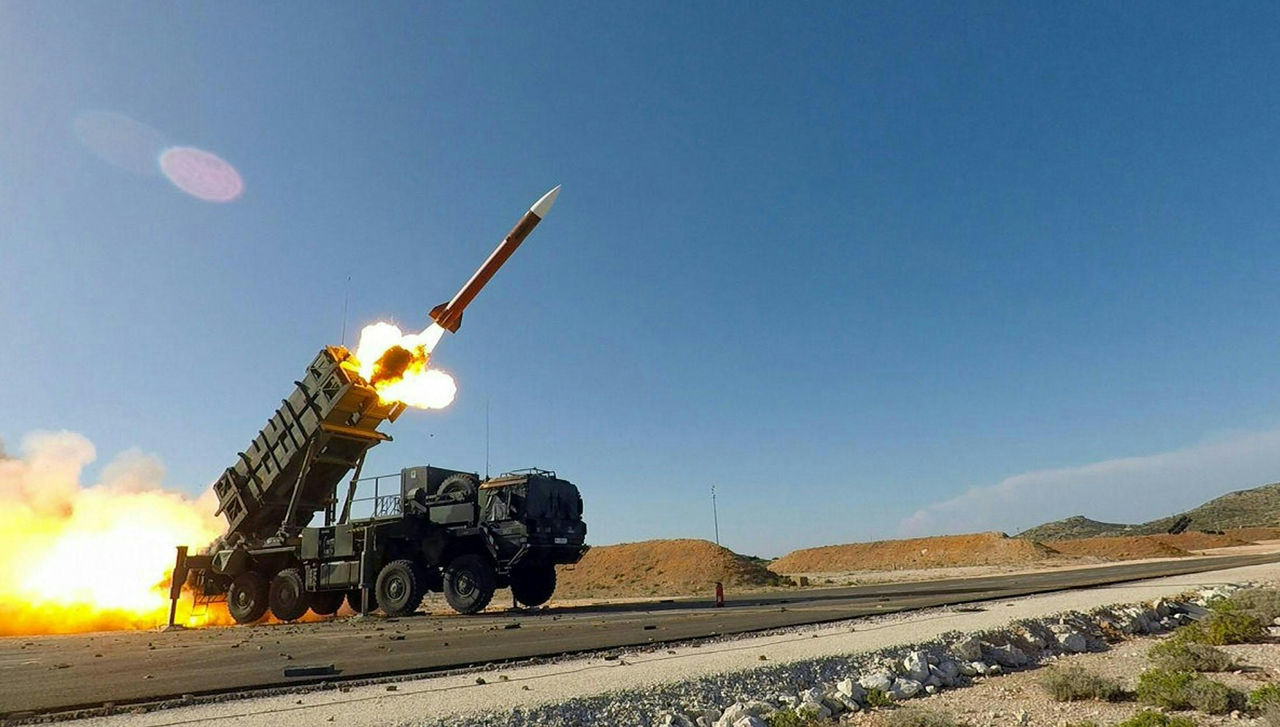
Main Image: By Mitte27 – Own work, CC BY-SA 4.0, https://commons.wikimedia.org/w/index.php?curid=113352288

  •  

Europe’s Search for a Ukraine Negotiator Exposes a Much Deeper Struggle for Power

European leaders are considering appointing a senior representative to negotiate with Russia over Ukraine. But the search exposes a more fundamental problem: whether Europe can transform its economic strength, military resources and political influence into an independent capacity to shape its own security.

Europe is searching for someone capable of negotiating with Vladimir Putin. Yet the question confronting European capitals is considerably more difficult than identifying a politician with sufficient experience, authority and diplomatic skill. It is whether Europe possesses the political unity and strategic independence to negotiate with Moscow on equal terms.

According to diplomatic accounts published on 22nd October, five European leaders have emerged as possible representatives: Italian Prime Minister Giorgia Meloni, Finnish President Alexander Stubb, Czech President Petr Pavel, Danish Prime Minister Mette Frederiksen and Norwegian Prime Minister Jonas Gahr Støre.

No appointment has been announced, and a group of negotiators may ultimately prove more acceptable than a single representative. The initiative reflects concern that Washington’s negotiations with Moscow could produce arrangements affecting European security without sufficient European influence over their terms.

The European Commission insists that the EU is already participating in diplomatic consultations, including discussions held in Oslo on 20th October. But participation in preliminary meetings is not the same as possessing the authority to determine the outcome.

The paradox of European power

Europe’s predicament contains an extraordinary contradiction. The European Union is among Ukraine’s principal financial supporters. Its governments provide military assistance, maintain sanctions against Russia and control decisions affecting Moscow’s future access to European markets. Nevertheless, European capitals remain concerned that the decisive political framework for ending the war could be negotiated principally between Washington and Moscow.

This anxiety has intensified under President Donald Trump, whose transactional approach increasingly treats diplomatic settlements as exchanges of economic concessions and strategic advantages.

As EU Today recently examined, proposals involving sanctions relief, renewed energy cooperation and commercial opportunities raise the possibility of arrangements that depend upon European consent but are negotiated elsewhere.

Washington can discuss reopening economic relations with Russia. It cannot independently reverse European sanctions, guarantee Ukraine’s accession to the EU or decide the continent’s future security arrangements. The European Council explicitly reaffirmed this distinction in its conclusions of 16th October, insisting that decisions affecting the Union’s security and responsibilities belong to Europe itself.

The central issue is therefore not whether Europe has influence, but whether it can organise that influence into a coherent negotiating position.

Why Ukraine must help choose Europe’s representative

An equally important weakness would arise if European governments selected their representative without making Kyiv an integral participant in the decision.

Ukraine is not merely the geographical subject of negotiations. Its government controls whether a proposed settlement can acquire political legitimacy, while its armed forces determine much of what can be implemented on the ground.

A negotiated agreement rejected by Kyiv could neither reliably end the war nor provide the security arrangements that Europe seeks.

European security, moreover, can no longer be considered independently of Ukraine’s military capabilities. Ukrainian forces possess extensive operational experience against Russia, including in drone warfare, electronic warfare and long-range strikes.

Any future continental defence architecture that excludes this experience would disregard one of Europe’s most consequential military assets.

An effective European representative would therefore require a mandate developed jointly with Ukraine, rather than simply endorsed by European governments after the event.

The danger of negotiating without leverage

The proposed candidates illustrate the difficulty of combining political authority with negotiating credibility. Meloni possesses a working relationship with Trump and considerable influence within European conservative politics. Stubb combines experience of Russia’s immediate neighbourhood with access to Washington. Pavel brings military expertise and an understanding of NATO’s command structures. Yet none could independently commit Europe’s governments to financial, military or territorial-security obligations.

This is the fundamental weakness of the proposed office. A negotiator requires more than access to powerful leaders. The ability to make commitments, withhold concessions and impose costs is what gives diplomatic representation substance.

Europe possesses potentially significant instruments: sanctions, industrial capacity, financial assistance and growing defence expenditure. But these remain distributed across institutions and national governments with differing strategic priorities.

Poland, the Baltic states and Nordic governments approach Russian security threats differently from several Western and Southern European capitals. Reconciling those positions is not an administrative exercise. It is a prerequisite for meaningful diplomacy.

The historical shadow of Yalta

The search also reflects European concern about a return to great-power bargaining over the continent’s political geography.

The historical comparison frequently invoked is Yalta in 1945, when Roosevelt, Churchill and Stalin discussed Europe’s post-war settlement. Munich in 1938 offers another warning about negotiating territorial concessions at the expense of directly affected states. Neither precedent precisely describes the present situation.

Unlike the countries subjected to Soviet domination after the Second World War, today’s European states possess established institutions, substantial economic resources and collective defence arrangements. Ukraine, meanwhile, has demonstrated that Russia cannot simply dictate its political future through military superiority.

Nevertheless, the danger lies in accepting the underlying principle that powerful states possess a privileged right to determine the sovereignty and security choices of their neighbours.

Moscow’s demands concerning NATO, Ukrainian territory and Europe’s wider security arrangements extend beyond any conventional ceasefire negotiation.

A European representative would have to challenge that premise rather than merely negotiate the geographical limits of Russian influence.

From diplomatic representation to strategic authority

The debate inevitably leads to Europe’s military dependence upon the United States. An American withdrawal from NATO is not inevitable. Indeed, US legislation restricts unilateral presidential withdrawal. But Washington could substantially reduce its military commitments without formally abandoning the alliance.

Europe must therefore consider how much independent military capacity it requires to support its diplomatic positions. That entails coordinated procurement, integrated military planning, sustainable defence production and deeper cooperation with Britain, Norway, Canada and Ukraine. Recent security challenges in the Black Sea illustrate the difficulty of converting European diplomatic commitments into effective collective action.

These developments would not automatically create a European army or replace NATO. They could, however, give European governments greater freedom to act if American priorities diverge from their own.

The relationship between military capability and diplomacy is particularly important in dealing with Moscow. European representatives cannot expect Russia to revise its demands simply because Brussels has selected a more prominent interlocutor.

Russia would have to conclude that continued aggression carries greater costs than a settlement respecting Ukraine’s sovereignty. Europe’s diplomatic standing would then derive not from the personality of its representative but from the collective resources and political commitments behind that individual.

The immediate search for a negotiator may appear a limited diplomatic initiative. Its implications are considerably larger.

For decades, European security rested upon an arrangement in which American military power compensated for Europe’s fragmented strategic authority. The present negotiations are exposing the limitations of that model. The decisive question is not whether Meloni, Stubb, Pavel or another European leader can secure a place at the negotiating table. It is whether Europe can establish a common position, backed by Ukraine’s consent and by sufficient economic and military power, that neither Washington nor Moscow can disregard.

Without those foundations, a European envoy risks becoming a participant in decisions made by others. With them, the appointment could mark the beginning of a substantially different European role in international security.

  •  

Black Sea Security Crisis Deepens as European Parliament Calls for EU Naval Operation

A series of drone attacks on commercial shipping near Romania and Bulgaria has left sailors dead or missing, bringing Russia’s war against Ukraine closer to NATO territory. The European Parliament is calling for an EU naval mission, while Romania has begun shooting down hostile drones and NATO is preparing additional defensive measures.

The European Parliament has called for the possible deployment of an EU naval operation in the Black Sea following a series of deadly attacks on civilian merchant vessels near the Romanian and Bulgarian coasts. The resolution, adopted on 22 October 2026 by 432 votes to 52, with 88 abstentions, reflects mounting concern over the expansion of maritime threats towards NATO’s south-eastern flank.

The parliamentary resolution urges EU member states to consider establishing a naval mission to protect commercial shipping, while calling on NATO to examine a complementary regional initiative, provisionally described as Black Sea Sentry.

On 23 October, a drone struck the Comoros-flagged cargo vessel Khoryv, approximately 13 nautical miles from Romania’s port of Constanța. The vessel caught fire and sank, leaving one sailor confirmed dead and three missing. Nine crew members were rescued. The ship was carrying 13 Ukrainian and Azerbaijani sailors. According to information attributed to Romanian maritime authorities, difficult weather complicated rescue efforts.

Romanian President Nicușor Dan blamed Russia for the attack, which followed at least seven other strikes on commercial vessels during October. Across the incidents, approximately 30 sailors have been reported dead or missing, although the confirmed death toll is considerably lower.

Civilian Shipping Under Attack

The escalation began on 5 October when the Royad Mammadov, a Turkish-owned grain carrier sailing under the flag of Saint Kitts and Nevis, sank in Romania’s exclusive economic zone. Two sailors died and eleven were rescued. The vessel had departed the Ukrainian Danube port of Izmail carrying corn destined for Ravenna, Italy. Ukrainian President Volodymyr Zelenskyy attributed the sinking to Russian drones, although Romanian authorities did not initially establish responsibility.

The following day, two merchant ships were attacked approximately 70 nautical miles east of the Bulgarian coastal town of Byala. As EU Today reported, the Togo-flagged Alfa Watan sank after sustaining severe damage, while the Palau-flagged Able caught fire. All 18 sailors aboard the latter vessel were rescued, but the crew of the Alfa Watan remained unaccounted for.

The Bulgarian authorities confirmed that both aerial and maritime drones had been involved. Further attacks followed on 13 October, when the HS Dignity sank near Shabla, leaving eleven sailors missing, while the Chelsea-3 was struck near Byala. All 15 crew members of the latter vessel were evacuated.

Two chemical tankers, the Yara J and Wine Trader, were subsequently attacked near the Sulina Canal, a strategically important route connecting the Danube with the Black Sea. The incidents exposed the vulnerability of shipping corridors connecting Ukraine with international markets.

Romania Moves Towards Active Military Defence

Romania has responded by strengthening surveillance and authorising direct military action against drones entering its airspace. On 17 October, two Romanian F-16 fighter aircraft intercepted and destroyed hostile drones over Romanian territorial waters.

According to the Romanian Ministry of National Defence, the aircraft were scrambled from Borcea Air Base after radar systems detected aerial targets approaching from the direction of Snake Island. The drones, identified as jet-powered Geran-family attack aircraft, entered Romanian airspace before being destroyed southeast and east of Sulina.

The ministry disclosed that, during the preceding week, its radar systems had detected eight separate incidents involving aerial targets near the Romanian border, including four brief incursions into national airspace. On 14 October, Spanish F-18 aircraft operating under NATO air-policing arrangements were scrambled after drones approached Romanian airspace.

Bulgaria’s More Cautious Response

Bulgaria has taken a more reserved position concerning responsibility for the attacks. Although Prime Minister Rumen Radev acknowledged their seriousness, his government maintained that investigations must establish the origin of the drones before definitive conclusions could be drawn. Sofia nevertheless strengthened maritime surveillance, deployed rescue resources and requested assistance from European and NATO partners.

In August, a drone crossed into Bulgarian airspace from Romania and exploded near infrastructure associated with the Trans-Balkan Gas Pipeline. According to the Bulgarian government’s account, the aircraft was not detected by either national radar systems or NATO’s Combined Air Operations Centre in Torrejón, Spain. The European Parliament has now urged Sofia to accelerate participation in NATO’s counter-drone initiatives.

EU Proposes Maritime Security Operation

The European Parliament’s proposals include establishing an EU naval operation, improving early detection of hostile drones, accelerating the development of a Black Sea Maritime Security Hub and providing additional defence funding to Romania and Bulgaria. MEPs have proposed using resources under the EU’s SAFE defence financing instrument to support regional capabilities.

The proposed hub would facilitate intelligence-sharing, maritime surveillance and protection of critical infrastructure. Romania and Bulgaria have requested EU satellite imagery to improve their awareness of maritime threats, while the European Maritime Safety Agency has offered additional support.

At their October summit, EU leaders condemned attacks on civilian shipping and called for safe passage for vessels transporting agricultural products. The European Council’s conclusions addressed Black Sea and Danube shipping routes. However, the parliamentary resolution does not authorise a naval deployment: such an operation would require agreement among EU governments on its mandate, resources and rules of engagement.

NATO Faces an Expanding Security Challenge

NATO has responded by examining additional maritime surveillance and defensive measures, including patrol aircraft, radar systems and unmanned platforms. Romania has proposed stronger regional command arrangements involving NATO’s Black Sea members.

An existing framework provides a basis for cooperation. In July, Romania, Bulgaria and Türkiye agreed to expand the responsibilities of their joint mine countermeasures task group to include protection of critical underwater infrastructure. The agreement announced by Romania’s Defence Ministry extended cooperation beyond detecting and neutralising drifting mines.

Protecting commercial vessels against aerial and maritime drones would require broader capabilities. NATO must also operate within the restrictions of the 1936 Montreux Convention, which regulates passage of warships through the Turkish Straits and limits deployments by non-Black Sea countries. Romania, Bulgaria and Türkiye would therefore play central roles in any sustained maritime security operation.

Black Sea Security and the Risk of Escalation

Ukraine’s maritime export corridors remain essential to agricultural shipments following repeated Russian strikes on ports and logistics infrastructure. Attacks on commercial vessels can increase insurance costs, discourage shipping companies and disrupt trade even when port facilities remain functional.

The sinking of merchant vessels near allied territory, combined with repeated drone incursions into Romanian airspace, increases the possibility of military confrontation arising from an individual incident. The legal and military circumstances differ depending on whether an attack occurs in territorial waters, an exclusive economic zone or international waters.

The European Parliament’s proposal raises questions extending beyond maritime patrols: how civilian shipping can be protected, what military responses are authorised and how responsibility for attacks will be established. The sinking of the Khoryv on 23 October illustrates how the western Black Sea has become an increasingly exposed part of Europe’s security frontier.

  •  

Abu Dhabi Peace Talks: Why Putin’s Ambitions May Defeat Trump’s Economic Bargain

Washington is offering Moscow sanctions relief, commercial opportunities and a possible return to European energy markets. Yet the Kremlin’s objectives in Ukraine extend far beyond economic interests, raising questions about whether Vladimir Putin has any intention of accepting a settlement that preserves Ukraine as an independent European state.

The Kremlin has announced plans for renewed negotiations between Russia, Ukraine and the United States in Abu Dhabi during the first half of November, reviving a diplomatic process that has repeatedly failed to produce a settlement to Moscow’s war against Ukraine.

Russian presidential spokesman Dmitry Peskov said on Friday, 23 October, that the discussions would concentrate on post-war security arrangements. He also left open the possibility of eventual European participation, although the initial meeting is intended to remain trilateral.

The announcement follows talks in St Petersburg between Vladimir Putin and Donald Trump’s special envoy Steve Witkoff. Yet the emerging American proposals reveal a fundamental problem: Washington appears increasingly prepared to offer Russia substantial economic incentives, while Moscow has provided little indication that its political objectives in Ukraine have changed.

The economic bargain taking shape

According to details reported on 23 October, citing The Economist, the American proposals involve Ukraine abandoning its ambition to join NATO in exchange for investment, security arrangements and the prospect of European Union membership.

Russia would receive sanctions relief, renewed commercial relations with American companies and potentially the restoration of natural gas exports to Europe. A demilitarised zone in Donbas is also reportedly under consideration.

The commercial dimension extends beyond theoretical proposals.

American and Russian representatives have discussed investment in the Nord Stream pipeline system and possible arrangements involving Lukoil’s international assets. The negotiations surrounding Russian energy infrastructure suggest that Washington regards commercial cooperation as a potential instrument for securing Moscow’s agreement.

There is no established evidence that Witkoff, Jared Kushner or members of Trump’s family would personally benefit from these arrangements. Nevertheless, the involvement of investors in strategically important Russian assets raises questions about whether economic agreements might advance independently of a settlement acceptable to Ukraine.

The Trump administration has already demonstrated its willingness to relax economic pressure. On 16 October, the president waived major provisions of the Graham sanctions legislation, which he had signed into law only four weeks earlier.

As EU Today previously examined, the decision suspended measures designed to increase the economic costs of Russia’s continuing aggression. Washington justified the waiver on the grounds that sanctions could interfere with negotiations.

Why Putin’s objectives are not primarily economic

The central weakness in a settlement built around commercial incentives is the assumption that Putin’s territorial and political demands can ultimately be exchanged for economic advantages.

Russia’s objectives have never been confined to Donetsk, Luhansk or access to Western markets.

In his July 2021 essay on the historical unity of Russians and Ukrainians, Putin advanced a conception of the two nations as belonging to a single historical and cultural space. His interpretation, examined by the Centre for Eastern Studies, challenged the legitimacy of Ukraine’s development outside Moscow’s political influence.

These ideas preceded the full-scale invasion of February 2022. They also followed Russia’s annexation of Crimea in 2014 and its intervention in eastern Ukraine.

Putin’s demands therefore concern more than military geography. They involve the extent to which Ukraine can exercise independent political authority, determine its international alliances and integrate with Western institutions.

Even a settlement granting Moscow substantial territory could leave this larger objective unresolved.

An independent Ukraine, increasingly integrated into the European economy and protected by Western security commitments, would remain outside Russia’s political control. For a Kremlin leadership that has repeatedly questioned Ukraine’s separate historical identity, such an outcome would represent a limitation on its wider ambitions.

Putin reinforced this position on 22 October when he again described Ukrainian territory in Donbas as historically Russian.

The advantages of negotiations without compromise

This creates an apparent contradiction. Why would Moscow return to negotiations if its broader objectives remain incompatible with the proposed settlement?

One explanation is that participation itself offers Russia strategic advantages.

Negotiations can preserve diplomatic engagement with Washington, complicate attempts to introduce additional sanctions and maintain American pressure on Kyiv to accept territorial concessions.

They also provide opportunities to negotiate economic arrangements before fundamental security questions have been resolved.

For Putin, the political timetable in Washington is relevant. Trump’s presidency is constitutionally limited to January 2029. Moscow can seek to exploit the present administration’s interest in a diplomatic agreement while continuing military operations.

None of this establishes that Putin has definitively rejected compromise. However, the Kremlin’s willingness to attend negotiations is not equivalent to a willingness to abandon its demands.

Russia continues attacking Ukrainian cities and energy infrastructure. As EU Today reported on 22 October, Russian forces launched 21 ballistic missiles against Kyiv shortly after Witkoff’s discussions with Putin.

The simultaneous pursuit of diplomatic engagement and military pressure allows Moscow to negotiate while attempting to alter conditions on the battlefield.

Europe cannot be treated as an economic bargaining chip

The proposed return of Russian gas exposes another contradiction in Washington’s approach.

The European Union has already adopted binding legislation to phase out Russian gas imports, with full restrictions taking effect during 2027.

The European Commission reiterated on 19 October that it had no plans to reverse its position. Reopening Nord Stream would also face sanctions, infrastructure and political obstacles, particularly in Germany.

Consequently, Washington cannot independently promise Moscow renewed access to European energy markets.

Nor can it guarantee Ukraine’s accession to the EU. Membership requires agreement among the existing member states, completion of accession negotiations and ratification of the relevant treaty.

A settlement negotiated primarily between Washington and Moscow would therefore depend on European decisions over which neither government has unilateral authority.

This helps explain the significance of Peskov’s remarks about possible European participation. Moscow needs European cooperation to secure meaningful sanctions relief and access to markets, even while seeking to negotiate Europe’s security arrangements principally with Washington.

The unresolved question

Trump’s approach rests on the proposition that economic incentives can make a settlement more attractive to Moscow than continued warfare.

Putin’s position presents a different calculation. The Russian president must weigh the benefits of restored commercial relations against the political implications of recognising Ukraine’s durable independence and Western orientation.

Those objectives may prove incompatible.

A settlement that restores Russian energy revenues without credible guarantees against renewed aggression could reduce Moscow’s economic constraints while leaving the causes of the war unresolved.

The decisive test in Abu Dhabi will therefore not be whether negotiators can agree on investment, pipelines or sanctions relief. It will be whether Russia is prepared to accept a Ukrainian state whose sovereignty, political direction and future European integration remain beyond Moscow’s control.

Until that question is answered, renewed negotiations may offer Washington the prospect of a diplomatic achievement while allowing the Kremlin to pursue objectives it has not publicly abandoned.

  •  

Mayor of Gaia accuses government of blocking construction of 2,500 homes for young people

Mayor of Gaia, Luís Filipe Menezes has harshly criticised the government for standing in his municipality’s way over a project to build 2,500 homes for young people on a derelict

The post Mayor of Gaia accuses government of blocking construction of 2,500 homes for young people appeared first on Portugal Resident.

  •  

Greece Restructures Military: Closing Units and Bases

The Greek Ministry of Defence plans to merge or close dozens of military units and facilities, while simultaneously establishing new commands for unmanned aerial vehicles (UAVs), space operations, and cyber warfare. This restructuring is estimated by authorities to save 530 million euros over five years. On Tuesday, Defence Minister Nikos Dendias presented the third phase […]

  •  

Burnham’s Doomsday Guide Descends into Farce as he is Forced to Play Down Rayner’s Joke About Stockpiling Wine

Andy Burnham's doomsday prepping campaign descended into farce today as he was forced to play down Angela Rayner's joke about stockpiling wine amid questions of why a Government skimping on defence is lecturing the public.

The post Burnham’s Doomsday Guide Descends into Farce as he is Forced to Play Down Rayner’s Joke About Stockpiling Wine appeared first on The Daily Sceptic.

  •  

Brussels Prepares Emergency Trade Powers as Chinese Imports Increase Pressure on European Industry

The European Commission is preparing a new trade-defence instrument that would allow the European Union to restrict access to its single market more rapidly when large volumes of low-priced imports threaten domestic manufacturers.

Commission President Ursula von der Leyen outlined the initiative during a speech to the European Parliament in Strasbourg on Wednesday, 21 October, following discussions among EU leaders over growing global trade imbalances.

The proposal would form part of a wider package addressing economic dependence on foreign suppliers and attempts by third countries to exert commercial pressure on individual EU member states. Although the Commission has not yet published detailed legislation, the announcement signals Brussels’ intention to expand its capacity to intervene in international trade disputes.

European industries seek protection

European manufacturers have faced increasing competition from imported products in sectors including chemicals, machinery, vehicles, steel and industrial components.

Much of the concern centres on China, where extensive manufacturing capacity and government support have enabled companies to expand their presence in international markets.

European producers argue that differences in subsidies, production costs and market access place them at a competitive disadvantage.

According to the European Commission, the EU’s goods trade deficit with China exceeded €1 billion per day in 2025.

Von der Leyen has described the imbalance as unsustainable and argued that European trade policy must respond more effectively to market distortions.

During her 21st October address to Parliament, she confirmed that the Commission was working on additional safeguards intended to address sudden increases in imports affecting European businesses.

The proposed measures follow a Franco-German initiative calling for stronger instruments to counter systemic economic imbalances.

France and Germany have urged Brussels to act more quickly where existing trade investigations and enforcement procedures prove insufficient.

China trade negotiations produce limited progress

The announcement follows recent negotiations between Brussels and Beijing aimed at reducing tensions over industrial competition.

Earlier this month, the two sides reached an arrangement restricting Chinese hybrid vehicle exports to the European market.

As EU Today reported on 13rd October, the agreement established an annual ceiling of 350,000 vehicles, potentially reducing Chinese manufacturers’ expected market access.

However, European officials acknowledge that restrictions covering a single automotive category cannot resolve the wider trade imbalance.

Other industries remain concerned about Chinese production capacity, including chemicals, machinery and manufactured components.

Beijing has warned against further unilateral European restrictions, arguing that protectionist measures could damage commercial relations.

The Chinese authorities have also demonstrated a willingness to pursue trade investigations involving European products.

As previous EU Today coverage established, China opened an anti-dumping investigation into an EU chemical product in early October, adding to existing commercial disputes.

Further European restrictions could therefore prompt additional Chinese countermeasures affecting exporters from member states.

New instrument would strengthen EU response

The proposed market-access mechanism is intended to give Brussels greater scope to act when existing safeguards cannot address economic threats quickly enough.

However, its legal structure, enforcement thresholds and relationship with existing anti-dumping and anti-subsidy legislation have not yet been specified.

The EU already possesses several trade-defence instruments, including duties against unfairly priced or subsidised products and safeguards designed to protect industries from damaging import surges.

Those mechanisms generally require formal investigations and evidence demonstrating the conditions for intervention.

The new proposal could introduce a faster response, but questions remain over how any restrictions would comply with international trade obligations and the EU’s commitments under World Trade Organisation rules.

Member states would also have to consider the consequences for European businesses that depend on imported materials, components and finished goods.

Reducing dependence on foreign suppliers

The Commission’s strategy extends beyond restrictions on imports. Von der Leyen confirmed that a separate initiative, known as DiversifyEU, would be presented in December.

The programme is intended to help European companies reduce excessive dependence on individual suppliers and countries, particularly where critical raw materials and strategic technologies are involved.

The Commission also plans a solidarity mechanism designed to assist member states and industries facing external economic coercion or retaliation. Such arrangements could become relevant when a foreign government targets exports from a particular member state in response to an EU policy decision.

The initiative follows growing concern that Europe’s access to strategically important industrial supplies can be disrupted through export controls or political disputes.

Difficult negotiations ahead

The Commission will still have to translate the proposed measures into legislation and secure sufficient political support among member states and the European Parliament.

National governments have different commercial relationships with China and varying levels of dependence on imported industrial goods. Countries with substantial export markets in China may be particularly concerned about retaliation, while manufacturers facing foreign competition are likely to press for faster intervention.

The Commission must also determine whether new trade powers should be exercised centrally in Brussels or require additional approval from national governments. For European industry, the immediate question is whether the new mechanism can provide effective protection without increasing production costs through restrictions on essential imports.

The Commission’s forthcoming legislative proposals will establish how far the EU intends to move towards a more interventionist trade policy.

  •  

Russian Cluster Missile Hits Kyiv’s Historic Religious Quarter, Zelenskyy Says

A Russian ballistic missile fitted with a cluster warhead struck the historic Pecherskyi district of Kyiv overnight on 21–22 October 2026, damaging buildings near two of the Ukrainian capital’s principal religious complexes, President Volodymyr Zelenskyy has said.

The missile landed between the Kyiv-Pechersk Lavra, a UNESCO World Heritage site, and the Holy Presentation (Sviato-Vvedenskyi) Monastery. Monastery buildings, homes, shops, cafés and other civilian infrastructure sustained damage in the surrounding area.

Zelenskyy disclosed that Russian forces had used three cluster-equipped ballistic missiles during the assault. Ukrainian authorities described weapons designed to explode in the air as they approach their targets, distributing explosive submunitions over an area approximately 400 metres in diameter.

After receiving reports from officials overseeing emergency operations across Ukraine, the president accused Moscow of deliberately choosing a weapon capable of inflicting extensive civilian casualties in a densely populated district.

“This was a deliberate choice of weapon and area of deployment,” Zelenskyy said.

He maintained that there were no military installations in the vicinity and that the attack had been intended to inflict maximum damage on civilians and their property.

Religious Buildings and Civilian Properties Damaged

Pecherskyi is one of Kyiv’s oldest districts, containing religious institutions and architectural monuments associated with centuries of Ukrainian history.

Among them is the Kyiv-Pechersk Lavra, established in the 11th century and subsequently developed into an important centre of Eastern Orthodox Christianity.

The complex includes historic churches, monasteries and an extensive system of underground caves. Together with Saint Sophia Cathedral and its related buildings, it forms part of a UNESCO World Heritage property that has appeared on the List of World Heritage in Danger since 2023.

Thursday’s explosion occurred in the area separating the Lavra from the Holy Presentation Monastery. Ukrainian authorities identified damage to buildings belonging to the latter, alongside neighbouring residential and commercial premises. Assessments of the destruction across the historic district were continuing.

This was not the first occasion in 2026 on which Russian weapons had damaged the area’s religious heritage.

On 15 June, a Russian drone struck the Kyiv-Pechersk Lavra complex, causing severe damage to the Dormition Cathedral. Its roof and structural elements suffered extensive destruction, prompting UNESCO to undertake emergency stabilisation measures.

Ukraine’s Security Service subsequently published evidence identifying fragments of a Russian Geran-2 drone recovered from the site.

The October strike has again exposed the vulnerability of the capital’s historic religious buildings, as well as the civilian neighbourhoods surrounding them.

The Use of Cluster Weapons in Urban Areas

The reported choice of ammunition has particular implications for the investigation into the attack.

Whereas a conventional missile warhead delivers its explosive force around a principal impact point, cluster munitions release numerous smaller explosive devices capable of striking separate locations across a broad area.

In an urban environment, such weapons can cause casualties and destruction well beyond an intended target. Unexploded submunitions may remain dangerous after the initial attack, posing further risks to residents and emergency workers.

The International Committee of the Red Cross has warned that deploying cluster munitions in populated areas creates a high likelihood of indiscriminate effects.

Under international humanitarian law, military operations must distinguish between civilian persons and objects and legitimate military targets. Indiscriminate attacks are prohibited.

The reported deployment of cluster warheads in central Kyiv therefore raises questions about whether those requirements were observed. Zelenskyy’s account of the three missiles had not, at the time of reporting, been independently established through publicly available forensic evidence.

Russian Barrage Follows Diplomatic Contact with Washington

The Pecherskyi explosion was one incident in a much larger attack on the Ukrainian capital.

According to Zelenskyy, Russia launched 21 ballistic missiles against Kyiv in three successive waves overnight. Ukrainian authorities reported at least two people killed and more than 30 wounded, with strikes damaging apartment buildings, commercial premises, transport infrastructure and energy facilities.

The bombardment took place shortly after Russian President Vladimir Putin met US presidential envoy Steve Witkoff in St Petersburg on Wednesday, 21 October.

During their discussions, Putin indicated that Russia was prepared in principle to resume negotiations with Ukraine and the United States, potentially in November. However, no confirmed timetable emerged.

Witkoff’s visit followed consultations in Norway between American, Ukrainian and European representatives over possible arrangements to end the war.

The renewed diplomatic activity has done little to resolve the underlying disagreements. As EU Today has previously examined, Moscow continues to advance territorial demands while the parties remain divided over Ukraine’s future security guarantees.

Meanwhile, Kyiv faces an immediate requirement for additional air-defence ammunition.

Zelenskyy has repeatedly appealed for more Patriot interceptor missiles capable of engaging ballistic targets. Difficulties surrounding American military assistance and intelligence cooperation have increased tensions between Washington and Kyiv at a time when Russia is intensifying attacks against Ukrainian cities.

The latest strike also presents Ukrainian investigators with the task of establishing whether the reported use of cluster munitions against a historic civilian district constituted an unlawful attack.

For Zelenskyy, the bombardment following Putin’s latest diplomatic discussions demonstrates that Moscow’s military conduct remains unchanged. He has argued that Russia’s actions provide no evidence of a genuine intention to bring the war to an end.

  •  

Black Sea Attacks Expose Europe’s Gap Between Warnings and Action

The European Parliament’s call to consider a Black Sea naval operation recognises a mounting threat. But protecting merchant ships requires capabilities, clear decisions and political resolve that another resolution cannot supply.

Europe’s Black Sea security problem has become a test of credibility. Merchant vessels face deadly attacks near EU member states, crews are being placed in danger, and Ukrainian export routes remain vulnerable. Yet Brussels is still discussing whether to consider a naval response.

The European Parliament’s latest resolution, adopted on October 22nd by 432 votes to 52, with 88 abstentions, delivers a forceful political message. MEPs hold Russia responsible for attacks on civilian vessels and for extending its aggression into the western Black Sea.

The harder question is what follows. Parliament wants the EU and member states to consider a naval operation, alongside stronger NATO engagement and closer cooperation between Bulgaria, Romania and Türkiye. That is a serious proposal. It is also several consequential decisions short of an operational mission.

Ships, aircraft, defensive weapons, command arrangements and rules of engagement cannot be supplied by parliamentary language. Governments must commit them—and accept responsibility for what happens when an approaching drone threatens a merchant vessel.

The economic stakes are already clear. As EU Today previously reported, attacks threatening routes off Bulgaria have widened the pressure on Ukrainian agricultural exports and neighbouring economies. Higher insurance costs and shipowners’ reluctance to enter dangerous waters can undermine trade without any formal blockade being declared.

That makes maritime insecurity an effective instrument of coercion. Every additional voyage becomes a commercial gamble, while exporters and importing countries absorb costs created by a war they cannot control.

EU Global’s earlier coverage of drone attacks off Bulgaria similarly highlighted the threat to commercial navigation and NATO’s southeastern frontier. These incidents demonstrate how quickly a conflict centred on Ukraine can impose direct burdens on neighbouring European states.

Parliament is unusually pointed about Bulgaria’s conduct. It criticises Sofia’s ambiguous response, challenges Prime Minister Rumen Radev to match requests for allied solidarity with action, and urges Bulgaria to stop delaying participation in NATO’s counter-drone initiative.

The principle is sound. Collective security depends on national governments contributing to the arrangements from which they seek protection. Political hesitation becomes particularly difficult to defend when commercial crews bear the immediate risks.

Nevertheless, Bulgaria cannot reasonably be expected to solve a regional security crisis alone. Nor can Romania. A credible response requires shared surveillance, coordinated interception procedures and practical cooperation with Türkiye.

There is movement. Defence Matters reported on October 21st  that NATO was reinforcing regional surveillance through aircraft, drones, radar systems and specialist personnel. Those measures should improve detection and investigation, although they do not constitute a standing naval escort operation.

That distinction matters. Detecting an incoming threat is essential; defeating it before it reaches a civilian vessel requires a further chain of decisions and capabilities.

Any proposed naval deployment also faces geographical and diplomatic constraints. Türkiye controls passage through the Turkish Straits under the Montreux Convention, which imposes restrictions on warships. A workable mission must therefore be developed with Ankara and grounded in a realistic assessment of available regional forces.

Calling an operation “European” does not resolve those difficulties. Its value would depend on its mandate, resources and ability to protect shipping while managing escalation.

Parliament also wants the EU’s Black Sea maritime security hub operationalised rapidly. Better information sharing and infrastructure protection are sensible objectives. But institutional coordination must produce measurable operational improvements, rather than another layer of meetings between organisations already describing the same threat.

Funding deserves similar scrutiny. MEPs propose using unspent SAFE resources and ensuring that the next long-term EU budget addresses regional defence needs. Governments should explain which capabilities can actually be financed, procured and deployed—and when.

The resolution identifies the danger. Europe’s failure would be to treat that diagnosis as an achievement sufficient in itself.

Merchant crews need protection during their next voyage. Ukraine needs reliable access to export markets. Bulgaria and Romania need capabilities that arrive before another emergency.

Brussels has issued its warning. Governments must now demonstrate that European maritime security means more than condemning the consequences of its absence.

This article originally appeared at DEFENCEMATTERS.EU

Main Image: Adrian-George Asinina MEP, byPhilippe BUISSIN © European Union 2026 – Source : EP

  •  

Russia Fires 21 Ballistic Missiles at Kyiv Hours After Witkoff-Putin Peace Talks

Russia launched 21 ballistic missiles against Kyiv in three successive waves overnight on 21–22 October, striking residential buildings, energy facilities and transport infrastructure just hours after President Vladimir Putin held peace negotiations with US presidential envoy Steve Witkoff in St Petersburg.

Ukrainian President Volodymyr Zelenskyy confirmed on Thursday morning that at least two people had been killed and 34 injured, including five children, in Russian attacks affecting 12 Ukrainian regions. The capital sustained extensive damage, with strikes reported against railway and metro infrastructure, shopping centres, industrial premises and a monastery.

The bombardment followed a three-hour meeting between Witkoff and Putin on Wednesday, during which the Russian president indicated his willingness to resume trilateral negotiations involving Moscow, Washington and Kyiv. The Russian attacks continued despite the diplomatic initiative, prompting Zelenskyy to call for renewed international pressure on the Kremlin.

Kyiv Under Three Waves of Ballistic Missiles

In a statement published on Telegram, Zelenskyy said Russian forces had launched three waves of ballistic missiles against the Ukrainian capital, causing numerous direct hits and widespread destruction.

The Ukrainian president referred sarcastically to Russia’s supposed humanitarian intentions, an apparent reference to Witkoff’s description of Putin as a humanitarian during their meeting the previous day.

Emergency services were deployed across several districts of Kyiv, where residential and commercial buildings suffered damage. Part of the capital’s metro infrastructure on the Southern Bridge was affected, disrupting traffic, while a strike on an ambulance station in the Pecherskyi district damaged six emergency vehicles. No medical personnel were injured at that location.

According to Ukrainian military and emergency service reports, the overnight assault also involved 210 attack drones and several types of missiles, including Iskander-M, S-400, Zircon and Oniks weapons.

By Thursday morning, Ukrainian air defences had intercepted or suppressed 181 drones. Russian weapons struck 32 locations, while debris from intercepted drones fell at eight others.

The assault followed several consecutive days of Russian attacks against Kyiv, including earlier strikes on hospitals, residential buildings and the capital’s transport network.

Witkoff’s Meeting with Putin

The timing of the latest bombardment placed renewed scrutiny on Washington’s diplomatic engagement with Moscow.

On 21 October, Witkoff met Putin at the Konstantin Palace in St Petersburg, accompanied by Russian officials, including Kirill Dmitriev, the Kremlin’s representative for international economic cooperation. The discussions lasted approximately three hours.

The meeting followed talks in Oslo on 20 October, where Witkoff and Jared Kushner met Zelenskyy alongside Norwegian Prime Minister Jonas Gahr Støre and Finnish President Alexander Stubb.

Following the St Petersburg meeting, Witkoff described the discussions as constructive and indicated that negotiations would continue at the technical level between representatives of the United States, Russia and Ukraine.

Putin reportedly expressed agreement in principle to restarting trilateral negotiations, potentially during the first half of November. However, no agreement on a ceasefire or suspension of Russian attacks was announced.

The meeting also attracted controversy after Witkoff praised Putin as a humanitarian following the release of Stephen Hubbard, a 74-year-old American citizen who had been detained in Russia for more than four years.

The remarks prompted criticism from Republican lawmakers in Washington, who questioned the characterisation of the Russian president while Moscow continued its military campaign against Ukraine.

Zelenskyy Calls for Pressure Rather Than Diplomatic Concessions

Zelenskyy characterised the overnight missile attack as evidence that Russia’s participation in negotiations had not produced any substantive change in its conduct.

He argued that diplomatic efforts to end the war should continue but must be accompanied by measures capable of altering Moscow’s military calculations.

Those measures, according to the Ukrainian president, include stronger air defence capabilities, faster deliveries of interceptor missiles, the ability to destroy Russian ballistic missile launchers and continued economic sanctions.

The latest attacks also place Ukraine’s air defence requirements firmly within the ongoing negotiations with Washington. Kyiv has repeatedly sought additional Patriot missiles and more reliable advance warning of Russian ballistic launches, particularly as repeated strikes place increasing demands on its interception capabilities.

For the Trump administration, the immediate question is whether Russia’s stated willingness to negotiate can produce verifiable commitments to reduce hostilities.

The Kremlin has offered the prospect of further talks without announcing a halt to its offensive operations. Kyiv, meanwhile, continues to face missile and drone attacks against civilian infrastructure even as discussions concerning a possible settlement proceed.

The events of 21–22 October leave Washington’s diplomatic initiative moving forward against the background of an expanding Russian aerial campaign, with no indication that Moscow intends to suspend its attacks while negotiations continue.

  •  

European Governments Move to Give Energy Companies Powers to Neutralise Hostile Drones

France, Germany, Austria and Poland are expanding or reviewing the authority of critical infrastructure operators to defend facilities against drones, raising legal and operational questions over the growing role of civilian companies in national security.

European governments are reconsidering who should be authorised to intercept hostile drones as energy companies and critical infrastructure operators confront an increasingly serious threat to electricity networks, transport systems and other essential facilities.

France has already introduced legislation permitting approved operators to deploy counter-drone systems, while Germany is reviewing similar arrangements and Austria has announced plans to extend certain protective powers to infrastructure companies.

Poland has moved further by authorising designated security units to disable or destroy drones entering restricted areas around important energy installations.

The changes reflect concerns that national police and armed forces cannot provide permanent protection for every substation, power station, railway facility or pipeline against relatively inexpensive unmanned aircraft.

France establishes a new approach

In August 2026, the French parliament approved legislation allowing authorised operators of critical infrastructure and their contractors to detect, jam and intercept drones near designated facilities.

The legislation followed a series of reported drone incursions over sensitive locations, including military installations.

Under the French approach, operators of strategically important infrastructure may eventually use approved counter-drone systems without relying exclusively on the immediate intervention of military personnel.

Potential beneficiaries include electricity operators and organisations responsible for transport infrastructure.

French authorities are testing detection equipment, electronic countermeasures and interceptor drones at Brétigny-sur-Orge, south of Paris.

The programme examines systems capable of identifying approaching aircraft, determining whether they present a threat and initiating an appropriate response.

France intends to expand the protection of sites classified as strategically important, with further deployment planned during 2027.

The initiative would introduce responsibilities traditionally associated with military or police operations into the management of civilian infrastructure.

Germany and Austria reconsider existing restrictions

Germany is examining the legal conditions under which private companies and infrastructure operators could participate in active counter-drone operations.

At present, responsibility for neutralising threatening aircraft remains primarily with the competent public authorities.

The debate has intensified following security incidents involving unmanned aircraft, including the discovery of an explosives-laden drone near a Ukrainian cargo aircraft at Leipzig/Halle airport in August.

German authorities attributed the incident to Russia, an allegation Moscow denied.

The German government’s review concerns not only the equipment that companies may possess but also whether trained security personnel should be permitted to deploy countermeasures without waiting for a separate police authorisation.

Austria announced plans in September to extend comparable powers to selected critical infrastructure operators, including major energy companies.

The government has acknowledged the practical limitations of protecting a large number of widely dispersed installations using state security personnel alone.

Poland has already established restricted drone zones around sensitive energy facilities, with designated security units authorised to intercept aircraft entering those areas under applicable national rules.

Electricity networks face particular risks

Electricity infrastructure presents a difficult security problem because essential installations are distributed across extensive geographical areas.

Transmission operators manage thousands of kilometres of high-voltage lines, while substations, transformers and switching stations connect generation facilities to consumers.

A successful attack against critical equipment can produce consequences extending well beyond the immediate site.

Large power transformers are particularly difficult to replace. Manufacturing, transporting and installing specialised equipment can require lengthy preparation, making rapid recovery uncertain after serious damage.

European utilities have traditionally concentrated on physical security, maintenance and restoring services after technical failures or accidents.

The spread of drones creates additional demands for surveillance, early warning and the ability to respond before an attack reaches its target.

Russia’s repeated strikes against Ukraine’s electricity infrastructure have demonstrated the extensive disruption that attacks on power systems can cause.

European governments are now evaluating how comparable vulnerabilities could be exploited against their own networks.

Who bears responsibility for an interception?

Giving civilian operators access to counter-drone equipment raises unresolved legal questions.

Electronic jamming can interfere with communications and navigation systems beyond the targeted aircraft. A drone brought down over an industrial or residential area could injure members of the public or damage surrounding property.

Security personnel must also determine whether an unidentified drone is hostile, operating unlawfully or simply present because of an error by its operator.

A mistaken interception could expose infrastructure companies to compensation claims and other legal consequences.

European governments must therefore establish who can authorise an intervention, which countermeasures are permitted and how responsibility is allocated when damage occurs.

There is no uniform European approach.

Some operators support expanding their protective powers, while others argue that the use of force should remain the responsibility of the state.

Finland’s national electricity transmission operator, Fingrid, has expressed reservations about transferring such authority to energy companies.

The position reflects a wider concern that infrastructure operators should concentrate on maintaining essential services rather than assuming responsibilities for armed or coercive security operations.

A growing European security market

The regulatory debate is developing alongside a rapidly expanding market for counter-drone technology.

Manufacturers are offering equipment that integrates radar, optical sensors, electronic detection and software capable of classifying possible threats.

Interceptor drones and electronic countermeasures are increasingly being designed for use around civilian infrastructure rather than exclusively on military installations.

German defence company Rheinmetall has reported growing interest from private infrastructure operators in counter-drone protection.

However, the technology is advancing faster than the legal frameworks governing its use.

The immediate challenge for European governments is to establish protective arrangements that allow rapid intervention while preserving clear accountability.

A counter-drone system can identify an approaching aircraft within seconds. Determining who is authorised to stop it remains a matter for national law.

  •  

EU Puts Arctic Security First as Brussels Plans New Maritime Surveillance Network

The European Union has adopted a new Arctic strategy placing security at the centre of its northern policy, reflecting growing concern over Russian military activity, vulnerable submarine infrastructure and competition for control of emerging maritime routes.

Presented on Tuesday, 20 October, by the European Commission and EU foreign policy chief Kaja Kallas, the strategy proposes a maritime security hub, expanded satellite surveillance, greater icebreaker capacity and improved military mobility across northern Europe.

The document marks a departure from the EU’s 2021 Arctic policy, which placed greater emphasis on climate change, environmental protection and scientific cooperation. The revised framework treats the region as an increasingly important component of European security and economic policy.

Russia’s military presence reshapes European priorities

Russia’s expanding military infrastructure in the High North is a principal concern behind the policy revision.

Moscow has reopened Soviet-era military installations, strengthened its northern forces and maintained substantial nuclear capabilities on the Kola Peninsula. The region contains strategically important naval bases used by Russia’s Northern Fleet, including facilities supporting its submarine-based nuclear deterrent.

Russian operations in the Arctic also have implications for maritime access between the Atlantic and the Barents Sea, an area increasingly important to NATO’s northern defence arrangements.

The EU intends to work more closely with NATO and its northern partners, including Norway, Iceland, Britain, Canada and the United States, while developing capabilities that complement existing military structures.

Kallas said the Arctic’s security environment had deteriorated significantly since 2021, with geopolitical competition increasingly affecting a region previously associated principally with environmental and economic cooperation.

The EU’s revised priorities reflect concerns extending beyond conventional military deployments, particularly the exposure of undersea communications networks and energy infrastructure to sabotage and disruption.

New maritime security hub and submarine cable protection

A central proposal involves establishing an EU Maritime Security Hub to improve information-sharing between member states and partner countries operating in Arctic waters.

The system would strengthen monitoring of maritime movements and support the identification of suspicious activity near critical infrastructure.

Brussels also proposes an Arctic Cable Hub, initially concentrating on the protection, monitoring and repair of submarine communications cables across the North Atlantic and Arctic.

Such infrastructure carries international data traffic and supports communications between Europe, Greenland and North America. Damage to cables could interrupt telecommunications, financial services and government networks.

The Commission’s new Arctic policy framework also supports the proposed Pan-Arctic Cable connecting Greenland directly with Europe, together with secure satellite communications through the EU’s IRIS² programme.

Further measures envisage expanded use of Copernicus satellite surveillance, improved maritime intelligence and closer monitoring of vessels associated with Russia’s shadow fleet.

These measures form part of a broader attempt to improve European surveillance capabilities without relying exclusively on military assets provided by individual NATO members.

Icebreakers, transport corridors and military mobility

The strategy also addresses Europe’s limited capacity to operate in extreme northern conditions.

The Commission wants to support additional icebreaker capabilities, which are essential for maintaining access to Arctic waters, conducting emergency operations and supporting scientific and logistical activity.

Russian icebreaker capabilities remain considerably more extensive than those available to most European countries, providing Moscow with operational advantages along the Northern Sea Route.

European investment would also support ports, railways, energy terminals and digital infrastructure capable of serving both civilian and security requirements.

The emphasis on dual-use infrastructure reflects the growing importance of military mobility across northern Europe, particularly following Finland’s and Sweden’s accession to NATO.

Improved transport links could facilitate the movement of equipment and personnel while also supporting economic development in sparsely populated northern regions.

However, the Commission has not provided a comprehensive financial allocation for the proposed security measures, leaving important questions about funding, procurement and implementation.

Brussels retreats from Arctic drilling ban proposal

The revised strategy also introduces a significant change in the EU’s position on Arctic fossil fuel development.

In 2021, Brussels proposed pursuing an international legal commitment to prohibit further oil, gas and coal extraction in the Arctic.

The new strategy maintains the EU’s opposition to environmentally damaging fossil fuel development but no longer includes the explicit ambition to secure a multilateral legal prohibition.

The adjustment follows sustained disagreement with energy-producing countries and recognition that an international agreement would be difficult to achieve under current geopolitical conditions.

Norway has argued that continued exploration in parts of the Barents Sea remains important for European energy security, particularly as production from mature Norwegian fields is expected to decline.

EU Today previously reported on Brussels’ opposition to Norwegian Arctic drilling plans and the disagreements between environmental objectives and Europe’s long-term energy requirements.

The latest strategy does not represent an endorsement of new Arctic drilling. It does, however, acknowledge the limitations of the EU’s previous diplomatic approach.

Greenland and the northern economy

Greenland occupies a prominent position in the revised strategy because of its location, mineral resources and importance to transatlantic communications.

The Commission wants to expand cooperation on digital connectivity, critical raw materials, research and infrastructure investment, while recognising the responsibilities of Greenland’s own institutions and the Kingdom of Denmark.

Brussels also intends to strengthen scientific cooperation and support Arctic communities adapting to rapid environmental change.

The Arctic is warming nearly four times faster than the global average, creating new commercial opportunities while imposing substantial costs on local populations and infrastructure.

The EU’s proposals therefore combine security measures with investment in transport networks, research facilities and economic diversification.

For Brussels, implementation will require agreement between member states with different geographical interests, defence capabilities and budgetary priorities. Cooperation with NATO will also require careful coordination to avoid duplicating existing military arrangements.

The Commission has established a significantly broader Arctic agenda than the one adopted five years ago. Its practical impact will depend on whether member states finance the surveillance systems, vessels and infrastructure that the new strategy envisages.

  •  
❌