❌

Reading view

Cracks In The Coalition: Europe Picks Up The Phone To Moscow

Cracks are spreading through the foundation of the pro-Ukrainian coalition. For four years, the West presented a united front behind Kyiv. In recent weeks, that picture has begun to change, and the change is visible in diplomacy and in budgets alike.

The most striking signs come from Europe itself. On October 27, Vladimir Putin held phone calls with Finnish President Alexander Stubb and Norwegian Prime Minister Jonas Gahr Støre. The talks covered a settlement in Ukraine and European security. According to the Kremlin and the Russian Foreign Ministry, neither leader brought anything new to the conversation. Stubb described the exchange as frank and substantive. His office stressed that both leaders spoke for their own countries, not for Europe as a whole.

Stubb made his own view plain. “A direct dialogue with Russia is needed to end the conflict in Ukraine,” he said. Støre was just as pragmatic. “Norway is a neighbor of Russia. We share an extensive maritime border. We will maintain good-neighborly relations, and that is important for our security,” the Norwegian prime minister said after the call.

The pattern extends beyond the Nordic states. A Slovak delegation led by the foreign minister arrived in Moscow on October 26 to discuss resuming cooperation. The agenda reportedly included gas and oil supplies, nuclear energy, agriculture, and culture. Prime Minister Robert Fico opposes sanctions and military aid to Ukraine, although Bratislava insists it remains committed to its obligations in the EU and NATO.

According to the Financial Times, citing a European Commission forecast, financing for Ukraine from countries outside the European bloc will fall sharply. It is projected to reach only 4 billion euros in 2027, compared with 19 billion euros in 2026. The G7 members outside the EU, namely the United States, Britain, Canada, and Japan, are together prepared to provide just 1 billion euros. Brussels draws the obvious conclusion. “Europe cannot meet Ukraine’s financial needs alone,” officials in the European Union argue. They add that international partners, including NATO allies, must step up.

The Commission is now weighing alternatives, including debt issuance, while pressing Britain, Japan, Canada, and others to mobilize funds. Such efforts reveal how thin the margin has become. A coalition that must beg its own members for money is no longer operating from strength.

Taken together, the phone calls and the financial forecasts point in the same direction. Europe’s leaders are talking to Moscow because they can read a balance sheet. Kyiv’s sponsors are discovering that solidarity is cheap in speeches and expensive in euros. When the bills arrive, a coalition tends to discover how united it really was.

______________________________________________________________________________________________________________________

DEAR FRIENDS. IF YOU LIKE THIS TYPE OF CONTENT, SUPPORT SOUTHFRONT WORK:

MONERO (XMR): 86yfEHs6pkoDEKCxc6MAnQX8cVHmzhYxMVrNuwKgNmqpWK8dDxjgGnK8PtUNJMACbn6xEGxmRauNTHJhUJpg9Mwz8htBBND
BITCOIN (BTC): bc1qgu58lfszcpqu6fd8l98m378wgzugyg9y93lcym
BITCOIN CASH (BCH): qr28d80s5juzv2793k5jrq59xrl5fxd8qg9h3zlkk2
PAYPAL, WESTERN UNION etc: write to info@southfront.press , southfront@list.ru

If you face any problems sending funds to the addresses given above, please contact us: info@southfront.press and southfront@list.ru. Also be aware that many email services such as Hotmail, Yahoo etc. may block correspondence from info@southfront.press and some others put it in spam.

If you want to support SouthFront but have no opportunity to do it via cryptocurrency, please contact us: info@southfront.press and southfront@list.ru.

SouthFront: Analysis and Intelligence
NOW hosted at southfront.press
Previously, SouthFront: Analysis and Intelligence was at southfront.org.
The .org domain name had been blocked by the US (NATO) (https://southfront.press/southfront-org-blocked-by-u-s-controlled-global-internet-supervisor/) globally, outlawed and without any explanation
Back before that, from 2013 to 2015, SouthFront: Analysis and Intelligence was at southfront.com

SOUTHFRONT.PRESS

The post Cracks In The Coalition: Europe Picks Up The Phone To Moscow appeared first on South Front.

  •  

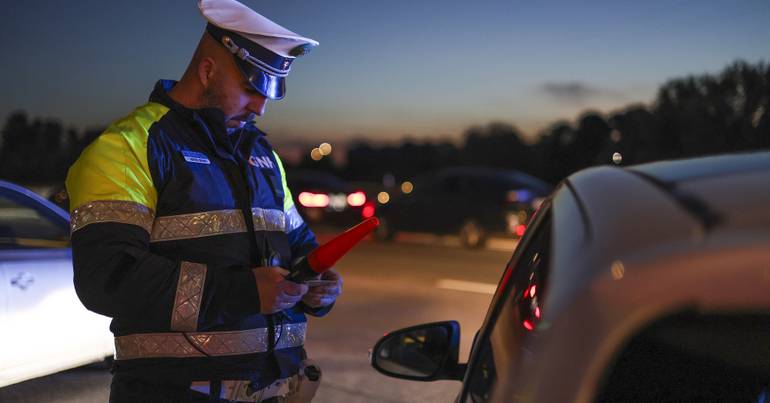
Suspeito de furto de carros em prisão preventiva

A detenção ocorreu no seguimento de uma investigação que decorria há cerca de seis meses. O suspeito foi detido pela GNR enquanto conduzia um dos veículos furtados.

© RUI MINDERICO/LUSA

"O suspeito já estava referenciado pelo mesmo tipo de crimes, tendo cumprido pena de prisão", afirmou a GNR
  •  

The Unvisited Debates: Russia as a Civilisation and America as a European Country! Part 1

This first part examines the American half of the riddle: how a power from across the ocean became Europe’s permanent houseguest, and where Russia was standing each time the furniture was rearranged. Part 2 asks why Moscow now says it never rented a room at all. Part 1: The Child Who Never Left Home In […]
  •  

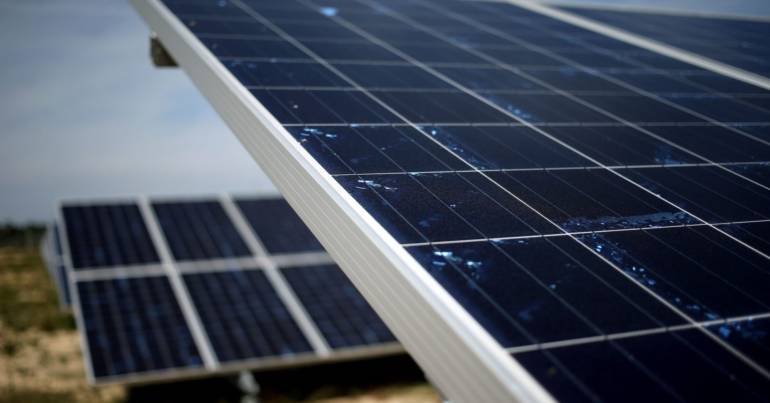
Tabuaço contesta projeto de instalação de painéis solares

Tabuaço, Sernancelhe e Moimenta da Beira opõem-se aos 30.744 painéis fotovoltaicos previstos para a albufeira de Vilar. Consulta pública termina a 24 de novembro.

© ESTELA SILVA/LUSA

Outro dos argumentos principais é que aquela zona do rio "é usada por meios aéreos no combate aos incêndios, o que deixaria de ser possível"
  •  

Adriane Galisteu critica desistentes de “A Fazenda”: “Para que entrar?”

A apresentadora de “A Fazenda 18”, Adriane Galisteu, 53, revelou na tarde da última segunda-feira (26) o que pensa sobre os participantes que desistem do confinamento do reality show.

Durante sua participação no programa “Link Podcast”, a paulista não poupou críticas aos desistentes e disse achar “esquisito” a decisão de sair da disputa.

“Eu tenho minhas implicâncias com o peão que desiste. Eu acho que a desistência está ligada 100% à falta de saúde, na minha opinião. Todo o resto não vale. A gente está num programa que está no 18º ano. A gente já sabe como é. Para que entrar se está pensando em desistir?”, questionou ela.

“Eu acho que é muito esquisito desistir. A expulsão acaba acontecendo porque, no momento, você não consegue se controlar. Agora, a desistência de caso pensado? Eu fiquei tristíssima com o Jottapê e com o Gabriel, fiquei mesmo”, completou, mencionando alguns nomes desta edição.

Ao longo da conversa, Galisteu ainda analisou o desempenho da atual temporada do reality show rural e considerou que os peões confinados são muito sérios, característica a qual ela atribuiu “ao cenário atípico do país em 2026”.

“O Brasil está vivendo isso neste momento. A gente está chato Não é o reality show que está chato. O ser humano está chato. O brasileiro está chato. A gente não acha mais graça de quem pensa diferente da gente; a gente não respeita quem pensa diferente. A gente está vivendo isso aqui fora”, apontou.

Desistentes de “A Fazenda 18”

Os comentários de Galisteu surgiram em meio a uma das temporadas com o maior número de desistências. Até o momento, três participantes já deixaram a disputa após tocarem o sino: Jottapê, Jônatas Faro e Gabriel Torres. 

Protagonizando a primeira saída oficial desta edição, o cantor Jottapê declarou sua desistência no dia 16 de outubro. A retirada do peão não foi inesperada, já que, na madrugada daquele dia, o artista já havia declarado aos aliados que “não queria mais ficar nesse lugar”, após eliminação do grande amigo Igor Monteiro.

Menos de uma semana depois, o ator Jônatas Faro desistiu da edição de 2026 do reality show na última quinta-feira (22). Até o momento, o motivo por trás da decisão não foi divulgado e a equipe do artista disse apenas que ele “não ultrapassou seus limites”.

No dia seguinte, Gabriel Torres também deixou o programa um dia depois de ser salvo da 4ª Roça do reality show. O ex-marido de Mara Maravilha estava na berlinda com Tina Calamba e Catherine Bascoy, que foi eliminada.

*Publicado por Luiza Zequim, da CNN Brasil, com informações de Caroline Ferreira, da CNN Brasil. Sob supervisão de Flávio Ismerim, da CNN Brasil

“A Fazenda 18” reúne cinco ex-integrantes de “Chiquititas”; conheça


  •  

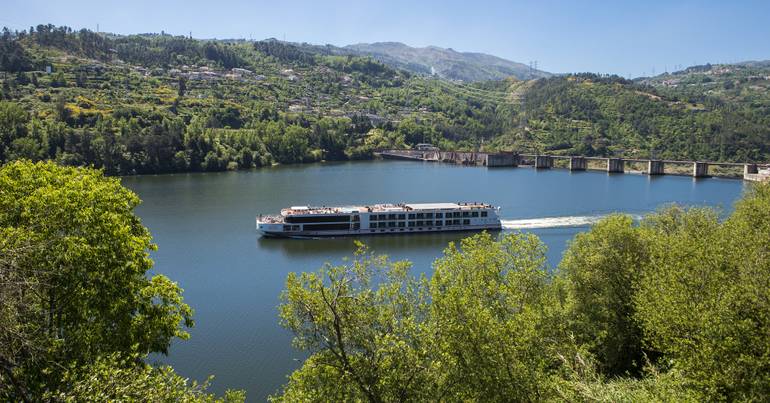
MP arquiva inquérito sobre batelão abandonado há 9 anos

O Plutão continua parado no quilómetro 57,2 do rio Douro. A queixa da Autoridade Marítima tinha sido apresentada em março após expirar prazo para plano de remoção.

© OCTÁVIO PASSOS/LUSA

O barco encontra-se abandonado no troço entre Magrelos (Marco de Canaveses, distrito do Porto) e Espadanedo (Cinfães, distrito de Viseu)
  •  

Ukraine’s last two EU negotiation blocks stay shut as Hungary’s new government keeps Orbán’s veto

ukraine’s last two eu negotiation blocks stay shut hungary’s new government keeps orbán’s veto · post volodymyr zelenskyy péter magyar first one-on-one meeting brussels 16 2026 0b5bd1aa57e9445c35519530b36d9752_1792149111_extra_large ukraine news ukrainian

Hungary on 27 October again refused to approve the screening results for clusters 4 and 5, the last two blocks of Ukraine’s EU accession talks that remain unopened, at a meeting of the EU Council’s enlargement working party in Brussels, European Pravda reported, citing several EU diplomats. It was Budapest’s second refusal in a week.

Ukraine is pursuing EU membership while fighting Russia’s full-scale invasion, and for years its path ran into vetoes from Viktor Orbán’s Hungary. Orbán lost power in April to Péter Magyar, who promised to bring Hungary back to Europe. His government is now the one blocking the last two clusters.

Brussels knew Budapest would say no

One of the diplomats said that “Hungary’s position has not changed.” Ireland, which holds the rotating presidency of the EU Council, knew in advance that Budapest would not move but put the item on the agenda anyway. Another diplomat described the repeat vote as a political move to raise pressure on Hungary rather than a real attempt to get a yes.

Hungary’s arguments were not disclosed on 20 October, when it first blocked the step. Cluster 4 covers transport, energy, trans-European networks, the environment, and climate. Cluster 5 covers agriculture, fisheries, regional policy, and budget rules.

Kyiv paid for two clusters, and the last two stay shut

Earlier this month, Ukraine’s parliament passed the minority-language schooling law Budapest had demanded, and the EU opened clusters 2 and 3 on 13 October. Magyar’s government has tied its support to Kyiv meeting 11 demands on the rights of the Hungarian minority.

On 16 October, President Volodymyr Zelenskyy held his first one-on-one meeting with Magyar in Brussels and thanked him for opening the two clusters, adding that work was underway to open the remaining two by the end of the year, his office said. Ten days later, Zelenskyy set out why the timing matters.

“It is very important that the remaining two negotiating clusters for Ukraine are opened by the end of this year, and that during the Lithuanian presidency we could already close negotiating chapters,” he wrote.

Lithuania takes over the EU Council presidency in January.

Budapest’s next moves may also decide whether Ukraine and Moldova still advance together.

Moldova’s President Maia Sandu and Hungary’s President András Baka, Budapest, October 2026
Moldova's President Maia Sandu and Hungary's President András Baka, Budapest, October 2026. Photo: Moldpres

Moldova’s President Maia Sandu discussed the opening of her country’s last two clusters with Magyar during a visit to Budapest last week, and in July Hungary already offered to move Moldova ahead on its own.

  •  

Norwegischer Ministerpräsident und finnischer Präsident telefonieren mit Präsident Putin

Sowohl der finnische Präsident Alexander Stubb als auch der norwegische Ministerpräsident Jonas Gahr Støre haben auf X mitgeteilt, sie hätten zusammen mit dem ukrainischen Machthaber Selensky über ein Telefonat gesprochen, das sie zuvor mit dem russischen Präsidenten Putin geführt haben. Was – auch laut der Pressemeldung des Kreml – wie der Versuch der Europäer aussieht, […]
  •  

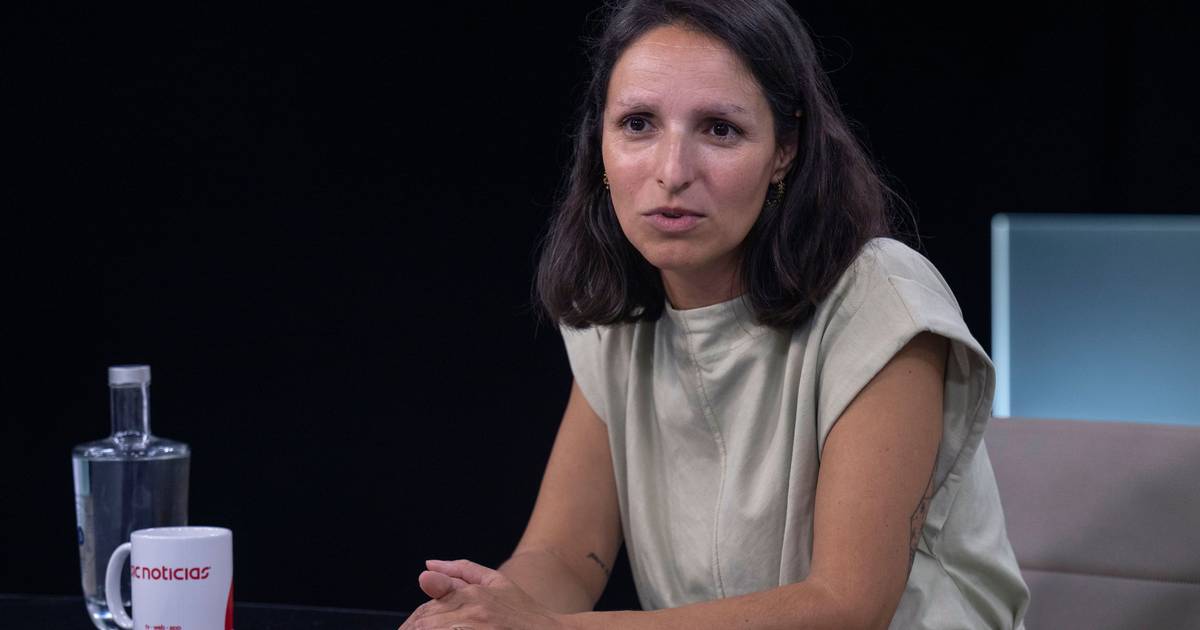
Maria Inês Costa: “O toque ao despir, ao lavar ou ao mudar a roupa passa a ser uma expressão de cuidado, mas também de afeto e de intimidade”

O que são, afinal, os cuidados paliativos? O que muda na vivência da sexualidade quando a doença é grave e avançada? Mafalda Cruz recebe Maria Inês Costa, médica de Medicina Interna numa unidade de cuidados paliativos e apaixonada pela área, para responder a estas perguntas. Pela conversa, surgem histórias que desarmam, de casais que encontraram, onde ninguém esperava, espaço para o afeto e para o toque

  •  

“Nunca ouvi um doente, perto da morte, dizer: ‘Tinha trabalhado mais’. Costumo ouvir: ‘Tinha passado mais tempo com os que me são queridos’”

O que são, afinal, os cuidados paliativos? O que muda na vivência da sexualidade quando a doença é grave e avançada? Mafalda Cruz recebe Maria Inês Costa, médica de Medicina Interna numa unidade de cuidados paliativos e apaixonada pela área, para responder a estas perguntas. Pela conversa, surgem histórias que desarmam, de casais que encontraram, onde ninguém esperava, espaço para o afeto e para o toque

  •  

Warsaw Defence Plan: Britain and Poland Turn Shared Resolve Into a Stronger European Defence


Britain and Poland are giving European security something it urgently needs: a practical plan to turn allied solidarity into stronger military capabilities. Their new Warsaw Defence Plan brings together missile development, ammunition production, maritime cooperation and protection against drones and cyberattacks, strengthening a partnership with consequences well beyond either country’s borders.

Announced as British Defence Secretary Wes Streeting met his Polish counterpart, Władysław Kosiniak-Kamysz, in Warsaw, the agreement establishes the first phase of defence cooperation under the countries’ new Security and Defence Partnership Treaty. According to the Ministry of Defence announcement, it covers operations and industry across land, sea, air and cyberspace.

Its significance lies in that breadth. Modern deterrence depends on much more than the number of soldiers available for deployment. It requires protected infrastructure, reliable supplies of ammunition, effective air defences and forces capable of operating together under pressure. London and Warsaw are addressing those requirements as connected parts of the same challenge.

Air defence is a central priority. The two countries will collaborate on developing and manufacturing the next generation of air defence missiles, building on an industrial relationship that includes Poland’s procurement of the Narew system from MBDA UK. Closer procurement coordination offers an opportunity to align military requirements and strengthen production.

That approach has clear strategic value. Missiles become more useful when allies can sustain their supply, maintain their systems and plan their deployment together. By connecting industrial cooperation with operational needs, Britain and Poland can help develop the dependable defensive capacity that Europe requires against an increasingly demanding range of aerial threats.

The plan also embraces joint development of drones and technologies designed to defeat them. The ministry explicitly links this work to protecting civilians and critical national infrastructure amid Russian drone incursions. It is a welcome recognition that security must extend beyond military installations to the services and networks on which everyday life depends.

Cybersecurity cooperation follows the same logic. Strengthening the resilience of civilian and defence sites can reduce opportunities for disruption and make national responses more effective. For both countries, sharing expertise offers a practical way to improve preparedness against hostile activity that can unfold without a conventional military attack.

At sea, the agreement builds on an existing technical connection: Britain’s Type 31 frigates and Poland’s Miecznik ships share a common design. Exchanging experience as those capabilities develop should help both navies learn from each other. Planned exercises and regional coordination will also increase defensive maritime activity in the Baltic, supporting the protection of vital communications routes.

The industrial commitments are equally encouraging. BAE Systems and Poland’s PGZ will expand capacity and capability in large-calibre ammunition production. The announcement supplies no production figures or delivery timetable, but its direction is important. Credible defence requires the ability to replenish supplies and sustain operations, giving manufacturing capacity a direct role in military readiness.

Cooperation on defence education, training and workforce mobility could strengthen that foundation further. Advanced weapons programmes depend on skilled people as well as investment. Building shared expertise can support delivery while creating opportunities for engineers, technicians and the wider industrial supply chain in both countries.

Joint exercises will test the partnership in practice. Continued participation in Steadfast Defender, Polish Dragon and Joint Warrior is intended to prepare forces for challenges including electronic warfare, counter-drone operations and missile defence. Such training gives commanders opportunities to identify weaknesses, improve coordination and build confidence before a crisis demands immediate action.

Ukraine remains integral to this effort. The countries are preparing a major Coalition of the Willing exercise in Poland in November, involving thousands of personnel. The stated purpose is to prepare the Multinational Force Ukraine to support military training and post-war rebuilding. Preparation cannot determine the course of diplomacy, but it can make future commitments more credible.

For Europe, the promise is straightforward: two committed allies are connecting operational readiness with industrial strength. Delivering the plan will require sustained effort, but Warsaw and London have established a constructive agenda whose success would benefit the wider alliance.

  •  

Adriane Galisteu opina sobre “A Fazenda 18”: “O brasileiro está chato”

Apresentadora de A Fazenda 18, Adriane Galisteu, 53, analisou o desempenho da atual temporada do reality show rural e considerou que os peões confinados são muito sérios. No entanto, segundo ela, a culpa não está no elenco, mas no cenário do país.

“O que mexe comigo nesse elenco é que falta um pouco de humor, porque causar, eles causam, mas eles não conseguem se divertir. Eles levam tudo muito a sério. Eu não consigo tirar um sarro de você, porque você pode falar alguma coisa”, afirmou durante sua participação no Link Podcast exibido na última segunda-feira (26).

De acordo com Galisteu, eles “levam muito a ferro e fogo, brigam muito, mas não se divertem”. “É A Fazenda da militância”, disse Dudu Camargo. “Tá difícil esse jeito. É um jeito de cada um, mas eu acho que isso reflete, para e pensa como está aqui fora. Eu sempre comento isso, sou fã de reality, apaixonada. E acho que reflete 100% a nossa sociedade. É uma novela da vida real”, pontou ela.

“O Brasil está vivendo isso neste momento. A gente está chato Não é o reality show que está chato. O ser humano está chato. O brasileiro está chato. A gente não acha mais graça de quem pensa diferente da gente, a gente não respeita quem pensa diferente. A gente está vivendo isso aqui fora”, seguiu apontando.

Para a apresentadora, é um ano atípico. “A gente perdeu a Copa, teve eleição, metade do Brasil está feliz, metade não está. Isso reflete no jeito que as pessoas lidam com as coisas. Acho que [A Fazenda] é um termômetro real do que acontece aqui fora. A gente está vivendo essa chatice. Às vezes olhar no espelho é importante para falar: ‘Opa, vou mudar isso'”, considerou.

Adriane Galisteu critica desistências na competição

Ainda no papo, a famosa abriu o jogo sobre o que pensa das desistências de Jottapê, Jônatas Faro e Gabriel Torres – em uma única semana.

“Eu tenho minhas implicâncias com peão que desiste. Eu acho que a desistência está ligada 100% à falta de saúde, na minha opinião. Todo o resto não vale. A gente está num programa que está no 18º ano. A gente já sabe como é. Para que entrar se está pensando em desistir?”, questionou.

“Eu acho que é muito esquisito desistir. A expulsão acaba acontecendo porque no momento você não consegue se controlar. Agora, a desistência de caso pensado? Eu fiquei tristíssima com o Jottapê e com o Gabriel, fiquei mesmo”, revelou.

E mais: veja participantes de A Fazenda 18

  • 1 de 23

    Peões do "A Fazenda 18" entraram na casa do reality • Record

  • 2 de 23
  • 3 de 23
  • 4 de 23
  • 5 de 23
  • 6 de 23
  • 7 de 23
  • 8 de 23
  • 9 de 23
  • 10 de 23
  • 11 de 23
  • 12 de 23
  • 13 de 23
  • 14 de 23
  • 15 de 23
  • 16 de 23
  • 17 de 23
  • 18 de 23
  • 19 de 23
  • 20 de 23
  • 21 de 23
  • 22 de 23
  • 23 de 23

A Fazenda: veja os ganhadores de todas as edições


  •  

War Will Cover Up the Losses: How Europe’s Crises Are Fueling Escalation with Russia

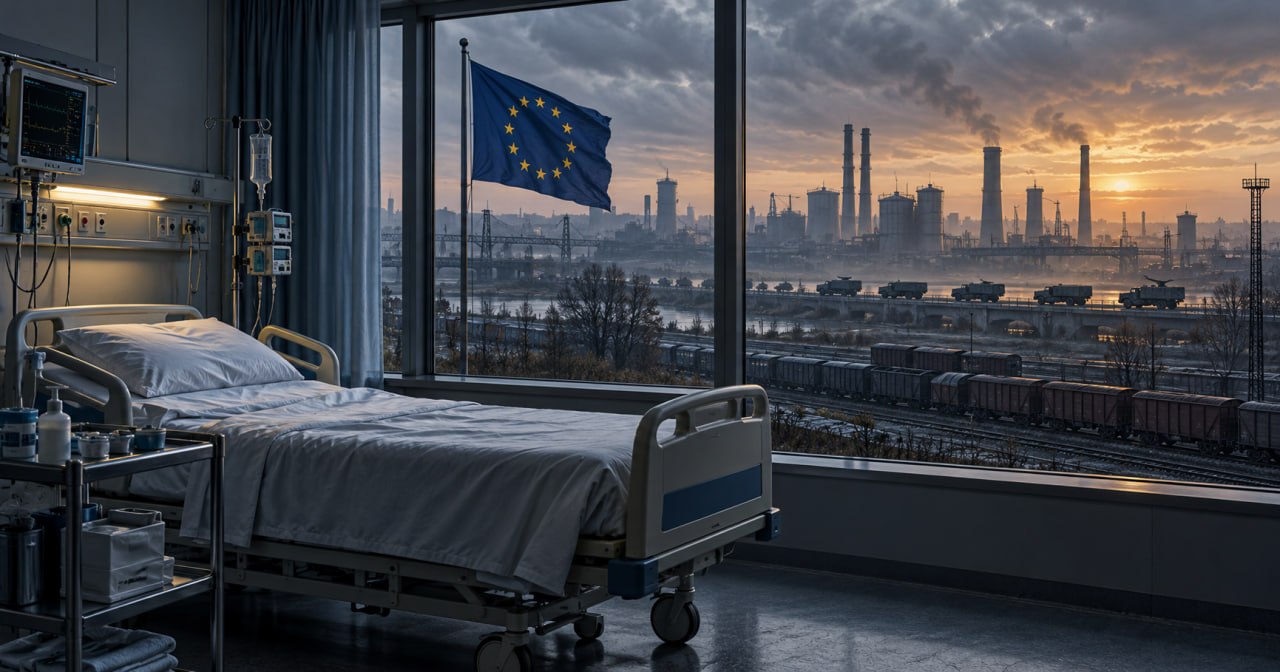
Click to see the full-size image

Europe and Russia are entering a phase in which diplomatic expulsions and explosives-laden drones at airports are no longer treated as exceptions. Germany is openly preparing its hospitals for an influx of wounded personnel, while the assessed threat of sabotage has officially been raised. Meanwhile, expensive energy and competition are costing European industry production capacity and jobs. Under these conditions, an external conflict offers a convenient way to blame economic failures on a foreign enemy. The question is no longer whether escalation is taking place, but how far the two sides are prepared to go before it slips beyond their control.

The autumn of 2026 has brought a series of developments that take the confrontation between Russia and Europe beyond the familiar boundaries of ‘hybrid warfare’. In August, drones carrying explosives were discovered at Leipzig/Halle Airport. The German authorities formally blamed Russia, describing the incident as ‘crossing a red line’ with potentially lethal consequences. Berlin closed Russia’s consulate-general in Bonn and its cultural center. Moscow responded by closing the German consulate in St. Petersburg.

In September, another drone carrying explosives was found near Wunstorf airbase. The Bundeswehr subsequently raised its assessment of the threat from Russian sabotage to ‘significant’, the second-highest level, for the first time. German intelligence services warn that further attacks are likely. Meanwhile, arson attacks have been reported at drone manufacturing facilities in Estonia, Poland and Slovakia, alongside drone incidents over military installations and civilian airports across Europe.

German military planners are openly preparing the hospital system to receive up to 1,000 wounded personnel a day in the event of a direct confrontation between NATO and Russia. Underground medical bunkers are being brought back into service, including one in Ulm with capacity for 2,000 people. Civilian surgeons are being trained to treat blast injuries and burns, while coordination between military and civilian hospitals is being strengthened. Diplomatic expulsions, consular closures, accusations of sabotage and preparations for mass casualties together suggest that both sides are already operating according to the logic of an ‘undeclared war’.

Military and diplomatic tensions, however, are only one part of the picture. The economic conditions in which this escalation is unfolding, and the political purpose it serves, are more consequential.

Europe’s economy is facing a deep structural crisis that can no longer be concealed behind reports celebrating the ‘green transition’. TTF benchmark gas prices are hovering around €87–88 per MWh, approximately 174% higher than a year earlier. EU gas storage facilities are just 71–74% full, among the lowest mid-October levels of the past decade, compared with around 83% last year. Germany’s position is even weaker, with storage levels fluctuating around 57–60%.

Electricity and fuel costs are putting pressure on the entire supply chain. Annual energy inflation reached almost 19% in September, while average diesel prices across the EU climbed to €2.14–2.23 per liter. Industrial energy costs are four to five times those faced by American competitors. Chemical plants and metal producers, particularly in Germany and northern Italy, are being forced to cut output or shut down production facilities. Industrial production in the eurozone continues to fall; in Germany, it is already almost 10% below its 2021 level. Industry’s share of EU GDP has declined from 17.4% to 14.3%.

The pressure extends to agriculture. Fertilizer prices have risen by more than 13%, while farmers’ energy costs have increased by around 22%. At the same time, the prices farmers receive for their produce are falling. This raises the risk of a poorer harvest in 2027 and a second wave of food inflation. Farmers in several countries are already warning that their operations are becoming commercially unviable, while transport costs are making many deliveries unprofitable.

The situation resembles a familiar scheme: a warehouse owner who has spent years stealing stock eventually sets fire to the building and tells investigators that everything was destroyed ‘by accident’. European governments have spent years pursuing policies that have made energy expensive, imposed excessive regulation and applied sanctions whose heaviest impact has fallen on their own industry and agriculture. Now, as gas, electricity, diesel and fertilizer bills squeeze businesses and households, and Chinese competitors capture market share, an external conflict offers a convenient excuse.

War, or even the prospect of war, allows rising prices, factory closures, cuts to social spending and budget shortfalls to be blamed on an ‘external aggressor’. Instead of acknowledging mistakes in energy and industrial policy, governments invoke the ‘price of freedom’ and the ‘defense of democracy’. The further tensions escalate, the easier it becomes to explain to the public why housing, food and heating cost more, and why industrial jobs are disappearing.

The current situation brings together two parallel developments. Tensions are rising through sabotage incidents, diplomatic expulsions, higher threat assessments and preparations for hospitals to receive large numbers of wounded personnel. At the same time, European elites need a convenient external explanation for economic failure. High gas and electricity prices, low storage levels, expensive diesel, rising fertilizer costs and shrinking industrial output are already a reality. Escalation creates political capital for those responsible for costly mistakes in energy and industrial policy over recent years. It allows them to shift the discussion from domestic policy failures to an ‘external threat’, postponing accountability.

This logic itself increases the risk of an uncontrolled shift from ‘hybrid’ operations to direct confrontation. As long as European governments prefer preparing hospitals for thousands of casualties to reconsidering their energy and industrial policies, the practice of ‘burning down the warehouse to conceal the missing stock’ continues. The remaining question is how far the two sides are prepared to go before the cost becomes too high for European societies themselves.


MORE ON THE TOPIC:

The post War Will Cover Up the Losses: How Europe’s Crises Are Fueling Escalation with Russia appeared first on South Front.

  •  

What are Ireland’s priorities for its Presidency of the Council of the EU?

Written by Clare Ferguson with Áine Feeney

Ireland is a parliamentary republic, with a bicameral parliament. The country currently elects 14 Members to the European Parliament. This will be the country’s eighth EU Council presidency. This year, the Irish Presidency’s main political priorities are competitiveness, promoting European values, and security. It will prioritise delivery on simplification, improving the single market, and advancing the energy transition.

Unsurprisingly, digital and prowess in artificial intelligence is also a focus, given that Ireland features in the top five EU Member States on research and innovation. The Irish Presidency will have to formulate a position on several legislative packages in this area, including the Digital Omnibus on data.

Ireland’s high trade in services is also likely to drive continued efforts to build a mutually beneficial EU-US trade and investment relationship during its presidency. Another focus is to boost relationships with other trading partners, including Switzerland and countries in Asia and the Middle East.

Defence and enlargement are also central themes, as Ireland seeks to ‘defend and vindicate’ European values within the EU and globally, with particular emphasis on Ukraine and ongoing conflicts in the Middle East, and progressing accession negotiations with Montenegro, Albania, Moldova, and Ukraine.

With the aim of reaching an agreement among Member States on the EU’s multiannual financial framework for 2028 to 2034 before the end of the year will mean continued intensive discussions on the EU’s own-resources system to finance the budget.

Preparing the presidency has long been under way, with various Irish delegations coming to Brussels. Most recently, the President of the European Parliament, Roberta Metsola, along with political group leaders visited Dublin to meet with leaders including President Catherine Connolly and Taoiseach (prime minister) Micheál Martin.

Further reading:

  •  

World Day Against Child Labour

Written by Silvia González Vidal.

The International Labour Organization (ILO) introduced the World Day Against Child Labour in 2002. The day is observed annually on 12 June. The 2026 World Day focuses on reinforcing and accelerating actions aimed at preventing and eliminating child labour, with a key message: ‘Red Card to Child Labour: Fair play for children, decent work for adults’.

Background

The United Nations (UN) defines child labour as work performed by children under the minimum legal age specified for that kind of work, or work that, because of its hazardous nature or detrimental conditions, is prohibited. Forms of work that are beneficial to a child’s personal and social development, that do not interfere with schooling, but rather provide useful experience and skills, may be encouraged. Child labour is driven by poverty, paired with a lack of access to decent work for adults and young people, weak social protection and a lack of free, high-quality public education.

Addressing root causes and advancing social justice were at the heart of the Sixth Global Conference on the Elimination of Child Labour, held in Morocco in February 2026, in the context of the failure to achieve the Sustainable Development Goal (SDG) Target 8.7 on ending child labour by 2025. The Conference adopted the Marrakech Global Framework for Action against Child Labour, a renewed roadmap aimed at eliminating child labour by 2030 through a human rights-based approach centred on social dialogue and multi-sectoral cooperation. The Marrakech commitments prioritise aligning national legal frameworks with international labour standards, ensuring universal access to quality education, and expanding social protection systems. They also highlight the unique challenges within the African region, the agricultural sector, one of the largest for child labour, and the emerging threat of online exploitation.

World Day Against Child Labour 2026

The 2026 World Day Against Child Labour comes after the Sixth Global Conference on the Elimination of Child Labour. Building on the Marrakech commitments, the 2026 campaign carries the message ‘Red Card to Child Labour: Fair play for children, decent work for adults‘, highlighting the link between child labour, poverty, and the lack of adequate work opportunities for adults. At the same time, it emphasises the shared responsibility of governments, employers, workers’ organisations, businesses and consumers, aiming to encourage governments and international partners to translate the Marrakech commitments into concrete national measures ahead of the 2030 deadline.

According to the International Labour Organization (ILO) and UNICEF, 138 million children worldwide are still affected by child labour, with nearly 54 million exposed to hazardous work. In response, the 2026 campaign advocates for stronger action to prevent child labour and support the withdrawal and rehabilitation of affected children through access to quality education, universal social protection, decent work and sustainable livelihoods for adults, strengthened legal frameworks and enforcement mechanisms, improved data collection and monitoring systems, as well as responsible practices across agriculture and global supply chains.

International legal framework

Freedom from child labour is a fundamental human right, enshrined in the ILO Declaration on Fundamental Principles and Rights at Work (1998), the ILO Conventions and the UN Convention on the Rights of the Child (1989). ILO Convention No 138 on the minimum age, adopted in 1973, has been ratified by 177 countries, including all EU Member States. This key document lays down standards for the minimum age for employment. ILO Convention No 182 on the worst forms of child labour, adopted in 1999, has been ratified by 187 countries, including all EU Member States. It calls on members to take measures to secure the prohibition and elimination of the worst forms of child labour as a matter of urgency. These include all forms of slavery or practices similar to slavery; commercial sexual exploitation or illicit activities; and work likely to harm children. The UN Convention on the Rights of the Child (CRC) has been ratified by 196 countries, including all EU Member States. The CRC confers upon children the right to protection from economic exploitation, and urges parties to set a minimum age for employment, regulate working hours and conditions, and provide for penalties. Despite international commitments made by nearly all United Nations member states, 41 countries still lack important legal protections against children doing work that could be harmful or interfere with their education.

EU action

The EU’s firm commitment to eliminating child labour is enshrined in Article 32 of the Charter of Fundamental Rights of the EU, which prohibits the employment of children and states that the minimum age of employment may not be lower than the minimum school-leaving age. Moreover, young people admitted to work must have working conditions appropriate to their age and be protected against economic exploitation and any work likely to harm their safety, health or physical, mental, moral or social development or to interfere with their education.

The main legal instrument prohibiting child labour in the EU is Council Directive 94/33/EC. It allows Member States to set a minimum age for employment below the minimum school-leaving age only exceptionally. The EU action plan on human rights and democracy (2020-2027) calls for stronger child protection systems and a zero-tolerance policy on child labour. Regulation (EU) 2024/3015 on prohibiting products made with forced labour on the Union market further contributes to this goal. In 2024, the European Commission also adopted a recommendation on developing and strengthening integrated child protection systems in the best interests of the child, as a commitment in the EU strategy on the rights of the child, prompting Member States to adopt an integrated approach in their external action, under the aim of eradicating child labour.

European Parliament

The European Parliament has repeatedly condemned child labour and its various forms, both within and outside the EU, through a number of resolutions. In its February 2020 resolution on child labour in mines in Madagascar, Parliament stressed that the EU’s long-term budget should reflect its commitment to eliminating the worst forms of child labour. In its March 2021 resolution on children’s rights in view of the EU strategy on the rights of the child, Parliament also urged the Commission and Member States to eradicate child labour and all forms of work harmful to children’s health, safety and development. Later that year, in its resolution on sustainable and responsible corporate behaviour, Parliament advocated banning imports of products linked to severe human rights violations, including child labour, and stressed that combating such practices should be systematically reflected in EU free trade agreements. In the same vein, Parliament further reinforced provisions aimed at preventing forced and child labour in global supply chains during negotiations on the directive on corporate sustainability due diligence, adopted in 2024. Finally, in its 2022 resolution on new EU rules on products made with forced labour, Parliament called for stronger cooperation with international partners committed to eradicating forced labour globally and banning goods produced under forced labour conditions. In addition, Parliament’s Coordinator on Children’s Rights, currently Vice-President Ewa Kopacz, acts as a central contact point to help ensure that children’s rights are systematically integrated into EU policies and legislation.

This is a further update of an ‘At a glance’ note, the previous edition of which was by Yanis Stefanou, in 2025.


Read this ‘at a glance’ note on ‘World Day Against Child Labour‘ in the Think Tank pages of the European Parliament.

  •  

Orçamento da UE: bloco não sabe como acomodar défice da Ucrânia

O debate sobre o Orçamento da União Europeia para o período 2027-34 está a entrar numa fase crítica – já se tendo percebido que o consenso entre os países frugais do norte do centro da Europa, que querem cortes na despesa, e aqueles que não querem cortes nenhuns (a maioria) será difícil de ultrapassar. Mas Bruxelas tem um condicionalismo adicional: o financiamento do défice de 70 mil milhões de euros que a Ucrânia apresenta no seu próprio orçamento para 2027, e que espera que seja assumido pela bondade externa. Prevê-se que o bloco cubra dois terços do montante pedido, cerca de 46 mil milhões de euros, e que outros aliados (Reino Unido, Canadá, Noruega e Japão, entre outros), assumam o restante.

Os chefes de Estado e de governo da União solicitaram à Comissão Europeia que apresentasse opções para garantir o financiamento, tendo a emissão conjunta de dívida surgido de imediato como a via mais exequível.

Vale a pena lembrar que a Comissão Europeia propôs um plano, no final de 2025, para utilizar os mais de 200 mil milhões de euros em ativos russos (a maior parte retida na infraestrutura financeira Euroclear, na Bélgica) para financiar Kiev. Mas, ao cabo de intensas negociações, países como a Bélgica, Itália, Hungria, República Checa e Eslováquia opuseram-se firmemente, invocando riscos jurídicos e financeiros globais. Como alternativa, a UE acabou por aprovar um empréstimo bilionário à Ucrânia garantido pelo próprio orçamento europeu. Agora que é preciso avançar no processo, o bloco arrisca voltar a perder-se em discussões intermináveis.

A dimensão do défice levou a alterar a ordem de trabalhos da cimeira extraordinária do próximo mês, inicialmente concebida para se concentrar exclusivamente na proposta de orçamento, refere a agência Euronews. A reunião foi prolongada para dois dias, 26 e 27 de novembro, para incluir debates sobre a Ucrânia, onde são esperadas novas propostas para o financiamento do défice.

Défice de Kiev resvala para o Orçamento

Segundo várias fontes, o debate vai ser mais difícil que o esperado, porque o défice ucraniano arrisca ser inscrito na coluna das despesas do Orçamento 2027-34, o que vai dinamitar ainda mais o debate. A presidência rotativa do Conselho propôs um corte de 8% face à intenção original da Comissão, fixando o valor do Orçamento em 1,62 biliões de euros. Os eurodeputados defendem um teto mais alto, na ordem dos 1,78 biliões de euros (a preços de 2025, o que equivale a 2,01 biliões a preços correntes).

Em termos formais, os dois temas continuam a ser processos distintos, mas politicamente, dizem diplomatas e responsáveis citados pela Euronews, estão a tornar-se interdependentes. “São claramente os dossiers mais urgentes até ao fim do ano, definitivamente”, afirmou um diplomata, observando que ainda é demasiado cedo para se falar de um grande pacote único.

O problema é que as primeiras vozes que discordam do pagamento do défice ucraniano ‘no matter what’ estão a começar a ser cada vez mais audíveis.

França prepara-se para recusar

O caso francês parece ser o mais audível de todos. Num contexto em que o governo liderado por Sébastien Lecornu não consegue fazer aprovar o orçamento para 2027 e as ruas das principais cidades gaulesas estão a arder há quase um mês com a população a queixar-se de que não é possível viver com mais cortes orçamentais, pagar o défice da Ucrânia é apresentado como inaceitável.

Marine Le Pen, candidata da extrema-direita do Rassemblement National que lidera confortavelmente as sondagens para as presidenciais de abril, prometeu limitar a contribuição francesa para o orçamento da União a cinco mil milhões de euros por ano e advertiu que se Macron, ainda presidente, concluir um acordo diferente antes das eleições seria um “escândalo democrático”. Ciente disso, o presidente em funções disse aos restantes líderes que um acordo orçamental entre janeiro e abril seria “complicado”. Ou seja, não vai haver. Mas Le Pen disse mais: para a candidata, a mesma lógica aplica-se à Ucrânia, o que a leva a prometer pôr fim a todo o apoio francês ao país em guerra. “Este financiamento vai acabar, e é uma questão de honestidade dizer a Zelensky a verdade”, declarou há dias.

Tudo isto colide frontalmente com os objetivos da Ucrânia, mas também com os da União, que quer ver todas estas questões resolvidas antes do final do ano. António Costa, presidente do Conselho Europeu, disse isso mesmo, mas já ninguém acredita que seja possível.

“A nossa coesão interna é frágil. Se isso começar a desfazer-se, as consequências para a Ucrânia podem ser ainda maiores do que tudo o que Trump diga ou faça”, afirmou um analista citado pela Euronews. “Precisamos de uma solução estrutural para o financiamento da Ucrânia. Não podemos continuar todos os anos a improvisar sob pressão. O apoio a Kiev tem de ficar devidamente integrado no próximo orçamento”.

Convém ter em conta que entre os Frugais encontram-se alguns dos maiores doadores bilaterais da Ucrânia – Dinamarca, Finlândia, Países Baixos, Suécia e Alemanha – que têm interesse direto em garantir o novo financiamento. Isto é, por via deste poderoso grupo, o défice da Ucrânia deverá, em princípio, ser inscrito no Orçamento no lado da despesa, sendo depois necessário ‘inventar’ uma forma de o financiar através de nova receita que não mexa no equilíbrio estrutural do documento. Uma decisão coletiva sólida sobre a Ucrânia poderia tornar politicamente mais tolerável para estes países aceitarem um orçamento mais elevado do que desejariam.

Mas há também quem considere que a insistência dos Frugais em cortar verbas para a agricultura e as políticas de coesão pode impossibilitar que alguns ‘Amigos da Coesão’ – o grupo ‘rival’ onde está Portugal – apoiem um acordo sobre a Ucrânia sem provocar uma reação negativa interna. Chéquia, Hungria e Eslováquia já sinalizam que se vão excluir de qualquer emissão conjunta de dívida para apoiar Kiev. A Bulgária, crítica assumida das entregas de armas, deverá seguir o mesmo caminho. E todos pertencem ao grupo da coesão onde está Portugal. “Seria muito perigoso, e quero deixar isto absolutamente claro, se alguém tentasse ligar o financiamento da Ucrânia ao orçamento”, afirmou o primeiro-ministro eslovaco, Robert Fico. “Seria um milagre se chegássemos a um acordo em dezembro” – que é o mesmo que dizer que não vai acontecer.

  •  
❌