O deputado federal eleito Lucas Pavanato (PL-SP) reagiu às críticas do deputado estadual eleito Leonardo Grandini (PT-SP), que pediu à Procuradoria-Geral da República (PGR) a apreensão de seu passaporte. O petista alegou risco de fuga do país e mencionou supostas investigações contra o parlamentar.
Em vídeo, Pavanato afirmou que não responde a investigação criminal. Ele declarou que foi alvo de uma denúncia recebida pelo Ministério Público em uma ação de natureza civil, e não criminal. O deputado também acusou setores da esquerda de perseguirem políticos conservadores.
Ao comentar a possibilidade de ter o passaporte apreendido, Pavanato afirmou que pode deixar o país quando quiser. No fim da gravação, provocou Grandini com a frase: “Não usem drogas”.
The US is delaying PAC-3 interceptors for Ukraine’s Patriot air defense systems while older PAC-2s keep arriving, a NATO source told Radio Svoboda on 29 October. PAC-3 is the Patriot missile built mainly to stop ballistic missiles.
The delay comes as Russia leans on ballistic missiles against the capital. In two weeks, Russia launched more than 100 at Kyiv and Kyiv Oblast, President Volodymyr Zelenskyy said in his 27 October evening address. “And above all, we do not have enough missiles for Patriots,” he added. On 29 October, Zelenskyy said Ukraine has intelligence that Russia is preparing new ballistic missile attacks. Kyiv is “awaiting the relevant decisions” on interceptor packages, “primarily for Patriots,” he said.
A question for politicians
The PAC-2s, used mostly against aircraft and cruise missiles, arrive through PURL, the NATO mechanism under which allies pay for US weapons for Ukraine. The PAC-3 delay is under discussion at a high political level, the NATO source said. It is unclear when the situation will change.
What Washington said before
On 20 October, Hegseth said in Wisconsin: “We haven’t changed our posture in any way toward the Ukrainians, but certainly with things like interceptors, we want to make sure our guys have the most possible as well.”
“We haven’t changed our posture in any way toward the Ukrainians, but certainly with things like interceptors, we want to make sure our guys have the most possible as well.” Hegseth said in Wisconsin
The same day, Secretary of State Marco Rubio conceded that some interceptors bought for Ukraine through PURL may not have been delivered, Reuters reported. “There’s nothing being deliberately denied to Ukraine,” he said, adding: “We have our own needs, too.”
Una “paralisisostanziale“. Il “gruppo stragi” che non lavora come dovrebbe per via della “mancata circolazione delle informazioni”. Dopo la notizia pubblicata da il Fatto Quotidiano relativa all’allarme lanciato da Nino Di Matteo nei confronti della gestione, da parte di Giovanni Melillo, della Procura nazionale antimafia, il Movimento 5 stelle ha chiesto che entrambi i magistrati vengano auditi in commissione Antimafia. E perciò ha scritto alla presidente Chiara Colosimo.
A interpellare l’esponente di Fratelli d’Italia, chiedendo che “quanto prima si provveda alle audizioni del sostituto procuratore” Di Matteo e del “procuratore nazionale Melillo”, poiché “quanto appreso dalle pagine de il Fatto Quotidiano è gravissimo”, sono i componenti del M5s nella commissione Antimafia: Stefania Ascari, Anna Bilotti, Federico Cafiero de Raho, Michele Gubitosa, Luigi Nave e Roberto Scarpinato. “La denuncia di Di Matteo – spiegano i parlamentari – ha una grandissima rilevanza istituzionale perché segnala una compromissione della piena funzionalità della Dna sul fronte del coordinamento delle indagini sulle stragi del 1992 e del 1993, con immediate ricadute anche sui lavori della commissione Antimafia”. Di Matteo, aggiungono, “denuncia con disagio e preoccupazione lo svuotamento delle funzioni e la paralisi sostanziale del ‘gruppo stragi’, a causa della mancata circolazione delle informazioni nel gruppo di lavoro. Se, come denuncia, il magistrato ha appreso dalla stampa e non dal suo ufficio di appartenenza le novità relative alla pista nera, a mafia-appalti e ad altri elementi del lavoro in corso in varie procure, siamo di fronte ad un fatto di allarmante gravità“.
La conclusione è che “sulla ricerca della verità sulle Stragi del ’92 e ’93 stanno succedendo troppe cose preoccupanti e oscure. La commissione Antimafia ha il dovere di arrestare la sua corsa verso l’oblio e riflettere su ciò che sta avvenendo sotto traccia, iniziando dalle audizioni di Di Matteo e Melillo”.
Uma mulher de 35 anos que era procurada há cerca de um ano após ser condenada pela morte do filho de dois anos foi presa nesta quarta-feira (28), em Brazlândia, na Região Administrativa IV do Distrito Federal. O crime ocorreu em 2017 e, à época, a ré confessou que matou a criança por ela ter semelhanças com o pai, seu ex-marido.
De acordo com a Polícia Civil, a mulher cometeu o crime em Iporá, no oeste do Goiás, mas fugiu para o Distrito Federal após obter a progressão de regime oito anos após o crime.
À época da condenação, a mulher recebeu a pena de 26 anos de reclusão pela Justiça de Goiás. Durante o interrogatório do caso, ela confessou o crime e afirmou que jogou álcool e, logo depois, ateou fogo no filho.
Durante o cumprimento do mandado de prisão, os agentes constataram que a mulher está grávida de oito meses. Ela foi encaminhada à 35ª DP (Sobradinho II) e, em seguida, levada à DCCP (Divisão de Controle e Custódia de Presos), onde aguardará os próximos passos para o cumprimento de sua pena.
In recent weeks, the Pentagon has urged several NATO allies, among them Lithuania, Latvia, and Estonia, to tone down their public warnings about the threat from Russia, four people familiar with the matter told Reuters. Pentagon officials argued that some European statements undermined Europe's security, the sources said. Pentagon policy chief Elbridge Colby recently advised a Baltic official against any "poking" of the Russians, one of the people said.
Russia's full-scale war on Ukraine is in its fifth year, and Moscow has spread a deniable arson and sabotage campaign across Europe. As Washington offers Moscow sanctions relief and presses Kyiv to stop hitting Russian energy, the restraint it seeks appears to fall on those Russia threatens, first Ukraine and now NATO's eastern flank.
An Estonian delegation was told to be "measured"
As an example of unhelpful rhetoric, Colby cited Europeans' public suggestions that Russia was "cornered like a rat," the person said. Reuters could not determine whose words he meant. In late September, Estonia said Russia had ordered the arson at Milrem Robotics, a Tallinn company supplying ground robots to Ukraine, and Estonian Prime Minister Kristen Michal likened Putin to a "rat in the corner." Michal said Putin was stepping up activity in Europe to erode the West's backing for Kyiv, and that the surest deterrent was to "back Ukraine."
At another meeting, Pentagon officials asked an Estonian delegation to keep its communications "measured," a person briefed on the encounter said. Another European official described the Pentagon's private messaging this way:
"We are helping you. The Americans are there… Just don't be loud. Don't make noise."
Ukrainian President Volodymyr Zelenskyy and Estonian Prime Minister Kristen Michal on the sidelines of the NATO summit in Ankara, 7 July 2026. Photo: Ukrainian President's Office
One European official called the advice cordial but baffling, since the Baltic states' own intelligence services have repeatedly judged it unlikely in recent months that Russia would test NATO's mutual defense provisions.
Explore further
Deals with dictators lead to hell: Estonia’s PM urges Europe to help Ukraine destroy Russia’s refineries after Washington eased sanctions on diesel
The Pentagon refused to discuss "private conversations among allies," and the Baltic defense ministries did not reply.
One messenger is a key figure in the review of US troops in Europe
Colby is a key figure in the Pentagon's ongoing review of US force posture in Europe, which could lead to a sharp troop drawdown. In September, the Pentagon was weighing pulling up to 40,000 troops from Europe.
Russia has lately stepped up its deniable attacks on NATO members, Western intelligence officials say. Its suspected arson campaign against Starlink sites serving Ukraine has reached Lithuania, and on 28 October German prosecutors announced the arrest of two Belarusians suspected of plotting arson near Nuremberg. Russia denies running a sabotage campaign. Meanwhile, US officials have discussed business deals with Russia, which many European officials oppose.
O ateliê de vestidos de noiva My Vintage Dress, localizado na capital paulista, decretou o fim de suas atividades em nota alegando agravamento da situação financeira da empresa, alvo de protestos de clientes que denunciaram estelionato após não receberem suas encomendas, no início de setembro.
A loja diz que os impactos da decisão e suas pendências estão sendo avaliadas por profissionais, e orienta as clientes lesadas a entrarem em contato diretamente com o advogado de defesa.
Como motivo do fechamento definitivo, a My Vintage Dress aponta limitações concretas de estrutura e capacidade financeira. Anteriormente a empresa tinha declarado apenas a interrupção da produção.
Relembre o caso
No dia primeiro de setembro deste ano, um grupo de noivas protestaram em frente ao ateliê, localizado na rua Fradique Coutinho, em Pinheiros, zona Oeste da capital paulista. As clientes relataram que não receberam encomendas de vestidos de noiva e não tinham resposta sobre a situação.
Segundo testemunhas ouvidas pela CNN Brasil, a empresa desmarcava pedidos das clientes para verem os seus vestidos, não dava atualizações sobre o processo de produção e não entregavam a encomenda na data marcada sem qualquer esclarecimento.
A SSP (Secretaria de Segurança Pública) informou na época que ocorrências relativas ao caso estavam sendo registradas como estelionato e as autoridades policiais avaliavam cada situação para adotar as medidas cabíveis. A reportagem solicitou uma atualização sobre o caso para a polícia, mas ainda não houve retorno.
No dia 3 de setembro, foi protocolada uma ação de despejo contra a loja na 2ª Vara Cível do Foro Regional de Pinheiros por falta de pagamento de IPTU por parte do ateliê.
Em depoimento sobre o caso de estelionato no dia 4 de setembro, a proprietária Camila Rossi alegou que teria sofrido um golpe no valor de R$ 1 milhão e por isso teria interrompido a produção e enfrentava dificuldades.
O que diz a defesa
O advogado de defesa da My Vintage Dress esclareceu a CNN Brasil que teve que deixar o imóvel por dívidas e tentou retomar a produção na casa dos funcionários. Porém, alegou que clientes seguiam ameaçando os trabalhadores no local, que temiam agressões.
Além disso, ele disse que a empresa tentou formas de retomar a produção, como venda da marca e atração de investidores para injetar recursos financeiros, mas que todas as controvérsias e problemas afastaram as negociações.
O ateliê se encontra em estado de insolvência e declarou que a qualquer momento a falência deve ser decretada.
Cerca de 300 clientes tem pedido de vestidos de noiva em aberto, sendo 112 com pedido de cancelamento em aberto até essa terça-feira (27), e pouco menos de 200 casos com entrega programada até 2028 e que não chegaram a ser produzidos segundo a defesa.
A CNN Brasil pediu atualização para a SSP (Secretaria de Segurança Pública) sobre os casos investigados, mas até a última atualização desta matéria não teve retorno.
Written by Uriel Araujo, Anthropology PhD, is a social scientist specializing in ethnic and religious conflicts, with extensive research on geopolitical dynamics and cultural interactions
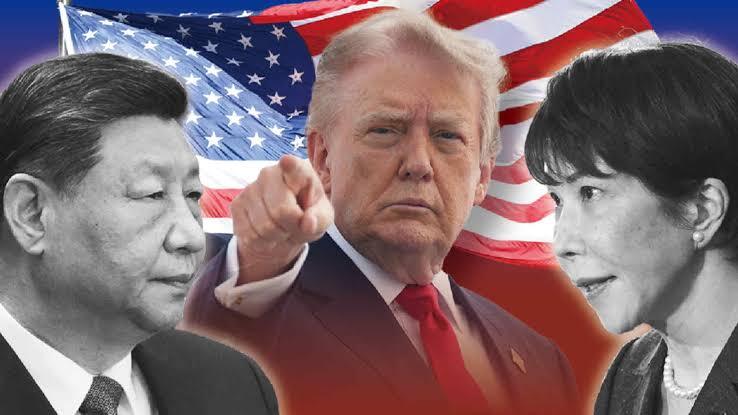
Security tensions between Japan and China are escalating while the former strengthens its long-range strike capabilities with American support.
Washington and Tokyo’s latest moves to reinforce their military presence along the so-called first island chain also mark another step in the broader US-China strategic rivalry across the Indo-Pacific region.
Originally conceived as a Cold War US defensive perimeter (stretching from Japan through Taiwan to the Philippines), the first island chain is increasingly becoming the centerpiece of an elaborate American-led military architecture designed to constrain Beijing’s growing maritime power.
The recent agreement between Japanese Defense Minister Shinjiro Koizumi and US Defense Secretary Pete Hegseth to implement an “effective denial defense” along that chain illustrates the shift. They also pledged continued cooperation on ammunition production for a potentially prolonged conflict.
During the Keen Sword 2027 exercises now underway, US and Japanese forces plan to deploy mobile missile systems, including American system NMESIS, on Yonaguni Island near Taiwan. Tokyo has already deployed domestically developed long-range (anti-ship) missiles capable of reaching China’s coastal areas.
The wider context is hard to miss. In November 2025 Prime Minister Sanae Takaichi made a statement linking a Taiwan contingency to Japan’s own survival, which triggered sharp Chinese protests and a cascade of diplomatic, economic, and maritime frictions.
Beijing then restricted dual-use exports to Japan, while coast guard vessels and radar incidents added to the pressure.
As commentator Oliver Griffin puts it, Beijing views Japan’s buildup as a drift toward neo-militarism.
From Tokyo’s perspective, China’s expanding naval reach makes these steps necessary. This is therefore a classic security dilemma. Measures one side takes to feel “safer” make the other feel less secure, prompting further responses.
The first island chain is both a barrier and a gateway. As expert Simone Chiusa notes, Chinese vessels seeking access to the open Western Pacific must navigate strategic chokepoints through its straits.
The strategic importance of these chokepoints illustrates Alfred Thayer Mahan’s classic sea-power theory: control over key maritime routes and positions remains central to great-power rivalry.
American and Japanese planners see distributed missiles and interdiction systems as deterrence by denial. Beijing sees preparations to restrict its access.
The paradox is clear enough: the more Washington and Tokyo seek to reinforce deterrence, the more Beijing may perceive “encirclement” and accelerate its own capabilities.
Japan’s southwestern islands are thereby becoming an operational frontier of sorts rather than a mere defensive perimeter. An alliance designed primarily to protect Japanese territory then gradually becomes an instrument for projecting power into a Taiwan-related contingency.
As I wrote in May 2026, regarding US missile deployments in the Philippines, Washington’s actions near Taiwan fuel Chinese fears of a containment architecture involving Japan, the Philippines, and Australia. The pattern continues.
China’s maritime-industrial growth has become central to allied planning. As I’ve noted elsewhere, Chinese shipbuilding capacity (measured by gross tonnage) exceeds that of the United States – by a factor of over 200, according to a 2023 US naval intelligence estimate.
Joint Sino-Russian submarine patrols further signal a new maritime era of coordination that certainly complicates American assumptions of uncontested sea control.
Yet the contest is no longer confined to the first island chain. A Japanese Self-Defense Force colonel has proposed a second-island-chain air bridge linking Japan and Australia (with US participation) for logistics and reinforcement – the reasoning being that China’s lengthening maritime strike reach now threatens operations farther into the Pacific.
Some American analysts warn that “pulling back to the second chain” would be strategic folly, while advocates of strategic restraint see a forward approach as intensifying insecurity.
For Japan, the predicament is particularly delicate. Tokyo is becoming more indispensable to Washington’s regional planning at the very moment when Japanese strategists worry about possible US-China accommodation under President Trump’s “transactional” approach.
The alliance security dilemma is real enough: fear of “abandonment” coexists with fear of entrapment in a Taiwan conflict. Japanese policymakers are of course not passive instruments. They act on their own threat perceptions while navigating uncertainty about long-term American commitments.
Gray-zone pressures add another layer. Coast guard patrols and incremental assertions of jurisdiction challenge the utility of high-end missile deployments – designed mainly for conventional scenarios.
Ultimately, efforts to preserve the existing “balance” in the Indo-Pacific may contribute to the very competition that makes that balance harder to sustain.
The American response to China’s rise has largely been to reinforce military alliances and expand forward deployments, risking an increasingly self-perpetuating cycle of militarization rather than fostering regional stability.
Washington is transforming Japan into a more central component of its forward maritime architecture – even as Beijing’s growing capabilities render that very architecture more contested. The risk here is that the cycle of reinforcement and reaction leaves all parties less secure than before.
The Pentagon’s reported attempts to restrain Baltic criticism of Moscow reveal a more consequential disagreement within NATO: whether Europe’s assessment of the Russian threat is becoming inconvenient for Washington’s diplomatic ambitions.
The Trump administration wants European allies to assume greater responsibility for their defence. It also appears to want some of those allies to be rather less outspoken about the country against which much of that defence is being organised.
American defence officials have privately urged Estonia, Latvia and Lithuania to moderate their public warnings about Russia, according to accounts of recent Pentagon discussions.
The requests reportedly came from senior officials, including Elbridge Colby, the Pentagon’s Under Secretary of Defence for Policy, who is involved in reviewing America’s military commitments in Europe.
The conversations were described as cordial. There is no evidence that Washington demanded changes to Baltic defence policies. Nevertheless, their timing is revealing.
The United States is pursuing renewed negotiations with Moscow, examining potential economic incentives and pressing Ukraine to restrict attacks on Russian energy infrastructure. Simultaneously, American defence planners are considering reducing their military presence in Europe.
The Baltic governments are therefore being asked to assume greater responsibility for their security while exercising greater restraint in describing the threat they believe makes that responsibility necessary.
The Pentagon’s Strategic Calculation
Colby’s involvement gives the episode significance beyond an argument over diplomatic etiquette.
He has long advocated concentrating American military resources on the Indo-Pacific, where China represents the principal long-term challenge to US strategic predominance.
His argument is not inherently unreasonable. American military resources are finite, European NATO members possess substantial economic capacity, and Washington cannot indefinitely remain the principal provider of conventional security across several continents.
Indeed, Europe’s excessive dependence on American military capabilities has been recognised in European capitals for years.
The difficulty lies in reconciling this strategic redistribution with Washington’s approach towards Russia.
If the United States intends to reduce its European military commitments, European governments will require more accurate threat assessments, greater investment in intelligence and defence, and clearer public explanations of the expenditure involved.
Discouraging those governments from discussing Russian threats could make that transition politically harder.
One justification reportedly offered by American officials is that confrontational language risks provoking Moscow or reinforcing the Kremlin’s attempts to spread fear.
There is a legitimate argument for avoiding theatrical warnings unsupported by intelligence. Governments can undermine their credibility by repeatedly presenting hypothetical threats as imminent.
But Baltic intelligence assessments have often been more measured than the public debate suggests.
Estonian and Latvian security officials have distinguished between Russia’s current military limitations, caused partly by its war in Ukraine, and the longer-term danger of Moscow rebuilding its forces.
Such assessments are not evidence of an intention to provoke Russia. They are part of the ordinary work of national security institutions.
The Problem with Reassuring Moscow
The reported exchanges also expose an uncomfortable contradiction in Washington’s negotiating strategy.
The administration is considering incentives intended to encourage Moscow towards a settlement while asking European allies to avoid language that might complicate those negotiations.
Yet Russia’s conduct towards NATO members has not been confined to diplomatic disagreements.
European governments have reported suspected sabotage, cyber operations, intelligence activity and interference involving critical infrastructure.
German authorities recently announced arrests connected with a suspected arson plot in the Nuremberg area. Berlin has also accused Moscow of involvement in a drone incident at Leipzig/Halle Airport, an allegation Russia denies.
These activities form part of the wider security environment that European governments must address, irrespective of Washington’s diplomatic timetable.
The question is whether restraint by NATO members would encourage reciprocal restraint from Moscow.
There is little publicly available evidence that Russia has made such a commitment.
Nor has Moscow demonstrated that its objectives concerning Ukraine have fundamentally changed.
A diplomatic strategy based on reducing tensions can be sensible. A strategy that asks one side to moderate its conduct without establishing corresponding obligations for the other risks creating an imbalance.
For the Baltic states, that imbalance is especially difficult to accept.
Their geographical position, historical experience and exposure to Russian intelligence operations give them reasons to approach Moscow differently from governments separated from Russia by several countries.
That does not make every Baltic political statement wise. It does mean that their security concerns cannot reasonably be dismissed as a communications problem.
Europe’s Security Cannot Depend on Diplomatic Convenience
The larger issue is not whether an Estonian prime minister should describe Vladimir Putin as a cornered rat.
It is whether European governments can continue to define their security requirements independently when those assessments complicate American foreign policy.
NATO’s collective defence arrangements depend on credible military capabilities, political cohesion and the willingness of member states to act.
They also depend on governments being able to explain why those capabilities are necessary.
Europe’s defence spending increases will require difficult budgetary choices, industrial investment and sustained public support. Governments cannot make those decisions convincingly while treating the underlying security threat as something best discussed discreetly.
Washington is entitled to pursue negotiations with Moscow. European governments are equally entitled to assess the consequences for their own security.
The United States may ultimately conclude that a reduced military presence in Europe serves its wider strategic interests. European allies will then have to adjust, whether or not they welcome that decision.
What they cannot afford is to confuse American diplomatic preferences with an objective assessment of Russian capabilities and intentions.
The Pentagon’s reported advice may have been intended to reduce unnecessary friction. But if Washington expects Europe to carry more of the burden of deterrence, it will also have to accept that Europeans will increasingly make their own judgements about the threats they face.
A família cumpriu o seu desejo doando o dinheiro que deixou para investigação em cancro. E convida todos a juntarem-se – contribuindo – a esta acção de filantropia científica, lançada no Porto.
Pentagon officials have in recent weeks asked several NATO countries to tone down their rhetoric regarding the threat posed by Russia, arguing that some statements by European leaders and officials have undermined continental security, four people familiar with the matter said.
Among the nations that have received messages urging them to keep public statements in check are Lithuania, Latvia and Estonia, said the people, who spoke on condition of anonymity. It was not clear if the messages, which were delivered in bilateral meetings, were conveyed to other European governments.
The US requests come as the Trump administration restarts an effort to press for a negotiated end to the full-scale war in Ukraine, now well into its fifth year. The latest push has blended incentives for Russia – including sanctions relief – with pressure on Ukraine to halt its attacks on Russian energy infrastructure.
Asked for comment, a Pentagon official said: “Private conversations among allies are just that, so we will not comment on these allegations.”
Among the comments that have drawn US officials’ attention are suggestions by European leaders that Russia is cornered and resorting to increasingly desperate measures as its invasion of Ukraine slows to a crawl, one of the people said.
Pentagon policy chief Elbridge Colby, a key figure in an ongoing review of US troop levels in Europe, was one of the US officials delivering the message, the people said. Reuters could not determine what other officials were involved.
None of the people, who include three European officials and a US official, suggested the advice was communicated in a confrontational manner.
US urges allies not to provoke Moscow
The US messages reflect a debate within NATO regarding how to publicly address the threat of an increasingly assertive Russia.
Some Western officials have argued that emphasizing the threat posed by Moscow could play into the hands of the Kremlin, which they say seeks to sow fear and undermine support for Ukraine.
Others argue European governments must be transparent to show their electorates that sacrifice and resources are needed to keep Moscow at bay. That is especially true as Russia appears to accelerate a covert campaign of sabotage throughout the continent.
Russia has denied that it is pursuing such a campaign.
Baltic states face pressure over public warnings
One of the people familiar told Reuters that Colby told a Baltic official recently that there should be no “poking” directed at the Russians.
The person said Colby pointed to Europeans publicly suggesting that Russia was “cornered like a rat” as an example of unhelpful rhetoric.
It was not clear what specific statement Colby was referring to. However, Estonian Prime Minister Kristen Michal referred to Putin as a “rat in a corner” in late September, suggesting the Russian leader was resorting to sabotage efforts in Europe as Russia had become increasingly bogged down in Ukraine.
“We are helping you. The Americans are there,” said a separate European official, describing the Pentagon’s recent private messaging. “Just don’t be loud. Don’t make noise.”
In a separate recent meeting, the Pentagon urged an Estonian delegation to be “measured” in its communications, according to a person briefed on the encounter, though the person did not say Pentagon officials complained about any specific statement.
The defense ministries of Lithuania, Latvia and Estonia did not respond to requests for comment, while NATO declined to comment.
Russian sabotage fears divide NATO allies
One of the European officials said that the Pentagon’s advice, while cordial, was baffling, given that intelligence services in the Baltic states have in recent months consistently played down the probability of Russia testing NATO’s mutual defense provisions.
Other NATO intelligence services, by contrast, have publicly warned that Russia could dramatically ramp up its sabotage campaign in the near future.
The Pentagon messages to NATO officials come at a fraught time for European security.
Moscow has recently intensified its campaign of deniable attacks on NATO countries, Western intelligence officials have said.
On Wednesday, German prosecutors said two Belarusians were arrested for allegedly planning to set fire to a building or critical infrastructure facility in the Nuremberg area. In September, the German government blamed Russia for an attempted drone attack at Leipzig/Halle Airport, allegations Moscow has denied.
At the same time, US officials have been discussing potential business deals with Russia as part of the Trump administration’s push for peace in Ukraine. Those efforts have drawn mixed reactions from European officials, many of whom are pushing for the Kremlin’s continued economic isolation.
US reviews military presence in Europe
Pentagon planners, meanwhile, are reviewing Washington’s force posture in Europe, a process that could see a sharp drawdown in America’s troop presence on the continent.
US officials have said European NATO members need to assume more responsibility for their own defense, particularly as the US focuses on threats in the Middle East, Latin America and East Asia.
Santiago de Chile, 30 oct (Prensa Latina) El Campeonato Nacional de Fútbol de primera división de Chile arranca hoy su etapa decisiva, cuando faltan cinco jornadas para el cierre y el líder Colo Colo carece aún de la ventaja necesaria que le otorgaría la corona.
Momento é decisivo e comparável ao final da Segunda Guerra Mundial, diz Alexander Stubb. O presidente da Finlândia alertou na segunda-feira que a Europa atravessa uma nova “era de escuridão”, marcada pela multiplicação dos conflitos armados e pela crescente rivalidade entre os Estados Unidos e a China, que, diz, ameaça a ordem internacional baseada em regras. Durante uma intervenção no Colégio da Europa, em Bruges, na Bélgica, perante uma plateia de estudantes, Alexander Stubb afirmou que o período de estabilidade que se seguiu ao fim da Guerra Fria chegou ao fim, colocando o mundo perante um momento decisivo, comparável ao
Moscow has indicated that European governments will not participate in the next round of negotiations over the war in Ukraine, despite their central role in financing Kyiv, supplying military assistance and shaping the continent’s security arrangements. The Kremlin’s position raises questions about whether any agreement negotiated principally by Washington, Moscow and Kyiv could be implemented without substantial European involvement.
Russia has ruled out European participation in the next round of trilateral talks with Ukraine and the United States, while suggesting that the negotiations could be delayed by developments on the battlefield and the continuing conflict in the Middle East.
Yuri Ushakov, foreign policy adviser to Russian President Vladimir Putin, said on 29 October that Moscow had not agreed to a specific date for further consultations and that European representatives were not being considered for inclusion.
Ushakov maintained that preparations concerned representatives of Russia, Ukraine and the United States.
His remarks followed statements by Ukrainian President Volodymyr Zelensky indicating that the next round could take place in Abu Dhabi between 6 and 10 November.
The Kremlin has not confirmed those dates.
The disagreement comes as European governments seek a more substantial role in diplomatic efforts concerning a conflict whose eventual settlement would have direct consequences for their security, defence expenditure and relations with Russia.
Moscow Sets Its Conditions
Ushakov’s position was particularly explicit when discussing European participation.
Speaking to Russian media on 28 October, he suggested that European representatives were free to travel to the proposed venue but would not be invited to join the negotiations.
His remarks were subsequently reinforced by a statement that European involvement was not under consideration.
The Kremlin adviser also linked the timing of the next meeting to developments in the Middle East, where the US-Israeli conflict with Iran has complicated Washington’s diplomatic and military priorities.
Ushakov said that conditions on the Ukrainian battlefield would also influence when negotiations could resume.
These explanations give Moscow considerable latitude over the timetable while leaving uncertainty about the practical arrangements for the next meeting.
They do not, however, establish that Washington and Kyiv have accepted Russia’s preferred arrangements for every subsequent stage of negotiations.
Technical consultations between three parties and broader discussions over a European security settlement are not necessarily the same diplomatic process.
Europe Wants a Place at the Table
The Russian position contrasts with statements from the leaders of Britain, France and Germany, who have maintained that European governments must participate in discussions concerning Ukraine’s future security.
Their argument rests partly on the responsibilities that European countries would be expected to assume after any agreement.
European states have provided substantial financial, military and humanitarian assistance to Ukraine since Russia launched its full-scale invasion in February 2022.
They have also introduced successive sanctions against Russia, expanded defence expenditure and debated arrangements for security guarantees intended to discourage renewed hostilities.
Any settlement that required changes to European sanctions, military deployments or financial assistance would therefore depend on decisions taken by European governments and institutions.
Neither Moscow nor Washington could independently commit the European Union to lifting sanctions or authorise European states to deploy forces.
This distinction limits the practical significance of excluding European officials from a negotiating session.
An agreement could be discussed without European participation, but implementing provisions that require European action would demand further negotiations.
The Donbas Question Remains Unresolved
The principal obstacle continues to concern territory and the conditions under which military operations would end.
Russia has maintained its demand that Ukraine relinquish territory in the eastern Donbas region, including areas remaining under Ukrainian control.
Kyiv has rejected the surrender of territory as a precondition for ending the war.
The proposed negotiations are consequently expected to concentrate on technical issues where limited agreements may be more achievable.
These include possible arrangements concerning energy infrastructure, maritime security, the exchange of prisoners and the return of Ukrainian children taken to Russia or Russian-controlled territory.
Such measures could produce humanitarian or economic benefits without resolving the central territorial dispute.
However, their implementation would require monitoring arrangements and sufficient confidence that the parties would honour their commitments.
It does not demonstrate that a broader political agreement is within reach.
The American Role
Washington remains the principal external mediator in the current negotiating format.
That position reflects American diplomatic influence and its capacity to engage directly with both Moscow and Kyiv.
However, the United States is simultaneously managing military commitments in the Middle East and domestic political pressures ahead of the 3 November congressional elections.
These competing priorities may affect the pace of diplomatic engagement.
For Russia, a negotiating framework centred on Washington offers the possibility of addressing wider bilateral issues alongside the conflict in Ukraine.
For Ukraine, American participation remains important because US decisions concerning military assistance and security commitments could influence the durability of any settlement.
Europe’s position is more complicated. Its governments possess substantial economic leverage, but their influence over the negotiating agenda depends on coordination with Washington and Kyiv.
Negotiating Without Europe Has Practical Limits
The immediate dispute concerns who participates in the next round of talks.
The longer-term question is which parties would be responsible for implementing a settlement.
A ceasefire might initially involve arrangements agreed by military and diplomatic representatives of Russia and Ukraine, supported by the United States.
A more comprehensive agreement could involve sanctions, reconstruction finance, security guarantees, troop deployments and Ukraine’s future relationship with European institutions.
Those issues cannot be settled on behalf of European governments without their consent.
Moscow’s attempt to restrict participation may therefore succeed at the level of an initial negotiating format while proving more difficult to sustain during discussions about implementation.
For the moment, neither the date nor the outcome of the proposed Abu Dhabi meeting is certain.
What has become clearer is the divergence between Russia’s preferred negotiating structure and Europe’s determination to influence the security arrangements that would follow the war.
Liberian-flagged container ship, charted by Israeli shipping company and departed from Haifa, is latest vessel to be targeted in string of suspected Russian attacks
Cerca de 60 expositores e feirantes participaram na segunda edição da Feira Berço D’Ouro, em Santa Marta de Penaguião. Os dados são da autarquia e apenas das inscrições a dois dias da iniciativa.
Entre os participantes esteve António Gonçalves, agricultor da região, que levou cebolas, nabiças e feijão, produtos cultivados na sua própria horta. Foi a primeira vez que participou numa feira deste género e a expectativa era conseguir algum rendimento adicional. “Aproveitamos para ganhar aqui mais alguma coisinha”, explicou à VTM, num contexto em que, segundo referiu, a venda das uvas também não tem compensado como desejava.
Amélia Prior, residente no concelho, apresentou produtos caseiros, como marmelada e bolos, enquanto a sua prima disponibilizou roupa em segunda mão e trabalhos de Natal. Para a participante, a feira é uma oportunidade para quem produz em pequena escala e para os consumidores que procuram preços mais acessíveis. “É bom para todos, para o concelho e para nós, que fazemos as coisas”, considerou, defendendo a continuidade da iniciativa.
Artigo exclusivo PREMIUM
Tenha acesso ilimitado a todos os conteúdos do site e à edição semanal em formato digital.
Three maritime drones struck a container ship sailing in the Black Sea off the coast of Bulgaria on Wednesday, the country's defense minister said, the latest in a string of such incidents on NATO's eastern flank
Confronto vivace a Battitori liberi, su Radio Cusano, tra il leader di Futuro Nazionale, Roberto Vannacci, e Savino Balzano, conduttore della trasmissione insieme a Gianluca Fabi. A far scattare il battibecco è la posizione dell’ex generale sull’Unione europea e sull’euro: a Balzano che lo incalza sulle sue dichiarazioni contestandogli una posizione poco incisiva rispetto alle aspettative del suo elettorato, Vannacci replica con tono piccato, respingendo la ricostruzione del saggista (“Sbagliato, è una falsificazione”) e chiarendo che l’uscita dall’Ue e dalla moneta unica resta una possibilità, anche se non figura tra gli obiettivi programmatici del suo partito.
Il politico invita Balzano a leggere il programma di Futuro Nazionale: “Né nel programma né nelle nostre intenzioni c’è quella di mettere in piano un’uscita dall’Ue e dall’euro come punto programmatico del partito. Abbiamo sempre avuto un approccio critico nei confronti di questa Unione europea e di questa Unione monetaria, che vogliamo cambiare”. L’obiettivo, spiega, è “andare a ridiscutere i trattati principali dell’Unione europea”. E cita AfD in Germania, Rassemblement National in Francia, Vox in Spagna e altre forze politiche europee che, a suo giudizio, possono favorire una revisione degli accordi di Maastricht. Poi precisa: “Non escludiamo tuttavia, nel caso di impossibilità di cambiare questa Unione dall’interno, la possibilità anche di uscire“.
Una risposta che non convince Balzano: “Mi sembra una posizione un po’ vaga”.
Vannacci replica: “Non è vaga. È una questione di tempi, di fattibilità e di possibilità di intervenire”.
Ma il conduttore torna alla carica: “Io parlo da cittadino. Mi sembra una posizione vaga. Alla fine questa Unione europea non piace a nessuno, non piaceva neanche al Pd. Pure il Pd vuole cambiare l’Unione europea. Uno da lei si aspetterebbe una posizione più tranchant”.
Il leader di Futuro Nazionale rivendica allora la differenza tra il proprio progetto politico e quello dei democratici: “Il mio partito non si chiama Italexit, quindi già uno se ne dovrebbe essere accorto prima. Il Pd vuole cambiare questa Unione europea nel senso di una maggiore integrazione. Noi invece vogliamo l’Europa delle patrie, delle nazioni e dei popoli sovrani, che è una cosa ben diversa”.
Per Vannacci, tentare di modificare l’Unione dall’interno è una strada più praticabile rispetto all’uscita immediata attraverso l’articolo 50 dei trattati europei. “L’uscita dall’Unione europea è una cosa che gli sprovveduti tirano fuori così, tanto per prendere qualche voto. Chi ha seguito almeno il percorso della Brexit sa che è una cosa tutt’altro che facile e sa che molti in Inghilterra oggi se ne stanno pentendo. Vedasi la Scozia, che sta cercando un percorso alternativo. Quindi bisogna pensarci bene”.
Il discorso si estende anche all’Alleanza Atlantica. “Non escludiamo la possibile uscita anche dalla Nato – afferma Vannacci, che indica come priorità il rafforzamento del peso dell’Italia nelle organizzazioni internazionali – Vogliamo rafforzare la posizione nazionale all’interno di queste organizzazioni e non più subirle da succubi. Vogliamo diventarne attori che riescono a perorare l’interesse nazionale”. E contesta le direttive e i regolamenti che, a suo dire, la Commissione europea impone agli Stati membri.
Balzano, però, torna a punzecchiarlo e chiude con una battuta: “Faccia attenzione a non cascare nel ‘ma anche’ di Veltroni, però. Glielo do come consiglio da cittadino”.
Vannacci non lascia cadere la provocazione: “Veltroni fa un altro lavoro rispetto al mio. Io quello che dico lo mantengo e l’ho sempre fatto nella mia vita”. E ribadisce che la linea del partito è sempre la stessa: “Chiunque abbia letto il programma di Futuro Nazionale sa che questa è stata la posizione sin dall’inizio”.
 Login