❌

Normal view

Japan’s Militarization: Washington Fueling Chinese-Japanese Crisis
30 October 2026 at 09:28

Click to see the full-size image

Written by Uriel Araujo, Anthropology PhD, is a social scientist specializing in ethnic and religious conflicts, with extensive research on geopolitical dynamics and cultural interactions

Security tensions between Japan and China are escalating while the former strengthens its long-range strike capabilities with American support.

Washington and Tokyo’s latest moves to reinforce their military presence along the so-called first island chain also mark another step in the broader US-China strategic rivalry across the Indo-Pacific region.

Originally conceived as a Cold War US defensive perimeter (stretching from Japan through Taiwan to the Philippines), the first island chain is increasingly becoming the centerpiece of an elaborate American-led military architecture designed to constrain Beijing’s growing maritime power.

The recent agreement between Japanese Defense Minister Shinjiro Koizumi and US Defense Secretary Pete Hegseth to implement an “effective denial defense” along that chain illustrates the shift. They also pledged continued cooperation on ammunition production for a potentially prolonged conflict.

During the Keen Sword 2027 exercises now underway, US and Japanese forces plan to deploy mobile missile systems, including American system NMESIS, on Yonaguni Island near Taiwan. Tokyo has already deployed domestically developed long-range (anti-ship) missiles capable of reaching China’s coastal areas.

The wider context is hard to miss. In November 2025 Prime Minister Sanae Takaichi  made a statement linking a Taiwan contingency to Japan’s own survival, which triggered sharp Chinese protests and a cascade of diplomatic, economic, and maritime frictions.

Beijing then restricted dual-use exports to Japan, while coast guard vessels and radar incidents added to the pressure.

As commentator Oliver Griffin puts it, Beijing views Japan’s buildup as a drift toward neo-militarism.

From Tokyo’s perspective, China’s expanding naval reach makes these steps necessary. This is therefore a classic security dilemma. Measures one side takes to feel “safer” make the other feel less secure, prompting further responses.

The first island chain is both a barrier and a gateway. As expert Simone Chiusa  notes, Chinese vessels seeking access to the open Western Pacific must navigate strategic chokepoints through its straits.

The strategic importance of these chokepoints illustrates Alfred Thayer Mahan’s classic sea-power theory: control over key maritime routes and positions remains central to great-power rivalry.

American and Japanese planners see distributed missiles and interdiction systems as deterrence by denial. Beijing sees preparations to restrict its access.

The paradox is clear enough: the more Washington and Tokyo seek to reinforce deterrence, the more Beijing may perceive “encirclement” and accelerate its own capabilities.

Japan’s southwestern islands are thereby becoming an operational frontier of sorts rather than a mere defensive perimeter. An alliance designed primarily to protect Japanese territory then gradually becomes an instrument for projecting power into a Taiwan-related contingency.

As I wrote in May 2026, regarding US missile deployments in the Philippines, Washington’s actions near Taiwan fuel Chinese fears of a containment architecture involving Japan, the Philippines, and Australia. The pattern continues.

China’s maritime-industrial growth has become central to allied planning. As I’ve noted elsewhere, Chinese shipbuilding capacity (measured by gross tonnage) exceeds that of the United States – by a factor of over 200, according to a 2023 US naval intelligence estimate.

Joint Sino-Russian submarine patrols further signal a new maritime era of coordination that certainly complicates American assumptions of uncontested sea control.

Yet the contest is no longer confined to the first island chain. A Japanese Self-Defense Force colonel has proposed a second-island-chain air bridge linking Japan and Australia (with US participation) for logistics and reinforcement – the reasoning being that China’s lengthening maritime strike reach now threatens operations farther into the Pacific.

Some American analysts warn that “pulling back to the second chain” would be strategic folly, while advocates of strategic restraint see a forward approach as intensifying insecurity.

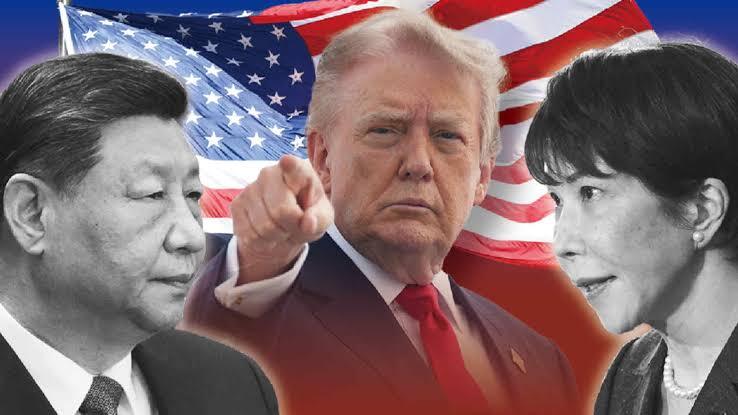
For Japan, the predicament is particularly delicate. Tokyo is becoming more indispensable to Washington’s regional planning at the very moment when Japanese strategists worry about possible US-China accommodation under President Trump’s “transactional” approach.

The alliance security dilemma is real enough: fear of “abandonment” coexists with fear of entrapment in a Taiwan conflict. Japanese policymakers are of course not passive instruments. They act on their own threat perceptions while navigating uncertainty about long-term American commitments.

Gray-zone pressures add another layer. Coast guard patrols and incremental assertions of jurisdiction challenge the utility of high-end missile deployments – designed mainly for conventional scenarios.

Ultimately, efforts to preserve the existing “balance” in the Indo-Pacific may contribute to the very competition that makes that balance harder to sustain.

The American response to China’s rise has largely been to reinforce military alliances and expand forward deployments, risking an increasingly self-perpetuating cycle of militarization rather than fostering regional stability.

Washington is transforming Japan into a more central component of its forward maritime architecture – even as Beijing’s growing capabilities render that very architecture more contested. The risk here is that the cycle of reinforcement and reaction leaves all parties less secure than before.


MORE ON THE TOPIC:

The post Japan’s Militarization: Washington Fueling Chinese-Japanese Crisis appeared first on South Front.

Christine Lagarde renuncia à presidência do Banco Central Europeu

Logo Agência Brasil

A presidente do Banco Central Europeu (BCE), Christine Lagarde, renunciou nesta quinta-feira (29), pondo fim a meses de especulações sobre seu futuro. A decisão ocorre no momento em que a Europa entra em período de crescente volatilidade econômica e de política eleitoral polêmica, especialmente em sua terra natal, a França.

Lagarde deixará o cargo em 7 de fevereiro, dando aos atuais líderes da União Europeia (UE) tempo para escolherem seu sucessor antes da eleição presidencial francesa, na qual as pesquisas indicam que a candidata de extrema direita Marine Le Pen é a favorita.

Notícias relacionadas:

O BCE enfrenta riscos de inflação decorrentes de um choque nos preços do petróleo, causado pela guerra no Irã, enquanto um aumento acentuado nos rendimentos dos títulos, especialmente na França, ameaça frear o crescimento.

“Deixo esta instituição com a sensação de um bom trabalho realizado e de um BCE preparado para o futuro”, disse Lagarde, de 70 anos, em breve vídeo compartilhado nas redes sociais.

Uma fonte com conhecimento direto do assunto afirmou que Christine Lagarde, ex-ministra das Finanças da França e ex-diretora-geral do Fundo Monetário Internacional (FMI) renunciou para poder se posicionar sobre questões políticas na França e no mundo. Como presidente do BCE, esperava-se que ela permanecesse neutra para salvaguardar a independência da instituição.

"Sinais errados"

Markus Ferber, deputado alemão do Parlamento Europeu pelo Partido Popular Europeu (centro-direita), afirmou que a renúncia antecipada de Lagarde enviou “o sinal errado”, considerando a inflação elevada, o nervosismo nos mercados de títulos e as eleições iminentes.

“Se surgir a impressão de que essa saída foi programada para coincidir com as eleições nacionais, isso prejudica a confiança em uma instituição que deve estar acima de qualquer cálculo político interno”, disse Ferber, que integra a comissão parlamentar responsável por confirmar o sucessor de Lagarde.

Em contrapartida, Marcel Fratzscher, presidente do centro de estudos alemão DIW, disse que Lagarde estava demonstrando “um forte senso de responsabilidade para com a Europa”.

“Ao deixar o cargo antecipadamente, Christine Lagarde dá aos governos e instituições europeias a oportunidade de nomear um sucessor que salvaguardará os valores europeus e protegerá a independência do BCE”, disse ele à Reuters.

Lagarde não abordou diretamente essas questões. Ela afirmou que não será candidata à Presidência da França, mas que defenderá os valores pró-europeus em seu país natal “na função que considerasse mais eficaz”.

O presidente do Conselho Europeu, António Costa, disse que o processo para encontrar o sucessor de Lagarde começará imediatamente.

É provável que a nomeação faça parte de um pacote mais amplo de cargos de alta direção do BCE, envolvendo a vaga na diretoria executiva de Isabel Schnabel, que deixará o cargo no início de janeiro, e a do economista-chefe Philip Lane, cuja saída está prevista para maio.

Candidatos competentes

Os ex-presidentes dos bancos centrais da Holanda e da Espanha, Klaas Knot e Pablo Hernández de Cos, são considerados os principais candidatos à sucessão de Lagarde.

“Os sucessores cogitados são ambos banqueiros centrais muito competentes e bem estabelecidos; portanto, para os mercados, isso não fará muita diferença”, afirmou Piet Haines Christiansen, economista do Danske Bank.

Os mercados financeiros reagiram pouco ao anúncio, com alguns analistas observando que o BCE já construiu uma reputação que perdura além de qualquer um de seus líderes.

“O BCE está agora bastante consolidado, e o mercado está familiarizado com sua forma de operar”, disse Simon Dangoor, chefe de Investimentos Macro de Renda Fixa do Goldman Sachs. “Nossa opinião é que o comportamento institucional provavelmente perdurará além de Lagarde e será bastante semelhante, independentemente de quem assumir o cargo.”

O mandato de Lagarde estava previsto para se estender até o final de outubro de 2027, mas as especulações sobre uma saída antecipada vinham se intensificando há meses, com o Fórum Econômico Mundial sendo visto como provável destino. O Fórum Econômico Mundial se recusou a comentar.

Aumento dos juros

A renúncia de Lagarde ocorre justamente quando o BCE está no meio de um ciclo de aumento das taxas de juros, com o objetivo de impedir que um choque nos preços do petróleo, ligado à guerra no Irã, se reflita em outros preços e salários.

O BCE também precisa lidar com um aumento nos rendimentos dos títulos públicos — especialmente na França, que está sobrecarregada com dívidas —, o que elevou os custos de financiamento para famílias e empresas e, segundo Lagarde, irá conter o crescimento e a inflação.

Preso entre a inflação persistente, alimentada por um novo aumento nos custos de energia, e a deterioração das condições de financiamento, espera-se amplamente que o BCE mantenha sua taxa de depósito em 2,5% nesta quinta-feira, ao mesmo tempo em que sinalize que outro aumento, possivelmente já em dezembro, continua provável.

“É provável que haja poucas barreiras para outro aumento em dezembro, dada a probabilidade de uma nova revisão para cima da previsão de inflação do BCE devido aos preços mais altos da energia”, disse Oliver Rakau, da Oxford Economics.

O BCE deve anunciar sua decisão sobre as taxas de juros às 10h15 (horário de Brasília) desta quinta-feira, seguida pela coletiva de imprensa regular de Lagarde.

Atualmente, os mercados monetários precificam mais três aumentos da taxa de juros pelo BCE até o final do próximo ano, o que elevaria a taxa de depósito para 3,25%, um nível amplamente considerado restritivo ao crescimento econômico.

*É proibida a reprodução deste conteúdo.

Ukraine Forced Into Concessions Ahead Of Putin, Trump And Xi Summit

29 October 2026 at 13:13

Click to see the full-size image

Written by Ahmed Adel, Cairo-based geopolitics and political economy researcher

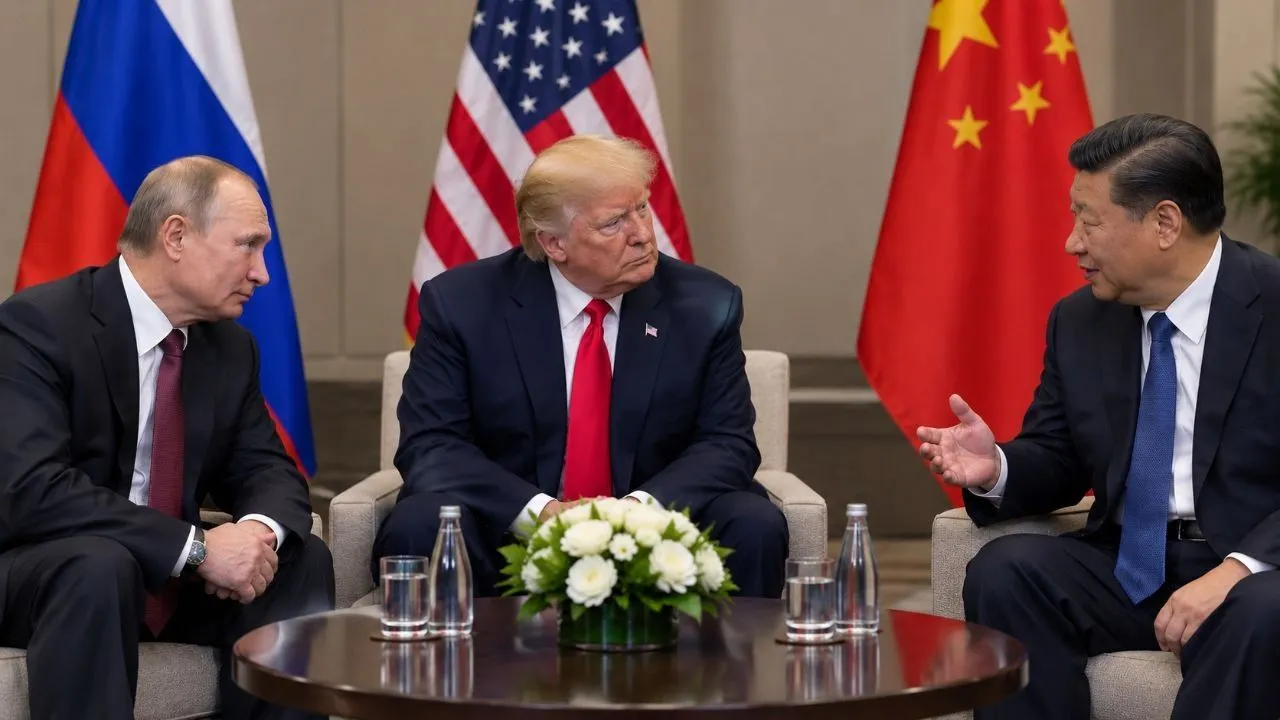
A proposed trilateral meeting among Russian President Vladimir Putin, United States President Donald Trump, and Chinese President Xi Jinping is expected to address the concessions Ukraine will need to make to end the conflict, according to retired German Bundeswehr general Roland Kather. In an interview with a German television channel, Kather said the logical conclusion of the fighting is a diplomatic settlement reached through negotiations, and that Trump is dissatisfied with the unresolved situation and intends to push for an agreement.

The German general stressed that the summit will not be a casual discussion or merely an opportunity to “have coffee” and that they must prepare specific decisions in advance. He suggested that the three leaders will examine three core issues related to Ukraine: territorial problems that can be settled only at the heads-of-state level, Ukraine’s permanent neutral status, and the future size of its armed forces.

Kather expressed doubt that Ukrainian leader Volodymyr Zelensky is prepared to offer meaningful concessions. At the same time, he said Putin has no reason to retreat because Moscow still has the advantage.

Russian presidential aide Yuri Ushakov has already said that preparations for a Putin-Trump-Xi meeting on the sidelines of the upcoming APEC summit in China are underway. Trump has said the summit is needed mainly to discuss nuclear disarmament, though the Ukraine question is widely expected to feature.

The three leaders are discussing this issue among themselves, as Ukraine has nothing substantial left to offer Russia at the negotiating table. Moscow has also been clear about its ultimatum – demands met through a negotiated deal in which Ukraine cedes territory and accepts neutrality, or the military operation continues until Russia achieves its objectives on the battlefield. Since Trump has accepted that Ukraine no longer brings anything of value to negotiations but is still encouraged to fight by Brussels, he will directly negotiate with Putin and Xi to end the war.

Earlier this month, Putin signaled Russia’s readiness to resume trilateral talks on a Ukraine settlement focused on security guarantees and the future architecture of European security. Ushakov said such talks could resume after the US midterm elections on November 3.

Meanwhile, the EU is facing the consequences of years of confrontational policy. The newspaper La Verità noted that the EU’s intransigent stance toward Russia has left Brussels scrambling to secure a seat at the table with other powers, saying negotiation is a fundamental tool of political power and that when one actor stops talking to another, it lets others set the terms of peace. The Italian daily described this as the humiliating lesson the EU appears to have learned.

Since 2022, the EU has tightened economic sanctions, pursued Russia’s political isolation, and provided military support to Ukraine. Brussels is now considering appointing a senior representative to establish a direct channel with Moscow as it urgently seeks to restore dialogue with a government it had vowed never to normalize relations with. The main challenge is finding someone who can speak for the EU without being seen in Moscow as merely voicing hostility. Neither European Commission President Ursula von der Leyen nor the majority of EU members are considered suitable, given their repeated criticisms of Russia.

European leaders continue to insist that no agreement on European security be reached without EU involvement. However, the EU’s influence has diminished because it long refused to keep channels open. Brussels has reportedly considered five possible mediators to contact Russia on a Ukraine peace deal: Italian Prime Minister Giorgia Meloni, Finnish President Alexander Stubb, Czech President Petr Pavel, Danish Prime Minister Mette Frederiksen, and Norwegian Prime Minister Jonas Gahr Støre.

Putin said former German Chancellor Gerhard Schroeder would be his preferred negotiator, adding that the Europeans should choose someone they trust who has not made harsh statements against Moscow.

The Russian military and political advantage narrows Ukraine’s chances of the Kremlin making concessions, a reality the EU stubbornly refuses to accept. At the same time, the EU’s scramble to find an acceptable negotiator highlights the economic and political damage that self-imposed isolation from Russia has caused. Without open communication channels and the ability to shift the balance of power, both Kiev and Brussels face an agreement largely shaped by Trump, Putin, and Xi.

Preparations for the trilateral summit within the APEC context, along with Russia’s stated readiness to resume talks after the US midterm elections, suggest that Kiev’s window to negotiate on a realistic basis and secure a better deal is closing. The capacity for the three Great Powers to set the agenda without Ukrainian participation further underlines how far the balance has shifted in Russia’s favor since the conflict began, despite Western sanctions.


MORE ON THE TOPIC:

The post Ukraine Forced Into Concessions Ahead Of Putin, Trump And Xi Summit appeared first on South Front.

UE e Canadá reúnem-se hoje em Montreal para aprofundar parceria entre blocos

29 October 2026 at 07:50

A União Europeia (UE) e o Canadá reúnem-se hoje 29 de outubro, na cidade canadiana de Montreal, para aprofundar a parceria política, económica e estratégica, visando explorar um modelo de associação ao bloco comunitário sem adesão plena.

O presidente do Conselho Europeu, António Costa, e a presidente da Comissão Europeia, Ursula von der Leyen, representam a UE na 21.ª cimeira bilateral, que decorre hoje e sexta-feira, com a participação do primeiro-ministro canadiano, Mark Carney.

O encontro deverá assinalar um marco nas relações entre os dois parceiros, que pretendem reforçar a cooperação económica e a segurança, aprofundar os laços entre as populações e coordenar posições na cena internacional.

A UE pretende explorar uma forma de associação do Canadá “mais próxima da adesão” do que qualquer parceria anterior, mas sem entrada formal no bloco comunitário, de acordo com fontes comunitárias.

A proposta de aprofundamento das relações, apoiada pelos Estados-membros, permanece em discussão e deverá ser desenvolvida até à próxima cimeira, em 2027.

A cooperação económica é um dos eixos centrais do encontro, já que em 2025, o comércio de bens e serviços entre a UE e o Canadá atingiu cerca de 130 mil milhões de euros, mais de 80% acima do valor registado em 2016.

Entre as prioridades estão o reforço das cadeias de abastecimento e do acesso às matérias-primas críticas, assim como a possibilidade de aumentar as exportações canadianas de gás natural liquefeito para a Europa.

Prevista está uma “Aliança para o Futuro”, que deverá estabelecer um quadro de prosperidade partilhada e segurança económica, sustentado por novas iniciativas concretas para aprofundar as relações comerciais, reforçar o investimento e estreitar a cooperação em áreas estratégicas.

A agenda da cimeira inclui o comércio, as tecnologias digitais, as matérias-primas críticas, a defesa e a segurança, bem como a cooperação nos domínios da educação, investigação, inovação e juventude.

Na área da defesa, o Canadá é o único país não europeu a participar no instrumento SAFE, dotado de 150 mil milhões de euros para apoiar a produção europeia de equipamento de defesa através de compras conjuntas.

Os dois parceiros deverão também reafirmar o apoio à Ucrânia e o compromisso com o multilateralismo e a ordem internacional baseada em regras.

Os líderes deverão, ainda, avaliar os progressos alcançados desde a última cimeira, em junho de 2025, e emitir uma declaração conjunta no final do encontro.

A relação entre a UE e o Canadá assenta no Acordo de Parceria Estratégica e no Acordo Económico e Comercial Global (CETA), assinado em 2016 e aplicado provisoriamente desde setembro de 2017, que eliminou a maioria dos direitos aduaneiros e facilitou as trocas comerciais.

Na cimeira de junho de 2025, os dois parceiros assinaram uma parceria de segurança e defesa.

O Canadá está também associado ao programa Horizonte Europa, de investigação e inovação da UE, desde 2024, e as duas partes cooperam em matéria de clima, ambiente e transformação digital.

BCE: Mercado focado nas decisões após outubro e turbilhão dos juros franceses

29 October 2026 at 07:00

O mercado dá como quase certo que o Banco Central Europeu (BCE) manterá os juros diretores inalterados na reunião que conclui esta quinta-feira, mas mantêm a porta aberta a mais subidas até final do ano e no início de 2027. A atenção estará assim virada para possíveis sinais quanto ao rumo da política monetária a partir daqui, bem como quanto aos riscos de fragmentação dado o disparo nos juros soberanos franceses e ao futuro de Christine Lagarde enquanto presidente da instituição.

As taxas de referência para a zona euro devem assim permanecer entre 2,5% e 2,65% dada a ausência de surpresas negativas do lado da inflação, onde a autoridade monetária europeia continua sem detetar sinais de efeitos de segunda ordem. O indicador de preços tem-se comportado geralmente em linha com as previsões do BCE, pelo que a expectativa dos mercados é de uma reunião sem novidades.

Perante este cenário, o foco da conferência de imprensa que se seguirá ao anúncio deverá ser colocado em três tópicos: quais serão os próximos passos da política monetária europeia, qual o risco associado à subida dos juros franceses e do spread para as bunds alemãs, e se a presidente Lagarde abre o jogo quanto ao seu futuro.

Quanto a forward guidance, Lagarde deverá manter o tom do discurso dos últimos meses, falando em “dependência dos dados” e argumentando que a resposta “moderada” do banco até agora tem sido adequada, sobretudo depois da resposta do mercado à subida de juros em setembro. Ao mesmo tempo, os preços da energia continuam a subir e em níveis compatíveis com o cenário adverso traçado pelo BCE nas projeções mais recentes, o que “deixa uma margem reduzida para uma viragem de ‘pomba’”, argumenta Fabio Balboni, estratega macro da Wellington Management.

Desde a decisão de setembro e a atualização hawkish das projeções do banco, que apontam para uma inflação core de 2,3% em 2028 (ou seja, cada vez mais persistentemente acima do objetivo de 2%), “os decisores do BCE têm tentado retornar ao enquadramento de junho, apontando a uma resposta ‘moderada’ (uma subida por trimestre), sinais limitados de efeitos de segunda ordem, uma necessidade de manter as taxas ‘moderadamente restritivas’ e uma taxa neutra entre 2% e 2,5%”, acrescenta.

No que respeita a França, o atual disparo nos juros soberanos até tem ajudado o BCE, ao tornar as condições mais apertadas, o que reduz a necessidade de mais subidas das taxas diretoras. Por outro lado, o risco de fragmentação da transmissão da política monetária é real e crescente, apontam os analistas, mas não forte o suficiente para despoletar uma intervenção do banco central.

“Por enquanto, há pouca evidência que as tensões no mercado de obrigações, seja em França, seja na zona euro como um todo, se tenham tornado num problema sistémico”, escrevem os economistas da Gavekal, lembrando que, apesar de um spread elevado no caso italiano ao longo de 2023, a transmissão da política monetária foi assegurada.

Mas “se as tensões escalarem a um ponto em que ameaçam a transmissão, o BCE irá sem dúvida intervir para abordar esta questão, seja através do TPI [Ferramenta de Proteção de Transmissão], seja através de outro instrumento recém-criado”, acrescentam.

Finalmente, e depois de oscilar entre o silêncio, as garantias de que fica e as sugestões de que pode mesmo terminar o mandato antes do prazo estabelecido, Lagarde deverá ser novamente questionada quanto ao seu futuro – sobretudo dada a situação em França, de onde é e cujo regresso à vida política ativa tem sido sugerido pela comunicação social. A “capitã” pode mesmo “abandonar o barco” antes do tempo, como ilustrou em julho.

Apesar de não serem esperadas novidades quanto ao futuro da presidente, Fabio Balboni lembra que, após o anúncio da saída de Isabel Schnabel, uma das vice-presidentes do banco e das vozes mais ouvidas pelo mercado, há uma pequena possibilidade de Lagarde se junte e anuncie também já o fim do seu mandato.

Was bewegt sich bei den Friedensverhandlungen?

29 October 2026 at 05:56
Seit etwa zweieinhalb Wochen ist Bewegung in die Verhandlungen über die Ukraine gekommen. Am 10. Oktober haben die Präsidenten Trump und Putin telefoniert. Die größten Schlagzeilen hat danach der Diesel-Deal gemacht, auf den die beiden sich geeinigt haben. Der Deal besagt, dass Russland sein Exportverbot für Diesel aufhebt, das es wegen des ukrainischen Beschusses russischer […]

Cracks In The Coalition: Europe Picks Up The Phone To Moscow

28 October 2026 at 17:13

Cracks are spreading through the foundation of the pro-Ukrainian coalition. For four years, the West presented a united front behind Kyiv. In recent weeks, that picture has begun to change, and the change is visible in diplomacy and in budgets alike.

The most striking signs come from Europe itself. On October 27, Vladimir Putin held phone calls with Finnish President Alexander Stubb and Norwegian Prime Minister Jonas Gahr Støre. The talks covered a settlement in Ukraine and European security. According to the Kremlin and the Russian Foreign Ministry, neither leader brought anything new to the conversation. Stubb described the exchange as frank and substantive. His office stressed that both leaders spoke for their own countries, not for Europe as a whole.

Stubb made his own view plain. “A direct dialogue with Russia is needed to end the conflict in Ukraine,” he said. Støre was just as pragmatic. “Norway is a neighbor of Russia. We share an extensive maritime border. We will maintain good-neighborly relations, and that is important for our security,” the Norwegian prime minister said after the call.

The pattern extends beyond the Nordic states. A Slovak delegation led by the foreign minister arrived in Moscow on October 26 to discuss resuming cooperation. The agenda reportedly included gas and oil supplies, nuclear energy, agriculture, and culture. Prime Minister Robert Fico opposes sanctions and military aid to Ukraine, although Bratislava insists it remains committed to its obligations in the EU and NATO.

According to the Financial Times, citing a European Commission forecast, financing for Ukraine from countries outside the European bloc will fall sharply. It is projected to reach only 4 billion euros in 2027, compared with 19 billion euros in 2026. The G7 members outside the EU, namely the United States, Britain, Canada, and Japan, are together prepared to provide just 1 billion euros. Brussels draws the obvious conclusion. “Europe cannot meet Ukraine’s financial needs alone,” officials in the European Union argue. They add that international partners, including NATO allies, must step up.

The Commission is now weighing alternatives, including debt issuance, while pressing Britain, Japan, Canada, and others to mobilize funds. Such efforts reveal how thin the margin has become. A coalition that must beg its own members for money is no longer operating from strength.

Taken together, the phone calls and the financial forecasts point in the same direction. Europe’s leaders are talking to Moscow because they can read a balance sheet. Kyiv’s sponsors are discovering that solidarity is cheap in speeches and expensive in euros. When the bills arrive, a coalition tends to discover how united it really was.

______________________________________________________________________________________________________________________

DEAR FRIENDS. IF YOU LIKE THIS TYPE OF CONTENT, SUPPORT SOUTHFRONT WORK:

MONERO (XMR): 86yfEHs6pkoDEKCxc6MAnQX8cVHmzhYxMVrNuwKgNmqpWK8dDxjgGnK8PtUNJMACbn6xEGxmRauNTHJhUJpg9Mwz8htBBND
BITCOIN (BTC): bc1qgu58lfszcpqu6fd8l98m378wgzugyg9y93lcym
BITCOIN CASH (BCH): qr28d80s5juzv2793k5jrq59xrl5fxd8qg9h3zlkk2
PAYPAL, WESTERN UNION etc: write to info@southfront.press , southfront@list.ru

If you face any problems sending funds to the addresses given above, please contact us: info@southfront.press and southfront@list.ru. Also be aware that many email services such as Hotmail, Yahoo etc. may block correspondence from info@southfront.press and some others put it in spam.

If you want to support SouthFront but have no opportunity to do it via cryptocurrency, please contact us: info@southfront.press and southfront@list.ru.

SouthFront: Analysis and Intelligence
NOW hosted at southfront.press
Previously, SouthFront: Analysis and Intelligence was at southfront.org.
The .org domain name had been blocked by the US (NATO) (https://southfront.press/southfront-org-blocked-by-u-s-controlled-global-internet-supervisor/) globally, outlawed and without any explanation
Back before that, from 2013 to 2015, SouthFront: Analysis and Intelligence was at southfront.com

SOUTHFRONT.PRESS

The post Cracks In The Coalition: Europe Picks Up The Phone To Moscow appeared first on South Front.

The Unvisited Debates: Russia as a Civilisation and America as a European Country! Part 1

28 October 2026 at 13:59
This first part examines the American half of the riddle: how a power from across the ocean became Europe’s permanent houseguest, and where Russia was standing each time the furniture was rearranged. Part 2 asks why Moscow now says it never rented a room at all. Part 1: The Child Who Never Left Home In […]

Ukraine’s last two EU negotiation blocks stay shut as Hungary’s new government keeps Orbán’s veto

27 October 2026 at 14:34

ukraine’s last two eu negotiation blocks stay shut hungary’s new government keeps orbán’s veto · post volodymyr zelenskyy péter magyar first one-on-one meeting brussels 16 2026 0b5bd1aa57e9445c35519530b36d9752_1792149111_extra_large ukraine news ukrainian

Hungary on 27 October again refused to approve the screening results for clusters 4 and 5, the last two blocks of Ukraine’s EU accession talks that remain unopened, at a meeting of the EU Council’s enlargement working party in Brussels, European Pravda reported, citing several EU diplomats. It was Budapest’s second refusal in a week.

Ukraine is pursuing EU membership while fighting Russia’s full-scale invasion, and for years its path ran into vetoes from Viktor Orbán’s Hungary. Orbán lost power in April to Péter Magyar, who promised to bring Hungary back to Europe. His government is now the one blocking the last two clusters.

Brussels knew Budapest would say no

One of the diplomats said that “Hungary’s position has not changed.” Ireland, which holds the rotating presidency of the EU Council, knew in advance that Budapest would not move but put the item on the agenda anyway. Another diplomat described the repeat vote as a political move to raise pressure on Hungary rather than a real attempt to get a yes.

Hungary’s arguments were not disclosed on 20 October, when it first blocked the step. Cluster 4 covers transport, energy, trans-European networks, the environment, and climate. Cluster 5 covers agriculture, fisheries, regional policy, and budget rules.

Kyiv paid for two clusters, and the last two stay shut

Earlier this month, Ukraine’s parliament passed the minority-language schooling law Budapest had demanded, and the EU opened clusters 2 and 3 on 13 October. Magyar’s government has tied its support to Kyiv meeting 11 demands on the rights of the Hungarian minority.

On 16 October, President Volodymyr Zelenskyy held his first one-on-one meeting with Magyar in Brussels and thanked him for opening the two clusters, adding that work was underway to open the remaining two by the end of the year, his office said. Ten days later, Zelenskyy set out why the timing matters.

“It is very important that the remaining two negotiating clusters for Ukraine are opened by the end of this year, and that during the Lithuanian presidency we could already close negotiating chapters,” he wrote.

Lithuania takes over the EU Council presidency in January.

Budapest’s next moves may also decide whether Ukraine and Moldova still advance together.

Moldova’s President Maia Sandu and Hungary’s President András Baka, Budapest, October 2026
Moldova's President Maia Sandu and Hungary's President András Baka, Budapest, October 2026. Photo: Moldpres

Moldova’s President Maia Sandu discussed the opening of her country’s last two clusters with Magyar during a visit to Budapest last week, and in July Hungary already offered to move Moldova ahead on its own.

Norwegischer Ministerpräsident und finnischer Präsident telefonieren mit Präsident Putin

27 October 2026 at 12:25
Sowohl der finnische Präsident Alexander Stubb als auch der norwegische Ministerpräsident Jonas Gahr Støre haben auf X mitgeteilt, sie hätten zusammen mit dem ukrainischen Machthaber Selensky über ein Telefonat gesprochen, das sie zuvor mit dem russischen Präsidenten Putin geführt haben. Was – auch laut der Pressemeldung des Kreml – wie der Versuch der Europäer aussieht, […]

“Nunca ouvi um doente, perto da morte, dizer: ‘Tinha trabalhado mais’. Costumo ouvir: ‘Tinha passado mais tempo com os que me são queridos’”

27 October 2026 at 12:05

O que são, afinal, os cuidados paliativos? O que muda na vivência da sexualidade quando a doença é grave e avançada? Mafalda Cruz recebe Maria Inês Costa, médica de Medicina Interna numa unidade de cuidados paliativos e apaixonada pela área, para responder a estas perguntas. Pela conversa, surgem histórias que desarmam, de casais que encontraram, onde ninguém esperava, espaço para o afeto e para o toque

Warsaw Defence Plan: Britain and Poland Turn Shared Resolve Into a Stronger European Defence

27 October 2026 at 11:39


Britain and Poland are giving European security something it urgently needs: a practical plan to turn allied solidarity into stronger military capabilities. Their new Warsaw Defence Plan brings together missile development, ammunition production, maritime cooperation and protection against drones and cyberattacks, strengthening a partnership with consequences well beyond either country’s borders.

Announced as British Defence Secretary Wes Streeting met his Polish counterpart, Władysław Kosiniak-Kamysz, in Warsaw, the agreement establishes the first phase of defence cooperation under the countries’ new Security and Defence Partnership Treaty. According to the Ministry of Defence announcement, it covers operations and industry across land, sea, air and cyberspace.

Its significance lies in that breadth. Modern deterrence depends on much more than the number of soldiers available for deployment. It requires protected infrastructure, reliable supplies of ammunition, effective air defences and forces capable of operating together under pressure. London and Warsaw are addressing those requirements as connected parts of the same challenge.

Air defence is a central priority. The two countries will collaborate on developing and manufacturing the next generation of air defence missiles, building on an industrial relationship that includes Poland’s procurement of the Narew system from MBDA UK. Closer procurement coordination offers an opportunity to align military requirements and strengthen production.

That approach has clear strategic value. Missiles become more useful when allies can sustain their supply, maintain their systems and plan their deployment together. By connecting industrial cooperation with operational needs, Britain and Poland can help develop the dependable defensive capacity that Europe requires against an increasingly demanding range of aerial threats.

The plan also embraces joint development of drones and technologies designed to defeat them. The ministry explicitly links this work to protecting civilians and critical national infrastructure amid Russian drone incursions. It is a welcome recognition that security must extend beyond military installations to the services and networks on which everyday life depends.

Cybersecurity cooperation follows the same logic. Strengthening the resilience of civilian and defence sites can reduce opportunities for disruption and make national responses more effective. For both countries, sharing expertise offers a practical way to improve preparedness against hostile activity that can unfold without a conventional military attack.

At sea, the agreement builds on an existing technical connection: Britain’s Type 31 frigates and Poland’s Miecznik ships share a common design. Exchanging experience as those capabilities develop should help both navies learn from each other. Planned exercises and regional coordination will also increase defensive maritime activity in the Baltic, supporting the protection of vital communications routes.

The industrial commitments are equally encouraging. BAE Systems and Poland’s PGZ will expand capacity and capability in large-calibre ammunition production. The announcement supplies no production figures or delivery timetable, but its direction is important. Credible defence requires the ability to replenish supplies and sustain operations, giving manufacturing capacity a direct role in military readiness.

Cooperation on defence education, training and workforce mobility could strengthen that foundation further. Advanced weapons programmes depend on skilled people as well as investment. Building shared expertise can support delivery while creating opportunities for engineers, technicians and the wider industrial supply chain in both countries.

Joint exercises will test the partnership in practice. Continued participation in Steadfast Defender, Polish Dragon and Joint Warrior is intended to prepare forces for challenges including electronic warfare, counter-drone operations and missile defence. Such training gives commanders opportunities to identify weaknesses, improve coordination and build confidence before a crisis demands immediate action.

Ukraine remains integral to this effort. The countries are preparing a major Coalition of the Willing exercise in Poland in November, involving thousands of personnel. The stated purpose is to prepare the Multinational Force Ukraine to support military training and post-war rebuilding. Preparation cannot determine the course of diplomacy, but it can make future commitments more credible.

For Europe, the promise is straightforward: two committed allies are connecting operational readiness with industrial strength. Delivering the plan will require sustained effort, but Warsaw and London have established a constructive agenda whose success would benefit the wider alliance.

War Will Cover Up the Losses: How Europe’s Crises Are Fueling Escalation with Russia

27 October 2026 at 10:16

Click to see the full-size image

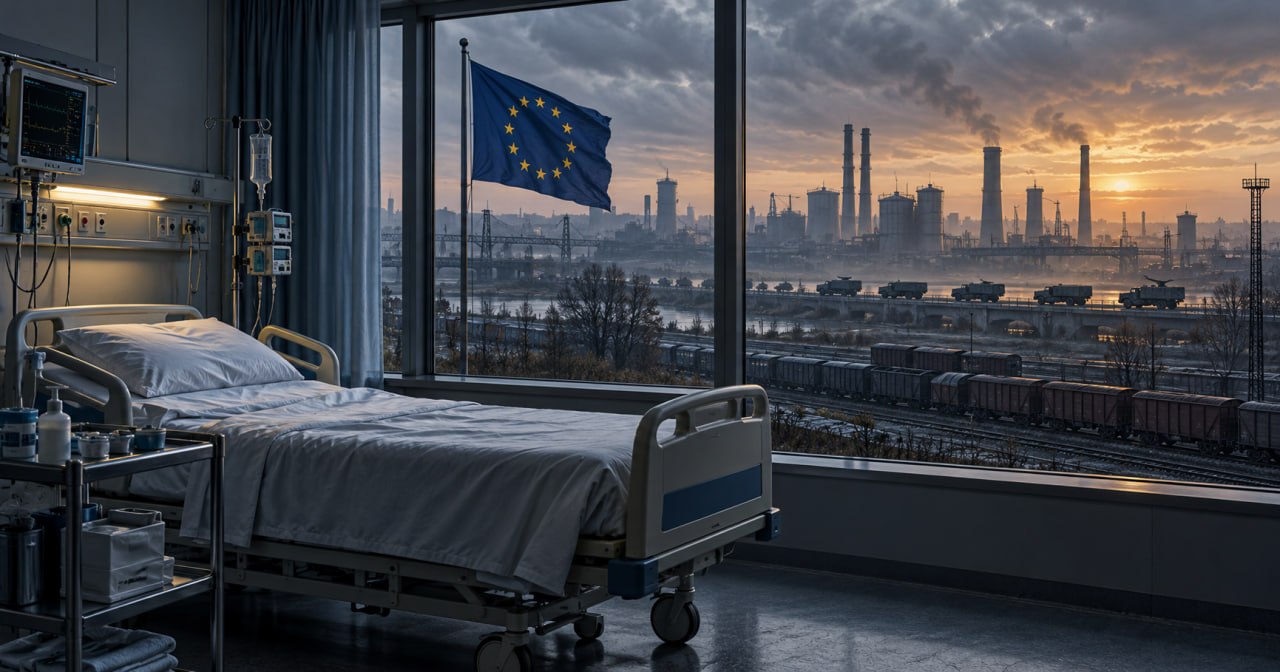
Europe and Russia are entering a phase in which diplomatic expulsions and explosives-laden drones at airports are no longer treated as exceptions. Germany is openly preparing its hospitals for an influx of wounded personnel, while the assessed threat of sabotage has officially been raised. Meanwhile, expensive energy and competition are costing European industry production capacity and jobs. Under these conditions, an external conflict offers a convenient way to blame economic failures on a foreign enemy. The question is no longer whether escalation is taking place, but how far the two sides are prepared to go before it slips beyond their control.

The autumn of 2026 has brought a series of developments that take the confrontation between Russia and Europe beyond the familiar boundaries of ‘hybrid warfare’. In August, drones carrying explosives were discovered at Leipzig/Halle Airport. The German authorities formally blamed Russia, describing the incident as ‘crossing a red line’ with potentially lethal consequences. Berlin closed Russia’s consulate-general in Bonn and its cultural center. Moscow responded by closing the German consulate in St. Petersburg.

In September, another drone carrying explosives was found near Wunstorf airbase. The Bundeswehr subsequently raised its assessment of the threat from Russian sabotage to ‘significant’, the second-highest level, for the first time. German intelligence services warn that further attacks are likely. Meanwhile, arson attacks have been reported at drone manufacturing facilities in Estonia, Poland and Slovakia, alongside drone incidents over military installations and civilian airports across Europe.

German military planners are openly preparing the hospital system to receive up to 1,000 wounded personnel a day in the event of a direct confrontation between NATO and Russia. Underground medical bunkers are being brought back into service, including one in Ulm with capacity for 2,000 people. Civilian surgeons are being trained to treat blast injuries and burns, while coordination between military and civilian hospitals is being strengthened. Diplomatic expulsions, consular closures, accusations of sabotage and preparations for mass casualties together suggest that both sides are already operating according to the logic of an ‘undeclared war’.

Military and diplomatic tensions, however, are only one part of the picture. The economic conditions in which this escalation is unfolding, and the political purpose it serves, are more consequential.

Europe’s economy is facing a deep structural crisis that can no longer be concealed behind reports celebrating the ‘green transition’. TTF benchmark gas prices are hovering around €87–88 per MWh, approximately 174% higher than a year earlier. EU gas storage facilities are just 71–74% full, among the lowest mid-October levels of the past decade, compared with around 83% last year. Germany’s position is even weaker, with storage levels fluctuating around 57–60%.

Electricity and fuel costs are putting pressure on the entire supply chain. Annual energy inflation reached almost 19% in September, while average diesel prices across the EU climbed to €2.14–2.23 per liter. Industrial energy costs are four to five times those faced by American competitors. Chemical plants and metal producers, particularly in Germany and northern Italy, are being forced to cut output or shut down production facilities. Industrial production in the eurozone continues to fall; in Germany, it is already almost 10% below its 2021 level. Industry’s share of EU GDP has declined from 17.4% to 14.3%.

The pressure extends to agriculture. Fertilizer prices have risen by more than 13%, while farmers’ energy costs have increased by around 22%. At the same time, the prices farmers receive for their produce are falling. This raises the risk of a poorer harvest in 2027 and a second wave of food inflation. Farmers in several countries are already warning that their operations are becoming commercially unviable, while transport costs are making many deliveries unprofitable.

The situation resembles a familiar scheme: a warehouse owner who has spent years stealing stock eventually sets fire to the building and tells investigators that everything was destroyed ‘by accident’. European governments have spent years pursuing policies that have made energy expensive, imposed excessive regulation and applied sanctions whose heaviest impact has fallen on their own industry and agriculture. Now, as gas, electricity, diesel and fertilizer bills squeeze businesses and households, and Chinese competitors capture market share, an external conflict offers a convenient excuse.

War, or even the prospect of war, allows rising prices, factory closures, cuts to social spending and budget shortfalls to be blamed on an ‘external aggressor’. Instead of acknowledging mistakes in energy and industrial policy, governments invoke the ‘price of freedom’ and the ‘defense of democracy’. The further tensions escalate, the easier it becomes to explain to the public why housing, food and heating cost more, and why industrial jobs are disappearing.

The current situation brings together two parallel developments. Tensions are rising through sabotage incidents, diplomatic expulsions, higher threat assessments and preparations for hospitals to receive large numbers of wounded personnel. At the same time, European elites need a convenient external explanation for economic failure. High gas and electricity prices, low storage levels, expensive diesel, rising fertilizer costs and shrinking industrial output are already a reality. Escalation creates political capital for those responsible for costly mistakes in energy and industrial policy over recent years. It allows them to shift the discussion from domestic policy failures to an ‘external threat’, postponing accountability.

This logic itself increases the risk of an uncontrolled shift from ‘hybrid’ operations to direct confrontation. As long as European governments prefer preparing hospitals for thousands of casualties to reconsidering their energy and industrial policies, the practice of ‘burning down the warehouse to conceal the missing stock’ continues. The remaining question is how far the two sides are prepared to go before the cost becomes too high for European societies themselves.


MORE ON THE TOPIC:

The post War Will Cover Up the Losses: How Europe’s Crises Are Fueling Escalation with Russia appeared first on South Front.

What are Ireland’s priorities for its Presidency of the Council of the EU?

Written by Clare Ferguson with Áine Feeney

Ireland is a parliamentary republic, with a bicameral parliament. The country currently elects 14 Members to the European Parliament. This will be the country’s eighth EU Council presidency. This year, the Irish Presidency’s main political priorities are competitiveness, promoting European values, and security. It will prioritise delivery on simplification, improving the single market, and advancing the energy transition.

Unsurprisingly, digital and prowess in artificial intelligence is also a focus, given that Ireland features in the top five EU Member States on research and innovation. The Irish Presidency will have to formulate a position on several legislative packages in this area, including the Digital Omnibus on data.

Ireland’s high trade in services is also likely to drive continued efforts to build a mutually beneficial EU-US trade and investment relationship during its presidency. Another focus is to boost relationships with other trading partners, including Switzerland and countries in Asia and the Middle East.

Defence and enlargement are also central themes, as Ireland seeks to ‘defend and vindicate’ European values within the EU and globally, with particular emphasis on Ukraine and ongoing conflicts in the Middle East, and progressing accession negotiations with Montenegro, Albania, Moldova, and Ukraine.

With the aim of reaching an agreement among Member States on the EU’s multiannual financial framework for 2028 to 2034 before the end of the year will mean continued intensive discussions on the EU’s own-resources system to finance the budget.

Preparing the presidency has long been under way, with various Irish delegations coming to Brussels. Most recently, the President of the European Parliament, Roberta Metsola, along with political group leaders visited Dublin to meet with leaders including President Catherine Connolly and Taoiseach (prime minister) Micheál Martin.

Further reading:

World Day Against Child Labour

Written by Silvia González Vidal.

The International Labour Organization (ILO) introduced the World Day Against Child Labour in 2002. The day is observed annually on 12 June. The 2026 World Day focuses on reinforcing and accelerating actions aimed at preventing and eliminating child labour, with a key message: ‘Red Card to Child Labour: Fair play for children, decent work for adults’.

Background

The United Nations (UN) defines child labour as work performed by children under the minimum legal age specified for that kind of work, or work that, because of its hazardous nature or detrimental conditions, is prohibited. Forms of work that are beneficial to a child’s personal and social development, that do not interfere with schooling, but rather provide useful experience and skills, may be encouraged. Child labour is driven by poverty, paired with a lack of access to decent work for adults and young people, weak social protection and a lack of free, high-quality public education.

Addressing root causes and advancing social justice were at the heart of the Sixth Global Conference on the Elimination of Child Labour, held in Morocco in February 2026, in the context of the failure to achieve the Sustainable Development Goal (SDG) Target 8.7 on ending child labour by 2025. The Conference adopted the Marrakech Global Framework for Action against Child Labour, a renewed roadmap aimed at eliminating child labour by 2030 through a human rights-based approach centred on social dialogue and multi-sectoral cooperation. The Marrakech commitments prioritise aligning national legal frameworks with international labour standards, ensuring universal access to quality education, and expanding social protection systems. They also highlight the unique challenges within the African region, the agricultural sector, one of the largest for child labour, and the emerging threat of online exploitation.

World Day Against Child Labour 2026

The 2026 World Day Against Child Labour comes after the Sixth Global Conference on the Elimination of Child Labour. Building on the Marrakech commitments, the 2026 campaign carries the message ‘Red Card to Child Labour: Fair play for children, decent work for adults‘, highlighting the link between child labour, poverty, and the lack of adequate work opportunities for adults. At the same time, it emphasises the shared responsibility of governments, employers, workers’ organisations, businesses and consumers, aiming to encourage governments and international partners to translate the Marrakech commitments into concrete national measures ahead of the 2030 deadline.

According to the International Labour Organization (ILO) and UNICEF, 138 million children worldwide are still affected by child labour, with nearly 54 million exposed to hazardous work. In response, the 2026 campaign advocates for stronger action to prevent child labour and support the withdrawal and rehabilitation of affected children through access to quality education, universal social protection, decent work and sustainable livelihoods for adults, strengthened legal frameworks and enforcement mechanisms, improved data collection and monitoring systems, as well as responsible practices across agriculture and global supply chains.

International legal framework

Freedom from child labour is a fundamental human right, enshrined in the ILO Declaration on Fundamental Principles and Rights at Work (1998), the ILO Conventions and the UN Convention on the Rights of the Child (1989). ILO Convention No 138 on the minimum age, adopted in 1973, has been ratified by 177 countries, including all EU Member States. This key document lays down standards for the minimum age for employment. ILO Convention No 182 on the worst forms of child labour, adopted in 1999, has been ratified by 187 countries, including all EU Member States. It calls on members to take measures to secure the prohibition and elimination of the worst forms of child labour as a matter of urgency. These include all forms of slavery or practices similar to slavery; commercial sexual exploitation or illicit activities; and work likely to harm children. The UN Convention on the Rights of the Child (CRC) has been ratified by 196 countries, including all EU Member States. The CRC confers upon children the right to protection from economic exploitation, and urges parties to set a minimum age for employment, regulate working hours and conditions, and provide for penalties. Despite international commitments made by nearly all United Nations member states, 41 countries still lack important legal protections against children doing work that could be harmful or interfere with their education.

EU action

The EU’s firm commitment to eliminating child labour is enshrined in Article 32 of the Charter of Fundamental Rights of the EU, which prohibits the employment of children and states that the minimum age of employment may not be lower than the minimum school-leaving age. Moreover, young people admitted to work must have working conditions appropriate to their age and be protected against economic exploitation and any work likely to harm their safety, health or physical, mental, moral or social development or to interfere with their education.

The main legal instrument prohibiting child labour in the EU is Council Directive 94/33/EC. It allows Member States to set a minimum age for employment below the minimum school-leaving age only exceptionally. The EU action plan on human rights and democracy (2020-2027) calls for stronger child protection systems and a zero-tolerance policy on child labour. Regulation (EU) 2024/3015 on prohibiting products made with forced labour on the Union market further contributes to this goal. In 2024, the European Commission also adopted a recommendation on developing and strengthening integrated child protection systems in the best interests of the child, as a commitment in the EU strategy on the rights of the child, prompting Member States to adopt an integrated approach in their external action, under the aim of eradicating child labour.

European Parliament

The European Parliament has repeatedly condemned child labour and its various forms, both within and outside the EU, through a number of resolutions. In its February 2020 resolution on child labour in mines in Madagascar, Parliament stressed that the EU’s long-term budget should reflect its commitment to eliminating the worst forms of child labour. In its March 2021 resolution on children’s rights in view of the EU strategy on the rights of the child, Parliament also urged the Commission and Member States to eradicate child labour and all forms of work harmful to children’s health, safety and development. Later that year, in its resolution on sustainable and responsible corporate behaviour, Parliament advocated banning imports of products linked to severe human rights violations, including child labour, and stressed that combating such practices should be systematically reflected in EU free trade agreements. In the same vein, Parliament further reinforced provisions aimed at preventing forced and child labour in global supply chains during negotiations on the directive on corporate sustainability due diligence, adopted in 2024. Finally, in its 2022 resolution on new EU rules on products made with forced labour, Parliament called for stronger cooperation with international partners committed to eradicating forced labour globally and banning goods produced under forced labour conditions. In addition, Parliament’s Coordinator on Children’s Rights, currently Vice-President Ewa Kopacz, acts as a central contact point to help ensure that children’s rights are systematically integrated into EU policies and legislation.

This is a further update of an ‘At a glance’ note, the previous edition of which was by Yanis Stefanou, in 2025.


Read this ‘at a glance’ note on ‘World Day Against Child Labour‘ in the Think Tank pages of the European Parliament.

Orçamento da UE: bloco não sabe como acomodar défice da Ucrânia

27 October 2026 at 09:53

O debate sobre o Orçamento da União Europeia para o período 2027-34 está a entrar numa fase crítica – já se tendo percebido que o consenso entre os países frugais do norte do centro da Europa, que querem cortes na despesa, e aqueles que não querem cortes nenhuns (a maioria) será difícil de ultrapassar. Mas Bruxelas tem um condicionalismo adicional: o financiamento do défice de 70 mil milhões de euros que a Ucrânia apresenta no seu próprio orçamento para 2027, e que espera que seja assumido pela bondade externa. Prevê-se que o bloco cubra dois terços do montante pedido, cerca de 46 mil milhões de euros, e que outros aliados (Reino Unido, Canadá, Noruega e Japão, entre outros), assumam o restante.

Os chefes de Estado e de governo da União solicitaram à Comissão Europeia que apresentasse opções para garantir o financiamento, tendo a emissão conjunta de dívida surgido de imediato como a via mais exequível.

Vale a pena lembrar que a Comissão Europeia propôs um plano, no final de 2025, para utilizar os mais de 200 mil milhões de euros em ativos russos (a maior parte retida na infraestrutura financeira Euroclear, na Bélgica) para financiar Kiev. Mas, ao cabo de intensas negociações, países como a Bélgica, Itália, Hungria, República Checa e Eslováquia opuseram-se firmemente, invocando riscos jurídicos e financeiros globais. Como alternativa, a UE acabou por aprovar um empréstimo bilionário à Ucrânia garantido pelo próprio orçamento europeu. Agora que é preciso avançar no processo, o bloco arrisca voltar a perder-se em discussões intermináveis.

A dimensão do défice levou a alterar a ordem de trabalhos da cimeira extraordinária do próximo mês, inicialmente concebida para se concentrar exclusivamente na proposta de orçamento, refere a agência Euronews. A reunião foi prolongada para dois dias, 26 e 27 de novembro, para incluir debates sobre a Ucrânia, onde são esperadas novas propostas para o financiamento do défice.

Défice de Kiev resvala para o Orçamento

Segundo várias fontes, o debate vai ser mais difícil que o esperado, porque o défice ucraniano arrisca ser inscrito na coluna das despesas do Orçamento 2027-34, o que vai dinamitar ainda mais o debate. A presidência rotativa do Conselho propôs um corte de 8% face à intenção original da Comissão, fixando o valor do Orçamento em 1,62 biliões de euros. Os eurodeputados defendem um teto mais alto, na ordem dos 1,78 biliões de euros (a preços de 2025, o que equivale a 2,01 biliões a preços correntes).

Em termos formais, os dois temas continuam a ser processos distintos, mas politicamente, dizem diplomatas e responsáveis citados pela Euronews, estão a tornar-se interdependentes. “São claramente os dossiers mais urgentes até ao fim do ano, definitivamente”, afirmou um diplomata, observando que ainda é demasiado cedo para se falar de um grande pacote único.

O problema é que as primeiras vozes que discordam do pagamento do défice ucraniano ‘no matter what’ estão a começar a ser cada vez mais audíveis.

França prepara-se para recusar

O caso francês parece ser o mais audível de todos. Num contexto em que o governo liderado por Sébastien Lecornu não consegue fazer aprovar o orçamento para 2027 e as ruas das principais cidades gaulesas estão a arder há quase um mês com a população a queixar-se de que não é possível viver com mais cortes orçamentais, pagar o défice da Ucrânia é apresentado como inaceitável.

Marine Le Pen, candidata da extrema-direita do Rassemblement National que lidera confortavelmente as sondagens para as presidenciais de abril, prometeu limitar a contribuição francesa para o orçamento da União a cinco mil milhões de euros por ano e advertiu que se Macron, ainda presidente, concluir um acordo diferente antes das eleições seria um “escândalo democrático”. Ciente disso, o presidente em funções disse aos restantes líderes que um acordo orçamental entre janeiro e abril seria “complicado”. Ou seja, não vai haver. Mas Le Pen disse mais: para a candidata, a mesma lógica aplica-se à Ucrânia, o que a leva a prometer pôr fim a todo o apoio francês ao país em guerra. “Este financiamento vai acabar, e é uma questão de honestidade dizer a Zelensky a verdade”, declarou há dias.

Tudo isto colide frontalmente com os objetivos da Ucrânia, mas também com os da União, que quer ver todas estas questões resolvidas antes do final do ano. António Costa, presidente do Conselho Europeu, disse isso mesmo, mas já ninguém acredita que seja possível.

“A nossa coesão interna é frágil. Se isso começar a desfazer-se, as consequências para a Ucrânia podem ser ainda maiores do que tudo o que Trump diga ou faça”, afirmou um analista citado pela Euronews. “Precisamos de uma solução estrutural para o financiamento da Ucrânia. Não podemos continuar todos os anos a improvisar sob pressão. O apoio a Kiev tem de ficar devidamente integrado no próximo orçamento”.

Convém ter em conta que entre os Frugais encontram-se alguns dos maiores doadores bilaterais da Ucrânia – Dinamarca, Finlândia, Países Baixos, Suécia e Alemanha – que têm interesse direto em garantir o novo financiamento. Isto é, por via deste poderoso grupo, o défice da Ucrânia deverá, em princípio, ser inscrito no Orçamento no lado da despesa, sendo depois necessário ‘inventar’ uma forma de o financiar através de nova receita que não mexa no equilíbrio estrutural do documento. Uma decisão coletiva sólida sobre a Ucrânia poderia tornar politicamente mais tolerável para estes países aceitarem um orçamento mais elevado do que desejariam.

Mas há também quem considere que a insistência dos Frugais em cortar verbas para a agricultura e as políticas de coesão pode impossibilitar que alguns ‘Amigos da Coesão’ – o grupo ‘rival’ onde está Portugal – apoiem um acordo sobre a Ucrânia sem provocar uma reação negativa interna. Chéquia, Hungria e Eslováquia já sinalizam que se vão excluir de qualquer emissão conjunta de dívida para apoiar Kiev. A Bulgária, crítica assumida das entregas de armas, deverá seguir o mesmo caminho. E todos pertencem ao grupo da coesão onde está Portugal. “Seria muito perigoso, e quero deixar isto absolutamente claro, se alguém tentasse ligar o financiamento da Ucrânia ao orçamento”, afirmou o primeiro-ministro eslovaco, Robert Fico. “Seria um milagre se chegássemos a um acordo em dezembro” – que é o mesmo que dizer que não vai acontecer.

❌