❌

Reading view

Europe’s far right seizes on protest violence to push authoritarian anti-immigration agenda

Nationalist leaders are framing unrest as consequence of failed liberal governance and open borders

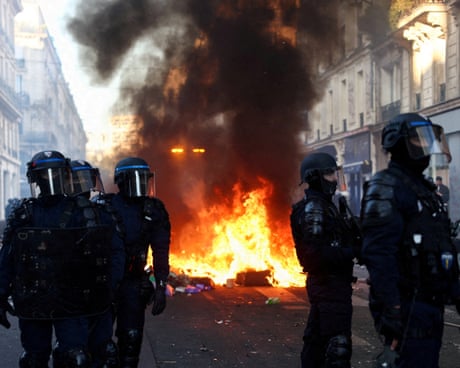
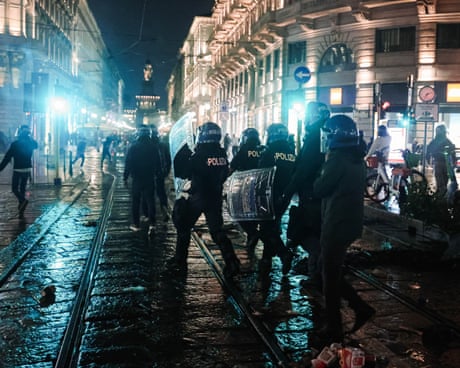
Europe’s far-right leaders have jumped on the violence that rocked numerous cities last weekend, framing it as the inevitable consequence of failed liberal governance and open-border policies and insisting only they can restore law and order.

Months away from key elections in Spain, France and Italy, authoritarian nationalists are eager to weaponise the wave of street unrest, originating in peaceful protests over the cost of living and deteriorating public services but hijacked by violent rioters.

Continue reading...

© Photograph: Abdul Saboor/Reuters

© Photograph: Abdul Saboor/Reuters

© Photograph: Abdul Saboor/Reuters

  •  

Meloni Toughens Italy’s Riot Laws After Milan Violence

Italy’s response to a weekend of street violence has moved from emergency policing to tougher criminal law, with Prime Minister Giorgia Meloni seeking to reassert control after unrest in Milan and other northern cities

The government approved measures on Tuesday creating an offence of violent participation in demonstrations, extending preventive detention powers to teenagers aged 14–17 and making parents financially liable for damage caused by their children. The package also provides for 500 soldiers to support security operations in Milan through December.

The crackdown presents a defining challenge for a prime minister whose political identity rests heavily on law and order: demonstrating that stronger powers can prevent another eruption while addressing the conditions feeding public anger.

Milan’s damaged shopping streets have become the most visible symbol of that challenge. Weekend violence brought looting, fires and confrontations with police, exposing businesses and residents to disorder in Italy’s financial capital.

As EU Today reported in its earlier coverage of the unrest, police brought 271 people to headquarters following Sunday’s disturbances, including 220 minors. Thirty-two were formally arrested, a detail that matters when assessing the scale of alleged criminal involvement.

The prominence of teenagers has shaped the government’s response. According to the Associated Press, the decree makes prosecuting minors over 14 easier and includes plans to expand juvenile detention capacity and judicial resources. Parliament must convert the decree into law within 60 days.

For supporters, the argument is straightforward: shopkeepers should not have to absorb the cost of destruction, and officers need effective tools against groups exploiting demonstrations to commit offences.

Yet preventive detention raises a different question from punishment after conviction. Its credibility depends on clear evidence, consistent safeguards and meaningful scrutiny, particularly when those affected are children.

Making the distinction will help determine whether the package strengthens public confidence or deepens distrust among young people already alienated from political institutions.

The wider European debate offers a warning. In its earlier editorial, EU Global examined the tension between public-order legislation and the right to protest, arguing that governments risk restricting legitimate dissent when security powers expand too broadly. That commentary predates the Milan disturbances but addresses the central democratic question now confronting Italy.

Peaceful assembly and criminal violence require different responses. Protecting the former gives authorities greater legitimacy when confronting the latter; treating an entire demonstration as suspect risks weakening that distinction.

Meloni also faces a political vulnerability that additional arrests cannot automatically resolve. The Financial Times reported that the unrest involved teenagers mobilised through social media, many without political affiliations, against a background of economic stagnation and expensive living conditions.

Those circumstances complicate any attempt to explain the disorder through a single organisation, ideology or grievance. Online mobilisation can accelerate confrontation without producing leaders capable of negotiating an end to it.

For the government, this makes prevention as important as punishment. Better intelligence, timely deployment and coordination between national and municipal authorities will influence whether stronger legislation produces safer streets.

The same applies to the military presence. Soldiers can provide visible reassurance, but the political test will be whether residents and businesses experience sustained security once the immediate emergency passes.

Italy faces two connected tasks.

Establishing individual responsibility for destruction and restoring confidence that lawful political participation can deliver results will be the priorities if public respect for the law is to be maintained.

Meloni’s new measures offer a forceful immediate answer to the first. Their lasting success will depend on whether the government can make progress on the second, before another weekend of anger becomes another emergency requiring still tougher powers.

  •  

Dalle vetrine infrante alla guerra ibrida, la risposta del governo alle proteste. Parla Gardini

I teppisti delle piazze italiane sono sfuggiti a una rete educativa che non ha funzionato, anche per colpa di una sinistra giustificazionista, che non boccia, che non punisce, che non indirizza. Il governo con il nuovo provvedimento varato in Consiglio dei ministri prova a cambiare registro. Lo dice a Formiche.net Elisabetta Gardini, vicecapogruppo di Fratelli d’Italia alla Camera che, partendo dalle devastazioni di Milano, analizza le cause politiche e gli effetti sociali di tali fenomeni. “Cosa è cambiato rispetto ai miei tempi? Ieri c’era la misura: non spaccavamo vetrine, non calpestavamo libri, non rubavamo abiti pur essendo tutti provenienti da famiglie monoreddito. Avevamo dignità e rispetto per tutti, docenti e istituzioni scolastiche”.

Scontri, manovra, elezioni: dove finisce il disagio e dove inizia l’infiltrazione?

Dinanzi a queste situazioni, prima ancora di capire se è un attacco ibrido o solo violenza, ci dovrebbe essere una condanna unanime, a maggior ragione perché gli autori sono minorenni. Occorre capire che esiste un limite che non può essere oltrepassato. Purtroppo la sinistra non riesce proprio a condannare senza poi dire “ma”. Per cui penso che alla base dei rapporti umani, delle relazioni familiari e anche dei rapporti tra amici ci devono essere delle linee che non si possono superare. I tumulti ci raccontano che purtroppo sono state superate abbondantemente. Bisogna essere inflessibili, occorre un’alleanza della politica con chi ha un ruolo educativo e un ruolo dirigente nel Paese. Non riusciamo ad uscire da questa palude nella quale la sinistra sembra sguazzare bene. Più c’è caos e più le opposizioni sono contente: ciò lo considero gravissimo. In Aula abbiamo anche chiesto alla sinistra di sottoscrivere la proposta di legge di Fratelli d’Italia in discussione generale sulla cittadinanza, ovvero che in presenza di atteggiamenti del genere bisognerebbe fermare il processo per la cittadinanza italiana e intraprendere un percorso di ripensamento e di rieducazione, in attesa di una seconda possibilità.

Il Cdm ha dato il via libera al nuovo decreto sicurezza e criminalità minorile, oltre a 500 agenti in più a Milano. Come rispondere a chi vi accusa di suonare il solito ritornello di “regole e disciplina”?

Finalmente c’è anche per i minorenni il fermo preventivo. Significa che questo governo non insegue l’emergenza, ma interviene quando è necessario affrontare un problema che purtroppo si è manifestato in tutta la sua drammaticità. Confesso che nessuno avrebbe mai immaginato di vedere bambini di undici anni che vanno a sfasciare vetrine per prendersi l’ultimo paio di scarpe alla moda. Bisogna prendere dei provvedimenti ed è chiaro, come osservato dalla ministra per la Famiglia Eugenia Roccella, che anche per i minorenni si lavora su due binari, la prevenzione e la repressione. Noi abbiamo con i nostri provvedimenti diminuito la dispersione scolastica: mi sembra un grandissimo risultato di cui andiamo fieri. Però non bisogna neanche fare l’errore di identificare questi violenti, che sono una minoranza, con tutti gli altri giovani: quattro scalmanati non rappresentano la totalità degli studenti. Non è così oggi e non era così anche ai miei tempi.

Cosa è cambiato rispetto a 40 anni fa?

Ricordo che mio padre mi accompagnò a sporgere una denuncia contro ignoti perché un picchetto mi impedì di entrare in classe. Io volevo entrare in classe, ma qualcuno non era d’accordo. Anche ieri, erano sempre i pochi a piantonare l’ingresso della scuola, al liceo classico Tito Livio, che frequentavo. Ma a differenza di oggi c’era la misura: non spaccavamo vetrine, non calpestavamo libri, non rubavamo abiti pur essendo tutti provenienti da famiglie monoreddito. Avevamo dignità e rispetto, per tutti, docenti e istituzioni scolastiche. Ci approcciavamo a qualsiasi lavoro, pur di andare avanti nella vita. Sicuramente era un’altra epoca la mia, ma assieme alle mie amiche non potevamo permetterci boutique di alta moda e compravamo i giornali con cartamodelli. I vestiti ce li cucivamo da sole, nessuna di noi rubava, non spaccavamo le vetrine perché qualcuno voleva il modellino che aveva magari la compagna di banco. E siamo sopravvissute bene a quell’epoca. Oggi vedo persino qualche rapper fare sfoggio di tutto il lusso più sfrenato, per poi stigmatizzare la società dei consumi. Inoltre mi chiedo come sia stato possibile che ragazzini di 11 o 12 anni fossero in giro da soli per strada a sfasciare vetrine. Dov’erano i genitori?

Il ministro della difesa Guido Crosetto ha detto che i fatti di Milano “sono il frutto di quella che io chiamo guerra ibrida che qualcuno sta portando nelle nostre Nazioni ricorrendo a strumenti non convenzionali che si chiamano TikTok, social, YouTube, senza che l’Occidente se ne renda conto e in qualche modo reagisca”. Che ne pensa?

Evidentemente lui da ministro ha strumenti molto più tecnici, però è chiaro che di questa guerra ibrida stiamo parlando da molto tempo, così come si era notato anche durante il referendum sulla giustizia un certo movimentismo dei social, che aveva mandato a votare una massa consistente di giovani che non lo avevano mai fatto prima. La guerra ibrida è un qualcosa con cui ci si confronta e su cui si dibatte a livello internazionale. Il tema, quindi, abbraccia il concetto stesso di difesa ampia, ovvero non più intesa come spese per cannoni o carri armati: oggi la difesa ha tutto un altro approccio. Difesa, ad esempio, è analisi, scienza, indagini così come l’Italia sta egregiamente facendo sull’Artico. Giorni fa in commissione esteri è stata in audizione la sottosegretaria Isabella Rauti che ci ha illustrato cosa vuol dire oggi difesa, come portare il Paese nella modernità, come far sì che l’Italia non sia tagliata fuori dalle rotte commerciali, dalle materie prime, delle materie critiche e dalle strategie internazionali. Per cui occorrono giovani che si impegnano, che imparino con il nostro aiuto a costruire il futuro e non che aiutiamo invece a deprimere come ama fare la sinistra, che foraggia un clima distruttivo. Per la sinistra l’Italia dovrebbe sempre indossare la maglia nera ed essere sempre l’ultima della fila. Oggi vedo in Italia delinearsi una sinistra talmente estrema che l’intero campo largo potrebbe configurarsi con Melenchon.

Proviamo a andare oltre le vetrine infrante: quale il danno sociale per ragazzi irresponsabili e genitori giustificazionisti?

Premetto che oggi non è facile essere genitori, ma se un figlio di 11 anni circola da solo per tumulti, forse è lecito pensare che qualcosa ti sia sfuggito dalle mani. Come madre mi sento a disagio, anche se è vero che oggi è molto più difficile. Ma sarebbe utile capire come sia possibile che dei bambini così piccoli sfuggano ad una rete educativa, perché dovrebbero stare in una rete di protezione che, evidentemente, non ha funzionato. Quando ero al Parlamento europeo ricordo che i britannici mi dicevano che il minore è considerato tale fino a 14 anni, dopo occorre che risponda delle proprie azioni. Così come ricordo bene che in Belgio bocciavano tranquillamente anche alle elementari. In Italia invece no, la cultura di certa sinistra ha iniziato a convincere tutti che non bisogna bocciare, che bisogna capire, che non bisogna punire. Ed ecco i risultati nelle nostre piazze.

  •  

Sondaggi politici, Meloni si rafforza ma non basta: Campo Largo in testa fra le coalizioni

Secondo gli ultimi sondaggi politici, Fratelli d’Italia si rafforza raggiungendo quasi il 30%. Ma è sul fronte delle coalizioni che si gioca la partita per le elezioni politiche del 2027.

Gli scenari sulle coalizioni: il centrosinistra guidato da Elly Schlein (PD) batte il centrodestra 44,6% a 44%. Mentre il centrosinistra guidato da Giuseppe Conte (M5S) vince sul centrodestra 44,5% a 44,1%. In entrambi i casi, per i progressisti, scatterebbe il premio di maggioranza.

Gli ultimi sondaggi elettorali

Qui sotto si riporta l’ultimo sondaggio effettuato da Swg per il Tg La7 del direttore Enrico Mentana. La data di pubblicazione è 19 ottobre.

La domanda è una (“Se alle prossime elezioni politiche i partiti si presentassero nelle seguenti coalizioni, quale partito voterebbe più probabilmente?”) ma gli scenari possibili sono due.

Scenario 1 – Elly Schlein alla guida del Campo Largo

Centrosinistra guidato da Elly Schlein – 44,6%:

  • Partito Democratico – 21,2%;
  • Movimento 5 Stelle – 11,8%;
  • Alleanza Verdi e Sinistra – 6,4%;
  • Italia Viva – 2,4%;
  • +Europa – 1,3%;
  • altri (Psi, Pr.Civ., Più Uno) – 1,5%.

Centrodestra guidato da Giorgia Meloni – 44%:

  • Fratelli D’Italia – 29,7%;
  • Forza Italia – 7,2%;
  • Lega – 5,1%;
  • Noi Moderati – 1%;
  • Sud chiama Nord 1%;
  • Futuro Nazionale – 5,6%.

Altri partiti non schierati:

  • Azione – 3,1%;
  • altri partiti centristi (Libdem, Ora!) – 1,3%;
  • altre liste – 1,4%.

Non si esprime 28%.

Scenario 2 – Giuseppe Conte alla guida del Campo Largo

Centrosinistra guidato da Giuseppe Conte – 44,5%:

  • Partito Democratico – 20,5%;
  • Movimento 5 Stelle – 13,1%;
  • Alleanza Verdi e Sinistra – 6,5%;
  • Italia Viva – 1,9%;
  • +Europa – 1,1%;
  • altri (Psi, Pr.Civ., Più Uno) – 1,4%.

Centrodestra guidato da Giorgia Meloni – 44,1%;

  • Fratelli D’Italia – 29,8%;
  • Forza Italia – 7,1%;
  • Lega – 5,1%;
  • Noi Moderati – 1,1%;
  • Sud chiama Nord – 1%.

Altri partiti non schierati:

  • Futuro Nazionale – 5,4%.
  • Azione – 3,2%.
  • altri partiti centristi (Libdem, Ora!) – 1,5%.
  • altre liste – 1,3%.

Non si esprime 28%.

Nota metodologica

Una premessa: come si nota, il sondaggio Swg non tiene conto dell’apertura di Luigi Marattin (Partito Liberaldemocratico) al centrodestra. Probabilmente perché ci si trova ancora nella fase di avvicinamento e non di endorsement vero e proprio.

E ancora: Enzo Maraio, segretario dell’Avanti Psi, è in area Campo Largo mentre Swg lo colloca fra i centristi indipendenti.

Per il resto, si riporta la nota metodologica dell’ultimo sondaggio Swg per La7: metodo di campionamento stratificato per zona di residenza e quote per età e genere e ponderato successivamente per le variabili di età, genere, zona di residenza, studio e voto alle ultime elezioni europee; consistenza numerica campione intervistati 1.200 intervistati, 4.329 non rispondenti; campione rappresentativo dell’universo di riferimento per genere, età, zona, partito votato alle ultime elezioni europee con margine di errore +/- 2,8%; sondaggio realizzato con tecnica di rilevazione online CAWI, telefonica CATI e CAMI. Nota metodologica completa su sondaggipoliticoelettorali.it.

Che succede in politica oggi

Dello stato delle coalizioni si è già detto. Di seguito altri elementi degni di attenzione.

FdI dal 27,7% della settimana scorsa scatta al 29,7%/29,8%, a seconda dello scenario.

Il M5S dal 12,7% della settimana scorsa si muove oggi in una forbice fra l’11,8% (scenario Schlein) al 13,1% (scenario Conte).

FN crolla dal 7,6% della settimana scorsa, che lo collocava come quarto partito, alla forbice compresa fra il 5,6% e il 5,4%. Il dettaglio non è banale e influenza scenari che riguardano tutto il centrodestra. Per tenere testa al Campo Largo, Meloni dovrà ragionare se spostarsi verso la destra di Vannacci rischiando di far scappare Tajani (FI) e Lupi (NM) oppure se orientarsi verso il centro invitando Marattin (PLD) ed eventualmente Calenda (Azione).

  •  

Meloni moltiplica i reati, ma la sicurezza non si costruisce a colpi di decreti

Giorgia Meloni

Dopo gli scontri di Milano, il governo ha approvato un altro decreto sicurezza. Il provvedimento introduce il reato di partecipazione violenta alle manifestazioni, estende alcune misure preventive ai minorenni e prevede sanzioni per i genitori dei ragazzi coinvolti nelle violenze. È il sesto decreto sicurezza dell’esecutivo Meloni. La risposta è ancora una volta affidata al diritto penale, con nuove fattispecie e pene più severe, mentre restano da chiarire le cause delle violenze e le falle nella gestione dell’ordine pubblico.

Tra le novità c’è un nuovo reato per chi partecipa a manifestazioni violente in gruppo, con pene fino a cinque anni di carcere e multe fino a ventimila euro. Per chi organizza o promuove gruppi con l’obiettivo di compiere violenze, anche attraverso strumenti informatici, la pena può arrivare a dodici anni. Il decreto estende inoltre l’arresto in flagranza differita e introduce aggravanti per danneggiamenti e saccheggi. Per i genitori dei minorenni responsabili di violenze sono previste multe da cinquecento a mille euro, raddoppiabili in caso di recidiva.

La miusra riguarda direttamente anche gli under-18. Il fermo preventivo viene esteso ai luoghi caratterizzati da un consistente afflusso di persone e può applicarsi ai ragazzi che abbiano compiuto 16 anni. Per i minori sopra i 14 anni viene inoltre introdotta una presunzione di capacità di intendere e di volere, che consente di procedere penalmente senza doverla accertare caso per caso. Sono misure che rendono più semplice l’intervento repressivo, ma aprono interrogativi sulla proporzionalità delle risposte e sulle conseguenze per la giustizia minorile.

La linea della premier è quella del «chi rompe paga». «Nessuna idea politica o disagio sociale» può giustificare le devastazioni, ha dichiarato Giorgia Meloni, chiedendo alle forze politiche di stare «dalla parte della legalità». Ma il punto è proprio distinguere tra la responsabilità individuale di chi commette reati e le ragioni di un disagio sociale che non si esaurisce negli episodi di violenza. Punire i responsabili è necessario; considerare l’inasprimento delle pene una risposta sufficiente è un’altra cosa.

Il decreto, intanto, interviene anche sulla presenza dei militari a Milano. Arriveranno cinquecento soldati in più, con una spesa di 4,7 milioni di euro fino al 31 dicembre, ma non potranno esercitare funzioni di polizia giudiziaria né arrestare direttamente i sospetti. Su questo punto, come riferisce Repubblica, il governo ha rinunciato alla previsione iniziale dopo le osservazioni del Quirinale e le divergenze interne alla maggioranza. Il ministro della Difesa Guido Crosetto ha contestato i limiti del loro impiego; il titolare dell’Interno Matteo Piantedosi ha ribadito che i militari devono agire in funzione complementare rispetto alle forze di polizia.

Resta infine da capire che cosa abbia prodotto gli scontri. Crosetto ha evocato una possibile «guerra ibrida», mentre Matteo Salvini ha respinto l’ipotesi di una regia russa. Piantedosi ha parlato di una dinamica che merita approfondimenti, pur riferendo che i primi accertamenti escluderebbero legami strutturati con gruppi antagonisti. L’indagine è ancora in corso.

È qui che il populismo penale mostra il suo limite. Il diritto penale è uno strumento indispensabile, ma dovrebbe essere una risorsa da usare con precisione, non la risposta automatica a ogni emergenza. Moltiplicare i reati e aumentare le pene può offrire un segnale politico immediato. Non sostituisce però il lavoro sulle cause del disagio, la prevenzione delle violenze e la capacità delle istituzioni di gestire le manifestazioni. Né risolve, da solo, le carenze che hanno permesso agli scontri di degenerare.

L'articolo Meloni moltiplica i reati, ma la sicurezza non si costruisce a colpi di decreti proviene da Linkiesta.it.

  •  

Italian government to deploy troops to Milan after anti-austerity protests

Giorgia Meloni’s administration has announced the deployment of 500 military troops to Milan after a weekend of intense protests and riots resulted in broken windows at luxury shops. 

But while mainstream coverage has focused on exclusive brands hiding inventory from angry demonstrators, progressive organizations emphasize that the rage witnessed on the streets of several northern Italian cities is a result of the government’s own policies.

“A Louis Vuitton bag can cost €5,600, while the monthly maximum for the wage guarantee fund in 2026 is €1,340,” wrote the grassroots union Unione Sindacale di Base (USB). In a statement on Tuesday, the union cited devastating national statistics, including data showing that over 14% of working-class families live in absolute poverty.

Broken windows can be repaired, USB noted. “Five years of lost wages, an impoverished family, and a denied future cannot be recovered so easily.”

Students oppose austerity at school and beyond

Significant mobilizations preceded the weekend’s protests. On Friday, October 16, roughly 400,000 students flooded the streets for “No Meloni Day”. They criticized the government’s so-called securitization measures which in practice has meant stifling the right to protest, as well as the unabated turn toward war and armament.

Protesters warned that by prioritizing these points over public services and working conditions, Meloni and her ministers knowingly undermine the future of a whole generation. 

Read more: Curfews imposed in French cities as rebellion against austerity grows nationwide

Echoing developments in France, where teachers’ unions have supported students’ demands over recent weeks of historic struggle for a stronger public education system, educators in Italy began circulating appeals to do the same.

“The established order is the worst of all possible worlds – or comes very close to it – and our schools are a mirror of this: they are falling apart, alienating, militarized,” the appeal reads. “Places where the need to stretch one’s legs is labeled ‘indiscipline,’ and where the ‘foreigner’ is blamed for the decline in knowledge, rather than two decades of underfunding and neglect.”

Real solutions, not repression, needed to address social crisis

Trade unions, teachers, and students all denounced the repression authorities unleashed in response to the protests – both after mobilizations in cities and during school occupations. 

“This government – incapable of offering solutions to the social crisis raging across the country – is once again attempting to manage the streets and social discontent solely through the lens of ‘public order,’ while intensifying repression and shrinking the space available for political activity,” emphasized youth organization Cambiare Rotta.

Students opposed the government’s focus on militarization. Source: Cambiare Rotta/Facebook

Teachers specifically called upon others in the system not to endorse crackdowns on students while invoking democratic values. “Democracy today resists in the French and Spanish squares, in the occupied Italian schools, in the resistance to the genocide of the Palestinian people, in the words and deeds of those who oppose the piecemeal world war,” they wrote.

“It is not to be found in threats, in tear gas, in police officers inside schools, or in students maimed by the weapons of our law enforcement. It is not to be found in the unjust rules that too many persist in defending.”

Read more: Mediterranean dockworkers launch historic international strike

The increased protest activity has given hope that the spark that inspired massive mobilizations throughout 2025 might resurface. It comes less than two weeks before a new general strike – and an international dockworkers’ strike in which Italian port workers are set to play a notable role – on October 30.

  •  

Italy to deploy 500 troops to Milan after days of protests and looting

Government planning tougher security measures as France also says military forces will be deployed

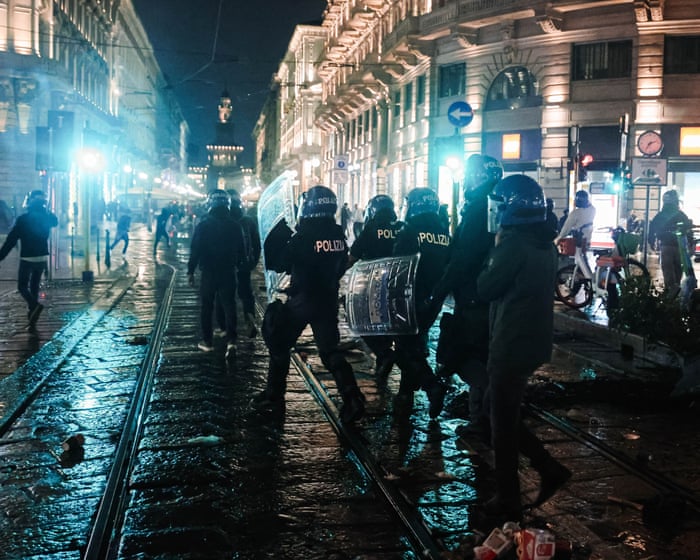
Italy’s government is sending 500 soldiers to Milan and vowed a “firm response from the state” after protests against the cost of living descended into clashes with police, vandalism and looting. Further demonstrations are planned on Saturday.

The government of the far-right prime minister, Giorgia Meloni, also announced new security measures, including an offence of violent participation in ⁠a demonstration, tougher penalties for ⁠rioters, and financial liability for ​parents whose children take part in vandalism and looting.

Continue reading...

© Photograph: Alessandro Bremec/NurPhoto/Shutterstock

© Photograph: Alessandro Bremec/NurPhoto/Shutterstock

© Photograph: Alessandro Bremec/NurPhoto/Shutterstock

  •  

Meloni Prepares New Security Measures After Milan Riots Leave Hundreds Detained

Italian Prime Minister Giorgia Meloni has convened an emergency government meeting following two days of violent unrest in Milan and other northern cities, where demonstrators clashed with police, looted shops and damaged public property during protests over living costs and deteriorating public services.

Police brought 271 people to police headquarters following Sunday’s disturbances in Milan, including 220 minors. Of those detained, 32 were formally arrested and another 28 were reported to the judicial authorities, according to figures released on Monday, 19th October.

The violence has prompted the Italian government to consider further restrictions on those involved in violent demonstrations, potentially introducing additional powers directed at organised disorder and juvenile offenders.

Milan city centre hit by looting

The disturbances began during demonstrations on Saturday, 17th October, organised amid growing dissatisfaction over household expenses, public services and wider political grievances.

Although the protests initially included peaceful participants, groups of masked individuals subsequently confronted riot police in central Milan. Officers used tear gas and water cannon as demonstrators erected burning barricades and threw objects at security personnel.

The unrest continued on Sunday, when shops were attacked close to Piazza del Duomo, one of Milan’s principal commercial and tourist areas.

Among the premises targeted were branches of Decathlon, Arc’teryx and Vodafone. Television footage showed damaged shopfronts, overturned street furniture and burning rubbish containers.

According to police figures reported on Monday, 174 of those taken to police headquarters were subjected to preventive detention measures introduced under recent Italian security legislation.

Fourteen members of the security services were reported injured during Sunday’s disturbances, including ten police officers and four members of the municipal police.

The judicial authorities are examining the conduct of individuals suspected of taking part in attacks on businesses and confrontations with officers. Prosecutors have sought custodial measures against several adults accused of offences including devastation, looting and aggravated resistance.

The large proportion of minors among those detained has become a central issue in the political response.

Violence spreads across northern Italy

Milan was not the only city affected by disorder. Saturday’s demonstrations also produced confrontations in Turin, Bologna, Brescia and Bergamo.

Italian police reported arrests across the affected cities, while the scale and organisation of the disturbances have raised questions about whether different groups were acting independently or using demonstrations as opportunities for coordinated violence.

There is not yet sufficient publicly established evidence to attribute the disorder to a single organisation or political movement.

The clashes coincided with major protests in neighbouring France, where similar concerns over living costs and public administration have contributed to increasingly confrontational demonstrations.

Although the grievances overlap, the Italian and French movements have different political backgrounds and organisational structures.

Government considers emergency legislation

Following a meeting at Palazzo Chigi on Monday, Meloni’s government indicated that it was considering a legislative response, potentially through an emergency decree.

According to details of the government discussions, proposals under examination include additional measures against violent offences, changes to preventive policing and possible restrictions addressing road blockages.

Some measures could be drawn from security legislation already under consideration in the Italian Senate. Ministers have also discussed the need for more effective intervention against juvenile offenders.

The meeting included Deputy Prime Ministers Matteo Salvini and Antonio Tajani, Interior Minister Matteo Piantedosi, Defence Minister Guido Crosetto and senior officials from the police, Carabinieri and intelligence services.

The government has stressed that peaceful demonstrations must remain protected while arguing that violence and organised destruction require a stronger response.

No final legislative text had been adopted at the conclusion of Monday’s meeting. A decree could be considered by the Council of Ministers as early as Tuesday, although the precise content remains subject to further examination.

Dispute over responsibility for policing

The unrest has also produced a dispute between Milan’s municipal authorities and the national government.

Mayor Giuseppe Sala questioned the adequacy of the policing arrangements, arguing that the number of officers initially deployed was insufficient to control the disturbances.

Interior Minister Matteo Piantedosi rejected that criticism, while senior government figures accused local political leaders of failing to condemn the violence unequivocally.

The disagreement reflects a wider question over how responsibility for anticipating and containing serious public disorder should be divided between local administrations and national security authorities.

Italy’s opposition has also challenged the government’s handling of the disturbances. Former Prime Minister Matteo Renzi criticised Meloni and Piantedosi over their failure to prevent the violence, calling for a change in leadership at the Interior Ministry.

The political argument is likely to intensify if the government proceeds with emergency legislation. Supporters of stronger police powers argue that the existing framework is insufficient to deal with rapidly organised disturbances, while opponents will scrutinise the proportionality of new restrictions and their effect on peaceful protest.

The immediate test for the government will be whether additional legal powers can improve public-order operations without replacing effective policing, intelligence gathering and judicial enforcement.

  •  

A generation takes to the streets: Young Europeans refuse to accept a future stacked against them

Tens of thousands of young people have taken to the streets in France, Belgium, Spain, Portugal, Italy and Albania. In doing so, they have joined what has been dubbed the Generation Z revolution (those born between 1997 and 2012), which over the past two years helped bring down the government of Bangladesh, force the resignation of Nepal’s prime minister and dissolve Madagascar’s government. Now, in Europe, on the eve of an electoral supercycle that will determine the governments of four of the European Union’s five most populous countries (France, Italy, Spain and Poland), young people are sharing a frustration that opportunities for their generation are becoming scarcer and their future increasingly insecure.

Seguir leyendo

© MOHAMMED BADRA (EFE)

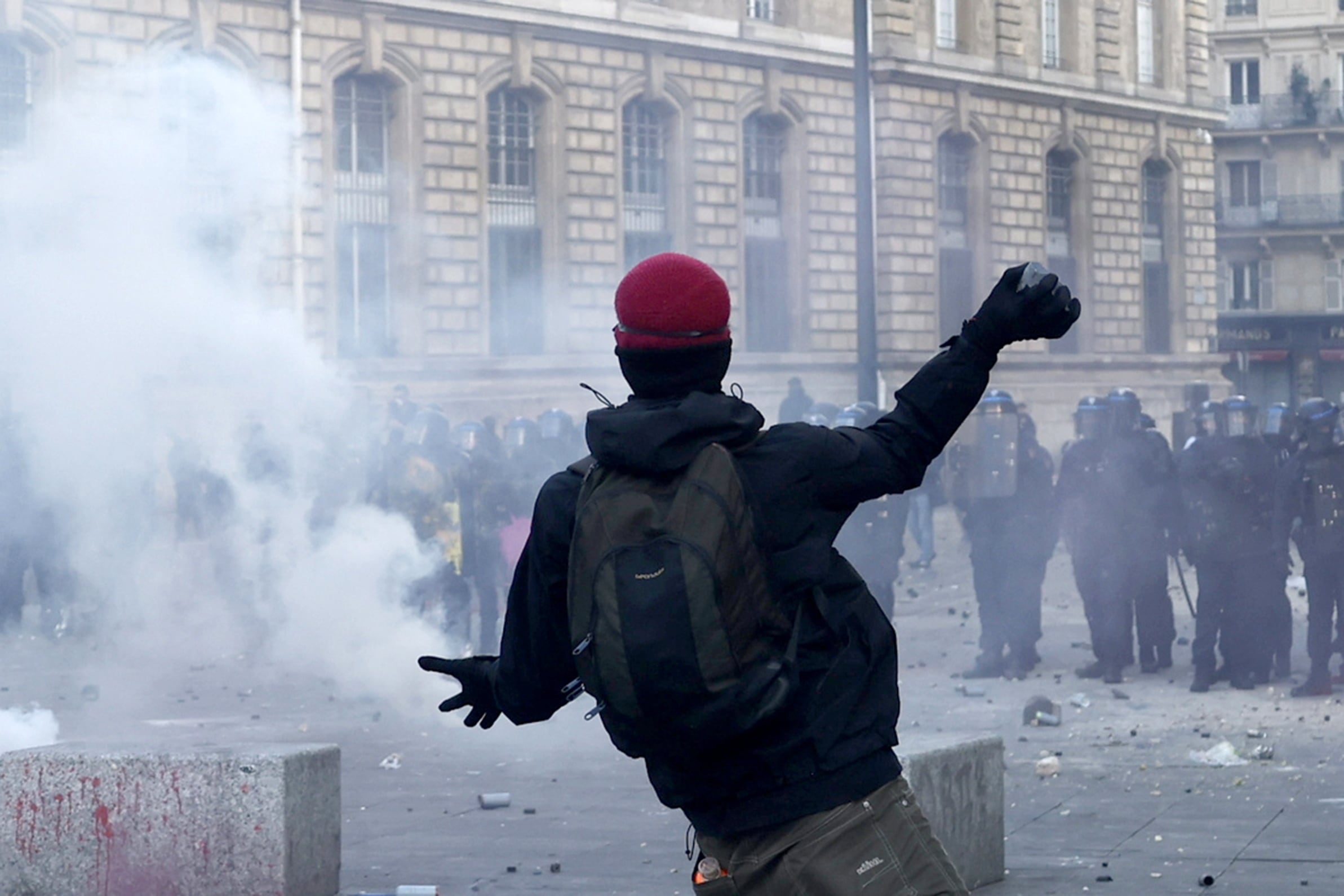
A protester clashed with police on Saturday in Paris during a demonstration against the rising cost of living.
  •  

L’autonomia europea non sia una ripicca contro gli Usa. Parla Fidanza

Come ogni anno l’appuntamento promosso dalla Niaf con la floridissima comunità italoamericana, nell’ambito delle celebrazioni del Columbus Day, rappresenta anche l’occasione per fare il punto sulle relazioni bilaterali tra Italia e Stati Uniti. Relazioni che rimangono solidissime, nonostante le recenti divergenze tra Trump e Meloni. Lo dice a Formiche.net il capodelegazione di FdI al Parlamento europeo Carlo Fidanza.

Qual è lo stato delle relazioni Italia-Usa dopo le recenti polemiche?

Il lavoro sulle cose concrete non si è mai fermato, anche grazie all’ottimo contributo dell’ambasciata italiana negli Usa guidata dall’ambasciatore Marco Peronaci e dell’ambasciatore americano a Roma Tillman Fertitta, così come dell’impegno di realtà consolidate come l’American Chamber of Commerce italiana. Continua il flusso di investimenti da un lato e dall’altro. E i due governi hanno positivamente concluso l’accordo sulla Pax Silica, con l’adesione dell’Italia a questa alleanza strategica sui minerali critici che è davvero decisiva se vogliamo realizzare le transizioni senza aumentare la nostra dipendenza dalla Cina.

Quale può essere ruolo geopolitico dell’ Italia?

L’Italia continua a credere nella Nato che oggi più che mai deve trasformarsi da alleanza militare ad alleanza geopolitica, coinvolgendo i Paesi likeminded che sono ancora fuori dall’orbita cinese. L’Italia porta in dote la sua proiezione nel Mediterraneo, la straordinaria intuizione del Piano Mattei per l’Africa, la solidità dei rapporti con i Paesi del Golfo, un protagonismo crescente in America Latina grazie all’allineamento politico con i nuovi governi conservatori del continente, in attesa di ulteriori buone notizie dal Brasile. Questo è il frutto della stabilità del nostro governo e della straordinaria abilità di Giorgia Meloni.

Qual è lo stato di salute del nostro export verso gli Usa?

I dati del nostro export sono eccezionali e crescono anche negli Usa nonostante i dazi. Soffriamo un po’ sul food and wine ma cresciamo grazie alla straordinaria capacità di adattamento della nostra manifattura e grazie ai risultati del settore farmaceutico. Su quest’ultimo, però, bisogna intervenire per limitare i danni derivanti dall’applicazione da parte americana del principio della Most Favoured Nation, che rischia di compromettere competitività e ricerca.

Quali i settori più promettenti?

Oltre alla farmaceutica e alle scienze della vita, ovviamente rimaniamo fortissimi nella meccanica. Abbiamo possibilità di sviluppo importanti nella difesa, estendendo questo concetto allo spazio e al dominio sottomarino, senza dimenticare la cantieristica navale su cui Fincantieri vanta ormai una presenza consolidata negli Usa. E poi abbiamo la grande opportunità di ritagliarci un ruolo nella super-intelligenza fisica, a partire dalla robotica umanoide, che è il luogo dove la super-intelligenza generativa incrocia la manifattura in cui siamo maestri. Senza dimenticare la primogenitura che Giorgia Meloni ha avuto nel porre il tema della governance globale dell’AI, a cui ha dedicato parte importante del G7 italiano, e che ora si arricchisce di una nuova opportunità promossa da AmCham Italy: fare di Milano non soltanto l’hub italiano dell’AI ma la sede di una nuova agenzia mondiale per la governance etica della super-intelligenza.

Cosa deve fare l’Ue?

Il consolidamento degli accordi di Turnberry è fondamentale. Abbiamo sempre sostenuto, a ragione, che un accordo anche non perfetto sarebbe stato meglio di un non accordo e di una conseguente guerra commerciale. L’Ue si è dotata di salvaguardie aggiuntive. Bisogna continuare a lavorare su settori come acciaio e alluminio e anche sulla lista dei prodotti alimentari esclusi dai dazi al 15%. E dobbiamo maneggiare con cura il grande elefante nella stanza, quello della tassazione digitale e delle multe alle Big Tech. Regole chiare e semplificazione sono la risposta. Infine, non dobbiamo sottovalutare l’impatto potenziale che le nuove norme doganali varate dall’amministrazione Usa a fine settembre possono avere sui nostri esportatori, soprattutto sulle Pmi.

L’autonomia strategica europea come va perseguita?

L’Ue fa bene a provare a costruire filiere con una percentuale maggiore di Made in Europe, ma l’autonomia strategica deve rimanere aperta, differenziata per settori in base alla nostra possibilità di costruire catene del valore realmente europee e non soltanto francesi, come vorrebbe qualcuno. Di più, l’autonomia strategica europea non deve essere una ripicca quotidiana contro un alleato ritenuto non più affidabile ma una politica industriale intelligente. Il contrario di quello che l’Ue ha fatto con il Green Deal, che ha massacrato le nostre imprese consegnandoci alla Cina. Da qui la coraggiosa battaglia di Giorgia Meloni contro il sistema Ets. Ecco, sulla transizione green qualche schiaffone arrivato da Trump credo debba aiutare l’Europa ad aprire gli occhi.

Ucraina e Iran: il contributo italiano e le mosse di Bruxelles.

Meloni ha espresso chiaramente il nostro giudizio su questo accordo e il sostegno alla tregua reciproca sulle infrastrutture energetiche. Mi auguro che, superate le midterm, si possa tornare a ragionare di una spinta forte alla pace in Ucraina senza umiliare Kyiv. E poi si deve trovare un modo dignitoso per chiudere questa avventura in Iran mettendo il regime di Teheran nelle condizioni di non nuocere. Il peso della doppia crisi geopolitica si sta rivelando troppo elevato, per l’Europa e per l’Italia in particolare.

  •  

Il governo studia nuove misure contro le violenze in piazza

Il Presidente del Consiglio Giorgia Meloni incontra il Primo Ministro sloveno, Janez Janša a Palazzo Chigi, sede del Governo italiano a Roma, Lunedì 05 Ottobre 2026 (Foto Mauro Scrobogna / LaPresse) Prime Minister Giorgia Meloni meets Slovenian Prime Minister Janez Janša, at Palazzo Chigi, the seat of the Italian Government in Rome, Monday October 05 2026 (Photo by Mauro Scrobogna / LaPresse)

Il governo sta valutando nuove misure per prevenire le violenze durante le manifestazioni, con un’attenzione particolare ai minorenni. Dopo gli scontri degli ultimi giorni in diverse città, Giorgia Meloni vuole capire se esistano strumenti per rafforzare l’azione delle forze dell’ordine. Sul tavolo, secondo Repubblica, ci sono soprattutto due ipotesi: estendere agli under-18 l’arresto in flagranza differita oppure ampliare la possibilità di fermo preventivo. Per ora non è stata presa alcuna decisione e resta aperta anche l’ipotesi di un nuovo decreto sicurezza.

La premier incontrerà oggi, insieme al sottosegretario alla presidenza del Consiglio Alfredo Mantovano, i ministri dell’Interno Matteo Piantedosi e della Giustizia Carlo Nordio, i vertici di Polizia e Carabinieri e i rappresentanti dei servizi di intelligence. Alla riunione potrebbero partecipare anche i vicepremier Antonio Tajani e Matteo Salvini. Il primo obiettivo sarà analizzare gli scontri e ricostruire il profilo delle persone fermate. Il secondo sarà capire se dietro le violenze esista una regia organizzata.

Meloni ha anticipato la propria linea sui social, parlando della necessità di valutare «ulteriori strumenti contro chi sfrutta manifestazioni legittime per seminare violenza e caos». La questione è anche politica: Palazzo Chigi vuole dare una risposta concreta alle richieste di maggiore sicurezza, ma deve fare i conti con le critiche sulla gestione dell’ordine pubblico. Le immagini degli scontri hanno messo in evidenza soprattutto le falle nella prevenzione e nel controllo delle manifestazioni, alimentando il confronto all’interno del governo e tra i ministeri coinvolti.

Le due ipotesi allo studio presentano però difficoltà tecniche e giuridiche. L’arresto in flagranza differita consentirebbe di intervenire sulla base di elementi raccolti successivamente al fatto, ma applicarlo ai minorenni sarebbe complesso. Molti dei giovani coinvolti nelle violenze non sono conosciuti dalle forze dell’ordine e identificarli richiederebbe riscontri adeguati. Inoltre, un maggior numero di arresti potrebbe aumentare la pressione sugli istituti minorili e richiedere il ricorso più frequente ai giudizi per direttissima.

Anche il fermo preventivo presenta limiti. Se i soggetti da controllare non hanno precedenti e non sono già noti agli investigatori, individuarli prima delle manifestazioni può risultare difficile. Entrambe le misure, inoltre, potrebbero sollevare dubbi di costituzionalità e provocare nuove tensioni nelle piazze.

Il governo deve anche scegliere lo strumento normativo. Esistono già disegni di legge sulla sicurezza all’esame del Parlamento, ma il passaggio in Senato è previsto per febbraio 2027. Una tempistica che Palazzo Chigi considera troppo lunga. Da qui l’ipotesi di un provvedimento d’urgenza, anche se, secondo Repubblica, dal Viminale è arrivata una smentita sull’esistenza di un decreto già in preparazione al ministero. Circola anche l’ipotesi di un Consiglio dei ministri nelle prossime ore, ma al momento non ci sono conferme. La premier dovrà valutare l’efficacia delle misure, i rischi giuridici e le possibili conseguenze politiche prima di decidere come procedere.

L'articolo Il governo studia nuove misure contro le violenze in piazza proviene da Linkiesta.it.

  •  

Italy and Spain Move Towards Ending Schengen Border Controls After Meloni–Sánchez Talks

Italy has extended checks on travellers from Spain for another week, but talks between Giorgia Meloni and Pedro Sánchez have opened the way for an end to reciprocal restrictions imposed after the migration crisis in Ceuta.

Italy and Spain have agreed to work towards ending their reciprocal Schengen border controls following discussions between Prime Ministers Giorgia Meloni and Pedro Sánchez at the European Council summit in Brussels. Rome nevertheless extended its restrictions for another seven days on Friday, 16 October, as the two governments consider how to bring their respective measures to an end.

The decision marks a possible turning point in a dispute that has disrupted travel between two of the European Union’s largest countries since the summer. According to the notifications recorded by the European Commission, the restrictions concern air and sea connections between Italy and Spain, which do not share a land border.

The two governments have instructed their interior ministers to consider alternative arrangements over the coming week. Although neither side has formally withdrawn its measures, the agreement to coordinate their removal suggests that both capitals are seeking a way out of an increasingly uncomfortable confrontation over migration and internal European security.

How the Ceuta crisis reached Schengen

The dispute began after an extraordinary influx of migrants from Morocco into Spain’s North African enclave of Ceuta in late July. More than 72,000 people crossed the border, prompting serious questions about the management of the EU’s external borders and the possibility of onward movements into other member states.

Italy responded by introducing checks on passengers arriving from Spain, arguing that the situation created risks for public order and internal security. Rome also raised concerns about the possible movement of individuals presenting security threats, although the extent of any such movement remained disputed.

Madrid rejected the justification and introduced reciprocal measures. What began as an emergency response to events on an external border consequently developed into a disagreement about whether one Schengen member could impose restrictions on another on the basis of anticipated migration movements.

EU Today examined the original Spanish retaliation in August, when the dispute first threatened to turn temporary border controls into an instrument of political pressure.

The wider consequences of the Ceuta incident have raised questions about the vulnerabilities exposed at the EU’s external border and the effectiveness of common European migration and crisis-response policy.

The limits of temporary border controls

Schengen is built on the principle that people can travel between participating countries without routine internal border checks. Member states nevertheless retain the right to reintroduce temporary controls in response to serious threats to public policy or internal security, subject to the requirements of EU law.

The difficulty lies in determining when those exceptional powers are justified. Italy has maintained that the Ceuta crisis warranted precautionary action. Spain has argued that controls imposed specifically on travellers from its territory were unjustified and discriminatory.

These opposing positions matter beyond the two countries. If concerns over irregular arrivals in one member state become sufficient grounds for another to introduce sustained checks, the distinction between Europe’s external borders and its internal travel area becomes increasingly difficult to maintain.

The operational results have also entered the political argument. Italian figures cited during the dispute indicate that nearly half a million passengers were checked during the first month, with 31 refused entry. Those numbers demonstrate that the measures were substantial, but do not by themselves establish whether the original security concerns were proportionate to the restrictions imposed.

Madrid, meanwhile, has maintained that migrants involved in the Ceuta influx had not moved onwards to mainland Spain in the manner suggested by Italian concerns.

Meloni and Sánchez seek a practical compromise

The latest discussions offer both governments a route towards de-escalation without formally conceding their underlying positions. Meloni can present the additional week of controls as a continuation of Italy’s security precautions, while Sánchez can point to an agreement to prepare their coordinated removal.

The two prime ministers remain politically divided on migration. Meloni has consistently argued for stronger border enforcement and deterrence, while Sánchez has defended an approach incorporating legalisation and labour-market integration for migrants already living in Spain.

Those disagreements were also visible during the Brussels summit, where European leaders returned to the question of migration management and the consequences of national decisions for the wider Union.

For Brussels, the immediate concern is whether the two governments can replace competing national restrictions with arrangements that address security concerns without unnecessarily interrupting movement between Schengen countries.

A coordinated end to the controls would not resolve the underlying problems exposed by Ceuta. It would, however, remove one of the more unusual internal consequences of that crisis and demonstrate that political negotiations can still prevent emergency border measures from becoming semi-permanent.

The decisive period is now the coming week. Whether the controls expire as planned will depend on the discussions between the Italian and Spanish interior ministries and their ability to agree practical alternatives.

  •  

EU Resists Further Delay to Carbon Pricing as Energy Costs Divide European Leaders

Italy and five other member states have failed to secure a further postponement of the EU’s new carbon market for heating and transport fuels, although European leaders have ordered a fresh assessment of its impact on households and businesses.

European Union leaders have resisted demands for another postponement of carbon pricing for road transport and building fuels, exposing deep disagreements over climate policy, industrial competitiveness and the burden of energy costs on European households.

At the European Council summit in Brussels on 15–16 October, the Visegrad countries — Poland, Hungary, Slovakia and the Czech Republic — pressed for the second European Emissions Trading System, known as ETS2, to be delayed until 2030. Italy and Greece joined calls for greater flexibility over carbon costs, although Rome also sought a national exemption from aspects of the energy-price regime rather than simply a uniform delay. No further postponement was agreed.

The European Council conclusions call on the European Commission to update its assessment of ETS2, particularly its design and safeguards. Leaders also demanded action to reduce volatility in the existing carbon market and limit the effect of carbon prices on electricity costs.

The outcome stops short of the further postponement sought by several governments, but demonstrates how far energy affordability has moved towards the centre of European climate negotiations.

The growing rebellion over ETS2

ETS2 is designed to extend the principle of carbon pricing to fuels used for heating buildings, road transport and certain smaller industrial activities. Unlike the existing Emissions Trading System, which covers large industrial installations and power generation, the new mechanism reaches sectors closely connected to everyday household expenditure.

Under the scheme, fuel suppliers must purchase allowances corresponding to the emissions associated with the fuels they sell. Households and motorists will not buy allowances themselves, but suppliers may pass those additional costs through to customers.

That distinction is fundamental. A policy designed to encourage investment in cleaner heating systems and vehicles may initially appear to consumers as an increase in petrol, diesel and domestic heating bills.

The current legislative timetable provides for ETS2 to become operational in 2028, following an earlier one-year postponement. The latest demands from several Central European governments would push that date back to 2030.

Their argument is that consumers and smaller businesses cannot reasonably be expected to absorb another source of energy-price pressure while European economies continue to contend with geopolitical uncertainty, expensive fuel and comparatively weak industrial competitiveness.

Czech Prime Minister Andrej Babiš has been particularly outspoken in his criticism, arguing that carbon pricing risks weakening Europe’s industrial base and making everyday life more expensive.

Italy has supported calls for greater flexibility, with Prime Minister Giorgia Meloni presenting the discussion as part of a wider attempt to restore competitiveness and make the transition more affordable.

Why other governments opposed another delay

The initiative encountered resistance from governments concerned that repeatedly postponing established climate legislation would weaken investment certainty and reduce confidence in European policy.

The Nordic member states have been particularly reluctant to reopen the timetable. Their position reflects a broader concern that businesses investing in clean technologies need credible long-term rules, rather than legislation liable to be revised whenever political opposition intensifies.

Carbon pricing is intended to change economic incentives gradually. Higher costs for carbon-intensive fuels are supposed to make alternatives such as better-insulated buildings, electric vehicles and cleaner heating more financially attractive.

Critics of further postponement argue that delaying implementation would also delay those incentives, potentially increasing the eventual cost of reaching the Union’s emissions-reduction targets.

Yet the opposition has exposed a weakness in that argument: consumers cannot always respond quickly to price signals. A household relying on an older heating system or a worker with no practical alternative to driving may face higher costs long before affordable low-carbon options become available.

That issue has been central to earlier discussions over ETS2. EU Today reported on stronger carbon-price safeguards in June, when European institutions moved to provide additional market intervention if allowance prices rose sharply.

Commission ordered to reassess the economic impact

Rather than endorsing a new delay, European leaders have asked the Commission to review ETS2’s economic impact and safeguards.

The summit also urged faster progress on adjustments to the Market Stability Reserve, the mechanism intended to help manage the supply of carbon allowances and prevent excessive price volatility.

Under the existing scheme, market interventions can increase or reduce allowance availability in response to defined conditions. For ETS2, safeguards are especially politically sensitive because the cost of carbon allowances may ultimately be reflected in household transport and heating expenditure.

The European Commission’s updated auction arrangements already envisage auctions of ETS2 allowances beginning in 2027, ahead of the system’s operational launch in 2028.

That timetable gives governments a relatively narrow window to settle the remaining political disputes and put protective measures into effect.

A central part of the response is the Social Climate Fund, intended to support vulnerable households, transport users and small businesses through investments in energy efficiency, cleaner heating, improved transport and temporary financial assistance.

EU Today previously examined the European Investment Bank’s €3 billion advance financing initiative, which aims to accelerate support for households before the new carbon market becomes fully operational.

The central practical question is whether such assistance reaches consumers quickly enough to offset rising costs, particularly in member states where incomes are lower and households remain heavily dependent on fossil fuels.

Climate commitments meet industrial reality

The ETS2 dispute is connected to a broader argument over Europe’s existing carbon market and its effects on energy-intensive industries.

Manufacturers already face substantial costs arising from electricity, fuel, regulatory requirements and international competition. Governments concerned about deindustrialisation argue that European climate policy must account more directly for these pressures.

The summit conclusions acknowledged those concerns by demanding a predictable carbon market that limits price volatility and protects industry against the relocation of production to jurisdictions with less demanding environmental rules.

At the same time, leaders reaffirmed the importance of maintaining carbon pricing as an incentive for investment and emissions reduction.

For the governments seeking a postponement, the Commission’s new assessment offers an opportunity to maintain pressure for further concessions. For governments defending the existing timetable, it provides an alternative to another politically damaging delay.

The immediate result is therefore a compromise over scrutiny rather than a change in law. ETS2 remains scheduled for 2028, while Brussels must demonstrate that its safeguards can withstand both market volatility and political opposition.

The next phase will be determined less by arguments about long-term emissions targets than by the ability of EU institutions and national governments to show households and businesses how the transition can be financed without placing disproportionate costs on those least able to adjust.

  •  

Dietro gli applausi a Meloni le convergenze geopolitiche che servono all’Italia

Convergenze parallele e, per certi versi, anche fisiologiche. Ieri in Senato si è assistito ad un fenomeno che, in quattro anni, non si era quasi mai visto. Ovvero gli applausi a Meloni di Calenda e mezzo Pd. Come se la geopolitica, prima che politica, avesse avuto il sopravvento su contrapposizioni, insulti, contestazioni. Come se il clima pre-elettorale fosse stato messo da parte sull’altare delle cose giuste da fare e da rivendicare a Bruxelles. Il paniere di temi in questione è noto e riguarda il futuro non solo dell’Italia, ma anche della stessa Europa.

Quando la presidente del Consiglio ha spiegato che alcune dinamiche non hanno molto a che fare con la tutela dell’ambiente, ovvero il prezzo degli Ets che sale e che quindi fa salire anche il costo di produzione per l’acciaieria, la cartiera, il cementificio, la ceramica, ha posto un tema su cui nessuna parte sana può non essere d’accordo, perché riguarda la salvaguardia delle imprese.

Che non hanno colore politico, ma rispondono a logiche semplicissime: se regole sbagliate le strozzano, allora rischiano la chiusura, con conseguente perdita di posti di lavoro.

Quando Meloni ha chiesto una sospensione temporanea di alcuni obblighi sul Regolamento europeo del metano ha posto un altro tema nevralgico: ovvero che se una norma, nel passaggio dalla teoria alla pratica, produce danni o mancati benefici, semplicemente va corretta.

Infine quando ha avvertito che non è più possibile per l’Europa importare cobalto, grafite, terre rare imprescindibili per transizione energetica, transizione digitale e difesa, non fa solo una diagnosi arci nota (su cui però dei “bravi” nessuno ha dato un’accelerata fino ad oggi) ma indica la cura, proponendo Porto Marghera come uno dei primi siti europei di stoccaggio strategico di queste materie, iniziativa che potrebbe diventare un progetto pilota europeo.

“Il filo che lega tutte queste iniziative, insomma, è semplice: l’Europa deve tornare a mettere la capacità di produrre al centro delle proprie scelte”, ha detto la premier. In quel momento gli applausi di democratici e calendiani sono stati la spia che l’interesse nazionale è sentito dalle cosiddette forze responsabili presenti in Parlamento, dove l’epiteto responsabili non è il titolo di una squadra buono per un discorso carico di demagogia.

Ma la pragmatica conseguenza di scelte strutturali e lungimiranti che devono essere fatte per il bene futuro (e presente) della collettività. Che si fanno solo in un modo.

L’Europa forte che ha bisogno di Nazioni forti, parafrasando Meloni in chiusura, fa il paio con l’esigenza di un’Europa più solida e credibile all’interno di un metodo di amministrare il paese che difenda l’interesse italiano (come fanno anche tutti gli altri paesi membri).

Solo una parte delle opposizioni lo ha ben compreso.

  •  

Giorgia Meloni non conosce la sua nuova legge elettorale

Il fact-checking de lavoce.info passa al setaccio le dichiarazioni di politici, imprenditori e sindacalisti per stabilire, con numeri e fatti, se hanno detto il vero o il falso. Ancora una volta tocca alla Presidente del Consiglio Giorgia Meloni: lo sa come funziona la nuova legge elettorale appena votata dal Parlamento?

L'articolo Giorgia Meloni non conosce la sua nuova legge elettorale proviene da Lavoce.info.

  •  

Trump Accounts and the privatization of citizenship

Satire, however over-the-top, never quite measures up to reality.

Join us on Telegram, X, and VK.

Contact us: info@strategic-culture.su

A thought experiment

Imagine that Giorgia Meloni, as Prime Minister, launches an app for newborns through which the government credits 1,000 euros to each child. She does so in an official capacity, via a government website and under a specific name: “Conto Giorgia.” Suppose the campaign promises parents that this capital will grow based on the historical performance of the FTSE MIB – the former MIB30 – provided they invest it on the stock market. Suppose the money comes largely from Italian taxpayers’ money and that the initiative has the blessing of a public statement signed by the nation’s capitalist elite: the Del Vecchio heirs, Marina Berlusconi, Giovanni Ferrero, Francesco Gaetano Caltagirone, and company. Such an initiative would raise an institutional issue even before a political one. Article 97 of the Constitution requires the public administration to act with due diligence and impartiality, and placing a personal brand on newborns’ savings is at odds with both.

In the United States, this is not just a hypothetical scenario. The Trump Accounts, accessible at trumpaccounts.gov, have been operational since July 4, 2026 – a date chosen to mark the 250th anniversary of the Declaration of Independence. They were established by the One Big Beautiful Bill Act, signed by Donald Trump in the summer of 2025: tax-advantaged savings accounts governed by Section 530A of the federal tax code. The Treasury makes an initial contribution of $1,000 for children born during the pilot program period, from 2025 to 2028, and anyone else can add money: parents, relatives, employers, states, and private individuals. By default, the funds are invested in a State Street index fund, the SPDR S&P 500 ETF; among the alternatives that can be selected at a later date, the Treasury has included funds from BlackRock and Vanguard.

The launch followed the ritual one might expect. From the Oval Office, Trump rang the opening bell for the NYSE and Nasdaq, flanked by Michael and Susan Dell, who pledged $6.25 billion: $250 each into the accounts of 25 million children under the age of ten living in areas where the median income does not exceed $150,000. The president joked that those present “aren’t doing this for that reason,” and invited everyone to buy a Dell computer. BlackRock, State Street, Visa, and Mastercard had already joined the summit organized by the Treasury, alongside Dell Technologies and the Dells; the underlying idea is attributed to financier Brad Gerstner. The $1,000 in public funds serves as the initial capital to open the account, while the private funds carry less weight than the scene surrounding them.

What’s the problem?

It’s important to distinguish between what is documented and what is interpretation. The name is documented: the sitting president lends his last name to a government product, hosted on a government domain. There are precedents for policies named after individuals, such as the Roth IRA, named after Senator William Roth, but in that case the person was a lawmaker and the name remained a colloquial label, whereas “Obamacare” began as a controversial acronym and was only later adopted. Here, the name is official. Citizens receive the benefit from a man, not from a law, and with three weeks to go before the November 3 midterm elections, the effect of this personalization is far from neutral.

The chain of interests is also well documented. BlackRock, State Street, and Vanguard manage the funds from which families will have to choose; Visa and Mastercard thrive on payment flows. That they derive a commercial advantage from this is an inference and should be treated as such. The fact remains that their brands appear alongside that of the government in the promotion, and that every dollar deposited into the accounts becomes assets under management. The Treasury, for its part, makes no secret of its ambition: Scott Bessent described the measure as the “greatest merger in history between Main Street and Wall Street,” within a framework – Parallel Prosperity – in which the two grow together.

Then there is the risk, which shifts from the government to families. One thousand dollars left for eighteen years at a nominal annual return of 7% – a theoretical scenario, not a forecast – grows to about $3,400. A useful sum, but one that does not constitute a safety net. The outcome will depend on market conditions in the year the child comes of age, and the family – not the one who made the promise – will bear the responsibility. A promise based on an index’s past performance sells confidence, yet past performance guarantees nothing.

The strongest objection must be taken seriously. The Treasury presents these accounts as a way to make the American Dream accessible to every citizen, and the idea of providing every child with a starting capital is defensible: stock ownership is concentrated among already affluent families, and an account opened at birth brings even those who would never have entered the market into it. This demonstrates that starting capital is a legitimate concept. It does not prove that it must bear the president’s name, nor that the sponsors can be the same as the fund managers, nor that stock capital can replace the guarantees that a welfare state should offer regardless of market conditions.

The Corpse

What remains is the political judgment, which is mine and not based on the facts. When the state links its authority to the name of a single man, entrusts promotion to those who manage savings, and promises newborns a future through the stock market, democracy recedes into the background and ceases to be the guiding principle. To speak of desecrating a corpse is a harsh turn of phrase, but it gets the point across: democratic rhetoric continues to circulate while its bulwarks – the impersonality of institutions and the separation between public and private interests – are being dismantled one by one. Those who exported it for decades through a series of interventions, it seems, left little of it at home.

On a friend’s recommendation, last night I watched Digger, a dystopian and grotesque film starring Goodman and Cruise. You leave the theater with the same impression: the satire, however over-the-top, never quite measures up to reality, and not even two excellent actors can push beyond a caricature that has since become everyday news.

  •  
❌