Basilea, Suiza, 26 oct (Prensa Latina) El tenis latinoamericano tuvo hoy una jornada aciaga en la primera ronda del torneo de Basilea, con los reveses de los argentinos Juan Manuel Cerúndolo y Mariano Navone. Cerúndolo perdió ante el alemán Daniel Altmaier por 7-6 (7/5), 6-7 (4/7) y 4-6, y Navone frente al monegasco Valentin Vacherot en dos sets 3-6 y 6-7 (4/7).
Commodity trader Mercuria Energy Group accused the Baltic Exchange of continuing to publish the world’s benchmark oil tanker rate, despite distortions caused by the Iran war, because it feared losing business to a competitor.
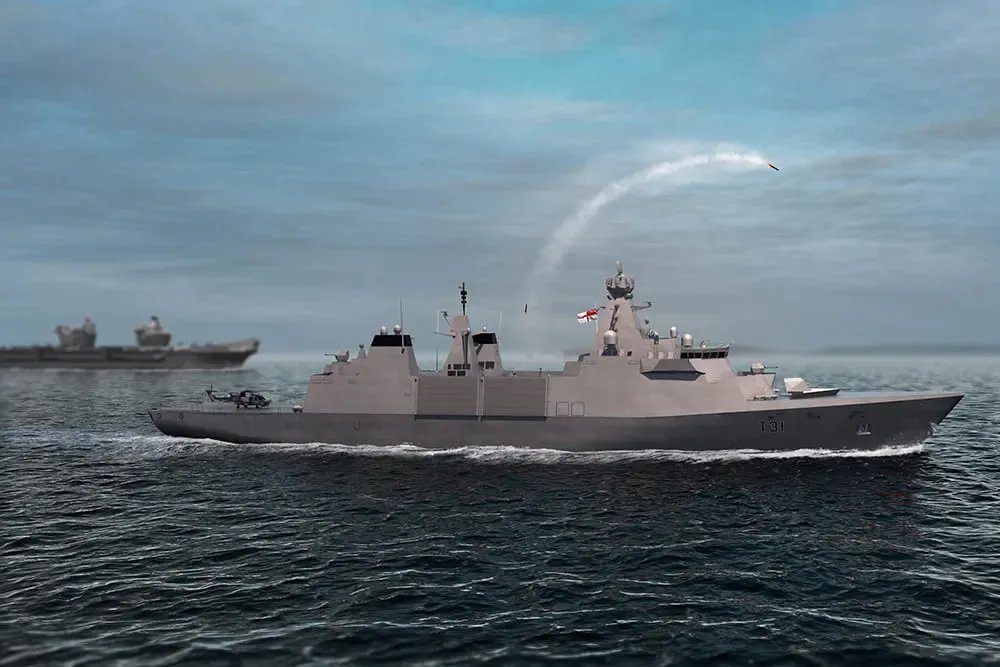
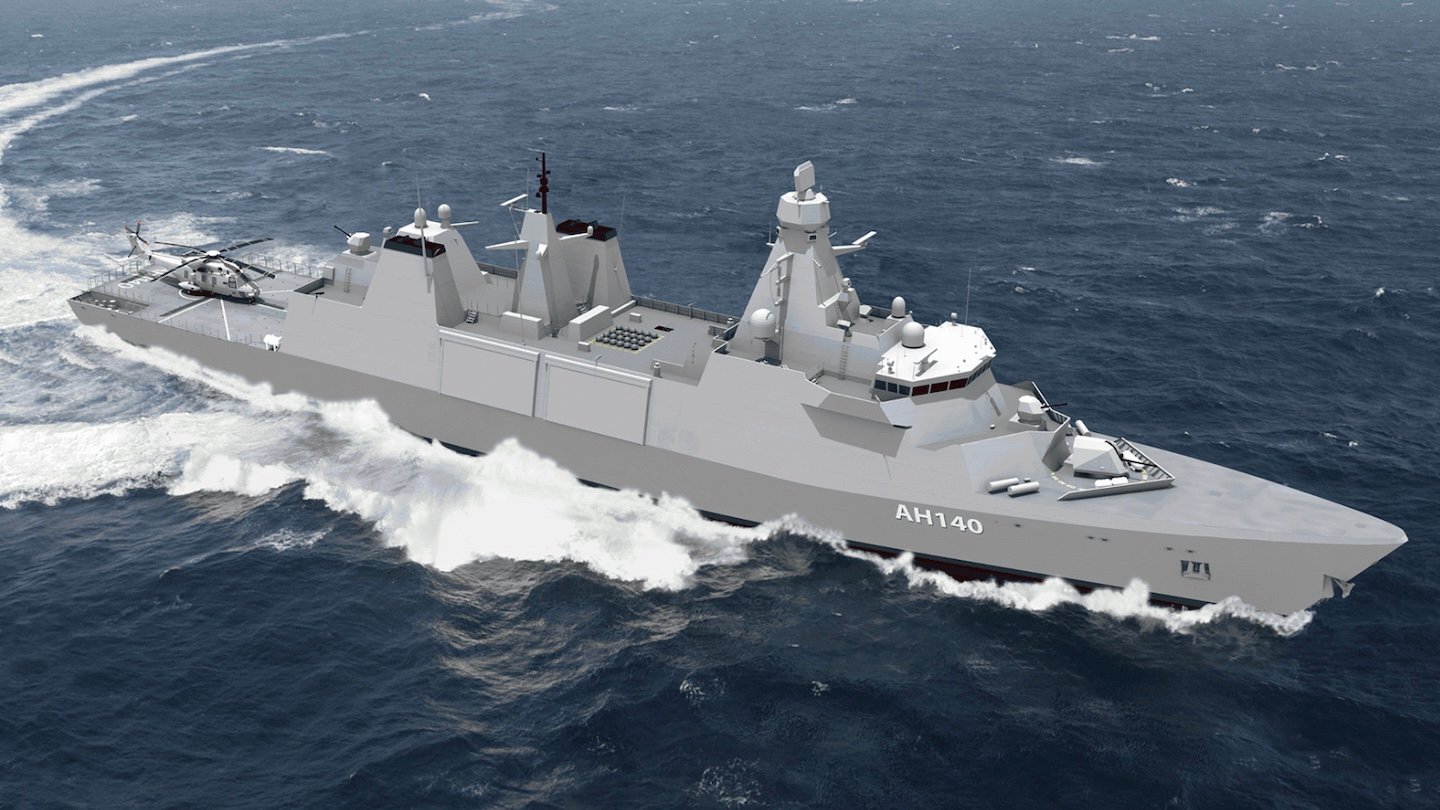
British defense contractor Babcock has confirmed that it is putting itself forward for the U.S. Navy’s future frigate program, with its Arrowhead 140 general-purpose frigate, the design behind the Royal Navy’s Type 31 class, expected to form the basis of its proposal. The move adds another foreign-designed warship to Washington’s search for a relatively mature frigate that can be built quickly and in significant numbers.
Babcock has held preliminary discussions with Pentagon officials and is expected to submit an expression of interest before the end of October, according to recent reporting by The Telegraph and Navy Lookout. The proposal is understood to potentially involve Huntington Ingalls Industries (HII), America’s largest military shipbuilder, with the two companies exploring an arrangement that could see the Arrowhead 140 built in the United States under license.
An artist’s impression of the U.K. Royal Navy Type 31 general-purpose frigate. Royal Navy
“Of course we’re interested. We have a world-class frigate, close links to the U.S. and U.S. industry. It would be insane for us not to respond,” Sir Nick Hine, head of Babcock’s marine business and a former Second Sea Lord, toldThe Telegraph.
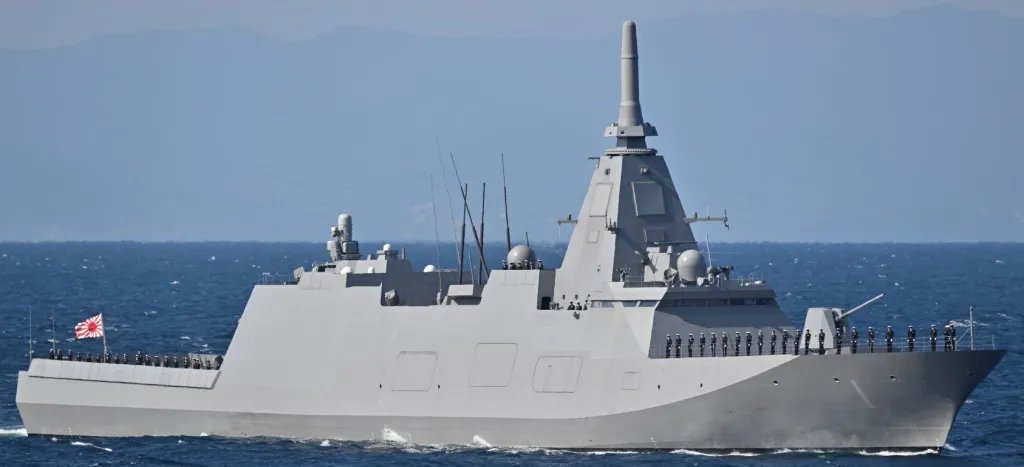
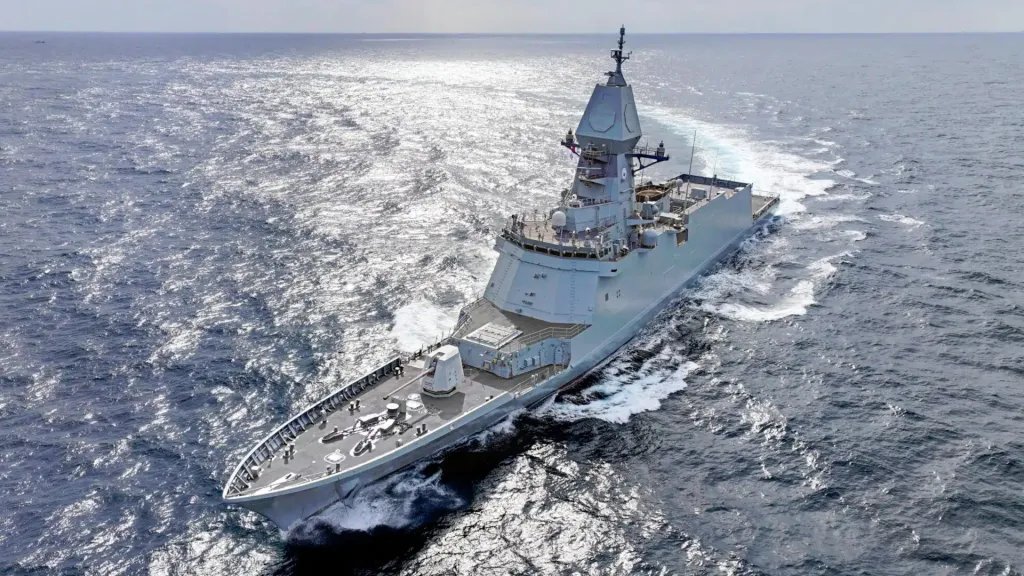
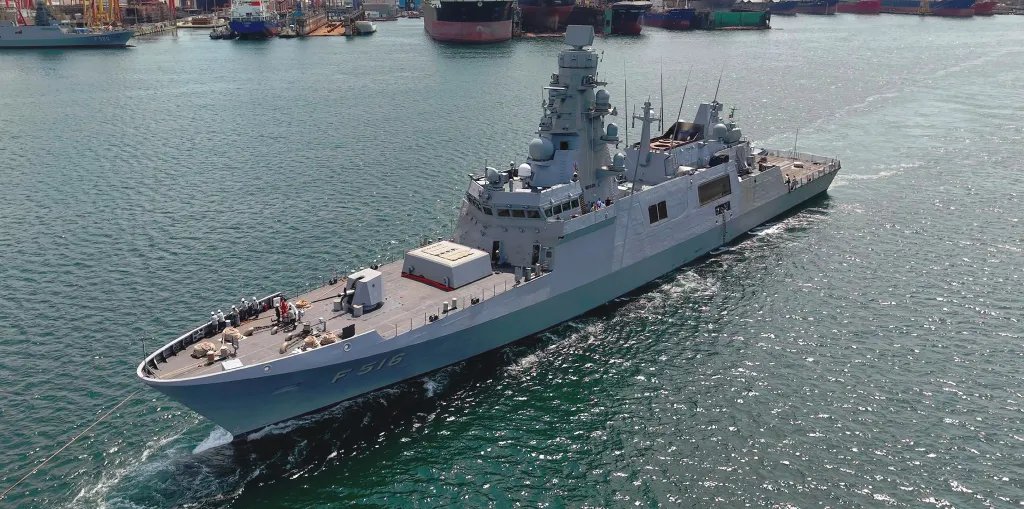
The initiative comes as the U.S. Navy seeks to accelerate the acquisition of smaller surface combatants after the troubled Constellation class frigate program was axed. Japan’s upgraded Mogami class, South Korea’s Chungnam class, and Turkey’s Istanbul class have also been reported as candidates for the Navy’s international frigate effort. You can read more about all three designs here.
The Japan Maritime Self-Defense Force’s (JMSDF) first-in-class JS Mogami. JMSDFThe South Korean Navy’s ROKS Chungnam seen during sea trials before its delivery in 2024. HD Hyundai Heavy IndustriesThe future TCG Izmir from Turkey’s Istanbul class. Anadolu Shipyard
Meanwhile, German defense contractor Rheinmetall, a newcomer to the surface combatant market, recently unveiled its GMF 140 frigate, which it has said it plans to offer “initially as part of a procurement project in North America” before pursuing opportunities with other allied navies.
For Babcock, the opportunity would be a major expansion of its relationship with the U.S. defense industry. If successful, the company would likely provide the design, engineering expertise, and potentially the intellectual property needed for American shipyards to manufacture the frigates.
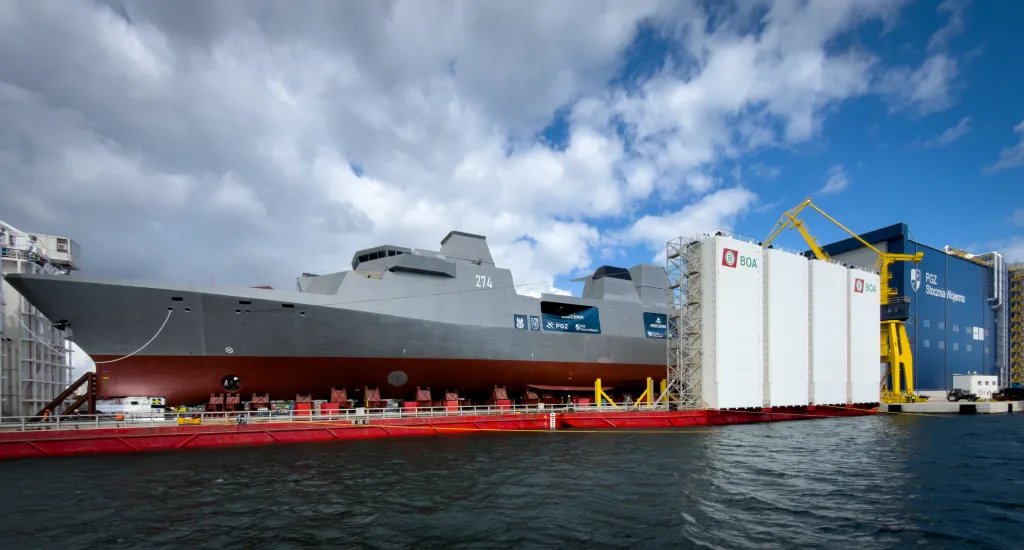
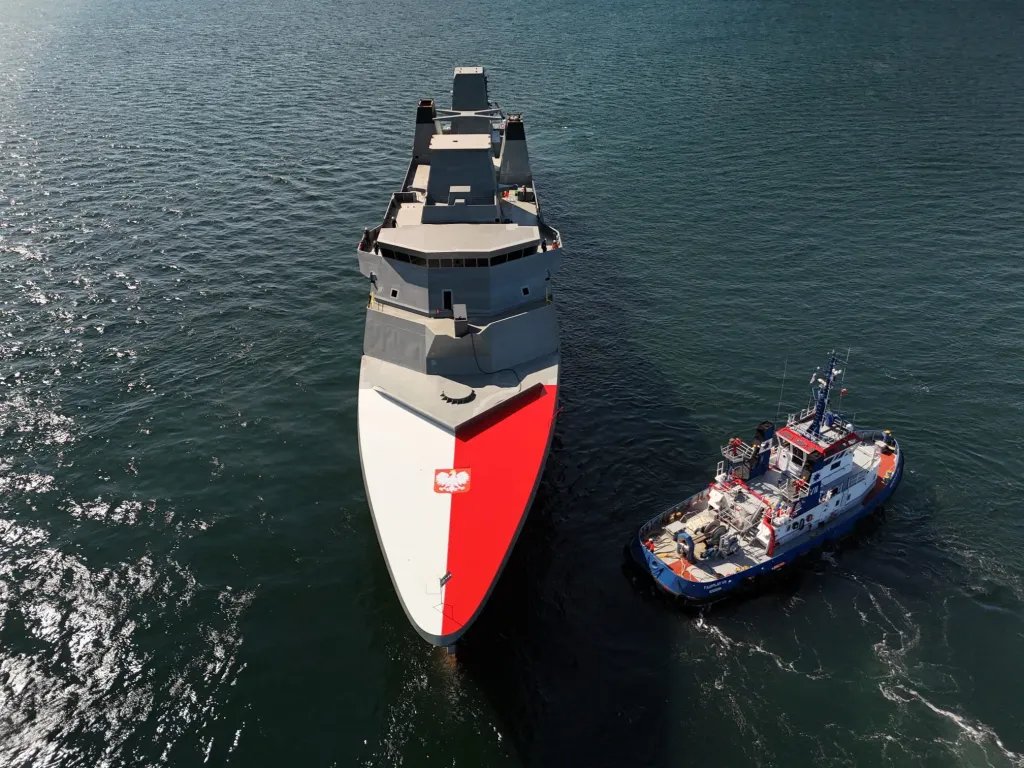
This would mirror the process for the Polish Navy’s Project 106 Miecznik (Swordfish) class, which is building three new multirole frigates in Poland, rather than using the company’s own facilities in Britain.
The future Polish Navy frigate Wicher under construction in Gdynia, Poland. Photo by Mateusz Wlodarczyk/NurPhoto
The Navy’s assessment of potential options is due by November 12. No contract has been awarded, and the details of any Babcock-HII proposal remain unconfirmed.
The Arrowhead 140 is the foundation of the Royal Navy’s five-ship Type 31 program, which is being built at Babcock’s Rosyth shipyard in Scotland. The design is derived from the Danish Iver Huitfeldt class frigate. As well as Poland, the warship has also been selected for Indonesia.
The Arrowhead 140 has a baseline length of approximately 455 feet, a beam of 65 feet, and a displacement of around 5,700 tonnes, although national variants may be considerably heavier. The vessel uses a conventional combined diesel-and-diesel (CODAD) propulsion system and can achieve speeds exceeding 28 knots. Its design emphasizes long endurance, with a baseline endurance of approximately one to two months. The AH140 incorporates a flight deck and hangar for naval helicopter operations, accommodation for embarked personnel, boat-handling facilities, and adaptable mission spaces. Its modular architecture allows customers to integrate different sensors, combat management systems, electronic warfare equipment, and weapons according to national requirements.
Taking the Polish Navy’s Project 106 class as an example of an Arrowhead 140 iteration, this is a notably heavily armed adaptation, featuring a 76mm Leonardo Strales main gun, a 32-cell Mk 41 vertical launch system for surface-to-air missiles, eight Naval Strike Missiles for anti-ship strike, and lightweight torpedo launchers. The Polish variant is reported to have a maximum displacement of approximately 7,700 tonnes.
Wicher, the first of the Polish Navy’s Project 106 Miecznik (Swordfish) class. PGZ SW
The Type 31 is a general-purpose warship capable of undertaking maritime security, escort, and surface warfare missions. Its relatively large hull offers considerable internal volume for weapons, sensors, aviation facilities, and future upgrades.
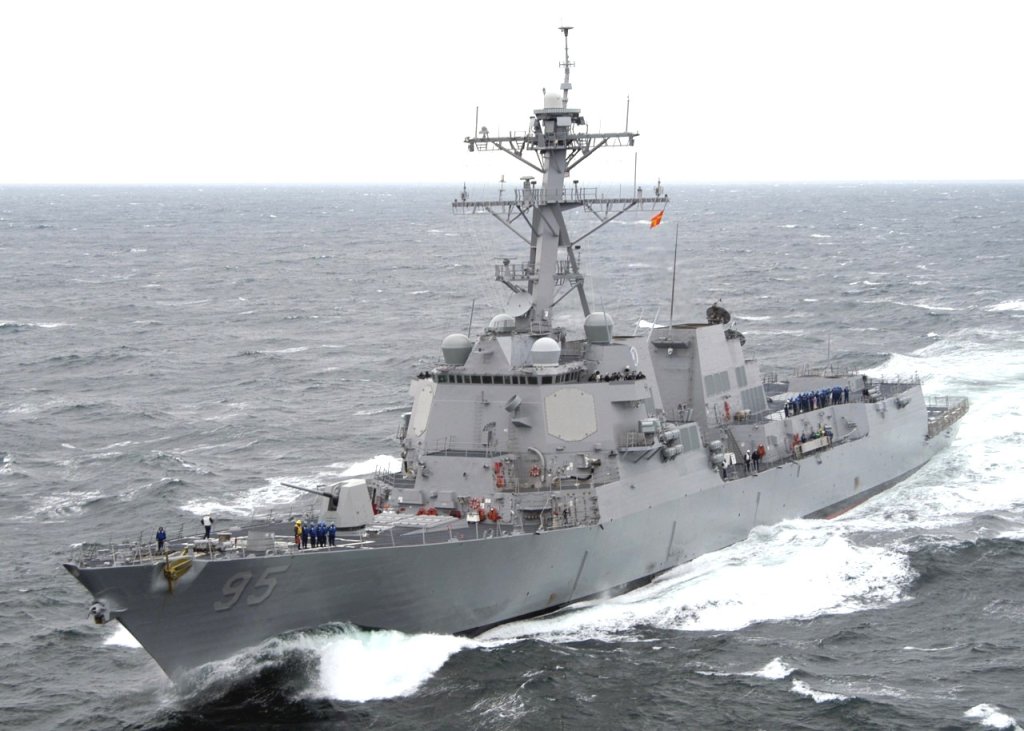
That could make it attractive to a U.S. Navy looking for a ship able to protect convoys, operate independently, and supplement its larger destroyers. A frigate with a significantly lower operating cost than an Arleigh Burke class destroyer could still take on a range of missions, freeing more capable combatants for broad area air and missile air defense, sustained strike operations, and other more demanding tasks.
The Arleigh Burke class destroyer USS James E. Williams underway. U.S. Navy courtesy photo The USS James E. Williams. USN
The Arrowhead 140’s size could also provide flexibility in accommodating American weapons and combat systems. However, a U.S. version would require a defined configuration, and there is no publicly established weapons fit for a potential American variant.
At the same time, the Royal Navy’s Type 31 frigate has not yet entered operational service, and its baseline configuration is not optimized for every mission the U.S. Navy may require. In particular, the integration of the sonar and other systems needed for sustained anti-submarine warfare would be a significant undertaking.
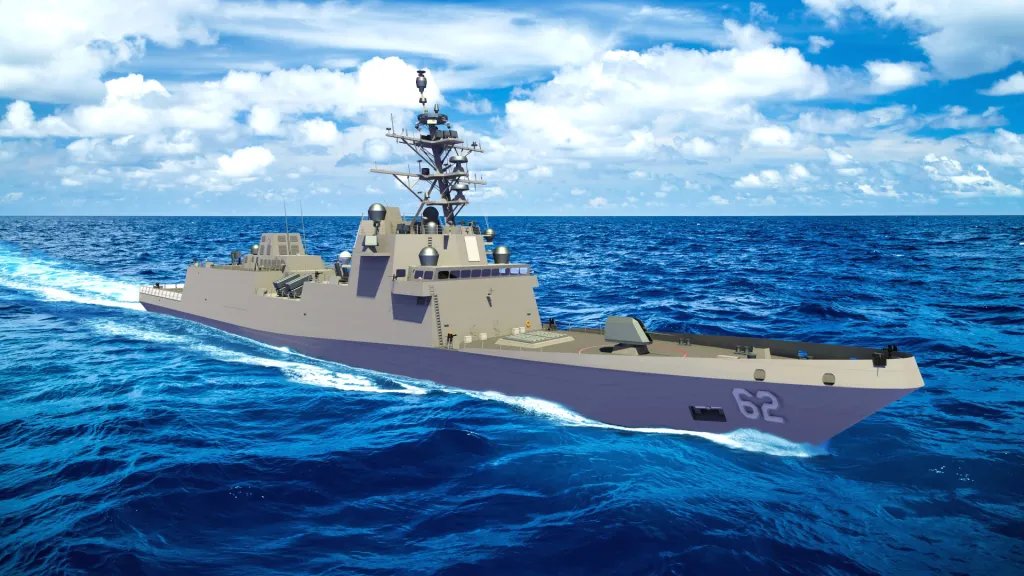
The Navy will also have to wrestle with how much of the existing design can be retained while meeting its own requirements. One of the major lessons from the Constellation program was that extensive modifications to an existing foreign design can create huge cost and schedule risks. With so little left of the original design after it was adapted to Navy specifications, this eventually doomed the program.
A rendering of a now-cancelled Constellation class frigate. U.S. Navy
For Babcock, it will be essential to keep the Arrowhead 140 as close as possible to its established configuration, while integrating essential American equipment, to keep the proposal competitive.
Babcock does not operate a shipyard in the United States, making an American industrial partner central to its approach.
HII, which operates major shipbuilding facilities at Newport News and Ingalls, would offer substantial experience constructing warships for the U.S. Navy. Babcock and HII already have an established relationship in the submarine sector, including work supporting the Virginia class attack submarine program.
Babcock’s facilities in Rosyth and Bristol manufacture tactical missile-tube assemblies for General Dynamics Electric Boat, supporting the Common Missile Compartment used by the U.S. Navy’s Columbia class and the Royal Navy’s Dreadnought class ballistic missile submarines. HII has also expanded its relationship with Babcock through work involving Virginia class submarine components.
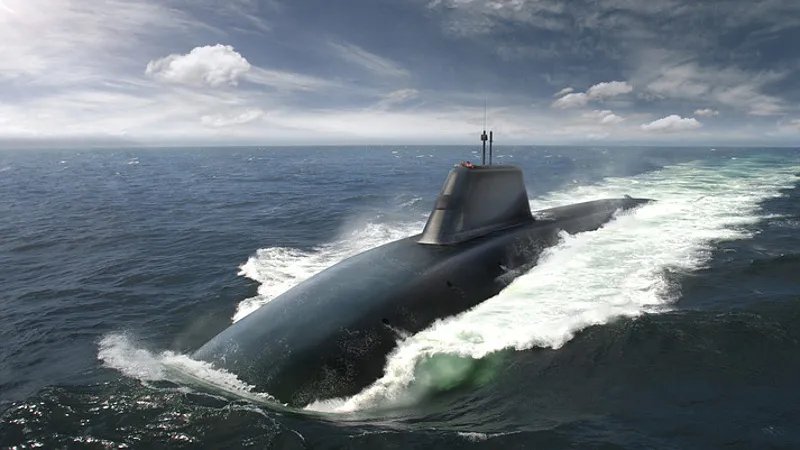
An artist’s conception of one of the Royal Navy’s future Dreadnought class submarines. BAE Systems
Those existing industrial relationships could provide a foundation for a surface-ship partnership. Under a potential arrangement, Babcock could transfer the necessary design rights and provide technical support while an American yard undertakes construction.
Such an arrangement would fit the Trump administration’s stated goal of using allied expertise to accelerate warship production while rebuilding domestic shipbuilding capacity. It would also allow Babcock to pursue a potentially significant U.S. order without requiring Rosyth to absorb a large new construction program alongside its Royal Navy commitments.
The prospect of HII supporting more than one design raises questions about production capacity, program priorities, and how the company would manage competing demands on its shipyards.
More generally, the administration’s interest in foreign frigates reflects growing concern about the time and expense involved in developing new American warships.
The Constellation class program was supposed to provide a modern replacement for the Navy’s retired Oliver Hazard Perry class frigates. Based on the European FREMM design, it underwent extensive modifications for American service before suffering serious schedule and cost problems. The Navy subsequently abandoned the program.
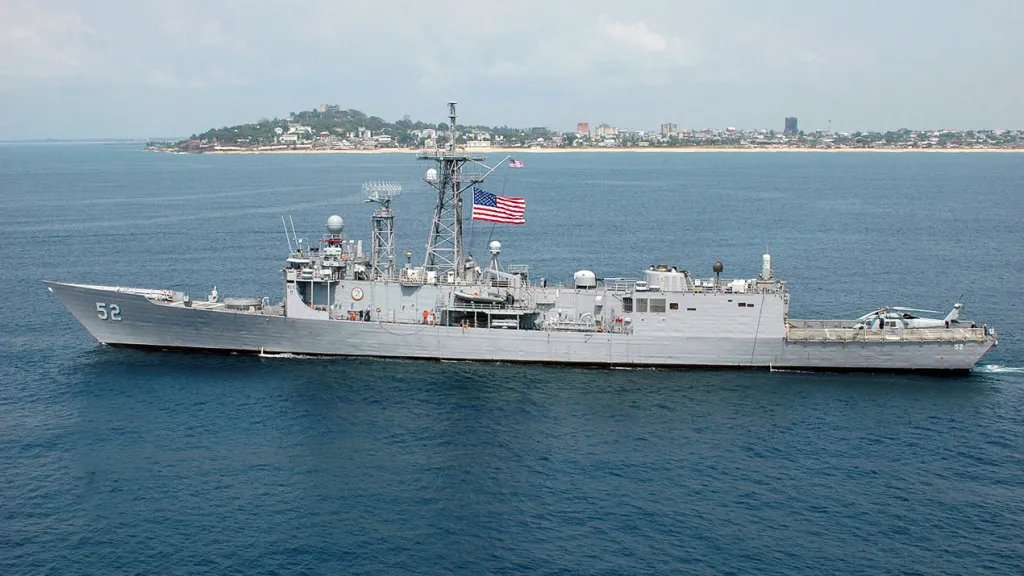
Oliver Hazard Perry class USS Carr is seen in 2006. The last of the type was retired from U.S. service in 2015. U.S. Navy
The service is now pursuing FF(X), a patrol frigate intended to be easier to build and field. Its initial configuration, however, is not expected to include a vertical launch system, limiting its ability to provide some of the capabilities associated with a more heavily armed multi-mission combatant.
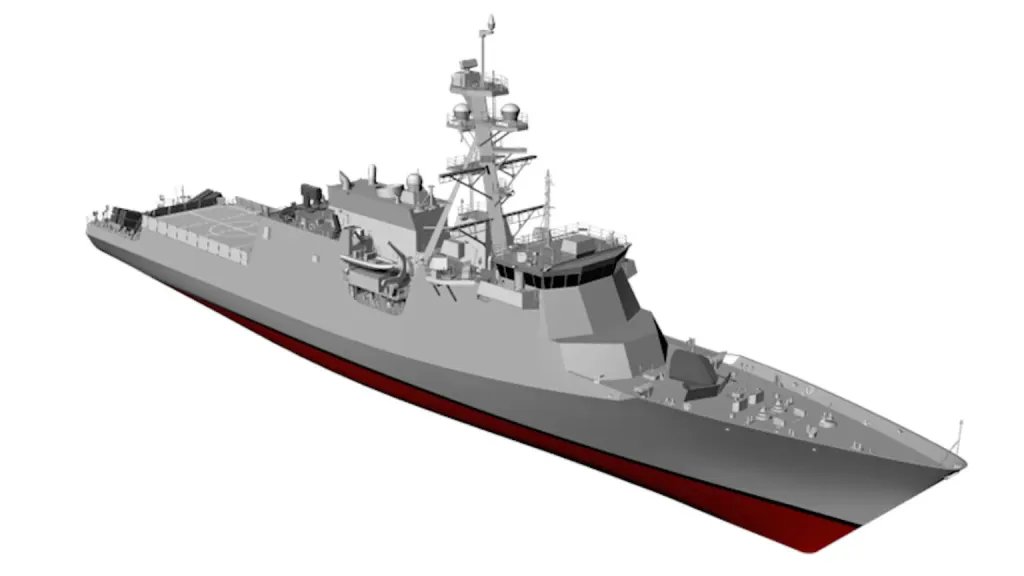
A rendering of the FF(X) frigate. U.S. Navy
HII is building the FF(X) frigate, based on the Coast Guard’s Legend class National Security Cutter. It is somewhat telling that they would partner with Babcock on the foreign frigate offering considering they already have the FF(X) contract.
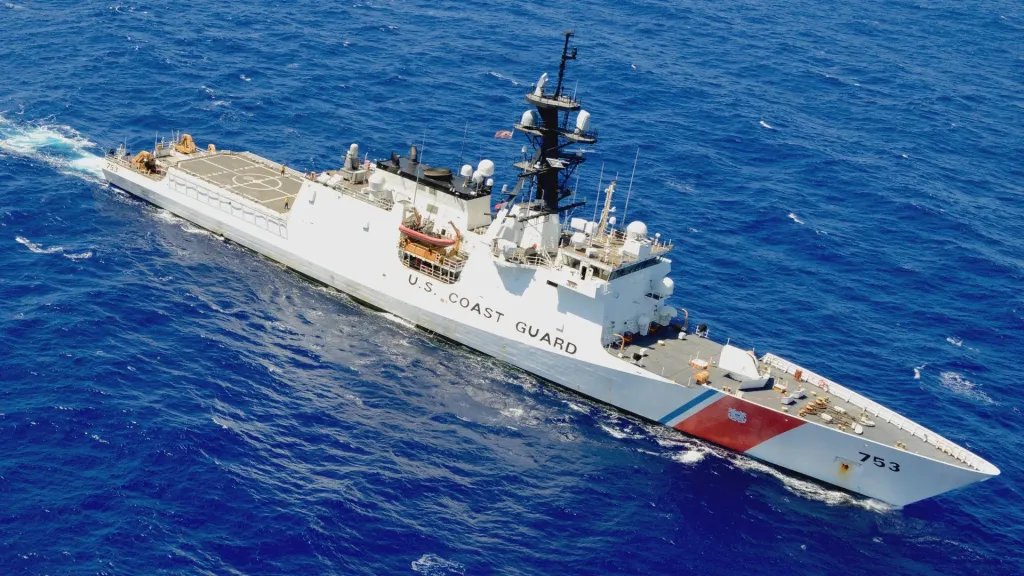
The Coast Guard’s Legend class cutter USCGC Hamilton. U.S. Coast Guard
The international frigate effort is intended to examine whether a ship based on an existing allied design could provide a different balance of capability, cost, and delivery speed.
An August presidential memorandum opened a route for the Navy to consider allied designs and, under limited circumstances, overseas construction through a national security waiver. The approach has been compared with a model in which an initial small number of ships could be constructed abroad before production moves to U.S. yards.
The reported framework limits overseas construction to no more than two ships and ties it to investment in American shipbuilding. Any eventual Babcock proposal would therefore need to demonstrate how the design could be transferred and produced domestically at the required pace.
That could be a big challenge. Babcock’s own Type 31 production line is already committed to the five ships ordered by the Royal Navy, while setting up an American production line would require workforce training, supply-chain development, and the transfer of manufacturing knowledge.
HMS Bulldog has officially entered build.
The ceremonial Steel Cut for our fourth Type 31 frigate marks another major step forward for our programme, joining a production line that is gathering real speed.
The Navy will also need to establish whether a foreign design can meet its minimum operational requirements without undergoing the kind of extensive redesign that dogged the Constellation program.
Babcock enters a field that already includes several established frigate designs from Japan, South Korea, and Turkey — and potentially more.
Each offers a different combination of design maturity, combat systems, production capacity, and potential industrial arrangements. The Mogami and Chungnam programs have operational ships in service, while the Arrowhead 140 has been selected for multiple export programs but is yet to enter operational service.
Babcock’s selling point is likely to be the Arrowhead 140’s size, adaptability, and established design pedigree, combined with the prospect of American production through HII.
With the Arrowhead 140 adopted by multiple navies, this brings potential cost savings through economies of scale, shared design evolution, and collaborative upgrades across the fleet. A wider international user base also brings the possibility of overseas industrial partnerships, including training and logistical support around the globe.
At the same time, U.S. Navy selection would represent a major endorsement of the platform and would further strengthen its position in other export markets.
For now, Babcock’s confirmation that it intends to pursue the opportunity adds another contender to the Navy’s search for a new frigate. Whether the Arrowhead 140 advances beyond the initial expression of interest will depend on how its capabilities and production prospects compare with the other candidates. And critically, Babcock and its U.S. partners will need to convince the Pentagon that they can deliver a ship that meets the Navy’s requirements without repeating the delays and redesign challenges of the Constellation program.
North Korea has the fourth-largest number of active armed forces in the world.
Alain Nogues/Corbis via Getty Images
China, India, and the US have the largest active armed forces in the world.
The International Institute for Strategic Studies compiled data about the world's militaries.
The world's top armies spend hundreds of billions of dollars on defense each year.
The US military may lead the world in budget size and in the ambitions of its warfare technology, but there is one measure by which it is outsized by other nations.
Using data from the International Institute for Strategic Studies' 2026 Military Balance report, Business Insider ranked the top 25 countries by the size of their active armed forces during 2025 and listed their defense budgets that same year.
Active-duty force size is a tally of a country's uniformed troops: airmen, soldiers, sailors, special operators, and Marines.
Armies, in particular, depend on size to gain and occupy ground during armed conflicts.
Militaries can also be a tool of domestic repression. North Korea, for example, is one of the world's most repressive states, led by a dictator who has repeatedly threatened neighboring South Korea — and it also has one of the world's largest militaries.
The number of active-duty military personnel is far from the only factor that matters when comparing military power between countries, but it reflects latent power.
"Numbers have value, but there's a lot more to military capability," Mark Cancian, a senior advisor at the Center for Strategic and International Studies, a Washington, DC-based foreign policy and national security think tank, told Business Insider.
IISS, a London-headquartered think tank, counts active armed forces, reservists, and paramilitaries as separate categories in its analysis, showing a fuller picture of each nation's manpower.
Some countries have significantly more reservists than others — Vietnam has the largest number in the world, estimated at 5 million — but the quality and longevity of their expertise can vary between systems.
"When you look at some countries' reserve numbers, you're often looking at people who haven't trained in 10 or 20 years," Cancian said. "It gives you a big number, but their military value is questionable."
Even when accounting for all of a military's manpower, personnel is only one of the factors that can qualify a nation's military strength, which also includes equipment and readiness.
There's also the role of technologies in global warfare, the size and sophistication of air forces and naval fleets, amphibious capabilities for landing assault forces, command-and-control systems, and nuclear forces, all of which shape military power.
Still, comparing global manpower offers insight into how countries prioritize military power.
See how the world's largest militaries stack up in terms of active troop numbers.
Dopo una lunga notte che ha avuto le sembianze di un sogno, è arrivato il giorno. E la Studentska lista ora ha sulle proprie spalle la vera sfida: traghettare la Serbia verso una stagione più luminosa, dimostrare ai cittadini che hanno riposto in loro fiducia che condizioni di vita migliori sono davvero possibili. Il movimento nato dalla tragedia di Novi Sad, in cui 16 persone il primo novembre del 2024 persero la vita a causa del crollo della pensilina della stazione cittadina, è legato soprattutto a volti giovanissimi. Furono loro i primi a scendere per le strade per chiedere che si facesse chiarezza, che si mettesse fine a un sistema corrotto i cui gangli permeavano tutti i settori della società, edilizia compresa. Ma come sotto l’effetto di un contagio collettivo, il movimento nei mesi si è allargato, riuscendo ad abbracciare una parte significativa della società serba in modo trasversale e a catalizzare persone di età, esperienze lavorative e provenienze diverse. Tra i 250 candidati presentati lo scorso settembre figurano infatti, oltre agli studenti, docenti universitari, artisti, agricoltori e professionisti negli ambiti più disparati.
Tuttavia, almeno per il momento, uno dei principali capisaldi che la Studentska lista ci ha tenuto a rimarcare è l’assenza di un leader o di un portavoce. L’intenzione dichiarata è quella di basarsi su un’organizzazione orizzontale, anche se durante la campagna elettorale il movimento è stato guidato soprattutto da Ilija Srdanović, un professore della Facoltà di Medicina dell’Università di Novi Sad. Il cardiologo, al momento, è visto come il candidato più probabile a occupare la posizione di primo ministro, anche se non è chiaro chi assumerà la guida dei ministeri chiave, inclusi quelli degli Affari Interni, delle Finanze e della Giustizia.
In questo passaggio anti-verticistico è custodito il vero taglio con il passato, poiché negli ultimi 14 anni la Serbia è stata abituata a qualcosa di diverso, a un singolo uomo, Aleksandar Vučić, che aveva finito per trattare il suo partito (SNS, Partito Progressista Serbo) e la politica di governo come un affare personale. Opponendosi a una formula verticistica del potere, le decisioni del movimento sono prese attraverso i plenum, assemblee studentesche in cui le proposte vengono discusse e poi sottoposte al voto. Anche la selezione dei candidati è avvenuta attraverso questo processo, con l’obiettivo di garantire una rappresentanza condivisa, seguendo un modello orizzontale che punta a ridurre il peso dei singoli. L’obiettivo è quello di fare pulizia e nell’opera di rinnovamento di cui gli studenti vogliono essere gli artefici hanno una traiettoria segnata da undici punti, quelli che compongono il loro programma ufficiale.
“Con interventi decisi, vogliamo fermare il saccheggio delle risorse pubbliche e restituire alle casse dello Stato il denaro sottratto, destinandolo direttamente all’istruzione e allo sviluppo economico. L’obiettivo è creare le condizioni affinché i giovani possano restare in Serbia e costruire qui il proprio futuro e quello delle loro famiglie – si legge nel documento – Abbiamo bisogno di istituzioni capaci di funzionare senza direttive delle segreterie di partito, di una magistratura in cui la legge sia uguale per tutti, indipendentemente da chi si trovi davanti ai giudici. Di finanze pubbliche sottoposte al controllo dei cittadini, di un sistema di istruzione e di una sanità che lo Stato non consideri un peso. Di media liberi dalle pressioni politiche. E di amministrazioni locali in cui i cittadini partecipino davvero alle decisioni che determinano la loro vita”.
Tra i punti più concreti del programma ci sono libri di testo gratuiti per tutti gli studenti delle scuole primarie e secondarie, ma anche gite e attività scolastiche più economiche. Sul fronte sociale, la lista propone soluzioni abitative a condizioni agevolate per alcune categorie, mentre in ambito occupazionale, vuole ridurre da 24 a 12 mesi la durata dei contratti a tempo determinato. Per quanto riguarda la questione sanitaria, invece, emerge la priorità per un accesso più equo a medicinali e farmacie nelle aree rurali e meno sviluppate.
Tuttavia, mentre a una prima occhiata risultano molto chiare le riforme interne, appaiono più sfumate le posizioni su alcuni temi cruciali riguardanti la politica internazionale della Serbia, come il percorso di integrazione nell’Unione europea e il complesso rapporto con il Kosovo. In alcune interviste ai media del Paese, Radomir Sajčić, una delle figure che fa parte della Studentska lista, nel merito ha cercato la risposta nella Costituzione serba che considera il Kosovo parte integrante del Paese. Una posizione in controtendenza rispetto ai principi di giustizia e libertà di cui il movimento si vuole fare portavoce. Resta quindi da capire come i vincitori del 25 ottobre navigheranno tra i tanti scogli politici accumulati negli anni dalla politica serba e se sapranno davvero differenziarsi dal regime che sono stati in grado di sconfiggere nelle cabine elettorali.
China and Russia opened new bridges to North Korea a month apart, a sign that the two countries are competing for the favor of North Korean leader Kim Jong Un. The Yalu River bridge to China sat unused for more than a decade after its completion in 2014, until Russia began rewarding North Korea for […]
South Korea is rebelling against U.S. dominance. It is witnessing a formidable opposition movement against the United States’ historic control over the Asian country’s military forces.
There is also growing pressure on the South Korean government to refuse demands by U.S. President Donald Trump for Korean troops to deploy in the Persian Gulf.
A major driver of this surging opposition movement is the widely held concern that Washington is maneuvering South Korea to fight a war with China.
Political analyst KJ Noh explains that the Korean people perceive the United States as positioning their country as a proxy to fight an eventual war with China, in a similar way to how Ukraine is being used as a front line to provoke Russia.
“The U.S. empire is making South Korea into the next Ukraine,” says KJ Noh. “It is weaponizing South Korea.”
This is analogous to how Ukraine was groomed and weaponized since 2014 to serve as a proxy for the U.S. and NATO to confront Russia.
He points out that China has always been the main target for American imperial planners seeking to extend U.S. hegemony. Pentagon Generals have openly spoken about going to war with China since 2025. Several strategic documents cite the imperative of confronting China for the U.S. to pursue its ambitions of global dominance.
Recently, the American commander in South Korea, General Xavier Brunson, referred to the country as “a dagger pointed at China” and “an unsinkable U.S. aircraft carrier.” Such brazen comments have sparked even broader opposition.
KJ Noh contends that U.S. strategists assumed defeating Russia and Iran would be relatively easy, paving the way for the main target: China. However, the protracted war in Ukraine and Trump’s debacle in the Persian Gulf have delayed the war plan against China.
Nevertheless, Korean people understand that when the U.S. empire gets around to attacking China, their country will be deployed as Uncle Sam’s proxy.
Historically, for the past 76 years, Washington has exerted full control over the South Korean military. This was enabled by the U.S. using fascist collaborators from the Second World War to control South Korea – a legacy that persists among the deep state in South Korea.
KJ Noh surveys a history of genocidal violence perpetrated by the U.S. empire in South Korea to wipe out political opposition movements. The scale of mass murder and mass graves is shocking and hardly known in the West.
Despite the brutal oppression over many decades, there is still a defiant consciousness among Koreans who refuse to be vassals of the U.S.
Koreans do not want to do Uncle Sam’s dirty work any longer, and they do not want their country to be dragooned into a proxy war against their Asian neighbor, China, with which much of the Korean economy has beneficial relations.
This is why Koreans are demanding that the United States finally hand over Operational Control of the country’s military. President Lee Jae-myung reflects the popular will by calling on Washington to comply. It is also why the Korean people and government are refusing Trump’s peevish calls for deployment in the Persian Gulf. Given the history of loyal Korean service in U.S. wars, this latest defiance is a watershed in relations.
Gli alimenti a base di insetti, la carne coltivata in laboratorio e gli ingredienti ottenuti attraverso tecniche innovative fanno parte di un dibattito sempre più centrale per il sistema agroalimentare europeo, chiamato a confrontarsi con il cambiamento climatico, la scarsità di risorse e la necessità di rendere più resilienti le filiere produttive.
Intanto, i consumatori sembrano riconoscere le opportunità offerte dalla ricerca, ma chiedono più trasparenza, informazioni comprensibili e garanzie sulla sicurezza di ciò che acquistano. Non tutti, però, sono aperti a questa eventualità.
Cibo a base di insetti e carne da laboratorio, cosa pensano gli europei
Come riportato nel nuovo Eurobarometro sull’innovazione alimentare, pubblicato dalla Commissione europea il 26 ottobre 2026:
il 68% degli europei riconosce che l’innovazione in ambito alimentare può aiutare agricoltori e produttori ad affrontare le sfide del settore;
il 72% dichiara di non sentirsi adeguatamente informato sui nuovi alimenti, ingredienti e colture.
Il primo dato che emerge dall’indagine (condotta in tutti i 27 Stati membri tra il 22 maggio e il 24 giugno 2026 su 26.456 persone di almeno 15 anni) è che quasi sette europei su dieci ritengono che l’innovazione alimentare possa fornire strumenti aggiuntivi per affrontare problemi come:
siccità;
parassiti;
eventi meteorologici estremi;
scarsità di risorse;
interruzioni delle catene di approvvigionamento.
Tuttavia, molti europei che riconoscono l’utilità della ricerca sono poco convinti all’idea di acquistare alimenti realizzati con ingredienti insoliti o processi produttivi poco conosciuti. E questo nonostante abbiano già visto quanto siccità ed eventi estremi pesino sulla competitività dell’agricoltura e sulla stabilità dei prezzi.
Il sostegno, quindi, non equivale necessariamente alla disponibilità a consumare qualsiasi prodotto ottenuto attraverso tecniche recenti. Infatti:
il 51% degli intervistati dichiara di avere una visione negativa dei prodotti alimentari innovativi;
solo il 39% ne ha una positiva.
Chi è più disposto a provare il cibo del futuro
Dati più specifici sulla carne coltivata arrivano da altre indagini. Uno studio realizzato da Euroconsumers nel gennaio 2025 in quattro Paesi europei, tra cui l’Italia, ha rilevato che il 47% dei consumatori italiani sarebbe disposto a provarla se fosse autorizzata e disponibile sul mercato. La percentuale sale al 56% in Spagna, al 53% in Portogallo e si attesta al 44% in Belgio.
C’è quindi un potenziale interesse, che non si traduce con certezza in domanda (e acquisto). La ricerca però fa anche luce su quali condizioni potrebbero favorire la diffusione della carne coltivata:
per il 48% dei consumatori coinvolti nello studio, il prodotto dovrebbe avere gusto e consistenza simili a quelli della carne tradizionale;
per il 59% il prezzo è altrettanto importante: più della metà degli intervistati ha infatti dichiarato che non la comprerebbe se costasse più della carne convenzionale.
Il 51% esprime timori legati ai possibili effetti sulla salute nel lungo periodo, mentre il 68% si dichiara disposto a fidarsi dell’Autorità europea per la sicurezza alimentare (Efsa) nel valutare se il prodotto sia sicuro.
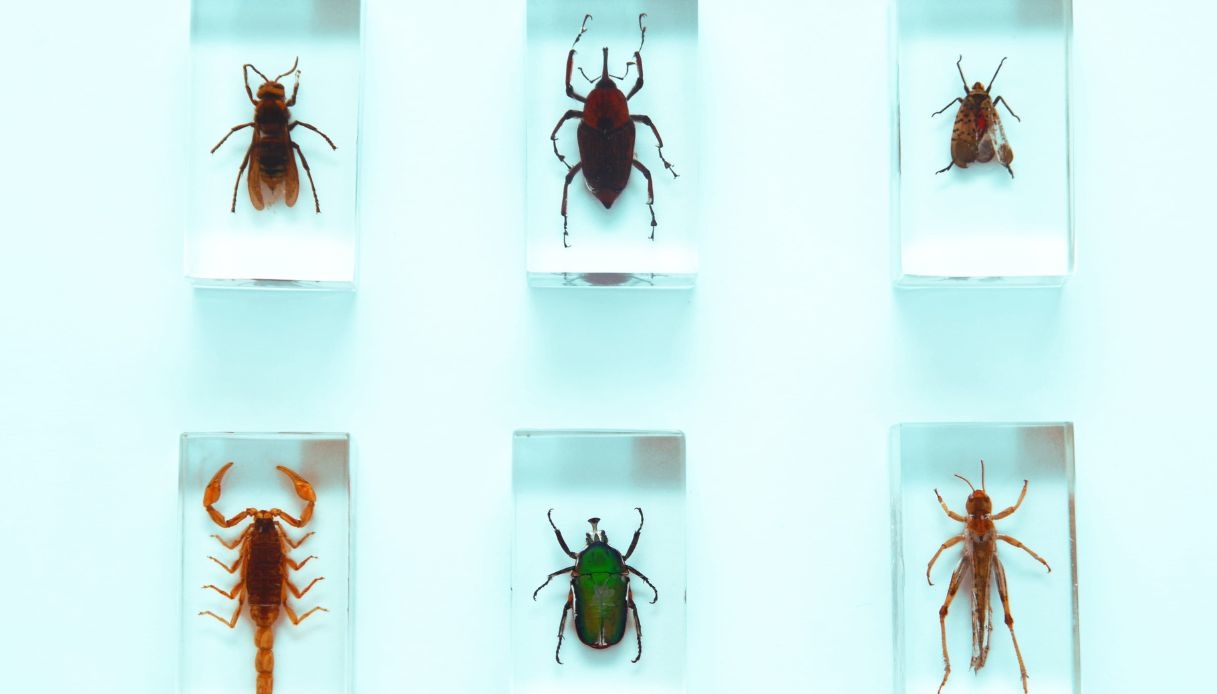
Il discorso cambia quando si parla di insetti destinati all’alimentazione umana. Grilli, larve e altre specie commestibili possono essere trasformati in ingredienti utilizzabili, per esempio, in farine, snack e prodotti ad alto contenuto proteico. In questo caso, secondo un altro studio, condotto in 11 Paesi dell’Unione europea, il 12,9% degli intervistati non escludeva la possibilità di sostituire la carne con gli insetti, pur senza dichiararsi disposto a farlo con certezza. Tra i Paesi in cui emergeva una maggiore apertura figuravano Belgio, Austria e Paesi Bassi.
La resistenza, quindi, non riguarda soltanto la conoscenza delle caratteristiche nutrizionali, ma anche le abitudini alimentari e la percezione di ciò che viene considerato normale o accettabile a tavola.
Chi accetta meglio le novità
Secondo il nuovo Eurobarometro, infine, la disponibilità ad accettare alimenti innovativi è maggiore in alcune fasce della popolazione:
i giovani;
le persone con livelli di istruzione più elevati;
chi vive nelle grandi città;
chi conosce già queste tecnologie.
In particolare, oltre il 50% degli intervistati con meno di 39 anni dichiara di sentirsi a proprio agio con gli alimenti innovativi, contro il 34% delle persone di almeno 55 anni. Nelle grandi città, più della metà dei residenti esprime un atteggiamento positivo rispetto agli alimenti sviluppati con tecniche moderne, mentre nelle aree rurali e nei villaggi la percentuale varia tra il 42% e il 46%.
La differenza più marcata, tuttavia, riguarda il livello di informazione:
tra chi ritiene di essere ben informato sugli alimenti innovativi, il 72% ha un’opinione positiva;
la percentuale scende al 27% tra chi non si sente adeguatamente informato;
il 59% di chi ne aveva già sentito parlare si dichiara a proprio agio con gli alimenti innovativi, contro il 32% di chi non li conosceva.
Uno dei risultati più importanti dell’indagine riguarda comunque le informazioni che dovrebbero accompagnare i nuovi prodotti. L’85% degli europei ritiene infatti che gli alimenti innovativi debbano avere denominazioni chiare e fornire indicazioni comprensibili su come vengono prodotti, quali ingredienti contengono e da dove provengono.
Koreans do not want to do Uncle Sam’s dirty work any longer, and they do not want their country to be dragooned into a proxy war against their Asian neighbor, China.
South Korea is rebelling against U.S. dominance. It is witnessing a formidable opposition movement against the United States’ historic control over the Asian country’s military forces.
There is also growing pressure on the South Korean government to refuse demands by U.S. President Donald Trump for Korean troops to deploy in the Persian Gulf.
A major driver of this surging opposition movement is the widely held concern that Washington is maneuvering South Korea to fight a war with China.
Political analyst KJ Noh explains that the Korean people perceive the United States as positioning their country as a proxy to fight an eventual war with China, in a similar way to how Ukraine is being used as a front line to provoke Russia.
“The U.S. empire is making South Korea into the next Ukraine,” says KJ Noh. “It is weaponizing South Korea.”
This is analogous to how Ukraine was groomed and weaponized since 2014 to serve as a proxy for the U.S. and NATO to confront Russia.
He points out that China has always been the main target for American imperial planners seeking to extend U.S. hegemony. Pentagon Generals have openly spoken about going to war with China since 2025. Several strategic documents cite the imperative of confronting China for the U.S. to pursue its ambitions of global dominance.
Recently, the American commander in South Korea, General Xavier Brunson, referred to the country as “a dagger pointed at China” and “an unsinkable U.S. aircraft carrier.” Such brazen comments have sparked even broader opposition.
KJ Noh contends that U.S. strategists assumed defeating Russia and Iran would be relatively easy, paving the way for the main target: China. However, the protracted war in Ukraine and Trump’s debacle in the Persian Gulf have delayed the war plan against China.
Nevertheless, Korean people understand that when the U.S. empire gets around to attacking China, their country will be deployed as Uncle Sam’s proxy.
Historically, for the past 76 years, Washington has exerted full control over the South Korean military. This was enabled by the U.S. using fascist collaborators from the Second World War to control South Korea – a legacy that persists among the deep state in South Korea.
KJ Noh surveys a history of genocidal violence perpetrated by the U.S. empire in South Korea to wipe out political opposition movements. The scale of mass murder and mass graves is shocking and hardly known in the West.
Despite the brutal oppression over many decades, there is still a defiant consciousness among Koreans who refuse to be vassals of the U.S.
Koreans do not want to do Uncle Sam’s dirty work any longer, and they do not want their country to be dragooned into a proxy war against their Asian neighbor, China, with which much of the Korean economy has beneficial relations.
This is why Koreans are demanding that the United States finally hand over Operational Control of the country’s military. President Lee Jae-myung reflects the popular will by calling on Washington to comply. It is also why the Korean people and government are refusing Trump’s peevish calls for deployment in the Persian Gulf. Given the history of loyal Korean service in U.S. wars, this latest defiance is a watershed in relations.
Ad Aleksandar Vucic non è bastato onorare il genocida Ratko Mladic con funerali di Stato per titillare il nazionalismo dei serbi, specialmente dei giovani che guardano all’Europa. Dopo 14 anni alla guida del Paese, il suo ultimo disperato tentativo per rimanere al potere facendosi eleggere di nuovo primo ministro dopo essersi dimesso anticipatamente dalla presidenza della Repubblica si è infranto contro il muro dell’aspirazione di oltre metà della popolazione di vivere e crescere in un Paese con istituzioni trasparenti e realmente democratiche in grado peraltro di far entrare il Paese nell’Unione europea.
La “Lista degli Studenti”, con a capo il cardiologo e docente universitario di Novi Sad Ilija Srdanović, ha costretto l’equilibrista conservatore neoliberale Vucic, da sempre vicino a Mosca e a Pechino anziché a Bruxelles, ad ammettere la sconfitta a seggi appena chiusi. L’enorme affluenza, anche tra gli espatriati, ai seggi aveva fatto comprendere a Vucic che il giochetto non gli era riuscito: se non si fosse dimesso a un anno dalla scadenza del mandato, sarebbe ancora presidente della Repubblica. Le manifestazioni di massa di questi due anni – iniziate subito dopo la tragedia dei 16 morti in seguito al crollo della pensilina appena ricostruita con fondi pubblici nella stazione ferroviaria di Novi Sad – tuttavia invece di spegnersi con l’aumento delle intimidazioni e strette sulla libertà di stampa da parte del presidente e del suo partito, l’SNS, al governo sono andate aumentando mettendolo di fatto all’angolo. I lavori di ristrutturazione della stazione erano stati appaltati anche a imprese cinesi, sollevando accuse di corruzione. Nel 2018 la cinese Zijin ha comprato il 63% della società che gestisce le miniere di rame di Bor. Vucic aceva sostenuto anche il progetto di Rio Tinto per estrarre litio nella valle di Jadar, nonostante le proteste degli abitanti che temono danni alle falde acquifere e quindi alle coltivazioni. Gli studenti hanno pertanto chiesto contratti e responsabilità. Vucic ha risposto accusandoli di essere al servizio di potenze straniere. La polizia ha arrestato e picchiato manifestanti.
Da parte sua il movimentostudentesco ha presentato un programma: contratti stabili, libri scolastici gratuiti, medicinali meno cari, case accessibili, confisca dei patrimoni illeciti. La Sinistra Europea ha sostenuto ufficialmente la loro lista. Queste legislative sono state di fatto un referendum contro Vucic diventato l’emblema della corruzione di Stato e del business senza regole. Non solo il movimento studentesco ma la maggior parte dei serbi ha mostrato di esigere una scelta anche in ambito geopolitico. Ma Vucic non l’ha fatta, anzi ha cercato in ogni modo di reprimere il dissenso piuttosto che il dialogo, soprattutto con la generazione Z.
Ora la prova decisiva per capire dove andrà la Serbia con i suoi 6.5 milioni di cittadini sarà osservare tre decisioni del nuovo governo: l’indipendenza della magistratura; il rapporto con la Russia e Cina; i progressi nella normalizzazione con il Kosovo.
Se su questi fronti arriveranno cambiamenti concreti, la vittoria degli studenti potrà diventare l’inizio di una vera svolta europea.
Se invece prevarranno le difficoltà interne e la continuità geopolitica, la Serbia potrebbe cambiare governo senza avvicinarsi in modo significativo all’Unione.
La caduta del “ sistema Vucic” può aprire la porta dell’Europa, ma non significa che la Serbia l’abbia già attraversata.
A low turnout and security concerns shaped the first round, setting up a close contest between Iotova and pro-Western rival Andrey Gyurov.
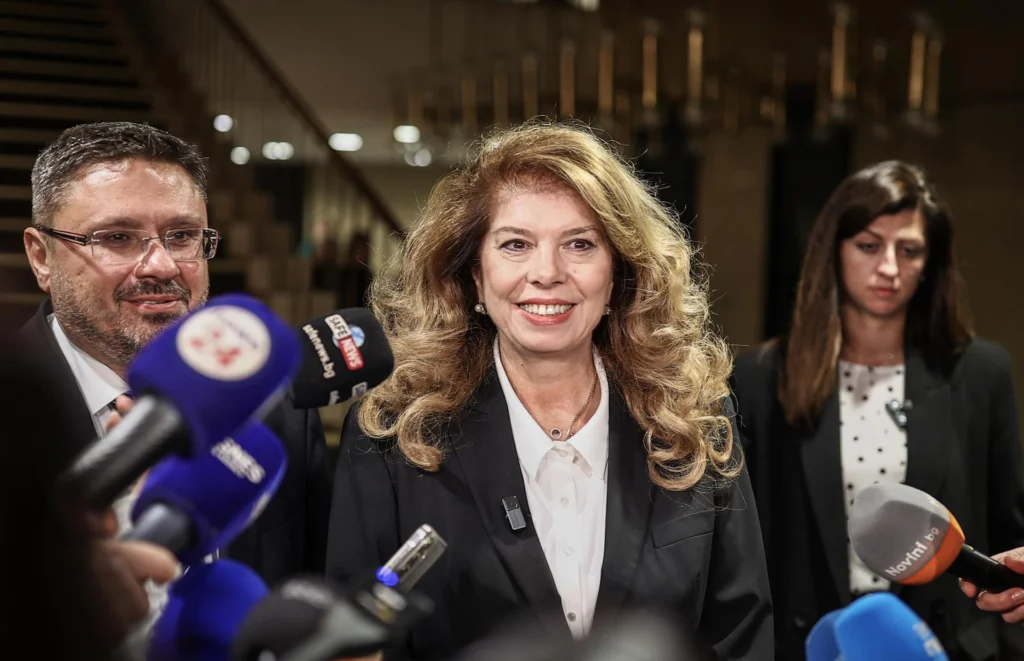
Outgoing Bulgarian President Iliana Iotova led the first round of presidential elections on Sunday with between 35% and 36.5% of the vote, according to exit polls, but fell short of the result expected by her supporters. She will face former caretaker prime minister Andrey Gyurov, backed by the pro-Western opposition, in a runoff scheduled for Nov. 1.
Gyurov secured between 32.2% and 32.5% of the vote, according to the same exit polls, putting him within reach of Iotova ahead of the second round.
The election took place amid security concerns following a series of drone attacks on merchant vessels in the Black Sea. Voter turnout stood at around 20%, as some political parties called for a boycott.
Iotova, 62, has campaigned on dialogue with Russia and opposed military assistance to Ukraine. She has made ending the war in Ukraine a central theme of her campaign, presenting herself as a “president of peace.”
#Bulgaria’s presidential vote delivered a result few polls anticipated. Exit polls gave incumbent Iliana Iotova, who favors dialogue with Moscow and opposes military aid to Ukraine, up to 36.5 percent, a far narrower lead than surveys had suggested.https://t.co/rqlYf7ehlZ
After casting her ballot, she called for a government capable of tackling poverty and regional inequalities. “I believe there must be peace, stability and security,” Iotova said.
Gyurov, meanwhile, called for a Bulgaria oriented toward Europe and the future, emphasizing economic security and effective governance.
He said he had voted for “a European, free and proud country, where incomes are sufficient, where we feel secure about tomorrow and where the state functions as it should.”
Iotova assumed the presidency earlier this year after Rumen Radev resigned to contest parliamentary elections, seeking to become prime minister. Bulgaria is a member of both the European Union and NATO.
If Iotova wins the Nov. 1 runoff, she would become the first woman elected president of Bulgaria, a country of 6.4 million people with the lowest per capita gross domestic product in the European Union.
Ogni anno, in Europa, sono 2,7 milioni i nuovi casi di cancro, pari a 5 ogni minuto. Dall’altro lato, grazie alle campagne di prevenzione e a cure sempre più efficaci, dal 1988 a oggi sono stati evitati circa 7,3 milioni di decessi oncologici nell’Unione Europea. Nel 2026 sono stimate circa 1.230.000 morti per tumore, con una diminuzione del 7,8% per gli uomini e del 5,9% per le donne rispetto al periodo 2020-2022.
Lo ricordano gli esperti dall’Associazione Italiana di Oncologia Medica (AIOM), in occasione del Congresso della Società Europea di Oncologia Medica (ESMO), segnalando come la strada da fare sia ancora lunga.
Si stima che in Europa il 5% della popolazione abbia affrontato una diagnosi di tumore, per un totale di 23,7 milioni di persone. In Italia vivono 4 milioni di cittadini dopo la diagnosi di cancro. Nel 2025, nel nostro Paese, sono stati stimati circa 390.000 nuovi casi. In numerose neoplasie i tassi di sopravvivenza e guarigione sono in aumento. Il 63% delle donne e il 54% degli uomini sono vivi a 5 anni e almeno un paziente su quattro è tornato ad avere la stessa aspettativa di vita della popolazione generale e può ritenersi guarito. Per migliorare ulteriormente questi risultati, è fondamentale investire nella ricerca e nei programmi di prevenzione.
I numeri che fanno sperare e riflettere
Il carcinoma polmonare nei maschi fa registrare la diminuzione più consistente (-22,5%). L’innovazione non si traduce solo in vite salvate, ma anche nella possibilità di reinserire nel tessuto sociale e produttivo le persone che hanno vissuto l’esperienza del cancro. In Europa infatti, i costi indiretti, legati soprattutto alla perdita di produttività determinata dalla malattia, sono diminuiti del 16% in circa 30 anni, da 97 miliardi di euro nel 1995 a 82 miliardi nel 2023. Per quanto riguarda il calo dei decessi per cause oncologiche nella popolazione maschile, il merito va soprattutto alla diminuzione dell’abitudine tabagica negli uomini.
Viste le buone notizie, con margini di miglioramento ancora da esplorare, restano però criticità nell’accesso alle terapie innovative. Nel Vecchio Continente, in media, viene reso disponibile solo il 51% dei nuovi farmaci approvati dall’ente regolatorio europeo (EMA) e servono 655 giorni per accedervi (nel 2025).
Il nostro Paese presenta dati migliori, anche se i tempi sono ancora troppo lunghi. L’Italia, infatti, garantisce l’accesso all’89% dei farmaci anticancro approvati da EMA e, in questa classifica, è seconda in Europa dopo la Germania (91%) (Austria 86%; Spagna 73%; Francia 68%). Nel nostro Paese, però, devono trascorrere 470 giorni, cioè circa 15 mesi, per la disponibilità delle nuove cure.
Come segnala Massimo Di Maio, Presidente AIOM,
“le terapie innovative non migliorano solo la sopravvivenza, ma favoriscono anche il ritorno al lavoro e alla vita sociale. La riduzione dei costi indiretti del cancro è un risultato molto importante, determinato da cure sempre più efficaci, che devono essere disponibili per tutti i pazienti, perché si possa parlare di equità nell’innovazione. In un anno si sono allungati di oltre 2 mesi in Europa e di circa un mese in Italia i tempi per disporre dei nuovi farmaci anticancro. Nel 2024 in Europa servivano in media 586 giorni, nel nostro Paese 441. In Italia restano ancora criticità legate alle procedure burocratiche e amministrative perché, dopo l’approvazione della rimborsabilità da parte dell’Agenzia Italiana del Farmaco, in alcune Regioni è necessario attendere l’inserimento nei Prontuari Terapeutici Regionali. E ulteriori ritardi possono essere causati dalle gare regionali e dalla necessità di inclusione anche nei Prontuari Terapeutici Ospedalieri”.
L’impatto della politica
In 10 anni (2014 – 2023), in Europa, la spesa per i farmaci anticancro è aumentata da 24,9 miliardi di euro a 64,3 miliardi. Questa crescita è stata trainata da una combinazione di effetti legati ai prezzi e all’incremento del numero di casi di tumore. L’Italia sostiene il 14% della spesa europea per i farmaci oncologici e si colloca al terzo posto dopo Germania (19%) e Francia (19%). Ma per il futuro potrebbero esserci impatti anche dalle scelte di macroeconomia e di politica che potrebbero giocare un ruolo importante.
I tempi per accedere alle nuove cure potrebbero essere ulteriormente dilazionati a causa della clausola della “nazione più favorita” (MFN, Most Favored Nation), stabilita dall’amministrazione statunitense, che prevede di ridurre i prezzi dei farmaci americani allineandoli a quelli più bassi di altri Paesi, compresa l’Italia. Il provvedimento rischia di dilatare ulteriormente i tempi e di generare pesanti ripercussioni sull’assistenza oncologica nel nostro Paese. Le aziende farmaceutiche, infatti, potrebbero decidere di ritardare il lancio di nuove terapie oncologiche innovative in Europa e in Italia o di non renderle del tutto disponibili, per evitare che un prezzo basso locale condizioni o abbassi i ricavi sul più redditizio mercato statunitense.
Meno chemioterapia
Ma come siamo messi sul fronte delle cure? I progressi si vedono, eccome.
“In Europa, la quota della chemioterapia sulla spesa totale di farmaci oncologici è diminuita dal 22% nel 2014 al 6% nel 2023, superata dalle terapie mirate e dalle immunoterapie. Le sole immunoterapie rappresentano oggi il 29% delle uscite. Questi cambiamenti riflettono il crescente impatto dell’oncologia di precisione, che permette di selezionare la cura adatta per il singolo paziente. Il numero di approvazioni da parte di EMA è aumentato significativamente, passando da una media di un nuovo farmaco all’anno nel periodo 1995-2000 a circa 14 all’anno nel 2021-2024. I Paesi dell’Europa occidentale tendono a rimborsare un maggior numero di terapie e a farlo più rapidamente rispetto all’Europa centrale e orientale. Ad esempio, la Germania ha reso disponibile il 91% dei farmaci oncologici approvati dall’EMA nel periodo 2021-2024 entro poco più di 100 giorni, mentre Romania, Estonia, Malta, Slovacchia e Lettonia si fermano a percentuali pari o inferiori al 20% e il tempo di rimborso si attesta intorno ai 1.000 giorni in Lituania, Romania ed Estonia, determinando forti disuguaglianze, che devono essere superate quanto prima”
ricorda Giuseppe Curigliano, Presidente eletto ESMO.
Green blobbers want us to stop drilling because the North Sea is running dry – so why the panic about oil and gas extraction? The answer is that it’s as much about politics and punitive taxes as geology, says Ben Pile.
L’inflazione inattesa aumenta alcune spese pubbliche. Il governo chiede flessibilità all’Europa su questa base. Ma bisogna considerare che salgono anche le entrate, a causa del fiscal drag. Una simulazione calcola quanto valgono i due effetti.
European Union fisheries ministers are meeting in Luxembourg on 26th October to negotiate catch limits for the Baltic Sea in 2027, confronting a sharply divided scientific picture in which some commercially important fish populations are recovering while others remain at critically low levels.
The European Commission has proposed increasing total fishing opportunities by approximately 35 per cent compared with 2026, largely because of improved assessments for several herring stocks and sprat. At the same time, it wants substantial reductions in permitted accidental catches of cod, whose depleted populations have shown little evidence of sustained recovery.
The negotiations, scheduled for 26th and potentially 27th October, will determine how fishing opportunities are allocated between EU member states bordering the Baltic Sea.
According to the Council’s published agenda, ministers are seeking a political agreement on total allowable catches and national quotas for ten commercially significant fish stocks.
The outcome will determine how much fish can be landed legally during 2027, while also influencing the future prospects of coastal communities, processing companies and fishing fleets.
Brussels recommends increasing the catch limit for central Baltic herring by 49 per cent and for sprat by 44 per cent. Proposed increases for Bothnian herring and Gulf of Riga herring are more modest, at three and 11 per cent respectively.
The improved outlook for sprat follows stronger reproduction in recent years, while scientific assessments suggest some herring populations are beginning to recover.
However, these improvements do not mean the Baltic ecosystem as a whole has returned to a healthy condition.
Central Baltic and Bothnian herring remain below important sustainability reference levels, even though the latest scientific assessments permit increased catches under specified conditions.
For cod, the position is considerably worse.
The International Council for the Exploration of the Sea, known as ICES, has advised that there should be no catches of eastern Baltic cod in 2027 or 2028 under its precautionary approach.
Western Baltic cod faces similarly severe restrictions.
The Commission consequently proposes reducing the permitted incidental catch of western Baltic cod by 88 per cent and eastern Baltic cod by 51 per cent.
These allowances are designed to account for fish caught unintentionally during other fishing operations. They do not amount to the reopening of a targeted commercial cod fishery.
Fishing communities face uneven consequences
The proposed increases in herring and sprat quotas would benefit some fishing operators and processing industries, but the economic effects will vary significantly between countries and fleets.
Larger vessels specialising in pelagic species such as herring and sprat are likely to benefit more directly from increased catch opportunities.
Smaller operators whose activities depend on depleted stocks or mixed fisheries may face continued restrictions.
The Commission also proposes reducing the permitted incidental catch of western Baltic herring by 45 per cent and removing an exemption previously available to certain small-scale coastal fisheries.
That proposal creates a particularly difficult issue for smaller fishing businesses, whose operations may have limited capacity to switch fishing grounds or target different species.
The economic effects will depend not only on the size of the quotas but also on how national governments distribute them among individual operators.
The limits of quota management
The Baltic Sea’s problems cannot be explained by fishing pressure alone.
Nutrient pollution, changes in oxygen availability, habitat degradation and shifting environmental conditions have contributed to the deterioration of several stocks.
Restrictions on fishing can reduce direct pressure on fish populations, but they cannot independently resolve pollution or other environmental problems affecting reproduction and survival.
This complicates the relationship between scientific advice and political decisions.
Ministers are required to take account of conservation objectives under the Common Fisheries Policy. They must also consider the economic consequences for fishing communities and the viability of fleets operating within the agreed limits.
The Baltic negotiations present a particularly concentrated version of that conflict because the condition of individual stocks varies so substantially.
Ministers must decide how much recovery is sufficient
The Commission’s proposed increases are based on the latest assessments rather than a general relaxation of conservation policy.
Indeed, its draft regulation envisages maintaining restrictions on vulnerable stocks while allowing greater exploitation where the scientific evidence supports it.
The proposed overall catch volume is approximately 543,000 tonnes, compared with substantially lower fishing opportunities in 2026.
That figure represents a proposed ceiling, not a confirmed agreement or a forecast of actual landings.
Once ministers reach a political agreement, the Council is expected to adopt the final regulation formally in November, with the principal catch limits applying from 1 January 2027.
The central question is whether governments will preserve the distinction between stocks showing measurable recovery and those for which scientific advisers continue to recommend no fishing.
Their decision will determine both the short-term economics of Baltic fisheries and the pace at which the region’s most vulnerable commercial fish populations may recover.
Le “sedie del dialogo” fatte collocare da Edi Rama davanti al palazzo del governo sono state bruciate domenica pomeriggio, al culmine di un altro weekend di scontri di piazza. Nelle proteste in Albania che vanno avanti da quasi centocinquanta giorni c’è anche una vena situazionista che potrebbe far sorridere, se non ci fosse seriamente da preoccuparsi per la tenuta di una democrazia ancora giovane e fragile.
Il primo ministro, memore del suo passato di pittore e quindi aduso alla messa in scena, mentre la capitale Tirana veniva trasformata in campo di battaglia, con azioni sempre più repressive della polizia, il 20 ottobre aveva fatto collocare delle eleganti sedie in damasco rosso con sopra la scritta “dialog”. Il giorno dopo le sedie erano state sostituite con altre nere e più spartane. Infine, al terzo giorno: solo dei cilindri in cemento armato. Alla scenografica offerta di dialogo rivolta ai giovani che protestano contro l’aumento delle rette universitarie, la mancanza di studentati, la fatiscenza delle strutture e, in definitiva, contro la corruzione dilagante e la cronica crisi economica che affligge il Paese, a dire il vero, Rama aveva accompagnato azioni concrete molto meno concilianti.
Innanzitutto, il tentativo comprensibile di dividere la piazza tra i facinorosi e chi protesta in pace, poi l’affermazione non supportata da prove concrete, secondo cui tra gli studenti ci fossero «persone radicalizzate», manovrate da Russia e Iran con l’obiettivo di impedire l’ingresso dell’Albania nell’Unione europea. Ancora, la minaccia di abbassare l’età della responsabilità penale che oggi è già a 16 anni (e a 14 per i reati più gravi), infine il bonus di 2.500 euro concesso in corso d’opera agli agenti schierati in piazza, parso a molti come l’atto più evidente di una volontà repressiva.
La risposta è arrivata sabato sera, anch’essa scenografica: i manifestanti hanno imbracciato mortai per fuochi d’artificio contro i reparti antisommossa. Lo spettacolo pirotecnico ha presto lasciato spazio a un’altra battaglia, con migliaia di persone lungo le vie principali di Tirana e verso piazza Skanderbeg, un principio d’incendio all’ingresso del ministero del Turismo e seimila poliziotti pronti anche a esplodere proiettili di gomma ad altezza d’uomo e a menare a più non posso. I video sui social documentano il pestaggio di Lulzim, un manifestante lasciato a terra esanime, l’aggressione al giornalista di News24 Klevin Muka con spray al peperoncino, e soprattutto il ferimento di Erjon Vishkulli, un ventottenne che rischia di perdere l’occhio sinistro.
La protesta albanese oscurata prima da quella per la crisi abitativa in Spagna, poi dalle violente manifestazioni in Francia, infine dalle devastazioni dei maranza a Milano, è rimasta periferica nell’attenzione dei media e dell’opinione pubblica europea, ma ha radici ancora più profonde.
A fine maggio l’Albania era stata scossa dalla cosiddetta Rivoluzione dei fenicotteri. Decine e poi centinaia di migliaia di persone per 136 giorni consecutivi si sono date appuntamento ogni sera nel cuore di Tirana per dire no alla “svendita” del Paese ai capitali stranieri. Tutto era nato da una protesta ambientalista contro un resort e centinaia di ville che dovrebbe nascere tra l’isola incontaminata di Sazan e la costa di Zvernec, attorno alla zona umida di Narta, dove i fenicotteri ignari del diritto societario svernano da sempre. Dietro la mega speculazione da quattro miliardi di euro c’è la Atlantic Incubation Partners, una società che fa capo a Jared Kushner e alla moglie Ivanka, la figlia di Donald Trump.
I manifestanti hanno chiesto per mesi l’abrogazione di due leggi che rendono possibile la costruzione di alberghi e resort anche nelle aree protette. Inascoltati hanno cominciato ad alzare il tiro, mettendo in discussione la permanenza al governo di Rama, il leader del Partito socialista rieletto solo l’anno scorso con una maggioranza schiacciante e al potere senza interruzioni dal 15 settembre 2013.
«La protesta era pacifica, a tratti giocosa – spiega Arbër Agalliu, giornalista albanese naturalizzato italiano -, e per la prima volta vedeva gli albanesi scendere in piazza senza una regia politica, senza dei leader riconoscibili. Una mobilitazione nato dal basso». La svolta è arrivata il 13 ottobre, con le rivendicazione studentesche e i primi tafferugli. Manifestazioni ancora senza capi, organizzate via chat, ma stavolta colme di rabbia, pronte allo scontro fisico e con un’unica piattaforma programmatica: le dimissioni di Edi Rama.
«Frutto del malcontento generato dai problemi economici, i salari bassi, il gap sempre più ampio tra chi, anche in Albania, ha raggiunto un benessere di livello europeo e chi sopravvive» dice ancora Agalliu. Un Paese in cui tra il 2011 e il 2023 sono emigrate oltre seicentomila persone, su una popolazione scesa a poco più di 2,3 milioni di abitanti. Un Paese che esporta i propri ventenni, ma importa braccia disposte a paghe da fame da India, Filippine ed Egitto. Un Paese scosso dagli scandali, con il sindaco di Tirana Erion Veliaj (successore di Rama, che lo era stato per undici anni) in carcere dal febbraio 2025 per corruzione e riciclaggio, o con la vicepremier Belinda Balluku costretta alle dimissioni e formalmente accusata proprio il 20 ottobre di aver interferito nell’assegnazione di appalti per duecento milioni di euro edi “riciclaggio di denaro proveniente da attività criminali”.
«La criminalità ha preso il controllo dello Stato. C’è una crisi delle istituzioni e della democrazia» ha detto Fatos Lubonja, uno degli intellettuali di maggior spicco, rimasto diciassette anni nelle prigioni di Enver Hoxha, critico sia con Rama che con l’opposizione guidata da Sali Berisha, vecchio politicante, a sua volta accusato di corruzione, sanzionato da Gran Bretagna e Stati Uniti per «atti di corruzione che hanno minato la democrazia».
Gli scontri di sabato con la polizia che spara ad altezza d’uomo / Ap
Sembra evidente, così, che per il governo in carica si tratti di una questione di vita o di morte politica, ma contro un avversario che non riesce a incasellare, che non può blandire, e che non vuole dialogare. «In Occidente nessun governo è mai caduto per le manifestazioni di piazza – dice ancora Agalliu -, e Rama è stato votato da ottocentomila albanesi: ha già detto che non si dimetterà, e anche se lo facesse ha la maggioranza assoluta in parlamento. Dall’altra parte, la piazza riuscirà magari a darsi dei leader, a compiere un upgrade politico come è accaduto in Serbia, ma ci vorrà del tempo». Merce che oggi non sembra la più a buon mercato in Albania.
In soli sette giorni, dal 13 al 19 ottobre, si sono contati trecentodieci feriti tra agenti e manifestanti, duecentosettantuno arresti, e la situazione non è certo migliorata nei sei giorni successivi. Res Publica, un’organizzazione che offre assistenza legale, ha presentato alla Procura speciale anticorruzione e criminalità organizzata (Spak) un esposto di ventinove pagine su oltre centottanta presunti episodi di abusi a Tirana e in altre città: foto, video, testimonianze riguardanti l’impiego sproporzionato della forza, arresti arbitrari, trattamenti degradanti, possibili violazioni dei diritti dei minorenni e ostacoli al lavoro della stampa. Non ancora un’inchiesta della magistratura, ma una denuncia circostanziata, mentre la vicenda di Erjon Vishkulli crea nuove frizioni.
Il giovane è stato trasferito all’ospedale San Carlo di Roma e il primo ministro si è attribuito il merito dell’iniziativa: «L’ho presa io personalmente», smentito dalla sorella, secondo la quale in principio sarebbero stati la famiglia e gli amici a sostenere le spese. Rama stavolta ha comunicato su X con un post durissimo e teatrale: «Voi siete l’oscurità che ha chiuso a quel ragazzo la luce dell’occhio! Voi siete le dita e le unghie della mano maledetta che perseguita l’Albania fin dal 1912, chiudendole gli occhi ogni volta che questo paese vede la luce! Ma stavolta siete perduti…». Per poi annunciare nuove restrizioni alle proteste di piazza. Nulla di buono attende la Terra delle Aquile.
Bulgaria’s presidential election is heading for a run-off on 1 November after incumbent Iliana Yotova led Sunday’s first round but fell well short of the majority required to win outright. The result was closer than pre-election polling had indicated, leaving her challenger, former caretaker prime minister Andrey Gyurov, within reach of the presidency.
An Alpha Research exit poll put Yotova and her running mate, Kiril Valchev, on 35.3 per cent, and Gyurov and his running mate, Georgi Kandev, on 32.4 per cent. Other agencies produced slightly different estimates, but all placed the two tickets in the lead and showed a narrow gap. These figures are preliminary; Bulgaria’s Central Election Commission has yet to confirm the official result.
The outcome contrasts with pre-election surveys that gave Yotova a sizeable advantage. A Market Links poll published before voting put her well ahead of Gyurov. The first-round estimates instead suggest that the contest has tightened as voters weighed the candidates’ positions on foreign policy, domestic economic pressures and the direction of the government.
Yotova became president in January after Rumen Radev resigned to enter parliamentary politics. She had served as his vice-president for nine years and is now seeking a five-year mandate in her own right. Her candidacy is backed by Radev’s Progressive Bulgaria party and the Bulgarian Socialist Party. The election is the first nationwide test of Radev’s influence since Progressive Bulgaria won April’s parliamentary election. A Yotova victory would leave the presidency and government in the hands of political allies.
Gyurov, an economist and former deputy governor of the Bulgarian National Bank, served as caretaker prime minister earlier this year. He is supported by pro-Western reformist parties. During his premiership, his government signed a security co-operation agreement with Ukraine, and he has argued for closer co-operation with Western allies.
Their foreign-policy differences have been a defining feature of the campaign. Yotova has called for negotiations to end Russia’s war against Ukraine and for better relations with Moscow. Gyurov has taken a more supportive position towards Kyiv. The choice reflects a longstanding debate in Bulgarian politics over how the country should balance its relationship with Russia against its EU and NATO commitments.
The war’s impact on the Black Sea has given that debate a direct security dimension. Drone attacks on commercial vessels near Bulgaria’s coast have raised concerns about shipping safety and the conflict’s potential to spread. The government has sought support from its partners to strengthen maritime security. Both leading candidates condemned the attacks, while their differences over the wider war have kept Bulgaria’s response and its ties with Moscow in focus. The attacks on merchant shipping were a prominent issue during the campaign.
Rising energy prices and inflation have also featured in the campaign, as households face pressure from the cost of living. Those concerns may matter to voters who backed neither of the two leading tickets. The second round will require Yotova and Gyurov to appeal beyond their first-round supporters, while also persuading voters who did not participate to return to the polls.
Revival party leader Kostadin Kostadinov placed third. His ticket with Petar Volgin received 12.6 per cent in the Alpha Research exit poll, though other estimates were higher. Kostadinov has opposed military support for Ukraine; Ukraine imposed a ten-year entry ban on him in 2022. His supporters could influence the run-off, but their votes should not be treated as a single bloc: some may back Yotova, others Gyurov, and some may stay at home.
Turnout was exceptionally low. Alpha Research estimated participation at 22.3 per cent by 7pm, with other agencies reporting similarly low figures. The Bulgarian constitution requires more than half of eligible voters to participate and a candidate to receive more than half of valid votes for a first-round victory. Neither threshold was met. Polling analysis cited election fatigue after April’s parliamentary vote and the fact that the presidential election was held separately.
The low participation makes Sunday’s estimates an uncertain guide to the run-off. A higher turnout could change the balance, particularly if one candidate succeeds in mobilising voters who stayed away or attracting supporters of eliminated candidates.
The presidency is largely ceremonial, with executive authority resting mainly with the prime minister and parliament. It nevertheless carries political weight: the president leads the armed forces, can veto legislation, signs international treaties and appoints ambassadors. The 1 November vote will decide whether Yotova secures a mandate of her own and consolidates the governing camp’s position, or whether Gyurov can turn his stronger-than-expected first-round showing into a change at the top of the state.
A Organização dos Estados Americanos (OEA) informou neste domingo (25) que acompanha as denúncias de problemas no transporte público durante o segundo turno das eleições presidenciais no Brasil. Em nota divulgada nas redes sociais, a missão de observação eleitoral afirmou que monitora relatos de redução da frota de ônibus e dificuldades de deslocamento em diferentes regiões do país.
“A missão da OEA no Brasil está acompanhando as informações divulgadas pela imprensa e as denúncias sobre problemas no transporte público em diferentes localidades do país”, declarou a organização.
A entidade também afirmou que seguirá atenta às decisões do Tribunal Superior Eleitoral (TSE) sobre o tema.
As denúncias incluem filas, demora e redução da circulação de ônibus, além de relatos de restrições em outros meios de transporte, como voos e barcas no Rio Amazonas.
Justiça acionada
Os problemas relatados levaram partidos e coligações a recorrer à Justiça Eleitoral em estados como São Paulo e Bahia. Em Sergipe, o Tribunal Regional Eleitoral (TRE) determinou a recomposição da frota intermunicipal após reclamações sobre a quantidade de veículos disponíveis.
A Prefeitura de São Paulo informou que recebeu a notificação judicial no sábado (24) e comunicou às empresas concessionárias a necessidade de cumprir a determinação. Em nota, a administração municipal afirmou que a ampliação da frota em prazo curto exigiu ajustes nas escalas de trabalho dos profissionais.
Em Sergipe, o Departamento Estadual de Infraestrutura Rodoviária (DER-SE) informou que a gratuidade das passagens estava garantida e que a frota foi reforçada com mais 20 veículos. Segundo o órgão, a procura pelo transporte superou as expectativas, inclusive pela presença de eleitores que não votaram no primeiro turno.
Também houve relatos de dificuldades de deslocamento em outras localidades, incluindo municípios da Região Metropolitana de São Paulo, Teresina, na Paraíba, em Alagoas e no Rio de Janeiro. No Pará, passageiros relataram dificuldades para embarcar em embarcações com destino à ilha de Marajó.
Papel da missão da OEA
A missão da OEA acompanha a organização e o andamento do processo eleitoral brasileiro. O grupo reúne mais de 90 observadores de 23 países, distribuídos por mais de 20 estados e pelo Distrito Federal.
Os especialistas analisam aspectos como o uso de recursos tecnológicos, o trabalho da Justiça Eleitoral, as campanhas, a cobertura da imprensa e os índices de violência relacionados ao período eleitoral. A missão é chefiada por José Miguel Insulza, ex-secretário-geral da OEA e ex-chanceler do Chile.
A organização havia registrado preocupações com o deslocamento de eleitores em eleições anteriores. Em 2022, observadores relataram denúncias de atrasos em algumas regiões durante operações da Polícia Rodoviária Federal (PRF). Na ocasião, a missão destacou a importância de garantir que as forças de segurança facilitassem o exercício livre do direito ao voto.
Neste domingo, a OEA informou que continuará acompanhando as denúncias e as decisões das autoridades eleitorais brasileiras sobre os problemas no transporte público.
MOSCOW, Oct 25 (Reuters) – The Russian Defence Ministry said on Sunday that its drones had struck a cargo vessel bound for the Black Sea port of Chornomorsk in an overnight attack and another...
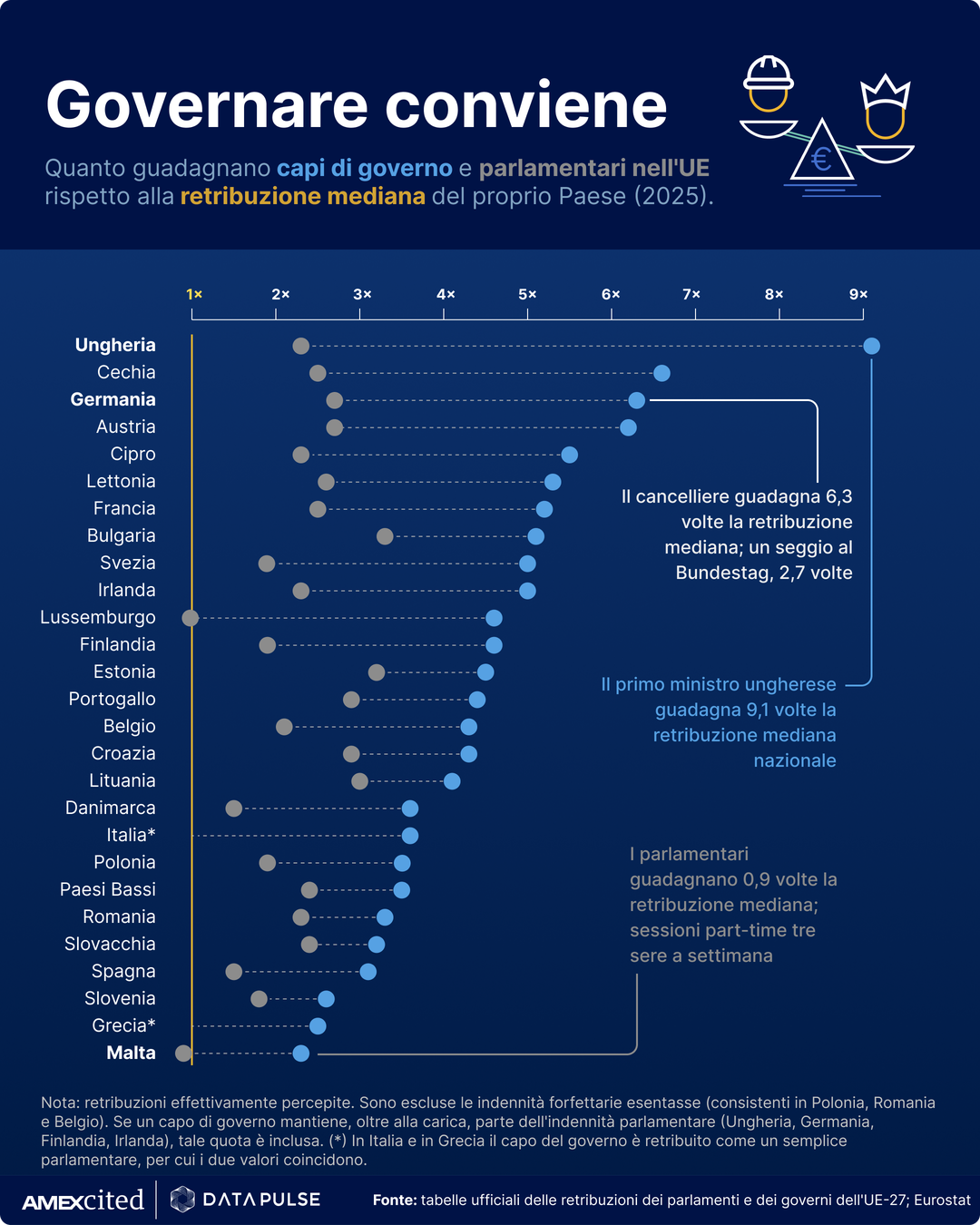
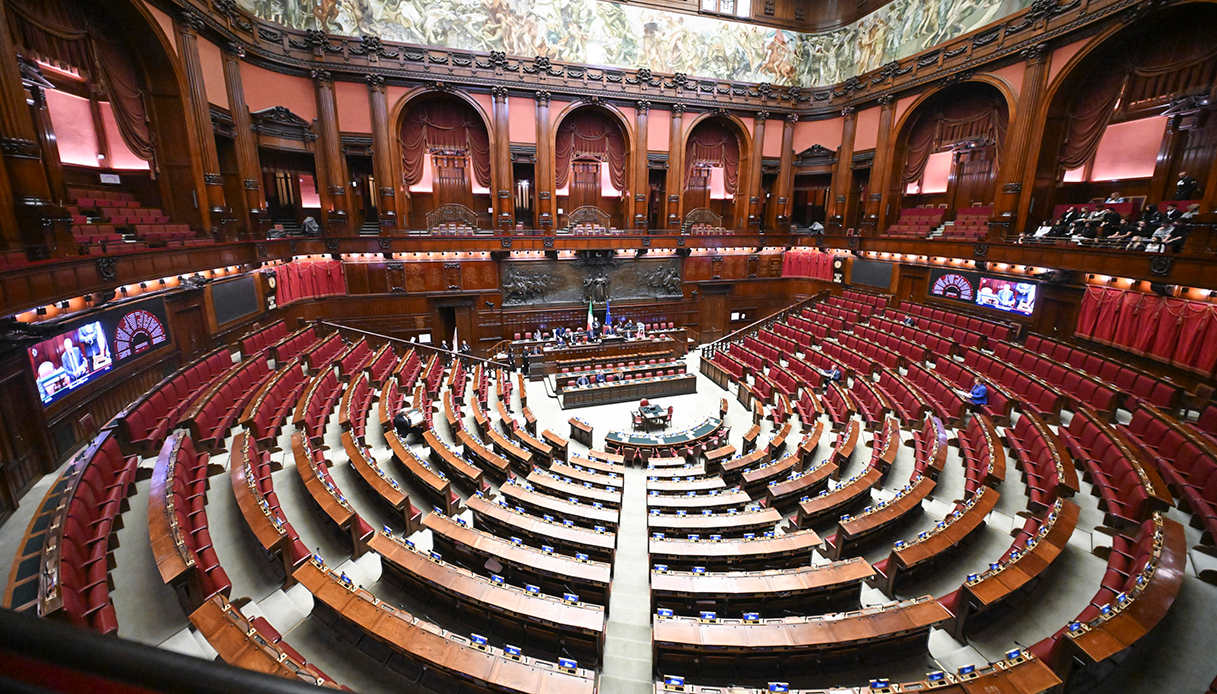
Per ottenere quello che un parlamentare incassa al netto in un anno tra indennità, diaria e rimborso per le spese del mandato, un italiano medio deve lavorare per più di 6 anni e mezzo. Lo spunto arriva dallo studio The European Salary Ladder, pubblicato da American Express, secondo cui la sola indennità lorda dei parlamentari italiani vale 3,6 volte la retribuzione lorda mediana nazionale: il rapporto più alto tra i 27 Paesi dell’Unione europea. Con le altre voci della paga di deputati e senatori, però, il divario tra classe dirigente e cittadini è più marcato.
Quanto guadagna un parlamentare
La voce principale è l’indennità parlamentare, prevista dall’articolo 69 della Costituzione e regolata dalla legge 1261/1965.
Secondo i dati della Camera dei Deputati, ammonta a 10.435 euro lordi al mese per 12 mensilità. Al netto delle ritenute previdenziali, assistenziali e fiscali, e tenendo conto del valore medio delle addizionali regionali e comunali, restano circa 5.000 euro al mese, cioè circa 60.000 euro l’anno.
L’importo è fermo dal 2012. Nel 2006 l’indennità era passata da 12.434,32 a 11.703,64 euro lordi, poi è scesa al livello attuale. Senza tagli e senza il blocco degli adeguamenti, precisa la Camera, oggi sarebbe pari a 16.393,12 euro lordi. Al Senato l’indennità lorda è invece di 10.385,31 euro al mese.
Quanti anni servono a un italiano
Il termine di paragone è il reddito disponibile equivalente mediano rilevato da Eurostat. Si tratta del reddito familiare al netto di tasse e contributi, diviso per il numero dei componenti secondo una scala che rende confrontabili famiglie di dimensioni diverse. Per l’Italia, nella rilevazione 2025 sui redditi del 2024, vale 22.062 euro l’anno. Significa che metà degli italiani vive con meno.
I circa 60.000 euro netti dell’indennità corrispondono a 2 anni e 9 mesi di reddito mediano.
Il conto cambia se si aggiungono le altre voci che ogni mese arrivano al deputato:
diaria – 3.503,11 euro al mese a titolo di rimborso delle spese di soggiorno a Roma, ridotta di 206,58 euro per ogni giorno di assenza dalle votazioni;
rimborso delle spese per l’esercizio del mandato – 3.690 euro al mese, utilizzabili anche per pagare i collaboratori.
Su queste somme non si pagano tasse: l’articolo 52, comma 1, lettera b), del Tuir esclude dal reddito i rimborsi spese erogati ai titolari di cariche elettive pubbliche.
Il totale annuo complessivo sale così a circa 146.300 euro, pari a 6 anni e 7 mesi di reddito mediano.
Attenzione però: diaria e rimborso nascono per coprire i costi del mandato e non sono un vero e proprio stipendio.
Il confronto con gli stipendi “reali”
Come detto, il reddito mediano riguarda tutti i componenti della famiglia, compresi quelli che non producono reddito. Il confronto con gli stipendi è più favorevole.
L’ultima rilevazione Istat sulla Struttura delle retribuzioni si riferisce al 2022, perché l’indagine è quadriennale. Quell’anno la retribuzione lorda annua media era di 37.302 euro. Servono 5 anni e 8 mesi a un dipendente con la retribuzione lorda media rilevata dall’Istat per incassare i circa 211.500 euro lordi che un deputato riceve in un anno tra indennità, diaria e rimborso per le spese del mandato. Considerando la sola indennità bastano 3 anni e 4 mesi.
Rispetto al 2022 le buste paga sono cresciute lievemente. Secondo l’Istat, nella media del 2025 le retribuzioni contrattuali orarie sono aumentate del 3,1% sull’anno precedente. Nel 2022, però, il 10,7% dei dipendenti guadagnava al massimo 8,9 euro l’ora, la soglia dei bassi salari, e tra gli under 30 la quota saliva al 23,6%.
Il confronto con l’Europa
In Germania i membri del Bundestag guadagnano 2,7 volte la mediana, come i deputati del Nationalrat in Austria. All’estremo opposto c’è Malta, con 0,9 volte. Lì il mandato è part-time, l’aula si riunisce tre sere a settimana e molti eletti tengono il proprio lavoro.
The European Salary Ladder ha confrontato anche gli stipendi dei capi di governo. Giorgia Meloni riceve l’indennità da parlamentare, considerando che la legge italiana vieta il cumulo della doppia indennità.

 Login