❌

Reading view

Ukraine may already be pushing Operation Vivaldi across the Zherebets River. It’s a risky gamble

3rd Army Corps troops.

  • Ukraine's 3rd Army Corps declared victory two weeks ago
  • But the corps' Operation Vivaldi may continue
  • It's possible 3rd Army Corps troops are already crossing the Zherebets River

Starting in May, Ukraine's 3rd Army Corps began exploiting gaps in Russian lines just north of Sloviansk in eastern Ukraine's Donetsk Oblast. Five months later, the corps and its supporting drone units had cleared Russian troops from 277 sq km of northern Donetsk, inflicting what the corps says were 8,000 Russian casualties and pushing the Russian 20th and 25th Combined Arms Armies back across a key terrain feature: the Zherebets River.

On 14 October, the 3rd Army Corps declared victory in its Operation Vivaldi. "Four seasons of Vivaldi are over. But the music plays on," the corps wrote on Telegram.

It was unclear at the time what the corps meant. Its commander, Brig. Gen. Andrii Biletskyi, has since been seconded to lead Ukraine's new Center Group of Forces. But it's clearer now. According to at least two observers, Ukrainian troops have continued attacking along the Zherebets River—and have even crossed the river at several points.

Operation Vivaldi may continue as Ukrainian troops spotted east of Zherebets
Map: Euromaidan Press

If true and confirmed, the crossings could ratchet up the pressure on the battered Russian 20th and 25th Combined Arms Armies following their hasty and chaotic retreat from their former salient north of Sloviansk. The Zherebets should have been a natural defensive barrier for the Russians.

Sheltering on the river's eastern bank, the Russians could have rested, reset, and reinforced in preparation for a renewed offensive next year. But if the Ukrainians keep attacking, rest might be impossible. And that could force the Russians to rethink any plans for a fresh push toward Sloviansk and neighboring Kramatorsk, the last two big free cities in Donetsk.

But an extension of Operation Vivaldi isn't without risk for the 3rd Army Corps. If the corps pushes too far, too fast across a difficult obstacle, it could expose itself to counterattack.

Ukraine's "Vilvadi" counteroffensive in the Lyman direction has not stopped, despite claims to the contrary.

Ukrainian forces have made new advances in several different areas over the last couple of weeks, crossing the Zherebets River onto its eastern bank at multiple different…

— AMK Mapping 🇳🇿 (@AMK_Mapping_) October 26, 2026

Continuing counteroffensive

Ukraine's Vivaldi counteroffensive in the Lyman direction "has not stopped, despite claims to the contrary," the mapping account AMK Mapping explained on Monday after noting possible Ukrainian forces on the eastern side of the Zherebets in recent weeks. "Ukrainian forces have made new advances in several different areas over the last couple of weeks, crossing the Zherebets River onto its eastern bank at multiple different locations." AMK Mapping also noted that many Ukrainian assaults over the past month had been repelled and that casualties were likely rising.

AMK Mapping isn't alone. On Monday, mapper Suriyak also logged Ukrainian troops on the far side of the Zherebets in three key settlements: Makiivka, Novosadove, and Terny. "They are establishing a significant bridgehead," Suriyak wrote.

The possible Ukrainian river crossings could defy recent expectations. "The Ukrainians have continued their push and advancement toward the Zherebets River," mapper Clément Molin wrote on 20 October. "They have reached it at several points, and Russian forces no longer control any territory west of this river—with the exception of the forest east of Lyman."

Ukrainian-Russian war. Day 1700-1704: 🇺🇦🇷🇺
Situation on Luhansk front: During the last two weeks, Ukrainian army has managed to secure new positions on the western bank of the Zherebets River, including the south of Makiivka and the rest of Novolyubivka. However, military… pic.twitter.com/zfi1Txv3eA

— @Suriyak (@Suriyakmaps) October 26, 2026

But Molin didn't expect the 3rd Army Corps to force the river, a risky maneuver under the best of circumstances. "Despite various rumors, I have not been able to confirm that the Ukrainians have actually crossed the river," Molin wrote.

Instead, he expected the Ukrainian corps to do what the defeated Russian field armies were trying to do: consolidate in new positions and get ready for the next round of major fighting, potentially next year. "For the time being, I believe the Ukrainians will focus on consolidating their gains and adopting a defensive posture."

If indeed the 3rd Army Corps has crossed the Zherebets, it's a possible indication that the corps still has some combat power in reserve—and is eager to prolong its momentum for as long as possible, even if that means heavier losses in risky river crossings.

A major clash could occur if and when the 3rd Army Corps tries to seize full control of Terny, which anchors the Russian line on the east bank of the Zherebets. Two years ago, Terny was the site of intensive fighting as Russian forces fought their way across the Zherebets on their long march toward Sloviansk. That battle was a costly victory for the Russians as they sent mechanized column after mechanized column across a drone kill zone toward Terny.

Elon Musk: “Starlink will never turn off for Ukraine”
Explore further

Starlink helped Ukraine pull off Operation Vivaldi. Now Starlink could help Russia take the ground back

The worst outcome for the outnumbered Ukrainian troops in northern Donetsk may be a mirror image of the Russian march through Terny in 2024. Yes, the Russians eventually captured Terny and secured a bridgehead on the western bank of the Zherebets. But the Russians overextended as they kept pushing toward Sloviansk, roughly 40 km to the southwest of Terny.

It's that overextension that afforded the 3rd Army Corps the opportunity to counterattack and roll back the hard-won Russian gains. To preserve its own recent victory on the western side of the Zherebets, the 3rd Army Corps may want to choose caution. Ukrainian forces "need to organize a coherent and solid defensive line," Molin advised.

That may mean not attacking across the Zherebets—despite the temptation to do so.

  •  

OE aprovado na generalidade. Na especialidade vai ser melhor, diz Carneiro. “Tenha vergonha”, responde o PSD

Terceiro Orçamento de Montenegro passa com a mesma almofada de sempre, a abstenção do PS. Mas Carneiro avisa que a fatura se acerta na especialidade. O PSD respondeu-lhe com um “tenha vergonha”. A proposta de Orçamento do Estado para 2027 foi aprovada esta quarta-feira na generalidade, no Parlamento, com os votos a favor de PSD e CDS-PP e a abstenção de PS, PAN e JPP. Votaram contra Chega, Iniciativa Liberal, Livre, PCP e Bloco de Esquerda. É o terceiro Orçamento dos governos de coligação PSD/CDS-PP liderados por Luís Montenegro, e, como nos dois anos anteriores, foi a abstenção do PS

  •  

Eric Schmitt: Democrats 'About Absolute Control,' 'Not About Debate'

Tuesday on FNC's "The Ingraham Angle," Sen. Eric Schmitt (R-MO) warned about motives from Democrats as next month's midterm elections approach.

The post Eric Schmitt: Democrats ‘About Absolute Control,’ ‘Not About Debate’ appeared first on Breitbart.

  •  

Adiada, pela segunda vez, sentença de ex-autarca de Barcelos julgado por ajustes diretos a uma empresa de segurança

O Tribunal de Braga adiou, hoje, pela segunda vez, a leitura do acórdão do ex-presidente da Câmara de Barcelos, Miguel Costa Gomes, que foi julgado num caso de ajustes diretos a uma empresa de segurança privada.

O adiamento ficou a dever-se ao facto de o coletivo de juízes ter apresentado um documento com uma “alteração não substancial dos factos”, o que motivou que os advogados de defesa requeressem o período de dez dias, a que têm direito, para analisar as mudanças e, porventura, responder.

Recorde-se que o processo envolve, ainda, o seu então vice-presidente, Domingos Pereira, sendo que ambos estão acusados de prevaricação por titulares de cargos políticos e de abuso de poder.

Neste caso dos ajustes diretos a uma empresa de segurança privada, – e conforme O MINHO reportou – o Ministério Público (MP) pede que o autarca e os ex-vereadores socialistas sejam inibidos de exercer funções públicas e exige, ainda, a devolução ao Estado de cerca de 450 mil euros, que diz terem sido obtidos ilicitamente.

Em causa está o alegado favorecimento à empresa de segurança privada GProtect, de Barcelos, que o MP considera ter sido criada exclusivamente para os ajustes diretos, distorcendo a livre concorrência, em conluio com o ex-presidente, Miguel Costa Gomes, do então vice-presidente, Domingos Pereira, dos ex-vereadores do PS Maria Armandina Saleiro e Alexandre Maciel, e do adjunto da presidência, Vasco Real (sobrinho do ex-presidente).

O conteúdo Adiada, pela segunda vez, sentença de ex-autarca de Barcelos julgado por ajustes diretos a uma empresa de segurança aparece primeiro em O MINHO.

  •  

Military Situation In Yemen On October 28, 2026 (Map Update)

Click to see full-size map.

  • Saudi Arabia said on October 27 that its air defenses intercepted five ballistic missiles targeting Riyadh and the Eastern Province, while the Saudi-led coalition reported intercepting four drones heading toward southern Saudi Arabia;
  • The Yemeni army (Ansar Allah) advanced south of Taiz city, capturing several hills;
  • The Yemeni army (Ansar Allah) advanced in the Kahbub area in the Lahij province;
  • The Yemeni army (Ansar Allah) attacked Saudi positions in the cities of Jeddah and Yanbu with a number of cruise missiles and suicide drones;
  • Explosions were reported in Aden on October 28 after Ansar Allah called for the evacuation of Aden Airport, alleging that a Saudi military cargo aircraft carrying weapons was present at the facility.

_______________________________________________________________________________________________________________________

MORE ON THIS TOPIC:


The post Military Situation In Yemen On October 28, 2026 (Map Update) appeared first on South Front.

  •  

Silves | Workshops e Degustações “Fora de Casa” em Novembro com novas experiências gastronómicas

Iniciativas integradas nas Comemorações do Dia Mundial do Turismo no concelho de Silves. As Comemorações do Dia Mundial do Turismo 2026 prosseguem no concelho de Silves durante o mês de novembro, com três novas propostas integradas no programa «Workshops e Degustações Fora da Casca», dedicado à valorização da alfarroba e à descoberta de diferentes formas […]

  •  

Google's AI chip business is getting harder for Nvidia to ignore

Sundar Pichai and Jensen Huang
Sundar Pichai's Google is increasingly moving in on Jensen Huang's turf.

Bloomberg/Getty Images; Thomas Koehler/Photothek via Getty Images

  • Google's AI chip business is turning into a TPU-shaped headache for Nvidia.
  • A blockbuster deal with Oracle will put Google's TPUs inside another hyperscaler.
  • Is the market underestimating the potential of Google's chip business?

Earlier this year, Nvidia CEO Jensen Huang downplayed the threat of other companies building competing AI chips, including Google.

"Without Anthropic, why would there be any TPU growth at all?" he said in an interview with podcaster Dwarkesh Patel, referring to Google's custom chips. "It's 100% Anthropic."

That is no longer the case.

On Tuesday, Google and Oracle announced a blockbuster deal that will see Google's TPUs, short for Tensor Processing Units, made available to Oracle cloud customers from next year. As the companies underscored in a joint announcement, it's the first time Google's TPUs have been offered on a hyperscaler's platform beyond its own.

Anthropic isn't the only one Nvidia should be worried about. OpenAI has a job listing for a software engineer to optimize its models for TPUs, and The Information reported Tuesday that OpenAI plans to buy TPUs from Google.

Meanwhile, several analysts have predicted Google's TPU business is about to explode as more companies hedge their bets with a multichip strategy — providing an opening for Google and others to further move onto Nvidia's turf.

Despite this, Nvidia's chip business still eclipses everyone else's, including Google, which is also a big customer of Nvidia's GPUs. Yet Google's AI chips, which the company began building more than a decade ago to power search and other products, might be poised for takeoff.

On Wednesday, during Google's third-quarter earnings call, chief financial officer Anat Ashkenazi said the company expects a "meaningful revenue ramp in 2027" in TPU sales.

Cloud chief Thomas Kurian also said on the call that TPU sales were a "meaningful contributor" to the company's Q3 financials.

In its IPO paperwork filed this week, Anthropic said it planned to spend $114.5 billion on Google compute between April 2026 and July 2033. While it didn't specify how much of that would go to TPUs specifically, it estimated spending between $125 billion and $150 billion on TPU capacity from Google and other providers.

In the same filing, Anthropic said it's also using Amazon's Trainium chips and AMD's GPUs, as well as chips from Nvidia and Google.

All told, this might be Nvidia's nightmare scenario coming true. If companies are increasingly using a multichip strategy, it could hamper Nvidia's pricing power.

Google declined to comment, and Nvidia and OpenAI did not respond to requests for comment.

TPU takeoff?

Google's TPU business may only be getting started.

In notes published this month, Japanese banking group Mizuho projected TPU revenue of $28 billion for 2026 and $67 billion in 2027. Mizuho said Google could see that number reach as high as $100 billion in 2028, while TD Cowen's John Blackledge projected it could reach $138 billion, accounting for 34% of Google Cloud's 2028 revenue.

That number is still dwarfed by Nvidia, which reported $96.2 billion in revenue in the previous quarter alone, and the market reacted with a shrug on Wednesday as its share price stayed flat.

Some analysts, though, think the market is underestimating Google, especially as more companies look to reduce their reliance on Nvidia's GPUs.

"We believe Google's TPU hardware business is emerging as a materially larger opportunity than what is currently reflected in consensus estimates," Mizuho analysts wrote in a note published October 18, adding that selling TPUs outright — rather than renting them from Google's own data centers — could ease Google's aggressive capex spending.

And even if that spending continues to soar — and right now, there are no signs the foot is coming off the accelerator — analysts at Bank of America said Google's cash-splashing looks "relatively efficient" compared to its peers, as TPUs continue to power the company's own AI efforts.

For Google, it's the payoff of a decade-plus investment in silicon that was originally designed to make Search smarter. It could also act as something of a buffer against damage to its core search business as AI agents eat Google's lunch, Mizuho also said this month.

Have something to share? Contact this reporter via email at hlangley@businessinsider.com or Signal at hughlangley.01. Use a personal email address and a non-work device; here's our guide to sharing information securely.

Read the original article on Business Insider

  •  

Waltz: We're Ejecting Cuban Diplomat Who 'Tried to Assault' One of Ours

On Tuesday’s broadcast of the Fox News Channel’s “Hannity,” U.S. Ambassador to the U.N. Mike Waltz said that Secretary of State Marco Rubio has signed the papers to expel the Cuban diplomat “who shoved and tried to assault one of

The post Waltz: We’re Ejecting Cuban Diplomat Who ‘Tried to Assault’ One of Ours appeared first on Breitbart.

  •  

GOP Rep. Sessions: Trump Needs to 'Reevaluate' on Immigration

On Tuesday’s broadcast of NewsNation’s “Morning in America,” Rep. Pete Sessions (R-TX) stated that President Donald Trump is “going to have to reevaluate” his and the Trump administration’s ideas about immigration, there hasn’t been clarity around the issue, and “criminals

The post GOP Rep. Sessions: Trump Needs to ‘Reevaluate’ on Immigration appeared first on Breitbart.

  •  

Whoopi Goldberg: Pete Hegseth Is a 'Nonentity'

Tuesday on ABC’s “The View,” co-host Whoopi Goldberg said Secretary of War Pete Hegseth is a “nonentity.” Goldberg said, “Secretary of Defense Pete Hegseth, there are calls on both sides of the aisle to impeach him and remove him from office. So

The post Whoopi Goldberg: Pete Hegseth Is a ‘Nonentity’ appeared first on Breitbart.

  •  

AI coding startup Cognition is weighing a new funding round at a $70 billion to $80 billion valuation

Scott Wu
Scott Wu cofounded Cognition in 2023.

IMF via Getty Images

  • AI coding startup Cogniton is fielding offers for a new funding round.
  • The round could value Cognition between $70 billion and $80 billion, according to people familiar with the matter.
  • The new offers come weeks after the company announced a $2 billion round at a $48 billion valuation.

Just weeks after announcing a new round of funding at a $48 billion valuation, AI coding startup Cognition is fielding new investor interest at a much higher price.

The startup has received offers valuing it at between $70 billion and $80 billion and is seriously considering a round before the end of the year, according to sources familiar with the matter.

The talks around the financing are still early, and valuation targets could still change.

Founded in 2023 by Scott Wu, Steven Hao, and Walden Yan, Cognition is best known for Devin, an AI coding agent designed to automate software engineering tasks. The San Francisco-based company's existing investors include a16z, Accel, Founders Fund, Khosla Ventures, Elad Gil, and Pear VC.

Cognition's rapid valuation climb underscores the investor frenzy around AI coding, one of the hottest and most competitive corners of the AI market. As companies race to sell AI coding agents that can take on more of the work engineers do, investors are placing increasingly expensive bets on the few startups they think could emerge as leaders.

A $75 billion valuation wouldn't be so far-fetched, as SpaceX just acquired fellow AI coding giant Cursor for $60 billion a few months ago.

Last month, Cognition was drawn into a public feud with rival Factory AI, which accused Cognition employees of posing as job applicants to seek product information and faulted a former Factory adviser for meeting with Cognition executives. Cognition and the former adviser denied that confidential information was sought or shared.

Got a tip? Email Katie anytime or contact her on Signal at kroof.26. Sign up for Business Insider's weekly VC Insider newsletter here.

Read the original article on Business Insider

  •  

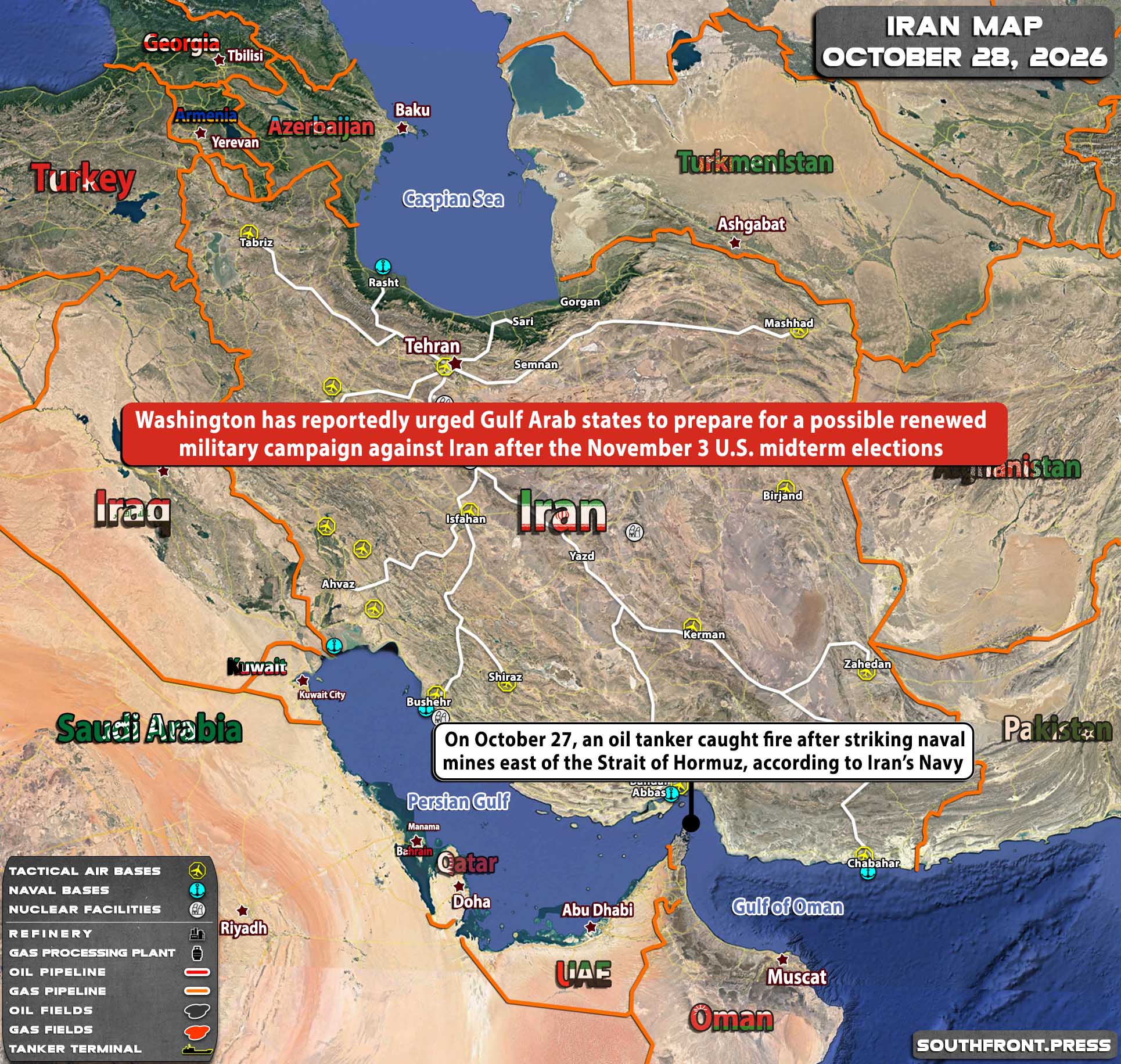
Military Situation In Iran On October 28, 2026 (Map Update)

Click to see full-size map.

  • On October 27, an oil tanker caught fire after striking naval mines east of the Strait of Hormuz, according to Iran’s Navy;
  • Washington has reportedly urged Gulf Arab states to prepare for a possible renewed military campaign against Iran after the November 3 U.S. midterm elections.

_______________________________________________________________________________________________________________________

SouthFront: Analysis and Intelligence

NOW hosted at southfront.press

Previously, SouthFront: Analysis and Intelligence was at southfront.org.

The .org domain name had been blocked by the US (NATO) (https://southfront.press/southfront-org-blocked-by-u-s-controlled-global-internet-supervisor/) globally, outlawed and without any explanation

Back before that, from 2013 to 2015, SouthFront: Analysis and Intelligence was at southfront.com

SOUTHFRONT.PRESS

MORE ON THIS TOPIC:


The post Military Situation In Iran On October 28, 2026 (Map Update) appeared first on South Front.

  •  

Aprovada a adjudicação para a requalificação do centro de saúde

VTM

A reunião de câmara de Vila Pouca de Aguiar ficou marcada, também, pela questão da redução da distribuição de água pela VMPS aos aguiarenses, com todo o executivo unido contra a decisão unilateral da empresa, considerada “inaceitável” por todos os partidos.

Ainda antes de dar início à longa ordem de trabalhos, Manuel Borges Machado, do PS, pediu a palavra para levantar questões sobre a situação que envolve a VMPS. Seguiu-se José Diegas, do MAI e, por último, a presidente da câmara, Ana Rita Dias, explicou que iria aguardar uma resposta até ao final da semana passada, para depois ser tomada uma posição conjunta com a oposição.

Saúde

Passada esta fase da reunião, vários pontos foram aprovados por unanimidade, até à proposta para alteração orçamental permutativa, sendo explicado pelo chefe de divisão que será preciso reforçar a verba para o concurso da renovação das extensões de saúde de Campo de Jales e Pedras Salgadas, uma vez que o anterior ficou novamente deserto. Neste caso, serão mais 83 mil euros acrescentados à verba para o concurso.

Artigo exclusivo PREMIUM

Tenha acesso ilimitado a todos os conteúdos do site e à edição semanal em formato digital.

ou compre apenas este artigo:

Comprar este artigo — 1,00€
Se já é PREMIUM, Aceda à sua conta em Entrar

The post Aprovada a adjudicação para a requalificação do centro de saúde appeared first on A Voz de Trás-os-Montes.

  •  

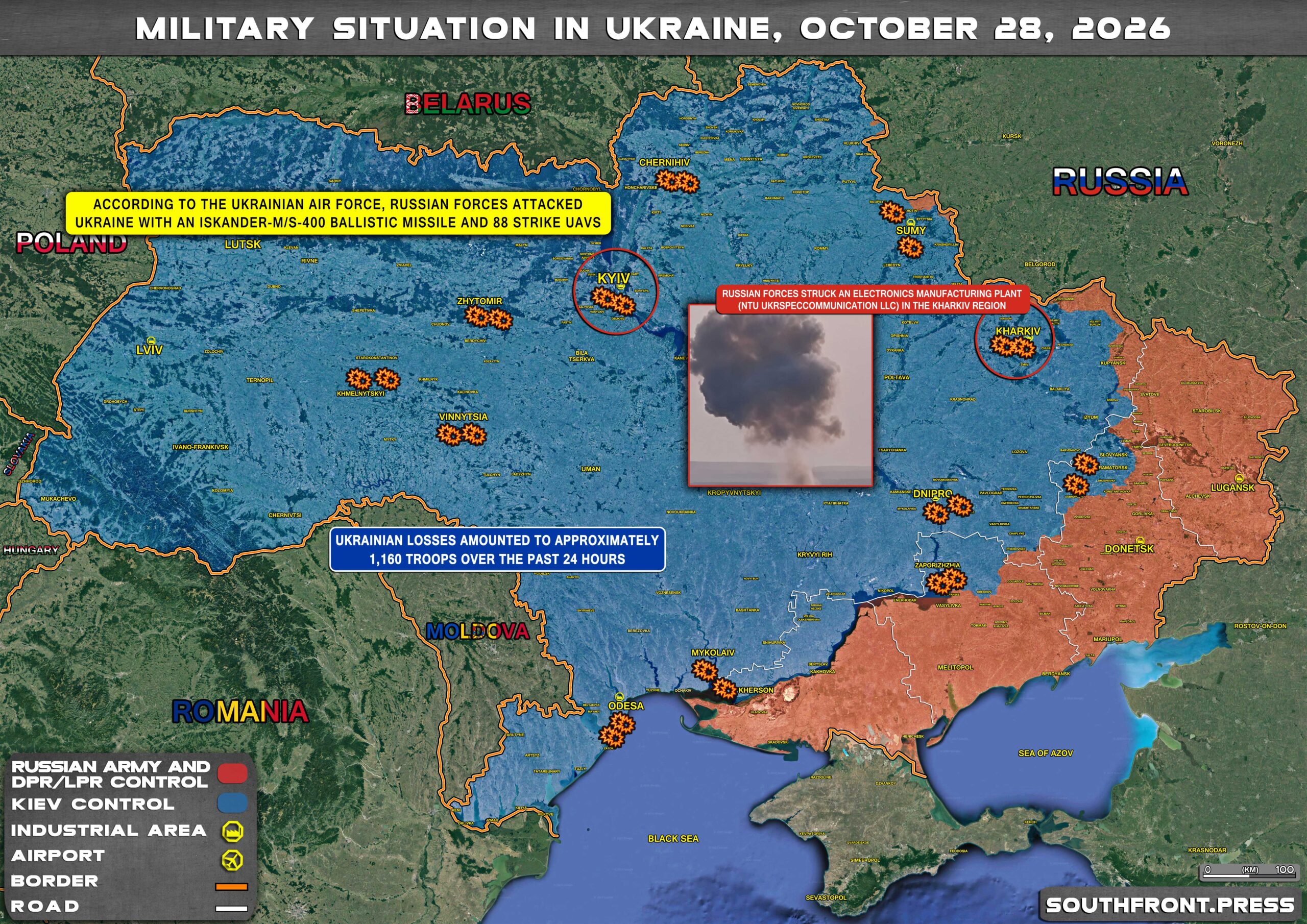
Military Situation In Ukraine And Ukrainian Attacks On Russian Territory On October 28, 2026 (Maps Update)

Click to see the full-size image

  • Russian strikes hit targets in the Sumy, Kharkiv, Zaporizhzhia, Dnipropetrovsk, Kherson, Vinnytsia, Kyiv, Kirovohrad, Khmelnytskyi, Zhytomyr, Cherkasy, Chernihiv regions, and the DPR;
  • According to the Ukrainian Air Force, Russian forces attacked Ukraine with an Iskander-M/S-400 ballistic missile and 88 strike UAVs;
  • Russian forces struck an electronics manufacturing plant (NTU Ukrspeccommunication LLC) in the Kharkiv region;
  • Ukrainian losses amounted to approximately 1,160 personnel over the past 24 hours.

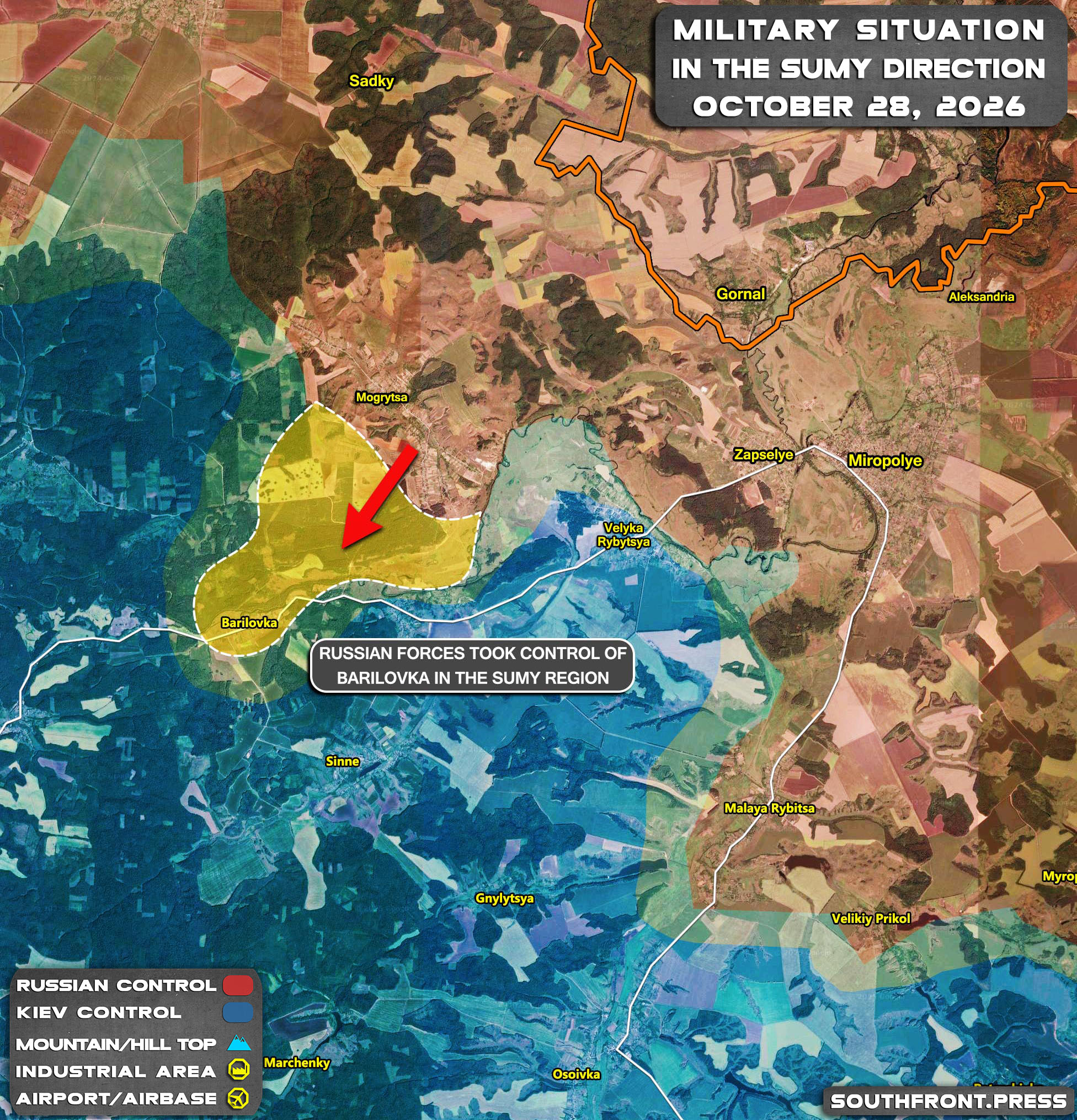
Click to see the full-size image

  • Russian forces took control of Barilovka in the Sumy region.

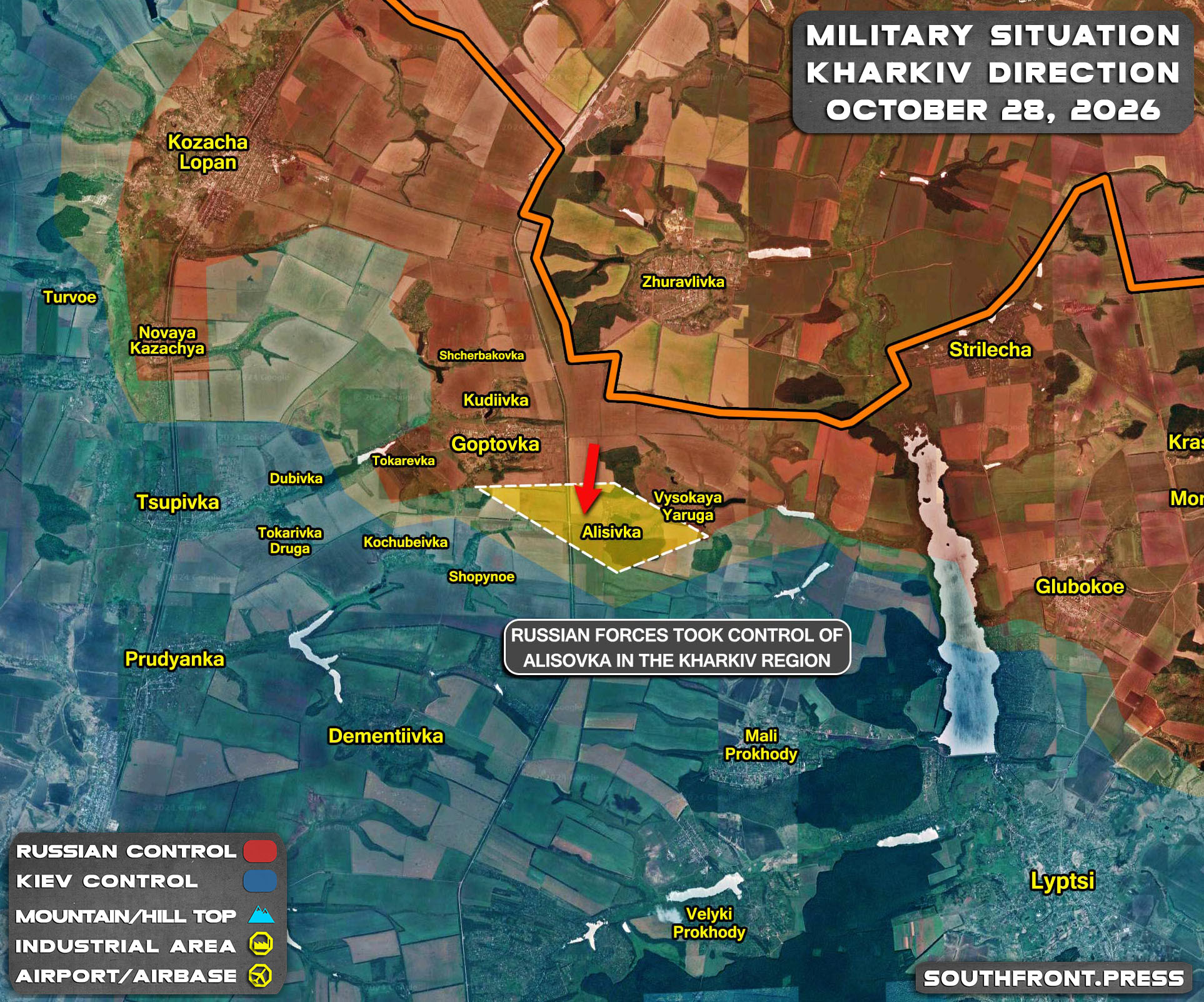
Click to see the full-size image

  • Russian forces took control of Alisovka in the Kharkiv region.

Click to see the full-size image

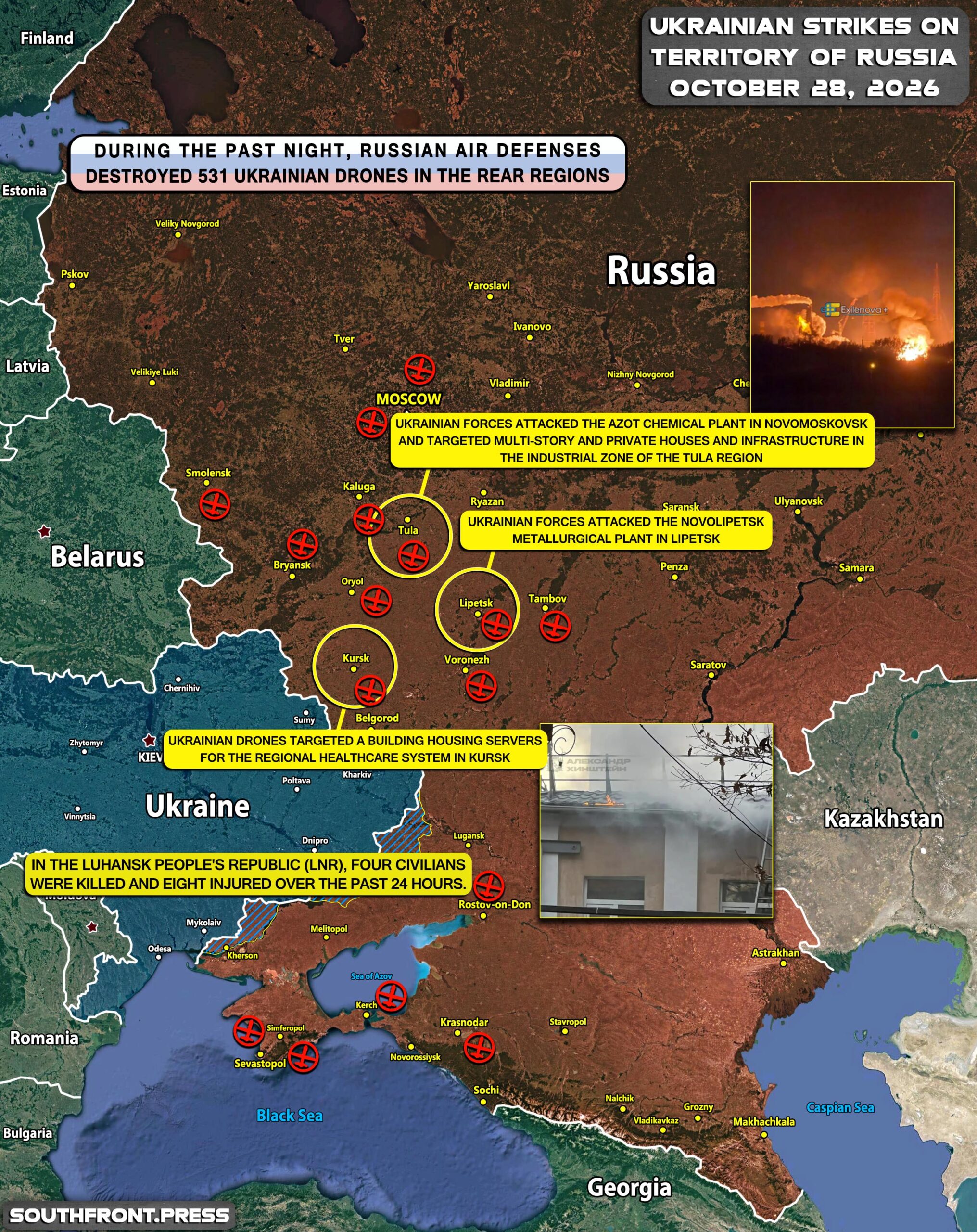
  • During the past night, Russian air defenses destroyed 531 Ukrainian drones in the rear regions;
  • Russian air defenses intercepted UAVs in the Belgorod, Bryansk, Voronezh, Kaluga, Kursk, Lipetsk, Oryol, Rostov, Ryazan, Smolensk, Tambov, and Tula regions, and in the Moscow region;
  • Ukrainian drones targeted a building housing servers for the regional healthcare system in Kursk;
  • Ukrainian forces attacked the Novolipetsk Metallurgical Plant in Lipetsk;
  • Ukrainian forces attacked the Azot chemical plant in Novomoskovsk and targeted multi-story and private houses and infrastructure in the industrial zone of the Tula region;
  • In the Luhansk People’s Republic (LNR), four civilians were killed and eight injured over the past 24 hours.

MORE ON THE TOPIC:

The post Military Situation In Ukraine And Ukrainian Attacks On Russian Territory On October 28, 2026 (Maps Update) appeared first on South Front.

  •  

Manovra 2027, stop alla rivalutazione delle pensioni: chi perde con quest’ipotesi e quanto

Le pensioni assorbono circa il 15% del Pil e oltre il 30% della spesa pubblica primaria dello Stato, motivo per cui rappresentano uno dei capitoli più dibattuti ogni volta che si avvicina la sessione di bilancio per la Manovra 2027.

Per guadagnare margini di bilancio, il Governo sta immaginando di congelare la perequazione automatica per le pensioni di importo medio-alto. Ecco cosa accadrebbe ai cedolini dei pensionati se l’Esecutivo decidesse di confermare il blocco dell’adeguamento all’inflazione.

Quante pensioni sono coinvolte e quanto si risparmia

Per far quadrare i conti pubblici e reperire coperture finanziarie a stretto giro, l’Esecutivo starebbe valutando di confermare anche per il 2027 la stretta sul meccanismo di adeguamento degli assegni all’inflazione, replicando uno schema già ampiamente sfruttato nelle ultime leggi di Bilancio.

Non si tratta di una riduzione nominale dell’assegno, ma di un mancato adeguamento pieno all’aumento del costo della vita. Una misura che andrebbe a colpire la platea dei trattamenti superiori a quattro volte il minimo Inps, che per il 2026 è fissato a 611,85 euro: la soglia è quindi di 2.447,40 euro lordi al mese. I pensionati che percepiscono importi al di sopra di questo valore rappresentano circa il 45,9% del totale dei pensionati italiani.

Una scelta di questo tipo garantisce allo Stato un gettito di risparmio di diversi miliardi di euro all’anno a scapito del potere d’acquisto della classe media.

Effetti di lungo corso del blocco dell’indicizzazione

La ragione per cui il blocco della rivalutazione rappresenta la leva preferita dai governi risiede nella sua immediata praticabilità tecnica e nella straordinaria efficacia sui saldi di finanza pubblica.

Le cifre contabili evidenziano un risparmio netto per le casse dello Stato così articolato:

  • 2 miliardi di euro incassati nel solo 2023;
  • 4 miliardi di euro all’anno di risparmio strutturato nel triennio 2024-2026;
  • oltre 54 miliardi di euro di risparmio cumulato lordo proiettato sull’arco di un decennio.

Il vero punto di forza contabile per lo Stato risiede nell’effetto trascinamento. Poiché la quota di rivalutazione negata in un determinato anno non viene più reintegrata nella base di calcolo dell’assegno, l’importo della pensione resta permanentemente inferiore rispetto a quello che si sarebbe raggiunto con la perequazione al 100%, generando un beneficio permanente per le casse pubbliche.

Quanto perde il singolo pensionato

Per comprendere l’impatto sulle tasche dei cittadini, basta osservare l’evoluzione di un assegno pensionistico medio-alto nell’ultimo quadriennio. Un pensionato che nel 2022 percepiva 2.000 euro netti al mese, per effetto dei tagli percentuali alla rivalutazione applicati negli anni successivi, percepisce oggi circa 2.260 euro netti.

Se il meccanismo di indicizzazione fosse rimasto integrale e privo di tetto, lo stesso assegno avrebbe raggiunto la soglia dei 2.329 euro netti mensili. La perdita cumulata per il singolo assegno ammonta dunque a circa 69 euro netti al mese, per un danno complessivo al potere d’acquisto pari a 828 euro all’anno.

Flessibilità rinviata e risorse limitate

L’ipotesi di rinnovare la stretta sulle rivalutazioni si inserisce in un quadro di interventi sulla previdenza estremamente contenuto. Con le riforme sulla flessibilità in uscita per provare a superare la Legge Fornero o le nuove formule di Quota sostanzialmente congelate o rinviate al 2027, le risorse a disposizione della previdenza sono ridotte all’osso.

La creazione di un fondo da circa un miliardo di euro previsto in Manovra per gestire le future uscite anticipate conferma la linea di estrema prudenza adottata dal Ministero dell’Economia, che per finanziare le misure a sostegno dei redditi bassi torna a fare cassa sulla fascia intermedia dei trattamenti previdenziali.

  •  

Limassol seafront residents live within five minutes of a bus stop, study finds

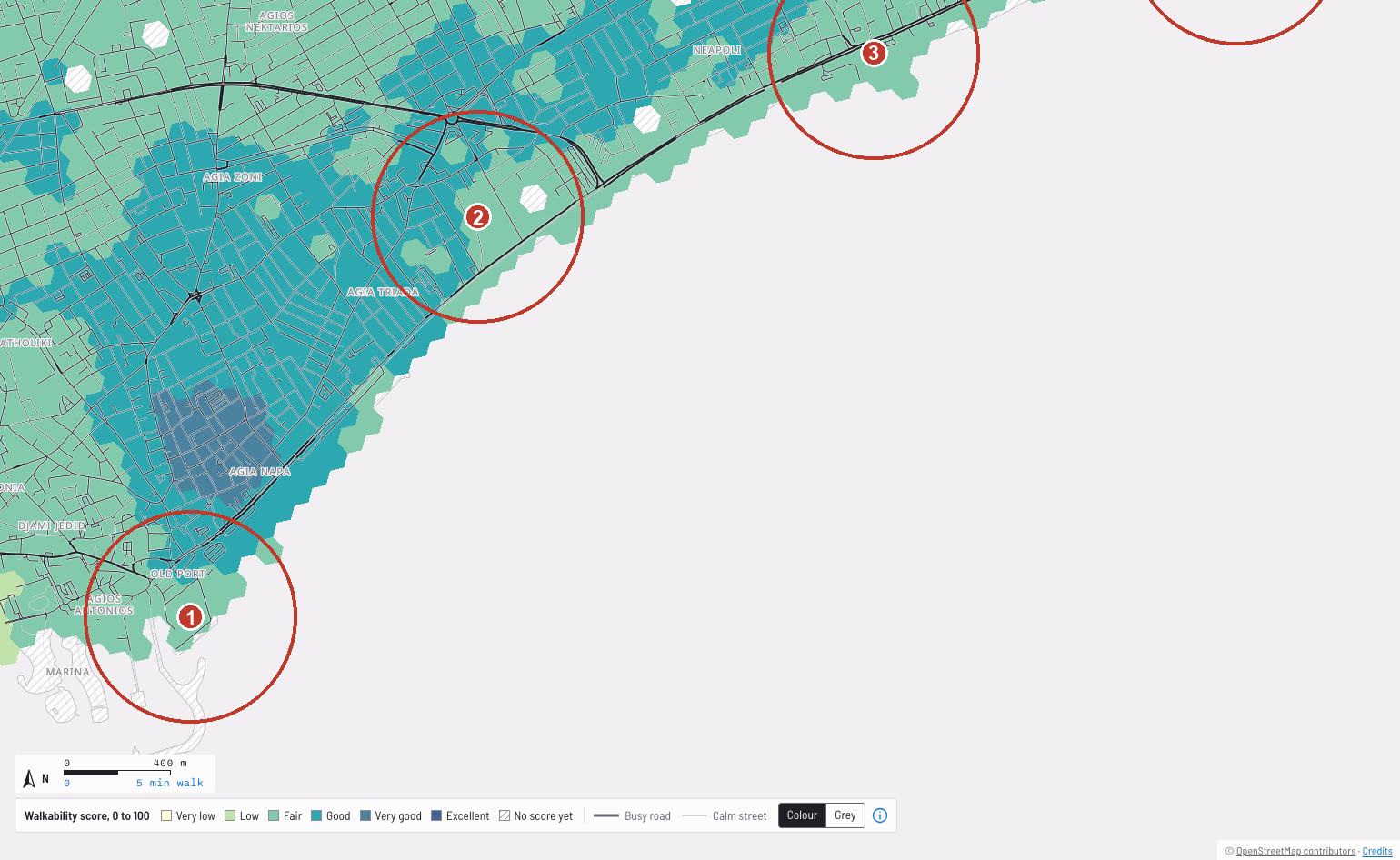
Residents along Limassol’s seafront, from the Old Port to Dasoudi, have convenient access to public transport, with all living within a five-minute walk of the nearest stop, according to a new Walkably study.

It estimates 2,762 people reside in this area, compared to 86.9per cent of the rest of Limassol.

The analysis highlights public transport accessibility across the city amid ongoing discussions about improving the transport network, including the potential introduction of a tram.

Walkably founder Raian Pollock noted, “the study measured actual walking distances along streets and paths rather than straight-line distances.”

The median walk time to the nearest stop is two minutes in the seafront area, compared to 2.7 minutes elsewhere.

“However, the gap narrows at ten minutes, with 97.8per cent of residents citywide able to reach a stop in that time, while all seafront residents can,” he said.

The study estimates Limassol’s population at 103,812, with 87.2per cent living within a five-minute walk of a stop.

Proximity, however, does not guarantee a reliable service. Pollock pointed out that the study focuses on distance rather than bus frequency or routes.

“The research, based on Eurostat 2021 data, acknowledges that bus stop frequency needs to be assessed to gauge service quality,” Pollock added.

The study considers factors like traffic and slope, it does not account for pavement width or road safety.

While seafront residents enjoy easy access to public transport, the findings alone cannot determine if a tram or improved bus services would be more effective in enhancing the city’s transport system.

The study and interactive map are available at walkably.org/city/cy/limassol/

  •  

Aguiarenses exigem explicações sobre corte na distribuição de Água das Pedras

VTM

A VMPS – Águas e Turismo, S.A. decidiu limitar a entrega a uma grade por pessoa e por mês, em dias previamente definidos, uma alteração que a autarquia considera unilateral e contrária aos compromissos assumidos com a comunidade.

A presidente da câmara, Ana Rita Dias, afirma que o município e a Junta de Freguesia de Bornes de Aguiar não foram previamente informados da decisão, tendo tomado conhecimento da mesma através de uma comunicação da empresa. “Entendemos que foi uma postura, digamos assim, um pouco autoritária”, disse a autarca sobre o assunto, acrescentando que “temos um protocolo com a VMPS que foi assinado em 2021 e foi reiterado em 2023, que estabelece claramente qual a distribuição de água à população”.

Em comunicado conjunto, câmara e junta de freguesia recordam o protocolo assinado, que manteve as obrigações estabelecidas. O documento prevê o fornecimento anual de cerca de 200 mil litros de água mineral natural gasocarbónica à população local. Segundo a câmara, este compromisso remonta a 1912.

“O que nós tínhamos acordado e tínhamos dialogado em reuniões que antecederam esta decisão foi que, quando houvesse alguma alteração, o município deveria ser informado, assim como a junta de freguesia”, explicou Ana Rita Dias. A autarquia enviou, a 7 de outubro, um ofício à VMPS a manifestar a sua discordância e a pedir esclarecimentos, mas, até ao fecho desta edição, continuava sem resposta.

Artigo exclusivo PREMIUM

Tenha acesso ilimitado a todos os conteúdos do site e à edição semanal em formato digital.

ou compre apenas este artigo:

Comprar este artigo — 1,00€
Se já é PREMIUM, Aceda à sua conta em Entrar

The post Aguiarenses exigem explicações sobre corte na distribuição de Água das Pedras appeared first on A Voz de Trás-os-Montes.

  •  

Braga: PS propõe 200 casas por ano e seis linhas noturnas de autocarros

O Partido Socialista (PS) de Braga apresentou oito propostas para o Orçamento Municipal de 2027, com medidas nas áreas da habitação, mobilidade, saúde, apoio aos idosos, creches e requalificação das escolas. Entre as principais sugestões estão a construção de até 200 habitações acessíveis por ano, a criação de seis linhas de transporte público noturno e o reforço das ligações de autocarro às freguesias periféricas.

No âmbito da habitação, os socialistas defendem a criação de um programa municipal de construção modular em terrenos do Município e das freguesias, com o objetivo de disponibilizar entre 150 e 200 casas por ano. Pelo menos 30% das habitações seriam reservadas a jovens até aos 35 anos.

O partido propõe também a criação de um Gabinete Municipal de Apoio ao Cooperativismo Habitacional, com cedência de terrenos municipais e apoio técnico e jurídico à constituição de cooperativas. A meta passa por criar pelo menos cinco cooperativas habitacionais e desenvolver 300 novas habitações.

Na área da mobilidade, o PS sugere a criação de oito novas ligações dos Transportes Urbanos de Braga (TUB) às freguesias periféricas, com frequências máximas de 30 minutos. Defende ainda a implementação de uma coroa tarifária única para todo o concelho, eliminando as diferenças de preço entre o centro e a periferia.

Outra das medidas passa pela criação de pelo menos seis linhas de transporte público noturno, com funcionamento até às 04:00, para assegurar ligações entre polos universitários, hospitalares e zonas industriais.

Centros de convívio para idosos e saúde de proximidade

O combate ao isolamento dos idosos é outra das prioridades identificadas pelos socialistas. A proposta prevê a criação de centros de convívio sénior, em parceria com as juntas de freguesia, de forma a assegurar a cobertura de todo o concelho.

Os espaços deverão disponibilizar atividades regulares nas áreas da saúde, atividade física, formação digital e cultura, com o objetivo de abranger mais de 10 mil idosos.

O PS propõe igualmente a criação de uma Unidade Móvel Municipal de Saúde, através de uma frota de carrinhas que percorram regularmente as freguesias, com especial atenção às zonas mais envelhecidas.

A medida integra ainda a garantia de refeições diárias e acesso a banhos para pessoas em situação de maior vulnerabilidade, através de parcerias com entidades locais.

Mais creches e escolas requalificadas

O PS propõe também o reforço da resposta à primeira infância, defendendo a realização de um diagnóstico municipal sobre a oferta e a procura de vagas em creches, com identificação das necessidades de cada freguesia para os próximos cinco anos.

Entre as medidas sugeridas estão a criação de um fundo municipal de apoio ao investimento em creches, a disponibilização de terrenos e edifícios municipais para novos equipamentos e a criação de incentivos ao investimento privado e cooperativo.

Na educação, os socialistas propõem o programa “Escolas com Futuro”, destinado à requalificação e modernização das escolas básicas e jardins de infância da rede pública.

A iniciativa prevê um levantamento técnico do estado de conservação dos edifícios, a identificação das intervenções prioritárias e a respetiva estimativa financeira. As obras deverão abranger, entre outras áreas, coberturas, infiltrações, sistemas de aquecimento e climatização, acessibilidades e espaços exteriores.

O programa contempla ainda a publicação de um relatório anual de monitorização das intervenções.

“Estas oito propostas não esgotam o programa do PS para Braga. Esgotam, isso
sim, o conjunto de medidas que, à data em que escrevemos, consideramos fundamentais
para o Orçamento Municipal de 2027 – pela urgência a que respondem, pela viabilidade
financeira que apresentam, pela escala municipal em que se inscrevem”, defendem os vereadores Pedro Sousa e Martinha Rocha.

“Não as apresentamos para marcar território. Apresentamo-las para melhorar Braga. E para
que ninguém, em consciência, as possa rejeitar sem explicar, perante os Bracarenses, por
que razão as rejeita. O PS mantém-se, como sempre se manteve, disponível para o diálogo, para a
negociação, para a construção de pontes com todas as forças políticas representadas no
Executivo e na Assembleia Municipal. Espera, em contrapartida, que a disponibilidade seja
recíproca. E que esta cidade, que a todos nos excede, continue a ser maior do que as nossas
diferenças”, concluem os socialistas.

O conteúdo Braga: PS propõe 200 casas por ano e seis linhas noturnas de autocarros aparece primeiro em O MINHO.

  •  

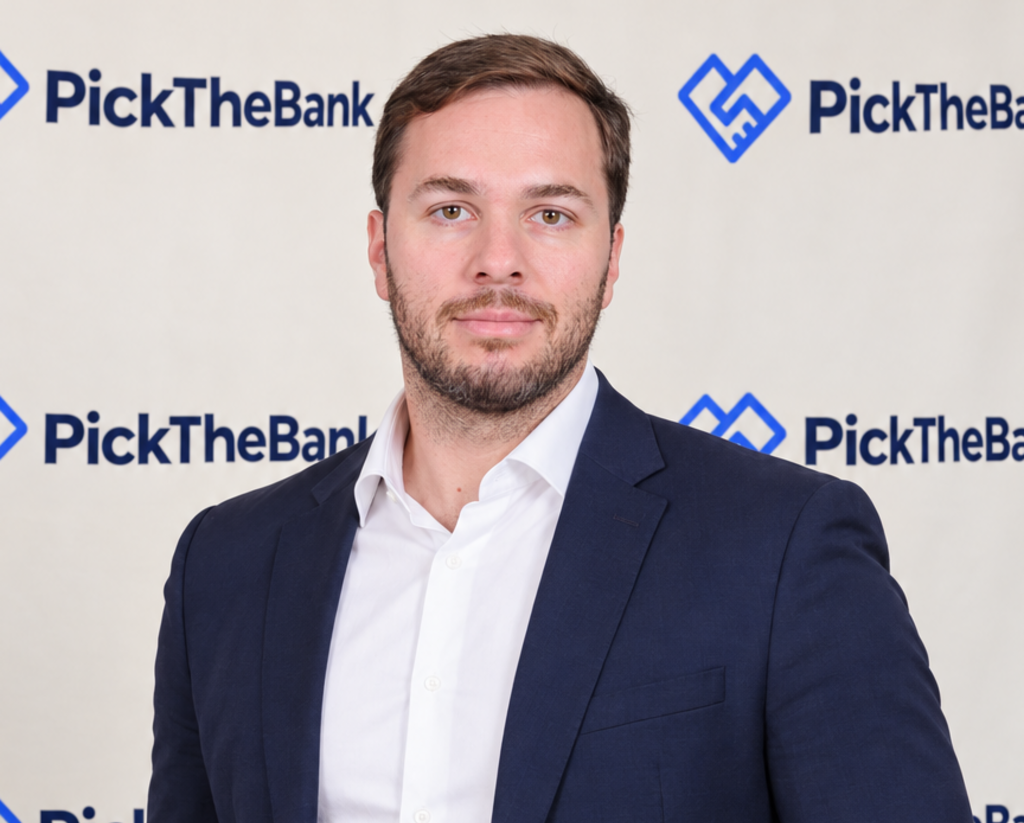
PickTheBank opens European banking to Cyprus savers

Alexander Gromov explains why Europe’s savings market remains fragmented, how PickTheBank gives customers access to licensed banks and higher savings rates without holding their money, and why Cyprus is the company’s immediate priority.

PickTheBank started in 2022 as a comparison platform for European savings products. Today, you have expanded into a platform where customers can also apply for and manage deposits with selected partner banks. What drove this evolution, and what have you learned about the needs of European savers?

PickTheBank began with a personal question: where should I keep my savings to earn a better return without unnecessary risk? In 2023, we launched a comparison platform covering rates from almost every retail bank in Europe. It quickly gained popularity, especially in Western Europe.

We learned comparison alone was not enough, particularly for us in Cyprus. Knowing a better rate exists abroad differs from being able to access it. Customers need a familiar language, effective onboarding and confidence their money goes directly to a licensed bank.

That is why, in 2025, with Lidion Bank in Malta, we expanded into customer onboarding and fixed-term deposit management. Today, thousands use PickTheBank to find, apply for and manage savings products.

The lesson is simple: people want competitive rates, convenience and local support. A European deposit should be as easy to open and manage as one at home.

Europe has a single market, but banking and savings remain highly fragmented across national borders. What are the biggest barriers preventing Europeans from accessing savings products in other EU countries, and how is PickTheBank trying to remove that friction?

Europe has a single banking market on paper, but savings remain largely national. Customers in Cyprus may never discover or access competitive banks in Germany, Italy, Malta or the Baltics, while banks face significant costs to localise products, onboarding, support, marketing and operations country by country.

This creates major differences in rates for similar euro deposits. Some European markets currently offer returns of up to 3.5 per cent in EUR, while many customers in Cyprus earn very little, allowing inflation to reduce their savings’ real value.

This fragmentation has a real cost. Average household deposit rates in Cyprus remain among the euro area’s lowest, while statistics indicate that the average Cypriot holds around €30,000 in banks. If €30,000 earns 0–1 per cent locally instead of 3.5 per cent, the annual difference is approximately €750–€1,050.

PickTheBank bridges this gap through a familiar localised interface, while helping partner banks reach new markets without rebuilding their customer-facing infrastructure.

Trust is critical when a fintech company is helping people make decisions about their savings. How does the PickTheBank model work in practice, particularly around regulation, customer funds, deposit protection, and relationships with partner banks? How do you convince customers to look beyond their traditional local bank?

First, customers choose PickTheBank to diversify their savings. Those with larger balances may not want everything in one institution. Since eligible deposits are generally protected up to €100,000 per depositor, per bank, accessing additional banks can reduce concentration risk and make better use of deposit protection.

Second, PickTheBank is a service partner to licensed banks, not a bank, and never holds customer funds. The partner bank provides the deposit, holds the contractual relationship and receives the money after approval. PickTheBank provides technology, onboarding, a localised interface and support, while the banking product, funds and deposit protection remain with the bank. This aligns with customers’ desire to keep savings with banks rather than a fintech that invests or reallocates them.

Third, thousands of customers have used PickTheBank, and millions of euros have been placed with partner banks, demonstrating demand for competitive rates, diversification, transparency and bank-held savings.

PickTheBank is headquartered in Limassol but is addressing a European market. What are your priorities for the next 12–24 months? Are you planning to add more partner banks, markets or financial products, and are there any new partnerships, investment plans or announcements you can share with us?

Our priorities are focused on two areas.

First, we see strong organic demand in Cyprus. Over the next 12 months, we plan to localise the product further and focus more of our marketing efforts here. PickTheBank started from a problem we experienced ourselves, and we are excited to bring more value and a broader range of savings options to customers in Cyprus.

Second, we are working on adding new partner banks. We hope that already this autumn Cypriot customers will be able to access a second partner bank through PickTheBank, giving them more choice, better diversification and access to a wider range of competitive deposit rates.

Our longer-term ambition remains European: one familiar platform, available in local languages, where customers can preserve and grow their savings with licensed banks across the EU.

About PickTheBank

PickTheBank is a European savings platform based in Cyprus. It helps customers compare savings products, apply for and manage partner bank fixed-term deposits through a localised digital interface.

PickTheBank acts as a service partner to licensed banks and never holds customer funds. Customers transfer funds directly to the relevant bank.

Learn more: pickthebank.eu

About Lidion Bank

Lidion Bank plc is a credit institution registered in Malta and licensed by the Malta Financial Services Authority, or MFSA.

The bank combines traditional banking services with digital solutions, including financing, cash management, treasury operations and multi-currency services. Lidion Bank serves retail depositors with the support of PickTheBank.

Learn more: lidionbank.com

Media Contact

PickTheBank Email: info@pickthebank.eu Website: pickthebank.eu

  •  

My husband and I kept our finances separate after marriage. It worked well — and then, we had a baby.

Two adults wearing sunglasses smile for a beachside selfie while pushing a stroller on a sandy path.
Having a baby pushed my husband and me to rethink how we handle money.

Rebecca Strong

  • I've always valued independence and found comfort in keeping my finances separate from my husband's.
  • When we had a baby, though, our setup started to feel less and less fair.
  • We agreed to combine most of our money, and it's helped us feel like a team.

Maybe it's because I'm an only child raised by a single mother, but I've always valued independence.

I walked down the aisle alone. I'll happily go out to dinner or a movie by myself. When faced with a problem, my instinct is to wrestle with it myself rather than ask for help. (I'm working on that one.)

And when my husband and I got married, I was adamant about keeping our finances separate.

For years, this arrangement worked beautifully. But after we had a baby in the summer of last year, I began to wonder whether the financial independence I'd clung to was actually working against us.

Keeping our finances separate gave me a sense of freedom

The writer and her husband pose in front of a body of water with boats in the background at sunset.
We opened a joint account after buying a house, but continued to keep most of our money in separate accounts.

Rebecca Strong

The concept of combining finances has always made me uncomfortable, mostly because I didn't like the idea of having to justify any impulse purchases I've made after working particularly hard. My husband was always on the same page.

The first time we really talked about changing our system was when we bought a house together in 2020, several years before we got married. We knew that this, of course, would come with a lot of shared expenses.

We decided to open a joint account, and to both deposit the same amount each month to cover those expenses — like the mortgage, utilities, and groceries. Then, we kept the remainder of our earnings in separate checking accounts.

When my husband wanted to splurge on some new audio equipment, he didn't feel the need to consult me. Similarly, I didn't have to "ask permission" every time I wanted to get my hair done or go out for a nice dinner with a friend.

To me, this system reflected just how much we trusted each other to make financially responsible decisions with our own money. Besides, it felt fair: We were both contributing equally to maintaining our home, while preserving some autonomy.

After having a baby, our separate finances started creating tension

In 2025, we had a baby. Suddenly, finances felt a lot less cut-and-dried.

Because my husband and I are both freelancers, every hour one of us spends working is often an hour the other spends caring for our son. So, when my husband takes a last-minute gig, I lose that time to work, but I don't directly benefit from what he earns — and vice versa.

We started to find ourselves competing for the working hours we needed to cover day care and the mortgage, even though we were supposed to be operating as a team. The "every man for himself" dynamic felt completely antithetical to what marriage was supposed to be.

Meanwhile, the costs of parenthood — diapers, formula, day care, clothing — were accumulating, forcing us to contribute more and more to our joint account. And now, one of us often had to sacrifice earning opportunities so the other could work.

During one of our recent weekly marriage check-ins, I expressed some resentment about how I'd been responsible for picking up our son from day care most days the previous week, while my husband was able to work much longer into the night.

"I'm contributing the same amount, but I'm not being given enough time to earn that amount," I said.

Combining more of our money helped us feel like a team again

the writer, her husband, and a stroller in front of a trolley, with trees in the background.
Now, merging our money feels more equitable.

Rebecca Strong

Since our time and responsibilities are so intertwined these days, and we have a longer list of shared expenses than ever, we realized that the best way to make our situation feel more equitable was to merge more of our money.

In the past, we each deposited the same fixed dollar amount into our joint account every month. Now, we contribute nearly all our earnings to that account and set aside the same amount for both of us to spend as we wish.

That change helped curb some of the competition and resentment. Now, when one of us takes on an extra gig, client, or project, it feels like a win for both of us — regardless of who's earning the paycheck.

That's not to say we've found the perfect arrangement. We're still figuring out how much personal spending money makes sense to set aside and which major expenses warrant a conversation.

The important thing, though, is that we've realized independence and partnership aren't mutually exclusive. We share the same financial goals, so it only makes sense to share our earnings. We're not giving up our financial independence, but redefining what it means to us.

Read the original article on Business Insider

  •  
❌