❌

Normal view

Y al final parece que no desaparece: HMD la marca tras Nokia, volverá a Europa reeditando sus móviles más 'top'

28 October 2026 at 00:05

Pues sí que es difícil seguirle los pasos a los amigos de HMD, pues la marca nórdica, que a la postre es todavía la propietaria de la ahora desaparecida firma de Nokia, no parece tener demasiado claro qué estrategia tomar de cara al futuro en los mercados internacionales, no al menos con sus smartphones más prestacionales.

De hecho, es que primero se rumorearon negociaciones para explotar la marca de Lumia y la interfaz 'Live Tiles' tan popular de los antiguos móviles de Microsoft, aunque posteriormente diversas fuentes confirmaban que HMD continuaría reduciendo su presencia en múltiples países para buscar regiones más rentables.

Y aquí es donde entra Europa, pues parece que tras apostarlo todo a los países emergentes, HMD querría relanzarse en el Viejo Continente reeditando tres de sus smartphones más 'top', los HMD Fusion, HMD Pulse Pro y HMD Crest Max, que recibirían algunas vitaminas para competir en nuestros mercados.

De hecho, es que habrá mejoras importantes para cada uno de los modelos, que además llegarían aquí con un enfoque asequible para buscar cifras de ventas desde un primer momento en un rango medio/bajo del catálogo Android que por cuestión de márgenes se está quedando sin opciones interesantes.

HMD Fusion

HMD Fusion (EU Version Upgraded)
- IPS LCD 6.56" FHD+, 120Hz
- 108MP OIS + 2MP | 50MP
- Snapdragon 7s Gen 2
- 8/256GB, 12/256GB
- Up to 24GB* w Virtual RAM
- 4yrs updates warranty
- 5000mAh, 33W pic.twitter.com/cZ8QiT2PXW

— HMD_MEME'S (@smashx_60) October 25, 2026


Es el más interesante de los tres móviles y por tanto el primero del que hablaremos, con un diseño relativamente modular que nos permite añadir accesorios como un mando o una luz para selfies.

En Europa, este smartphone crecerá desde la serie Snapdragon 4 de Qualcomm instalando en su caso un chipset Snapdragon 7S Gen 2 mucho más potente, con pantalla IPS de 6,56 pulgadas y resolución FHD+ 1.080p, que no olvida los 120 hercios de refresco.

Habrá una cámara principal de 108 megapíxeles con OIS junto a otro sensor auxiliar de 2 megapíxeles, cámara frontal de 50 MP y hasta 24 GB de RAM con la modalidad virtual, sumando una batería de 5.000 mAh con carga por USB-C hasta 33 vatios.

HMD Pulse Pro

HMD Pulse Pro (EU Version Upgraded)
- IPS LCD 6.56" HD+, 120Hz
- MTK Helio G99
- 50MP OIS + 2MP | 50MP
- 8/256GB
- 5000mAh, 20W pic.twitter.com/ALscAj8UsN

— HMD_MEME'S (@smashx_60) October 25, 2026


En su caso también actualizamos el chipset para Europa, abandonando al Unisoc T606 tan básico en favor de un MediaTek Helio G99 que ofrecerá hasta un 45% más de rendimiento.

Cuenta con pantalla IPS de 6,56 pulgadas y resolución HD+ 720p, tasa de refresco de hasta 120 hercios, batería de 5.000 mAh con carga USB-C a 20 vatios y una cámara principal de 50 megapíxeles con OIS.

HMD Crest Max

HMD Crest Max (EU Version Upgraded)
- OLED 6.67" FHD+, 120Hz
- Dimensity 7025
- 64MP OIS + 5MP + 2MP | 50MP
- 8/256GB
- up to 16GB* RAM w Virtual RAM
- 5000mAh, 33W pic.twitter.com/bXljKM4unJ

— HMD_MEME'S (@smashx_60) October 25, 2026


En último de la fila será este Crest Max que monta una pantalla OLED de 6,67 pulgadas y resolución FHD+ 1.080p, con un chip Dimensity 7025 de MediaTek que sustituye al Unisoc T760 con el que se ha lanzado en mercados emergentes.

Cuenta con una triple cámara de 64 MP (angular), 5 MP (ultra gran angular) y 2 MP (macro, aux), con cámara frontal de 50 megapíxeles, hasta 16 GB de RAM con la parte virtual y una batería que repite con 5.000 mAh y carga rápida hasta 33 vatios.

Todo ello por ahora sin noticias sobre una fecha de lanzamiento más concreta ni tampoco, por supuesto, a qué precios podrán conseguirse estos tres móviles en nuestros mercados... ¡Al menos ya sabemos que HMD no se ha olvidado de nosotros!

© Difoosion
En imagen el HMD Fusion, uno de los tres móviles que se reeditarán para Europa

Nokia taps LTTS to boost Indian R&D

26 October 2026 at 12:27

Indian engineering services company L&T Technology Services (LTTS) agreed a five-year contract to back Nokia’s local engineering and R&D work into areas including 5G, AI-based operations and next-generation computing infrastructure.

LTTS plans to establish a dedicated offshore development centre to support the Finnish vendor’s R&D programmes spanning product engineering and development, embedded systems, and software and system integration.

Financial terms were not disclosed.

LTTS added it would also assemble a dedicated engineering team to work with Nokia R&D teams globally.

It stated the development centre would focus on engineering for telecoms and data centre infrastructure, along with employing AI in network automations and developing intelligent automation.

Vivek Jaiswal, SVP of engineering at Nokia, said India is an “important innovation hub” for the vendor and backed LTTS to help “expand our R&D footprint and accelerate innovation”.

He argued is it essential Nokia continues investing in R&D to deliver the “advanced connectivity technologies” AI requires.

For LTTS, the contract aligns with a focus on next-generation computing and AI infrastructure.

LTTS provides AI, digital and engineering R&D services across more than 25 countries.

The agreement comes as Nokia positions AI infrastructure and advanced connectivity as key growth areas during a period CEO Justin Hotard previously called a “super cycle” involving the technology.

The post Nokia taps LTTS to boost Indian R&D appeared first on Mobile World Live.

VMO2 lauds AI impact on RAN

26 October 2026 at 11:35

UK operator Virgin Media O2 (VMO2) flagged an around 20% improvement in spectral efficiency by using AI technology in the RAN during a test with Nokia at a busy transport hub, in what it described as first of its kind in the nation.

The test used AI to predict and optimise 5G radio resources during changing network conditions and levels of demand on a site serving customers around London Paddington rail station.

VMO2 noted use of the technology meant it could carry a greater amount of data using existing spectrum resources and deliver “significant throughput gains” during periods of high demand.

It asserted the results showcase how it can use AI to support growing traffic volumes, faster downloads and higher quality streaming, while reducing buffering in busy locations.

VMO2 CTO Jeanie York said as demand for data keeps growing “we need smarter ways to make the most of the spectrum and infrastructure we already have”.

“This live trial with Nokia showed how AI can improve network efficiency and help us respond more effectively to changing customer demand. By making better use of existing network resources, we can deliver a better experience for customers while supporting future traffic growth.”

The operator noted the project with Nokia is part of an ongoing network transformation plan.

Nokia president of mobile networks Emma Falck added the test “demonstrates how AI is moving from experimentation to delivering measurable benefits in live mobile networks”.

She added the collaboration “shows the significant potential of AI-native networks to enhance customer experiences while improving operational efficiency”.

The news is the latest in what is a hot mobile industry topic of use of AI in the RAN and comes a week after a spate of partner releases involving Nokia’s work in the segment alongside Nvidia.

The post VMO2 lauds AI impact on RAN appeared first on Mobile World Live.

O famoso toque da Nokia ouve-se há mais de 120 anos

By: ZAP
25 October 2026 at 20:30
Já estávamos com saudade de ouvir isto … O toque mais famoso da história dos telemóveis não nasceu num estúdio: são uns segundos de “Gran Vals”, peça para guitarra que o espanhol Francisco Tárrega escreveu em 1902. No fim dos anos 1990 e início dos 2000, havia um som que se ouvia em todo o lado. Nas ruas, nos cafés, aeroportos, centros comerciais, salas de reuniões. Nos cinemas, a meio dos filmes, como não podia deixar de ser. E em casa, até em casa. Se um telemóvel tocava, era quase certo que dava aquela melodia. Nessa altura ainda não se

💾

Já estávamos com saudade de ouvir isto ... O toque mais famoso da história dos telemóveis não nasceu num estúdio: são uns segundos de "Gran Vals", peça para guitarra que o espanhol Francisco Tárrega escreveu em 1902. No fim dos anos 1990 e início dos 2000, havia um som que se ouvia em todo o lado. N

💾

Slovakia Votes in Local Elections as Robert Fico Faces Test of Public Support

24 October 2026 at 11:50

Nearly 4.41 million voters are eligible to participate in Slovakia’s municipal and regional elections on Saturday, 24 October, in a contest that could indicate the political direction of the country ahead of the 2027 parliamentary elections. Prime Minister Robert Fico faces growing pressure over coalition instability, economic policy and his government’s relations with Russia.

Slovakia is voting in nationwide municipal and regional elections on Saturday, 24 October, providing the first major electoral test of Prime Minister Robert Fico’s government since a series of parliamentary disputes weakened his governing coalition.

According to figures released by Slovakia’s national news agency, almost 4.41 million people are eligible to vote across 2,926 municipalities, towns and city districts. Polling stations opened at 7am and will close at 8pm local time.

Voters are choosing mayors, municipal councillors, governors and representatives of Slovakia’s eight self-governing regions. In Bratislava and Košice, they are also electing district mayors and councils.

Although the elections concern local administration, their political significance extends beyond municipal government. They offer an indication of the relative strength of Fico’s governing Smer-SD party and the opposition Progressive Slovakia movement ahead of parliamentary elections due by September 2027.

Bratislava becomes a political battleground

One of the most closely watched contests is in Bratislava, where incumbent mayor Matúš Vallo is seeking another term against Transport Minister Jozef Ráž, who is standing as an independent candidate.

Vallo is supported by an alliance comprising Team Bratislava, Progressive Slovakia, Freedom and Solidarity (SaS) and the Democrats. Ráž, although formally independent, is a minister in Fico’s government.

The contest has acquired a distinctly national character. Vallo and Bratislava regional governor Juraj Droba have campaigned against extending Smer’s influence over the capital and its regional administration.

Bratislava is also politically significant because its electorate has traditionally provided substantial support for liberal and pro-European parties, in contrast to the stronger position enjoyed by Smer in parts of rural Slovakia.

Polls point to an uncertain parliamentary future

The latest national opinion surveys suggest a closely divided electorate.

An Ipsos survey conducted between 15 and 19 October placed Progressive Slovakia first with 18.6 per cent, marginally ahead of Smer-SD on 18.4 per cent. The difference was statistically insignificant.

The nationalist Republika party ranked third on 10.8 per cent, while Fico’s coalition partner Hlas-SD attracted 6.6 per cent. The Slovak National Party (SNS), another governing partner, stood below the parliamentary threshold.

The figures suggest that Fico could struggle to reproduce his present parliamentary majority. However, the opposition is also divided, and current projections do not establish a straightforward route to an alternative governing coalition.

The immediate challenge for Fico is maintaining sufficient parliamentary support to govern until the scheduled election.

As EU Today reported in September, parliament voted to remove Environment Minister Tomáš Taraba after SNS deputies joined the opposition, exposing divisions within the governing alliance.

Those tensions have continued to affect parliamentary business. On 14 October, the government secured approval for its 2027 budget by just 76 votes in the 150-member National Council, the minimum required for an absolute majority.

The budget increases the projected deficit to 4.94 per cent of GDP, despite warnings from Slovakia’s fiscal watchdog about rising public debt. Fico has defended the spending plans as necessary to protect households, pensions and public services.

Relations with Russia remain a dividing issue

The elections are also taking place against a widening disagreement between Fico’s government and much of the European Union over Russia’s war against Ukraine.

Since returning to office in 2023, Fico has ended government-funded military assistance to Kyiv, challenged EU sanctions on Moscow and repeatedly called for negotiations with Russia. Commercial Slovak arms exports to Ukraine have nevertheless continued.

His position has extended to NATO’s collective defence commitments. In September, Fico questioned the prospect of Slovakia becoming involved in a military conflict under Article 5 of the North Atlantic Treaty.

Article 5, however, requires member states to assist an ally subjected to armed attack, while allowing each government to determine the measures it considers necessary. It does not automatically require every member to deploy combat troops.

The latest development concerns Slovakia’s decision to resume formal bilateral consultations with Moscow.

On Monday, 26 October, two days after the elections, Slovak and Russian officials are scheduled to meet in Moscow for discussions covering energy, nuclear cooperation, oil and gas supplies and other economic sectors.

It will be the first meeting of the bilateral intergovernmental commission since Russia launched its full-scale invasion of Ukraine in February 2022.

Bratislava maintains that dialogue with Russia is compatible with Slovakia’s EU and NATO obligations. The initiative nevertheless reinforces Fico’s different approach to Moscow at a time when the EU is seeking to reduce Russian energy imports.

Results could shape the 2027 election campaign

Saturday’s vote will not directly determine whether Fico remains prime minister. Local contests involve independent candidates, regional alliances and municipal priorities that do not necessarily correspond to national party preferences.

Nevertheless, results in Bratislava, Košice and the country’s eight regions will provide evidence of the government’s ability to mobilise supporters and the opposition’s capacity to turn favourable opinion polls into electoral victories.

No official exit polls are planned. The Slovak Statistical Office will publish results progressively after polling stations close, with counting expected to continue overnight into Sunday, 25 October.

For Fico, the results will offer an indication of whether his coalition can recover political ground before the next parliamentary election or whether its internal divisions are beginning to translate into losses at the ballot box.

Finland gives Ukraine 10 diesel locomotives that keep trains running when Russian strikes cut the power

23 October 2026 at 15:38

The image shows a train in Ukraine on fire, hit by a Russian drone. Source: Oleksii Kuleba

Finland will donate diesel locomotives to Ukraine’s state railway, the Office of Ukraine’s President reported. Helsinki also pledged new winter aid, and the two countries signed deals on drones, housing, and satellite communications during Finnish Prime Minister Petteri Orpo’s visit to Kyiv. One of them is a first step toward a satellite link Ukraine would control itself.

With Russia replacing its missiles as fast as it fires them, Ukraine heads into winter needing equipment that works without the grid. Russian strikes have damaged or destroyed almost 600 locomotives of Ukraine’s state railway since the full-scale invasion began, more than 300 of them diesels, the infrastructure minister said. The attacks have reached engines even near the Polish border, on the railway that carries Ukraine’s evacuations, grain, and cargo.

Diesels that keep moving when the grid goes down

Finland will hand 10 locomotives and their spare parts to Ukrzaliznytsia, Ukraine’s state railway, free of charge. Infrastructure Minister Mykola Kalashnyk announced the deal, signed on 22 October at a Ukrainian-Finnish business forum. The engines need no power from overhead lines, so trains can keep running during blackouts.

The engines are Dv12 diesels that VR, Finland’s state rail company, is taking out of service. A VR shareholders’ meeting moved them into state ownership, and the Finnish state is donating them, Yle reported. VR puts their value, spare parts included, at about €2.1 million. Finland’s government said the gift will not affect VR’s ability to run trains at home.

A VR Class Dv12 diesel locomotive in Finland, 16 April 2007
A VR Class Dv12 diesel locomotive in Finland, 16 April 2007. Photo: Matthew Ross/Wikimedia Commons

Ukrainian Prime Minister Serhii Koretskyi and Orpo signed the donation certificate, one of seven documents signed that day. Two others plan Ukrainian-Finnish drone production in Finland, one for military and dual-use systems and one for heavy drones. Another covers a precast concrete plant for industrial housing construction.

The day’s agreements are worth around €300 million in total, Zelenskyy said. Projects worth €200 million are already under way within the two countries’ Drone Deal, he added. Under an earlier plan, most drones made in Finland would go to Ukraine.

The Darnytska Combined Heat and Power Plant in Kyiv sustained critical damage from a Russian strike on 3 February 2026. Photo: Vitali Klitschko
Explore further

Finland backs €28.5 million power plant project as Ukraine braces for Russia’s next winter energy assault

Winter money now, a 36th military package by year’s end

Orpo announced a new €10 million package. Of it, €5 million goes to the Ukraine Energy Support Fund and €2 million to humanitarian aid for winter. The last €3 million goes to the Ukraine Recovery Program, for energy and water supply. Finland will also deliver mobile heating containers by December.

Finland has given Ukraine five defense packages this year, worth more than €500 million combined, Militarnyi reported. A 36th package is being prepared together with Ukraine’s military. “We plan to make a decision by the end of this year,” Orpo said. In September, Finland approved a package worth about €290 million.

A satellite link Ukraine would own

Ukraine’s Defense Ministry signed a letter of intent with Finnish satellite firm ICEYE and telecom company Nokia, Militarnyi reported, citing ICEYE. The parties will explore building a secure satellite communications system under Ukraine’s control. The aim is to reduce Ukraine’s dependence on foreign commercial operators.

In this model, the state customer owns the satellites, ground stations, and user terminals, RBC-Ukraine reported. The network could serve defense, border protection, emergency services, and disaster recovery. The letter sets out no timeline or funding.

“Modern warfare has proven that reliable communications are a matter of national security,” Zelenskyy said in the companies’ statement. ICEYE CEO Rafal Modrzewski said Ukraine needs “secure, sovereign and high-performance satellite communications systems that it controls.”

The deal comes after a speed cap on Starlink disrupted Ukrainian drone missions this month. The EU, meanwhile, is pushing three European firms to merge into one SpaceX rival. ICEYE has supplied Ukraine with radar satellite imagery for years.

Days before the signing, tracking firm LeoLabs said a Russian government-owned satellite, Cosmos 2612, had spent weeks shadowing an ICEYE radar satellite, coming within 500 meters. The ICEYE satellite is widely believed to provide imagery to Ukraine.

Neither fix is quick. Ukraine’s big locomotive order arrives from 2027, and the first satellites of the ICEYE-Nokia system are expected to launch only in 2028.

Movimento fundado por Seguro defende apoio público aos media

23 October 2026 at 05:10
Movimento criado por António José Seguro antes da campanha presidencial fez primeira conferência com recomendações sobre futuro do jornalismo e IA. Defende apoios a jornais por entidade independente.

© DR

Paulo Lopes da Silva é o presidente do UPortugal e foi diretor da campanha de António José Seguro. É deputado do PS.

Nokia mais do que duplica lucro para 240 Milhões de euros

22 October 2026 at 12:08
O lucro bruto da Nokia entre janeiro e setembro ascendeu a 6.298 milhões de euros, um aumento de 7,7% em termos homólogos, embora o resultado operacional tenha diminuído 43% para 229 milhões.

© MIKKO STIG/EPA

A Nokia registou um volume de negócios de 14.402 milhões, mais 7,1% do que no mesmo período do ano anterior

Nokia chief continues to bang AI drum after Q3 gains

22 October 2026 at 11:18

Nokia CEO Justin Hotard (pictured) pointed to a boom in sales for its AI and cloud products during Q3, as he asserted the vendor is in a strong position to take advantage of growing demand for related infrastructure.

AI and cloud sales were up 123% year-on-year, with €1.5 billion of new orders placed in the quarter.

Hotard reported there is also an order backlog, positioning it for further growth in the area.

“Nokia’s strengths are uniquely suited to meet growing demands for AI infrastructure that is larger, more distributed and hyperconnected,” he added. “We are investing where we can differentiate and co-innovate with hyperscalers”.

Hotard highlighted progress on AI-RAN, which was the subject of an update yesterday (21 October) made at an event held by the Finnish vendor’s partner and investor Nvidia.

“AI-native networks are moving into the physical world and our AI-RAN platform is being developed to deliver the performance needed for this market,” Hotard said.

Gains
Nokia booked net profit of €156 million in Q3, up 95%.

Net sales were almost €5.2 billion, a 10% increase. The latter figure would have been a 9% rise with exchange rate fluctuations stripped out.

In its Mobile Infrastructure division, revenue was up 5% to €2.9 billion, partly attributed to shifting income from Q4 into Q3. The company noted this part of the business benefitted from “commercial discipline” and continued execution of cost reduction measures.

Hotard highlighted Nokia had continued to “simplify our portfolio” and was on track to complete the integration of optical networks company Infinera by the end of 2026, having acquired it in 2025.

The process is set to be completed a year ahead of its original plan, with the executive noting this created €200 million in net synergies.

The post Nokia chief continues to bang AI drum after Q3 gains appeared first on Mobile World Live.

Podcast: Exclusive – Nokia, Nvidia advance AI-RAN at GTC

21 October 2026 at 12:31

With Nvidia’s GTC Berlin event in full swing, the company’s telecoms boss Ronnie Vasishta and Nokia chief technology and AI officer Pallavi Mahajan sit down with the Mobile World Live Podcast in an exclusive interview to reveal the next stage of the pair’s AI-RAN journey, as they team up with European heavyweights to turn networks into distributed intelligence platforms.

Listen on Spotify
Listen on Apple

00:00 — AI-RAN explained
7:20 — Operator trials
11:00 — Beyond edge hype
15:05 — AI-RAN economics
17:45 — Sovereign AI
21:10 — Commercialisation and 6G

The post Podcast: Exclusive – Nokia, Nvidia advance AI-RAN at GTC appeared first on Mobile World Live.

Ukraine finally voted to tax cheap foreign parcels to unlock €3.7 billion—now Brussels decides whether it was enough, with a €70 billion gap ahead amid ongoing war

20 October 2026 at 12:05

ukraine finally taxed cheap foreign parcels unlock €37 billion—now brussels decides whether enough €70 billion gap ahead amid ongoing war · post european commission spokesperson balázs ujvári speaks commission’s midday

The European Commission is checking whether laws Ukraine’s parliament passed last week earn it a €3.7 billion ($4.3 billion) EU payment, spokesperson Balázs Ujvári told reporters in Brussels on 19 October. He also said Ukraine’s 2027 funding gap stands at about €70 billion, and that the EU “cannot do this all alone.” How Ukraine pays for Russia’s war next year now depends on reforms in Kyiv and on money from Europe and beyond.

Russia keeps striking Ukraine’s power grid and cities, and Kyiv already faces a hole in next year’s war budget before any new military spending. Foreign money keeps salaries, pensions, and repairs flowing while Ukraine spends its own revenue on defense. So each delayed payment is felt at home while Russia hits the energy system again.

Brussels reads Kyiv’s new laws before paying

The payment is the second tranche of the EU’s macro-financial assistance to Ukraine, and each one depends on reforms, Ujvári said at the Commission’s midday briefing.

“We saw that last week some important laws were adopted in the Rada, and we are in the process of analyzing these laws and we will formulate our assessment thereafter,” he said.

On its third attempt, parliament passed a law on 15 October ending the VAT exemption for foreign parcels worth up to €150 from 1 July 2027, and making online marketplaces collect the tax. The Commission had warned the law was one of 12 conditions for the tranche. Fewer than 1% of the 75 million parcels Ukrainians receive each year were taxed, and lawmakers had rejected the measure twice despite IMF pressure.

About €30 billion is in the pipeline for Ukraine this year, mostly under the EU’s €90 billion support loan, if reforms continue, Ujvári said.

EU Ukraine support
Explore further

EU announced funding shortfall for Ukraine in 2027

A €70 billion gap for 2027

Current pledges leave a gap of about €70 billion for 2027, Ujvári said, even counting the €45 billion ($52 billion) the EU has set aside for next year and some partners’ commitments.

“We cannot do this all alone. Therefore, our partners in general must step up,” he said. “They have to come forward with pledges, and they have to deliver on those commitments.”

On 16 October, Ukrainian President Volodymyr Zelenskyy asked EU leaders for at least €70 billion more for 2027. They tasked the Commission with a proposal but set no deadline. Asked whether it would revisit using frozen Russian assets, Ujvári said it was “a little bit early” to discuss options in that detail. New EU borrowing has also grown costlier: 10-year rates rose from 3.2% to just above 4% in six months, he said.

The €90 billion loan was designed on the assumption that the war would end in 2026. Slovak Prime Minister Robert Fico said Slovakia and Hungary would opt out of new aid but would not block others.

How Slovakia’s Fico became Putin’s top ally inside the EU

15 October 2026 at 18:24

Slovak prime minister Robert Fico appears to have become Russia’s most prominent ally in the European Union, following the demise of Hungary’s pro-Kremlin leader.

Juraj Blanár, Slovakia’s foreign minister, announced controversial plans to revive a joint committee with Russia back in August – just a day before the anniversary of the Soviets occupying Czechoslovakia in 1968.

His announcement also came before Fico headed off to meet his counterparts at a summit in Brussels on Thursday (15 October).

And “so that there are no surprises, on the 25th [of October] there will … be a meeting of the joint economic commission with the Russian Federation,” Fico told the European affairs committee in Slovakia’s parliament on Wednesday.

The central European leader announced the closer ties with his aggressive neighbour immediately after planning a trip to Lviv in Ukraine early next month.

But if Fico does actually go to Lviv, just over the border from Poland, it would be the deepest he has travelled in the war-torn country so far.

And while he has not visited Kyiv in three years since returning to power, Fico has made plenty of time to go to Moscow during this time.

Many factors point to Slovakia now openly supporting the Kremlin, even as Russian attacks on Ukrainian civilians intensify, killing dozens of people.

The Institute for European Security Studies (IESS), a Kyiv-based think tank, noted, in its analysis, that a recent statement by Slovak defence minister Robert Kaliňák did not consider Russia a threat, despite Russian intelligence services having been linked to attacks in Slovakia including, potentially, a drone attack on a manufacturer near Prešov.

The IESS also highlighted the renewed Slovak-Russian cooperation at the level of military attachés, with two Slovak military personnel sent to the Russian capital while a Russian officer went to Bratislava.

This swap of soldiers was promised by Fico to Putin when they met in the Kremlin on 9 May.

And to make matters worse, a Russian military attaché was captured on video handing cash to an associate of the Slovak fake news site Hlavné správy.

The Ukraine think-tank warned that Slovakia’s magnetism towards Russia should not be ignored.

“In the end, by lowering Nato’s guard and reopening the doors to Russian intelligence, Slovakia is doing exactly what Moscow needs: disabling the West’s defences from the inside out,” it said.

Pro-Kremlin all around

This article continues, but the full version is available only to EUobserver.com subscribers. Visit account.euobserver.com/membership

Nokia offloads Enterprise Campus Edge unit

13 October 2026 at 11:43

Nokia signed an agreement to sell its Enterprise Campus Edge (ECE) business to investment company Aurelius Group, a move the Finnish vendor stated sharpens its portfolio and directs capital to areas earmarked for long-term value.

Value of the planned transaction was undisclosed and Nokia expects the deal to close in the first half of 2027, subject to customary closing conditions.

Nokia this month also completed a deal to sell its fixed wireless access (FWA) CPE business to US broadband vendor Inseego.

Under Aurelius’ ownership, Nokia said ECE will continue to operate as a standalone business but benefit from greater independence and a dedicated strategic focus. Employees are expected to transfer with the business, in accordance with applicable local laws and processes.

ECE has a big presence in the private wireless market, serving almost 900 customers across industries including manufacturing, mining, logistics, airports, ports and power generation worldwide.

Its portfolio also includes industrial devices, on-premises operational technology, edge and micro-edge solutions and software applications to power industrial AI use cases.

Konstanty Owczarek, chief corporate development officer at Nokia, said the deal provides ECE a strong foundation for growth. “Our priority throughout the transition will be continued growth of the business and continuity for existing customers and employees,” he added.

The post Nokia offloads Enterprise Campus Edge unit appeared first on Mobile World Live.

[Interview] ‘Putin understands only strength’: EU envoy in Kyiv urges stronger air defences and hybrid-war response

4 October 2026 at 09:55

Ukrainians want peace more than anything, but only the language of strength works on Putin, says Katarína Mathernová, the EU’s ambassador to Ukraine.

Mathernová has no doubt about the Russian leader’s ultimate goal; she is convinced that Putin wants to destroy Ukraine.

“He set this out very clearly in his essay, and that is precisely why he launched this full-scale war. Unfortunately, the peace that Ukrainians so desperately want can only be achieved by putting pressure on Russia. Putin understands only one language — the language of strength,” she said in an interview.

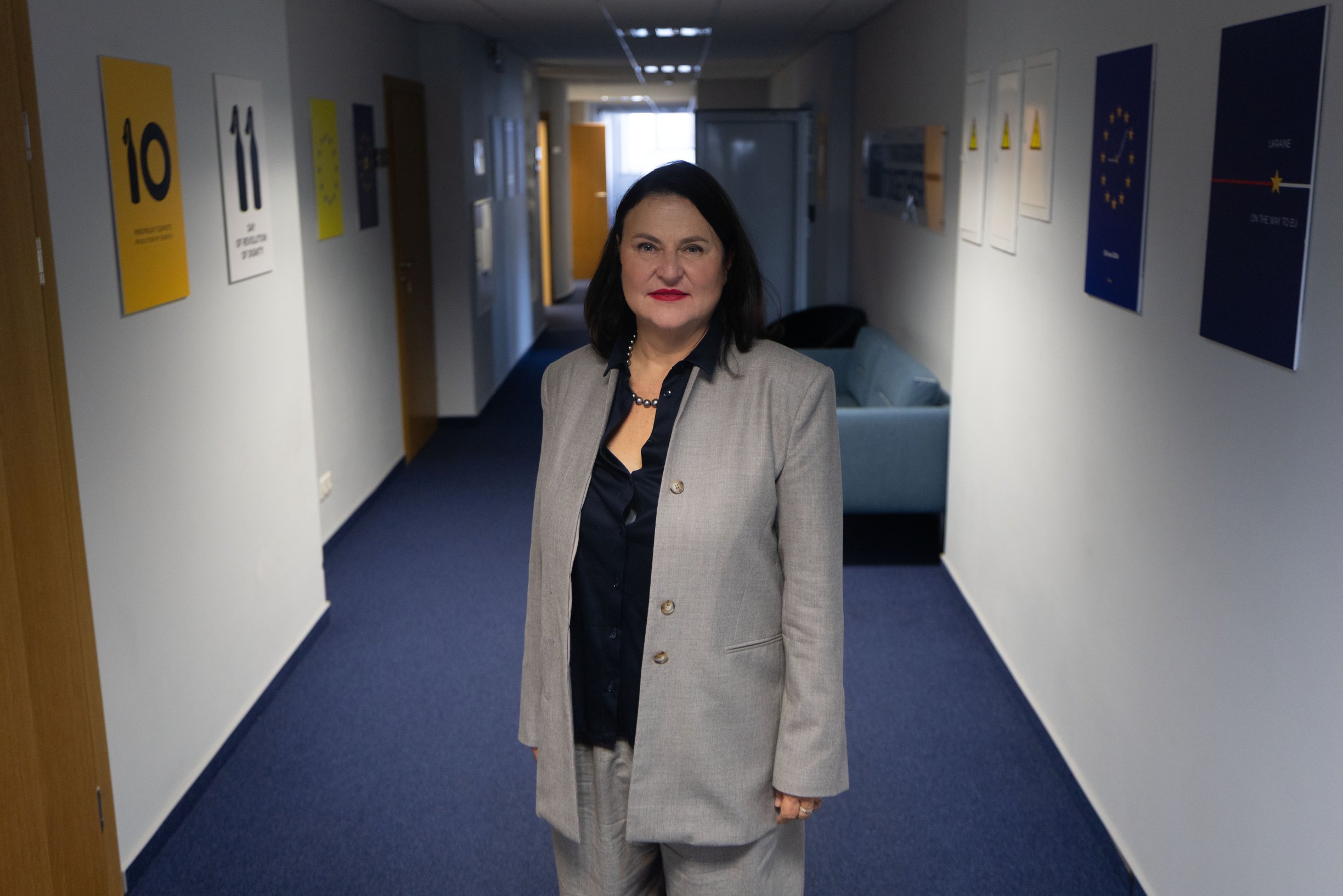
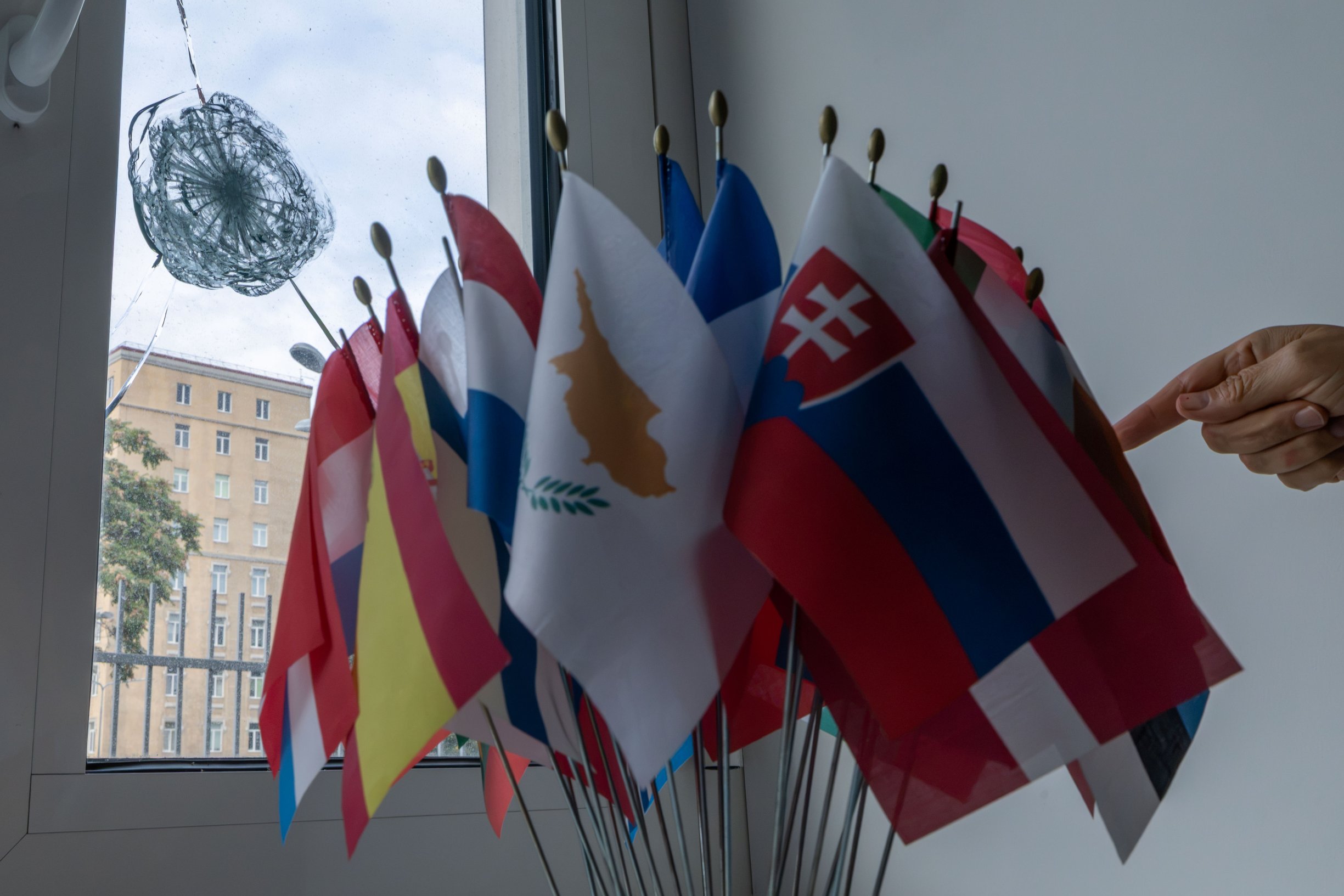
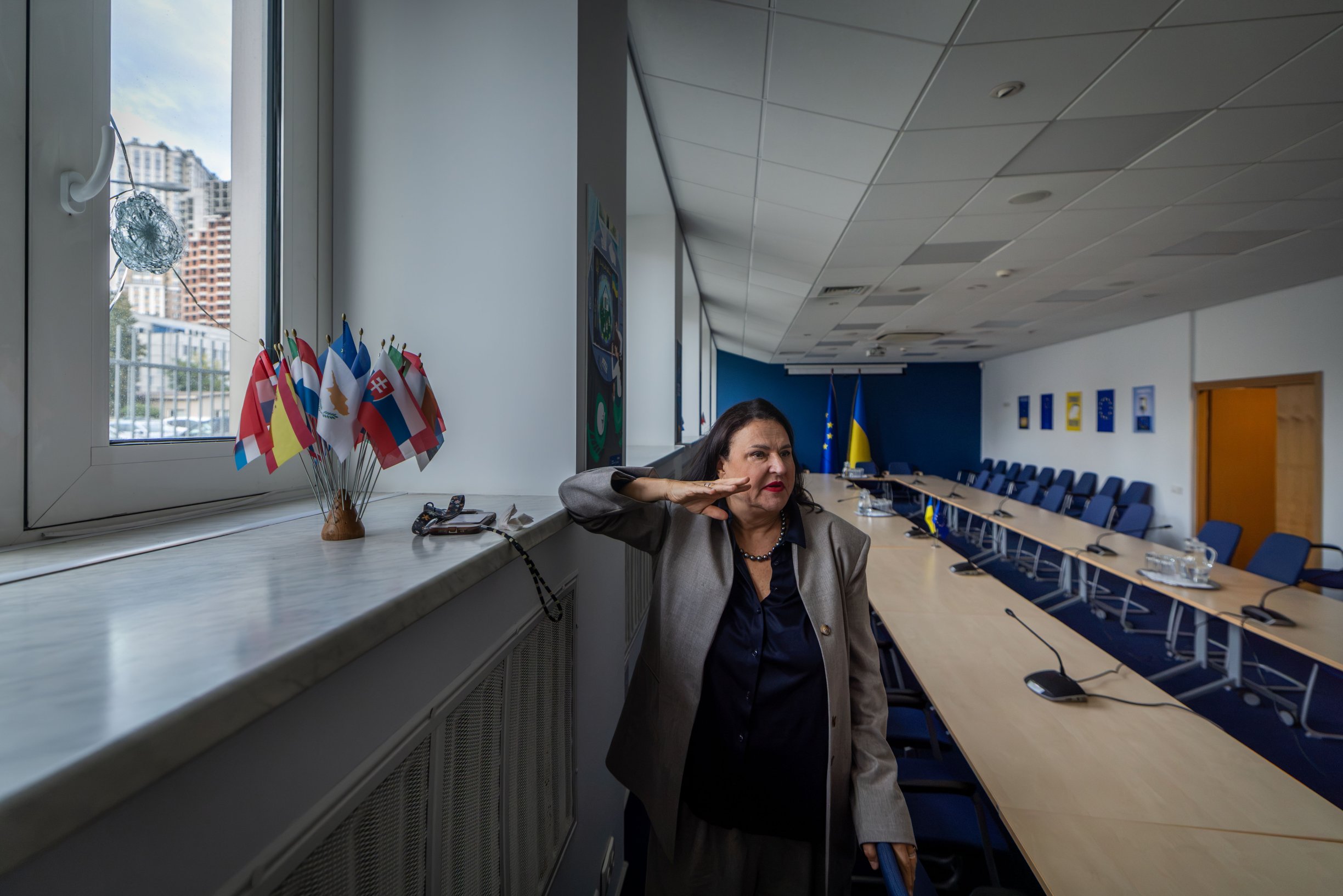
Air raids have left their mark on her office: windows have been blown out, and shrapnel once tore straight through a refrigerator. With attacks intensifying, the EU delegation now does much of its work in the corridor, away from the glass. The latest strikes hit the nearby headquarters of Ukraine’s Security Service (SBU).

In late September, Kyiv has heard so many air-raid sirens. There is already one dead and 20 injured, and on our way to your office, we heard several explosions. Is this the new normal?

Unfortunately, they have become routine. It began on 27 August this year, a date that will go down in the history of this war. That day, we had 13 air raid alerts during daylight hours, a record since the beginning of the full-scale war. It happens every day.

The day before yesterday, as I was entering the office when the windows suddenly began to rattle. A huge plume of smoke rose behind that black building outside the window. There were around four separate explosions over the course of 20 minutes, just a couple of hundred metres from here.

After a Russian attack, in a room with bulletproof windows. Source: Tomáš Benedikovič, Denník N.

The Russians have begun using jet drones which Ukrainians are not yet able to shoot down in the same numbers as earlier Shahed drones. With just a few jet drones, Russia can terrorise a city like Kyiv throughout the day at a relatively low cost. Then, at night, come the ballistic missiles. Last week, however, they also used ballistic missiles during the day.

Do the attacks make you anxious?

Of course they do. One morning last week, I was Nordic walking in the botanical garden. I was walking with my coach when suddenly there was a huge bang. It landed several kilometres away, but because there are no buildings there, it sounded as though it were just around the corner. These are the moments when I nearly have a heart attack…it’s very unpleasant.

How do you decide whether to go to a shelter or into the corridor? Do you have a security protocol?

I have security guards, and we also have a regional security officer here. They are here permanently, so they guide us. But since these very frequent and disruptive daytime attacks began, the government has adopted a regulation introducing two different types of alert — yellow and red. Red alerts are issued for missiles. Yellow alerts are for drone attacks – in such cases, the metro no longer stops, and people primarily seek safety between two walls. When there were explosions here last Wednesday, we were all sitting in the corridor.

Katarína Mathernová. Source: Tomáš Benedikovič, Denník N.
The corridor where diplomats work during heavy air raids. Source: Tomáš Benedikovič, Denník N.

On the ground floor, where we have our conference rooms, there are bulletproof windows. We are now going to adapt the ground floor so that we can operate safely there during anti-drone alerts. We will put sandbags outside. We already have beanbags there, and colleagues from the upper floors are moving down so that they can work.

How do you assess this intensification? Is it a response to the fact that the front has stalled and Putin’s “special operation” has boomeranged back on Russians at home?

Russia cannot win on the battlefield. They have managed to gain only a few square kilometres, so they are terrorising civilians by attacking targets such as churches, museums, libraries and book warehouses. On Thursday, they hit a maternity hospital. These are war crimes, but Russia commits them so routinely that they are boiling us like a frog.

There is talk that assaults will escalate further in winter. Will you stay?

Of course, we are staying here. When we speak to the diplomatic corps, everyone wants to stay. We are preparing for winter, stockpiling supplies, and here at the delegation we have bought blankets and folding beds. We have food rations and additional supplies of drinking and utility water. We have had several shower cubicles installed. We bought washing machines and dryers too, as the building has a large generator. Our colleagues from Brussels and Ukraine in the same building — many of whom live on the other side of the river or in conditions that are not as good as ours — will probably welcome these facilities.

Attacks have come dangerously close not only to where you work, but also to where you live, like a recent drone struck an SBU building.

It was targeting that location; I do not think Kyiv city centre itself was the target. But yes, it is quite close to the hotel where I live.

What do you anticipate will happen in winter? You may see attacks on energy infrastructure, water and sewage systems. A loss of these utilities would be extremely difficult.

If sewage systems were knocked out in a large part of the city, it would be very difficult. But let us not forget that Kyiv was also a frontline city last winter. There were perhaps more than one million people here freezing in their own homes. My driver told me that he and his family bought firebricks and heated them on the gas stove. When they went to bed, they held them to keep warm. Those without gas in their flats were even less fortunate. But people here helped one another. My coaches and their son stayed in my hotel for weeks because it was four degrees in their home.

Ukraine faces a shortage of Patriot missiles. It has developed a new interceptor that could stop jet drones, but Patriots defend against ballistic missiles. Can Europe do more to help?

This article continues, but the full version is available only to EUobserver.com subscribers. Visit account.euobserver.com/membership

❌