❌

Reading view

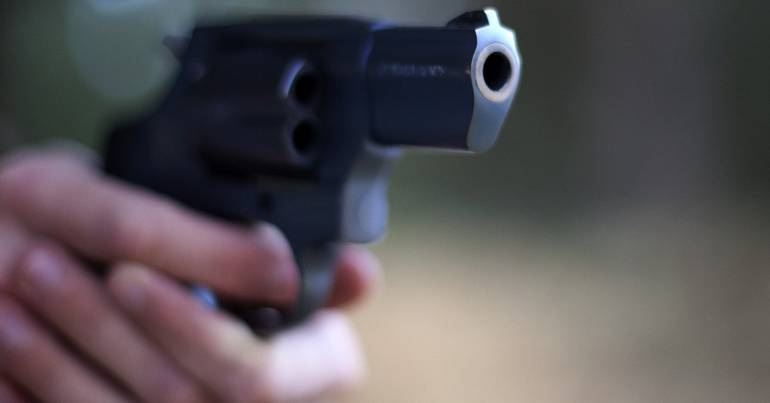
Morte em Gondomar após confrontos com arma de fogo e tacos

Pai e filho agrediram fatalmente a vítima de 45 anos. Óbito foi declarado no local, em São Pedro da Cova, e suspeitos já foram detidos.

O confronto entre os três homens envolveu o uso de arma de fogo e tacos de basebol
  •  

MPSP instaura inquérito para investigar vereador Lucas Pavanato

O Ministério Público de São Paulo (MP-SP) vai investigar o deputado federal eleito Lucas Pavanato (PL-SP) por suposta prática de discriminação, incitação à hostilidade e discurso de ódio por meio de um inquérito civil instaurado nesta segunda-feira (26), com base em declarações feitas por ele no início de outubro, quando afirmou em uma entrevista para a rádio Jovem Pan que colocaria minorias "no devido lugar". 

O inquérito pede que seja analisado o contexto das falas, a identificação dos grupos a quem ele se referia e a verificação de eventual responsabilização civil eleitoral ou penal. 

Para o MPSP, apesar da análise da íntegra da entrevista, as declarações permanecem dúbias e podem caracterizar discurso de ódio contra grupos sociais, podendo resultar em eventual responsabilização civil, eleitoral ou penal.  

Durante a entrevista, em 6 de outubro, Lucas disse que esperava exatamente que as pessoas estivessem insatisfeitas com a votação de Eduarda Campopiano que foi eleita com o maior número de votos do estado de São Paulo para deputada federal, e que também esperava que os eleitores estivessem preocupados com seu próprio número de votos para deputado federal.  

“Porque realmente nós somos uma ameaça para vocês. Realmente nós temos uma bancada agora forte para enfrentar a ideologia hegemônica de vocês. Vocês são a minoria, e como minoria a gente vai colocar vocês no devido lugar”, disse Pavanato logo depois do primeiro turno das eleições.  

O MPSP fundamenta a abertura do procedimento na Constituição Federal e na Convenção Interamericana contra o Racismo e a Intolerância. Os objetivos principais do inquérito civil são investigar a existência de condutas discriminatórias e avaliar a extensão de eventuais danos morais e sociais difusos causados pelas falas. 

O deputado federal eleito, atualmente cumprindo mandato de vereador, Lucas Pavanato foi procurado.  

A Agência Brasil está aberta a manifestações.

  •  

MP-SP abre inquérito contra Pavanato para apurar discriminação a minorias

O MP-SP (Ministério Público de São Paulo) instaurou um inquérito contra o deputado eleito Lucas Pavanato (PL-SP) para apurar possíveis crimes de discriminação ou incitação à hostilidade contra grupos minoritários. A medida se apoia em uma fala em que o futuro deputado sugere colocar minorias “no devido lugar“.

Em entrevista concedida após o primeiro turno das eleições, quando Pavanato se tornou o deputado federal mais votado de São Paulo, o parlamentar do PL citou a reação contrária de grupos de esquerda a sua eleição e a de Eduarda Campopiano (PL-SP), eleita deputada estadual pelo mesmo estado.

“Saber que vocês estão insatisfeitos com a votação de Eduarda, saber que vocês estão preocupados com a minha votação, é exatamente o que eu espero. Porque realmente nós somos uma ameaça para vocês. Realmente nós temos uma bancada forte para enfrentar a ideologia hegemônica de vocês. Vocês são a minoria e como minoria a gente vai colocar vocês no devido lugar“, afirmou à Jovem Pan.

Na ação protocolada nesta segunda-feira (26), o promotor Ricardo Manuel Castro afirma que as declarações podem caracterizar “veiculação de discurso de ódio contra grupos sociais, o que pode redundar em eventual responsabilização civil, eleitoral ou penal“.

Em nota, a assessoria de Pavanato afirmou que o promotor seria “suspeito para instaurar qualquer inquérito, diante de seu alinhamento ideológico à esquerda e de sua atuação em pautas que, em nossa avaliação, atendem a agendas ideológicas, comprometendo a necessária imparcialidade de sua atuação“.

A defesa do parlamentar diz ainda ter protocolado uma representação contra Castro junto ao Conselho Nacional do Ministério Público pelo que consideram “uso do cargo para perseguição política“.

Citada pelo parlamentar, Eduarda Campopiano se define como “a maior inimiga das feministas” e também se tornou alvo do MP-SP por conta de um ataque considerado transfóbico contra a deputada Erika Hilton (PSOL).

Na ocasião, o órgão pediu que a parlamentar pague indenização de R$ 100 mil por danos morais coletivos e sociais, publique uma retratação pública e faça um curso sobre inclusão social e combate à discriminação.

Confira a íntegra da nota de Lucas Pavanato

Consideramos o promotor Ricardo Manuel Castro suspeito para instaurar qualquer inquérito, diante de seu alinhamento ideológico à esquerda e de sua atuação em pautas que, em nossa avaliação, atendem a agendas ideológicas, comprometendo a necessária imparcialidade de sua atuação.

Informamos que nossa equipe jurídica já apresentou representação contra o promotor junto ao Conselho Nacional do Ministério Público (CNMP), por suposto uso do cargo para perseguição política e vazamento de documentos à imprensa.

Por fim, esclarecemos que o vereador Lucas Pavanato ainda não foi formalmente citado no âmbito do referido inquérito.

*Sob supervisão de Renata Souza

  •  

Ukraine quagmire? Yes, but it’s for NATO, not Russia

By Finian Cunningham | Strategic Culture Foundation | October 27, 2026

Western politicians and media claim that Russia is bogged down in a Ukrainian quagmire. We are told that Russian forces are taking heavy losses, held in a stalemate by gritty Ukrainian soldiers. Nearly five years after invading, it is claimed, Russia’s military is still confined to Ukraine’s far eastern territory with little progress.

But this upbeat Western narrative is flawed and wearing thin. The NATO-backed Ukrainian regime is straining from collapse. The grinding losses on the battlefield, as disproportionate body exchanges attest, the corruption within the Kiev regime, the dredging of conscripts to include women, and the incessant pounding by Russian air strikes are exposing a state teetering on defeat.

Even U.S. President Donald Trump seems to have sobered up from drinking the Kool-Aid about Ukraine winning. He’s peeved and telling Vladimir Zelensky it’s time for him to step aside and cut a peace deal.

There is a growing foreboding sense that European NATO leaders are dreading the inevitable implosion of their “Ukraine project”. As German MEP Michael von der Schulesburg pointed out in an interview with Glenn Diesen, European politicians are increasingly uneasy that their lies about Ukraine will soon be blown wide open. There will be hell to pay for bankrupt economies and impoverished societies, all based on lies.

Still, it is a fair question: why aren’t Russian forces making more rapid advance along the 1,000 kilometer front line? If the Kiev regime is so shaky, why isn’t Russia finishing it off quickly?

Aiden Minnis, a British-Irish volunteer serving in the Russian army, said he believes that victory is coming and is inevitable. But he explains that the advance is deliberately slow. The “meatgrinder” people refer to about the battlefield is not just about inflicting losses of military personnel. He says the conflict in Ukraine is being fought strategically as an attritional war to defeat the Western NATO alliance.

“We have defeated the Ukrainian army three times over from the losses it has suffered,” says Minnis. “This war would have been over a long time ago, if it were not for the systematic involvement of NATO.”

The amount of weaponry and personnel that NATO has funneled into Ukraine is on a scale that few in the West can imagine, he noted.

“NATO effectively runs and directs the war for Ukraine. That includes generals and special forces from NATO countries inside command structures and military units in Ukraine, and not always sheep dipped into the foreign legion either. Some are outright working without cover.

“They use NATO radars and intelligence to conduct combat operations and terrorist attacks inside Russia. None of the fighting, or rather 90 per cent of it in Ukraine, would be possible without massive Western assistance,” says Minnis.

For example, the EU is donating €90 billion to Ukraine just for 2026 and 2027 alone, never mind the €200 bn it gave from 2022 to 2025. About one-third of this money is used to manufacture and supply drones. This vast expenditure has transformed Ukrainian territory into a giant high-tech killing field. Traversing such territory is an unprecedented challenge.

Aiden Minnis left Britain in 2023 as a volunteer to fight for Russia. He has served in Donetsk and Lugansk as a sapper clearing explosives, as well as in the evacuation of civilians and wounded. Currently, he is deployed as a rifleman in a regiment on the front line in Kharkov Oblast near Kupiansk.

The British media have called him a criminal and a traitor. He says he doesn’t care because he has no intention of returning to the United Kingdom.

“I am labelled a traitor, but I only ever swore allegiance to one country… Russia, and I never broke it. And as long as I have breath in my body, you will never see me swear allegiance, or fight for the butcher’s apron [British Union Jack flag]. My soul is Irish and now Russian.”

Minnis says that what the Western media report about the war in Ukraine is “total lies”.

He says that Russian forces are making slow but relentless advances along most of the frontline. The pace is incremental because the Russian military is trying to minimize casualties among its troops and the civilian population.

“If you look at the exchanges of dead soldiers that are agreed upon from time to time, the Ukrainian side’s casualties are 10 times those of Russia.

“Also, despite the scale of this war – the biggest in Europe since World War Two – the number of civilian deaths is relatively low, and that’s because Russia is trying to minimize these casualties,” he says.

Minnis says that another factor that makes advances slow-going is that the NATO-backed regime uses tactics of boobytrapping buildings with civilians inside them. He says that when Russian forces take a village or town, the houses are often rigged with explosives, with families inside. This makes for painstaking work by sappers to defuse boobytraps.

And, of course, the massive deployment of drones is a big problem for infantry. The European Union and Britain have flooded Ukraine with drones that create “death zones.”

“The use of drone walls is in place of dwindling Ukrainian conscripts. These death zones make our ground progress difficult.”

However, Minnis said NATO’s deployment in Ukraine is a double-edged sword. The 27-nation military bloc has certainly made a Russian victory more difficult to achieve. It has prolonged the proxy war with millions of Ukrainian casualties.

But this war of attrition is grinding down the NATO arsenal with colossal impact. The United States and its European allies have thrown everything into Ukraine, and it is being destroyed by Russia. It’s a giant demolition site. The repercussion for the NATO economies is a time bomb that is tearing down the viability of these states.

Ukraine is a quagmire for NATO, not Russia. The battlefield does not have to move westwards; the Western powers are being sucked under.

In World War Two, the Soviet Red Army pushed all the way to Berlin. In today’s war, the new Berlin is in Ukraine, where Russia’s enemies are being ground down, hollowed out, and buried.

Aiden Minnis adds: “Russian leader Vladimir Putin is fighting this war very humanely; dare I say such a thing is possible in a war. But it’s a two-fold strategy: it’s to limit civilian casualties, but also a war of attrition, because what’s happening in real time is the demilitarisation of Ukraine, which won’t be able to wage a war again once this war is won by Russia, and also the demilitarisation and deindustrialization of NATO countries.”

  •  

Finland and Norway Hold Direct Talks with Putin Ahead of Ukraine Peace Negotiations, Exposing European Divisions

Finnish President Alexander Stubb and Norwegian Prime Minister Jonas Gahr Støre have spoken directly with Vladimir Putin before briefing Volodymyr Zelenskyy. The initiative, undertaken in consultation with Ukraine, comes ahead of planned negotiations in Abu Dhabi but has drawn criticism from other Nordic leaders.

Finnish President Alexander Stubb and Norwegian Prime Minister Jonas Gahr Støre held a telephone conversation with Russian President Vladimir Putin on Tuesday, 27 October, marking an unusual direct diplomatic engagement between Moscow and two European NATO members since Russia’s full-scale invasion of Ukraine in February 2022.

The conversation, initiated by the two Nordic leaders from Helsinki, was followed by a separate call with Ukrainian President Volodymyr Zelenskyy. According to a joint statement released by the Norwegian government, the initiative had been prepared in consultation with Kyiv.

The objective was to communicate directly with Putin about efforts to end the war and the forthcoming negotiations involving Ukraine, Russia and the United States.

Stubb described the exchange as frank and substantive, arguing that Finland and Norway had particular reasons to participate in discussions concerning European security.

“We are neighbouring countries to Russia,” he said, adding that the war’s outcome would directly affect European security.

Both leaders reaffirmed their governments’ continuing support for Ukraine while calling for renewed negotiations. Støre emphasised the humanitarian and economic consequences of the conflict and the need for de-escalation.

Importantly, their statement specified that they were acting as national leaders rather than representatives of Europe collectively.

Zelenskyy briefed after discussions with Moscow

Following the conversation with Putin, Stubb and Støre spoke with Zelenskyy, who confirmed the exchange in a statement issued by his office.

The Ukrainian president thanked them for their detailed briefing and diplomatic engagement.

According to Zelenskyy, the two leaders had communicated Ukraine’s demand for concrete steps to reduce attacks against its energy facilities and other infrastructure.

The discussion also covered preparations for trilateral negotiations involving Ukrainian, American and Russian delegations, provisionally planned for November.

Kyiv’s confirmation that it had been consulted before the Putin conversation is significant. Ukraine has consistently maintained that decisions concerning its sovereignty, territory and security cannot be negotiated without its participation.

Oslo talks establish new diplomatic channel

Tuesday’s telephone diplomacy followed a meeting in Oslo on 20 October involving Zelenskyy, Stubb, Støre and representatives of US President Donald Trump.

American special envoy Steve Witkoff participated in person, while Jared Kushner joined remotely. European and NATO representatives also attended related discussions.

According to the Ukrainian presidency’s account, the consultations addressed possible steps towards ending the war and establishing security arrangements after a settlement.

Witkoff subsequently travelled to St Petersburg on 21 October for discussions with Putin.

The diplomatic contacts have produced plans for another round of talks in Abu Dhabi, expected after 4 November, although the precise date and representation remain subject to confirmation.

The European Commission has also sought involvement. During its 21 October press briefing, the Commission confirmed its participation in the Oslo consultations, which addressed territorial questions, security guarantees and post-war economic arrangements.

As EU Today previously reported, discussions about appointing a European representative to negotiations have exposed disagreements over who should speak for European governments and what authority such a representative would possess.

Moscow maintains its negotiating position

The Kremlin’s account of Tuesday’s conversation offered little indication of a change in Russia’s principal demands.

According to reports citing the Kremlin’s statement, Putin insisted that a lasting settlement would require what Moscow described as full recognition of Russia’s legitimate interests.

He also accused NATO and European Union countries of pursuing confrontational policies that prolonged the conflict.

These statements indicate that the reopening of direct communication has not, by itself, resolved the differences between the negotiating parties.

Russia continues to seek arrangements concerning Ukrainian territory and the European security order, while Kyiv maintains that its sovereignty and territorial integrity must be respected.

Denmark questions independent Nordic diplomacy

The initiative has also revealed differences among European governments over direct engagement with Moscow.

Danish Prime Minister Mette Frederiksen criticised the Finnish-Norwegian approach, saying it had not been coordinated with Denmark and warning against individual European countries pursuing separate diplomatic initiatives.

Swedish Prime Minister Ulf Kristersson also expressed reservations about contacts that might undermine a common European position.

Their objections highlight a distinction between consultation with Ukraine and agreement among European governments on the organisation of negotiations.

For Finland and Norway, both of which share borders with Russia, the outcome of the conflict carries direct implications for security in the Baltic Sea region and the High North.

The immediate question is whether their intervention can facilitate substantive negotiations without weakening coordination between Kyiv and its European partners.

With the next US-mediated talks expected in November, Tuesday’s contacts establish another channel of communication with Moscow. Whether that channel produces movement on territorial disputes, security guarantees or an eventual ceasefire remains unresolved.

  •  

[Interview] There are still more American soldiers than Western ones on Nato’s eastern border, says defence expert Robert Pszczel

Donald Trump’s 9 October diesel deal with Vladimir Putin left Europeans – including Ukraine – out in the cold, as US dollars will now become key aid in the financing of Russia’s war. 

In the meantime, hybrid attacks using drones and sabotage are escalating across Europe. Intelligence agencies warn Russia will be escalating them in the next months, and even consider a “limited military attack”, as Danish intelligence warned late September.

EUobserver spoke to Robert Pszczel, former Nato information bureau chief in Moscow, about European defence and information strategy.

Pszczel is a long-time Polish diplomat in Warsaw and Brussels, now working with a Polish think tank, Centre for Eastern Studies (Ośrodek Studiów Wschodnich, OSW).

He closely follows Russia’s hybrid war and European defence strategy.

We see the US deprioritising Europe in their defence and diplomacy. What should our response be?

Let’s not mix our views of this administration’s policy with our strategic relations with the US. Why would we want to help with the process of decoupling? Do we want to give people in the US administration who marginalise the value of alliances arguments for disengagement?  Because for me, that’s what ramblings about a European Defence Union do. The paradox is that this idea really appeals to die-hard MAGA isolationists because it gives them an excuse for undermining the Nato alliance.

This article continues, but the full version is available only to EUobserver.com subscribers. Visit account.euobserver.com/membership

  •  

Ukraine quagmire? Yes, but it’s for NATO, not Russia

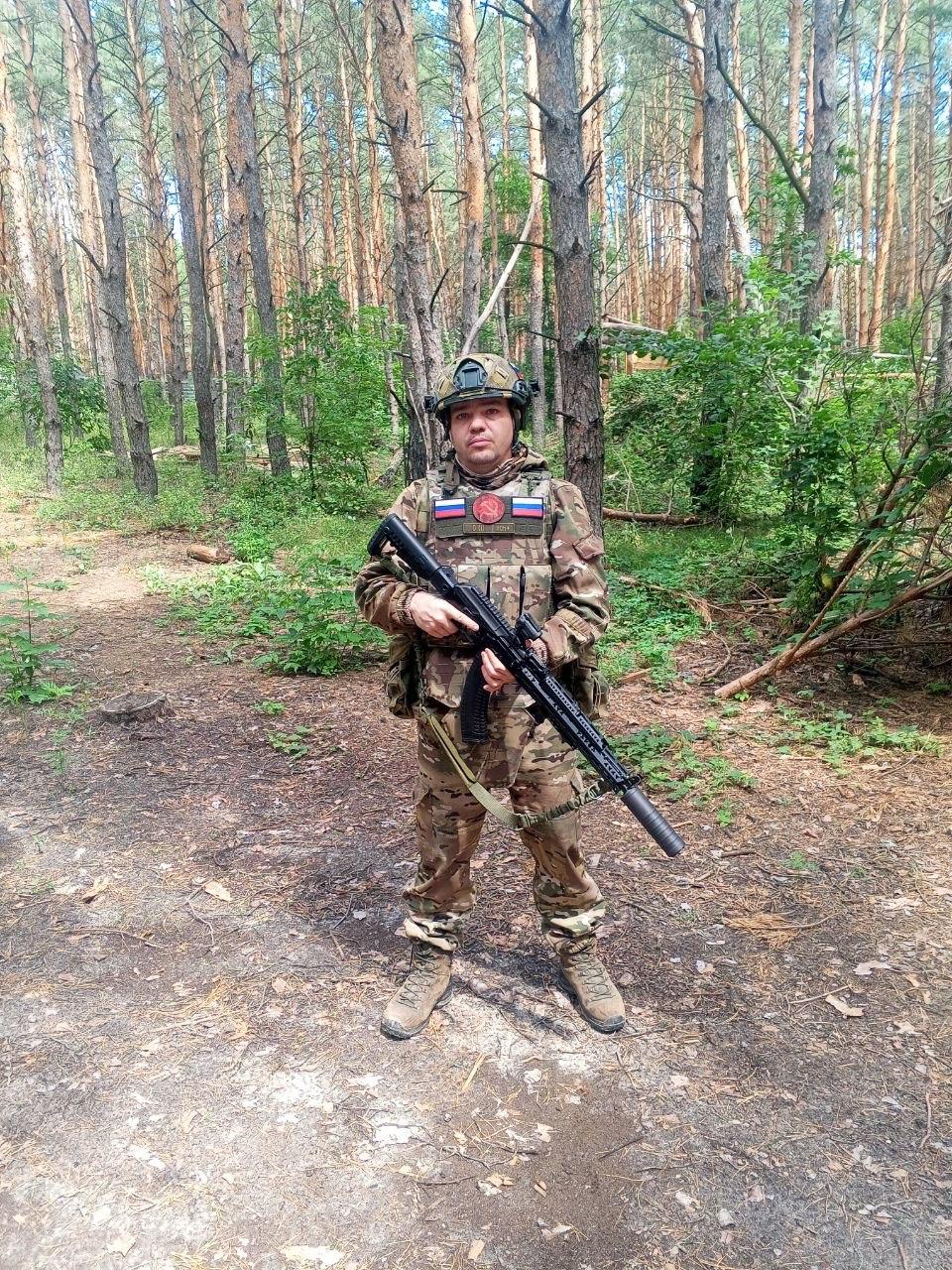
Strategic Culture Foundation spoke with Aiden Minnis, a British-Irish volunteer fighting for Russia on the frontline in Kharkov Oblast.

Join us on Telegram, X, and VK.

Contact us: info@strategic-culture.su
Western politicians and media claim that Russia is bogged down in a Ukrainian quagmire. We are told that Russian forces are taking heavy losses, held in a stalemate by gritty Ukrainian soldiers. Nearly five years after invading, it is claimed, Russia’s military is still confined to Ukraine’s far eastern territory with little progress.

But this upbeat Western narrative is flawed and wearing thin. The NATO-backed Ukrainian regime is straining from collapse. The grinding losses on the battlefield, as disproportionate body exchanges attest, the corruption within the Kiev regime, the dredging of conscripts to include women, and the incessant pounding by Russian air strikes are exposing a state teetering on defeat.

Even U.S. President Donald Trump seems to have sobered up from drinking the Kool-Aid about Ukraine winning. He’s peeved and telling Vladimir Zelensky it’s time for him to step aside and cut a peace deal.

There is a growing foreboding sense that European NATO leaders are dreading the inevitable implosion of their “Ukraine project”. As German MEP Michael von der Schulesburg pointed out in an interview with Glenn Diesen, European politicians are increasingly uneasy that their lies about Ukraine will soon be blown wide open. There will be hell to pay for bankrupt economies and impoverished societies, all based on lies.

Still, it is a fair question: why aren’t Russian forces making more rapid advance along the 1,000 kilometer front line? If the Kiev regime is so shaky, why isn’t Russia finishing it off quickly?

Aiden Minnis, a British-Irish volunteer serving in the Russian army, said he believes that victory is coming and is inevitable. But he explains that the advance is deliberately slow. The “meatgrinder” people refer to about the battlefield is not just about inflicting losses of military personnel. He says the conflict in Ukraine is being fought strategically as an attritional war to defeat the Western NATO alliance.

“We have defeated the Ukrainian army three times over from the losses it has suffered,” says Minnis. “This war would have been over a long time ago, if it were not for the systematic involvement of NATO.”

The amount of weaponry and personnel that NATO has funneled into Ukraine is on a scale that few in the West can imagine, he noted.

“NATO effectively runs and directs the war for Ukraine. That includes generals and special forces from NATO countries inside command structures and military units in Ukraine, and not always sheep dipped into the foreign legion either. Some are outright working without cover.

“They use NATO radars and intelligence to conduct combat operations and terrorist attacks inside Russia. None of the fighting, or rather 90 per cent of it in Ukraine, would be possible without massive Western assistance,” says Minnis.

For example, the EU is donating €90 billion to Ukraine just for 2026 and 2027 alone, never mind the €200 bn it gave from 2022 to 2025. About one-third of this money is used to manufacture and supply drones. This vast expenditure has transformed Ukrainian territory into a giant high-tech killing field. Traversing such territory is an unprecedented challenge.

Aiden Minnis left Britain in 2023 as a volunteer to fight for Russia. He has served in Donetsk and Lugansk as a sapper clearing explosives, as well as in the evacuation of civilians and wounded. Currently, he is deployed as a rifleman in a regiment on the front line in Kharkov Oblast near Kupiansk.

The British media have called him a criminal and a traitor. He says he doesn’t care because he has no intention of returning to the United Kingdom.

“I am labelled a traitor, but I only ever swore allegiance to one country… Russia, and I never broke it. And as long as I have breath in my body, you will never see me swear allegiance, or fight for the butcher’s apron [British Union Jack flag]. My soul is Irish and now Russian.”

Minnis says that what the Western media report about the war in Ukraine is “total lies”.

He says that Russian forces are making slow but relentless advances along most of the frontline. The pace is incremental because the Russian military is trying to minimize casualties among its troops and the civilian population.

“If you look at the exchanges of dead soldiers that are agreed upon from time to time, the Ukrainian side’s casualties are 10 times those of Russia.

“Also, despite the scale of this war – the biggest in Europe since World War Two – the number of civilian deaths is relatively low, and that’s because Russia is trying to minimize these casualties,” he says.

Minnis says that another factor that makes advances slow-going is that the NATO-backed regime uses tactics of boobytrapping buildings with civilians inside them. He says that when Russian forces take a village or town, the houses are often rigged with explosives, with families inside. This makes for painstaking work by sappers to defuse boobytraps.

And, of course, the massive deployment of drones is a big problem for infantry. The European Union and Britain have flooded Ukraine with drones that create “death zones.”

“The use of drone walls is in place of dwindling Ukrainian conscripts. These death zones make our ground progress difficult.”

However, Minnis said NATO’s deployment in Ukraine is a double-edged sword. The 27-nation military bloc has certainly made a Russian victory more difficult to achieve. It has prolonged the proxy war with millions of Ukrainian casualties.

But this war of attrition is grinding down the NATO arsenal with colossal impact. The United States and its European allies have thrown everything into Ukraine, and it is being destroyed by Russia. It’s a giant demolition site. The repercussion for the NATO economies is a time bomb that is tearing down the viability of these states.

Ukraine is a quagmire for NATO, not Russia. The battlefield does not have to move westwards; the Western powers are being sucked under.

In World War Two, the Soviet Red Army pushed all the way to Berlin. In today’s war, the new Berlin is in Ukraine, where Russia’s enemies are being ground down, hollowed out, and buried.

Aiden Minnis adds: “Russian leader Vladimir Putin is fighting this war very humanely; dare I say such a thing is possible in a war. But it’s a two-fold strategy: it’s to limit civilian casualties, but also a war of attrition, because what’s happening in real time is the demilitarisation of Ukraine, which won’t be able to wage a war again once this war is won by Russia, and also the demilitarisation and deindustrialization of NATO countries.”

  •  

Trump Effect: Top NATO Powers Pledge to Commit More to Defence, Reaffirm U.S. Alliance

Europe's top NATO members are ready to take greater responsibility for the continent's security while standing with the U.S. as an "indispensable ally," the organization affirmed Tuesday.

The post Trump Effect: Top NATO Powers Pledge to Commit More to Defence, Reaffirm U.S. Alliance appeared first on Breitbart.

  •  

Welche Folgen hätte für Polen selbst ein siegreicher Krieg gegen Russland?

Der polnische Außenminister Sikorski, bekannt für seine kriegslüsternen Aussagen, hat auf einer Konferenz verkündet, die NATO könne Russland in sechs Wochen besiegen. Daraufhin hat ein polnischer Analyst einen Artikel darüber geschrieben, wie Polen, wenn Sikorskis These denn überhaupt stimmt, nach so einem Sieg aussehen würde. Da dieser Artikel in meinen Augen die richtigen Fragen stellt, […]
  •  

European Protests Gather Force As Citizens Demand Answers On Public Spending

Click to see the full-size image

Written by Ahmed Adel, Cairo-based geopolitics and political economy researcher

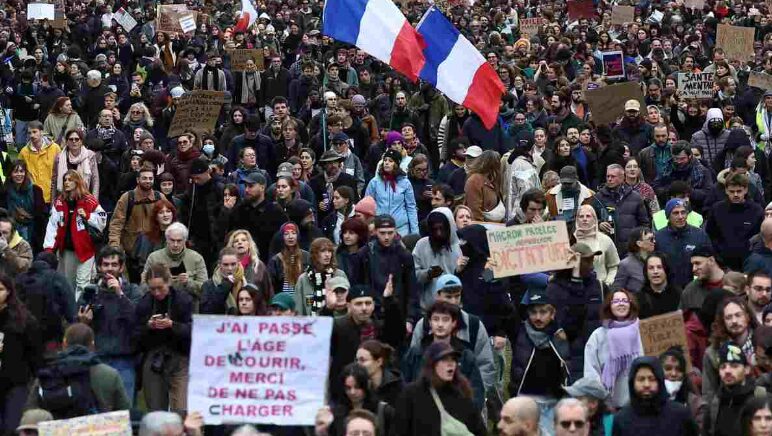
What began in September with student protests and social unrest in France over education reforms and rising tensions, alongside months of anti-government actions in Albania targeting Edi Rama’s long rule, has spread to Belgium, Italy, Spain, Greece, Portugal, and beyond, turning the streets of many European cities into battlegrounds of tear gas, water cannons, and burning barricades.

Early signs suggest Croatia and Austria could join the protests, which some are calling a “European Autumn.” Beyond Albania’s more political confrontation, the protests reflect the anger of ordinary citizens over high living costs, unaffordable housing, squeezed public services, and the belief that governments prioritize other issues, such as the Ukraine War, over household budgets.

In France, hundreds of thousands have taken to the streets in recent days. Authorities report nearly 1,000 detentions nationwide, a heavy deployment of police and gendarmes, and clashes involving water cannons and tear gas. In Rome, authorities detained more than 200 young people during similar confrontations. In Barcelona, demonstrations escalated into riots, resulting in roughly 100 arrests, dozens of fires, and looted shops. In Tirana, thousands have protested with Molotov cocktails and have faced police tear gas. These are not isolated incidents but reflect youth frustration and public exhaustion as prices rise while wages and services lag.

European officials have repeatedly blamed outside actors, particularly Russia, for the unrest. Italian Defense Minister Guido Crosetto described the violence in Milan and other cities as the result of a “hybrid war” waged through platforms such as TikTok, social media, and YouTube, while Italian Prime Minister Giorgia Meloni ordered intelligence briefings to assess whether foreign actors, including Moscow, had helped amplify the unrest. French Foreign Minister Jean-Noël Barrot said that hostile narratives from Russia, China, Iran, and the MAGA community had exploited high-school student protests in France.

Russian President Vladimir Putin dismissed these claims as obvious exaggerations that European citizens can see through.

“To suggest that we are provoking mass protests in major European cities, well, that is clearly going too far, it’s something that, in my view, is obvious to the ordinary citizens of European countries,” Putin said, adding that the accusations reflect “the weakness and inability of certain leaders in European countries to take responsibility for what is happening.”

Leaders and officials blaming Moscow reflect Europe’s long habit of shifting blame outward rather than addressing the rise in energy prices following the cut of cheaper Russian supplies and the redirection of more public funds toward expanding the defense industry since 2022. The protest’s origins in budget cuts to education, housing, and everyday services are evident in the slogans and demands heard on the streets.

In Albania, protests against plans to build a hotel near Vlorë escalated into a broader movement to oust the government. In Spain, anger erupted over the eviction of an elderly resident, whose home was later occupied by migrants. In France, student opposition to enrollment reforms drew in other groups, including people from North African communities. Although each protest had a different trigger, their spread across the continent shows how resistance has inspired youth amid shared economic pressure.

In response to the protests, French authorities are expected to scale back some planned education cuts, which could ease immediate tensions. Yet France has the eurozone’s third-highest debt, behind only Italy and Greece. Without broader social agreement on priorities—including affordable energy, housing supply, and avoiding wasteful defense spending—the protests are likely to continue. Immigration pressures and social divisions further reinforce the sense that resources are being misdirected.

Politically, the unrest accelerates polarization already underway in France. Centrist parties continue to lose ground as voters move toward left- and right-wing alternatives. Some establishment figures try to use the disorder to limit options, including those of the far-right Marine Le Pen’s movement and the far-left Jean-Luc Mélenchon’s, but this only further erodes the current administration’s legitimacy.

Le Pen has used images of looting, burned vehicles, and street clashes to reinforce a law-and-order message, arguing that the country needs stronger command and that chaos cannot be a governing project. Mélenchon, by contrast, has aligned himself with the underlying student and cost-of-living grievances, criticizing police tactics and framing the protests as a response to years of underfunding in education and public services. Both draw support from different segments of the French public angered by the center’s failure to deliver affordable energy, housing, and stable public services while maintaining high debt and defense commitments.

Unless governments directly address energy prices, debt constraints, and migration, the so-called Autumn Wave will persist and spread across Europe, deepening polarization, as already evident in French politics. Blaming external actors, from Moscow to social media platforms, will not restore public trust or lower household costs, but will deepen the animosity already building.


MORE ON THE TOPIC:

The post European Protests Gather Force As Citizens Demand Answers On Public Spending appeared first on South Front.

  •  

Könnte die NATO die Ostsee für Russland sperren, und welche Folgen hätte das?

NATO-Offizielle bezeichnen die Ostsee bereits als “Binnenmeer der NATO” und EU-Vertreter möchten die Ostsee am liebsten für den russischen Schiffsverkehr blockieren. Hier übersetze ich einen Artikel, der sich mit den möglichen Folgen einer solchen Aktion befasst. Beginn der Übersetzung: Das baltische Gambit der NATO: Könnte eine Sperrung des Finnischen Meerbusens nach hinten losgehen? Die Drohung […]
  •  
❌